It’s hard to ignore the risk posed by toxic plants – including succulents – if you’ve experienced the dread of an emergency vet visit.
A poisonous plant may result in nothing more than a tummy ache, but it could also cause life-threatening kidney failure or liver damage in your dog or cat.
Once you realize the risk involved with unsafe botanical species, it’s hard to look at them the same way again.
We link to vendors to help you find relevant products. If you buy from one of our links, we may earn a commission.
But that doesn’t mean you can never grow succulents again if you have pets, and thank goodness, there are many pet safe species, even for households where a cat or dog may take an occasional nibble.
Whether you’re looking into houseplants or succulents for your landscaping, it’s possible to choose pet safe succulents that are verified to be nontoxic to our dogs or cats.
That’s why we’ve cultivated this list of 15 pet safe succulent plants, and nine you should avoid.
The chemical components that are naturally part of the plants are only one facet of their safety.
You’ll also want to be aware of physical risks, such as sharp spines, and also be cautious about exposing your pets to any insecticides that may have been applied to the succulents.
Choosing pet-friendly houseplants or landscaping elements is simply about lowering the risk of danger from these plants – and of course you won’t want them to chew up a prized specimen!
If you’re concerned your pet has ingested a plant and is exhibiting any symptoms, please contact your vet or a poison control hotline such as the one provided by the ASPCA right away.
Now that we’ve delivered those caveats, let’s get back to the fun stuff, the gorgeous plants you can grow that are pet safe. Here’s a quick view of our selections:
15 of the Best Pet-Friendly Succulents
Many of the following options on the safe list make excellent houseplants.
However, if you live in a USDA Hardiness Zone with warmer winters, you might be able to grow them outdoors as well.
A few of them grow best in the ground where winter will bring a cool period that they need.
1. Aeonium
Aeonium succulents are rosette-forming species with foliage in shades of green, gold, red, pink, bronze, white, and purple. There are also variegated types.
There are many different species, but the most common, A. arboretum, looks somewhat like a miniature palm-tree or bonsai, with a long, bare, upright “trunk” and an umbrella-shaped rosette of foliage.
Depending on the species, aeoniums reach up to three feet tall and one foot wide when grown under ideal conditions.
They enjoy full sun to part shade, and with infrequent but deep waterings in well-draining soil.
Most gardeners grow succulents for the foliage rather than the flowers – but you’ll be happy to know that these plants, also known as “tree house-leeks,” have showy panicles of star-shaped blooms.
You can grow these pet-friendly succulents indoors as houseplants, or outdoors in rock or container gardens in Zones 9 to 11.
One of the most popular types of aeonium is a cultivar of A. arboretum called ‘Zwartkop.’
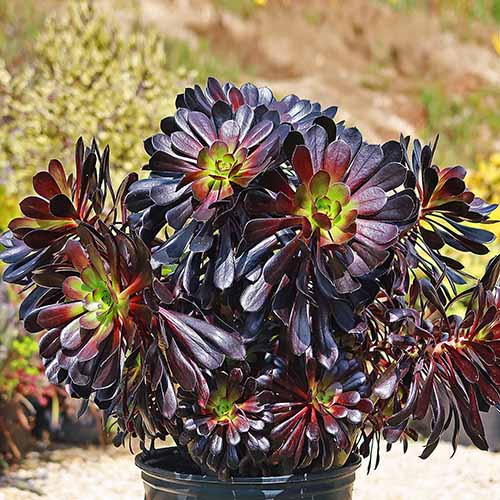
It has reddish purple foliage so dark that it is almost black.
You’ll find ‘Zwartkop’ aeoniums available at Planet Desert.
2. Donkey’s Tail
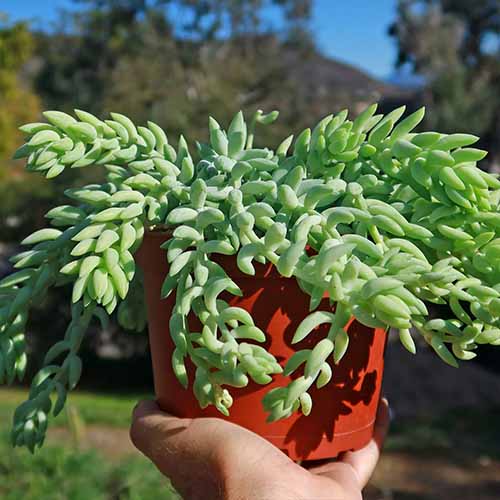
Donkey’s tail (Sedum morganianum) is a type of sedum that is both easy to grow and among the best hanging and trailing succulents or cacti for hanging baskets.
This pet-friendly succulent has plump, tear-shaped leaves that are blueish-green to grayish-blue, forming thick, chunky looking, trailing stems.
In addition to the standard donkey’s tail succulents, there’s a variety known as burro’s tail, which has blunt, rather than pointed leaves.
Burro’s tail and donkey’s tail grow to about 18 inches wide, with stems trailing to lengths of 48 inches or more.
These sedums don’t bloom easily as houseplants, but when they do produce a floral display, they bear clusters of lovely, star-shaped pinkish red flowers.
As houseplants, they need bright light with up to four hours of direct sunlight per day. Provide well-draining soil and allow it to dry out between waterings.
Gardeners in Zones 10 and 11 can also grow it outdoors year-round.
You’ll find plants in four- and six-inch pots available at Planet Desert.
Learn more about growing donkey’s tail succulents here.
3. Christmas Cactus
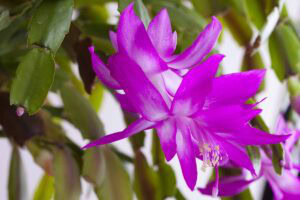
Christmas cactus (Schlumbergera spp.) is the perfect pet-safe winter holiday succulent, since it blooms when the days are short.
With leafless, segmented green stems and showy flowers in shades of red, pink, orange, white, yellow, or purple, holiday cacti are some of the most charming flowering houseplants.
When cared for properly, Schlumbergera can grow to be decades old, and can attain larger sizes, but typically they reach around two feet tall and one foot wide when grown indoors.
These holiday plants grow perfectly in hanging baskets, but also look charming in tabletop pots when smaller since they start out with more upright growth.
Christmas cacti are nontoxic to cats and dogs, and are easy to grow, making them accessible to beginning houseplant growers with pets at home.
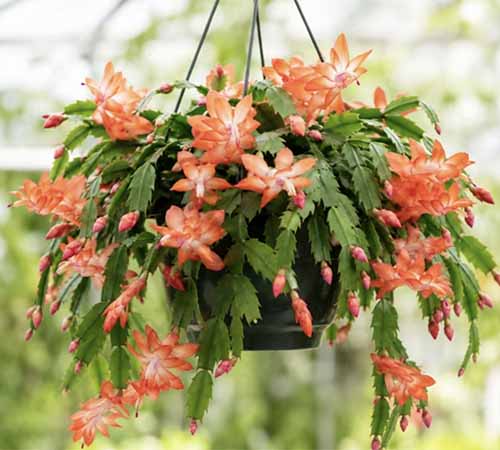
These plants can grow outdoors in Zones 9 to 11. Why not add an orange-flowered Christmas cactus to your home?
You’ll find petite plants in three-inch pots available for purchase from HomeyGarden via Walmart.
Learn more about growing Christmas cactus here.
4. Echeveria
Echeverias (Echeveria spp.) are rosette forming, pet-friendly succulents that grow beautifully in small pots on windowsills, or in the ground in Zones 9 to 12.
There’s a treasure chest of different varieties of echeveria available, with foliage in many different shades of green, blue, red, purple, pink, and orange.
There are even variegated cultivars and varieties with fascinating leaf shapes.
When grown with enough light indoors, they can even produce lovely little bell-shaped flowers in shades of pink, orange, or red.
These nontoxic plants tend to grow no larger than two feet tall, with a one-foot spread, though the mature size will vary depending on the type and the growing conditions.
Some echeverias – such as those with unusual foliage – can be more challenging to grow, but most of them are quite beginner friendly.
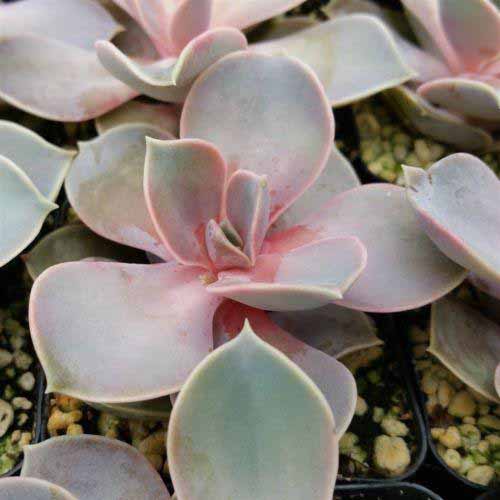
‘Perle von Nurnberg’ is a great pet safe echeveria for beginners, with pinkish purple foliage.
You can find ‘Perle von Nurnberg’ available in two- and four-inch pots at Planet Desert.
Learn more about growing echeveria here.
5. Elephant Bush
Elephant bush (Portulacaria afra) is a branching succulent that can grow into a shrub or small tree outdoors.
Inside, it’s a bonsai-like, pet safe houseplant that can be grown in pots – or a trailing succulent for hanging baskets.
In their native range, these nontoxic bushes provide a food source for elephants – indoors in your own home, you won’t have to panic if your beloved fur baby takes a nibble.
With small, shiny green leaves, this succulent makes a great nontoxic substitute for jade plant, and in fact is sometimes called trailing jade, though the two species are unrelated.
When grown as a houseplant, you can easily keep it at a compact size with regular pruning. As a bonsai, it is often pruned to remain at only a few inches tall.
On the other hand, if you are one of the lucky ones who can grow it outdoors in Zones 9 to 11, it can reach between eight to 15 feet tall, and four to six feet wide.
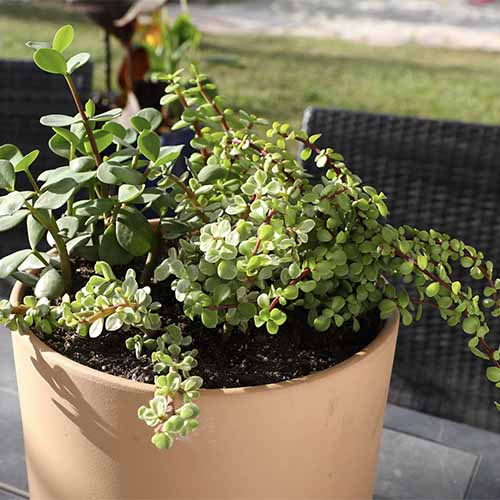
And if you grow this pet-friendly species outdoors, you may catch a glimpse of its lavender colored flowers, though don’t hold your breath waiting to see blooms on elephant bush houseplants.
Purchase a four-pack of elephant bush succulents in one-quart pots from the Altman Plants Store via Walmart.
Check out our guide to growing elephant bush here.
6. Epiphyllum
If you have a lot of room for a nontoxic houseplant, with possibly a sunroom or a skylight, an epiphyllum (Epiphyllum spp.) may fit in perfectly as a pet-friendly succulent.
Also known as orchid cacti, these plants take up a lot of room, with sprawling stems that can grow up to 10 feet long.
While their stems can be attractive in an odd sort of way, the main draw in growing orchid cacti is their huge, stunning flowers, that can be many shades of white, red, yellow, orange, pink, or purple.
Some growers like to pot epiphyllums in planters and use stakes to keep them upright, but they look the most beautiful in hanging baskets.
That way their long foliage can hang down – showing off these epiphytes as they would grow in nature.
Most epiphyllums require a bit more know-how than most of the other selections in this article, as they need some direct sunshine, but not too much.
Epiphyllum growers usually cultivate these pet safe bloomers outdoors in Zones 10b to 12a, under shadecloth, which is a setup not available to everyone.
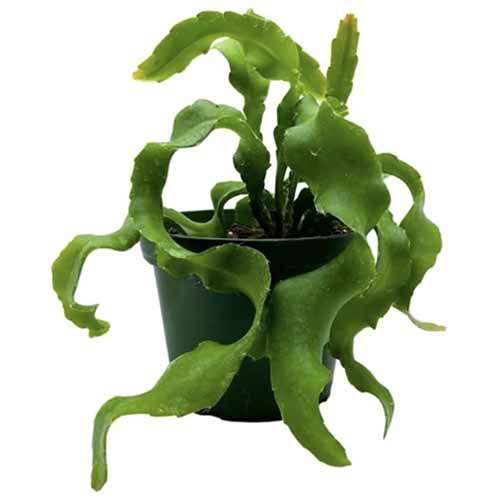
One of the easier types of epiphyllums to grow is curly orchid cactus (E. guatamalense), which has twisty stems.
You’ll find ‘Curly Sue’ epiphyllums in four-inch pots from Florida House Plants via Walmart.
Read more about caring for orchid cacti here.
7. Gasteria
Another nontoxic option are the succulents known as ox tongues or Gasteria.
They grow in indirect light and don’t require frequent waterings – making them perfect as low maintenance houseplants.
These pet safe species have stiff leaves that look like tongues, inspiring the common name, ox tongue.
They bear tall sprays of attractive red, pink, or orange blooms, even when grown indoors.
Although gasteria are known for tongue-like leaves, there are some variations in leaf shape among the different species, and even more diversity in leaf color.
You can find those with foliage ranging from dark to light green, to ruddy hues and variegated creams and yellows.
The largest types of gasteria tend to reach two feet tall and wide, but many mature to smaller sizes, and those you’ll find for purchase are usually small enough to grow in a pot on a windowsill.
If you’d like to grow these pet-friendly species outdoors all year long, make sure you live in Zones 10 to 12.
‘Little Warty’ is the most popular ox tongue for growing as a houseplant, and for good reason.
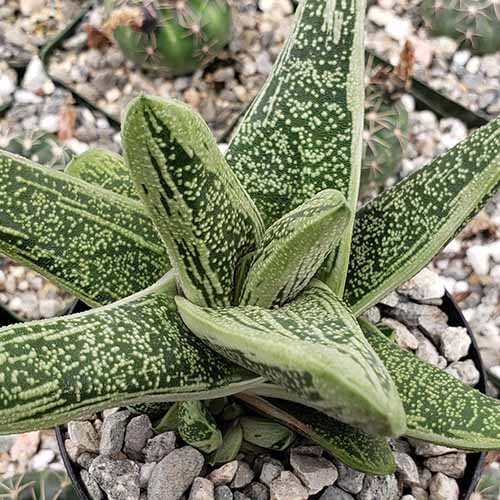
This cultivar has beautiful dark green and light green to cream variegated leaves, with stripes and spots.
You can find ‘Little Warty’ gasterias in four-inch pots available at Planet Desert.
Learn more about growing gasteria here.
8. Haworthia
You’ll often find haworthias (Haworthia spp.) being sold alongside gasterias because they have the same growing requirements.
Haworthias are easy for inexperienced growers as well as being pet-friendly.
You can grow them in small pots outdoors in Zones 9 to 11 or indoors placed in indirect light or part sun.
Haworthia succulents have rosettes of thick, fleshy leaves that feature attractive, translucent patterns known as epidermal windows.
Depending on the species and variety, the foliage can be many different shades of green, yellow, or silver, and some are variegated.
Haworthias can bloom indoors, with long flower stems that produce a petite floral display.
When you purchase one of these succulents, it will most likely be in a tiny pot.
These plants will eventually reach up to 12 inches wide and 20 inches tall, but this will take many years.
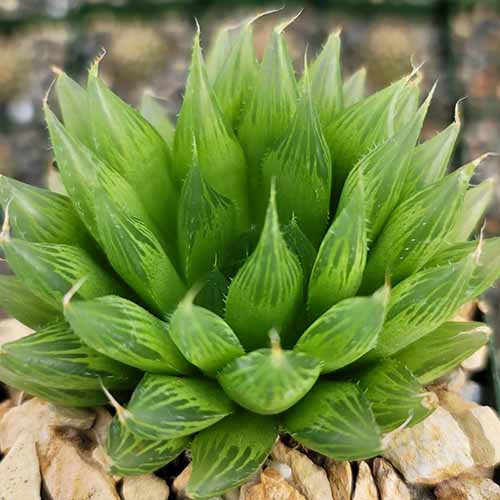
There are so many intriguing haworthias to grow. H. cooperi is a species that has lovely, large windows in its leaf tips.
You can find this charming haworthia available at Planet Desert in four-inch pots.
Read more about growing haworthias here.
9. Haworthiopsis
Haworthiopsis is a genus of pet safe succulents that is related to both haworthias and gasterias, and comes with the same easy-going care requirements as its relatives.
The nontoxic members of this genus used to be considered haworthias, and have been reclassified, but the old name is sometimes still used.
Haworthiopsis have rosettes of thick, spiky leaves that are either green or variegated, and patterned with small white dots.
They bear long flower stems with small white blooms, and generally reach up to six inches wide and 10 inches tall.
Haworthiopsis succulents grow perfectly in pots, and thrive in indirect light or part sun.
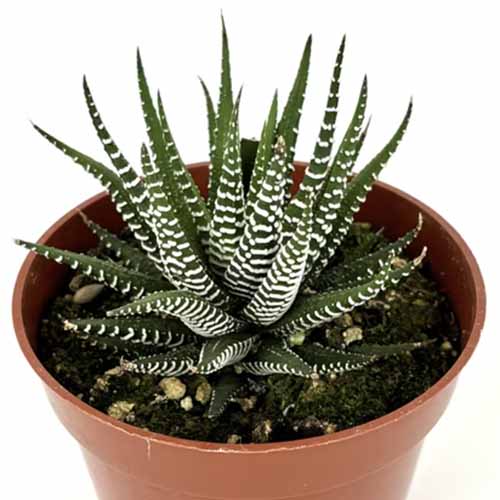
The most popular member of this pet-friendly genus is H. attenuata, commonly called zebra haworthia, or zebra haworthiopsis.
You can purchase a zebra haworthiopsis in four-inch pots from CTS Air Plants via Walmart.
Learn to grow and care for zebra haworthia here.
10. Hens and Chicks
Hens and chicks (Sempervivum spp.) are pet-friendly succulents that form beautiful rosettes of fleshy leaves. These are best grown outdoors, not as houseplants.
They spread into a succulent ground cover as the mother plant, the “hen,” produces numerous baby “chicks” that take root.
Depending on the type you grow, they will mature to a height of two to eight inches, and a width of up to two feet.
Low maintenance and nontoxic, hens and chicks are easy to grow in Zones 4 to 8 as long as you provide at least six hours of direct sun per day and well-draining, acidic soil.
In addition to growing them in the ground when soil conditions permit, you can also pot them up in containers.
There are many different hens and chicks varieties, in colors ranging from pale green, to icy blue, to rosy pink.
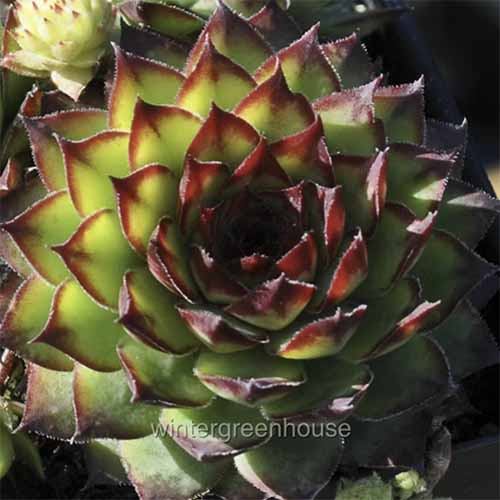
‘Montfort’ is a variety of hens and chicks that’s green with deep red coloration on the leaf tips.
Pick up ‘Montfort’ hens and chicks in three-inch nursery pots from Winter Greenhouse via Walmart.
Get tips for growing hens and chicks here.
11. Ice Plant
One of the more unusual pet-friendly succulents out there is one that you probably won’t find at your local garden center.
Ice plant (Delosperma lehmannii) has geometrical-looking, chunky, blueish green leaves, branching stems, and a partially trailing, partially upright growth habit.
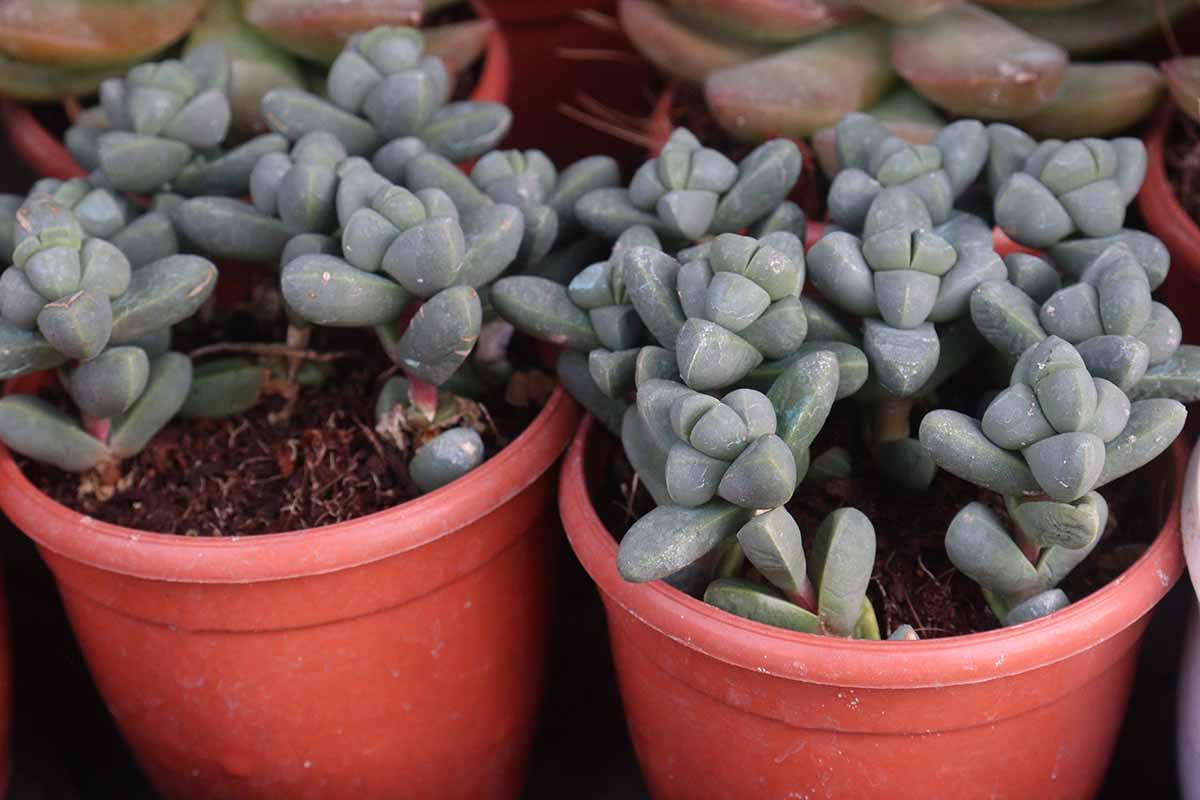
Ice plants tend to reach six to eight inches tall and up to 12 inches wide, but are slow growing, making them perfect for windowsill pots while still small.
These succulents are considered nontoxic, and while they are not particularly hard to take care of, they aren’t as easy as some of the other options here.
They need well-draining soil and full sun (or the equivalent from a grow light), and tend to dry out more quickly than some other succulents.
In outdoor rock gardens or xeriscapes, you can grow ice plant in Zones 10 to 13.
Purchase two- or four-inch ice plants from the DH7 Enterprise Store via Amazon.
You’ll find more guidance for growing ice plants here.
12. Lifesaver Cactus
If you’re looking for a pet-friendly succulent with the spiky silhouette of a cactus but without the prickles, try lifesaver cactus (Huernia zebrina).
This pet safe plant has leafless, spiky looking, green stems that reach about six inches tall.
Lifesaver cacti spread to about a foot wide, and produce fascinating flowers that look like red ring candies surrounded by tiger-striped petals.
Unlike family members such as starfish flower cactus, this particular nontoxic succulent doesn’t have smelly blooms.
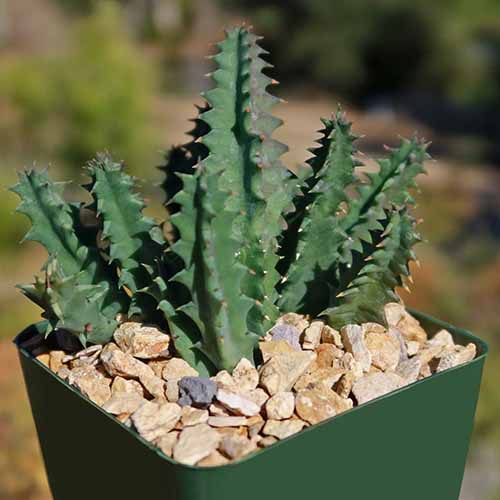
Lifesaver cactus is easy to care for and will thrive with bright light and some direct sun, making it perfect for a windowsill where it can grow nicely in a pot.
You can find lifesaver cactus in four-inch and one-gallon pots available at Planet Desert.
You can learn to grow and care for a lifesaver cactus here.
13. Lithops
For experienced succulent growers looking for a challenge, lithops will give your green thumb a work out while dazzling you with the wonders of biodiversity.
Also known as living stones, Lithops species have more complicated watering routines than all of the other options in this list, so they are not considered beginner-friendly.
However, they are pet-friendly, so on the rare chance that your feline recognizes one of them as a plant and decides to take a nibble, you should be able to avoid a traumatic vet visit.
Lithops are tiny, with the largest ones reaching no more than two inches tall and wide, though some do produce clumps.
You’ll find options that will fit perfectly on a windowsill located in full sun.
These pet safe species are made up of two fused leaves, which molt periodically to reveal a new set of fused leaves – or sometimes a double set!
There are many different types of lithops living stone succulents, and part of the fun of growing these plants is exploring the different colorations and patterns on them.
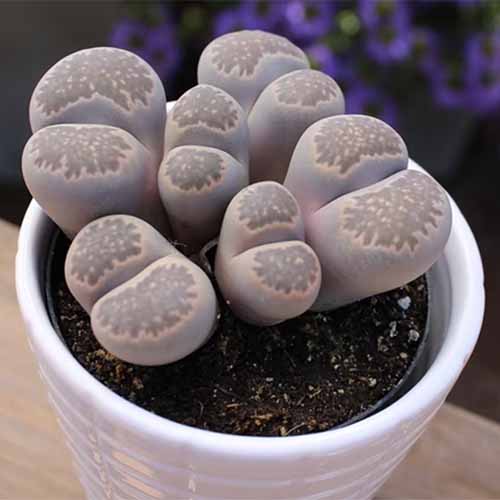
In addition to their fascinating foliage, they produce bright, daisy-like blooms that cover the entire plant.
If you’re ready for a challenge, you can purchase a pack of four 2.5-inch lithops from Altman Plants via Walmart.
Get tips for growing lithops succulents here.
14. Mistletoe Cactus
Toxic mistletoe may make a regularly scheduled appearance for the holidays, but mistletoe cactus (Rhipsalis baccifera) is a pet safe plant you can keep in your home all year long, growing in a hanging basket.
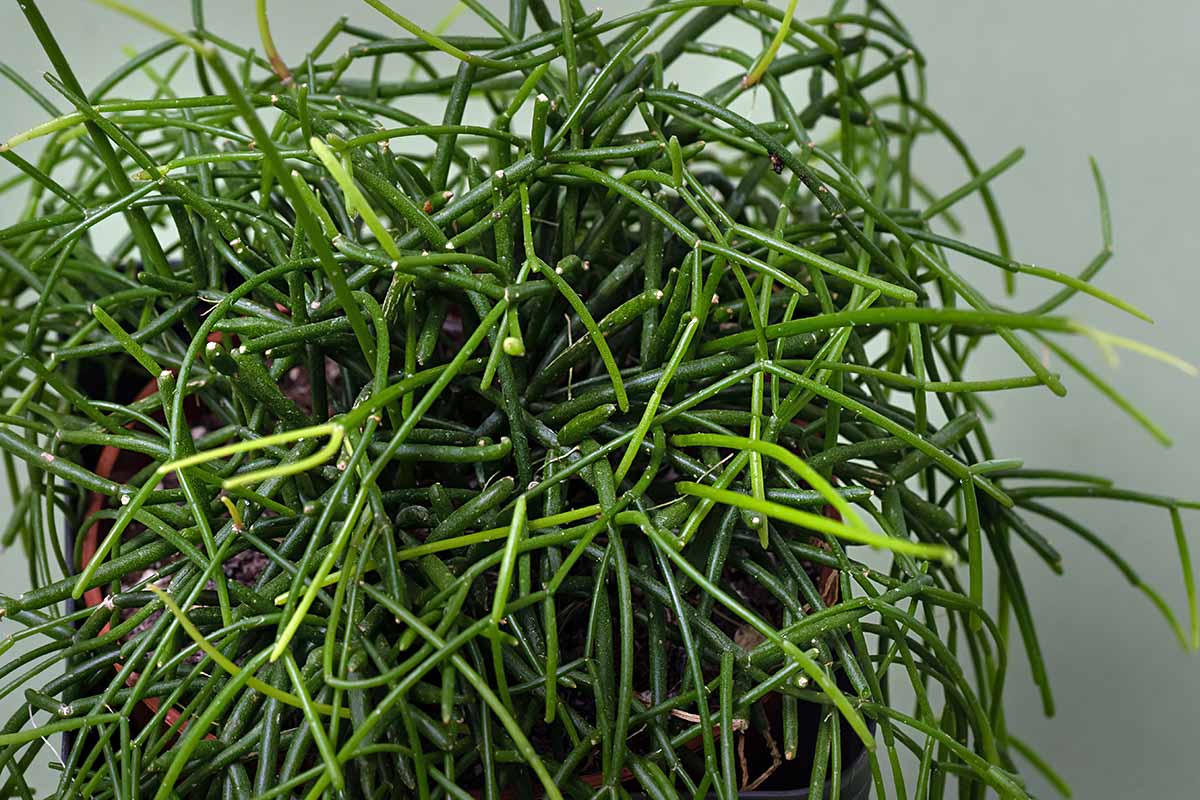
This nontoxic epiphyte isn’t a barrel-bodied cactus with long spines, but has long, dangling, thin, green, stemless leaves.
In ideal conditions, mistletoe cacti can develop trailing stems that reach up to six feet long, and a spread of up to two feet.
Mistletoe cactus has tiny flowers and can produce white berries like those of the parasitic mistletoe, but likely won’t if grown indoors all year.
Gardeners in Zones 9b to 11 can cultivate this succulent outdoors, even in winter.
Mistletoe cactus is a pet-friendly epiphyte native to rain forests and is used to high humidity levels.
It is happy in bright, indirect light, and can tolerate up to six hours of direct sun per day.
You’ll find mistletoe cacti available for purchase in four-inch pots from Hirt’s Gardens Store via Amazon.
Learn to grow and care for mistletoe cactus here.
15. String of Turtles
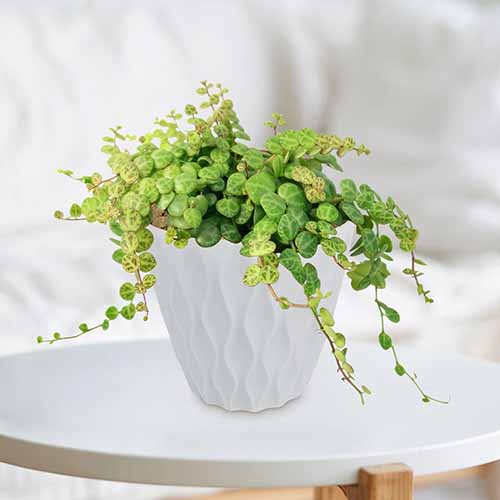
String of turtles (Peperomia prostata) is a wonderful pet-friendly choice for a hanging basket.
With vines that cascade over the edge of baskets or pots, it’s one of the best species of peperomia to grow at home.
This peperomia bears small, fleshy, roundish leaves in green and silver with a turtle shell-like pattern.
Don’t let the vining description mislead you, though, this low maintenance, pet safe option stays quite compact, reaching little more than 12 inches in length and up to four inches wide.
If you have a spot with indirect bright light, string of turtles will thrive as long as you water it regularly and provide some humidity.
You can place this nontoxic houseplant outdoors in a protected location during the warm months of the year, but be sure to bring it back indoors for winter unless you live in Zones 10 to 12.
You can find string of turtles in two- and four-inch pots available at Planet Desert.
Read about growing peperomias here.
9 Toxic Succulents to Avoid
If you have dogs or cats in your home, there are some succulents you may want to skip.
Even well-behaved cats who have never sampled your houseplant foliage before sometimes get a sudden inclination for novelty and end up ingesting a poisonous plant.
Some of these plants can put your beloved pet at serious risk, while others may cause only mild symptoms.
If your dog or cat ingests one of these, try to assess how much of the plant they have eaten so you can provide as much information as possible to your vet or the doctor on the poison control help line.
1. Agave
Agave species, also known as century plants, are succulents that look like they are warning you to stay away with their spiny leaf edges and tips.
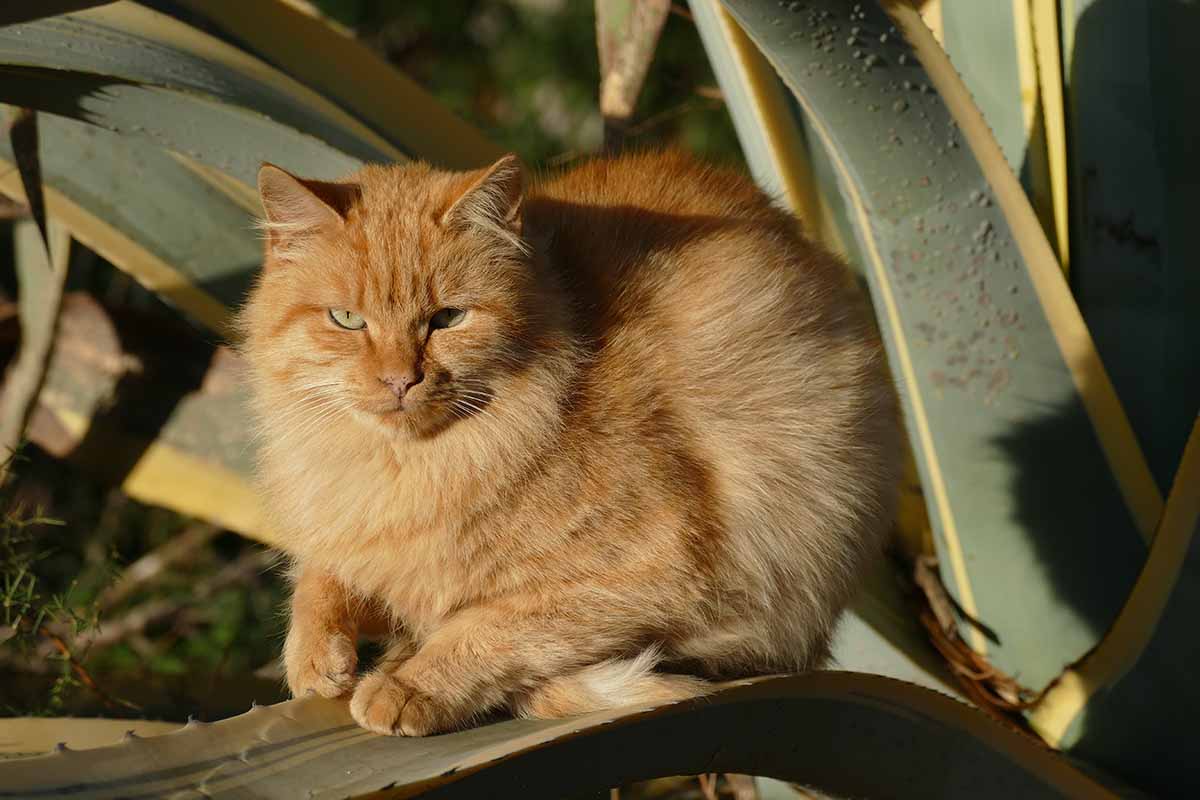
You should heed that warning, because not only are these agaves spiky, they are also poisonous.
Agaves may be one of the best defensive plants for home security, but they should stay out of your yard if you are trying to cultivate pet safe landscaping.
Those spiny leaves can damage your pets mouth and digestive system, and some toxic species contain inflammatory saponins.
You’ll find more information about agaves here.
2. Aloe
Everyone’s favorite DIY burn remedy comes with a dark side – aloes (Aloe spp.) aren’t safe for our fur babies to eat.
There are many aloe varieties for landscaping and containers, and you should beware of all of them if your pets are plant nibblers, since they’re toxic.
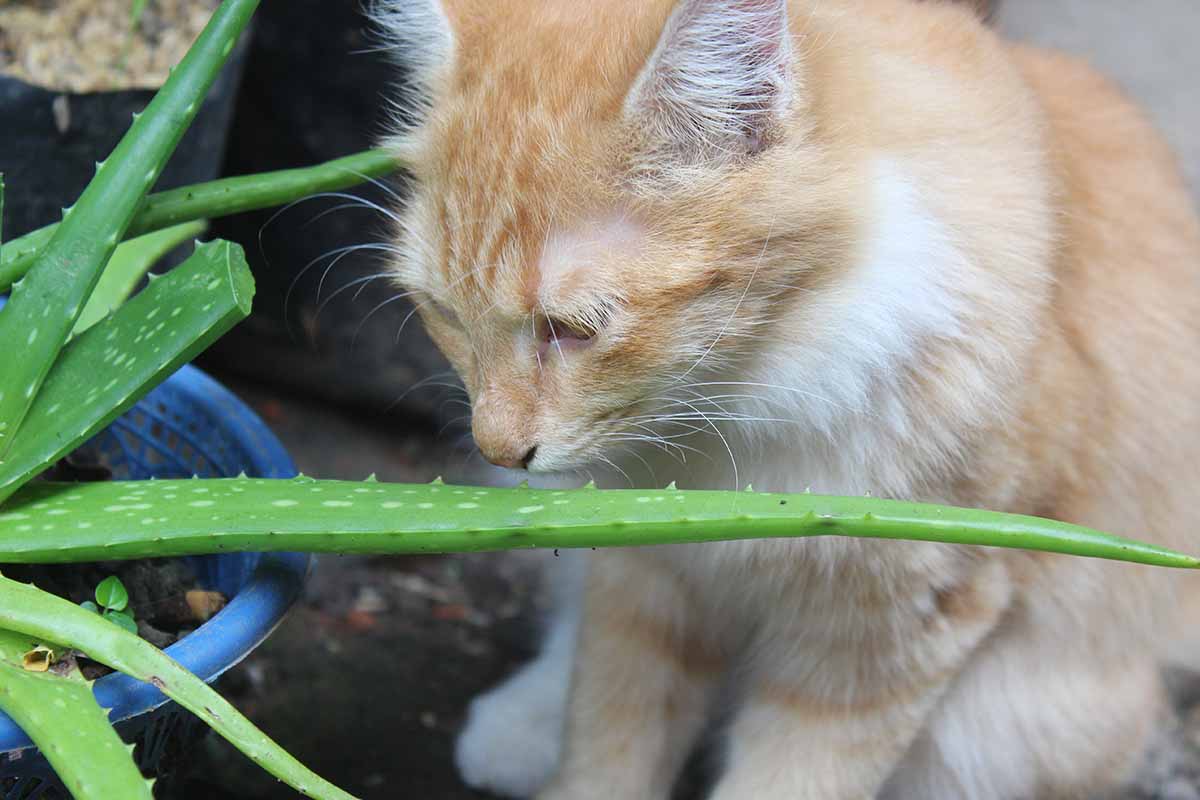
Aloes contain saponins and anthraquinones, both of which are responsible for adverse reactions.
These compounds can cause our cats and dogs to become lethargic and suffer from gastrointestinal upset.
Concerning symptoms like muscle tremors are also possible.
3. Euphorbia
Not all Euphorbia species are succulents, but since there are many attractive fleshy plants in this genus, you should be aware of their dangers – they are toxic.
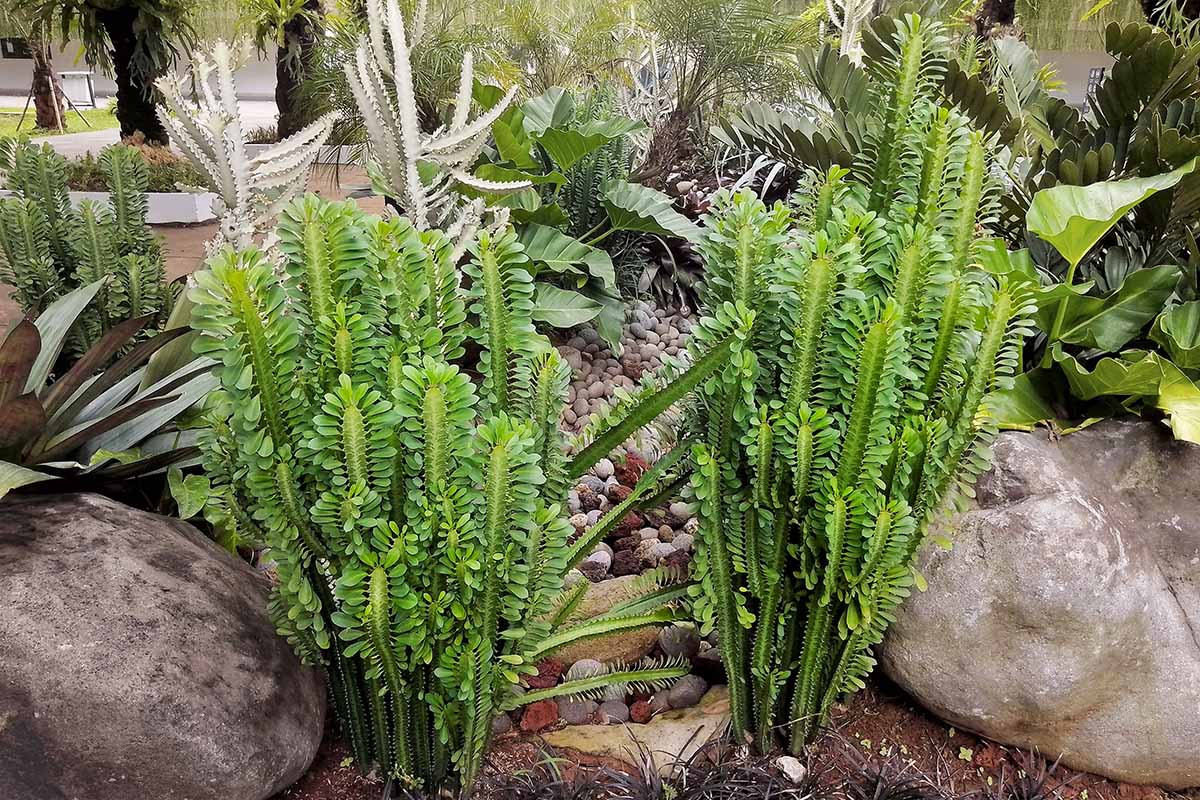
African milk tree (E. trigona) and mottled spurge (E. lactea) are two types that look like cacti that are poisonous to pets.
Euphorbias contain diterpene esters in their sap – the compounds responsible for their toxicity.
Contact with the sap can cause irritation and eye damage, while ingestion can lead to gastrointestinal problems and convulsions.
Find out more about euphorbias here.
4. Jade
Jade (Crassula ovata) is one of the most common succulent houseplants, which is why pet owners will want to be aware of its dangers.
There are many types, such as ‘Gollum’ jade, and all of them are toxic.
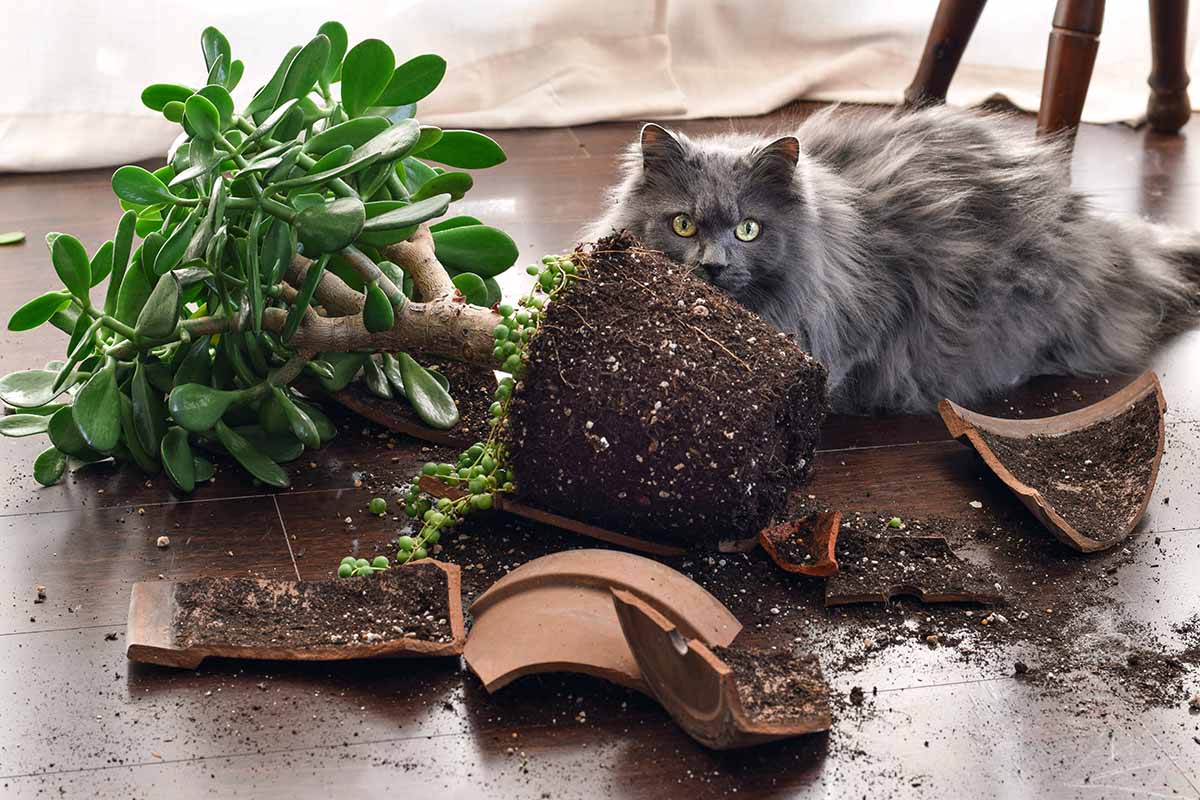
If your dog or cat ingests parts of a toxic jade plant, they will likely have an upset tummy, and luckily, this is typically the extent of the risk.
You might have to clean up some diarrhea, though.
Some animals might also become lethargic and seem weak on their feet.
Read our article to learn more about jade.
5. Kalanchoe
Kalanchoe species go by many different names, some of which reflect their ability to reproduce very easily – such as mother of millions or mother of thousands.
Unfortunately for kalanchoe fans who have pets, they are toxic.
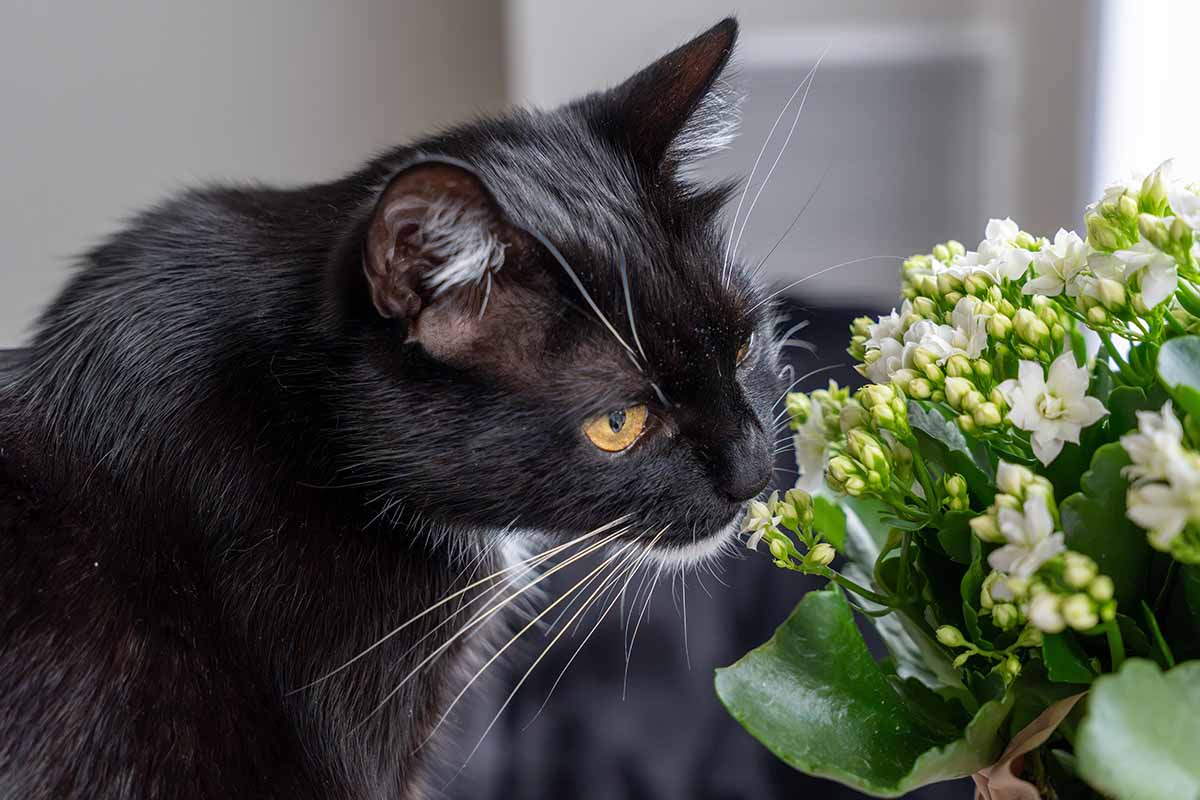
And there are many different varieties of kalanchoe for your home and garden, so being able to identify these plants is crucial so that you can keep your pets safe.
All parts of the kalanchoe contains poisonous bufodienolides.
Gastrointestinal upset, including nausea, diarrhea, and vomiting are to be expected if your pet eats parts of these plants, and it can also cause abnormal heart beats.
Learn more about kalanchoe here.
6. Snake Plant
Snake plants (Dracaena spp.), also known as mother-in-law’s tongue, are common succulent houseplants that are among the poisonous plants that can cause harm to your pets.
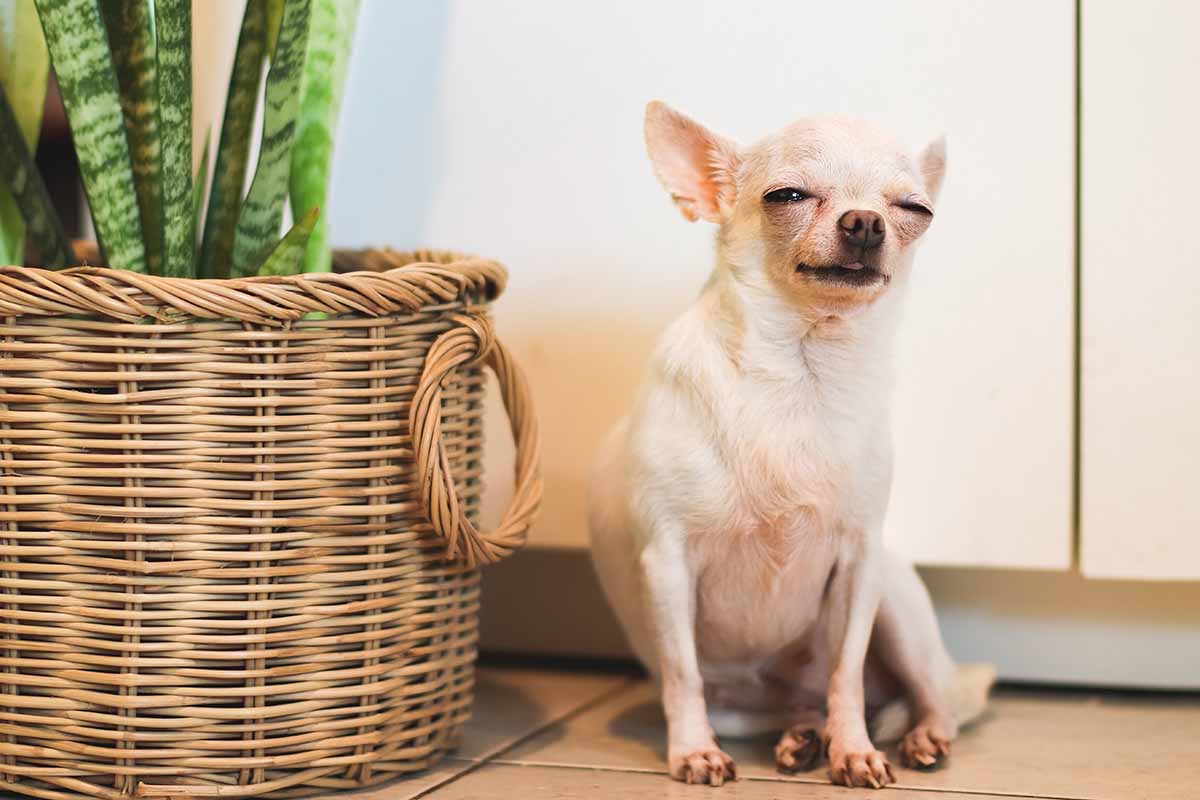
These toxic species with their long, flat, variegated leaves may be easy to care for, but they contain saponins that can cause nausea, diarrhea, and vomiting in cats and dogs.
Learn more about snake plants here.
7. String of Dolphins
String of dolphins (× Bacurio delphinatifolius) is another succulent that looks great in a hanging basket – and if you have one, you should keep it well out of the reach of your cats or dogs.
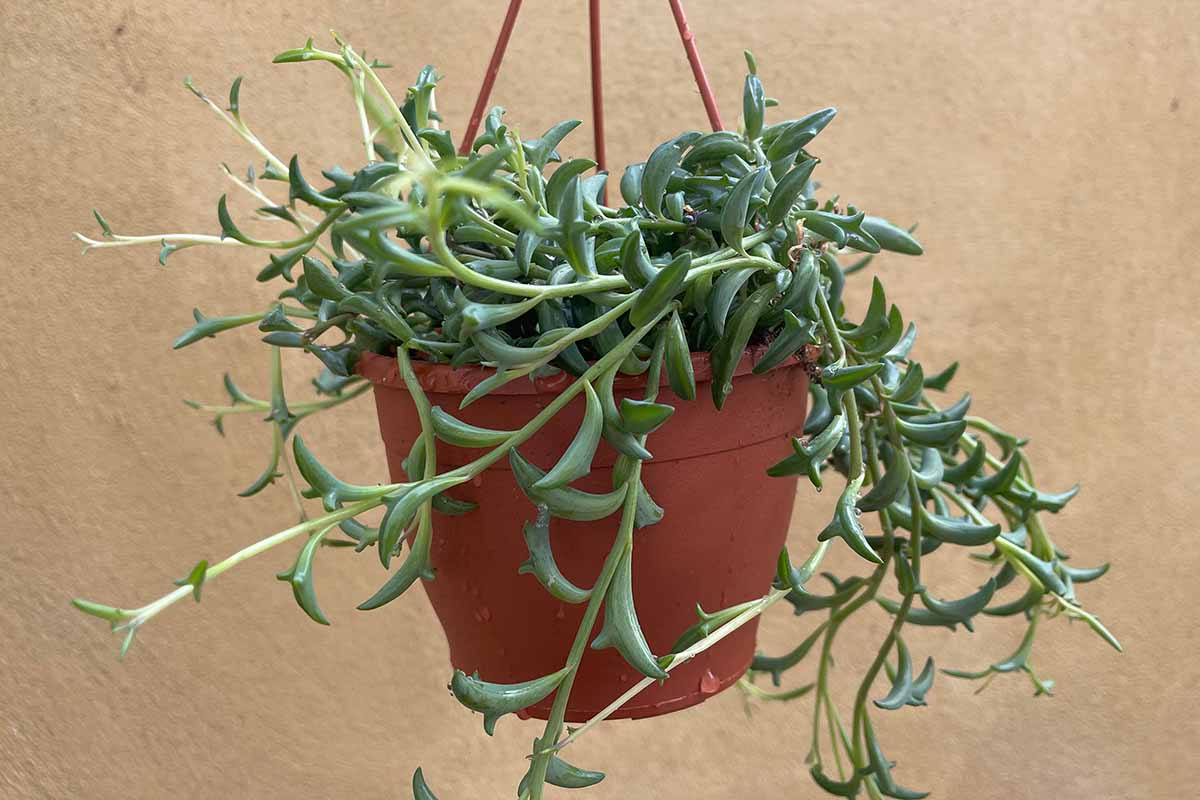
Although they are attractive, with their porpoise-shaped leaves, they aren’t pet-friendly, so reach for a safe, nontoxic alternative like donkey tail instead.
String of dolphins contain pyrrolizidine alkaloids, toxins linked to liver damage among other serious health concerns.
Find out more about string of dolphins here.
8. String of Pearls
Usually sold in hanging baskets, string of pearls (Senecio rowleyanus) has trailing stems covered in globular leaves.
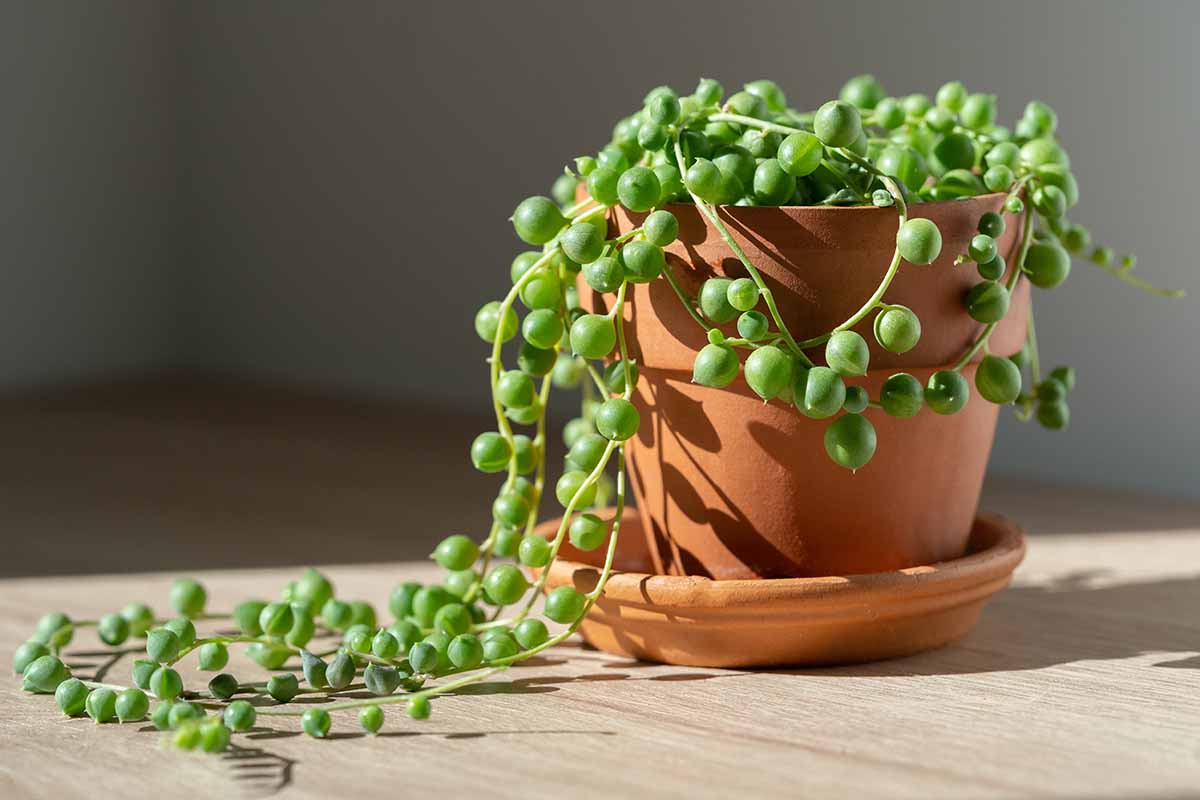
String of pearls contains pyrrolizidine alkaloids, which cause vomiting and diarrhea in pets, as well as skin reactions.
Read about string of pearls in our article.
9. Watch Chain
Watch chain crassula (Crassula muscosa) isn’t among the most common succulents you can purchase as a houseplant, but it has a memorable appearance.
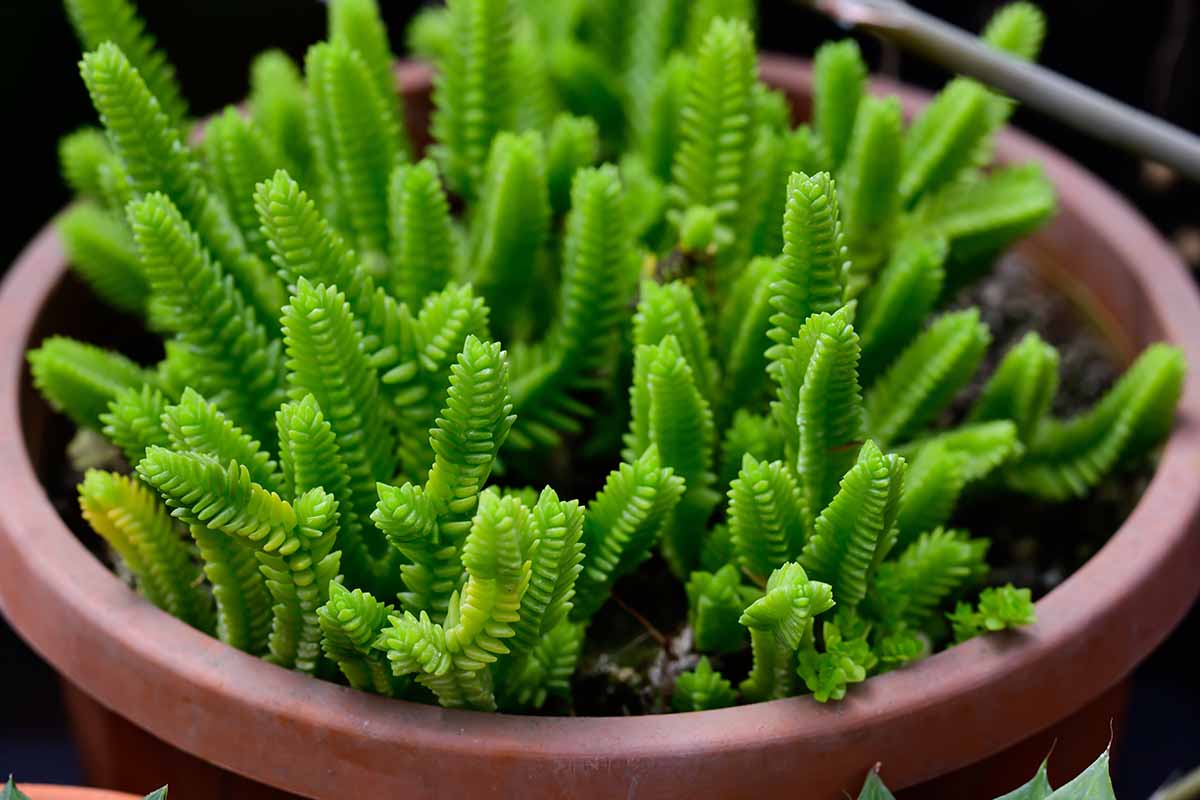
Its thin, upright stems are loaded with small nested leaves that give it the look of a fine chain.
Like so many other concerning succulents, watch chain crassulas contain saponins that are mildly toxic.
Learn more about watch chain crassula here.
No More Succulent Cat-astrophes
You’ve now learned about a handful of nontoxic, pet-friendly succulents to grow in your home or garden, as well as several other toxic ones that you should avoid.
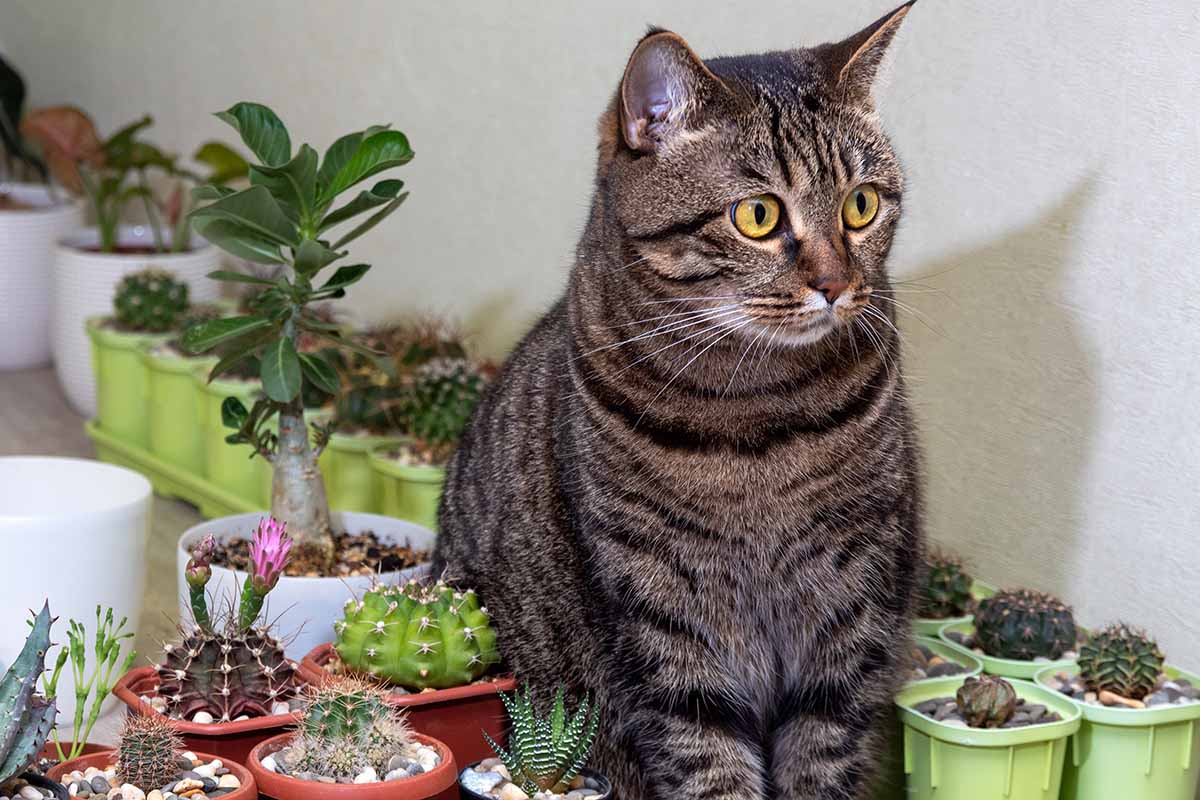
We hope these recommendations help you prevent scary emergency vet visits with your pet, and increase your enjoyment of gorgeous botanical species in your indoor and outdoor spaces.
If you have any questions or tips of your own to share with our readers, please drop them in the comments section below.
And for more information about growing succulents, add these guides to your reading list next: