
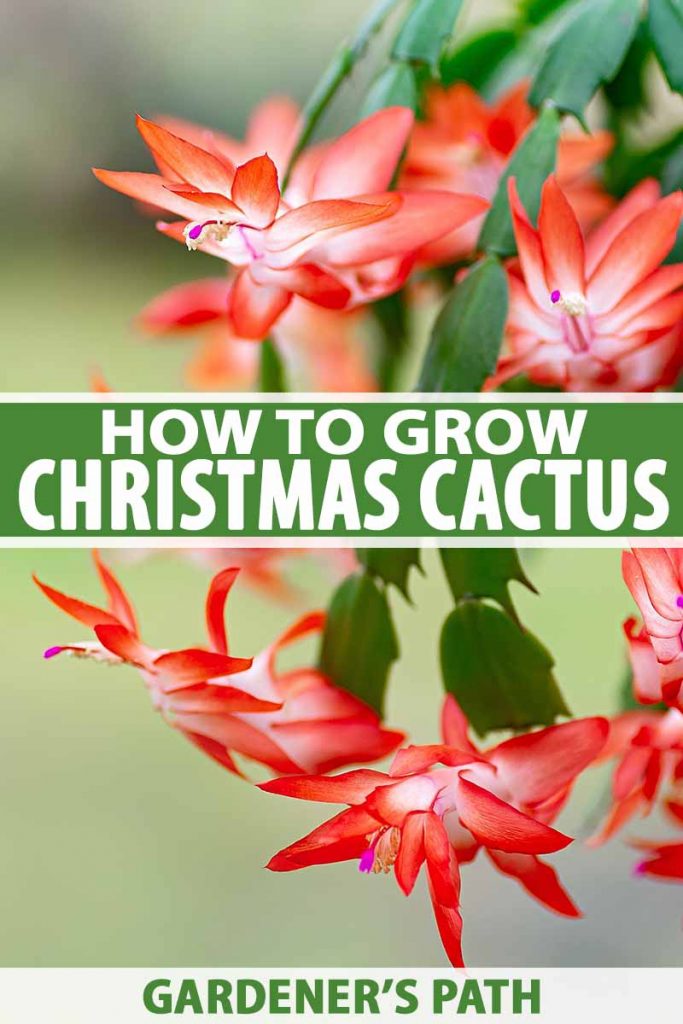
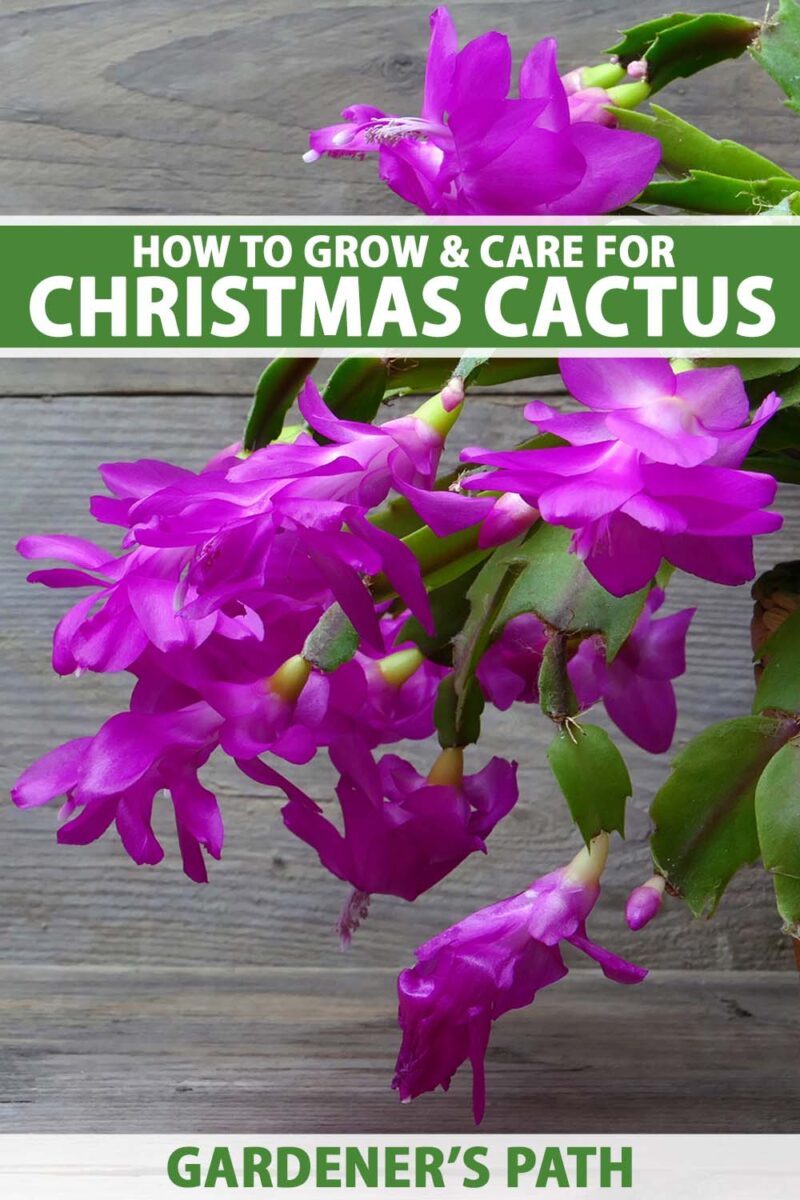
Schlumbergera spp.
Ah, the Christmas cactus. Perhaps you received one of these as a holiday gift, wrapped with a red ribbon or nestled in a festive planter.
Maybe you forgot about it, sitting on your mantle, after the holiday frenzy.
And yet, to your surprise, your neglect failed to do it any harm. So you began a watering routine, and it became one of your cherished houseplants.
Christmas cacti are fairly hardy as far as houseplants go. But they do require special conditions to coax out their blooms every year.
We link to vendors to help you find relevant products. If you buy from one of our links, we may earn a commission.
Sometimes called zygocactus or holiday cactus, this houseplant typically blooms just in time for the end of year holidays.
I’ll cover everything you need to know about growing and caring for this winter-blooming succulent plant:
What You’ll Learn
This species originates from a tropical environment rather than a dry desert, so its care is a bit different than what you may be familiar with for other types of cacti.
Christmas cacti are also epiphytes, which means they don’t naturally grow in soil, but rather in shallow organic debris found on rocks or in the crevices of tree trunks.
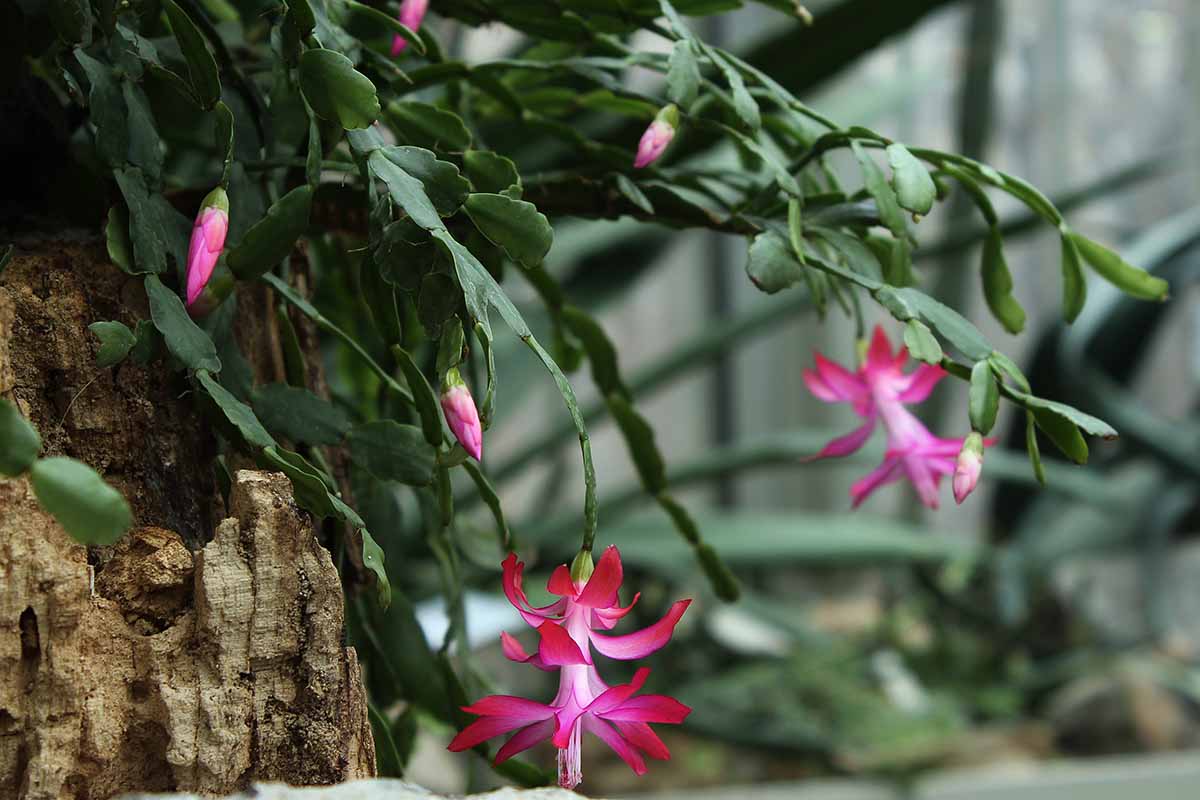
The plants in the Schlumbergera genus are all native to the coastal mountains of southeast Brazil, and grow in tropical rain forests where they are pollinated by hummingbirds.
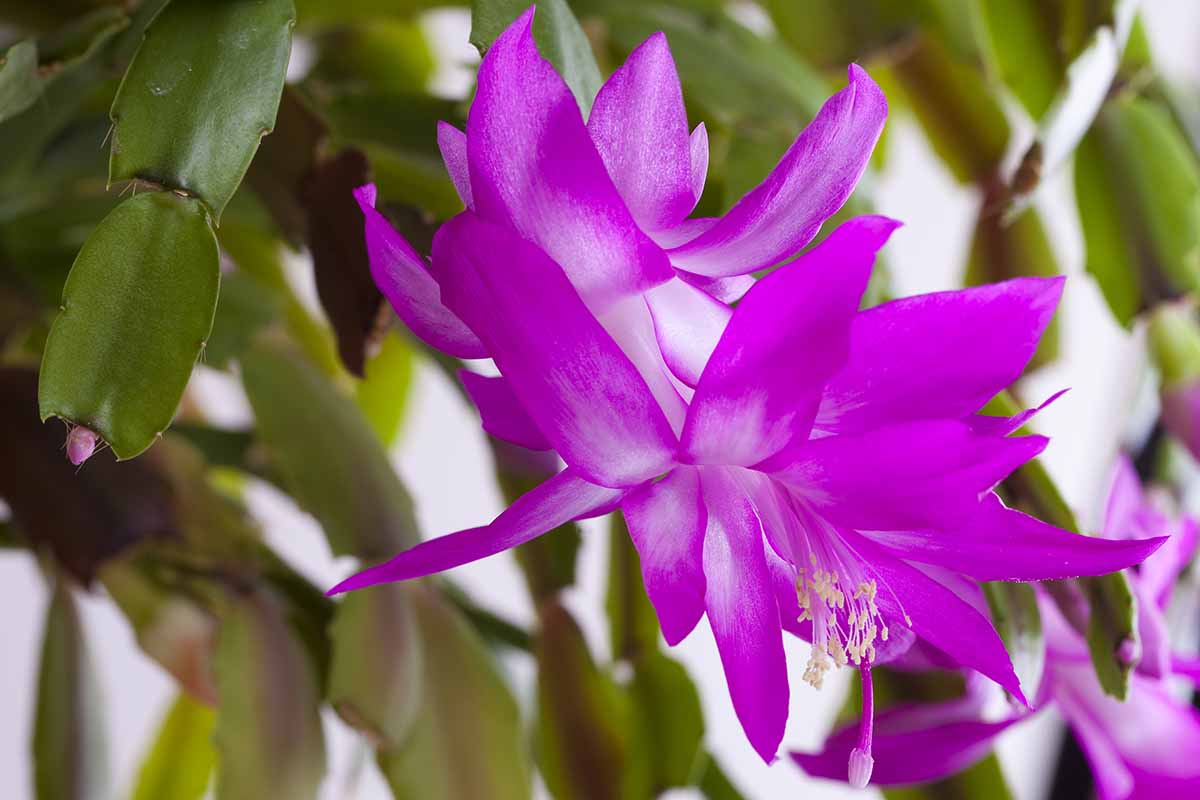
Like other types of cacti, Schlumbergera don’t grow leaves. Instead, they have jointed stems made up of flattened segments called cladodes.
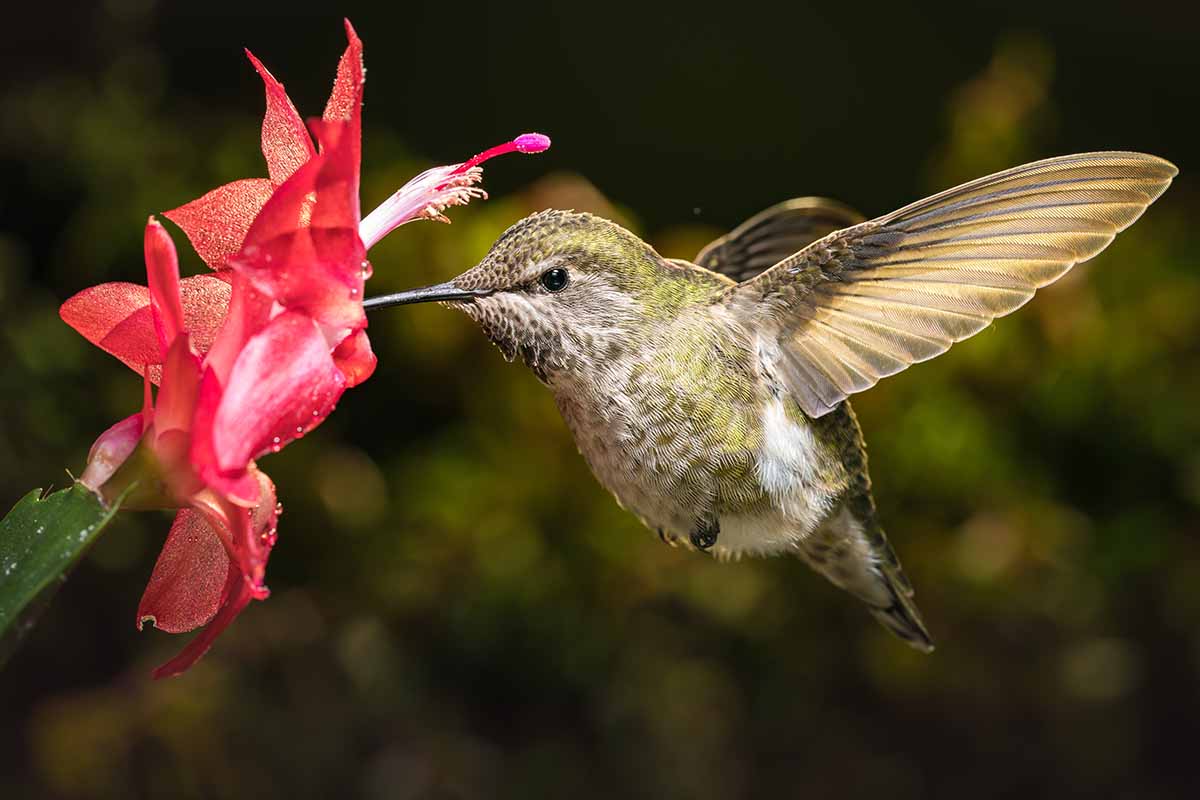
Flowers grow from the last segment on the end of these stems.
Unlike some of their prickly cousins, these plants do not have sharp spines, which makes handling them less of a thorny issue.
Quick Look
Common name(s): Christmas, Thanksgiving, Easter cactus, zygocactus
Plant type: Flowering epiphyte
Hardiness (USDA Zone): 10-12 (outdoors)
Native to: Brazil
Bloom time / season: Late fall to early winter
Exposure: Indirect, bright light; long nights during dormancy
Soil type: Loose, well draining
Soil pH: 5.7-6.5, slightly acidic to neutral
Time to maturity: 2-3 years
Mature size: 12 inches tall by 24 inches wide
Best uses: Ornamental houseplant in hanging baskets or pots
Taxonomy
Family: Cactaceae
Subfamily: Cactoideae
Genus: Schlumbergera
Species: Truncata, x buckleyi
Previously – and mistakenly – known as S. bridgesii, the true Christmas cactus (S. x buckleyi) is a hybrid of two species of Schlumbergera, S. truncata and S. russelliana.
This particular cross was created in England at the Rollison Nurseries by William Buckley in the 1840s.
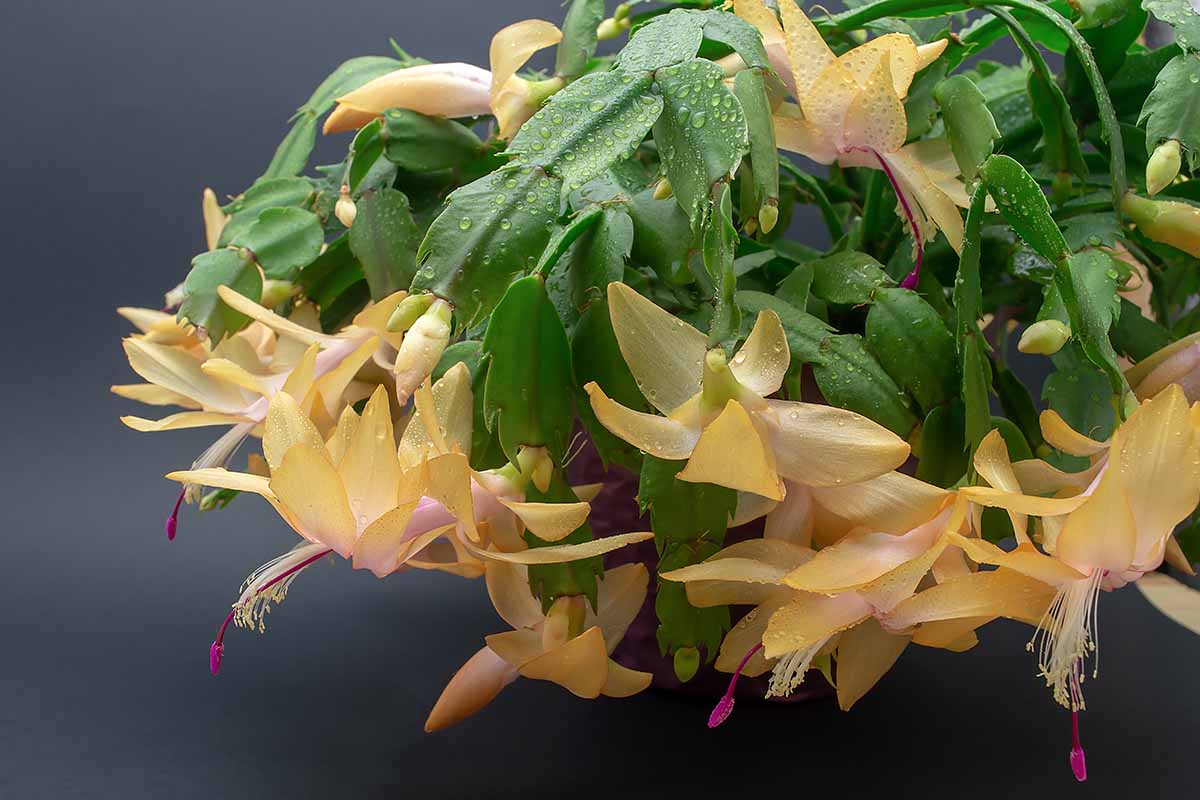
These days, many houseplants sold as “Christmas cactus” in garden centers and grocery stores are actually cultivars of S. truncata, more commonly known as crab, false Christmas, or Thanksgiving cactus.
As its name suggests, it typically blooms about four weeks earlier than Christmas cactus.
There are a couple of surviving cultivars from the original S. x buckleyi, but most plants you’ll find today will be hybrids of the Thanksgiving type, S. truncata, and the true Christmas cactus, S. x buckleyi.
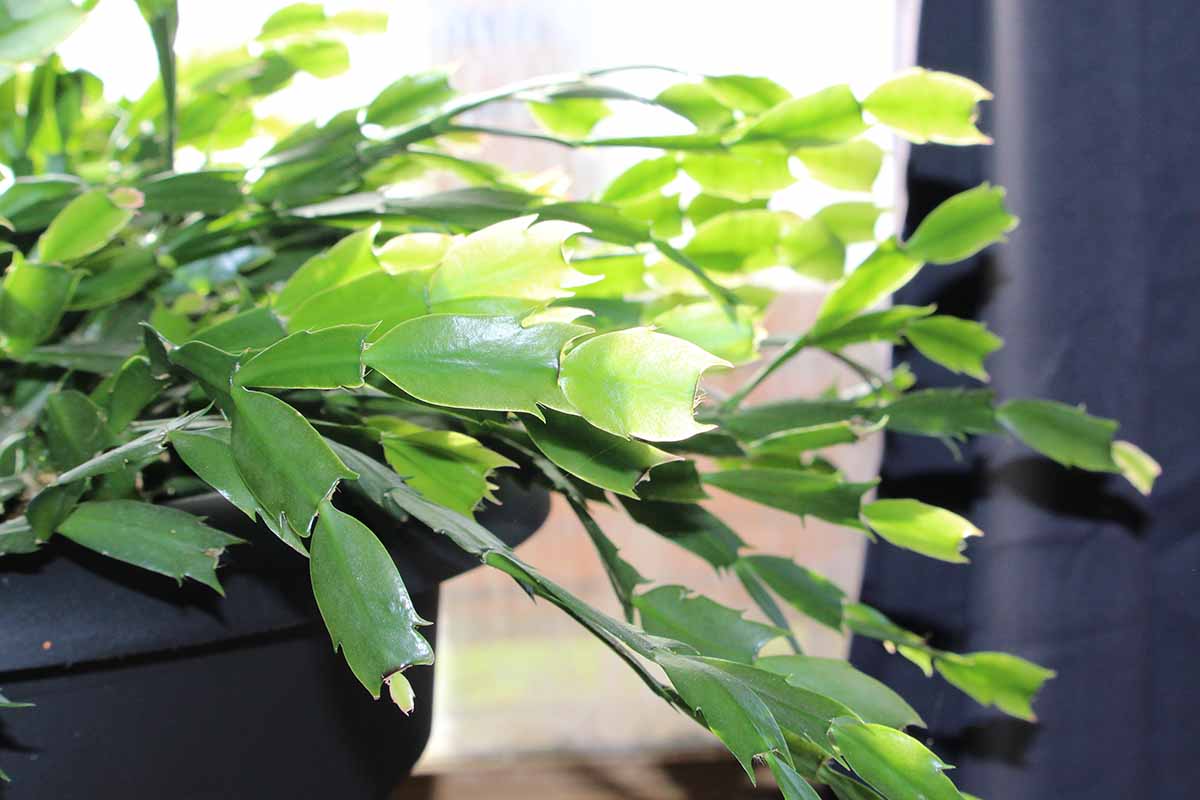
To make things a little bit more confusing, commercial growers sometimes group these different species under the heading “holiday cactus.”
This broad term can also include Easter cactus, Hatiora gaertneri, which may look similar, but only flowers once a year around Easter.
If you buy a plant called “Christmas cactus” it could well be a different species, or a hybrid of some type.
We dig into all of this a bit deeper in our supplemental guide, What Are the Different Types of Holiday Cacti.
Luckily for us, no matter which species or hybrid you have, the required plant care will be the same.
Correctly identifying your specific plant’s species and scientific name is not necessary to enjoy this lovely houseplant. Only the bloom time may be different.
How to Grow
Christmas cactus is actually not all that demanding as a houseplant, so don’t let these care requirements scare you.
The most important thing to remember is not to overwater this plant. Providing it with a little extra care, as noted below, will ensure that your plant really thrives.
Light
Replicating the natural growing conditions of this houseplant will help to ensure that it thrives in your home.
Remember that this plant grows naturally in rain forests, and you should try to provide it with similar light conditions. Bright, indirect sunlight is best.
Whether you keep your houseplant indoors all year or give it an outdoor hiatus during the warm months, make sure it is exposed to bright but indirect sunlight.
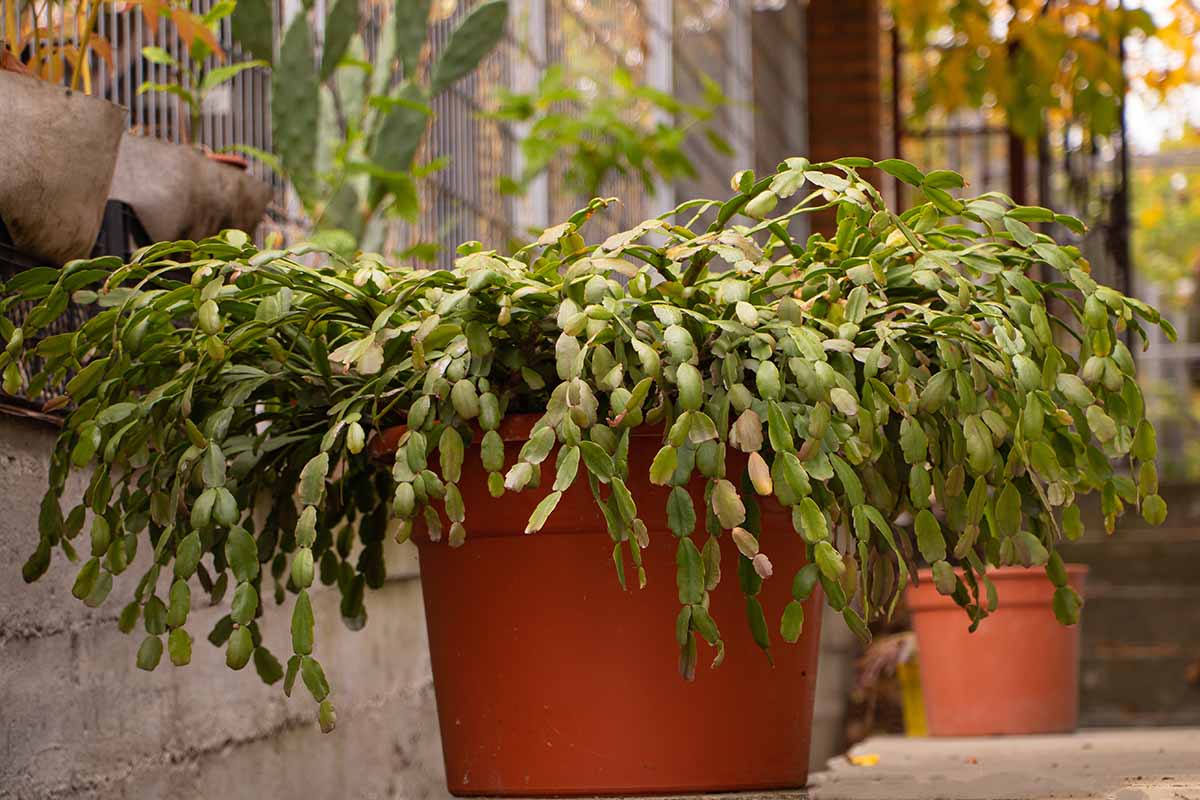
Don’t let your plant be scorched by the sun – too much direct sunlight will cause the stems to turn red or purple.
Temperature
During the growing season – April through September in the Northern Hemisphere – these plants thrive in temperatures between 70 and 80°F.
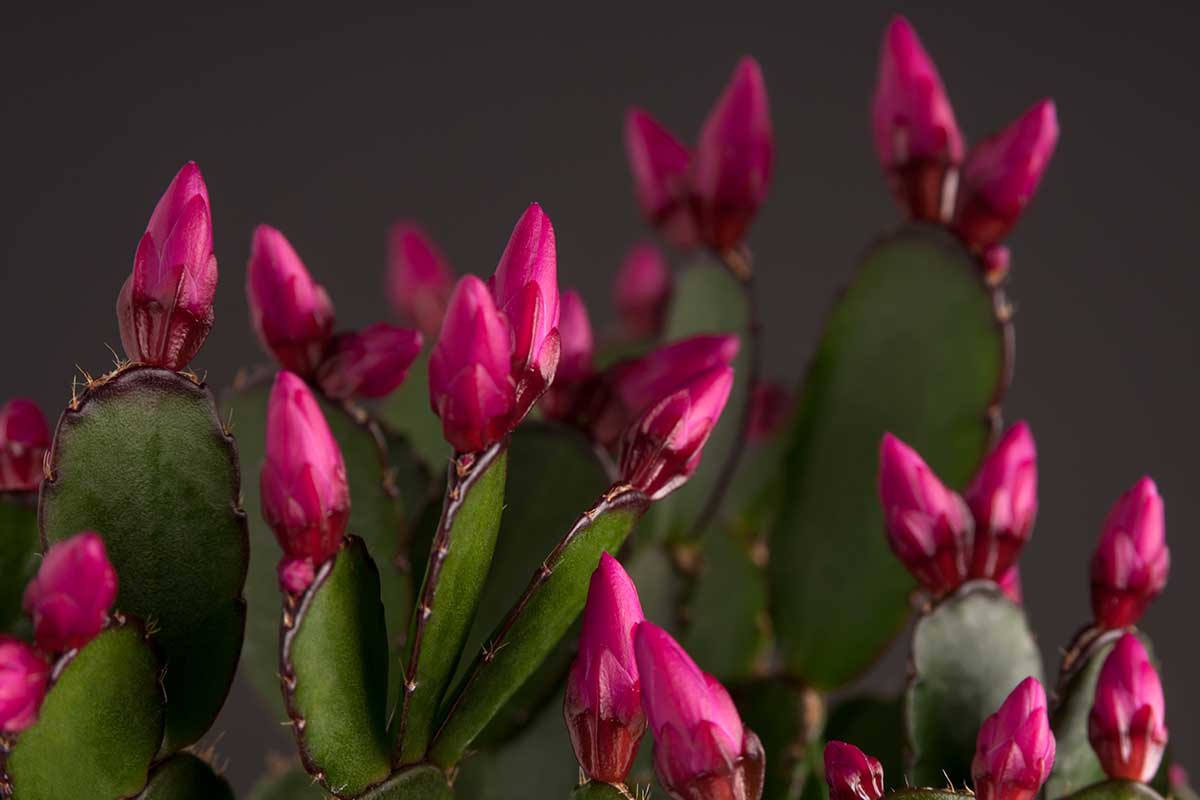
In fall, they prefer nighttime temperatures ranging from 55 to 65°F. These cooler temperatures signal the plant to produce flowers.
Once they begin to put out flower buds, avoid sudden temperature changes, which can cause the buds to fall off.
Don’t let your plants freeze as this can damage or kill them.
Water
Since this species is native to tropical rain forests, it thrives in an environment with high humidity but does not appreciate having wet feet.
Let the top inch of soil dry out between waterings. Depending on the conditions in your home, this will mean watering every two to three weeks in midwinter.
You’ll need to adjust how often you water based on how warm and dry your home is.
When it’s time to water, soak the plant in a sink or tub until water runs out of the drainage holes. Do not let the pot sit in a saucer full of water.
If your home is quite dry, you can provide extra humidity by placing the pot on top of a small container filled with pebbles, then add water to the pebbles.
Make sure the pot is sitting above the water line rather than in the water. As the water evaporates, it will moisten the air around the plant.
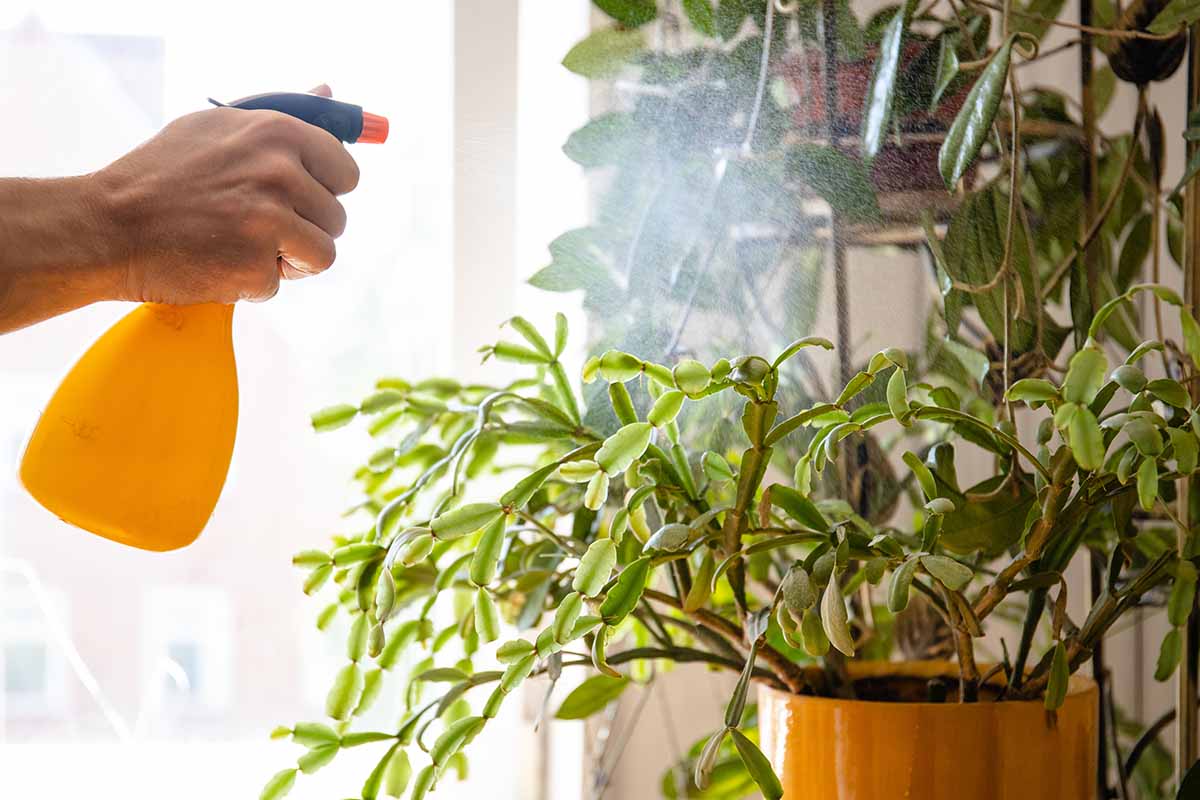
Alternatively, you can mist the foliage regularly to provide a more humid environment.
Water frequently when the Christmas cactus is budding or in bloom and less frequently during dormant periods when it is not blooming or putting on new growth.
If in doubt, keep in mind that it will fare better being a bit under-watered rather than being overwatered.
If water requirements aren’t met, the plant may start dropping its leaves (cladodes).
Fertilizing
If you’d like to feed your Christmas cactus, wait until the active growing season begins.
You can give it a liquid houseplant fertilizer, but I like to go the more natural way and give mine a little worm compost.
Worm compost provides macro and micronutrients that the plant needs, as well as balancing the soil pH.
If you do add compost, just make sure that you don’t raise the acidity of the soil too high, as doing so could cause the stems to rot. And do not feed this plant while it is in bloom.
Find more tips on fertilizing Christmas cactus here.
Where to Buy
These houseplants come in a wide array of blossom colors, including red, pink, white, and yellow.
While local garden centers and grocery stores stock these plants during the holidays, if you’re looking for a specific color, some online sources can offer a greater selection of hues.
Note that while some of the plants you find may be labelled as Christmas cactus, they may in fact be Easter or Thanksgiving types.
Maintenance
According to the Royal Horticultural Society, persuading your Christmas cactus to bloom requires providing it with two resting periods during the year.
These resting periods are defined by lower temperatures, longer nights, and less frequent watering.
The first resting period should happen six to eight weeks before you expect your plant to flower.
It’s worth noting that you can’t force a Christmas cactus to flower at a different time of the year – you can simply take these steps to encourage it to bloom.

During this period, keep your Christmas cactus in a room with bright, indirect light during the daytime, with nighttime temperatures at a chilly 55 to 60°F, and 13 to 15 hours of uninterrupted darkness.
Also reduce watering, but do not let the soil dry out completely.
Some Christmas cactus owners solve the need for darkness by placing a brown paper bag over their plants, since even exposure to artificial light can prevent flowering.

Others move their plants in and out of a closet every day, but this is not recommended.
Christmas cacti do not like to be moved frequently, and the stress that this can cause may prevent them from blooming.
For its pre-bloom resting period, I like to place my Christmas cactus in a room on the north side of my house where there is bright, diffused light, and where the temperature remains cool.

This is also a room we don’t use in the evening, so there are enough nighttime hours of darkness.
When your plant begins to produce buds, the first resting period is complete, and you can return it to its normal temperature, light, and watering conditions.
Learn how to encourage your Christmas cactus to bloom.
The second resting period is after flowering. Reduce water again and return your plant to a room with cooler temperatures until the growing season begins in April.
Repotting
Considering the conditions they have adapted to in the wild, it makes sense that these houseplants prefer to be slightly pot bound.
A good rule of thumb is to plan to repot about every three years in spring, at the beginning of the plant’s growth season.

Replant in potting soil with good drainage and aeration – 60 percent potting soil and 40 percent sand or perlite is recommended.
Heavy, waterlogged soils can lead to disease. Read more about selecting the best potting mix for Christmas cactus here.
When repotting, handle with care – this plant does not like having its roots disturbed.
And remember, this plant does not naturally grow in soil, so make sure to move your plant up to a pot size that is only slightly larger than the existing one when you repot.
Get more tips on repotting here.
Propagation
While Christmas cacti can be grown from seed, the easiest and fastest way to propagate them is from cuttings.
Propagation from cuttings should be done in the warm growing months, April through September. Wait until at least a month after flowering to take cuttings.

Cut stems back at the joints between the fleshy segments, shaping your plant so you don’t leave it lopsided as you take the cuttings.
Each cutting should be two to five segments long. Make sure you always cut at the joints and not through the center of a segment, using a clean pair of scissors or a sharp knife.

You can dust the ends of the cuttings with rooting hormone powder, but this is not required.
Place the cut stem segments in a spot with bright, indirect light and good air circulation to let the cuts heal over and dry out for two to four days before planting.
When you’re ready to plant, place the root ends of the cuttings into a container with potting substrate that is moist but not wet.
Plant the cuttings about half an inch to an inch deep, or just deep enough so that they will remain upright.

Place the container in a spot that receives bright, indirect light – not direct sun.
After you see some new growth starting to develop, give them some water. It will take three to 12 weeks for the cuttings to become established.
You’ll need a bit of patience, as this new plant can take up to two to three years to mature and produce flowers.
Find more propagation tips here.
Pests and Disease
Christmas cacti can be attacked by pests and diseases, but healthy plants are unlikely to be a target.
Your main strategy for preventing both pests and disease is to make sure you don’t overwater, which can lead to rot and make it more susceptible to disease and insect infestations.
Pests
A strategy I use to keep some of my houseplants pest free is to give them a shower when I water them – and I include my Christmas cactus in this routine.
I use the spray nozzle in my sink or shower to wash off the stems, which helps to prevent insect problems.
Pests you will want to be on the lookout for are fungus gnats, flower thrips, and root mealybugs.
Inspect your Christmas cactus regularly so that if you do find pests, you can address the problem before the specimen is badly damaged.
For more information in determining which creepy crawly is attacking your plant, be sure to check out our supplemental guide: How to Identify and Control 7 Common Christmas Cactus Pests.
And also review our article about integrated pest management for thorough guidance to prevent and manage pest problems.
Disease
Christmas cacti only tend to suffer from diseases when they are overwatered.
It may be hard to identify what type of disease is affecting your cactus since many produce the same unhappy results.
Bacterial Soft Rot
Encouraged by high humidity and temperatures over 86°F, Pectobacterium carotovorum is a bacterium that can cause bacterial soft rot in produce and certain houseplants.
While types of fungi that may plague this plant can be treated with fungicides, these will prove ineffective against P. carotovorum.
You can read more about bacterial soft rot here.
Damping Off
A water mold that is known for causing damping off in young seedlings, Pythium aphanidermatum may be another possible culprit if your plant has root rot.
Phytophthora nicotianae, also a water mold, can cause root rot in many garden plants and some houseplants. As its common name “black shank” suggests, it turns diseased stems black.
See our full guide to damping off and how to prevent it.
Fusarium Wilt
Fusarium oxysporum, a soil-borne fungus that causes fusarium wilt, can cause dieback, stem rot, and root rot in these plants.
Another fungal plant pathogen, Bipolaris cactivora causes stem rot in cacti.
If you follow best practices for soil content and watering, however, it is unlikely you will have issues with these diseases.
Let that Succa Grow
Whatever color your cactus blooms, it will be a faithful companion to you for decades, provided you offer this vibrant succulent the somewhat neglectful care that it thrives on.

Christmas cacti can live for over 50 years as houseplants, with one spectacular specimen in North Dakota living to be over 111 years old.
Do you have an age-old Christmas cactus in your houseplant collection? If so, let us know in the comments – and be sure to post a photo.
And be sure to check out all of our Christmas cactus guides including:


Kristine Hello,
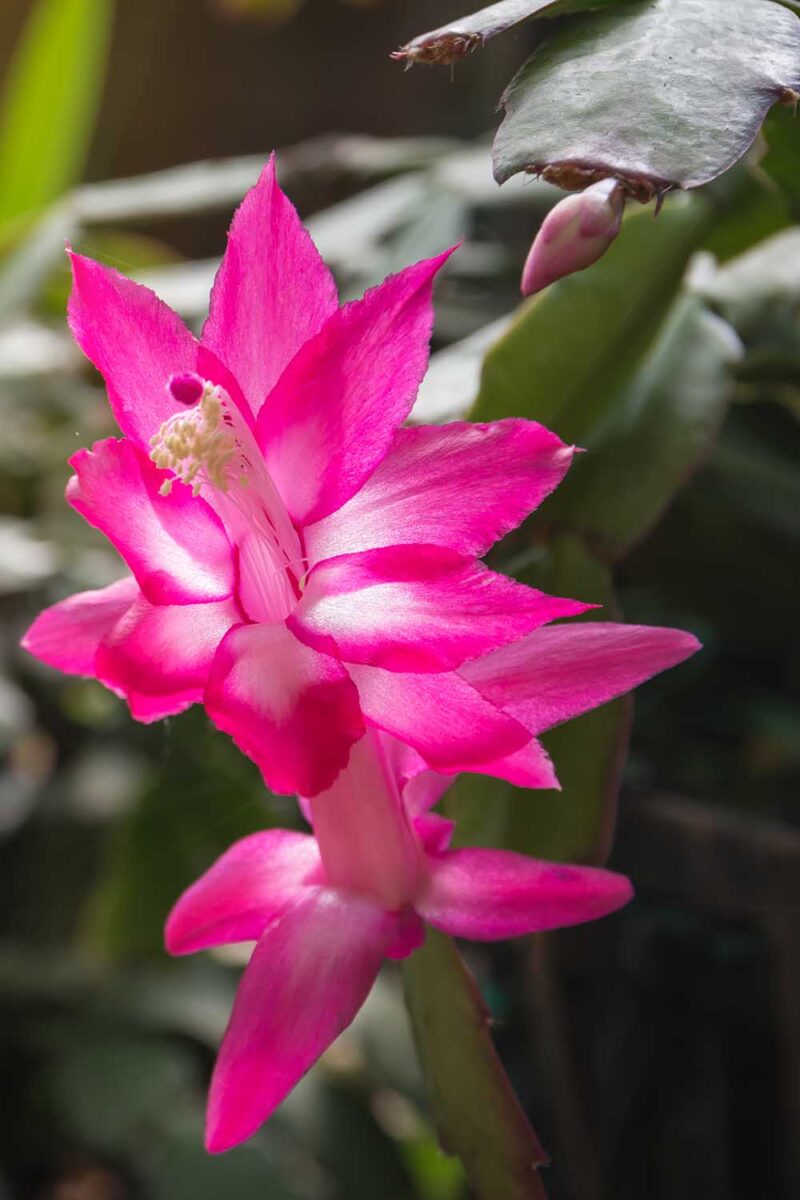
I read your response I just changed my X-mas cactus from a west window 4 feet away to a north east window everything you wrote is my usual.I will see how it works out. When it bloomed it looked like your pink picture. I transplanted it to a 12″ pot about 10yrs. ago.
It’s my favorite between my 27 other Succulents and Cactus.I hope it make a successful move. thank -U rich k in NJ
Hi Rich, If you want your Christmas cactus to bloom for Christmas time, you may want to wait until October to move it to a darker location. Just remember, it still needs light for the rest of the year, and even during it’s pre-bloom time. It just needs some very long nights during that pre-bloom period. Let us know how it goes!
Hi! I am propagating my Christmas tree cactus. To replant how many “segments” are typically planted? Does each segment grow into its own plant or do I plant multiple segments close together? When I look at the original it looks like 3 different segments at the base.
Thank you!
Hi Amy! Sounds like a fun project! Yes, the way your original Christmas cactus was most likely grown was by the grower taking three rooted cuttings and placing them in one pot to grow together with the appearance of a single plant. This gives a fuller appearance than having just one cutting growing alone in a pot. You can do the same – put three cuttings in a new pot. And just to clarify terminology – when talking about Christmas cacti, generally the term “segment” refers to one stem segment, that is, the somewhat rectangular shaped part of the stem.… Read more »
I love my christmas/thanksgiving cactus! There are 3 plants in the pot. I’ve had it for 6 years and it flowers 1-2 times per year. however the majority if the new growth is on one side of the plants. Over the years, I have turned it in case it was a light issue, but it really hasn’t made a difference. I just repotted it. Hoping that helps. Maybe I should take cuttings and propagate new plants to help even it out?
Hi Jamie! I think your strategy for turning the plant was a good one – that would have been my first try too. Have you tried giving it the required amount of cool/dark time prior to blooming as described in my article? I wonder if the cuttings that were used to make your plant came from different individual plants – and perhaps the stems that aren’t blooming were from individual plants that were more sensitive to light. It would certainly be an interesting experiment to propagate new plants from this one and see how they behave. In the meantime, if… Read more »
Hi, I have just repotted To individual pots, using soil for cactus, what were three plants in one pot. This plant was my husband’s Mother’s which would make it 80 years old or so. The plant hadn’t been repotted in years. My husband is now deceased which leaves me in charge of trying to keep these plants alive and hopefully return them to healthy plants so I can give two to his children. The stems on the plants are very long. I wonder if it would be wise to trim them back to give the plant a chance to recover… Read more »
Hi Irene, My condolences to you on the loss of your husband. It’s wonderful that you are caring for these heirloom plants and hoping to pass them down! The fact that they have been around for 80 years or more shows that they have had a lot of loving care in their lives. First of all, it’s normal for decades-old Christmas Cactuses to develop woody stems. So I think that what you might be interpreting as “dry” may just be these older, stronger woody stems. We’re not used to seeing Christmas Cactuses with woody stems because usually the… Read more »
Wow. An 80 year old plant. Amazing, and good for you for trying to pass it on to the next generation! I hope it worked out well for you.
Kristina, I so enjoyed your post. I wish I had seen it a week ago when I tossed a 30 yr. cactus, thinking it was a goner. Little did I know that I had been over-zealous in watering and it may have survived. I will follow your lead here on out and thank you.
From Gastonia, N.C. – Donna
Hi there former neighbor! (I grew up in Charlotte). I’m glad you enjoyed the article. This may not make you feel any better but it seems like the number one cause for houseplant death / sickness is overwatering. We just love them to death – until we know better. I’m sorry to hear about the loss of your decades-old Christmas cactus, but I hope there’s another one in your near future. Feel free to pop back on here and share a photo if you get a new one.
Thanks so much for taking the time to leave a comment!
I received a clipping from my aunt because her Christmas Cactus belonged to my great great grandma. I’ve had it for one year and it just started growing a small tiny piece. I’m shocked too because it’s January. Anyways, should I have asked for more than one clipping? It seems like at this rate the cactus will never be very big lol. I’m super proud to have it but would like to have something to show off one day.
Hi Erienne,
What a nice way to perpetuate a family heirloom!
Usually to create a full looking plant, three cuttings are placed in one pot. It’s not an obligation, but it does create a fuller look. You could ask for a couple of additional cuttings, or you could wait until this one gets bigger (it will!) and then take a couple of cuttings from it and root them in the same pot. You should see more growth in the spring and summer when it’s warmer and the days are longer.
Hope this helps!
Thank you for so much information that I have been needing.
You’re quite welcome, Bay!
Hi! I just bought an X-mas by mail. When it came in the mail it seemed to be in very good condition. But when I planted it, it got droopier and the buds all fell off. Is this maybe shock? Not sure, I’m just leaving it alone for now. Glad I went looking for help. I also got four separate segments and planted them all in separate pots, they’re about 3 months old. Do you think I could put them in the same pot now or would it be too soon?
Hi Cindy, Can you give us just a little information? When you say that you “planted” it, did it come as a bare root plant or was it already in a pot? If it was already in a pot, you probably didn’t need to repot it yet, if you did repot it, this might be part of the problem. The soil may not be the right kind, or if it has too much room in its pot the roots may be staying too wet. As for your cuttings, you could go ahead and put them in a pot together, just… Read more »
Wow – I’m so glad I found this article! My Christmas Cactus is (I think) probably about 60 years old (but this might even be an under estimate). It was planted by my grandfather and there was actually a time (about 15 years ago) when my grandmother intentionally tried to kill it via water deprivation, but she failed and I then rescued it. During the time it has been in my care, I have done nothing for it except infrequent watering. It would bloom flowers annually for many years, but there have been no flowers at all for 2-3 years… Read more »
Hi Scott! I’m glad you found this article too – and I’m glad you enjoyed it! Wow, what a majestic Christmas cactus you have. How wonderful that you rescued it. Thanks for posting a photo! Before you repot it – have you read our article on getting your Christmas cactus to bloom? I highly recommend you read this first. It’s doubtful that repotting is your key to getting blooms. If you do end up deciding to repot, you will probably also want to read our article on the best potting mix for Christmas cactus, which goes into more detail on… Read more »
This is so helpful! Thank you so much! I am relieved to know that I don’t need to repot it and I will look forward to experimenting with the clippings. Thanks again!
Glad this helped. You’re quite welcome, Scott!
Hello Kristina
I have a Thanksgiving one and i have never had it bloom at all and i have had it for 5 years,I was wondering if you can give me any idea’s i have it cactus soil and in a window that does not get that much sun during the winter months.
Can you please help me
Thank you in advance
Hi Judy,
Sorry for the delayed reply. Your Christmas cactus looks pretty healthy and happy to me even if it hasn’t bloomed.
Have you tried making sure it gets long dark nights as I described in the article?
It’s important to make sure there aren’t any lamps on, or any streetlights that could interrupt that long period of dark as well. Another thing that can help is making sure it gets cooler temperatures at night too – 61 degrees F is a good temperature to shoot for.
I hope this helps!