Rhipsalis baccifera
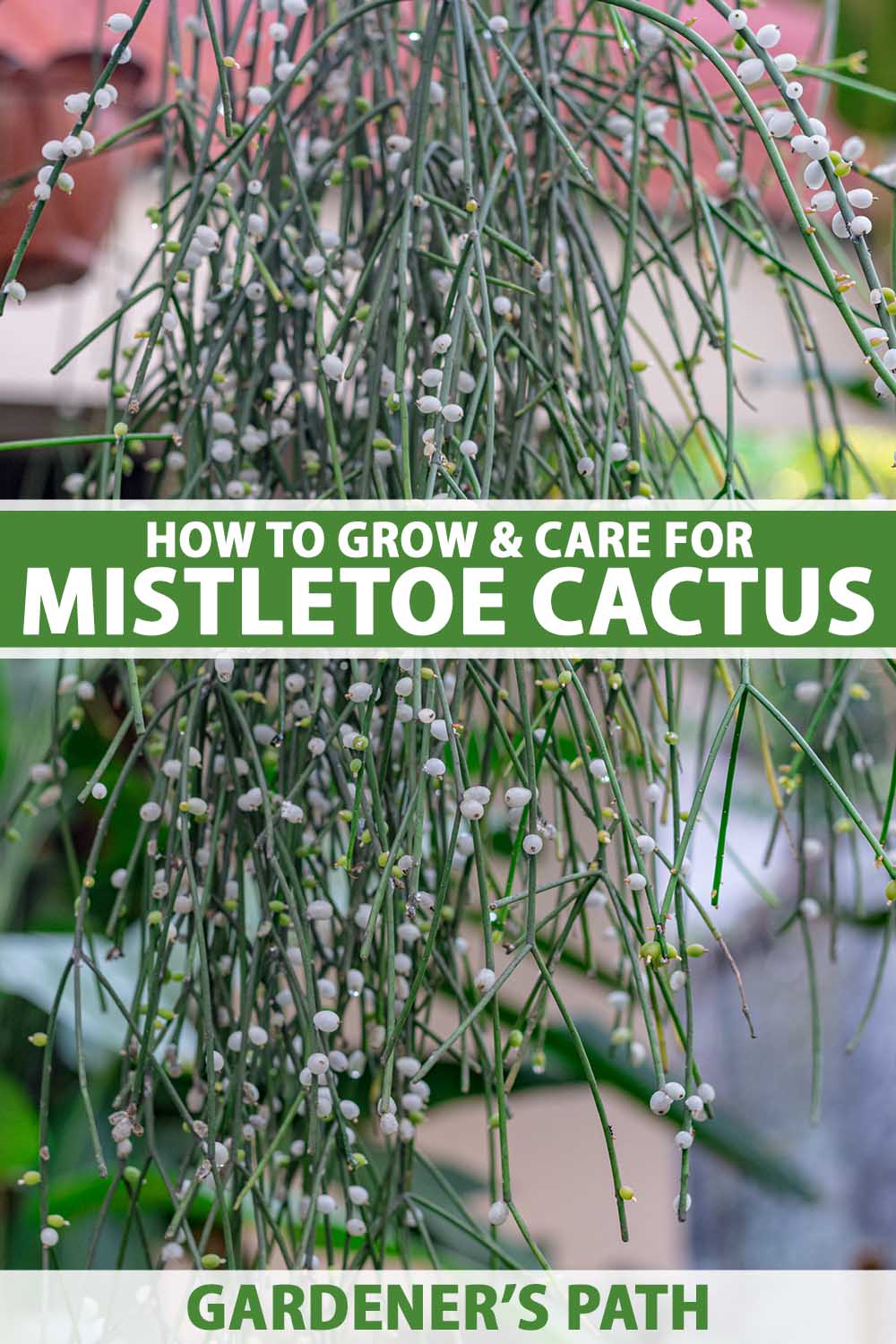
Mistletoe cactus (Rhipsalis baccifera) is an epiphytic stem succulent with a branching growth habit that clings to rocks or trees for support in the wild.
R. baccifera is not only an unusual looking cactus; it’s the only one with native habitat outside the Americas.
It’s endemic to the Caribbean, Central and South America, Madagascar, Southern Africa, and Sri Lanka. It is also considered an endangered species in southern Florida.

We link to vendors to help you find relevant products. If you buy from one of our links, we may earn a commission.
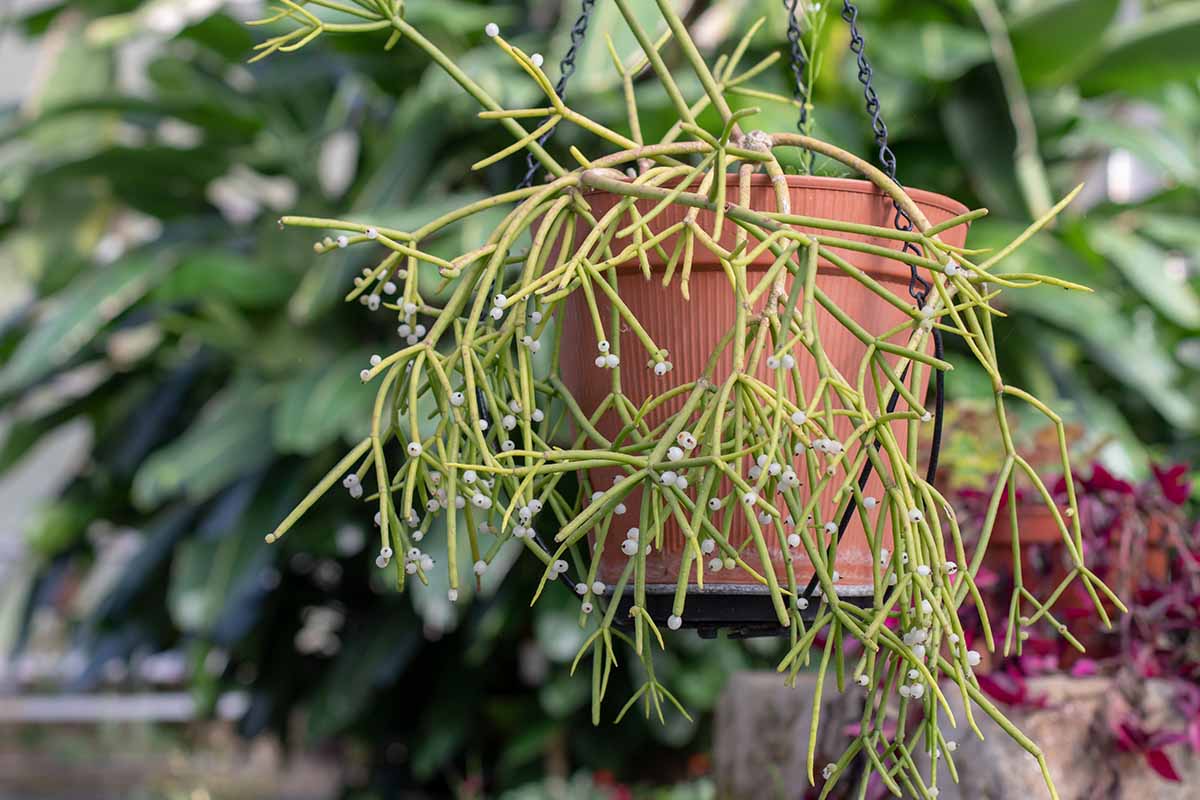
Mistletoe cactus, aka spaghetti cactus is named for the white to pinkish berries that bear some resemblance to the festive holiday foliage that has become synonymous with a Christmas kiss.
However, the similarity ends there.
Christmas mistletoe (Viscum and Phoradendron species) is a toxic, leathery-leafed parasite with a rounded form that grows on host trees, depriving them of water and food.
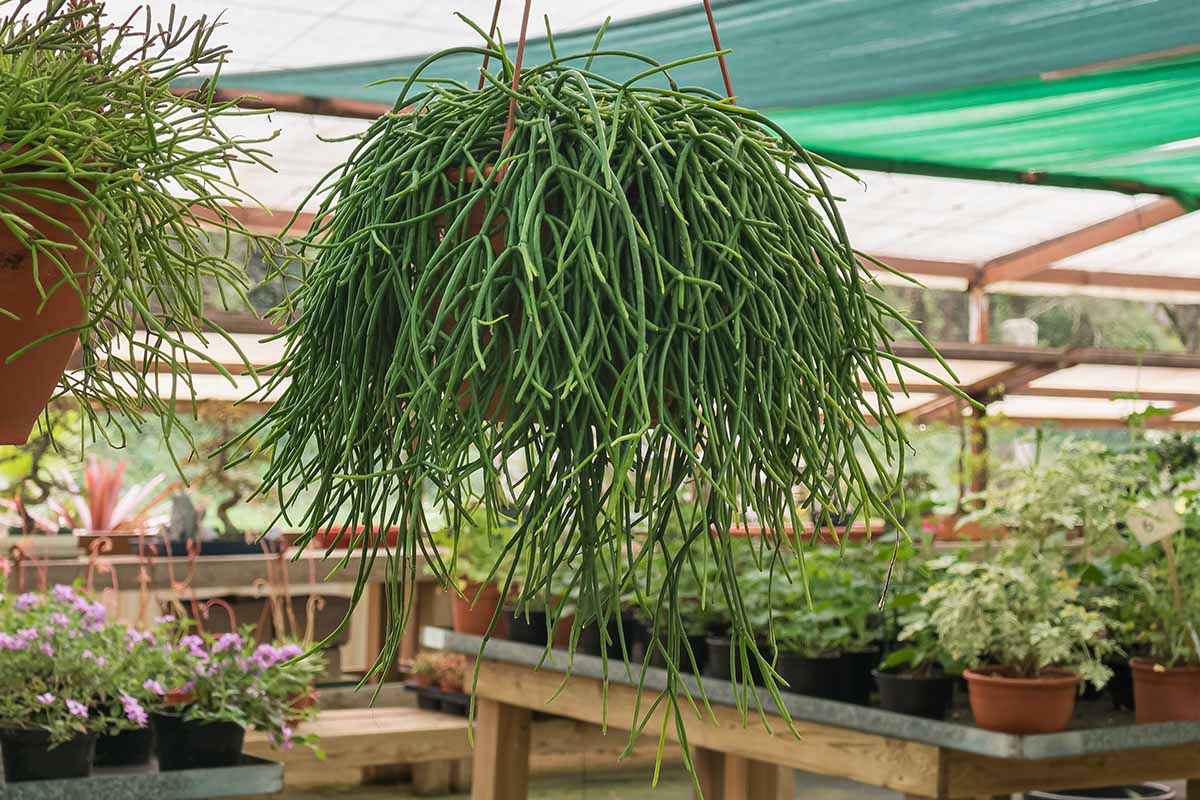
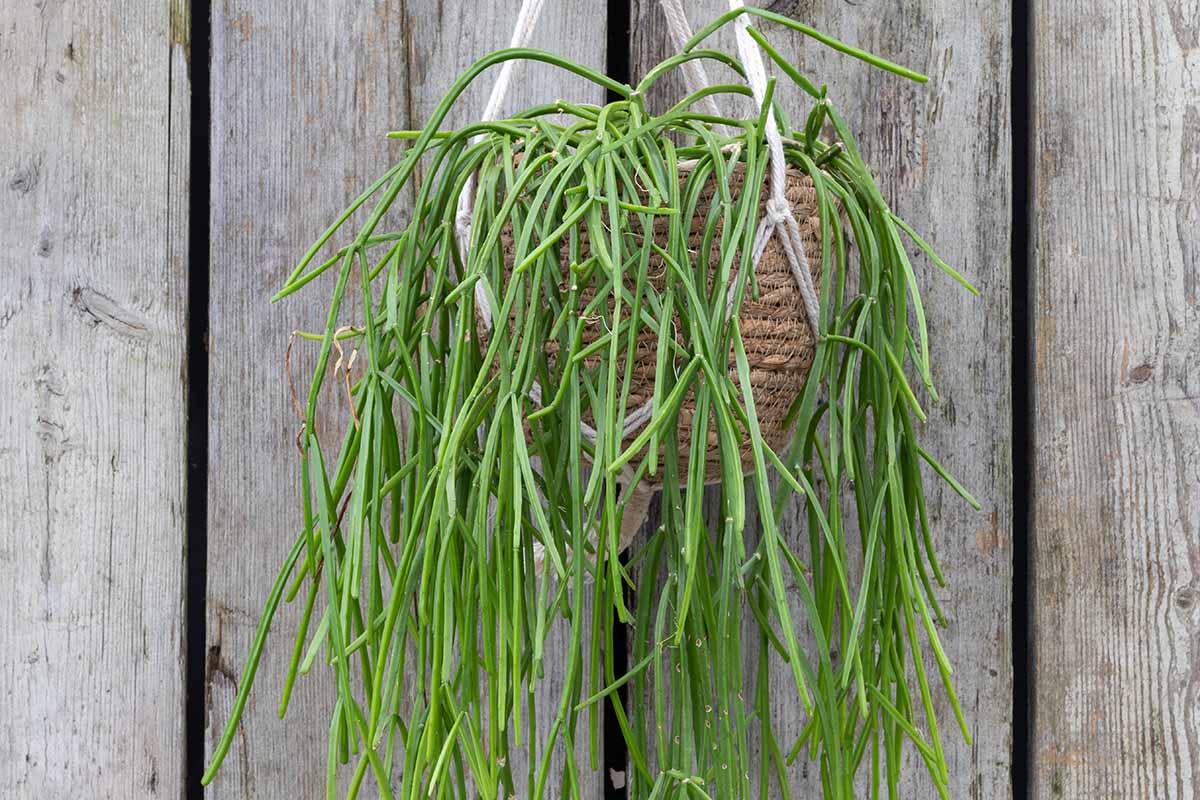
Mistletoe cactus features string-like, leafless, cylindrical stems called cladodes, usually green but shading to red in harsh sunlight.
Read on for all you need to know to enjoy this unique cactus indoors as a houseplant.
Here’s what we’ll cover:
What You’ll Learn
The stems are segmented and angular, yet they cascade gracefully.
At each stem joint and tip, small greenish-white flowers bloom in late winter to early spring, followed by translucent white berries.
Mature dimensions are 48 to 72 inches long and 12 to 24 inches wide, for a substantial specimen that shows well in hanging planters.
Quick Look
Common name(s): Mistletoe cactus, spaghetti cactus
Plant type: Epiphytic cactus
Hardiness (USDA Zone): 9-11 (outdoors)
Native to: Caribbean, Central and South America, Madagascar, Southern Africa, Southern Florida, Sri Lanka
Bloom time / season: Late winter to spring
Exposure: Bright, indirect sunlight indoors; dappled sunlight outdoors
Soil type: Cactus and succulent soil plus coconut coir chips; sandy loam outdoors, well-draining
Soil pH: 6.0-7.0, slightly acidic to neutral
Mature size: 48-72 inches long by 12-24 inches wide
Best uses: Hanging planter, houseplant
Taxonomy
Order: Caryophyllales
Family: Cactaceae
Genus: Rhipsalis
Species: Baccifera
There is also a naturally occurring subspecies, mouse tail cactus, R. baccifera subsp. horrida.
This one has shorter, thicker stems with spines, similar fruits, yellowish, white, or greenish flowers, and an average length of about 20 inches.
Another plant you may encounter is red mistletoe cactus, Pseudorhipsalis ramulosa, formerly Rhipsalis ramulosa.

The red species co-evolved with our subject plant, but it has characteristics distinct enough to warrant classification in a separate genus.
Its flattened, ribbon-like green stems turn red in direct sunlight. Whitish-green flowers appear along the stem margins, followed by red berries.
Cultural requirements are similar for all three of these plants.
How to Grow
Mistletoe cactus is native to rainforest regions and accustomed to temperatures in the 60 to 80°F range. Unlike desert cacti, it thrives in regions with high humidity.
When growing as a houseplant, try to provide a consistent temperature in the appropriate range and humidity over 50 percent.
To increase the ambient moisture, you can place the pot on a tray of pebbles with just enough water to cover them, use a humidifier, or put the pot in a bathroom or laundry room.
Light
In the wild, mistletoe cacti are exposed to dappled sunlight through a canopy of trees.
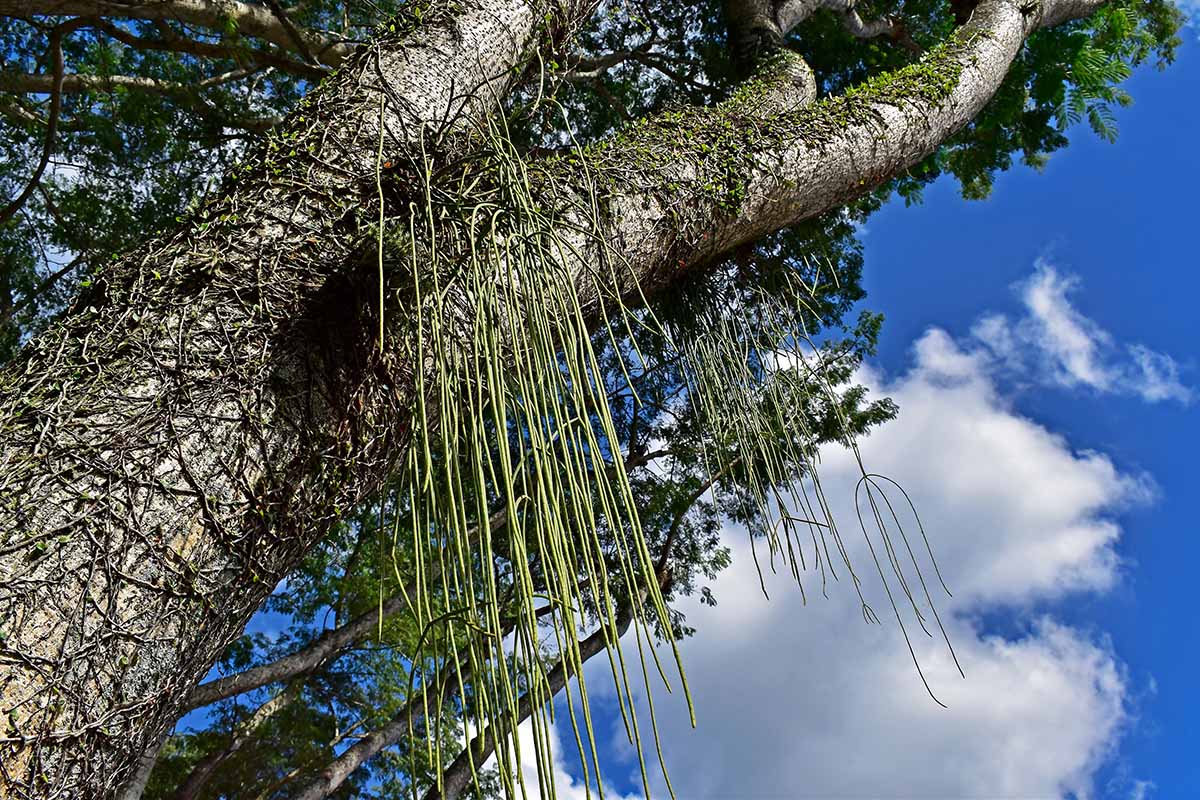
Gardeners in Zones 9 to 11 can replicate this setting by choosing a partially shaded location or one with morning sun and afternoon shade.
Bright, indirect sunlight indoors mimics the filtered light of its natural habitat.
Choose a location about three feet from an east-facing window and five feet from a southern exposure to avoid harsh, direct sunlight that may scorch the tender foliage.
If you have a northern or western exposure, you can generally place the pot on a windowsill without risking overexposure.
Soil
In the wild, epiphytes cling to rock crevices or tree bark, absorbing moisture from rainwater and ambient humidity, and nutrients from leaf litter and other organic debris.
A suitable houseplant substrate should supply moisture without becoming oversaturated, nutrition, and a pH of 6.0 to 7.0.
The pros at the New York Botanical Garden recommend equal parts peat, perlite, potting soil, and orchid bark.
You can also use two-thirds cactus and succulent potting mix containing perlite and one-third coconut coir chips to increase water retention without oversaturation.
Avoid products containing volcanic rock dust, as it tends to compact and may reduce soil acidity.
Water
Mistletoe cactus prefers to be moist, but growers should take care to avoid oversaturated conditions that can rot the roots. Use a moisture meter to guide you.
Maintain even moisture during the spring-to-summer budding and blooming period, watering thoroughly when the top one to two inches are dry.
After blooming, allow the soil to dry about halfway down the pot before watering again.
Continue reduced moisture through fall and winter dormancy.
Growers with hard water should use distilled or rainwater instead of tap water to avoid exposing the plant to harsh minerals.
Fertilizer
Slow-growing mistletoe cactus benefits from bimonthly applications of a low-nitrogen liquid plant food during the spring and summer.
Avoid products that are high in nitrogen as they are likely to cause leggy growth and reduced blooming.
Discontinue feeding during the fall and winter months, when the plant is not actively growing.
Where to Buy
Both mistletoe and mouse tail cacti are readily available from nurseries specializing in cacti and succulents for indoor and outdoor cultivation.
Unwrap your starter plant (usually a three- to four-inch pot) upon receipt and place it in bright indirect sunlight.
Four-inch starter pots of mistletoe cactus are available from Hirt’s Gardens via Amazon.
If you purchase a mouse tail cactus, wear gloves to avoid contact with its spines. When repotting, use tongs or a newspaper sling to hold the plant upright as you work.
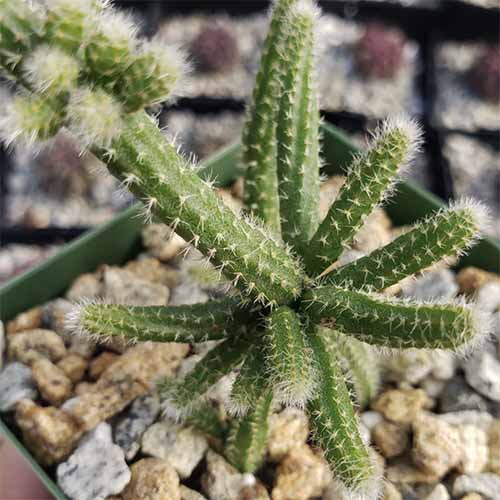
Mouse tail cacti are available from Planet Desert in four- or six- inch pots.
The description of colorful red, pink, and orange flowers is an error. As mentioned, they are greenish-white, like those of R. baccifera.
Maintenance
With cultural requirements met, let’s turn our attention to replicating the natural conditions that promote blooming.
After flowering, your cactus will display green berries that shade white and soften.
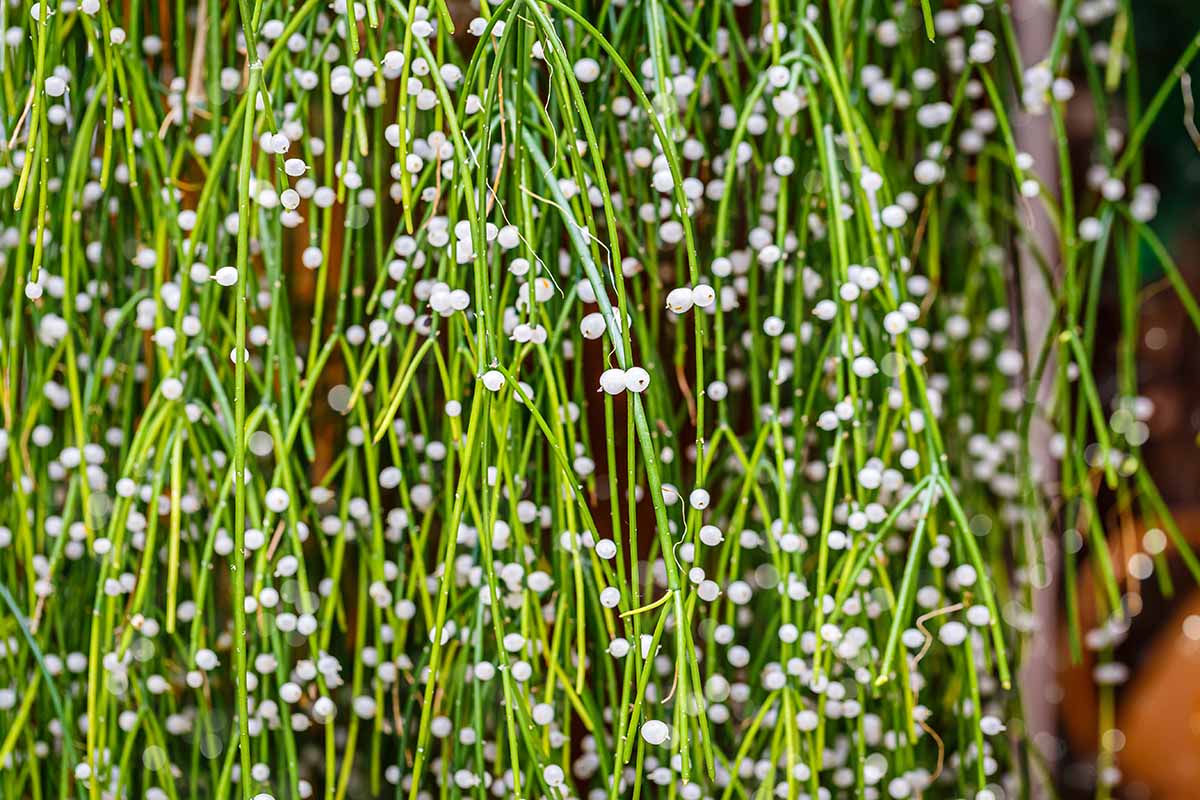
You can place a tray or a cloth on the floor beneath the pot to catch and dispose of the berries when they fall.
After they fall, the plant will shift into dormancy mode.
For two months post-bloom, place the pot in a location with bright, indirect sunlight and a temperature of approximately 55°F.
Dark nights are essential, so turn off lights and close blinds from evening until morning.
During this period of cold rest, water when the soil is dry halfway down the pot. Take care to avoid both complete dryness and oversaturation.
After two months’ rest, bring the pot back to its regular location with bright, indirect sunlight. Continue watering when the pot is half dry.
When budding begins, resume regular watering when the top one to two inches of soil are dry.
It is beneficial to repot annually to avoid the substrate becoming compacted.
Compacted soil can damage tender roots, inhibiting their ability to take up nutrients and water, likely leading to rotting.
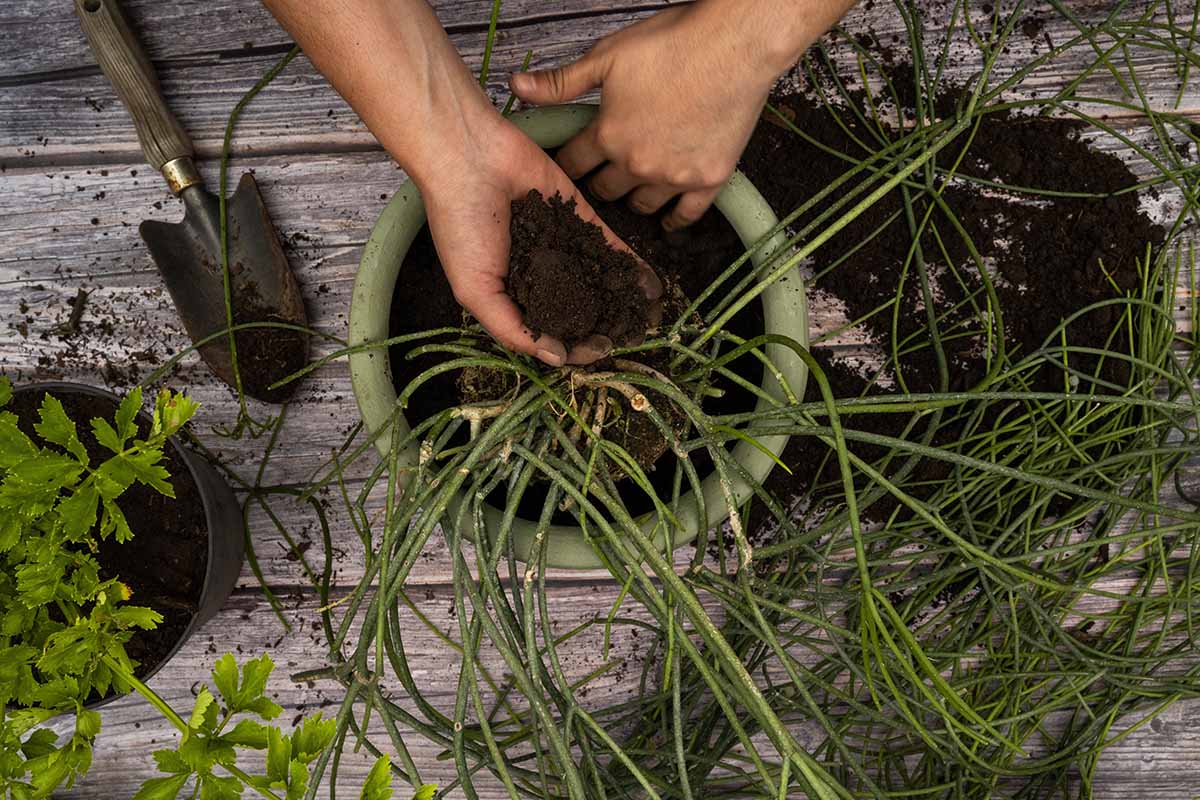
It’s not always necessary to go up a pot size, as mistletoe cactus prefers a snug fit with a pot just an inch or two wider than the root mass.
If roots are poking through the drainage hole, it’s time to go up a pot size.
When repotting, set the root mass at the original depth and backfill until the container is three-quarters full, to allow for watering without soil overflow.
Additional maintenance includes the removal of damaged or dead stem portions.
Use clean shears to sever the unwanted piece at the nearest joint so the remaining stem will callus and regrow.
Like Christmas cactus, the stems of mistletoe cactus become woody with age.
In late winter, you can selectively prune woody stems back to their point of origin to encourage fresh growth.
Do not remove more than one-third of the total plant volume at a time to avoid shock.
Propagation
Mistletoe cactus can be propagated from seed, via stem cuttings, or you can get started by purchasing a starter plant from a nursery.
From Seed
To collect your own seeds, harvest berries when the fruit is translucent white and pulls off easily.
Break open the berry and squeeze the gelatinous mucilage out onto a paper towel.
You’ll see multiple tiny, black or dark brown oval seeds.
Wipe away as much mucilage as you can and leave the seeds to dry for a few days on the paper towel.
When they are completely dry, prepare a seed tray.
Fill the tray three-quarters full of moist cactus and succulent potting mix with perlite and coconut coir chips, as discussed above.
Scatter the seeds over the top of the soil, pressing lightly to keep them in place, but not covering them.
Cover the seed tray with clear plastic wrap to make a mini-greenhouse.
Place the tray in bright, indirect sunlight. The tray will self-water.
When the seeds sprout, remove the plastic. Mist the soil regularly to keep it moist, but not soggy.
When the seedlings are at least three inches tall, they will have firmly established roots and be ready for potting up into individual pots.
From Cuttings
The best time to take cuttings is in late winter, just before active growth begins in the spring.
Select three to five robust, branching stems.
With sanitized shears, cut through a joint where two segments come together, a natural growing point that will readily regrow. The cutting should measure four to six inches from the tip.
Repeat for three to five stems.
Set the cuttings on paper towels out of direct sunlight for three to five days to give them a chance to form a callus over the cut ends.
Fill a four- to six-inch pot three-quarters full of cactus and succulent soil mixed with coconut coir chips as discussed.
Use a chopstick or pencil to make a one-inch hole in the center of the soil.
Dip the callused end of each stem into rooting hormone powder.
Grasp the stems like a bouquet with the cut ends even with each other.
Place the cluster of stems one inch deep in the center hole. Tamp the soil to hold them firmly in place.
Place the pot in bright, indirect sunlight. Wait a week before watering.
Alternatively, you can place the cuttings in a clear glass with an inch of water. Refresh the water daily.
When the roots are an inch long, transplant the cluster of stems to a container, burying them an inch deep, as above.
Transplanting
When moving your plant from one container to another, it’s best for the soil to be on the drier side, so avoid watering the day before.
Choose a pot one size up to maintain a snug fit. Pots that are too large cause the soil to retain excess moisture which can lead to root rot.
Unpot the mistletoe cactus and set it in the new pot at the same depth as in the original container.
Fill in around the root mass with your choice of potting mix. Wait a week and then water when the top inch or two of soil is dry.
Pests and Disease
The best defense against pests and pathogens is to provide a growing environment that replicates natural conditions while avoiding over- and underwatering.
However, even with the best efforts, you may encounter common houseplant pests such as aphids, mealybugs, scale, and spider mites.
These sapsuckers feed on plant sap, which damages foliage. Telltale signs include visible pests, sticky “honeydew” excrement trails, discoloration, stunted growth, and wilting.
Rinse away as many pests as possible, remove severely affected foliage, and treat the remaining plant with organic insecticidal neem oil.
Fungal diseases and root rot may be an issue in overly wet conditions. Symptoms include waterlogged stems and rotting roots.
You may be able to salvage healthy portions by removing the rotten stems and roots, rinsing the remaining roots, and replanting in fresh potting mix.
Learn more about rotting in succulents here.
In very dry conditions, as a result of underwatering or low humidity, the tips of the stems will likely turn brown and crisp.
Remove the brown portions by severing them at the nearest stem joint.
Festive Visual Appeal
Mistletoe cactus has cultural requirements unique to rainforest epiphytes, including high humidity and bright, indirect sunlight.
The substrate in which it grows must provide structural support and rapid drainage while supplying nutrients and moisture without oversaturation.
In addition, growers must manipulate the temperature and lighting during dormancy to ensure a festive flower and berry display the following spring.
Are you growing mistletoe cactus? Please share your tips in the comments section below.
If you found this article informative and want to read about more epiphytic cacti, we recommend the following: