Disocactus anguliger
Looking for something a little different to grow as a hanging indoor plant? Fishbone cacti are uncommon houseplants that feature unusual foliage and dazzling blooms.
With succulent, zig-zagging stems that trail beautifully out of hanging baskets, fishbone cactus is a favorite of epiphyllum collectors.
In addition to its attractive foliage, the plant boasts large, gorgeous flowers.
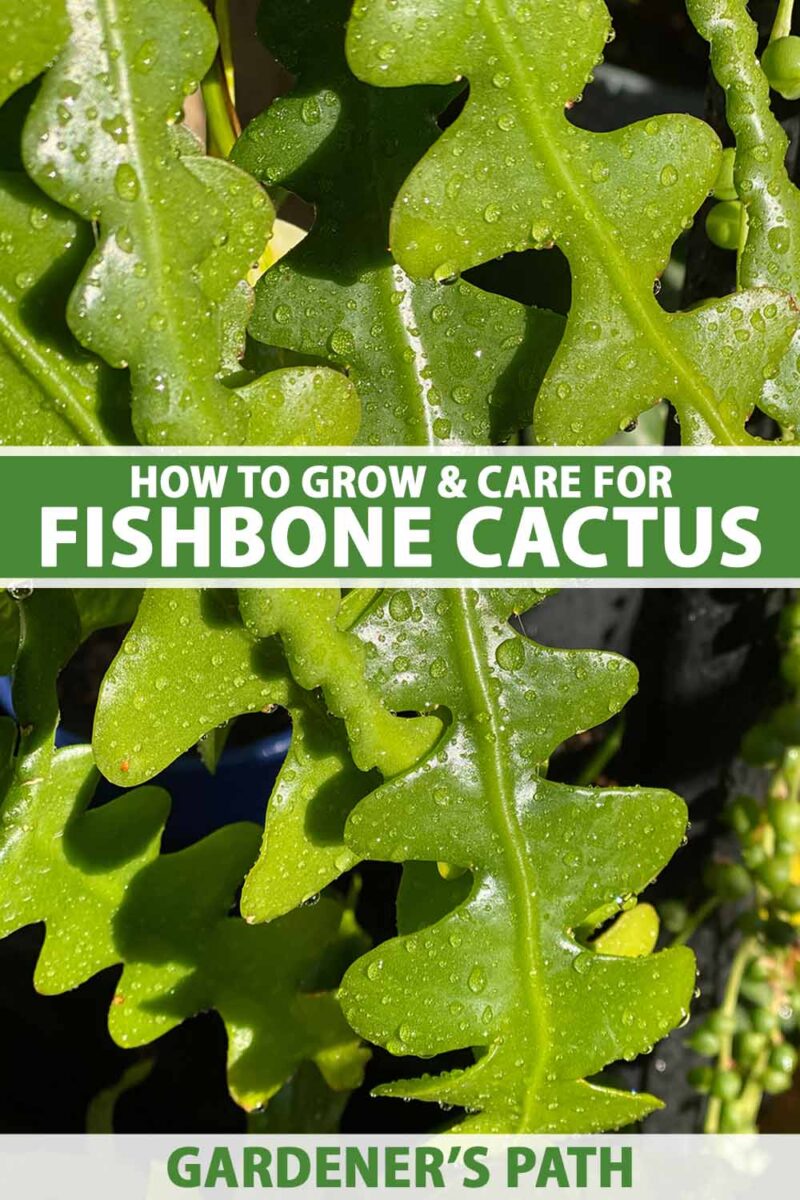
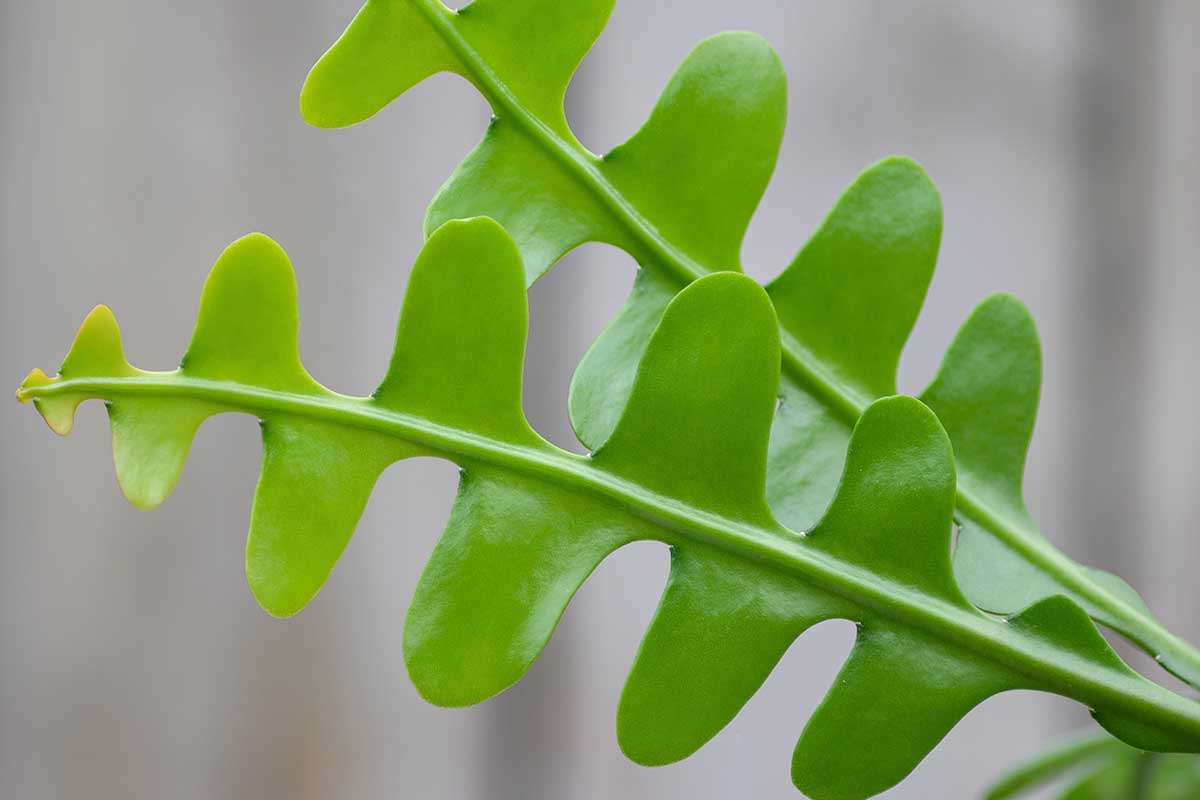
Fishbone cactus has long, green, leafless stems with zigzagging lobes. The lobes of the stems alternate, giving it the appearance of a fish skeleton or ricrac tape.
As an epiphyte that grows on trees, the plant has a very small mass of roots relative to the mass of its foliage.
We link to vendors to help you find relevant products. If you buy from one of our links, we may earn a commission.
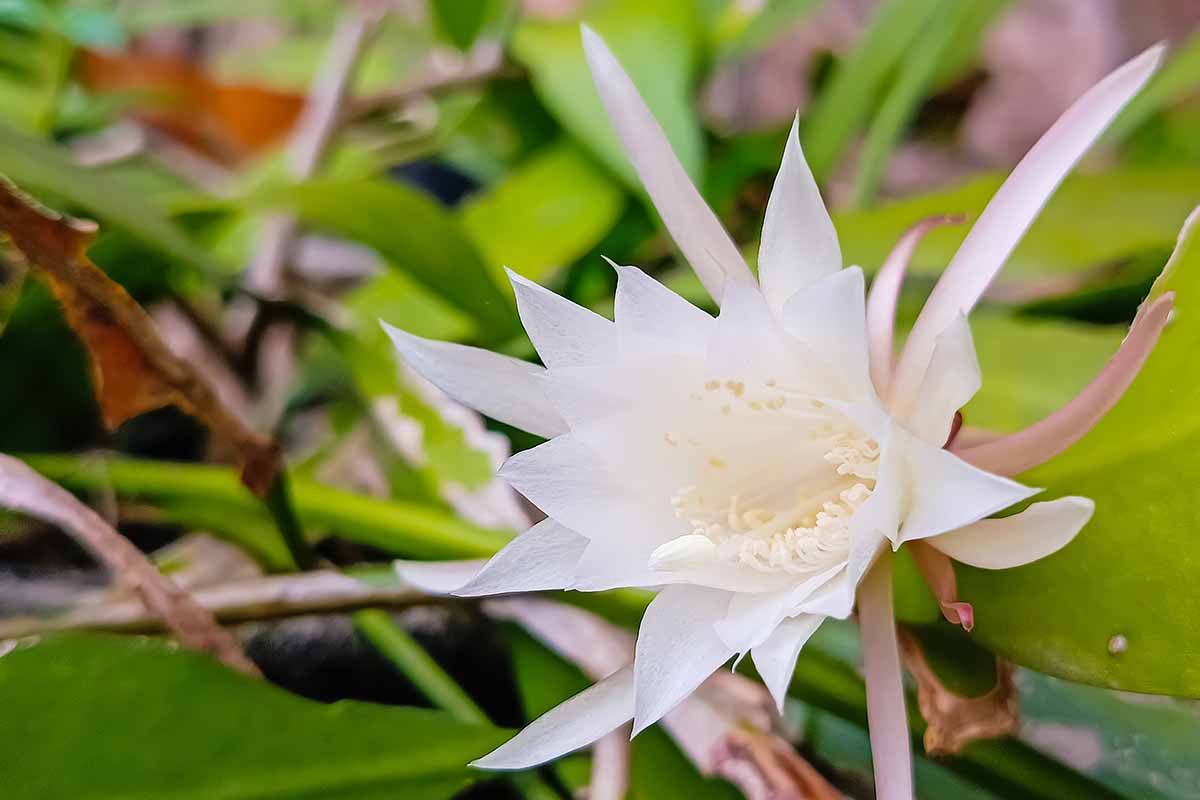
From its unusual stems, flower buds form that eventually turn into large, trumpet shaped yellow and white flowers with elongated, funnel-shaped petals.
If the flowers are pollinated, edible fruits form that are greenish colored with green pulp and black seeds.
This plant can be cultivated as a hanging houseplant or in shady spots outdoors in mild climates.
Whether you’re here to find growing tips or are just curious to learn more about these plants, this article will help you learn how to care for one of your own.
Here’s what we’ll cover:
What You’ll Learn
Disocactus anguliger, formerly classified as (and still commonly referred to as) Epiphyllum anguliger, is an epiphyte that grows on trees in Mexican rainforests where they are native.
Fishbone cacti reach up to 18 inches tall and three feet wide, and produce edible fruit that looks similar to those of dragon fruit (Selenicereus), to which they are related.
D. anguliger – also known as ric rac or zig zag cactus – has a look alike you’ll want to know about as well.
There are two different species going by the name “fishbone plant” – D. anguliger and Selenicereus anthonyanus. These two plants look so much alike that they can be hard to tell apart.
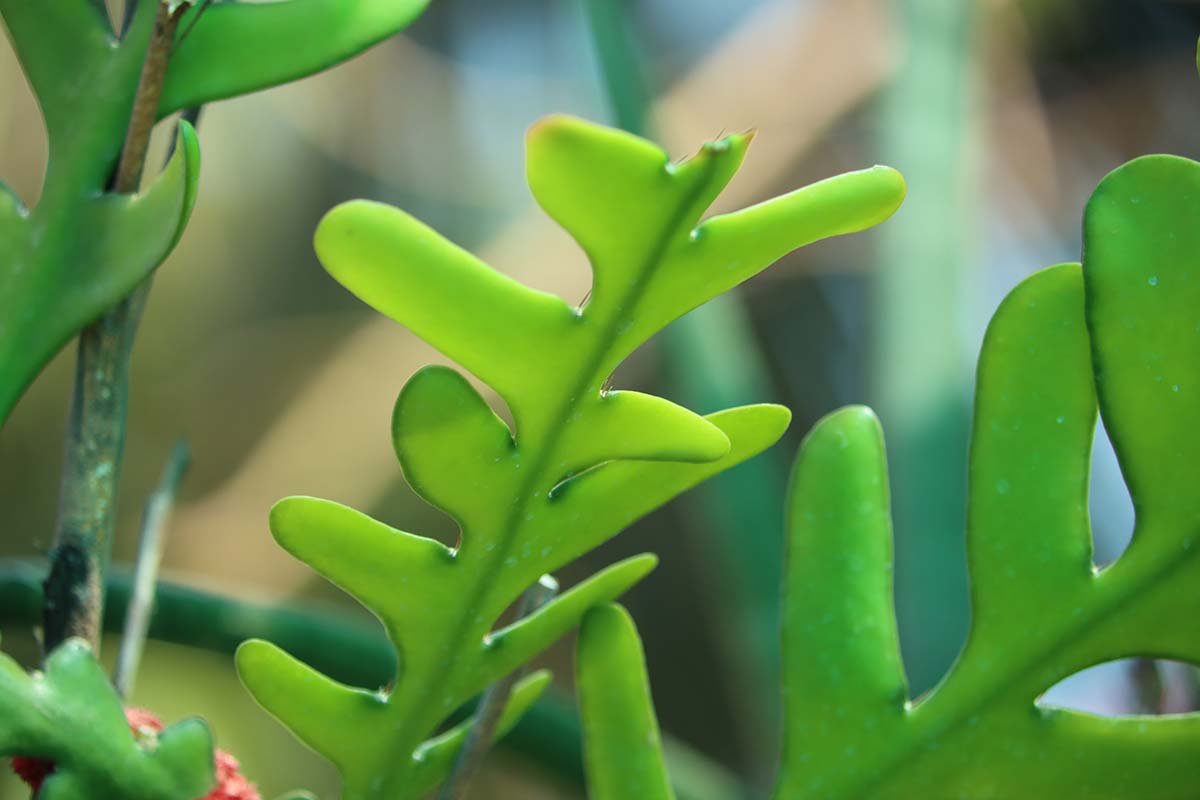
You may be able to tell them apart by comparing their stems – the lobes on the flexible stems of D. anguliger are more rounded, while the lobes of S. anthonyanus are more angular and its stems are fairly rigid.
However, the most reliable way to tell them apart is through their blooms.
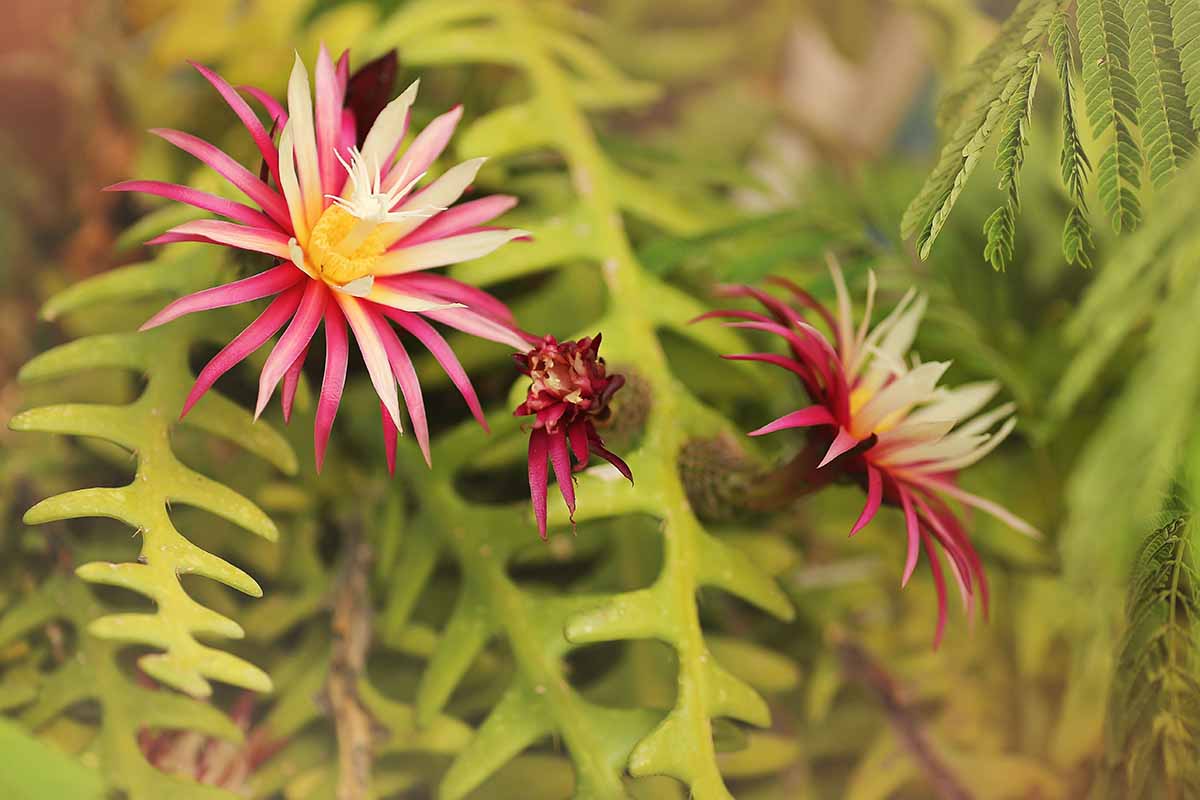
D. anguliger, the subject of this article, has yellow and white flowers, while S. anthonyanus has pink blooms.
As for care, the pink flowered species can tolerate slightly drier conditions and more direct sunlight than the subject of our article, but other than that your approach to care as described below should be the same.
Quick Look
Common name(s): Fishbone, ric rac, zig zag cactus
Plant type: Evergreen flowering succulent
Hardiness (USDA Zone): 11-13 (outdoors)
Native to: Mexico
Bloom time / season: Summer to fall
Exposure: Part shade, direct morning sun, bright indirect light
Soil type: Orchid cactus mix, well draining
Soil pH: 6.0-7.0, slightly acidic to neutral
Time to maturity: 2-3 years
Mature size: 36 inches tall by 18 inches wide
Best uses: Hanging basket, houseplant, mounting as epiphyte
Taxonomy
Order: Caryophyllales
Family: Cactaceae
Genus: Disocactus
Species: Anguliger
There’s a reason the two species share so many similarities – they are both members of the Cactaceae family, and both are considered orchid cacti.
Since fishbone cactus was formerly classified in the Epiphyllum genus some growers consider this a type of epiphyllum in a more casual sense – and care for these plants is similar.
Whatever you call it and however you classify it, don’t attempt to grow ric rac cactus outdoors year-round unless you live in USDA Hardiness Zones 11 to 13.
How to Grow
Although fishbone cacti are succulents, they aren’t grown in the same way as desert or arid-land succulents such as echeverias and donkey’s tail.
Here’s what you need to be successful:
Light
Hailing from tropical forests, D. anguliger plants need a part shade location when grown outdoors, as full sun is too intense.

Indoors, fishbone cactus houseplants will thrive when situated near a sheer curtain in filtered south or west facing windows, or when receiving direct morning sun in eastern windows.
Soil
As epiphytes, these plants grow best in a potting medium that is coarse and airy with a pH of 6.0 to 7.0.
Chunky coconut coir is a good ingredient to incorporate into a DIY succulent mix if you make your own, or you could pick up a bag of De La Tank’s Soil Mix, which has the right combination of drainage and moisture retention.
You can find eight-quart bags available from Tank’s Green Stuff via Amazon.
Avoid cactus and succulent soils which won’t retain enough moisture for these plants.
Growing mixes specifically formulated for orchid cacti provide the right combination of moisture retention and drainage that this species needs.
Water
If you have desert succulents as houseplants, such as lithops or titanopsis, it’s important to note that zig zag cacti need more moisture, and will therefore need to be watered more often.

Keep the growing medium moist, watering when the surface of the medium is dry to the touch.
When you water, give the foliage a shower to clean the stems off and help hydrate them.
You can also use the bottom watering method, where you allow the pot to soak in a basin of water for a half an hour or so, is a good way to help hydrate the growing medium.
And to encourage flowering, reduce watering slightly during the winter.
Learn more about the best water for succulents here.
Temperature and Humidity
Adapted to the mild temperatures of tropical forests, fishbone cacti should be kept indoors when outdoor temperatures fall to 50°F or lower.

Also, they need cool temperatures in winter to help support flowering, just be sure to keep them above 50°F.
These epiphytes also prefer medium to high humidity levels, so consider using a humidifier if you live in a dry climate or experience dry air during the winter.
Fertilizer
Feed your fishbone plant every two to four weeks during the growing season, with a fertilizer formulated for succulents, such as Dr. Earth’s Succulence.

You can purchase Dr. Earth’s Succulence in a 16-ounce pump bottle via Arbico Organics.
Where to Buy
These plants aren’t frequently stocked at plant nurseries, apart from those with extensive succulent sections. You can sometimes find them available via an online source.
For instance, you can purchase a fishbone cactus in a four-inch pot from California Tropicals via Amazon.
Maintenance
These are fairly low maintenance plants. If you keep your fishbone plant in ideal conditions, you should only need to trim off spent blooms – with a pair of sterilized scissors or snips – and repot.

Fishbone cactus is one of the houseplants that are happy to be rootbound, so repotting isn’t a task that needs to be undertaken very frequently.
When the growing medium starts to dry out every few days, consider repotting as directed in the transplanting section below.
Propagation
This epiphyte can be propagated via stem cuttings and seeds:
From Seed
D. anguliger seeds are difficult to source, so you may have to try growing your own supply. Propagate the seeds in late winter or early spring.
- Surface sow ric rac seeds on a moist seed starting medium.
- Keep the pot or tray covered with a humidity dome, and place on a heat mat in indirect, bright light.
- Maintain moist conditions under the humidity dome until the seeds germinate and seedlings are about an inch tall.
- Gradually start to reduce moisture for the seedlings by allowing the growing medium to dry out somewhat between waterings but keep the humidity dome in place.
When the seedlings crowd their pot or tray, transition them to lower humidity by removing the humidity dome, then transplant them into individual pots.
From Stem Cuttings
Growing from cuttings is a similar process to propagating epiphyllums from cuttings. Take stem cuttings in spring for best results.
- Take six- to nine-inch cuttings using sterilized scissors, and cut off the top third of an inch from the cuttings.
- Apply rooting hormone to the bottom cut and the bottom two to three inches of the stem.
- Place the cuttings in a cool, dark location and let the cut ends form a callus – this should take around 10 days.
- Fill a four-inch nursery pot with growing medium and insert a cutting in the center of the pot.
- Set the pot in indirect bright light for two weeks before watering, and expect rooting in another two weeks.
When you start watering, keep the growing medium evenly moist.
Transplanting
Plan to repot the fishbone cactus during the warm season, when the plant is in a period of active growth.

Choose a new pot that is just one size larger than the old pot, and make sure you have the appropriate growing medium on hand.
Pour a small layer of potting medium into the bottom of the new pot, then remove the plant from its old pot.
Center the root ball in the new container and adjust the depth by adding more or less medium below the roots.
Aim for an inch of room between the surface of the soil and the rim of the pot to enable mess-free watering.
Finally, add growing medium around the sides of the plant.
After transplanting, water the plant, and return it to its usual location.
Pests and Disease
Whether you’re growing fishbone cacti indoors or out, you’ll want to be aware of the following pest and disease problems:
Pests
Many of the same pests that target other cacti can find their way to a zig zag plant, especially specimens that are weakened from growing in less-than-ideal conditions.
Watch out for scale insects, aphids, and mealybugs, particularly when purchasing a new plant, or bringing one in after a summer outdoors.
Disease
Root rot is the most common disease that growers will encounter.
Root rot is a condition that is usually brought on by overwatering, using the wrong type of soil, or lack of drainage.
Learn more about rotting in succulents here.
Mosaic viruses can strike fishbone plants – they are recognizable by swirling yellow patterns on the foliage.
Another plant virus called cactus virus X can also affect these plants, causing yellowing, deformed foliage.
Sadly, if your plant becomes infected you’ll need to dispose of the plant to prevent the disease from spreading.
A Fishbone With Fabulous Foliage
Fishbone cacti may not be as popular as indoor plants as peace lilies or snake plants, but their unusual foliage and jaw-dropping blooms add interest to your home decor.

Do you have any tips of your own for caring for fishbone plants that you’d like to share with our readers? If so, drop us a line in the comments section below. Feel free to upload your ric rac cactus photos too if you’d like to show off your plant.
Want to keep reading about cacti and succulents? Bookmark these articles to expand your knowledge: