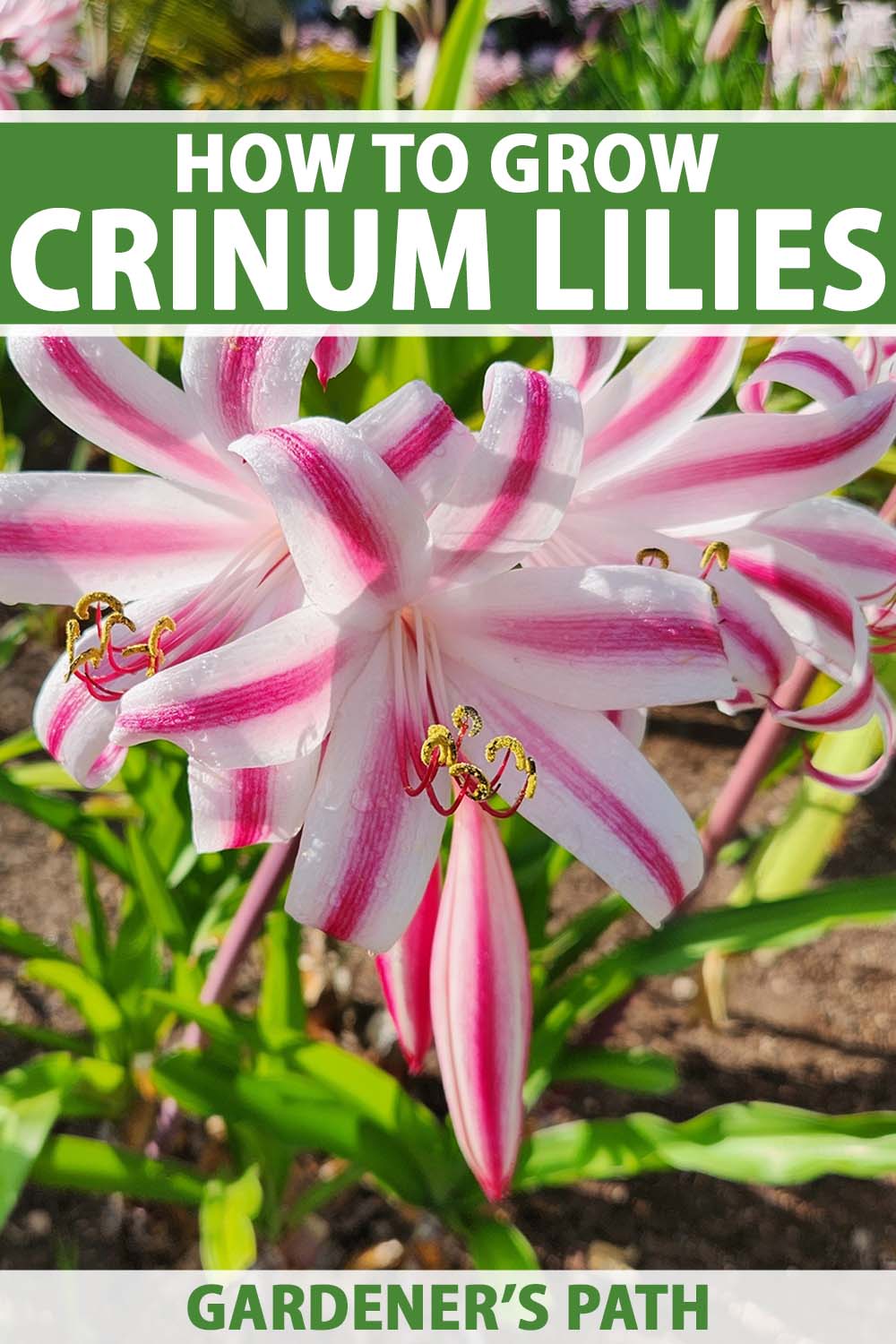
Crinum spp.
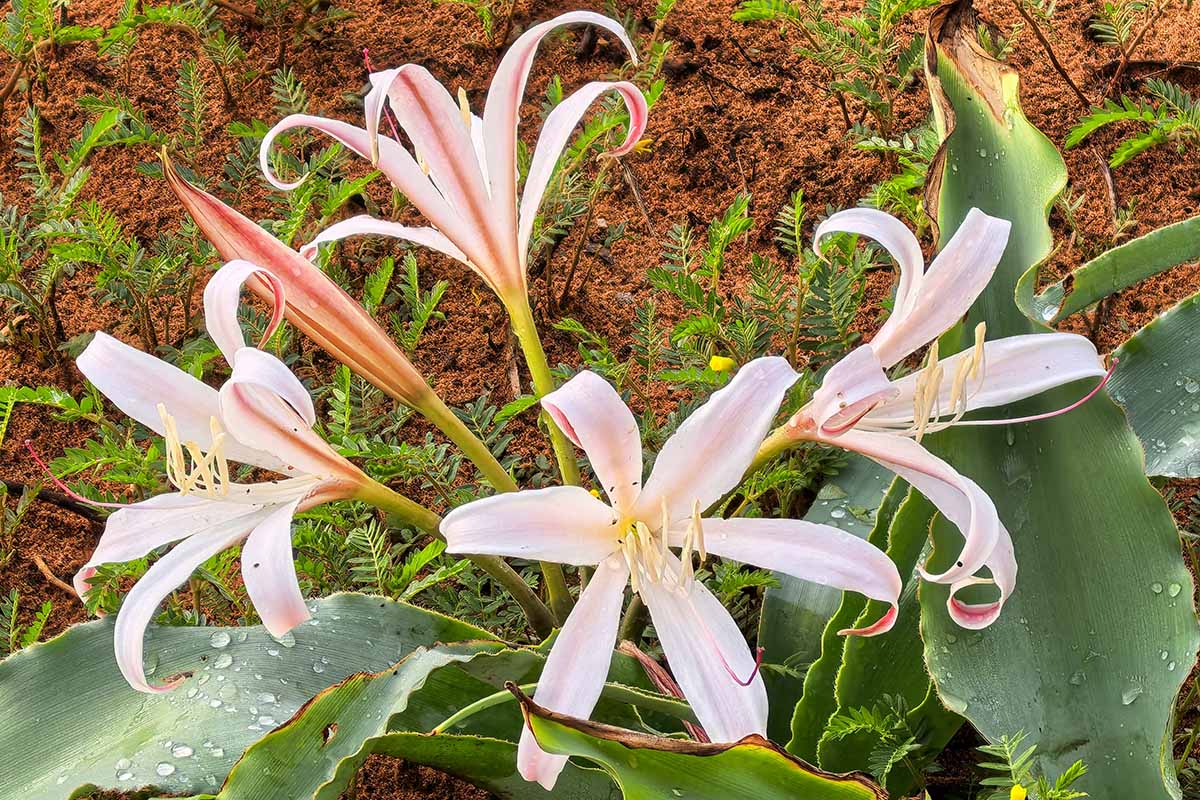
With large, showy flowers and a sweetly spicy scent, crinum lilies (Crinum spp.) are sensational for adding dramatic flair to many garden settings!
Each bulb offers two or three successive flower scapes, and each scape is topped in generous umbels that develop handsome trumpet-shaped blooms.
Colors are mostly in reddish tones such as apricot, burgundy, mauve, pink, scarlet, and white.
While each flower has a short life of only a couple of days, mature bulbs produce heavily laden umbels that bloom for weeks!

We link to vendors to help you find relevant products. If you buy from one of our links, we may earn a commission.
Tough and low-maintenance, the robust bulbs develop large roots that regularly produce offsets, creating impressive stands of glossy green strappy foliage with multiple flower scapes.
Plants are long-lived perennials in mild climates, and when grown undisturbed, can last for generations. Some develop jumbo-sized bulbs that weigh as much as 20 pounds!
Outside of their hardiness range, crinum lilies can be enjoyed in large containers and moved into a sheltered spot protected from winter cold.
Does your garden need a splash of these striking, perfumed blooms? Then let’s uncover how to grow and care for crinum lilies!
Here’s what’s up ahead:
What You’ll Learn
Members of the Amaryllis family with over 100 species, crinum lilies are long-lived perennial bulbs, but they are not true lilies.
They are known by several other common names including cemetery plant and cape, spider, or swamp lily.

Native to Africa, the Americas, Asia, and Australia, Crinum species are prized for the large and perfumed blooms that flower mostly in summer and into fall, although some open in mid or late spring.
Quick Look
Common name(s): Crinum lily, cemetery plant, cape, spider, or swamp lily.
Plant type: Perennial flowering bulb
Hardiness (USDA Zone): 7-11
Native to: Africa, Asia, Australia, and the Americas
Bloom time / season: Summer
Exposure: Full sun
Soil type: Organically-rich, well draining
Soil pH: 6.0-7.0, slightly acidic to neutral
Time to maturity: 2-3 years for flowers
Mature size: 3-4 feet tall by 2-7 feet wide (depending on species)
Best uses: Containers, foundations, mass plantings, erosion control, and coastal or water gardens
Taxonomy
Order: Asparagales
Family: Amaryllidaceae
Genus: Crinum
Species: Americanum, x amibile, asiaticum, bulbispermum, x powellii, mooreii
The spreading clumps of long, lush foliage spread two to seven feet and scapes reach three to four feet tall, depending on the variety.
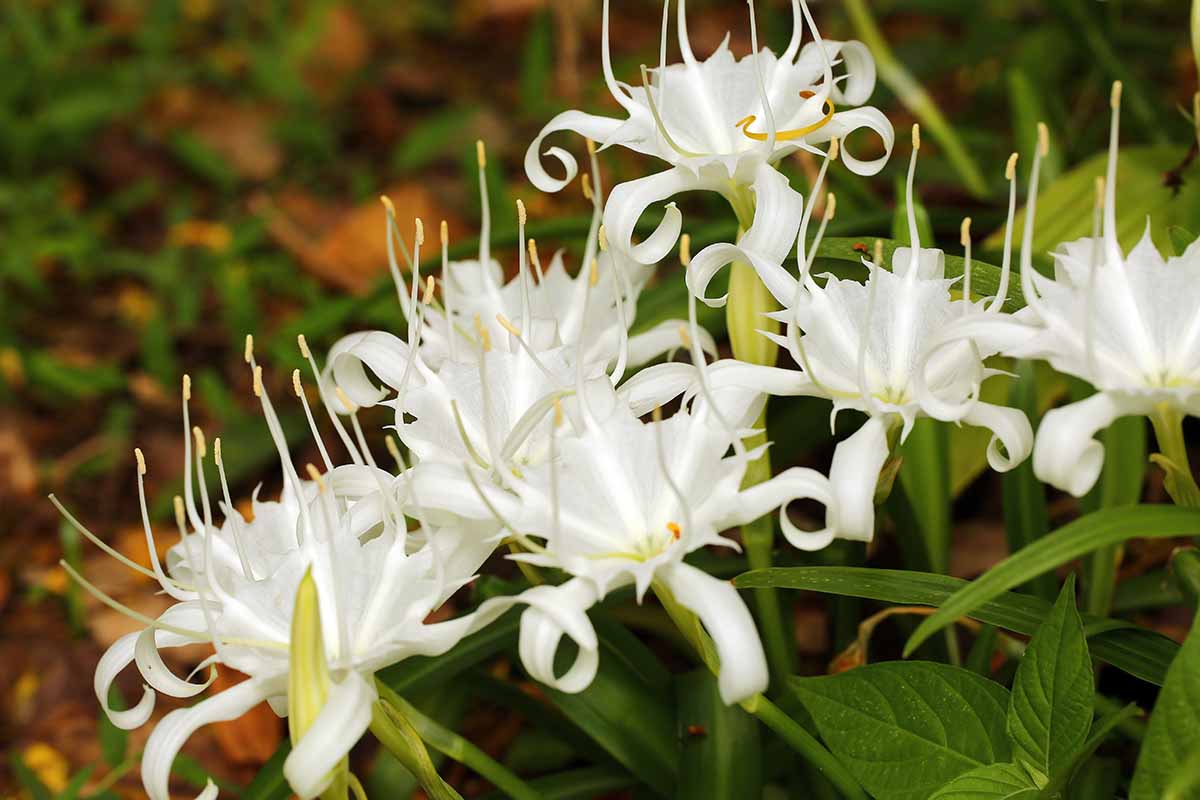
Many species and cultivars sport large, funnel-like blooms. However, some varieties like the spider lily (C. asiaticum) feature distinctively thin, wispy petals.

Hardy in Zones 7 to 11, all varieties thrive in full sun to partial shade and are highly adaptable to a range of soil conditions.
As the bulbs grow they also spread via offsets or “pups,” reliably developing into robust clumps with decent drought tolerance.
Exuding laid back elegance, crinum lilies are dependable garden performers that add eye-catching appeal to beds, borders, and containers or massed into drifts.
And they’re a stellar choice for erosion control on banks or hills with the boisterous bulbs and large roots perfect for soil stabilization.

Some species, including varieties of the popular starry-flowered native swamp lily (C. americanum), are well-suited for growth in aquatic locations with still waters or wet soil conditions, such as bogs, creek banks, marshes, pond edges, and swamps.
With all varieties, flowering is rare in the first year of growth – it takes new bulbs a full growing season to establish strong roots. Expect buds to start forming in their second year.
And it should be noted that all parts of crinum are toxic to children and pets. Plus, the sap can cause skin irritation as well.
How to Grow
When choosing a growing site, provide crinum lilies with a permanent location that provides plenty of room for the roots to grow.
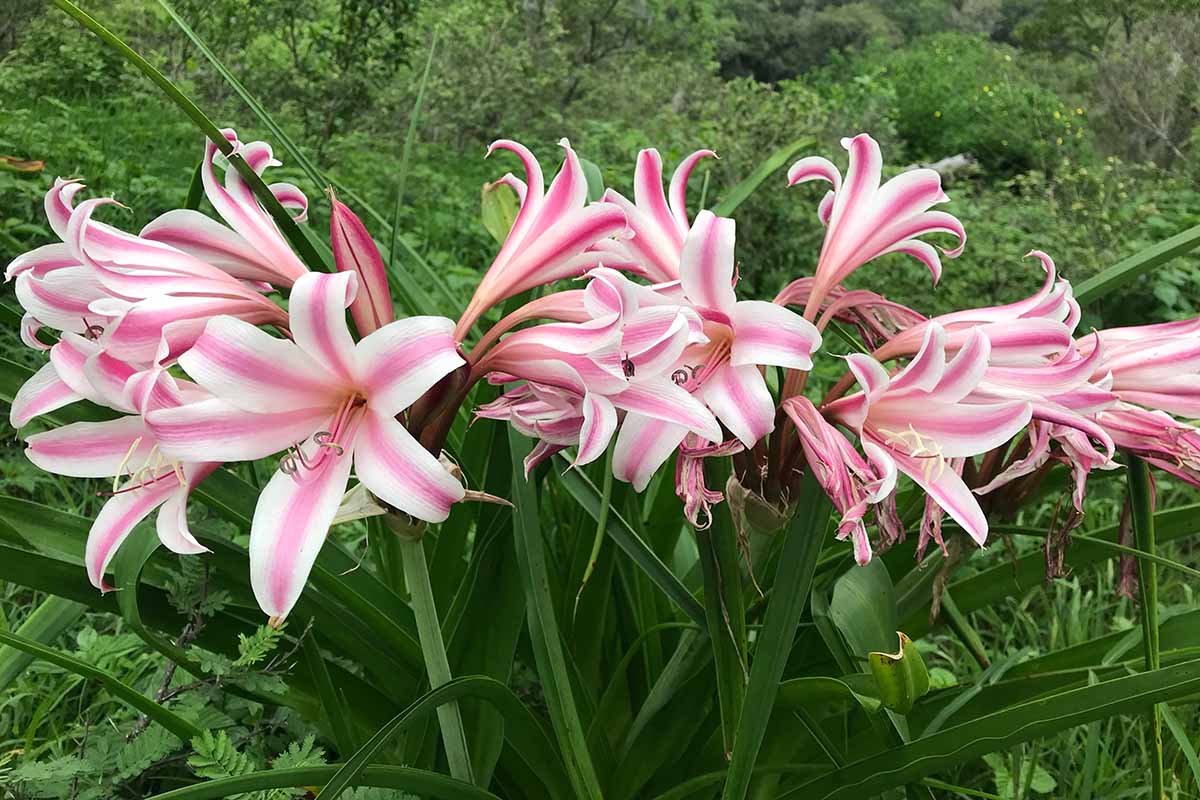
Bulbs can be planted from spring through summer, but spring planting is best.
This gives them the benefit of a full growing season to establish roots which are needed to send up flower scapes.
Space bulbs 12 to 24 inches apart and set them in place with the flat, root-end facing down.
Backfill with soil. The tapered neck should be just below the soil line with the stem portion slightly above it.
After planting, firm the soil gently in place and water to settle.
Climate
Crinums can tolerate some cool temperatures but they really flourish in warm, lightly humid conditions.
Ideal temperatures range between 65 and 85°F and keeping the soil lightly moist typically provides ample humidity.
Light
For vibrant health and plenty of blooms, provide a full sun location.
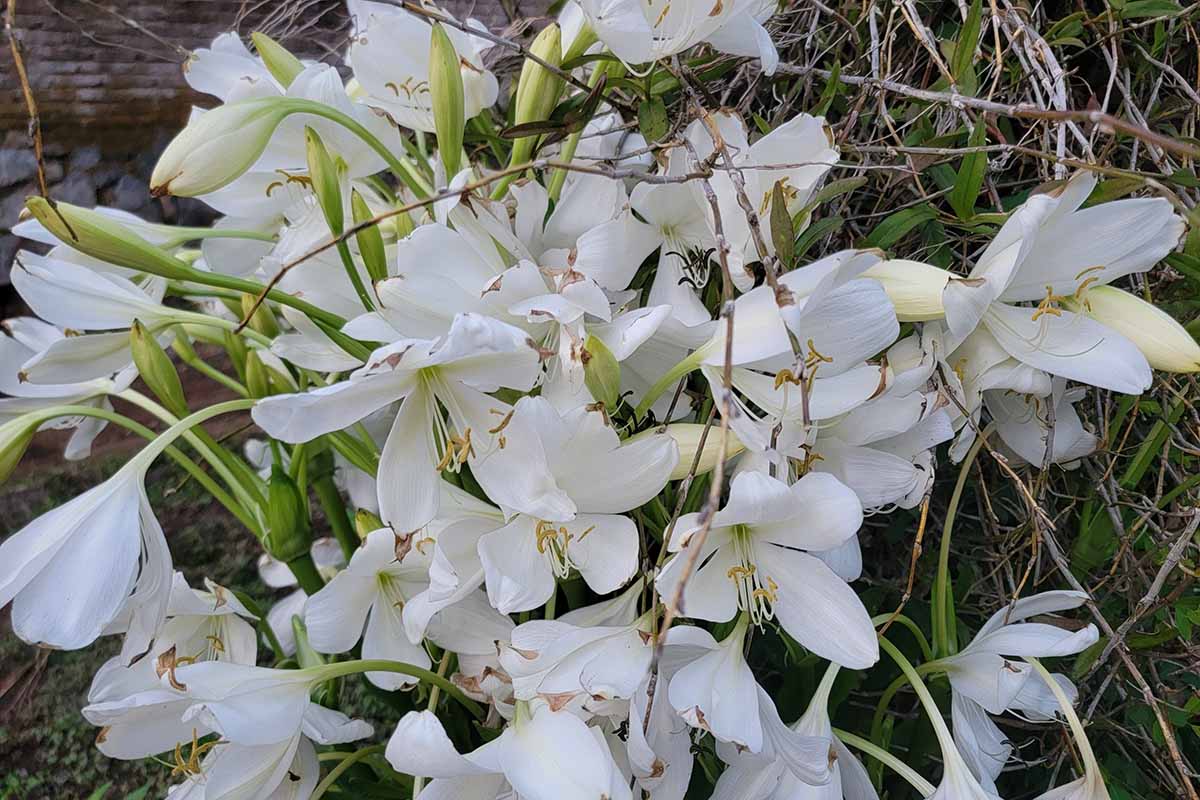
They’re tolerant of light shade, particularly with hot afternoon sun, but too much shade can negatively impact flowering.
Soil
Adaptable to a range of soils, crinum lilies do best in well-draining, nutrient rich soil with a loamy texture and slightly acidic to neutral pH of 6.0 to 7.0.
Prepare the soil by loosening it with a garden fork or spade to a depth of 12 to 16 inches.
For each bulb, mix in one or two shovelfuls of organic materials such as compost, leafmold, well-rotted manure, or worm castings.
If needed, add in a shovelful of granular material such as landscape sand, pea gravel, or stone chips to improve drainage.
Stir in one or two tablespoons of bone meal or a balanced, slow release fertilizer such as 5-5-5 NPK to promote strong root growth.

Burpee Enhanced All-Purpose Plant Food
You can find Burpee’s Enhanced All-Purpose Plant Food available at Burpee.
Water
During their first year, aim to keep the soil lightly moist and water regularly.
Once plants are well established, provide one or two inches of water when the top two inches of soil dries.
Established plants are fairly drought tolerant, but flowering and growth is most vibrant with consistent moisture.
Potted specimens need more frequent water applications to maintain consistent moisture levels.
Fertilizer
In early spring and again in midsummer, carefully work a two-inch layer of compost, manure, or worm castings into the soil with a hand cultivator.
Or, apply a balanced, slow-release fertilizer in early spring and midsummer, scratching the granules lightly into the soil surface over the root zone.
In the second season, you can switch to a flower-boosting fertilizer with higher phosphorous levels, such as 4-6-4 NPK.

I use Burpee Organic Rose and Bloom granular fertilizer, which is available at Burpee.
Containers
For potted crinum lilies, use a fertile, well-draining soil and prepare as outlined above.
Ensure containers have drainage holes. I like to line mine with a couple of inches of broken pottery to enhance drainage.
Containers also need to be large and hefty enough to accommodate expanding pressure from the robust root systems.
Water to keep the soil lightly moist and fertilize every three or four weeks with a half-strength solution of a balanced liquid or water soluble fertilizer.
In areas outside of their hardiness range, move pots into a sheltered spot to protect them from winter’s cold temperatures.
Species and Cultivars
Bulbs are usually available at garden centers or they can be purchased online from bulb and flower retailers.
Here are a few popular suggestions to get you started:
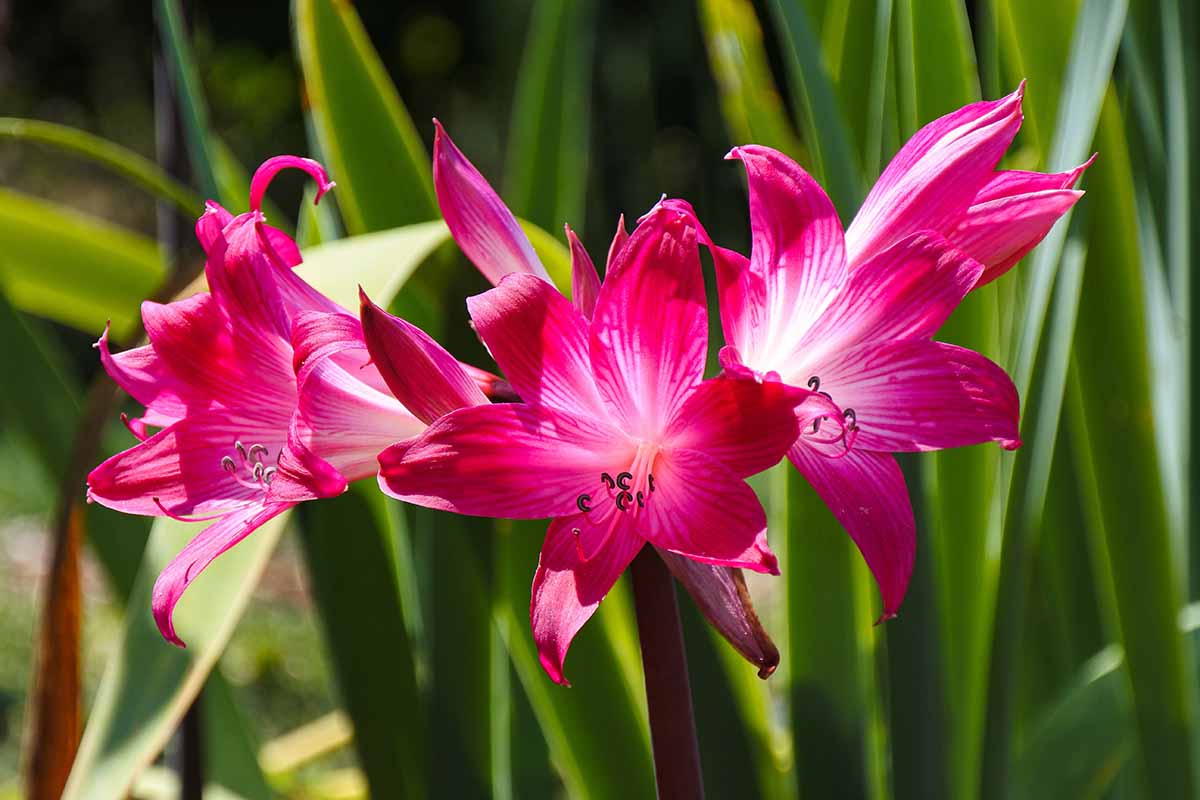
An old-time variety of mysterious parentage, ‘Ellen Bosanquet’ is delightful with pink to coral blooms.
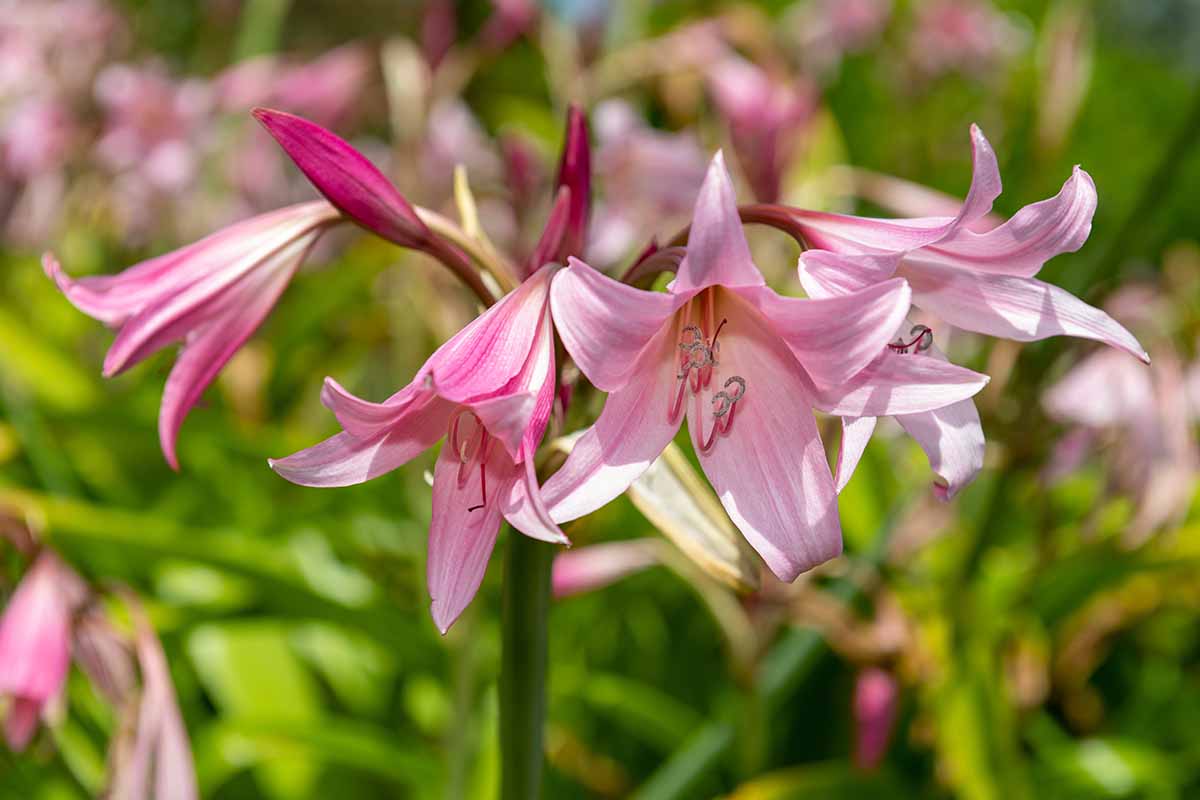
A South African variety, the natal lily (C. moorei) offers sublime beauty with creamy white to blush pink flowers.
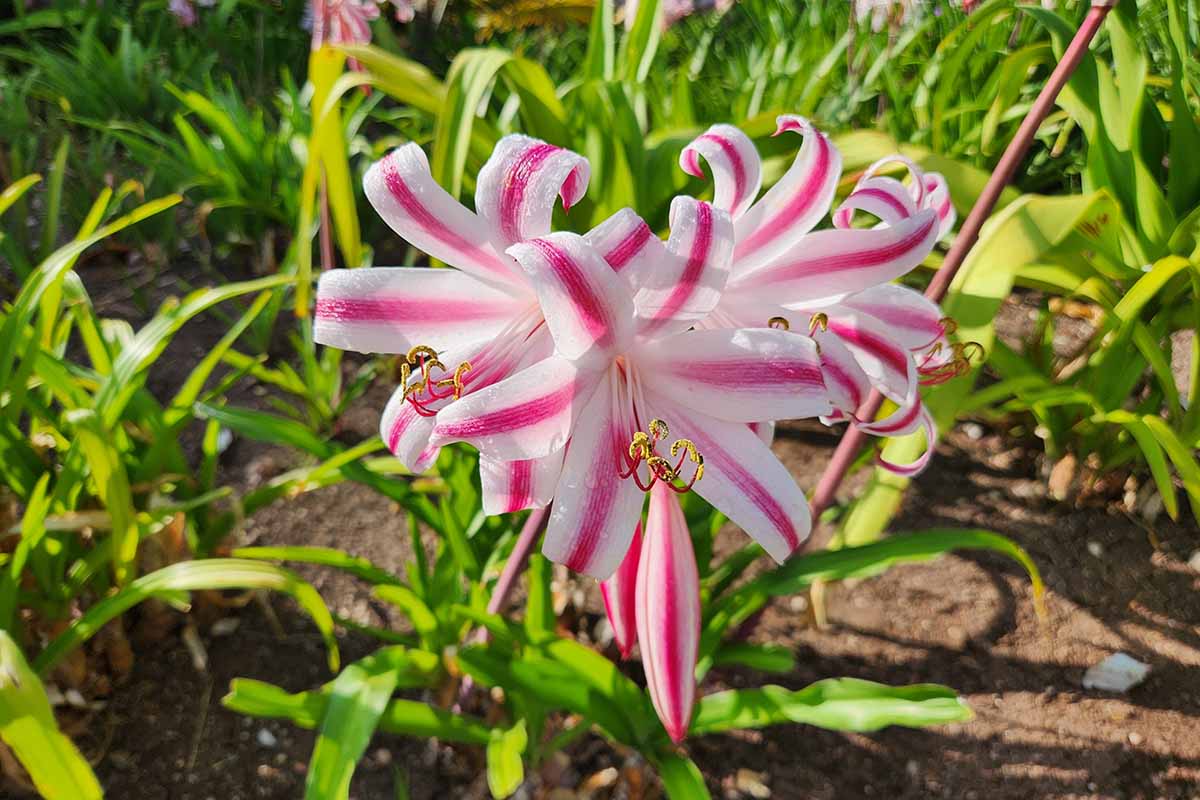
One of the earliest varieties to flower, ‘Milk and Wine’ is a charmer in white petals adorned with bold burgundy stripes.
Maintenance
In climates where Crinum species are hardy, plants typically retain their foliage year round. For evergreen plants, water lightly in winter just to maintain barely moist soil.
However, newly planted bulbs and those grown in containers often go dormant for winter, inducing the foliage to yellow and die back.
Cut back any leaves that have yellowed or died off, using clean, sharp shears to cut them close to the bulb.
Refrain from watering dormant bulbs until new growth emerges in spring.
Propagation
New plants can be started from seed, but it takes several years before flowers appear.
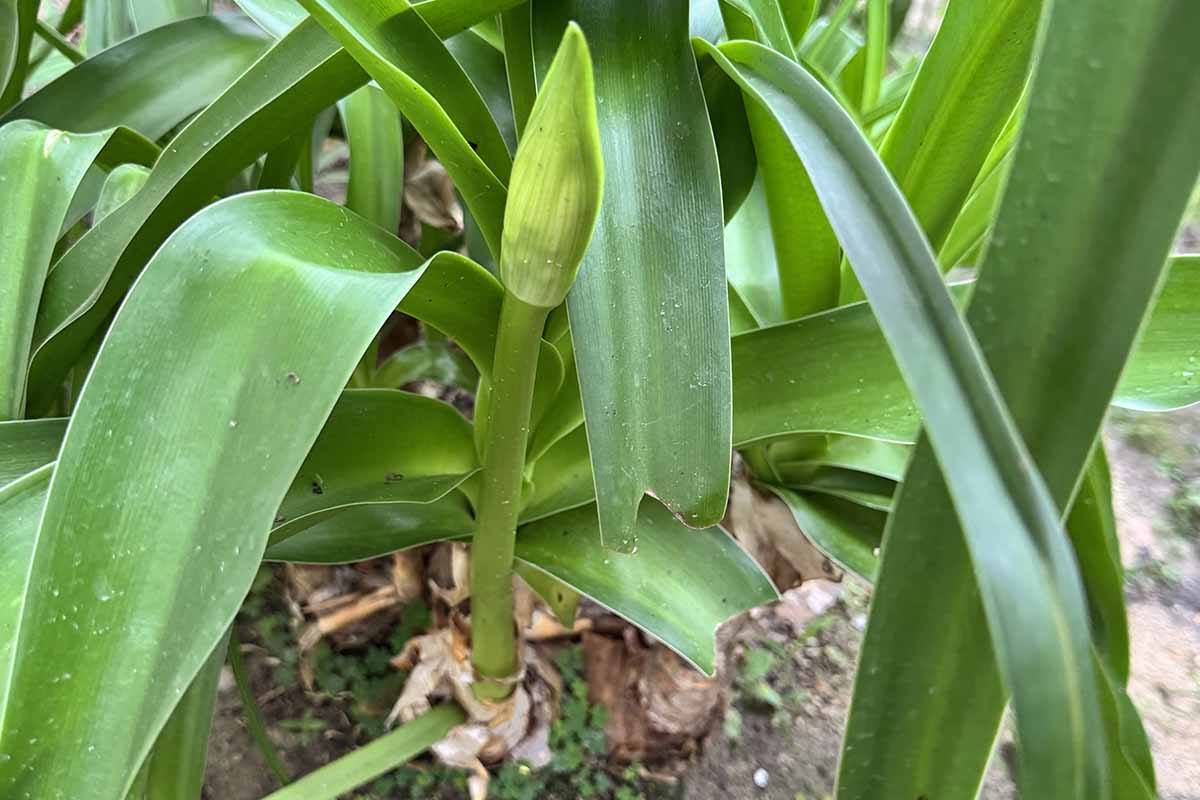
Division of bulbs larger than six inches and offset or pup division are preferred for propagation, although it takes a year or two for buds to set with pups and new divisions as well.
Pup removal and bulb division can be done after flowering has finished. Here’s how:
- Prepare planting sites before dividing – divided bulbs and offsets should not be allowed to dry out before replanting.
- To remove pups or to divide bulbs, use a spade to loosen the soil deeply in a wide circle around the bulbs.
- Gently lift bulbs from the soil and brush off dirt.
- To remove pups, carefully break them away from the mother bulb, taking the attached leaves and roots with the pup.
- To divide bulbs, trim foliage close to the neck.
- Use a clean, sharp spade or garden knife to cut bulbs into four equal sections – ensure each section has a portion of the basal plate where the roots grow from.
- Treat cut surfaces with a fungicide such as garden sulfur, which you can find at Arbico Organics.
Plant pup offsets and bulb divisions into prepared growing sites.
Pests and Disease
Crinum lilies are generally carefree although there are a few issues to watch for.
Spider mites and grasshoppers are the most common pests.
Use a natural insecticide like neem oil to treat mites and handpick or use a strong spray of water from the garden hose to deal with grasshoppers.

You can find Bonide Neem Oil available at Arbico Organics.
Fungal problems like red blotch fungus causes red blotches on the foliage and can be treated with a fungicide such as neem oil.
Mosaic potyvirus causes yellow streaking on the leaves, and unfortunately there is no cure. You’ll need to lift and destroy infected plants.
Elegant and Long Lasting
With their generous umbels of large, lily-like blooms atop sturdy flower scapes, species in the Crinum genus add elegant, long lasting color and fragrance throughout summer and beyond.
Find a sunny spot where the large bulbs can settle long-term, give them rich, well-draining soil, and water regularly until they’re established.
You’ll love their steady growth and reliable floral displays!
And in areas with cold winters, enjoy crinums in a large, sturdy pot that can be moved into shelter for dormancy.
What’s your favorite spot for growing charismatic crinum lilies? Tell us about it in the comments section below!
And for more easy-care, showy summer bulbs, add these guides to your list next: