
Acanthocereus tetragonus ‘Fairy Castle’
Acanthocereus tetragonus ‘Fairy Castle’ is a cultivated dwarf variety of A. tetragonus, a 20-plus foot columnar subtropical species native to the Caribbean, Central America, Florida, Mexico, northern South America, and Texas.
Suited to outdoor cultivation in Zones 9 to 11, the slow-growing dwarf cultivar achieves more modest dimensions of up to six feet tall with a spread of one to two feet.
We link to vendors to help you find relevant products. If you buy from one of our links, we may earn a commission.
Also known as A. tetragonus ‘Monstrose,’ it performs well in a container, as an informal barrier hedge, or in-ground as a specimen planting in rockeries and moisture-efficient xeriscapes.
When cultivated indoors, ‘Fairy Castle’ generally tops out at about 12 inches tall and wide.
Read on to learn how to enjoy this whimsical cactus as a houseplant.
Here’s what we’ll cover:
What You’ll Learn
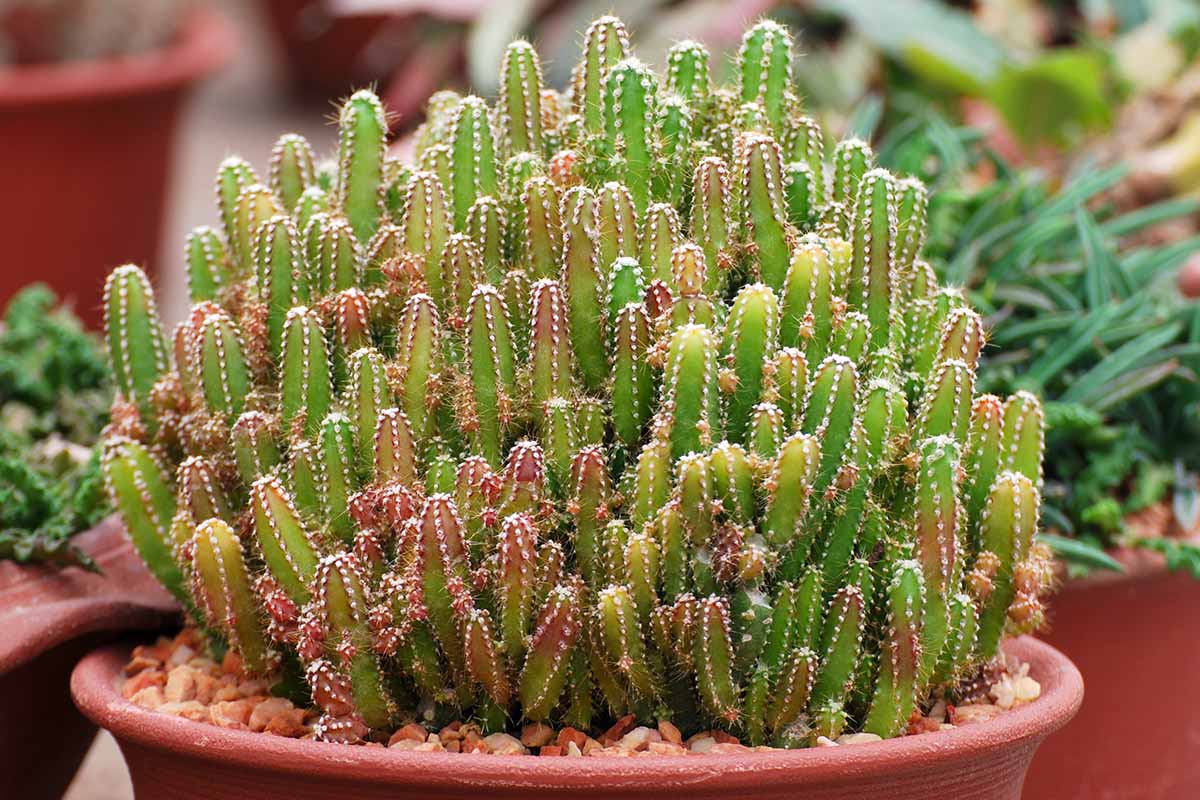
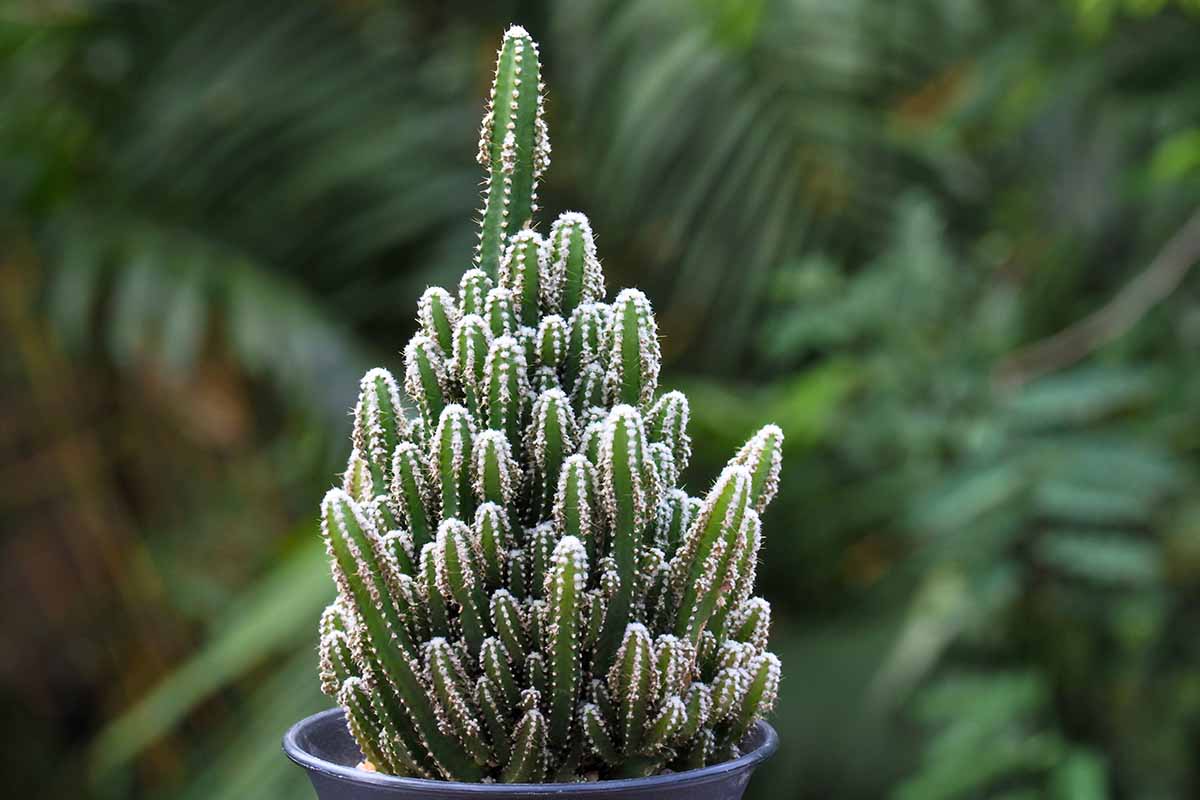
Fairy castle cactus has a central stem surrounded by offsets forming a dense cluster of branching columns resembling castle turrets gone wild.
Each stem has raised, spiny ridges, creating deep indentations along the length of the stem for a triangulated form.
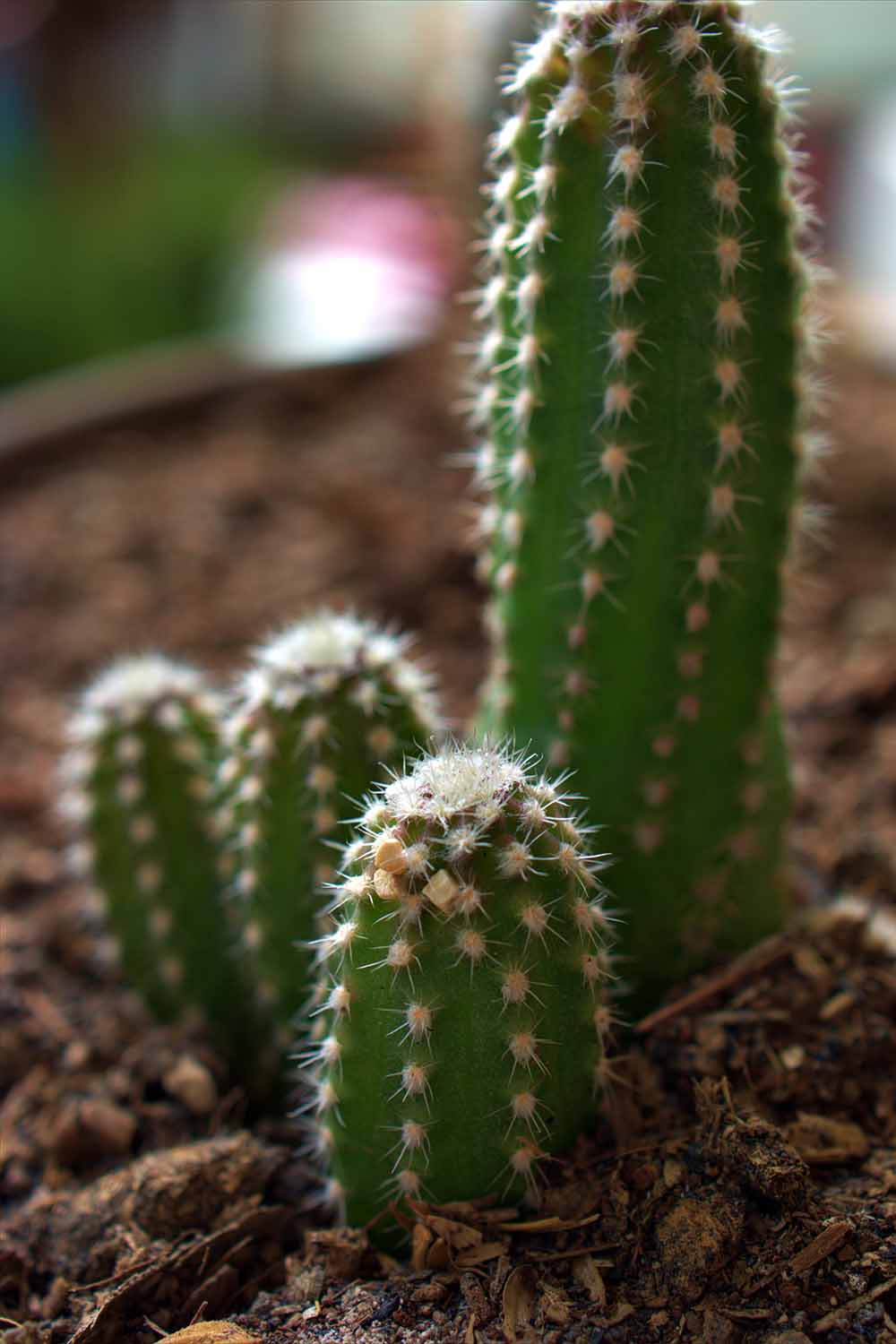
Stems are dark green and typically two to three inches in diameter, with grey areoles spaced about an inch apart, each armed with clusters of straight spines.
Quick Look
Common name(s): Barbed wire, fairy castle, fairytale castle, triangular cactus
Plant type: Cactus
Hardiness (USDA Zone): 9-12 (outdoors)
Native to: Caribbean, Central America, Florida, Mexico, northern South America, Texas
Bloom time / season: Summer
Exposure: Bright, indirect sunlight indoors; full sun to part shade outdoors
Soil type: Well-draining cactus and succulent potting mix
Soil pH: 5.0 to 6.5, slightly acidic to neutral
Mature size: 1-6 feet tall by 1-2 feet wide (stays small indoors)
Best uses: Container, hedge, houseplant, rockery, specimen, xeriscape
Taxonomy
Order: Caryophyllales
Family: Cactaceae
Genus: Acanthocereus
Species: Tetragonus
Cultivar: ‘Fairy Castle’
In the wild, the parent species, commonly known as triangle or barbed wire cactus grows in dry, open terrain with intense sun, high heat, and fast-draining soils that dry out quickly between rains.
The species plant produces large, fragrant white blossoms that open on summer nights, pollinated by hummingbird moths.
These are followed by small reddish fruits favored by wildlife. Cultivated plants grown indoors seldom bloom.
The fairy castle cactus is a monstrose form of the triangle cactus, which means it arose from a genetic mutation that causes irregular, multi-stemmed growth responsible for its distinctive silhouette.
It is sometimes listed as a Cereus species, a name that reflects its earlier botanical classification.
Like all cacti, it stores moisture in its fleshy stems and the spines deter herbivores, reduce air movement, and provide shade in its sun-drenched native habitat.
Do they adapt well to life indoors? Let’s find out!
How to Grow
‘Fairy Castle’ is a subtropical cultivar that thrives in semi-arid conditions with high temperatures and low moisture.
To mimic these conditions indoors, provide a setting that is 65 to 80°F with a humidity level below 50 percent.
Avoid exposing the plant to temperatures below 50°F, which can cause cold stress and inhibit growth.
Light
Subtropical cacti prefer full sun and they require bright, indirect sunlight indoors. Avoid direct sunlight through window glass as it is likely to scorch the stems.
Instead of a windowsill placement, opt for a location about two feet from a south- or east-facing window that offers consistent warmth away from HVAC drafts.
Rotate the pot weekly to ensure all stems receive ample sunlight. Insufficient sun causes the stems to yellow and growth to become stretched and floppy.
Soil
Cactus potting soil needs to be lean, rather than overly fertile, and should contain sand or perlite for rapid drainage. The ideal pH is in the 5.0 to 6.5 range.
Consult our guide to making succulent potting soil for instructions on blending 60 percent organic matter, such as coconut coir and compost, with 40 percent inorganic matter, like perlite and sand.
Water
Oversaturation is the nemesis of all succulents including cacti.
You can prevent waterlogging and root rot by ensuring that the growing medium is loose and gritty, the pot drains well, and the soil is dry before watering.
When you water ‘Fairy Castle,’ allow the pot to dry completely and then soak the soil thoroughly, taking care to avoid wetting the stems.
Read more about watering cactus houseplants here.
Fertilizer
During the spring and summer, fertilize with a liquid cactus and succulent food with an NPK ratio that favors phosphorus and potassium over too much nitrogen.
Minimizing nitrogen prevents leggy, weak stems, while boosting phosphorus and potassium supports a robust root structure.
I recommend this product from Schultz that has a lower nitrogen content for vigorous stems and higher phosphorus and potassium to support strong roots and overall health.
Schultz Cactus Plus Liquid Plant Food
Schultz Cactus Plus Liquid Plant Food is available from Schultz via Amazon.
Where to Buy
You’ll find fairy castle cactus readily available from specialty cactus and succulent nurseries – and sometimes in big box stores.
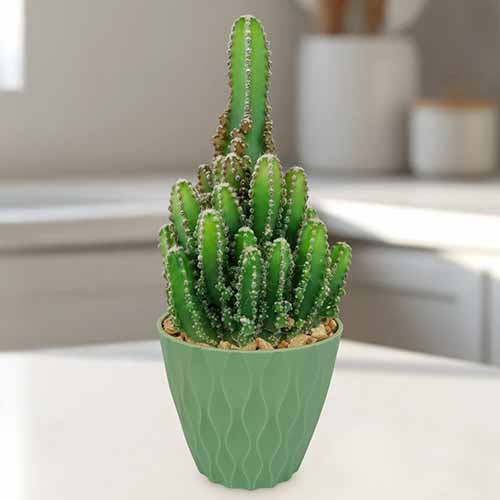
Fairy Castle’ is available from Planet Desert in four-inch white, black, teal or light green starter pots.
Maintenance
Slow-growing fairy castle cactus prefer a snug-fitting container about an inch wider than the root mass.
Unglazed pots are best as they readily evaporate excess moisture. The roots are shallow, so standard depth is fine.
If roots protrude from the drainage hole, or the stems spread to fill the pot completely, leaving no room for the watering can spout, it’s time to repot in fresh potting soil.
It’s also a good idea to refresh the soil every three years regardless of whether a larger vessel is needed.
Over time, potting medium compacts, impairing drainage and the ability of the roots to uptake water and nutrients.
In addition, the nutrients in the organic elements become depleted and need replacing.
When repotting, set the crown, where the stems and roots meet, at the same depth as in the original container for a smooth transition with minimal shock.
Our guide to repotting cacti has details.
Finally, as ‘Fairy Castle’ ages, the oldest stems become woody, a process called corking. This is entirely natural and requires no special care.
Propagation
To begin enjoying your own fairy castle cactus, you can take a stem cutting from an existing plant or go the easy route of purchasing a starter plant.
We don’t recommend beginning with seeds for several reasons.
‘Fairy Castle’ is a cultivated variety that flowers infrequently, making seed-sourcing difficult. And as it is a cultivar, the seeds may not produce exact replicas of the parent plant.
Successful germination requires a precise combination of temperature and humidity, as well as patience, during a lengthy seedling stage of up to one year.
From Cuttings
To start from a cutting, choose a robust main stem, side branch, or basal offset two to four inches long.
Wear gloves to protect your hands and use clean shears to cut it near the base, between the leaf nodes – where the spines protrude.
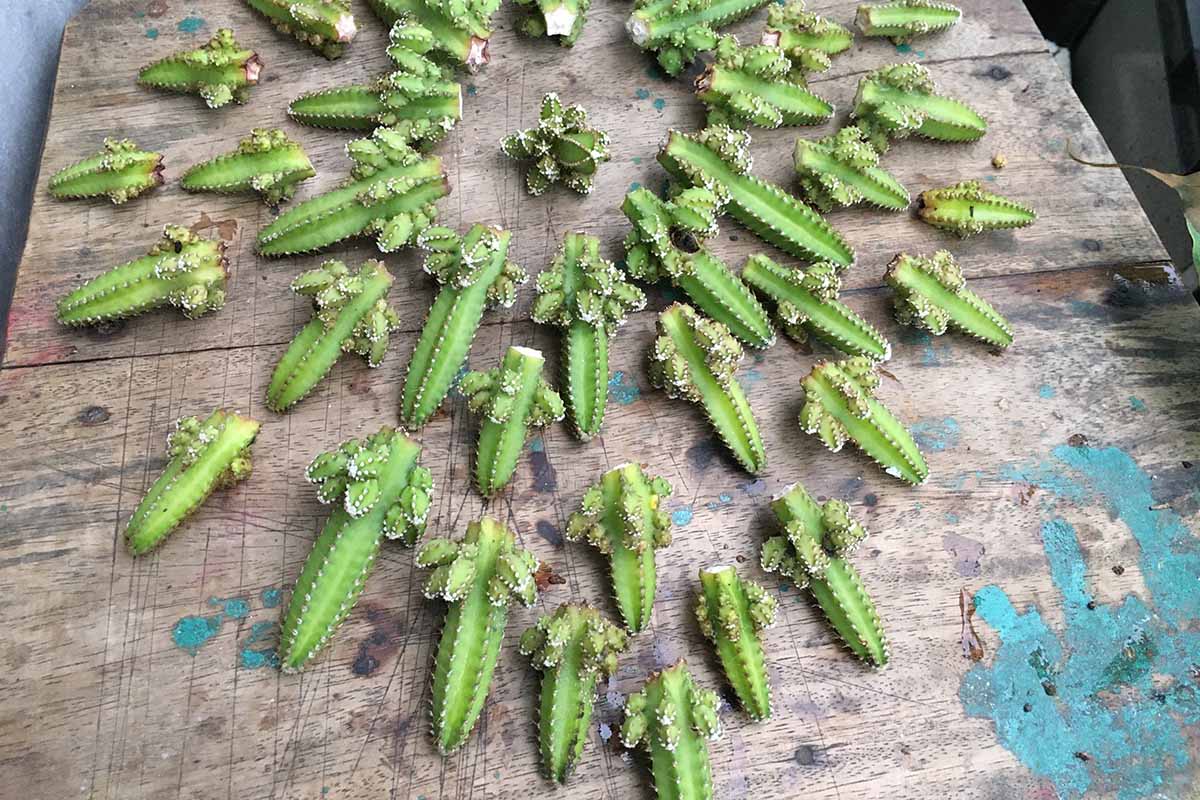
Lay the cutting on a paper towel away from direct sunlight for a week to allow the cut end to form a callus.
Once callused, fill a three- to four-inch pot three-quarters full of cactus and succulent soil mix.
Dip the callused end into rooting hormone powder.
Bury the dipped end just deep enough to hold it firmly upright, with one or more nodes beneath the soil.
Do not water the soil and set the pot in bright, indirect sunlight.
In two weeks, give the cutting a gentle tug with a pair of silicone tipped tweezers. If it stays put, roots have developed and you can begin watering. If not, replant and recheck in a week.
Transplanting
To prevent root damage, it’s best to move your fairy castle cactus when the soil is dry. If you’ve just watered, wait until the pot dries completely.
If your cutting has outgrown its container, or you want to repot a nursery starter plant, note its depth in the original vessel.
Select a pot that’s an inch wider than the root mass. Fill the bottom third with cactus and succulent potting mix.
Carefully remove the plant from its original container – wear gloves to protect your hands or use a suitable tool. Set the plant in the new pot with the crown at the original depth.
Backfill to three-quarters full to allow for watering without overflow. Do not water for the first week after transplanting.
Pests and Disease
Bright sunlight, well-draining, gritty soil, adequate air circulation, and the avoidance of under- and overwatering go a long way toward deterring pests and inhibiting disease.
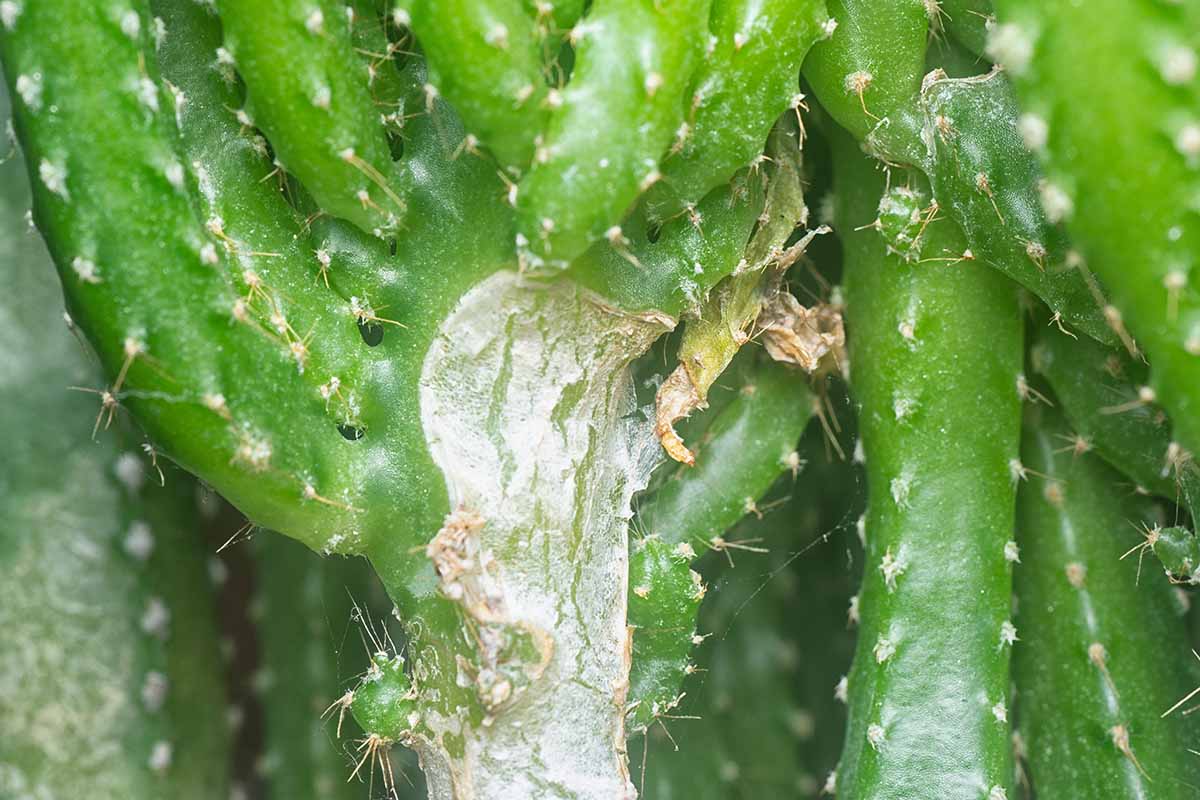
However, when conditions are less than ideal, you may encounter both.
Mealybugs, scale, and spider mites are sapsuckers that cause stem discoloration, stunted growth, and wilting. They prefer warm, dry conditions and moisture-stressed plants.
You can address infestations with organic horticultural neem oil.
In addition, feeding pests can vector diseases, while their “honeydew” excrement is a prime breeding ground for fungal sooty mold, a condition that responds to treatment with neem oil.
The main concern from a disease standpoint is root rot.
When drainage is poor, soil is compacted, and plants are overwatered, the roots suffer oxygen deprivation, collapse, and fail to nourish and hydrate the stems aboveground.
The first visible sign may be a mushy stem, but the root damage below the soil is already extensive by the time the symptoms appear aboveground.
You can unpot the plant and try to salvage healthy stem and root sections with the instructions in our guide to preventing and managing rotting in succulents.
Happily Ever After
Fairy castle is an easy-care houseplant when its cultural requirements are met.
Provide temperatures between 65 and 80°F, bright, indirect sunlight, gritty, well-draining soil, and appropriate watering.
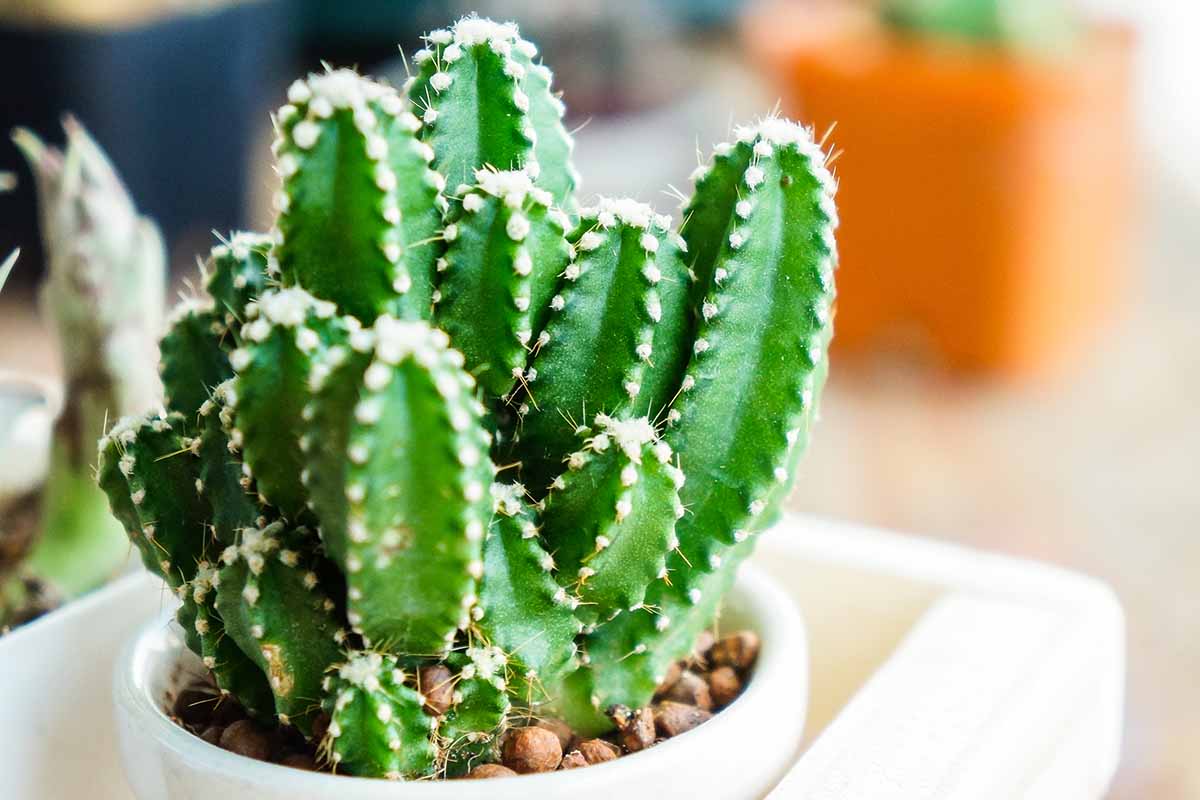
The turret-like stems seem to whisper “happily ever after,” like the perfect ending to a favorite fairytale. Isn’t it time to add a bit of whimsy to your indoor living space with ‘Fairy Castle?”
Do you grow fairy castle cactus indoors? Please share your tips in the comments section below.
If you found this article informative and want to learn more about cactus care and attractive varieties, we recommend the following: