Crassula muscosa
Watch chain crassula, Crassula muscosa, is a succulent in the Crassulaceae or stonecrop family, which includes jade plants and kalanchoe.
Native to South Africa and Namibia, it grows in full sun to part-shade, and is well-suited to Zones 9 to 12 gardens and houseplant cultivation.
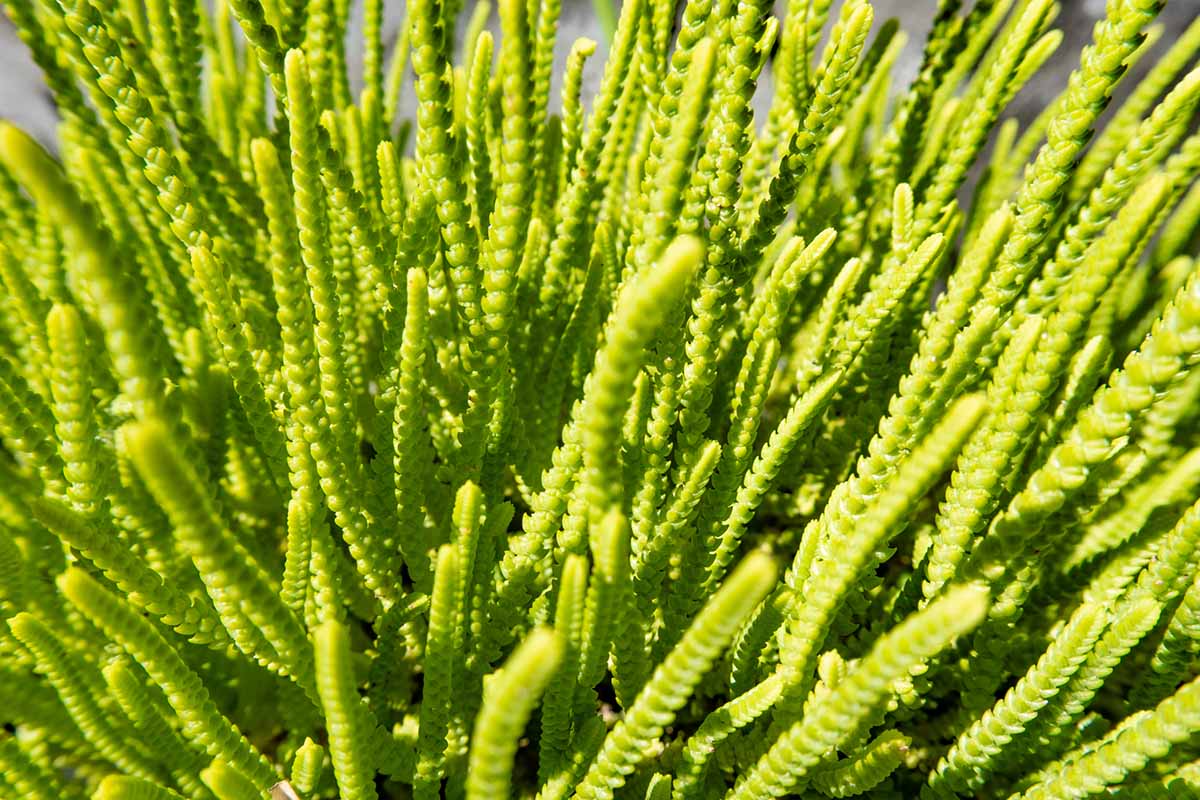
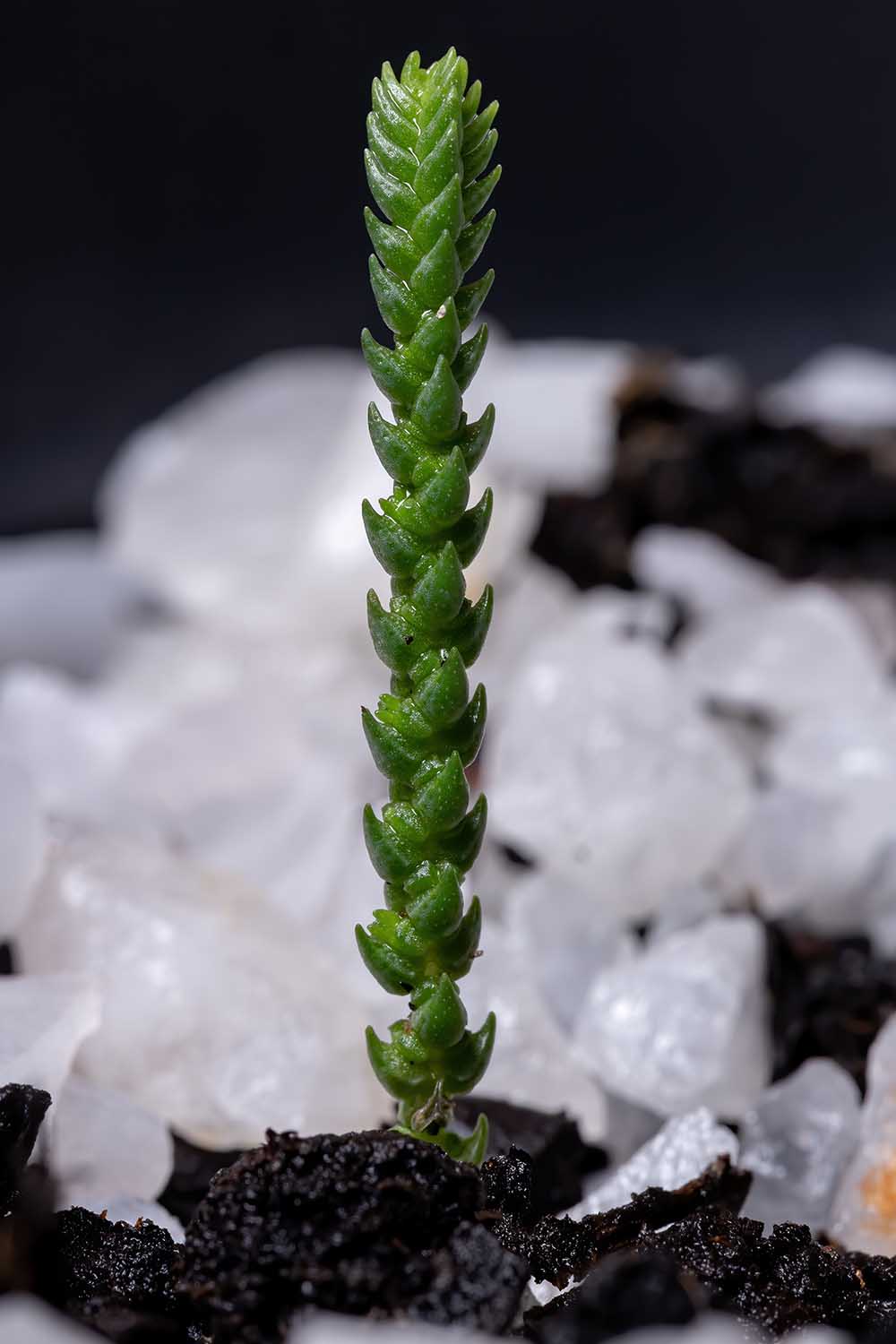
The upright, branching stems are lined entirely with tiny, fleshy, densely nested leaves adept at water storage.
We link to vendors to help you find relevant products. If you buy from one of our links, we may earn a commission.
They resemble the links of a pocketwatch chain which inspires its common name. The stems boast equally petite greenish-yellow blossoms from spring to summer.
In our guide to growing crassula, we provide a broad overview of this varied succulent genus.
This article discusses how to grow and care for watch chain crassula indoors as a houseplant.
Here’s what we’ll cover:
What You’ll Learn
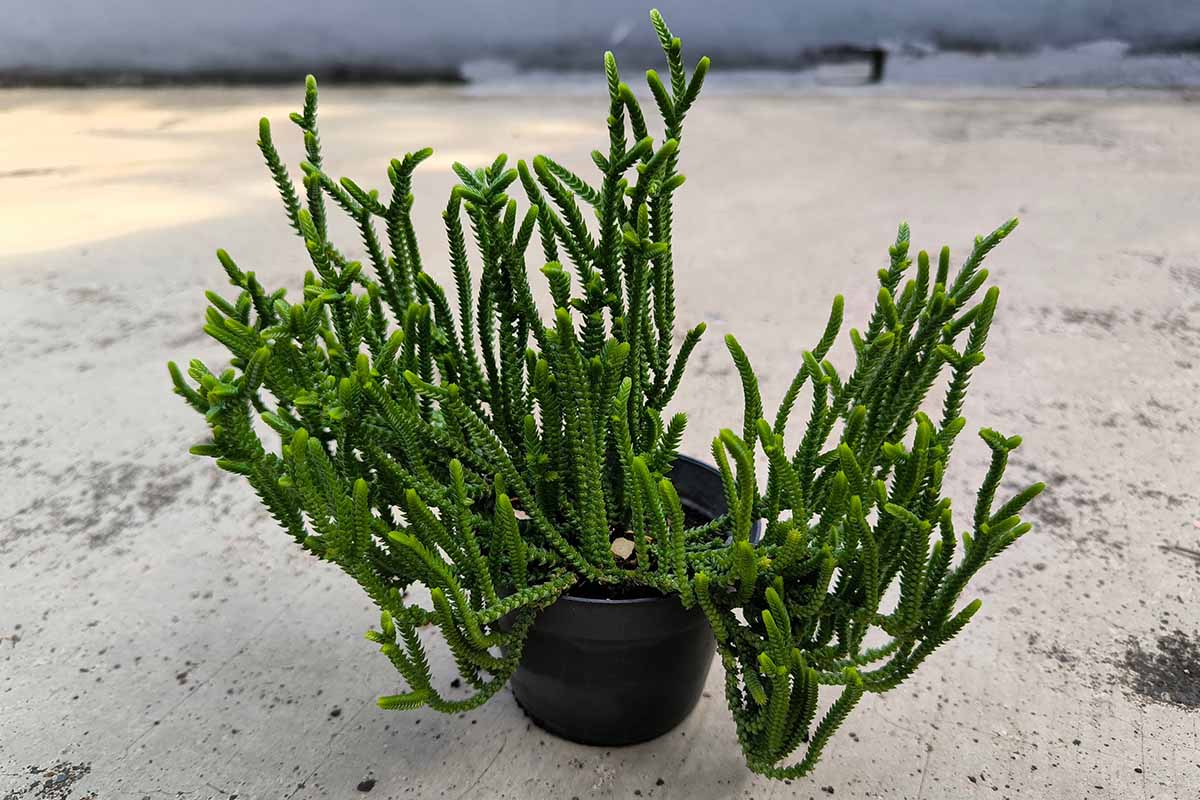
These succulent plants grow six to 12 inches tall and 12 to 24 inches wide, taking about two to five years to mature.
Outdoor specimens have the largest dimensions, often growing woody stems like sub-shrubs.
The vertical branches of houseplants in bright, indirect sunlight often cascade attractively over the sides of a container or hanging basket as they age.
Quick Look
Common name(s): Club moss crassula, moss cypress, princess pine, rattail cypress, watch chain crassula, zipper plant
Plant type: Perennial succulent
Hardiness (USDA Zone): 9-12 (outdoors)
Native to: South Africa, Namibia
Bloom time / season: Spring to summer
Exposure: Bright, indirect sunlight indoors; full sun to part shade outdoors
Soil type: Cactus and succulent potting mix; gritty ground soil, well-draining
Soil pH: 5.5-6.5, slightly acidic to neutral
Time to maturity: 2-5 years
Mature size: 6-12 inches tall by 12-24 inches wide
Best uses: Container, houseplant, mixed grouping, specimen, sub-shrub
Taxonomy
Order: Saxifragales
Family: Crassulaceae
Genus: Crassula
Species: Muscosa
Watch chain crassula stands out among grouped succulents, adding height and rich texture, its green hues contrasting boldly with reds and complementing the blues of other species.
This species has a variety of different common names, including club moss crassula, moss or rattail cypress, and princess pine.
C. muscosa has undergone significant taxonomic consolidation since it was described in 1760.
For over two centuries, botanists created separate species, including C. lycopodioides and C. pseudolycopodioides based on variations in branching and leaf arrangement.
Modern molecular analysis in the 2020s resolved this confusion by determining that these are variations within a single species. Previous species names are treated as synonyms.
How to Grow
Watch chain crassula is easy to care for, requiring infrequent watering and repotting.
A look at it native habitat is helpful for understanding its cultural requirements as a houseplant.
Climate
The species is endemic to arid and semi-arid regions where the air is hot and dry and the soil is coarse and well-draining.
It is accustomed to temperatures in the 60 to 80°F range during the day with dips below freezing on winter nights.
An average home temperature in the high 60s to low 70s and humidity in the 30- to 50-percent range are suitable for indoor cultivation.
Avoid drafts and extended temperatures below 50°F for best results.
Light
As mentioned, to mimic the conditions of full-sun to partial shade plants living outdoors, houseplant growers should provide bright, indirect sunlight.
Ideal locations are about three feet from a south- or west-facing window. Avoid closer placements to inhibit leaf scorch from direct sunlight.
Soil
To replicate the gritty, fast-draining soil of its native lands, use a cactus and succulent potting mix that contains both inorganic and organic ingredients, such as Tank’s Pro Cactus and Succulent Mix.
Tank’s Pro Cactus and Succulent Mix
It contains organic compost plus coconut coir chips and horticultural pumice to supply the rapid drainage required to prevent root rot.
Tank’s Pro Cactus and Succulent Mix is available from Tank’s Green Stuff via Amazon.
Water
As with many succulents, the “soak and dry” method of watering is best for watch chain crassula. Allow the pot to dry completely before watering again.
A moisture meter is a useful tool for gauging moisture needs.
You will see in the propagation section that we vary this regimen somewhat when starting new plants.
Fertilizer
Watch chain crassula is not a heavy feeder. However, it may benefit from a nutrient boost during the spring and summer months of active growth.
Use an all-purpose liquid plant food, or one formulated specifically for succulents. Apply it at half-strength once a month. Discontinue feeding during fall and winter dormancy.
Where to Buy
As mentioned, in addition to the straight species, Crassula muscosa, there are other naturally occurring varieties.
The variations have slightly different characteristics than the primary species, such as more rounded leaves or narrower branches, but they are subtle.
However, C. muscosa var. variegata is noticeably different, with light green and cream variegated foliage, a treasure if you can locate one.
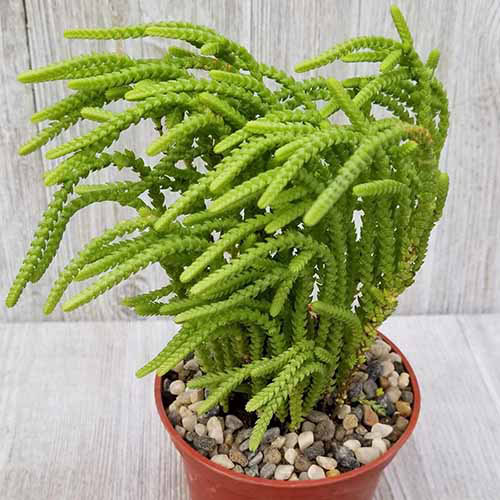
C. muscosa, with its dense green branches, is readily available from succulent suppliers.
Place it in bright, indirect sunlight upon receipt, and water when the potting mix is completely dry.
Watch chain crassula is available in two-inch pots from Planet Desert.
Maintenance
Pruning needs are minimal. Use clean shears to remove wayward stems that spoil an aesthetic, and any that are damaged or dead.
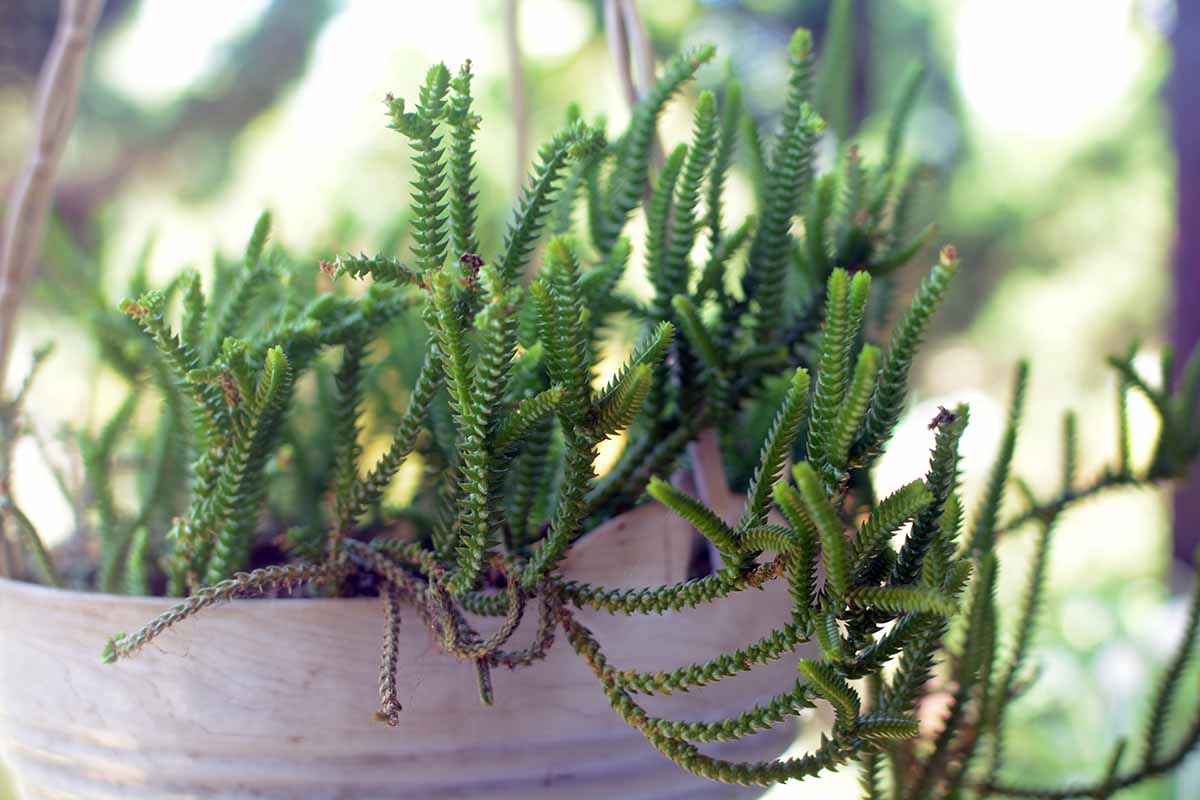
Healthy stems may be used for propagation as discussed below.
Repot when the foliage expands to fill the pot, whether or not roots protrude from the drainage hole.
A container that is an inch wider than the foliage makes it easy to water without risking stem breakage, and supports stems that grow heavy with age and cascade over the rim.
It’s a good idea to refresh the potting mix every two to three years to prevent compaction and potential root rot, even if a pot size increase is not required.
Propagation
In the wild, natural propagation occurs when fragile stems break and root into ground soil. The tiny blossoms also disperse viable seeds.
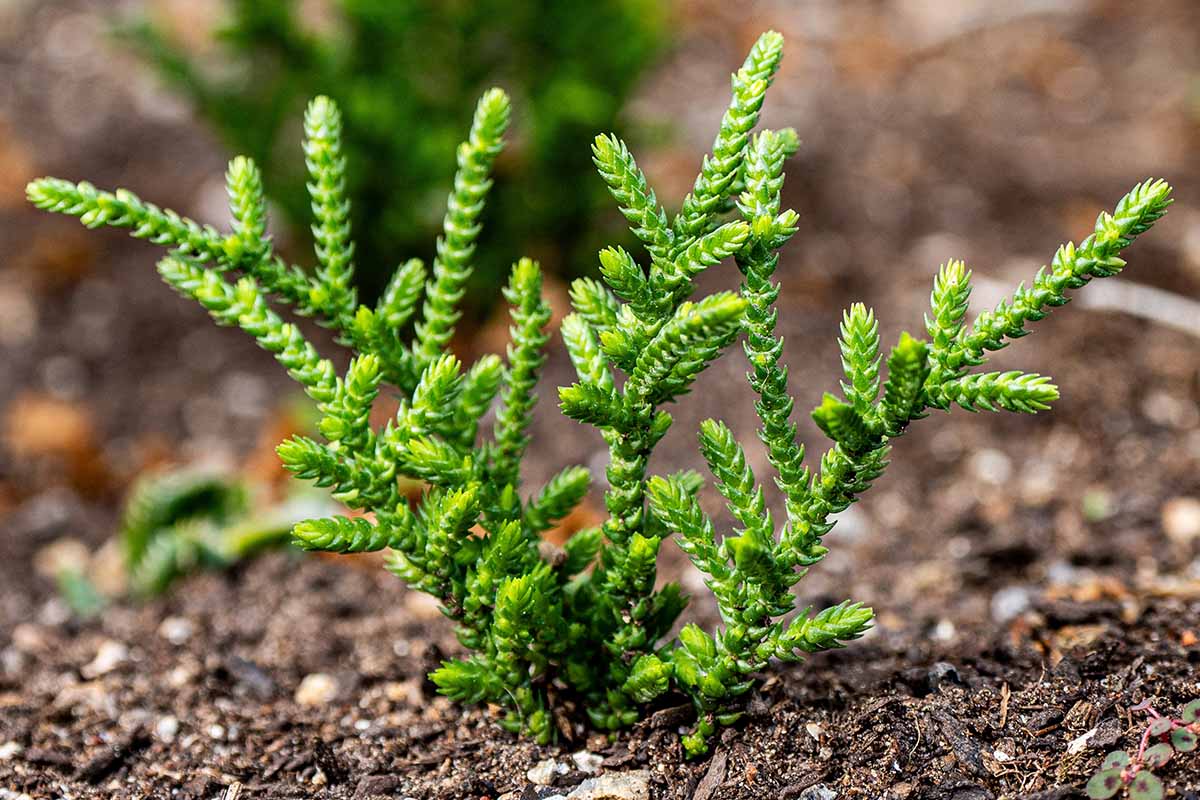
Sourcing seeds may pose a challenge, and waiting for them to germinate and grow is the longest propagation route.
Instead, a home gardener can begin with stem cuttings, divisions, or a starter plant from a reputable nursery.
Let’s discuss the most reliable propagation methods.
From Cuttings
Begin by sanitizing sharp shears with a 10 percent bleach solution (Nine parts water to one part bleach). Rinse and dry them well.
Select fresh, young tip growth from an existing plant.
- Cut six stems measuring about three inches from the tip. Select them randomly to maintain a balanced, natural appearance.
- Set them on a paper towel out of direct sunlight for about three days or until a callus forms on the cut ends.
- Prepare a four-inch pot by filling it three-quarters full of cactus and succulent potting mix.
- Use a pencil to poke a one-inch hole in the center of the soil.
- Group the six stems between your fingers so the cut ends are even with each other.
- Place them, as a group, into the hole, backfilling and tamping to bury them one inch deep.
- Set the pot in bright, indirect sunlight.
- Wait a week and then water lightly to moisten the soil.
- Continue to water lightly as needed to keep the top inch of soil moist, but not oversaturated. Use a moisture meter as a guide.
When the foliage begins to grow, you’ll know that a healthy root system has established beneath the soil. Begin a regular soak and dry watering regimen at this time.
By Division
Another way to propagate is by dividing an offset or baby stem that grows beside a parent plant. It should be at least a third the height of the parent and have roots attached.
- To separate it, gently lift it from the soil and use clean shears to sever the root attaching it to the parent.
- Fill a three-inch pot with an appropriately coarse, well-draining potting medium.
- Poke a hole just deep enough to bury the roots.
- Backfill to hold the stem upright.
- Place the pot in a location with bright, indirect sunlight.
- Withhold water for a week. Then, water lightly and maintain even moisture without sogginess.
Once new growth appears, water thoroughly each time the pot completely dries out.
Transplanting
If you purchase a starter plant or want to transplant a rooted cutting or established division into another pot, select one that is no more than an inch wider than the foliage.
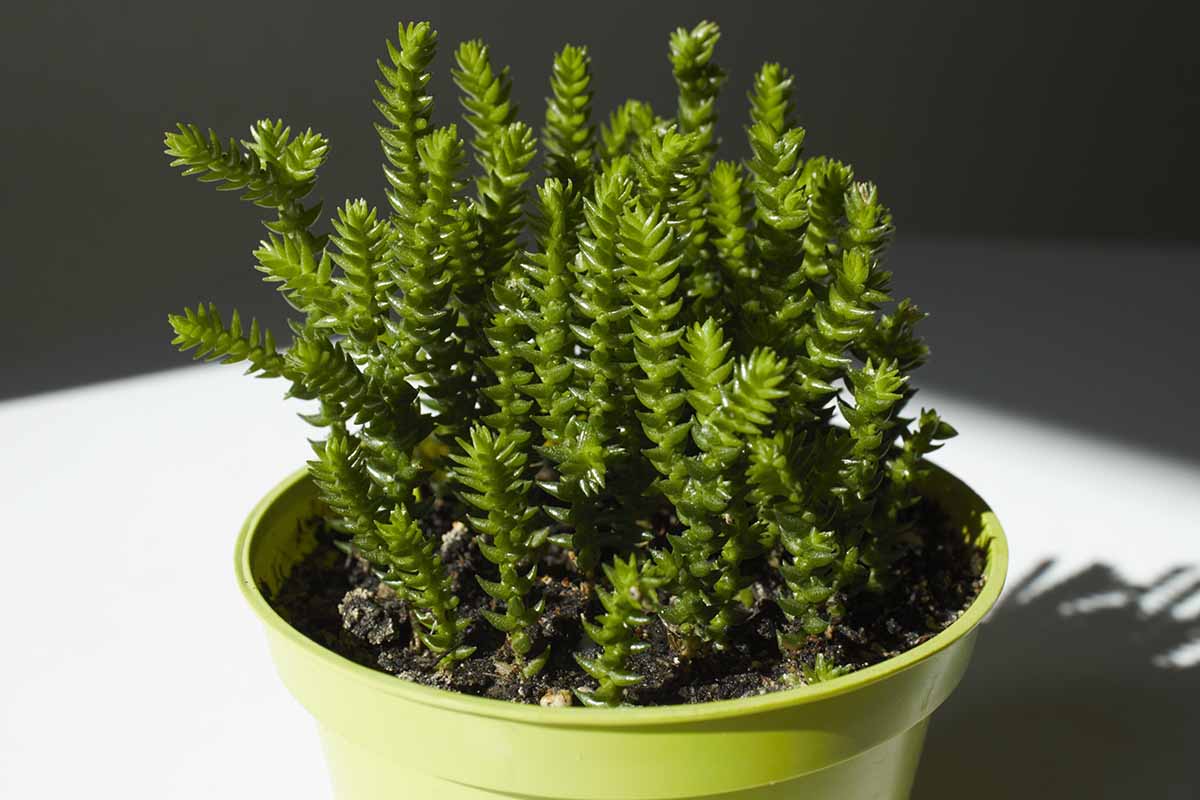
Make sure the pot has drainage holes.
Note the depth of the foliage in the current vessel and replicate it in the new one, setting the crown, where the roots and stems meet, just above the soil surface, to facilitate water drainage.
Put the container in bright, indirect sunlight.
Let the plant rest for a week, then resume watering.
Pests and Disease
With a grasp of the fundamentals of care, it’s time to discuss pests and disease. With best practices, it’s easy to minimize the risk of both.
Pests
Aphids, mealybugs, scale, spider mites, and whiteflies are sapsucking insects that weaken plants by feeding on their juices.
Tell-tale signs include leaf curling, discoloration, and trails of sticky honeydew.
Avoid both over- and underwatering that cause stress and make watch chain crassula vulnerable to these pests.
Remove severely affected foliage and treat the remaining with neem oil.
Fungus gnats infest oversaturated soil. The immature grubs feed on the tender roots of young plants while the adult flies hover above the soil, a beacon to growers of the potential for damage below.
They are easily avoided by using appropriate soil, a well-draining pot, and not overwatering.
Capture the adults with yellow sticky traps and sprinkle food grade diatomaceous earth (DE) on the soil surface to destroy emergent grubs and eggs.
Vine weevils are beetles. The adults chew foliage while the grubs feed on roots.
Avoid overwatering, hand-pick and destroy night-feeding adults, and apply food grade diatomaceous earth to kill eggs and grubs.
Disease
Succulents, including those in the Crassula genus, are prone to fungal diseases that thrive in moist conditions.
Gray mold, powdery mildew, and rust cause foliar discoloration and softening.
Root rot and southern blight affect the roots first. By the time the leaves become limp, the damage may be irreparable.
Avoid overwatering and ensure that pots drain well. Remove stems with powdery, grayish coated leaves and those with a rusty brown cast. Treat the remaining foliage with neem oil.
If unpotting an oversaturated plant reveals dark, malodorous, mushy rootstock, you can try to salvage healthy, unaffected portions.
Cut off rotten roots and foliage, rinse the remaining with water, and replant it in a clean pot with fresh potting mix.
Learn more about rotting succulents here.
Texturally Rich Vertical Interest
Watch chain crassula is easy to love when you meet its cultural requirements for gritty, well-draining substrate, bright, indirect sunlight, and water when the pot is completely dry.

Diluted liquid food once a month during the growing season, fresh potting mix every two to three years, and a container with an inch of extra room for watering complete the regimen.
C. mucosa draws the eye upwards along its link-like, leaf-laden stems, rising above the rosettes, spheres, and spirals of other succulent species.
Add it to your collection today, as an accent in a mixed grouping or a striking standalone specimen.
Do you grow a watch chain crassula? Please share your tips in the comments section below.
If you found this article informative and want to read more about Crassula species and cultivars, we recommend the following: