Crassula ovata ‘Gollum’
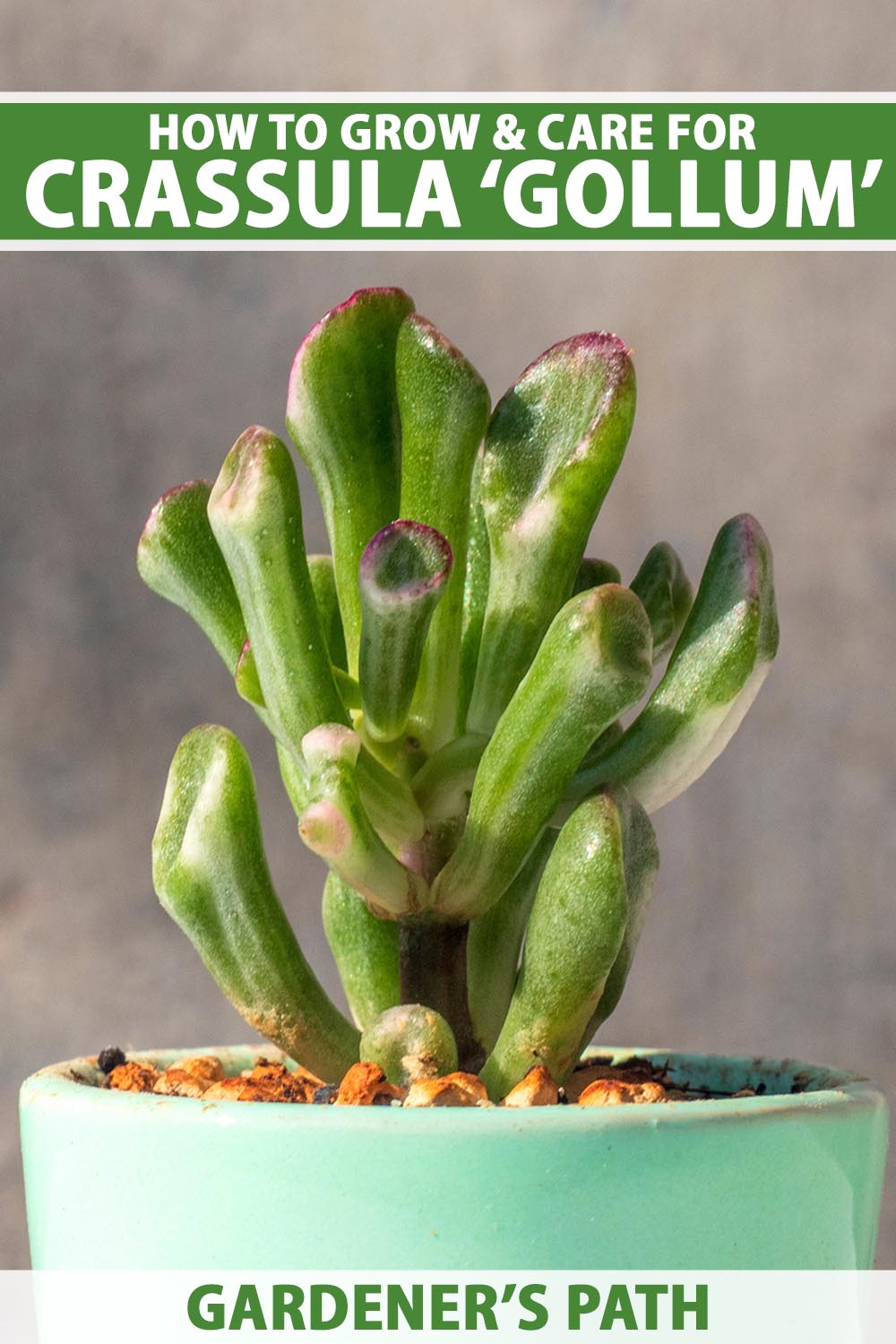
If you’re looking for a houseplant with serious personality, let me introduce you to Crassula ovata ‘Gollum,’ also known as E.T. fingers.
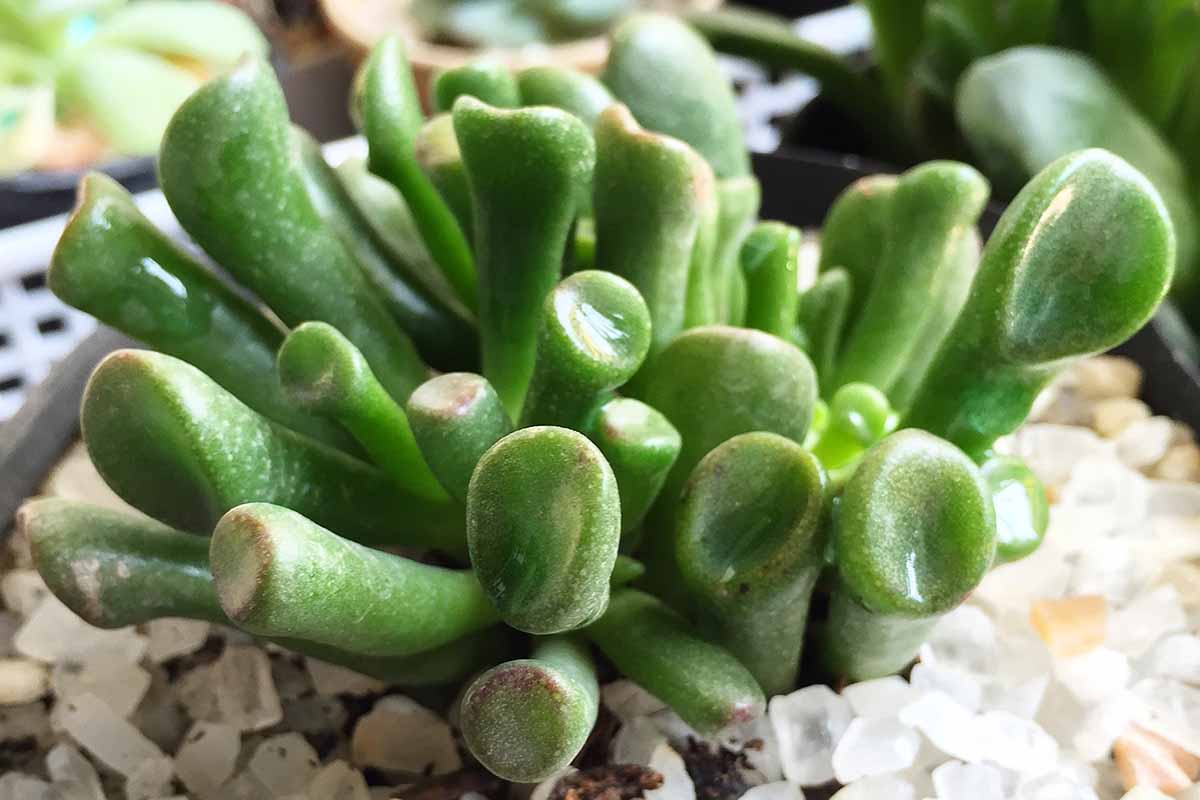
This quirky cultivar puts a twist on the classic jade plant with its cylindrical, finger-like leaves that look like they belong on an extraterrestrial.
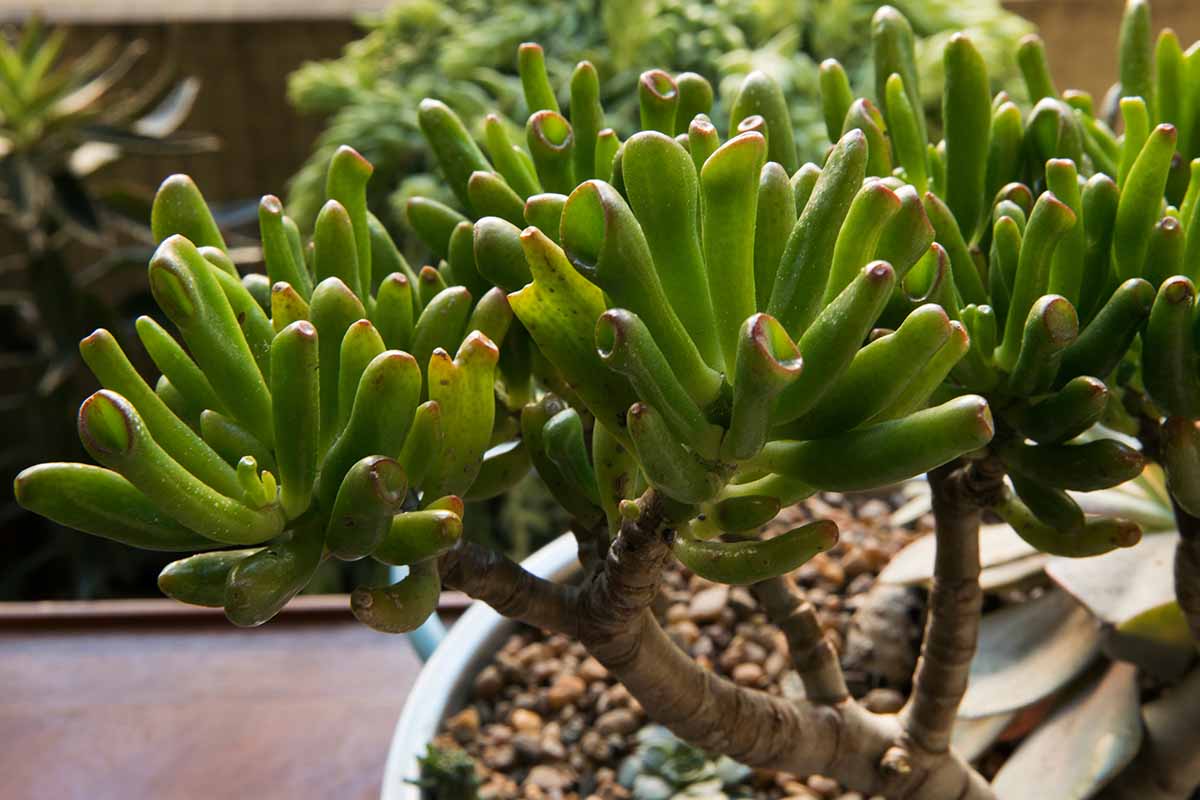
Unlike the flat, oval leaves of standard jade plants, this cultivar sports elongated, tubular foliage that resembles tiny green fingers reaching toward the sky.
We link to vendors to help you find relevant products. If you buy from one of our links, we may earn a commission.
The distinctive leaves have rounded, suction-cup tips and can develop stunning red coloration when given adequate light.
Also sold under common names like finger jade, trumpet jade, and ET’s fingers, this succulent is a conversation starter that’s just as easy to care for as the species plant.
In our guide to growing jade plants, we cover how to cultivate this low-maintenance succulent at home.
This guide discusses everything you need to know to keep your ‘Gollum’ healthy and thriving.
Here’s what I’ll cover:
What You’ll Learn
Whether you’re a seasoned succulent collector or just starting your houseplant journey, ‘Gollum’ deserves a spot in your collection.
This unusual beauty is surprisingly forgiving and adapts well to typical indoor conditions.
Quick Look
Common name(s): Gollum jade, finger jade, trumpet jade, E.T.’s fingers, Shrek’s ears
Plant type: Succulent
Hardiness (USDA Zone): 10-12 (outdoors)
Native to: Southern Africa
Bloom time / season: Winter to early spring
Exposure: Bright, indirect light to full sun
Soil type: Sandy loam, succulent growing mix, well-draining
Soil pH: 6.0-6.5, slightly acidic to neutral
Time to maturity: 3-5 years
Mature size: Up to 3 feet tall and wide (indoors)
Best uses: Houseplant, container specimen, succulent collection
Taxonomy
Order: Saxifragales
Family: Crassulaceae
Genus: Crassula
Species: Ovata
Cultivar: ‘Gollum’
‘Gollum’ is a distinctive monstrose cultivar of the popular jade plant, prized for its unusual foliage.
A monstrose mutation is a genetic abnormality that causes irregular, lumpy growth with random growing points developing across the plant rather than from a single tip.

In the case of this cultivar, the mutation results in tubular rather than flat leaves.
The parent species, C. ovata, hails from the rocky slopes and arid regions of South Africa and Mozambique.
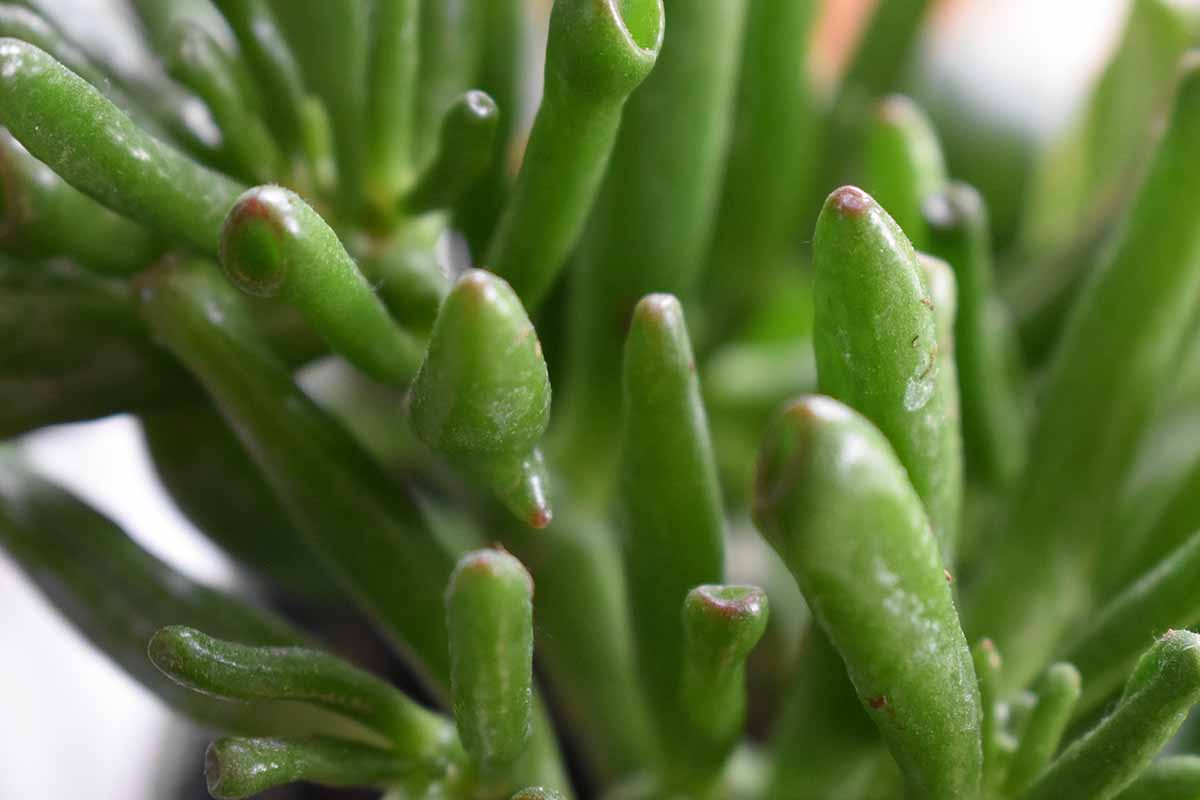
What sets ‘Gollum’ apart is its unique leaf structure. Each leaf forms a hollow cylinder with a rounded, suction-cup-like tip.
The leaves emerge green but can develop vibrant red tips when exposed to bright light, particularly during cooler temperatures or when the plant experiences mild stress.
As a succulent, ‘Gollum’ stores water in its thick leaves and stems, making it remarkably drought-tolerant and forgiving of occasional neglect.
This cultivar shares the same tree-like growth habit as jade plants, developing a thick, woody trunk over time.
With proper care, mature specimens can reach up to two to three feet tall, though they typically grow more slowly than their flat-leafed relatives.
The compact nature and upright growth habit make ‘Gollum’ ideal for displaying on windowsills, desks, and shelving.
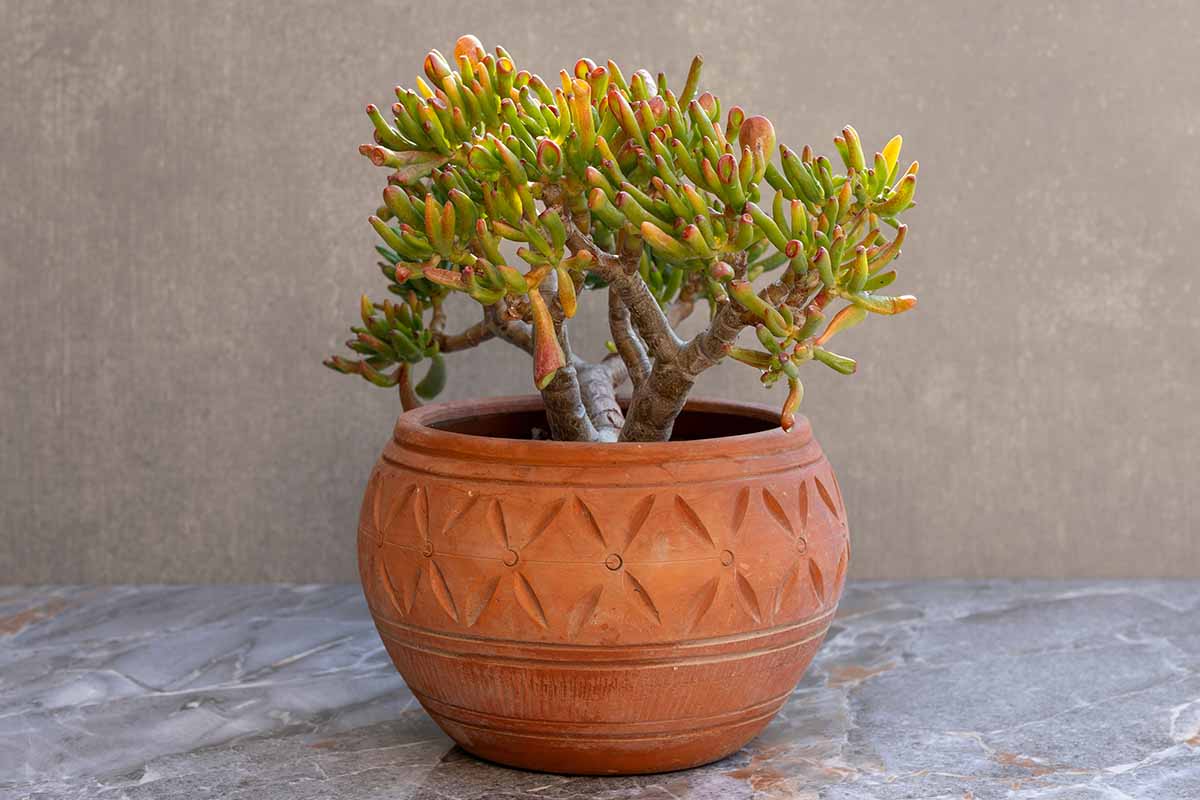
Like other Crassula varieties, ‘Gollum’ can live for decades with appropriate care, maturing slowly into a miniature tree.
This cultivar can occasionally produce small, star-shaped white or pink flowers in winter, though blooming is uncommon in indoor settings.
While primarily grown as a houseplant, ‘Gollum’ can be grown outdoors year-round in Zones 10 to 12, where temperatures remain above 45°F.
An important note for pet owners: ‘Gollum’ is toxic to cats, dogs, and horses. Ingestion can cause vomiting, lethargy, and loss of coordination. The sap can also cause skin irritation.
How to Grow
Growing ‘Gollum’ successfully comes down to mimicking its natural habitat: think bright light, well-draining soil, and a “less is more: approach to watering.
Let’s take a closer look:
Light
Bright light is absolutely essential for ‘Gollum’ to maintain its compact form and develop those coveted red-tipped leaves.
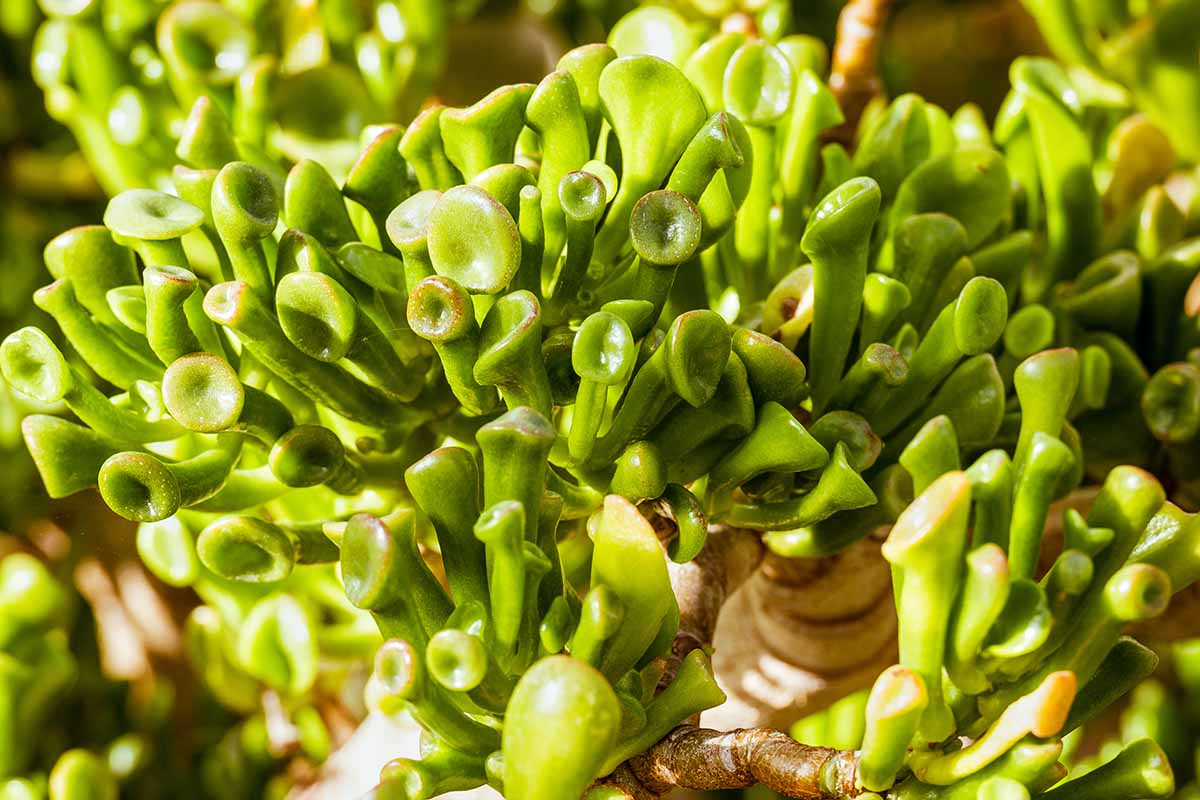
Place your plant where it will receive at least four hours of bright, direct sunlight daily. A south- or west-facing window is ideal.
The foliage can tolerate intense light and will benefit from morning sun exposure. When grown in full sun, the tips will develop a beautiful reddish-bronze coloration.
When moving ‘Gollum’ from lower light conditions, introduce it gradually to the more sunny exposure to prevent leaf scorch.
If you notice the stems stretching toward the light source or developing long spaces between leaves, it needs more light.
Conversely, if leaves develop brown, crispy patches, provide some protection from the hottest afternoon sun.
Soil
‘Gollum’ requires a potting medium that drains quickly while still retaining a small amount of moisture around the roots.
I always use a cactus and succulent potting mix as my base, then add some amendments.

A good formula is two parts cactus mix, two parts coarse sand, and one part perlite or pumice.
This combination provides sharp drainage while adding weight to prevent top-heavy specimens from tipping over.
The soil should feel gritty and dry out relatively quickly after watering. When you water, excess moisture should drain through immediately rather than pooling on the surface.
Learn more about how to make succulent potting mix here.
Temperature and Humidity
One reason ‘Gollum’ makes such a reliable houseplant is its comfort in typical indoor temperatures.
These succulents thrive in daytime temperatures of about 65 to 75°F. Nighttime temperatures can drop to 50 to 55°F without problems.
Cooler nights in fall and winter can help trigger flowering and enhance red coloration on leaf tips.
Below 45°F, the plant can suffer cold damage. Frost will severely damage or kill the succulent.
The typical 30 to 50 percent relative humidity found in most homes is perfect. You don’t need to mist the foliage or use a humidifier.
Water
Learning to water properly is the single most important skill for keeping ‘Gollum’ healthy. As a succulent, it’s far more forgiving of underwatering than overwatering.
Allow the soil to dry out completely between waterings.
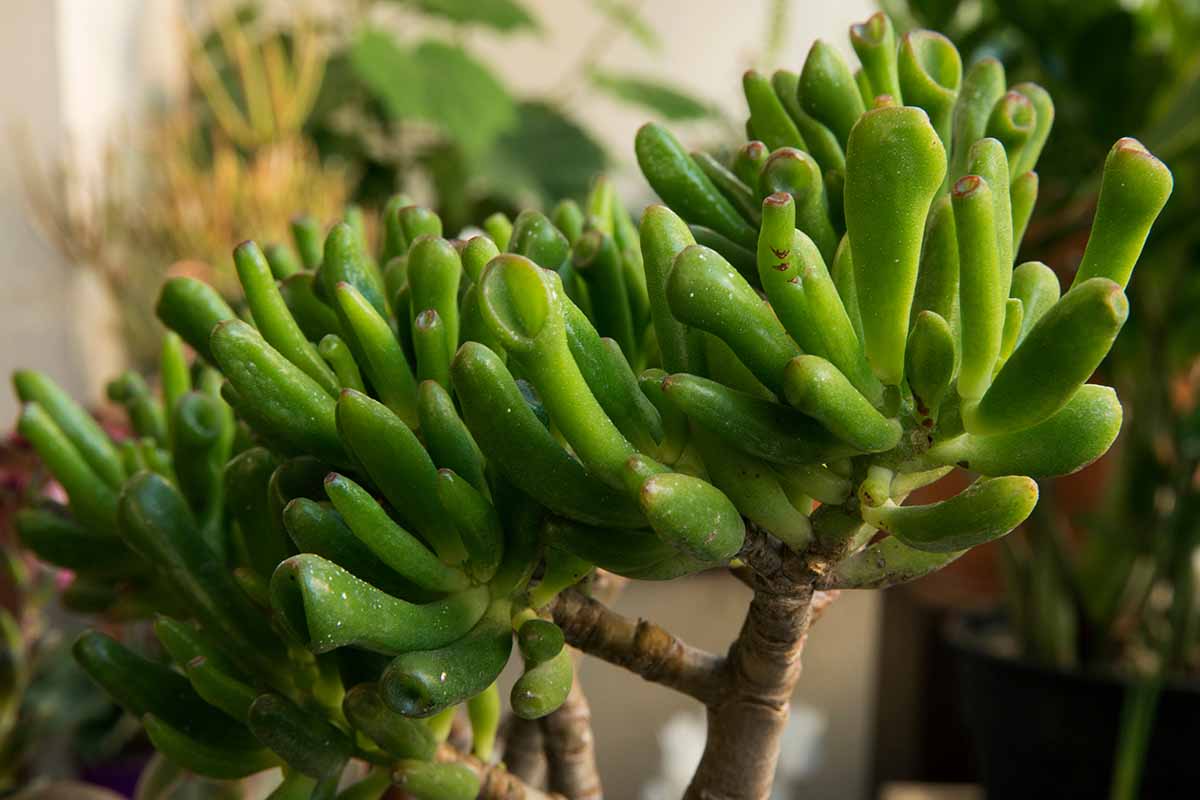
During the active growing season of spring and summer, wait until the top one to two inches of soil feel dry, then water thoroughly until water runs from the drainage holes.
Don’t let the roots sit in standing water.
In fall and winter, reduce watering frequency significantly. During these cooler months, I typically water only once every three to four weeks, sometimes even less.
The leaves will give you clues – if they start to look slightly wrinkled or feel soft, it’s time to water.
Signs of overwatering include yellowing leaves, soft or mushy stems, and leaves that drop off easily.
Black spots on leaves are another red flag. If you notice any of these symptoms, cut back on watering immediately.
Learn about the best water for succulents here.
Fertilizing
Jade plants are light feeders, and ‘Gollum’ is no exception. Overfertilizing is more likely to cause problems than underfertilizing, as too much fertilizer can lead to weak, leggy growth.
During the active growing season, feed with a balanced, water-soluble fertilizer diluted to half strength.
I use a standard 10-10-10 or 20-20-20 (NPK) houseplant fertilizer. Fertilize no more than once every two to three months.
Always water before fertilizing to prevent root burn. Stop fertilizing entirely in fall and winter when the plant is dormant.
If you’ve recently repotted, wait at least four months before feeding. Fresh potting mix contains nutrients that will sustain the plant while its roots adjust.
Our guide to fertilizing succulents has more information.
Where to Buy
‘Gollum’ is a relatively common jade cultivar and can usually be found at garden centers, succulent specialty shops, and online nurseries.
Any nursery with a decent selection of succulents should carry ‘Gollum’ or be able to order it.
When shopping in person, look for compact, upright growth with firm, unblemished leaves. Avoid specimens with yellowing foliage or signs of rot.
You can find small specimens in four-inch pots available from The Succulent Cult Store via Amazon.
Maintenance
Regular pruning can help to maintain the plant’s shape, encourage branching for a fuller appearance, and promote the development of a thicker trunk.
Plus, pruned sections make excellent propagation material.
The best time to prune is in spring or early summer during active growth period.
I like to pinch back new growth at the tips as they form in spring. Using your thumb and forefinger, pinch off the newest set of leaves at the growing tip.
This encourages the stems to branch rather than growing tall and leggy.
For more substantial pruning, use clean, sharp pruning shears. Make cuts just above a leaf node and ideally above a node that points outward.
You can safely remove up to one-third of the plant during a single pruning session.
Find more tips for pruning jade here.
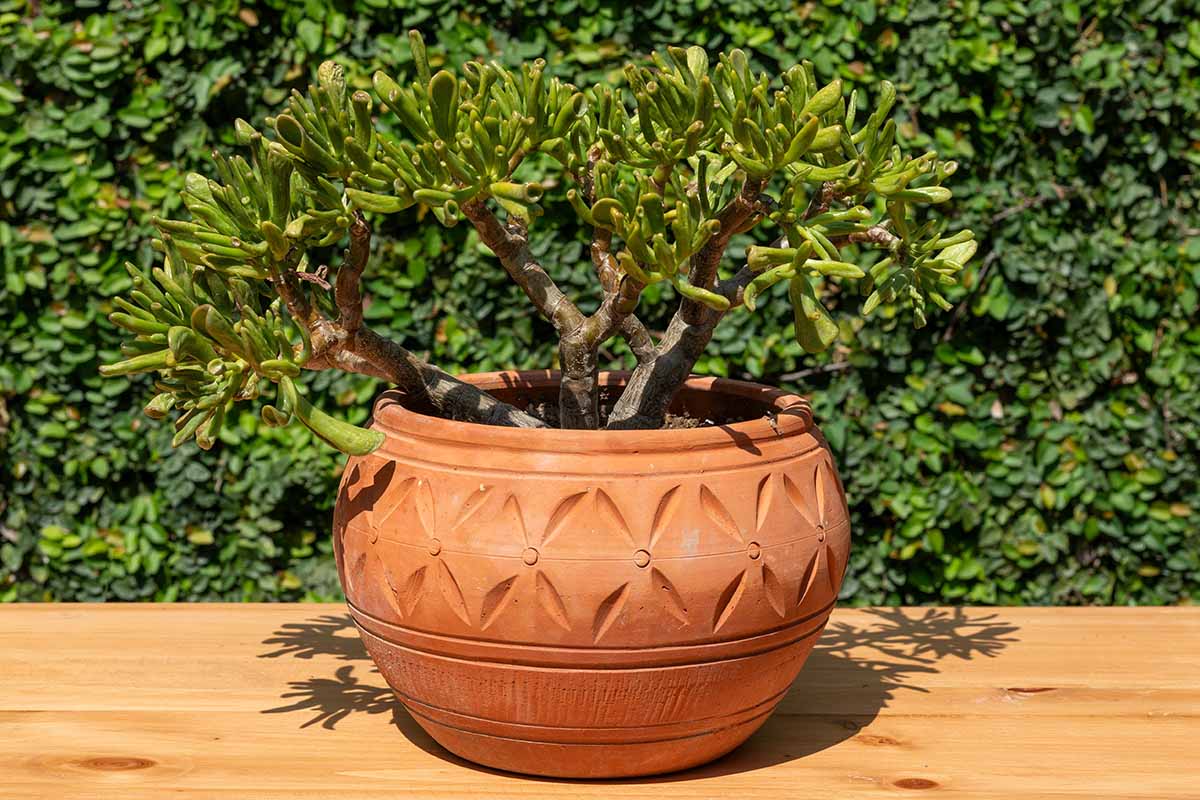
Jade plants generally prefer to be slightly root-bound, so you won’t need to repot frequently.
Young specimens may benefit from repotting every two to three years, while mature ‘Gollum’ plants can go four to five years or longer.
The best time to repot is in spring, just as new growth begins. Choose a pot that’s only one to two inches wider in diameter than the current one. The pot must have drainage holes.
Gently remove the plant from its current pot and massage the root ball to loosen compacted soil. Examine the roots and prune away any that are damaged or dead using clean scissors.
Don’t water for at least a week after repotting. This dry period allows any damaged roots to callus over and heal, preventing rot. After this, water lightly and then resume your normal schedule.
Wipe leaves gently with a damp cloth every few months to remove dust. Rotate your plant a quarter turn every few weeks to ensure even growth on all sides.
Propagation
One of the most rewarding aspects of growing ‘Gollum’ is how easily it is to propagate.
You can create new specimens from both stem and leaf cuttings, though stem cuttings are faster and more reliable.
Our guide to propagating jade has full details.
Stem Cuttings
Take cuttings in spring or summer when the plant is actively growing. Select a healthy stem that’s at least two to three inches long with several sets of leaves.

Using clean, sharp scissors, make your cut just above a leaf node. Remove the lower one to two sets of leaves from your cutting.
Let the cutting callus over by placing it in a bright spot out of direct sunlight for three to five days. The cut end will develop a dry, hardened surface that prevents rot. Don’t skip this step.
Fill a small pot with well-draining soil mix and moisten it lightly. Insert the cutting about an inch deep and gently firm the soil around it.
Place the pot in bright, indirect light and water sparingly – just enough to barely moisten the soil every week or so. Roots typically form within three to four weeks.
Leaf Cuttings
While slower than stem cuttings, leaf propagation is fascinating to watch.
Gently twist a healthy leaf from the stem, making sure the entire leaf comes off including the base. Let it callus for three to five days until the cut end is completely dry.
Once callused, set the leaf horizontally on top of moist potting mix or insert just the cut end slightly into the soil.
Place in bright, indirect light and mist the soil lightly every few days. It typically takes four to five weeks before you’ll see tiny roots and baby plantlets emerging.
The mother leaf will gradually shrivel as it provides energy to the developing plantlet.
Not every leaf cutting will successfully produce a new plant. I usually start with five to 10 leaf cuttings knowing that not all will make it.
Pests and Disease
‘Gollum’ is relatively pest and disease-resistant, particularly when grown as a houseplant.
However, a few issues can arise, especially when plants are stressed or growing conditions are less than ideal.
Pests
Let’s take a look at some common houseplant pests that can show up:
Mealybugs
Mealybugs are the most common pest problem for jade plants.
These small, white, cottony insects congregate at leaf joints and along stems, sucking sap and weakening the plant over time.
Check your plant regularly, particularly in the joints where leaves meet stems.
The finger-like foliage of ‘Gollum’ can make them slightly trickier to spot than on flat-leafed succulents, so inspect carefully.
For light infestations, dip a cotton swab in rubbing alcohol and touch it directly to each mealybug. The alcohol kills them on contact.
In the case of larger infestations, neem oil or insecticidal soap work well.
You may need to repeat treatments every five to seven days for several weeks to completely eliminate the pests, as eggs can hatch after initial treatment.
Our guide to battling mealybugs has more information.
Scale
Scale insects appear as small, brown, oval bumps on stems and leaves. Like mealybugs, they suck sap from the tissue and can weaken it over time.
These pests are less common than mealybugs but can be more stubborn to eliminate.
Remove scale manually by scraping them off with your fingernail or a dull knife, then follow up with rubbing alcohol on a cotton swab to kill any you missed.
Spider Mites
Spider mites occasionally appear, particularly when conditions are warm and dry with poor air circulation.
These tiny arachnids are difficult to see with the naked eye, but you’ll notice their webbing between leaves and stems.
Infested specimens may have stippled, yellowing leaves or a dusty appearance. Increase humidity around the plant by misting or spraying it off with water.
For persistent problems, neem oil or insecticidal soap can help.
Check out our guide to spider mites to learn more.
Disease
Root rot is the most serious problem you’re likely to encounter. This happens when plants sit in waterlogged soil, creating conditions that starve the roots of oxygen and encourage pathogens.
Symptoms include yellowing or blackening leaves, soft or mushy stems, and a generally declining appearance.
If you suspect root rot, unpot immediately and examine the roots. Healthy roots are firm and white or tan, while rotted roots are brown, black, and mushy with an unpleasant smell.
If you catch it early, you can sometimes save the plant. Remove all affected roots with clean scissors, let them dry completely for several days, and repot into fresh, dry soil.
Don’t water for at least a week. Unfortunately, severely affected specimens may not recover.
Prevention is key: always use well-draining soil, pots with drainage holes, and allow soil to dry completely between waterings.
Learn more about managing root rot here.
While not a disease, leaf drop can result from overwatering, underwatering, sudden temperature changes, or insufficient light.
Assess your growing conditions and adjust as needed.
E.T. Phone Home
Whether you’re adding to an established succulent collection or looking for a forgiving first houseplant with personality, ‘Gollum’ aka Shrek ears or E.T. fingers fits the bill.

Once you nail down the basics: bright light, well-draining soil, and a hands-off approach to watering, ‘Gollum’ will reward you with years of reliable growth and those distinctive finger-like leaves that never fail to spark conversation.
Are you growing ‘Gollum’ jade? Let us know in the comments section below!
And for more information about growing plants in the Crassula genus, check out these guides next: