Jade plants (Crassula ovata) produce clusters of delicate star-shaped flowers in late winter to early spring.
The blooms are typically white or pale pink with a faint sweet fragrance, appearing at the tips of branches and lasting for a few weeks.
If your jade isn’t flowering, it’s likely missing one or more specific environmental triggers.

Most homes don’t naturally provide the right conditions these South African succulents need, but once you understand what’s missing, you can adjust their care to encourage blooming.
For general care information, check out our comprehensive jade plant growing guide.
Read on for seven common reasons why C. ovata fails to bloom.
7 Reasons Why Jade May Fail to Bloom
1. Age
This is the most common reason for lack of blooms, and unfortunately, it’s one you can’t rush.
Jade plants must reach full maturity before they’re physiologically capable of producing flowers. They need to be at least three to five years old, though some may take even longer depending on growing conditions.
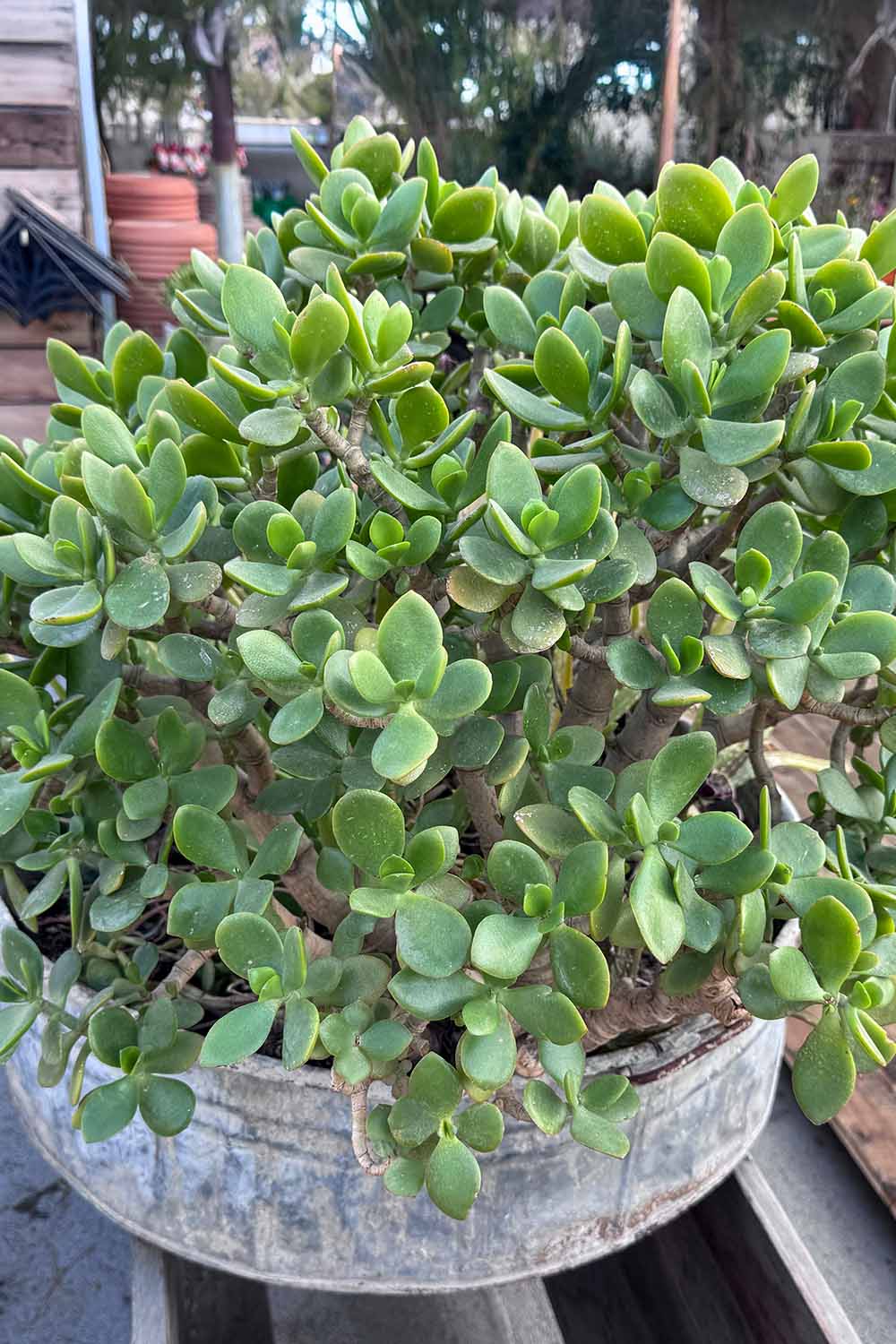
If you’ve grown yours from a stem or leaf cutting, count from when that cutting was taken, not from when the parent started growing.
A cutting from a 10-year-old C. ovata still needs several years of its own growth before it matures enough to flower.
Young succulents direct all their energy into vegetative growth – developing their characteristic thick trunks, branches, and fleshy leaves.
Only when they’ve established a substantial root system and woody structure can they divert energy into reproduction.
Look for a thick, woody trunk with a brown bark-like exterior, well-branched structure, and a stable, tree-like form.
Be patient. Focus on providing excellent general care to help it reach maturity healthy and strong.
Even after maturity, blooming will still require the right environmental triggers covered in the following sections.
2. Fertilizer Issues
The type and timing of fertilization can significantly impact whether or not a jade plant will bloom.
Many growers unknowingly use fertilizers that promote lush foliage at the expense of flowers.
Nitrogen-rich fertilizers encourage leafy, vegetative growth. While this creates beautiful, green foliage, high nitrogen levels actively inhibit flowering.
For bloom production, these succulents need phosphorus and potassium.
Phosphorus (the “P” in NPK ratios) supports root development and, crucially, flower formation. Potassium (the “K”) promotes overall health and stress tolerance.
Additionally, continuing to fertilize during the fall and winter keeps the plants in active growth mode when they should be resting.
During the spring and summer growing season, use a fertilizer specifically formulated for cacti and succulents.
Look for NPK ratios like 2-7-7, 5-10-5, or similar formulations where phosphorus and potassium equal or exceed nitrogen.
Apply fertilizer at half strength once a month during active growth, and always apply to moist soil to avoid burning the roots.
Critically, stop fertilizing completely in fall. Don’t resume feeding until after blooming or spring growth resumes.
Learn more about fertilizing succulents here.
3. High Humidity
Jade plants evolved in dry, rocky areas of South Africa with low humidity, and these arid conditions play a role in flowering.

Most home interiors have moderate humidity levels. While this isn’t harmful, it tends to be more moisture in the air than these succulents would experience in their native environment during the dry season.
High humidity, combined with regular watering, can prevent flower bud formation.
During the fall rest period, keep your houseplant in a dry location. Avoid placing it near humidifiers, in bathrooms, or in kitchens where moisture levels tend to be higher.
If you live in a particularly humid climate, running a dehumidifier in the room may help.
The combination of low humidity, bright light, cool temperatures, and reduced watering creates the arid fall and winter conditions that jade plants need to bloom.
4. Insufficient Light
Jade plants are sun-loving succulents that need abundant bright light to bloom.
While they’ll survive in moderate light conditions and grow – albeit slowly – flowering demands much more intense exposure.

To set flower buds, jade plants typically need at least four to six hours of bright, direct sunlight daily.
Some gardeners recommend eight to 12 hours for reliable blooming.
Plants grown in low or moderate light often become leggy – their stems stretch and the space between leaves increases as they reach toward any available light source.
This weak growth pattern is a clear indicator that the plant isn’t receiving enough sun to support flowering.
Move your jade to the brightest location in your home. South-facing windows provide the most consistent, intense light in the Northern Hemisphere. West-facing windows can also work well.
When you move it from lower to higher light, do so over 10 to 14 days to prevent sunburn on the leaves. Start with a few hours of direct sun, then gradually increase exposure.
For mature plants that have been acclimated to direct sun, you can even move them outdoors during summer months to an area with bright light and some protection from the most intense midday rays.
If natural light is insufficient, especially during winter months, consider supplementing with grow lights.
5. Overwatering
Along with cooler temperatures, jade plants need a period of drought stress in fall and winter to trigger blooming. This mimics the dry season in their native habitat.
Many growers continue their regular watering schedule year-round, which keeps the plant in continuous growth mode. Without a period of water stress, flower bud formation won’t happen.
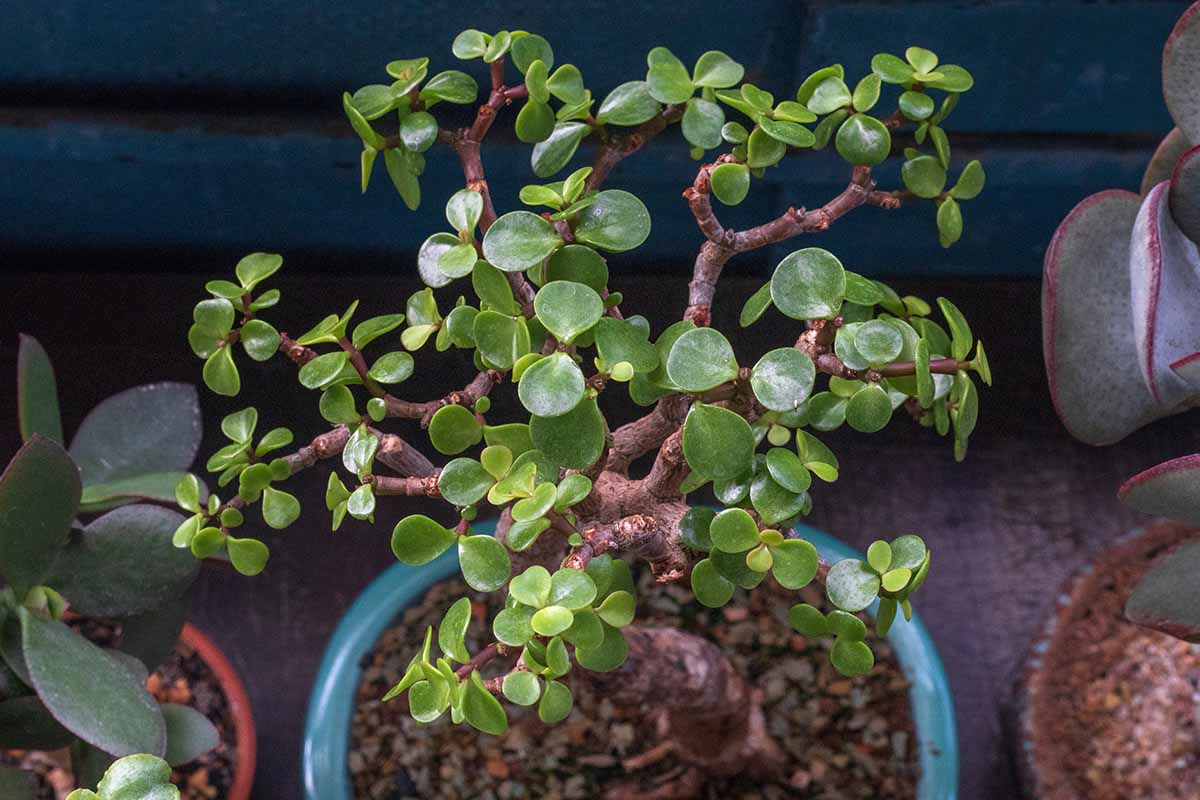
In fall, you should dramatically reduce watering. Water just enough to prevent leaves from shriveling or puckering.
The combination of cool temperatures, bright light, and reduced water triggers flower bud formation. In these conditions, the soil should be bone dry between the infrequent waterings.
Allow the soil to dry out completely, then wait an additional week or two before watering lightly.
When you see flower buds forming, you can gradually resume regular watering, though still allowing the soil to dry between waterings. After the flowers fade, return to normal care.
6. Short Day Requirement
Jade plants are photoperiodic, meaning they respond to changes in day length. Specifically, they need long, uninterrupted nights to trigger flowering – a characteristic of “short-day” plants.
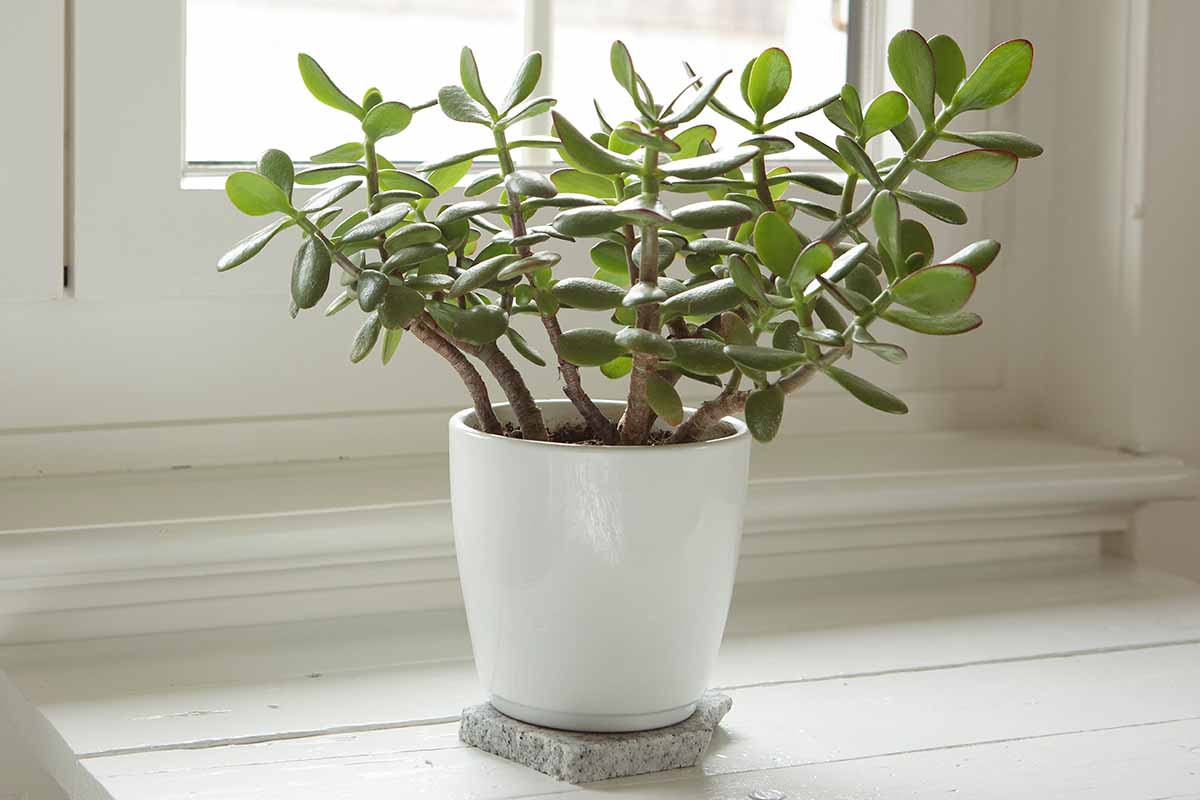
The term is somewhat misleading as it’s actually the length of darkness that matters. You can read more about the difference between short and long day plants here.
In nature, as autumn days shorten and nights lengthen, this succulent receives the signal to prepare for blooming.
The decreasing day length tells the plant that the growing season is ending and it’s time to reproduce.
Indoor artificial lighting can completely disrupt this natural signal. Even brief exposure to light during the night can prevent flower bud formation.
This includes room lights, streetlights shining through windows, nightlights, and even the glow from electronics.
Jade plants need 12 to 16 hours of uninterrupted darkness each night during the rest period.
Place your succulent in a location that won’t receive any artificial light at night. This might mean moving it to a bedroom where lights go off at a consistent time, or to a room away from streetlights.
If your jade is in a space with unavoidable artificial light, you may need to cover the plant each evening with a light-blocking cloth or move it to a dark closet overnight, returning it to its bright location each morning.
The natural shortening of days from the autumn equinox through the winter solstice provides the photoperiod cue, as long as artificial light doesn’t interfere.
7. Temperature
In their native South African habitat, jade plants experience seasonal temperature fluctuations.
Warm growing seasons alternate with cooler periods, and this temperature drop is a critical trigger for flower bud formation.
Most homes maintain steady temperatures year-round for human comfort. While this keeps your jade healthy, it doesn’t provide the environmental cue needed to initiate blooming.
To encourage flowering, jade plants need nighttime temperatures to drop to around 50 to 60°F during fall and early winter.
Daytime temperature should remain warmer – around 60 to 65°F – creating a temperature differential of at least 10 degrees between day and night.
This cool period should last for several weeks, typically beginning in September or October and continuing through November or December.
Buds should begin forming around the shortest days of the year, with flowers opening in late winter to early spring.
Find a spot in your home that naturally stays cooler during fall and winter. This might be an unheated sunroom, a bright bedroom that’s kept cooler at night, or near a window.
Protect your jade plant from frost and freezing temperatures, which will damage or kill it. The goal is cool, not cold.
If you move your jade plant outdoors for summer, bring it back inside when nighttime temperatures start to drop to around 50°F in fall, and place it in a cool, bright location indoors.
Will Your Jade Ever Bloom?
Even in ideal conditions, jade plants may not bloom every year.
In their native habitat, flowering is somewhat irregular, as these succulents don’t depend solely on seed production for reproduction – they readily propagate from fallen leaves and stem segments.
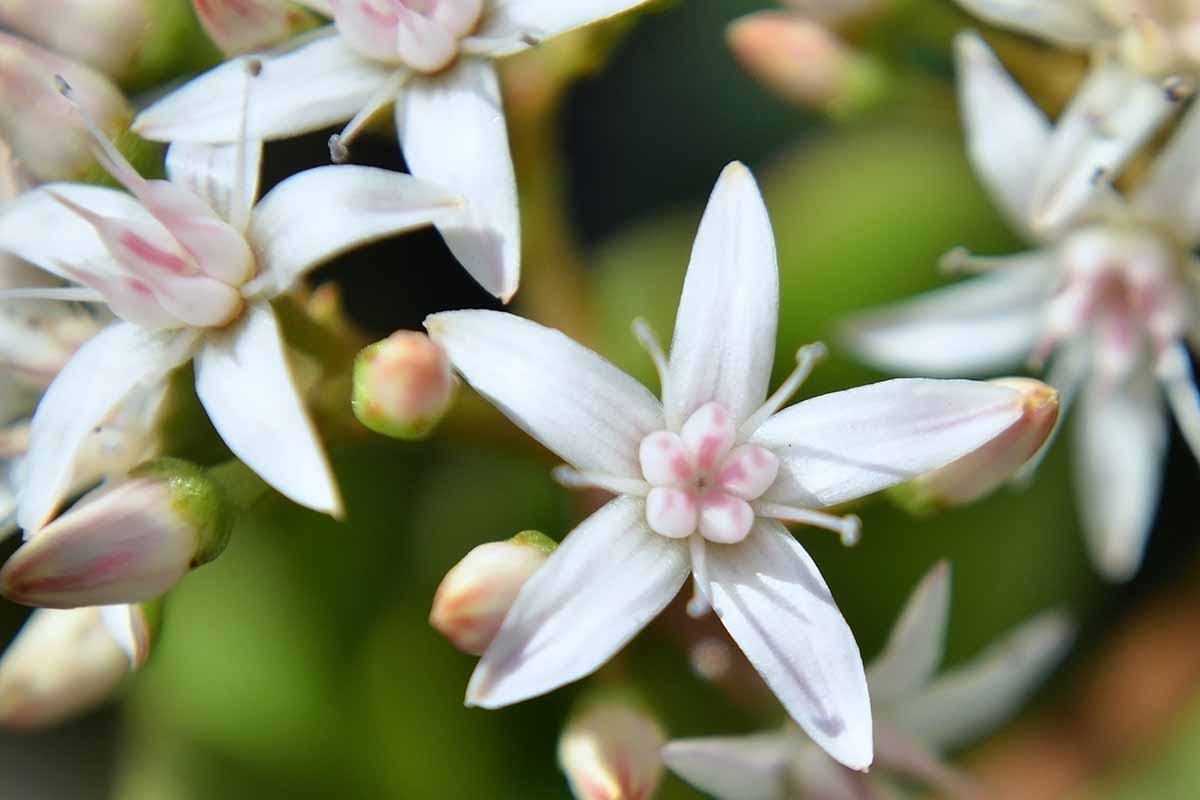
Some specimens may bloom more readily than others as a result of genetic variation.
That said, if you provide the right conditions – bright light during the day, cool nights, a dry fall rest period, appropriate fertilization, long uninterrupted dark nights, and low humidity – you’ve given your jade plant the best possible chance to bloom.
Are you growing jade plants? Have they ever bloomed? Let us know in the comments section below!
And for more information about growing these charming succulents, check out these guides next: