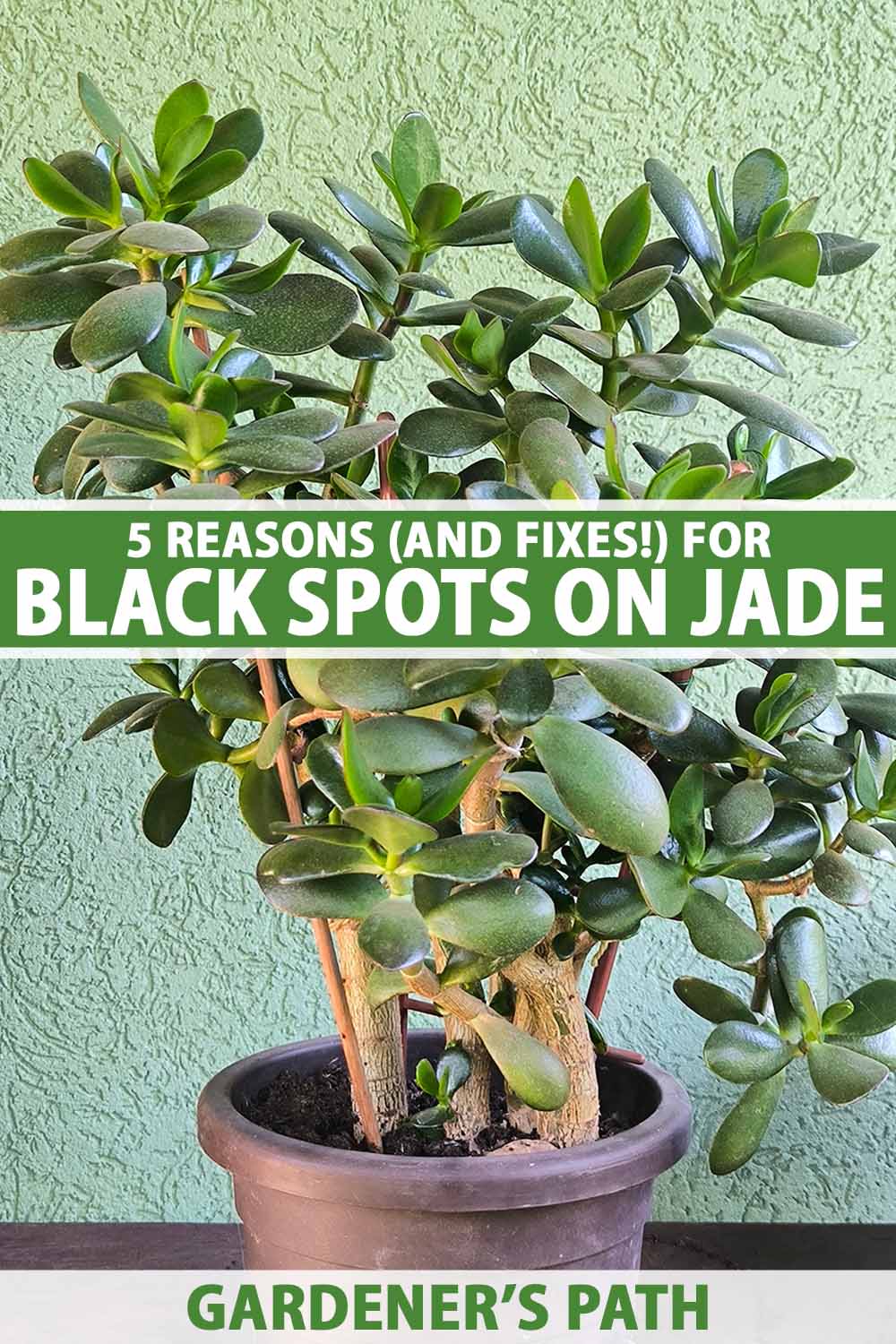
The jade plant (Crassula ovata) is a tough, long-lived succulent that tolerates quite a lot of neglect.
Black spots are a common occurrence in the houseplant world and they almost always mean trouble.
Unfortunately, the robust and reliable jade plant is not immune to this common affliction.
A handful of different conditions can cause blemishes on the foliage, but thankfully, most of these conditions are fixable if you act quickly.
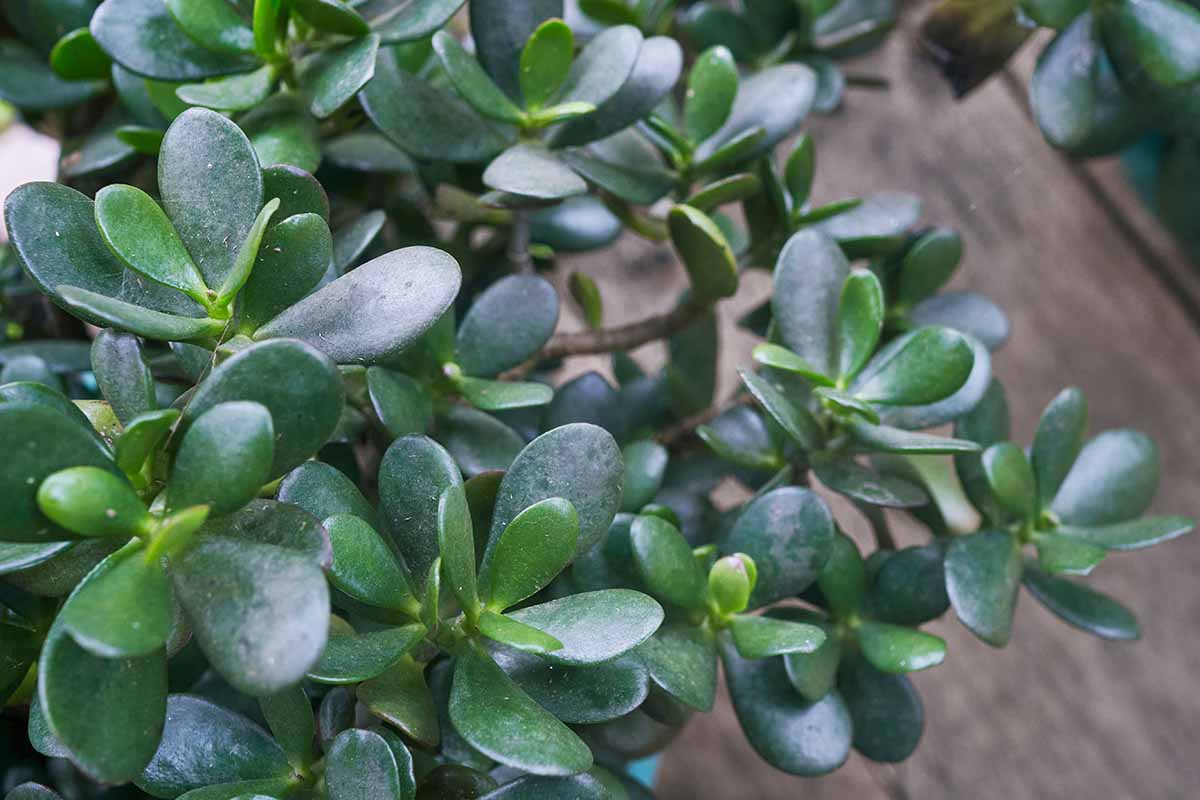
Whether you’re dealing with a single spotted leaf or widespread damage, identifying the cause is the first step toward getting your succulent healthy again.
In our guide to growing jade plants, we cover how to cultivate these easy-care houseplants.
Now we’ll talk about five common causes of black spots on jade plant foliage and what to do about them.
Here’s what I’ll cover:
5 Causes of Black Spots on Jade Plants
1. Cold Damage
Jade plants are not cold hardy.
They can tolerate brief exposure to temperatures around 40°F, but prolonged exposure to temperatures below 50°F causes stress, and anything below 32°F causes serious damage or death.
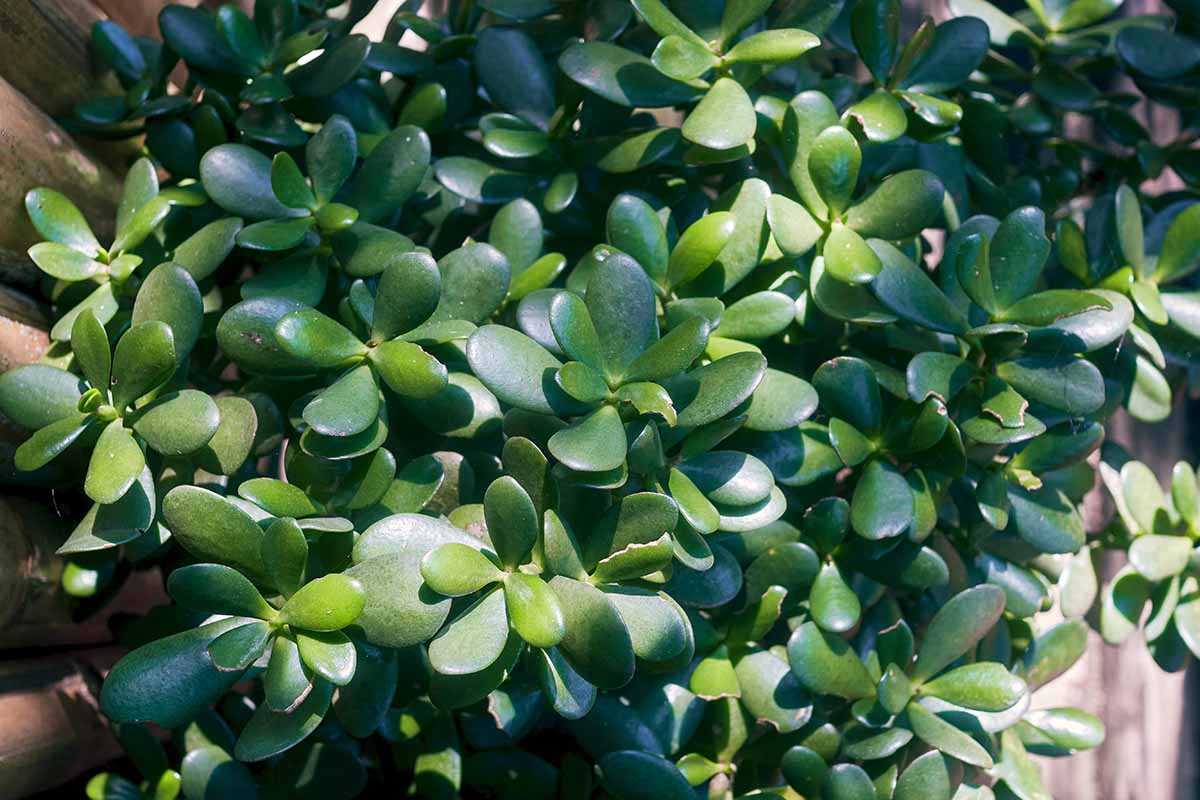
Cold damage can appear as black or brown spots on leaves that feel soft and mushy initially, then dry out and turn papery.
Affected leaves may also become translucent or look water-soaked before blackening. In severe cases, entire leaves will droop, wilt, and eventually fall off.
Cold damage is most common when jade plants are left outdoors too late in fall, placed near cold drafty windows in winter, or subjected to sudden temperature drops.
If you suspect cold damage, move the specimen to a warmer location immediately, ideally between 60°F and 75°F.
When you can clearly see which parts are dead: blackened, mushy, or completely dried out, prune away the affected parts back to healthy green tissue.
If the main stem is damaged, you may need to take cuttings from any remaining healthy portions to propagate new jade plants.
To prevent cold damage, bring outdoor specimens inside before nighttime temperatures drop below 50°F.
Indoors, keep them away from drafty windows, exterior walls, and heating vents that cause temperature fluctuations.
2. Leaf Spot
Several fungal diseases can cause black spots on jade foliage.
Anthracnose typically shows up as dark, round lesions on the leaves, often with a slightly sunken appearance that can spread across the leaf surface.
- Botrytis creates dark spots that eventually develop a gray, fuzzy coating as the fungus sporulates.
- Alternaria leaf spot produces small, dark circular spots that can reach half an inch in diameter, sometimes with concentric rings spreading from the initial infection point.
- Leaf spot caused by Cercospora starts as small circular areas that develop tan or brown centers surrounded by yellow halos.
With any of these fungal infections, affected leaves often turn yellow around the spots before dropping off entirely.
Bacterial leaf spot is caused by bacteria in the Xanthomonas genus. It appears as small, water-soaked lesions on the leaves that can enlarge and turn brown to black.
Unlike fungal spots, bacterial spots often feel slightly greasy or oily, and they may have a yellow halo around them.
The spots can merge together as the infection progresses, leading to significant leaf damage and eventual leaf drop.
High humidity combined with poor air circulation creates ideal conditions for these diseases.
These problems are most common during winter when jade plants are kept indoors in warm, humid rooms with little air movement.
Overwatering makes them susceptible since damp conditions favor fungal growth. Using contaminated pruning tools can spread fungal spores from one houseplant to another.
Remove any affected leaves immediately and dispose of them in the trash.
Sterilize your pruning shears between cuts with rubbing alcohol or a 10 percent bleach solution to avoid spreading spores.
Reduce humidity levels and make sure you’re not overwatering. Water at the soil level rather than overhead to keep foliage dry.
For persistent infections, you can apply a copper-based fungicide following the manufacturer’s instructions. Apply every two to three weeks.
If the infection is severe and spreading despite your efforts, it may be best to take cuttings from healthy portions of the plant and start fresh, discarding the infected plant entirely.
3. Overwatering
Although watering seems like an easy, straightforward task, it’s actually quite complex.
Not all houseplants want the same amount of water and how much hydration your jade needs changes from month to month, too. It’s incredibly easy to overwater succulents.
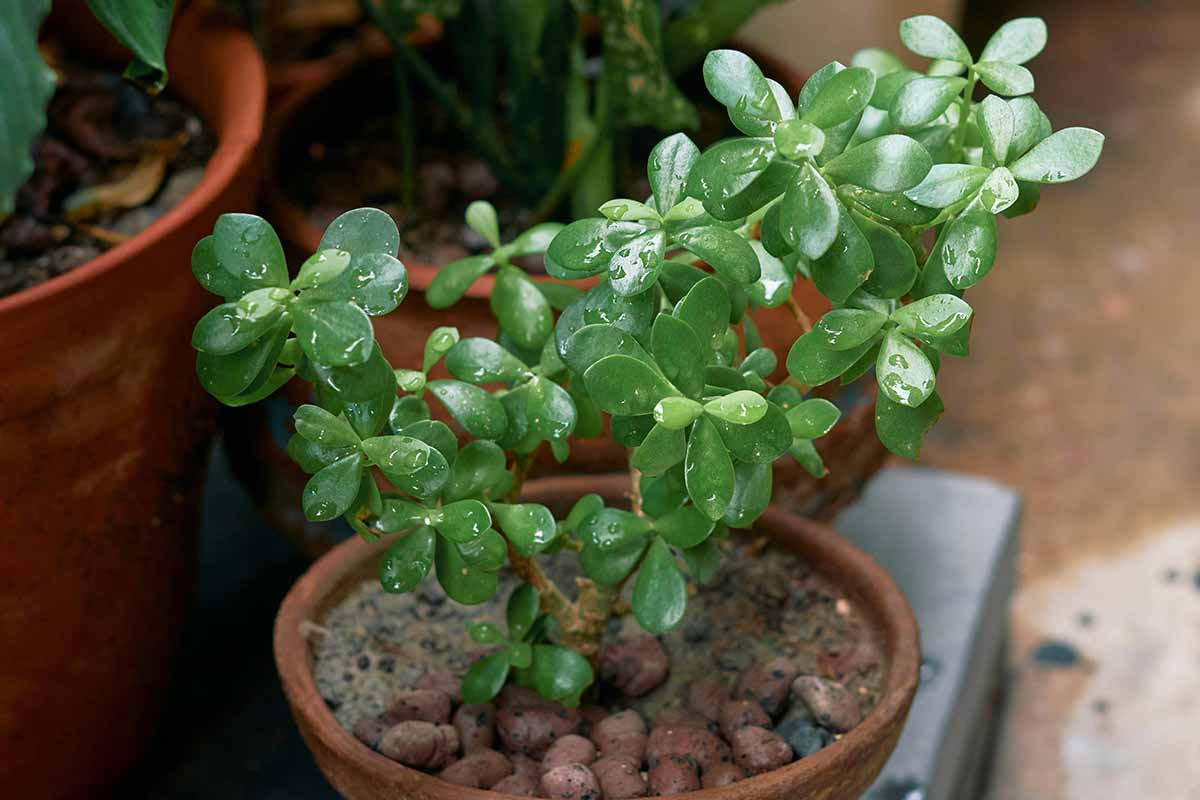
Poorly draining soil can contribute to the problem. If the roots are sitting in overly wet soil, they can end up suffocating.
How does this show up as black spots on jade foliage? Edema is a physiological disorder that occurs when the roots absorb water faster than the leaves can use it.
The first signs are small, blister-like bumps on the leaves, usually on the undersides but sometimes on top too.
These blisters start out tan or translucent, then turn into dark brown or black corky lesions as they dry out.
The texture becomes rough and scab-like, and older lower leaves are typically affected first.
To fix the problem, ease up on watering. Let the soil dry completely between waterings, and in winter, cut back even more.
You can also repot into a more appropriate potting mix if poor drainage is the issue. Use a cactus and succulent potting soil or follow our instructions to make your own.
4. Pest Infestation
Sap-sucking insects including aphids, mealybugs, scale, and spider mites can cause black discoloration on jade plant leaves.
They secrete a sticky substance called honeydew that encourages the growth of sooty mold, which appears as black, soot-like patches on leaves.

Aphids and spider mites typically cause stippling while scale insects resemble small brown or tan bumps on leaves and stems and can cause tissue damage that appears as dark spots.
Mealybugs appear as white, cottony clusters and can also cause spotting as they feed.
Stressed succulents are more susceptible to infestations. For aphids and spider mites, wash the leaves with a strong spray of water or wipe them down with a cloth dampened with plain water.
You can also use insecticidal soap for more advanced infestations, but make sure it’s specifically labeled as safe for succulents since jade plants can be sensitive to some formulations.
Scale insects can be scraped off with your fingernail or a dull knife if there are just a few.
For larger infestations, dab each scale with a cotton swab dipped in rubbing alcohol, or spray the foliage with a solution of one tablespoon insecticidal soap mixed with one cup rubbing alcohol in one quart of water. Repeat applications every three days for two weeks.
If you find mealybugs, use a cotton swab dipped in rubbing alcohol to remove them. Regular inspection is key to catching pests early before they cause significant damage.
Learn more about jade plant pests here.
5. Sunburn
Sudden exposure to intense sunlight, especially after being indoors or in low light, can scorch jade plant foliage.
While they need plenty of bright light to thrive, they must be acclimated slowly to stronger sun conditions.

Sunburned leaves develop dry, brown to black patches that may feel crispy or papery. Severely burned leaves may collapse or wrinkle before eventually dropping off.
Moving a jade plant suddenly from low light to bright, direct sun is the most common trigger.
Indoor specimens are especially vulnerable because window glass can intensify the sun’s rays. Even outdoor specimens can burn during heat waves if they’re not used to full sun exposure.
Move the succulent away from direct sunlight into a spot with bright, indirect light or filtered sun.
East-facing windows work well, offering gentle morning sun without harsh afternoon rays.
Prune off severely damaged leaves with clean, sharp scissors or pruning shears as they wont recover.
Take Action Now!
Think of black spots as a call to arms. Trouble is afoot, but it’s not too late to fix it if you act quickly!
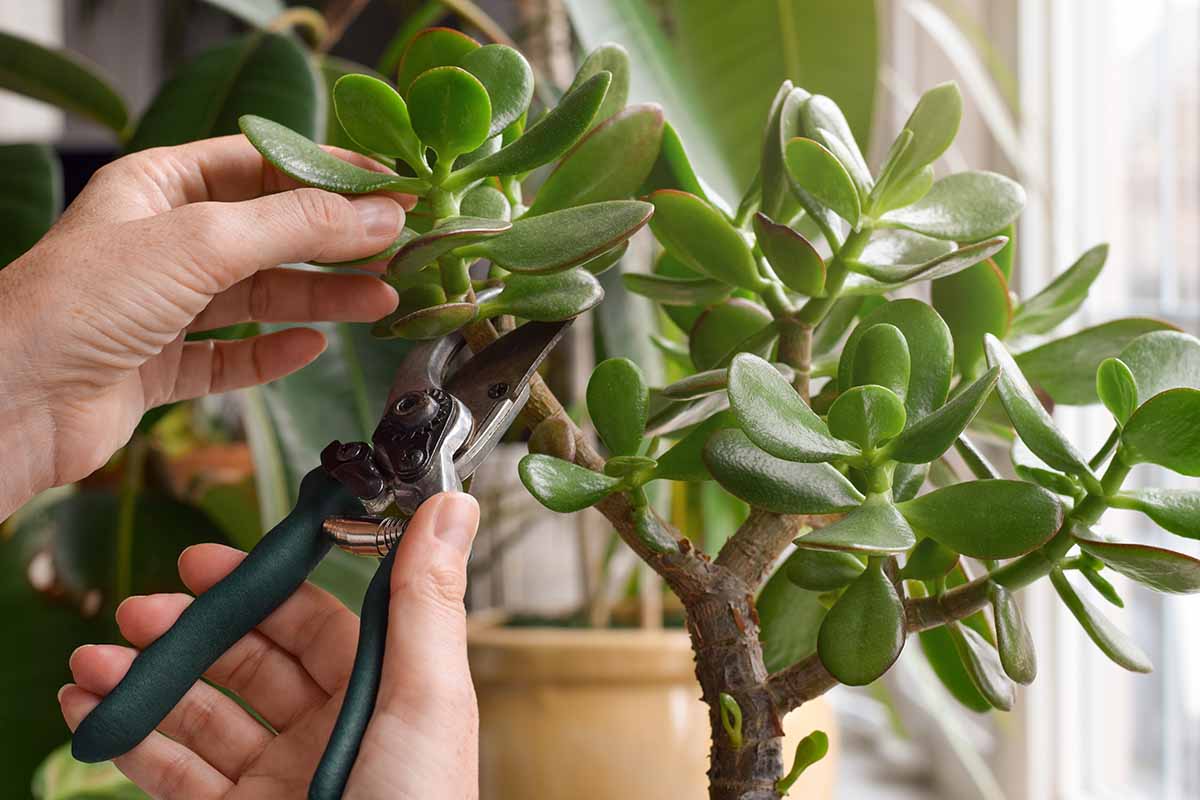
With some careful sleuth work, you can get to the bottom of the problem and restore the green, smooth, glossy foliage of your jade plant.
Do you currently have a jade plant with black spots? What do you think is the cause of the problem? How do you plan to fix it? Let us know in the comments section below!
And for more information about jade plants and their relatives in the Crassula genus, check out these guides next: