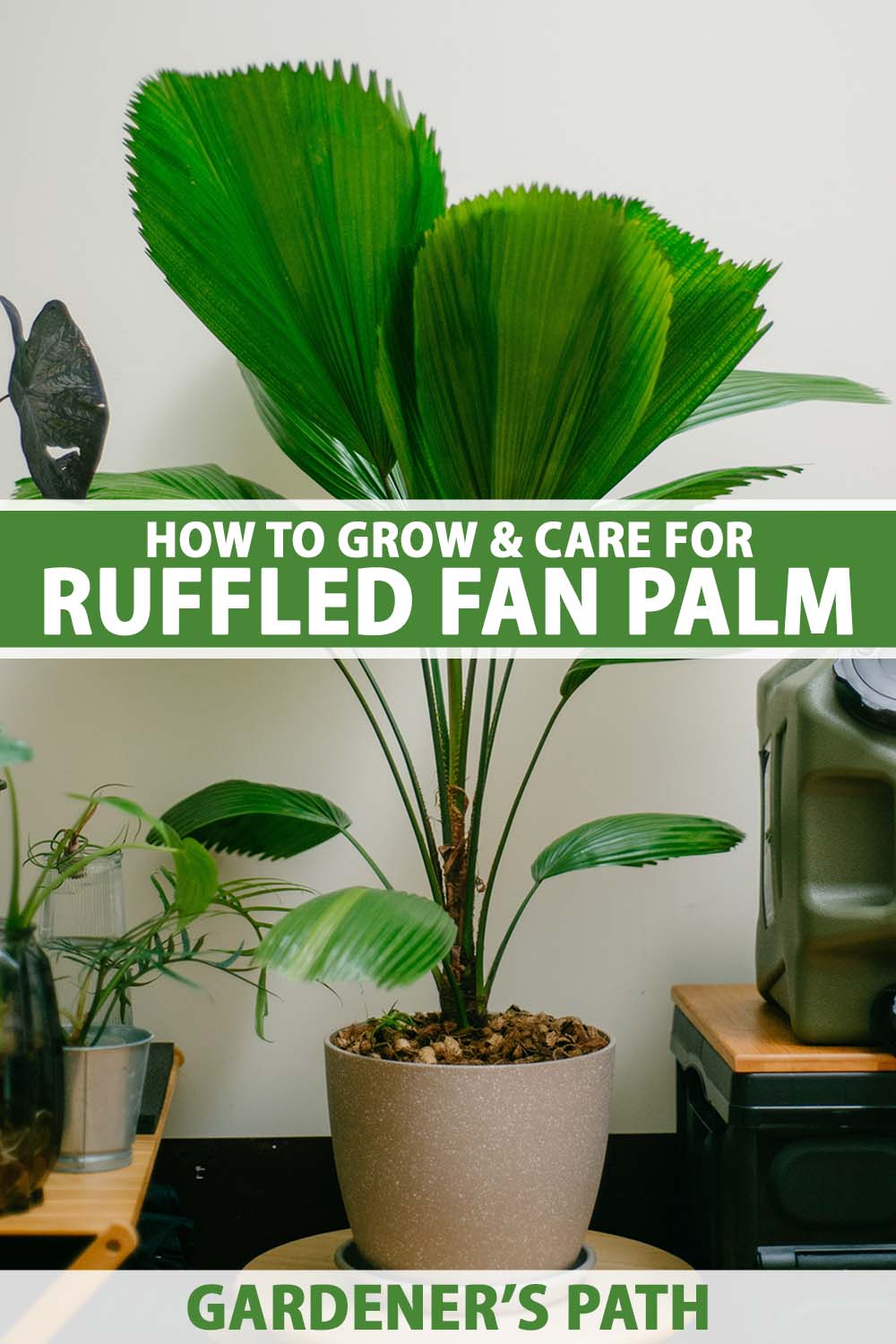
Licuala grandis
There are some plants that impress certain people but leave others cold. I know someone who thinks fiddle leaf figs are overused and not all that interesting.
But I’ve never met anyone who wasn’t wowed by Licuala grandis, the ruffled fan palm.
One look at those huge, corrugated, semi-circular fronds and grand stature, it’s hard not to be impressed.

We link to vendors to help you find relevant products. If you buy from one of our links, we may earn a commission.
Also known as the Vanuatu fan or palas palm, it makes a striking focal point outdoors, and is every bit as spectacular as a houseplant.
In our guide to growing fan palms we provide an overview of species referred to by this common name.
This guide covers how to grow the ruffled fan palm indoors.
Here’s what’s coming up:
What You’ll Learn
L. grandis (formerly Pritchardia grandis) hails from Vanuatu and the Solomon Islands in the South Pacific, where it grows in the understory of tropical rainforests, thriving in dappled shade, warm temperatures, and high humidity.
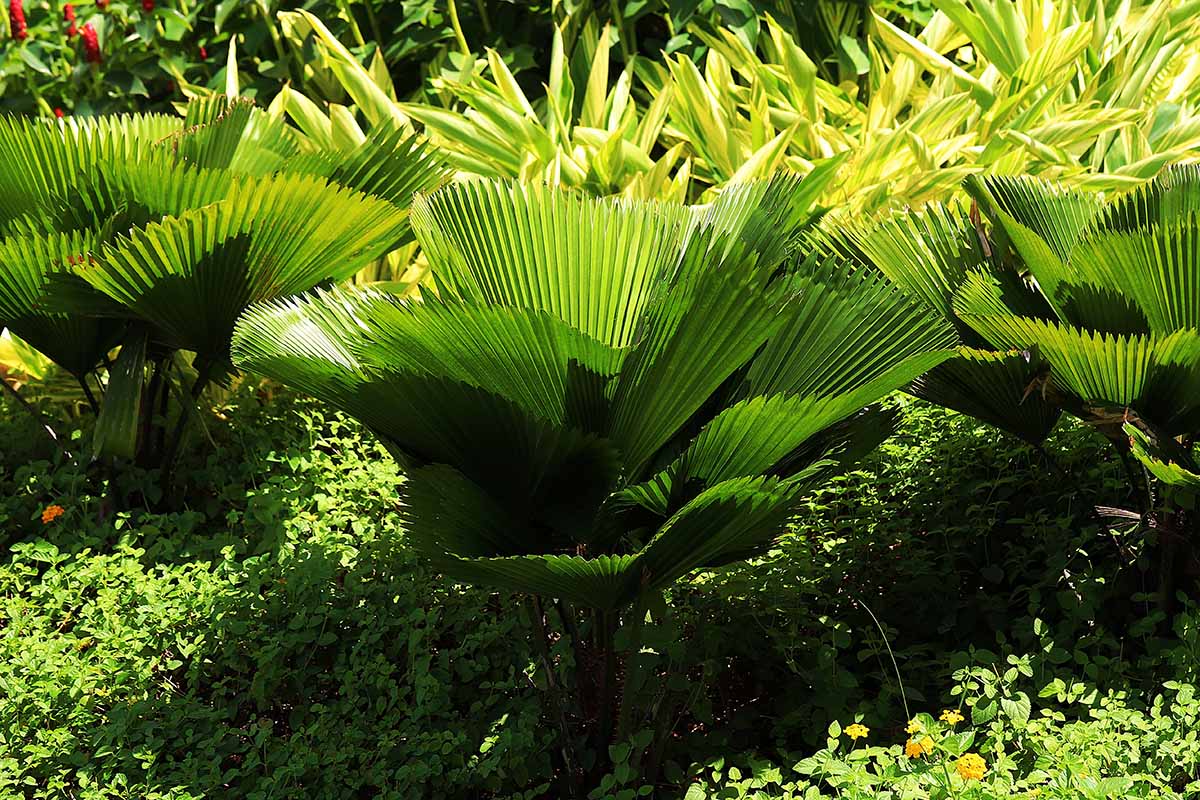
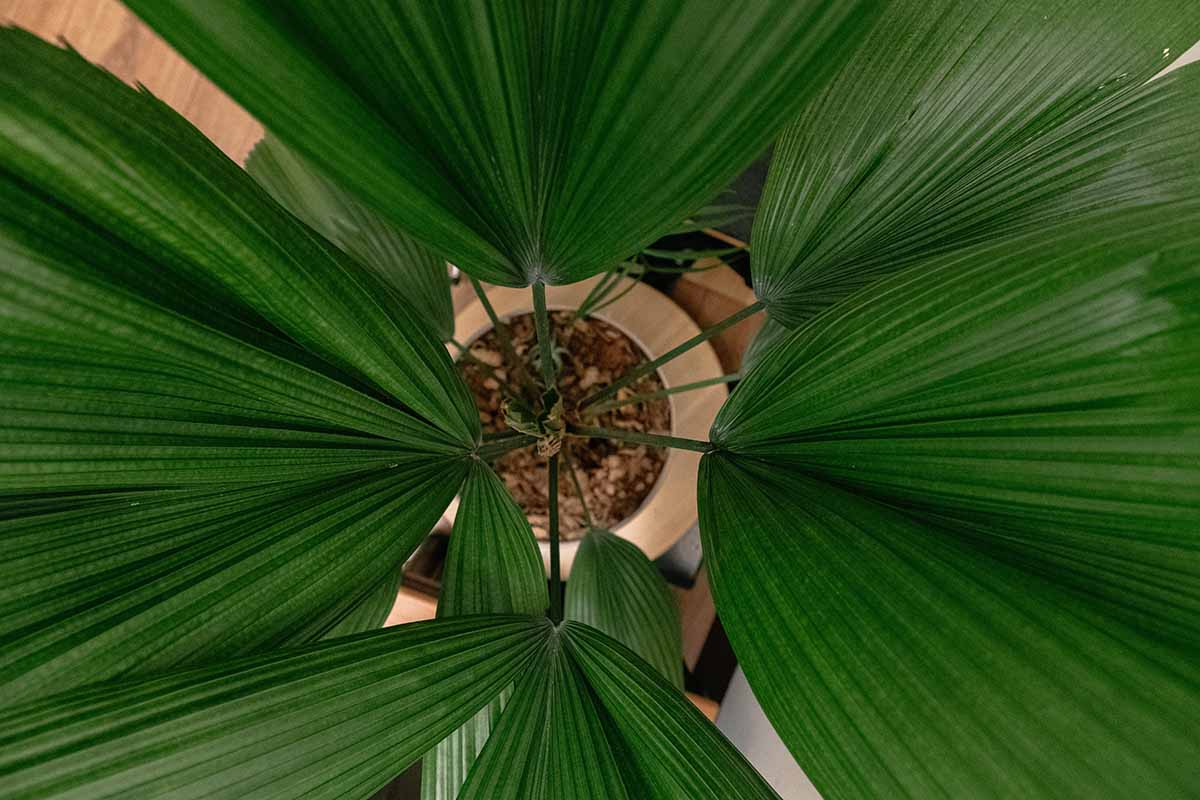
This slow-growing palm features glossy, deep green, circular fronds that can span up to three feet in diameter.

Unlike many fan palms with deeply divided leaves, the fronds remain undivided, creating perfectly round silhouettes with distinctive pleated or corrugated surfaces.
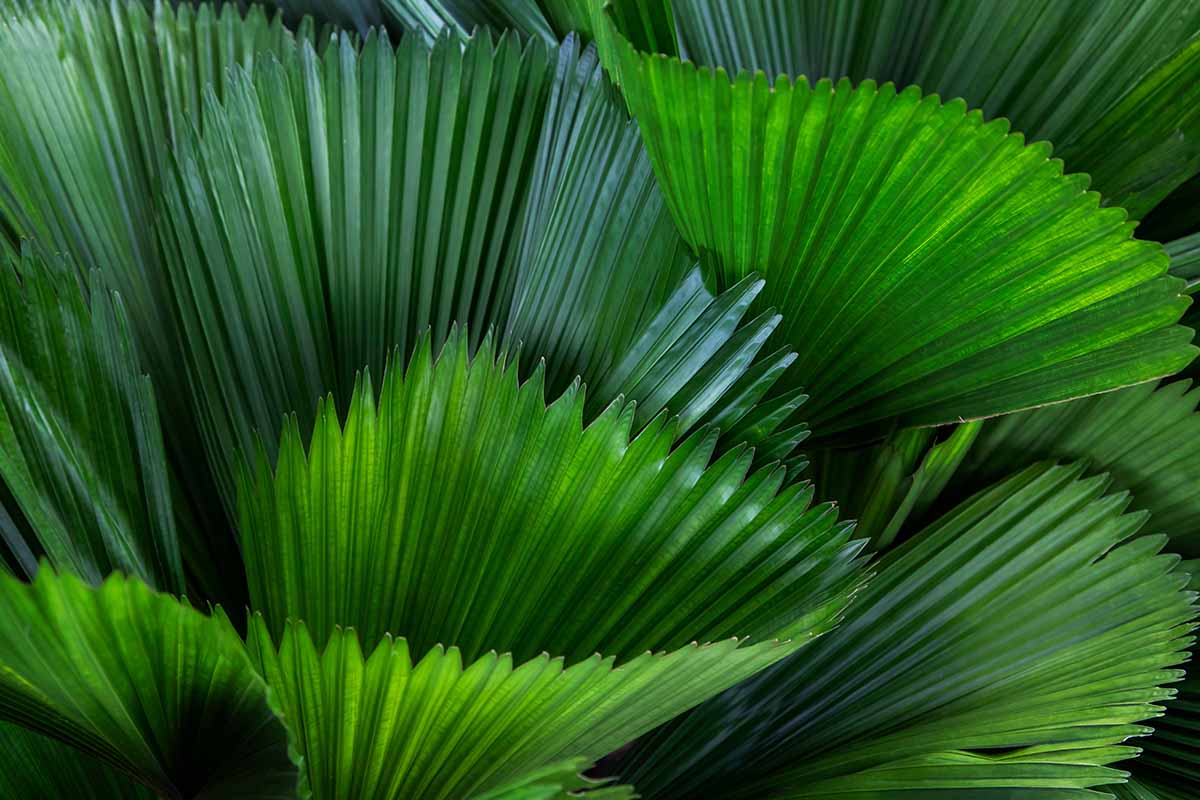
Each leaf has a notched tip and radiating ribs that give it that signature ruffled texture.
The fronds emerge from a slender, single trunk covered in fiber and marked with old leaf scars.
In its native habitat, mature specimens can reach 10 feet tall with trunks about four to five inches in diameter.
As houseplants, they typically stay closer to six feet tall and grow very slowly, making them ideal for indoor spaces where you don’t want a plant that will quickly outgrow its spot.
Quick Look
Common name(s): Ruffled or Vanuatu fan palm, palas palm
Plant type: Evergreen monocotyledonous perennial
Hardiness (USDA Zone): 10-11 (outdoors)
Native to: Vanuatu, Solomon Islands
Bloom time / season: Evergreen
Exposure: Bright, indirect light
Soil type: Loose, humus-rich, well-draining
Soil pH: 6.5-7.5, neutral
Time to maturity: Up to 15 years
Mature size: 6 feet tall by 5 feet wide (indoors)
Best uses: Houseplant, landscape tree
Taxonomy
Order: Arecales
Family: Arecaceae
Genus: Licuala
Species: Grandis
In summer, established plants may produce drooping clusters of small, yellowish-white to cream-colored flowers that emerge from among the leaves.
These blooms develop into marble-sized fruits that start out green and ripen to a glossy, bright red.
Each fruit contains a single seed. While flowering and fruiting are common outdoors, it’s rare on indoor specimens.

The petioles or leaf stems are long and slender, and they’re armed with small, curved spines or teeth along the margins, particularly near the base.
Handle your ruffled fan palm with care, or wear gloves when working around it.
In its island home, this palm grows in the equivalent of USDA Hardiness Zones 10 and 11 in moist, rich soil and dappled sunlight that filters through the canopy.
You don’t need a rainforest in your yard to enjoy a ruffled fan palm, it can be grown indoors in a large container with bright, indirect light.
How to Grow
You’re going to need space for this plant. It will grow tall and the ruffled leaves like to spread out. If you give it the right conditions, it can reach about six feet tall and about five feet wide.

Choose a large container – it doesn’t need to be massive, since these palms have shallow, small root systems.
Young plants are fine in a one-gallon container, but you’ll eventually want to move up to a five- to 10-gallon container as your palm matures.
Soil
Fill the container with a rich, loose, water-retentive, loamy potting mixture.
I love FoxFarm Ocean Forest Potting Mix. It has forest humus, bat guano, and earthworm castings, all the good stuff that this palm would enjoy in its natural environment.
You can find 12-quart bags of FoxFarm Ocean Forest Potting Mix available via Amazon.
Light
This isn’t a houseplant that you can tuck into a dim space and expect it to thrive.
At a minimum, it needs four hours of bright, indirect sunlight, but six or more is better. The more light, the taller it will grow.
Water
You want the soil to be consistently moist but not wet at all times.
What does that mean? Well, think of the texture of a well-wrung-out sponge. It feels moist but not soggy and you wouldn’t be able to squeeze any water out.
If you grab a handful of soil and you can squeeze some water out, it’s too wet.
You can’t assume that just because the surface of the soil feels right that it’s consistent throughout. Sometimes the medium is wetter down at the bottom.
I suggest buying a moisture meter. It can be hard to be accurate with soil moisture and a good meter takes the guesswork out.
Temperature and Humidity
Hailing from tropical areas, this isn’t a palm that will forgive you if it’s exposed to cold temperatures.
Ruffled fan palms do best in 70 to 85°F during the day and 60 to 70°F at night. Slightly outside of this range is fine, but if it dips into the 30s and 40s, the plant will be in trouble.
Try to keep the humidity around 80 percent or higher because these palms won’t look their best in drier conditions. They won’t die, but the fronds may develop brown or yellow crispy edges.
Most of us don’t have 80 percent humidity in our homes, so you can grow the plant in the bathroom, cluster a bunch of houseplants together, or keep a humidifier in the room with your palm.
Fertilizer
Feed your ruffled fan palm every four to six weeks during spring and summer with a balanced, slow-release palm fertilizer diluted to half strength.
A product with an NPK ratio of about 15-5-10 works well. Stop fertilizing in fall and winter when growth slows.
These palms are prone to nutrient burn, so avoid overfeeding. If leaf tips turn brown and crispy after fertilizing, you’re using too much.
Where to Buy
Ruffled fan palms aren’t as popular as majesty or parlor palms which is probably because they are somewhat fussy to cultivate.
For those of us willing to make the effort, it’s possible to find specimens to bring home. Check with local nurseries or better still, those that specialize in palms.
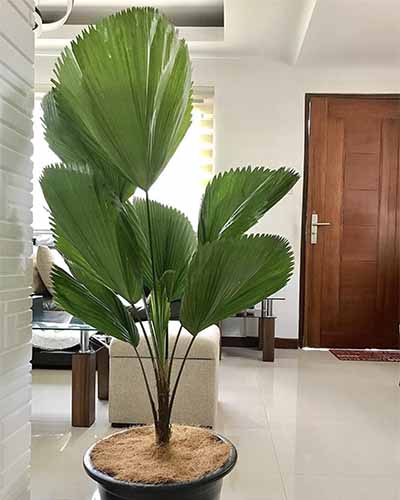
If you prefer to shop online, you can find plants available from Wekiva Foliage via Walmart.
Maintenance
These are slow-growing plants, taking a long time to mature. If you see one frond develop every year or two, it’s growing exceptionally fast.
On the bright side, that means there won’t be much maintenance for you to worry about.
As the lower fronds turn dry and brown, you can simply pull them off.
Gently pull the frond down and away. If you feel resistance, wait a bit longer and try again in a week or two when the frond will come off easily.
There will be a small scar left on the gray-brown “trunk,” which I think adds to its character.
If any of the fronds turn yellow or look damaged or diseased, go ahead and cut them off as close to the stem as possible.
Make sure to use a clean, sanitized, sharp pair of pruners to avoid spreading any diseases.
Propagation
While you can always buy a ruffled fan palm and keep it in its existing pot until you’re ready to upgrade, you can also propagate these plants from seed and by dividing suckers.
Let’s take a quick look at both methods:
From Seed
You can reliably grow ruffled fan palms from seed, but they are extremely slow to germinate – months to years.
The good news is that they will usually germinate even if you let them dry out accidentally.
To start, moisten some sphagnum peat moss in a container or plastic bag and tuck in the seeds.
Place them somewhere with good air circulation to prevent fungal issues. They don’t need light to germinate.
Keep the moss moist, though it’s not the end of the world if it dries out occasionally. Just re-moisten when you remember.
Some growers swear that brief dry periods speed germination, but I’ve never tested it and haven’t seen solid evidence either way.
When you see green growth emerging from the seed, gently plant it in a small pot filled with seed-starting medium. Bury the roots and seed, but leave the green shoot exposed.
Moisten the medium and cover with a cloche or plastic bag propped up with a chopstick to keep it from touching the seedling.
Now move it into bright, indirect light and keep the soil consistently moist. At this stage, letting it dry out can kill your seedling.
Let the seedling grow until it’s big enough that you’re ready to move it into a larger container.
From Suckers
Ruffled fan palms produce suckers or offshoots around the base that you can separate and pot up independently. Do this in spring when the plant is actively growing.
Wait until suckers reach about six inches tall, then choose one that looks healthy and robust.
Dig into the potting medium to locate the root connecting it to the parent plant. You may need to loosen the soil to access it properly. Sever the root as close to the parent as possible.
Plant the sucker in its own six-inch pot filled with fresh potting medium at the same depth it was growing before. Water well. If the soil settles, top it off with more medium.
Care for the new ruffled fan palm as you would a more mature one.
Pests and Disease
You’ve made it through the growing requirements for this plant and you’re still committed, right?
Well, there’s just a bit more you should know before you decide to bring one home, and it involves pests.
Pests
Ruffled fan palms are susceptible to several common pests that can cause serious damage if left unchecked.
Mealybugs
Mealybugs appear as white, cottony clusters on fronds and stems. They feed on plant sap, causing yellowing, browning, and stunted growth.
Treat mealybugs by wiping with isopropyl alcohol or using insecticidal soap. Our guide to mealybugs has full details.
Scale
Scale insects look like small brown, black, gray, or white bumps on leaves and stems. These sap-suckers don’t move much, but they cause frond tips to turn brown and yellow as they feed.
Scrape them off with a butter knife or wipe with isopropyl alcohol to remove their protective coating. Heavily infested fronds may need pruning. Learn more about scale here.
Spider Mites
Spider mites are particularly problematic on ruffled fan palms. These tiny arachnids are hard to spot until infestations are severe.
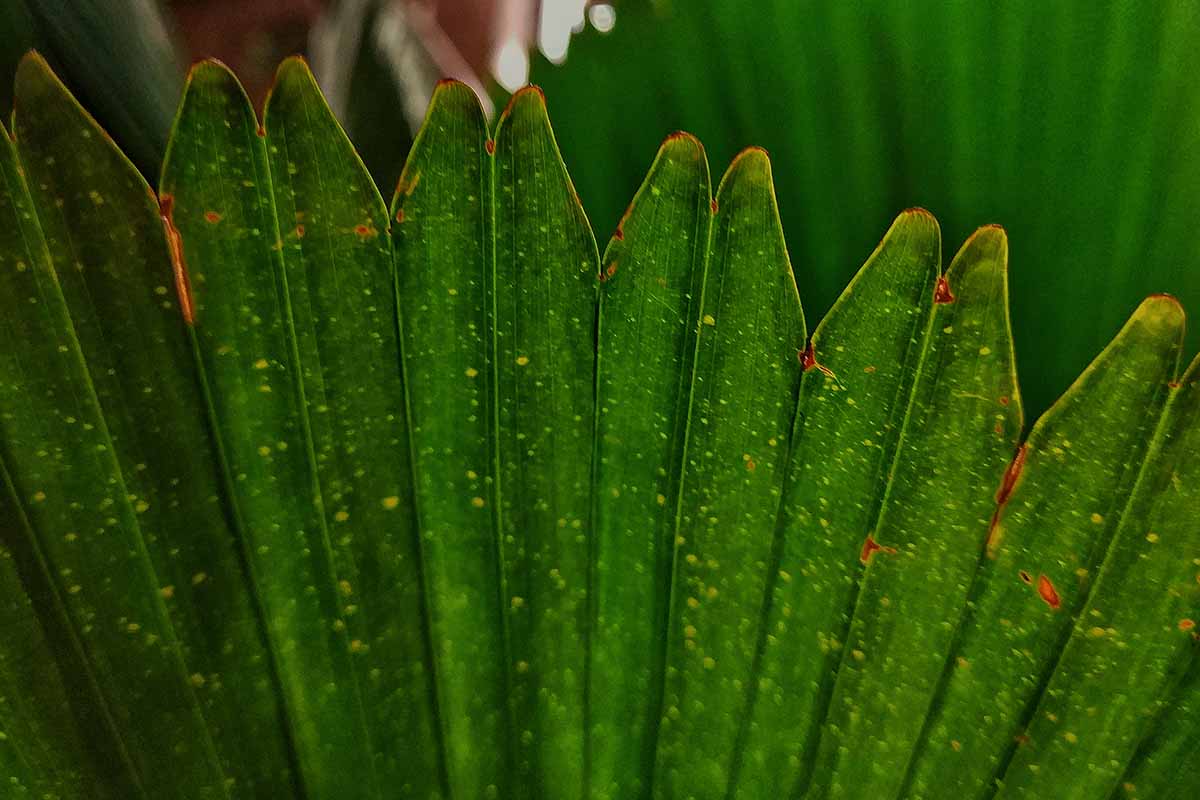
Look for fine webbing and speckled yellowing on fronds. Advanced infestations cause entire fronds to turn yellow and growth to halt.
Catch them early for the best chance at treatment. See our guide to controlling spider mites for more information.
Disease
Disease problems are not common if you avoid overwatering and provide good air circulation.
Leaf Spot
Leaf spot causes brown or yellow spots on fronds and is typically caused by fungal pathogens in the Bipolaris, Pestalotiopsis, or Phoma genera.
Treat all leaf spot issues with a copper fungicide, thoroughly coating both sides of the fronds and stems according to manufacturer’s directions.
Yellow spots can also indicate potassium deficiency, so consider a soil test if fungicide treatment doesn’t resolve the issue.
Root Rot
Root rot results from overwatering, which both suffocates roots and creates conditions for pathogens like Fusarium, Pythium, and Rhizoctonia to thrive.
Symptoms appear on foliage late in the disease process, by the time leaf tips turn yellow then brown, significant root root rot underground.
Since brown tips can also be a result of low humidity, dig down and inspect the roots. Black, mushy, or slimy roots indicate rot.
If you find root rot, act quickly. Remove the plant from its pot, brush away all soil, and trim off any damaged roots, cutting at least an inch into healthy tissue.
Clean the container thoroughly with hot, soapy water or a 10 percent bleach solution. Repot in fresh medium and soak the soil with copper fungicide.
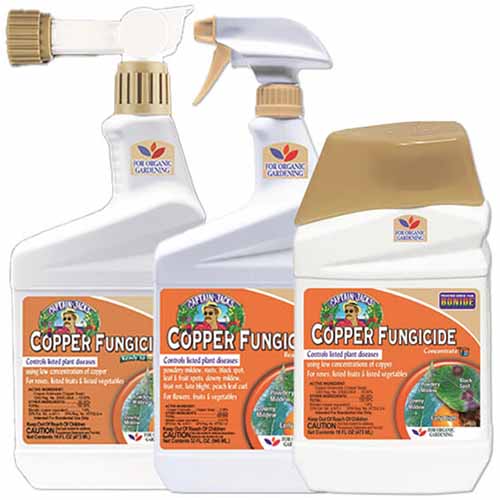
You can snag some Bonide copper fungicide at Arbico Organics in 32-ounce ready-to-use or 16-ounce concentrate.
Put on a Grand Display
If you want to make a statement in your home, you can’t find something more grand than the ruffled fan palm. It takes a little extra attention, but it’s worth the effort.
What draws you to ruffled fan palms? Are you growing one already? Let us know in the comments section below!
And for more information about growing fan palms, add these guides to your reading list next: