Echeveria ‘Black Prince’
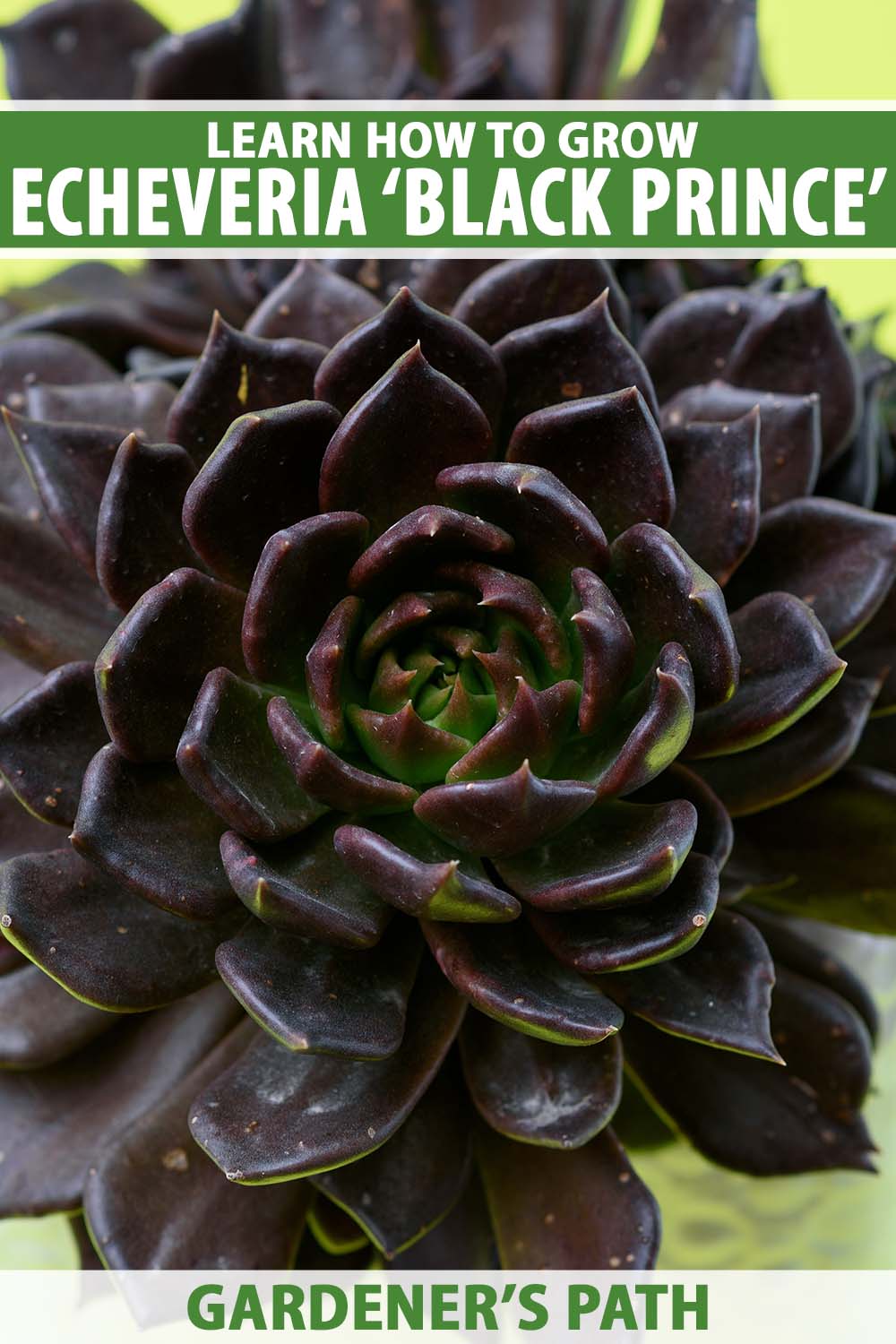
If you want to add some drama to your succulent collection, check out Echeveria ‘Black Prince.’
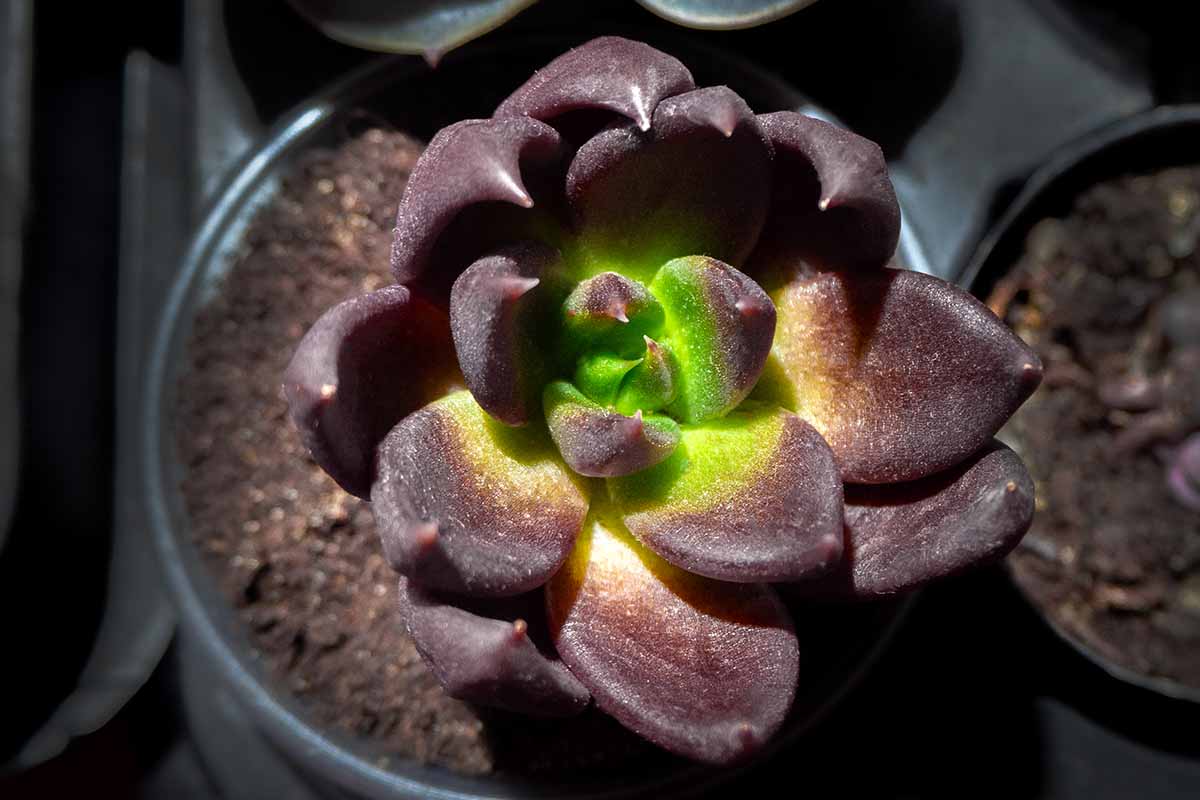
This cultivar sports nearly black leaves arranged in perfect rosettes and is one of the darkest succulents you can grow.
Despite the moody appearance, ‘Black Prince’ is as easygoing as any echeveria, requiring minimal care to thrive.
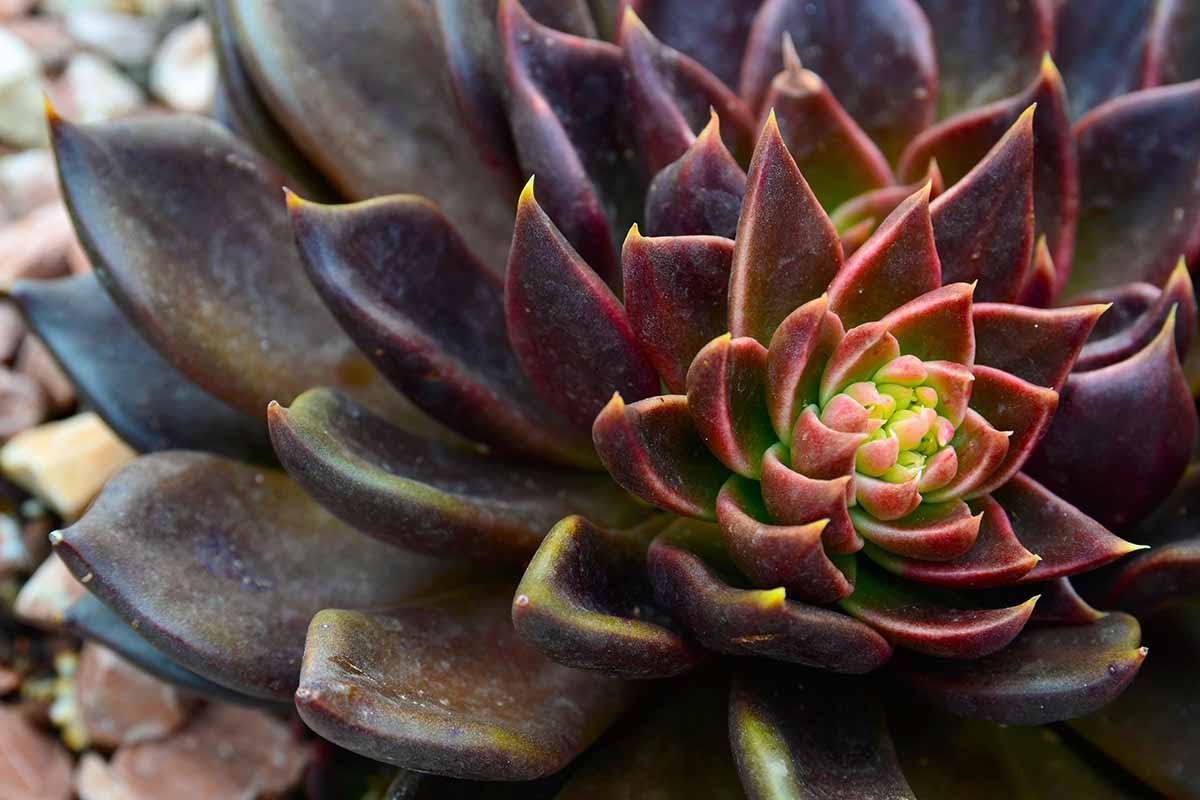
These dark beauties transform depending on light conditions. In bright sun, the leaves turn so dark they’re almost black. In shade, they soften to dark green with burgundy edges.
The contrast between the deep, chocolate-toned leaves and the bright red flowers that emerge in late fall is stunning.
In our guide to growing echeveria, we discuss how to cultivate these popular succulents in your home and garden.
Ready to add some drama to your collection? Let’s dive into the dark side and take a closer look at how to grow ‘Black Prince.’
What You’ll Learn
The Echeveria genus includes around 150 species, with most native to Mexico and Central America, with a few found in South America.
‘Black Prince’ is a hybrid cross between Echeveria affinis, commonly known as black knight, and E. shaviana, sometimes called Mexican hen.
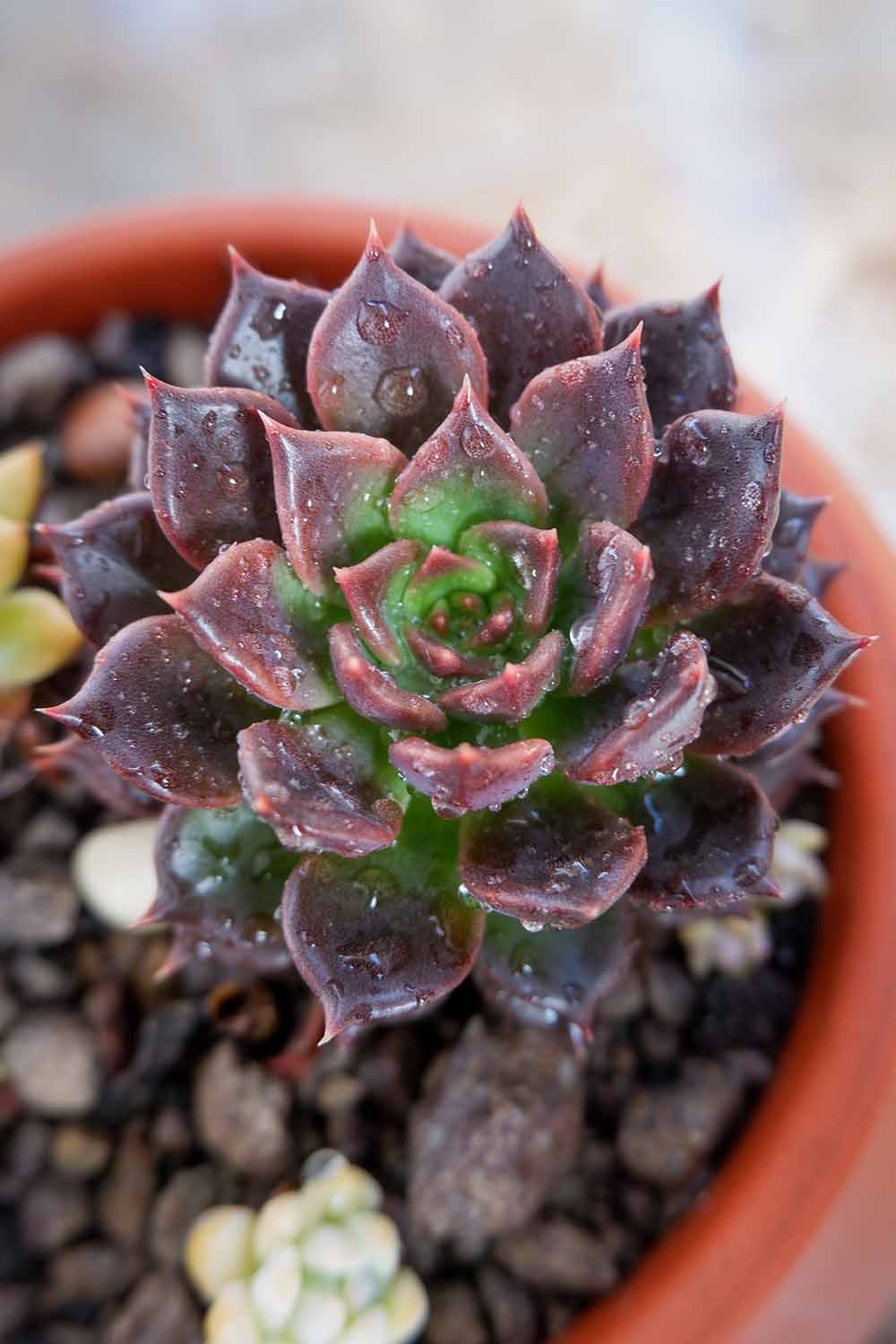
This parentage gives ‘Black Prince’ the dark coloration of E. affinis and the compact, tidy growth habit of E. shaviana.
The result is a slow-growing succulent with tight rosettes of thick, fleshy leaves that taper to a point.
Quick Look
Common name(s): Black Prince echeveria
Plant type: Perennial succulent
Hardiness (USDA Zone): 9-11 (outdoors)
Native to: Cultivated hybrid (parent species from Mexico)
Bloom time / season: Late fall to early winter
Exposure: Full sun to partial shade; bright, indirect light indoors
Soil type: Sandy, gritty, well-draining
Soil pH: 6.0-7.5, slightly acidic to slightly alkaline
Time to maturity: 3-4 years
Mature size: 3-6 inches wide by 3-6 inches tall
Best uses: Containers, rock gardens, houseplants, xeriscaping
Taxonomy
Order: Saxifragales
Family: Crassulaceae
Genus: Echeveria
Cultivar: ‘Black Prince’
The leaves emerge green from the center of the rosette, then gradually deepen to burgundy, chocolate brown, and finally to such a dark purple that they appear nearly black.
This color transformation is influenced by light exposure and stress.
More sun creates darker leaves. During periods of drought stress or when the plant is slightly root bound, the entire rosette can turn an intense, inky purple-black.
The leaves have a slight waxy sheen that catches the light beautifully. They’re arranged in a tight spiral pattern that creates perfectly symmetrical rosettes.

Unlike monocarpic succulents that die after flowering, ‘Black Prince’ blooms repeatedly throughout its life.
In late fall to early winter, tall stems emerge from the center of the rosette, reaching up to 12 inches high.
These stems are lined with small leaves and topped with clusters of bell-shaped flowers.
The blooms are typically bright red or scarlet with yellow interiors and yellow anthers, creating a stunning contrast against the dark foliage.
Over time, mature echeveria plants produce offsets or “pups” at the base, which gradually form small clusters.
‘Black Prince’ is a slow grower, which makes it perfect for containers or small spaces. Don’t expect the plant to reach full size and start flowering until it’s at least three to four years old.
This echeveria typically grows to about three to six inches tall with a similar spread, though some specimens can reach up to 10 inches in diameter under ideal conditions.
How to Grow
‘Black Prince’ thrives outdoors in USDA Hardiness Zones 9 through 11 and as a houseplant in colder regions.
Light
As mentioned, light exposure directly affects the color intensity of the leaves.
In full sun, the rosettes turn deep, dramatic purple-black. In partial shade or lower light, the leaves stay more green with burgundy or purple edges.
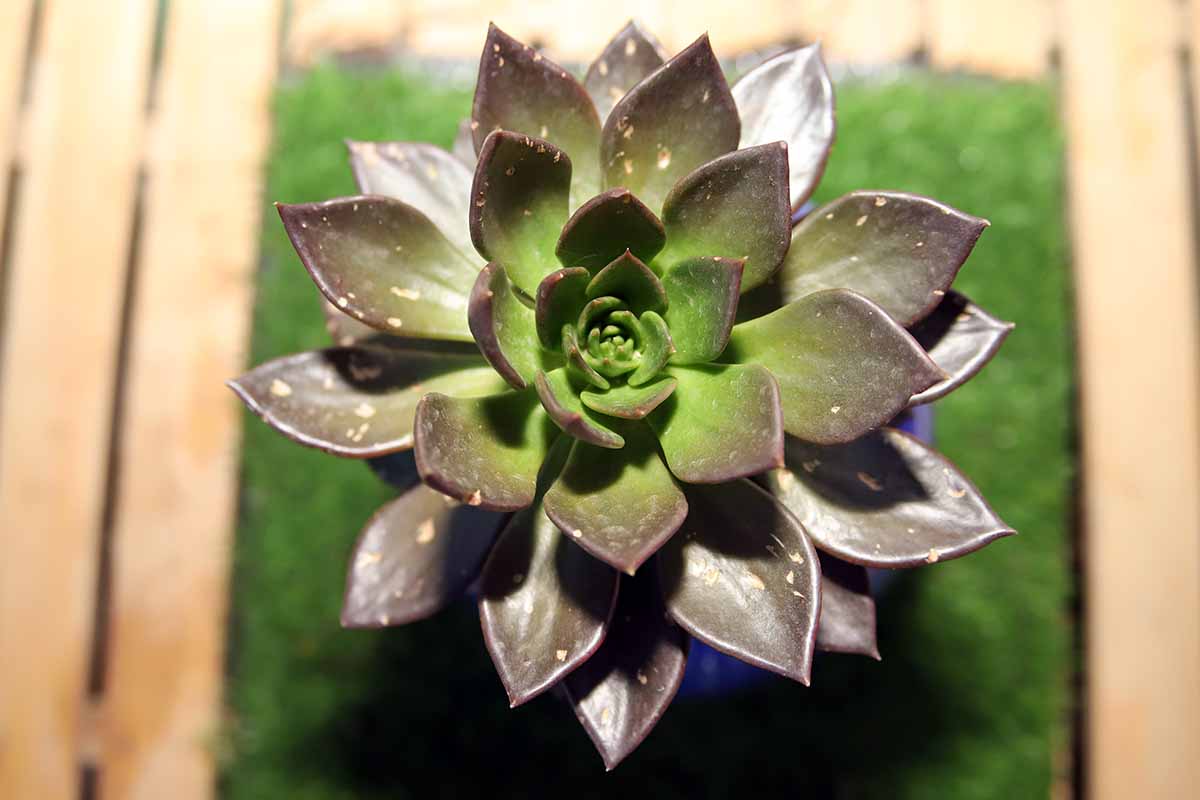
For the darkest color, provide your ‘Black Prince’ with at least six hours of direct sunlight daily. Morning sun is ideal, as it’s less intense than afternoon sun.
If you live in a climate with extremely hot summers where temperatures regularly exceed 90°F, some afternoon shade will prevent sunburn, which shows up as brown or black patches on the leaves.
Indoors, place ‘Black Prince’ near a south-facing window in the Northern Hemisphere or a north-facing window in the Southern Hemisphere.
If your echeveria starts to become leggy, stretching toward the light source, that’s a sign it’s not receiving enough light.
This condition, called etiolation, is common with indoor plants. Move it to a brighter spot or consider supplementing with a grow light.
Soil
Like all echeverias, ‘Black Prince’ requires well-draining soil, this is non-negotiable. Heavy, moisture-retentive soil is a death sentence for this succulent.
In the ground, make sure your planting area has excellent drainage. If you have clay soil, either amend it heavily or stick to container growing.
The soil should have a pH between 6.0 and 7.5, slightly acidic to slightly alkaline.
For containers, use a potting mix specifically formulated for cacti and succulents.
These mixes typically contain ingredients like coarse sand, perlite, pumice, or small lava rock that create air pockets and allow excess water to drain quickly.
You can make your own succulent mix using equal parts standard potting soil and perlite or pumice. I like to add a bit of coarse sand for extra drainage.
Temperature and Humidity
‘Black Prince’ thrives in warm, dry conditions typical of its native habitat.
The ideal temperature range is between 65 and 80°F, though it can tolerate temperatures as low as about 40°F for brief periods.
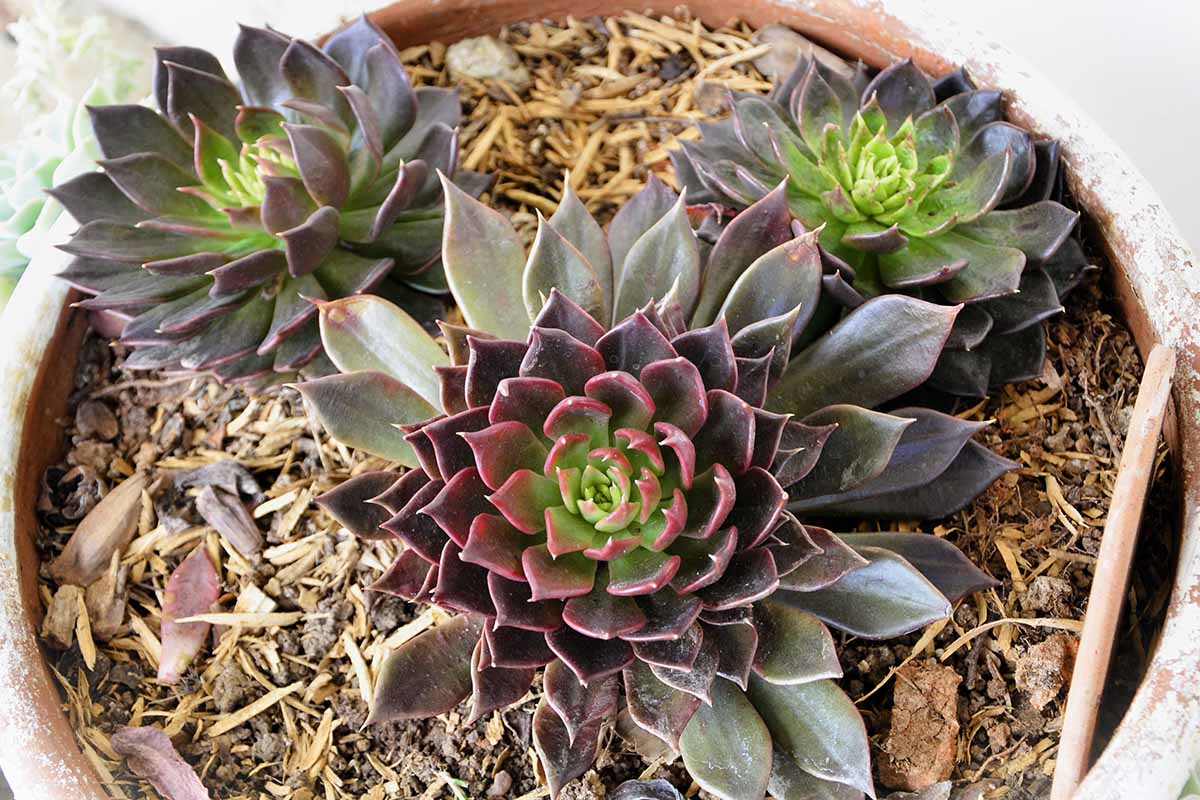
If temperatures drop below 32°F this can damage the plant tissue. A light frost might only cause cosmetic damage to the outer leaves, but a hard freeze can kill the entire plant.
If you’re growing ‘Black Prince’ outdoors in USDA Zones 9 to 11, it can stay outside year-round. In colder zones, treat it as a houseplant or bring containers indoors before the first frost.
Like other echeverias, ‘Black Prince’ prefers low humidity and good air circulation. High humidity combined with cool temperatures can encourage fungal issues.
If you live in a naturally humid climate, be extra careful with watering and make sure there’s adequate air circulation around the plant.
Avoid growing this echeveria in enclosed terrariums or other humid environments.
Water
During the active growing season in spring and summer, water ‘Black Prince’ thoroughly when the soil is completely dry.
Check by sticking your finger into the soil up to your second knuckle. If it feels even slightly moist, wait. You can also use a moisture meter to guide you.
Water deeply until it runs out of the drainage holes. Then don’t water again until the soil dries out completely.
In fall and winter, reduce watering to once a month or less as the plant enters a phase of slower growth.
Always water at the soil level, not from above. Water that collects in the center of the rosette can lead to rot.
If you’re unsure whether to water, wait. It’s easier to revive an underwatered succulent than to save one that’s rotting.
Container Cultivation
Choose a pot that’s slightly larger than the rosette itself. ‘Black Prince’ has a relatively shallow root system, so a wide, shallow pot works better than a deep one.
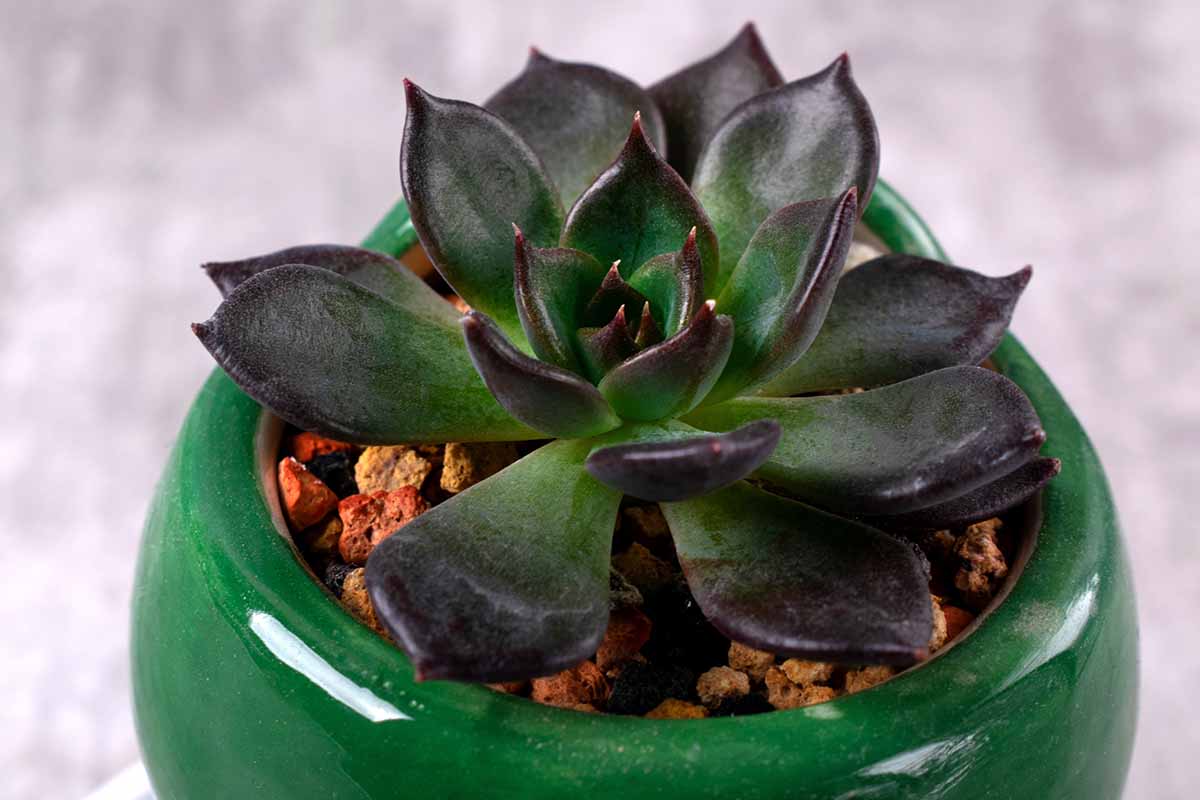
The pot must have drainage holes. Those cute decorative pots without holes? Save them for something else or use them as cachepots with a properly draining container inside.
Terra cotta or unglazed ceramic pots are excellent choices because they’re porous and allow excess moisture to evaporate through the sides.
Plastic pots work fine too, but you’ll need to be more careful with watering since they don’t breathe as well.
Fertilizing
‘Black Prince’ doesn’t require much fertilizer. Overfertilization can cause weak, leggy growth and reduce the intensity of the dark leaf color.
If you’re growing this echeveria in soil that’s been amended with compost, you probably won’t need to fertilize at all.
For container plants, a light application of fertilizer during the growing season can be beneficial.
Use a balanced, water-soluble fertilizer formulated for cacti and succulents, diluted to half the recommended strength.
Apply once in spring and once in late summer. Don’t fertilize in fall and winter when the plant is dormant.
Alternatively, you can use a slow-release fertilizer applied once in early spring. This provides a steady, low level of nutrients throughout the growing season without risk of overfeeding.
Learn more about fertilizing succulents here.
Maintenance
As the rosette matures, the lower leaves naturally age, dry out, and die.
This is completely normal and not a sign of a problem. The plant is simply shedding old leaves as it produces new growth in the center.
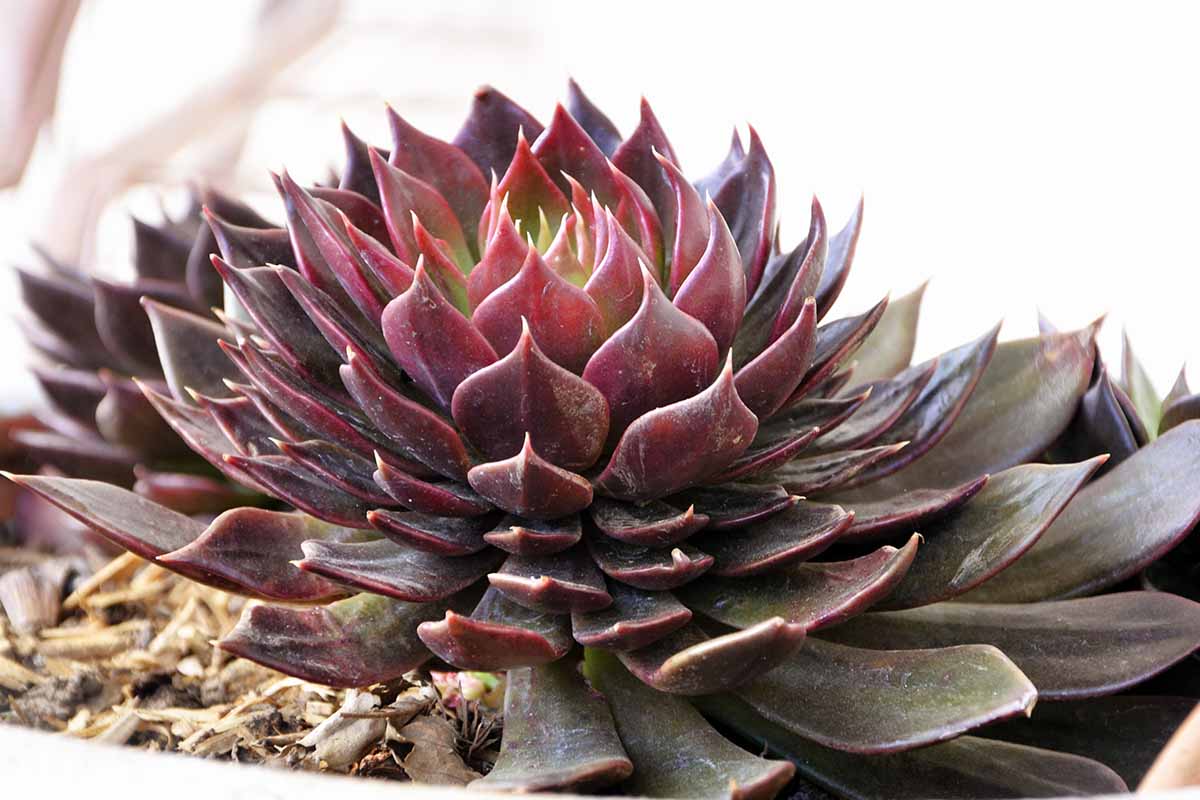
You should remove these dried leaves as you notice them. They can harbor pests and create humid microclimates that encourage fungal growth.
Gently grasp the dried leaf and give it a little wiggle. If it’s ready to come off, it will separate easily from the stem. If it resists, leave it alone for a few more days.
If your ‘Black Prince’ becomes leggy from insufficient light, you can cut off and replant the rosette. Simply cut the stem and plant it in a new pot.
Container-grown echeverias should be repotted every two to three years, or when they become root bound.
Signs that repotting is needed include roots growing out of the drainage holes, soil becoming compacted, or very slow growth despite proper care.
The best time to repot is in spring, just as the plant is beginning its active growth period.
Choose a new pot just one to two inches larger in diameter than the current one. Don’t go too much larger, as excess soil around the roots can stay wet and lead to rot.
Gently remove the plant from its current container. You may need to squeeze the sides of a plastic pot or tap the rim of a terra cotta pot to loosen the root ball.
Brush away the old soil from the roots. This is a good opportunity to inspect the root system for any signs of rot or pests.
If you find any rotted roots, trim them away with clean scissors. Let the plant dry out for a day or two before replanting if you’ve done any root pruning.
Fill the new pot about three-quarters of the way with fresh succulent mix, position the plant at the appropriate depth, and fill in around the roots.
Where to Buy
‘Black Prince’ is available at most nurseries and garden centers that carry a good selection of succulents.
Look for it at local garden centers in the houseplant or outdoor succulent section, depending on the season.
Specialty succulent nurseries often have the healthiest specimens with the best color.
Propagation
‘Black Prince’ can be propagated via leaf cuttings or by separating offsets.
Since it is a hybrid, don’t bother trying to grow this succulent from seed.
From Leaf Cuttings
Start in spring or early summer when the plant is actively growing. Select a healthy, mature leaf from the outer part of the rosette.
Grip the leaf firmly near its base and give it a gentle twist and pull. The leaf should come away cleanly with the base attached.
Place the leaves in a single layer on a tray in bright, indirect light with good air circulation. Let them sit undisturbed for about a week to callus over.
Prepare a shallow tray with a mix of two parts seed-starting medium and one part vermiculite. Lightly moisten the surface.
Set the leaves on top of the medium with the cut end touching the soil.
Lightly mist the soil surface every few days, just enough to keep it barely moist. Within two to four weeks, tiny roots should emerge from the base of each leaf, followed by a miniature rosette.
As the new plantlet grows, the mother leaf will gradually shrivel.
When the new rosette is about an inch across, pot up the baby plant in its own container.
Our guide to propagating succulents has more information.
From Offsets
Echeveria ‘Black Prince’ naturally produces offsets at the base of the mother rosette as it matures.
Wait until the offset is at least one inch in diameter before removing it.
Using a clean, sharp knife, cut the offset away from the mother plant as close to the base as possible, including any roots.
Let the cut end form a callus for a few days.
Plant the offset with any roots buried and the rosette sitting on the surface. If the offset doesn’t have roots yet, place it on top of the soil and mist daily until roots develop.
Place the newly potted offset in bright, indirect light. Water sparingly for the first few weeks.
Learn more about propagating succulents from offsets here.
Transplanting
If you’re moving your ‘Black Prince’ from a container to the garden or to a larger pot, the best time to transplant is in spring, just as new growth begins.
For outdoor planting, choose a location that receives six hours of sunlight daily and has excellent drainage.
Dig a hole that’s the same depth as the root ball and twice as wide. This gives the roots room to spread out as they establish.
Gently remove the plant from its container, taking care not to disturb the roots too much.
Place the plant in the hole at the same depth. Backfill around the roots, firm gently in place, and water lightly to settle the soil.
Pests and Disease
‘Black Prince’ rarely has pest or disease issues when grown in ideal conditions.
Pests
The most common pests you’ll encounter when growing echeveria are sap-suckers that feed on the fleshy leaves.
Aphids
Aphids are small, soft-bodied insects that can cause yellowing leaves and stunted growth.
They tend to cluster on new growth and excrete honeydew, a sticky substance that can attract ants and encourage sooty mold.
A strong spray of water can dislodge the pests or you can use insecticidal soap.
Read our guide to dealing with aphids here.
Mealybugs
Mealybugs are public enemy number one for echeveria. These white, fuzzy insects cluster in the crevices of the rosette at the base of leaves.
To control mealybugs, remove visible insects with a cotton swab dipped in rubbing alcohol.
For heavy infestations, spray the entire plant with a mixture of water and a few drops of dish soap or use neem oil.
Learn more about managing mealybugs.
Spider Mites
Spider mites occasionally appear, especially on indoor plants or during hot, dry weather. These tiny arachnids cause stippling and discoloration on leaves.
If you notice fine webbing between the leaves, it’s likely spider mites. Wash them off with water and apply neem oil.
Our guide to managing spider mites has more information.
Slugs and Snails
Slugs and snails will sometimes munch on your plants especially during wet weather. They leave irregular holes in leaves and slime trails.
You’d think the tough leaves would deter them, but apparently they find echeverias tasty. Our guide to managing slugs and snails has solutions.
Disease
Disease issues with ‘Black Prince’ almost always stem from too much water or humidity.
Fungal leaf spots can appear as brown or black spots on leaves, especially during humid weather or after extended periods of rain.
Remove affected leaves and improve air circulation around the plant. Avoid overhead watering.
Root rot is the most serious problem you’re likely to encounter. It’s caused by overly wet soil that prevents the roots from absorbing oxygen and allows fungal pathogens to thrive.
Early signs include leaves turning yellow and mushy from the bottom up or the entire plant becoming soft and floppy.
If you catch it early, you may be able to save the plant by removing it from the soil, cutting away all rotting tissue, letting it dry for several days, and replanting in fresh, dry soil.
Learn more about rotting in succulents here.
Embrace the Dark Side
‘Black Prince’ combines dramatic good looks with easygoing care requirements, making it perfect for beginners and experienced growers alike.

Whether you grow ‘Black Prince’ indoors on a sunny windowsill or outdoors in a rock garden, this echeveria is guaranteed to draw attention.
So what are your plans for this dark beauty? Will you grow it solo as a statement piece, or mix it with lighter succulents for contrast? Share your ideas in the comments section below!
And for more information about growing echeveria, check out these guides next: