Lewisia spp.
Lewisia are like little jewels in the garden, adding sparkle to rock gardens and glitz to xeriscaping.
They’re underappreciated gems that liven up areas that are too often left looking a bit bland.
If you’ve never heard of lewisia, you’re not alone. I hadn’t either until I nearly stepped on one a decade or so ago.
These little succulents grow humbly in the mountainous desert on rocky outcroppings in the American west.
In the wild, they’re the type of plant that makes you stop for a moment to appreciate the smaller beauty in the world.
But in the garden, they can be the main feature in an alpine garden or rock wall.
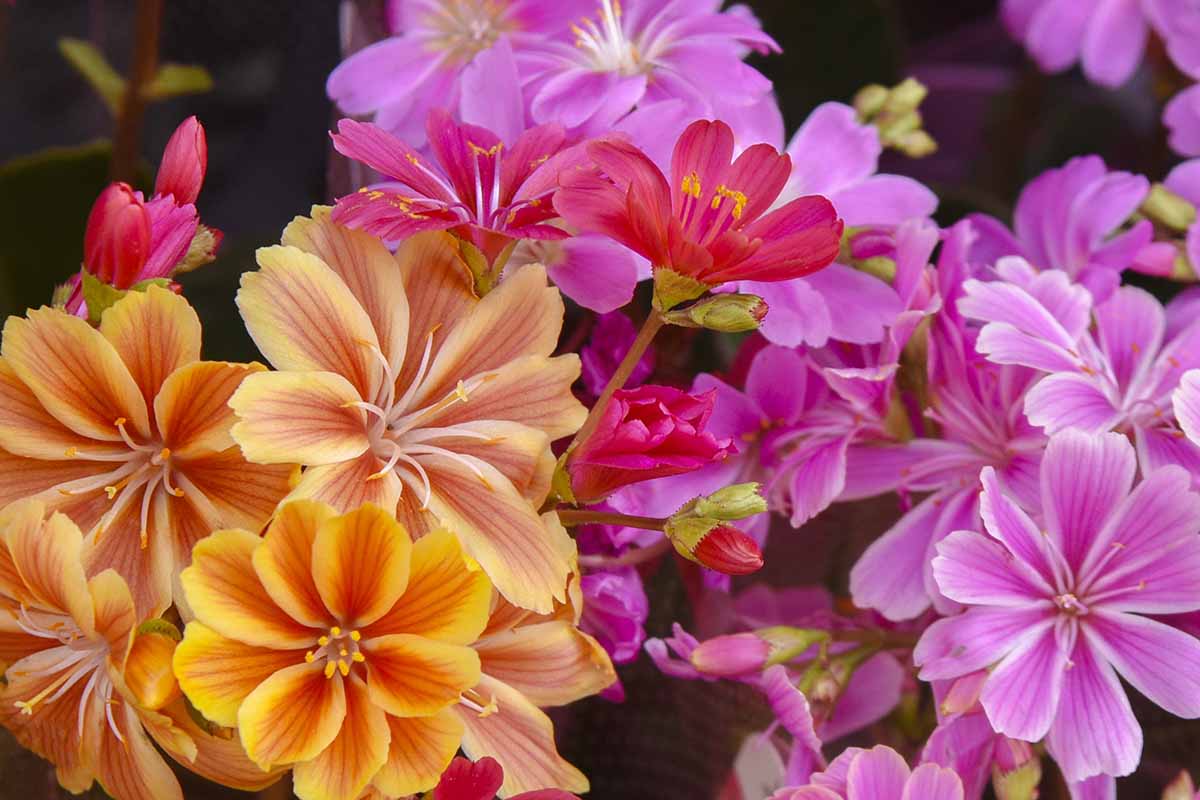
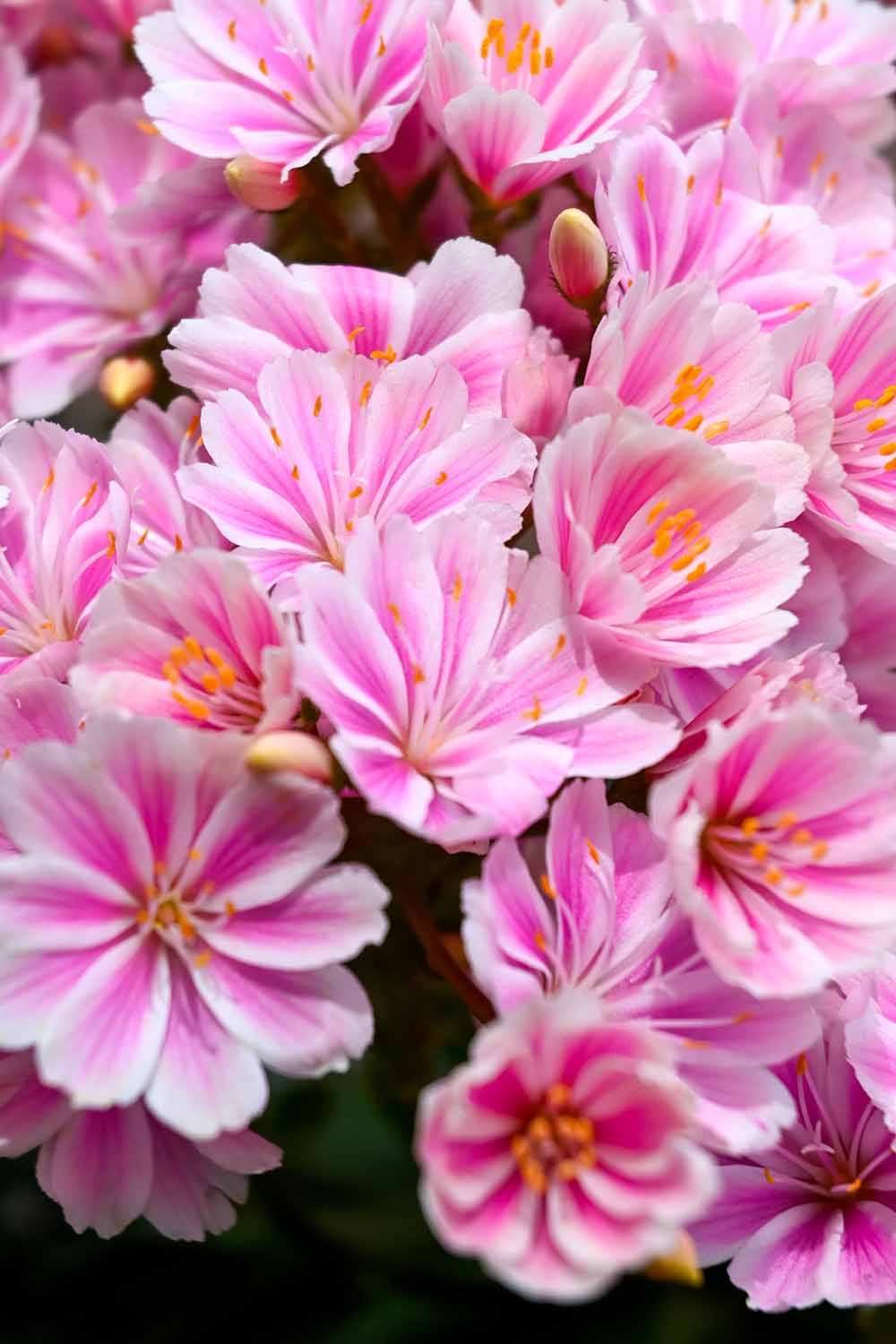
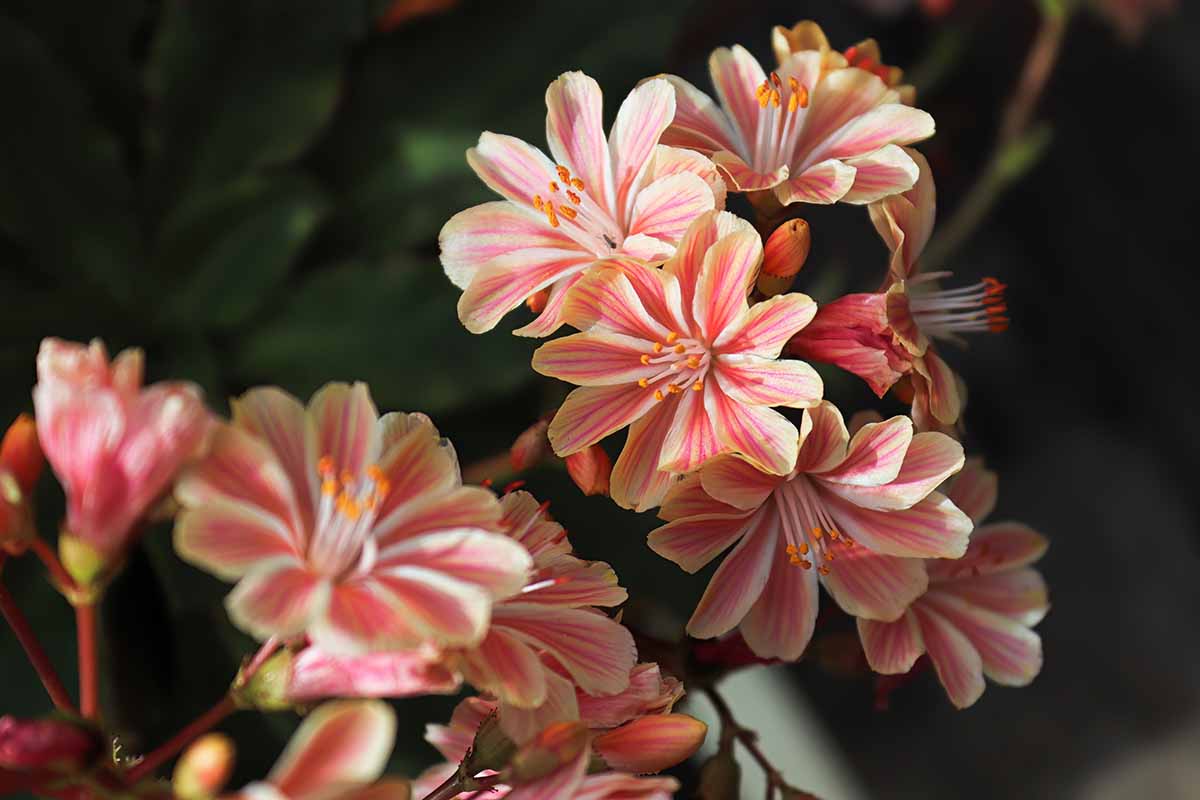
The rosette of leaves hosts a riot of blossoms in pinks, yellows, oranges, purples, and white.
Better yet, once you plant them, your only job is to sit back and enjoy. Lewisia is pretty much unbothered by pests and disease.
Sometimes called bitterroot or cliff maids, if you’ve ever heard of the majestic and formidable Bitterroot range in the Rocky Mountains, it takes its name from this sweet little flower.
For such a petite plant, it has a pretty big presence in the American west.
Ready to add it to your garden? Here’s what we’re going to discuss:
What You’ll Learn
The genus name honors Meriweather Lewis of Lewis and Clark fame.
Lewis is thought to be the first non-native person to collect and document the plant, which he did during the Lewis and Clark Expedition.
He first identified bitterroot (L. rediviva) at Traveller’s Rest, Montana, July 1, 1806. It was named for Lewis a decade later by botanist Frederick Pursh.
Of course, indigenous people living in the area knew all about the plant. The root was an important food source and even used as a currency for trade.
The plant consists of a rosette of thick, fleshy, succulent leaves and a thick, long taproot.
From the center rises an inflorescence of white, pink, purple, orange, or yellow flowers. Some species are evergreen, others are deciduous and go dormant during the summer.
Most grow in rocky or gravelly soils in subalpine regions and are suitable for cultivation in Zones 3 to 9.
Quick Look
Common name(s): Bitterroot, cliff maids, lewisia
Plant type: Evergreen or deciduous succulent perennial
Hardiness (USDA Zone): 3-9
Native to: Western North America
Bloom time / season: Spring, early summer
Exposure: Dappled shade to full sun
Soil type: Rocky, loose, well-draining
Soil pH: 5.5-7.0, slightly acidic to neutral
Time to maturity: 1 year
Mature size: 1 foot tall by six inches wide when in bloom
Best uses: Alpine garden, rock garden, xeriscaping
Taxonomy
Order: Caryophyllales
Family: Montiaceae
Genus: Lewisia
Species: Brachycalyx, columbiana, cotyledon, kelloggii, pygmaea, rediviva
The plants are closely related to miner’s lettuce (Claytonia spp.), which is one of my favorite plants to forage for.
Both plants are entirely edible but lewisia isn’t nearly as delicious as its cousin.
While lewisia root was an important food source for native populations, they didn’t eat it for its flavor.
The root is nutritious but extremely bitter, and most of the time, it was peeled, boiled, and dried, then added to more pleasant-tasting ingredients for a meal.
But it was highly valued for its nutritive qualities if not its superb flavor.
There are around 20 species in the Lewisia genus, depending on which botanist you ask.
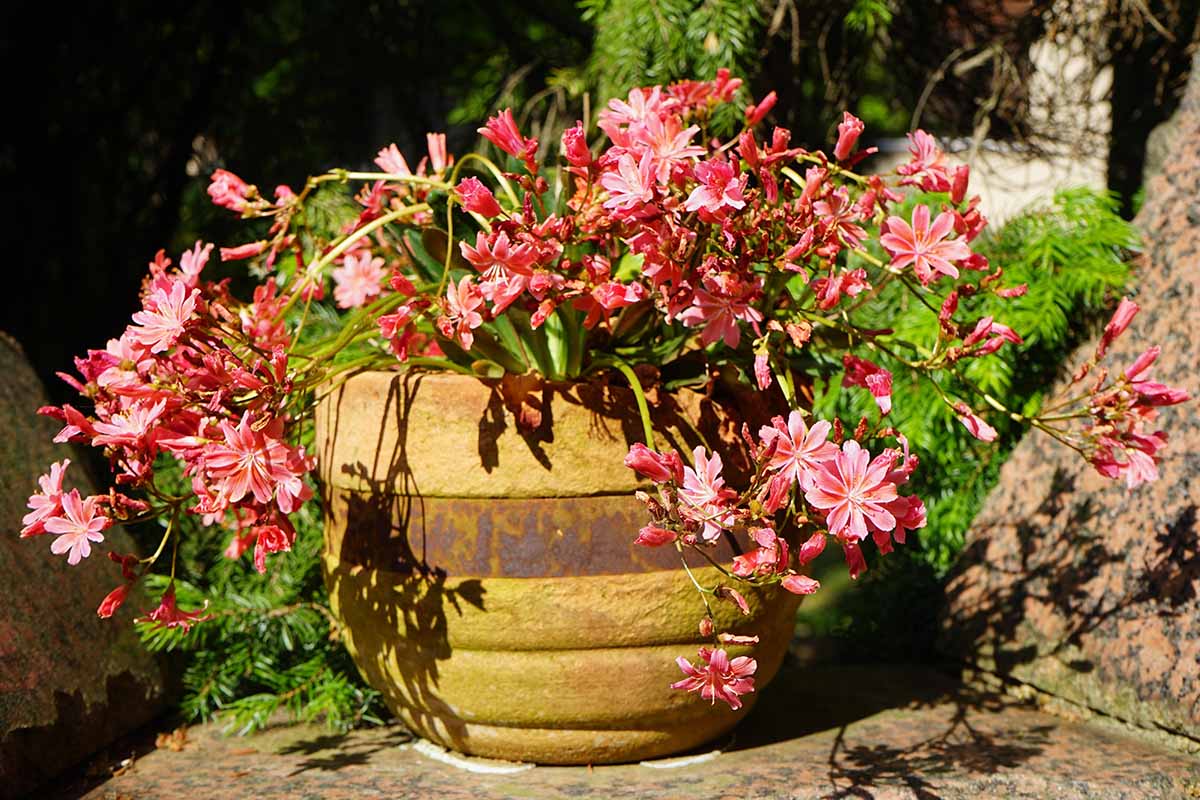
The most common grown in home gardens are Columbian (L. columbiana), cliff maids (L. cotyledon), Kellogg’s (L. kelloggii), Nevada (L. nevadensis), and pygmy (L. pygmaea).
Most gardeners start with the lovely cliff maids because they’re tough and adaptable – a truly set-and-forget succulent.
So long as they don’t receive too much water in the summer, they’ll happily thrive in your landscape. L. cotyledon, by far, makes up the most common option you’ll find in nurseries.
In fact, it’s a challenge to find any other species at all except in specialty nurseries.
How to Grow
Since cliff maids (L. cotyledon) are the most common type grown in gardens, we’ll focus on the best conditions for that plant.
But if you happen to pick up one of the other species, they can usually grow in similar conditions with a few exceptions.
Speaking of other species, some are less suited to gardens if your primary goal is a spring and summer display.
Some species go dormant during the dry summer months.
Remember L. rediviva that we talked about above? The species name is a derivative of “revived” because the bulb Lewis collected and sent back to Philadelphia was thought to have died.
But when it was watered, the bulb magically “revived” and started growing again. Really, it was just dormant.
This plant can be so darn good at going dormant that it has been regrown from specimens that were plucked, pressed, and put under glass for a time in herbarium displays.
If you want something that will stick around throughout the summer, grow one of the evergreen types.
Light
Most lewisia species grow in spots with some morning or late afternoon sun, but not in direct sun during the hottest part of the day.
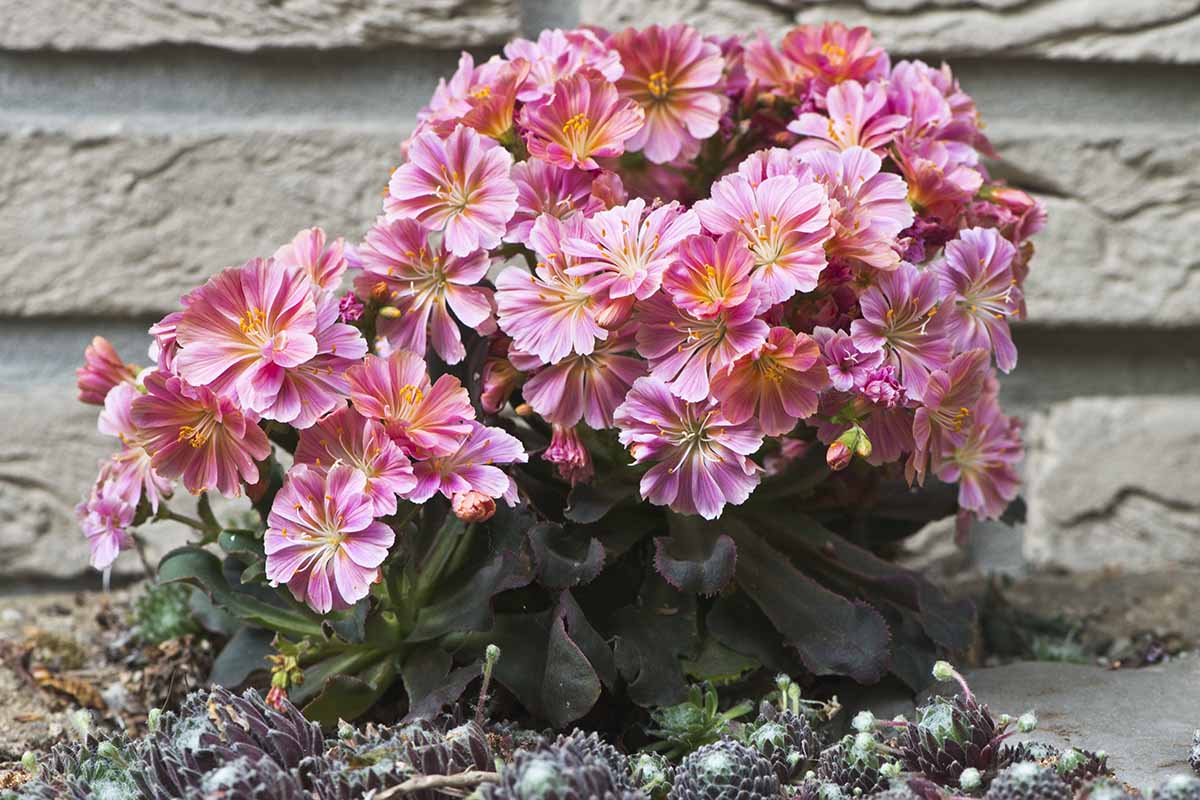
Dappled sun can be a good choice, or, if you live in a cool region, you could even give them full sun.
Light exposure and temperatures go hand-in-hand. You want to protect the plants from direct sunlight all day in areas that get super hot.
But lewisia happily grows in full sun provided the temperatures don’t soar during the day.
Water
Most lewisia thrive in rocky areas that allow for swift water drainage and they can’t tolerate standing water.
For species that thrive in moist areas, like pygmy bitterroot (L. pygmaea), you’ll want to provide more moisture during the spring and fall, when the rains naturally occur in their native habitat.
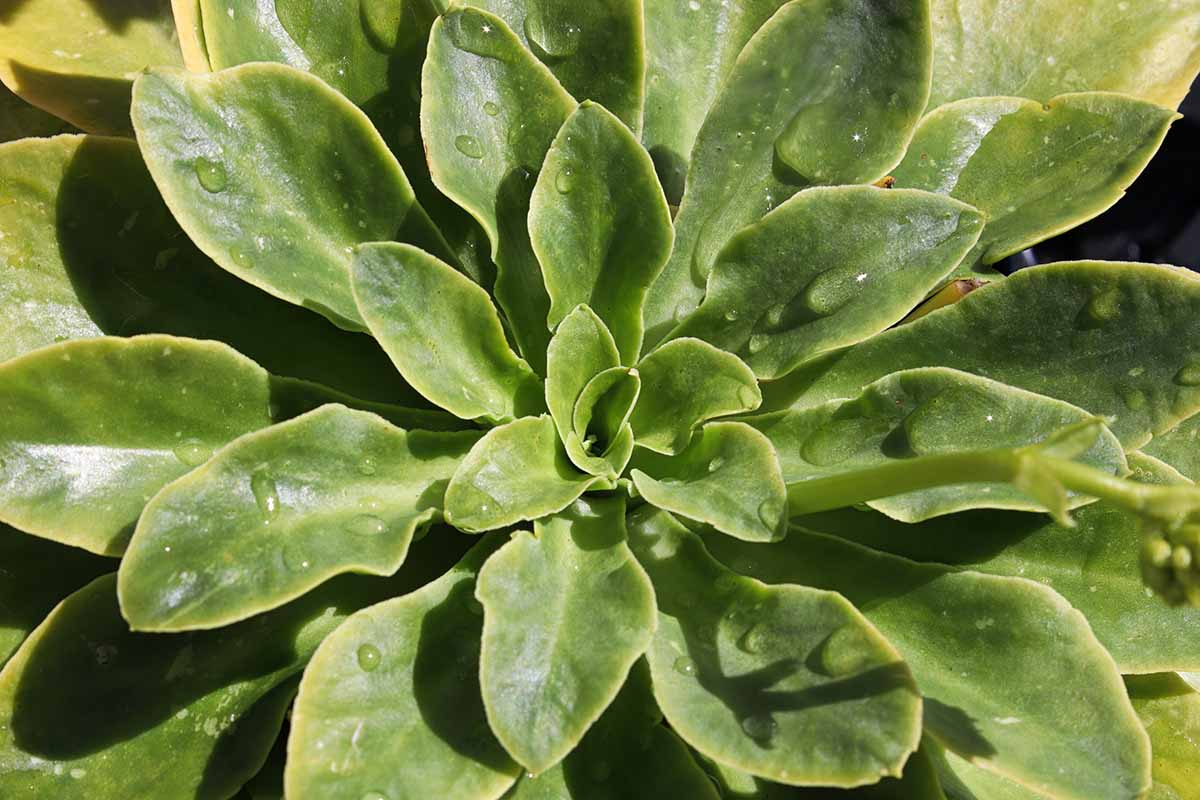
In general, allow the soil to dry out completely for a few days before watering.
Keep in mind that if you grow lewisia with other succulents, lewisia requires a bit more water than your typical succulent.
No matter which species you grow, you don’t need to worry about watering at all in the summer unless there is a prolonged drought and heat.
The plant will die if it receives too much water during the summer, and too much translates to pretty much any at all. This is doubly true for those that go dormant in the warm months.
In the winter, hold off on water altogether.
They don’t need any additional water during this time. In regions with lots of moisture in the winter, you might want to protect the plants from excessive rain.
Never allow water to collect in the crown. That means you should make an effort to water at the soil level and not from overhead.
Or you can plant them vertically or at an angle so the water can run off.
Soil
In a perfect world, you’ll give the plants rocky or gravelly soil, but cliff maids will grow fine in any loose, well-draining soil. It should have a slightly acidic to neutral pH of 5.5 to 7.0.
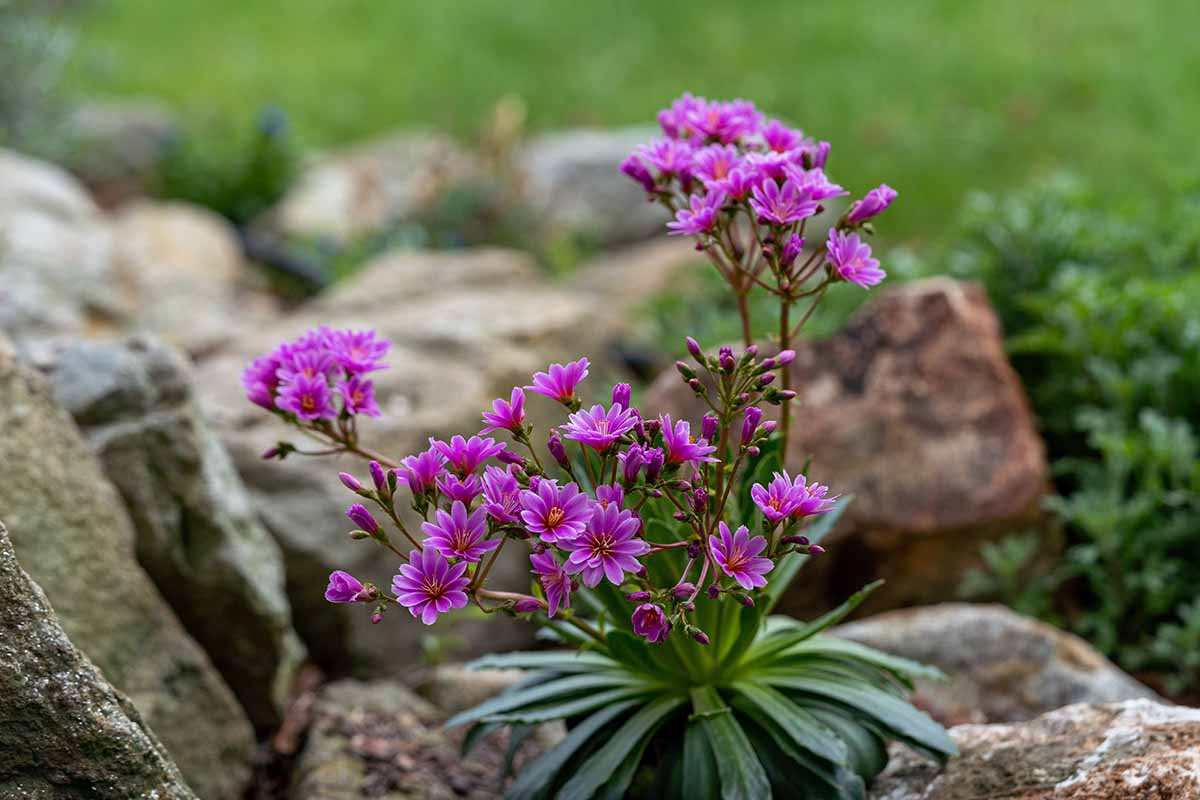
More important than soil composition is location. Situate the plants vertically or at an angle in whatever substrate you choose.
For example, you might tuck them into cracks and crevices of rock walls or rock gardens. This gives them the sharp drainage that they need.
They also do well in containers so long as – you guessed it – the pot has good drainage.
Fertilizing
You don’t need to fertilize lewisia. Succulent plants with tap roots tend to be good at finding nutrients on their own.
However, if you want to spread a little compost around the plant, do so in spring, just make sure it doesn’t touch the crown.
Species to Select
Chances are, you’ll only find cliff maids for sale, which makes choosing which species to plant pretty easy.
But some specialty nurseries will carry other species.
You might also be able to grab some offsets from wild plants, but be sure that you are harvesting in an area where it’s allowed, and be cautious only to take a few at a time.
Also, keep in mind that wild plants rarely survive well in cultivation.
Cliff Maids
Cliff maids (L. cotyledon) are evergreen, which means you can have a year-round display in Zones 3 to 9.
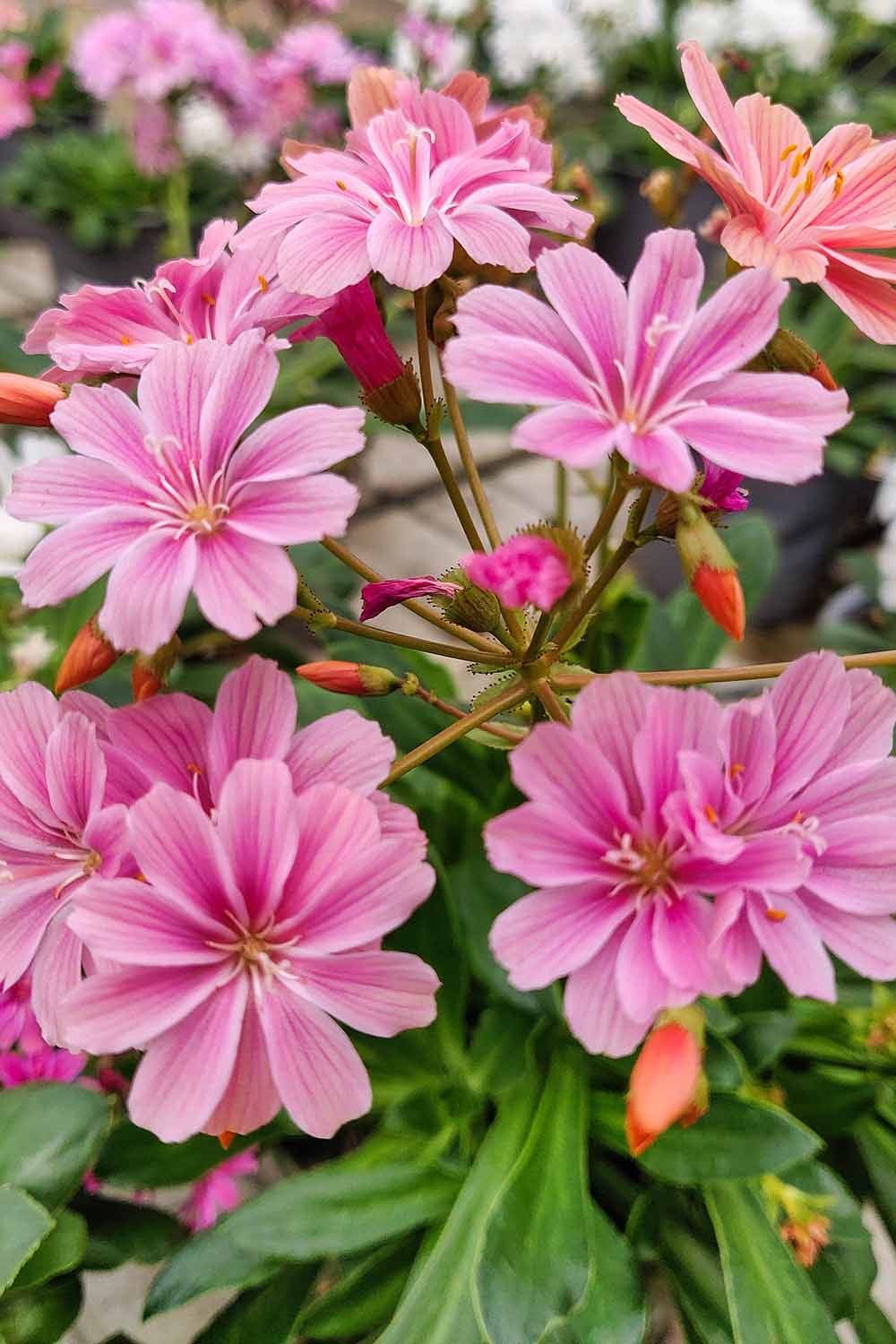
In the spring and early summer, the plants are smothered in heaps of colorful blossoms. This species produces pink, white, or orange flowers.
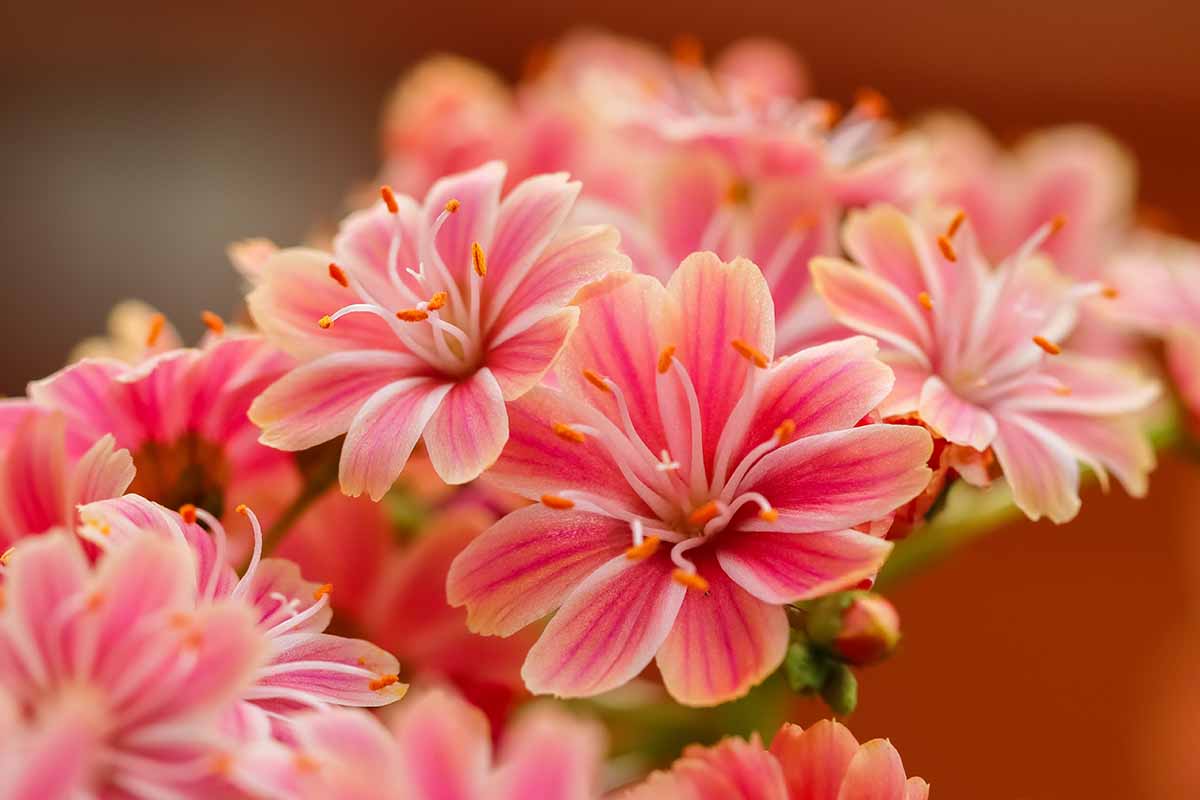
There is also a popular group of cultivated varieties known as the Sunset Group.
Plants from the Sunset Group flower for even longer and the blossoms are more vibrantly colored in hues like white, yellow, apricot, tangerine, pink, fuchsia, violet, and purple.
Both the species and the Sunset Group were awarded the Royal Horticultural Society’s Award of Garden Merit in 1993.
If you’re new to lewisia and you want something easy to grow, this is definitely the species to start with.
Bitterroot
L. rediviva is the state flower of Montana and while it’s rarely seen in cultivation, these days it’s gaining in popularity.
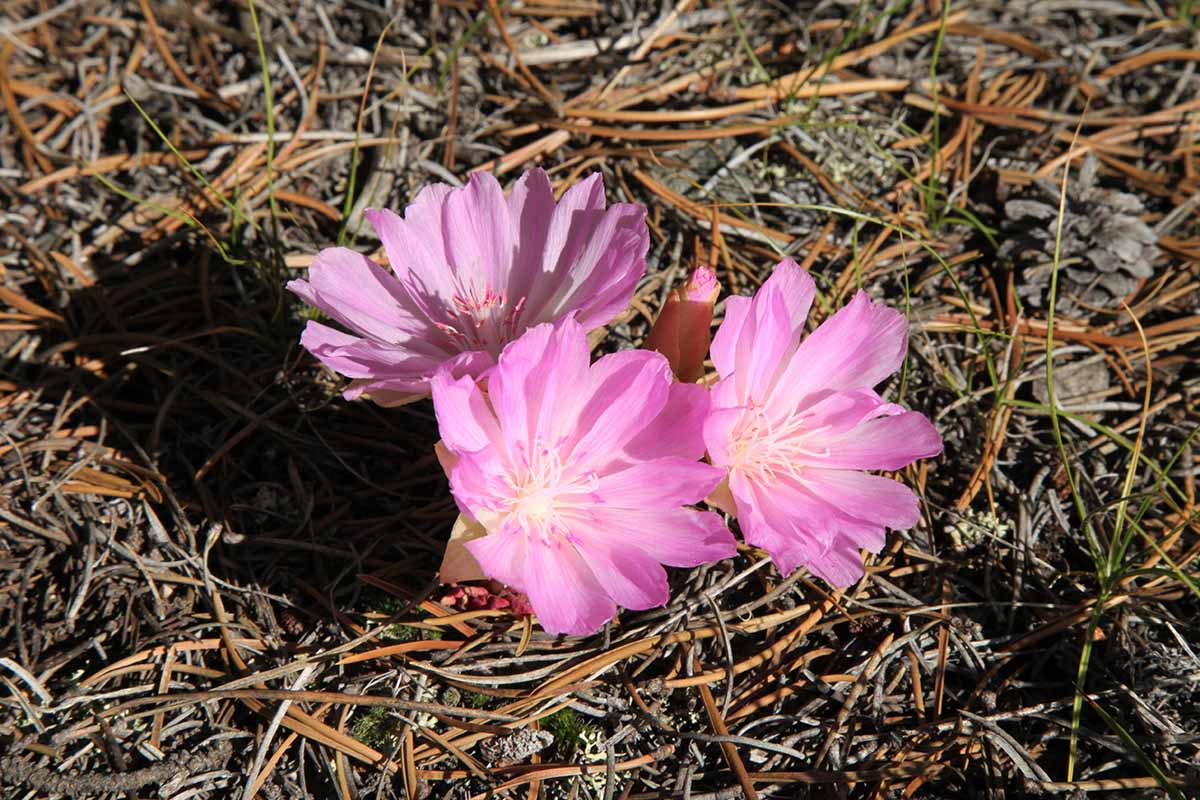
While this species isn’t quite as showy or adaptable as cliff maids, it’s a beautiful plant in its own right. In spring it produces pink or white flowers before going dormant in the summer months.
If you live in its indigenous range, consider growing this one since wild plants are disappearing, causing stress for the animals that rely on it.
It’s suitable for cultivation in Zones 3 to 9.
Columbian
I was hiking in Oregon when I first spotted this sweet little plant, known to botanists as L. columbiana.
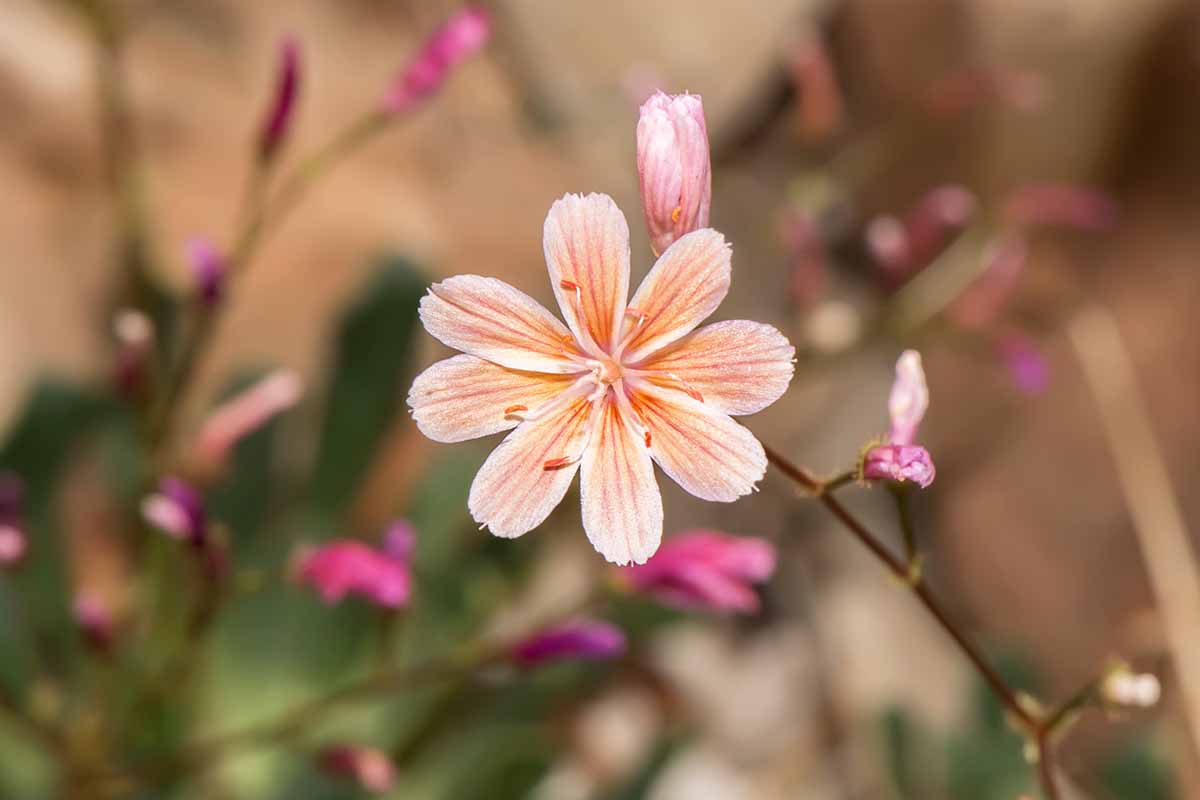
It’s not as bold and bright as cliff maids, with its narrow leaves and pink and white flowers held on long pink stems.
If you look closely, you will notice that the flowers are white with distinct pink lines running down the petals. This is an evergreen species, so it won’t go dormant in the summer.
There’s a natural variety (L. columbiana var. rupicola) that I long to get my hands on. It has lavender blossoms and bright magenta stripes.
Kellogg’s
When Kellogg’s lewisia (L. kelloggii) is in bloom, it can be hard to tell if the plant even has leaves.
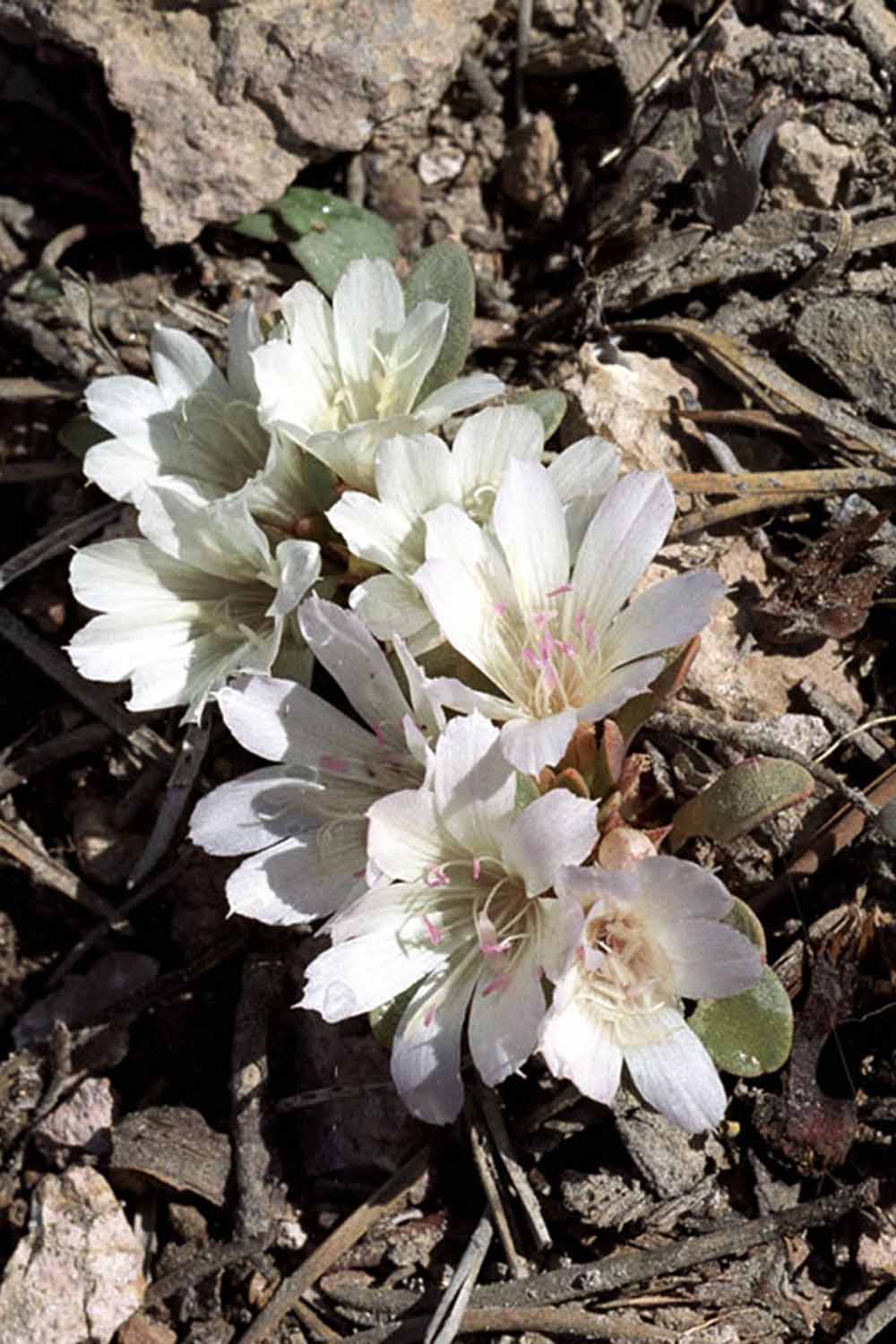
The clusters of white or pale pink blossoms appear on short stems that smother the rosette of spoon-shaped leaves underneath.
The leaves die back for the summer after the blossoms fade, but they’ll return in the fall for another round of growth.
Short-Sepal Bitterroot
Short-sepal bitterroot (L. brachycalyx) is a deciduous type that goes dormant in the summer.
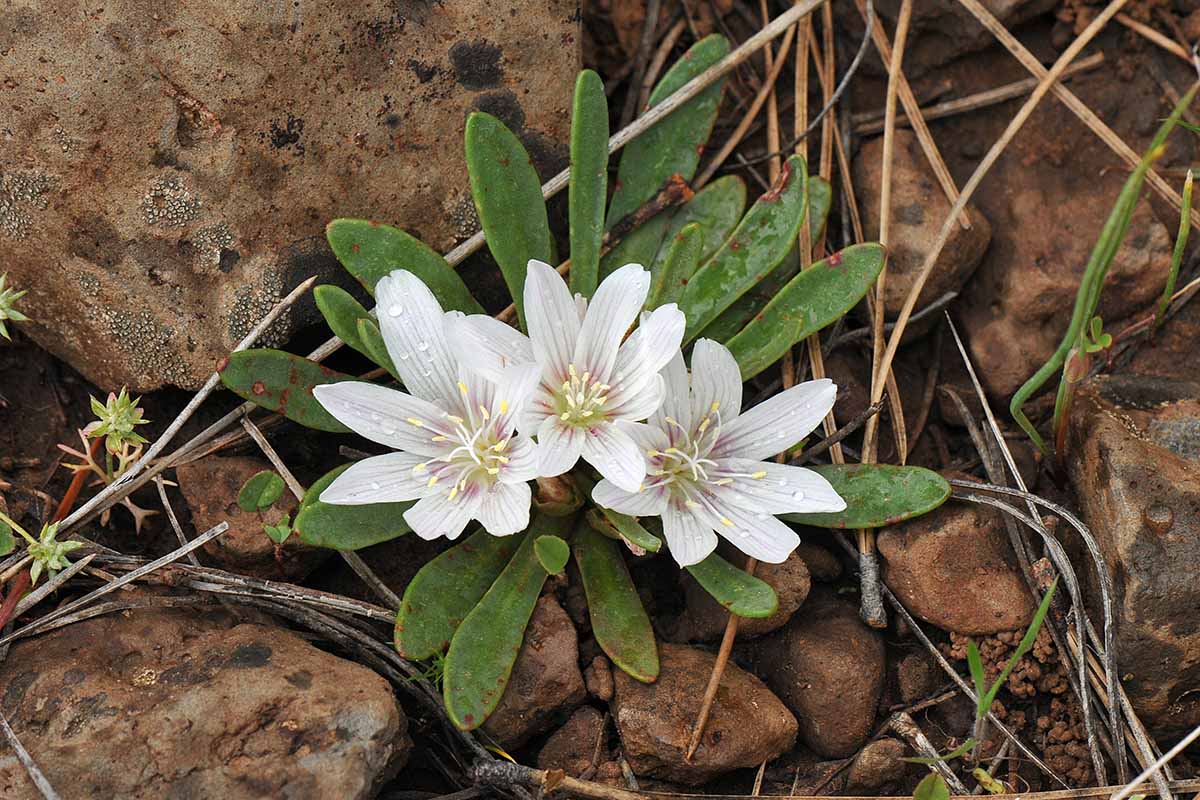
It has pink or white flowers with narrow succulent leaves. It’s resilient and reliable, which is part of the reason that this plant was awarded the Royal Horticultural Society’s Award of Garden Merit in 1993.
It grows indigenously throughout southwestern North America.
Propagation
There are two main methods for propagating lewisia, from seed and by dividing offsets.
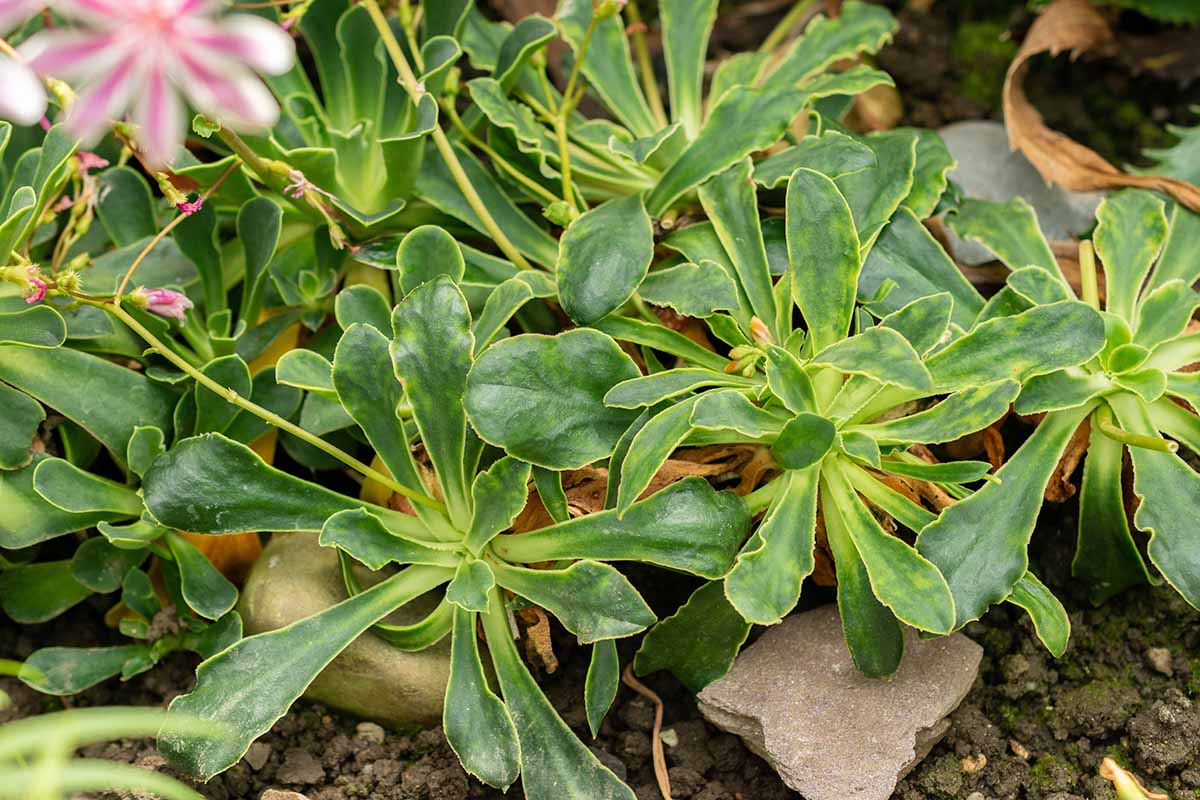
Seeds can be hard to come by, but some specialty nurseries may carry them. You’ll normally find potted starts rather than seeds.
From Seed
Since lewisia grows natively in sub-alpine regions, they typically experience cold winters. The seed needs a period of cold stratification for them to break dormancy and germinate.
When you have your seeds, you’ll need to recreate this.
Fill a bag or sealable container with moist sand and add the seeds.
Place the container and seeds into the refrigerator. They need to stay just above freezing and below 40°F for about six weeks.
After six weeks, remove the seeds from the refrigerator and prepare your planting containers by filling them with a 50:50 sand and potting soil mixture.
You can use a seeding tray or small seed cells.
Insert two seeds in each cell or about an inch apart. Press the seeds into the soil but don’t bury them.
Keep the soil moist and place the trays under grow lights or in bright, indirect sunlight.
Be careful not to overwater. The seeds will rot if they are kept too moist.
When the seedlings have several leaves, you can transplant them into their new home in the garden as discussed below.
Learn more about starting succulents from seed here.
From Offsets
Lewisia reproduces by sending out little baby plants called offsets.
These little babies are still attached to the parent plant, but you can separate them and move the offsets to a new area.
Use a sharp knife to carefully slice off the offset.
Set it aside in a shaded area to allow the cut area to “cure” or heal over for 24 to 48 hours. This helps prevent rot when you plant it in the soil.
When you’re ready to plant, set the offset cut side down in well-drained soil.
Allow it to root and be careful not to overwater. Only water as often as you would the adult plant.
Check out our guide to propagating succulents from offsets here.
Transplanting
To transplant potted starts or seedlings, first dig a hole about the same size as the growing container.
Gently remove the lewisia plant from the container and set it into the hole.
Situate the crown just above the soil level, so the top mound of the roots sits above the ground to help with drainage. The leaves shouldn’t touch the surface of the soil.
Fill back in around the roots with the removed soil.
Pests and Disease
Part of what makes lewisia such fun to grow, besides the glorious blossoms, is the fact that it’s pretty much unbothered by pests and disease.
That is assuming, of course, that you’ve situated it in an appropriate spot where the water can drain quickly.
Beyond root rot, which happens when plants sit in saturated soil for too long, slugs and snails are the only real problem.
If you start to see feeding on the leaves, use your favorite snail control method, or head to our guide to learn some of our tried-and-true tips for dealing with slugs and snails.
Signs of root rot include foliage that turns brown and collapses. If the plant reaches this point, there isn’t much you can do but remove it and dispose of the infected specimen.
Learn more about rotting in succulents here.
Bitterroot Is So Sweet
Lewisia is a cute, easy-care succulent that blooms profusely with barely any water or attention from the gardener.
If you live in western North America, there’s likely a species native to your neck of the woods, so it’s also a good option for native plant aficionados.
I can’t wait to hear what species of cheerful lewisia you decide to add to your space. Let us know in the comments section below!
And if you’re still looking for a few other succulents to fill your dry spaces, we’d love to help with that. Add these guides to your reading list next: