× Bacurio delphinatifolius
What do you get when you cross a candle with pearls? Well, apparently, in the succulent world you get dolphins. Let me explain.
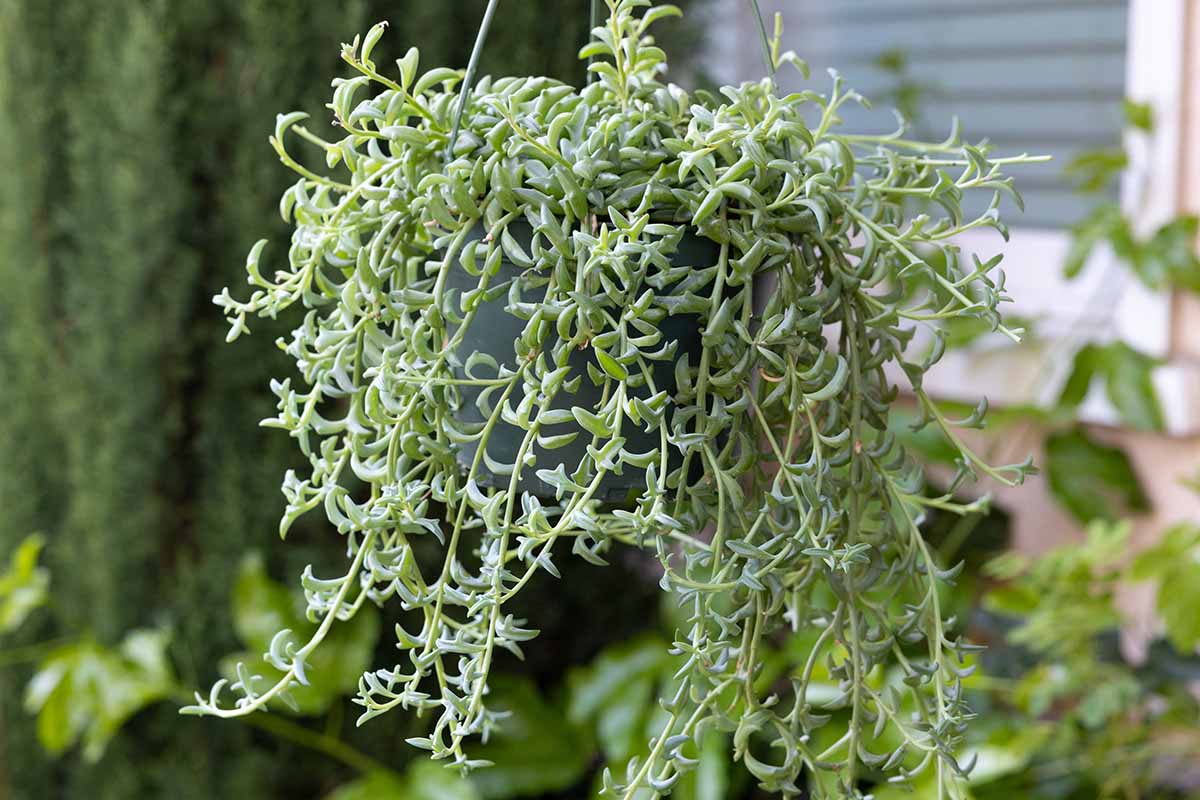
String of dolphins, × Bacurio delphinatifolius, is a hybrid cross of two related South African succulent species, Baculellum articulatum, commonly known as the candle plant, and Curio rowleyanus, or string of pearls.
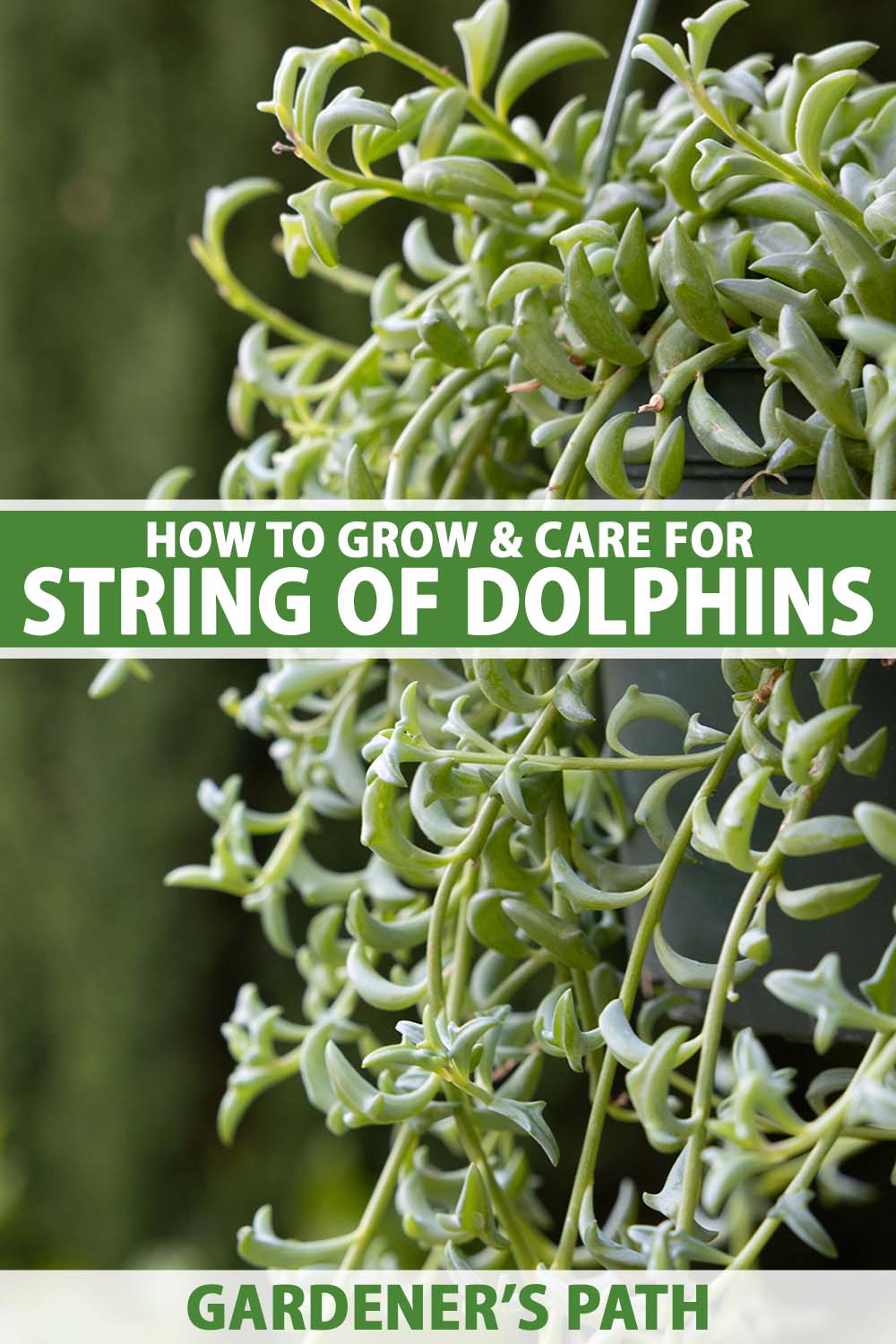
The result is a trailing specimen with fleshy leaves that resemble dorsal-finned dolphins breaching the sea and propelling themselves into the air.
Small white blossoms with a cinnamon-like fragrance may bloom from spring into summer.
We link to vendors to help you find relevant products. If you buy from one of our links, we may earn a commission.
Once classified as Senecio peregrinus and Curio × peregrinus, string of dolphins is currently in a genus of its own, x Bacurio, which more accurately represents its status as an intergeneric hybrid.
This guide has all you need to know to grow this unique hybrid succulent indoors as a houseplant.
Here’s what we’ll cover:
What You’ll Learn
Both parent species are native to South Africa.
C. rowleyanus comes from arid regions in the Eastern and Western Cape and parts of southern Namibia. It grows as a creeping ground cover under scrubby bushes in rocky areas.
B. articulatum is endemic to the same regions, as well as the Little Karoo and Great Karoo. It grows on rocky slopes, often in semi-arid regions.
String of dolphins is a cultivated intergenetic hybrid first identified in 1996 by British botanist Gordon Rowley who gave it the cultivar name ‘Hippogriff.’
In 2020, it was formally classified as × Bacurio delphinatifolius.
In addition to the common name “string of dolphins,” you may also see this plant listed as flying dolphins, dolphin necklace, and dolphin plant.
Quick Look
Common name(s): Dolphin necklace, dolphin plant, flying dolphins, string of dolphins
Plant type: Perennial succulent
Hardiness (USDA Zone): 9-11 (outdoors)
Native to: Hybrid. Parent species native to South Africa
Bloom time / season: Spring to summer
Exposure: Bright, indirect sunlight indoors, full sun to part shade outdoors
Soil type: Cactus and succulent mix, sandy loam outdoors, well-draining
Soil pH: 6.5-7.0, neutral
Mature size: 1-3 feet long, 1-2 feet wide
Best uses: Container, houseplant, hanging baskets
Taxonomy
Order: Asterales
Family: Asteraceae
Genus: x Bacurio
Species: Delphinatifolius
Succulents are low-maintenance houseplants that require infrequent watering and repotting.
You’ll find the dolphin plant is suited to indoor container gardening and shows well as a stand-alone specimen.
Please note that the dolphin plant is toxic and should be placed accordingly to showcase its trailing stems without posing a health risk to children or pets.
Suspend the pot decoratively from a ceiling hook or place it on a high shelf out of reach.
How to Grow
The key to success with any plant is to understand its cultural requirements as determined by its native environment, and to try to replicate them at home.

In this case, we have a succulent that does not grow in the wild, and so we should consider the requirements of the parents from which it originates.
Climate
As a hybrid of two succulent species native to the South African Cape Province region, string of dolphins is genetically wired for hot, dry summers and wet, mild winters.
An average home environment with temperatures of 60 to 80°F and humidity in the 30- to 50-percent range is suitable.
This is a frost-tender hybrid that declines with cold temperatures.
If yours vacations outdoors in the summer, be sure to bring it back inside before the nights dip into the 50s, well before the first frost.
Light
Indoors, x B. delphinatifolius requires bright, indirect sunlight for effective photosynthesis, the process of converting light to energy that keeps foliage vibrant.

A position about three feet from a south- or east-facing window is ideal. Avoid direct exposure that can scorch the foliage.
If you like to place your plants outdoors in the summer, choose a location with full sun to part shade for optimal health.
Soil
As with many types of succulents, string of dolphins prefers slightly acidic to neutral soil with a pH between 6.5 and 7.0.
It should be gritty for fast drainage. A cactus and succulent mix is the best choice for houseplant cultivation.
Hoffman Organic Cactus and Succulent Soil blends compost, peat moss, and sand with limestone for the appropriate pH balance, resulting in a slightly acidic, rapidly draining substrate.
Hoffman Organic Cactus and Succulent Soil
Hoffman Organic Cactus and Succulent Soil is available from Hoffman via Amazon.
Water
Use the “soak and dry” method of watering for best results. Allow the soil to dry out completely before thoroughly saturating it with water.
Moisture needs are greatest during the spring and summer growing season, during fall and winter dormancy you’ll need to water less often.
Fertilizer
It’s not necessary to fertilize and overfeeding can cause the dolphin-like foliage to become misshapen.
If you choose to feed, apply a balanced liquid succulent fertilizer at a quarter strength once a month during the spring and summer months.
A product like Dr. Earth Succulence is ideal. It’s mild, with an NPK ratio of 1-1-2, formulated for succulents.

You can find Dr. Earth Succulence in 16-ounce bottles available at Arbico Organics.
Where to Buy
While it is not one of the more common succulents, you are likely to find x B. delphinatifolius available from specialty nurseries and those that carry a wide selection of succulents.

Find string of dolphins in four- and six-inch starter pots, and bare root specimens available at Planet Desert.
Maintenance
The stems of a dolphin succulent grow rapidly.
If you find they are getting “leggy,” with longer spaces than usual between the leaves, you can prune to promote more compact, branching growth.

Use clean shears to cut just below a leaf node to stimulate lateral growth from that point. You may want to use the cutting to propagate new plants as discussed below.
Repotting is an infrequent maintenance task best done during dormancy in late winter to early spring.
When the roots protrude from the drainage hole, or there is no longer an inch of space between the foliage and pot rim for easy watering, select a pot one size larger than the current vessel.
Do not water the day before repotting. You’ll want the soil dry so you can loosen and remove most of it before replanting in fresh cactus and succulent potting mix.
Fill the bottom third of the new container with soil. Settle the root mass in the pot at the original depth.
Backfill three-quarters full and tamp to hold it firmly in place. Water thoroughly.
Additional maintenance includes the removal of damaged, dead, or diseased leaves and stems. Cut just below a leaf node to jumpstart regrowth.
Propagation
Since this succulent is a hybrid, it’s unlikely to set viable seed.
Furthermore, if it does, it may produce offspring that differ from the parent, possibly resembling one or more of the species used for cross pollination.
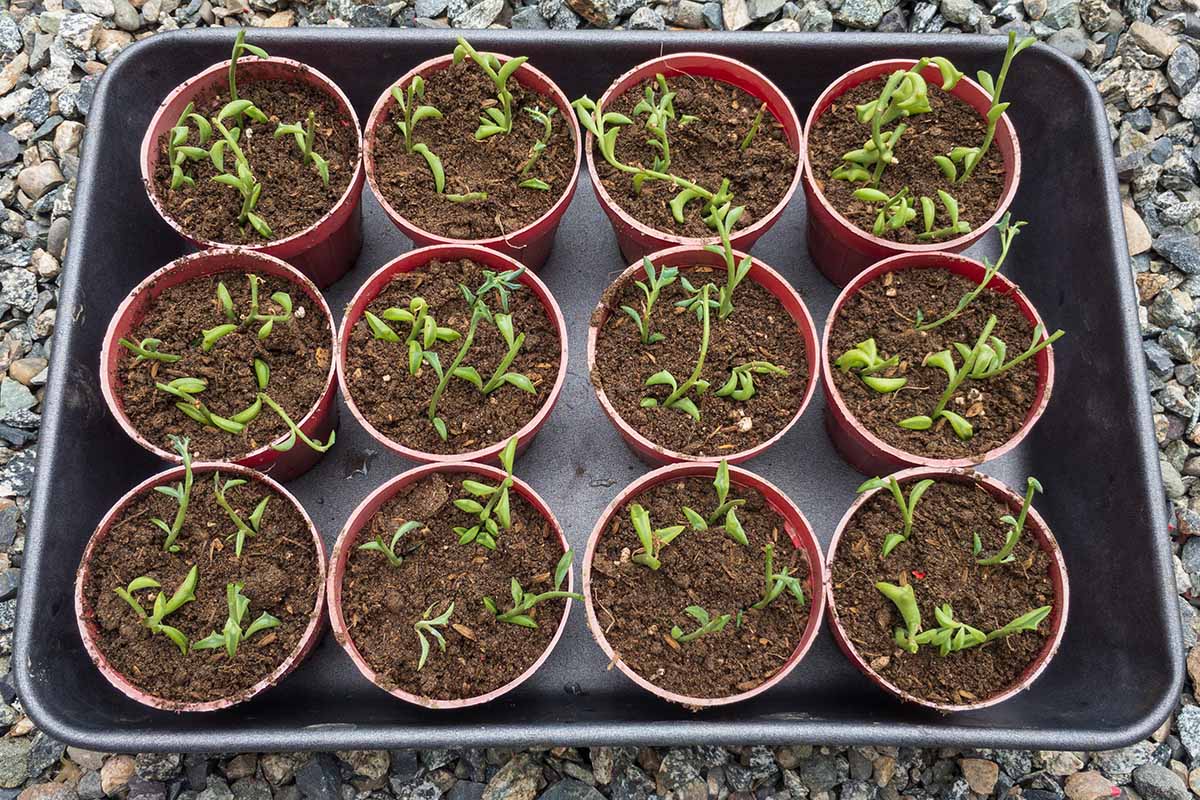
Alternatives to seed propagation include taking leaf or stem cuttings, or purchasing a nursery start.
From Leaf Cuttings
To start with a leaf cutting, gently pinch or twist off a leaf from an existing plant.
Place the leaf on a paper towel out of direct sunlight for about three days so the “wound” can form a callus.
Once callused, lightly moisten the paper towel, set it in bright, indirect sunlight, and keep it lightly moist.
When the leaf grows roots, fill a three-inch starter pot three-quarters full of cactus and succulent potting mix.
Place the rooted leaf on top. Gently cover the roots with soil, leaving the leaf uncovered.
Place the pot in bright, indirect sunlight.
Maintain light, even moisture while the roots continue to grow and foliage sprouts.
Once there are several new leaves, the roots are well established and you can allow the soil to dry out between waterings.
From Stem Cuttings
You can root a stem in soil or water. Here’s how:
In the spring, select a robust cascading stem. Measure four to six inches from the tip.
Use clean shears to cut the stem just above a leaf node, so the node is on the cutting.
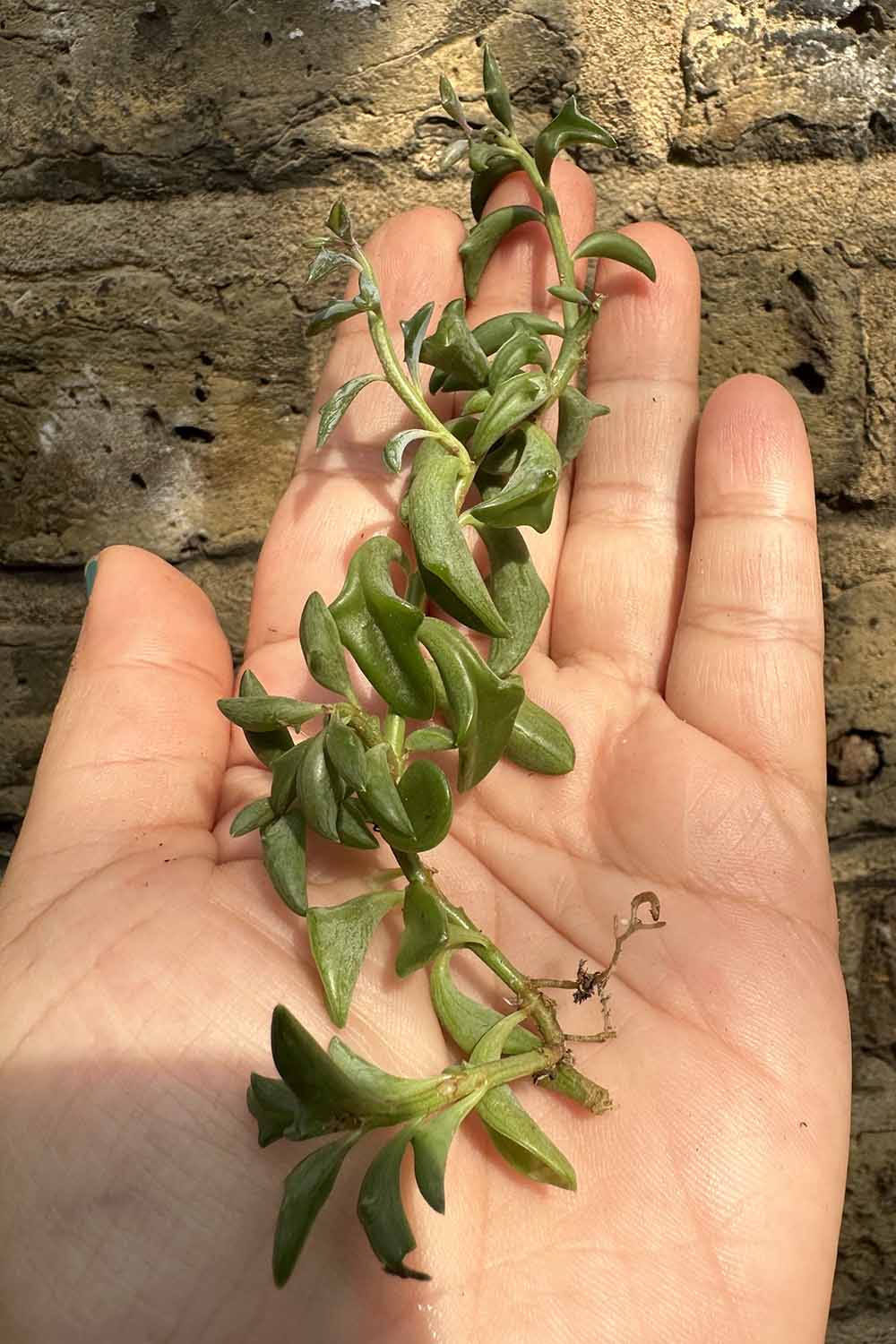
Then go back and prune the original stem just below a leaf node to jumpstart regrowth in a lateral direction and avoid having a blunt, dead end.
Pinch off the leaves from the bottom third of the cutting. If you like, you can root them as discussed above.
Stand the stem in a clear glass with enough water to cover the bottom third of the stem. The nodes will be submerged.
Place the glass in bright, indirect sunlight. Change the water daily.
When the roots are at least an inch long, you can transplant the stem into a pot of soil per the instructions below.
Alternatively, after cutting the stem and pinching off the lower leaves, lay the stem on a paper towel out of direct sunlight for about three days to callus.
Fill a three-inch starter pot three-quarters full of cactus and succulent soil.
Use a chopstick or pencil to make a one- to two-inch hole in the center.
Dip the callused stem end into rooting hormone powder.
Insert one-third of the stem into the hole, covering one or more leaf nodes. Tamp the soil to hold it securely. Wait a week before watering lightly.
Maintain even moisture while roots establish and foliage sprouts. When new foliage emerges, you can resume normal watering.
Transplanting
When transplanting a cutting rooted in soil or a nursery start, take note of how deeply it sits, so you can replicate the depth.
Wait to unpot until the container dries out and needs water. Then, water thoroughly.
Select a vessel with an ample drainage hole and a diameter not more than an inch wider than the foliage. Standard pot depth is fine.
Fill the container about a quarter of the way with succulent potting soil.
Lift the moist contents from the old container and transfer the rootball and soil surrounding it to the new one and settle the cutting or nursery start at the original depth.
Backfill and tamp the soil until the container is three-quarters full of cactus and succulent potting soil, and the stem(s) are firmly in place.
Place the vessel in a location with bright, indirect sunlight.
Withhold watering until the pot is completely dry. Do not fertilize for at least 30 days.
Here’s how to transplant a stem cutting rooted in water into soil:
- Fill a four-inch diameter pot three-quarters full of cactus and succulent potting soil.
- Mound the soil a bit in the middle so you can set the crown, where the stem and roots meet, just above the soil surface.
- Use a pencil or chopstick to make a hole in the center of the soil, one to two inches deep, to bury the rooted portion of the stem.
- Tamp to hold the stem firmly in place. Put the pot in bright, indirect sunlight.
Wait a week and then water thoroughly.
Pests and Disease
Healthy succulents are less prone to pests and pathogens than stressed specimens.
However, when they are crowded, the soil oversaturated or too dry, they become vulnerable to infestation or infection.
Sapsucking aphids, mealybugs, and spider mites favor hot, dry conditions and prey upon foliage weakened by a lack of water. Treat infestations with organic insecticidal neem oil.
Root rot, the nemesis of succulents, occurs when potting soil becomes waterlogged from excess moisture and poor drainage.
When caught early, healthy plant portions may be salvageable.
Our guide to preventing and managing rotting in succulents has more information.
Dynamic Dolphins
String of dolphins, the whimsical hybrid of the candle plant and string of pearls, is an unusual succulent with trailing stems and leaves resembling airborne dolphins.
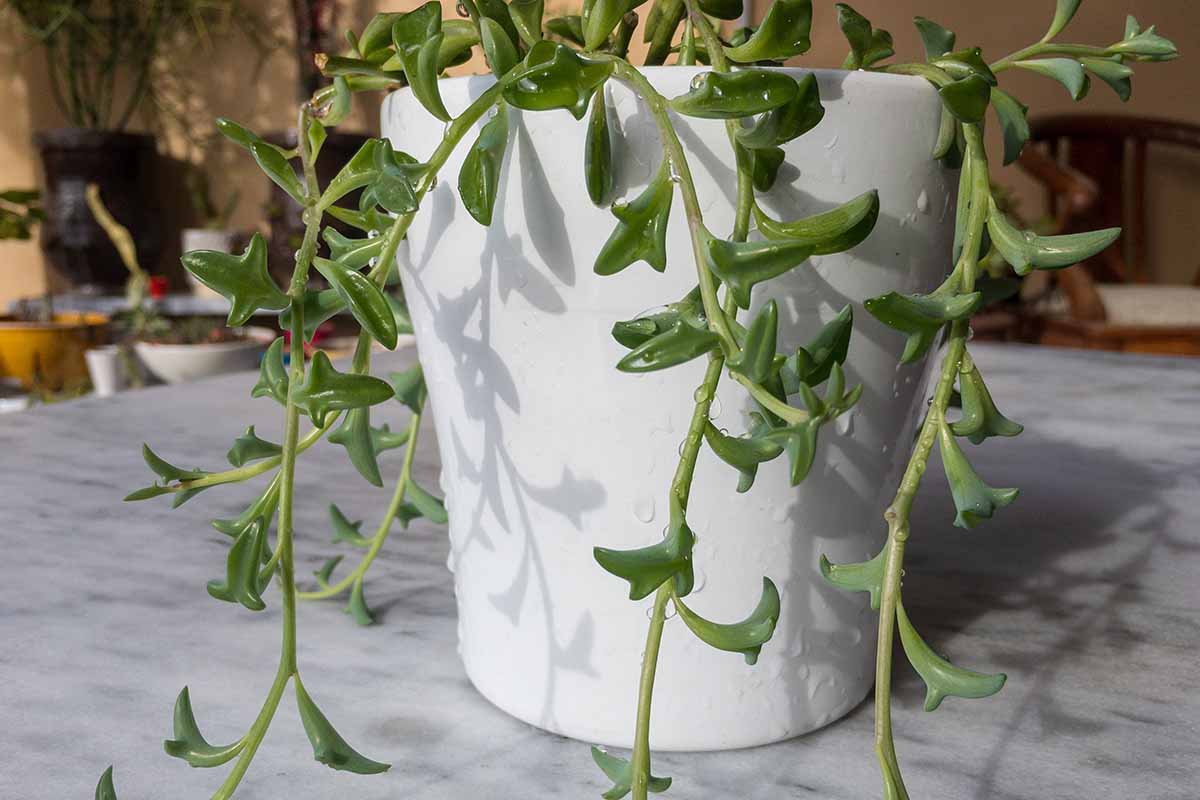
Water-wise and low-maintenance, it grows well as a houseplant when potted in well-draining cactus and succulent soil, placed in bright, indirect sunlight, and watered when the container completely dries out.
Isn’t it time to add dynamic cascading flora to your indoor garden?
Are you growing string of dolphins? Please share your tips in the comments section below.
If you found this article informative and want to learn about more trailing succulents, we recommend the following: