
Peas are vulnerable to a range of common garden pests that can damage or destroy your crop if left unchecked.
From aphids and cutworms to larger threats like deer and birds, these pests target pea plants at every stage of growth.
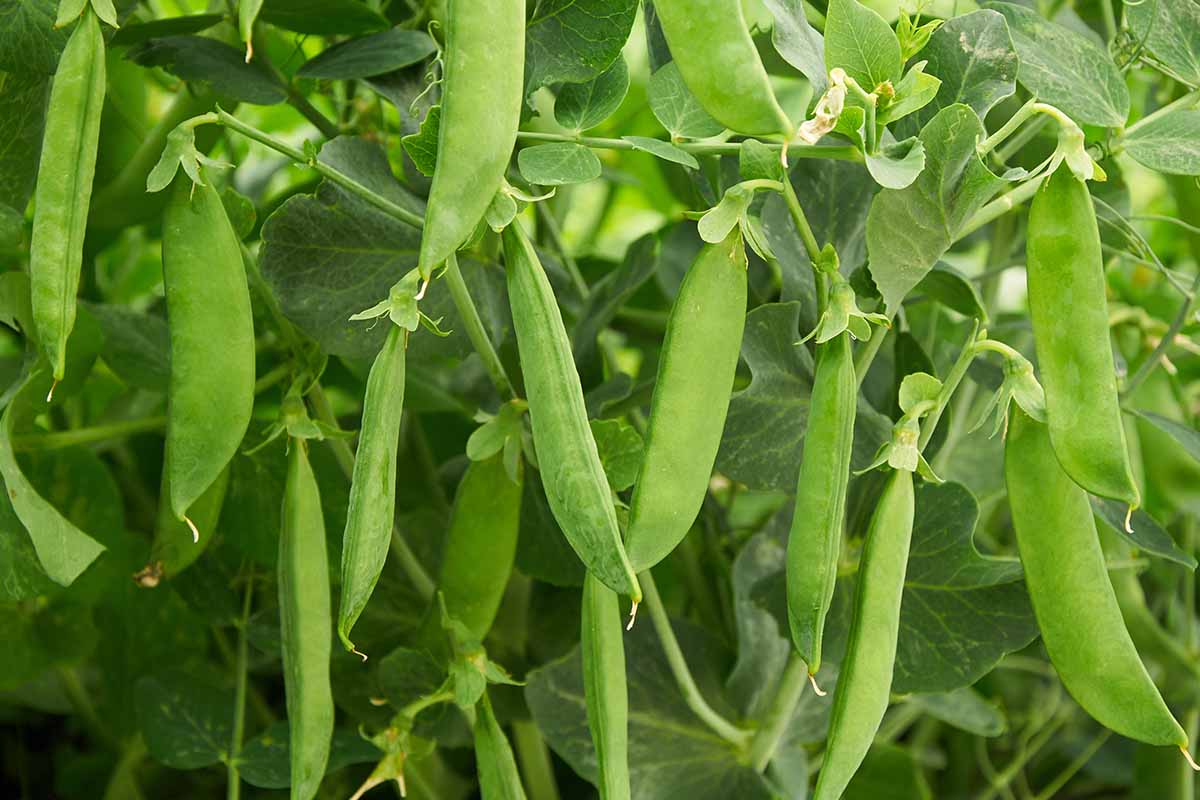
Picture biting into a sun-warmed pea pod, sliding out that plump seed, and savoring the sweet, juicy burst of flavor.
Unfortunately, we’re not the only ones who find fresh peas irresistible.
We link to vendors to help you find relevant products. If you buy from one of our links, we may earn a commission.
Cutworms mow through young seedling stems, aphids cluster on tender shoots, and slugs nibble leaves under cover of darkness.
Whether you’re growing snap peas, snow peas, or shelling varieties, you’ll likely encounter at least a few of these pests in your garden.
The good news? Most can be managed effectively once you know what you’re dealing with.
15 Common Pea Pests
The type of pests you’ll face largely depends on where you live and what time of year you’re growing.
For example, when I grow peas in the wintertime, I don’t have to worry about stink bugs, but slugs are a huge problem.
Southern growers have to deal with southern green stink bugs (Nezara viridula), while those in northern climates don’t have to worry about this pest, for example.
No matter where you live, you can help deter pests by keeping your garden ecosystem healthy.
That means biodiversity to attract lots of beneficial insects, keeping weeds at bay, regularly rotating crops, enriching the soil with well-rotted compost, and avoiding the overuse of chemical pesticides and herbicides.
So, with all that out of the way, let’s start with one of the most common pests:
1. Aphids
Whether you know them as aphids or plant lice, these pests (Aphis spp. and Macrosiphum spp.) are extremely common.
Not just on pea plants but all kinds of species, from roses to cucumbers.
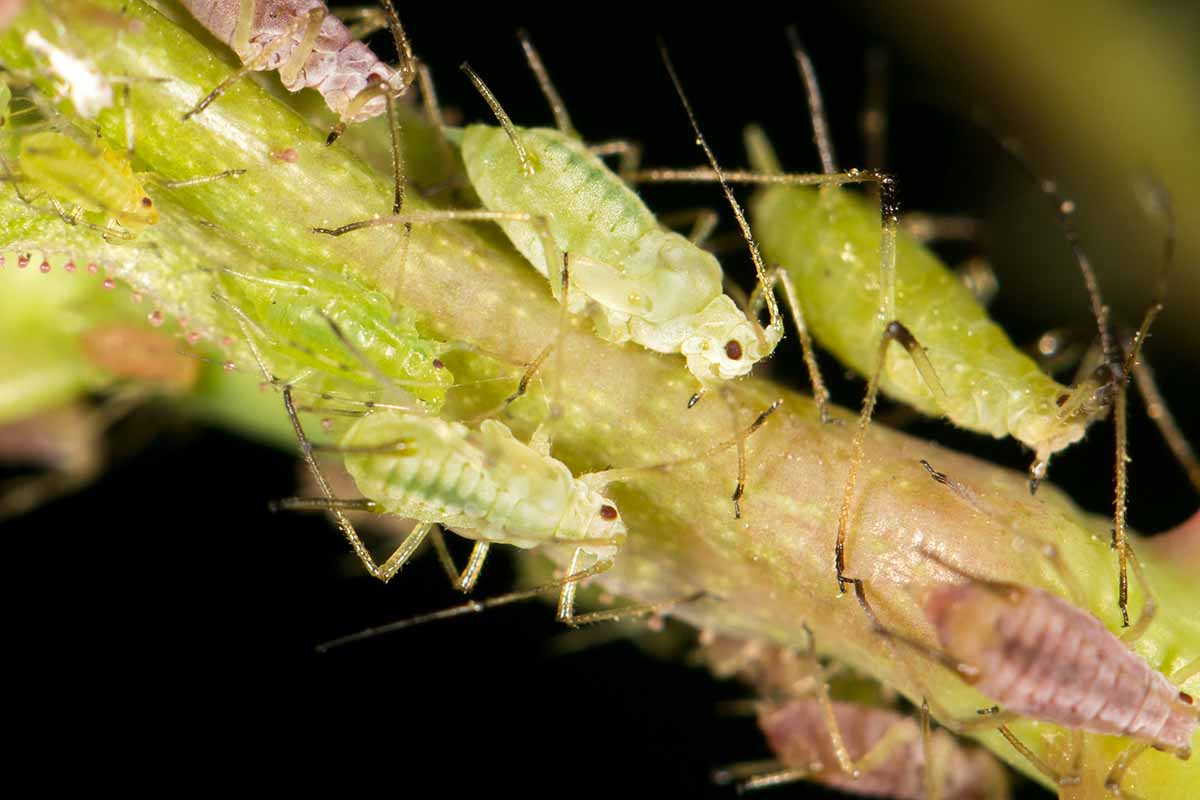
These small yellow, pink, green, black, brown, or tan insects use their sucking mouthparts to feed on plant sap.
As they feed, it can cause yellow speckling on the leaves, though in larger populations, they can stunt or even kill a plant. Plus, they spread diseases.
You’ll likely be dealing with them at some point if you garden for any length of time.
Our guide to dealing with aphids covers everything you need to know!
2. Bean Beetles
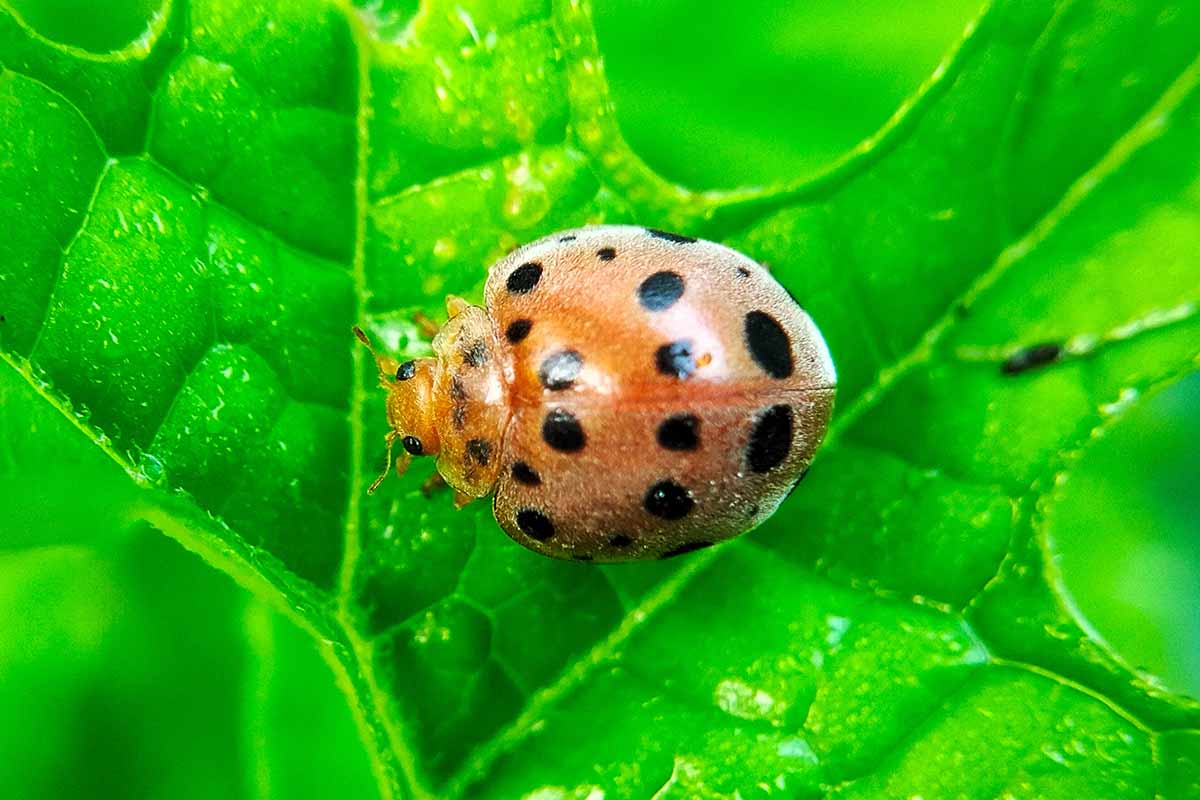
The Mexican bean beetle (Epilachna varivestis) is an invasive pest that mostly affects gardeners in the southern parts of the United States, as well as the eastern side of the Rockies, and in Mexico.
They are less commonly found as far south as Guatemala and as far north as Canada.
These pests reached the US sometime in the 1800s and primarily favor crops like soybeans and lima beans, but will nibble on your peas, too.
Bean leaf beetles (Cerotoma trifurcata) are similar, but they’re native to the US. As winters warm, they’re becoming much more common and problematic for growers.
The light yellow larvae of Mexican bean beetles have distinct branched spines all over their backs and sides.
As they mature, they grow up to a third of an inch and turn pale green. The larvae of bean leaf beetles are pale yellow and look like worms. They’re about the same length.
They pupate and emerge as quarter-inch-long orange-brown beetles with black spots, while bean leaf beetles can also be greenish-yellow.
At first glance, you might mistake them for ladybugs.
To tackle bean beetles, start by removing any good overwintering spots like leaf litter and dead weeds so the adults have nowhere to hide.
Then, in early spring, get out there and clean up again. You might even lightly rake the surface of the soil to expose the beetles to hungry birds and other predators.
Examine your plants regularly and crush any egg clusters you find. Keep any weeds in the legume family far, far away from your crops.
If all else fails, a spinosad-based insecticide can be effective, but keep in mind that it can also kill beneficial insects, so don’t rely on this as your sole method of control.
Something like Bonide’s Captain Jack’s Deadbug Brew will work great. It’s one of my go-tos when I have to break out the insecticides.
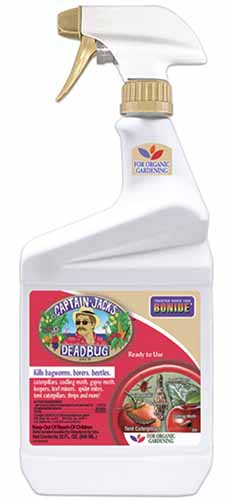
Bonide Captain Jack’s Deadbug Brew
Grab yourself some Captain Jack’s Deadbug Brew at Arbico Organics.
Fall or early spring crops aren’t usually troubled by this pest.
Learn more about managing Mexican bean beetles here.
3. Cabbage Loopers
Cabbage loopers (Trichoplusia ni) are the larvae of grayish-brown night-flying moths.
These small caterpillars grow up to half an inch long and they are greenish with thin white lines running down the sides and back.
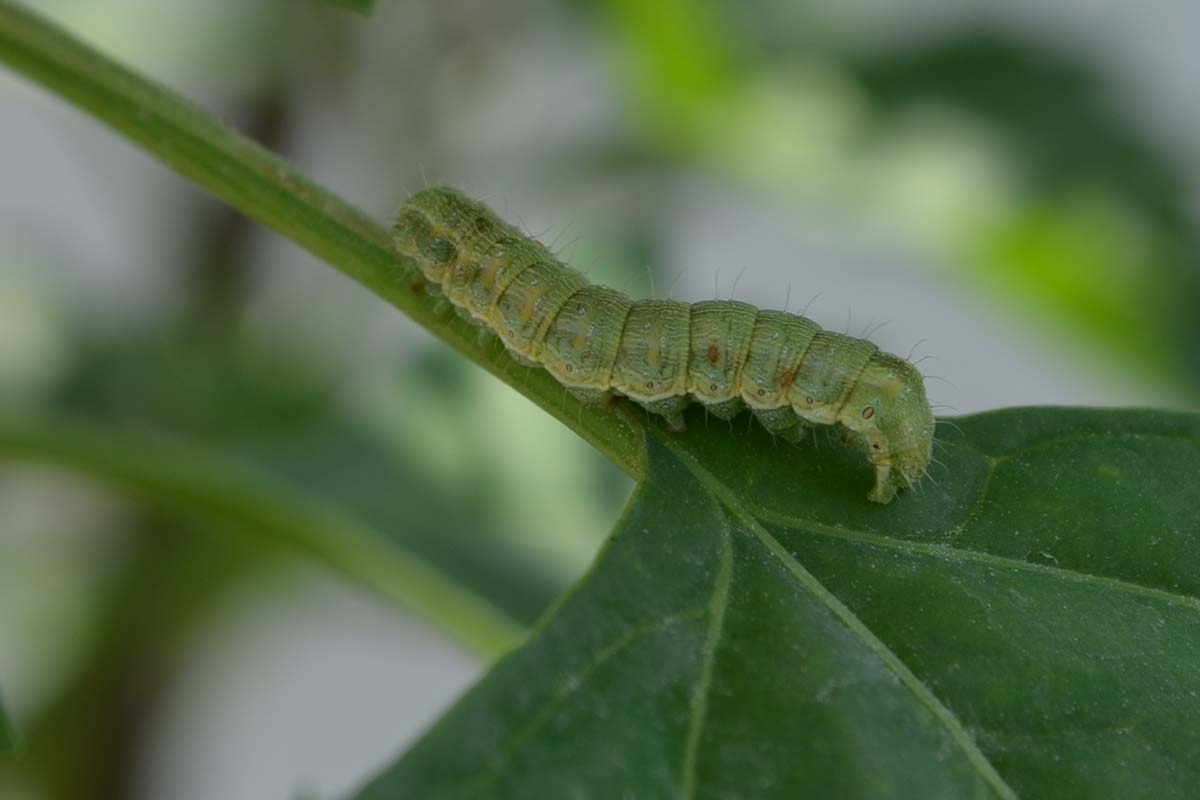
Their feeding leaves ragged holes on the foliage.
They prefer brassicas and they mostly stick to foliage, so they’re mostly a cosmetic problem on peas. But a large infestation can stress a plant and reduce yields.
If you see them, feel free to pluck them off and toss them to your chickens or into a bit of soapy water.
Pesticides harnessing the power of Bacillus thuringiensis are highly effective if you have a large infestation.
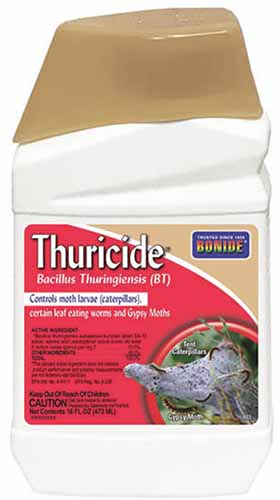
You can find Bonide Thuricide available at Arbico Organics.
You can learn more tips for identifying and treating cabbage loopers here.
4. Corn Earworms
Throughout North America, except for the coldest areas in the far north, the corn earworm (Helicoverpa zea) is a menace, feeding on dozens of species, including peas.
They damage foliage and tunnel into the pods and feed on the peas inside.
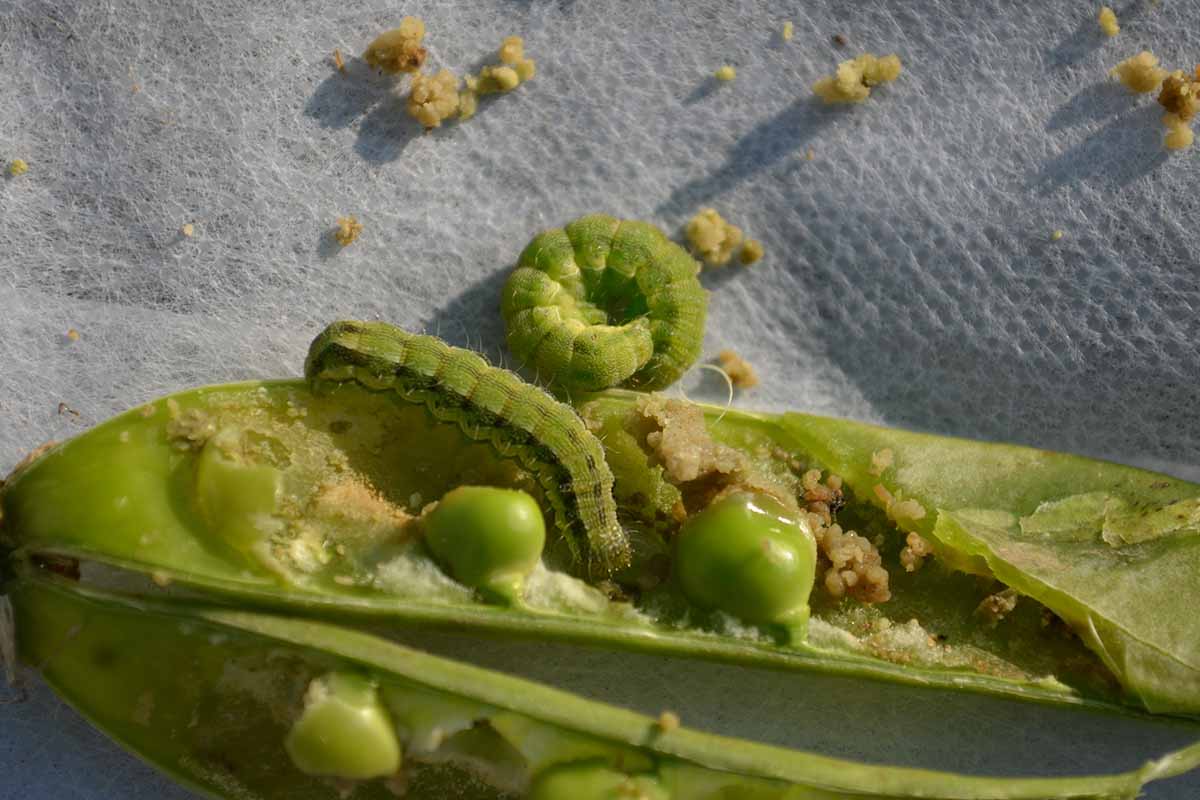
If you live in the Pacific Northwest like I do or in the warmer states south of the 40th parallel, you’re in the danger zone.
Even worse, if you live in a tropical or subtropical climate, they can breed and feed year-round!
Since their lifecycle is complete in just 30 days, there can be seven or more generations each year.
The adults are yellow, brown, or cream, with spots and darker areas. They prefer corn as their hosts, but they will lay eggs on other plants, with up to 3,000 eggs per adult.
In three or four days, the eggs hatch and larvae emerge. The larvae are yellow, pink, green, or brown with cream stripes and black spots.
They feed on the plant for up to four days and then drop to the ground to pupate in the soil. This stage takes about two weeks.
The moths fly off to feed, mate, and lay eggs before dying within a few weeks.
Birds, lady beetles, big eyed bugs, green lacewings, and Trichogramma wasps are all important predators, but they likely won’t keep populations entirely under control.
Products containing Bacillus thuringiensis can also be helpful, though they should be used in conjunction with other control methods like beneficial nematodes.
Steinernema kraussei will kill the larvae in the soil.
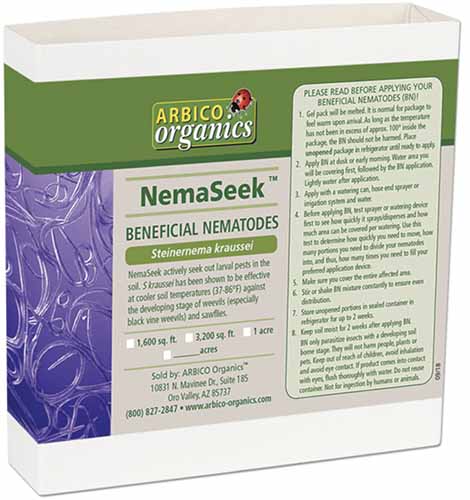
Grab five, 10, 50, 250, or 500 million at Arbico Organics and follow the manufacturer’s directions closely.
Using corn as a trap crop works extremely well, so if you don’t mind sacrificing some ears, plant some corn within 100 feet or so of your peas.
5. Cowpea Curculio
The cowpea curculio (Chalcodermus aeneus) prefers to eat beans, and especially cowpeas, but it won’t say “no” to a pea snack.
While they cause significant damage to beans, they’re more of a casual pest of peas.
The adults are oval, black beetles with a faint bronze sheen. They overwinter in the ground and emerge in late spring to feed during the cool parts of the day.
The adults will feed on the pods and foliage, while the larvae only feed inside the pods. You might not even know there is damage until you open up the pod.
Rotate your crops and keep weeds like cutleaf evening primrose (Oenothera laciniata), sheep sorrel (Rumex acetocella), and vetch (Vicia spp.) away from your garden, since they are hosts for cowpea curculios.
A biopesticide that contains Beauveria bassiana, which is a beneficial fungus, is effective in killing the adults.
The fungus causes white muscardine disease beetles like cowpea curculios without harming beneficial insects like bees and butterflies.
The spray is harmless to plants, and treated produce is safe to eat right away, even on the day of application.

Arbico Organics carries a powder that can be mixed with water to create a spray called BioCeres WP. Pick it up in pound bags.
6. Cutworms
Cutworms are larvae of night flying moths in the Noctuidae family, the same ones that flap around your porch lights at night.
They exist on every continent in every area except Antarctica.

Adult moths lay eggs on plants, which hatch into grubs that can reach up to two inches long.
Since cutworms vary dramatically in appearance, the easiest way to identify one is to poke it gently – if it curls into a C shape, you’ve found your culprit.
These grubs emerge from the soil at night to chew through the herbaceous stems of young plants at ground level.
A healthy pea seedling in the evening can be toppled and dying by morning.
Learn more about cutworms here.
7. Herbivores
Deer, rabbits, voles, mice, and gophers all love the tender leaves, tendrils, flowers, and stems. I’ve watched deer devour an entire pea plant down to the ground.

Growing in containers is the best defense against underground pests like gophers, while fencing or row covers works better for deer and rabbits.
We have an entire guide on effective methods for protecting your garden from deer and a separate one for dealing with rabbits.
8. Japanese Beetles
Japanese beetles (Popillia japonica) are serious pests, even if their jewel-like iridescent green, brown, and bronze bodies make them surprisingly attractive.
Don’t let the pretty exterior fool you – these beetles can devastate a garden.

In large numbers, they’ll skeletonize entire plants, and they won’t stop at peas.
They’ll move on to roses, apples, cherries, hollyhocks, marigolds, basil, and soybeans. The grubs also feed on turfgrass roots.
It’s alarmingly easy to end up with huge populations because when one beetle finds food, it releases a pheromone that alerts every other beetle in the area.
They can quickly turn a healthy plant into a sickly, stunted, or dead one.
Learn about how to deal with Japanese beetles here.
9. Leaf Miners
Leafminers are small flies that lay eggs on pea plants.
When the eggs hatch and the larvae emerge, they tunnel through the leaves as they feed, leaving maze-like trails of dead tissue behind.

Pea leafminers (Liriomyza huidobrensis) originated in South America but have spread throughout the warmer parts of North America.
But there are other species that feed on peas and they appear in every part of North America except northern Canada.
It’s not just that the tunnels are unsightly. The feeding can lead to reduced yields.
Learn how to deal with leaf miners here.
10. Pea Moths
Pea moths (Cydia nigricana syn. Laspeyresia nigricana) aren’t widespread, but they’re particularly problematic because you won’t know they’re present until it’s too late.
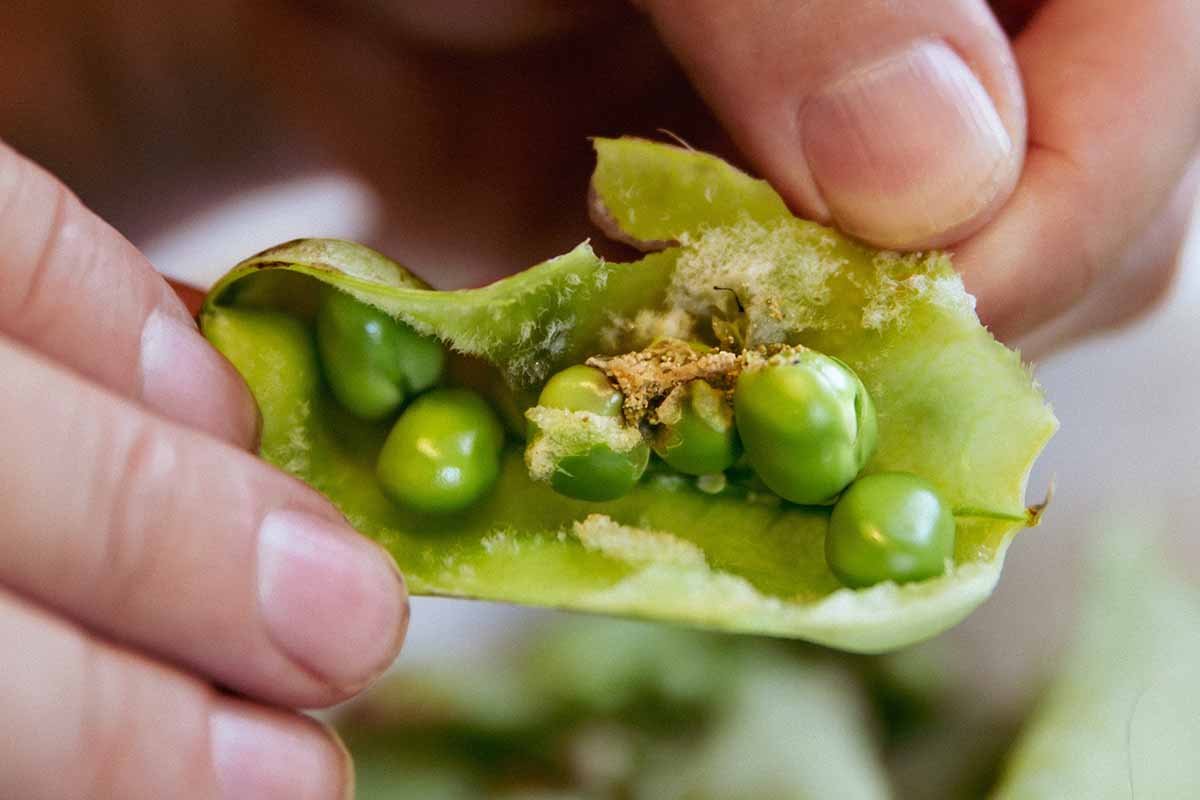
The first sign is usually when you shell your peas or bite into a snap pea and discover half-inch white caterpillars wriggling inside, or evidence of their feeding – holes in the seeds and frass.

Left undisturbed, these caterpillars drop to the ground to overwinter. In spring, they pupate and emerge as half-inch grayish-brown moths.
The adults mate and lay eggs on pea plants, and when those eggs hatch, the larvae tunnel into developing pods to continue the cycle.
To control pea moths, start by removing any weeds in the legume family from around your garden. When the garden bed is fallow, till the top inch of soil to expose overwintering larvae.
You can’t effectively spray insecticides because the larvae are protected inside the pods, but you can apply kaolin clay to plants in spring as a deterrent to adult moths.

Snag 25 pounds at Arbico Organics and follow the manufacturer’s directions for spraying plants.
11. Pea Weevils
Pea weevils (Bruchus pisorum) are misnamed – they’re actually leaf beetles, not true weevils, though they certainly do feed on peas.
These beetles arrived in North America from Europe in the 1600s and now occur throughout the continent except northern Canada. They’re incredibly damaging and difficult to control.

The adults are oval-shaped beetles up to seven millimeters long with mottled cream, brown, and black shells.
Females lay bright yellow, cigar-shaped eggs on developing pea pods.
When the eggs hatch, cream-colored, C-shaped larvae burrow into the pods and tunnel directly into individual seeds, where they feed and develop.
Unlike true weevils, the larvae lack a distinctive snout, though they do have brown heads and grow to about five millimeters long.
The larvae pupate inside the seeds, then tunnel out as adults, leaving ruined, inedible peas behind.
Adult beetles feed on leaves, flowers, and pods before overwintering in bark or leaf debris. They emerge in spring to lay eggs and repeat the cycle.
Commercial growers sweep through their crops with a net to monitor for adults, and you can do the same. They fall off of the plant readily. Start sweeping as soon as flowers develop.
To avoid pea weevils, plant and harvest early in spring or grow a fall crop.
Trap crops can also be effective – plant early-flowering cultivars like ‘Sherwood’ or ‘Ashton’ to draw adults away from your main planting.
Don’t confuse them with pea leaf weevils, which we’ll talk about separately.
Biological control is difficult, so you’ll need to rely on cultural control methods like crop rotation and early planting.
Check out our guide to pea weevils to learn more.
12. Slugs and Snails
Even casual gardeners have encountered slugs and snails, and these mollusks seem particularly fond of peas.
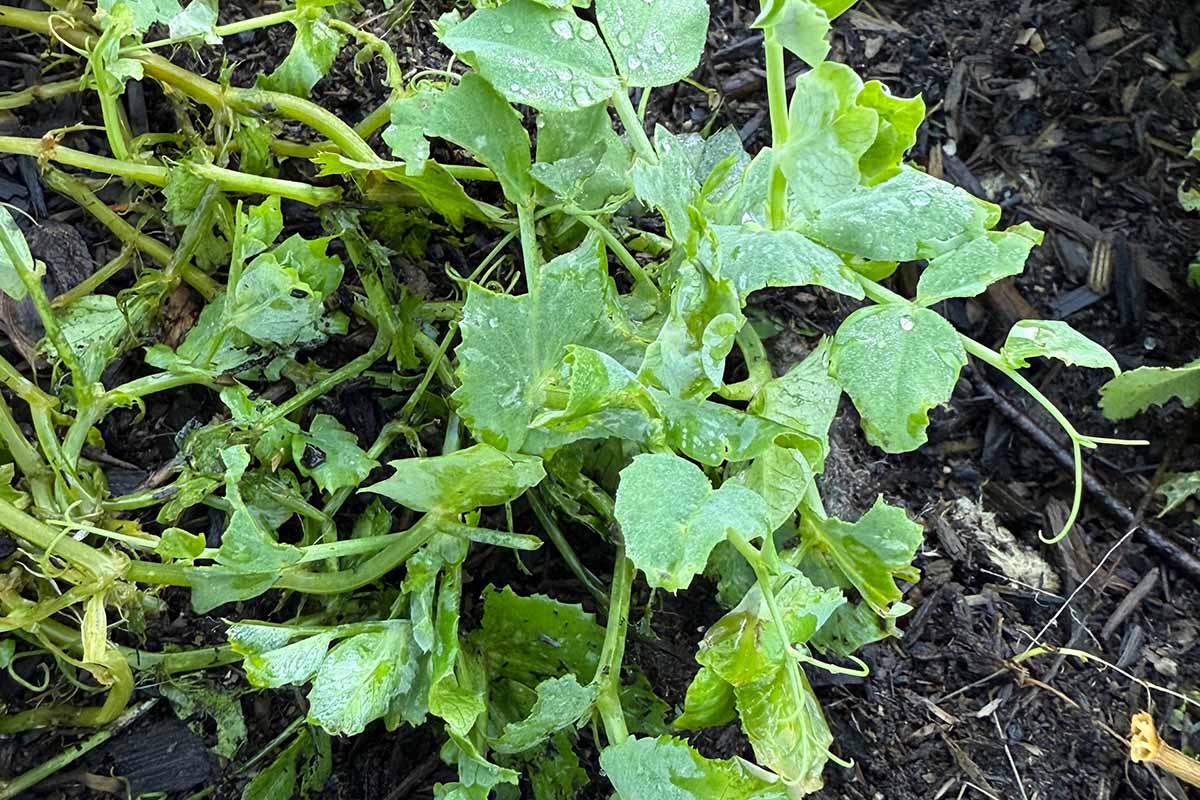
During wet weather, they can devour entire plants in a day or two. Missing leaves or jagged sections chewed from leaf edges are telltale signs of their presence.
There are numerous ways to control slugs and snails, which we cover in our dedicated guide.
One remarkably effective method requires no chemicals at all. Associate Professor Rory McDonnell and researchers at Oregon State University discovered that slugs are obsessed with bread slurry – they’ll choose it over their favorite plants, commercial baits, or beer traps.
During trials, the researchers captured over 18,000 slugs in just 48 hours.
To make your own trap, mix one cup of flour, one cup of water (or slightly more as needed), and one packet of yeast.
Pour the mixture into a container and bury it so the rim sits just above the soil surface.
If you have pets or chickens, cover the trap with chicken wire to keep them out. Empty and refill as needed, depending on how many slugs you catch.
If you maintain a sourdough starter, you already have a ready supply of effective slug bait.
13. Spider Mites
Spider mites can be frustratingly persistent, and for such tiny creatures, they cause disproportionate damage.
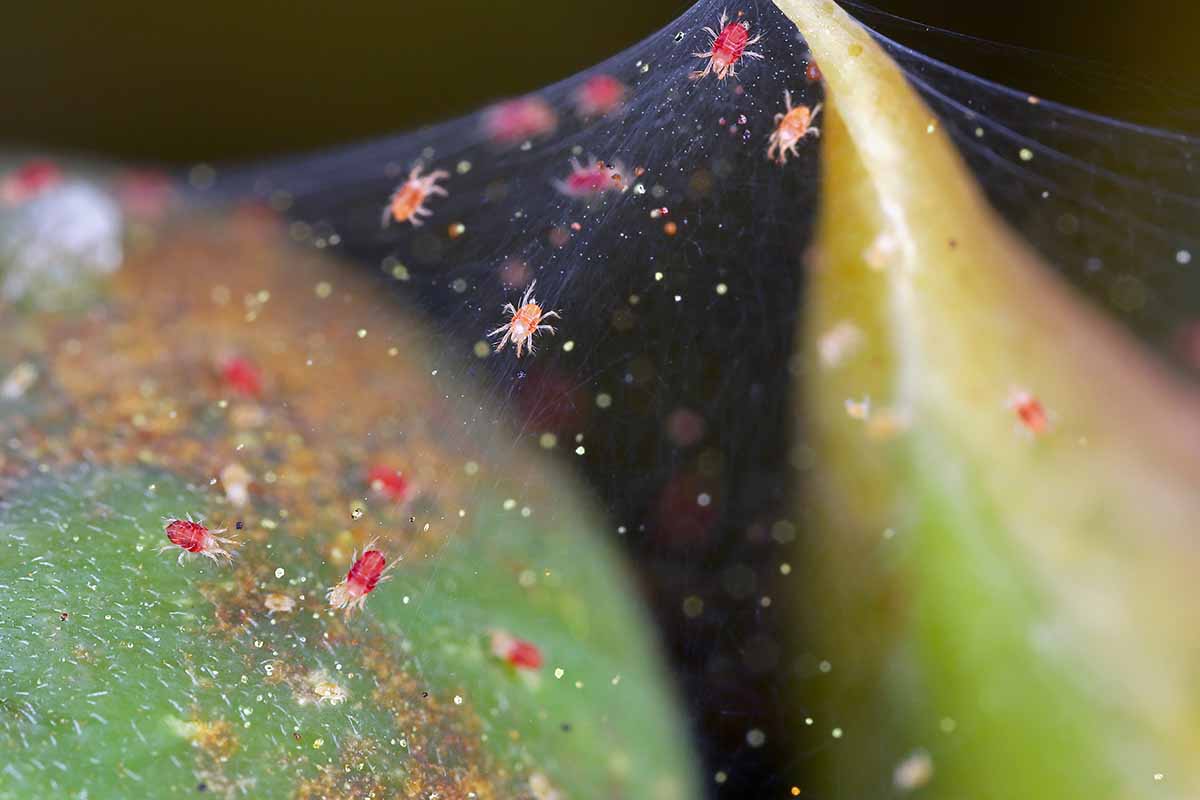
These arthropods use sucking mouthparts to extract chlorophyll from leaves, causing yellowing and stunted growth.
The two-spotted spider mite is the most common species on peas, though dozens of spider mite species can attack them.
Infestations are especially common during hot, dry weather. You’ll notice yellowing leaves with fine stippling and delicate webbing stretched across the plant.
Hosing plants off regularly increases moisture and physically removes the mites, which can significantly reduce populations.
For heavier infestations, you may need insecticidal soap, horticultural oil, or other controls.
Our guide to spider mites has details.
14. Stink Bugs
Southern green stink bugs (Nezara viridula) and brown marmorated stink bugs (Halyomorpha halys) feed on all parts of the plant at both the nymph and adult stages.
Both use piercing-sucking mouthparts to stab into plant tissue and extract juices, leaving behind dimples, shriveled areas, and dark spots.
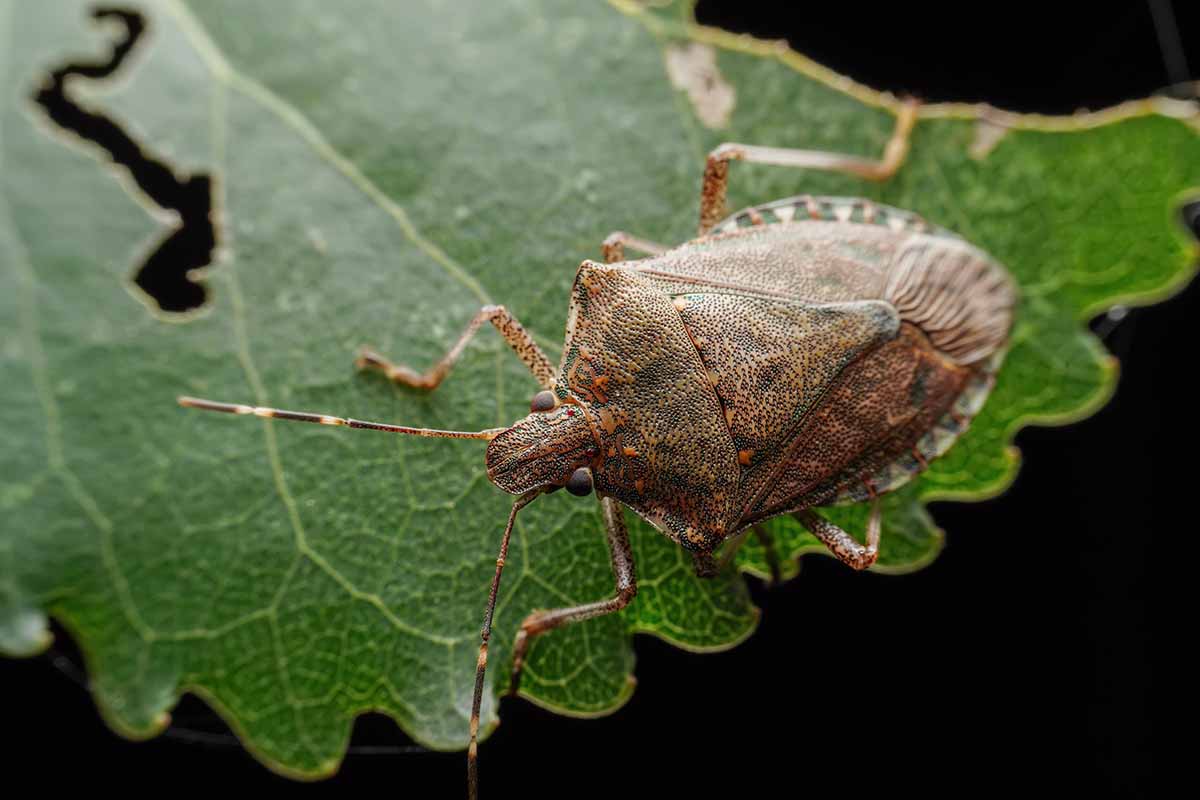
There can be several generations per year, particularly in warm regions.
Adults lay eggs in spring, which hatch into nymphs that eventually mature into shield-shaped adults – green or brown depending on the species.
Keep your garden free from weeds and fallen debris to eliminate hiding spots.
Planting strongly scented species like chrysanthemum, garlic, and lavender can also help deter stink bugs – I guess stinky doesn’t like stinky?
There are also organic pesticides that can help suppress populations.
Check out our guide to managing stink bugs to learn more.
15. Thrips
Thrips are tiny, sap-sucking insects that feed on numerous plant species.
In Europe, pea thrips (Kakothrips pisivorus) specialize on legumes, but dozens of species in the order Thysanoptera attack peas.
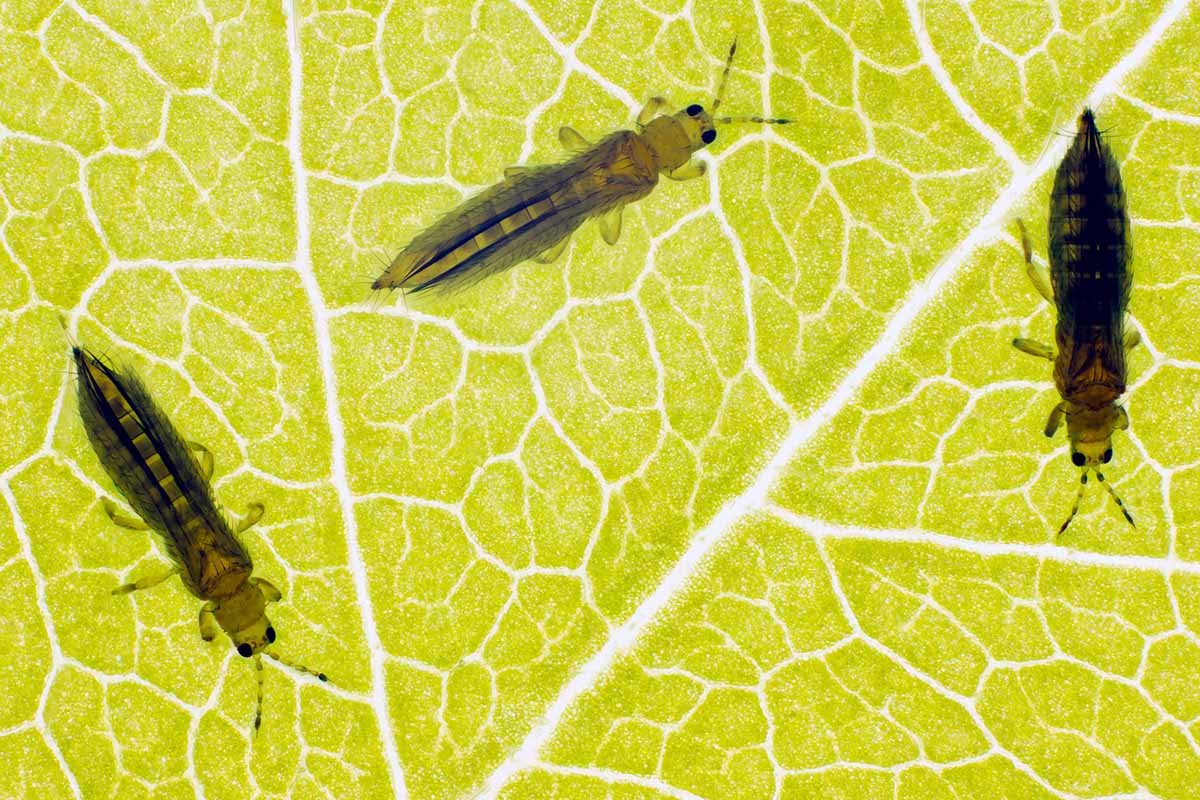
These pests are roughly one millimeter long and cigar-shaped, ranging in color from nearly white to black.
Thrips use rasping, sucking mouthparts to scrape plant surfaces and feed on the sap beneath, causing discoloration and scarring.
They also carry and transmit pathogens that can cause serious problems.
These pests typically hide in flower parts or where leaves meet stems, making them difficult to control.
Unfortunately, they can be hard to control, but we have a full guide to set you up for success.
Please Leave My Peas Alone!
Pests are a part of gardening. They’re always going to be around, as gardeners we’ve got to learn how to deal with them effectively.
When it comes to peas, there’s quite a bit we can do to prevent infestations and when they do finally rear their ugly heads, I hope you now feel confident in dealing with the problem.
What pest issue are you currently dealing with? Are you having trouble narrowing it down?
Feel free to leave your questions in the comments and we’ll try to help. Don’t forget to include pictures of your plant if you can!
And for more information about growing peas, check out these guides next:



Good post! We will be linking to this particularly great post on our site. Keep up the great writing