

Ficus elastica
Have you ever seen a plant that was so incredible that you had to touch it to convince yourself that it wasn’t artificial?
That’s the rubber tree.
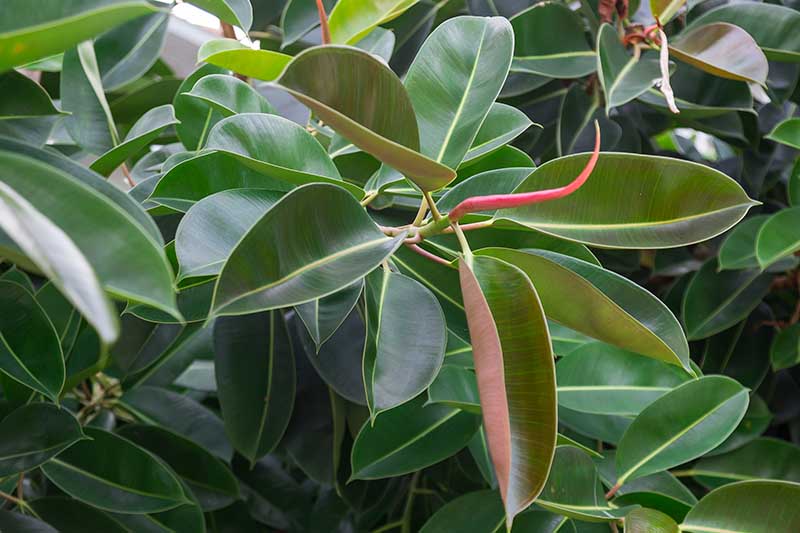
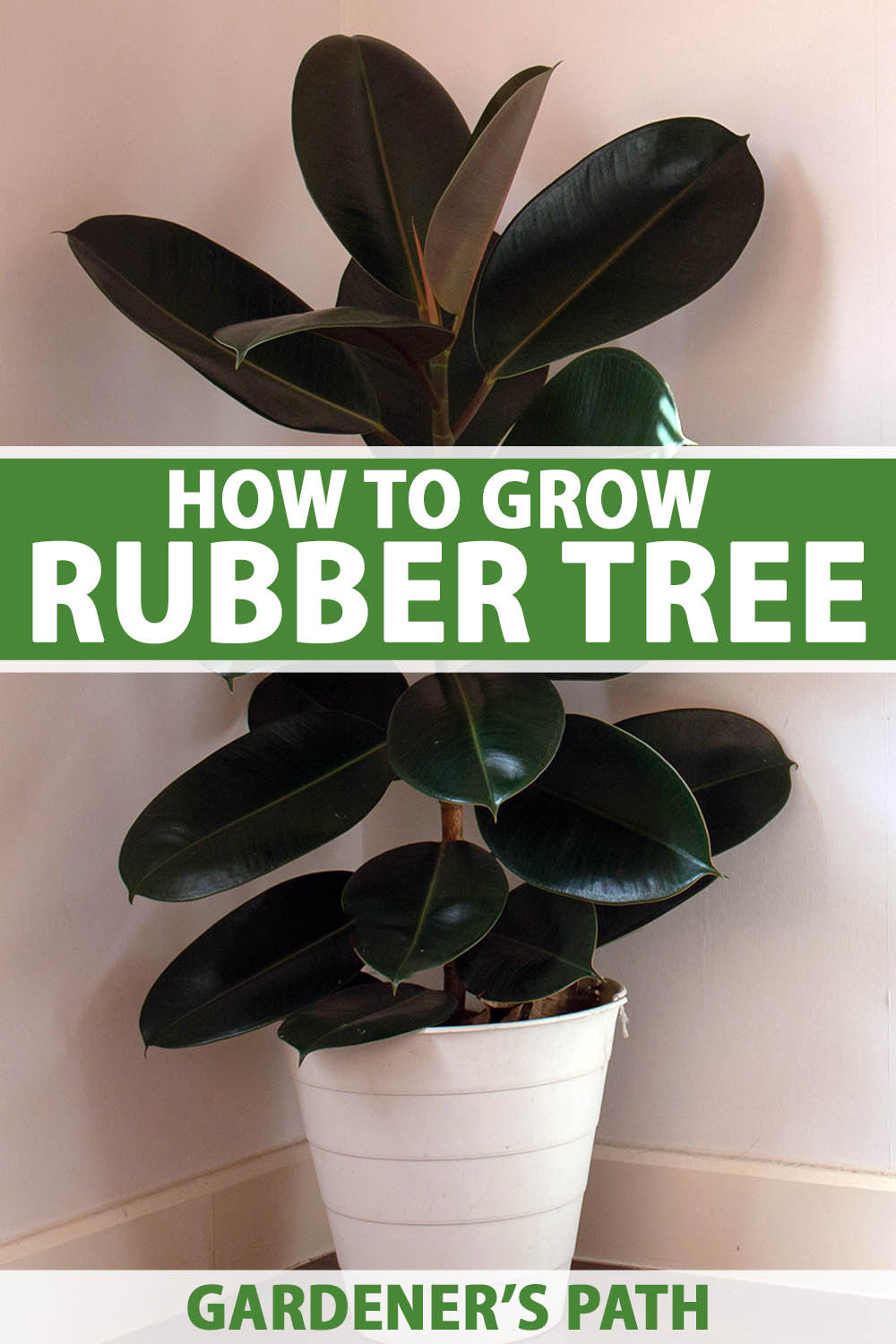
Its gorgeous, uniformly large, waxy leaves and amazing colors – variegated green and white, burgundy, nearly black – will beckon you to touch them.

We link to vendors to help you find relevant products. If you buy from one of our links, we may earn a commission.
Rubber tree is in the Moraceae family, and belongs to the Ficus genus, also known as the fig-bearers.
Ficus plants of various types are grown all over the world, and it’s not difficult to tell why. Somehow, they manage to be beautiful, tough, and graceful, all at the same time.
This plant has been known as a symbol of good luck and good fortune; will it be lucky for you? Get ready to learn all about the rubber tree!
What You’ll Learn
In the tropical forests between India and Indonesia, the rubber tree grows wild.
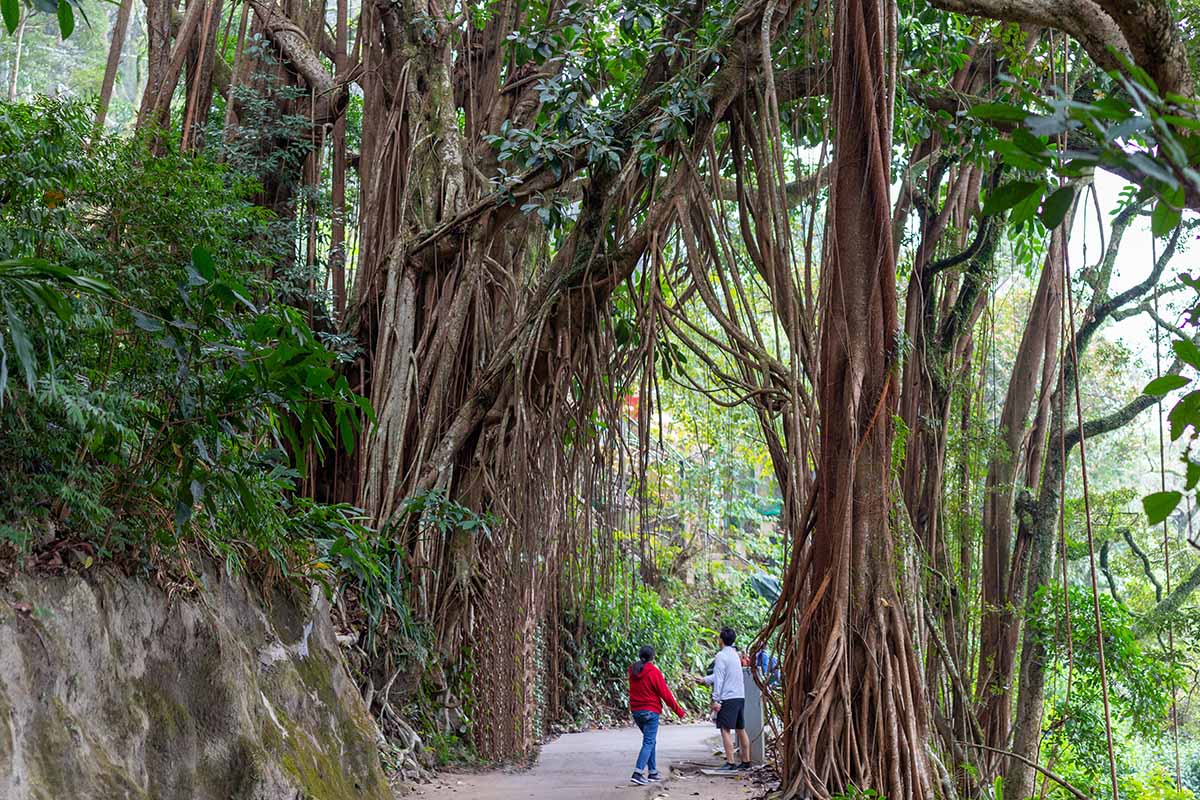
Sometimes called rubber fig or rubber bush, in its native environment, this tree can grow over 100 feet tall, branching and sprawling through the forest freely, creating shelter for animals and humans alike.
Historically, rubber trees have served two important purposes to the people in the region.
The latex, or milky sap, that bleeds from the bark when punctured, was once tapped and processed to make rubber.
Quick Look
Common name(s): Rubber tree, rubber fig
Plant type: Broadleaf evergreen
Hardiness (USDA Zone): 9-11 (outdoors)
Native to: India, Indonesia
Exposure: Indirect or filtered sunlight
Soil type: Loamy, well-draining
Soil pH: 5.5-7.5, slightly acidic to neutral
Time to maturity: 10-15 years
Mature size: 3-12 feet tall and wide indoors, 50-100 feet tall and wide outdoors.
Best uses: Houseplant (excellent gift or starter plant)
Taxonomy
Order: Rosales
Family: Moraceae
Genus: Ficus
Species: Elastica
This type of rubber is now obsolete, replaced by that of the Amazonian rubber tree, H. brasiliensis, which is easier to tap and produces more sap.
Another historical use for the rubber tree was as a material for living bridges.
These astounding bridges were created by training the roots of the trees to grow along fallen logs that were placed across ravines and rivers.
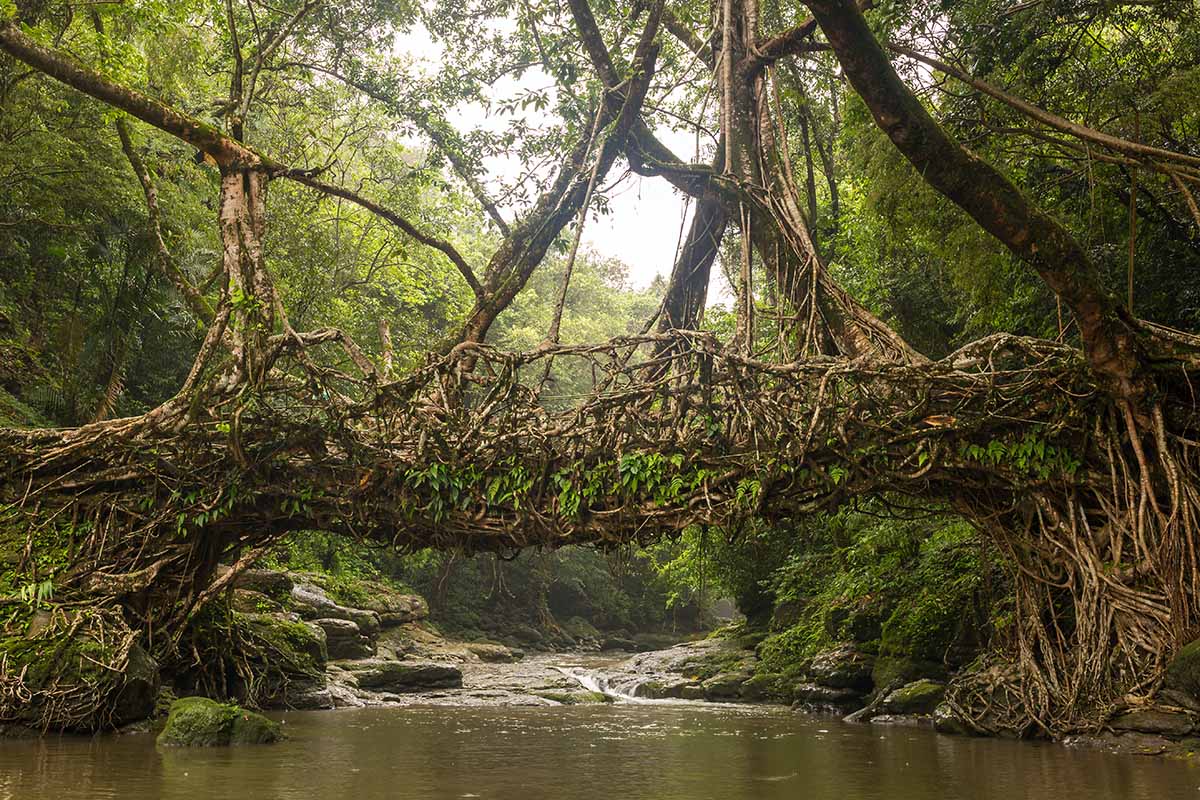
The roots are extraordinarily tough and highly flexible, so these bridges sometimes survived for hundreds of years.
Rubber tree is also known as a banyan plant, a part of the epiphyte or strangler fig family.
When given ideal growing conditions, this plant can overtake an area with buttressed roots that spread for hundreds of feet in some instances.
Roots can even grow aerially, reaching between trees.
Because the roots are so prolific, they can quickly become overgrown and “strangle” other plants, including large trees.
Some specimens have been grown so large that they were used as makeshift temples for religious ceremonies in their native region.
With shade loving tendencies, low maintenance requirements, and easy propagation, it’s not hard to see why rubber trees are popular houseplants.
This cousin to the beloved fiddle-leaf fig is commonly chosen as a part of modern decor for its structured growth habit and eye-catching focal interest.
As an evergreen tropical, it can add a living dimension to your home year-round.
A Note of Caution
Rubber tree sap will readily spill if the bark is damaged or if limbs or leaves are broken, and should be handled with caution.
Not only can it irritate skin, it can be toxic to house pets such as cats and dogs as well, and stains nearly anything it comes in contact with.
How to Grow
Rubber tree is a low maintenance, robust plant that can survive quite a bit of neglect.
Light
Bright, indirect light is ideal for rubber plants. In their natural habitat, they receive filtered, dappled sunlight rather than harsh direct sun.

Place yours near an east-facing window, or set it back a few feet from a south- or west-facing window. You can also use sheer curtains to diffuse intense afternoon light.
Rubber plants can tolerate a few hours of gentle morning sun, but avoid harsh midday rays, which can scorch the large leaves and cause brown spots.
Variegated types need more light than solid green cultivars to maintain their pink, cream, or white markings.
Without enough bright light, the variegation will fade and the plant will produce mostly green leaves.
Soil
Use a well-draining potting mix. A blend of one part each potting soil and peat moss or coconut coir works well.
The soil pH should be slightly acidic to neutral, between 5.5 and 7.5.
Make sure your container has drainage holes. Rubber plants are susceptible to root rot if they sit in waterlogged soil.
Temperature and Humidity
Rubber plants prefer temperatures between 60 and 75°F. They can tolerate slightly warmer conditions up to 85°F, but avoid exposing them to temperatures below 50°F.

Sudden temperature fluctuations stress the plant and can cause leaf drop.
Moderate to high humidity is ideal, between 40 and 60 percent. Because the leaves are so large, they play an important part in maintaining moisture levels.
Mist the leaves a couple of times per month, especially in the winter when indoor heating can create dry air.
Since misting can be messy, you may opt to wipe the leaves with a damp cloth instead. This added moisture can keep leaves healthy and glossy, and maintain moisture levels.
Water
Water when the top inch or two of soil has dried out. Stick your finger into the potting mix and if it feels dry at your first knuckle, add water.
Water thoroughly until excess drains from the bottom of the pot. Let the pot drain completely.
Reduce watering frequency in fall and winter when growth slows. During dormancy, let the top two to three inches of soil dry out before watering again.
Be sure that you do not overwater your rubber tree. Too much water can lead to root rot, dropping or drooping leaves, and poor growth.
Fertilizer
A liquid fertilizer for tropical plants can be added in spring or summer if needed, according to package directions.
Stop fertilizing in fall and winter when growth slows significantly.
Always water the plant before fertilizing to prevent root burn, and occasionally flush the soil with plain water to prevent salt buildup from accumulated fertilizer.

Container-grown rubber trees can be moved outdoors if temperatures are consistently above 50°F.
Be sure to place the tree in a protected place, and shield it from direct sunlight.
Rubber trees can also be grown outdoors in USDA Hardiness Zones 9 to 11 year round.
Plant the tree in an area where it receives indirect sunlight and adequate water, with good drainage.
Avoid planting rubber trees near sidewalks or foundations, as their strong roots can damage both.
Cultivars to Select
There are a number of stunningly unique varieties of rubber tree to choose from, any of which are suitable for container growing indoors.
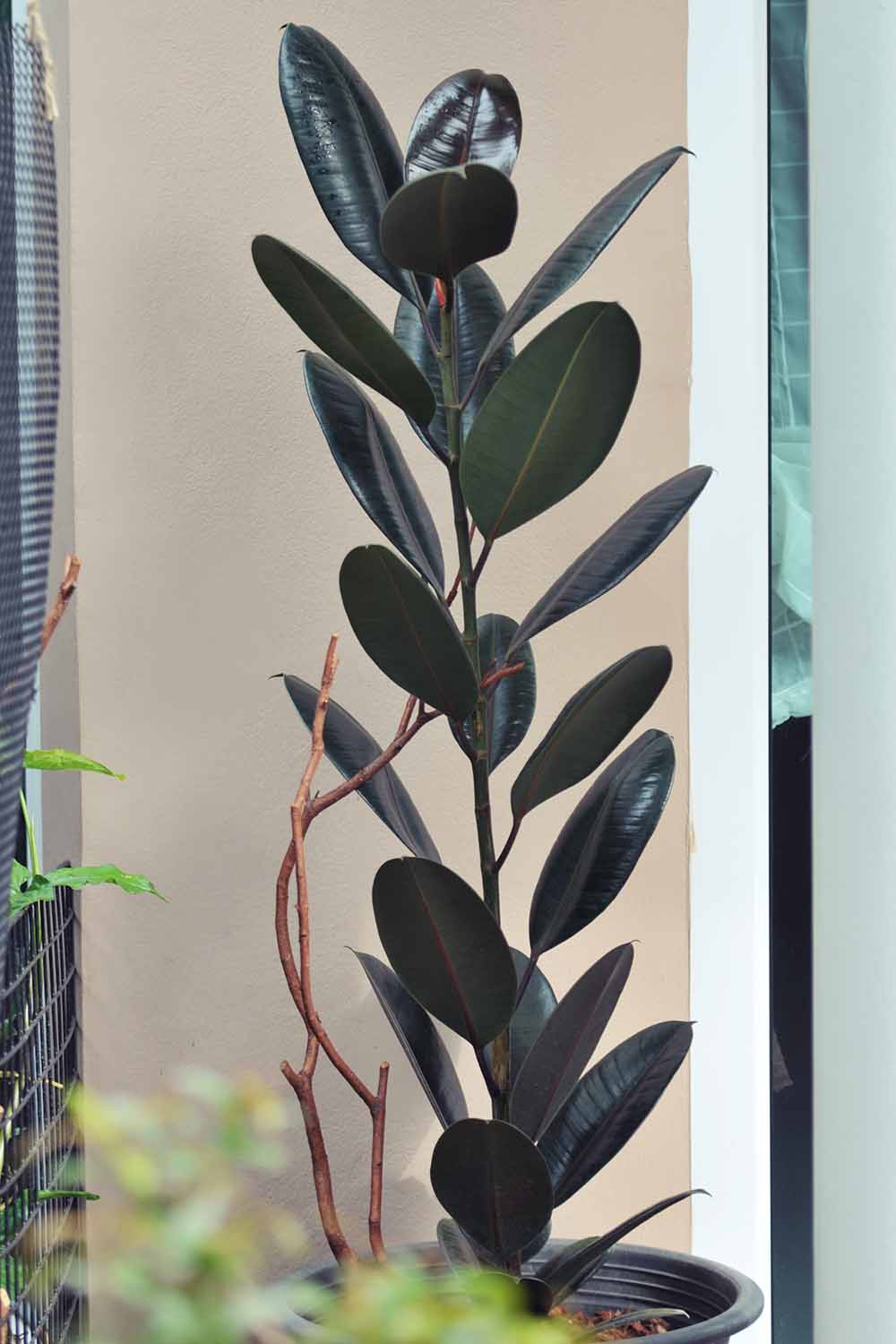
Burgundy
This cultivar offers a true “wow” factor.

As ‘Burgundy’ matures, the leaves, branches, and trunks range from the deepest green and burgundy to almost black, sometimes with red midribs and scarlet-sheathed new growth.
Doescheri
‘Doescheri’ is another variegated variety.

It has leaves that feature shades of creamy white, bright green, army gray, and yellow, mottled together with stunning pink margins.
Robusta
This variety is most closely related to the true species plant that grows natively in Asia and Indonesia.

The leaves are waxy, wide, and bright green to deep green in color. The structure and color of this cultivar is perfect for adding a tropical touch to the home.
Ruby
Similar in structure to other cultivars, ‘Ruby’ is set apart by its unique coloration.
The leaves are oblong and glossy, with a deep green to burgundy upper side, and a pink to deep burgundy lower side.
The branches and trunk can be a shocking bright green, maturing to a deeper green or brown. New growth is sheathed in bright scarlet red.
Tineke
Another variegated cultivar, ‘Tineke’ is similar to other variegated rubber trees, with pink to burgundy midribs, sprouts, and leaf margins.
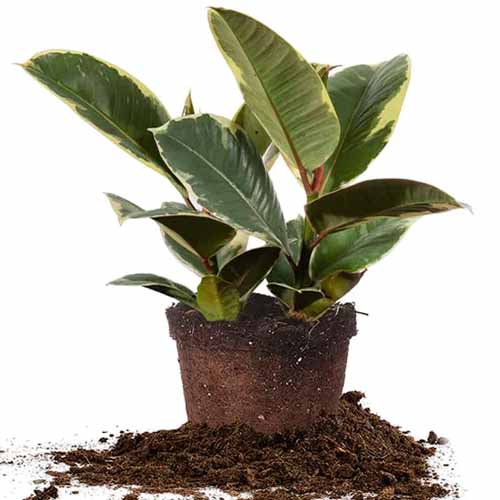
Plants are available from Perfect Plants Nursery.
Tricolor
Young plants of the ‘Tricolor’ variety have variegated cream and white leaves with splotches of pink to orange.

As this plant matures, the coloration leans more toward green and cream, with wide, glossy leaves.
Maintenance
Controlling growth is important for a rubber tree, whether growing indoors or outdoors, as these can become large and dense in ideal growing conditions.

Prune back any limbs that are reaching beyond the desired size and shape of the tree.
Bear in mind that cutting the top of the tree will trigger outward growth, so only do this if the height is becoming an issue, and be sure to monitor unwanted branching and sprawling out.
Use a sharp tool, such as clean pruning shears or a garden knife, and cut just enough of the branch to maintain its shape and size.
Cutting more than is necessary can cause shock and trigger leaf drop, or even kill the plant.
Get more tips on pruning rubber tree plants here.
It’s a good idea to repot every few years as the plant grows and adding new potting medium will help to keep it nourished and healthy.
Choose a container that is one to two inches larger than the previous pot.
Add a layer of soil at the bottom, leaving space for the root system so the top of the roots will be positioned near the level of the rim.
Unpot the plant and use your fingers to gently press downward on any girdled roots from the bottom up, so they separate a bit.
If you see any dead or decaying roots, trim them away.
Place the plant in the new pot, and fill in the edges with soil. Water well to settle.
Propagation
Typically, it’s very easy to propagate a healthy rubber tree.
Be sure to wear gloves to protect your skin and prevent contact with the sap, as it’s a known irritant for some people.
Make sure any tools you’ll be using, such as a knife or shears, are sharp and clean to prevent spreading disease or damaging the plant.
From Cuttings
The best time of year to take cuttings is late spring or early summer, when the plant is actively growing.
Take six-inch stem cuttings and ensure they have three to four leaf nodes.
Strip all but one leaf off the cutting, being careful to avoid touching the sap, as it will ooze from each leaf node.
While you wait for the sap to stop discharging, prepare a six- to eight-inch pot with one part each of potting soil, sand, and peat moss, and moisten.
Press the cutting into the soil one to two inches deep, then wrap the cutting and the pot with a clear plastic bag.
Place the pot in a sunny spot out of direct sunlight, and maintain humidity. An ideal location would be near a bathroom window, unless you’ve got access to a greenhouse.
Cuttings may take between three to six weeks to root.
When the roots have begun to sprout and you observe buds forming at the nodes, you can transplant the cutting to a new 10- to 12-inch pot.
Read our complete guide to propagating ficus from cuttings for more tips.
Air Layering
Air layering takes a little time, but it produces a plant with a strong root system.
Choose a healthy branch that is 10 to 12 inches in length with at least a few leaves present.
Locate a place between two leaf nodes. Use a sharp knife to cut just the bark away between the nodes, cutting all the way around the perimeter of the branch.
After the section of bark is removed, wait for the sap to stop bleeding. Dust the exposed xylem with rooting hormone powder.
Grab a handful of wet sphagnum moss and wrap it around the open wound on the branch.
Use a piece of plastic such as cling wrap or a plastic bag to tie around the moss, sealing in the moisture.
Both ends can be closed using twist ties so you can easily access the moss to check for moisture and watch for root growth.
Open the plastic every few days and check that the moss feels damp. You can squirt a few eyedroppers of water onto the medium to moisten it, and then close the plastic.
Typically, it can take two to four weeks for roots to develop using this method.
When a small root ball has formed, use a sharp knife or pruning shears to cut the branch free from the parent and transplant into an appropriately-sized pot.
Pests and Disease
Even the healthiest, most robust plants can fall victim to infestation and disease from time to time.
Fortunately, these conditions are relatively uncommon in rubber trees, and can usually be treated easily if they do occur.
Pests
A healthy rubber tree is resistant to infestation, but be mindful and keep an eye out for signs that you have unwelcome guests.
Aphids
Aphids are among the most annoying pests as they are indiscriminate, puncturing leaves and sucking sap in surprisingly large amounts.
Signs of infestation be droopy, wilted leaves, spots, or discoloration.
To combat aphids, spray the plant with insecticidal soap, or saturate a rag with it and wipe each leaf from stem to tip, top and bottom.
Check the stems and trunks carefully, and reapply as needed until signs of infestation are gone.
Find more information about controlling aphids here.
Mealybugs
Mealybugs are white in appearance, with ridges along their bodies and a fringe on either side.
They typically measure less than a quarter of an inch in length, and most frequently hide under leaves or along the midribs near the stem.
To get rid of mealybugs, apply rubbing alcohol to a cotton ball and rub it over the insects.
Use an insecticidal spray that is safe for home use or spray with neem oil every two to three weeks as needed.
Read more about fighting a mealybug infestation here.
Scale
Adult scale insects have no legs and resemble tiny armored leeches. When gathered in colonies, they look a bit like fish scales.
They are mostly immobile, attached to the leaves, sucking sap. They produce a white, powdery substance on leaves, which can be obvious on rubber plants.
Eventually, foliage may begin to droop or fall off, and you may see black sooty mold appearing on the leaf surfaces.
Spray plants with neem or horticultural oil according to package instructions, being sure to coat the leaves, both top and bottom. The oil will suffocate the insects.
Read more about identifying and controlling scale insects here.
Spider Mites
Spider mites are tiny arachnids, that are difficult to spot. You will usually see the fine webbing they leave behind.
These pests often gather underneath leaves, so they can go completely unnoticed while sucking the sap from plants.
You may notice silver or bronze discoloration and speckling of a brown or black color on leaves.
A miticide, specifically formulated to treat these pests can be applied according to package instructions. Repeat applications may be needed.
Find more tips on combating spider mite infestations here.
Disease
Early signs of root rot in rubber trees are yellowing leaves, leaf drop, and wilting. It’s important to catch root rot early or it can quickly kill your plant.
Remove the plant from its container and allow the soil to dry out. Clear as much of the infected soil away as possible, bag it, and discard it in the trash.
Trim away infected roots carefully. Dip the remaining root system in fungicide and leave the root system exposed to air for up to one whole day, allowing it to dry thoroughly.
Repot the plant in fresh potting medium.
Find more root rot treatment advice here.
Bring a Tropical Beauty into Your Home
If you want a tropical houseplant that is low maintenance, gorgeous, and tolerant of some neglect, look no further than the rubber tree.
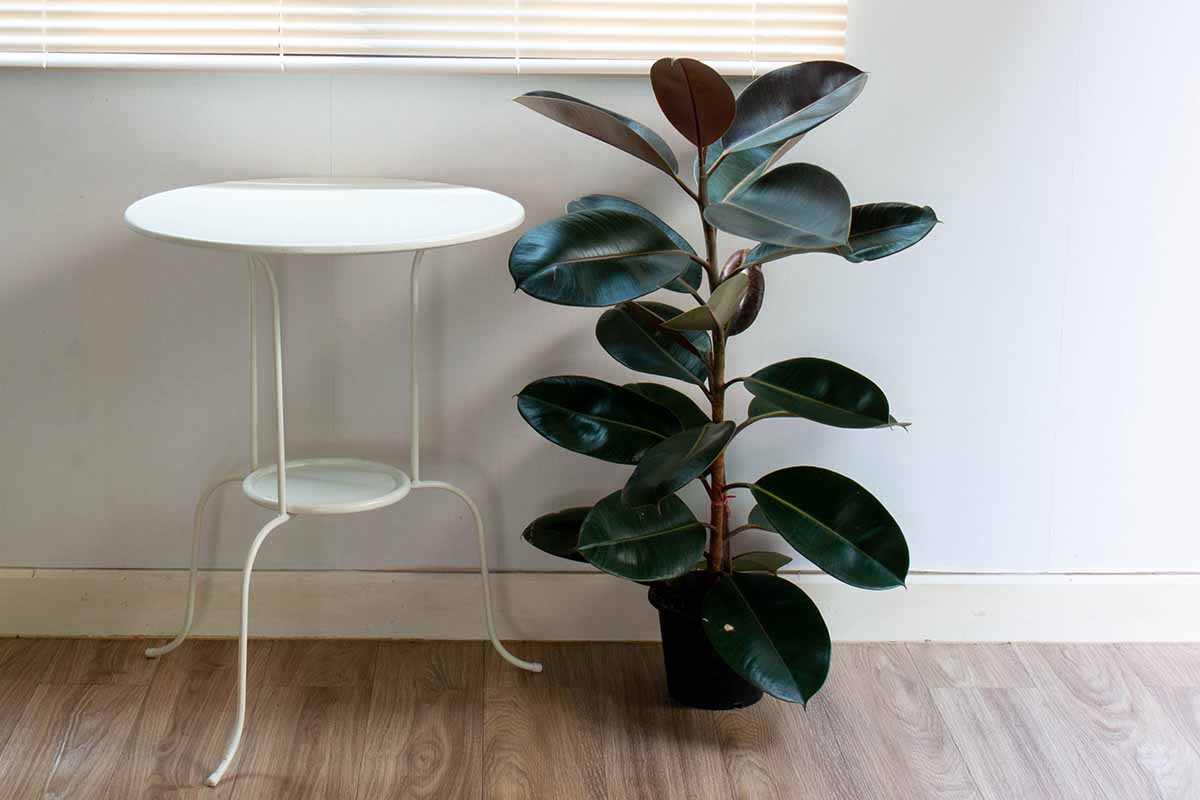
With so many stunning varieties to choose from and very few potential issues, this plant will grace your home for years with just a little pruning.
Let us know what your experience has been with the rubber tree in the comments section below!
Are you interested in learning more about other popular houseplants? Check out these guides next:


We think our Sandy is about to grow through the roof? What can we do?
Hello Abigail, apologies that I missed your comment! If your plant is healthy, I’d consider pruning her back, or even dividing and rooting her main branches into other pots. Take a look at the section that addresses propagation, and also maintenance, for ideas on how to go about it. Rubber trees that are growing in ideal conditions will continue to grow, so it’s best to prune for size annually to prevent them from becoming behemoths.
Hello, in order to transplant the plant to a larger pot, someone has cut the tap root of my rubber plant – ( it was growing out of the hole in the bottom of the pot.) Will the plant be okay?
Hello Monique, not to worry! If your plant is more than a few months old and otherwise healthy, the taproot is less necessary as it acts as a stabilizer and helps to access water for early growth. Many potted plants benefit from taproot pruning as this allows the root system to branch and develop more fibers, which serve the same purpose. Just keep an eye out for leaf drop or signs of distress, such as yellow or brown leaves or stunting. Otherwise, your plant should be fine!
Why is the suggestion only to put the plant in a slightly bigger pot? I have a small Rubber Tree I’m wanting to grow in a much larger pot? Is the advice to only re-pot up sizes gradually?
Hi Molly! Thanks for your question. You’re correct, it’s best to gradually increase the size of the pot over time. A pot one to three inches larger than the one your plant is in now would be best. This is because the root system must be able to reach nutrients and moisture throughout the soil, and in a pot that’s too large, they’ll struggle to do so. The soil can remain wet for a longer period as it requires more water than the plant needs, which can introduce fungus and diseases that are likely to cause root rot or other… Read more »
Hi.. I recently purchased a beautiful burgundy rubber plant. I love it! However, the leaves seem to have a mineral scale on them that does not wipe off. Any suggestions?
Hi Elle! Burgundy is a gorgeous cultivar!
I’d love to help you figure out what’s going on with your rubber tree. What does the scale look like? Is it spots or does it look like a film? Is there a texture that you can feel?
If you have pictures, please post them so I can take a look.