

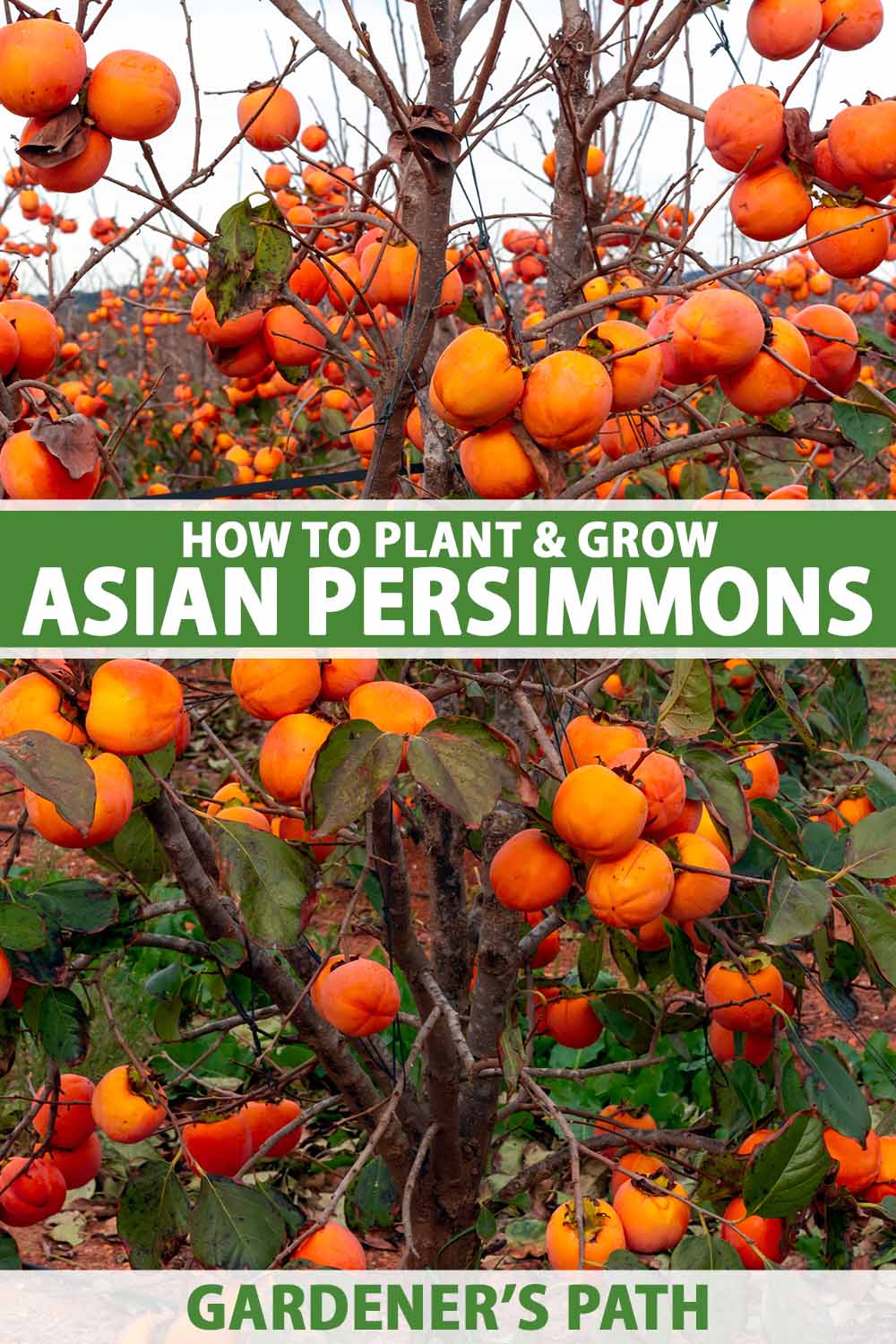
Diospyros kaki
The first time I had a persimmon, I took a bite expecting something like a tangy, grassy tomato. Instead I was greeted by a honey-sweet, apple-like flavor and texture.
That was a ‘Fuyu,’ one of the most common types grown in the US.
Ever since, I’ve kept my eyes peeled in fall and winter when the fruits show up in grocery stores and specialty markets. They’ve become one of my favorite seasonal treats.
We link to vendors to help you find relevant products. If you buy from one of our links, we may earn a commission.
It seems they’re gaining popularity these days, with some varieties becoming more readily available in grocery stores.
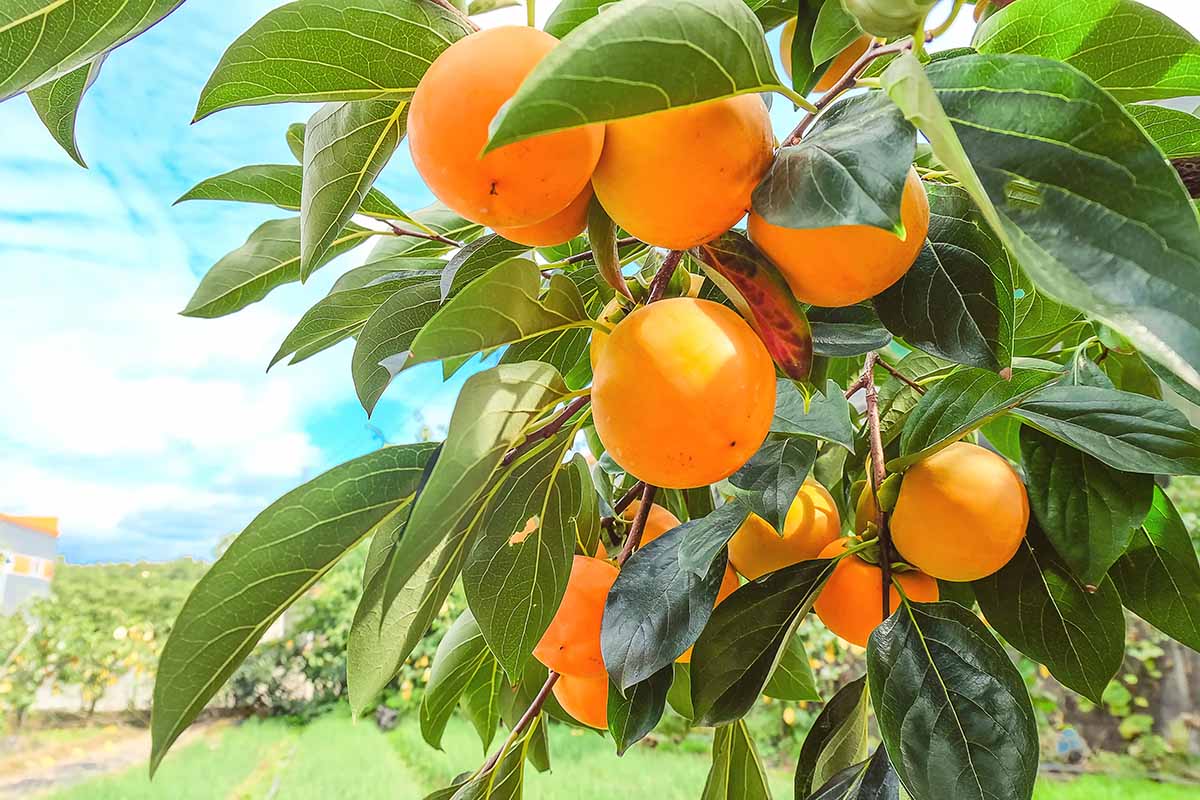
A ripe persimmon tastes like nothing else, some with a bit of spice and a touch of sweet pepper combined with the essence of a plum, and others like a pear sprinkled with cinnamon and dipped in honey.
While the fruits get most of the attention, these trees are so lovely that you can grow them for their ornamental value as well.
The trees lend themselves perfectly to training into hedges, or they may be espaliered.
If you live in USDA Hardiness Zones 7 to 10, there are dozens of cultivars available that will thrive in your area.
This guide will prepare you for all the ins and outs of Asian persimmon care.
Here’s what we’ll cover:
What You’ll Learn
Persimmon trees are members of the Ebony family, Ebenaceae.
Ebony is the type of wood often used to make black piano keys, while persimmon wood specifically is sometimes used to make golf clubs.
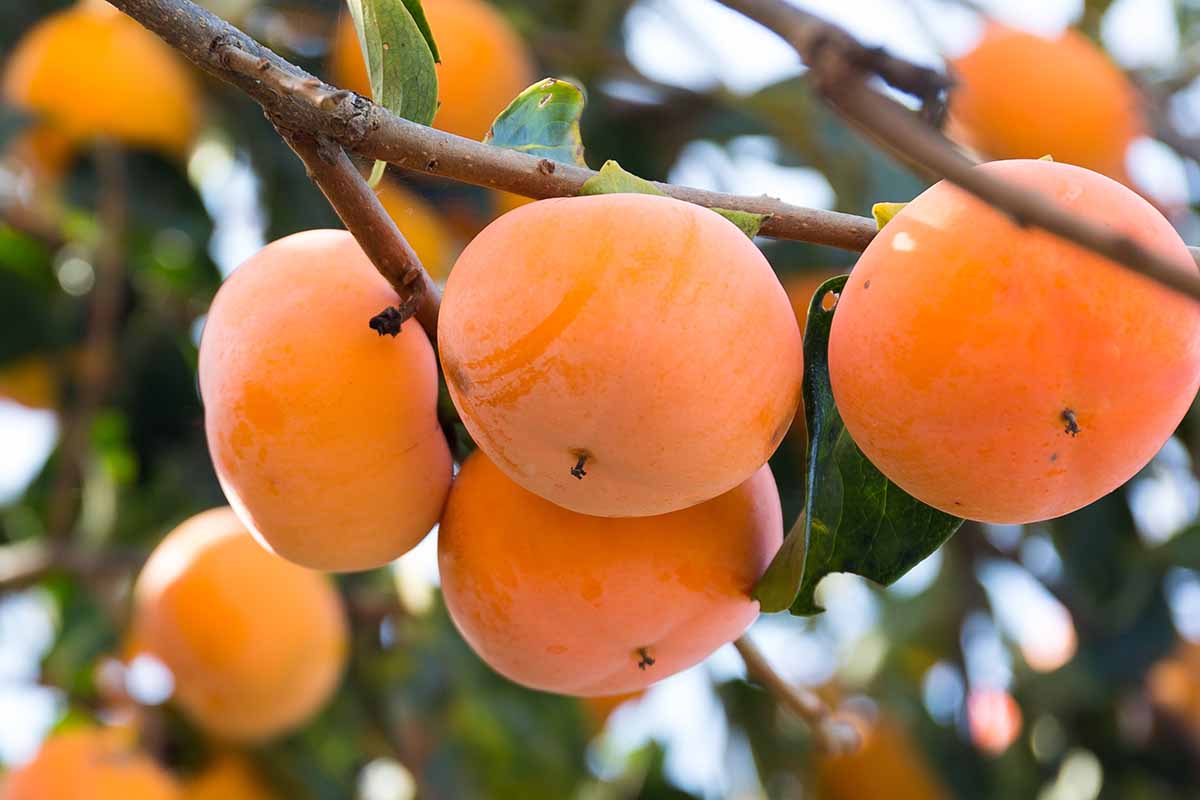
There are two closely related species that produce the familiar orange fruit: the Asian (sometimes called Japanese or Oriental) persimmon, D. kaki, which we will cover in detail here, and the American or common persimmon, D. virginiana.
Asian persimmons, unlike their American cousins, are often self-pollinating, and they can even produce parthenocarpic fruit from unfertilized flowers.
That resulting fruit won’t have seeds, so it can’t reproduce.
Quick Look
Common name(s): Asian, Japanese, oriental persimmon, kaki
Plant type: Perennial fruit tree
Hardiness (USDA Zone): 7-10
Native to: China, Korea, Japan
Bloom time / season: Spring flowers, fall fruits
Exposure: Full to part sun
Soil type: Loose, organically-rich, well-draining
Soil pH: 6.5-7.5, neutral
Time to maturity: Up to 10 years
Mature size: Up to 60 feet tall by 25 feet wide
Best uses: Ornamental specimen, edible fruit
Taxonomy
Order: Ericales
Family: Ebenaceae
Genus: Diospyros
Species: Kaki
The trees can grow up to 60 feet tall and 25 feet wide, but some cultivars stay short or even shrub-like, topping out at 10 feet.
They may produce fruit for about 30 to 50 years under ideal conditions, starting at around seven years old if they are planted from seed.
The leaves are medium or dark green with smooth margins. They are lance-shaped, with a slightly lighter underside.
They turn yellow, orange, or red in the fall and they often drop from the tree before the fruit is ripe.
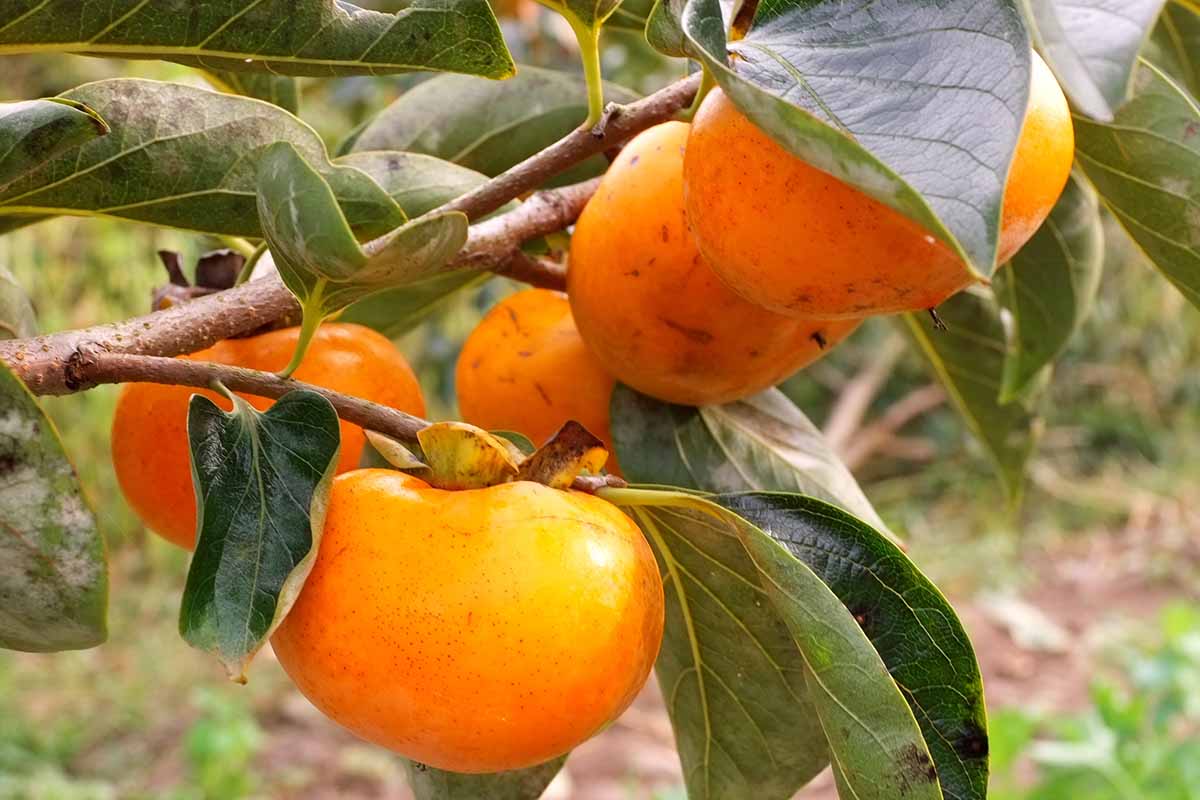
Many cultivars are grown on grafted rootstock to help improve disease resistance and vigor. The most common rootstock comes from date plums or American persimmons.
Trees are typically either male or female, though virtually all the cultivars you can purchase from a nursery are self-fruitful.
That means they either have both female and male flowers, or they have perfect flowers (which are flowers that contain both male and female parts).
Asian persimmon trees don’t need to be pollinated to produce fruit.
If the flowers are pollinated anyway, the fruit might contain seeds, grow larger when mature, or have a different flavor and texture than it would otherwise.
The trees flower in the spring from March through June. They need about 100 chilling hours between 32 to 45°F to produce a crop.
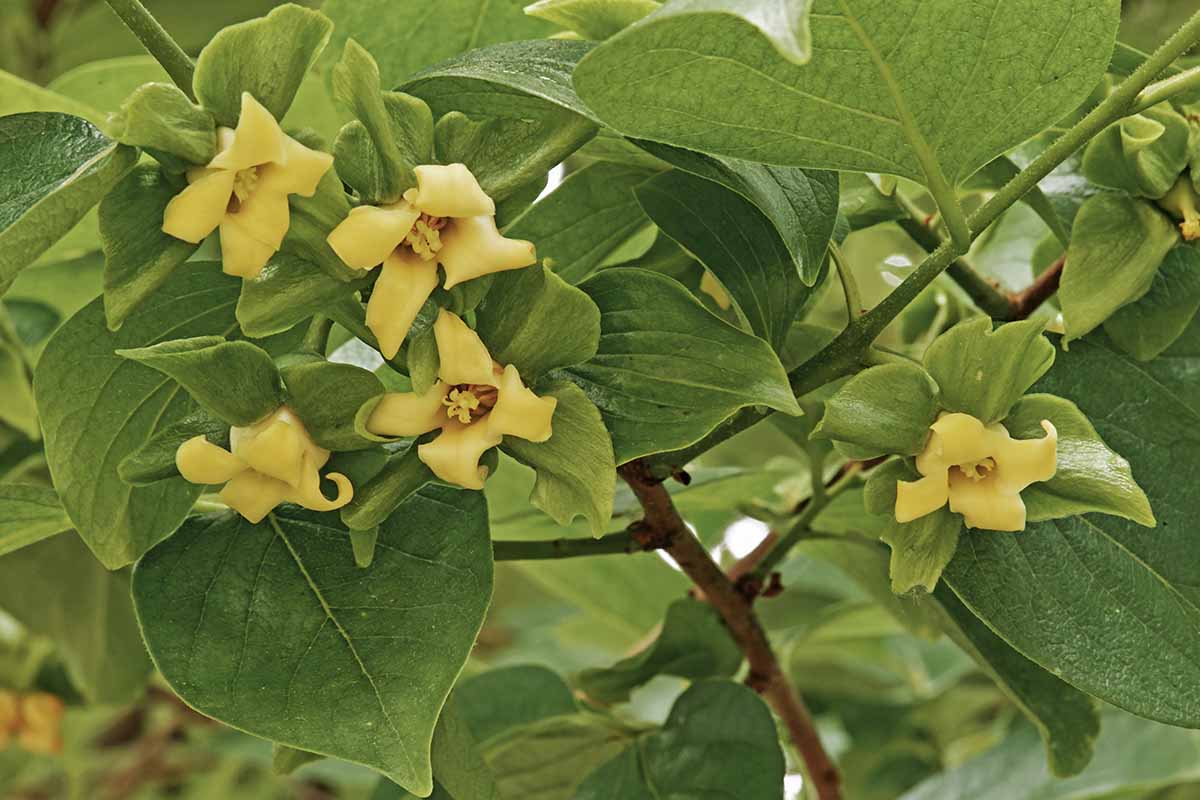
The creamy white or pale yellow flowers are about a quarter of an inch wide.
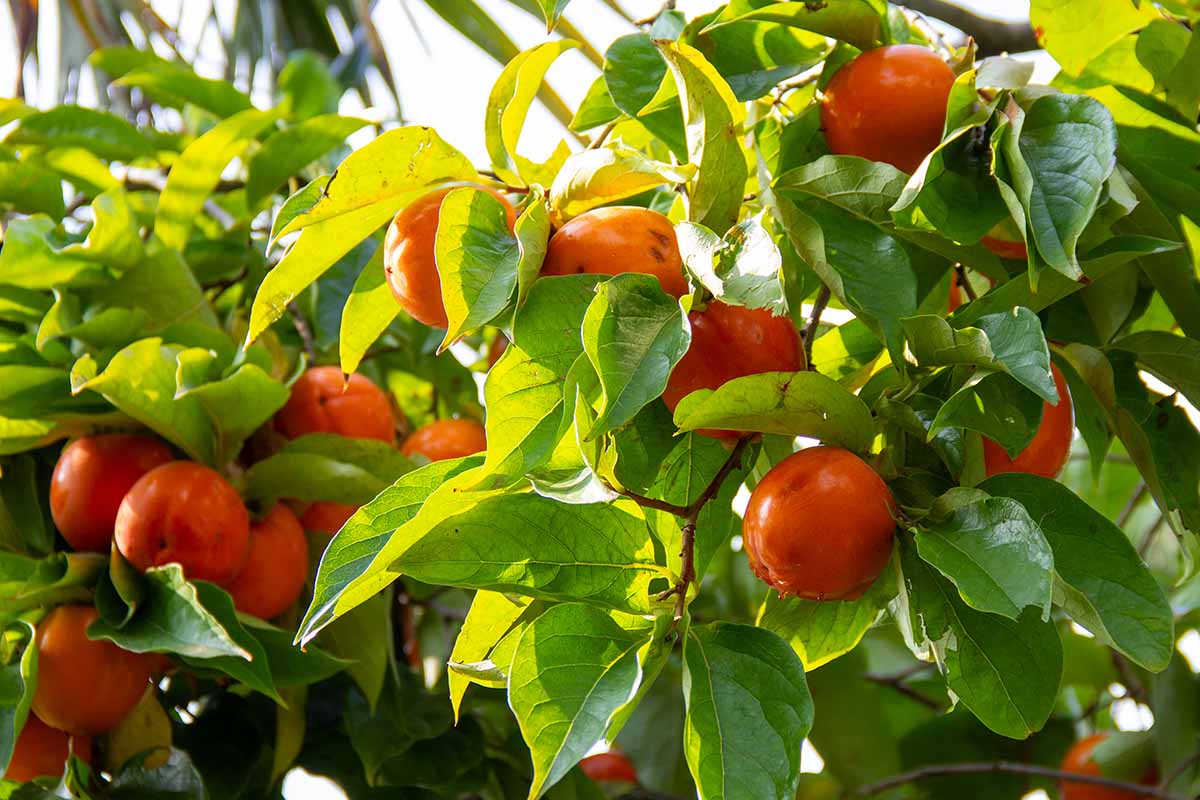
Depending on the cultivar, the fruits, which are technically berries, range from pale orange to nearly red when mature, and can be anywhere from one to five inches in diameter.
The peels can be extremely thin or quite thick, depending on the type.
The fruits may be round, tomato-shaped, heart-shaped, or egg-shaped. And there are two types of fruits in this species: astringent and non-astringent.
Astringent fruit is high in tannins and doesn’t taste good until it has ripened fully.
Some aren’t actually palatable until they’re overripe, and eating the underripe fruit isn’t good for humans.
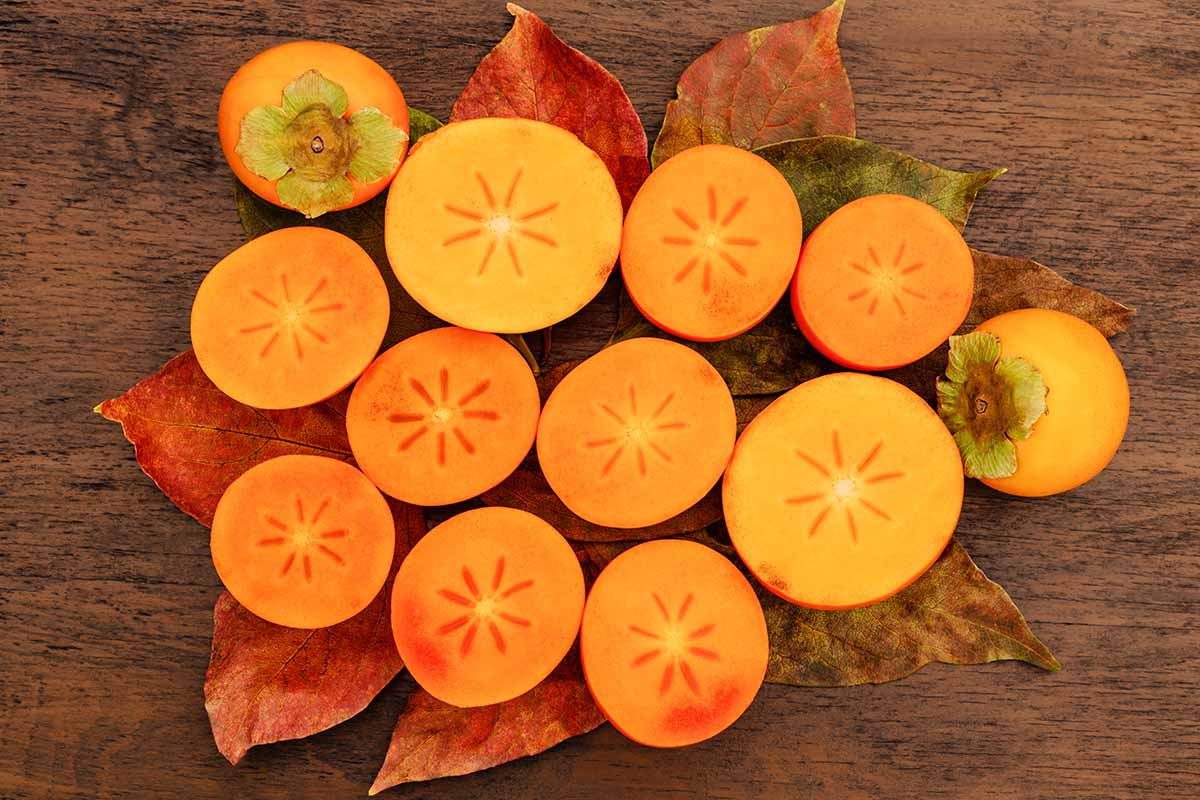
Non-astringent varieties, on the other hand, can be eaten even when they’re immature because they aren’t as high in tannins. In other words, they’re sweet even when they aren’t fully ripe.
Cultivars may also be classified as pollination-variant or pollination-constant.
Pollination-variant trees produce fruit that develops brown, seeded flesh when pollinated.
Pollination-constant fruit keeps the same color whether pollinated or not, and seedless ones usually have translucent flesh the same color as the skin.
When seeds are present, the flesh around them often shows darker streaks, though this varies by cultivar.
And it’s possible to find a seeded fruit with translucent flesh or a seedless one that’s opaque.
Not all persimmon cultivars look the same once you peel away the skin.
Some have gelatinous flesh, others are stringy like a pumpkin. Some are crisp, others soft, ranging from completely opaque to nearly transparent.
The further clarify the terminology here, the different types of trees that you are likely to come across are described as:
- pollination-constant astringent (PCA)
- pollination-constant non-astringent (PCNA)
- pollination-variant astringent (PVA)
- pollination-variant non-astringent (PVNA)
Phew! What a wonderfully variable fruit!
Asian persimmons are native to central China, where evidence of their cultivation can be traced back to 450 BC.
They were later taken to Korea and Japan over 1,000 years ago, where they have been cultivated ever since. In Korea, the fruit is an essential part of memorial ceremonies to this day.
How to Grow
D. kaki trees can survive in temperatures as low as 10°F, but anything colder can kill them, with just a few exceptions.
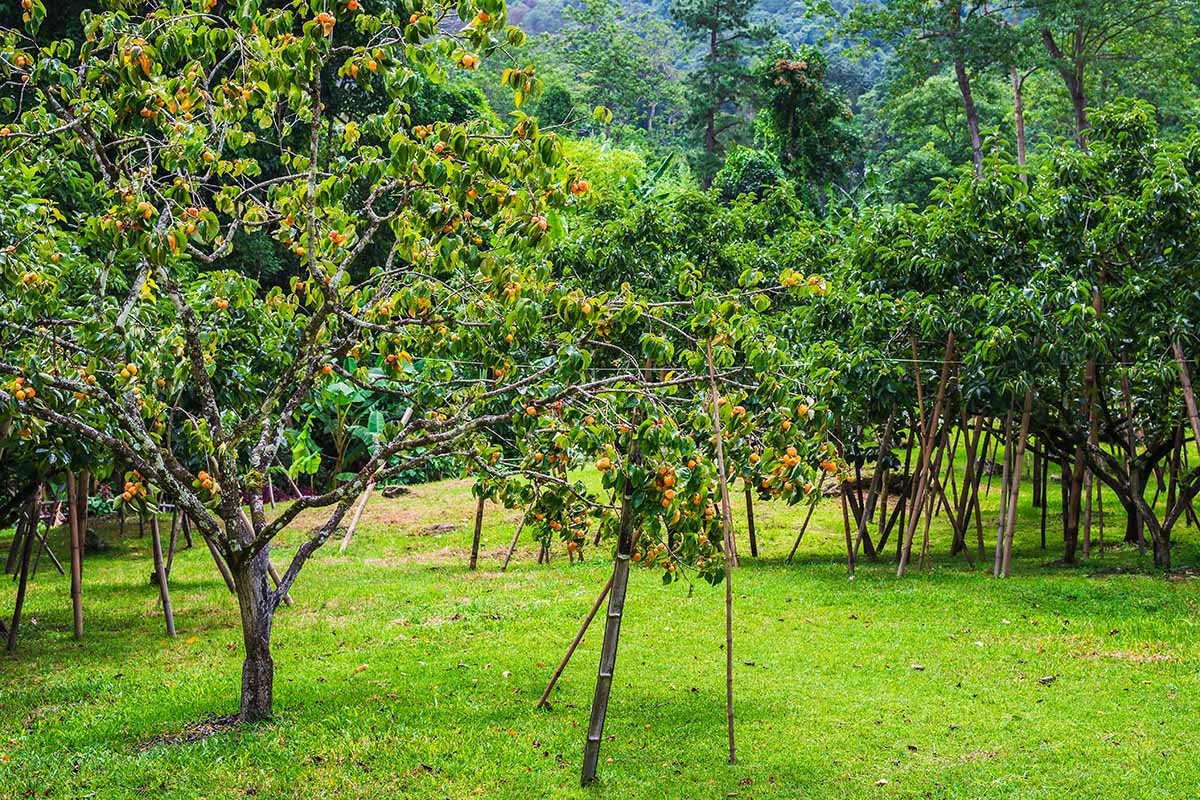
The trees do best in areas that don’t reach temperatures above 90°F for long stretches, and they can’t tolerate drought.
Light
They prefer full sun, but in hot regions, you may plant them in an area with some afternoon shade.
Plant trees 10 to 20 feet apart from other trees or structures, depending on the expected mature size of your chosen cultivar.
Soil
You’ve probably heard it before and I’ll say it again: test your soil before planting.
Persimmons prefer soil with an appropriate balance of nitrogen, potassium, and phosphorus. Your soil test will tell you if your soil is lacking or has too much of any of these nutrients.
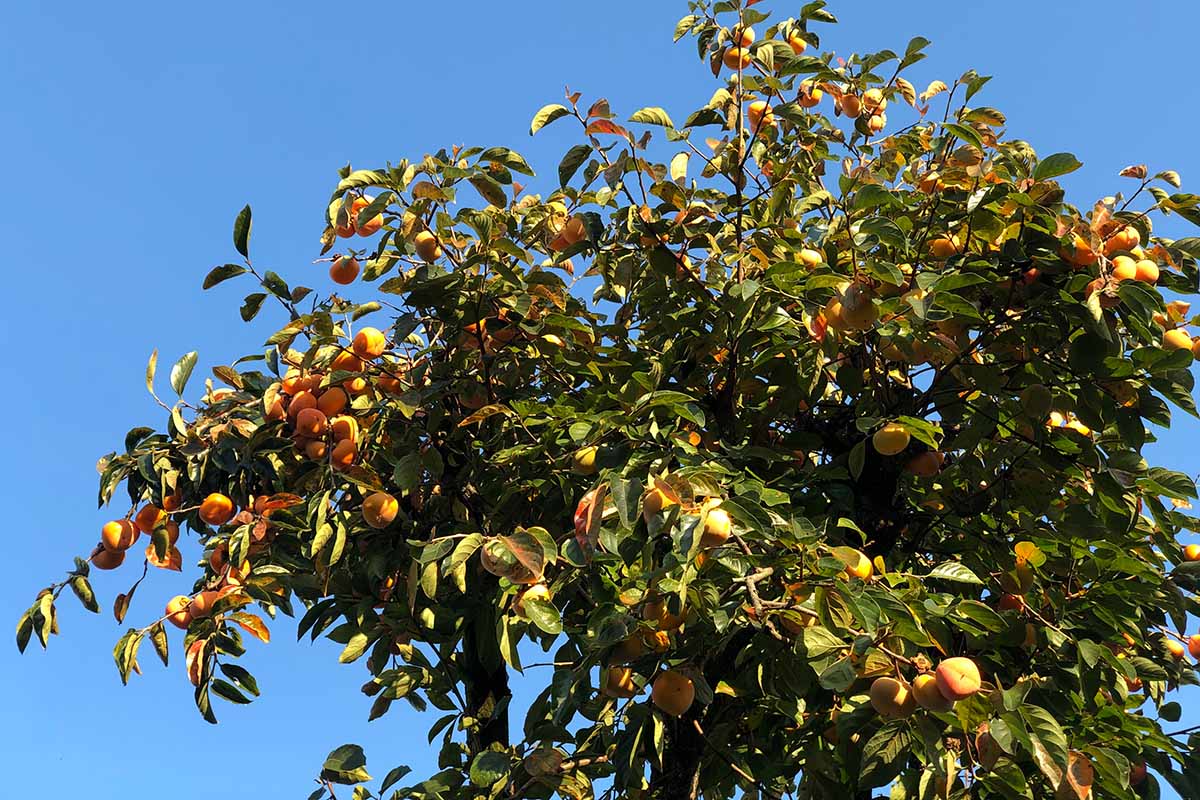
While Asian persimmons can handle a range of soil types, whether sandy or loamy, and rich in nutrients or not, they can’t tolerate poor drainage.
When planting grafted trees, it’s important to take the origins of the rootstock into consideration.
Trees grafted onto D. lotus rootstock, for example, have a higher tolerance for saturated soil than those with D. kaki or D. virginiana roots.
Ideally, the soil should have a pH of between 6.5 and 7.5.
Prep the soil with some well-rotted compost or sand to aid water retention or improve drainage, depending on the existing texture.
The end goal is to have a loamy, healthy soil that looks like what you’d get if you bought an all-purpose soil mixture for planting.
Water
Too little water and the fruit will drop. If you live in a dry area, a natural mulch like straw, leaves, or grass can help the soil retain water.
Plants need about an inch of water per week, so if you get that through rain, you can sit back and watch your plants grow.
Otherwise, provide irrigation at the ground level. It helps to use a rain gauge to determine how much water your plants are getting so you can supplement accordingly.
Fertilizer
When the plants are young, you don’t need to feed them at all. As they age, you might want to supplement with fertilizer occasionally.
Don’t overfeed your trees with a nitrogen-based fertilizer because this can cause the plant to produce an overabundance of foliage rather than fruiting, or this may result in fruit drop.
Unless a soil test shows a serious deficiency, you should skip fertilizing your trees, or stick with a 10-10-10 (NPK) product applied in the early spring.
Growing Asian persimmons in containers isn’t recommended, and they aren’t likely to fruit that way, though you may be able to keep a dwarf specimen happy in a large container in a warm climate, if you wish to grow it as an ornamental specimen.
Pruning
When trees are young, under five years old, you can prune them annually to develop a strong framework to support the heavy fruits.
At the time of planting, aim for a “vase” configuration. This involves selecting three to five main branches toward the outside of the tree and removing all other branches.
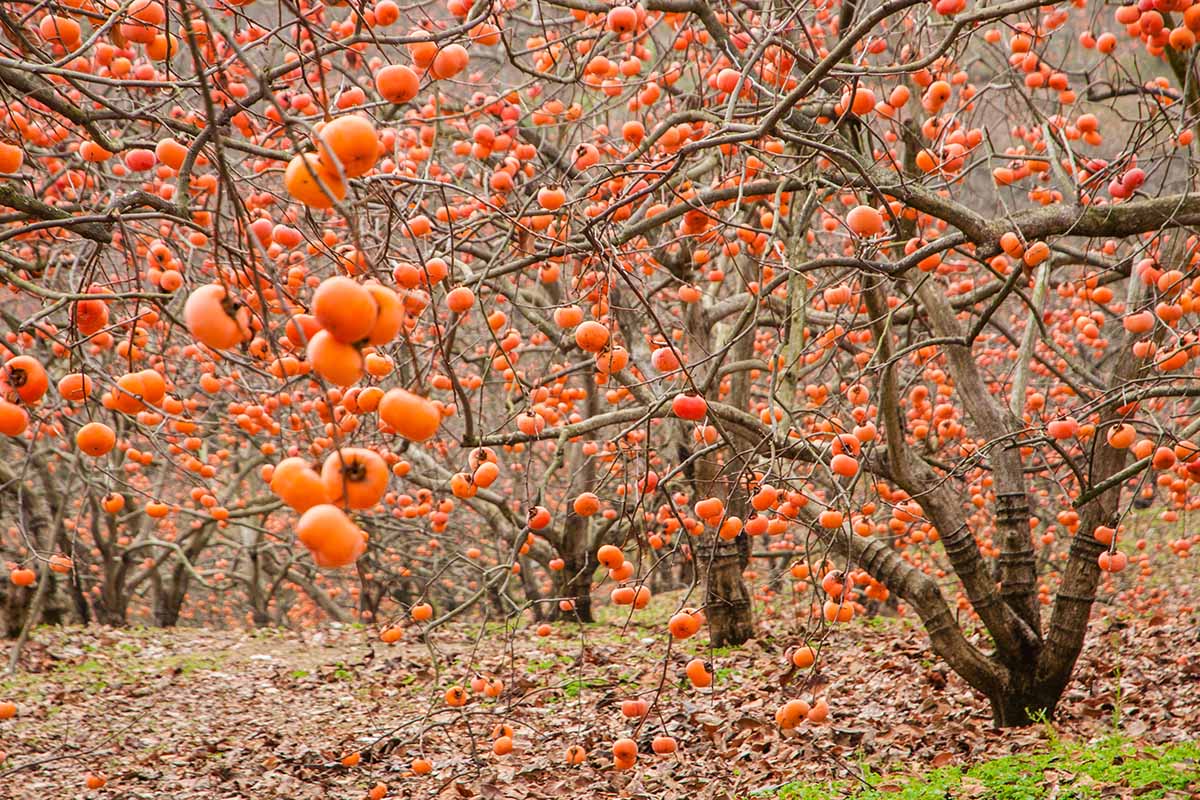
Each year to follow, until trees reach about five years old, thin out half of the new growth while leaving the strong vase shape established by the main branches.
Mature trees over five years old should be pruned in the winter when they are dormant.
Remove any diseased or broken branches, then cut any crossing branches or limbs that have narrow crotches.
Keep in mind that the fruit grows on new wood, so you don’t want to prune once you see new, green growth on the tree. If you do, you may end up with no fruit at all.
Cultivars to Select
There are hundreds of persimmon cultivars out there. We’ll touch on just a few of the most popular here.
If you live in a zone that is on the cooler side of the recommended range for growing Asian persimmons, look for ‘Great Wall,’ ‘Peping,’ and ‘Sheng.’
These cultivars have been bred to be more cold hardy than most, and they can survive temperatures as low as 0°F.
Chocolate
‘Chocolate’ is a pollination-variant astringent type (PVA). It has reddish-orange skin and brown-streaked, jelly-like flesh, which is where it gets its name.
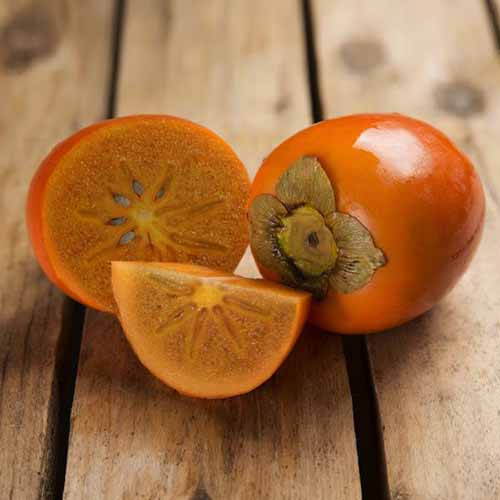
Fruits are ready to harvest in late October to early November, but make sure the fruit has gotten very ripe before digging in.
You can find ‘Chocolate’ trees available from Fast Growing Trees.
Fuyu
‘Fuyu’ means winter in Japanese, and this is one of the most well-known cultivars. The pollination-constant, non-astringent fruit (PCNA) looks similar to a tomato in shape.
As is the case for ‘Jiro’ persimmons, there are multiple types of ‘Fuyu’ persimmons, including ‘Hana,’ ‘Giant,’ and ‘Matsumoto Wase,’ all of which were bud sports of the original ‘Fuyu.’
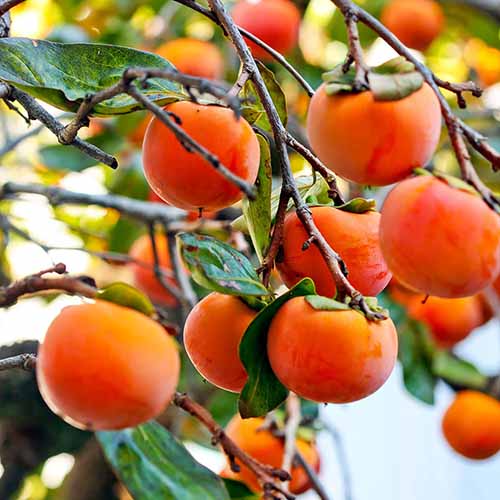
‘Fuyu’ ripens late in the season and is ready to harvest from mid-November through early December.
You can find ‘Fuyu’ available at Fast Growing Trees.
Hachiya
‘Hachiya’ produces fruits with a red skin and jelly-like flesh, shaped like large acorns
They’re ready to harvest from mid-November through mid-December.
This is a pollination-variant astringent type (PCA), and it is popular for drying.
Jiro
‘Jiro’ could be more accurately referred to as a group of cultivars featuring bud sport (a natural mutation) of the classic ‘Jiro’ tree.
Look for ‘Maekawa Jiro’ or ‘Ichikikei Jiro,’ both of which are notable for their medium to large fruit.
This tree produces firm, juicy berries that are medium in size. The fruit is pollination-constant and non-astringent (PCNA).
This is a mid-season variety that’s ready to pick from mid-October through mid-November.
Want More Options?
We have an entire guide dedicated to helping you find the right Asian persimmon cultivar(s) for your garden here
Propagation
There are many ways to start your persimmon tree, and what you choose may depend on your budget and your level of patience.
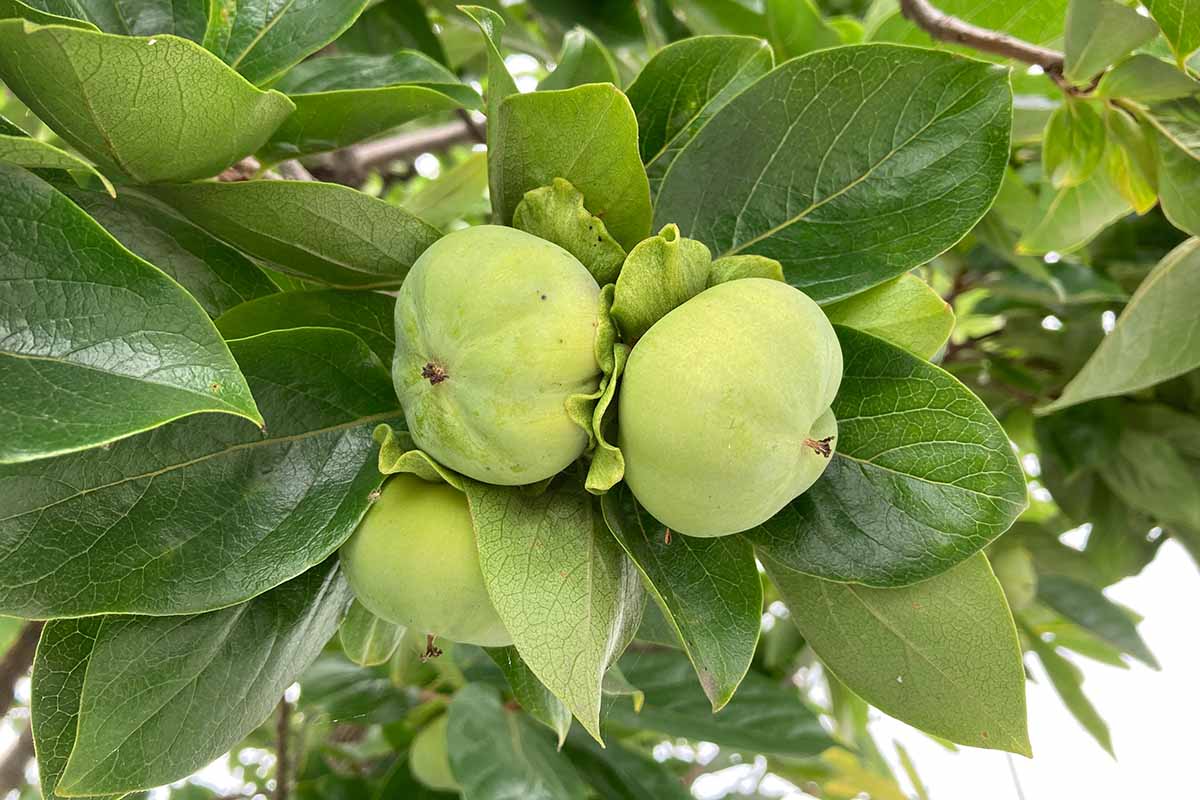
Seeds are cheap, but it will take years before you’re able to dig into your first harvest, and starting plants from seed can be a bit of a challenge.
Also, seeds collected from existing trees will typically not grow true to the parent.
You can always buy a live tree instead, but they aren’t cheap. Still, if you can’t wait to get cooking and enjoying fresh homegrown fruit, this is your fastest option.
Dormant bare root plants are typically more affordable than saplings growing in soil, and this option is somewhere in the middle.
You’ll get fruit faster than you would by starting from seed, though not as quickly as you will if you plant a good-sized live tree to begin with.
From Seed
Persimmon seeds need a period of cold stratification, so start five months before your area’s last spring frost.
Place the seeds in a moistened paper towel inside a glass jar or zip-top bag and refrigerate for three months, keeping the towel from drying out.
Sow each seed two to three inches deep in a three-inch pot of seed starting mix.
Moisten the soil with a spray bottle and keep it moist until the seeds germinate, which takes about six to eight weeks.
A warming mat set to around 70°F speeds things up. Persimmons have a low germination rate, so sow about three times as many seeds as you need.
When the seedlings emerge, give them a sunny window with at least six hours of direct sunlight a day or use a grow light.
When the seedlings reach about four inches tall with at least two true leaves and the danger of frost has passed, harden them off ready for transplanting.
From Cuttings
In spring, take a cutting as thick as a pencil and about 10 inches long.
Remove the leaves from the bottom half, leaving at least two on top. Cut the bottom at a 45-degree angle and dip it in powdered rooting hormone.
Fill a six-inch pot with fresh potting soil, use a pencil or chopstick to make a hole, and insert the twig about halfway.
Water the soil and keep it moist but not wet while the plant establishes roots. Cuttings can root outside, but watch the moisture level, since the cuttings might die if the soil dries out.
After four weeks, give the twig a tug. If it resists, or you see new leaves forming, it’s ready for transplanting.
To root cuttings indoors, give them indirect sunlight for at least eight hours a day, then harden them off when you move them back outside, using the same process as for seeds.
If you can’t get them into the ground in spring before temperatures top 80°F, grow them in their containers outside and plant in the fall, about a month before your area’s first frost date.
Transplanting
It’s best to purchase seedlings or young trees in the early spring.
They need to go in the ground after the last frost but before they start developing new growth.
Dig a hole at least twice as deep as the container, then mix the soil with some well-rotted compost, plus sand if your soil drains poorly.
Fill the hole halfway and sprinkle with water to settle the earth, adding a little more soil if it compacts.
Lower in the plant and fill around it, keeping it at the same soil level as it sat in its container. Then give the tree a good drink of water.
If you’re planting a grafted tree, avoid covering the graft union, the little bump where the scion was joined to the rootstock.
Burying it can cause the scion to develop its own roots and bypass the rootstock.
From Bare Roots
Bare root plants go in the ground in early spring, while still dormant and before new growth appears.
Before planting, prune off about half of the top with sharp pruners and clip away any dead roots.
Most bare-root plants arrive with more top growth than the roots can feed, so cutting back prevents the roots from being stressed and also encourages bushy growth.
Then plant as you would a seedling or transplant, watering lightly as you fill in soil around the roots to remove any air pockets.
Grafting
Experienced orchardists may already know this technique, but it’s largely beyond the scope of this article, so here’s a quick overview.
Grafting fuses the roots of one tree with a young branch of another to asexually reproduce the parent the branch came from.
That branch is called a scion, though with other species buds or young shoots may be used instead.
The point is to combine the positive traits of two related plants.
Asian scions are usually grafted onto American roots to yield the superior fruit of D. kaki on the more resilient roots of D. virginiana.
Select the healthiest trees with the best fruit production, disease resistance, and appearance, much as you’d save seeds from your best tomato plants.
Graft in late winter while trees are dormant, before new growth emerges.
You’ll need healthy rootstock at least a third of an inch in diameter and a scion about the same size or slightly smaller.
With sharp, sanitized pruners, clip a five-inch piece of healthy branch with two to four leaf buds. If it feels dry, try a different branch.
Attach the scion with either a whip and tongue or a wedge graft.
For whip and tongue, cut an N-shaped slice out of the rootstock and a matching upside-down N on the scion, fit them together, and bind with nursery tape.
For a wedge graft, cut a V into the rootstock and a matching wedge in the scion so it fits snugly inside, then bind the same way.
Pot up the cutting and set it outdoors to grow. Keep the soil moist through a dry late winter or early spring, and mist the graft area daily if you live somewhere dry year-round.
Check that the tape stays put but isn’t constricting the stem, replacing it every few weeks and confirming the joint is solid.
Once the plant forms new leaves and the union has grown solid, plant it as you would a transplant.
Pests and Disease
Good news! Persimmons don’t suffer frequently from diseases or pest infestations. So why is the list that I’ve provided below so long?
Well, that’s because there are a lot of things out there that can attack Asian persimmons, though they won’t typically attack too often or too severely.
You’re more likely to have to wage war with the many critters who want to eat your fruits, so let’s start with those!
Herbivores
Plenty of animals love persimmons as much as we do. Deer are so fond of them that some hunting attractants are made from the fruit.
They mostly eat windfall and only go after ripe fruit, so timely harvesting limits the damage, though they’ll also browse leaves and twigs year round.
We have a guide for dealing with deer.
Rats and squirrels will both climb to reach the fruit, and squirrels are especially frustrating since they strike about a week before ripeness, leaving you with nibbled or missing persimmons.
Squirrel baffles or collars can keep them off the trunk, as long as they can’t leap in from nearby trees or structures.
For rats, stick to deterrents and pick up fallen fruit so you don’t attract them.
Pests
Persimmons attract their share of insects, but a healthy tree rarely suffers much, since most pests only take hold when a tree is already stressed. A few are worth knowing.
Metallic wood borers (Buprestidae spp.) tunnel under the bark, leaving frass and gummy excretions on the trunk, and their tunnels can girdle a young trunk or branches.
They tend to show up where canker is already present, laying eggs in the scars the fungus leaves behind.
The only real fix is to cut into the damaged area and dig out the larvae, though a healthy tree can often withstand an attack as the pests move on after they pupate in spring.
Several types of mealybugs feed on persimmons.
They suck sap from the tree and excrete honeydew, which draws ants and sooty mold.
In large numbers they can stunt growth and reduce yields, though infestations rarely get that far.
Encourage natural predators like lacewings, ladybugs, and chalcid wasps, blast the bugs off with soapy water, or wipe colonies on young trees with rubbing alcohol.
Persimmon psyllas (Trioza diospyri) appear in spring as the leaves emerge, sucking juices from the foliage and leaving it crinkled or curled.
Since pruning promotes the new growth they favor, avoid it while they’re active.
Soft scale (Parthenolecanium spp.) cluster as small bumps on branches, trunks, and fruit, weakening the tree and stunting growth.
Learn more about combating persimmon pest infestations.
Disease
Like most fruit trees, persimmons can be affected by a number of diseases, but healthy specimens are rarely bothered by them.
Asian persimmons are often grafted onto American rootstock partly because D. kaki is susceptible to root rot while D. virginiana and D. lotus are not.
Armillaria Root Rot
Caused by the fungus Armillaria mellea, armillaria rot starts in the roots.
It spreads up from the base of the trunk, leaving black, shoestring-like strands along the exterior while the wood and roots decay inside.
A stressed tree can die quickly. The fungus lives in wood debris in the soil and spreads tree to tree through the roots.
There’s no effective treatment, so keep your trees healthy and well watered. Infected trees may topple, so remove them entirely, roots and all, before they fall.
American persimmon rootstock is resistant and rarely contracts the disease.
Canker
Botryosphaeria dothidea causes cankers and discoloration on the woody parts of the tree.
Branches may become girdled and foliage can turn brown, curl inward, and drop.
There’s no treatment, so avoid wounding the tree while mowing or pruning, prune away damaged branches, and be ready to remove the tree entirely in a severe case.
Root Rot
Trees in poorly draining soil are susceptible to root rot, caused by Phytophthora water molds.
Growth becomes stunted, foliage may yellow, and branch tips can die back while the roots rot below ground.
If you see these symptoms, dig down and check the roots, which will look soft and rotten if infected.
The best treatment is a fungicide that can be applied as a soak and absorbed by the roots, like RootShield Plus.
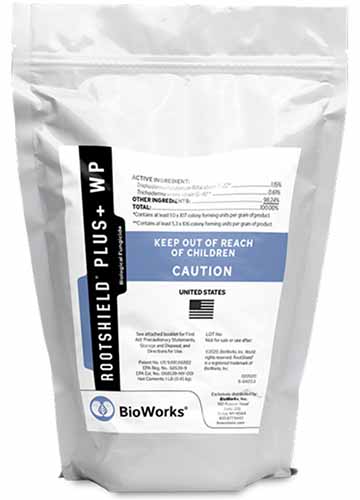
This biological fungicide, available at Arbico Organics, can be applied as soon as you identify the issue, or as a preventative if you’ve had this issue in the past.
Follow the application instructions on the label.
Harvesting
After planting, trees grown from saplings take about three years to start fruiting, while those started from seed take around seven.
You don’t need to let the fruit experience a frost before harvesting, though this is a common misconception. A hard frost can actually ruin immature fruits.
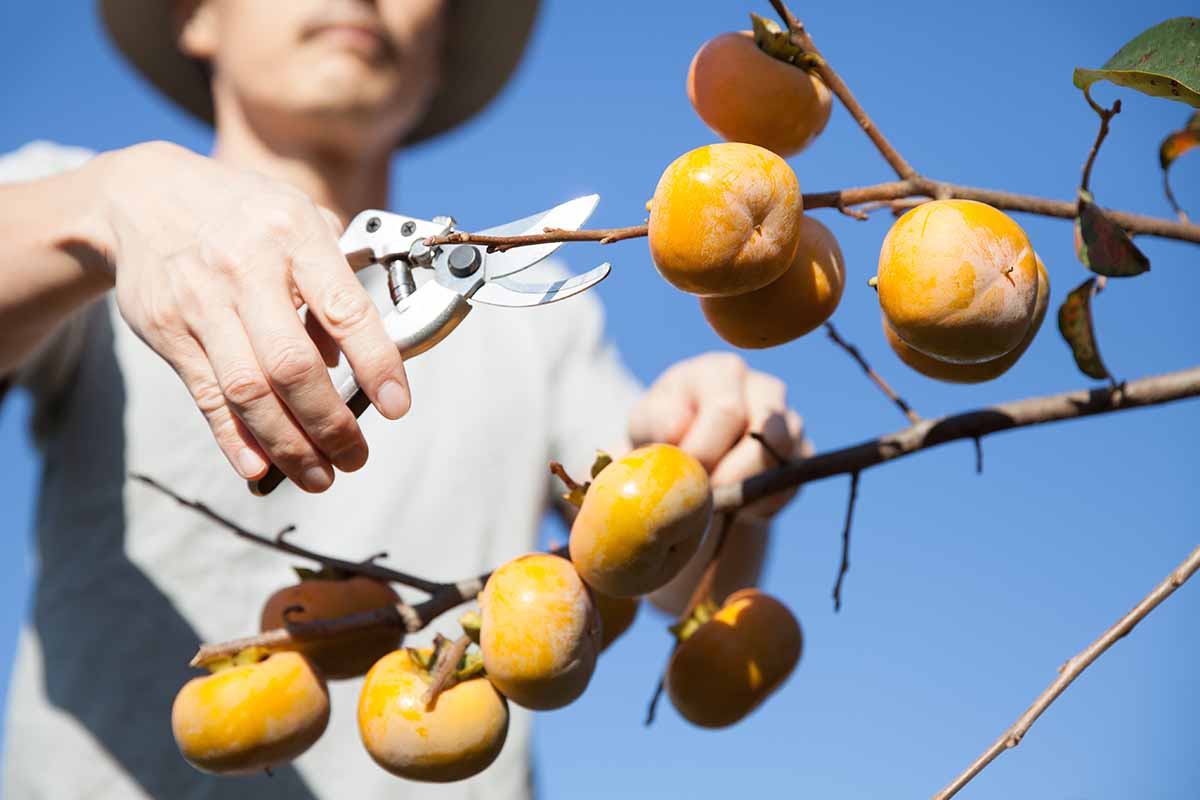
Instead, harvest before the fruit is fully mature and it will continue to ripen off the plant.
Wait until it reaches its mature color but is still hard. If there is no frost in the forecast, you can also let the fruit ripen fully on the tree, until it softens.
Non-astringent types are palatable even before they’re ripe, though further ripening makes them sweeter.
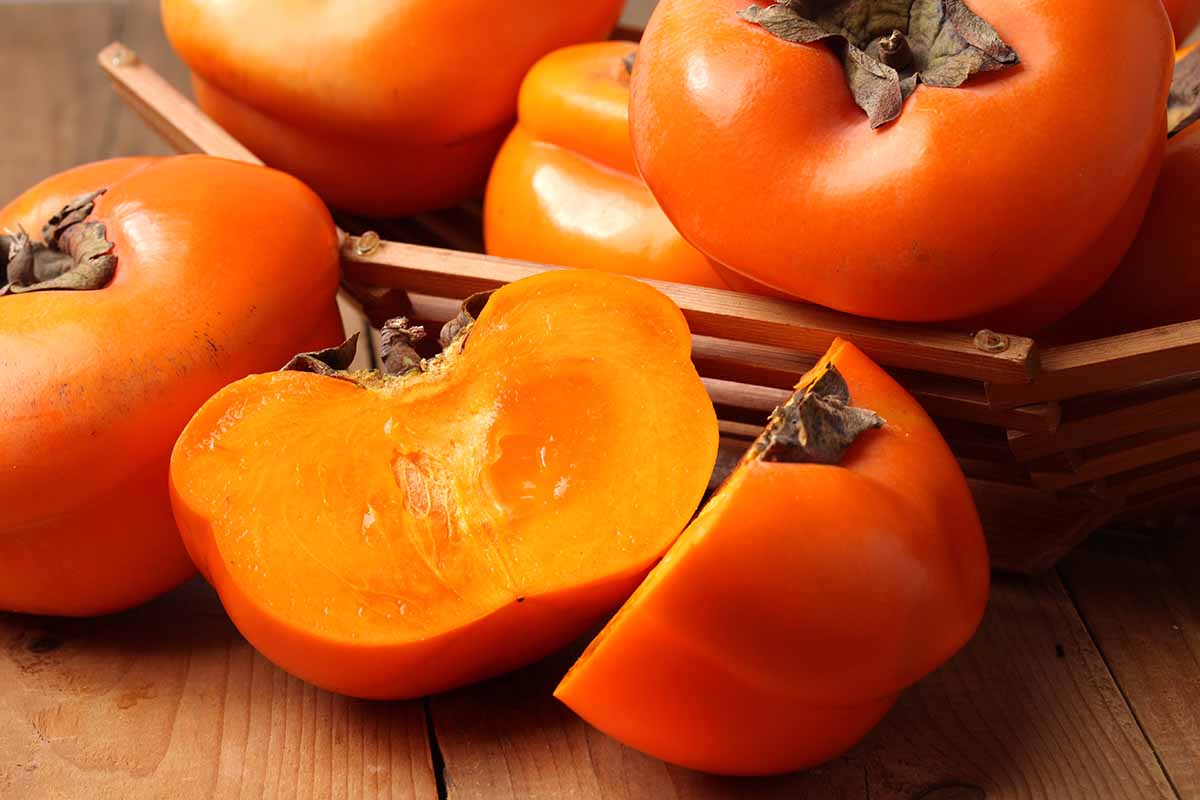
Astringent types can be picked early but shouldn’t be eaten until they soften, often to the point of feeling almost mushy.
To harvest, use sharp clippers to snip the fruit just above the calyx. Harvest time generally runs from September through December.
Don’t forget the leaves, either. They’re edible while green and make a delicious herbal tea with notes of caramel and nuts.
Learn more about how to harvest persimmons here.
Preserving
Astringent persimmons don’t keep long, since they’re already so ripe by the time they’re edible, so eat them within a few days of softening.
Non-astringent types last up to a month at room temperature, and either kind will hold in the refrigerator for up to six weeks after picking.
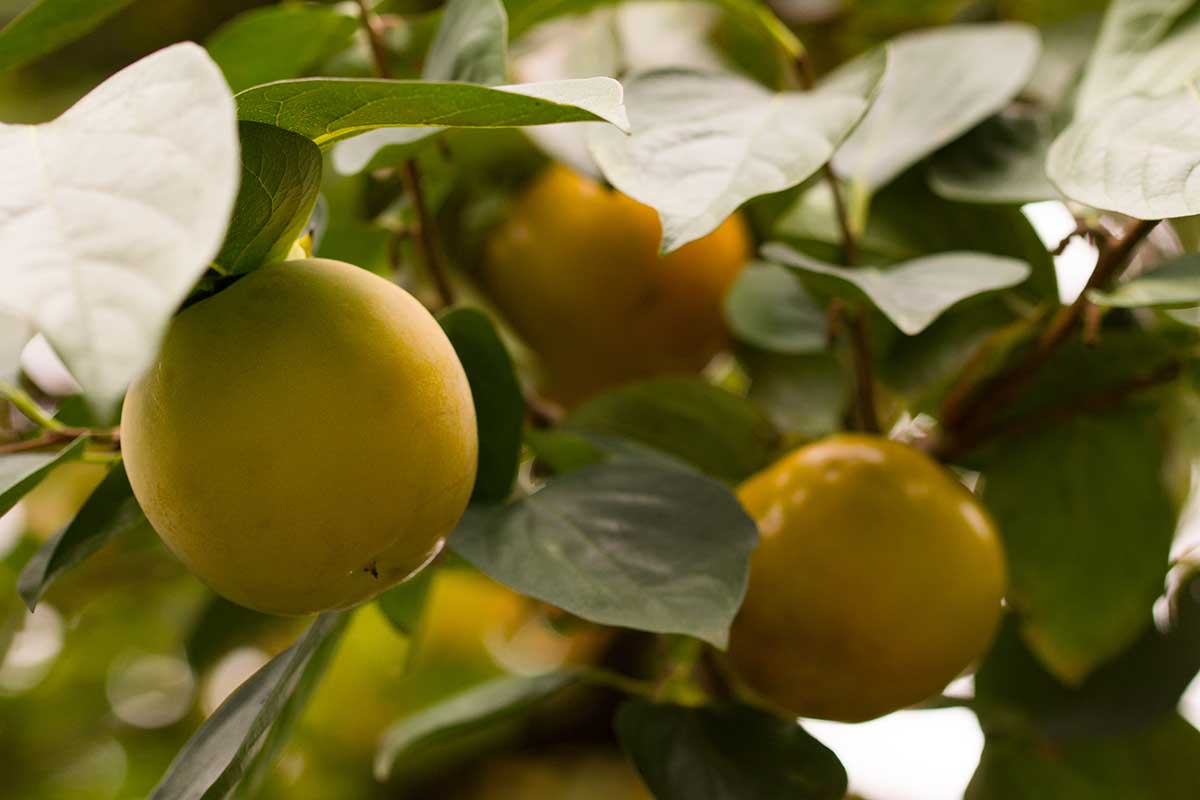
You can also freeze the fruit for up to eight months.
Wash and dry, then bag and freeze the fruit, whole or sliced with the seeds and calyx removed.
Dehydrating is another excellent way to handle a bumper crop, and the results are like nature’s candy. See our guide to dehydrating fruit and vegetables if you’d like to try it.
Dried persimmons in Japan are known as hoshigaki. The term just means “dried persimmon,” but it doesn’t capture the art involved.
You peel the astringent fruits and hang them to dry in the sun or over a warm stove, massaging them every few days for a month or two until they turn brown and form a sugary crust.
Cooking Ideas
The astringency in persimmons comes from tannins. Some people don’t care for it, and others need the fruit fully ripe and practically jelly-like before they’ll enjoy it.
However you use them, wash and peel them first, removing the calyx and any large seeds.
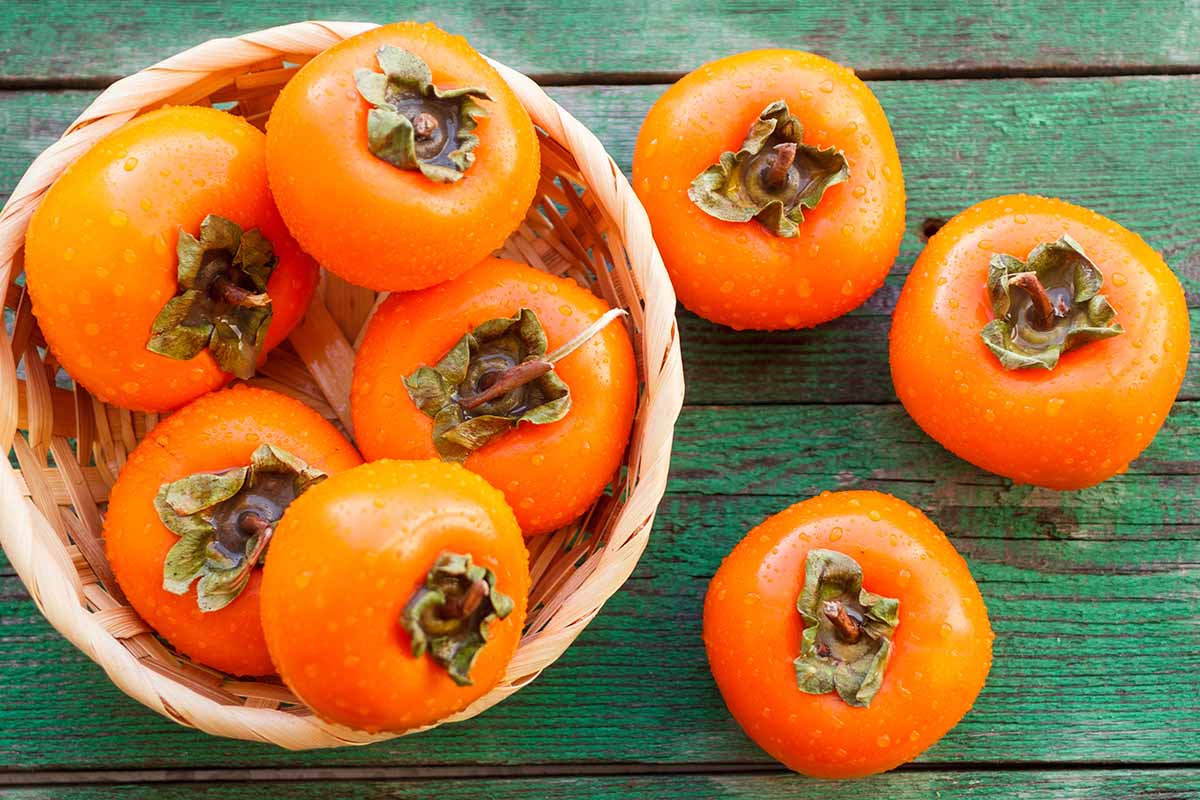
You haven’t lived until you’ve had persimmon bread, cookies, or pudding, but the deliciousness doesn’t stop there.
Slightly underripe non-astringent varieties can be used like apples or pears, sliced raw into salads or onto sandwiches, or toasted on bread with some brie.
They’re also tasty chopped and roasted with pork, turkey, or chicken, tossed on top or mixed in with the veggies near the end so they don’t overcook.
Or peel and slice them into wedges, bake at 350°F for 15 minutes, and serve with sliced prosciutto and a drizzle of olive oil.
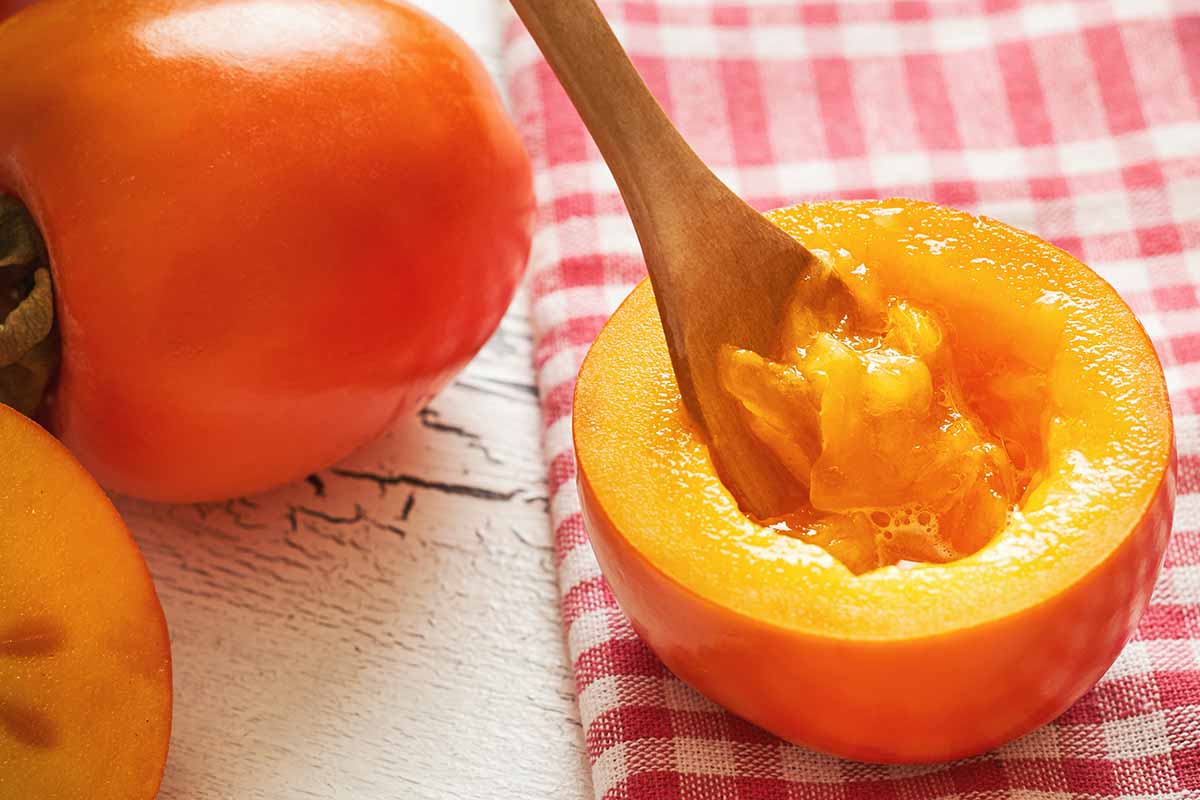
You can also wrap the wedges in prosciutto before baking. And instead of peach or mango salsa, try persimmon salsa instead.
For ripe astringent types, freeze one and eat it with a spoon like sorbet, or mash it into ice cream or oatmeal.
My favorite treat in the world is a meringue topped with cream and extremely ripe persimmon.
It’s also delicious on yogurt with honey and a sprinkle of granola.
Is that my stomach rumbling? Or yours?
Persimmons Aren’t Persnickety Plants!
Fruit trees tend to have a bad reputation because they sometimes require a lot of maintenance and they can be bothered by a ton of pests and diseases.
I’m not going to argue with that, because I’ve struggled with more than one fruit tree that seemed determined to die on me. But persimmons are an exception.
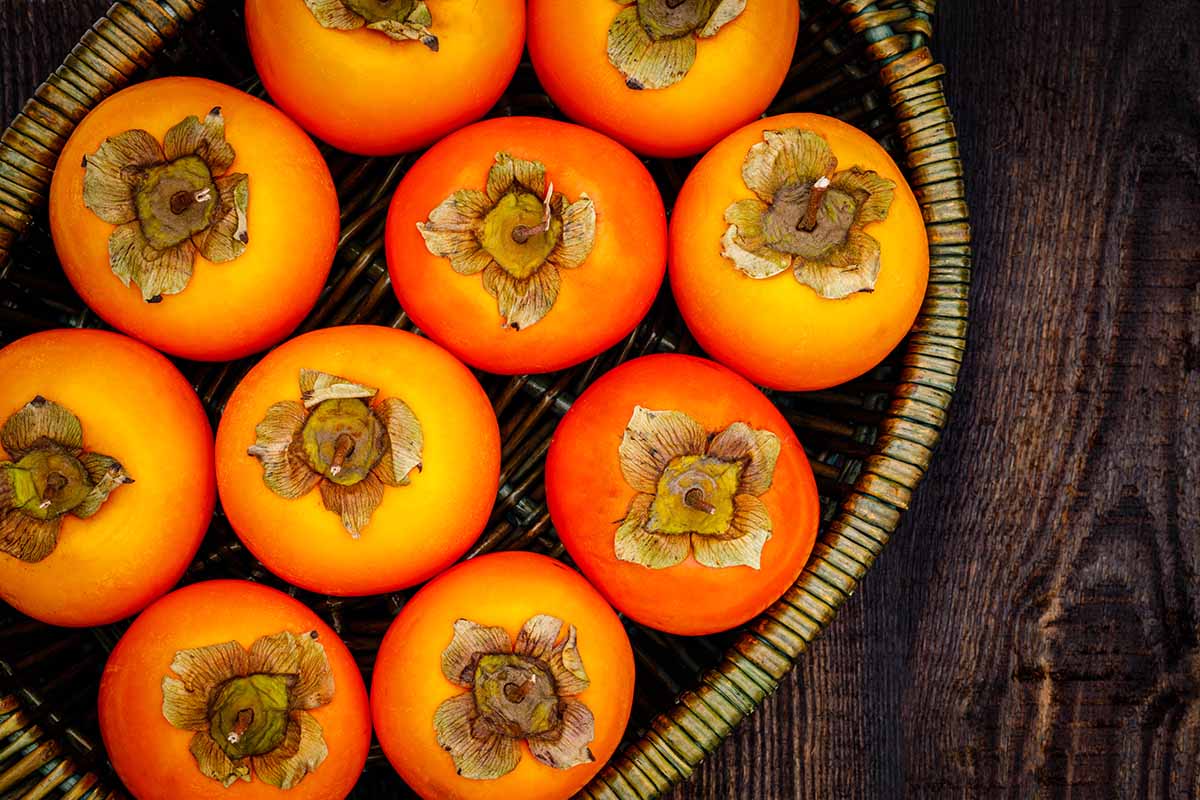
While I’m off begging and pleading with my pears to do better (not a recommended strategy), my persimmons are growing in the corner, just doing their thing. Most of the time, at least.
Are you growing persimmons? Share your experiences – and your recipes in the comments section below!
And for more information about growing fruit trees in your garden, check out these guides next:

Thank you very much for very good information about persimmons. But must orchards have a problem about dropping the premature fruit. Unfortunately here it is not mentioned. If you give information about that and how to control, that will be very good. Thnx in advance.
Thanks for pointing out that some trees can suffer from fruit drop. We’ll update the guide to explain the problem and how to control it.
I have 2 trees , I bought 4 yrs ago from nursery one had 4 on it , but they have never made anymore . Flowers fall off and I’ve done everything they told me , very disappointed cause I love them , same thing with my sister just like mine what is going on
Hi Rose, that’s disappointing. How long ago did your tree have fruit on it? Asian persimmons can fruit one year and then don’t fruit (or have just a few fruits) the following year. This is known as alternate bearing.
Lack of fruits is the type of issue that could be caused by a number of different issues. Overwatering or under fertilizing can cause blossom drop, while too much shade can prevent fruiting.
Funky weather can also cause problems. A harsh, dry, or hot winter can prevent fruiting.
Similar to Khan aziz sahak above, our tree is dropping fruit early… very green with stems intact. This may be a dumb question to the experienced, but if the stem is intact, is there a water based solution (with added nutrients) that the stem could still draw in if the end of stem is submerged? Or is the stem dead and unable to ‘pull’ the nutrients? Not sure how they’re falling off… if something is nibbling the stem or what. They look like clean cuts. But instead of throwing them away, I thought experimenting with that would be interesting if… Read more »
There aren’t any dumb questions when it comes to gardening, Stephen, and this activity is certainly all about experimentation! I admire your spirit, and hate to disappoint- unfortunately, fruit trees absorb nutrients through their roots, and what you’ve suggested isn’t going to work to save the fruit. How long are the stems that you’ve described? Simply the short portion that the fruit is attached to, or longer branches? And you said “our tree” – are you growing just one? Self-fertilization is rare in persimmons, and growing both a male and a female tree in close proximity is required to produce… Read more »
Pot ash or common wood ashes – dry, no heat or embers – spread around drip line of your persimmon tree 2 to 3 in. deep 12 in. wide in fall while tree sleeping or dormant – that should slow or stop flowers or fruit dropped in first year, or remove flowers which adds strength to tree. Second year remove some of flowers to control how much fruit you get. Third year support branches for max fruit. I use tobacco scrape around trees to control insects.
Thanks so much for your tips!
Thank you for a really informative, comprehensive article. A pleasure to read.
I planted my grafted saijo with worm castings. Does worm castings accelerate growth?
Hi there, worm castings will support the developing roots and, so long as you don’t use too much, can accelerate growth, in my experience. In general, we don’t recommend fertilizing cuttings, but a little bit of worm castings won’t hurt.
My fuyu persimmon tree has been planted for two years. This year it’s been covered with fruit – with no seeds inside. Unfortunately almost all the fruit has fallen off. In addition the leaves are getting something that causes them to shrivel and curl up on the ends. If you open it up there is gooey liquid and spiderweb strings in side. I sprayed with Neem but it doesn’t seem to stop it. Can you give me any advice?
Thanks
Hi Bill, do you happen to have any photos of the leaves that you could share? And I’m guess the gooey liquid and strings are in the fruit? Do the leaves have any browning or spots? Are the leaves cupping or just curling at the tip? Do they drop from the tree?
The lack of seeds in the fruit is normal on ‘Fuyu’ as these are all female. The only way they would develop seeds is if you have a male tree nearby.