
Brassica napus subsp. pabularia ‘Red Russian’
‘Red Russian’ is a sweet and tender kale cultivar with exceptional cold-tolerance.
This heirloom has large leaves that are softer than other varieties, making it a welcome change from greens that require lots of cooking.
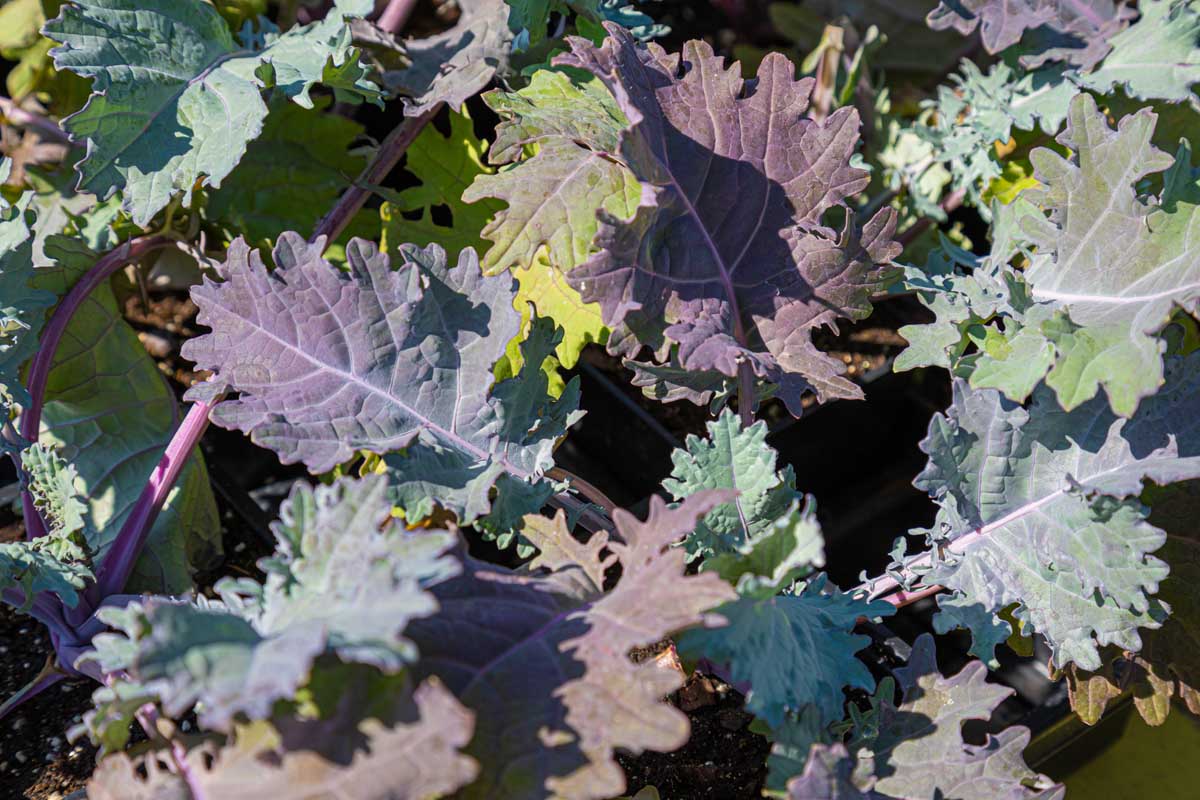
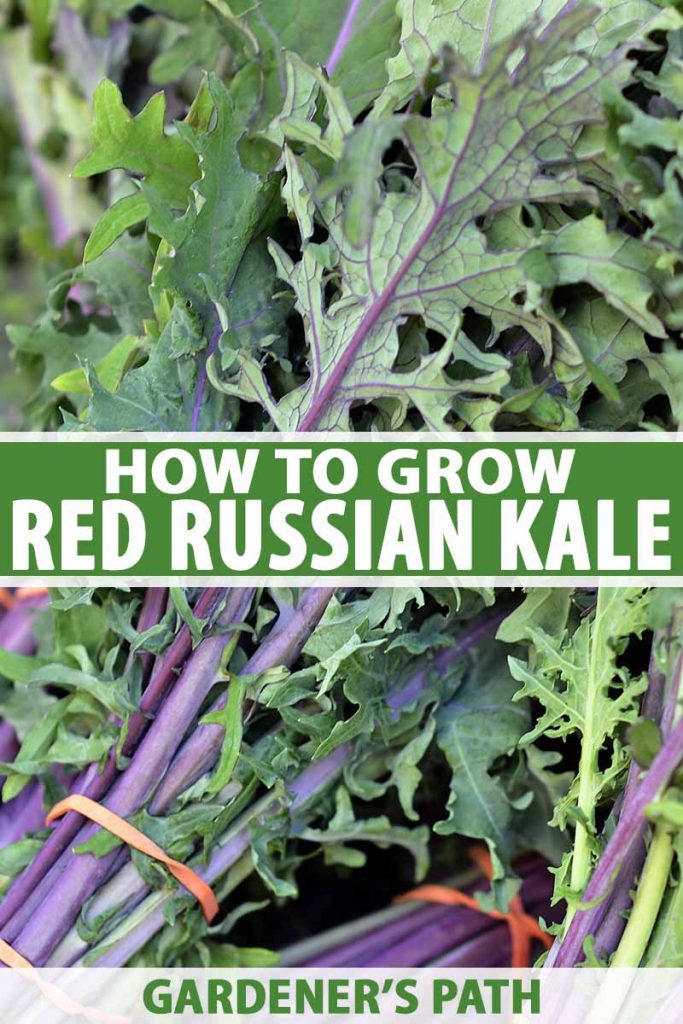
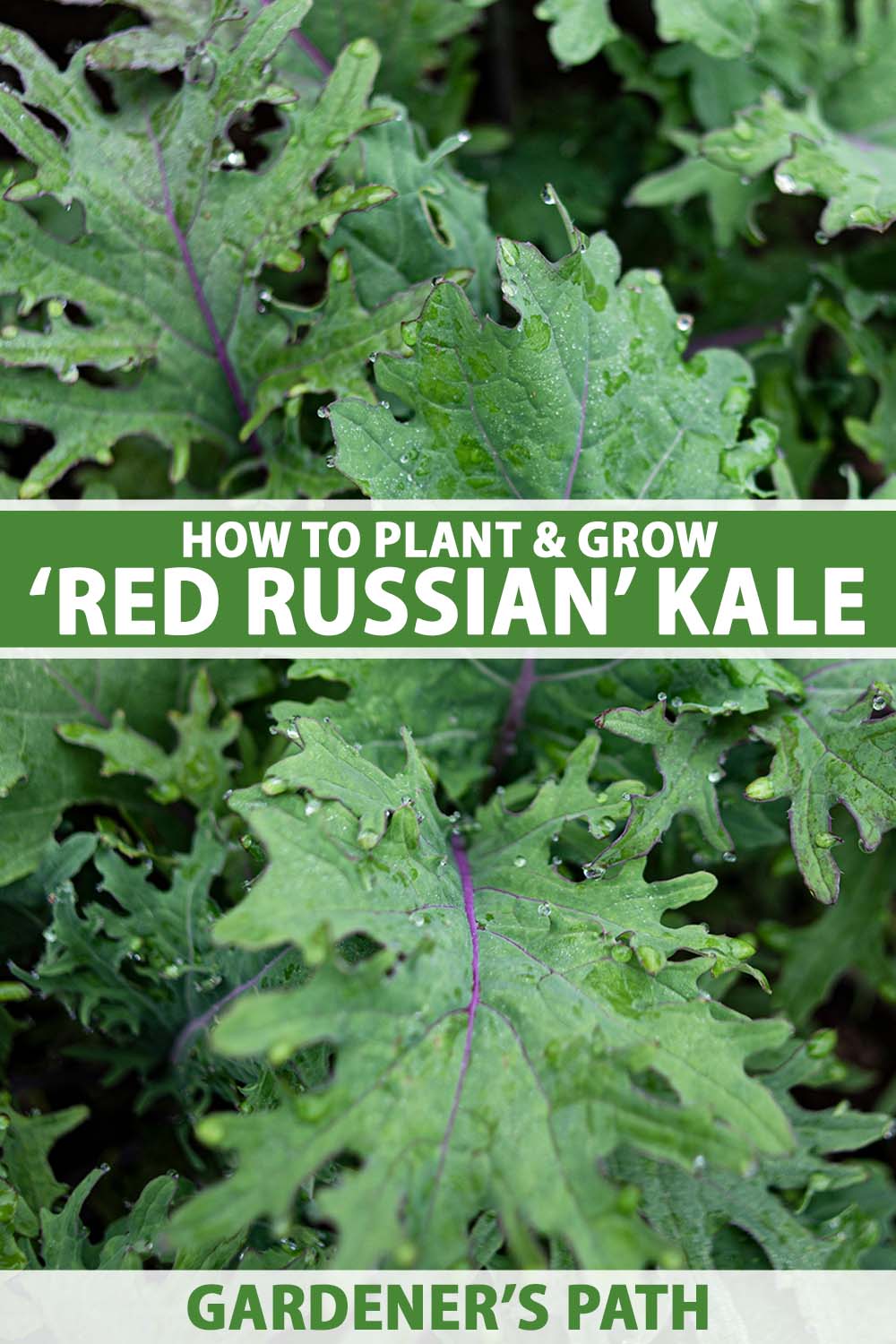
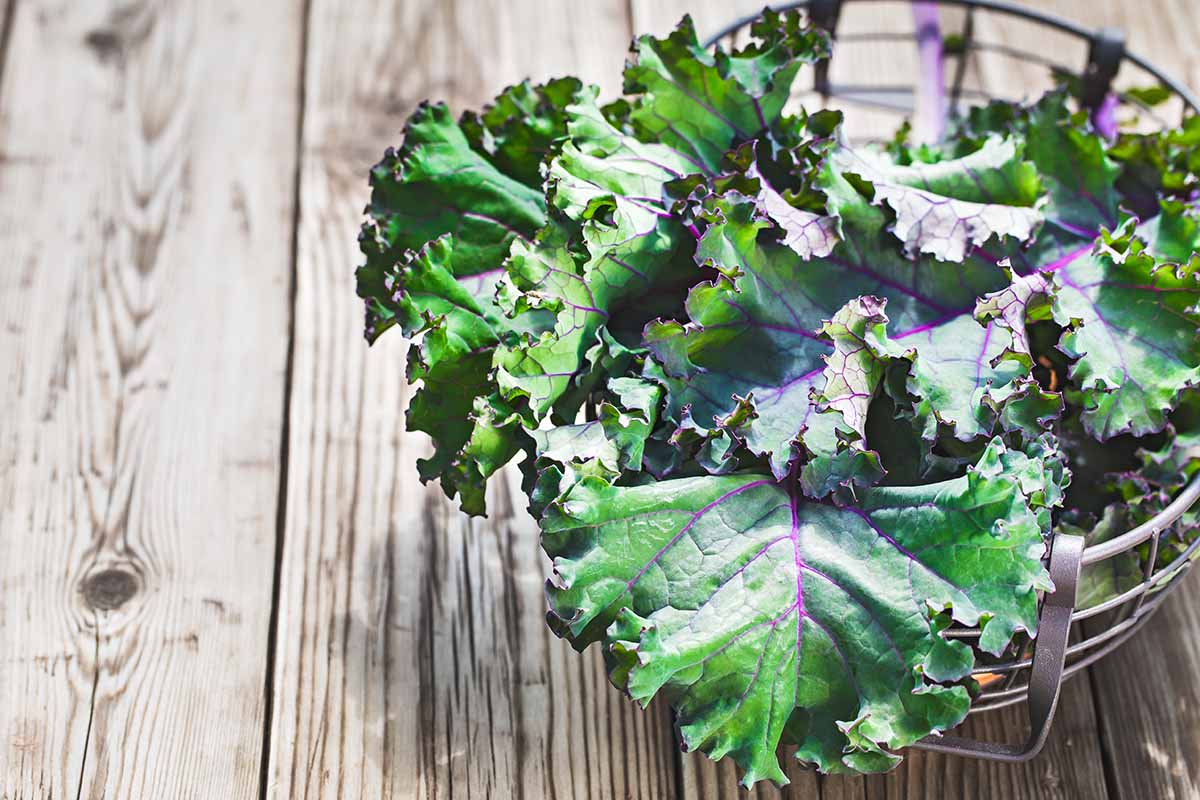
The plant also has a unique appearance with its frilly green leaves and purple-red stems.

We link to vendors to help you find relevant products. If you buy from one of our links, we may earn a commission.
In fact, some gardeners cultivate it just for ornamental purposes, adding rich color to their cool-weather gardens.
This cultivar is grown in a similar way to other varieties of kale, but I’ll provide the details for growing ‘Red Russian’ in this guide.
Here’s what I’ll cover:
What You’ll Learn
This particular cultivar of Brassica napus subsp. pabularia is also known as ragged jack and sweet red.
You may also see it classified as a cultivar of B. oleracea var. acephala which is considered a synonym.
With flat leaves that have jagged edges, this cultivar is one of the most tender and mild of the different types of kale.
Quick Look
Common name(s): Red Russian, ragged jack, sweet red
Plant type: Leafy biennial vegetable
Hardiness (USDA Zone): 2-9
Native to: Cultivated variety
Bloom time / season: Spring, fall, summer in cool climates, winter
Exposure: Full sun in cool seasons, afternoon shade in summer
Soil type: Loamy, organically-rich, well-draining
Soil pH: 6.0-7.0, slightly acidic to neutral
Time to maturity: 25 days (baby greens), 50 days (mature leaves)
Spacing: 6-12 inches after thinning
Planting depth: 1/4 inch (seeds)
Mature size: 12 to 36 inches tall and wide
Water Needs: Moderate
Taxonomy
Order: Brassicales
Family: Brassicaceae
Genus: Brassica
Species: Napus
Subspecies: Pabularia
Cultivars: ‘Red Russian’
As it is so tender, ‘Red Russian’ is often grown for baby greens. These small leaves make great additions to salads.
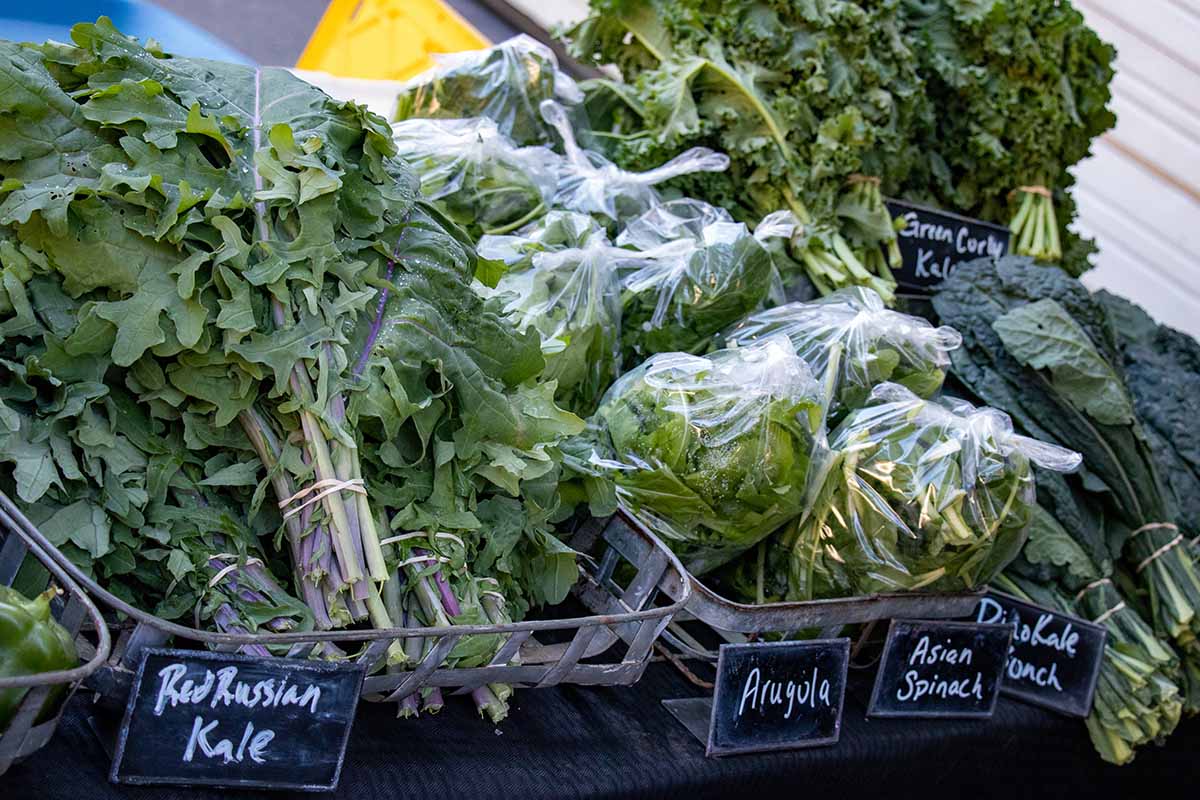
The bright purple stems differentiate this variety from ‘White Russian,’ another variety that’s extremely cold hardy.
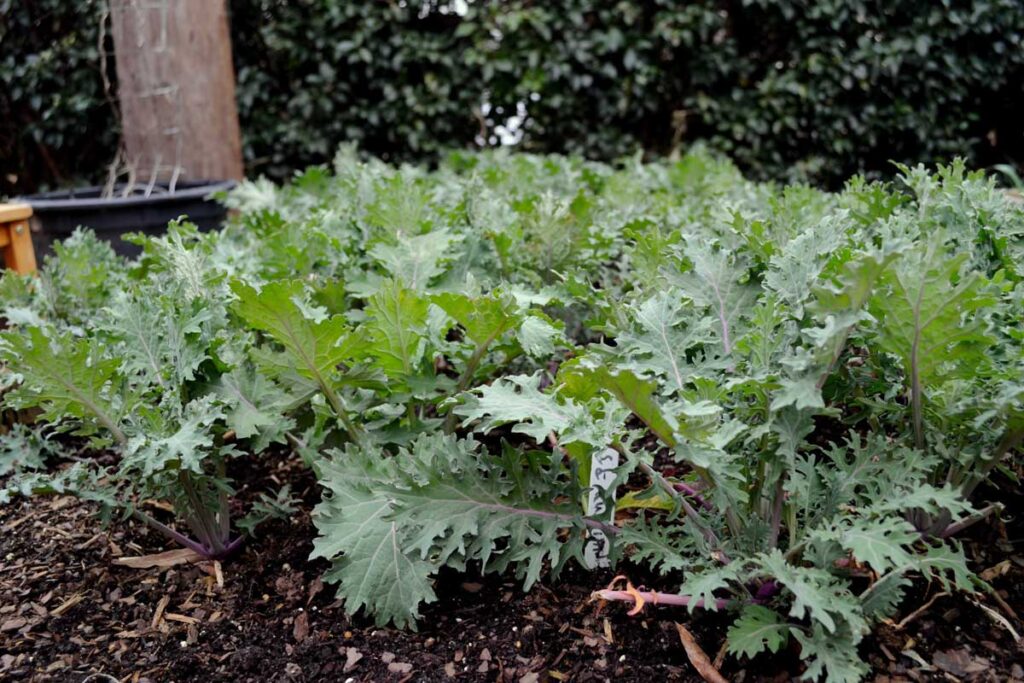
The purple color indicates the presence of compounds called anthocyanins.
According to a 2017 study in the Food and Nutrition Research Journal, anthocyanins provide a number of health benefits including antioxidant and antimicrobial properties.
How to Sow
Like all types of kale, ‘Red Russian’ enjoys cool temperatures and is prone to bolt in excessive heat. So it’s best grown in the spring and again in the fall.
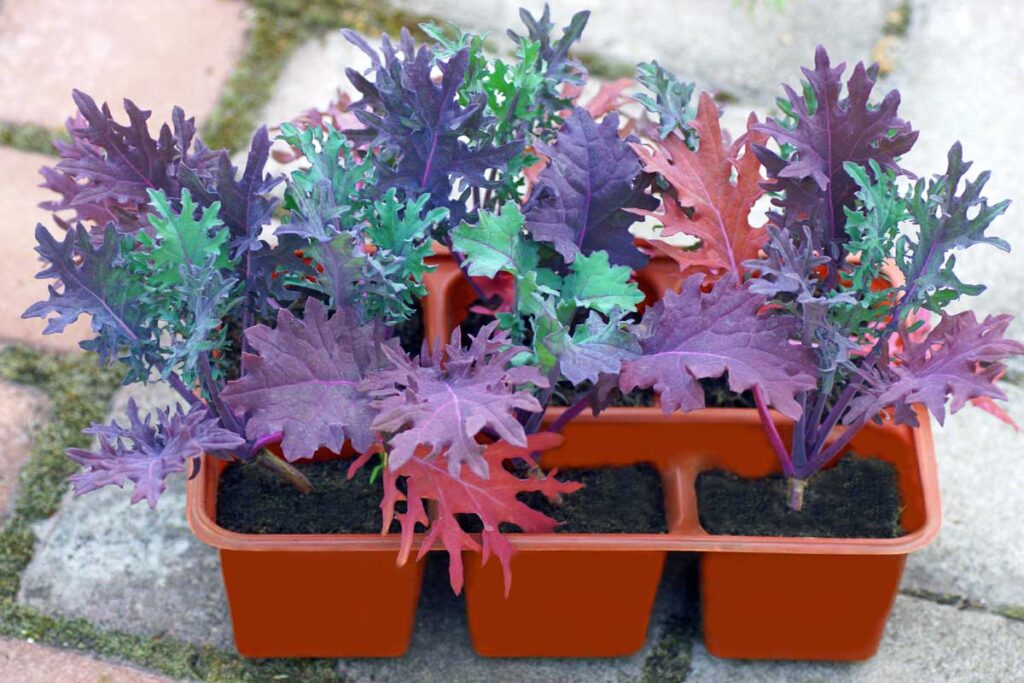
If you are starting seeds indoors to transplant, choose a sowing date based on your USDA Hardiness Zone:
- For Zones 2 to 5, sow seeds in April and again in late July.
- If your Zone is 6 to 8, sow seeds in March and again in early-mid August.
- If you are in Zone 9 or above, sow seeds in February and again in September.
The seedlings will be ready to plant out into your garden after three to four weeks. At this point, plant the transplants a foot apart.
If you plan to grow ‘Red Russian’ kale in containers, select a pot at least a foot in diameter and 10 inches deep. Follow the seeding and transplanting dates recommended above.
If there is still danger of frost in the forecast, protect your transplants with floating row covers.

If you are direct-seeding, sow seeds in your garden after the last frost date in spring. You can continue sowing seeds until daytime temperatures are above 80ºF.
You can sow seeds once again in August through September. The latest you should sow seeds outdoors is two weeks before your predicted first frost date.
An easy way to plant is to sow a single row of seeds spaced an inch apart.
As seedlings emerge, you can thin them to a foot apart for full-sized plants, or refrain from thinning at all if you want to harvest baby greens.
How to Grow
This cultivar has similar requirements to other types of kale. It should be planted in full sun and provided with about half an inch of water a week.
However, as with all crops, water more in hotter weather and less in cooler weather. You can use a moisture meter to guide you.
‘Red Russian’ is cold hardy, it can tolerate some heat, but it does best in colder conditions. In fact, a light frost can increase its sweetness.
Get more tips for planting and growing in our general guide to growing kale.
Where to Buy
As a popular cultivar, seeds are available at most nurseries and garden centers that carry a good selection.
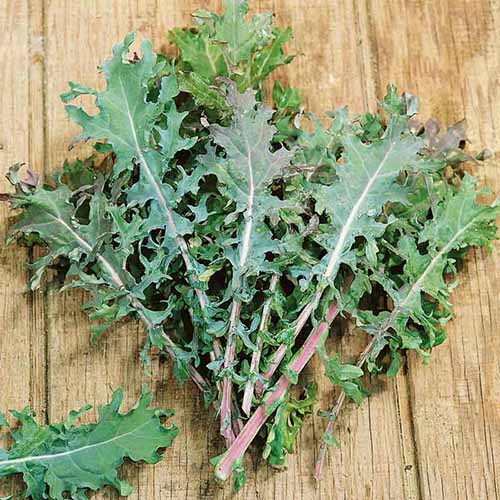
If you prefer to shop online, you can find packets of seeds in a variety of sizes available at Eden Brothers.
Pests and Disease
‘Red Russian’ kale is a relatively easy crop to manage, but there are some common problems to look out for.
You can read more about managing and treating wilting leaves and yellow and thinning leaves.
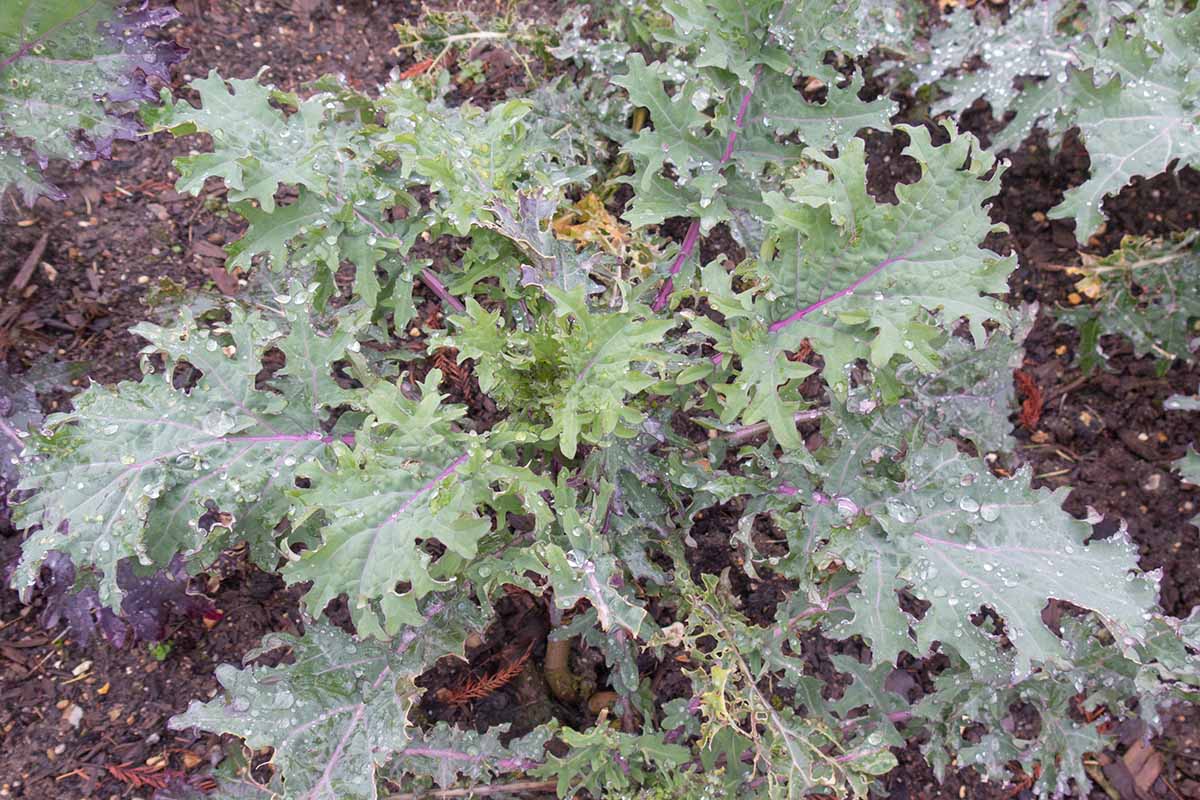
This vegetable is susceptible to damage from insects including aphids and cabbage worms.
Floating row covers can keep out a number of common pests, and a strong spray with the hose or hand picking can help to eradicate others.
Natural insecticides including neem oil and insecticidal soap can also help to knock down infestations.
Be sure to read labels carefully, and use products that are certified as food safe.
Harvesting
Whether you transplant or directly seed, baby ‘Red Russian’ kale is ready for harvest 25 days after sowing, and full-sized leaves can typically be harvested after 50 days.
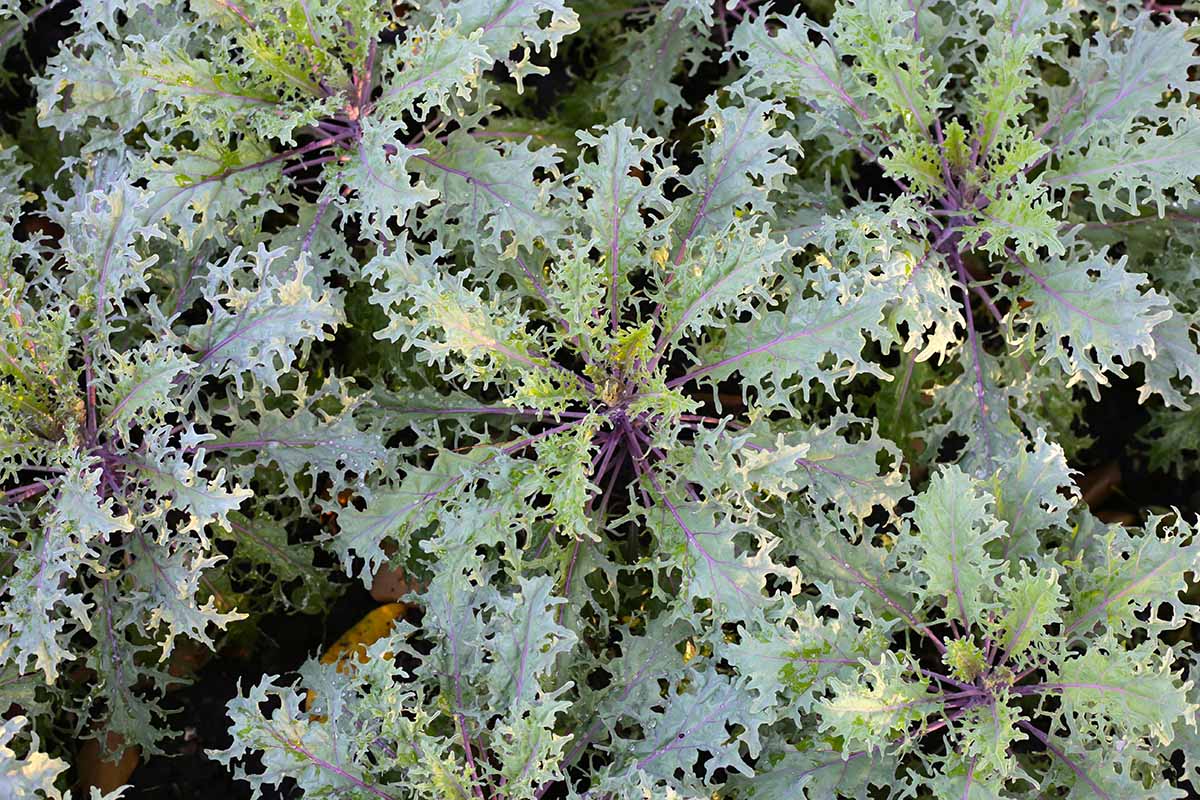
Your plants will mature more slowly when planted in the fall than in the spring.
‘Red Russian’ is harvested in the same way as other types of kale. One important tip to remember is to only harvest the outer leaves, leaving interior portions of new growth.
This allows the plant to continue to produce new leaves, providing you with multiple harvests.
Post-harvest, I’ve noticed the leaves tend to wilt faster than other greens. To prevent this, harvest early in the morning while it is still cool outside.
Make sure to take the leaves out of the sun quickly after you’ve collected them.
To remove field heat imparted by the sun in the veggie patch and to prevent wilting post-harvest, dunk the leaves in a tub of cold water.
You can then store leaves in a plastic bag or container inside your refrigerator.
Russian and Siberian species and cultivars are sometime left to grow for a second season and their flower buds are harvested and are known as kale rabe or napini.
This type is ideal served raw in salads as it has a tender texture and sweet taste.
Try it with grapefruit, apple, and red onion in this salad recipe from our sister site, Foodal.
Or add an avocado and lemon dressing to give it a deliciously creamy texture. You’ll find a recipe for creamy and colorful raw kale salad also on Foodal.
This type of leafy green also lends itself well to various cooking methods. One of my favorite ways to prepare it is to quickly saute the leaves in olive oil with onion and garlic.
Cooked this way, it makes a great topping for grits or a delicious companion for a fried egg.
You can also try adding it to some pasta with lemon and cheese as in this recipe from Foodal, or using it in pesto.
Sweet and Tender
If you’re hesitant about growing your own kale because you’re afraid it might be tough or bitter, give ‘Red Russian’ a try.
I’ve always loved its tender texture and slightly sweet taste.
Have you tried growing this variety in your garden? Let us know in the comments section below!
And to learn more about how to grow kale, check out these guides next:



My Russian kale has not died… it is doing fine in zone 5. Is it annual or perennial? Can clumps be divided?
Great questions, Terry. Kale plants are not typically divided, but they are cool weather crops. They are in fact biennials, not strictly annual or perennial. You can read more about this here.
I’ve got a bunch growing in pots right now. Zone 9 here. Wasn’t sure what would grow but it was a bit warmer January so why not. Different size pots some growing with beets. Mostly an experimental grow. Love the red russian though. I helped out an organic farm a couple years back and they had this variety. My favorite by far. This is the first year I have grown this variety. I’ve grown a dinosaur variety once before. Was tasty but infestation took hold.
I have a bunch this year, first kale I have ever tried growing.
My leaves are leggy but it could be due to location and crowding.
I planted Russian Kale zone 8 deep south last march and it never died back Still with me looking great and I just cut the bottom leaves and it still keeps giving me new leaves…It does better here than other kale strangely It gets sun in our short winters and partial sun in the summer…I did have to fight the dreaded white butterfly but it recovered!
Good article, can you send some seeds to India.
Prolific!
Nice!
Hi, I scored 6 Russian kale seedlings @ the NC state farmers market yesterday 1st time for starting a fall crop of anything, wish me luck 👍
Good luck and enjoy the leafy greens!
I was first introduced to this in a packet of mixed lettuce seeds and didn’t have a clue what it was; it was my favorite, though, of all the varieties. Perhaps because my soil is not the best, it did not produce abundantly and would be done fairly quickly, never growing very big year after year. This year, however, it wintered over and came up from the roots. Wow! It is producing like gangbusters and is still going strong in the heat of a central Iowa summer. This may be due to an abundance of rain, but it is more… Read more »
Hi Pat, thank you for sharing your experience! I agree with you, ‘Red Russian’ is by far my favorite type of kale, and you’re right, the leaves can be huge! I’ve had ones that I’ve overwintered that produce even better in the second year. It’s a staple in my garden now.
Gorgeous and delicious–raw OR sauteed. Hope to plant enough next year as a border plant with enough to feed us AND the caterpillars that made “lace” leaves of one growth session!
It’s always a battle to try and plant enough to feed the hungry caterpillars too!