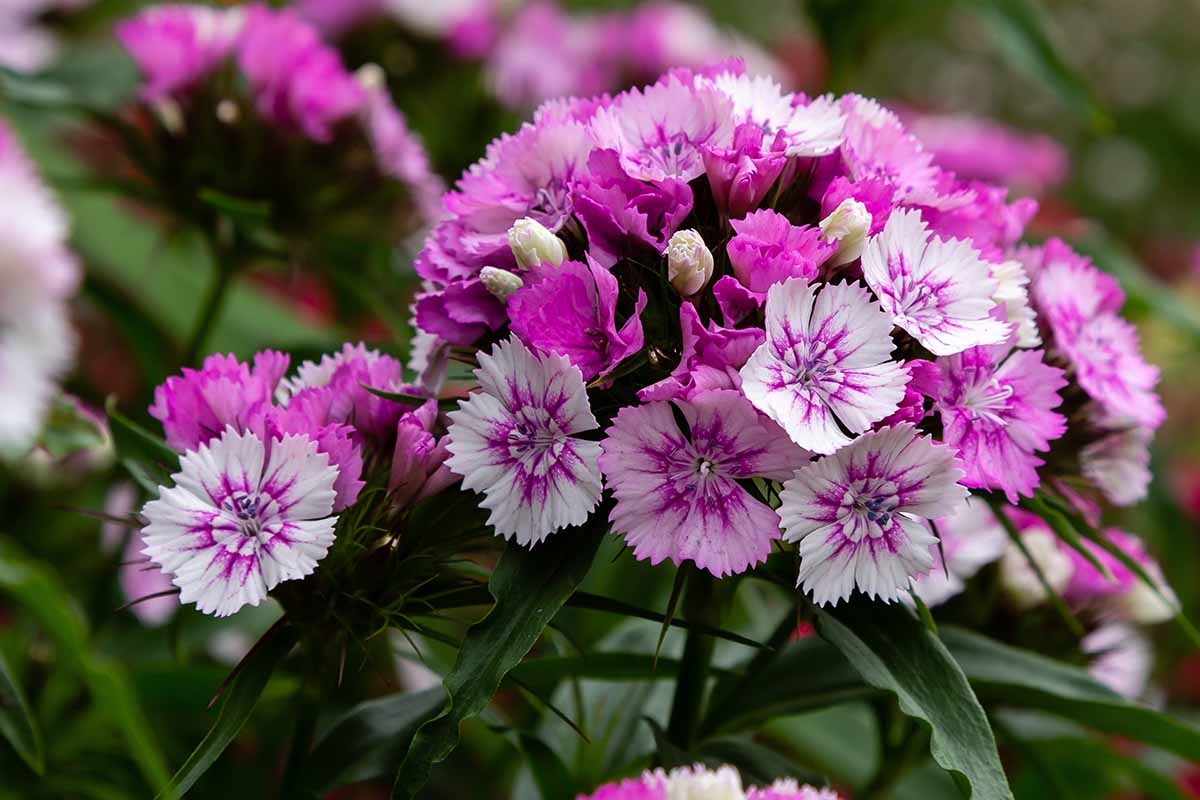


Dianthus barbatus
Among the most popular of all Dianthus species, sweet william (D. barbatus) is a favored ornamental with numerous cultivars and hybrids in a broad range of flower colors and plant sizes.

We link to vendors to help you find relevant products. If you buy from one of our links, we may earn a commission.
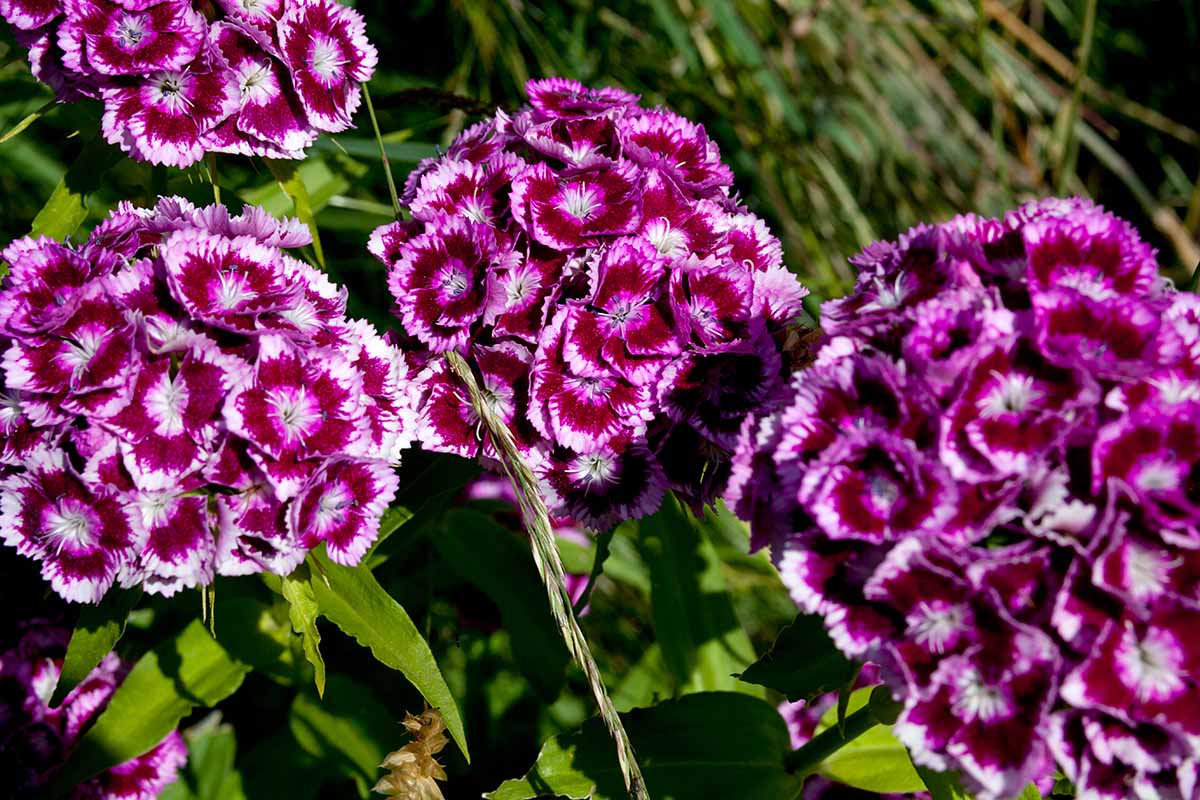
The small, fringed flowers are massed in densely packed, flattened clusters atop tall stems and have a fragrance reminiscent of sweet cloves – although in the case of many hybrids, the scent has been bred out of them.
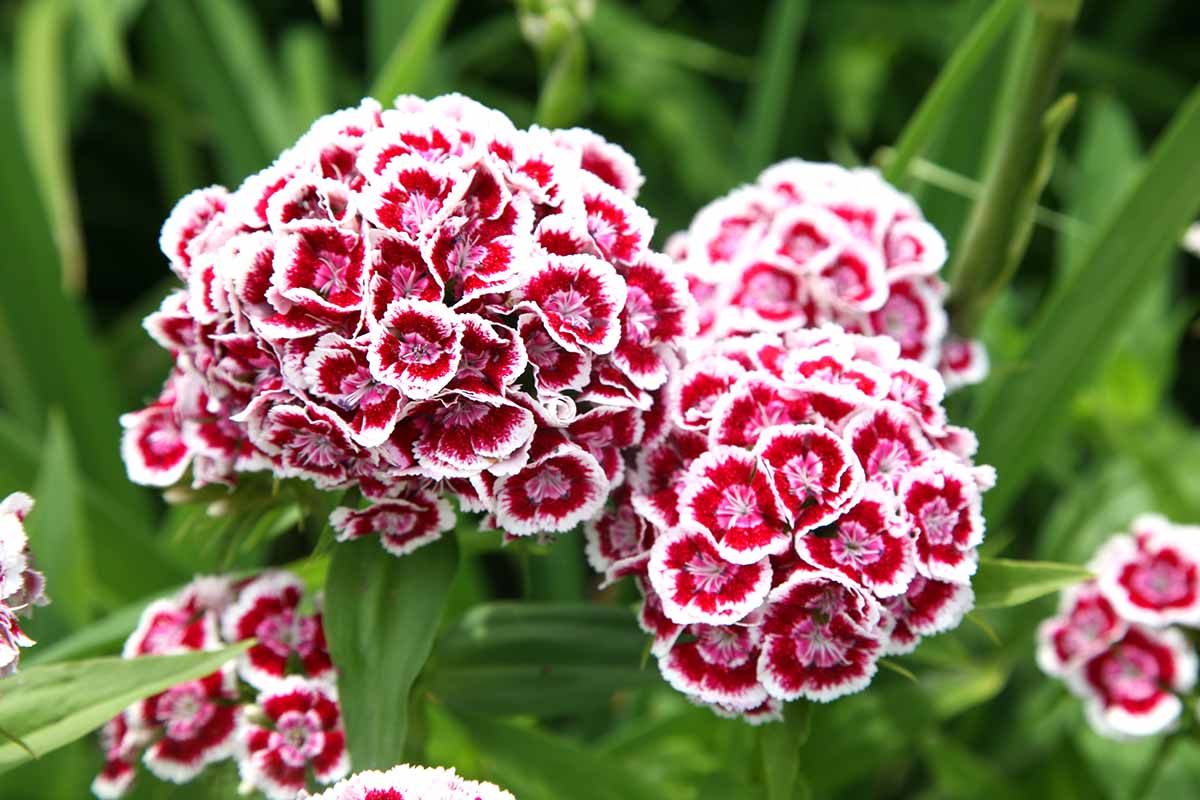
Flower colors are white and luscious shades of red, including burgundy, maroon, mauve, pink, and purple, and often handsomely patterned with contrasting edging and eyes.
If your garden needs colorful, fragrant flowers with a long blooming season, join us now to read up on how to plant and grow sweet williams.
Here’s what we’ll cover:
What You’ll Learn
Sweet williams are cold-hardy, biennial or short-lived perennials with single or double flowers, in the carnation family, Caryophyllaceae.
There are two varieties of D. barbatus, the European variety (D. barbatus var. barbatus), native to mountainous regions of southern Europe, and the Asian type (D. barbatus var. asiaticus), that originates in parts of China, Korea, and Russia.
Quick Look
Common name(s): Sweet williams, bearded pinks, bunch pinks
Plant type: Short-lived flowering perennial
Hardiness (USDA Zone): 3-11, depending on cultivar
Native to: Europe and Asia
Bloom time: Late spring and early summer
Exposure: Full to part sun
Soil type: Organically rich, well draining
Soil pH: 6.0-7.5, slightly acidic to slightly alkaline
Spacing: 6-12 inches
Planting depth: 1/8 inch (seeds), crown at soil level (transplants)
Mature size: 6-12 inches wide x 8-36 inches high
Water Needs: Moderate
Taxonomy
Order: Caryophyllales
Family: Caryophyllaceae
Genus: Dianthus
Species: Barbatus
Varieties: barbatus, asiaticus
Cultivars: Various
Also known as bearded or bunch pinks, the flowers are fringed and bearded and the epithet “barbatus” refers to the barbed or beard-like growth at the petal base.
These popular ornamentals form thick, upright flower clusters known as umbels, of up to 30 blooms that rise atop tall stems, flowering in late spring and early summer.
Repeat blooming on a lighter scale is also common through the summer months, so long as spent flowers have been deadheaded.
The small, five-petaled flowers have dainty, serrated edges and appear in shades of pink, red, purple, and white with some variegated patterns. The thick foliage is a deep blue-green with narrow, grass-like leaves.
Individual flowers measure one-half to one inch in diameter and umbels grow three to five inches across. Plants reach a mature height of 24 to 36 inches with a spread of 12 inches, and dwarf varieties grow up to eight inches tall.
Carnations, ‘Firewitch’ pinks, and garden pinks are among the most fragrant of dianthus, and heritage strains of sweet william have the familiar spicy fragrance of cloves, but with less intensity.

However, many hybrids of D. barbatus have little or no scent, while others have been bred for a strong scent. If fragrance is important to you – or if you prefer non-perfumed flowers – check cultivar details carefully before purchasing.
Traditional sweet williams that are grown biennially or perennially require vernalization (winter cold) for flowering, but many hybrids do not and will flower readily in their first year.
Plants are generally hardy in USDA Zones 3 to 9, though some cultivated hybrids can withstand the warmer temperatures of Zones 10 and 11 as well.
The vividly colored, perfumed petals are edible, with a mild flavor, and make a pretty garnish for beverages, cakes, desserts, and salads.
Sweet williams attract bees, birds, and butterflies and is one of the few Dianthus species to be frequented by hummingbirds.
The tall-stemmed flowers are a knock-out in floral arrangements – particularly the long-lasting and perfumed heritage cultivars!
How to Grow
Sweet williams offer their most impressive floral show when given the right growing conditions.
Whether you’re planting them as annuals or short-lived perennials, providing optimal care ensures prolific blooms and vigorous plants. Here’s how to give your flowers the royal treatment.
Light
These flowers perform best in full sun, where they receive at least six hours of direct sunlight each day.
While they can tolerate partial shade—particularly in regions with intense afternoon heat—too much shade can lead to leggy stems and fewer blooms. Aim for a sunny, well-ventilated spot to encourage strong, compact growth and vivid flower colors.
Soil
Sweet williams thrive in loose, well-draining soil with moderate fertility. A loamy or sandy soil enriched with well-rotted compost is ideal. The preferred pH range is slightly alkaline to neutral, around 6.0 to 7.5.
Avoid soggy, heavy clay soils that retain too much moisture, which can lead to root rot.
If your soil tends to hold water, consider planting in raised beds or amending with coarse sand or perlite for better drainage.
Temperature and Humidity
These plants are cool-weather lovers. While all sweet william cultivars are hardy in USDA Zones 3 to 9, they thrive in temperatures between 50 and 75°F.
Heat can shorten their bloom period, so if you live in a warm climate, provide afternoon shade or consider growing them as a fall or early-spring annual.
Sweet williams tolerate a range of humidity levels, but good air circulation helps prevent fungal issues like rust and mildew, especially in humid environments.
Water
Keep the soil evenly moist but not waterlogged. During dry spells, water deeply once or twice a week, allowing the soil to slightly dry out in between.
D. barbatus is somewhat drought tolerant once established, but regular access to moisture increases blooms and plants should be watered during extended dry periods.
Overwatering can lead to crown and root rot, so it’s essential to let the top inch of soil dry out before watering again.
Water at the base of the plant to avoid wetting the foliage, which can promote fungal diseases.
Fertilizer
Feed sweet williams with a balanced fertilizer—like a 10-10-10 or 5-10-5—once every couple of during the growing season.
Over-fertilizing, especially with high-nitrogen blends, can cause lush foliage growth at the expense of flowers.
If your soil is already rich in organic matter, you may not need to fertilize at all.
A light top-dressing of compost or an organic fertilizer such as Espoma Plant-Tone in spring is often enough to sustain these plants through their bloom cycle.
I buy it in the big 36 lbs bags, but 18 lbs, and 4 lbs bags are also available. I split mine up into a couple 5 gallon buckets with lids (to keep the critters out) and use it for pretty much everything.
Container Growing
Sweet williams make excellent container plants, ideal for patios, balconies, and anywhere else you want a pop of color close at hand.

Choose a container with drainage holes that’s at least 8 to 10 inches deep to accommodate their root system.
A 12-inch-wide pot can comfortably support three to five plants, giving them enough room to flourish without crowding.
Fill the container with a lightweight potting mix enriched with compost or slow-release fertilizer. Avoid heavy garden soil, which can compact and suffocate the roots.
Since containers dry out faster than in-ground beds, you’ll need to check moisture levels frequently, especially during hot or windy weather. Water when the top inch of soil feels dry.
Place your pots in a location that receives full sun for the best flowering results. In hotter zones, morning sun and afternoon shade can help prevent wilting or scorching.
Cultivars to Select
There are many popular cultivars and hybrid series of D. barbatus to choose from.
Here are a few of my favorites:
Albus
For a restful note in the colorful early summer garden, ‘Albus’ provides a beautiful display of densely packed, pure white flowers in large, rounded umbels.
Rising on extra-sturdy stems that refuse to collapse, even after rain, the fragrant flower clusters make an attractive addition to raised beds, borders, or patio pots and throughout butterfly, cottage, and cutting gardens.
Gorgeous as a long-lasting cut flower, the edible flowers also make a lovely plate garnish or a pretty addition to mixed salad.
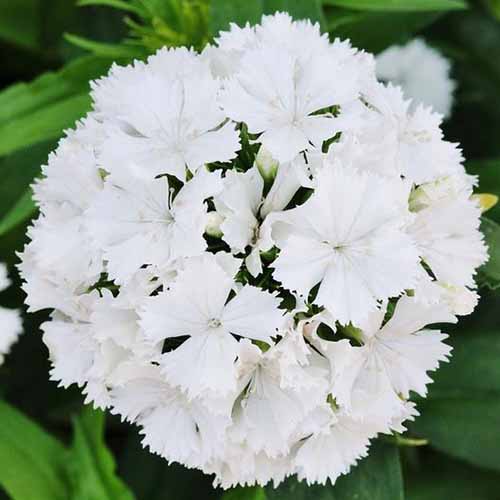
Plants reach mature heights of 20 inches and require no cold weather vernalization. Hardy in Zones 3 to 9.
Seeds by the packet or in bulk are available at Eden Brothers.
Jolt Pink Magic
With large and lovely white flower heads that magically morph into shades of pink, deepening as they mature, Jolt ‘Pink Magic’ is a strong summer performer and fragrant as well.
Jolt is one of the most heat-tolerant series, and plants feature strong stems that grow up to 16 inches tall.
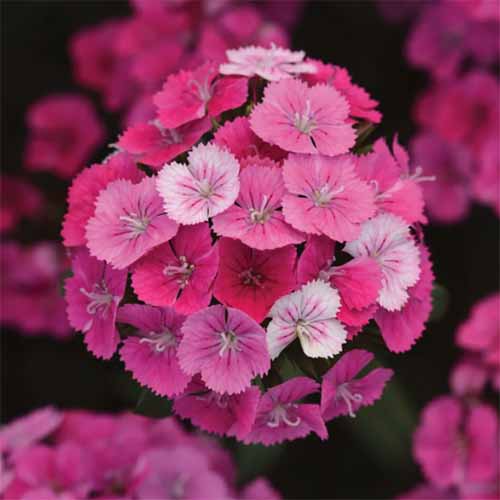
Hardy in Zones 7 to 11, cultivars from the Jolt series are most often grown as annuals.
Packets of 20 seeds are available at Burpee.
Sweet Black Cherry
The Sweet series of hybrids are extremely fragrant and make fantastic cut flowers.
‘Black Cherry’ features striking, large flower heads in dark cherry with sparkling white and pink stamens on long, strong stems that last for weeks in the garden or in a vase.
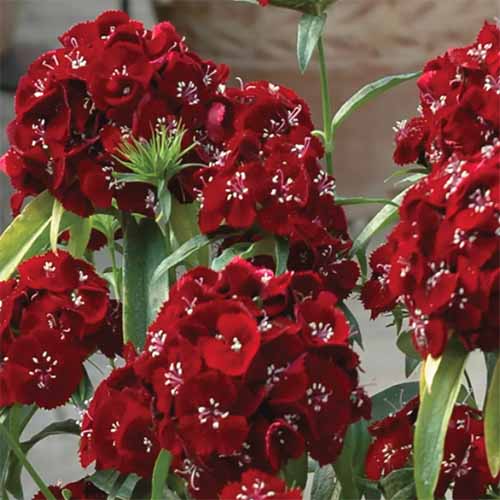
Growing 18 to 36 inches tall, plants require no vernalization and put on a steady show in their first year.
They have good cold and heat tolerance and make a vibrant impact in the garden. Hardy in Zones 6 to 9.
Packets of 25 seeds are available at Burpee.
Telstar Mix
The Telstar series is noted for their well-branched plants with multitudes of colorful and lightly fragrant single, semi-double, and fully double fringed flowers.
Bred for high resistance to the pathogens that cause damping off, the compact plants grow eight to 10 inches tall in cascading mounds.
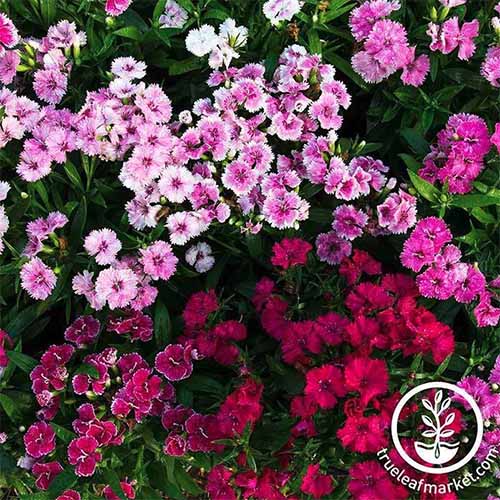
Telstar Mix offers a combination of bright, bold colors in shades of carmine rose, pink, purple, and purple picotee.
Their uniform growth is beautiful for mass planting in borders or edges and the cascading habit is perfect for hanging baskets, patio planters, or window boxes. Hardy in Zones 5 to 9.
Seed in packets and bulk are available at True Leaf Market.
Wee Willie Mix
Wee Willie is a fast-growing dwarf series that delivers a big impact with bright, bold colors of burgundy, magenta, mauve, pink, and fantastic bicolor variations.
With a spicy, sweet fragrance, the adorable compact plants grow up to eight inches and add vibrant color to borders, raised beds, containers, edges, rock gardens, and window boxes.
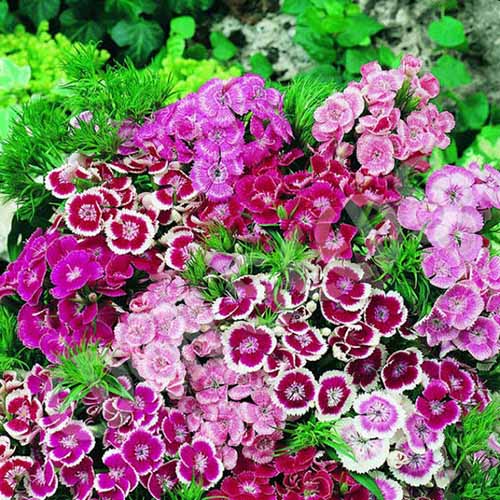
No vernalization is required for first year flowers and plants are hardy in Zones 4 to 10.
Packets and bulk seeds are available at Eden Brothers.
Maintenance
During the growing season, give plants a dose of all-purpose, balanced fertilizer every six to eight weeks.
After flowering, deadhead spent blooms to tidy plants and encourage a second, lighter rebloom in summer.
If you wish to collect the seeds, allow a few flower heads to remain and ripen, then harvest seeds in late summer just as the dry pods start to open for seed dispersal – if you hear them rattle when gently shaken, they’re ready.
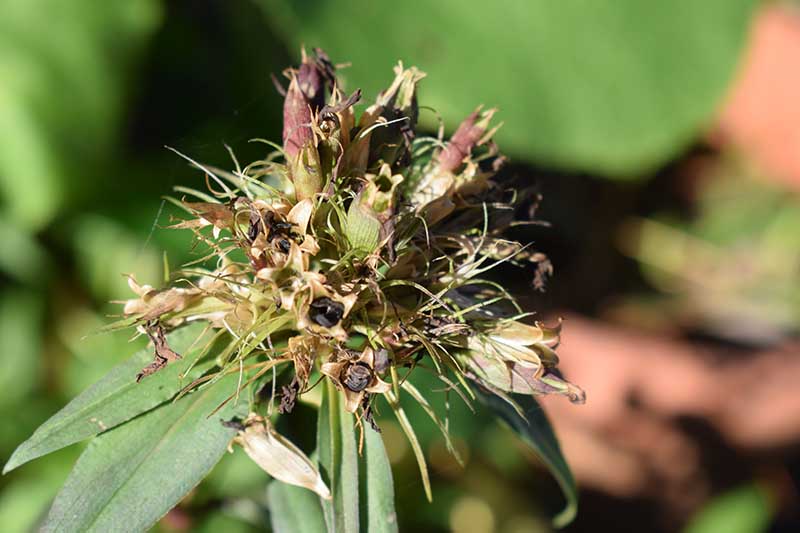
If you want plants to reseed themselves, leave a few flower heads in place. In late summer just as the pods are opening, clean the soil around the plants then bend the stems over and shake to scatter seeds.
Gently scratch seeds into the soil to barely cover, then firm lightly in place.
It should be noted that self-seeded plants from double-flowered or hybrid varieties will not grow true to the parent plant and typically revert back to the red and white coloring of the species plant.
In late fall after the foliage withers and dies, remove plant debris and clean beds. In areas with mild winters where leaf shedding is minimal, cut plants back to a height of four to six inches.
For areas that expect cold winter weather, apply a four-inch layer of loose mulch over the crown, such as shredded leaves or straw. Remove the mulch in spring after the danger of frost has passed.
After new growth emerges, you can selectively cull any unwanted seedlings. This is also a good time to divide older plants, and seedlings can be gently lifted and transplanted to new locations.
Propagation
Sweet williams are easily propagated from seed, by division, and via tip cuttings. Plants purchased from a nursery are typically one year old and will flower the same year they’re planted.
Indoor Seed Sowing
To start plants indoors, sow seeds six to eight weeks before your last expected frost date.
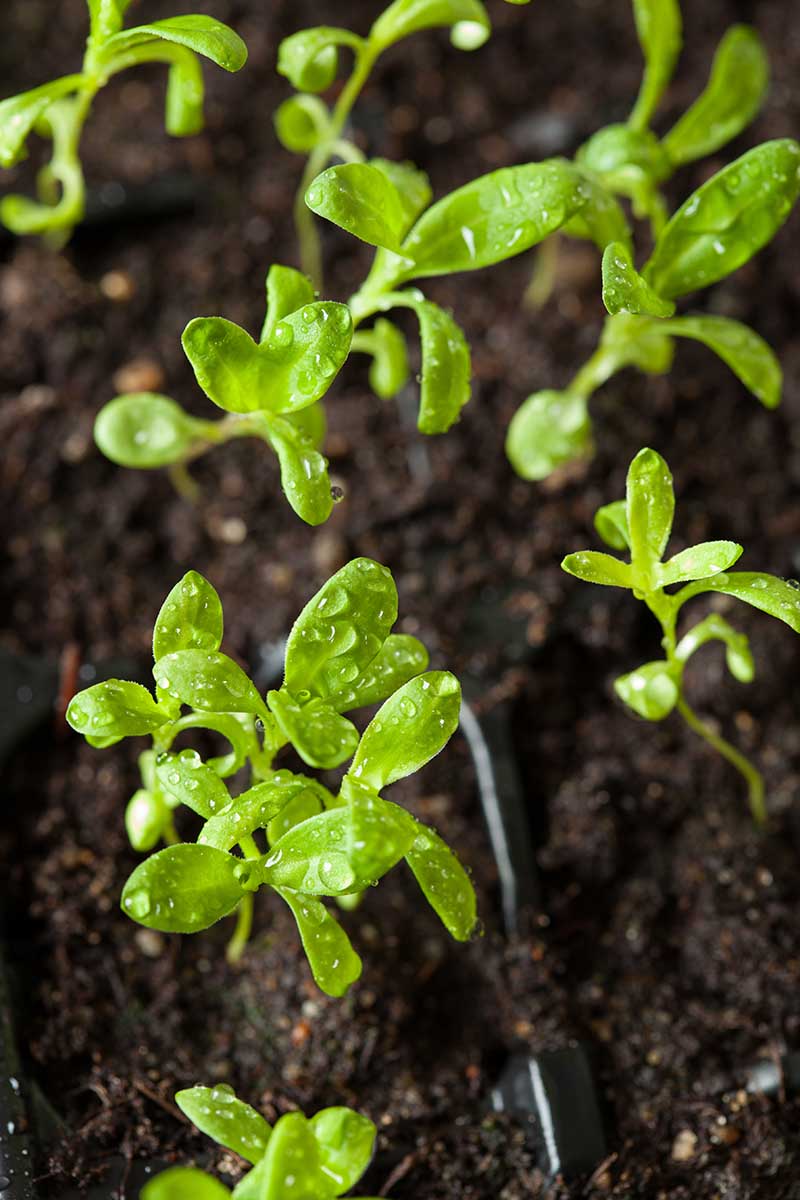
Here’s how:
- Sow in seed flats, celled trays, or individual peat pots filled with a moist, lightweight, porous potting soil or a seed starting mix that contains moisture-retentive materials like coconut coir, peat moss, perlite, or vermiculite.
- Sprinkle seeds lightly on top of the soil and barely cover with one-eighth of an inch of soil.
- Place in a location with bright, indirect light, and temperatures in a range of 65 to 75°F.
- Germination occurs in seven to 14 days. Keep the potting medium evenly moist, but not waterlogged.
After seedlings have developed three or four true sets of leaves, they can be planted out into containers or the garden.
If seeds are sown early enough – several weeks before the last frost date – plants may flower in their first year.
Outdoor Seed Planting
To plant outdoors:
- Prepare the soil by digging in a few handfuls of compost or well-rotted manure to a depth of six to eight inches.
- Add in a shovelful of landscape sand or pea gravel to improve drainage if needed.
- Sprinkle seeds on top of the soil and lightly cover with one-eighth of an inch of soil.
- Water gently with a shower setting on the garden hose to avoid displacing the seeds.
- After the seedlings are three inches tall, thin as needed to allow six to 12 inches between plants, depending on the cultivar.
Seeds planted after the last frost date will typically flower in their second year. Alternatively, you can sow seeds in early fall, for flowers the following spring.
By Division
Grown as a short-lived perennial, D. barbatus can be divided every two to four years. Plants are best divided in spring just as new growth starts to appear after winter dormancy.
If needed, water plants thoroughly a day or two before dividing to soften the soil and make lifting easier.
Insert a spade six to eight inches outside the root ball and dig all around the plant, then pry it up and lift it gently from the ground.
Use a clean, sharp knife to divide the roots into halves or quarters, then gently shake excess soil from each section.
Replant promptly in prepared soil to the same depth as the parent plant and water gently.
From Tip Cuttings
Tip cuttings take root quickly in summer and are best taken between June and September.
Take two- to three-inch cuttings from stem tips, remove the lower leaves and place stems upright in warm water to soak overnight.
The following day, dip the cut end into powdered rooting hormone, if desired, and insert them into four- to six-inch pots filled with a moist, porous potting mix. Use three to four cuttings per pot spaced evenly.
Place the cuttings in a cold frame or find a spot in the garden with dappled sunlight or light shade.
Keep the soil moist and roots should form in three to four weeks. After roots are established, transfer to larger pots or into the garden.
Cuttings taken in summer will flower the following year.
Pests and Disease
Many D. barbatus cultivars have been bred for improved disease resistance, but a few common issues can still occur.
Pests like aphids or spider mites may make an appearance, and these can be despatched with a spray of water from the hose – or in the case of more severe infestations, neem oil or insecticidal soap can be applied.
Slugs and snails can chew stems and foliage, particularly in shady areas. To deal with gastropods, handpick and dispose – or read up on the best natural methods to protect your garden from slugs and snails.
Like all dianthus, plants are susceptible to fungal diseases like crown rot and rust, which are most prevalent in poorly draining soils.
Best Uses
Sweet williams are suitable for a variety of garden locations.
Low-growing varieties are an ideal choice for small areas and highly effective in borders, edging, and rockeries, or patio pots and window boxes.

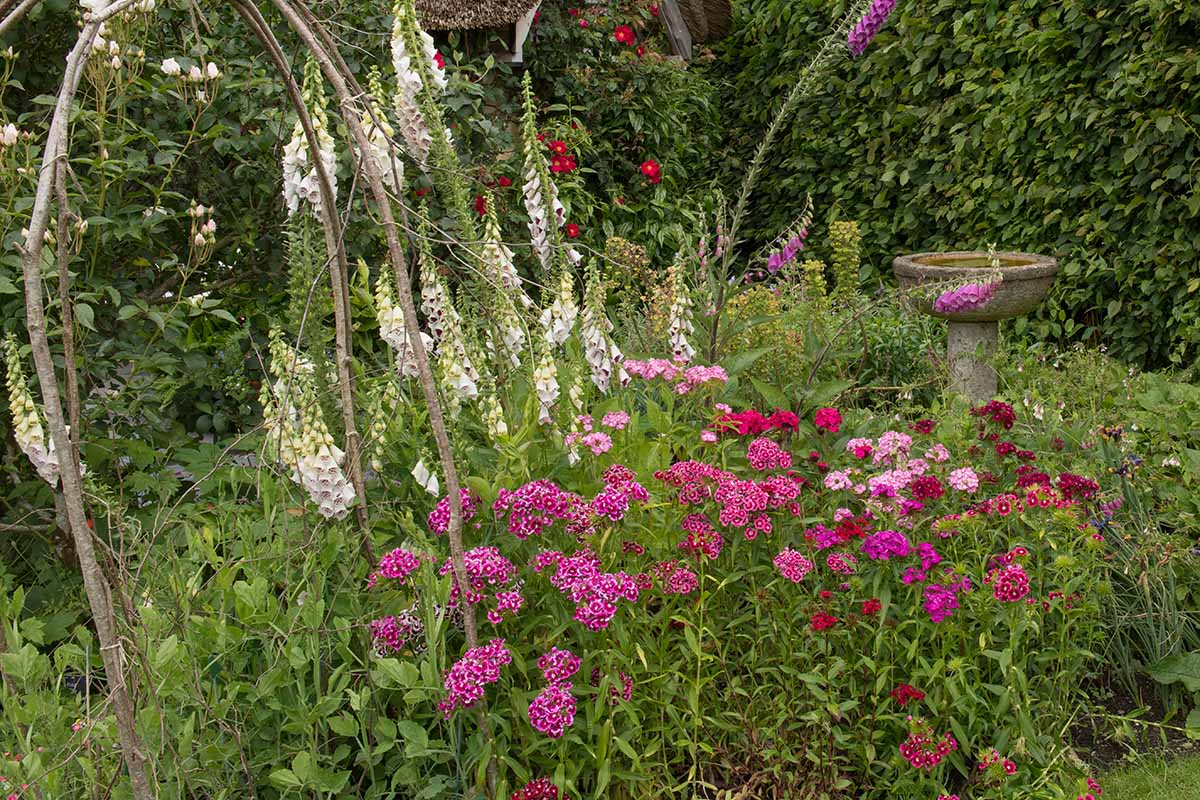
Taller varieties can be used to fill gaps in perennial beds and are spectacular when massed in drifts or rows in butterfly, cottage, and courtyard gardens.
The tall stems and long bloom time add beauty to flower arrangements, so plant plenty for the cutting garden!
And be sure to mass plant species types where the spicy perfume can be enjoyed, such as bordering decks and patios, flanking entryways, and along garden paths.
A Cottage Classic and More
Sweet williams are well-loved as cottage garden classics, but they also add charm and beauty to many more settings from borders and butterfly gardens to patio pots and window boxes.
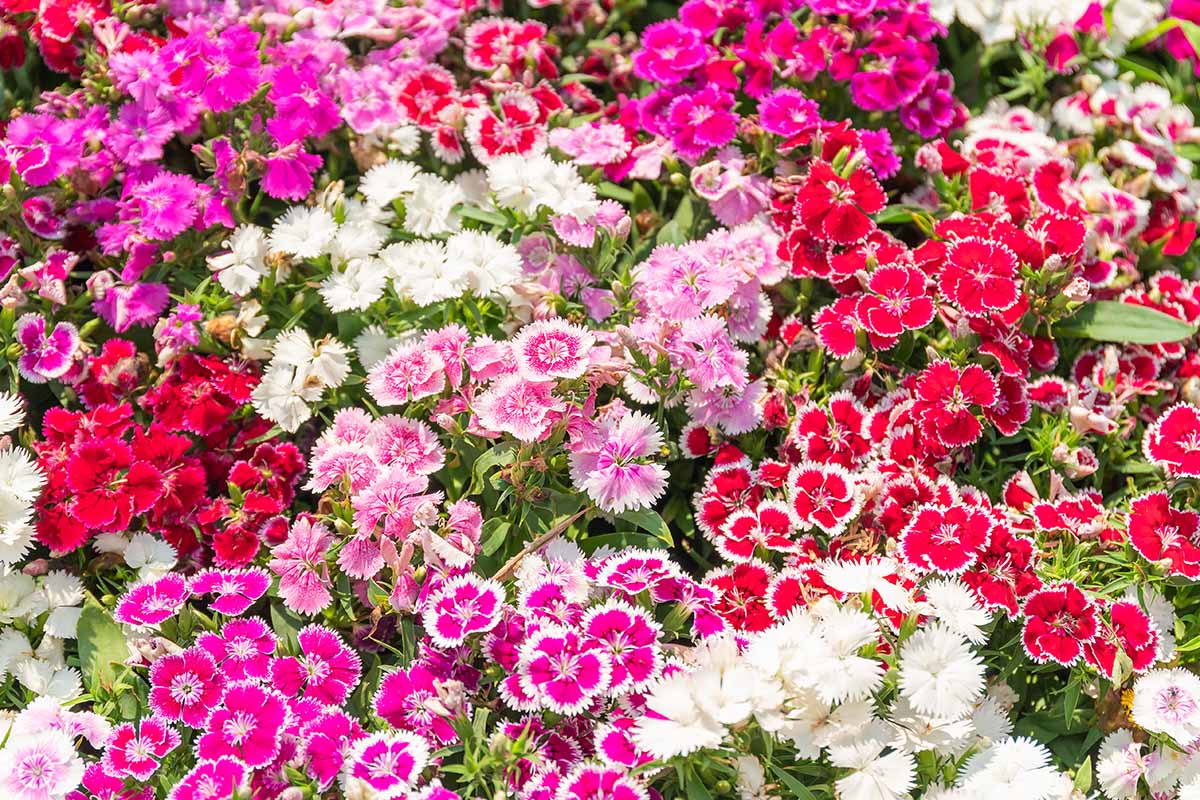
Brightly colored with masses of flowers in late spring, remember to deadhead spent blooms for a light reflowering throughout the summer months.
Do you folks have a favorite variety of sweet william? Tell us about it in the comments section below.
And for more information about delightful dianthus, be sure to read these articles next: