How to Grow Rutabaga: A Cool-Weather Crop Perfect for Fall
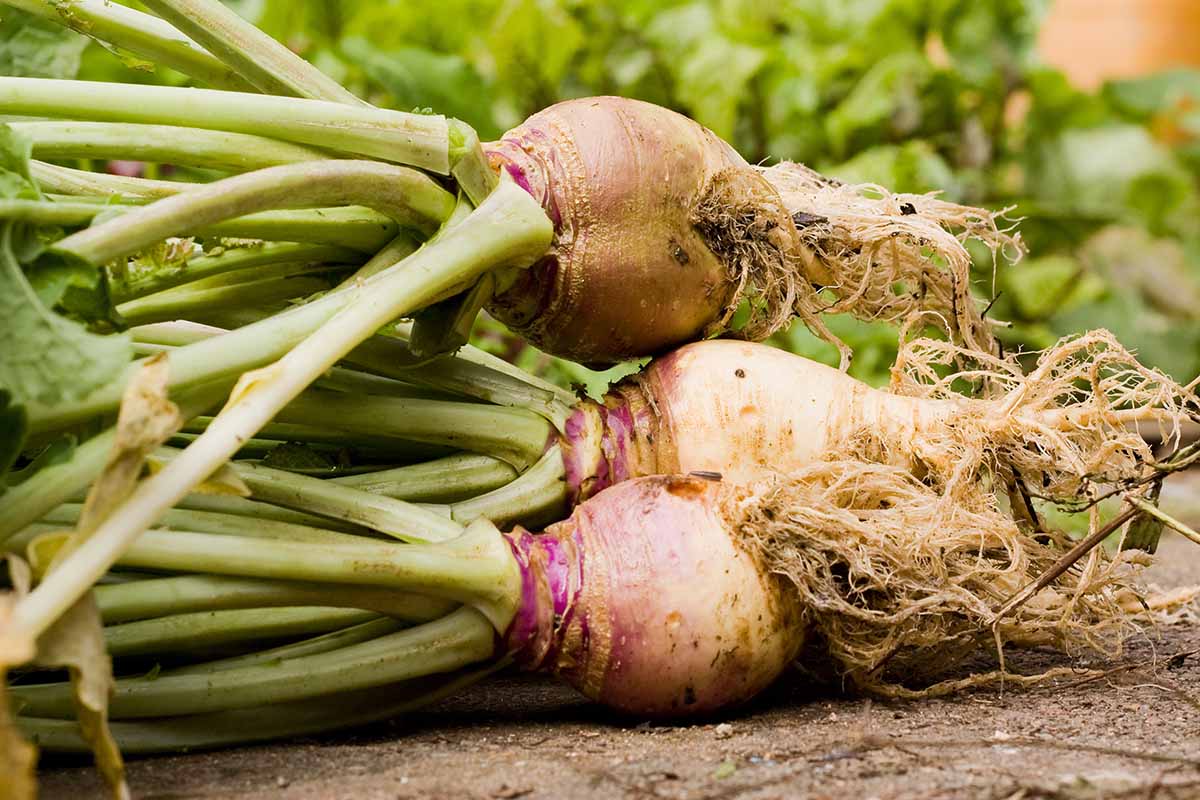
A close up horizontal image of three pinkish purple and white rutabagas with dirt-covered roots and green stems and leaves, laying on their side in the dirt, with more leafy greens in the background.

Rutabagas are a sweet, nutty cross between a turnip and a cabbage. Grown for their large golden roots with purple-tinged skin, they take about 90 days to mature. Give them full sun, loose well-draining soil, and consistent moisture for the best results. Learn how to plant and grow rutabagas in this guide. Read more now.
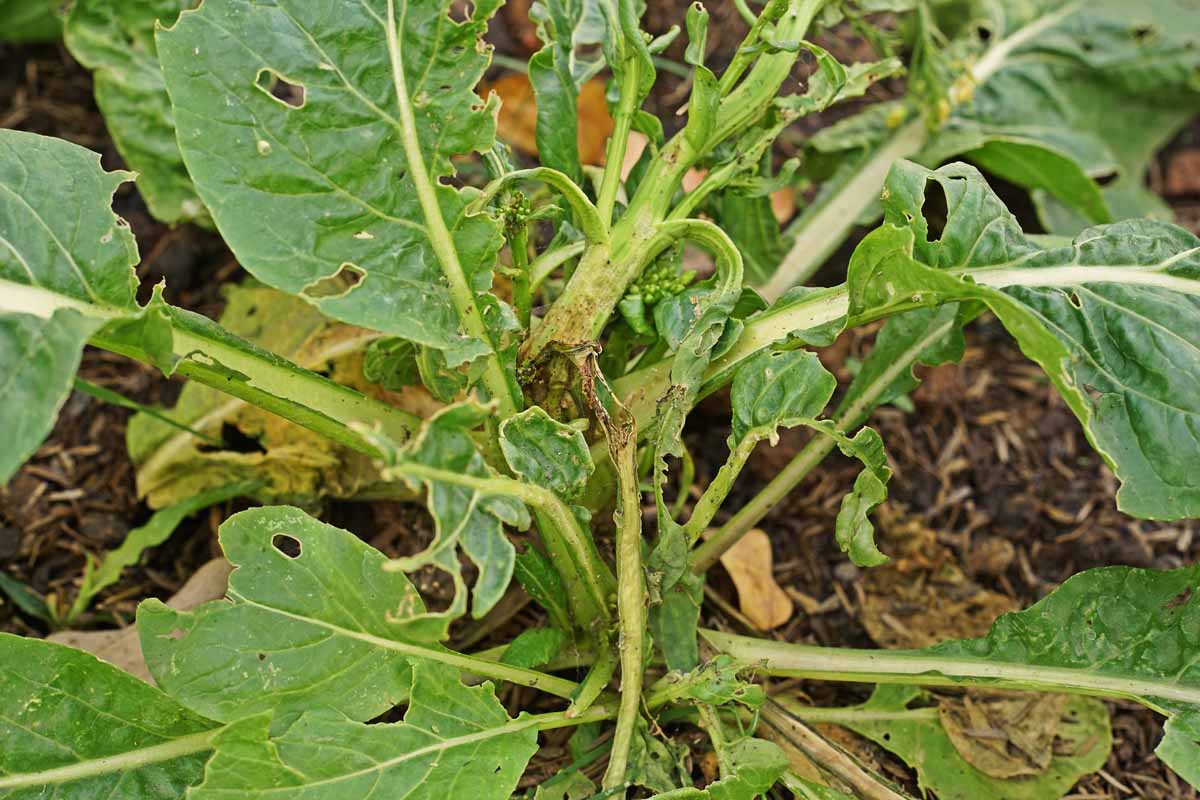
How to Identify and Treat Diseases of Turnips and Rutabagas

Close up of a turnip plant with diseased leaves.

Fungi, bacteria, and water molds cause multiple types of diseases on the leaves or roots of turnips and rutabagas. In addition, turnip mosaic virus is a debilitating disease. You can prevent many diseases by using clean or heat-treated seeds. Read on to find out what symptoms to look for on your crops.

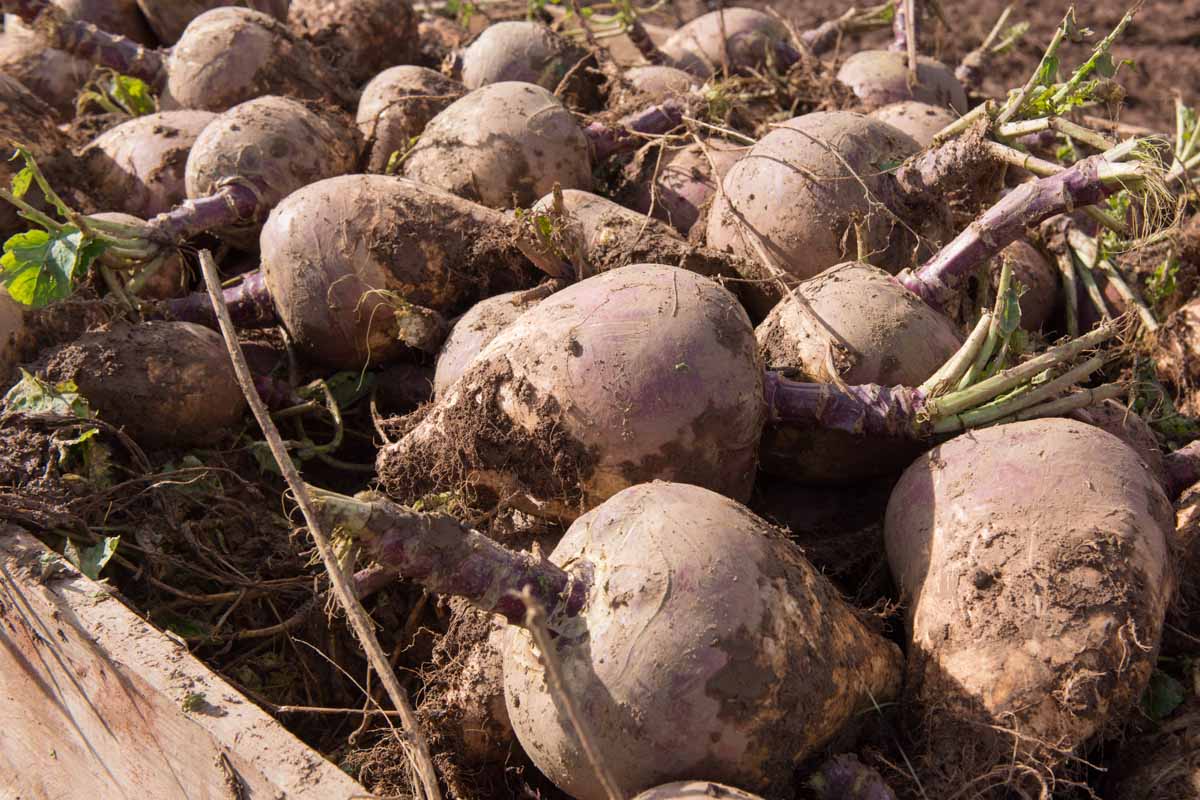
How to Harvest and Store Rutabaga

Horizontal image of dusty, slightly dirt-covered, just-picked pale purple rutabagas.

How do you know when it’s time to harvest rutabaga? And what should you do with it once you’ve picked it? Head over to Gardener’s Path to learn how and when to harvest and proper storage techniques, plus we share our favorite cooking tips and recipe ideas. You’ll be astonished at how many ways rutabaga can be enjoyed.

How to Control White Leaf Spots on Cruciferous Vegetables

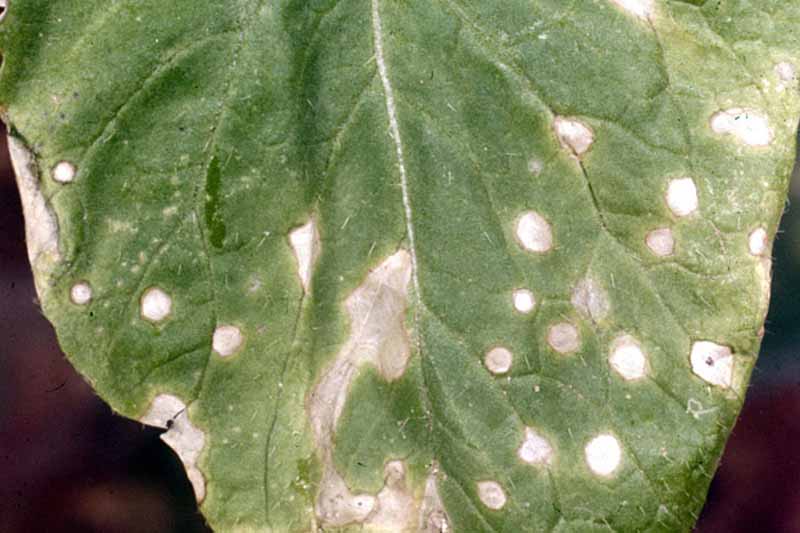
Top down view of a turnip leaf infected with white leaf spot (Cercospora brassicicola).

White spot fungi are selective in the crucifers they infect and cause disease on the leaves of turnip, rutabaga, canola, mustard, radish, and horseradish. The fungi overwinter on volunteer plants and cruciferous weeds. Read on to learn how to control white spot fungus on crucifers.

What’s Eating My Turnips? How to Eradicate Turnip and Rutabaga Pests

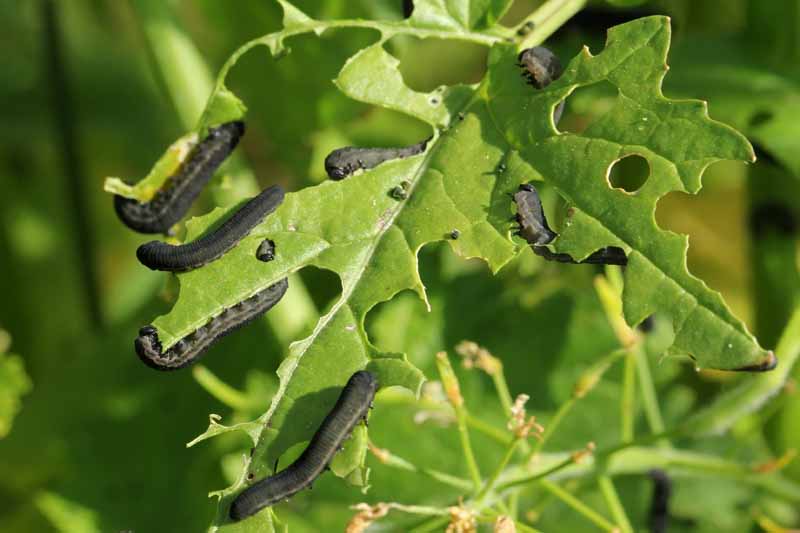
Turnip and rutabaga plants can be severely infested by several types of insects. While row covers can prevent some of these infestations, wireworms are soil-borne threats that can cause the end of the season’s crop in an infested field. Read on to learn how to manage cabbage aphids, root maggots, flea beetles, sawflies, and more.