Kalanchoe luciae
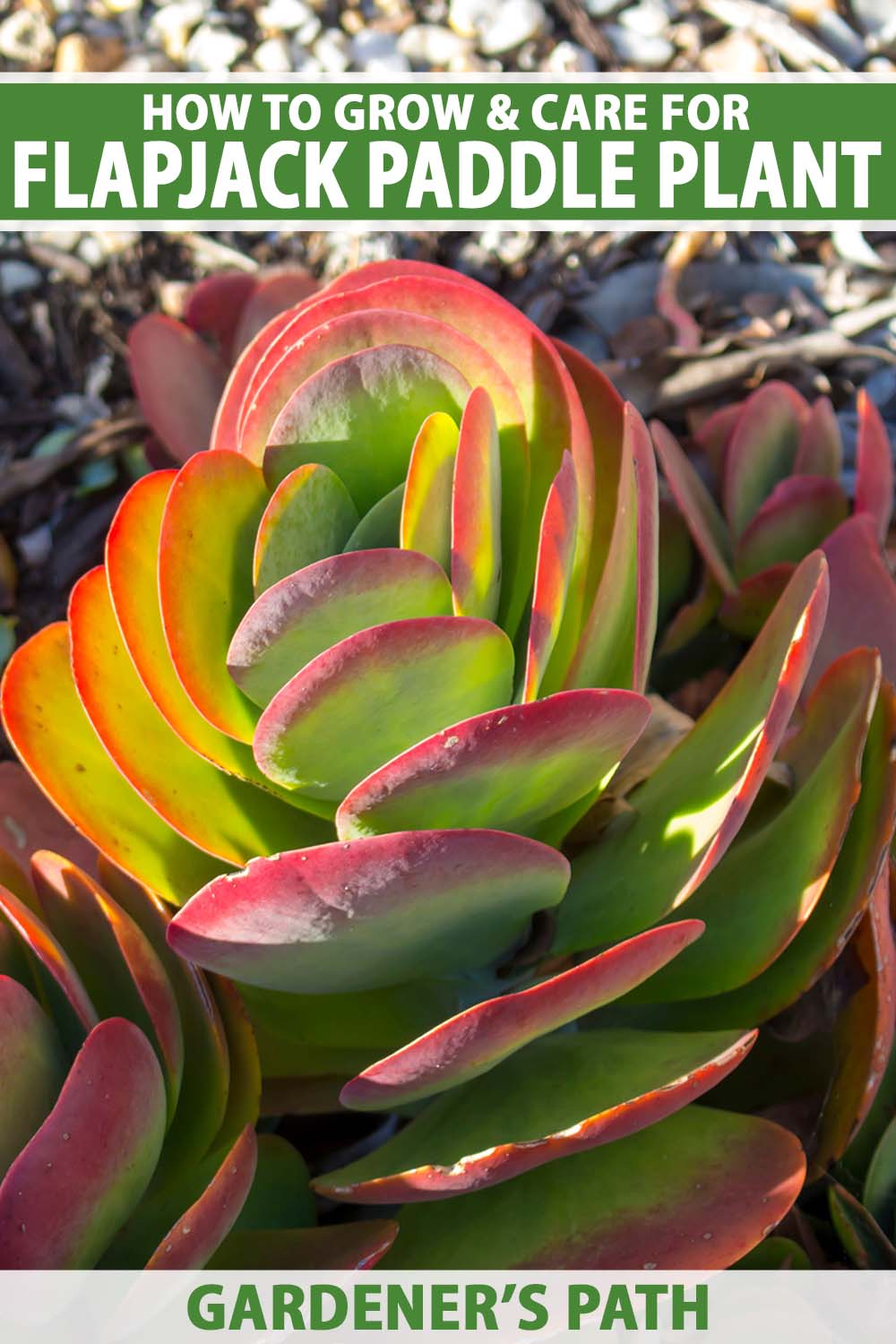
The flapjack paddle plant, Kalanchoe luciae, is a fleshy-leafed, drought- and salt-tolerant succulent in the large Crassulaceae or stonecrop family, which includes popular genera like Echeveria and Sedum.
It’s native to southern regions of Africa, where it thrives in rocky soil and dry, sunny conditions.
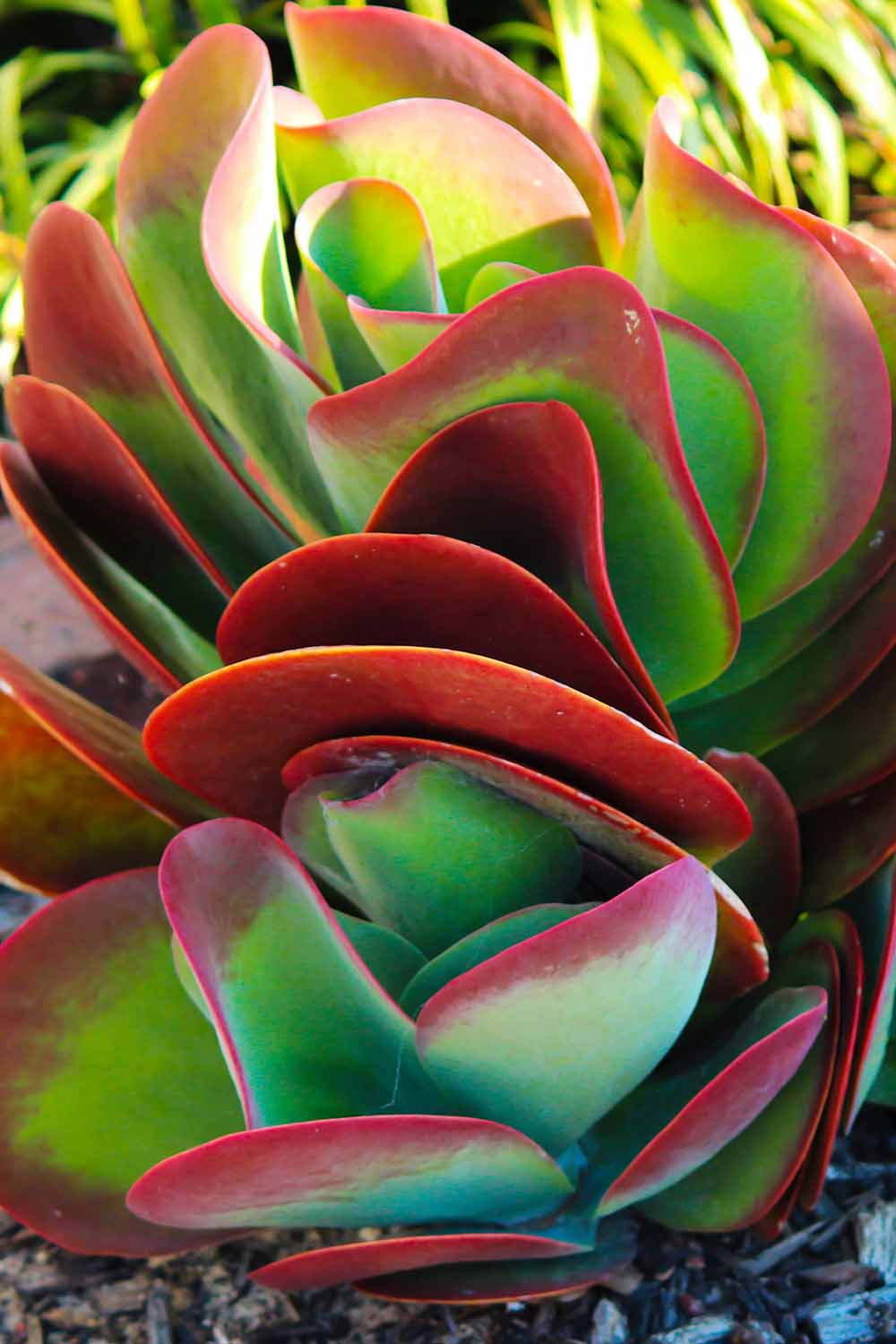
The common name refers to the vertically stacked leaves that resemble pancakes.
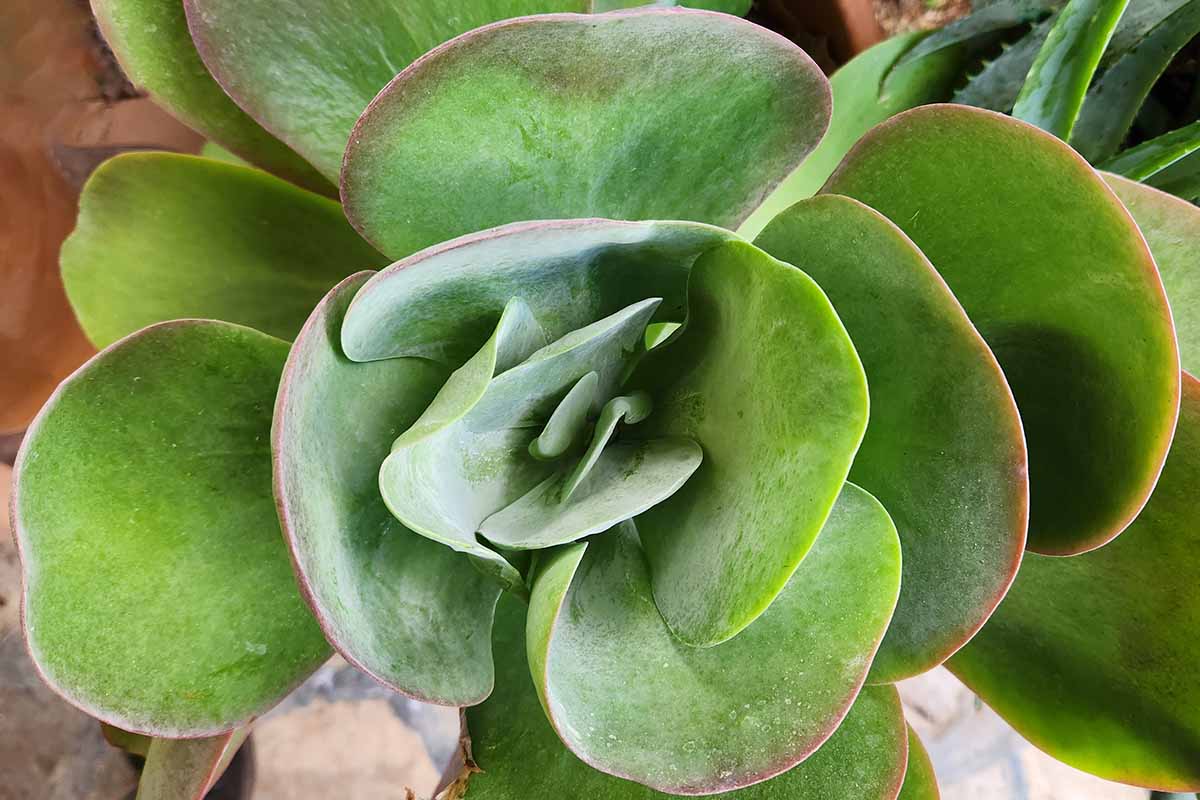
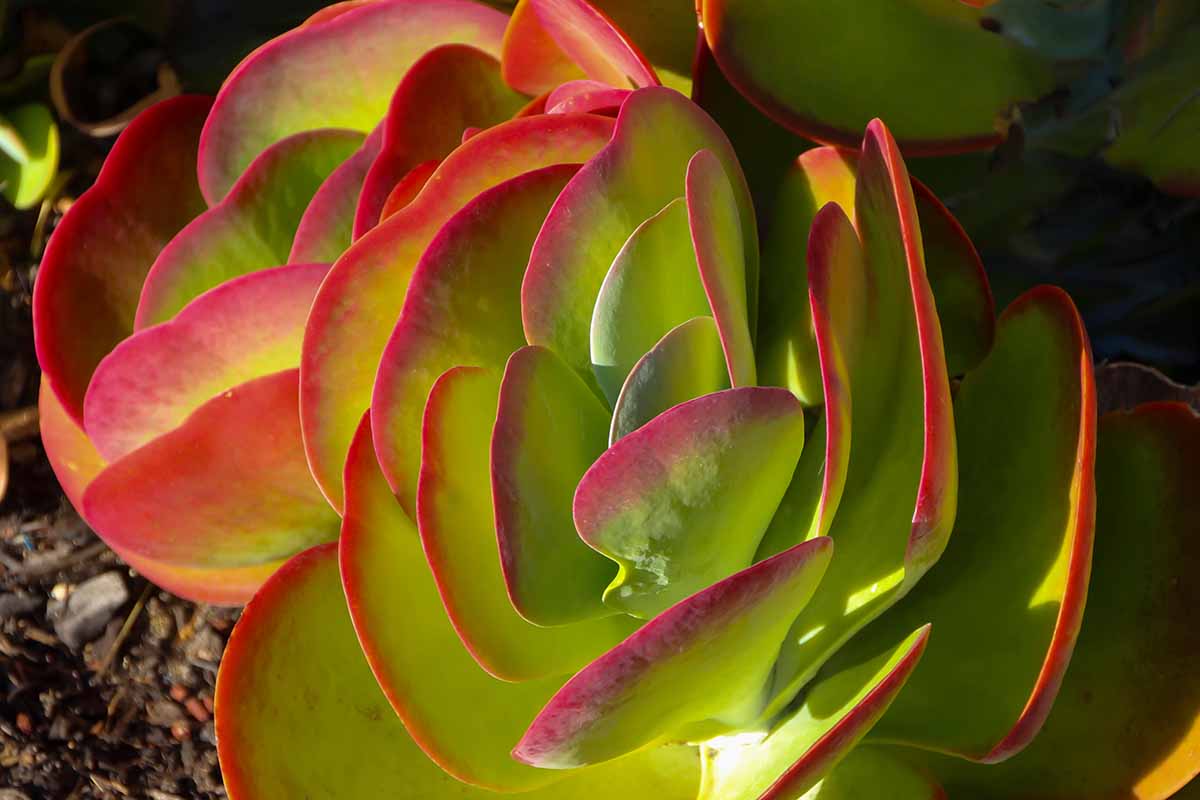
They are green with a whitish protective coating called farina. In the brightest light, they shade from green to scarlet, the reason for another common name, red pancake plant.

We link to vendors to help you find relevant products. If you buy from one of our links, we may earn a commission.
The species is well-suited for outdoor cultivation in Zones 9 to 12, in containers, as well as in-ground at the front of beds and borders.
It adds red accents to full-sun rock gardens and functions effectively as ground covering in coastal locales.
Our guide to growing kalanchoe introduces various species and their cultural requirements.
This article focuses on K. luciae and how to enjoy it as a houseplant indoors.
Here’s what we’ll cover:
What You’ll Learn
Outdoors, with room to roam, a flapjack paddle grows one to two feet tall with a spread of two to three feet and produces spikes of nondescript, mildly fragrant flowers that rise from the basal rosette of foliage, doubling the total height.
However, indoor gardeners can expect the dimensions to be about half that.
Quick Look
Common name(s): Desert cabbage, flapjack paddle plant, flapjacks, paddle plant, red pancake plant
Plant type: Perennial succulent
Hardiness (USDA Zone): 9-12 (outdoors)
Native to: Southern Africa
Bloom time / season: Late winter to early spring (rarely blooms indoors)
Exposure: Bright, indirect sunlight indoors; Full sun to light shade outdoors
Soil type: Cactus and succulent potting mix; gritty loam, well-draining
Soil pH: 6.5-7.5, slightly acidic to neutral
Time to maturity: 3-4 years
Mature size: 1-2 feet tall by 2-4 feet wide
Best uses: Container gardening, foreground bed/border specimen, rockery, xeriscape
Taxonomy
Order: Saxifragales
Family: Crassulaceae
Genus: Kalanchoe
Species: Luciae
Note that there is a similar species, K. thyrsiflora, which is also commonly known as a flapjack paddle plant.
Its leaves are typically green with a more noticeable white farina coating, and the flowers are sweetly scented.
As with many ornamental species, it is essential to note that Kalanchoe is toxic.
Keep it out of reach of children and pets, and wear gloves when handling it to avoid contact with the irritating sap.
How to Grow
Flapjack paddle plant grows well when growers meet its cultural requirements for soil, sun, and water.
Care begins with mimicking the native environment to which it is accustomed.
Climate
In South Africa and neighboring regions where the flapjack paddle plant grows wild, the climate is arid, with warm, dry air, daytime temperatures ranging from 60°F to 85°F, and nights that dip to 50°F.
The average home environment is suitable for cultivation.
A location away from entry doors and HVAC vents is best to avoid drafts and temperature fluctuations that may adversely affect coloration and overall health.
Light
Flapjack paddle plant foliage shows best with bright, indirect sunlight indoors, taking on a scarlet hue around the edges. With lower light, the foliage remains mostly green.
Choose a placement about three feet from a south- or west-facing window.
Avoid window sill placements that put the leaves in direct sunlight, as it may scorch the fleshy leaves, causing them to dry out and turn brown.
It is unlikely that an indoor specimen will bloom. However, you can try to mimic nature and encourage flowering.
Provide 12 hours of sunlight with the aid of a grow light, and less than 12 hours of darkness during the last six weeks of the dormant fall and winter period.
It is also essential to withhold fertilizer and water minimally during this time.
Soil
The ideal potting medium for flapjack paddle kalanchoe is gritty and well-draining. Cactus and succulent soil is appropriately formulated to meet the need for pH in the 6.5 to 7.5 range.
Hoffman Organic Cactus and Succulent Soil Mix is composed of organic compost and peat moss to provide optimal nutrition, inorganic sand for rapid drainage, and limestone to maintain a slightly acidic pH.
Hoffman Organic Cactus and Succulent Soil Mix
Hoffman Organic Cactus and Succulent Soil Mix is available from Hoffman via Amazon.
You can also make your own succulent potting soil following our recipe here.
Water
Because succulents are prone to rotting in overly wet soil, it’s best to let the pot dry completely before watering. Use a moisture meter as your guide.
During dormancy, moisture needs are greatly reduced as the flapjack plant is not actively growing.
You can learn more about watering succulents here.
Fertilizer
While it is not a heavy feeder, the flapjack paddle plant benefits from a monthly nutrient boost during the spring and summer growing season.

Use a balanced liquid houseplant food with an N-P-K ratio of 10-10-10, or similar.
Dilute it to half strength and apply when watering. Withhold fertilizer during the fall and winter dormant period.
See our guide to fertilizing succulents for more information.
Where to Buy
You can find flapjack paddle plants available at most nurseries that carry a good selection of succulents.
Upon receipt of a starter pot, assess its moisture needs. If the growing media is dry, water it until water runs out of the drainage holes.
Place the pot in a location with bright, indirect sunlight away from drafts.

Flapjack paddle plants are available from Planet Desert in four-inch, six-inch, and two-gallon pots.
In addition to the straight species, there is a variegated cultivar, ‘Fantastic,’ with multicolored green and cream leaves edged in red.

You can find variegated flapjack paddle plant ‘Fantastic’ available in two-gallon pots from Planet Desert.
Maintenance
Flapjack paddle plant prefers a snug-fitting pot with about an inch of space between the foliage and the container rim to accommodate a watering can spout.
When it spreads to fill the vessel completely and/or roots poke from the drainage holes, go up one pot size.

Whether or not you need to increase the size of the container, it’s beneficial to change the potting mix every two years or so.
This avoids soil compaction that adversely affects the ability of the roots to efficiently absorb nutrients and water.
Additional maintenance includes the removal of damaged or dead leaves, a prime breeding ground for common houseplant pests and diseases, which we discuss below.
You may also find it necessary to prune wayward stems that grow leggy in low light conditions. Use them for propagation as desired.
Finally, if you are fortunate enough to encourage blooming, you’ll want to snip off the blossom spikes as the petals fade to restore vigor to the rosette of foliage below.
Propagation
To propagate, you’ll need seeds, a cutting, a division, or a nursery starter plant.
Let’s discuss.
From Seed
While it is possible to grow from tiny kalanchoe seeds, they are not be readily available and may not produce true replicas of a parent.
For predictable results and rapid growth, it’s best to propagate via a cutting from an existing flapjack paddle plant.
From Cuttings
There are two types of cuttings you can take: leaf and stem.
For leaf cuttings:
- Select a plump, healthy mid-size leaf.
- Use clean, sharp shears to snip it off at the base.
- Lay the cut leaf on a paper towel in a cool, dry place out of direct sunlight, where the wounded end will form a callus within seven days.
- Once the cut end hardens, fill a three-inch pot three-quarters full of cactus and succulent potting mix.
- Lay the callused leaf on the surface of the potting media.
- Lightly cover the callused end with potting medium.
- Place the pot in bright, indirect sunlight.
- Keep the top of the media slightly moist, but avoid oversaturation.
- The cutting will grow roots, followed by a new leaf.
At this time, the roots are secure and able to withstand a thorough soaking each time the pot dries out.
For stem cuttings:
- Find a leggy portion of a kalanchoe with a visible length of bare stem below the leaves.
- Use clean shears to snip the stem near its base.
- Snip off the bottommost leaves as needed to have a two- to three-inch length of bare stem.
- Allow the stem to form a callus as we did above, for about a week on a paper towel away from drafts, moisture, and direct sunlight.
- Once callused, prepare a three-inch pot filled three-quarters with cactus and potting media.
- Use a pencil to poke a one-inch hole in the center of the media.
- Insert the callused stem an inch deep, with at least one leaf node below the soil surface. Go deeper if you need to. The leaf node is a natural growing point that jumpstarts regrowth.
- Keep the soil moist but not oversaturated, ensuring it never completely dries out.
Once new growth appears, begin the regimen of watering thoroughly each time the pot series out.
By Division
Flapjack paddle plants grow offsets called pups beside the parent. They are clones that can be easily detached and transplanted.
To detach a pup:
- Gently brush away the soil to see the tiny stem that attaches the pup to the parent. Lift it carefully from the soil. It must have roots attached.
- Lay the pup on a paper towel as above until a callus forms on the end of the severed stem.
- Set the pup just deep enough to cover the roots in a three-inch pot filled three-quarters full of potting media.
Keep the soil moist but not overly wet until new growth appears. Then begin regular watering.
Learn more about propagating succulents from offsets.
Transplanting
Note the depth of the specimen in its original container as you’ll need to plant it at the same depth in the new pot.
Select a vessel an inch wider than the diameter of the foliage.
Fill the pot two-thirds full of cactus and succulent potting soil.
Nestle the flapjack paddle plant just deep enough to cover the roots and stand upright, backfilling as needed until the container is three-quarters full of media.
Wait seven to 10 days before watering.
Pests and Disease
Kalanchoe species are not prone to pest and disease problems if kept in suitable conditions.
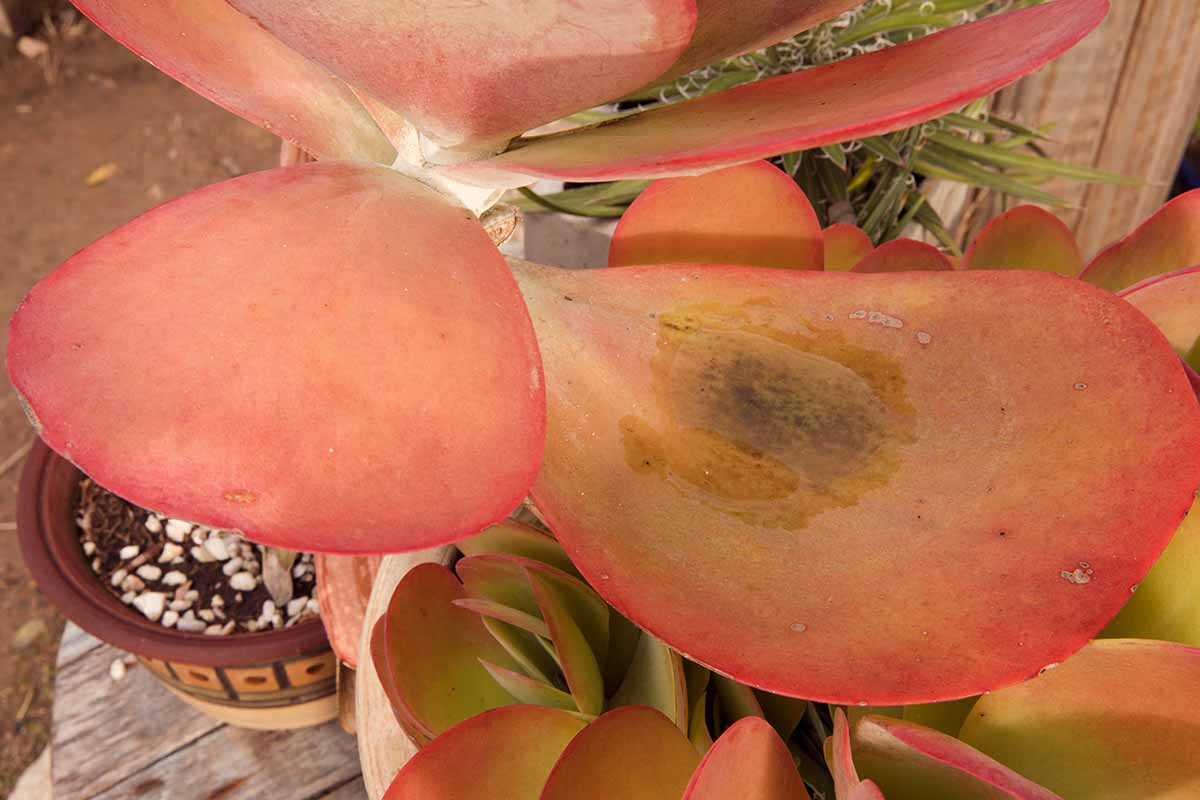
However, excessively dry or overly humid home environments and under- or overwatering may render foliage susceptible to pests and diseases.
Pests
Aphids and scale like hot, dry conditions. Mealybugs prefer warmth and humidity.
All three are sapsucking insects that feed on plant juices, causing leaf anomalies, discoloration, wilting, and death if an infestation is not addressed.
Remedies include rinsing foliage to dislodge pests, removing severely affected leaves, and treating with organic neem oil.
Moisture-loving slugs and snails are more common outdoors. These nocturnal feeders chew holes in leaves, causing defoliation.
Handpick and dispose of them, set commercial baits, or apply a layer of powdered food-grade diatomaceous earth (DE) to the soil around the foliage.
Disease
Powdery mildew is a fungal disease that first appears as a whitish-gray fuzzy coating on the foliage.
Unchecked, it destroys the leaves and stunts overall growth. Remove and dispose of heavily infected leaves, and then treat the remaining foliage with neem oil.
Root rot is the nemesis of succulents, resulting from overwatering and poor drainage that suffocates the roots, preventing the uptake of nutrients and water.
Once underway, a potted specimen may be salvageable if the rotten portions of the roots and foliage are removed, and the remaining healthy rooted portions are replanted in fresh media in a clean container.
Learn more about how to manage rotting in succulents here.
Meeting cultural requirements goes a long way toward fending off pests and diseases.
Scarlet Radiance
Whether you call them flapjacks or paddles, K. luciae adds excitement to succulent collections with its vibrant stacks of rounded leaves and, with a little luck, spikes of blossoms that rise above the fiery rosettes.
Is your houseplant family ready to welcome this desert delight into the fold? Make room near your favorite south- or west-facing window and enjoy its scarlet radiance.
Do you have a flapjack paddle plant? Please share your tips in the comments section below.
If you found this guide informative and want to read more about growing kalanchoe, we recommend the following: