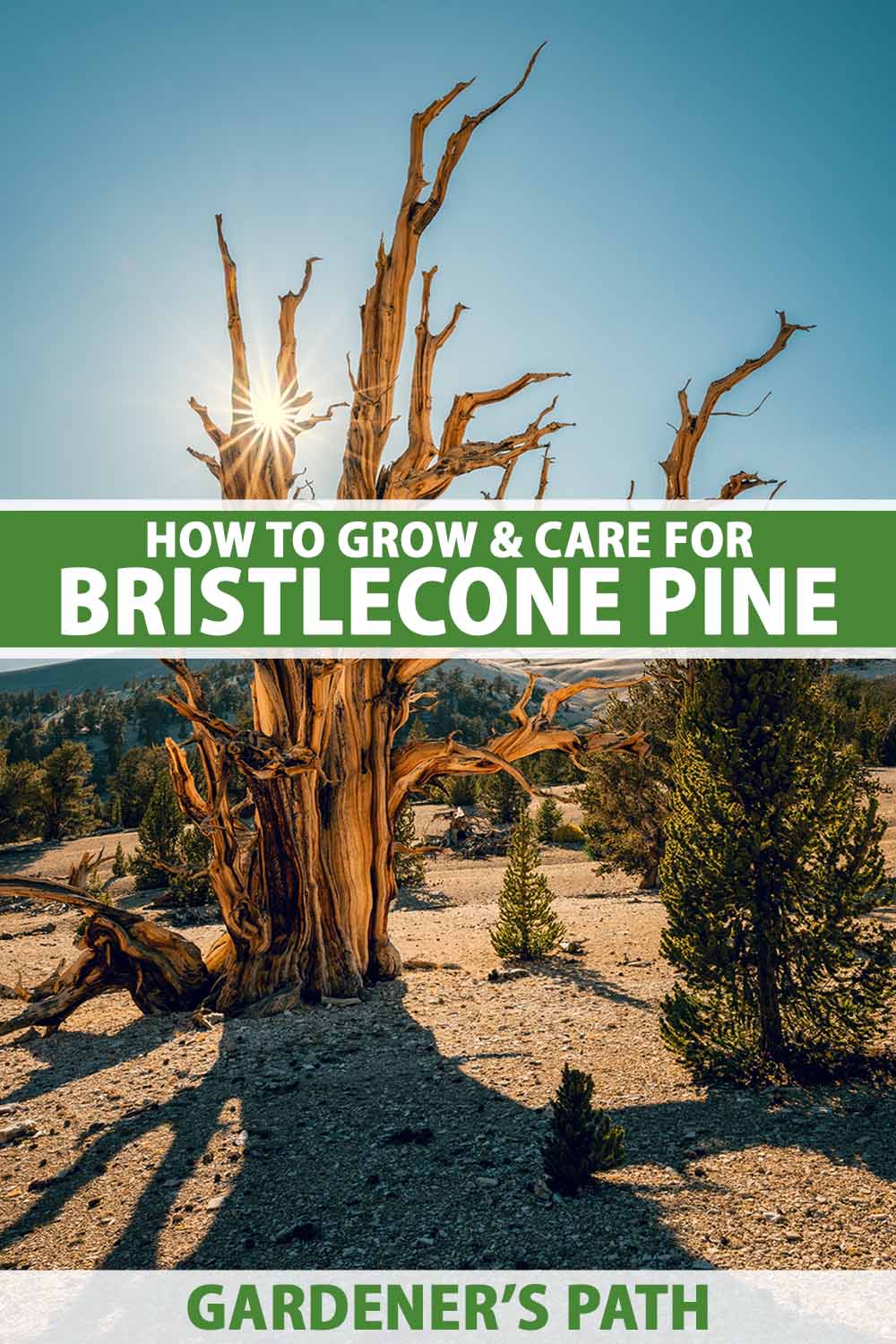
Pinus aristata, P. longaeva, P. balfouriana
My grandma wasn’t interested in growing unusual plants in her garden. She stuck to low-maintenance stalwarts like Oregon grapes, California laurels, lilacs, and honeysuckle.
But she had one unique specimen that appeared nowhere else in the neighborhood: a bristlecone pine.
She was enchanted by the gnarled wood and incredible longevity of bristlecone pines.
So she planted one in the driest, hottest spot she could find in her yard, and there it stood for decades, remaining virtually unchanged.
I don’t think it grew even an inch in the two decades it stood against the south side of her garage.

We link to vendors to help you find relevant products. If you buy from one of our links, we may earn a commission.
I understand the appeal. Hiking in Utah’s arid deserts, bristlecone pines were often the most eye-catching feature in the landscape.
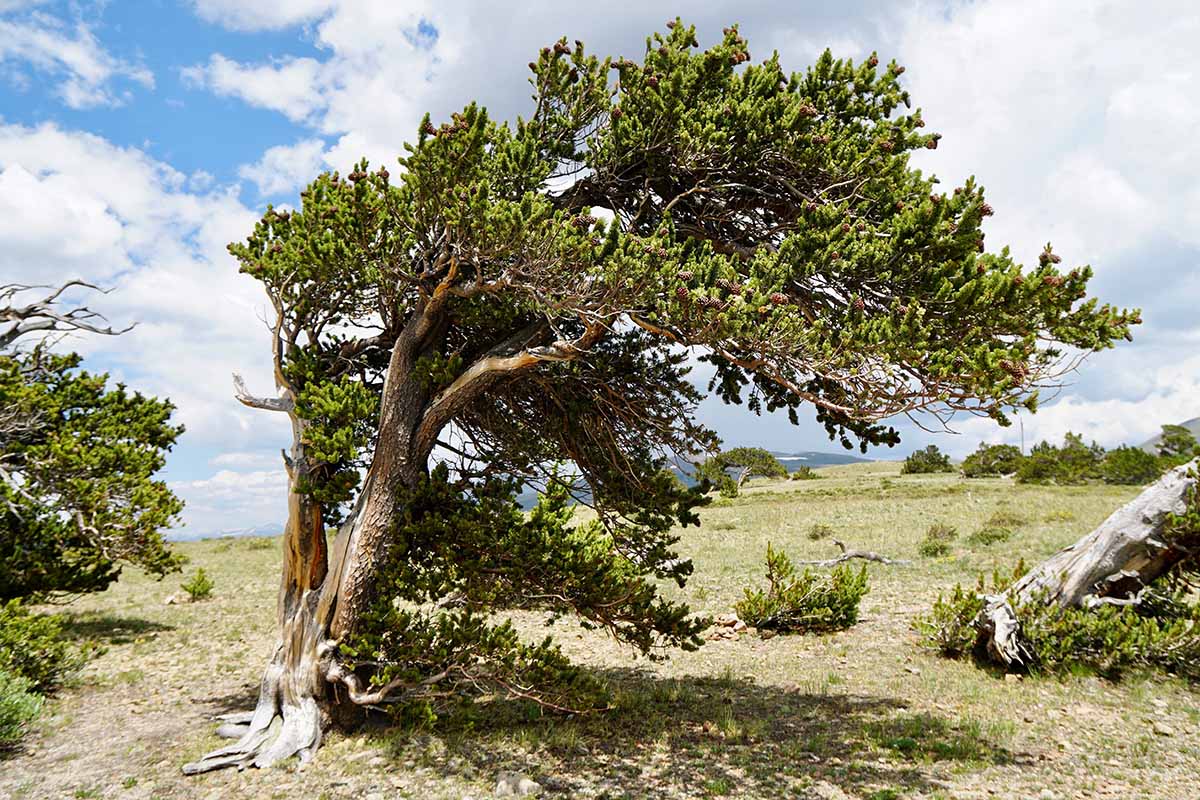
They’re sometimes called wind timber, which perfectly captures their weather-sculpted appearance.
The gnarled, fissured wood and dramatic shape stands out even against the vibrant red landscape and unique rock formations.
They’re truly among the most picturesque trees you can grow in your garden.
Practically, if you like pines but you hate the layer of needles that accumulates under the trees, bristlecones are a good option.
The needles persist for up to 40 years on the branches, compared to other pines which typically shed theirs every one to three years.
Ready to learn how to grow these distinctive evergreens? Here’s what I’ll cover:
What You’ll Learn
There are actually three species that fall under the common name “bristlecone pine.”
Typically, when people talk about bristlecone pines, they’re referring to Rocky Mountain bristlecones (Pinus aristata).
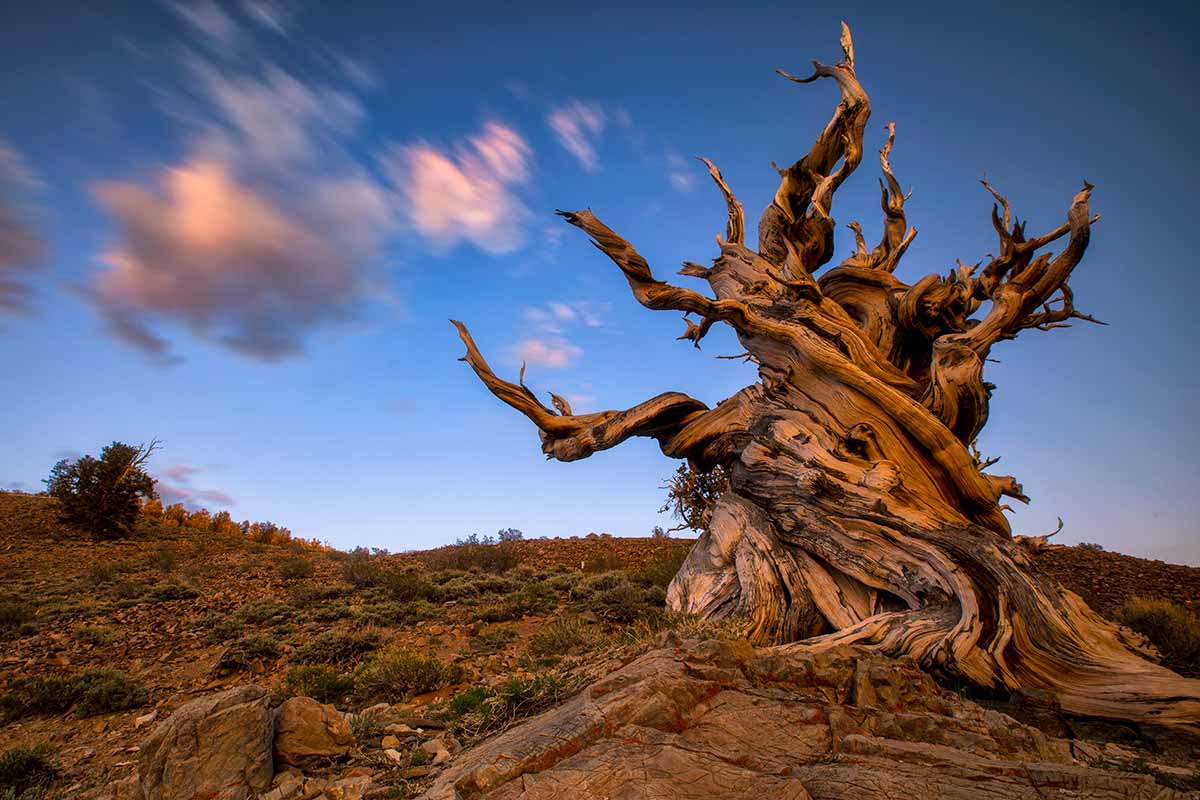
These are the most common in cultivation and what you’ll typically find at nurseries.
The super long-lived species is the Great Basin bristlecone (P. longaeva). If you’ve ever heard of the 4,800-plus year-old Methuselah, that’s a Great Basin type.
Foxtail pines (P. balfouriana) are less common in cultivation.
We’ll focus on P. aristata in this guide, but if you have one of the other species, the care is similar.
Quick Look
Common name(s): Bristlecone pine, foxtail pine, hickory pine, wind timber, krummholz
Plant type: Evergreen conifer
Hardiness (USDA Zone): 4
Native to: Western North America
Bloom time / season: Spring cones, leaves evergreen
Exposure: Full sun
Soil type: Sandy, rocky, dry, well-draining
Soil pH: 5.0-8.0, slightly acidic to slightly alkaline
Time to maturity: 100 years
Mature size: Up to 60 feet tall
Best uses: Specimen
Taxonomy
Order: Pinales
Family: Pinaceae
Genus: Pinus
Subgenus: Strobus
Species: Arista, balfouriana, longaeva
The ranges of each species don’t overlap. Great Basin bristlecone pines are indigenous to California, Nevada, and Utah in the Great Basin region.
Rocky Mountain species hail from Arizona, Colorado, and New Mexico.
Foxtails can be found in the wild in California and possibly parts of southern Oregon.
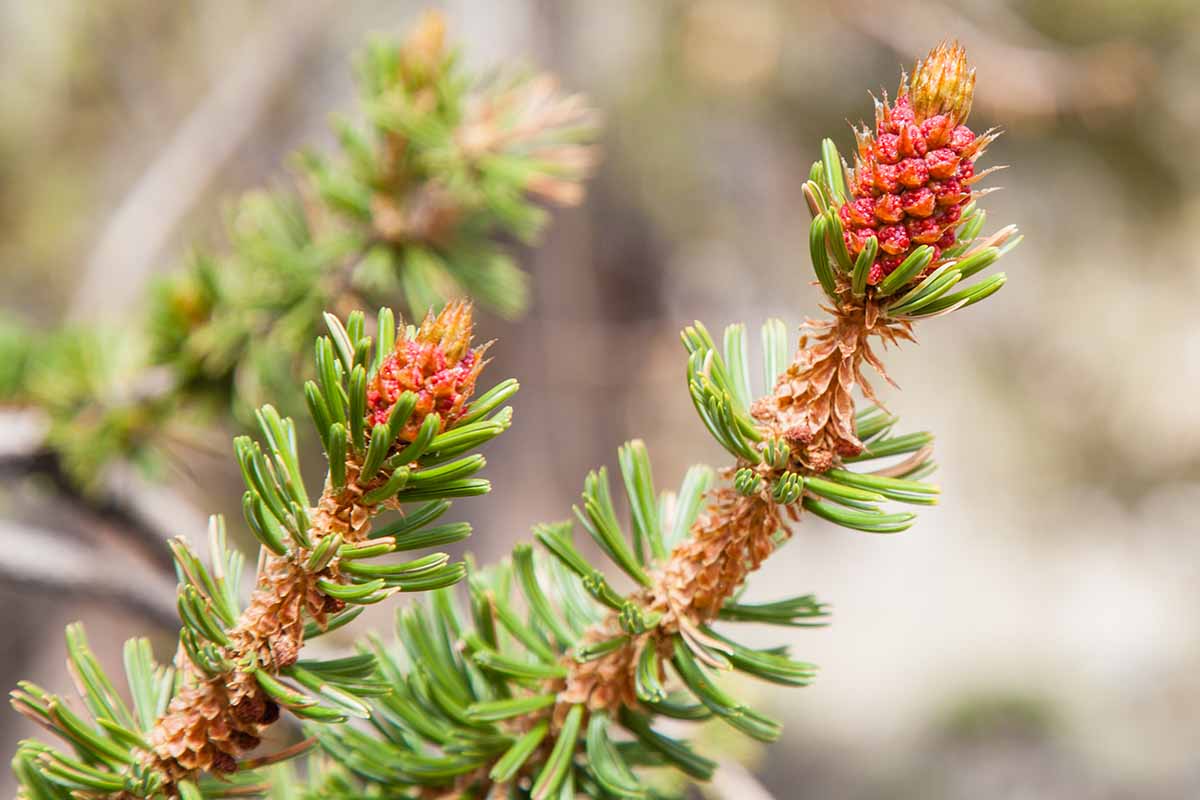
The name bristlecone makes total sense when you look at the cones. They are indeed bristly. The dark purple female cones are covered in fine prickles.
They can reach up to 60 feet tall but in harsh conditions, they are usually half that height. They tend to stay smaller in cultivation, as well.
How to Grow
Bristlecone pines can be fussy in the garden. They grow in USDA Hardiness Zone 4.
They don’t compete well with other plants, so you absolutely must keep weeds away and don’t place them too close to neighboring flora.
They thrive in rocky, dry soil, so unless your garden can offer that, you’re going to have a hard time growing these trees. Depending on the environment, you can expect about an inch of growth per year.
Avoid sites with air pollution, like along a roadway. The roots are shallow, so don’t grow the tree next to a walkway or anywhere else the roots might be disturbed.
Once established, they are extremely tough – just look at where they grow in the wild.
They thrive just below the tree line in barren soil with extreme heat and cold where nothing else can survive.
Light
Bristlecone pines absolutely must have a full sun location.
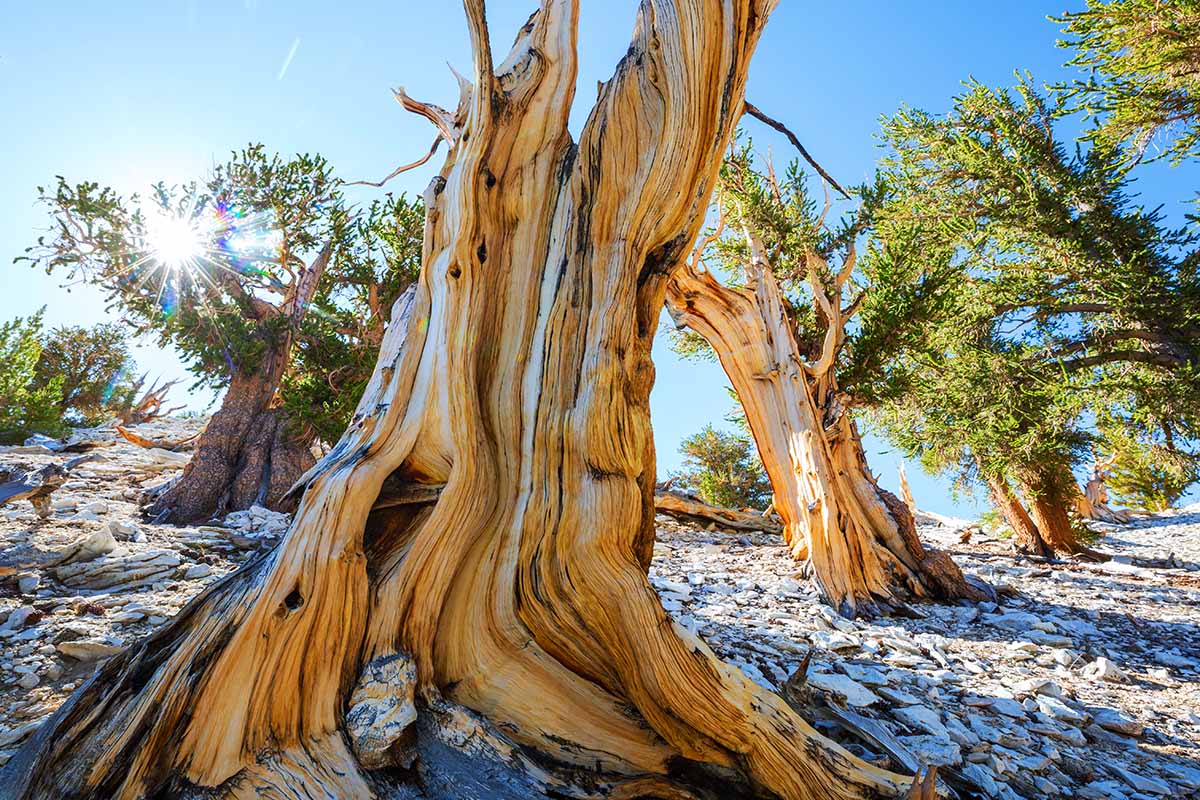
Don’t plant in any amount of shade. Shaded spots will reduce heat and retain water, which a lot of plants like – but not bristlecone pines.
Water
Water sparingly, if at all. Coming from arid regions in the western United States, these trees are adapted to minimal water.
Too much water will cause root rot – probably the biggest killer of these evergreens in cultivation.
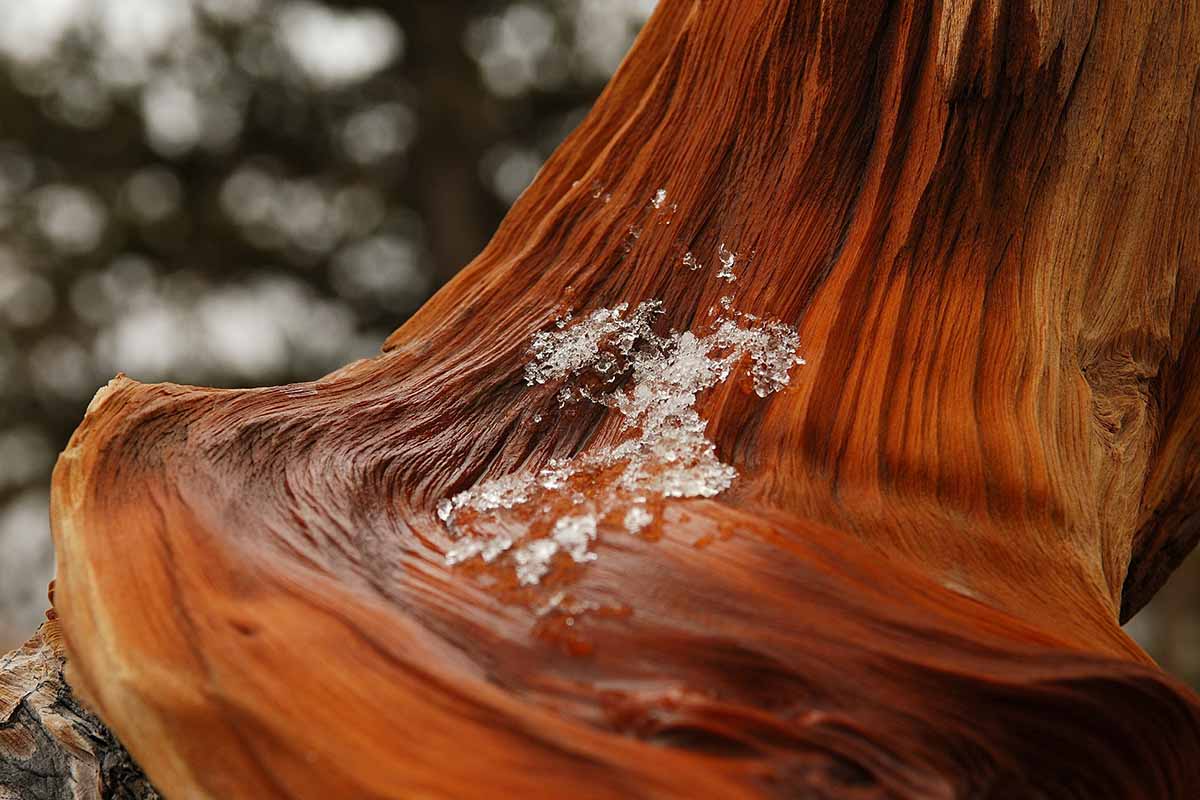
When it’s young, give the tree light water – deep, long drinks – especially during periods of heat and drought.
When you water, you don’t want the soil to be soggy and saturated. It should be moist, not wet. Then, let it dry out completely before watering again.
After five years, don’t add any water at all. Let nature take care of the moisture.
Fertilizer
You can skip the fertilizer. These trees grow wild in soil that is pretty much devoid of nutrients.
They require minimal nutrients and excessive fertilizer can be damaging.
Cultivars to Select
Cultivars are fairly hard to find and you’d really need to look to specialty nurseries.
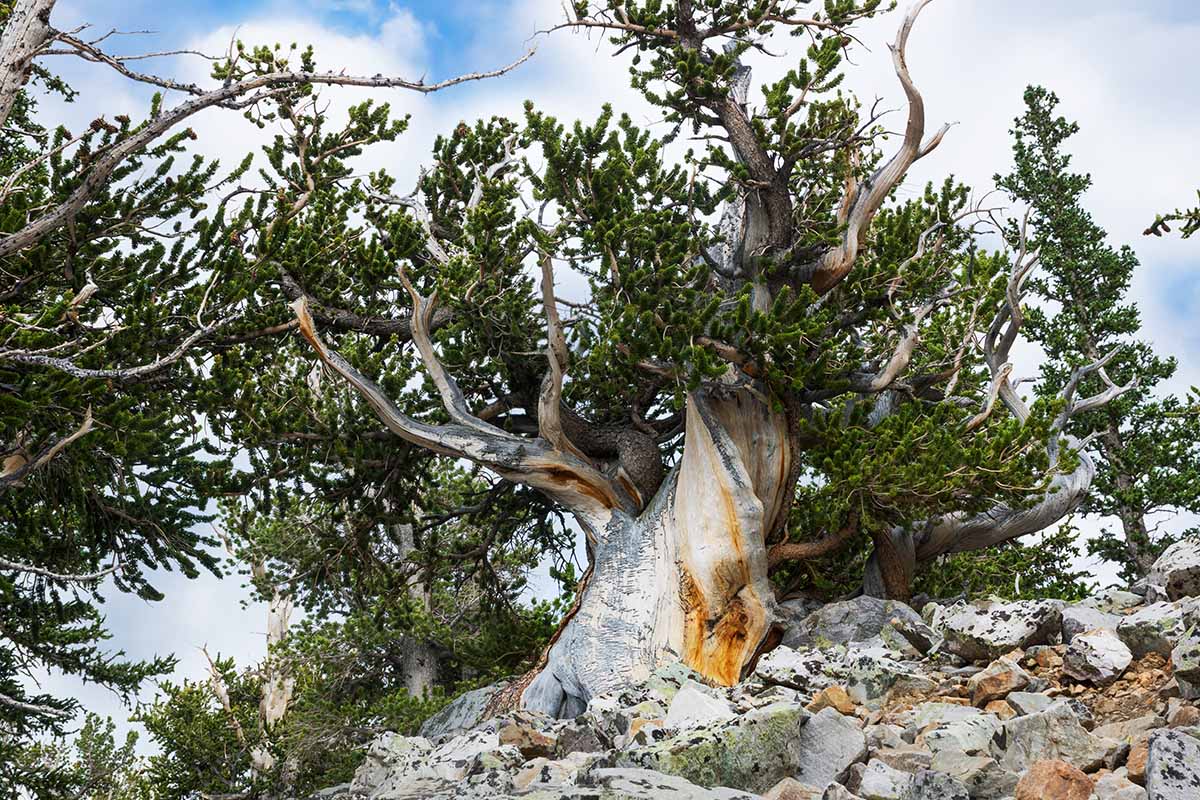
There are a few options and they are generally easier to cultivate than any of the species plants. Here are a few popular options:
Blue Bear
P. aristata ‘Blue Bear’ features a densely branching habit and needles that sport a blue hue, making them really stand out.
This cultivar grows more quickly than the species, adding up to six inches per year. It was discovered by well-known conifer breeder Jerry Morris as a witches’-broom.
It grows to about 30 feet tall and half as wide.
Formal Form
This is one of the most common P. aristata cultivars on the market.
It has a narrow, upright form that tops out at 10 feet tall and five feet wide.
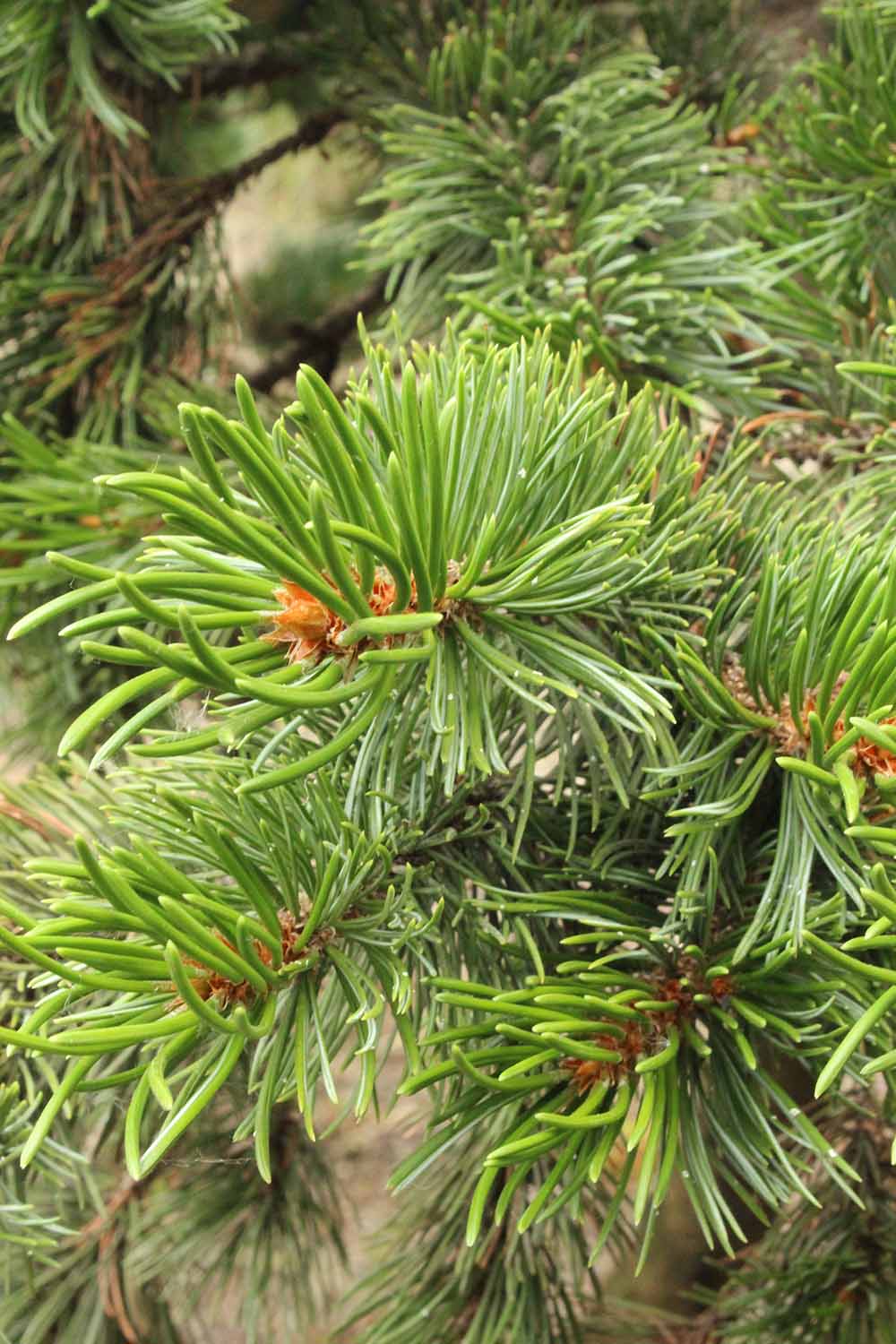
The needles are bluish in color and almost two inches long, growing in bundles of five that emerge all around the branch in a spiral.
The overall effect is that of a bunch of bottlebrushes sticking out from the trunk and branches.
Happy
Our friend Jerry Morris bred seven bristlecone pine cultivars and named them for the seven dwarves.
P. aristata ‘Happy’ was discovered as a witches’-broom in South Park, Colorado. It features short needles with white resin, and large yellow buds.
Joe’s Bess
This P. aristata cultivar has an upright form in a tidy, dense shape made up of pretty blueish needles.
It’s a dwarf type, only growing to about 10 feet tall and three feet wide. This is another one cultivated by Jerry Morris.
Lemon Frost
As you might have guessed from the name, the needles on P. aristata ‘Lemon Frost’ are yellow-green or golden-green and flecked with resinous white spots.
The bold color is even more prominent in the winter.
We aren’t exactly sure where this pyramidal cultivar came from, but it was likely discovered by Jerry Morris. It is one of the few yellow or golden bristlecones in cultivation.
This cultivar stays super small, gradually reaching just a foot tall and wide in a decade.
Sherwood Compact
‘Sherwood Compact’ is a dwarf P. longaeva cultivar with a dense, pyramidal shape. The needles are compact, shorter than those of the species.
The needles don’t have the resinous coating that the species has, which has resulted in speculation that it’s actually a P. balfouriana cultivar. Isn’t botany fun?
‘Sherwood Compact’ was bred by Andy Sherwood, a grower in Gresham, Oregon and will grow into its full four foot tall and three foot wide (at the base) size over a decade or two.
Silver Wonder
We have Jerry Morris to thank for this unusual P. aristata cultivar. He found it as a witches’-broom.
‘Silver Wonder’ has a round shape and inch-and-a-half long needles that are covered in a white resin that looks like snowflakes. You can have a snow-dusted tree all year long!
It’s hard to find, though, so spread the word if you happen to spot one.
Maintenance
As the trees age, some of the wood will die. This is a feature, not a bug.
The dead wood reduces moisture loss and is one of the reasons this tree lives so long and does so well in dry environments.
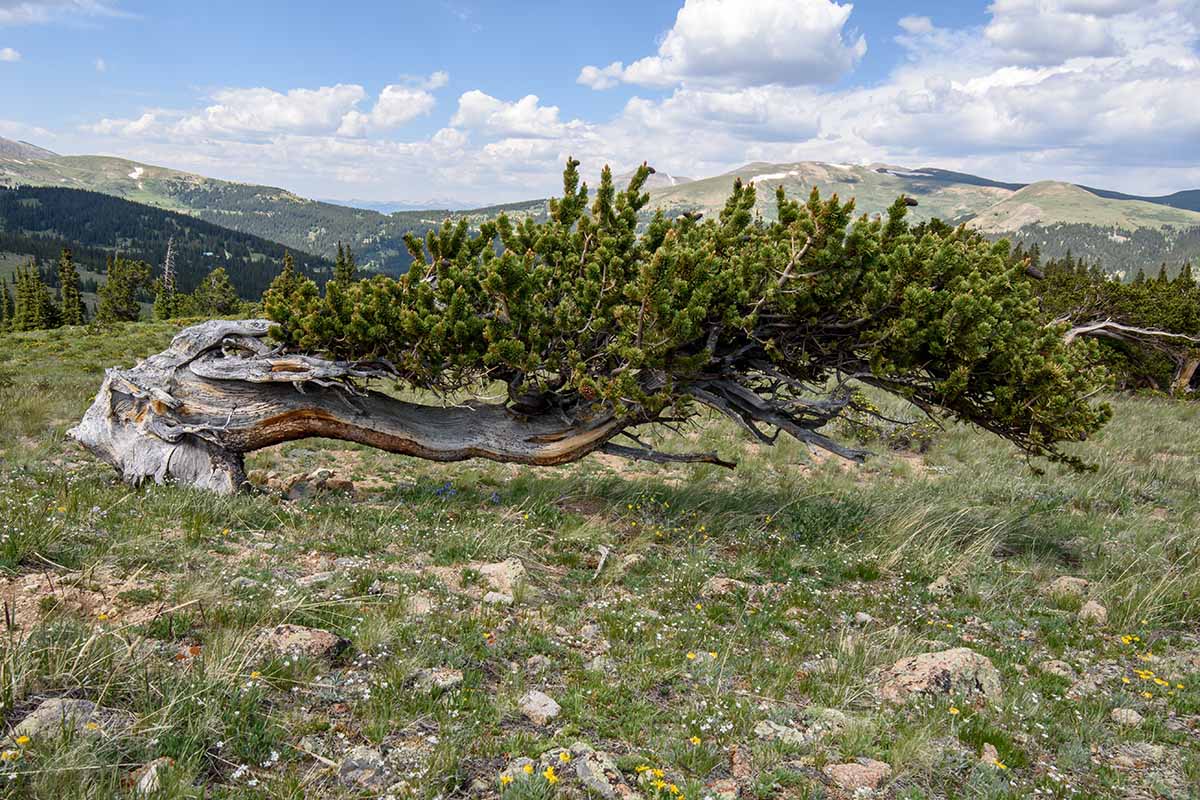
You can remove dead branches if they really bother you, but I think they add to the architectural appeal. Otherwise, keep those pruners away from the tree.
If you want to encourage a young specimen to take on an interesting shape, you can wire or anchor parts of the tree when the branches are still pliable.
Just be sure to move the wire or rope regularly to avoid damaging the tree as it grows.
Propagation
This tree is exceptionally hard to propagate. Its slow growth makes taking cuttings, grafting, or starting from seed difficult.
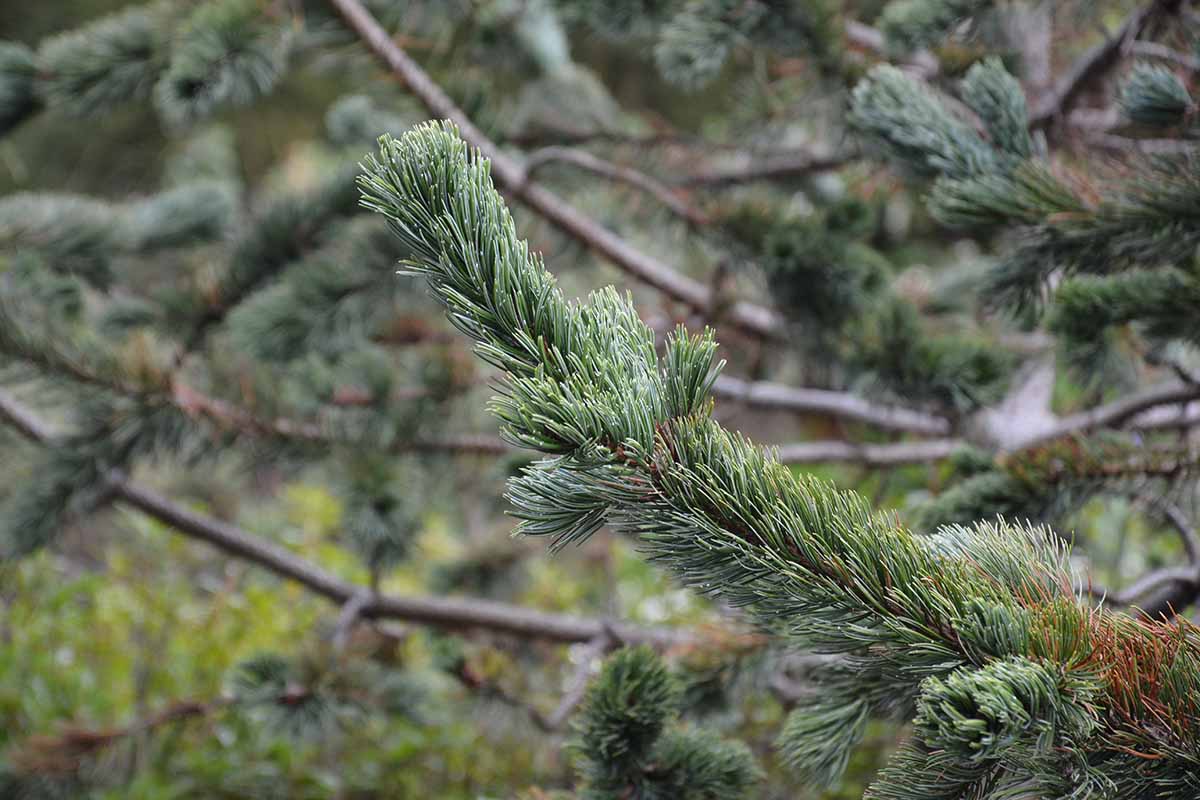
It’s best to get started with a potted plant from a nursery.
To transplant, dig a hole that is about the same size as the container the young tree is currently growing in.
Remove the plant from its pot and loosen up the roots. This is especially important if the roots are circling the pot.
Place the plant in the hole and fill in around the roots with soil. Water lightly if the root ball is dry.
Pests and Disease
Pest and disease problems tend to be more common in areas outside of this plant’s preferred range.
In the northeastern United States, for example, you might see aphids, canker, rust, or white pine blight, while these issues are rare in the southwest.
Bristlecones naturally have very dense wood that is full of resin which makes them naturally resistant to pests and pathogens.
However, as the climate is changing, it is exposing wild trees to white pine blister rust and mountain pine beetle infestations. Let’s talk about the issues you should be most aware of:
Pests
There are two main culprits that can harm your trees:
Aphids
Aphids, particularly white pine aphids (Cinara strobi), feed on bristlecones.
Infestations are especially common on stressed trees. Minor infestations don’t require treatment on healthy trees, but intervene immediately on young or stressed specimens.
Aphids cluster on branch tips and new growth and their feeding causes the needles to turn yellow and eventually drop.
There are a variety of treatment options which you can learn about in our guide to eradicating aphids.
Mountain Pine Beetles
Mountain pine beetles (Dendroctonus ponderosae) are native to the western United States and have devastated forests in the region.
Historically, these beetles played a beneficial role by feeding on dying trees and accelerating decomposition.

With more drought and higher temperatures, they’ve become a serious problem.
In your own garden, they’re a bit easier to get a handle on, especially if you give your trees a good once-over every few months.
Signs include the presence of quarter-inch black beetles, red sawdust (frass) at the tree base or in bark crevices, and yellowing needles.
If you see any of these signs, try peeling away some bark and look for white larvae or their galleries. They typically only infest wood that’s at least five inches in diameter
The adults lay eggs in the spring. The hatched larvae tunnel into the tree under the bark, where they feed and overwinter. They emerge in the spring to lay eggs, and the cycle begins anew.
Killing the pests can be a challenge because the larvae are protected under the bark. To be effective, you’ll need to take a multi-pronged approach at the right time.

In the spring, apply a pyrethrin-based product like Monterey’s Bug Buster-O, available at Arbico Organics.
Apply according to label directions throughout spring.
When you stop spraying, apply beneficial nematodes, specifically Heterorhabditis bacteriophora, that attack and parasitize larvae.

Arbico Organics carries packets containing five to 500 million live nematodes. Follow application instructions carefully to maintain nematode viability.
Disease
Healthy trees cultivated in appropriate conditions rarely develop diseases.
But overwatering, shady conditions, or excessive humidity can lead to these issues:
Root Rot
Excessively wet soil will inevitably lead to root root. These trees can’t handle wet feet at all.
If your bristlecone pine is exposed to wet conditions regularly, you’ll start to notice overall decline with falling needles and dying branches.
If you dig under the soil and look at the roots, they will be soft and dark.
Unfortunately, there’s little you can do. Stop all irrigation immediately – the tree may recover if damage isn’t severe, but there are no guarantees.
White Pine Blister Rust
The fungus Cronartium ribicola, introduced to North America from Asia in the early 1900s, causes a disease called white pine blight in many pine species.
The disease requires a plant in the Ribes genus to complete its life cycle.
That’s why some states have banned planting species like gooseberries and currants in the past. That’s how bad the disease can be.
No effective treatment exists, so prevention is essential.
Keep Ribes species at least 400 feet from bristlecone pines. Without nearby hosts, the fungus cannot complete its life cycle and infect your tree.
Bring Long-Lived, Picturesque Beauty to Your Garden
I like to walk barefoot in my yard, and the fact that you can walk around a bristlecone pine without feeling like you’ve accidentally stepped on a porcupine is enough to recommend it for me.
But its craggy bark, funky shapes, and easygoing nature are what really make it a winner.
Are you growing bristlecone pines? Let us know in the comments section below!
And if you want to explore some other types of pine trees, we have a lot of guides worth checking out, including: