Vriesea spp.
Is there anything cooler than a plant that looks like a fiery sword thrusting up from a sea of lush foliage, brightening up shady spots in your home or garden?
Vriesea species have earned their reputation as colorful, eye-catching specimens that thrive in conditions where most flowering plants struggle.
Whether that’s a shady garden spot or your living room windowsill, these bromeliads don’t just survive, they thrive. It’s no wonder the flaming sword is so popular.

We link to vendors to help you find relevant products. If you buy from one of our links, we may earn a commission.
Part of the bromeliad family, Vriesea are related to pineapples (Ananas comosus) and urn plants (Aechmea fasciata). But they’re totally unique, with a flower that can’t be mistaken for anything else.
In our guide to growing bromeliads, we introduce the incredible diversity of this plant family.
Ready to add flaming swords to your home or garden? Let’s go! Here’s what we’ll talk about in this guide:
What You’ll Learn
It seems bizarre that flaming swords, pineapples, air plants (Tillandsia spp.), and Spanish moss (T. usneoides) are all in the same family, but here we are.
The Vriesea genus comprises hundreds of species, dozens of which are grown as houseplants or as landscape specimens in Zones 9 to 12.
Within the genus, there are tiny little species and some of the largest bromeliads in existence.
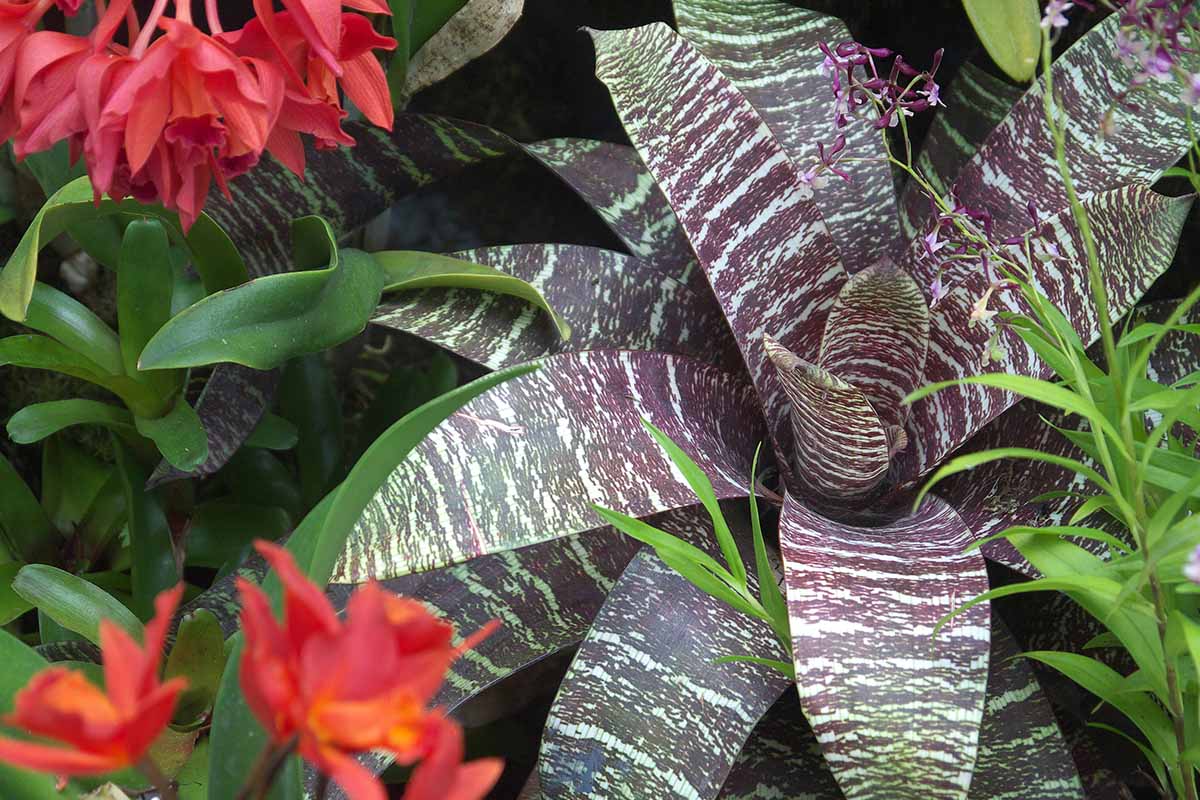
V. imperialis grows up to five feet tall with a flower spike that reaches up to 16 feet high, while miniature spotted bromeliads (V. racinae) grow to only six inches tall, for example.
“Flaming sword” refers to those with tall, beautiful flower spikes, usually V. splendens, but there are other species in the genus primarily grown for their interesting foliage. These generally don’t have impressive flowers.
Quick Look
Common name(s): Flaming sword, vriesea
Plant type: Bromeliad
Hardiness (USDA Zone): 10-12 (outdoors)
Native to: Central and South America, West Indies
Bloom time / season: Spring or summer, only blooms once
Exposure: Bright, indirect light to dappled shade
Soil type: Loose, airy, organically-rich, well-draining
Soil pH: 5.5-6.5, slightly acidic to neutral
Time to maturity: 2-3 years
Mature size: 1-2 ft wide x 1-2 ft high (depending on cultivar)
Best uses: Houseplant, patio container, mounted specimen
Taxonomy
Order: Poales
Family: Bromeliaceae
Genus: Vriesea
Species: Corcovadensis, fenestralis, splendens, zamorensis
With vriesea, you can have striking flowers or striking foliage, but not usually both.
The foliage on flowering types is usually long, broad, and flat, and ends at a point. But some have stripes, spots, variegation, and other variations.
Some even have broad, rounded leaves. Most form a central rosette that can collect water.
Most Vriesea species are epiphytes, which means that they grow on trees and other plants.
They don’t draw nutrients from the plants they live on, they just use them as a support structure so they can collect the rain and nutrients that fall down from the canopy above.
Don’t be intimidated if this is your first time hearing about epiphytes. Lots of our favorite houseplants are also epiphytes.
Swiss cheese plants (Monstera spp.), philodendrons (Philodendron spp.), staghorn ferns (Platycerium spp.), many orchids, and even fiddle-leaf figs (Ficus lyrata) are all epiphytes, using trees as anchors.
Since they don’t grow in soil, you need to take care not to waterlog the roots. Otherwise, I find most epiphytes are easier to care for than terrestrial plants.
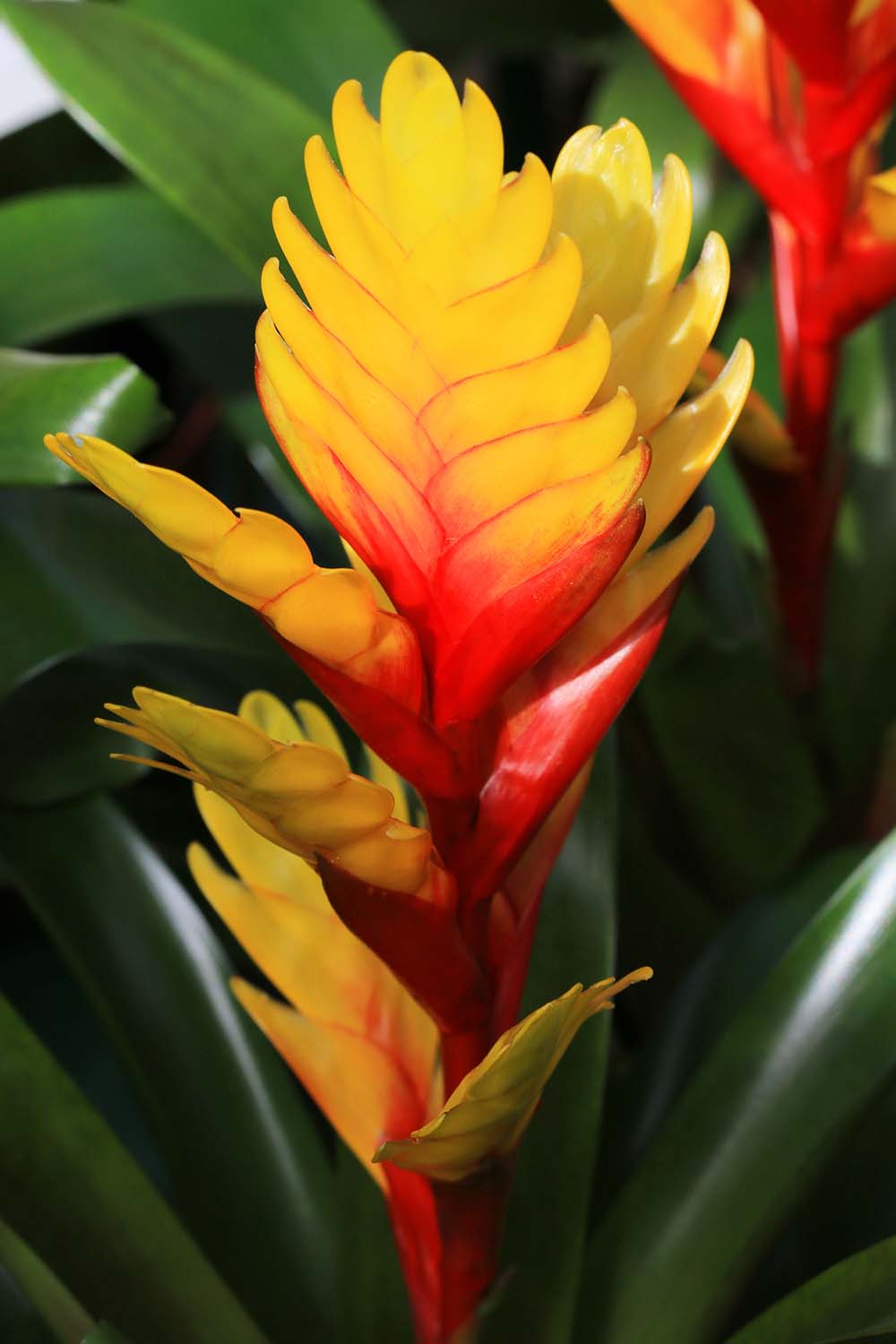
The flowers on flaming swords are unusual spikes in red, yellow, and orange, and they are typically quite bright and bold.
The colorful racemes are actually made up of bracts, which are modified leaves. The flowers are usually inconspicuous and don’t last as long as the bracts.
How to Grow
Vriesea species are native to warm, tropical regions across Central America, Mexico, South America, and the West Indies.

If you live in a suitable climate, you can grow these plants outdoors in the ground. Otherwise, keep them in containers that you can bring inside when the weather becomes too cold.
They also make beautiful houseplants. You can even mount vriesea on a piece of wood or a tree in your yard.
To mount, you’ll need to wrap the roots in sphagnum moss and then attach the moss ball and roots to a support using rope, string, nails, or whatever else works for you.
If you’re growing in a container, choose a vessel that’s just slightly larger than the root mass. Vriesea have small, shallow root systems and don’t need a lot of space.
Always use a pot with at least one good-sized hole in the bottom. These plants won’t tolerate soggy soil or standing water around the roots.
To cultivate Vriesea successfully, keep the following in mind:
Light
The main consideration here is to avoid excessive light. These plants aren’t suited for full sun, but there’s a species to match just about any other exposure, from full shade to partial sun.
Most species will tolerate a broad range, from dappled shade or bright, indirect light.
Some are even tolerant of dense, full shade, and are an attractive option if you want flowers in a dim spot.
For the most vibrant foliage and bract color, aim for brighter light. Just because a plant can tolerate low light doesn’t mean it will perform best in those conditions.
Temperature and Humidity
Vriesea species are also adaptable when it comes to temperatures.

Anything from just above freezing to up to 100°F is fine, though the plants will only tolerate extremes for short periods. A hard freeze will kill the plant.
They are fine in low humidity as long as the light isn’t too bright and temperatures aren’t too high.
When exposed to a lot of sun and heat, they will need more high humidity to thrive. Aim for 30 to 60 percent humidity.
Growing Medium
As Vriesea species are epiphytes, clinging to tree branches where water drains away quickly, they need a loose, well-aerated growing medium, not standard potting soil.

Look for a commercial bromeliad mix, or blend your own with equal parts orchid bark, perlite or pumice, and peat moss or coconut coir.
The goal is fast drainage with just enough water retention to keep the roots lightly moist.
Avoid dense or moisture-retentive mixes. Anything that stays wet for long will put the plant at risk of root rot.
Mounted plants can grow with just a layer of sphagnum moss around the roots, so long as humidity is adequate and you mist regularly.
Water
Water thoroughly but avoid soaking the roots. The potting medium should stay lightly moist, not soggy and oversaturated.
Too much moisture can lead to root rot, while water pooling between the leaves may cause crown rot.
That said, it’s fine to fill the central tank if you do it carefully and be sure to flush it out every week or two with distilled water.
Learn more about watering bromeliads here.
Fertilizer
Feed your vriesea with a mild, balanced foliar fertilizer once in the spring and again in the fall. Be sure to coat the entire plant.
Species and Cultivars
There are dozens of species but you won’t often find them available at stores. Hybrids are by far the most popular.

In general, the flaming swords will be listed simply by that common name regardless of whether it’s a species plant or a hybrid.
Here are some outstanding species and cultivars to look for:
Corcovadensis
If you recall, we talked about how most Vriesea species are epiphytes.
V. corcovadensis is one of the few in cultivation that isn’t. It’s a terrestrial type that can grow in loose, rich soil.
You might mistake the long, strappy leaves for an air plant, but it’s not. That’s all the more evident when it shoots out a big, bold gold and yellow flowering spike.
This species is best grown in areas with temperatures between 50 to 80°F. Given that, prepare yourself for vigorous growth up to a foot tall and lots of offsets.
You can pick up a small plant from Sprig and Stone via Amazon.
Splendens
V. splendens is the plant most commonly referred to as flaming sword. It grows up to three feet tall and two feet wide with solid green or stripey purple, gray, and green linear leaves.

This species grows best in temperatures above 50°F and you need to keep the vase full at all times.
The flattened racemes of red, orange, or yellow bracts can last for months.
Splenriet
Splendid ‘Splenriet’ is a splendens hybrid that sports large, attractive leaves with distinct stripes of gray and dark green.

The orange, red, and yellow blooms can last for up to six months before the plant sends out pups and dies back.
That’s quite the lasting performance. It likes the same conditions as its splendens parent.
White Line
‘White Line’ was the result of the efforts of several breeders over many years.
It started when Carlos Broeckaert discovered the first variegated vriesea hybrid V. x poelmanii. He named it ‘Madam Carlos Broeckaert.’
Sadly, it wasn’t stable and breeding efforts from it were failures.
Then the company Deroose got a hold of the plant and attempted to cultivate a stable type – the result was ‘White Line.’
The strappy leaves have a bright white line down the center with deep green stripes on the sides.
When the flower appears, it’s a flaming sword of bright red. Keep it in temperatures between 60 to 80°F, though it will tolerate conditions outside of this range for short periods.
Zamorensis
If you’re looking for a cold-weather friend, V. zamorensis is a good option, since it can survive brief dips just below freezing.
It’s much happier in warmer climates, of course, but a bit of weather in the 30s now and then won’t spell disaster.
First described in 1970, it grows to about a foot tall with a brilliant spike of greenish-yellow flowers decorating red, branching bracts.
There are several lovely hybrids using this one as a parent, such as ‘Elan’ and ‘Grande.’ All enjoy temperatures between 60 and 80°F.
Maintenance
As with many bromeliads, vriesea are monocarpic, which means they bloom once and then die. Shortly after blooming, the plant will start to decline, eventually dying off completely.
Learn more about how to care for bromeliads after flowering here.

But all is not lost! When the plant starts to die, it will send out tons of offsets or pups. These are genetic replicas of the parent.
You can remove these and start new plants using the process described in the propagation section below.
Be sure to flush out the urns and replace the water frequently in outdoor plants otherwise they become a breeding haven for mosquitos and you’ll be miserable!
You can also treat your plants regularly with Bti (Bacillus thuringiensis subsp. israelensis) to kill the mosquito larvae.
Propagation
As mentioned, bromeliads send out offsets or “pups” that can be separated from the parent and cultivated elsewhere.
The only problem is that vriesea pups grow attached to the stem of the mother and not off to the side as with other bromeliads. But with a bit of care, propagation is still straightforward.

To propagate pups, wait until the offsets are about six inches tall and feel firmly attached to the parent.
You can wait longer until the pups are about half the size of the parent, but not much more than that. When you’re ready, grab a sanitized pair of clippers or scissors.
Wedge the tool between the parent and the pup and gently cut it away. You want to cut into the mother as you do this and not the pup. If you can pry away some of the roots, all the better.
Dip the ends in powdered rooting hormone and plant in cactus or succulent potting soil. Stick them in the soil just deep enough that they stay upright.
Place in bright, indirect light and keep the soil evenly moist. When new growth appears, you can treat the pup like a mature plant.
It’s possible, though unreliable and slow, to grow flaming swords from seed.
If you’d like to learn more about this process, read our guide to propagating bromeliads.
Pests and Disease
Part of raising plants is knowing what to look out for when it comes to pests and diseases.
It’s always better to catch issues as early as possible rather than wait until your plant is showing serious signs of a problem. Let’s talk about pests, first.
Insects
Aphids, mealybugs, and scale are common pests that feed on Vriesea. These sapsuckers use straw-like mouthparts to drain plant juices, leaving behind sticky residue.
Symptoms include yellowing, stunted, or deformed growth. Severe infestations can be fatal.
Aphids cluster in groups and are easily dislodged with a strong spray of water. Insecticidal soap applied every week or two is also effective.
Mealybugs and scale are immobile, oval pests that often resemble disease spots. Scrape them off with a butter knife and drown in soapy water.
Outdoors, snails and slugs may chew holes in the leaves, but the damage is mostly cosmetic.
Disease
Rot is the most common disease problem in Vriesea species. It can appear as crown or root rot.
Crown rot occurs when standing water collects in the urn or surrounding leaves. It becomes stagnant and attracts pathogens like Phytyophthera cinnamomi or Pythium spp.
Root rot occurs in saturated soil that deprives roots of oxygen and attracts the same pathogens.
Both cause rotten, water-soaked, dark tissue.
Treat with copper fungicide, spraying the crown or soaking the soil as needed. Repeat every few weeks until healthy new growth appears.
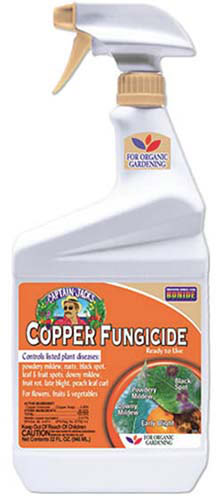
You can pick up Bonide copper fungicide at Arbico Organics in a variety of sizes to suit your needs.
Leaf spot, caused by Exserohilum rostratum, starts as yellow, blister-like spots that turn brown and sunken with a yellow halo. Infected leaves may eventually wilt.
The faster you act, the better the chances of restoring your plant to good health.
Treat the leaves with copper fungicide every two weeks until new, healthy growth develops and no new symptoms develop.
Low Maintenance, Long Lasting Color
Flaming swords are low-maintenance beauties with long-lasting, colorful flowers that brighten up your home or garden with little effort.

You can enjoy these plants in your home or garden without having to worry much about whether they’ll survive.
Are you growing flaming sword? Let us know in the comments section below and feel free to share a picture!
And for more information about growing bromeliads, add these guides to your reading list next: