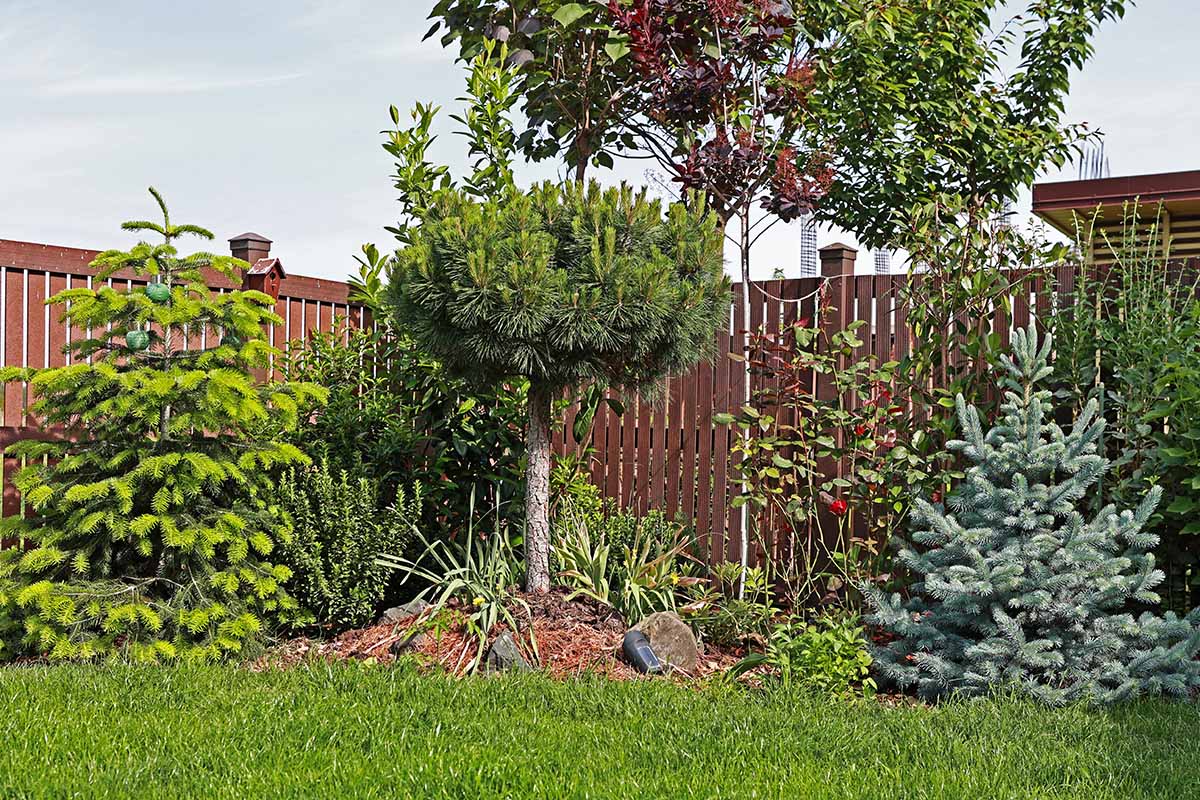
Tiny lots can feel like a challenge for city dwellers with big landscaping plans, but thankfully there are plenty of small trees that can thrive in undersized, urban yards.
Whether you’re trying to create shade, or looking for a species to complement your pollinator garden or rain garden, there are so many gorgeous species to choose from!
The definition of “small” varies depending on who you ask, but for the purposes of this article, we’re going to consider those species that reach no more than 30 feet tall and wide, which should fit even the tiniest urban yards.
We link to vendors to help you find relevant products. If you buy from one of our links, we may earn a commission.
However, when choosing a specimen for an urban backyard, size isn’t the only consideration.
Pollution tolerance is another key feature since the air in cities usually contains higher levels of carbon dioxide and pollutants.
Some gardeners may also need heat resistant options to account for the heat island effect.
In this article you’ll learn about 17 small trees that are perfect for urban backyards, and discuss which ones excel at pollution and heat tolerance.
Of course, those characteristics alone aren’t enough to decide what type of small tree to buy – you’ll also need to match your sun exposure and soil type to the needs of the species to ensure it thrives once you plant it!
We’ll provide all the details for you to make an informed decision for selecting the perfect species for your urban garden.
Here’s a peek at our selection:
17 of the Best Small Trees for Urban Yards
Before we dive into the list, we’d like to give you a planning tip so that you know which size to pick as you read through the following selections.
This is important because judging a tree only by the size of the sapling is misleading – don’t forget to plan for the plant’s mature size.
If your backyard is just 40 feet wide and deep, you could choose a single sun-loving tree that reaches 30 feet across to shade most of the yard, or a few smaller ones that mature to 10 to 15 feet wide or less.
If you combine small trees of different heights and choose some adapted to lower light, you can grow even more in your small space.
But also consider how much shade you want – whether you want them to plunge the whole space into cooling shadows, or if you want to keep some sun available for a veggie garden.
To maximize sunlight, choose species that are narrower than they are wide, and plant them to the south of your yard.
Of course, you’ll need to measure your own outdoor space to see how much area you have available to plant.
Once you know how much room you have, you should be ready to start choosing which small trees to grow!
1. American Hazelnut
American hazelnuts (Corylus americana) are tolerant of pollution, providing shade, attracting birds and butterflies, and are adaptable to different amounts of sunlight in urban yards.
In addition they provide a delicious, edible harvest of nuts.
These rounded, deciduous trees reach up to 12 feet tall and 13 feet wide at maturity and provide interest in your urban yard throughout the year.
Native to the eastern and central US and Canada, American hazelnuts produce draping catkins in winter and spring, summer hazelnuts, and gorgeous fall color in hues of gold, orange, and red.
You can grow American hazelnut in USDA Hardiness Zones 4 to 9 in well-drained soils, and they can be used to make excellent hedges.
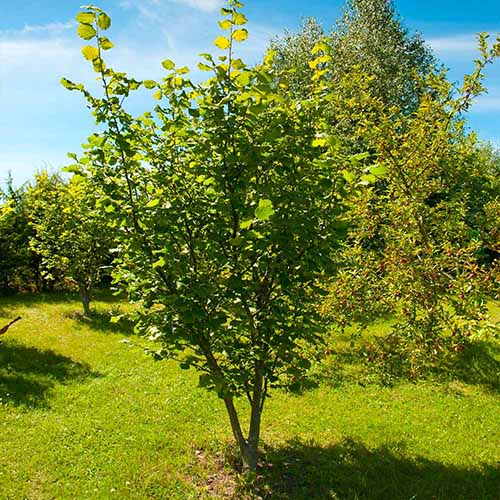
You can find two- to three-foot-tall American hazelnut saplings available at Fast Growing Trees.
Learn more about growing hazelnuts here.
2. American Smoke Tree
American smoke tree (Cotinus obovatus) is a deciduous species that reaches up to 30 feet tall and wide.
This native of the southern US is named for the fluffy flower heads that cover the plant in summer.
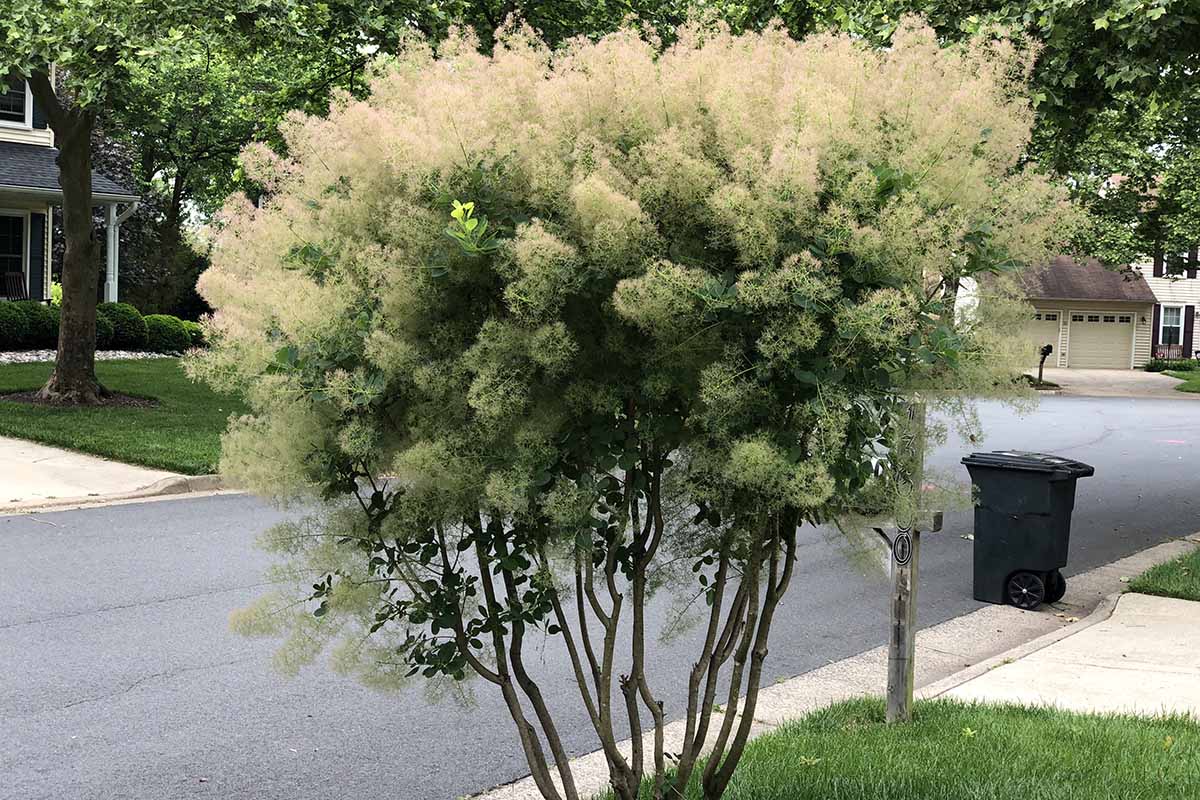
This species is heat- and pollution-tolerant, making it an excellent choice for petite, urban yards in Zones 4 to 8.
Plus, American smoke tree is one of the best for orange fall color, with a long-lasting display of autumn leaves.
This drought-tolerant species grows best in full sun and is adaptable to different soil types.
3. Blackhaw Viburnum
If you’d like to attract beautiful butterflies to your backyard, consider blackhaw viburnum (Viburnum prunifolium). This species is also perfect for rain gardens.
Tolerant of both heat and pollution, this deciduous species reaches up to 15 feet tall and wide, gracing your garden with stunning clusters of pollinator-friendly, white flowers in spring, beautiful fall color, and showy berries that birds love.
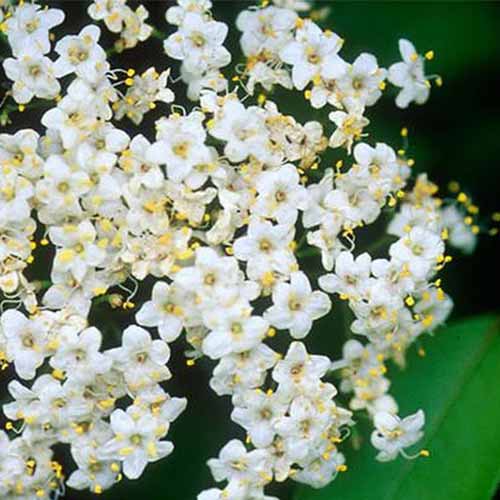
Blackhaw viburnum is native to the eastern and central US and is suitable for cultivation in Zones 3 to 9 where there is full sun or part shade, and well-drained soil.
You can find blackhaw viburnum plants available at Nature Hills Nursery.
Read more about growing viburnum here.
4. Blue Arrow
If you’re looking for a conifer that will tolerate urban conditions while taking up very little space, consider Juniperus scopulorum ‘Blue Arrow.’
This cultivar of the Rocky Mountain Juniper, a North American native, is a pollution-tolerant evergreen that grows 10 to 15 feet tall, and only one to two feet wide.
This foliage has a blueish color and produces pretty blue berries that provide food for wildlife throughout fall and winter.
You can treat ‘Blue Arrow’ as one of the best shrubs for hedges, but it also looks beautiful planted as a small column-shaped specimen to accent your home.
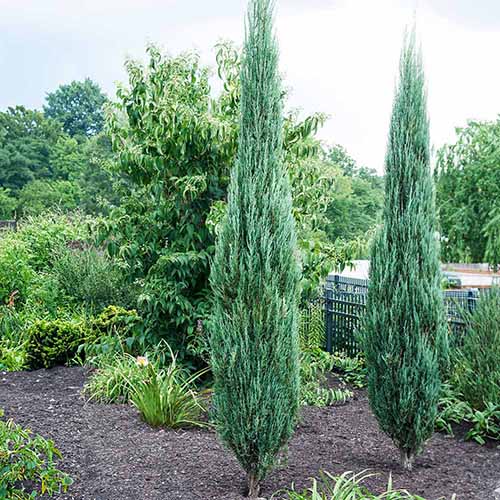
This juniper grows best in Zones 4 to 9 in full sun or part shade, and is adaptable to different soil types.
You can find five- to six-foot ‘Blue Arrow’ trees available at Fast Growing Trees.
Learn more about planting and growing junipers here.
5. Common Witch Hazel
There’s a wonderful way to bring flowers to your urban yard in winter: common witch hazel (Hamamelis virginiana).
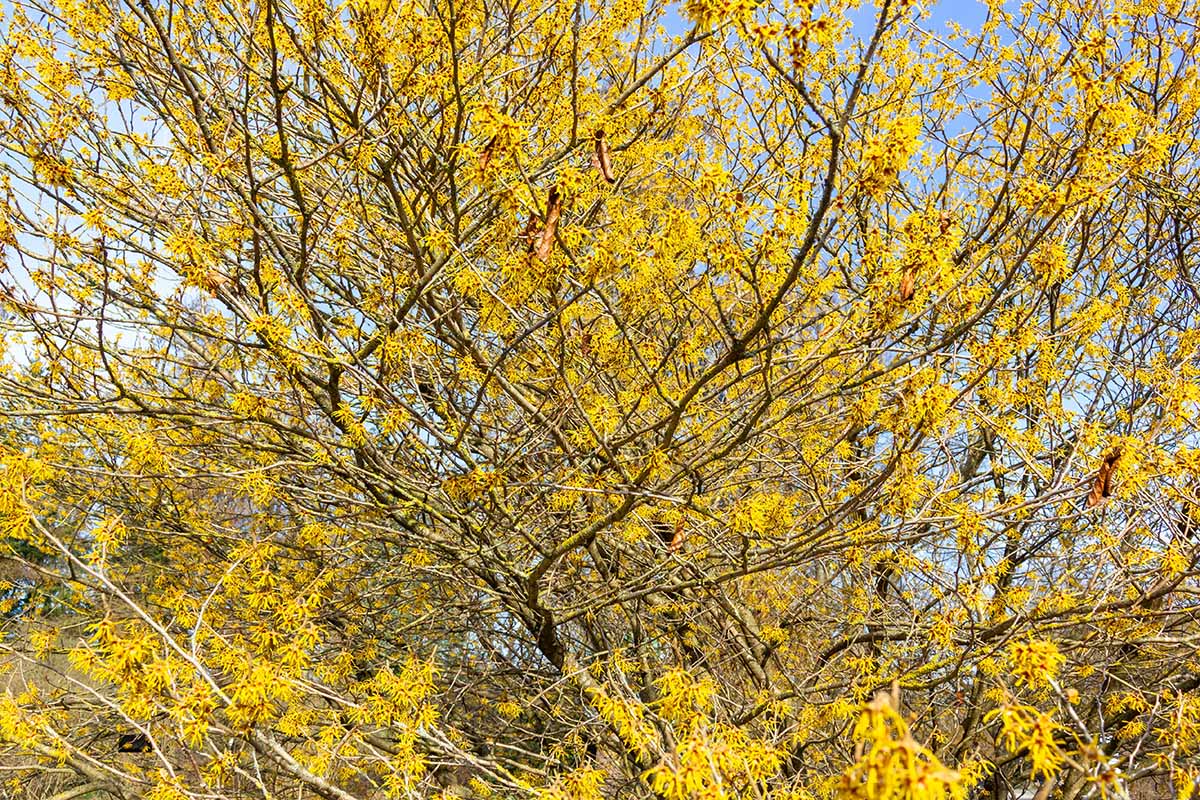
This deciduous tree bears clusters of showy yellow and red flowers throughout fall and winter, is somewhat tolerant of pollution, and grows up to 30 feet tall and 20 feet wide.
Along with the blooms, you’ll enjoy green, scalloped leaves in summer, and beautiful autumn color in shades of gold.
Witch hazel hails from eastern North America, as well as the south-central region of the US, and is hardy in Zones 3 to 9.
It grows best in urban yards that have full sun and moist, well-draining soil.
Check out our guide to growing witch hazel here.
6. Crabapple
Crabapples (Malus spp.) are pollution tolerant, deciduous trees that are perfect for urban yards.
They produce beautiful early spring flowers, edible fruits, and gorgeous fall color.
There are small to medium-sized crabapple species and cultivars available, ranging from 14 to 40 feet tall, so be sure to check the mature size when shopping.
There are many different species of crabapple and they have a widespread native range across the Northern Hemisphere. You’ll find options available that are hardy in Zones 3 to 9.
Crabapples grow best in full sun and they need well-draining soil that’s kept on the moist side.
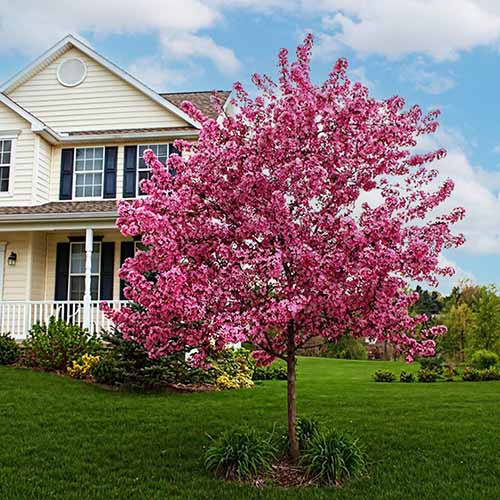
‘Prairifire’ is a cultivar that reaches no more than 20 feet tall and wide and has long lasting pink blooms.
You can find four- to five-foot ‘Prairifire’ crabapples available from Fast Growing Trees.
Learn all about growing crabapple trees here.
7. Desert Willow
If you live in the western US, don’t despair, there are options suitable for small, urban yards in your region as well.
Desert willows (Chilopsis linearis) are heat- and pollution-tolerant small trees that reach up to 26 feet tall and 20 feet wide, and produce gorgeous blooms.
This relative of catalpas (Catalpa spp.) fragrant, trumpet-shaped flowers in shades of pink and purple that are reminiscent of those of orchids.
Don’t be surprised to see bees, butterflies, and hummingbirds feeding at those lovely blooms before they transform into long seed pods.
Grow desert willows in urban yards in Zones 7b through 11b, or in Zones 5 and 6 with winter protection.
These fast-growing plants need full sun, and thrive in arid climates with less than 30 inches of rain a year.
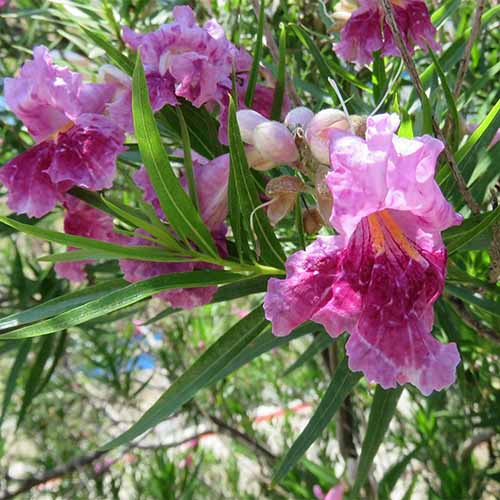
‘Bubba Jones’ is a desert willow cultivar that has two-toned blooms that are pink with burgundy lips and has fewer seed pods.
You can purchase ‘Bubba Jones’ desert willows in five-gallon pots from Fast Growing Trees.
8. Douglas Hawthorn
Doulgas hawthorns (Crataegus douglasii) are multistemmed, deciduous trees that bear edible fruits and are great for urban yards.
They grow to be up to 25 feet tall and wide, making them perfect for use as an accent or planted in multiples, to create a flowering hedge.
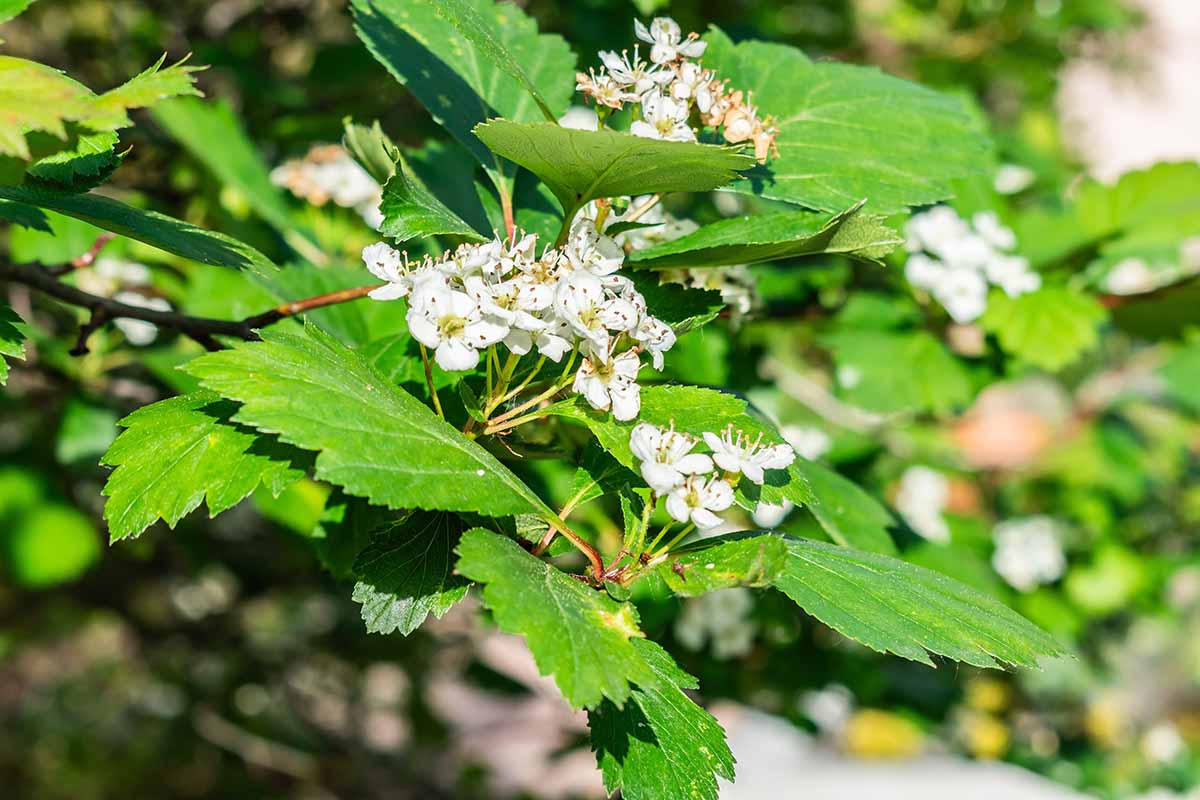
Expect leathery, toothed leaves, showy, white flowers, and small, black, edible fruits that can be enjoyed straight from these small trees, if the songbirds don’t get to them first.
This species that’s native to the Great Lakes states, the Pacific Northwest, and Alaska is also a pollinator favorite, attracting numerous butterflies, including the viceroy (Limenitis archippus), a lookalike of the famous monarch butterfly.
Douglas hawthorns can be grown in urban yards in Zones 4 to 8, where they need full or part sun, well-draining soil, and are tolerant of both drought and pollution.
Learn how to grow and care for hawthorn trees here.
9. Eastern Redbud
The eastern redbud (Cercis canadensis) is one of many types of redbuds you can grow in urban yards, and is one of the earliest trees to flower in spring.
Redbuds are deciduous and reach up to 30 feet tall by 35 feet wide, and are easily recognizable when covered with the showy pink, purple, or red blooms.
Eastern redbud is multi-stemmed and has a rounded shape. The heart shaped leaves transform to golden hues in fall.
Like other members of the legume family, eastern redbuds produce distinctive seed pods.
Along with being tolerant of pollution, these small trees also thrive in different soil types, even those that are compacted.
And since they aren’t bothered by juglone, redbuds are among the plants you can grow under black walnut trees.
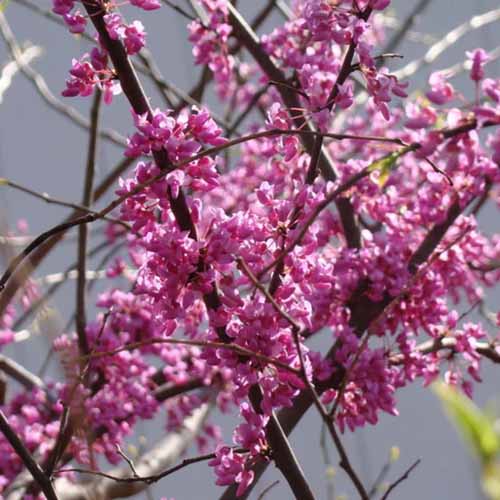
This native of the eastern and central US is hardy in Zones 4 to 9 and can grow in urban yards in full sun or part shade.
Eastern redbud saplings are available for purchase at two-, three-, or four-foot sizes from Nature Hills Nursery.
Our guide to growing redbuds has more information.
10. Fringe Tree
Named for their clusters of fluffy looking white flowers, fringe trees (Chionanthus virginicus) bring numerous attractive features to small urban yards.
This species is related to olives, and the edible, olive-like fruits ripen from green to bluish black, adding summer interest and attracting songbirds.
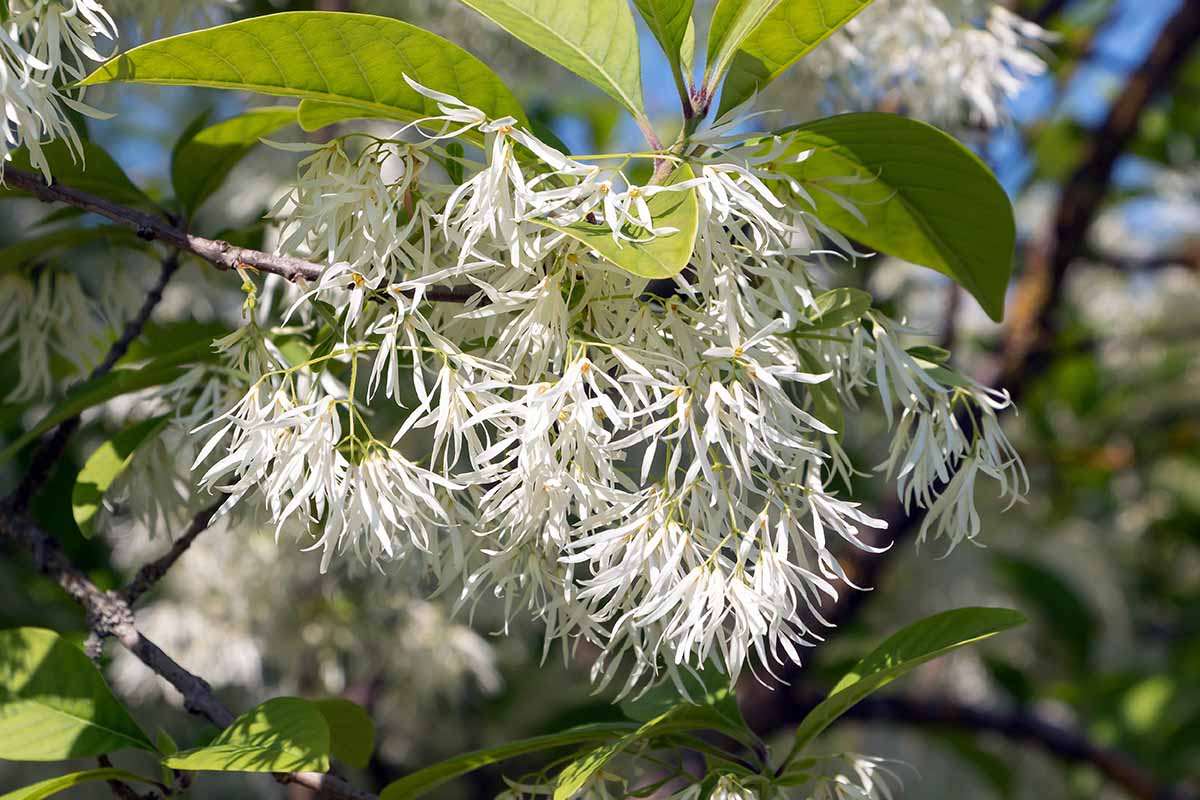
These slow-growing trees have an oval shape, producing multiple stems that bear elliptical, deeply veined leaves that turn beautiful shades of gold or copper in autumn.
Expect mature dimensions of between 12 and 20 feet tall and wide at maturity. Fringe trees look lovely in mass plantings or can be planted as a single specimen.
This native to the eastern and central US grows in Zones 3 to 9. It will thrive in urban yards that have full sun or part shade and is adapted to different soil types.
As well as being tolerant of pollution, fringe trees are also drought and fire resistant.
11. Jade Butterflies
‘Jade Butterflies’ is a compact Ginkgo biloba cultivar that performs well in urban locales, producing gorgeous butterfly-shaped leaves that turn yellow in autumn.
While the straight species, which hails from China, can reach up to 100 feet tall, this is one of the smaller ginkgo cultivars for your landscape, reaching just six to 12 feet tall with a spread of three to nine feet.
You can grow this ginkgo in Zones 4 to 8 as long as you have full sun.
This deciduous species is adaptable to a wide range of soil types, even compacted soil, and both alkaline and acidic conditions.
‘Jade Butterflies’ makes a great choice as a small tree for an urban yard since it tolerates both pollution and heat.
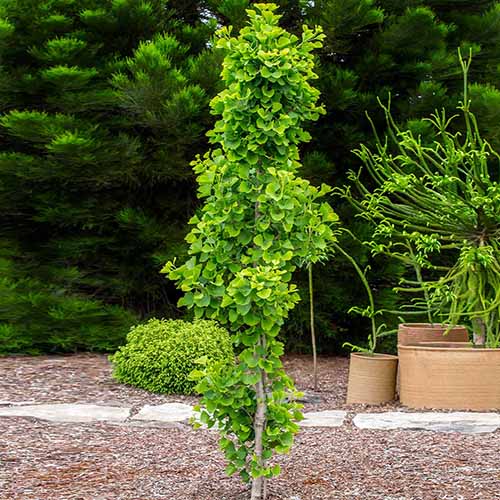
Ginkgo Biloba ‘Jade Butterflies’
Some gardeners avoid ginkgos because of the stinky and messy fruits the female trees produce, but since ‘Jade Butterflies’ is a male selection, you won’t have to worry about smells or fruit cleanup.
Two- to three-foot ‘Jade Butterfly’ saplings are available at Fast Growing Trees.
Check out our guide to growing ginkgo here.
12. Japanese Maple
One of the most popular small trees is the Japanese maple (Acer palmatum), a species native to Asia that has numerous beautiful cultivars.
In general these deciduous plants reach up to 25 feet tall and wide, and have lobed, palm-shaped leaves in gorgeous shades of yellow, green, red, and purple.
They also put on a stunning show with their fall colors.
Gardeners with urban yards in Zones 5 to 8 can grow Japanese maples in dappled sunlight as long as they have well-draining soil that is rich in organic matter and on the moist side.
While Japanese maples are perfect for smaller spaces, the verdict is still out on how tolerant of pollution they are.
So if you live in an area with a lot of air pollution, you may want to reach for an alternative, like hedge maple (A. campestre).
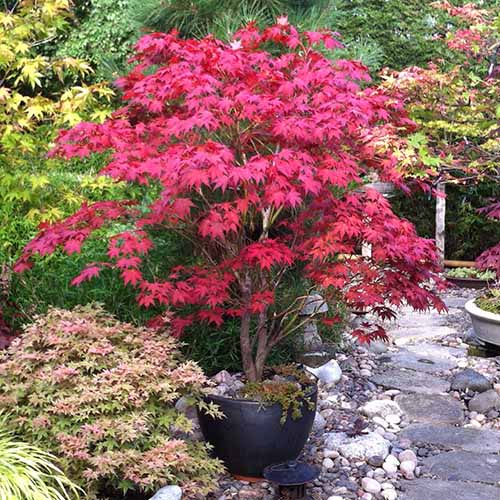
On the other hand, for those ready to choose a Japanese maple variety, ‘Bloodgood,’ is one of the best cultivars – it reaches 20 feet tall and wide, and has red leaves and a rounded shape.
You can purchase ‘Bloodgood’ Japanese maple saplings of various sizes at Fast Growing Trees.
Learn how to grow and care for ‘Bloodgood’ Japanese maple trees here.
13. Kousa Dogwood
If you’re looking for a small flowering tree that blooms in late spring, consider Kousa dogwood (Cornus kousa).
These deciduous dogwood trees are native to Asia and won’t grow more than 30 feet tall and wide. They bear showy white to pink blooms, and pink or red edible fruits.
Expect showy fall colors in shades of red or purple from these wildlife-friendly specimens.
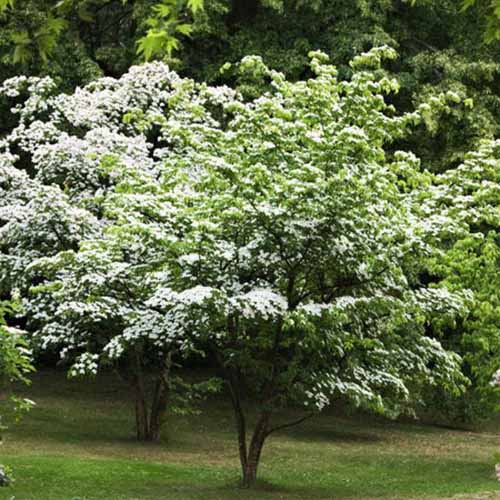
Kousa dogwoods are somewhat pollution tolerant, hardy in Zones 5 to 8, need full sun or part shade, and acidic, well-draining soil.
You’ll find two- to three-foot kousa dogwood saplings available for purchase at Nature Hills Nursery.
Learn how to grow and care for kousa dogwoods here.
14. Olive
If you live in Zones 8 to 10, you can add olives (Olea europaea) to your list of options that will thrive in some urban yards, however, avoid planting them in areas of high air pollution.
These evergreens, native to the Mediterranean, Africa, and Asia, reach up to 30 feet tall and 15 feet wide, though some varieties are more compact.
In addition to their silvery evergreen foliage, they bear the edible fruits that you may best recognize when stuffed with a slice of pimento.
Olive trees require full sun and well-draining soil to thrive, and are drought tolerant.
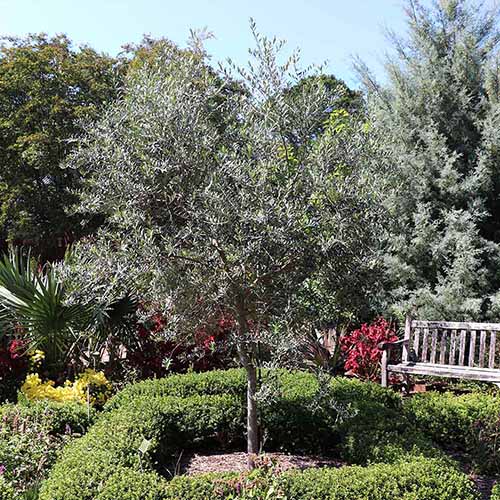
This compact cultivar reaches just 20 feet tall and 12 feet wide. The fruits can be used for brining or for pressing into oil, an added bonus in a small tree.
‘Arbequina’ olive saplings of multiple sizes are available at Fast Growing Trees.
Our guide to growing olives can get you started.
15. Red Buckeye
Red buckeye (Aesculus pavia) is a deer-resistant plant that bears showy, large, red flower clusters that will attract hummingbirds and other pollinators to your urban yard.
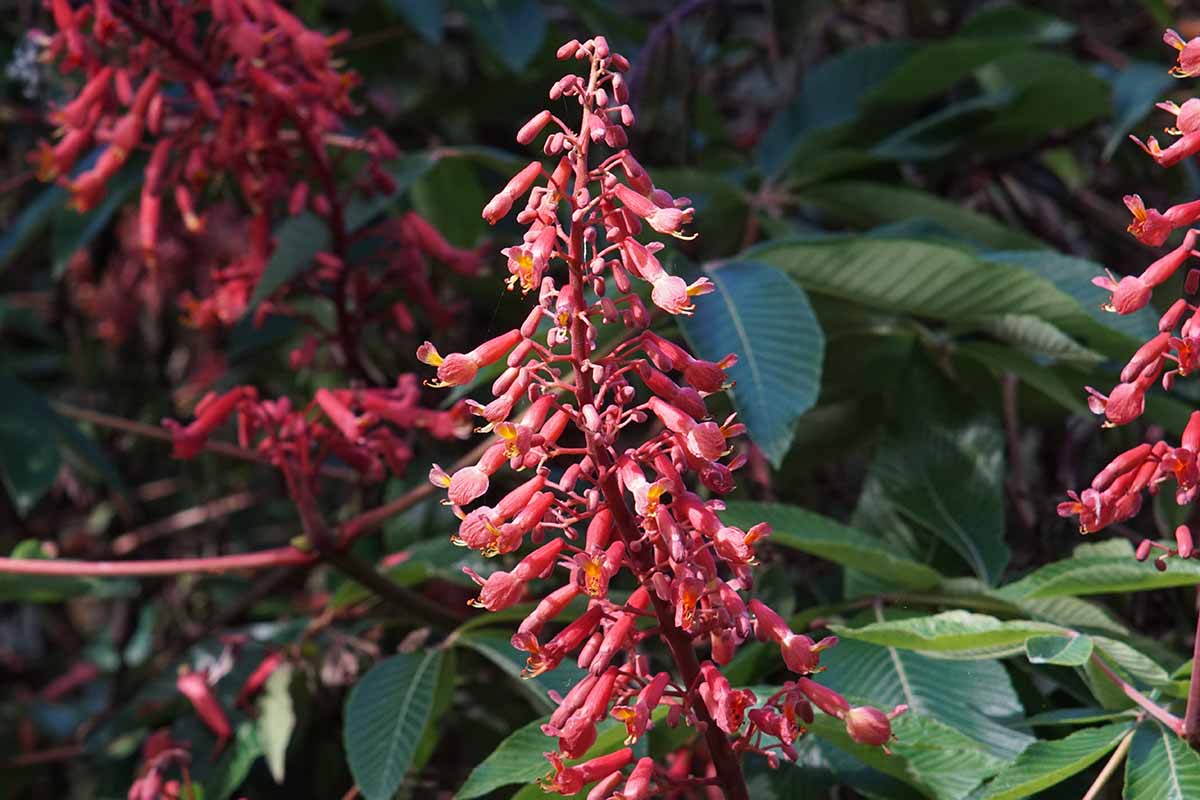
Also known by the colorful common names firecracker plant and scarlet buckeye, this deciduous species reaches no more than 25 feet tall and 20 feet wide at maturity.
It has a multi-trunked, rounded growth habit, and large, compound leaves that turn beautiful shades of red in fall.
Red buckeye is hardy in Zones 4 to 8, where it flourishes in partial shade and prefers moist soil with good drainage.
This native of the southeast and central US can grow in your rain garden, and is somewhat tolerant of pollution, making it a good choice for a small tree for some urban locales.
Note that this plant is highly toxic if any part of it is ingested, including the large nut-like fruits born in fall.
16. Serviceberry
Serviceberries (Amelanchier spp.) have numerous benefits, so it’s fantastic that they’re also sized well to grow in tiny urban yards.
There are many different species, and the largest ones are small trees that reach no more than 15 to 25 feet tall and wide.
These deciduous shrubs, also known as juneberries, bear beautiful white flowers that give way to edible fruits that are similar to blueberries, making them a great choice if you’re trying to create an edible landscape in your small outdoor space.
No matter where you live in the continental US, you’ll find a species of serviceberry native to your state.
Downy serviceberry (A. arborea), which is native to the eastern and central US, is hardy in Zones 4 to 9, grows in full sun or part shade, and prefers well-drained, moist soil.
If you live in the western US, choose Saskatoon serviceberry (A. alnifolia) instead, which grows in the same conditions and Zones as its eastern counterpart, but this one can also tolerate deep shade.
Some gardeners might have an easier time finding a serviceberry hybrid for their urban yards, such as ‘Autumn brilliance.’
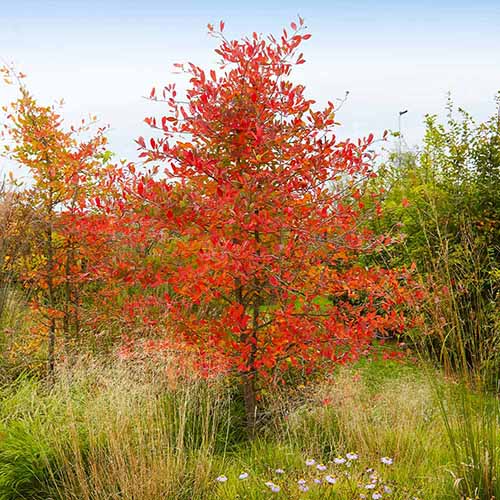
‘Autumn Brilliance’ Serviceberry
This cultivar produces white flowers in spring and bright reddish orange fall foliage.
You can find two- to three- foot ‘Autumn Brillance’ serviceberry saplings from Fast Growing Trees.
Learn more about growing and caring for serviceberries here.
17. Techny
If you’re looking for species to grow as an evergreen screen to provide privacy year-round, add ‘Techny’ to your list.
This American Arborvitae (Thuja occidentalis) cultivar grows to just 15 to 20 feet tall and up to 10 feet wide, and is tolerant of air pollution.
‘Techny’ has an upright, pyramidal form that makes it perfect for screening unsightly views.
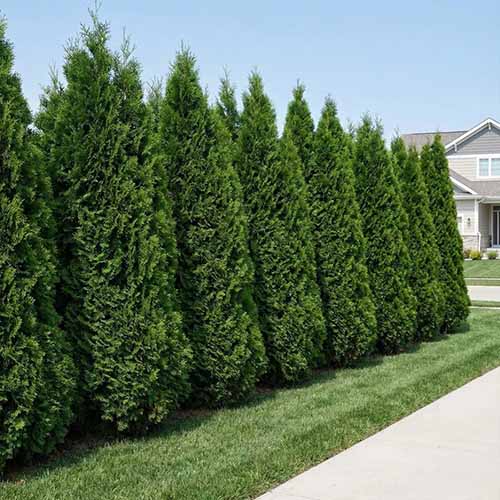
You can grow low-maintenance ‘Techny’ in urban yards in Zones 3 to 8, in full sun or part shade, and preferably in a humid environment with moist, well-draining soil.
You can find one- to two-foot saplings available at Nature Hills Nursery.
Learn more about growing arborvitae here.
Small But Mighty and Beautiful Too
Hopefully, you now feel you have some options for your small, urban yard and maybe you can even grow more than one in your outdoor space.
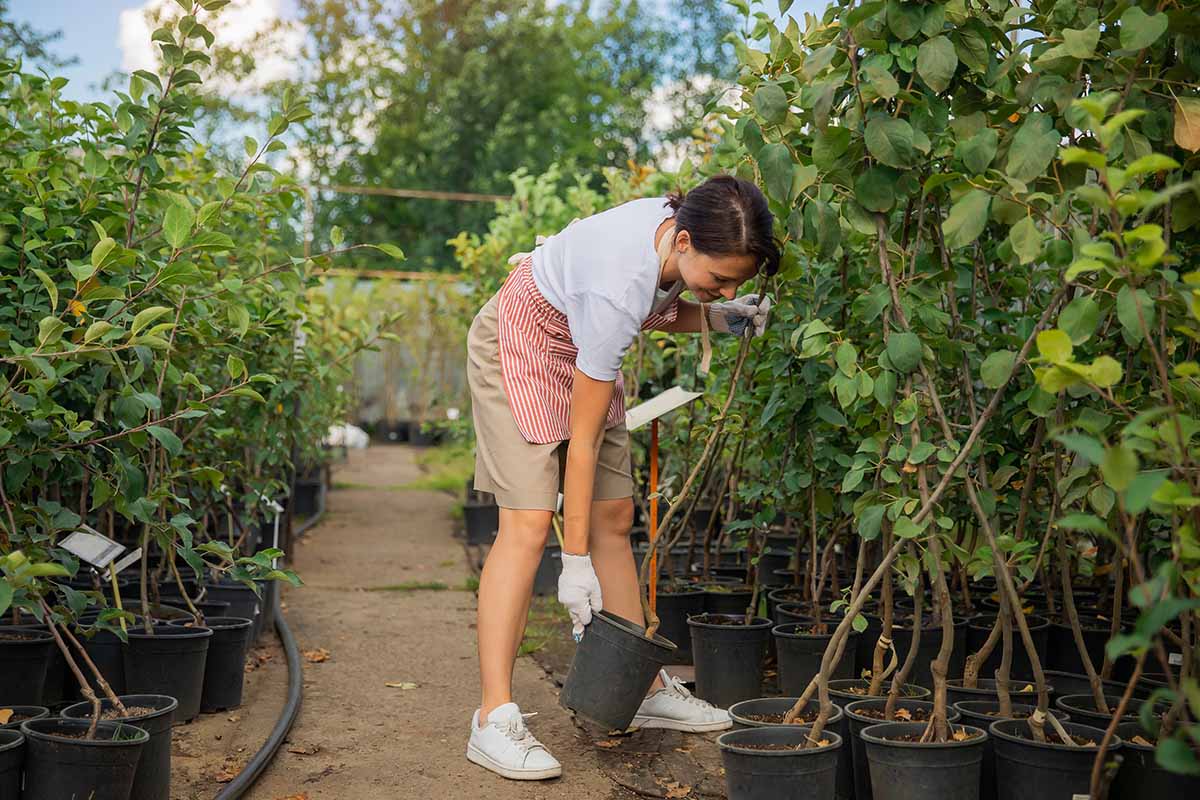
These small trees will help you create a charming oasis within the city, where you can enjoy the shade, foliage, flowers, and berries on offer.
Did we leave any of your favorites out that are also petite in stature and tolerant of city air?
Do you have questions on the suitability of any other options for your urban yard? Let us know in the comments section below.
While you’re contemplating which of these will fit perfectly into your urban yard, here are some additional guides to landscape trees that might help: