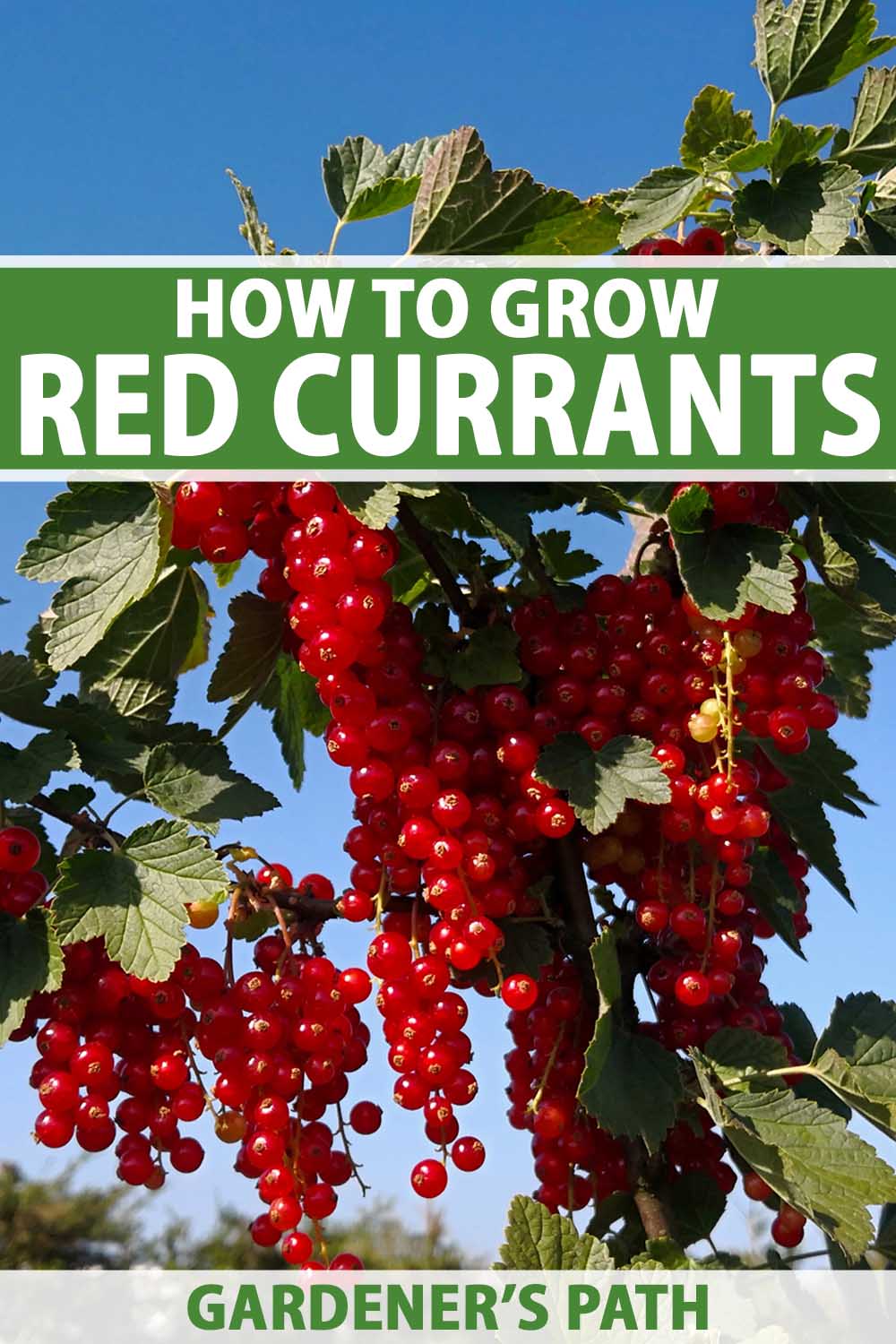
Ribes spp.
Come early spring, the cherry trees are blooming, the magnolias are opening up, and daffodils are nodding in the breeze.
It’s the perfect time to take a walk in the woods, and step after step, when I do, I’m greeted by yet another blossoming wonder.
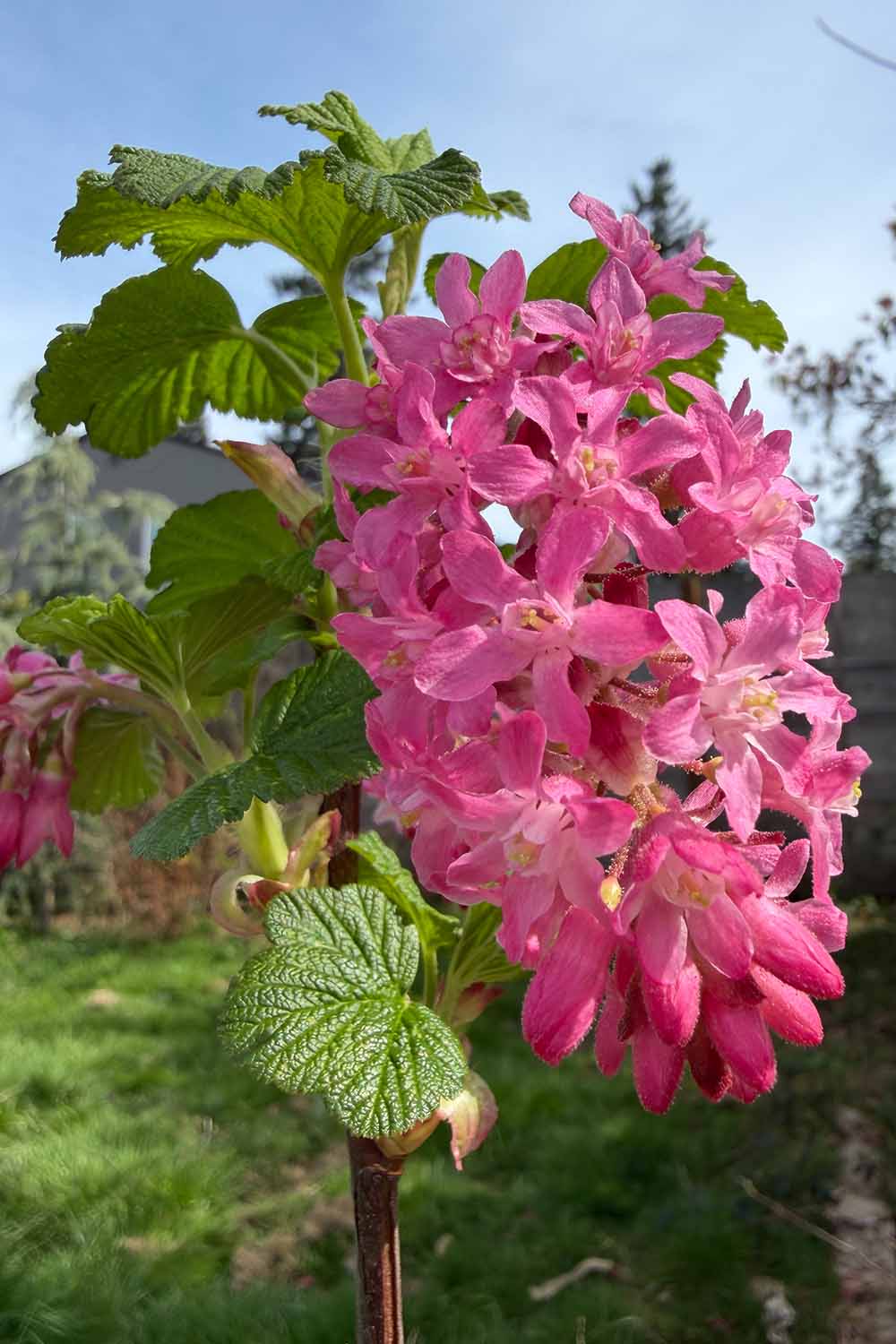
Red currants, covered in bright pink blossoms from top to bottom, even in the shade!
And the floral display is just the beginning. In a few months, those bountiful blossoms become tart, tangy clusters of fruit packed with vitamin C and other healthful goodies.
We link to vendors to help you find relevant products. If you buy from one of our links, we may earn a commission.
Currants aren’t as popular as some other fruits, and in North America at least, that’s partly because they were illegal across much of the United States for decades.
It wasn’t until 1966 that most growers could legally plant Ribes species in most areas, and they’ve been slowly gaining in popularity since.
A handful of states, including Ohio and Michigan, still have restrictions, so be sure to check that it’s legal to grow them in your area before planting.
If they’re not banned in your region, you’re in luck. The flowers and fruits are amazing.
In this guide, we’ll cover everything you need to know to grow red currants successfully, including:
What You’ll Learn
There are dozens of red currant species, all in the Ribes genus.
Generally, most red currants you’ll find for sale are classified as R. rubrum or a hybrid, though R. patraeum, R. sativum, and R. vulgare, are also common.
Of course, there are others, but they are much less common.
Basically, any of the Ribes species with red fruit that appears in long clusters is called red currant. But “redcurrant” usually refers to R. rubrum.
Most that you’ll cultivate in your garden are from species indigenous to Europe, but there are a few hailing from North America, as well.
All are thornless and most are self-fruitful.
Quick Look
Common name(s): Red currants, redcurrants
Plant type: Deciduous hardwood shrub
Hardiness (USDA Zone): 3-7
Native to: North America, Europe
Bloom time / season: Spring flowers, summer fruits
Exposure: Full to partial sun
Soil type: Loose, rich, and well-draining
Soil pH: 6.0-7.0, slightly acidic to neutral
Time to maturity: 5 years
Spacing: 6 feet
Mature size: Up to 10 feet tall and 5 feet wide
Water Needs: Medium
Best Uses: Cottage garden, fruit, ornamental, wildlife
Taxonomy
Order: Saxifragales
Family: Grossulariaceae
Genus: Ribes
Species: Patraeum, rubrum, sativum, vulgare
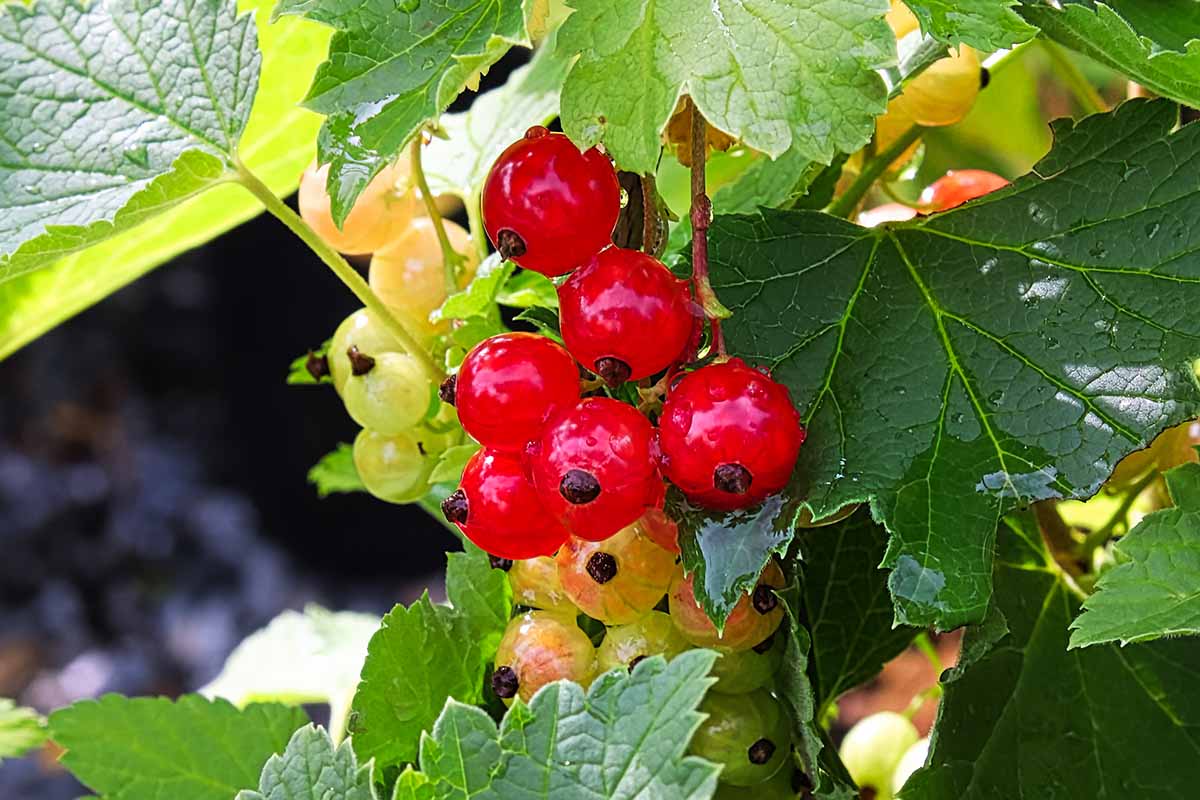
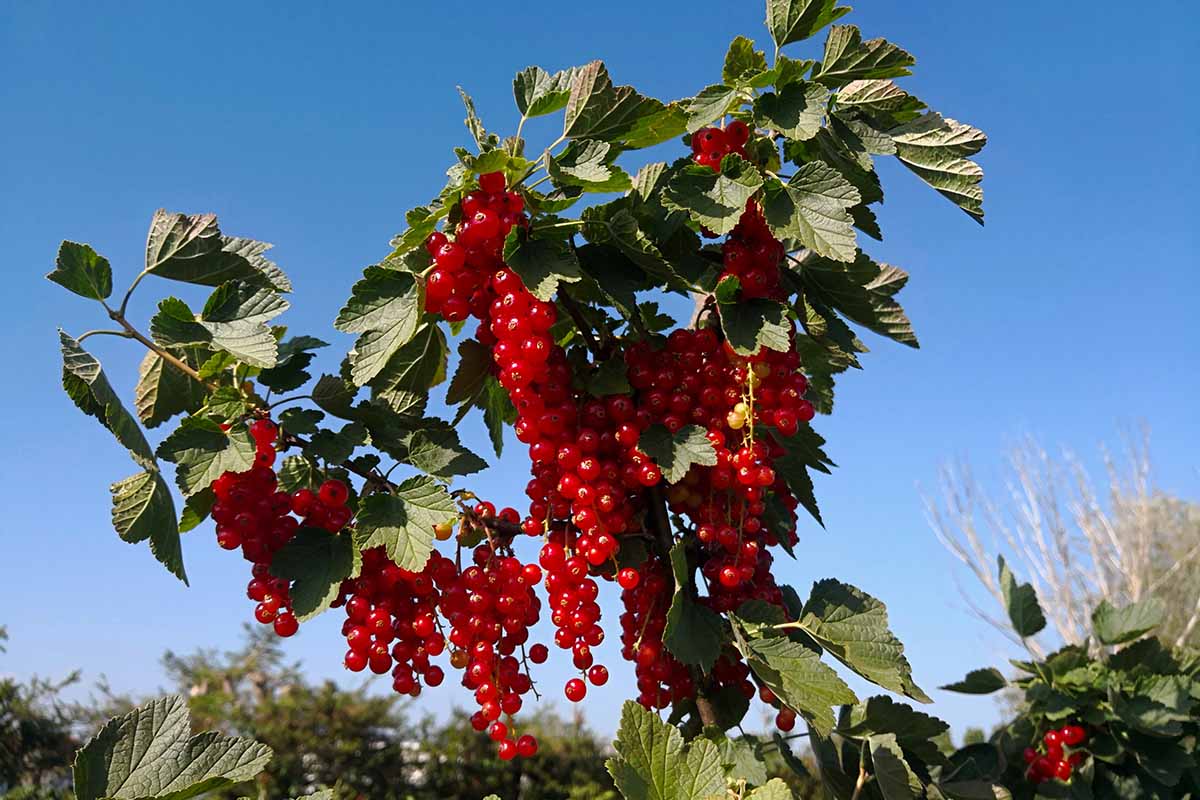
The fruits appear in medium to large, dangling clusters known as “strigs.”
The color of the fruit can range from pale pink to a red so dark it appears almost black.
The flavor is tart, so most people cook them into jams, jellies, syrups, or sauces rather than eating them straight off the shrub.
But if you’re like me and you love to add fruit to savory dishes, red currants are hard to beat.
On the other hand, you don’t even have to eat the fruits – the red currant plants are gorgeous as ornamentals, growing up to 10 feet tall and five feet wide.
Some have vibrant flowers, others turn vivid fall colors, and all add green foliage during the spring and summer.
Currants are closely related to gooseberries and some experts even consider North American currants to be more closely related to gooseberries than European currant species.
How to Grow
Red currants are hardy in Zones 3 to 7 with some cultivars surviving the lows of Zone 2 and as far south as Zone 8.
Some species bloom early in the year, making them susceptible to late frosts, which can kill the blossoms.
If the blossoms die, there won’t be any fruit to harvest. So unless you plant a late bloomer, be careful about site selection.
Avoid frost pockets, and consider growing your shrub against the south side of a building or on a slope, as these locations are typically less susceptible to frost.
Currants like a spot with cool soil that stays consistently moist. For most gardeners, this means selecting an area with a bit of shade during the heat of the day.
If you live in a region with high humidity or lots of rain, make sure to choose somewhere with good air circulation or I can all but guarantee you’ll be dealing with some sort of fungal issue.
Light
In cooler climates like the Pacific Northwest or central California, full sun is fine.
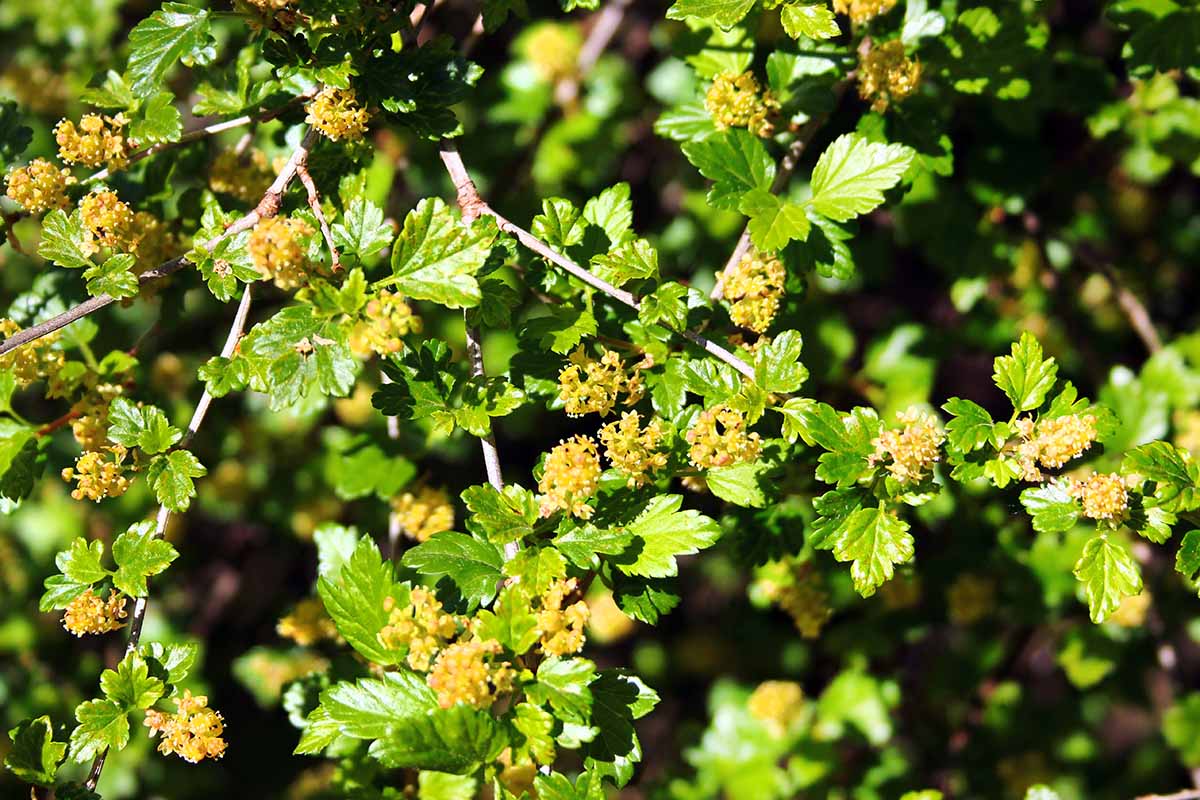
Elsewhere, a little afternoon shade is ideal, just an hour or two during the hottest part of the day makes a difference.
That said, they’ll tolerate nearly full shade, but expect fewer flowers and fruits, and less vibrant fall color.
Soil
In the perfect world, you’d give these shrubs loose, rich, loamy, well-draining soil.
Most of us aren’t that lucky, but something outside of this ideal description is fine, as long as it’s not too extreme.
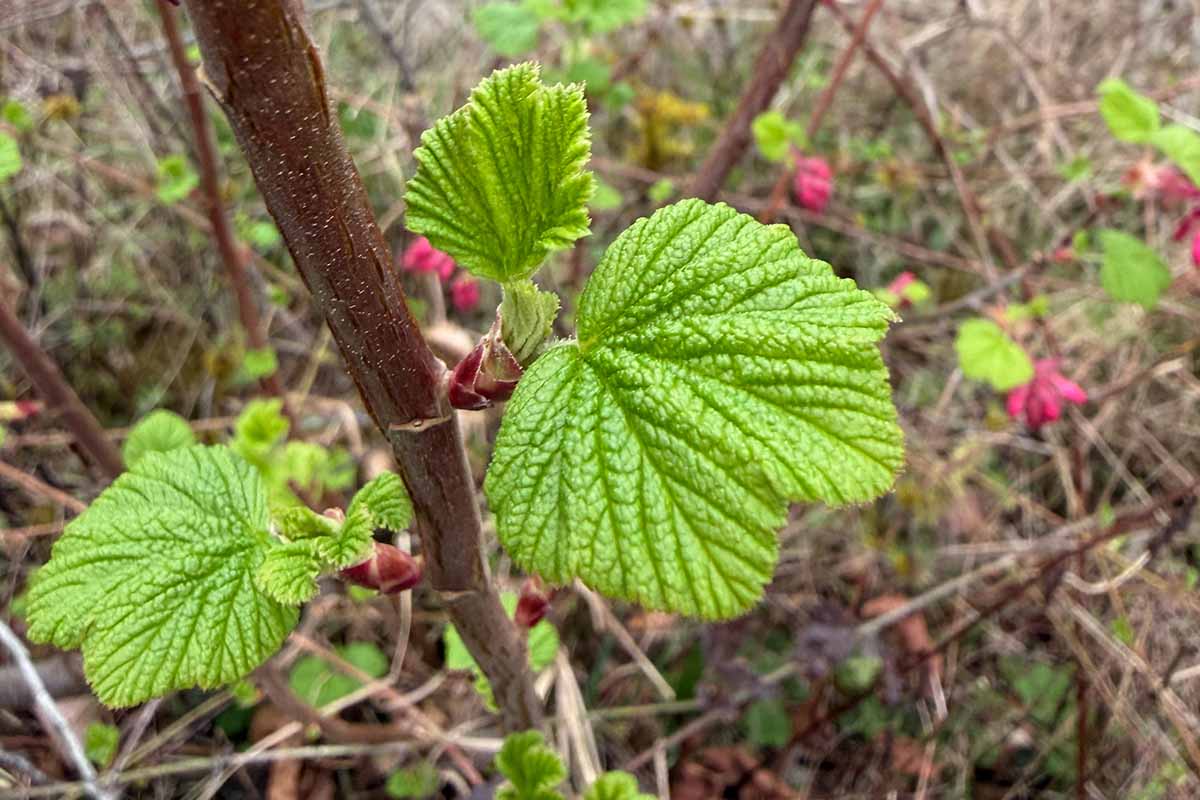
You can always work in lots of well-rotted compost to help shift poor soil in the right direction.
If your soil is really problematic, like poorly drained or very sandy, plant in a large container of five gallons or more, or in a raised bed instead.
The soil should be slightly acidic to neutral, with a pH of between 5.5 and 6.5.
Watering
Try to keep the soil evenly moist at all times but don’t allow it to become oversaturated.
The surface of the soil can be allowed to dry out with no problems, but once the soil starts drying out around the deeper roots, you’re asking for trouble.
This is especially true when the temperatures are high.
Fertilizing
Red currants are hungry shrubs that need lots of food.
Even in naturally rich soil, nutrients will eventually be depleted, so I like to test every few years to find out what’s actually going on rather than guessing.
Your local university extension office will be able to point you to local testing options.
You can buy kits online, but they may be unreliable, and local labs know your local conditions best , so they can give you much more useful guidance.
If you’d rather skip the testing, apply manure around the red currant plants in early spring, again in summer as the fruits start to develop, and once more in fall after the leaves change color.
Just make sure it doesn’t touch the plants directly.
You can also apply an all-purpose fertilizer, instead.
If you want to go this route, I’m a fan of Down to Earth’s products. They’re made from natural, sustainable ingredients and come in compostable containers.
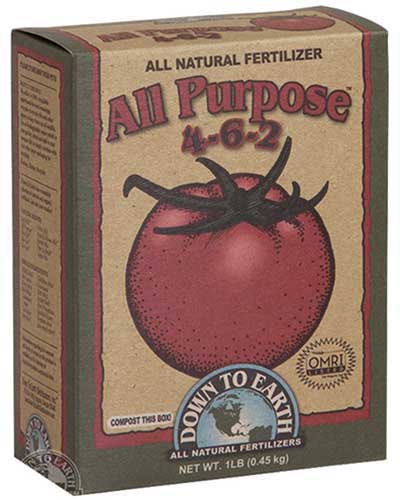
You can find Down to Earth All Purpose Mix in one-, five-, and 15-pound boxes available at Arbico Organics.
Training
You can train red currants if you want to maintain a certain shape or encourage them to take up less space in your garden.
Gently secure the branches to a trellis or fence as they grow and check periodically to make sure that the ties don’t constrict the branch.
Maintenance
Mulch with two to three inches of shredded bark or leaf litter to help keep moisture in the soil and weeds away from the red currant plant.
As the mulch breaks down, it adds nutrients to the soil.
You should also establish a pruning routine. In the spring before the new growth starts developing, remove any broken, crossing, or low-growing branches.
Then remove any branches that are older than three or four years.
Older wood is less productive than one- or two-year-old branches, and those under a year old don’t fruit yet, so the goal is to maximize new wood while clearing out the old.
It can be hard to remember which branch is which age, so don’t worry about it too much. A good prune now and then will shape up the shrubs and improve fruiting.
Species and Cultivars
I would strongly encourage you to pick a red currant species that grows indigenously to your neck of the woods.
That way, you can enjoy a red currant that is adapted to your climate, making life easier, but you’ll also support local fauna like bees, hummingbirds, and butterflies.
Pollinator populations are diminishing in part because their food sources are vanishing, so keeping native plants in your garden will help reverse this trend.
Alpine
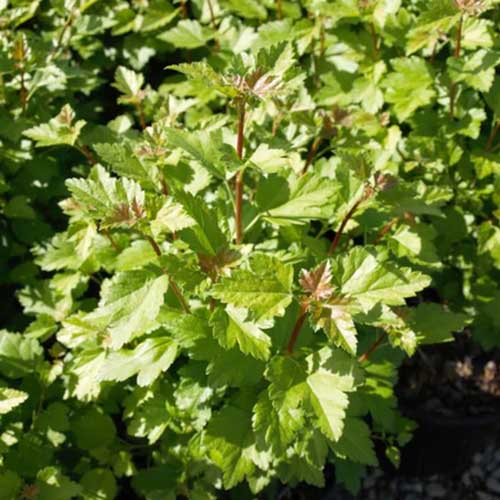
If you want a tough shrub, either as an ornamental or for the berries, alpine (R. alpinum) is an excellent choice.
It’s a robust plant, hardy to Zone 2 that’s able to tolerate drought, freeze, and just about anything else the world tosses at it.
The flowers aren’t much to talk about, but the fruit is tasty and the shrubs are so smothered in foliage that you can practically treat them like boxwoods as barriers and privacy screens.
This species grows about five feet tall and wide.
The downside is that this species isn’t self-fertile, so you need at least one male plant if you want the females to produce fruit.
You can find alpine red currant plants available at Nature Hills Nursery.
Red Lake
‘Red Lake’ is a four to five foot tall and wide shrub that bears long clusters of medium to large berries.
With its powdery mildew resistance and vigorous growth, it’s easy to see why this R. rubrum cultivar brought home the coveted Award of Garden Merit from the Royal Horticultural Society (RHS) in 1993.
Red Flowering
You know I’m going to represent my local native red currant, the red flowering R. sanguineum.
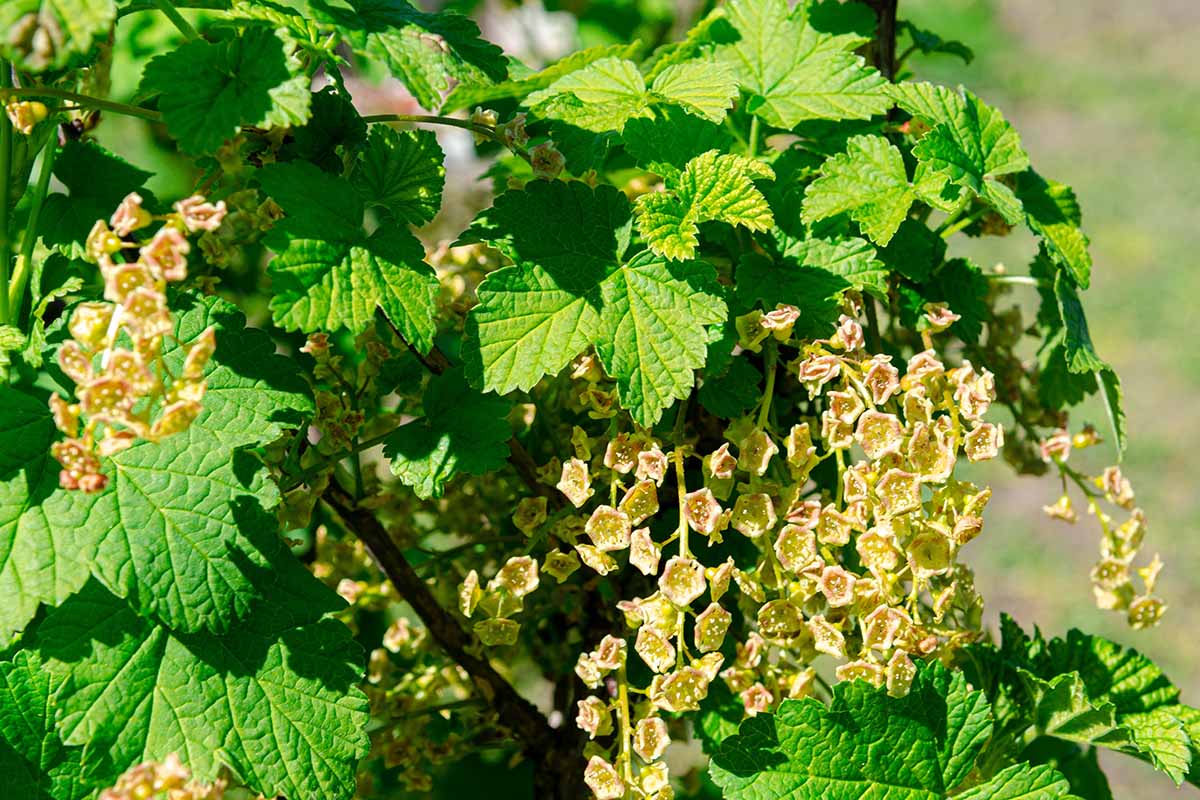
It grows throughout the Pacific Northwest and most people recognize this one for its spring display of vibrant pink, magenta, or red tubular blossoms that smother the branches.
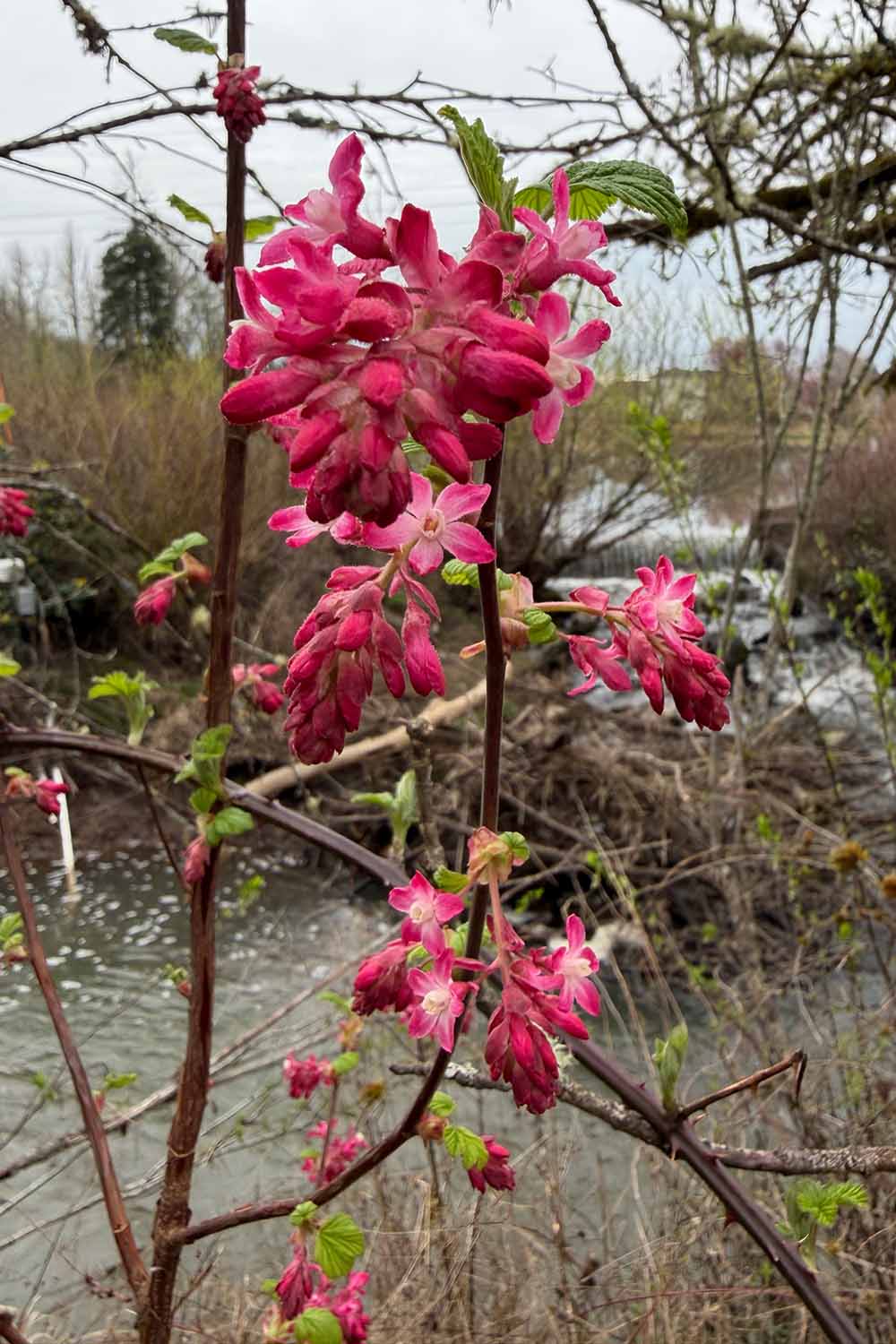
The red-blue-black berries arrive in the late summer or early fall, followed by colorful red, yellow, and orange leaves that persist long after most other foliage has jumped to the ground.
It grows up to 12 feet tall in ideal conditions, with a vase-like shape.
It’s happy in full sun to part shade and is also drought tolerant since it grows wild in areas where there is little rain during the summer.
The berries are mild-tasting, so it’s probably not the best option if you solely want it for berry production.
I use red currants to provide a privacy barrier between my raised beds and my neighbor’s garden, so I enjoy both ornamental beauty and food on top of privacy, all from one plant.
Rovada
‘Rovada’ is the most popular red currant cultivar, bred in the Netherlands. It’s a R. rubrum cultivar that produces extremely high yields of large berries.
The strigs are also large, but the shrub itself is fairly petite at about four feet tall and wide.
Resistant to leaf spot, it was given the Award of Garden Merit from the RHS in 2019.
Stanza
‘Stanza’ is a reliable bearer of medium-sized fruit with excellent flavor.
The shrub grows to about six feet tall and five feet wide with a compact growth habit. It flowers late, which means it can dodge those late season frosts.
RHS liked it so much they gave it the Award of Garden Merit in 1993.
Propagation
If you want to start from seed, you can certainly give it a try, but it’s not a very reliable propagation method.
Growing from cuttings is so incredibly easy and you can be sure that you’ll end up with a genetic clone of the parent plant.
You need to stratify the seeds for three months in moist sand in the refrigerator, and be aware that many seeds or seedlings won’t grow to maturity successfully.
So start more seeds than you expect to need.
Sow the stratified seeds an eighth of an inch deep in potting soil and set under grow lights or in at least six hours of sun.
Keep the soil evenly moist at all times and when the seedlings are a few inches tall, harden them off and put them in the ground.
If you want to go the easier route, here it is:
From Cuttings
Cuttings are the easiest method for propagating currants.
In the spring before the flowers emerge, look for pliable branches with lots of flower buds.
If you take wood during the growing season, that’s fine, just strip off all but one leaf from the top of the branch.
Cut off the branch and snip it into six-inch sections.
It’s best to root cuttings outdoors, so choose a spot with the right exposure and soil composition.
Set the cuttings three to four inches deep in the soil, so about two thirds of the branch should be buried.
You’ll need to keep the soil evenly moist but not waterlogged for the next 12 months.
In the following spring, as the buds start to swell, go ahead and dig up the cuttings and transplant them to their permanent location if you’re planning to move them.
Transplanting
Lots of garden centers and plant nurseries carry red currants for transplanting.
To put them in the ground, dig a hole the same size as the growing container, or the same size as the rootball if you’re moving cuttings or seedlings.
Place the shrub in the ground so it’s sitting at about the same height as it was in the original pot.
Backfill with soil and water in well, adding more soil if it settles. Keep the soil evenly moist as the roots become established.
Pests and Disease
All red currants are susceptible to a few fungal issues and some pests, but they’re relatively problem-free, especially if you situate them in the right spot.
Flowering red currants are an important source of food for wildlife so you may find you’re competing with the birds for your harvest.
You can toss a net over the plants to protect them come harvest time.
Deer and rabbits mostly leave the shrubs alone unless there’s little else to feed on.
Insects
Aphids and scale insects may affect your shrubs now and again but they typically do little damage.
While gall mites can be an issue in black currants, red types don’t suffer because the swollen buds die before the larvae can emerge.
Sawfly (Nematus ribesii) larvae can be a real problem. The green and black spotted caterpillar-like larvae emerge in spring to feed on the foliage and shoots.
In the case of a heavy infestation, they can strip the foliage in no time.
Most healthy specimens will bounce back when the larvae become adults and take off.
In the case of a large infestation, you can choose to use a spinosad-based insecticide.
Just make sure to follow the manufacturer’s directions and keep in mind that these products can harm beneficial insects too.
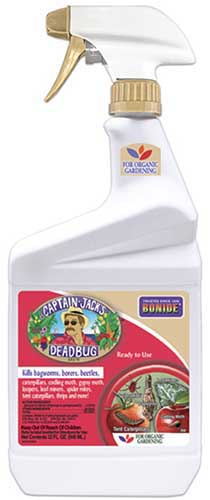
If you want to go this route, you can find Captain Jack’s Deadbug Brew available at Arbico Organics.
Disease
The main disease issues your shrubs are likely to face are those caused by fungal pathogens.
Leaf Spot
Leaf spot (caused by the fungus Drepanopeziza ribis) is more of an issue in red currants than black currants, since most cultivars of the black types have been bred for some resistance.
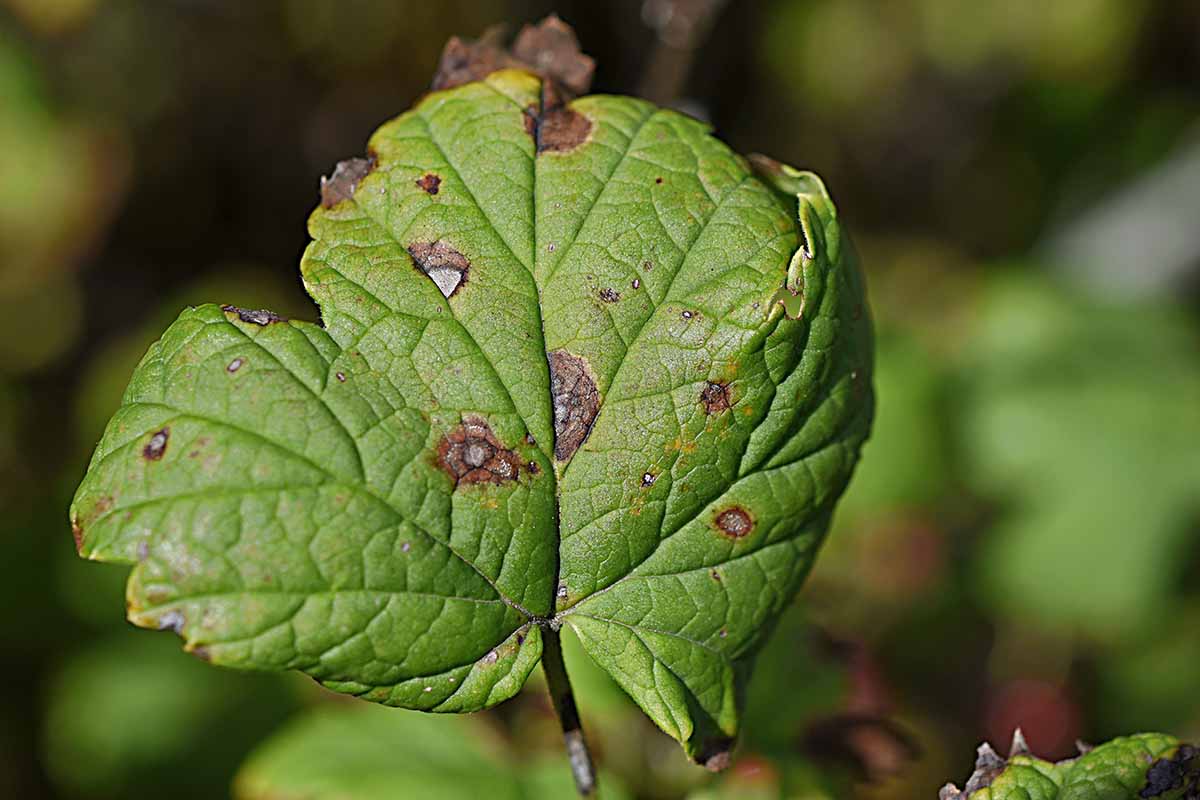
As the name suggests, it causes dark brown or black spots to appear on the foliage.
The spots eventually merge and may drop from the shrub. It can cause the fruit to shrivel before it develops.
The disease can’t be controlled with fungicides, so you’ll need to focus on prevention.
Trim off any symptomatic leaves and try to ensure that as little water as possible splashes onto the foliage. Remove any fallen leaves from the ground throughout the year.
Powdery Mildew
Powdery mildew is another fungal disease that causes white, powdery growth on the top sides of the leaves. If you’ve ever grown zucchini, you’ve likely seen this before!
Our guide to managing powdery mildew explains how to address this common problem.
White Pine Blister
Currants are banned in some regions because they are a host for white pine blister (Cronartium ribicola), also known as currant rust.
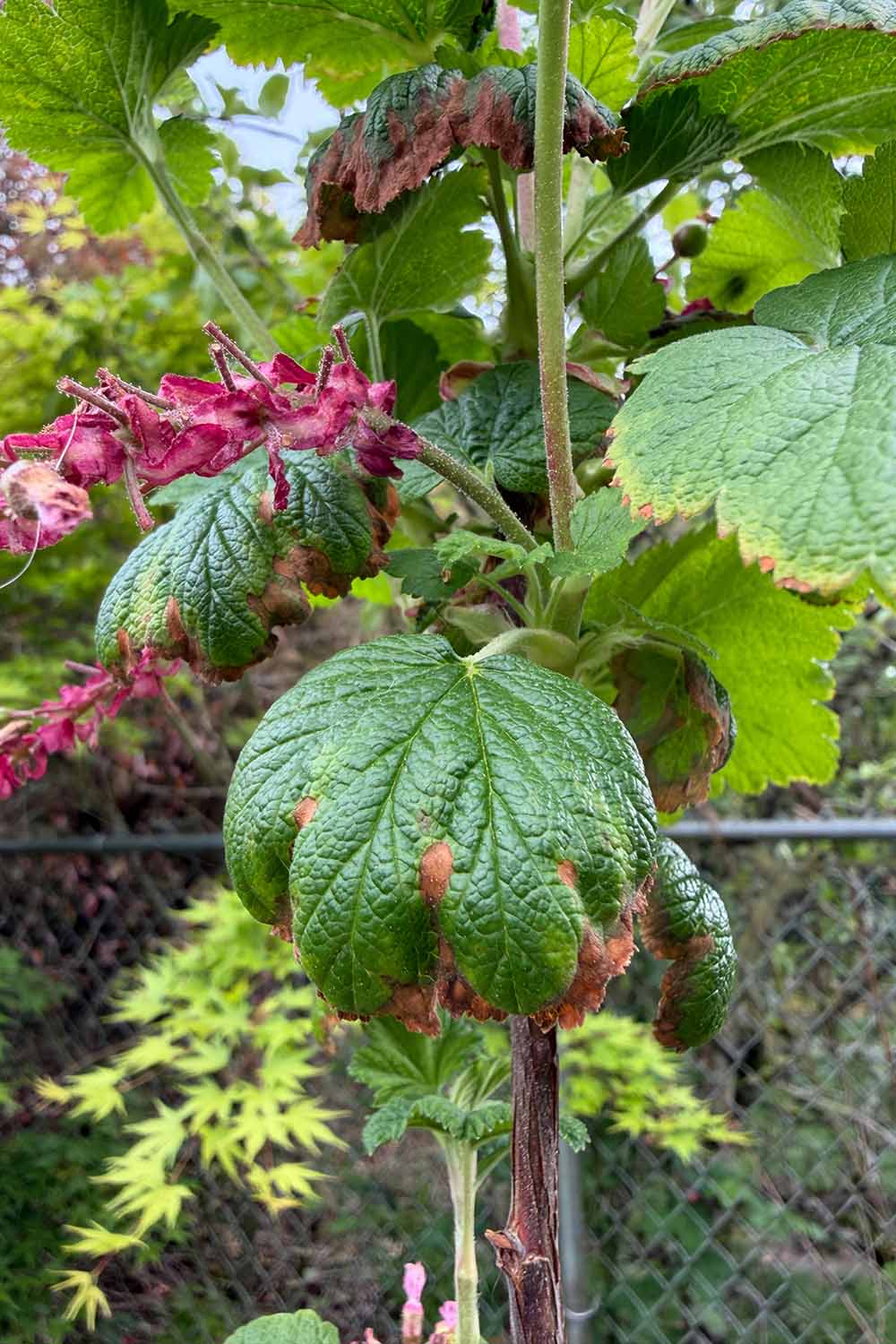
The disease can kill pines, but it won’t kill currants. Instead, it causes brown and yellow spots on the surface of the foliage. On the undersides, you’ll see rusty-orange fungal growth.
You can help prevent the spread by spraying the shrub with copper fungicide in the spring, which is when the spores start spreading from pines – if you have any white pines in the area.
Harvesting
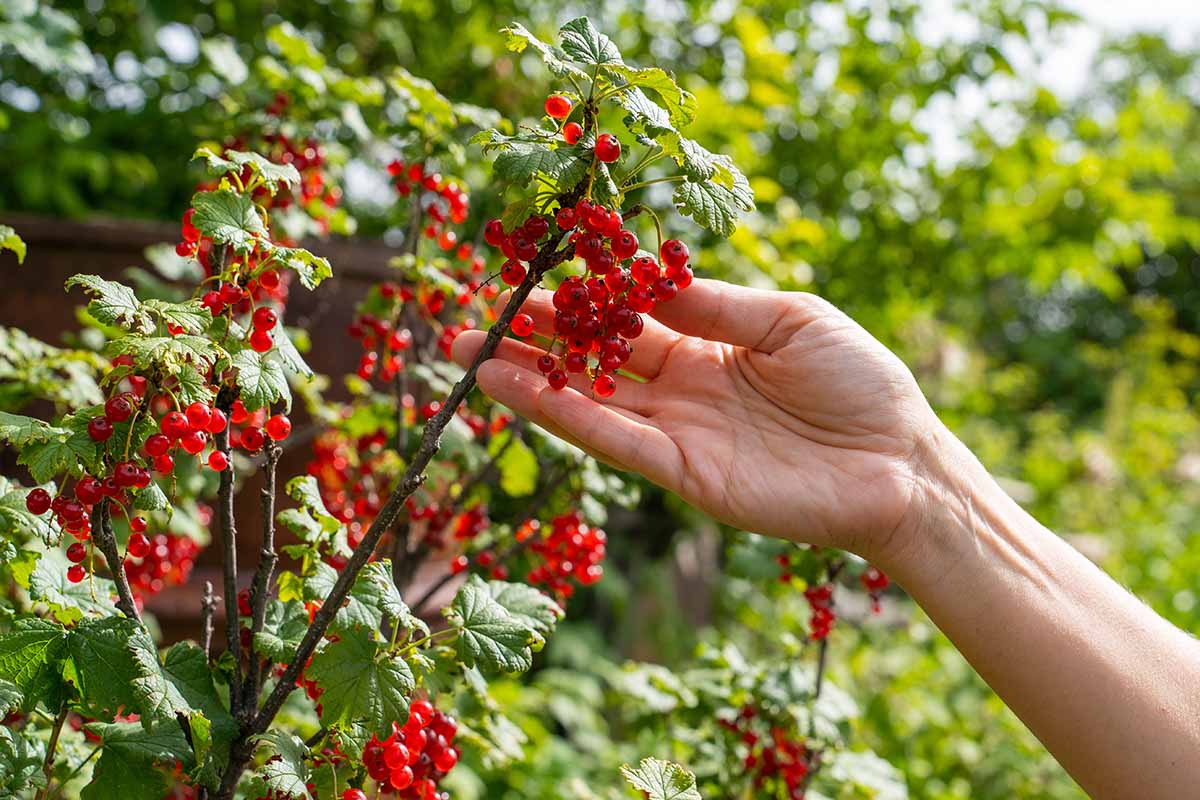
The cluster of red currant fruits is known as a “strig.” Not all of the fruits on the strig will ripen at once, which makes harvesting a bit of a chore.
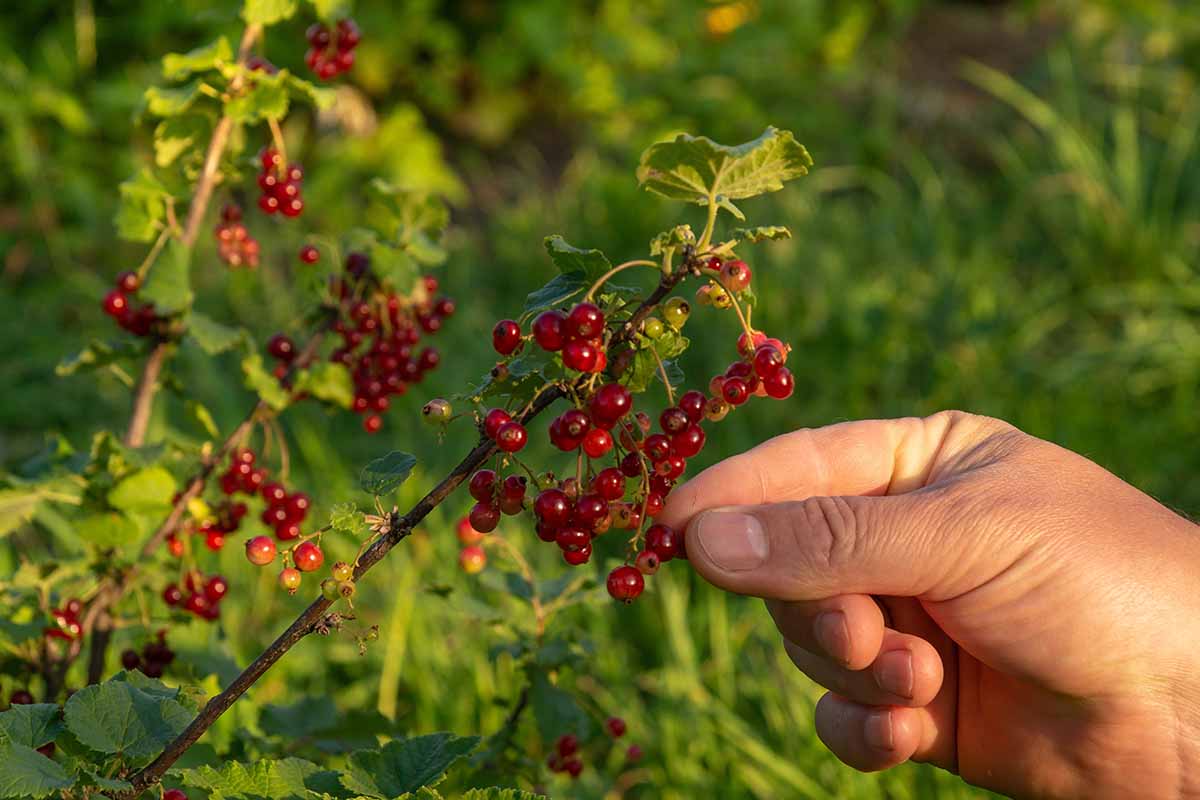
You can either hand-pick the ripe berries, or pull off the entire strig and just toss out any unripe fruits.
Preserving
If you want berries for juicing, choose black currants instead.
Red types don’t juice well. But you can preserve them in the freezer instead. Just wash in cool water, allow to dry and set them on a cookie sheet in the freezer.
When they are frozen, put them in a ziptop bag or container and pop them back in the freezer.
They can also be made into preserves, or just stick them into the refrigerator in the produce drawer where they can last for a week or more.
Cooking Ideas
There’s really no limit to how you can use redcurrants. They’re a favorite in desserts, like muffins, scones, cookies, cakes, pies, and the like.
I toss them on top of my yogurt or make a sauce to drizzle over meat.
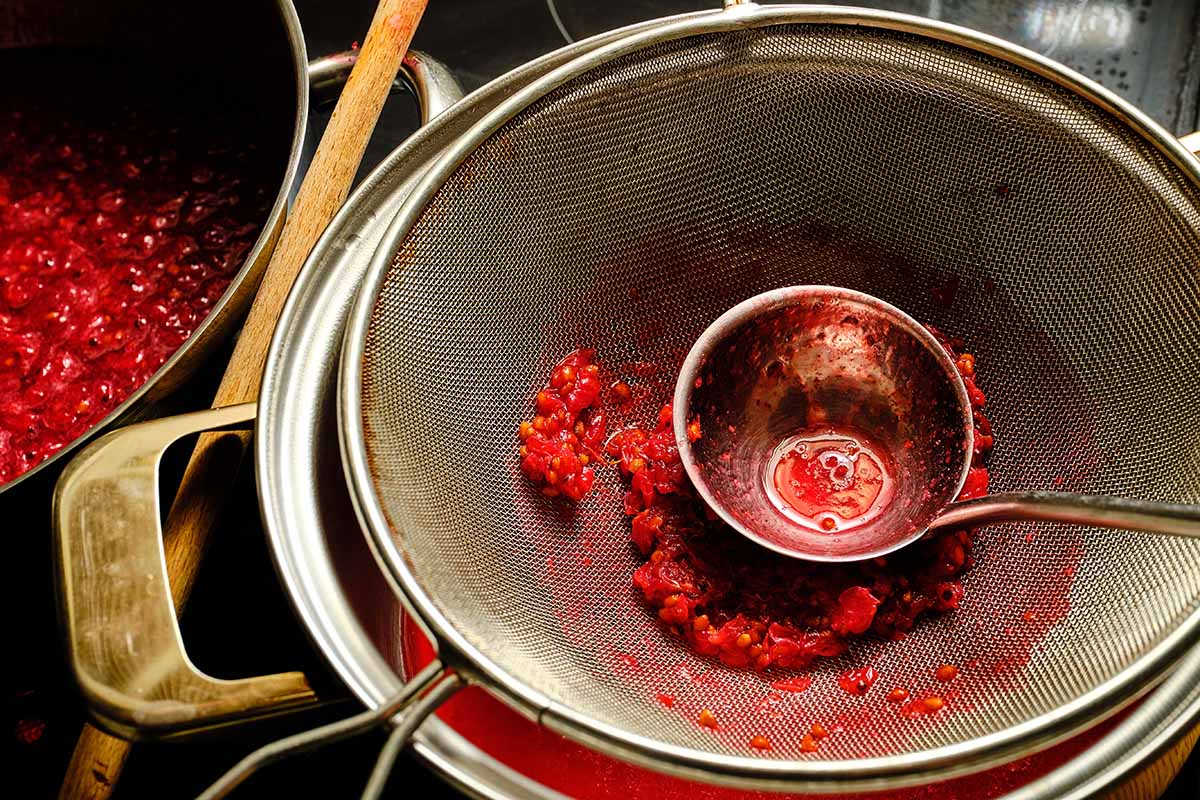
Make your own sauce by using equal parts berries and water and gently boiling until it reaches a consistency you like.
You can add sugar to taste while it’s cooking, or just leave them as-is for a tart taste.
An Underappreciated Wonder
I think red currants are a stunning addition to the garden, with bright fall foliage, vibrant, long-lasting blossoms, and flavorful fruit, they simply keep on giving.
And if you want to care for your local wildlife, they do that, too!
While black currants tend to get most of the attention, reds are just as delightful.
I can’t wait to hear how you intend to use your fruits. Give me all your ideas in the comments section below!
And for more information about growing berries in your garden, have a read of these guides next: