Ribes americanum, R. nigrum
Certain foods go through trends. For a short while, a food will be given the label “superfood,” and everyone is reaching for it for the health benefits.
Black currants, aka blackcurrants, had their moment in the superfood sun in the 2010s, when a bunch of American consumers discovered what Europeans have known for a long time: black currants freakin’ rock.
Full of vitamins A and C, with lots of potassium and polyphenols, black currants are both packed with intense flavor and good for your health.
You might reach for an orange when you need a boost of Vitamin C, but instead you should reach for black currants because they have three times as much.
We link to vendors to help you find relevant products. If you buy from one of our links, we may earn a commission.
The fruits can be eaten raw but most people cook these tart treats into jams, pies, pastries, syrups, and even wine.
If you want to limit your sugar intake, you can learn to appreciate the bold flavor or you can add them to savory dishes. Cooking reduces the tartness, too.
If the fruits aren’t your thing, you can always just enjoy the plants as ornamentals in the garden. Some have charming blossoms, and the local fauna will thank you for the berries!
Whatever your goals, here’s what we’ll chat about to help your plants thrive:
What You’ll Learn
Currants are plants in the Ribes genus. R. nigrum is the most common species, but R. americanum is a North American native and is also cultivated for its edible fruit.
R. nigrum is indigenous to northern Asia and central and northern Europe.
R. americanum is native to regions throughout Canada and northern United States, as well as New Mexico and Colorado.
Not too long ago, you couldn’t grow currants in many parts of North America, including the entire continental United States.
That’s because Ribes species are a host to the dreaded white pine blister rust.
This fungal disease decimated the white pine tree industry until currants and gooseberries were banned.
While a few small spots still maintain this ban, most areas have lifted the restriction on growing currants and gooseberries, and there is no longer a federal ban.
Quick Look
Common name(s): Black currant, blackcurrant, cassis
Plant type: Deciduous hardwood shrub
Hardiness (USDA Zone): 3-7
Native to: Asia, Europe, North America
Bloom time / season: Spring flowers, summer fruits
Exposure: Full to partial sun
Soil type: Loose, rich, well-draining
Soil pH: 6.0-8.0, slightly acidic to neutral
Time to maturity: 5 years
Spacing: 5 feet between shrubs
Mature size: Up to 5 feet tall and wide
Water Needs: Moderate
Taxonomy
Order: Saxifragales
Family: Grossulariaceae
Genus: Ribes
Species: Americanum, nigrum
With that said, if you plan to grow your plants within 1,000 feet of a pine tree, choose a type that is resistant to pine blister rust.
In the wild blackcurrants grow in areas where the soil is fertile and stays moist, whether that’s in full sun or some shade.
They are hardy in Zones 3 to 7, with some varieties able to cope with conditions in Zone 2.
These are hungry plants with shallow roots, so they can’t tap into the resources deep in the soil. They can only thrive in areas where the soil has plenty of nutrients.
How to Grow
When choosing a spot for your plants, consider the possibility of late frosts and if you’re able to provide protection.
The flowers develop in the early spring and if a hard frost comes along, it can kill the blossoms, preventing fruit development.
Make sure not to plant in a frost pocket or anywhere else in your space that tends to freeze more readily than other areas.
Near a south-facing wall or in the middle of a south-facing slope is ideal. Otherwise, you can just cover your plants with frost cloth to protect them during a freeze.
Light
If you live somewhere that has a cool summer climate, such as the Pacific Northwest or coastal central California, feel free to situate your black currant in full sun.
In most other regions, you’ll probably want to pick a spot where there is a bit of relief in the form of shade during the hottest part of the afternoon.
You can even grow in partial shade, but you will definitely notice that your harvest will be limited.
Soil
Considering the type of natural environment that most currant species grow in, it should come as no surprise that the ideal soil is loose, rich in humus, and well-draining.
A slightly acidic to neutral pH is ideal, but anything from 6.0 to 8.0 works.
If you have heavy clay, super sandy, or poorly draining soil, you’re probably better off growing in a container or a raised bed.
If you use a container, pick one that is at least five gallons.
Water
When the plants are young, you need to monitor the moisture closely. The soil should stay consistently moist but not soggy or wet.
When the surface of the soil dries out, it’s time to add water.
As the plants mature, they can tolerate a bit more dryness, but during long periods of heat or drought, be sure to provide irrigation.
During extreme weather periods, try to keep the soil moist at least a few inches down.
Fertilizing
Currants can grow quickly, especially if you put them in a good spot and give them adequate water.
I’m a huge advocate for testing your soil once every year or two, just to get an idea of what’s happening.
That way, you can better target your fertilizing routine and not waste time, money, or resources adding nutrients that your soil doesn’t need.
If you don’t want to test your soil, I recommend adding well-rotted manure around your plant. Manure will enrich the soil and improve the texture without overfeeding the soil.
Add manure in the early spring, again in the summer as the fruits develop, and finally in the fall after the leaves change color.
Maintenance
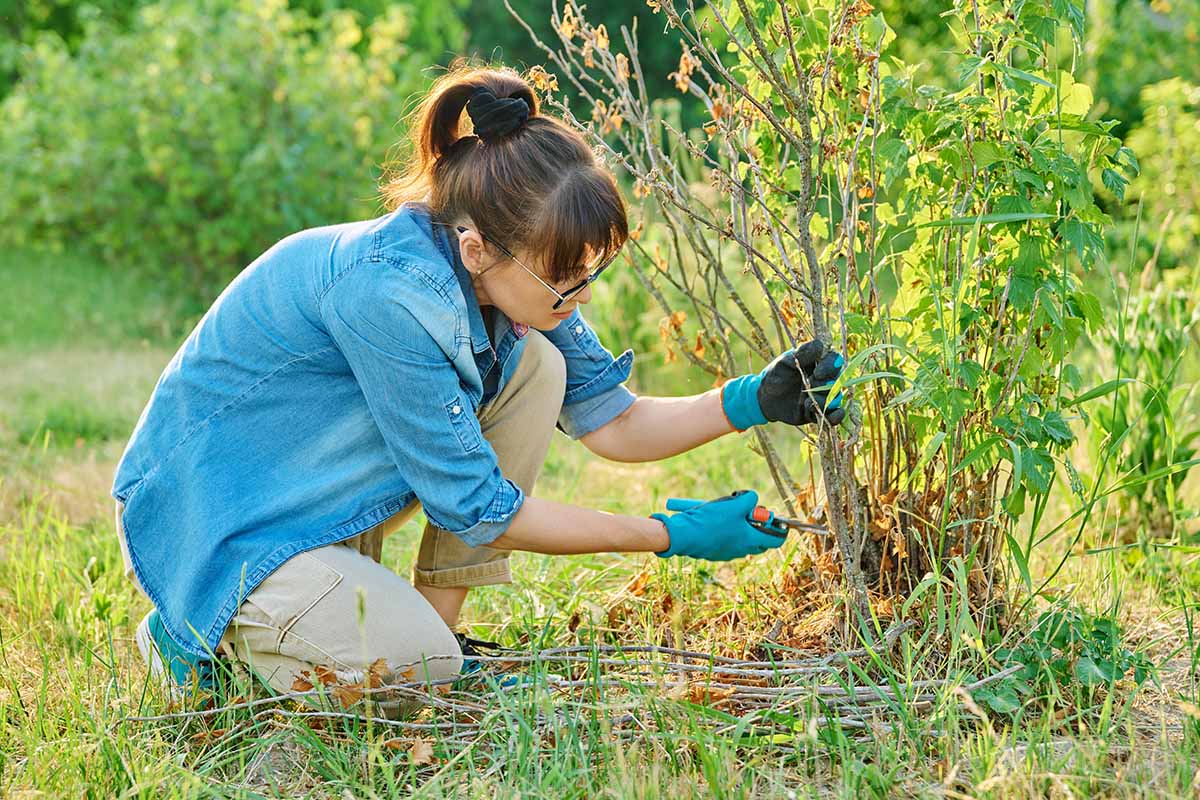
You can take a hands-off approach with currants, but a regular pruning routine will maximize fruiting.
Ribes species produce fruit on wood that is at least a year old – wood that is two or three years old is the most productive.
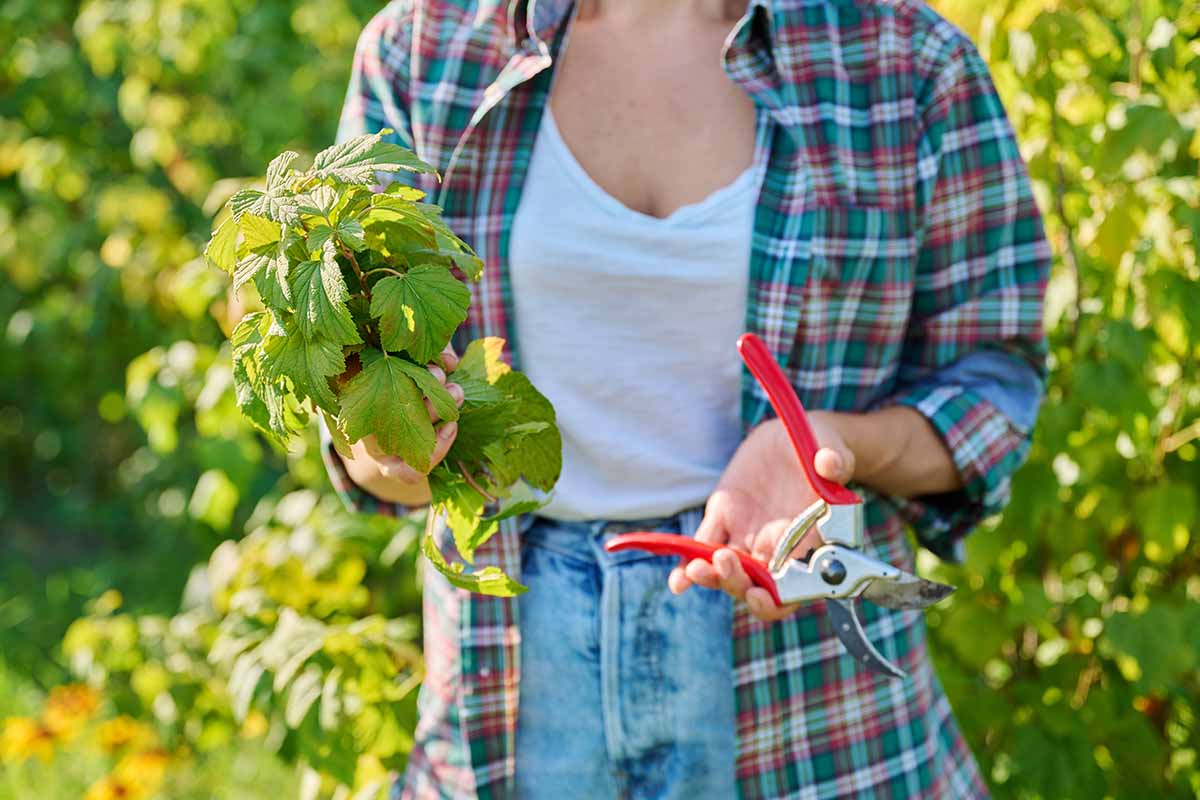
For the highest fruit production, remove any wood that is over three years old.
Of course, use your best judgement. You’re not going to want to remove all the older wood if your plant had a rough season last year and didn’t produce much new growth.
You should also remove crowded branches, those that are crossing, or those that are close to the ground. Remove any branches that are thin and too weak to support fruit.
Pruning should ideally be done in the spring, but if you can’t do it then, you can prune anytime.
Keep an inch or two of leaf mulch or shredded bark around the plants to help suppress weeds and retain moisture. Just make sure that the mulch doesn’t touch the base of the plant.
Some black currants can spread via seed, so remove any volunteers that pop up where you don’t want them.
The good news is that they don’t spread via underground runners, so they won’t try to take over your garden like, for example, a blackberry.
Species and Cultivars
The plants are self-pollinating but growing more than one will generally produce larger fruits and more abundant harvests.
American
R. americanum is native to North America. It can grow up to five feet tall and about two feet wide but the plants tend to form large groups if left to their own devices.
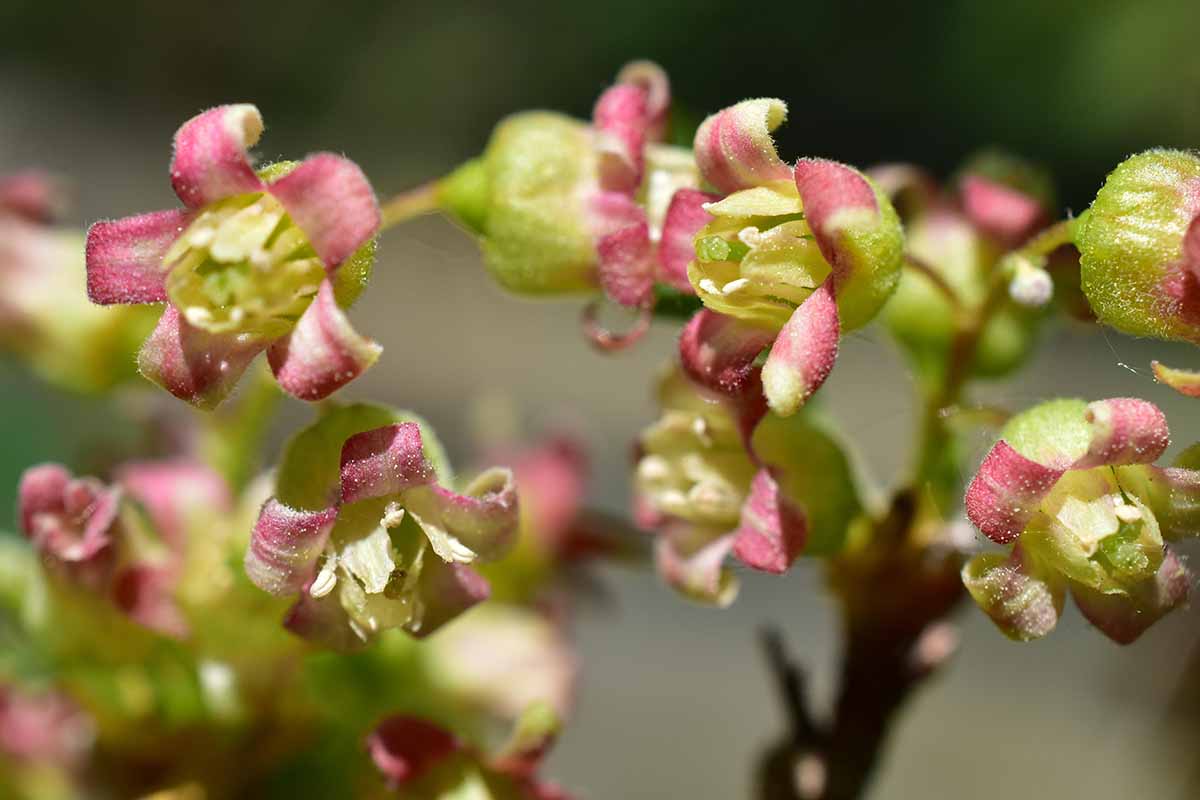
The greenish white flowers aren’t much to rave about, but the black berries are tasty and nutritious. This species readily grows from seed.
Ben Connan
Any list of black currants would be incomplete without ‘Ben Connan.’
The Royal Horticultural Society was so impressed with this R. nigrum cultivar that they gave it the coveted Award of Garden Merit in 1995.
One bush can produce up to a full seven pounds of fruit, even though the plant itself has a compact growth habit.
The berries themselves are also larger than those of the species. On top of that, the plant is resistant to downy mildew.
Big Ben
R. nigrum ‘Big Ben’ lives up to its name. The fruits are massive on this five- by five-foot shrub.
They’re also sweeter than the species, with thick skin that makes harvesting easy and they last longer in the fridge.
The RHS honored ‘Big Ben’ with the Award of Garden Merit in 2012.
Ben Hope
‘Ben Hope’ stands out because it is resistant to gall mites. If that’s something you struggle with in your area, it’s worth growing this one.
This cultivar is vigorous and high yielding and is also resistant to mildew and leaf spot. It will reach about five feet tall and about as wide when mature.
Consort
‘Consort’ is a compact shrub, reaching three to six feet tall with a similar spread, producing small berries in modest yields.
It has immunity to white pine blister rust, though it carries moderate susceptibility to powdery mildew.
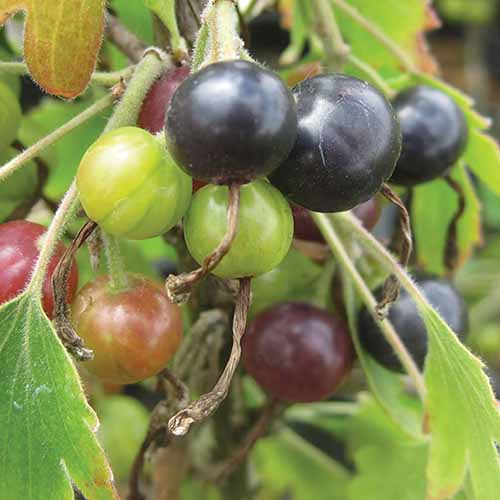
If you want to add ‘Consort’ to your garden, you can find plants available at Burpee.
Swedish Black
The berries of ‘Swedish Black’ ripen earlier than just about any other out there.
The large fruits are mild and sweet thanks to a lower amount of acid. The shrub grows to about five feet tall and three feet wide.
Propagation
It’s technically possible to grow black currants from seed, but the resulting plant might not have the same characteristics of the parent.
It also takes a long time and success rates are low unless you have access to a species plant rather than a cultivar. It’s better to go with cuttings, because it’s incredibly easy.
The exception to the rule that starting seeds is hard is the American black currant (R. americanum), which reproduces easily from seed.
From Seed
Put the seeds in moist sand and stick them in the fridge for at least three months.
Make sure the sand stays moist but not soggy.
Plant the seed in a small container or a seed flat filled with potting medium. Bury the seeds by about an eighth of an inch.
Keep the soil moist and place the container in a spot with several hours of sun or supplemental lighting.
When the seedlings have developed two sets of true leaves, harden them off before transplanting into the garden.
From Cuttings
Propagating black currants from stem cuttings is ridiculously easy.
In the spring before flowering, cut off a pliable branch with lots of swollen flower buds.
Cut the branch into smaller sections about six inches long.
Insert the cuttings with the bottom end down in a prepared garden bed with organically-rich, loose soil.. Bury the cutting by at least three to four inches.
Keep the soil moist but not waterlogged at all times.
In the following spring, you can dig up the new plants anytime before summer and move them to a new location if you wish.
Transplanting
You want at least five feet between the shrubs so they don’t crowd each other out and to make it easy to harvest.
Dig a hole just a bit wider and deeper than the growing container. Set the plant in the hole.
You have two options with planting depth. You can either keep it at the same depth as the plant was in the growing container or you can plant it a few inches deeper.
Deeper planting encourages branching at the base of the plant which provides more wood for fruit development.
Backfill around the roots with the removed soil and water well to settle the soil and rehydrate the roots. If the soil settles, add a bit more.
Pests and Disease
Black currants tend to be a bit more troubled by pests and diseases than red species.
That doesn’t mean they’re particularly hard to grow, and you can even pick up cultivars that are bred with some pest resistance. The biggest issue I have is birds.
Let’s talk about those, first.
Herbivores
Deer, rabbits, and the like don’t seem too interested in browsing black currant plants.
Deer will give them a nibble if there’s nothing more interesting around, but it doesn’t seem to be a top choice.
But birds, chipmunks, squirrels, and even racoons will devour all the fruit if you give them the chance.
Netting is basically your best solution, but I just take a generous approach and plant an extra bush to make sure I get plenty of fruit and still have enough to share with wildlife.
Insects
Occasionally, like many plants in the garden, currants can be impacted by aphids or scale insects. But there are two specific pests that attack Ribes species.
Gall Mites
In Europe, growers may have to deal with gall mites, also known as blackcurrant gall mites (Cecidophyopsis ribis).
They’re rarely a problem outside Europe, though the mites were recently discovered in Oregon, the first instance of the pest in North America.
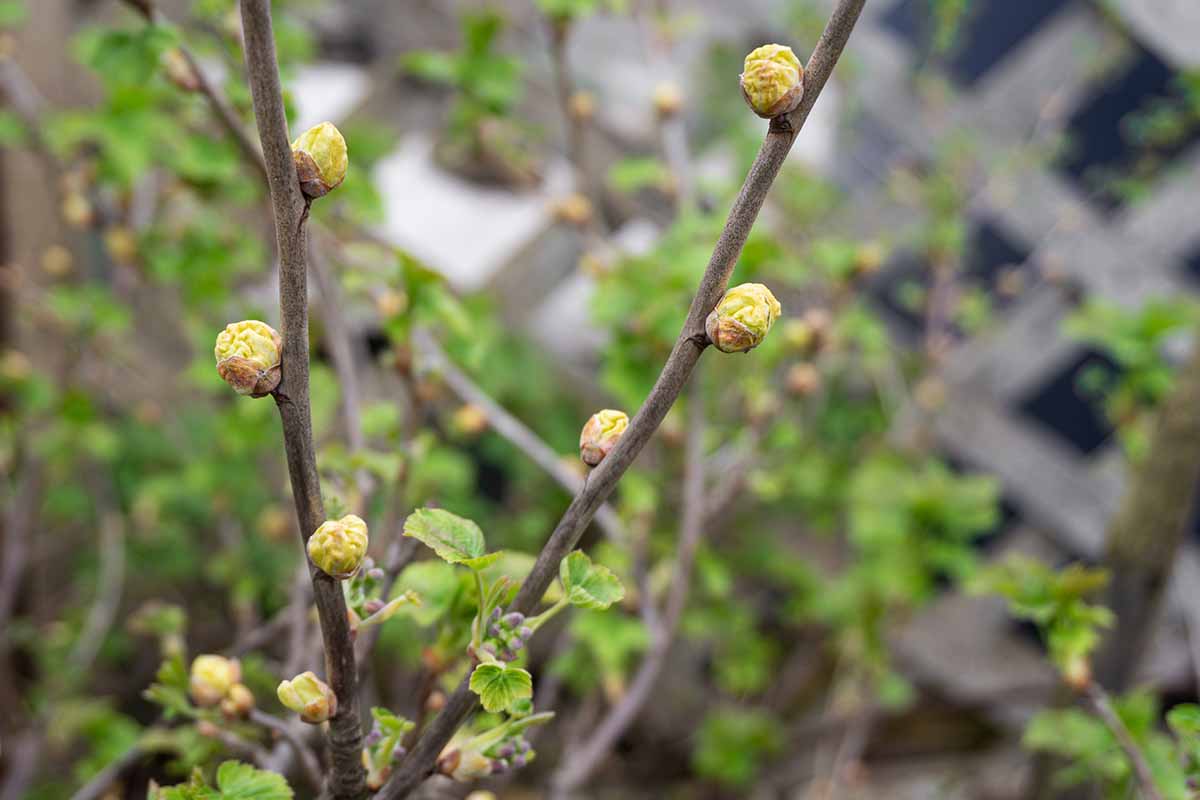
These microscopic pests, known as eriophyid mites, build up numbers during the winter, when you’ll see swollen buds on your plant.
When the larvae emerge from the galls, they start feeding on the plant, transmitting a virus that causes the leaves to grow misshapen and distorted.
Your poor currant will have reduced vigor and fruit production.
There isn’t any effective treatment, so most gardeners choose to let their plants carry on until production is so compromised that they’re not worth keeping.
At that point, you can dig the plant up and put a new one in its place.
Sawfly
Sawflies (Nematus ribesii) are only a problem when the larvae are present.
The adults just look like generic wasps but the green and black caterpillar-like crawlers can be extremely damaging.
The larvae feed on the leaves and shoots and can strip an entire shrub in just one season.
If you see the larvae, pupal cases, or ragged holes in the leaves and young shoots, act fast.
You can simply don some gloves and pluck the critters or the cases off and dispose of them.
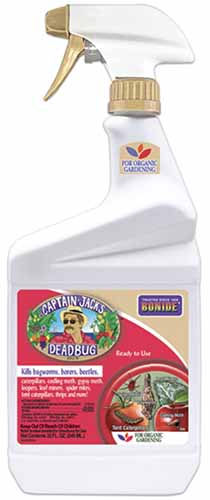
If you need to protect vulnerable plants or you can’t stand the larvae, you can spray with a spinosad insecticide like Captain Jack’s Deadbug Brew, which is available at Arbico Organics.
Be careful to apply in the early morning or early evening when bees and other beneficial insects aren’t active in the garden, because you will kill them as well as the sawflies.
Disease
Black currants may experience leaf spot (Drepanopeziza ribis), but most modern cultivars have been bred to be resistant.
More likely, you’ll come across the following:
Powdery Mildew
American gooseberry mildew, which is caused by fungi in the Podosphaera genus, and powdery mildew, caused by fungus in the Erysiphaceae family, can cause a white coating to form on leaves and stems.
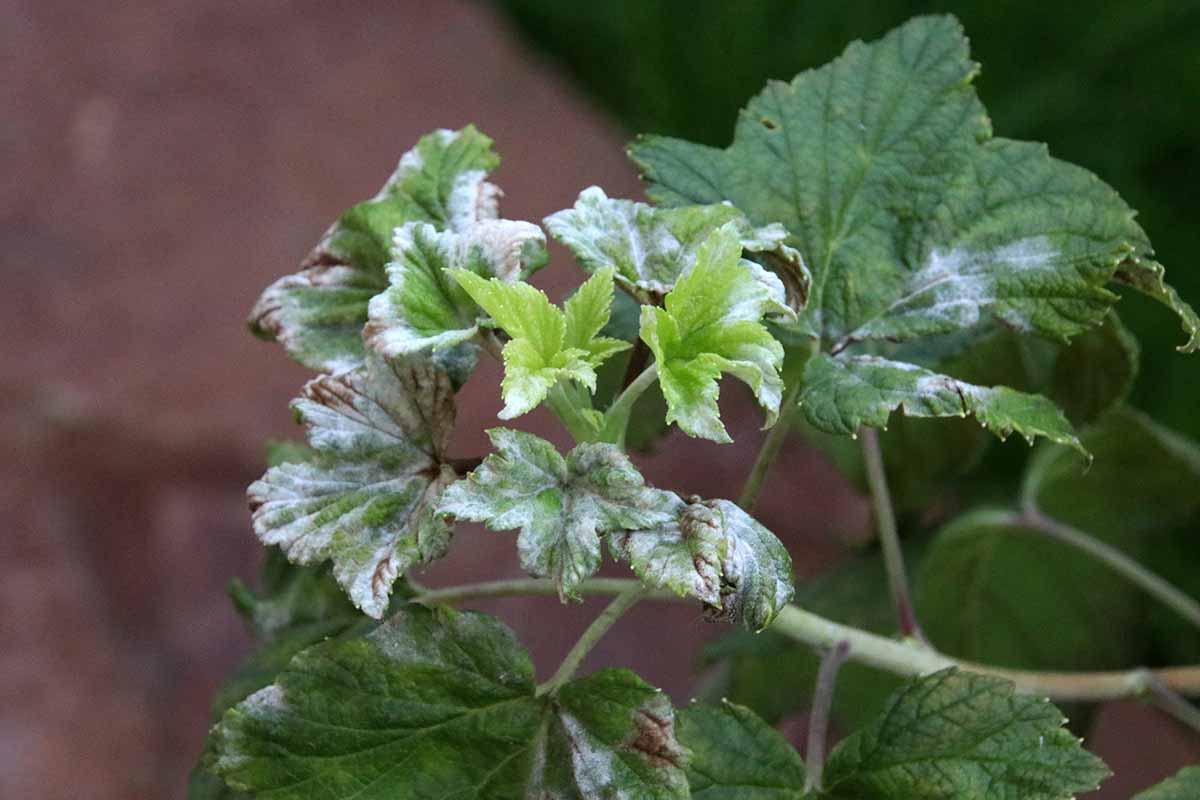
If you’re really observant, you’ll first see black chasmothecia (a fancy name for fungal overwintering structures) on the canes during the dormant months.
Around the time the plants start blooming, these structures will release sexually reproductive spores called acospores, which land on the developing leaves and flowers.
These develop into conidia, which is the asexual stage of fungal spore development. This is when you’ll start seeing a white powder develop on the tops of the leaves.
Regardless of which stage you catch the disease at, spray with copper fungicide to kill the fungal spores.
Learn more about powdery mildew here.
White Pine Blister
As mentioned, currants are banned in some regions because they are a host for white pine blister (Cronartium ribicola), which can kill white pines.
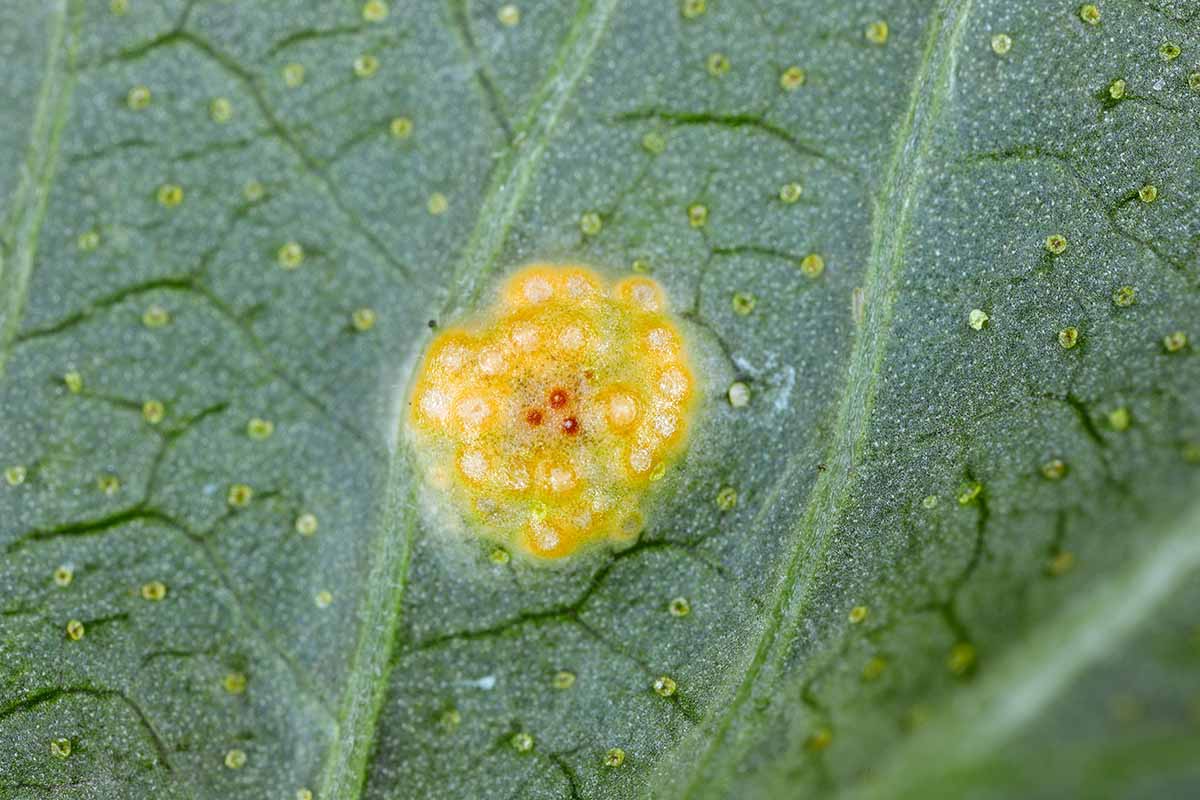
As mentioned, currants are banned in some regions because they are a host white pine blister (Cronartium ribicola), a disease that requires both a currant (or gooseberry) and a white pine to complete its reproductive cycle.
Remove one host and the disease can’t survive.
On currants, the disease causes yellow and brown spots on the upper leaf surface and rusty-orange fungal growth on the undersides of the foliage.
It won’t kill your plants, but it’s unsightly and can reduce vigor. White pines aren’t so lucky as infection is fatal.
To protect against it, spray your plants with copper fungicide during the spring. This is the time when the spores spread from pines in the air or on water.
Alternatively, site your planting at least 1,000 feet from any white pine, or choose a resistant cultivar such as ‘Crusader,’ ‘Coronet,’ ‘Consort,’ or ‘Tatiana.’
Harvesting
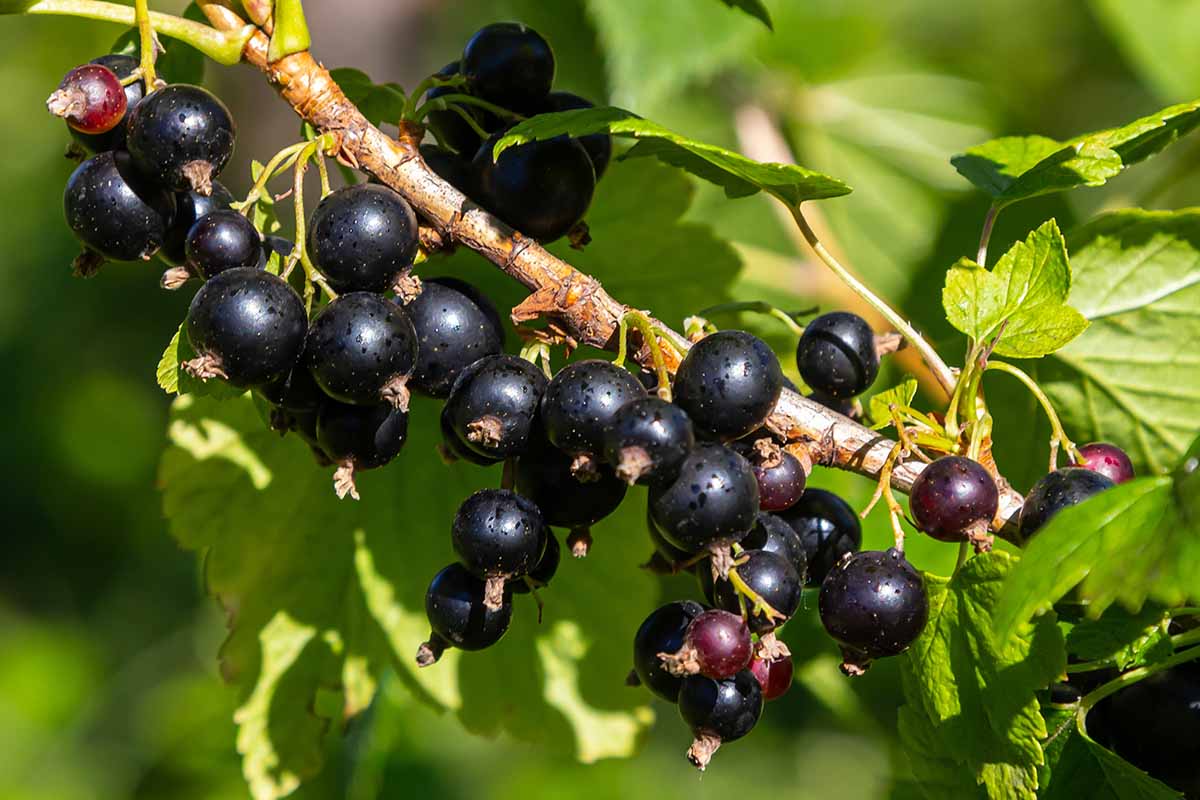
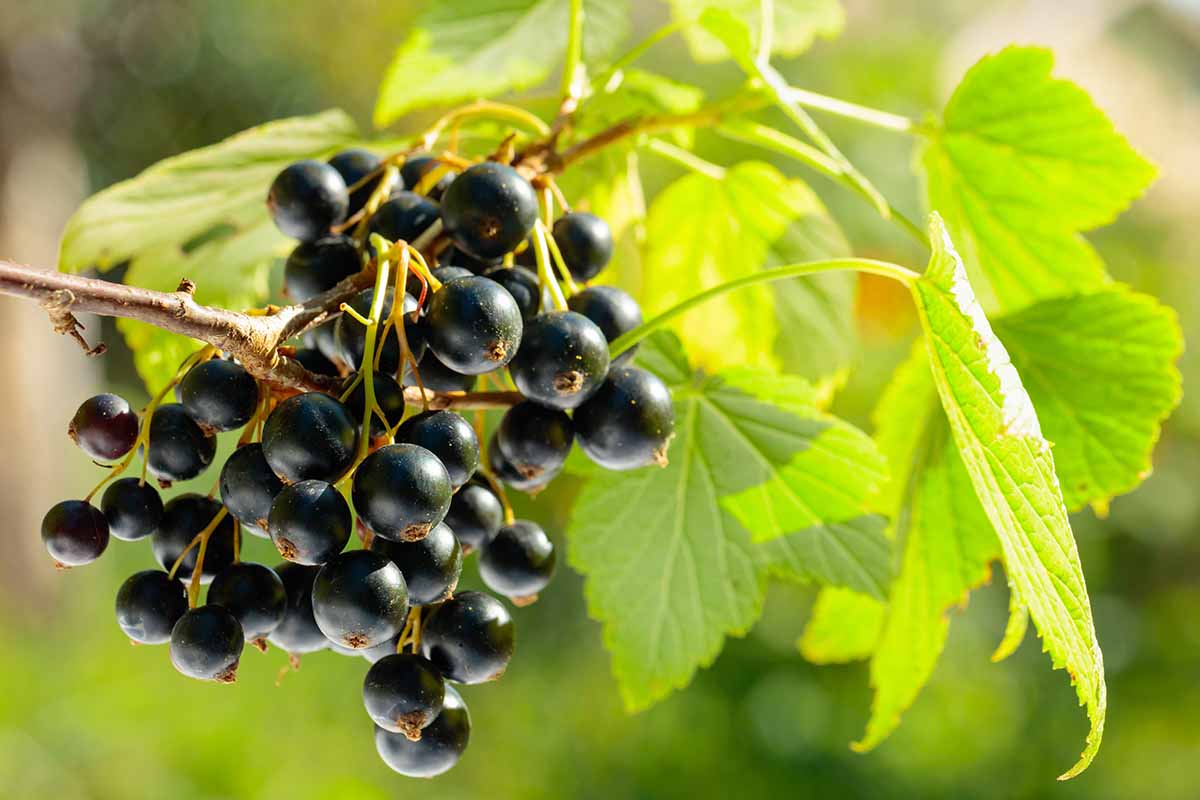
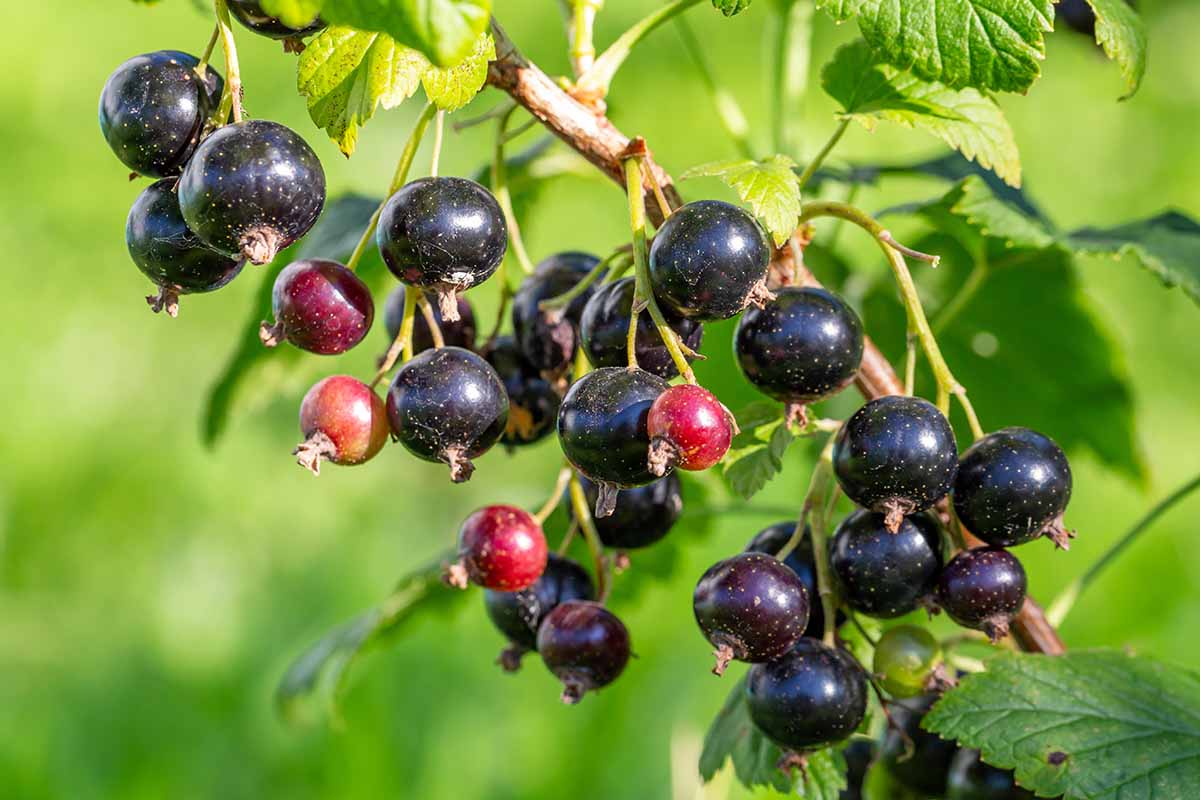
In the late summer or early fall, the clusters of fruits, known as “strigs,” will mature into a deep blue nearly black color.
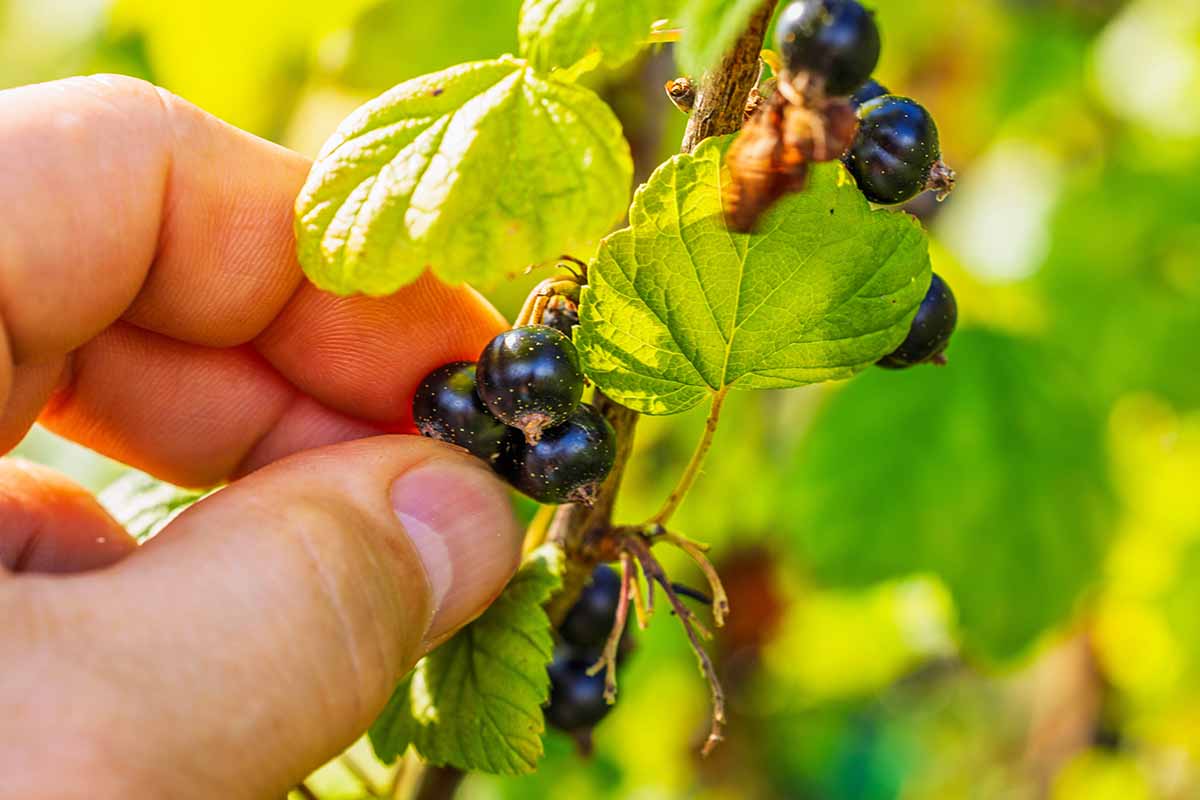
Go ahead and gently pluck the ripe berries by hand. They don’t all ripen at the same time, so leave any underripe fruits behind to mature.
Preserving
Black currants are well suited to juicing, unlike their red cousins.
You can also wash the berries, lay them out on a baking sheet, and put them in the freezer. Once frozen solid, store in a sealed container in the freezer.
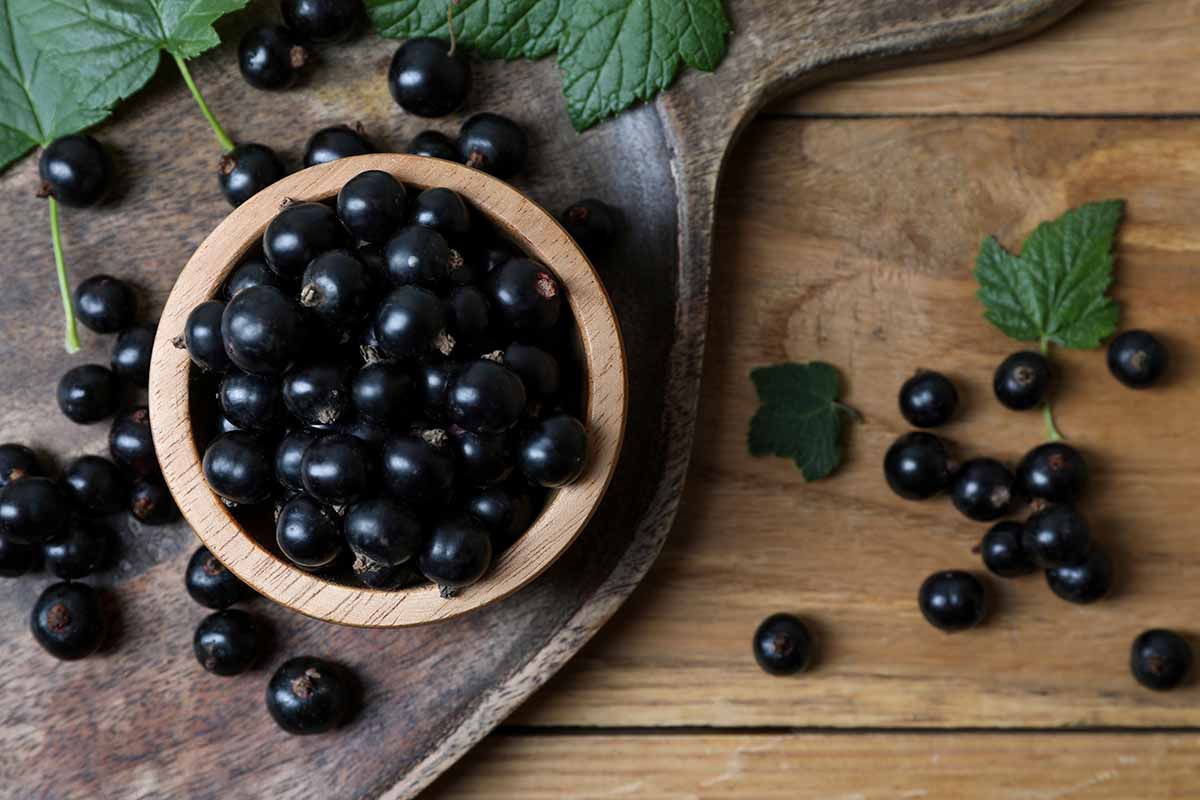
Fresh, they’ll last a week or two in your refrigerator’s produce drawer.
For longer term preservation, black currants make a delicious jam. You can also dry them in a dehydrator.
I like to blanch them in boiling water until the skin pops, dip them in an ice bath, and then put them in the dehydrator at 130°F until dry.
Cooking Ideas
Currants are delicious in desserts. I cook the fruit down with a little sugar and water and then heap them on top of ice cream or eton mess with whipped cream.
Bake them into whatever you like, from muffins to cakes.

I think black currants are particularly good in savory dishes. They aren’t as sweet as a lot of other berries, and the acidic tang complements fish, chicken, and pork.
I toss them into salads, mash them onto steaks with blue cheese melted on top, and don’t even get me started on cooking them down and drizzling the sauce on duck.
If you like to make your own granola or protein bars, I think they’re the best fruit option out there.
Our sister site, Foodal has a pistachio granola bar recipe that is ideal. Just substitute dried currants for the cranberries and you’re off to the races.
You can even make tea from the fresh leaves!
Currants Are a Delight
It took a while for Americans to catch on to what the rest of the world already knew: currants are a delight.
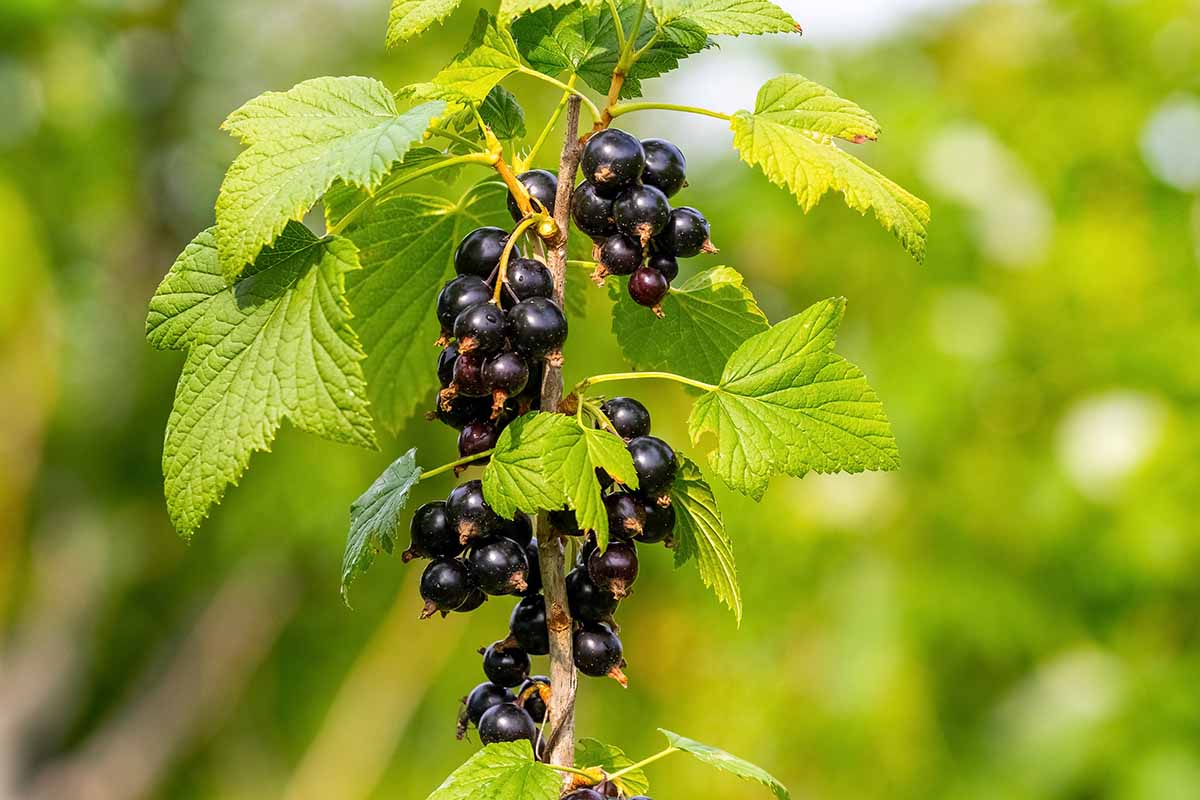
The plants can serve as ornamentals in the garden, but if it’s berries you’re after, it’s hard to find a better option.
In my garden, the plants give me some privacy from the neighbors, feed the birds I welcome into my yard, and provide nutritious fruits I can use in a million different ways.
Are you growing black currants? How will you use yours? Let us know in the comments section below!
And for more berry-growing know-how, add these guides to your reading list next: