x Graptosedum ‘Ghosty’
Hybrid x Graptosedum ‘Ghosty’ has uncertain parentage, but is most likely a cross between the ghost plant, Graptopetalum paraguayense, with its trailing stems and cold hardiness, and heat- and drought-tolerant Trelease’s stonecrop, Sedum treleasei.
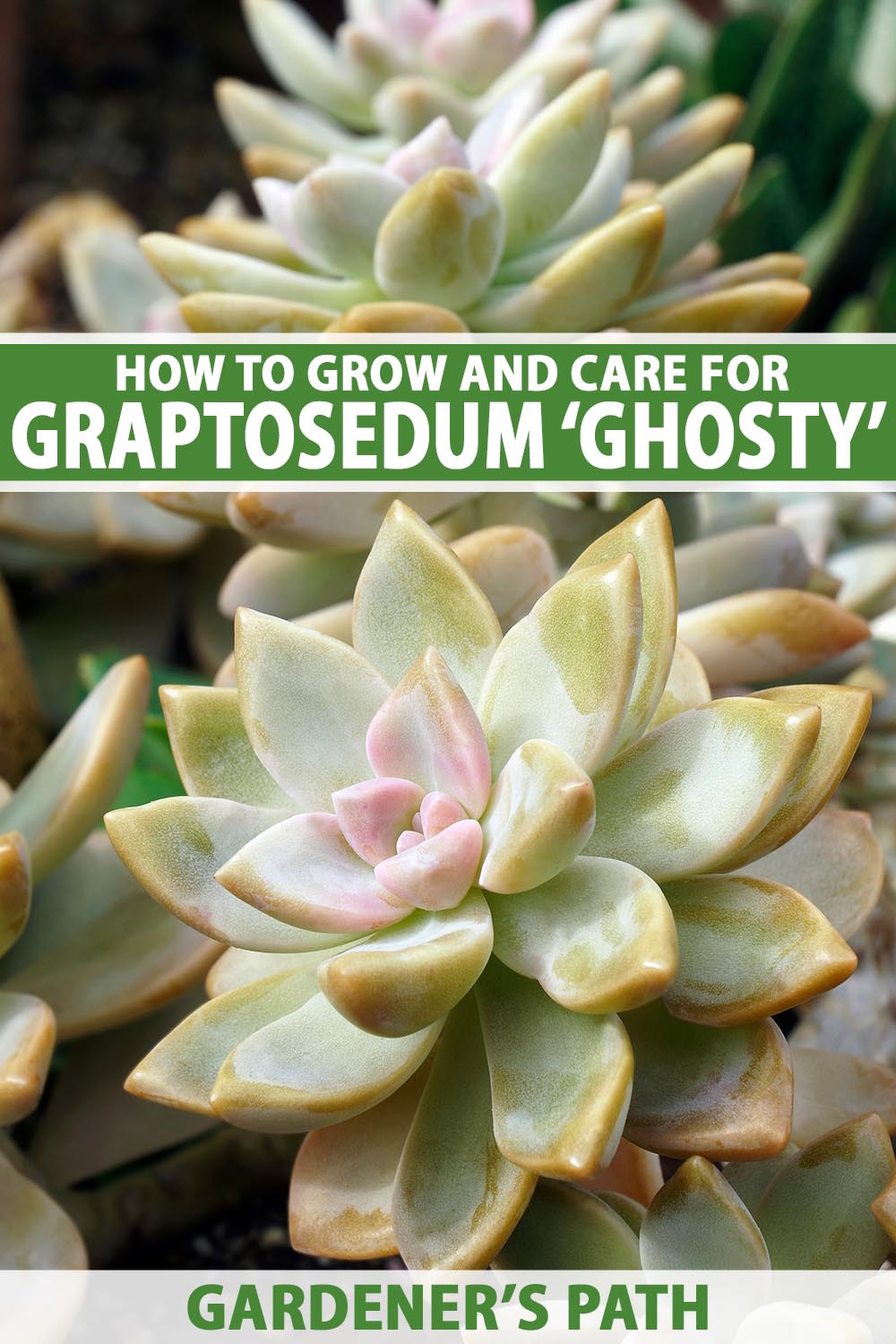
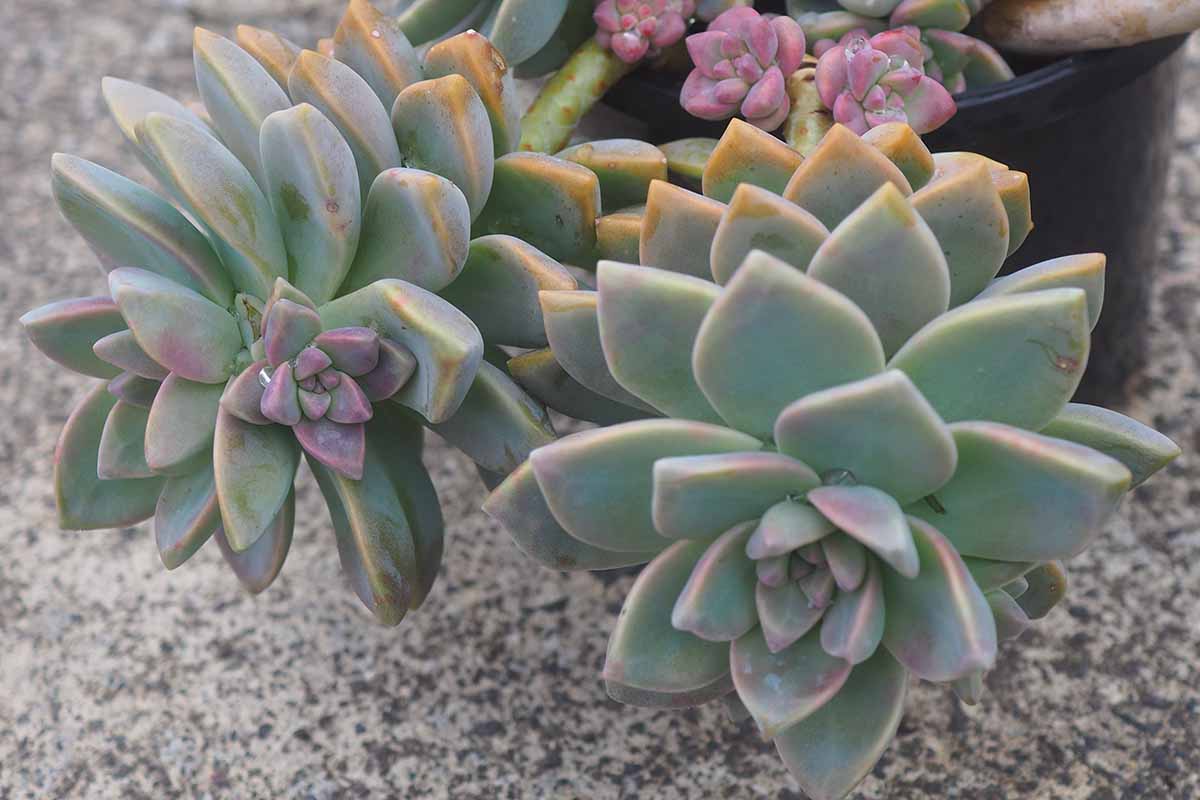
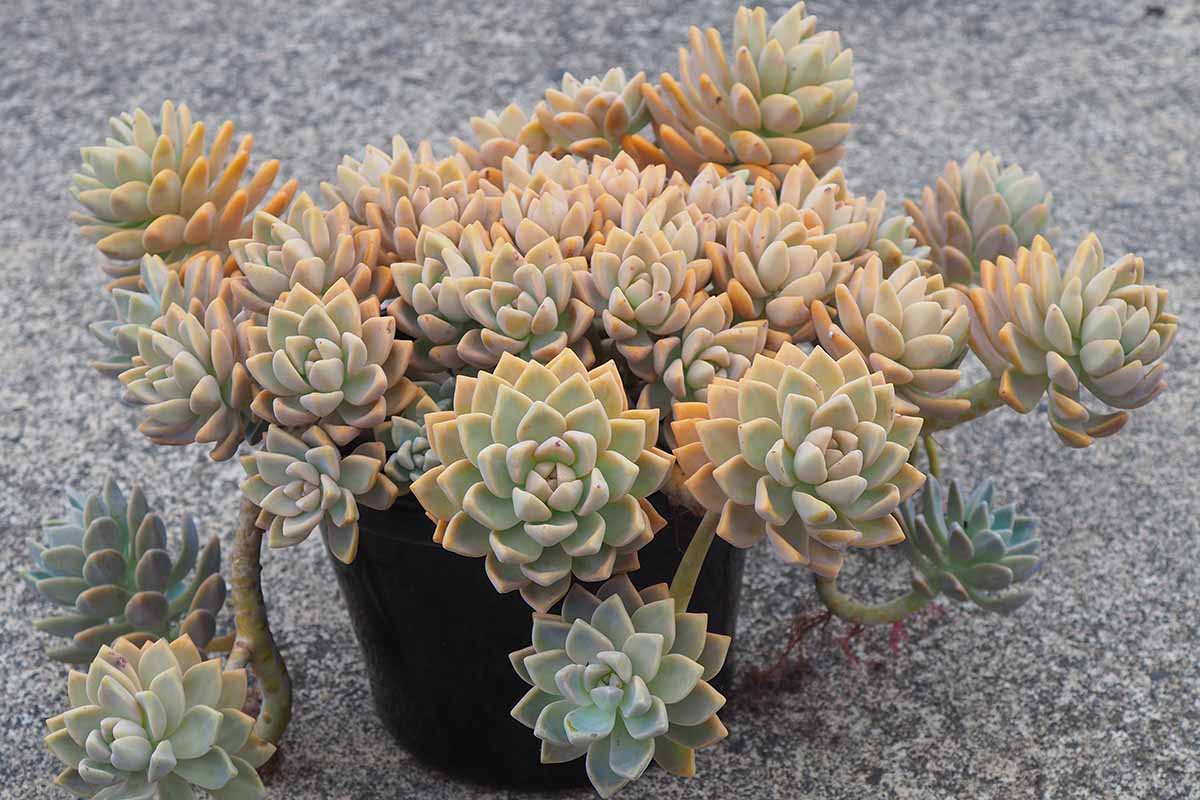
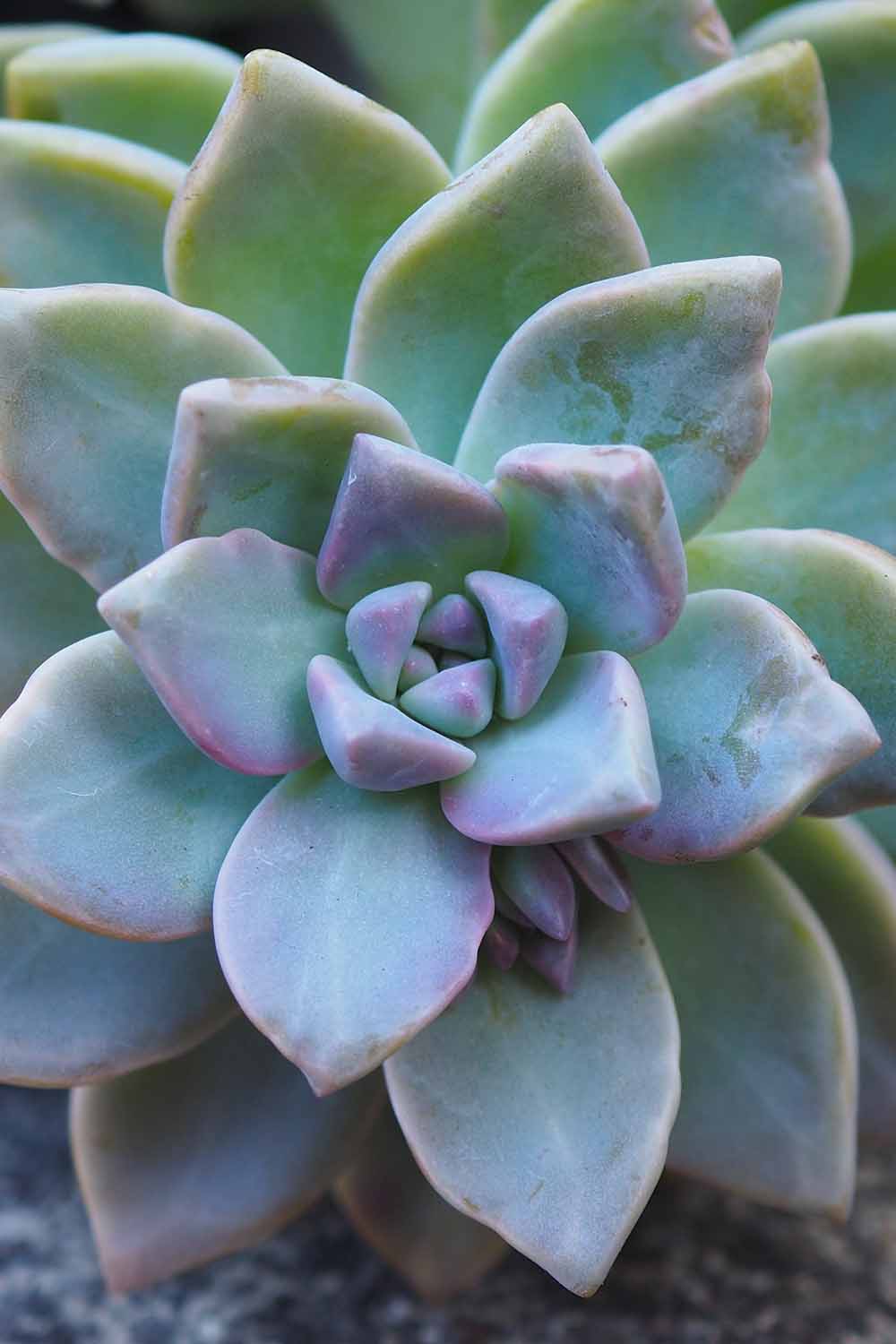
The result is a robust succulent featuring faceted, scoop-like, fleshy pale green leaves with a distinctive pinkish or orangish tint.
It is suitable for gardens in Zones 9 to 11 and houseplant cultivation elsewhere.
We link to vendors to help you find relevant products. If you buy from one of our links, we may earn a commission.
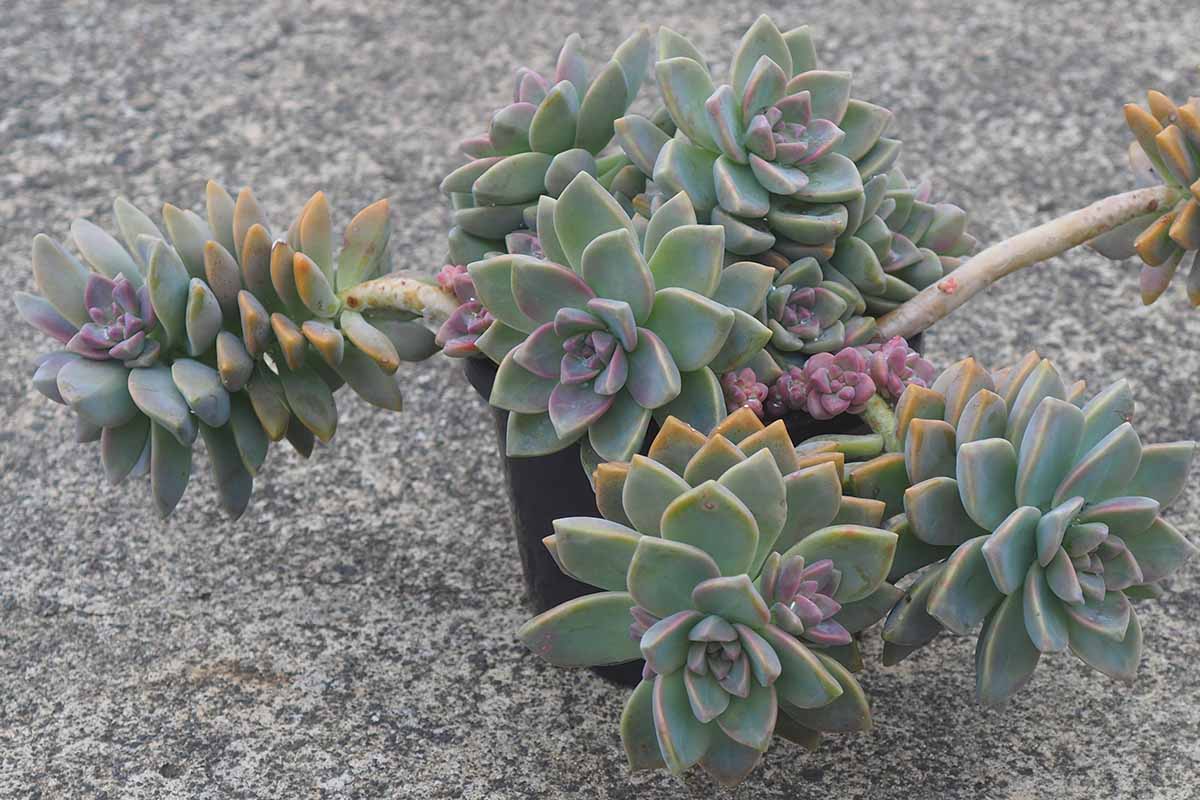
The trailing stems bear rosettes measuring approximately three inches in diameter.
They reach a mature length of four to 12 inches with a spread of 24 to 36 inches, providing a substantial display.
Plants mature in one to two years on average, at which time they may produce yellow, star-shaped blossoms.
Our guide to growing Graptosedum has all you need to know about the care requirements of plants in this genus.
This article zeroes in on the unique traits of the ‘Ghosty’ cultivar.
Here’s what we’ll cover:
What You’ll Learn
‘Ghosty’ and one of its parent species, G. paraguayense are both commonly called ghost plants.
However, while ‘Ghosty’ has fleshy, pinkish-orange leaves and yellow flowers, G. paraguayense has flatter, grayish-purple leaves and white flowers.
Quick Look
Common name(s): Ghost plant, ghosty
Plant type: Succulent
Hardiness (USDA Zone): 9-11 (outdoors)
Native to: Cultivated intergeneric hybrid
Bloom time / season: Spring
Exposure: Full sun
Soil type: Sandy loam, cactus and succulent medium, well-draining
Soil pH: 6.0-7.0, neutral
Time to maturity: 1-2 years
Mature size: 4-12 inches tall by 24-36 inches wide
Best uses: Bed, border, container, ground cover, houseplant, mass planting, specimen
Taxonomy
Order: Saxifragales
Family: Crassulaceae
Genus: x Graptosedum
Cultivar: ‘Ghosty’
Unlike low-profile, stemless succulents, such as echeveria, haworthia, and lithops, ‘Ghosty’ cascades from containers and creeps across gardens, offering multiple display options.
Because rosettes that make contact with the ground readily take root, these succulents spread through beds and borders with vigor and make excellent ground covers for erosion control when mass planted.
Potted specimens show best when placed high to take full advantage of the visual waterfall of rosette-laden stems.
How to Grow
The seasons for active growth are spring and fall. ‘Ghosty’ prefers a warm, dry climate, but tolerates temperatures that dip briefly to 20°F, provided the soil is not oversaturated.
If you live in a Zone that freezes, be sure to bring your pots indoors before the first frost.
Avoid growing in high humidity, as prolonged wetness invites fungal conditions and the potential for rotting.
Light
In the garden, ‘Ghosty’ requires full sun to bring out its pink and orange hues.
It may tolerate partial shade, but the rosettes may be loose and the stems may stretch unattractively as they reach for sunshine, a process called “etiolation.”
Indoors, provide bright, direct sun exposure on a south-facing windowsill.
During intense summer heat, you may have to move the pot a foot away from the glass to prevent leaf scorch. Rotate the container weekly for the richest coloration.
Soil
Graptosedum hybrids need loose, gritty soil that drains well and has a pH of 6.0 to 7.0, or slightly acidic to neutral.
If you are gardening outdoors, please see our guide to succulent soil preparation.
For containers indoors and outdoors, you can use a commercial potting mix or make your own.
I use Hoffman’s Organic Cactus and Succulent soil mix as it contains a blend of compost for light nutrition, limestone to regulate the pH, peat moss for moisture retention, and sand to facilitate the rapid drainage of excess water.
Organic Cactus and Succulent Soil Mix is available from Hoffman via Amazon.
Water
Use the “soak and dry” method of watering. For in-ground succulents, water when the top three inches of soil are dry. Similarly, let the soil in pots dry completely before watering.
You can use a moisture meter to guide you.
You will find watering needs reduced during the winter when the plant isn’t actively growing.
During this time, let the soil dry completely and wait for the lowest leaves to crinkle before soaking it.
Fertilizer
‘Ghosty’ is a light feeder. If you fertilize, use a succulent food with a low nitrogen content to maintain compact rosettes.
Be sure to dilute it to half or a quarter strength to avoid burning the tender roots.
I like this product from Miracle-Gro that offers a mild N-P-K ratio of 0.5-1-1 to support general health without an overabundance of nitrogen.
Apply it at half-strength monthly during the spring and fall.
Miracle-Gro Succulent Plant Food is available from Miracle-Gro via Amazon.
Where to Buy
You’ll find plants readily available from succulent nurseries.
Be sure to take note of the descriptive information, or you may receive G. paraguayense, which has thin, purplish-gray leaves, instead of x Graptosedum ‘Ghosty,’ with fleshy, pale green leaves that tint pink and orange in full sun.
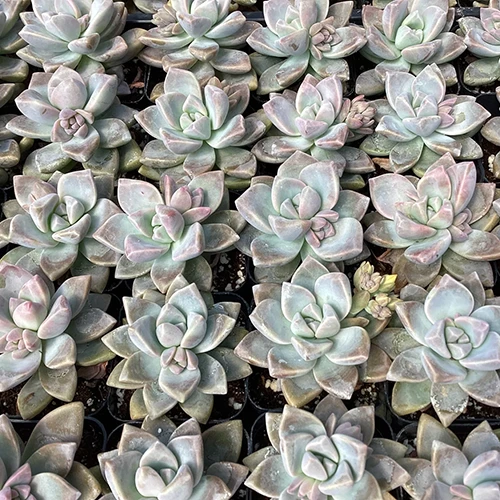
Note that while nurseries often suggest full sun to part shade, for compact rosettes and the pink and orange coloration, you’ll need at least six hours of sun daily.
You’ll find x Graptosedum ‘Ghosty’ available from Succulent Gardens.
Maintenance
This is an easy-care plant so there isn’t much maintenance required.
Remove damaged or dead foliage as needed to keep the plants looking tidy. Divide offsets if plants become overgrown for propagation as discussed below.
Keep garden beds weeded to minimize competition for moisture.
Repot container-grown specimens every three years or so to refresh the potting medium.
Go up one pot size as needed to maintain an inch of space around and below the root mass.
Propagation
A hybrid is a cross between two parent plants often of different species. If it produces seeds, they are not likely to yield a replica of the hybrid.
For this reason, it’s best to propagate new plants from cuttings or by division.
The best times are in the spring or fall, times of active growth.
From Cuttings
There are two types of succulent cuttings, leaf and stem.
To take a leaf cutting:
Select a robust leaf and detach it with a gentle twist.
Lay it on a paper towel out of direct sunlight for several days so the “wound” can dry out and form a callus.
Select a shallow container, one to three inches wide with adequate drainage holes and fill it three-quarters full with loose, gritty cactus and succulent potting soil.
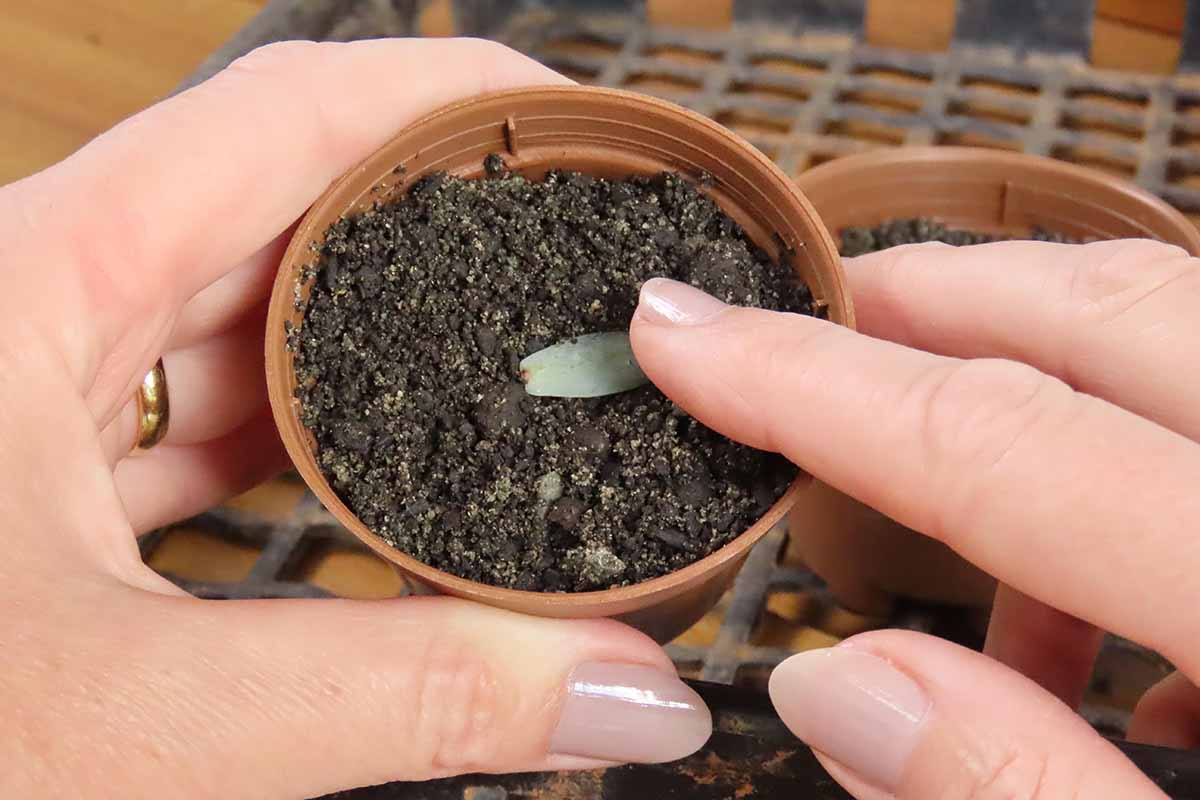
Press the leaf gently onto the surface soil, where it will root.
Once the roots appear, mist the soil regularly to keep it moist but not oversaturated.
For a stem cutting:
Select a two- to four-inch-wide rosette.
Sever the stem about two inches below the rosette. If there are any odd leaves along the stem, snip them off.
Lay the severed rosette on a paper towel away from direct sunlight for several days to form a callus on the cut end.
Fill a well-draining, three- to four-inch diameter pot three-quarters full of cactus and succulent mix.
Use a pencil or chopstick to make a one-inch hole in the center of the soil.
Bury the callused stem in the hole and secure it firmly at a depth of one inch.
Wait a week before watering lightly to support root formation.
Continue to water lightly to prevent the pot from drying out.
When resistance to a gentle tug of the stem indicates roots have formed, you can begin soak and dry watering.
By Division
It’s easy to divide an existing plant.
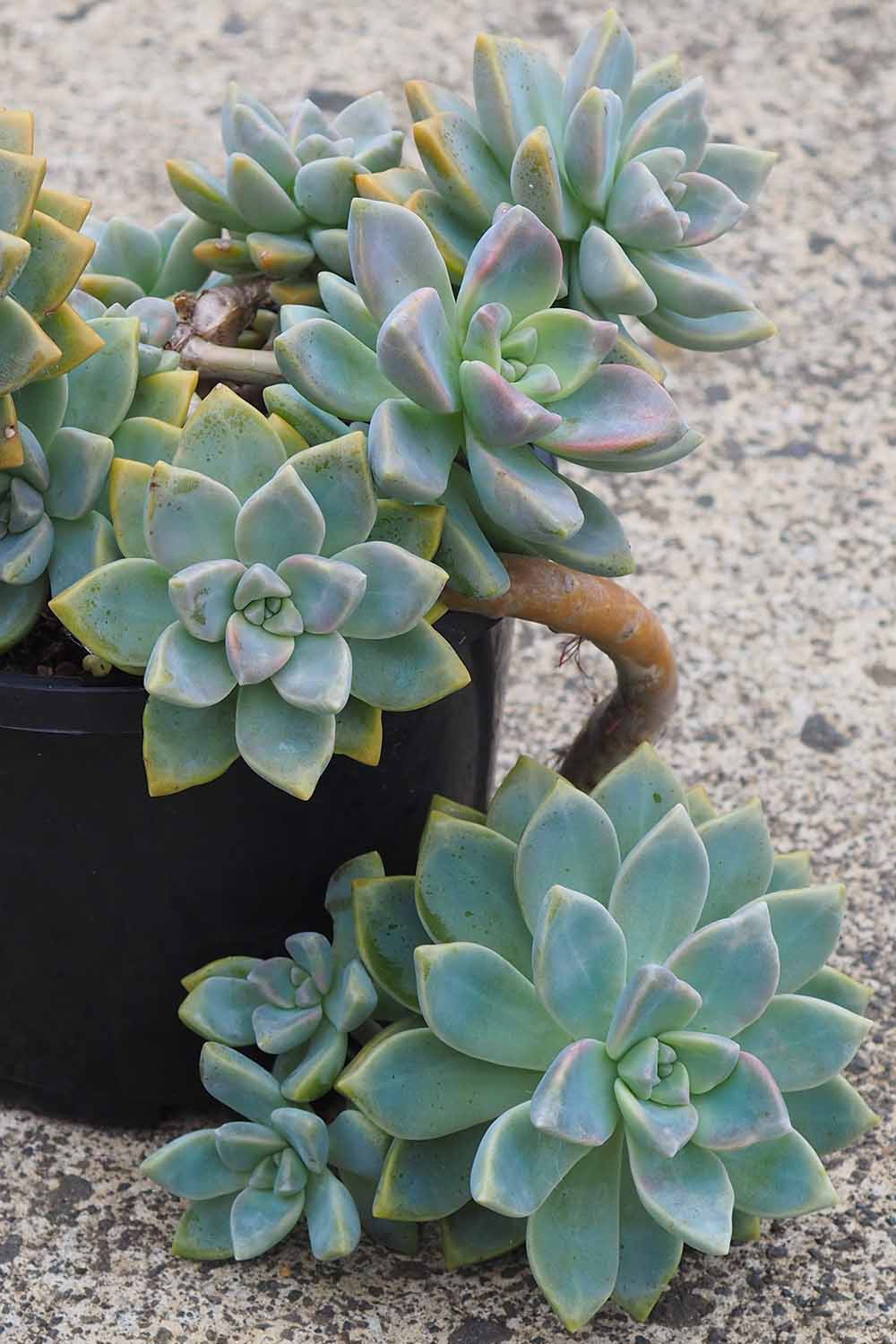
At one or two years old, a rosette will produce one or more offsets or “pups” beside it. When a pup is at least an inch wide, you can detach it.
Here’s how:
When the soil is fairly dry, unpot the parent and pups.
Gently remove enough soil to see the roots.
Detach a pup, making sure it has roots attached.
Fill a three- to four-inch pot three-quarters full of cactus and succulent potting soil.
Settle the pup just deep enough to bury the roots and hold it firmly in place.
Wait a week before watering well.
Transplanting
If you purchase a plant from a nursery or want to transplant an existing specimen to a larger pot, take note of how deeply it sits in the original container so you can replicate it in the new one.
Select a well-draining vessel an inch wider and deeper than the root mass.
Fill it two-thirds of the way with cactus and succulent potting medium.
Unpot your plant and brush off most, but not all of the original soil.
Settle the root mass in the new pot at the same depth as it was in the previous container to minimize transplant shock and leave room for watering without overflow.
Wait a week and then water deeply.
You’ll find more information in our guide to succulent propagation.
Pests and Disease
While they are not prone to disease, Graptosedum hybrids may fall victim to pests or pathogens under less than ideal growing conditions.
Sap-sucking pests like aphids, mealybugs, and scale like warm, dry conditions and are more likely to feed on foliage that is moisture stressed.
Avoid underwatering and treat affected flora with organic neem oil. It is best to act quickly in the event of an infestation, as pests can vector diseases that may affect plants in proximity.
Overwatered pots may cause root rot, an irreversible condition you can read about here.
Using loose potting media, a well-draining pot, and watering when the soil is completely dry are the best ways to avoid this incurable condition.
A Boo-tiful Addition
Hybrid x Graptosedum ‘Ghosty’ offers the best of both worlds: the cold-tolerance, and trailing stems of G. paraguayense, and the drought, heat, pest, and disease resistance of a Sedum.
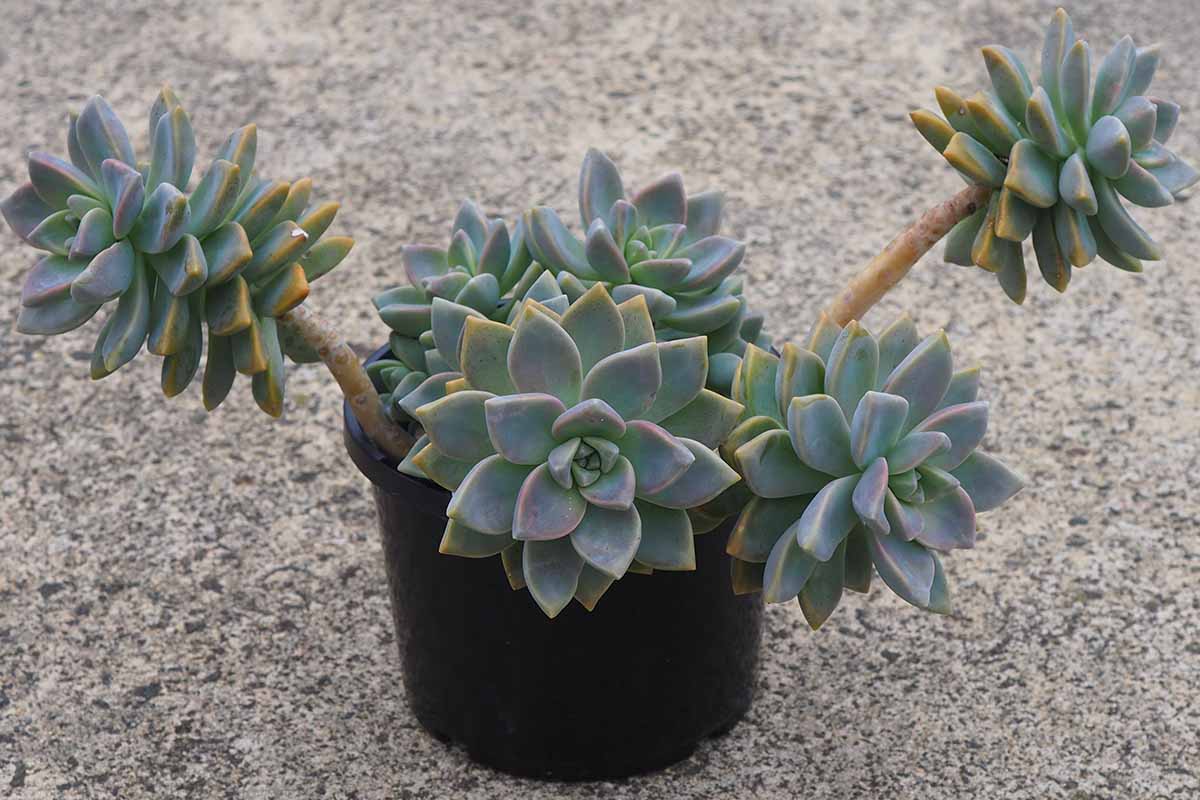
Its blushing, faceted foliage and easy-care ways make it a boo-tiful addition to Zone 9 to 11 gardens and houseplant collections. Are you ready to welcome it home?
Do you grow ‘Ghosty?’ Please share your tips in the comments section below.
And for more information about growing succulents in your garden or as houseplants, we recommend you read these guides next: