x Gasteraloe spp.
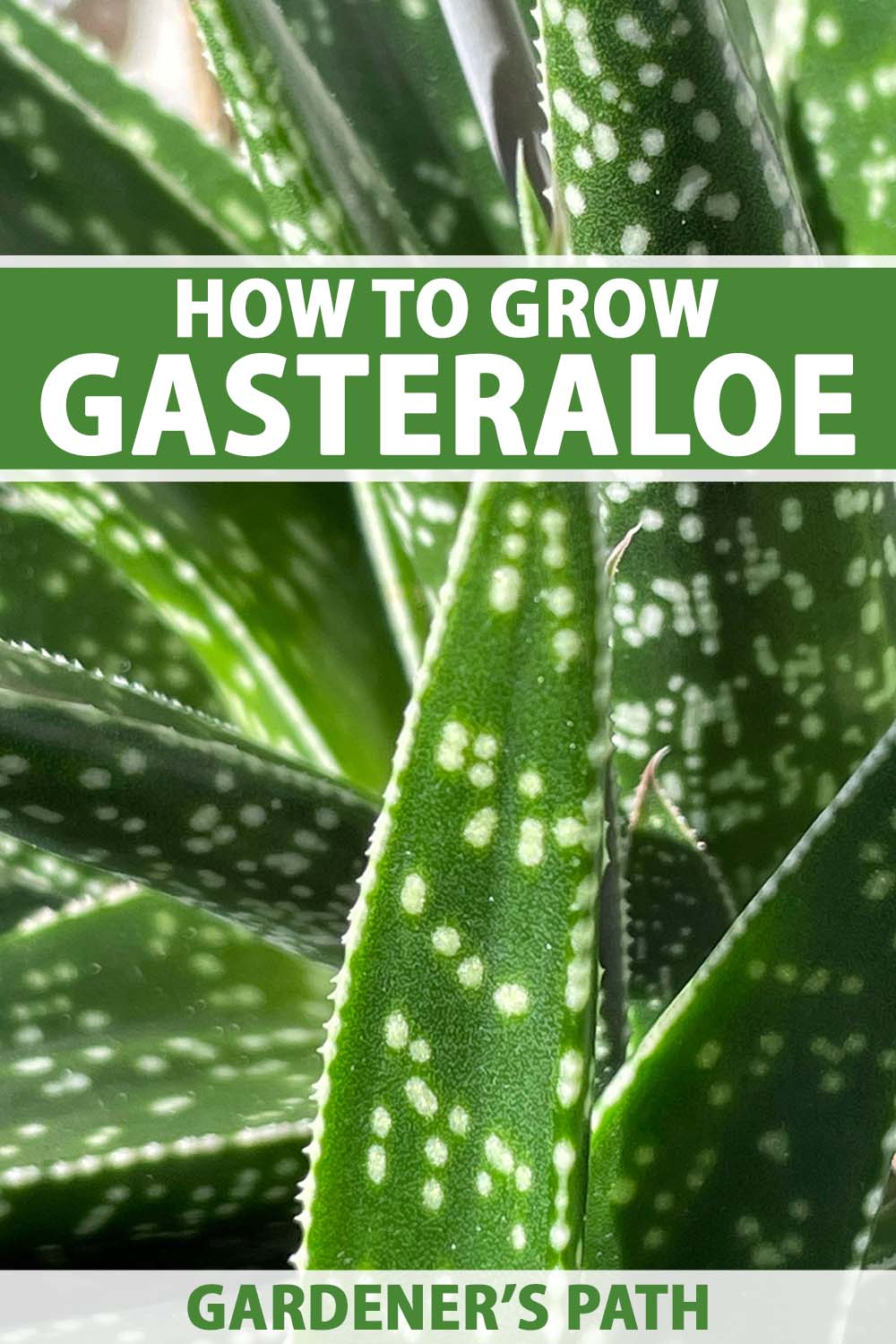
With their speckled, green rosettes of fleshy leaves, gasteraloes are attractive succulents that are fun to grow.
As houseplants, they’re undemanding and need little maintenance, making them ideal for beginners. They can also be cultivated outdoors year round in some regions.
We link to vendors to help you find relevant products. If you buy from one of our links, we may earn a commission.
Succulent fans that are already devotees of haworthias and gasterias may want to consider expanding their collections with a gasteraloe.
The charming shapes and patterns will brighten up your home.
Although caring for these plants is pretty easy, all houseplants have their preferences and you’ll want to make sure you know how to keep your new gasteraloe flourishing – or check to make sure you have the right conditions before bringing one home.
In this article you’ll learn about the origins of these succulents as well as how to care for them and some of the different cultivars available.
Here’s a peek at what we’ll cover:
What You’ll Learn
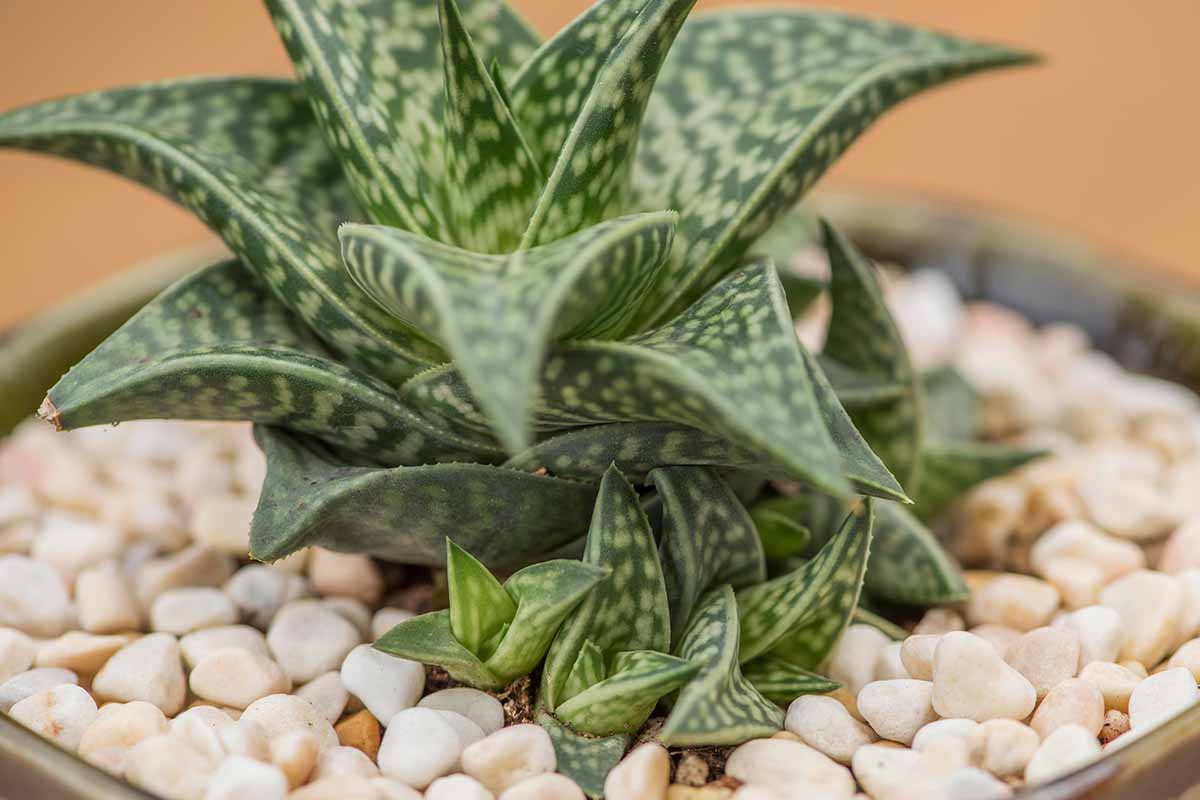
Gasteraloe has fleshy leaves that grow in rosette shaped clumps with no stems. New baby plantlets, also known as offsets, grow around the base.
The succulent leaves are usually green with white speckles and toothed margins. Some of them have roughly textured foliage.
In addition to their striking foliage, these succulents also bear attractive spikes of tubular flowers in shades of pink. Usually they only bloom when grown outdoors.
Quick Look
Common name(s): Gasteraloe, Gastrolea, pearl aloe
Plant type: Evergreen succulent
Hardiness (USDA Zone): 10-11 (outdoors)
Native to: Horticultural hybrid
Bloom time / season: Winter, spring, or summer
Exposure: Part sun to dappled shade, bright, indirect light
Soil type: Cactus or succulent mix, well-draining
Soil pH: 6.0-7.0, slightly acidic to neutral
Time to maturity: 1-2 years
Mature size: 6-12 inches tall by 18 inches wide
Best uses: Container gardens, houseplants, rock gardens, succulent fairy gardens
Taxonomy
Order: Asparagales
Family: Asphodelaceae
Genus: × Gasteraloe
Cultivars: Green Ice, Lizard Tail, Royal Highness
If these plants look familiar, it’s because they are crosses of Aloe (or Aristaloe) and Gasteria species.
These horticultural hybrids are botanically classified as x Gasteraloe, and are related to popular succulents like ‘Little Warty’ gasterias, and lace aloes (Aristaloe aristata) as well as Haworthia and Haworthiopsis species.
How to Grow
Gasteraloes are beginner-friendly houseplants and can be grown outdoors in Zones 10 and 11, where they make a nice addition to xeriscapes and mixed succulent plantings.
They thrive in dry conditions and in regions outside of their hardiness range the plants should be brought indoors when the temperature drops. They are only cold hardy down to 25°F.
Light
Outdoors these succulents will tolerate very bright sunlight as well as part shade – and as houseplants they will need at least four hours of direct sunlight per day.
However, be sure to move to brighter light more gradually, since their leaves can be scorched if placed in full sun without a gentle transition.
When growing gasteraloes indoors, if you don’t have enough direct sunshine from a window, you can consider supplementing with a grow light.
Soil
Like most succulents, gasteraloes need soil with excellent drainage and a pH between 6.0 and 7.0.
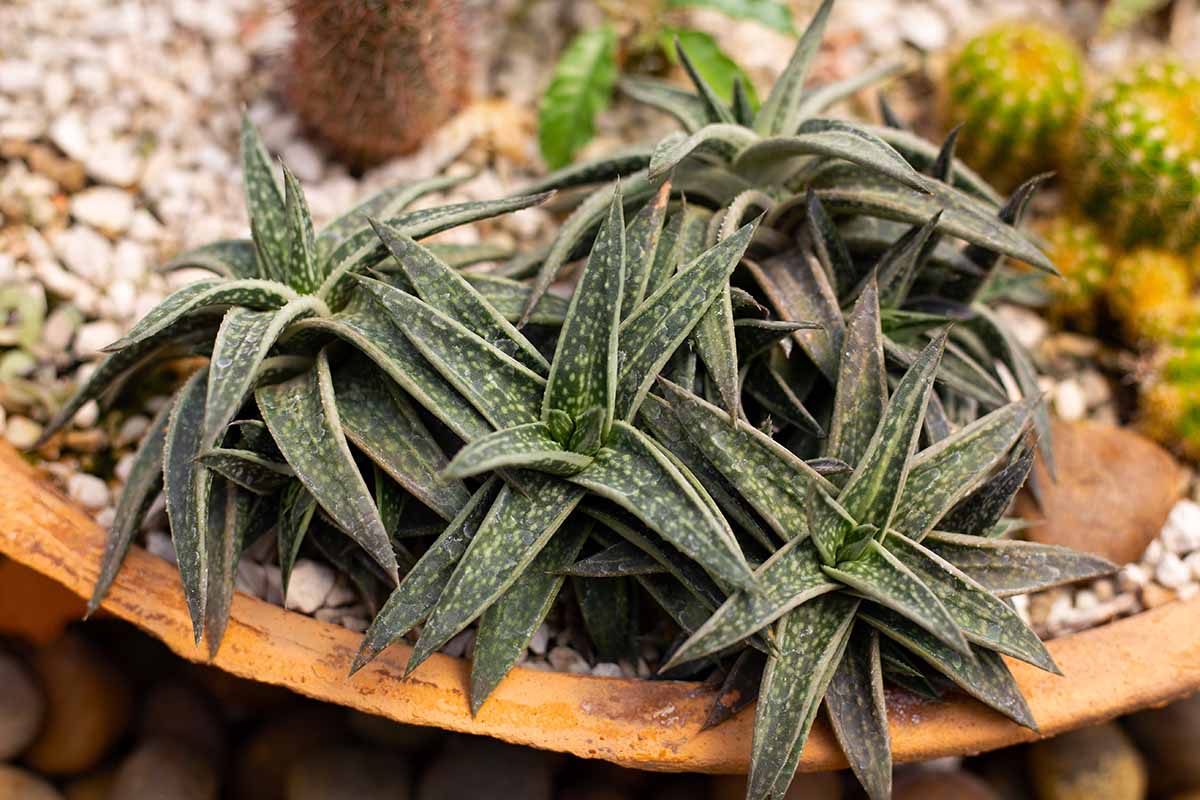
Be sure to choose a cactus and succulent soil that is gritty and contains ingredients like pumice, or sand.
You can learn how to make your own potting soil for succulents here.
Water
In winter, you should allow the growing medium to dry completely between waterings – water applications once a month should be enough.
However, in summer when conditions are hotter, keep the soil moist but not soggy.
Learn more about watering succulents here.
Fertilizer
These plants only need to be fertilized once a year in spring.
Be sure to use a gentle fertilizer formulated for succulents, such as Dr. Earth’s Succulence Plant Food, and apply it according to the manufacturer’s instructions.

Dr Earth Succulence Plant Food
You can find this product available at Arbico Organics.
Learn how to fertilize succulents here.
Cultivars to Select
There are many lovely types of gasteraloes you can grow, each of them with a different look depending on its plant parents.
Here are some of the easiest to find and most attractive:
Green Ice
‘Green Ice,’ the most popular gasteraloe, is a cross between ‘Little Warty’ gasteria, and Aloe variegata.
The triangular leaves are silvery green with dark green stripes and white speckles. Expect ‘Green Ice’ to reach six to 12 inches tall.
You can find ‘Green Ice’ in a three and a half inch pot available from Planet Desert via Amazon.
Lizard Tail
‘Lizard Tail’ features an open rosette of thick, dark green, pointed, and speckled leaves.
This hybrid of Gasteria carinata var. verrucosa and Aristaloe aristata reaches up to eight inches tall and six inches wide.
You may see this cultivar classified as Gasteraloe beguinii, but it’s actually a hybrid.
You can purchase ‘Lizard Tail’ in a four-inch pot from Planet Desert via Amazon.
Royal Highness
‘Royal Highness’ is a Gasteria and Aloe cross that reaches 12 inches tall and wide, and has thick bands of white bumps on its dark green leaves.
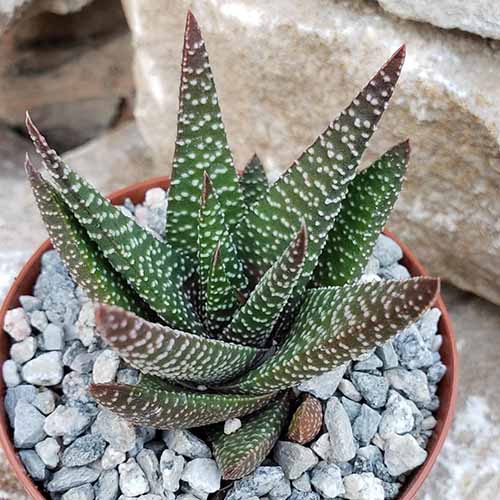
Welcome home your own royalty by heading to Planet Desert to pick up ‘Royal Highness’ in four-inch or one-gallon pots.
Maintenance
As I mentioned, gasteraloes don’t require much upkeep. Just a few quick tasks now and then will keep your plant looking its best and help you avoid pest problems down the road.
If your plant blooms, go ahead and snip off the flower spike once the blooms fade.
And don’t worry about the lower leaves drying out and dropping off, that’s totally normal. Just pull them off when you notice them.
The only other task on your to-do list is repotting. These succulents grow slowly, so you’re really only looking at doing this every two or three years.
Repot your houseplant by following the transplanting tips below.
Propagation
Although many succulents can be grown from seed, this horticultural hybrid doesn’t produce viable seeds.
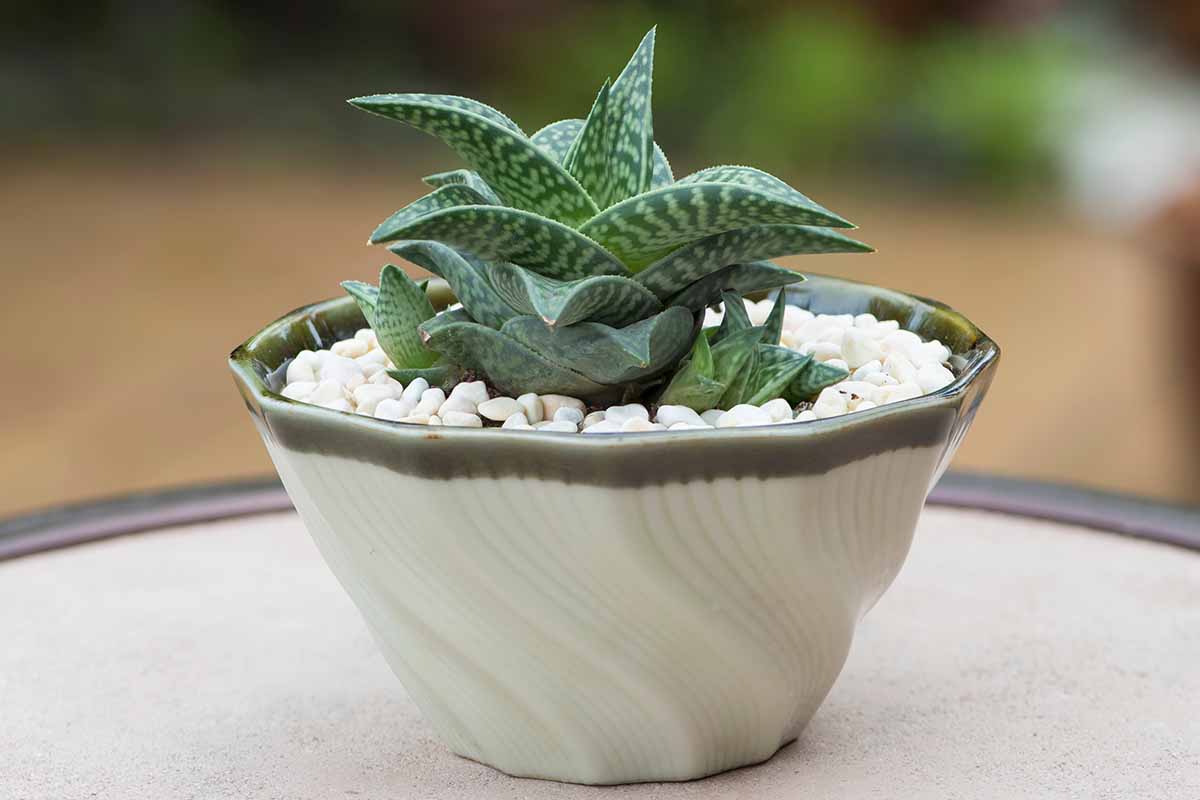
However, there are two other ways you can multiply your cute little houseplants – via offsets or leaf cuttings.
And once you grow new plants, you’ll want to know how to transplant them.
From Leaf Cuttings
Since these plants are stemless, you can take cuttings directly from the leaves.
Here’s how:
- Pull off a leaf from the base of the plant rather than cutting it off with a pair of scissors. Make sure to take the entire leaf, including the leaf base.
- Allow the cutting to form a callous in a dry location with indirect light – this will take up to a week.
- Plant the cut end of the leaf in a two- to four-inch nursery pot filled with growing medium.
- Wait for a week or two to begin watering.
Within a few weeks the cutting will take root and you’ll see small plantlets begin to grow. Allow them to size up for a year or two before transplanting.
From Offsets or Transplants
Like their botanical parents, gasteraloes produce cute little baby plants known as offsets or pups and these are fun and easy to grow as new plants.
The process for potting these is the same as that for transplanting mature specimens into larger containers.
- Wait until the growing medium has completely dried out, then remove the plant from its pot.
- Use a pair of scissors to snip off one or more offsets from the parent plant.
- Allow both to callus over before repotting the parent and transplanting the pup.
- To pot an offset or transplant a mature specimen, fill the container with dry succulent and cactus growing medium.
- Poke a hole in the center of the pot and insert the roots, then wait one week to water.
Learn more about propagating succulents from offsets here.
Pests and Disease
Most houseplants are affected by the same types of diseases and pests infestations so you should be aware of them, but gasteraloes aren’t particularly vulnerable to these problems.
Pests
Always check new specimens for insect pests before you purchase if possible or immediately after arriving if they were purchased online.
Mealybugs
Mealybugs often pass unnoticed on houseplants because they look like little bits of fluff.
They may look soft and fuzzy, but they can cause serious damage to succulents by feeding on plant tissues with their piercing mouth parts.
Read more about controlling mealybugs here.
Scale Insects
Scale insects feed in a similar manner as mealybugs, but they are usually much harder to notice.
These insects have shield-like carapaces that may make you mistake them for harmless bumps on the leaves, even though they are secretly sucking the life out of your houseplant.
Learn more about managing scale insect outbreaks here.
Spider Mites
Spider mites are arachnids that dine on plants, and if they decide to choose your gasteraloe as their buffet, you’ll find leaf stippling, webbing, and tiny insects on the undersides of leaves.
Learn how to detect and control spider mite infestations here.
Disease
If you care for your houseplant as described in this article, you will be unlikely to experience any disease problems.
Occasionally, fungal pathogens can cause black spots on the foliage, but the most common disease problem seen in gasteraloes is root rot.
If your plant has either mushy or extremely dry leaves this can be a sign of rotting.
Learn how to prevent and manage rotting in succulents here.
Gasp! What a Gorgeous Gasteraloe
When offered the right amount of light and water, gasteraloes are beautiful succulent plants that you can enjoy inside your home all year long – or in your garden, in the right conditions.
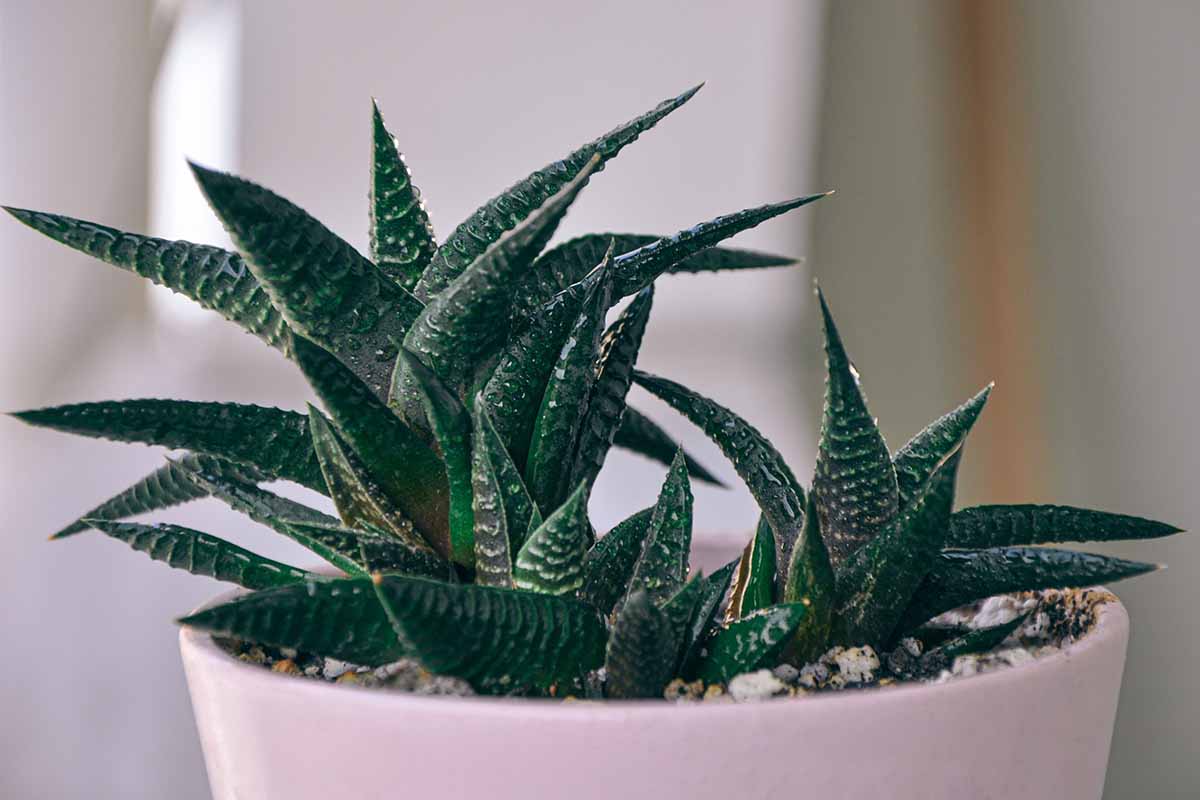
If you have any other questions about caring for gasteraloes, leave them in the comments section below.
Want to keep reading about succulents? We have more articles you’ll enjoy right here: