Pleiospilos nelii
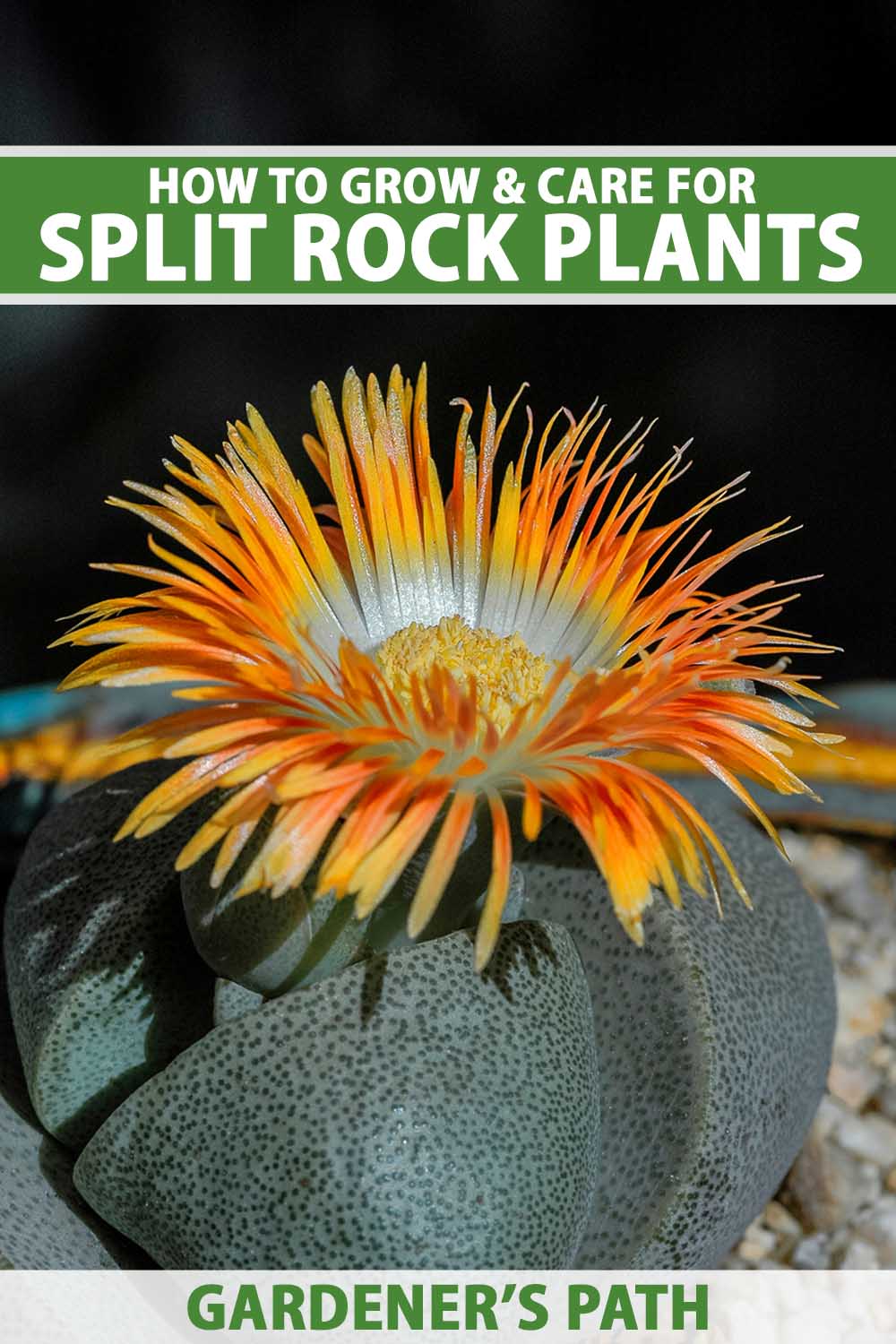
Split rock plant is a compact succulent with an otherworldly appearance that’s perfect for small spaces.
Offer it the right growing conditions and minimal care, and this low-maintenance specimen will constantly surprise you with its masterful mimicry and daisy-like blooms.
Bestowed with its common name because it looks like a stone or a pebble that’s been cracked open, Pleiospilos nelii is a succulent species from South Africa that thrives in low-moisture conditions and produces dazzling flowers.
We link to vendors to help you find relevant products. If you buy from one of our links, we may earn a commission.
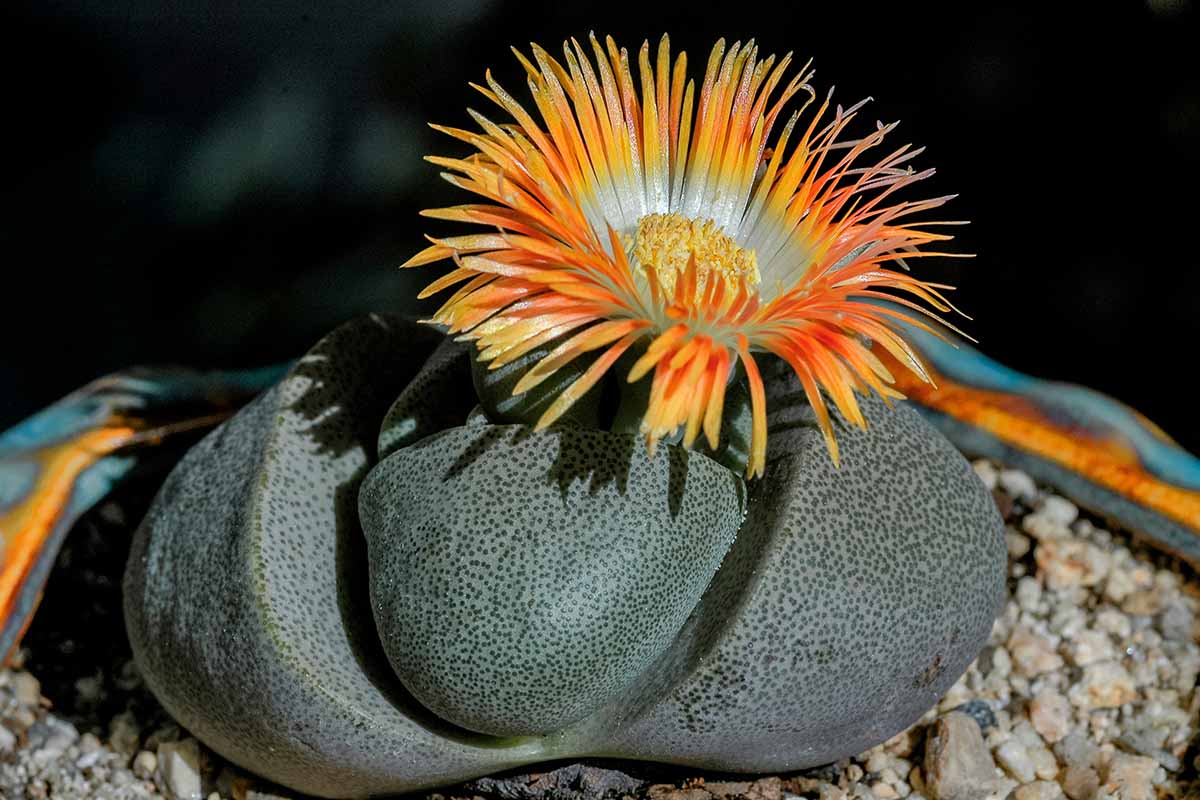
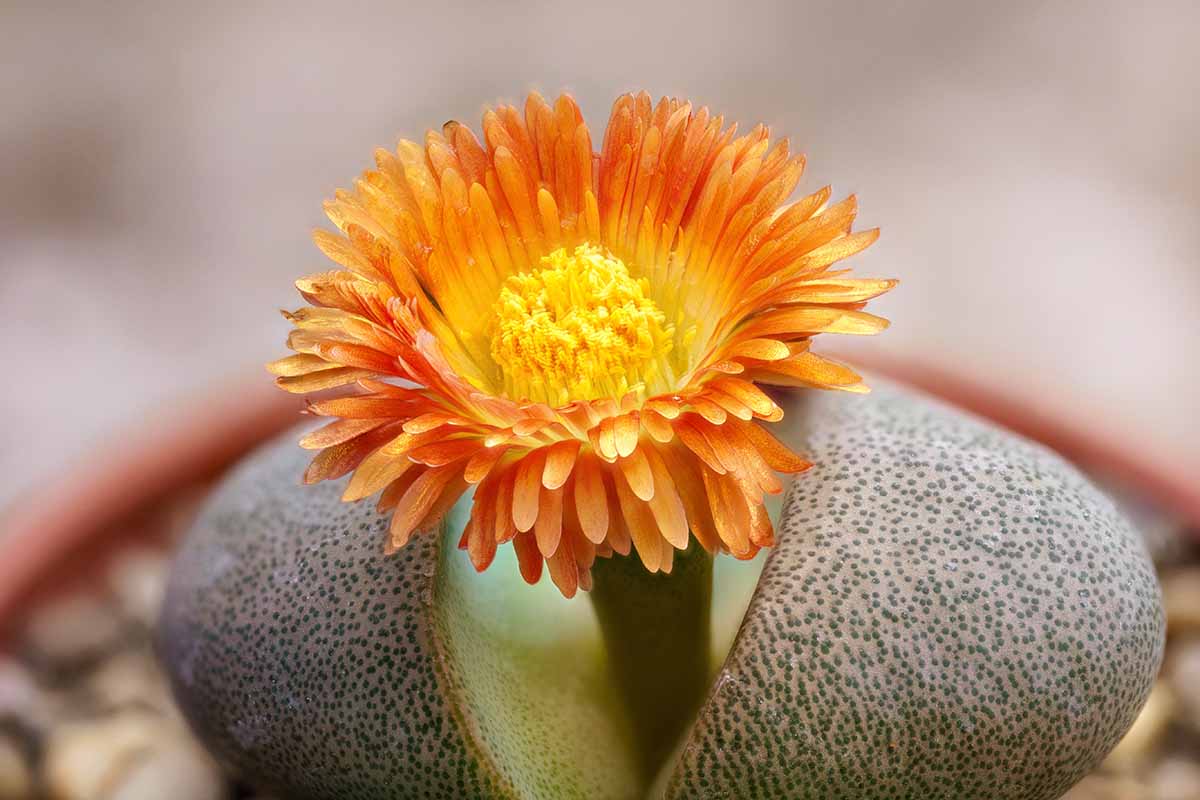
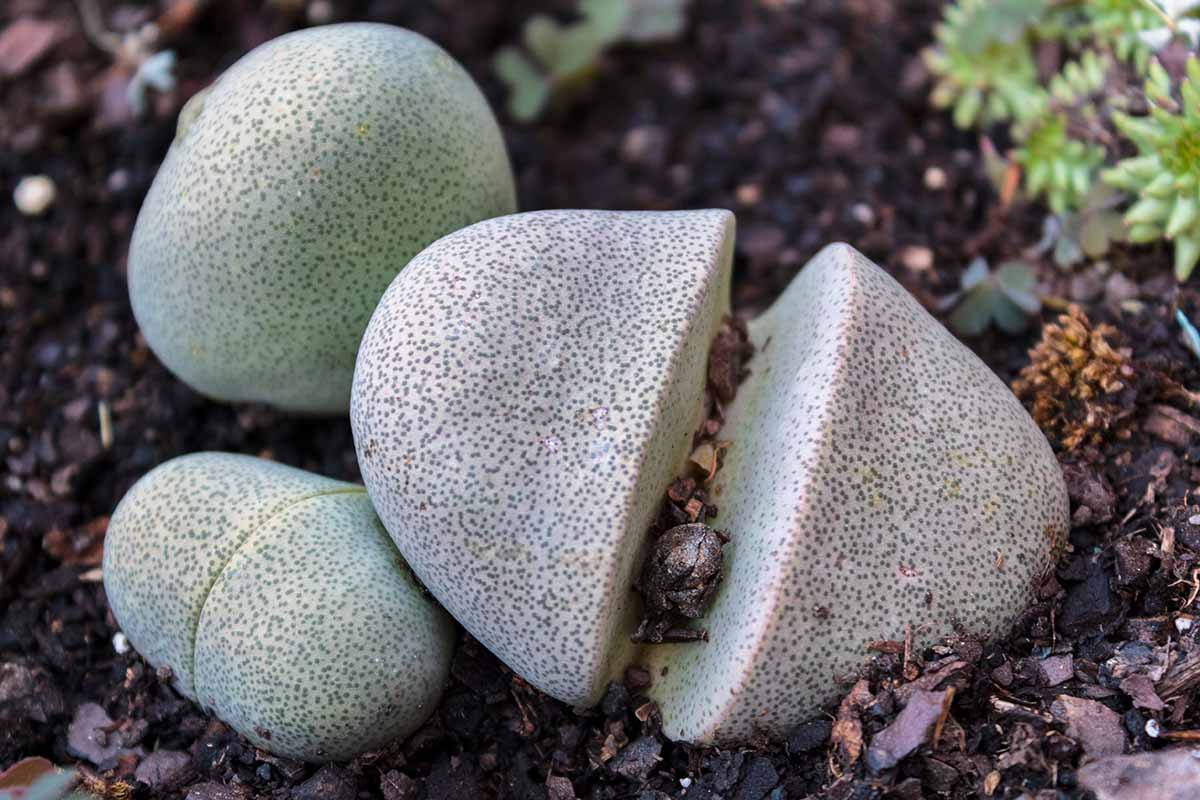
Split rock plant has a rounded shape formed by a single pair of semi-hemispherical, stemless leaves.
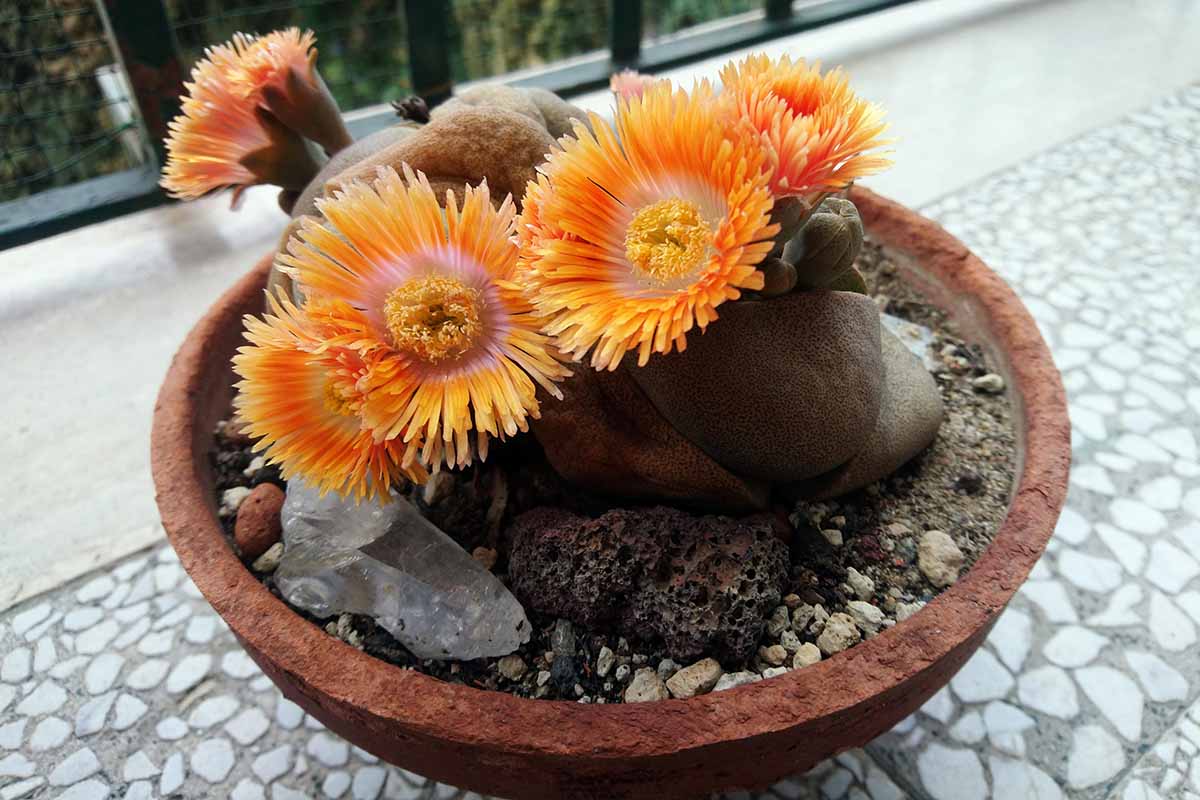
It has a fissure down the middle where it splits to produce new leaves and cheerful, daisy-like flowers in shades of yellow, orange, salmon, or pink, occasionally white, with many-petaled blooms that can reach up to three inches across.
Below the surface, the split rock plant develops a long taproot.
If you decide to grow one of these mimicry plants, it’s crucial to get light exposure and watering right, especially during its dormant period.
We’ll cover both of those topics and more in this guide.
What You’ll Learn
Split rock evolved in South Africa with a growth habit that serves as camouflage from grazing animals.
In its native habitat in the Karoo region, split rock blends seamlessly with the rocky terrain.
“Mesemb” is another term you’ll encounter, derived from a defunct botanical classification used to group species from southern Africa that have evolved these camouflaged forms.
P. nelii is a member of the fig marigold family, Aizoaceae, related to other mesembs like lithops, titanopsis, baby toes, ice plant, and concrete leaf plant.
Split rock plants are nearly as tough as the stones they resemble.
They do well on a bright windowsill and can be grown outdoors year-round in Zones 9 to 11.
These succulents store water in their thick leaves, so they need far less moisture than most houseplants and are more likely to suffer from overwatering than underwatering.
Quick Look
Common name(s): Split rock, splitrock, living granite
Plant type: Evergreen succulent
Hardiness (USDA Zone): 9-11 (outdoors)
Native to: South Africa
Bloom time / season: Winter to spring
Exposure: Full sun to light shade, bright, indirect light indoors
Soil type: Cactus mix with added grit, well-draining
Soil pH: 6.0-7.0, slightly acidic to neutral
Time to maturity: 1-2 years
Mature size: 2-3 inches tall by 4 inches wide
Best uses: Miniature plant collections, rock gardens, windowsills
Taxonomy
Order: Caryophyllales
Family: Aizoaceae
Genus: Pleiospilos
Species: Nelii
Unlike many succulents, split rock plants need some water during their winter growing season to produce flowers.
They go dormant in summer heat, at which point watering should be reduced to nearly nothing.
The key to success with split rock plants is restraint. They evolved to survive on minimal rainfall and can easily be killed by kindness in the form of too much water.
How to Grow
Growing split rock plants successfully requires mimicking their native desert conditions. Think bright light, excellent drainage, and a hands-off approach to watering.
Light
Split rock plants need plenty of bright light. Indoors, place them in a south-facing or west-facing window where they’ll receive at least three hours of direct sun daily.
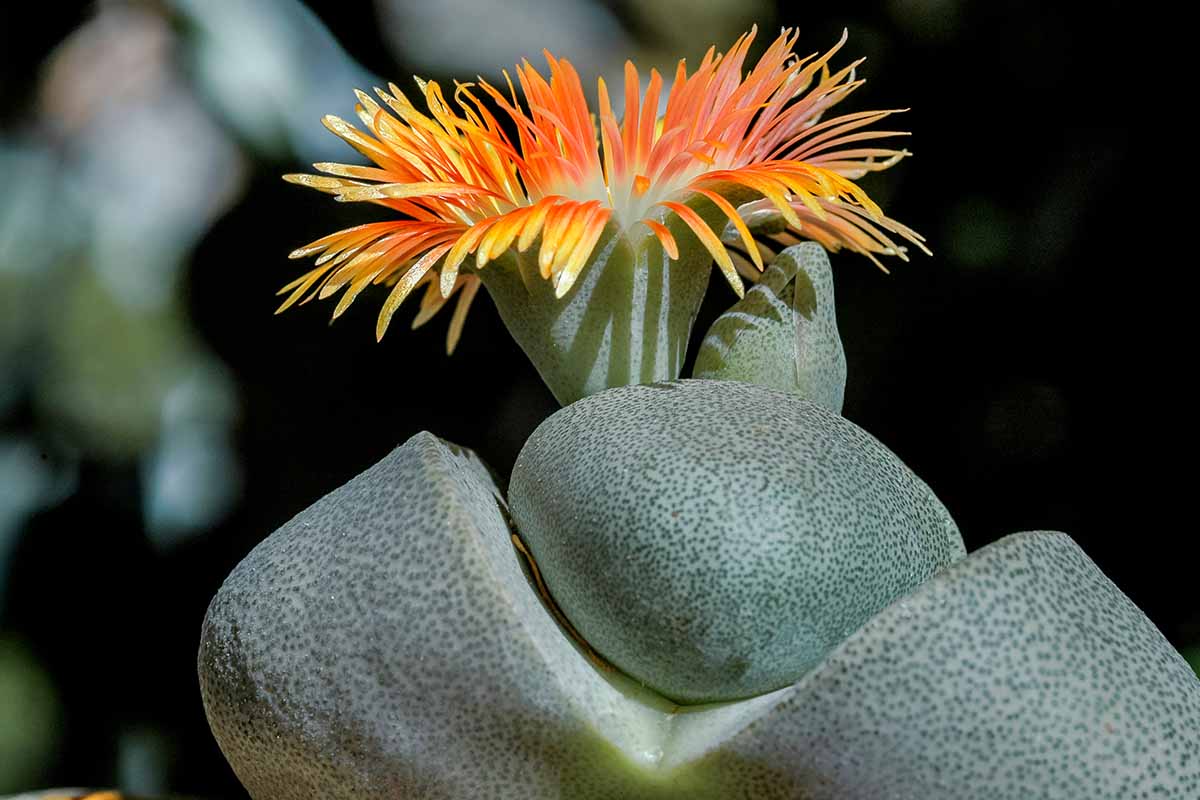
They can tolerate bright, indirect light for the rest of the day.
Outdoors in Zones 9 to 11, provide partial shade during the hottest part of the afternoon to prevent sunburn. Morning sun is ideal.
If you notice the leaves turning brown or developing spots, it’s a sign that the specimen is receiving too much direct sun.
On the other hand, if it is stretching or leaning toward the light, it needs more exposure.
Soil
The most important factor for split rock plants is drainage. Use a cactus or succulent mix with added pumice or perlite for excellent drainage.
A good ratio is 50 percent succulent potting mix to 50 percent pumice or perlite. You can also add coarse sand to the mix.
Avoid organic-rich potting soils or mixes that retain moisture. Split rock plants prefer sandy, mineral-heavy substrates similar to the shale and sandstone flats where they grow in the wild.
The pH should be slightly acidic, between 6.1 and 6.5.
Learn about how to make your own potting mix for succulents here.
Water
Watering is where most gardeners go wrong with split rock plants. The golden rule is to let the soil dry out completely between waterings, then wait a bit longer.
During the active growing season in late fall, winter, and early spring, water when the leaves start to look slightly wrinkled or feel soft to the touch.
This might be every two to three weeks, or it could be longer.
In summer, during dormancy, reduce watering dramatically. Some growers water only once or twice during the entire summer dormancy period.
Overwatering is the most common cause of death in split rock plants. If you see the old leaves failing to shrivel and be absorbed by the new pair, you’re watering too much.
Temperature and Humidity
Split rock plants thrive in temperatures between 50 and 85°F. They aren’t cold hardy and should be protected from frost.
This species is hardy in USDA Zones 9 to 11, with minimum winter temperatures of 25 to 30°F for brief periods only if kept completely dry.
Low humidity is essential. High humidity increases the risk of fungal diseases and rot, so provide good air circulation when growing indoors.
Fertilizing
Split rock plants have minimal fertilizer needs. If you repot every two to three years with fresh soil, fertilizing isn’t necessary.
If you do fertilize, use a diluted, balanced succulent fertilizer once during the active growing season. Avoid fertilizing during summer dormancy.
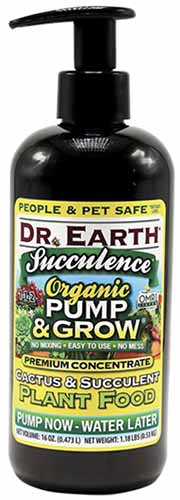
Dr Earth Succulence Plant Food
I use Dr. Earth Succulence which is mild and formulated for cacti and succulents.
You can find it available at Arbico Organics.
Containers
Choose a container at least four inches deep to accommodate the taproot.
The pot must have drainage holes. Without proper drainage, these succulents will quickly succumb to root rot.
Terra cotta pots are ideal because they allow moisture to evaporate through the sides, helping the soil dry out more quickly.
Where to Buy
You can find P. nelii at specialty succulent nurseries, both online and in person.
Local garden centers that specialize in cacti and succulents occasionally carry them. Check during spring and summer when stock is most plentiful.
The standard form has gray-green leaves with yellow to orange flowers.
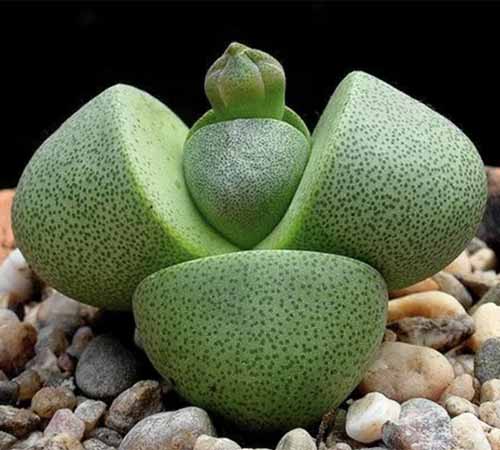
You can find split rock plants in three-and-a-half-inch pots available via Walmart.
‘Royal Flush’ is a cultivar with purple to pink leaves and deep rose-colored flowers with white centers.
This variety is sought after by collectors but is less commonly available than the standard green form.
Maintenance
Repot every two to three years or when the succulent outgrows its container. The best time is after summer dormancy before new growth begins.
Choose a pot that’s just slightly larger than the current one. Going too big can cause the soil to retain excess moisture, increasing the risk of rot.
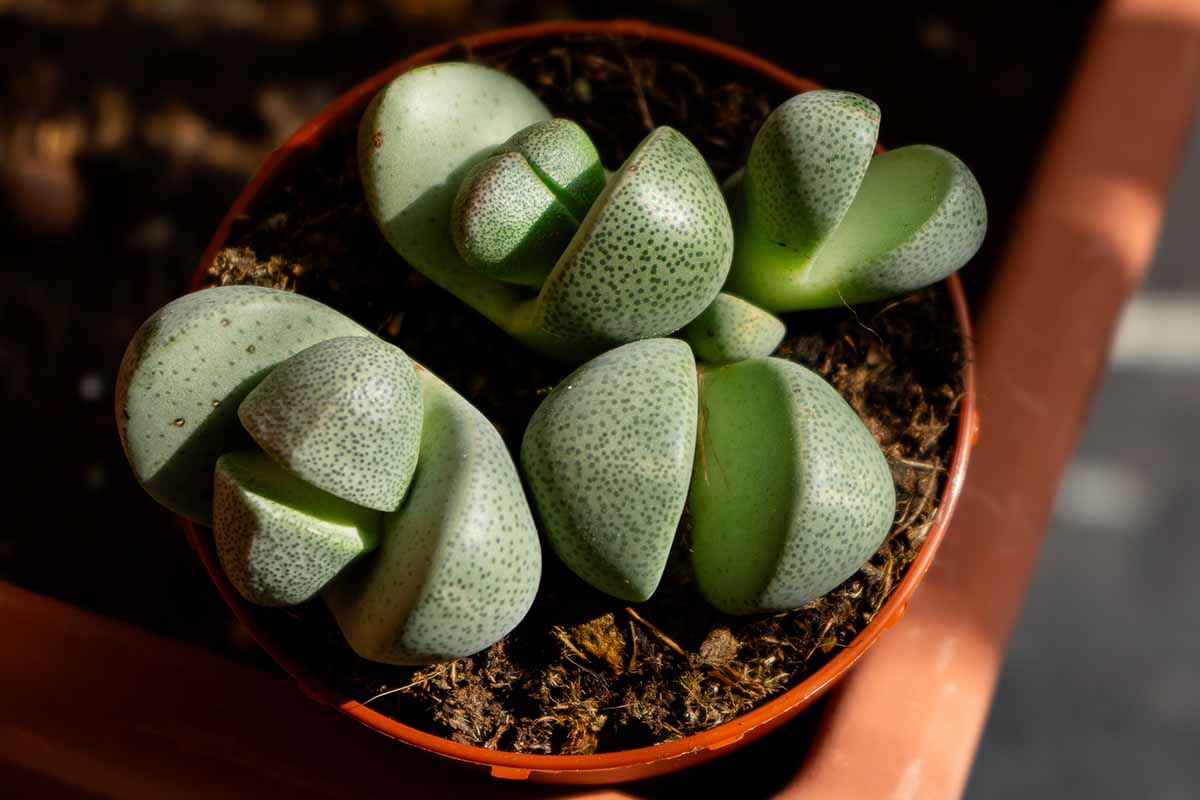
When repotting, gently remove the old soil from around the roots. Trim away any dead or damaged roots with clean, sharp scissors.
Fill the new pot with fresh cactus mix amended with pumice or perlite, and set the split rock plant at the same depth as it was growing previously.
Wait about a week before watering to give any damaged roots time to heal.
When the old leaves are completely dried and shriveled you can remove them carefully. If they don’t come off easily, leave them alone to avoid causing damage.
New leaves emerge from the center in late fall or winter, growing at right angles to the old pair.
As the new leaves develop, they absorb moisture from the old leaves, which gradually shrivel. This is normal.
By late spring or early summer, the old leaves should be fully absorbed. If they’re still present and plump, you’re likely watering too much.
The plant goes dormant during the hottest part of summer and requires very little water during this time.
Propagation
P. nelii can be propagated from seeds or by division, though offsets are rarely produced. Most growers prefer seeds despite the slow process.
From Seed
Seeds can be harvested from the flower pods after blooming or purchased from specialty seed suppliers.
Sow seeds in summer in a warm location with bright, indirect light. For best germination rates, soak seeds in lukewarm water for 24 hours before planting to soften the hard outer coating.
Fill a shallow tray or pot with sandy, well-draining medium. Scatter seeds on the surface and cover with a very thin layer of fine sand, about 1/16 inch thick.
Keep the medium moist but not wet by misting with a spray bottle. Avoid heavy watering that could wash away the tiny seeds.
Seeds typically germinate within seven to 14 days. When seedlings emerge, gradually reduce watering frequency.
Seedlings grow extremely slowly. When they reach about half an inch tall, carefully transplant them into individual pots with the same well-draining mix you’d use for adult specimens.
Be patient. It can take several years for seed-grown succulents to reach mature size.
Learn more about propagating succulents from seed here.
By Division
Division is less common because these succulents rarely produce offsets, but when they do form clumps, you can separate them.
The best time to divide is in late summer, just before the succulent emerges from dormancy.
Carefully remove the specimen from its pot and gently separate the clumps. Use a clean, sharp knife if needed to cut through any roots connecting the divisions.
Each division should have its own root system. Let the cut surfaces callus over for a few days in a shaded location.
Plant divisions in the same well-draining mix described in the soil section, in pots at least 4 inches deep to accommodate the taproot.
Wait about a week before watering to allow any wounds to heal and prevent rot.
Pests and Disease
P. nelii rarely suffers from pests or diseases when given proper care.
Pests
Aphids occasionally attack these succulents, clustering on new growth or around flowers.
Remove the pests by spraying with water or wiping them off with a damp cloth. Insecticidal soap is effective for heavier infestations.
Mealybugs are small, white, cottony-looking insects that feed on sap. They typically cluster at the base of leaves or in the cleft between leaf pairs.
Remove them manually with a cotton swab dipped in rubbing alcohol. For heavier infestations, spray with insecticidal soap or neem oil.
Scale insects may attack split rock plants, particularly those that are stressed from overwatering. They appear as small, brown, shell-like bumps on the leaves.
Remove scale manually by scraping them off gently with your fingernail or a soft brush. For persistent infestations, use insecticidal soap or horticultural oil.
Disease
Root rot is by far the most common problem and is almost always caused by overwatering or poor drainage.
Symptoms include soft, mushy leaves that may turn translucent or yellowish.
If you catch it early while rot is confined to the roots, you may be able to save the plant. Remove it from the soil and carefully cut away all rotted roots with sterilized scissors or a knife.
Let it dry out completely in a shaded, well-ventilated area for several days to allow the cut surfaces to callus over.
Then repot in fresh, completely dry soil with excellent drainage.
Wait at least a week before watering lightly to encourage new root growth.
Some growers recommend misting the leaves occasionally during recovery, as moisture can enter through the stomates while new roots develop.
If rot has progressed into the leaves, discard the plant immediately along with its soil, and clean the pot thoroughly with a 10 percent bleach solution (one part bleach to nine parts water) before reusing.
Sterilize any tools that came in contact with the diseased specimen to prevent spreading pathogens to healthy ones.
Learn more about rotting in succulents here.
Rock Solid and Ready to Grow
P. nelii offers a unique addition to any succulent collection without demanding much in return.
Master the art of benign neglect, provide bright light and excellent drainage, and you’ll be rewarded with a unique specimen.

The key to success is restraint. Water sparingly and let the plant follow its natural growth cycle.
In time, you’ll be treated to those impressive daisy-like flowers that can reach up to three inches across.
Have you grown split rock plants? Share your experiences in the comments below!
And for more information about cultivating succulents, check out these guides next: