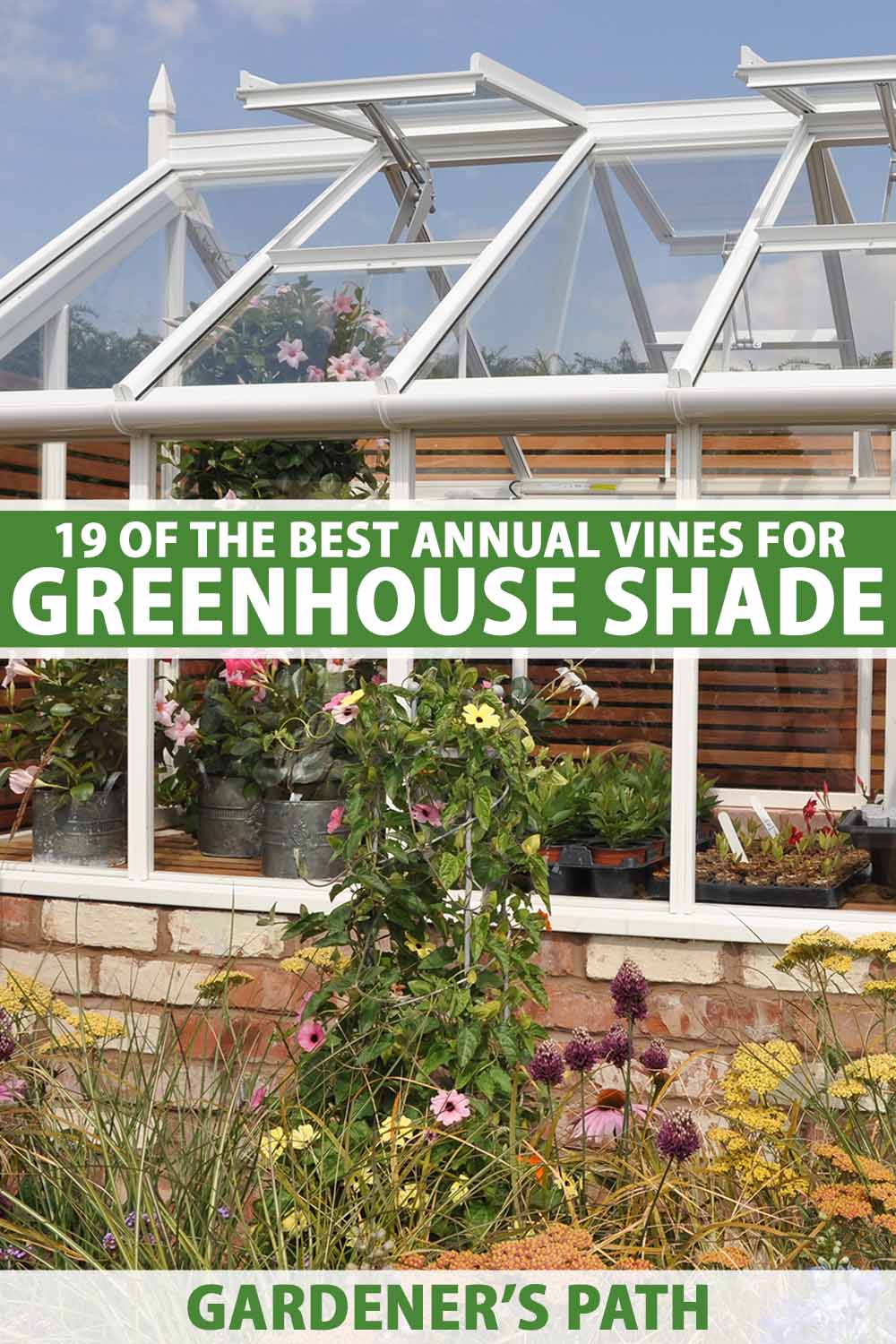
Sun exposure is one of the most important factors in greenhouse growing, but too much light can be just as problematic as too little.
Intense sun can quickly push temperatures beyond what many crops can tolerate, scorch foliage, and stress plants during the hottest part of the season.
We link to vendors to help you find relevant products. If you buy from one of our links, we may earn a commission.
Shade cloth is one common solution, but for gardeners who prefer a living, seasonal approach, fast-growing vines can provide effective shade.
Plus they add beauty and in some cases, harvestable crops.
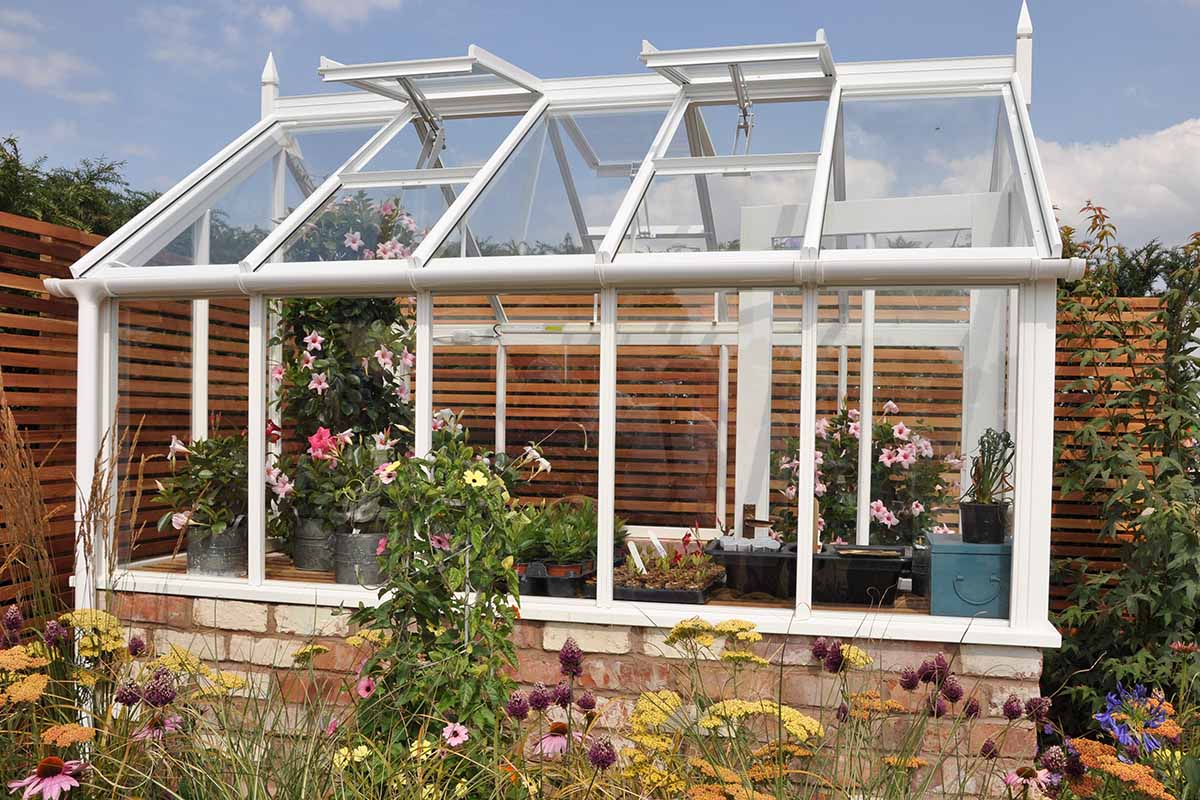
Climbing vines trained along the exterior of a greenhouse can filter sunlight, reduce interior temperatures, and block harsh afternoon rays without making it too dark inside.
When planted strategically, these plants provide shade only when and where it’s needed most, and they can be removed at the end of the season.
In this guide, we’re focusing on climbers that can be grown in a single season to shade a greenhouse.
Some are true annuals, while others are tender perennials or food crops that are typically grown as annuals in most climates.
All of the plants discussed are capable of putting on significant growth in one growing season, making them well-suited for temporary greenhouse shading.
Here are some of my favorite vines for adding shade to the greenhouse:
19 Best Greenhouse Shade Vines
The amount of protection your plants receive depends on both the growth habit of the vine and where it’s planted.
A petite plant on the north side of a greenhouse won’t significantly reduce light levels, though it can still add visual interest.
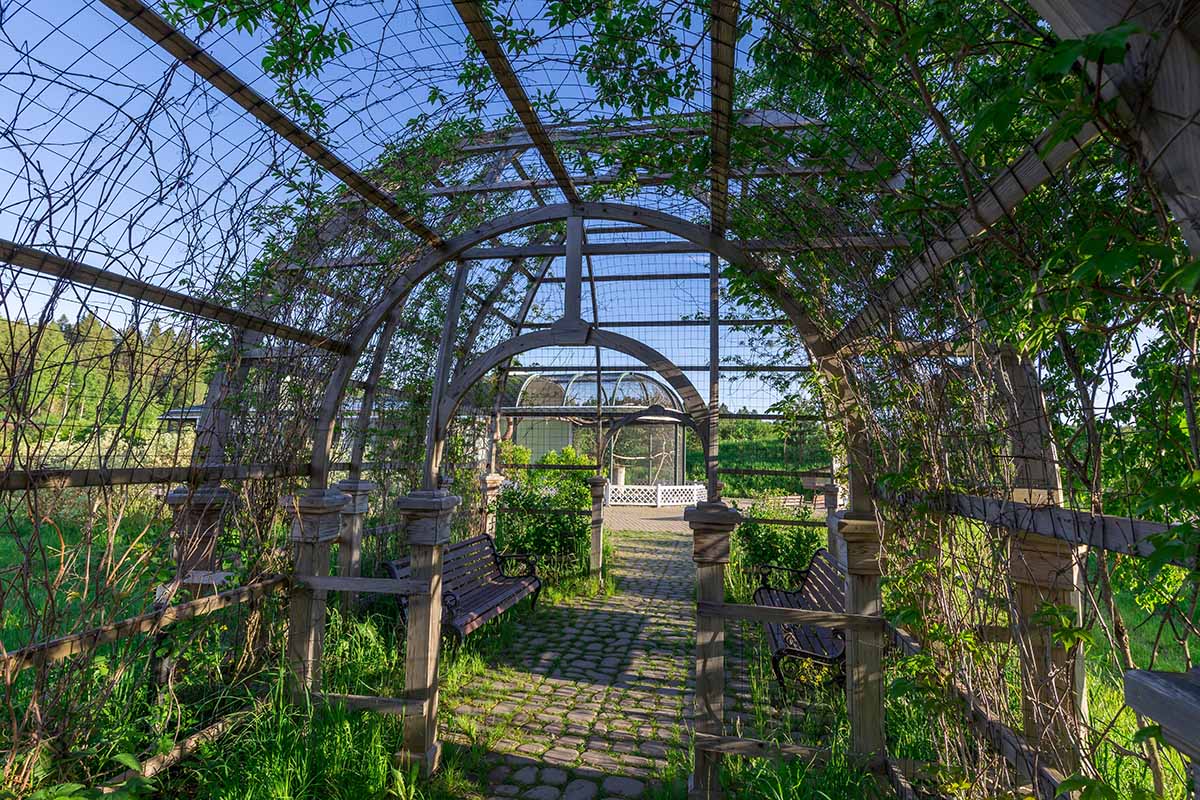
Larger or more vigorous climbers placed on the south or west side, or trained across part of the roof, can provide substantial shade during peak sun hours.
Don’t plant something like honeysuckle or English ivy.
Aggressive, woody vines will turn your greenhouse into a dark shed, which defeats the purpose. They can also work their way into the structure and tear the walls and roof apart.
Make sure none of the plants you’re considering are noxious or invasive in your area.
Most greenhouse shade vines will need some type of exterior support, such as cattle panels, trellis netting, or fencing, especially for twining plants or those that produce heavy fruits.
Providing a sturdy structure ensures the vines grow where you want them and prevents excess weight from stressing the greenhouse itself.
Our first option is a lesser-know but totally worthwhile plant:
1. Allamanda
Allamanda vines (Allamanda spp.) resemble yellow trumpet vines (Campsis radicans), without the potential for aggressive spread.
Unless you live in Zones 10 or 11, allamanda should be grown as an annual, but it can reach up to 20 feet in a single season.
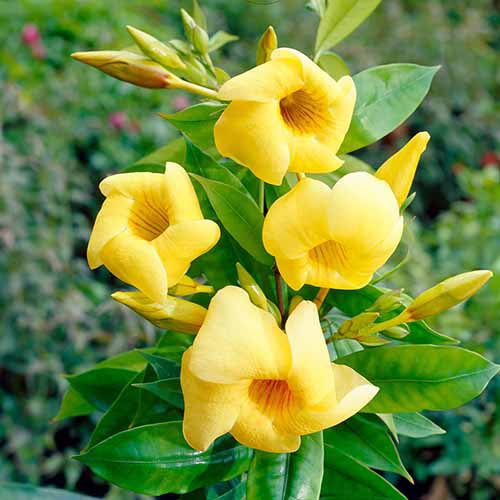
The blossoms last all summer, but even when not in bloom, the dense foliage is going to provide your greenhouse with some excellent shade.
You can find allamanda in three-gallon containers available from Fast Growing Trees.
2. Beans
Some beans grow quickly, over just a few months, giving you plenty of shade on your greenhouse as well as healthy, colorful legumes to harvest.
Scarlet runner beans (Phaseolus coccineus) are particularly long, growing up to 20 feet in just one growing season. The bright red blossoms are merely a brilliant bonus.
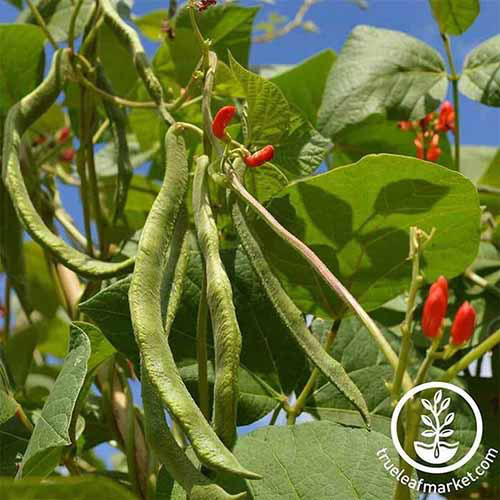
You don’t have to wait for the beans to mature if you don’t want to. The pods are also edible when they’re young. Win-win-win!
You can find scarlet runner bean seeds available in a variety of packet sizes at True Leaf Market.
Learn more about growing scarlet runner beans here.
3. Black-Eyed Susan
Black-eyed susan vine (Thunbergia alata) bears a passing resemblance to black-eyed susan flowers (Rudbeckia hirta), though the plants are totally unrelated.
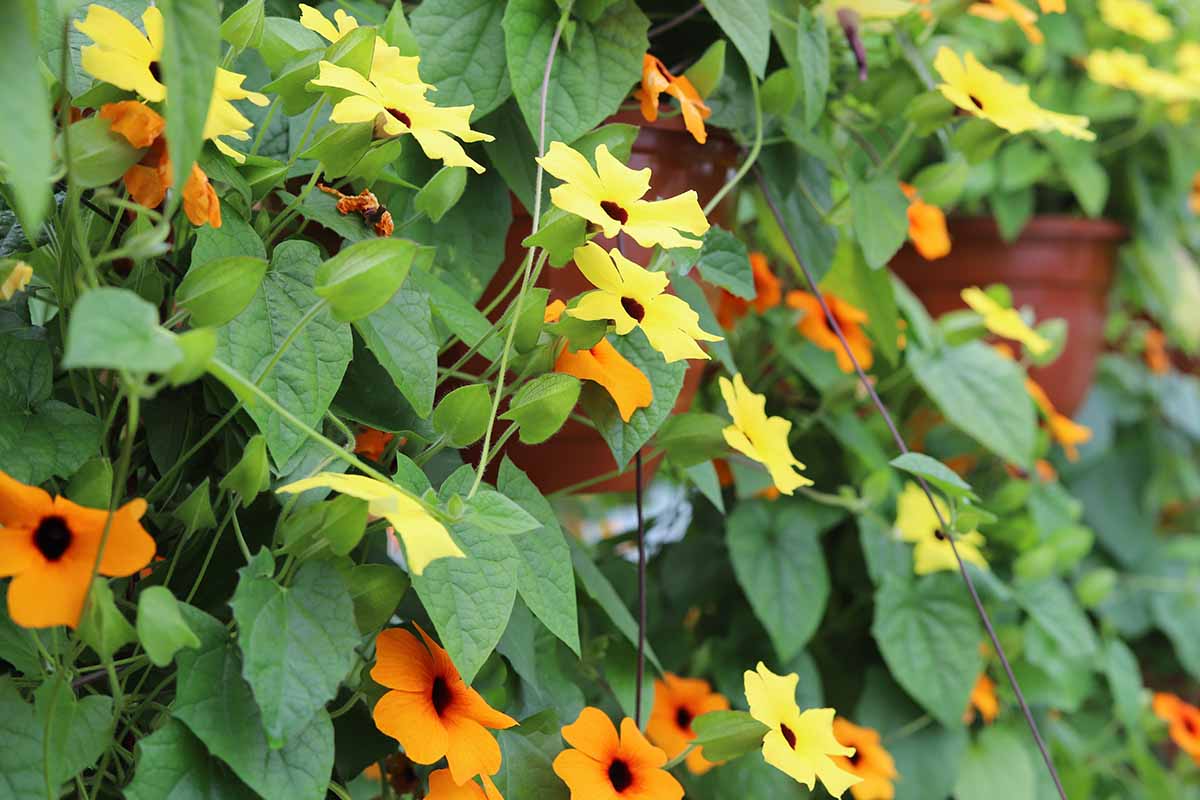
Both have reddish-orange-yellow flowers (and sometimes white) with a deep, dark “eye” at the center.
Hardy in Zones 9 and 10, black-eyed susan vine is a spectacular annual in cooler areas.
It grows quickly to up to eight feet in one season and blooms from midsummer through the fall.
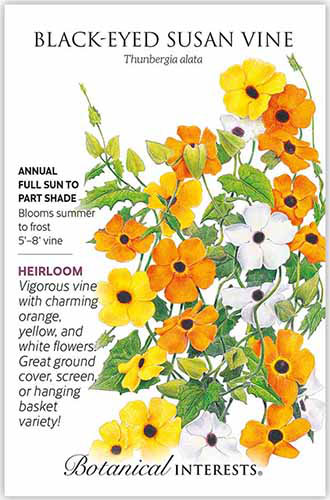
You can find seeds available at Botanical Interests. Start seeds indoors to get a jump on the growing season.
4. Bougainvillea
There’s a reason bougainvillea seems to feature in every description of a heavenly tropical vacation.
The abundance of neon-bright flowers in lilac, magenta, orange, pink, purple, white, or yellow, just scream sun, heat, and an afternoon with a good book.
Bring that vibe to your garden even if you live in a decidedly un-tropical locale.
Bougainvillea is hardy in Zones 9 to 12, but makes a robust and reliable annual that can climb 10 feet or more in a single growing season.
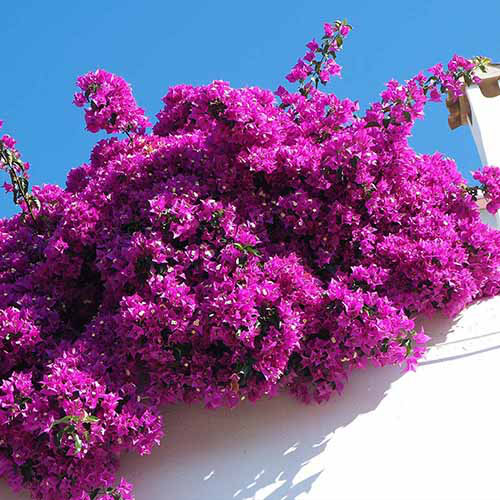
‘Majestic Purple’ Bougainvillea
‘Majestic Purple’ is a particularly pretty cultivar with violet-fuchsia flowers that blooms all summer long.
You can find ‘Majestic Purple’ bougainvillea plants in five-gallon pots available at Fast Growing Trees.
Learn about growing bougainvillea here.
5. Cucumber
Cucumber vines (Cucumis sativus) can grow ten feet or more in just a few months, with huge leaves, providing quick shade.
Then along with that comes those delicious fruits that can do everything from depuff your eyes to flavor up your water.
There are so many types, from tiny picklers to super long fresh-eating types, that I can’t even begin to describe them all.
Check out our guide to 33 of the best cucumber varieties for some ideas.
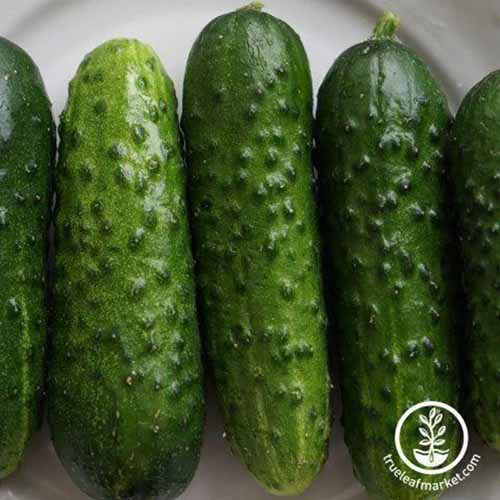
Or choose a classic all-rounder like ‘Pioneer’ that grows lots of three-inch long fruits.
You can find ‘Pioneer’ seeds in a variety of packet sizes available at True Leaf Market.
Check out our guide to growing cucumbers here.
6. Cup and Saucer
Cup and saucer vine (Cobaea scandens) is impressive.
It can grow up to 70 feet tall in Zones 9 to 11, but even in colder environments when cultivated as an annual, it can reach 20 or more feet in a single season.
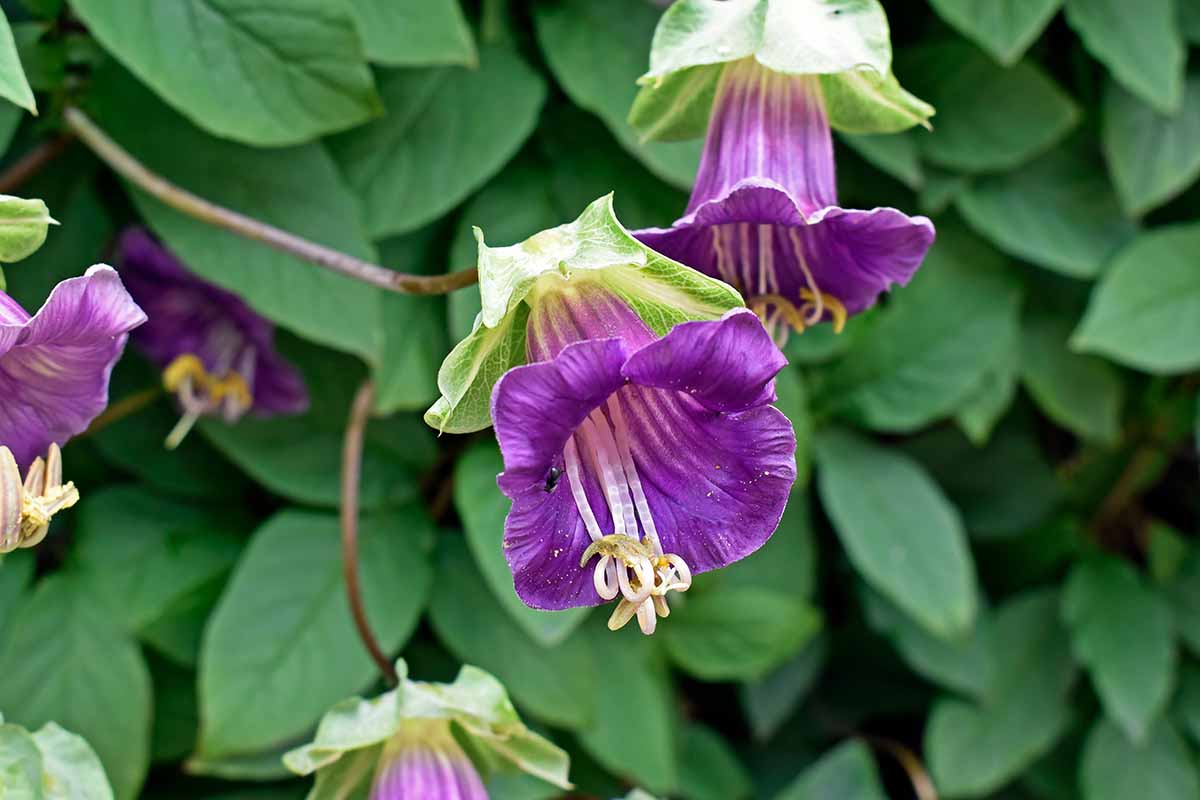
The cup-shaped flowers start out as green buds that open into large, purple, cup-shaped blossoms.
When the buds start to mature, they have a somewhat stinky fragrance but as the flowers open up it becomes a honey-sweet scent.
Some cultivars have pale lavender blossoms and others have deep indigo flowers, like ‘Blue Cathedral Bells.’
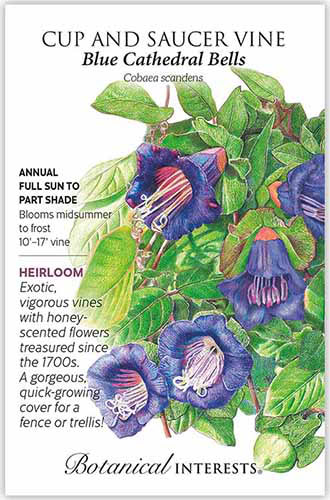
You can find ‘Blue Cathedral Bells’ seeds available at Botanical Interests.
7. Cypress Vine
Cypress vine (Ipomoea quamoclit) is related to morning glory, but it’s totally unique.
It grows up to 20 feet in one season and is covered in star-shaped scarlet flowers during the summer and fall.
The unusual, fern-like leaves open at night and fold closed during the day, especially in direct sun.
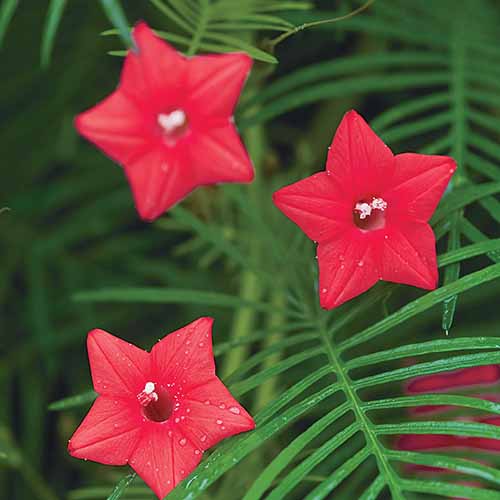
It’s an annual but it will self-seed freely in Zones 11 to 12, and less prolifically in cooler areas.
Cypress vine has even naturalized in some warmer North American regions, but it’s not considered invasive.
You can find seeds available at Burpee.
8. Hops
Hop vines (Humulus spp.) don’t produce showy flowers, but they’re exceptionally fast-growing, adaptable climbers that add attractive texture with their cone-like blooms.
These plants put on growth at an impressive rate. In Zones 5 to 8, and even Zone 4 with protection, established plants can grow up to a foot per day during peak summer conditions.
Although hops are technically perennials, they can be grown as annuals.
Even in a single season, vines can reach 25 feet or more, producing abundant female cones, which are the portions used in brewing.
Many gardeners choose hops based on the flavor that they want to add to their beer.

If that’s the case, ‘Chinook’ has sweet hops that lack bitterness. But I also think they’re particularly good looking, resembling pine cones.
You can find ‘Chinook’ hops plants available at Nature Hills Nursery.
9. Jasmine
With all the lovely jasmine options out there, it’s a pretty safe bet that one will work for your greenhouse shade needs.
Asiatic jasmine (Trachelospermum asiaticum), cape jasmine (Gardenia jasminoides), Italian jasmine (Chrysojasminum humile), and star jasmine (T. jasminoides) are just a few popular options.
Most grow in Zones 7 to 11, but they also work nicely as annuals. When grown as perennials, they can reach 40 feet or more. As annuals, expect them to reach 15 feet or so at most.

Star jasmine can reach about 10 feet in a single season and is covered all summer in honey-sweet, fragrant white flowers.
You can find star jasmine available at Fast Growing Trees in one-, two-, and three-gallon containers.
Learn how to grow jasmine here.
10. Kiwiberry
I don’t want to anger the kiwi lobby, but I prefer the sweet, petite, hairless hardy kiwiberries (Actinidia arguta) to their close relatives, kiwifruits (Actinidia deliciosa).
The vines are so pretty that they were originally imported into the US to serve as ornamentals, but more people are catching on to how delicious the fruits are.
They’re sweeter than their larger cousins plus they don’t need peeling.

The vines grow about 10 feet tall or so, depending on the cultivar, and are hardy in Zones 4 to 9. They can also be a bit aggressive, depending on where you live.
If a fast-growing, tough-as-nails plant that can be grown as a perennial or annual sounds good to you, snag a ‘Prolific’ kiwiberry from Fast Growing Trees.
11. Lantana
Some vines can be a bit, shall we say, exuberant, but lantana (Lantana spp.) generally stays more polite.
It grows to about six feet tall with bright balls of multi-colored flowers.
It’s a mesmerizing garden addition that will return year after year in Zones 9 to 11, but can still grow to its full size as an annual in cooler regions.
You can find plants that have blooms in shades of purple, pink, yellow, orange, white, red, or a combination of colors.

L. montevidensis has solid purple flowers. Train it up a support and it will add color to your greenhouse all summer long.
You can find lantana in three-gallon containers available at Fast Growing Trees.
Learn how to care for your new addition by reading our guide to growing lantana.
12. Malabar Spinach
Malabar spinach (Basella alba) isn’t related to the leafy green we grow during the cool seasons.
The leaves look a bit like spinach but the flavor is much better, if you ask me. They have a citrusy, peppery note that is exceptional.

The plant grows as a perennial in Zones 9 to 11, but it’s a quick-growing vine so you can grow it as an annual and it will reach 10 feet or more.
The foliage can be ready to harvest in just 60 days or so.
You can find malabar spinach seeds in a variety of packet sizes available at True Leaf Market.
Learn more about growing malabar spinach here.
13. Melon
I can’t think of anything better to shade a greenhouse than a big, fast-growing, bountiful plant that gives you sweet treats during the summer.
From early sweet cantaloupes to fragrant, tangy canary melons, there are oodles of options.
If you’re feeling overwhelmed, we have a guide to 33 of the best melon varieties that you can check out.
For greenhouse shading, smaller-fruited melons are generally the easiest to manage unless you plan to provide additional support.
With sturdy trellising or netting, heavier fruits can be grown successfully.

‘Cracker Jack’ is a super sweet, seedless watermelon cultivar that produces small- to medium-sized fruits on strong vines.
You can find ‘Cracker Jack’ seeds available at High Mowing Seeds in a variety of packet sizes.
Learn more about growing watermelons here.
14. Moonflower
Glorious night flowering moonflowers (Ipomoea alba) are fast growing and will rapidly cover your greenhouse in sweet-smelling white flowers that open in the evening.
Even when the flowers are closed during the day, they remain visually appealing.
The dense foliage provides effective shade, and the large, heart-shaped leaves can reach up to eight inches long.

Moonflowers are perennial in Zones 10 to 12, where vines can reach up to 70 feet long.
When grown as annuals, they typically grow 15 to 20 feet in a single season, especially if seeds are started indoors to give plants an early start in spring.
You can find moonflower seeds available at True Leaf Market in a variety of packet sizes.
15. Passionflower
If I had to pick one vine to shade my greenhouse, it would be passionflower (Passiflora edulis).
I will never get over how fascinating the flowers are, the unusual shape and vibrant coloration is attention grabbing.
The fruit is also my favorite in the world, which might bias me further. There’s nothing like the sweet, citrusy flavor, and I love crunching into the small seeds.
They grow in Zones 8 to 11 as perennials, but can rapidly reach 20 feet in just one season when grown as an annual.

‘Nancy Garrison’ Passionflower
‘Nancy Garrison’ is a superb option because it has both dramatic flowers and large, flavorful fruits.
Sometimes, you have to sacrifice the floral display for the fruits, or visa versa, but this cultivar has both.
Pick up a two- to three-foot-tall ‘Nancy Garrison’ at Fast Growing Trees.
Check out our guide to growing passionflower to learn more.
16. Pepper Vine
Black pepper vine aka peppercorn plant (Piper nigrum) is a treat. The glossy, heart-shaped foliage is plenty pretty and if you grow it as an annual, that’s probably all you’ll see.
Given several years of growth, black pepper vines develop bright red flowers followed by hanging stalks packed with green fruits that gradually mature to deep red.
Once harvested and dried, these become the black peppercorns used in cooking.

I grew one as an annual and it reached about eight feet tall in the first year, but in Zone 12, they can grow up to 15 feet.
It is even possible to bring them inside and keep as houseplants during the winter if you want.
You can find black pepper vines in three-gallon containers available at Fast Growing Trees.
17. Potato Vine
Potato vines (Solanum jasminoides syn. S. laxum) are ornamental evergreens closely related to the potatoes that produce our beloved edible root crops.
The fragrant flowers may be baby blue, pale lavender, or white, and they appear from early summer through the fall.
If you have a chance, relax near the vine and listen to the blooms humming with pollinators.

It’s hardy in Zones 9 to 11, so it can grow year-round and reach lengths of 30 feet or more. As an annual, it can scramble to 15 feet in one season.
Grab one for your garden in a #5 container from Nature Hills Nursery.
18. Squash
Squash vines grow quickly and pull double duty by providing both shade and food.
While purely ornamental climbers have their place, pumpkins offer the added benefit of a harvest at the end of the season.
For greenhouse shading, choose cultivars that produce small fruits. Large fruits will likely be too heavy and will require extra separate support.
Depending on what you’re growing, you might want to start the plants indoors to provide extra time to mature.
You can find those that mature in just a few months and will grow 20 feet long or more.

If you want to go with a classic choice, small pumpkins are a lot of fun at harvest time.
‘Pie-Pita’ is a standout cultivar developed by Dr. Brent Loy at the University of New Hampshire.
It produces hull-less fruits weighing two to three pounds at maturity, making it manageable for vertical growing.
You can find ‘Pie-Pita’ seeds in a variety of packet sizes available at High Mowing Organic Seeds.
Learn how to grow pumpkins here.
19. Sweet Pea
Sweet peas (Lathyrus odoratus) aren’t suited to shading the roof of a tall greenhouse, but they work well along the sides, since most varieties stay under eight feet tall at maturity.
The colorful annual vines are best known for their intensely fragrant flowers, which are hard to beat if you’ve never grown them before.

That said, sweet peas prefer cool conditions, so gardeners in regions with hot summers may want to skip them in favor of more heat-tolerant options.
You can find mixed colored Royal Family sweet pea seeds available at True Leaf Market in a variety of packet sizes.
Check out our guide to growing sweet peas here.
Climb to the Top
Using vines to shade a greenhouse is a flexible, seasonal way to manage heat and light without permanently altering the structure.
Fast-growing climbers can soften harsh sun, lower interior temperatures, and, depending on what you choose, provide flowers, fragrance, or food along the way.

Which vine will you be growing to shade your greenhouse? Let us know which one is calling your name in the comments section below!
And for more information about greenhouse gardening, add these guides to your reading list next: