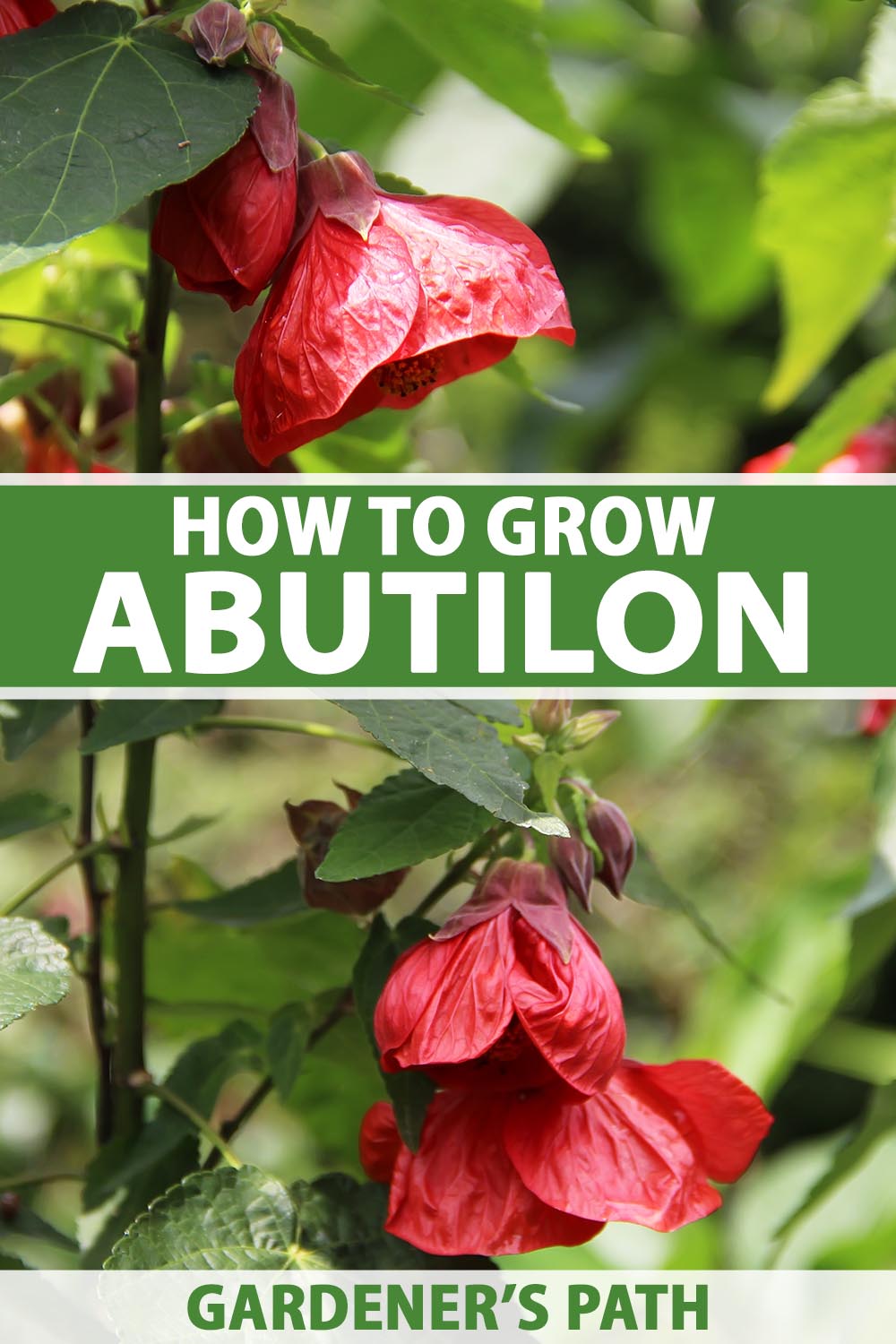
Abutilion and Corynabutilon spp.
Flowering maples (Abutilon and Corynabutilon spp.) are tropical and subtropical shrubs in the mallow family, Malvaceae.
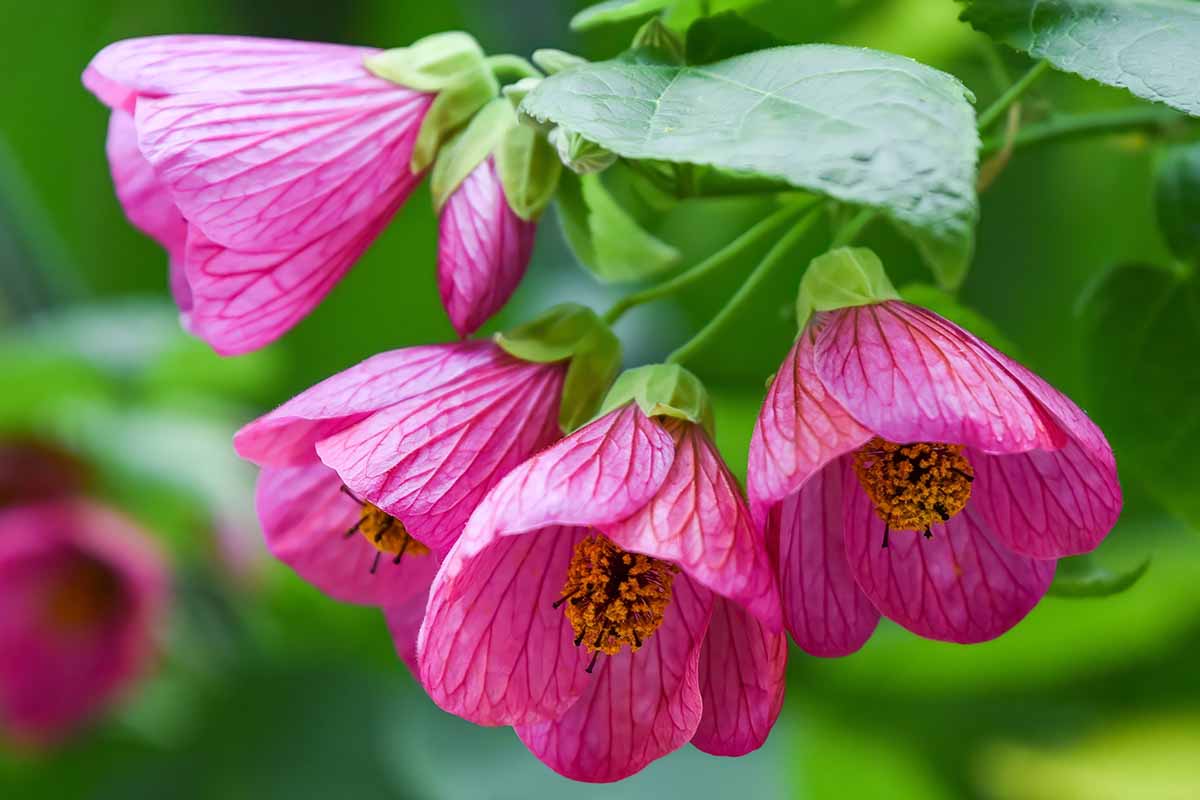
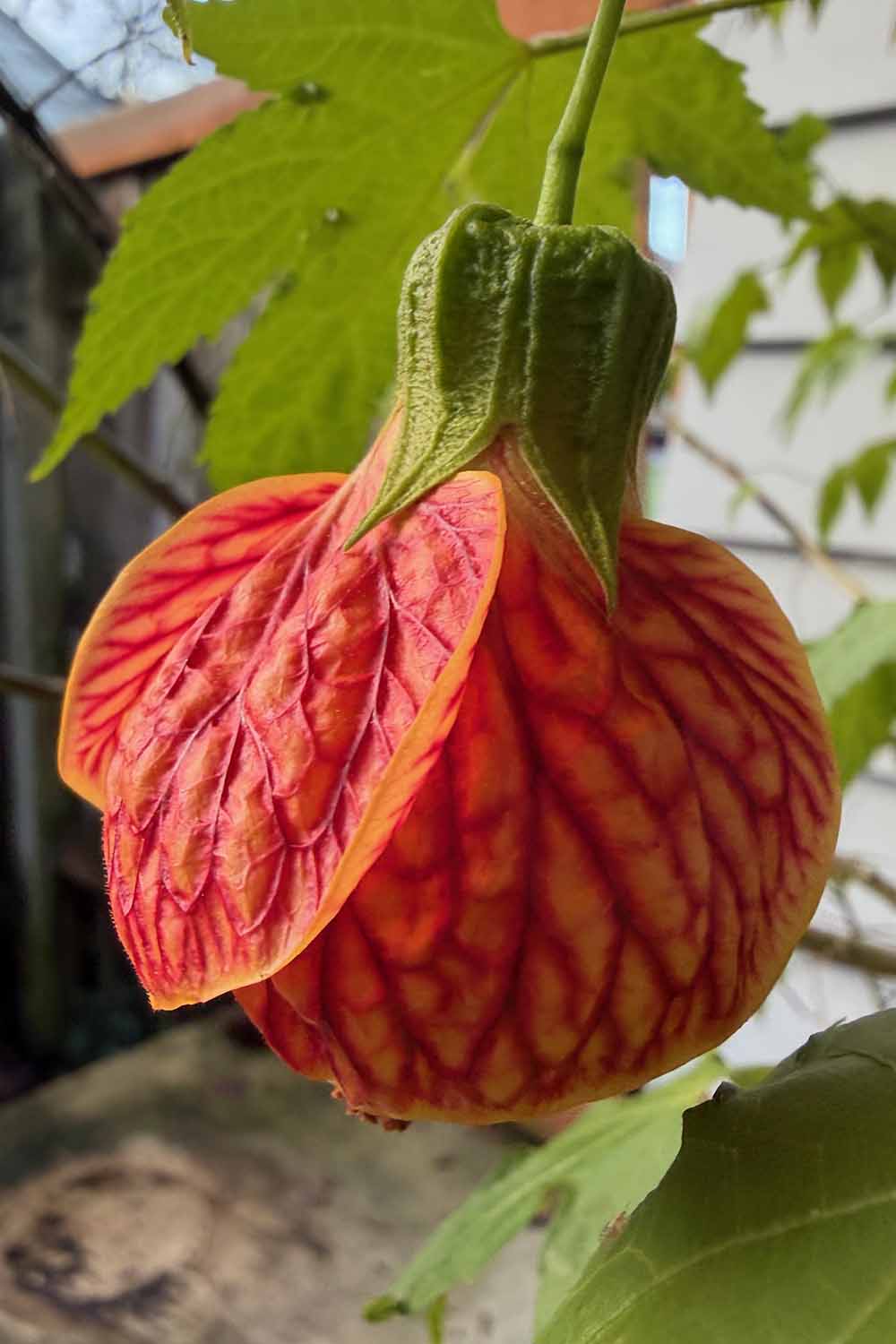
They are relatives of hibiscus, hollyhock, and rose of Sharon, grown for their distinctive pendulous, bell-shaped flowers in shades of yellow, orange, red, pink, apricot, and white.
Despite the common name, they’re not true maples at all, the name comes from the palmate, maple-like foliage.
Versatile enough to grow as houseplants or outdoor shrubs in USDA Zones 8 to 12, flowering maples are among the few plants that can deliver near year-round blooms indoors.
We link to vendors to help you find relevant products. If you buy from one of our links, we may earn a commission.
The first time I saw a flowering maple, I literally did a cartoon-like double-take.
I was strolling through a nursery looking for houseplants when I walked past a bush with unusual crinkled, bell-like flowers with the most captivating pattern.
I screeched to a halt, backed up, and stared in delight. You’d better believe that plant came home with me.
I’m lucky enough to live somewhere that flowering maples can grow outdoors, but I think they’re one of the most underrated houseplant options.
It’s not often that you can find an indoor plant that resembles a maple tree and also treats you to an abundance of flowers throughout the year.
Move yours outdoors during the warmer months and the hummingbirds will thank you too.
In this guide, I’ll cover everything you need to know about growing abutilon plants. Here’s what’s ahead:
What You’ll Learn
The plants we know as abutilon or flowering maple actually come from two different genera: Abutilon and Corynabutilon.
They used to be lumped together in one genus, but botanists are slowly reorganizing them. Closely related to mallow and hibiscus, the name “abutilon” is Arabic for a mallow-like plant.
They grow indigenously in the subtropical and tropical areas of Africa, the Americas, Asia, and Australia.
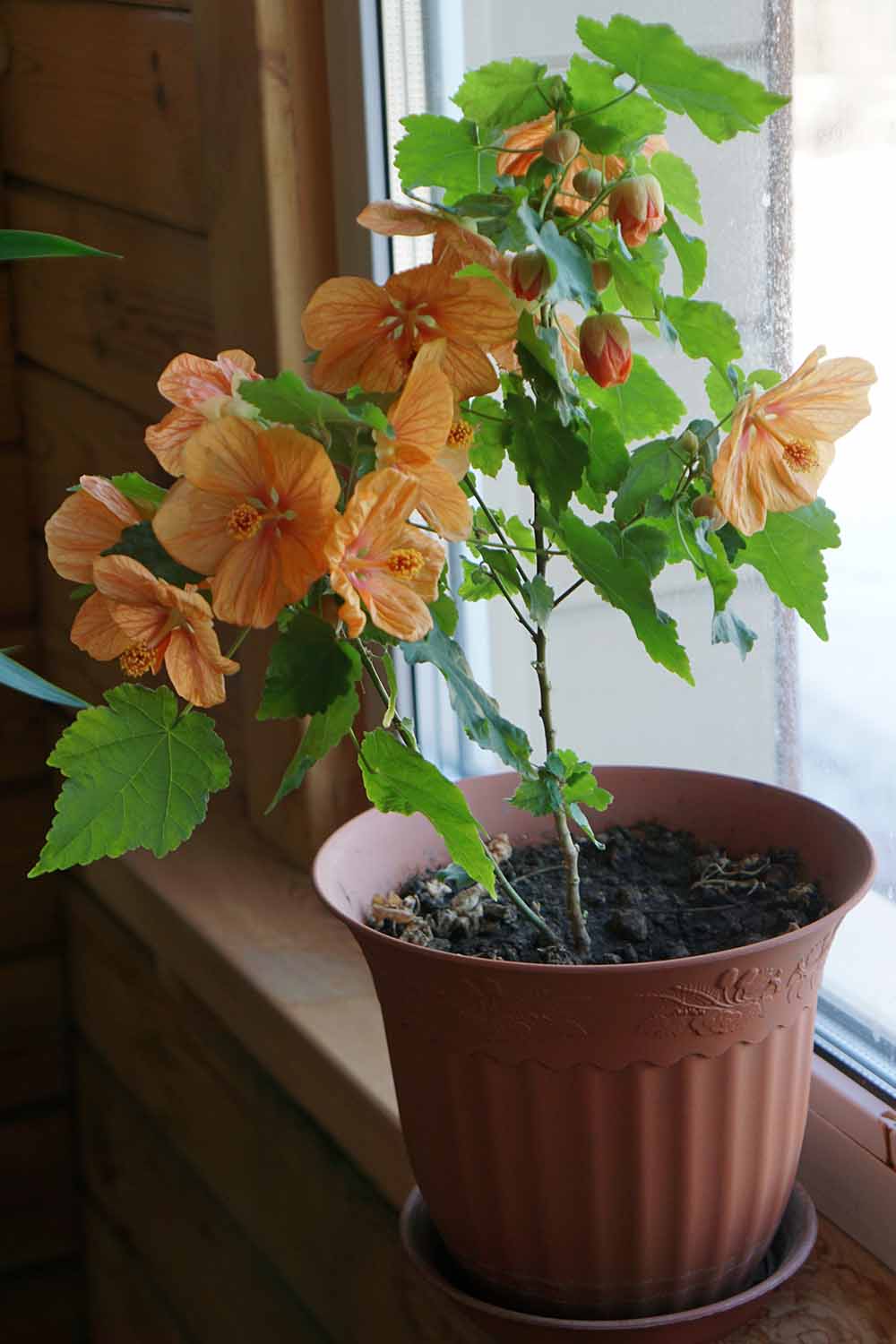
Most abutilons we grow as houseplants have been moved to the genus Corynabutilon, but lots of people will still refer to them as abutilon.
There is also talk of moving some of the species to the Callianthe genus, so we’ll see how that shakes out.
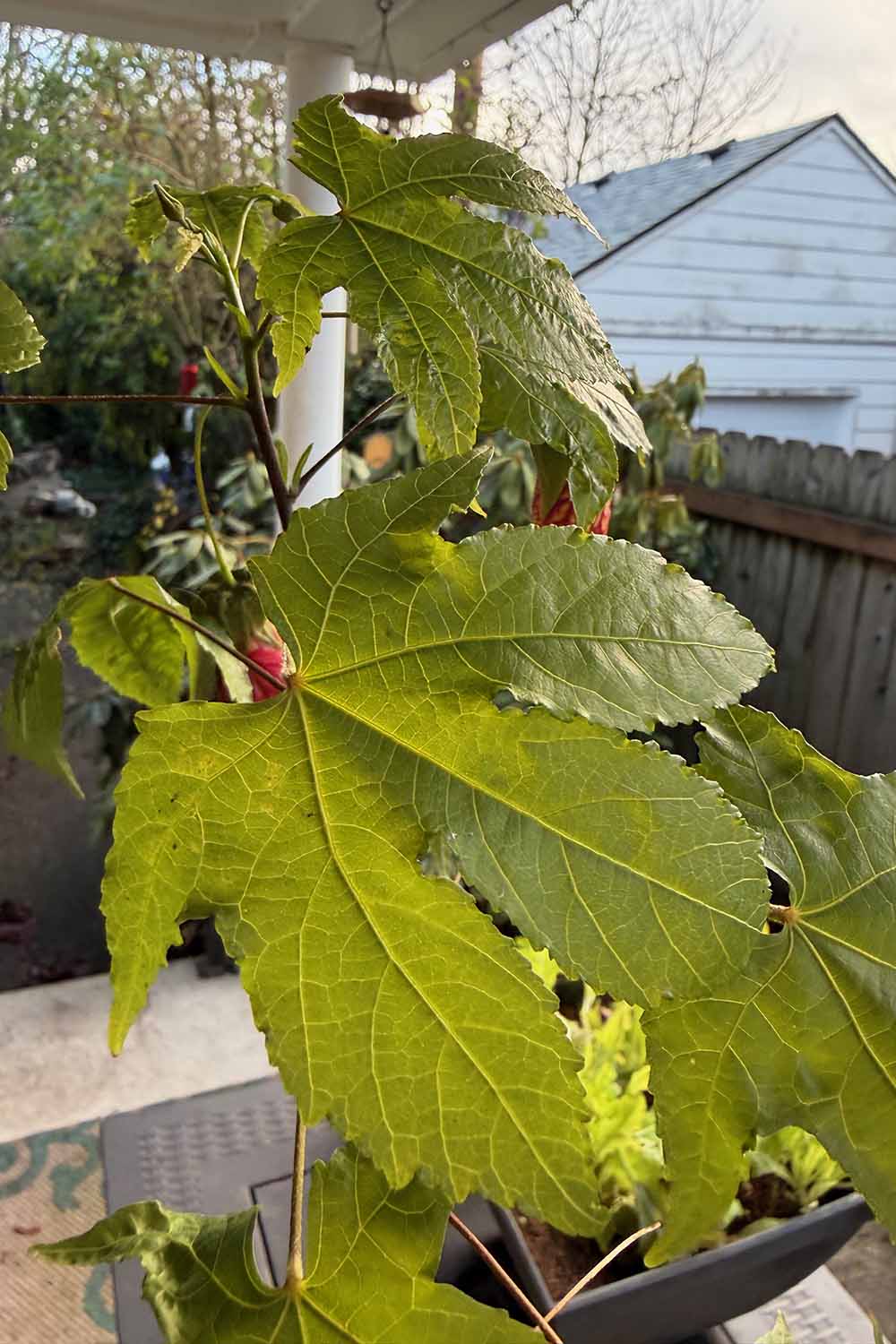
While not all species look the same, the ones that we commonly grow in our homes and gardens are under 10 feet tall when mature, have palmate leaves that resemble those of maples, and produce bell-shaped flowers.
Most abutilons are frost tender, though a few can tolerate temperatures down to around 20°F.
They go by a variety of different common names including Brazilian bellflower, Chinese bellflower, Chinese lantern, false flowering maple, flowering maple, Parlor mallow, Indian mallow, and velvetleaf.
Don’t confuse these plants with Alkekengi officinarum, which also goes by the common name Chinese lantern.
Quick Look
Common name(s): Brazilian bellflower, Chinese bellflower, Chinese lantern, false flowering maple, flowering maple, Parlor mallow, Indian mallow, velvetleaf
Plant type: Woody semi-evergreen or evergreen flowering shrubs and trees
Hardiness (USDA Zone): 8-12 (outdoors)
Native to: Subtropical and tropical Africa, the Americas, Asia, Australia
Bloom time / season: Year round
Exposure: Full sun to part shade
Soil type: Moist, organically-rich, well-draining
Soil pH: 5.5-6.3, slightly acidic
Mature size: 10 feet tall by 5 feet wide (depending on species or cultivar)
Best uses: Houseplant, specimen, ground cover
Taxonomy
Order: Malvales
Family: Malvaceae
Genus: Abutilon, Corynabutilon
Species: Darwinii, megapotamica, pictum, theophrasti
Abutilon plants were wildly popular in the United Kingdom and the United States during the Victorian plant craze.
While abutilon plants are less common in homes than they used to be, many growers are rediscovering their unique charm.
They flower profusely both indoors and out, and some will even bloom year-round, with the heaviest showing in the summer.
Abutilon flowers consist of four or five petals held inside a colorful calyx. When you see the staminal column at the center of the flower, you see the mallow family resemblance.
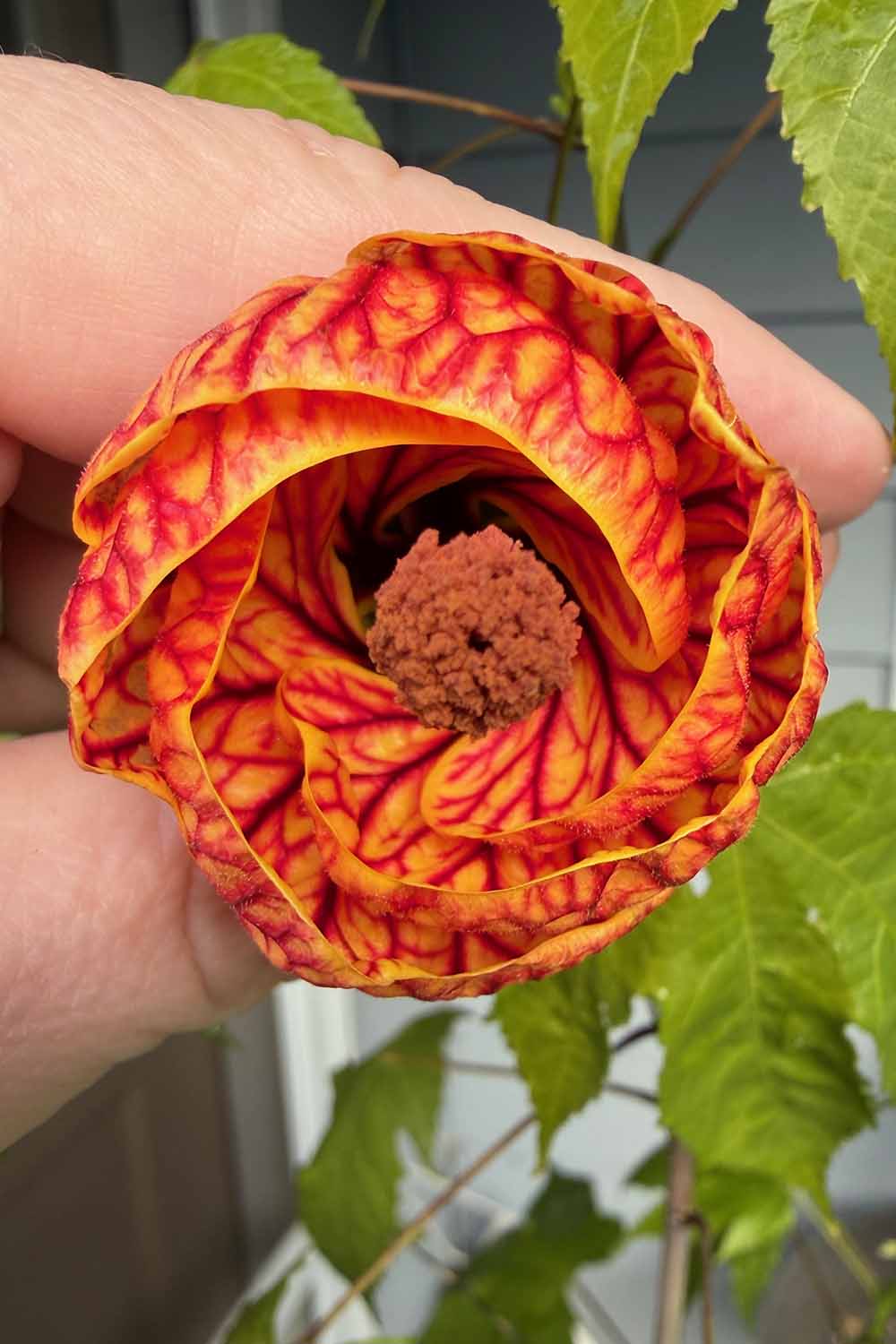
They are made up of multiple stamens fused into a single column.
When the flowers fade, some species produce fruits that look like pods, known as schizocarps, though not all hybrids will develop these.
Many flowering maple species are edible and some are even cultivated for use in making cordage and food.
A. theophrasti, aka velvet leaf, has edible seeds that can be ground to make flour.
The flowers are edible and the leaves can be processed and consumed as you would marshmallow (Althaea officinalis).
How to Grow
Keep in mind that though the species might grow large outdoors, if you’re keeping your abutilon plant potted and/or indoors, it will stay much smaller.
That means you don’t need to have a 20 gallon pot and a giant spot near a window.
If you intend to grow yours in a container, choose a pot that is the same size or just one size up from the growing pot.
Choosing the right size pot helps limit the overall size of the plant and reduces the chance of root rot from overwatering.
You’ll want to increase the pot size once every three or four years until the flowering maple reaches a size that you’d like to maintain.
Light
If you want abundant flowers, it’s best to keep your abutilon plant in full sun or part shade.
A south or west-facing window should provide enough light if you’re growing yours indoors.
They will tolerate lower light, but the less sun they receive, the fewer flowers you’ll see and the stems will start to become rangy.
In the wild, many species are found growing under larger trees in dappled shade, but many of the modern hybrids like brighter light, so be sure to check the tag on your particular plant for its preferences.
Variegated types need protection from too much sun, especially in the afternoon.
Soil
It’s easy to give abutilon the soil it prefers. Most “houseplant” or “potted” soil mixes will be just right. You want something organically-rich that retains moisture, with a pH of 5.5 to 6.3.
Outdoors, you’ll want to give them the same, so if your existing soil is heavy or sandy, you might want to consider growing in a large container or raised bed.
Before planting in the ground, work in lots of well-rotted manure or compost into the soil.
Water
When the flowering maple is actively growing, it needs lots of water.
Make sure that the soil stays evenly moist. That means if you touch the surface of the soil, it will feel like a well-wrung-out sponge.
During the winter, the surface of the soil should be allowed to dry out between waterings.
Flowering maples can tolerate too much water for a short time, but lack of moisture will stress or even kill them.
Temperature
Even though abutilons make happy houseplants, they flower and perform best if allowed to experience a period of chilly temperatures in the winter.
Not freezing, of course, but temperatures around 50 to 60°F for part of the day during the winter. During the growing season, don’t worry about the heat.
While temperatures around 60 to 70°F are ideal, flowering maples will tolerate outside of this range as well.
You can grow them outdoors year-round in Zones 9 to 10 and some in Zone 8. I grow my hybrid, ‘Red Tiger,’ in Zone 8b.
It has even been exposed to a hard freeze multiple times and on it carries.
A few times, it has lost a few branches, but I trim these off and it always rebounds spectacularly in the spring.
Fertilizer
Part of what makes abutilon so charming is its near-constant flowering. But that also makes it a hungry plant.
You might need to feed as often as twice a month during the spring, summer, and fall.
If you haven’t tested your soil or you’re using a potting mixture, just go for a product formulated for flowering plants. A houseplant food works, too.
You want a fertilizer that has more phosphorus than nitrogen or potassium.
Down to Earth’s Rose & Flower fits the bill, with an NPK ratio of 4-8-4. It can be used indoors and out.

You can find it in one-, five-, and 15-pound boxes available at Arbico Organics.
Species and Cultivars
The various hybrids are classified as Abutilon Hybridum (A. × hybridum) and often come from unknown parentage, though they likely include some redvein (A. pictum), Darwin’s (A. darwinii), or trailing (C. magapotamica) in their lineage. Most are frost tender.
There are a few lesser-known species, like Chilean mallow (C. vitifolium) that are hard to find, but worth seeking out.
The flowers on this species look like hibiscus and the shrub itself grows to 25 feet or more.
Here are some suggestions to get you started:
Bella
Bell is a hybrid abutilon series in shades ranging from creamy yellow to deep red, with apricot, pink, and orange in between.

Bred to stay petite, they only grow to about 18 inches tall, which makes them ideal for growing as houseplants.
Canary Bird
‘Canary Bird’ has bright yellow blossoms that linger on the branches for a good long while.

The shrub itself grows to about 15 feet tall outdoors, though you can grow it indoors, where it will stay much smaller.
The Royal Horticultural Society gave ‘Canary Bird’ the coveted Award of Garden Merit in 1993.
Gold Dust
‘Gold Dust’ is a charming hybrid that features large orange blossoms with dark red veins.

The leaves are speckled in yellow on a green base, giving it extra visual appeal even when it’s not in bloom, which is rare.
This abutilon stays under 10 feet tall and wide outdoors, making it an appealing option for growing indoors as a houseplant, as it will stay more compact that many others.
The variegated foliage also means that it thrives in lower light than other varieties.
Nabob
A cross between a redvein (A. pictum) and a trailing (C. megapotamica), ‘Nabob’ has glossy, dark green foliage and large, deep maroon flowers.

Outdoors, it will reach up to 10 feet tall, and about half that indoors. Of course, you can always prune it to whatever smaller size you like.
‘Nabob’ was given the Award of Garden Merit by the Royal Horticultural Society in 1993.
Orange Hot Lava
This abutilon hybrid featuring C. megapotamica parentage is a stunner.
Bred in 2005 by Luen Miller, owner of Monterey Bay Nursery in Watsonville, California, each flower has a deep red calyx, with orange and red striped petals.
It stays smaller than some of the others on this list at just four feet tall. It will bloom profusely all summer long.
Redvein
Redvein abutilon (A. pictum, syn. A. striatum) hails from Argentina, Brazil, Paraguay and Uruguay.
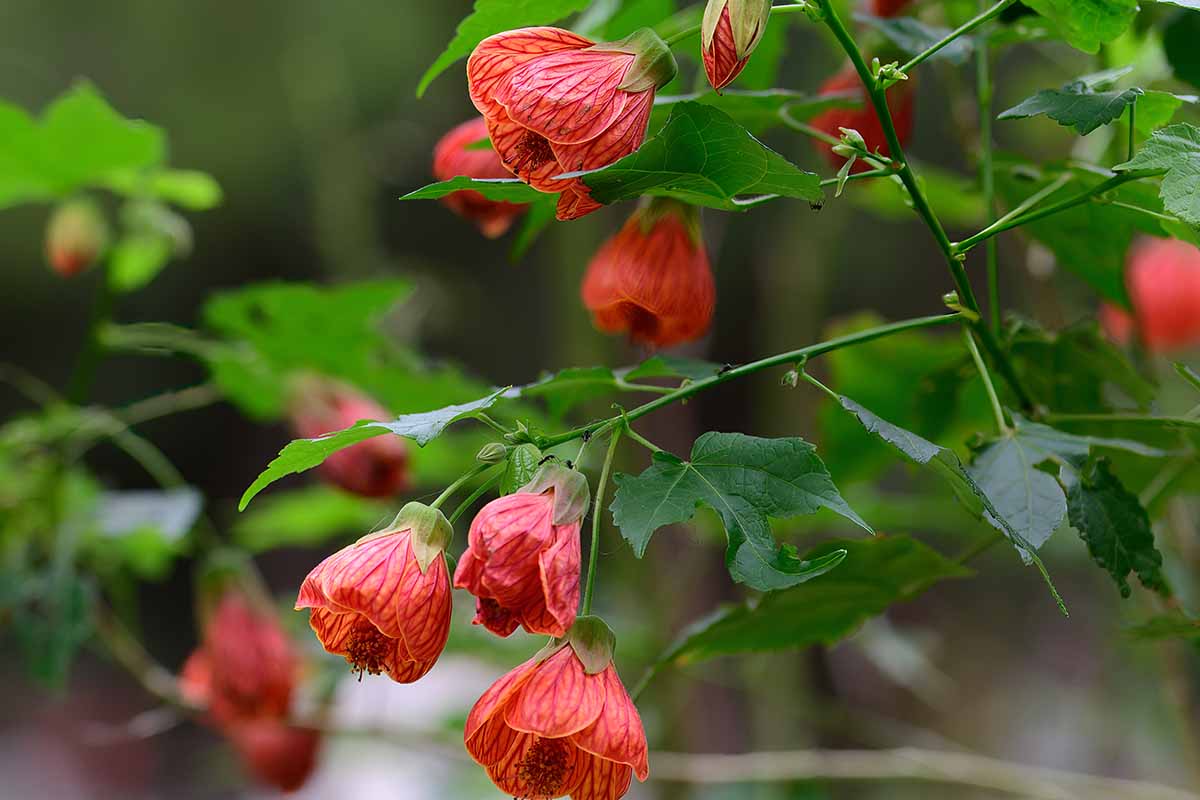
In the wild, it can grow up to 16 feet tall and about half as wide. It has eye-catching reddish orange or yellow flowers with distinctive dark red stripes.
This one can bloom nearly year-round in warm regions or indoors with enough light, and throughout the summer in less ideal conditions.
All these characteristics have made the species incredibly popular and it’s frequently used as a parent of many hybrids.
The Royal Horticultural Society honored the cultivar ‘Thompsonii,’ commonly called painted abutilon, with its coveted Award of Garden Merit in 2012.
This fast grower has variegated foliage with splotches of yellow on the green leaves.
The edible flowers are the tastiest, in my opinion, of all the species.
Trailing
Don’t let the common name fool you.
Trailing abutilon (C. megapotamica, formerly A. megapotamicum) makes it sound like this species has a prostrate growth habit, but it can grow up to eight feet tall and will spread twice as wide.
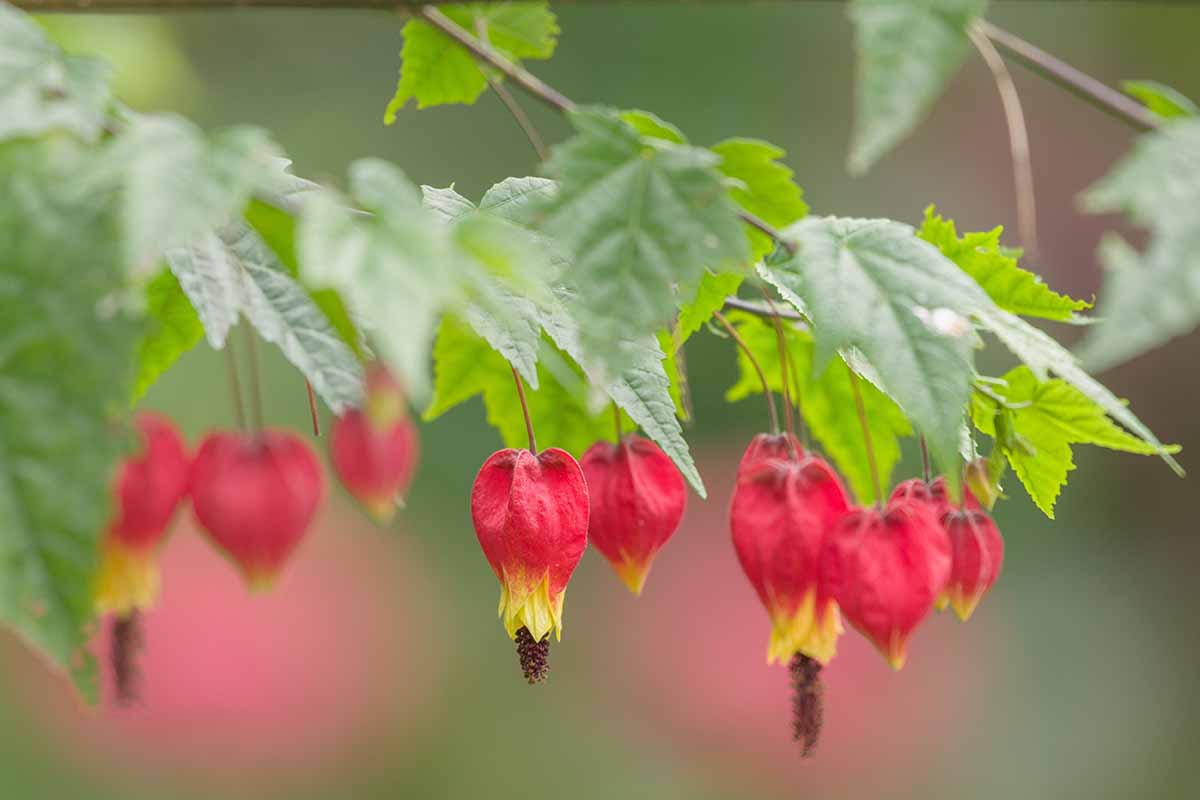
It tends to have a lax, loose growth habit, so it can benefit from some support.
Featuring lantern-like flowers that showcase yellow petals enclosed in a red calyx, trailing abutilon is popular as a houseplant.
Just give it a spot with lots of sun if you want it to flower profusely.
The species was given the Royal Horticultural Society’s Award of Garden Merit in 1993, as was the cultivar ‘Variegatum’ in 2012. The latter has striking variegated foliage.
Outdoors, it’s half hardy and will survive down to about 23°F. The flowers are flavorful and in many cultures are eaten as vegetables.
Maintenance
For some reason, it seems like many gardeners are hesitant to prune houseplants. But don’t be afraid to prune the heck out of your abutilon.
Some species will grow so large that they will quickly take over your living room plus they tend to get a bit rangy and leggy indoors.
A hard prune won’t hurt the abutilon and it will keep it at a manageable size and pleasing shape.
You can do this any time you want, but I like to prune in late winter when the flowering is sparse and the plant is about to burst into active growth.
Then, I just grab a clean pair of pruners and snip, snip, snip. You can make cuts wherever you want, because the abutilon will branch wherever you cut it.
If you see a sparse area, make a cut. You’ll be rewarded with denser growth in that spot.
You can cut back flowering maples by half and they’ll be perfectly happy. If you’re going to do a big chop, I recommend doing it in late winter or fall.
Lighter pruning can be done during the summer.
Keep in mind that some people experience mild irritation of the skin when brushing up against the leaves. You might want to wear long sleeves and gloves when pruning.
Propagation
While any of the species can be grown from seed, they tend to be challenging to start and they might not flower for years.
Cuttings are far easier and you can propagate hybrids – which don’t usually produce seeds – this way.
From Cuttings
Softwood cuttings are pretty reliable if you take a few preparatory steps to set them up for success.
Take cuttings during the spring or summer when the flowering maple is actively growing. You should see soft, pliable green growth at the tip of the branch.
- Cut off a six-inch length. The diameter isn’t important, but make the cut just under a leaf node, the spot where the leaf joins the branch.
- Remove any flowers and all but the top two leaves.
- Fill a six-inch pot with a potting medium and moisten it.
- Wet and dip the end of the cutting in rooting hormone.
- Poke a hole in the center and insert the cutting. Make sure at least two leaf nodes are buried.
- Firm the soil around the cutting.
Keep the soil moist at all times. Rooting should happen within a few weeks.
Transplanting
Whether you buy an abutilon plant or start one from a cutting, you’ll need to repot or put it into the ground outdoors.
If you’re moving your abutilon into a container, choose one that is a size or two up from the growing container.
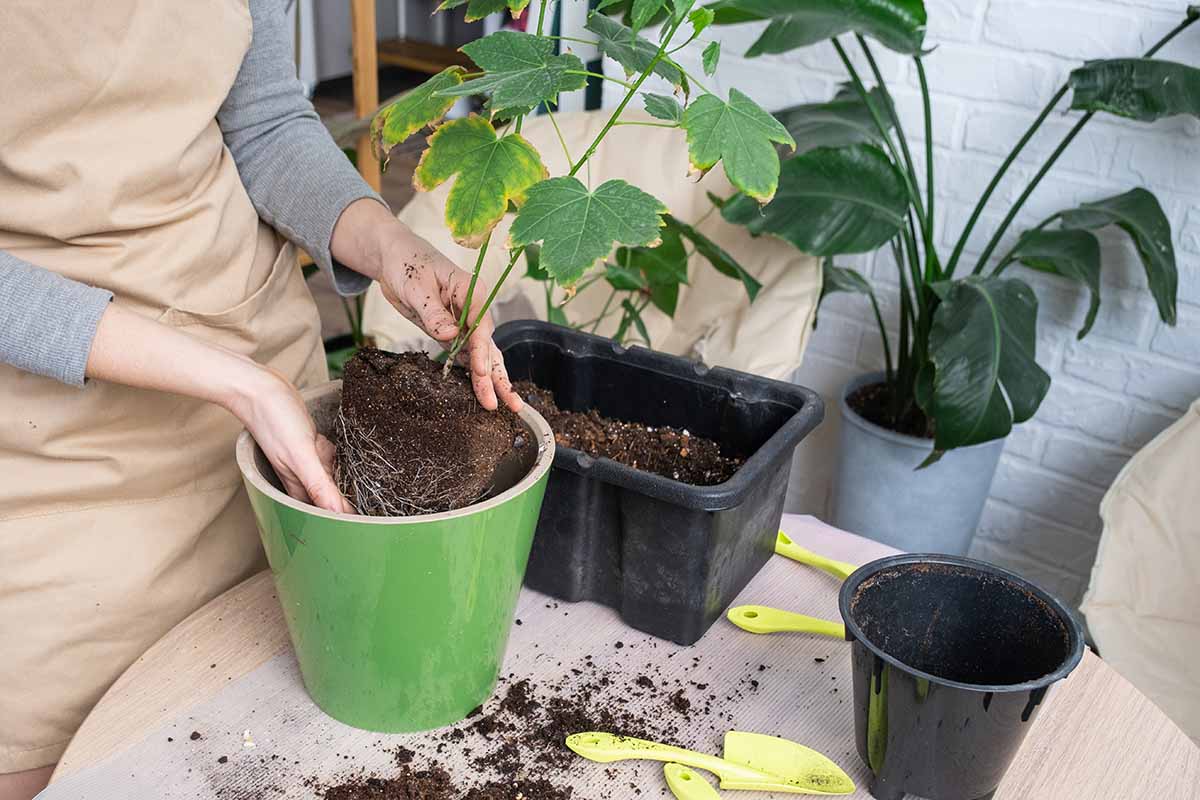
Remove the plant from its growing container and brush off the soil from the root ball. Gently tease the roots to loosen them up.
Place a small amount of potting soil in the base of the new pot, if necessary, so that the plant will sit at the same height it was in the growing container.
Set the abutilon in the pot and fill in around with more potting mix. Water and add more soil, if necessary.
If planting outside, dig a hole twice as wide and the same depth as the growing container. Remove the abutilon plant from the pot and loosen up those roots.
Set it in the growing hole and fill in around the roots. Water well, gently tamp down the soil, and add more soil if needed.
Pests and Disease
Don’t stress too much about pests and diseases. Abutilons are fairly tough, especially if you have them in a good spot.
Pests
For the most part, abutilon are free from pests. Indoors, you might see whiteflies or the symptoms of an infestation, such as yellowing and dropping leaves.
Controlling a whitefly infestation can be a challenge and usually takes a multi-pronged approach.
On outdoor abutilon plants, you’re more likely to come across spider mites.
These tiny little arachnids will cause similar symptoms as whiteflies, though you might also see fine silky webbing on the plant.
Spider mites can usually be controlled using physical removal with water and pesticides. Learn more in our guide to dealing with spider mites.
Disease
There are two diseases that are common on abutilon. One can be devastating, and the other can actually be a good thing. Let’s go over the good-ish news first.
Mosaic Virus
Abutilon mosaic virus (AbMV) is kind of pretty for a disease. It creates spots of green and yellow on the foliage.
The spots don’t extend across the veins, so it makes for a fun, angular appearance. In fact, some growers will intentionally infect the abutilon plants to create that blotchy look.
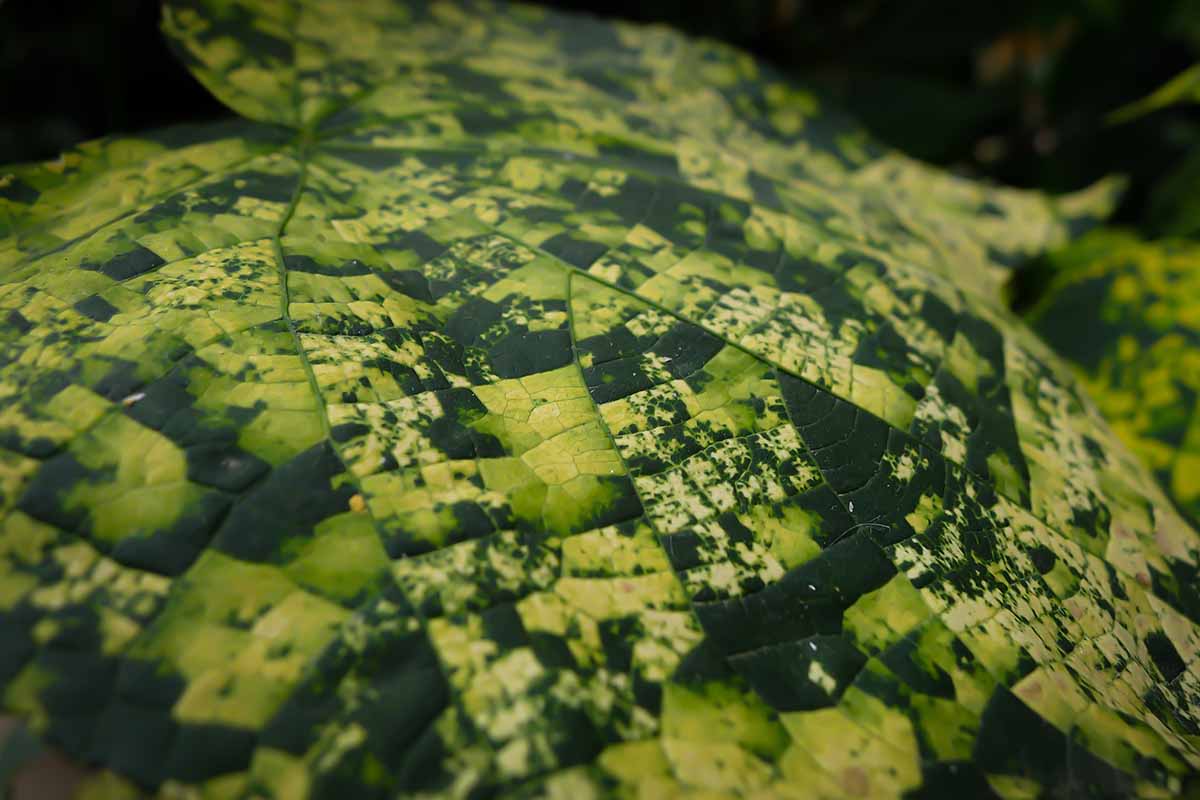
The virus is spread via the silverleaf or sweetpotato whitefly (Bemisia tabaci), or through sap contact on infected tools.
You might bring home a specimen from the nursery that has been infected but doesn’t show symptoms.
If your plant is infected, the leaves will show symptoms and there is no cure. Fortunately, the disease doesn’t appear to harm the flowering maple, so enjoy the look if you want.
If you can’t stand the appearance, you’ll have to either remove the symptomatic branches or dispose of the plant.
Pythium Root Rot
Pythium root rot is a disease caused by pathogens in the Pythium genus.
These oomycetes live in the soil and spread in water, and when they infect an abutilon, the result is stunted growth, wilting, dropping leaves, and even death.
If you dig down and examine the roots, they will be soft and black.
The best way to avoid this disease is to make sure you aren’t overwatering your abutilon. Excessive moisture is a quick route to root rot.
If you discover that your plant is infected, reduce watering and soak the soil with an effective fungicide.
Bacillus subtilis, citric acid, Streptomyces lydicus WYEC 108, and thymol are all good choices.
My personal go-to is Mycostop, which contains the beneficial bacteria Streptomyces Strain K61. This product has saved many of my plants from root rot.
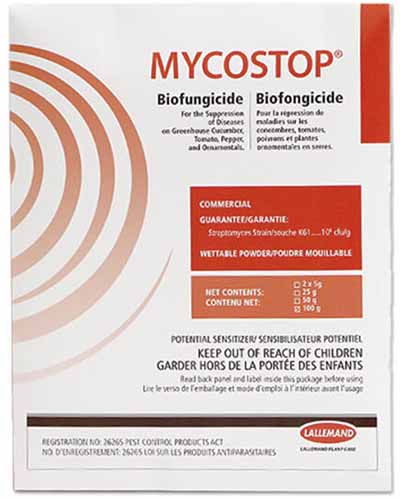
You can pick up Mycostop in five- or 25-gram packets at Arbico Organics if you want to give it a try.
You can also use preventative treatments like RootShield, which harnesses the beneficial fungus Trichoderma harzianum Rifai strain T22.
This is best used on younger plants or when you’re having an outbreak in your garden.
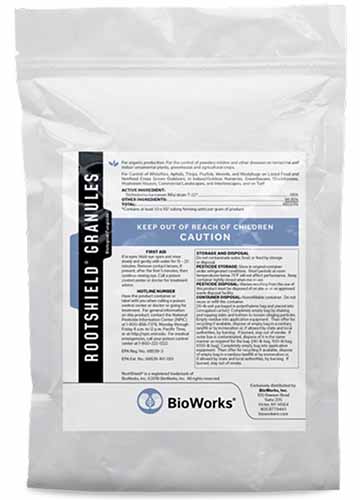
It’s typically used by professionals to protect young crops, so it’s only available in large containers.
Pick up a 40-pound bag available at Arbico Organics.
It’s All About Abutilon!
Abutilon is having a bit of a renaissance.
Beloved in their indigenous region, then popular in Victorian UK and the US, they are now enjoying renewed interest around the globe both indoors and out.
As a huge fan of plants that serve multiple purposes, that thrills me! I grow abutilon both in my garden and as a houseplant and you’d better believe I’ll nab a flower or two to fancy up a meal.
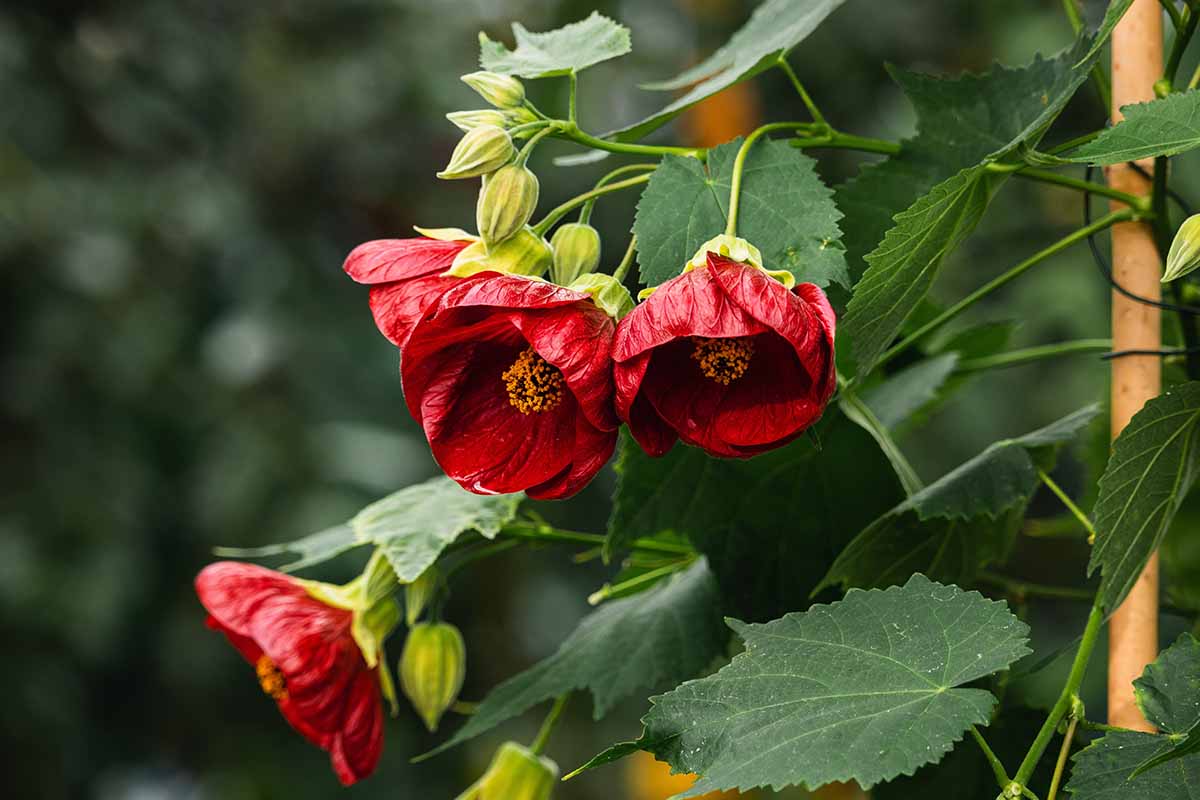
How do you plan to use your flowering maple? Is it destined to be a showstopping houseplant? A striking specimen in the garden? Let us know in the comments section below!
If you want to add a few other colorful houseplant friends to the mix, we have some guides you should check out: