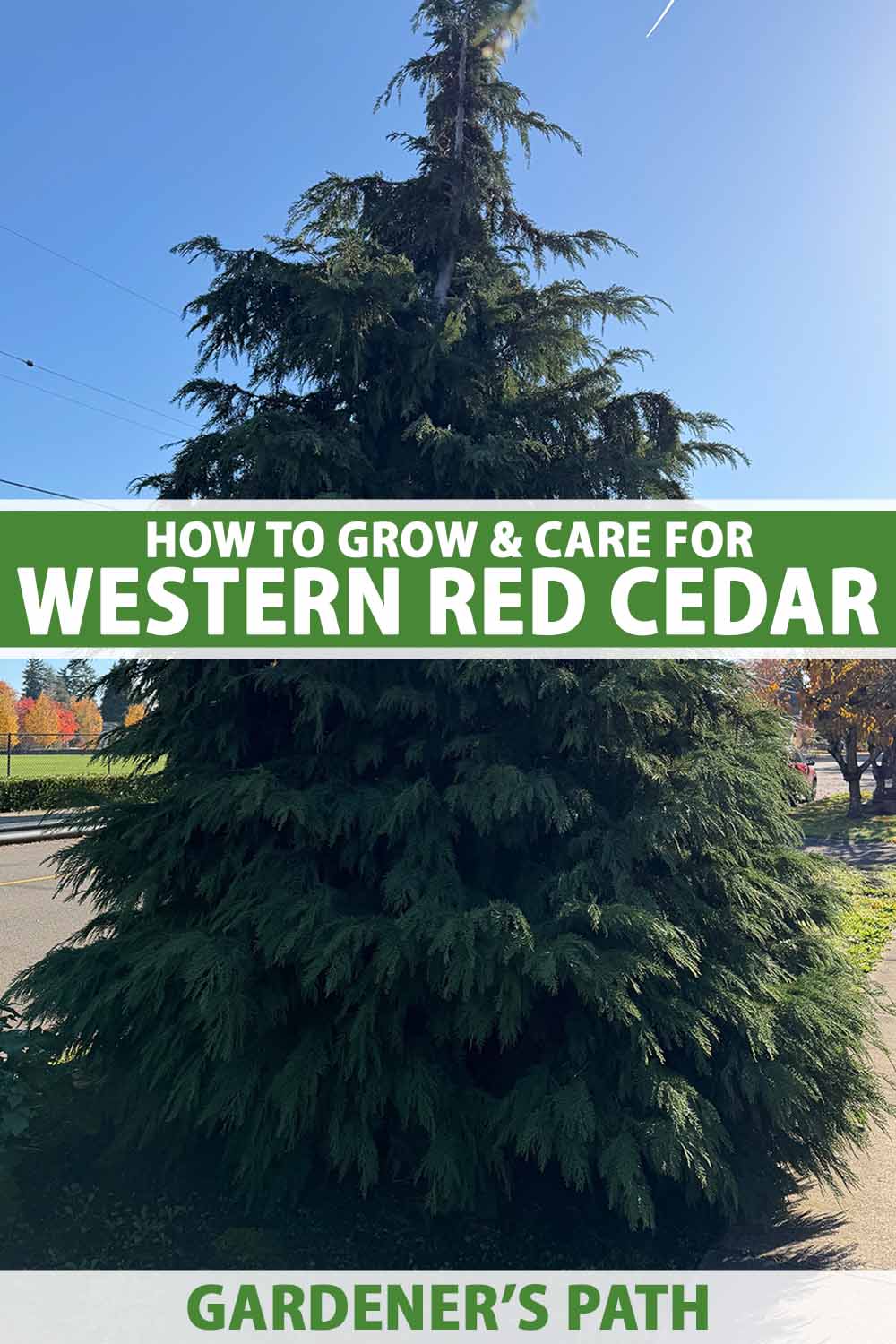
Thuja plicata
If you’ve ever set foot in the Pacific Northwest, chances are you’ve encountered a majestic tree with craggy bark and fern-like evergreen foliage.
Whether you call it western red cedar, western arborvitae, giant shinglewood, or even the “tree of life,” Thuja plicata is the iconic conifer that graces the forests of Oregon, Washington, British Columbia, California, Alaska, Montana, and Idaho.
Gloriously long-lived, visually striking, and adaptable to some seriously challenging growing conditions, it’s easy to fall in love with this tree.

We link to vendors to help you find relevant products. If you buy from one of our links, we may earn a commission.
What captured my heart is the way the lacy leaves dangle elegantly from branches that droop down then swoop back upward. It’s almost like a graceful dancer.
While the foliage tends to be so dense that you can hardly see the wood underneath, when you do, you’re treated to a striking visual of roughly textured bark.
All this one top of being easy to grow, with few pest issues.
Ready to learn more? Here’s what we’ll cover in this guide:
What You’ll Learn
Let’s be crystal clear: despite the name, this isn’t a true cedar. True cedars are species in the Cedrus genus.
Western red cedars are part of the Thuja genus, along with arborvitae (T. occidentalis).
The name plicata is Latin for “braided,” a nod to the way the scale-like leaves interlace along the stems.
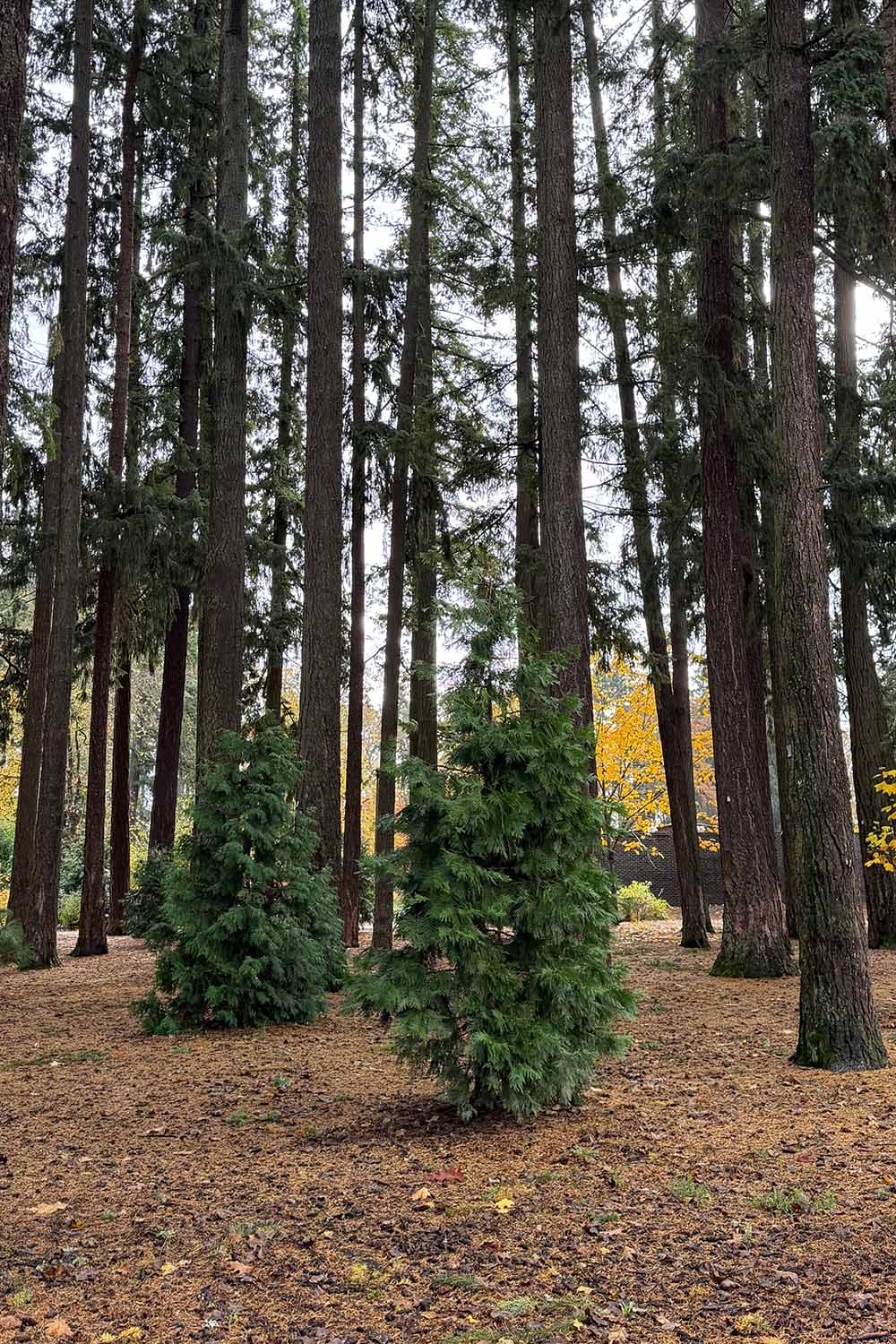
This tree might also be confused with yellow cedar (Callitropsis nootkatensis) and Port Orford cedar (Chamaecyparis lawsoniana), both of which share the same natural range and look similar.
Western red cedars are the largest plant in the genus, which is made up of four additional species.
In fact, it’s the largest in the whole Cupressaceae family and the largest conifer in the Pacific Northwest on top of all that.
Western red cedar grows indigenously from southern Alaska to northern California, and from the Pacific Coast to the Bitterroot Mountains of Idaho and Montana, in areas as far north as USDA Hardiness Zone 5.
Quick Look
Common name(s): Canoe cedar, giant cedar, Pacific red cedar, shinglewood, tree of life, western arborvitae, western red cedar
Plant type: Woody evergreen conifer
Hardiness (USDA Zone): 5-7
Native to: Pacific Northwest, southern Alaska, northern California
Bloom time / season: Evergreen
Exposure: Full sun to dappled shade
Soil type: Organically-rich, moist, well-draining
Soil pH: 6.0-7.0, slightly acidic to neutral
Time to maturity: 50-100 years
Mature size: Up to 200 feet tall by 35 feet wide
Best uses: Specimen, privacy screen
Taxonomy
Order: Cupressales
Family: Cupressaceae
Genus: Thuja
Species: Plicata
Before European settlement, you pretty much couldn’t stand anywhere in western Oregon and Washington and not see dozens of western red cedars in every direction.
It’s hard to overstate how significant this tree was to the indigenous people in the region.
Every part was used, from root to tip, for medicine, food, cleansing, building, ceremony, transportation, and more. That’s why it’s often called the “tree of life.”

In modern times, it’s valued for its wood, which is strong, straight, naturally resistant to rot, and wonderfully fragrant.
I loved sitting in my grandparent’s closet to absorb the heavenly scent of the cedar that lined the walls. If you see wood shingles, they’re almost certainly the wood from a western red cedar.
In the landscape, it’s considered an exceptional option for gardeners who want an easygoing, striking evergreen.
The rust-red young bark matures to gray and becomes deeply furrowed, supporting gracefully arching branches clad in lace-like, dark yellow-green foliage.
Flip the leaves over and you’ll find white butterfly-shaped stomatal bands. In the spring, the new growth takes on a beautiful purple-red hue.

In the landscape, western red cedars grow to about 50 to 70 feet tall, but wild specimens can reach over 200 feet.
The tree is much taller than it is wide, averaging about 25 feet wide. Mature trunks can exceed 16 feet in diameter!
The trees are long-lived, able to survive centuries and the oldest known specimen is estimated to be more than 1,500 years old.
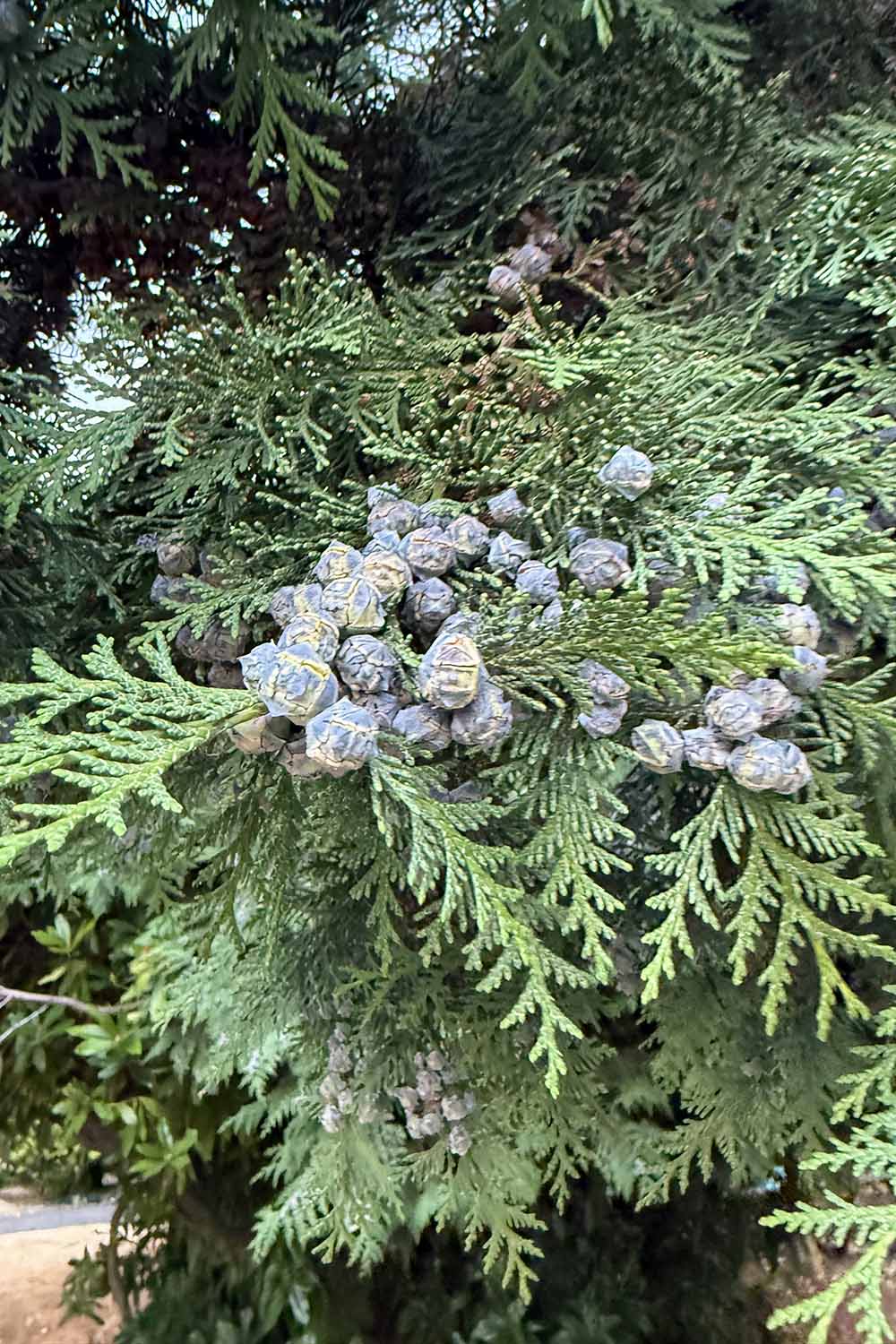
The small, oval cones on the tree are upright, which sets them apart from the similar Port Orford and yellow cedars, which have pendant cones.
How to Grow
This tree shines as a specimen, but like its close relative, arborvitae, it’s fantastic as a privacy hedge.
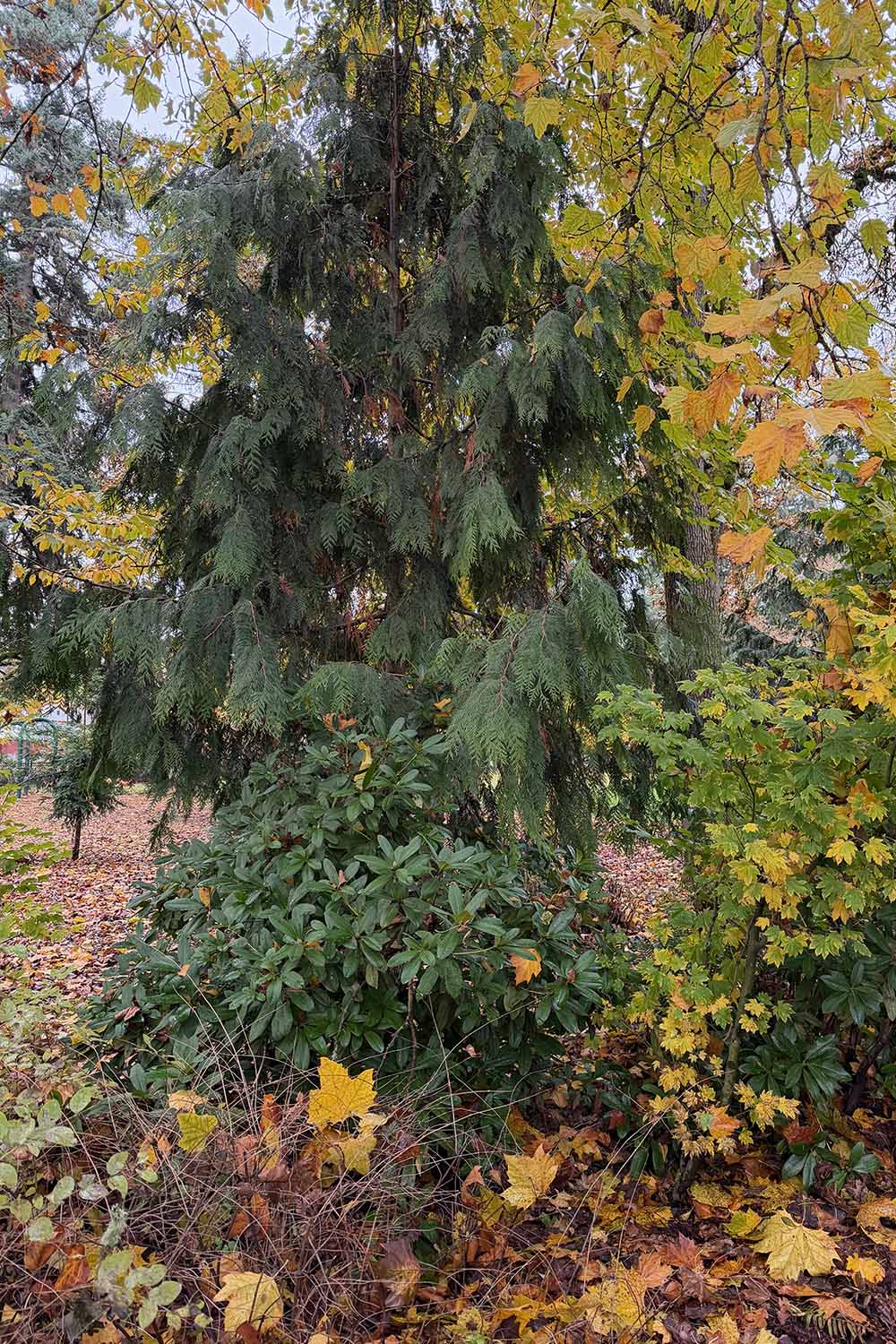
If you’re looking for some companions for your western red cedar, consider a few of the species that naturally share its habitat.
These include big-leaf maple (Acer macrophyllum), black cottonwood (Populus trichocarpa), Douglas fir (Pseudotsuga menziesii), Engelmann spruce (Picea engelmannii), firs (Abies spp.), red alder (Alnus rubra), redwood (Sequoia semper-virens), western larch (Larix occidentalis), western hemlock (Tsuga heterophylla), and western white pine (Pinus monticola).
Climate
While western red cedars may be able to tolerate challenges like standing water, shade, and depleted soil, heat is their nemesis.
These trees need a cool, temperate climate to thrive, ideally without excess humidity. That rules out most of the South, unless you’re in a cooler mountainous region. Same goes for the western deserts.
The tree should be sheltered from heavy winds. These trees evolved in dense, temperate rainforests, protected from drying or battering winds by neighboring plants.
If you’ve ever driven through the swaths of Oregon’s coast range that were hit by the devastating 2007 storms, you’ve seen how vulnerable T. plicata can be when fully exposed.
They grow in elevations from sea level to the slopes of the Cascade volcanoes and mountaintops near the timberline of about 7,000 feet.
Light
What kind of sun exposure do you have available? Perfect, that will pretty much work.
Western red cedar tolerates full sun, partial sun, partial shade, and dappled shade.
The tree won’t grow as large in shady conditions, or it might outgrow everything around it and then it will have full sun anyway. So don’t worry about the sun exposure too much.
Soil
Well-draining soil is ideal, though in some areas, western red cedars are known to grow well in spots with swampy conditions or standing water.
So long as the soil is organically-rich and slightly acidic, with a pH between 6.0 and 7.0, and drains well in between periods of flooding, it should be fine.
Extremely sandy soil or super heavy clay is a no-go.
It can be found in the wild in dry locations, but they don’t grow very dense or large. If you want the full beauty of this tree, it’s best to stick to moist soil.
Water
The one area where western red cedar is a little demanding is water. It needs consistently moist soil at all times.
That said, it’s surprisingly adaptable. In places like western Oregon, where the summers are dry and rainfall is minimal, it still thrives.
Young trees may suffer dieback during periods of extreme drought or heat.
But once established, they can handle short dry spells just fine. For mature specimens, supplemental water is only needed during unusually long periods of drought.
Cultivars to Select
If western red cedars grow well in your region, then you’ll most likely be able to find a number of eye-catching cultivars at your local garden center.
They’ll likely have options like dwarf cultivars and variegated leaves, along with the original. Here are a few of my personal favorites:
Can Can
Get ready to dance with joy, because ‘Can Can’ is a pretty exceptional little tree. It only grows about eight feet tall and five feet wide or so, but that’s just the start of the fun.
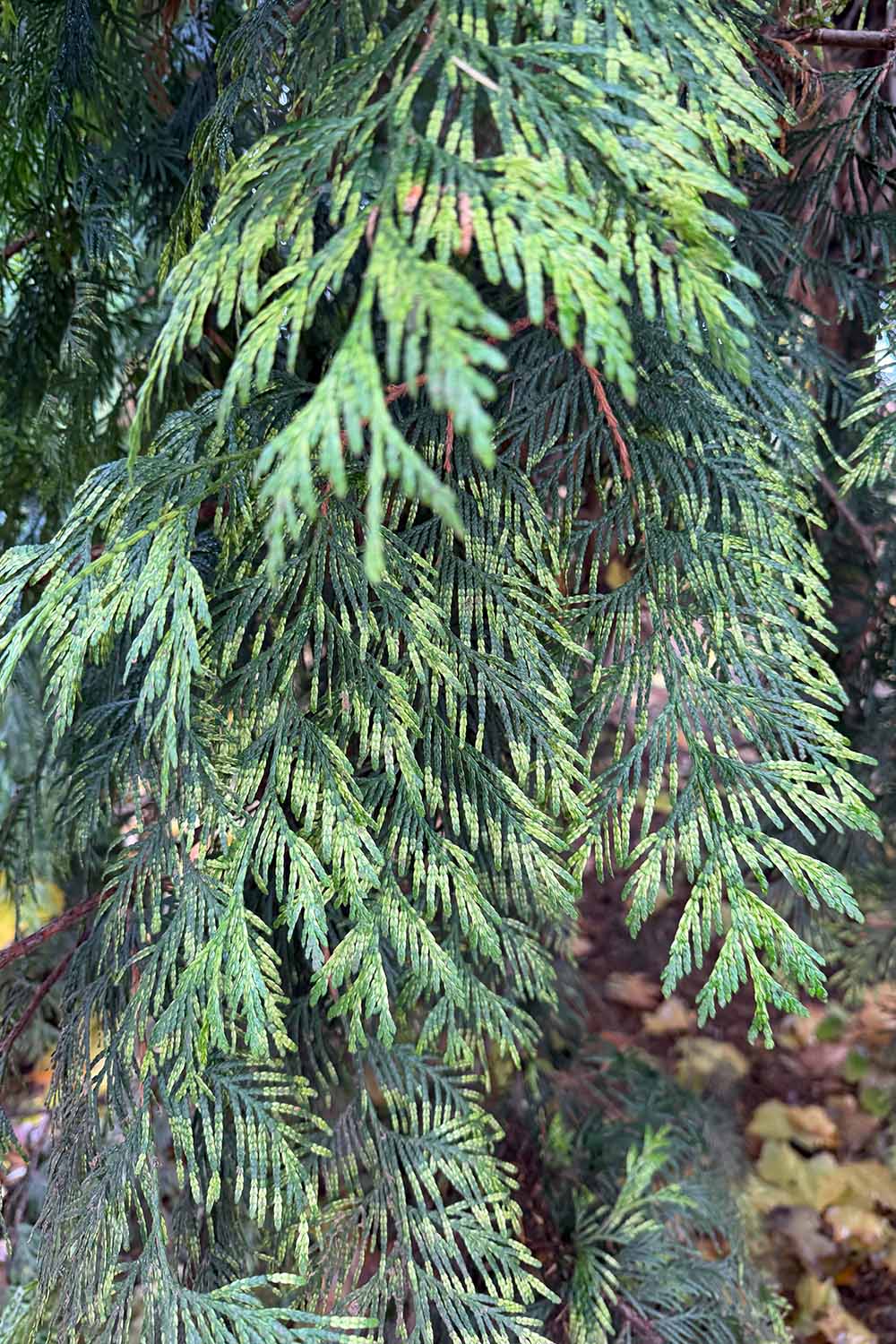
The leaves are dark green with golden-white tips. It’s an eye-catcher in the garden without taking up too much space.
Stoneham Gold
This compact shrub-like tree isn’t your average conifer. It won’t even reach the height of your first story, maxing out at around eight feet tall.
Bred and released by W.H. Rogers & Son in Southampton, England in 1948, this dwarf cultivar makes a big impression with pale golden-yellow to bronze-tipped foliage that glows against its darker green base.
Zabrina
‘Zabrina’ is a real zinger! It grows to a majestic 30 to 50 feet tall with a conical shape that reaches only about 12 feet wide at most.
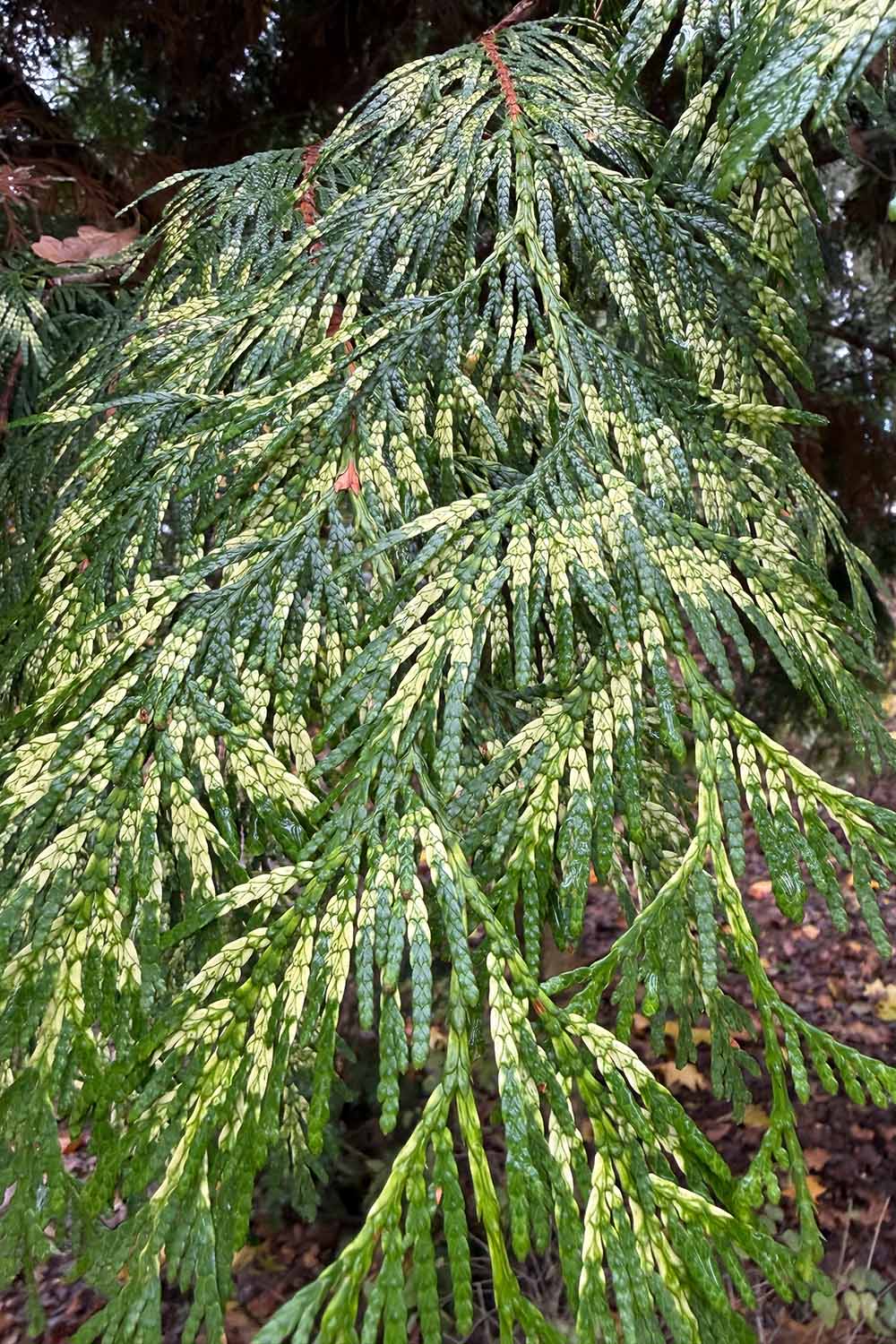
The foliage features striking yellow stripes that stand out year-round, providing a big impact in a pretty small footprint.
Maintenance
When young, western red cedars can suffer damage or even die back during harsh winters. If a heavy snow or ice storm is in the forecast, it’s wise to offer a little protection.
Once the tree reaches a few feet tall, it can fend for itself. But while it’s still small, try covering it with a burlap wrap or a lightweight blanket.
Just don’t leave the covering on for more than a few days at a time.
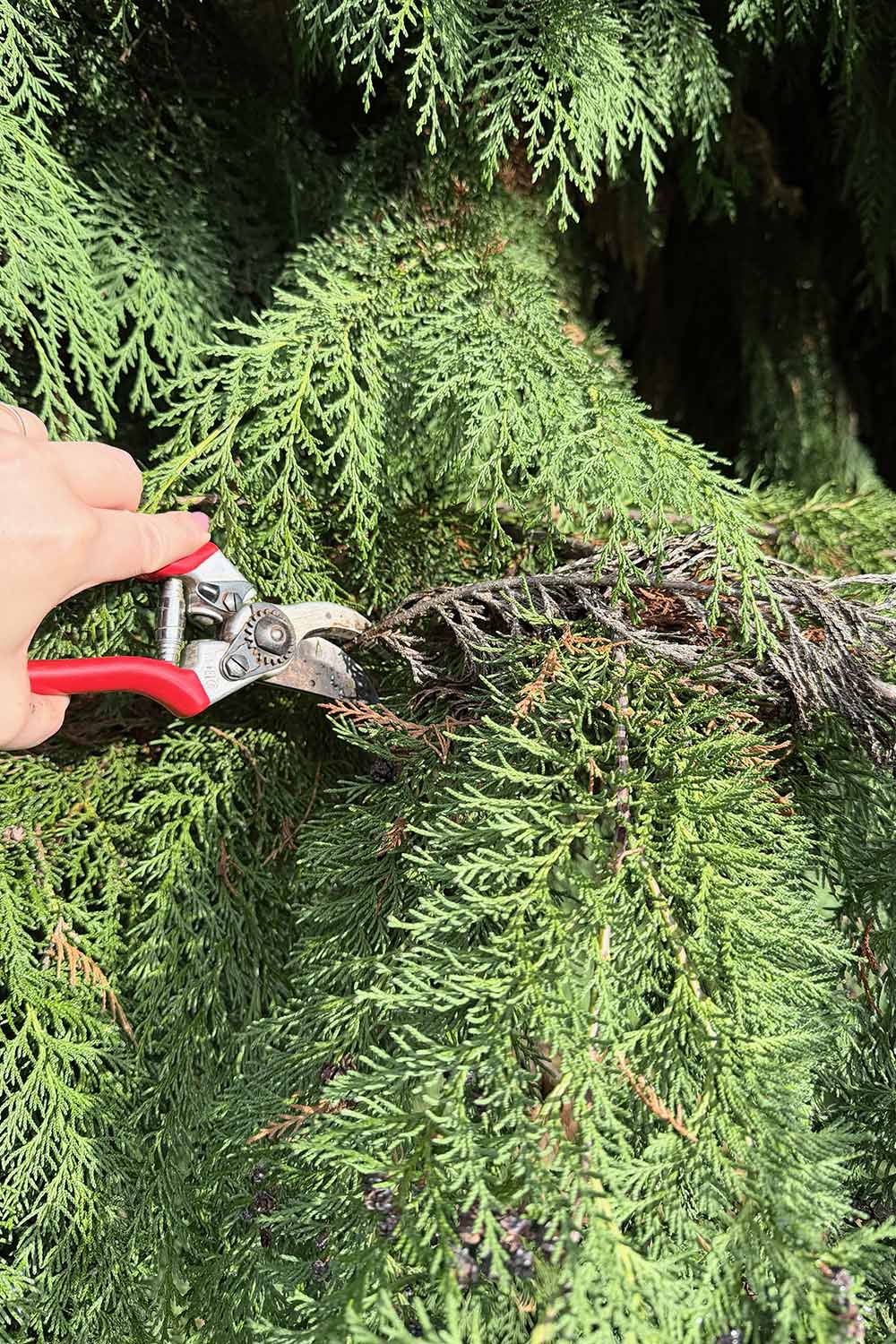
These trees don’t require any pruning except to remove dead or damaged branches.
If a particular branch is growing in an awkward direction or just doesn’t fit your aesthetic, feel free to snip that off, too.
Speaking of dead branches, every year, a few of the inner leaves will die. Don’t panic! This is normal.
As they lose access to light, these inner branches will die off and be replaced by new ones towards the outside. You can cut these off.
Propagation
It’s entirely possible to grow western red cedar from seed, but a slow and somewhat finicky process.
Unless you’re just experimenting for fun, you may want to stick with more reliable propagation methods.
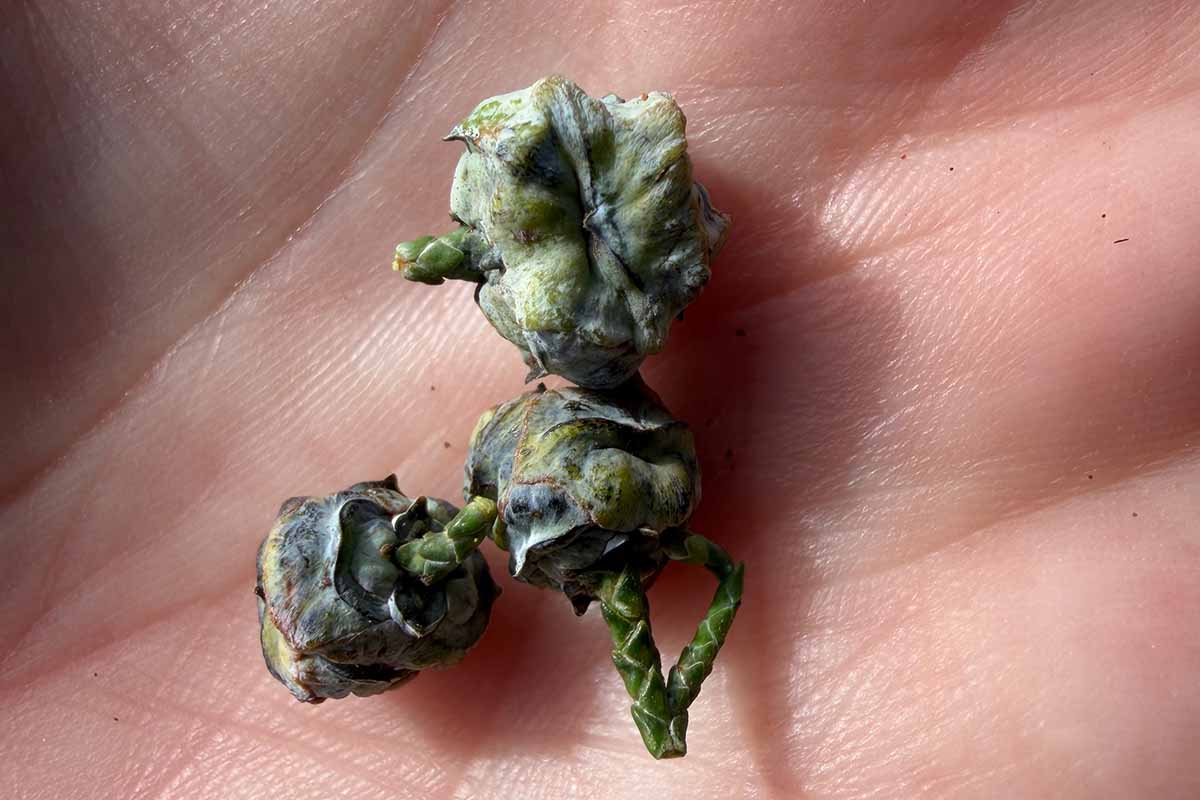
The seed cones develop in the late summer.
These are different from the charming reddish-purple pollen cones that develop in the early spring.
If you’d like to try this method, read our guide to growing pine trees from seed. The process is the same.
From Layering
In nature, western red cedar often propagates itself via layering. When the lower branches of the tree touch the ground, they will send out roots, and a new tree begins to develop in that spot.
Sometimes, when a tree falls, new trunks can develop right out of the fallen trunk.
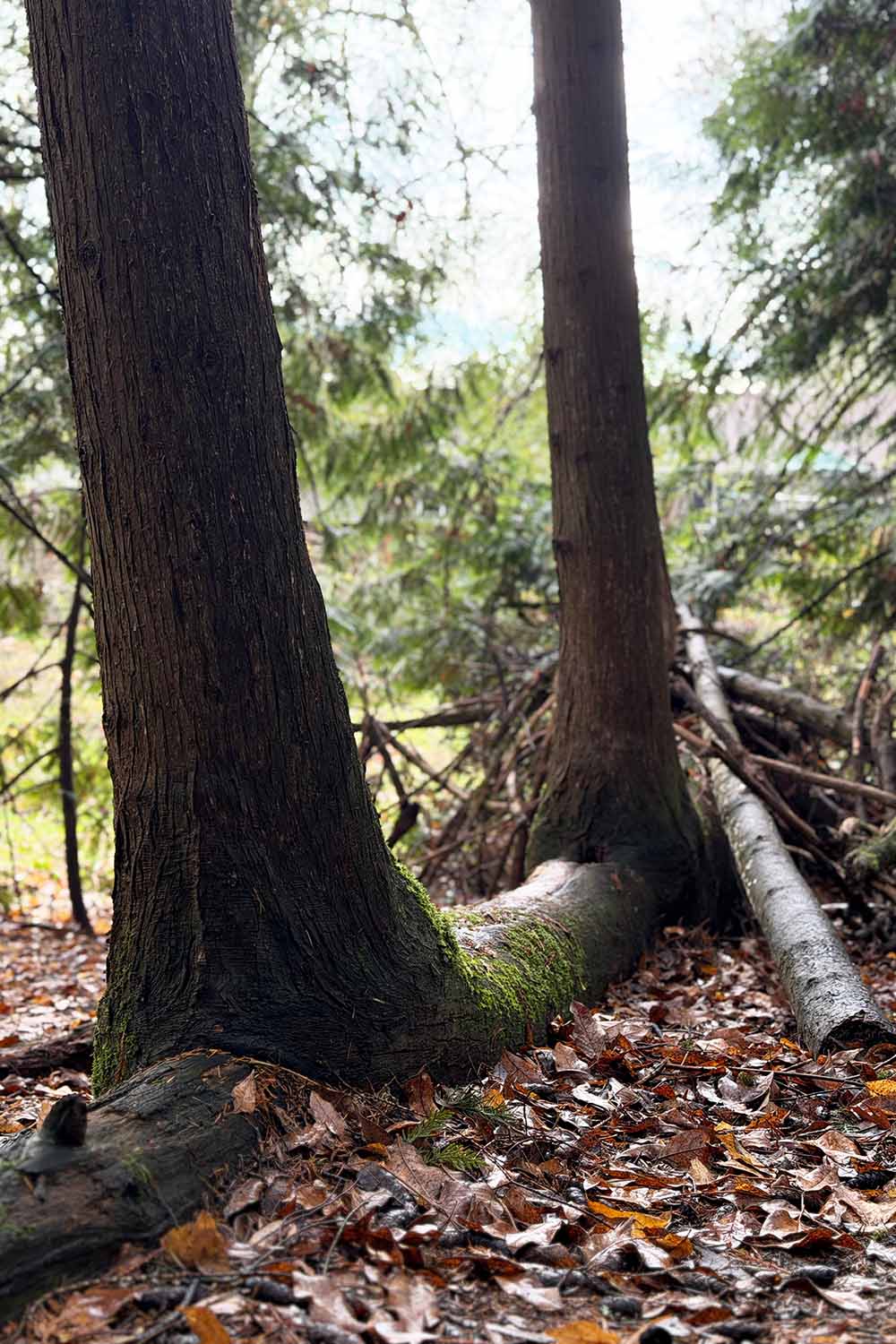
You can replicate this natural process by selecting a healthy, low branch and anchoring it to the ground using a garden staple, wire pin, or wooden stake.
Don’t use a rock to hold the branch down, as this can damage the branch.
You can heap a little dirt over the area where the tree is anchored down, though this isn’t necessary. That’s it. Give the tree a few years to develop roots.
To check progress, either gently pull at the branch or dig around the anchor point to take a look.

If you feel resistance or see new vertical growth forming near the contact spot, you’re in business.
At this stage, you can sever the branch on both sides of the rooted section and carefully dig it up. Make sure to dig wide enough to avoid damaging the tender new roots.
Plant your new tree just as you would a potted nursery specimen, as discussed below.
From Cuttings
While you can take softwood cuttings from the branches of a western red cedar, this method is unreliable. Root cuttings taken in spring, on the other hand, are much more successful.
To take a root cutting, expose an area with pliable, soft roots. Take a few three-inch cuttings.
Place the root pieces horizontally in a six-inch or larger container filled with potting mix.
Cover the roots with a half inch of potting medium. Water the soil well and place a piece of clear plastic or glass over the container to retain moisture.
Set the container outside in a shady area and ensure that the soil stays moist. Remove the cover when you see growth developing, but be extra careful to keep the soil moist.
Transplant in the fall.
Transplanting
Most of us will end up buying a nursery-grown tree, though you might start your own using one of the propagation methods described above.
Either way, once you have a potted plant, it’s time to get it into the ground.
Start by digging a hole about the same size as the container. You’ve probably heard advice about digging a much larger hole or amending the soil with compost.
But in truth, doing so can actually hinder the plant’s development. It may encourage the roots to circle and stay within the amended area, rather than expanding outward like we want them to.
Remove the plant from the container and brush away the soil to expose the roots a bit.
Gently tease them out to encourage them to grow out rather than in or around. Fill the hole with the removed dirt and water well.
Pests and Disease
In recent years, branch and bark dieback has become more common, while researchers are still trying to figure out exactly what’s causing the problem, it’s likely stress from the changing climate.
That said, don’t panic, these trees are resilient. The top can die or be broken off in a windstorm, and it will send up new shoots at the dead or broken area and will carry on as if nothing happened.
Here are the pests to be aware of:
Pests
One of this tree’s natural strengths is its pest resistance, the cedar scent that keeps moths out of closets also discourages many common garden pests.
Bagworms
Bagworms (Thyridopteryx ephemeraeformus), are the larvae of clearwing moths and they can be a real pain for trees in the Thuja genus.
The caterpillars build and shelter in conical “bags.” These bags are ugly, but the real problem is that the caterpillars feed on conifers like western red cedars, usually starting at the top and working their way down.
While the feeding won’t usually kill a mature tree, they can potentially destroy a younger plant by defoliation.
If you get out there and start pulling off the bags and dropping them in soapy water, you can skip the pesticides altogether.
You can also spray your tree with a product that contains Bacillus thuringiensis v. kurstaki (Btk). Bonide Thuricide is a good option.
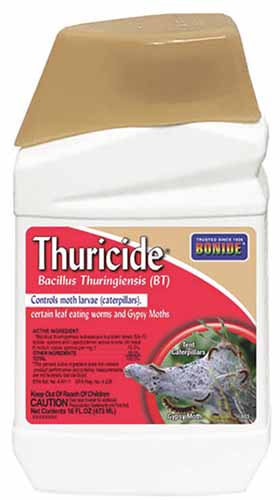
You can find Bonide Thuricide available at Arbico Organics in a variety of sizes.
Beetles
Now and then, beetles will feed on western red cedars. Rarely, an infestation can kill trees, but if you stay on top of your tree’s health, you can head off serious injury.
Amethyst cedar borer (Semanotus amethystinus), western cedar borers (Trachykele blondeli), and the western cedarbark beetle (Phloeosinus punctatus) are the three species that may attack your tree.
Disease
Generally, western red cedars are healthy trees, especially if you plant them in the right location. However, there are several fungal diseases that can impact stressed plants.
The first is fairly uncommon but incredibly destructive.
Butt and Pocket Rot
Caused by Oligoporus sericeomollis (syn. Poria sericeomollis) and Phellinus pini, butt or pocket rot is a form of heart rot that affects many conifers but is particularly destructive in western red cedar.
In fact, western red cedars are the only living host. Otherwise, these pathogens colonize dead wood.
As the name suggests, it causes pocket-like rot in the “butt,” or the part of the tree just above the roots.
It’s one of the major diseases of western red cedar, but it’s most prevalent in western North America, though it can be found in Europe and Asia.
The pathogens can thrive in both live and decaying wood, but they only breed on dead wood.
Usually, by the time you know anything is going on, the disease will be way too far along to do anything about it.
As such, prevention is key. Avoid wounding your tree, control pests, and remove nearby decaying conifer wood that can harbor spores.
Leaf Blight
Wherever western red cedars grow, leaf blight, sometimes called Keithia blight, can develop.
That’s because the fungus that causes it, Didymascella thujina, is endemic to all the same areas.
Unless you live in a warm, moist environment, it’s fairly rare. It’s more common in coastal, low-elevation areas of the Pacific Northwest.
Whenever the conditions are wet and temperatures above 50°F, the spores will be reproducing and spreading.
Symptoms start with pale patches on young leaves, followed by brown or black spore structures. Infected leaves may turn brown or gray and drop, often making the tree appear scorched.
Older trees are generally less at risk to serious damage, but seedlings can be destroyed.
The cultivars ‘Atrovirens’ and ‘Excelsa’ are most susceptible. If you live in an area where this disease is a common problem, avoid these cultivars.
To prevent infection, maintain good airflow with proper spacing, water at the base, and keep weeds under control.
If needed, treat with copper- or mancozeb-based fungicides during spring and fall, following label directions.
Yellow Ring Rot
Caused by Coniferiporia sulphurascens (formerly Phellinus weirii), yellow ring rot is more severe in firs, Douglas firs, and western hemlock, but can also affect western red cedar.
The pathogen spreads on wood, both living and decaying, so it can spread through roots or wherever wood chips, fallen branches, tree stumps, or closely-spaced trees exist.
Once a tree is infected, it will slowly decline, but you’ll only see the rot if you look at the roots or cut open the tree. The big risk is that the disease will weaken the tree.
While it’s rarely fatal in home landscapes, prevention includes proper spacing, prompt removal of infected wood, and avoiding planting within 200 feet of infected trees.
There is no cure, so focus on maintaining overall tree health.
Embrace the Tree of Life
They are gorgeous, sturdy, and long-lived. Western red cedars are such graceful trees with their lacy leaves and swooping branches.
I’m always in awe of them, whether I encounter one while on a walk in my neighborhood or while hiking in the forests near my house.

I have a towering tree in my backyard that I love to watch during breezy days because it looks like it’s dancing.
How do you plan to enjoy your tree? Is it going to be a focal point of the garden or will you plant a few as a visual barrier between you and a neighbor? Let us know in the comments section below!
And for more information about cultivating conifers in your landscape, check out these guides next: