
Pseudotsuga menziesii
The first time I encountered a Douglas fir, I was hiking in Bryce Canyon in southern Utah.
In the middle of the narrow canyons, where practically nothing else grows, these tall, narrow trees jutted out of the red sand and reached tall into the sunshine above the canyon walls.
I was totally enchanted, as are many of the hikers who pass through the Navajo Loop trail.
Lots of people stopped at the base of the trees to take photos or to stare into the canopy high above. Myself included.
We link to vendors to help you find relevant products. If you buy from one of our links, we may earn a commission.
Douglas firs can reach over 300 feet tall with a trunk of an astonishing six feet or more in diameter.
Redwoods (Sequoioideae family) are the only other species that can match the sheer enormity of a Douglas fir.
There’s evidence that Oregon pines, as they’re also known, have reached nearly 400 feet tall, which makes the species the tallest in the world in recent history.
Sadly, there are no living specimens left of that size, making redwoods the tallest living tree.
Douglas firs are also extremely long lived. The oldest known tree was over 1,000 years old before it was cut down in Lynn Valley, British Columbia.
They generally have a narrow shape and only reach 20 feet or so wide. In other words: big impact, small footprint.
These majestic beauties are a common sight in western North America, and they are gaining a foothold in gardens around the globe.
In this guide, we are going to talk about everything you need to know to keep your Douglas fir thriving. Here’s what’s on the agenda:
What You’ll Learn
Douglas firs are extremely fast-growing, rapidly taking on a narrow, conical shape. As they mature, they will develop more of a broad, flat top.
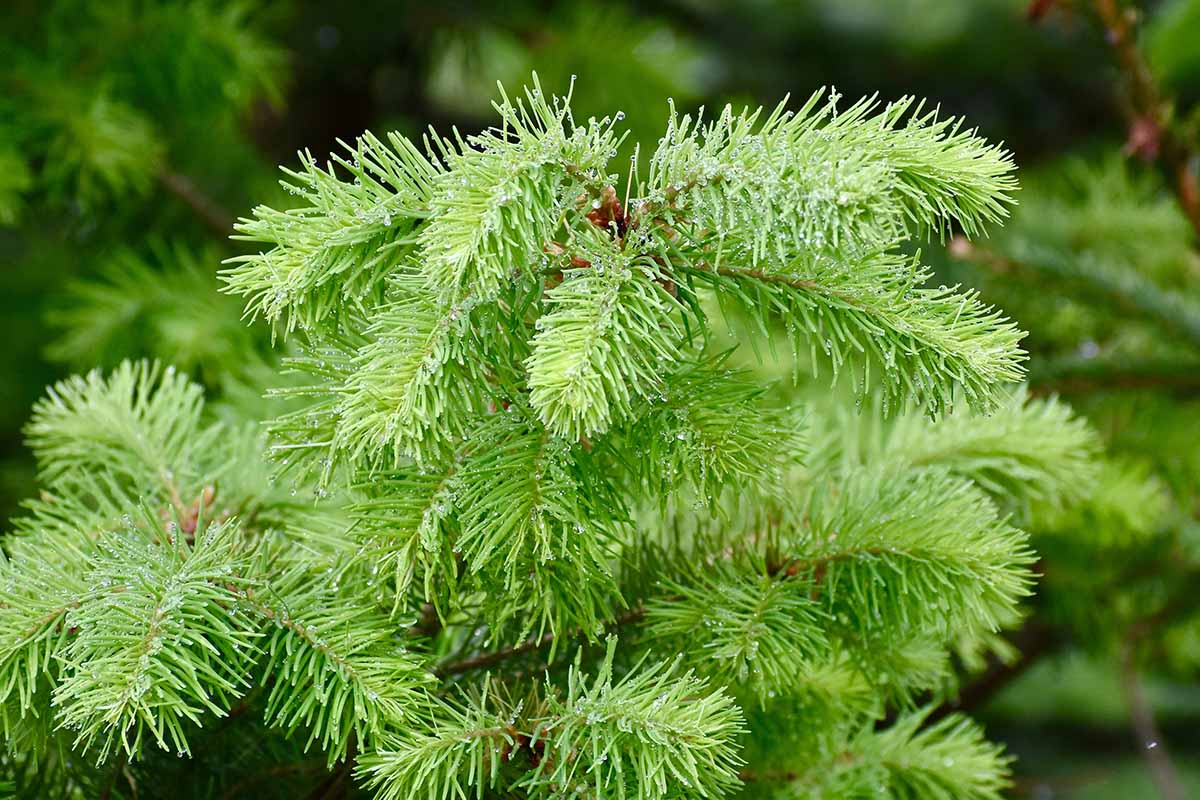
The bluish-green needles are flat with two white stomatal bands on the undersides. The bark is reddish-brown and can be extremely thick.

I saw a chunk that had peeled off a felled tree that was easily six inches thick! This makes the species one of the most fire-resistant in the Pacific Northwest.
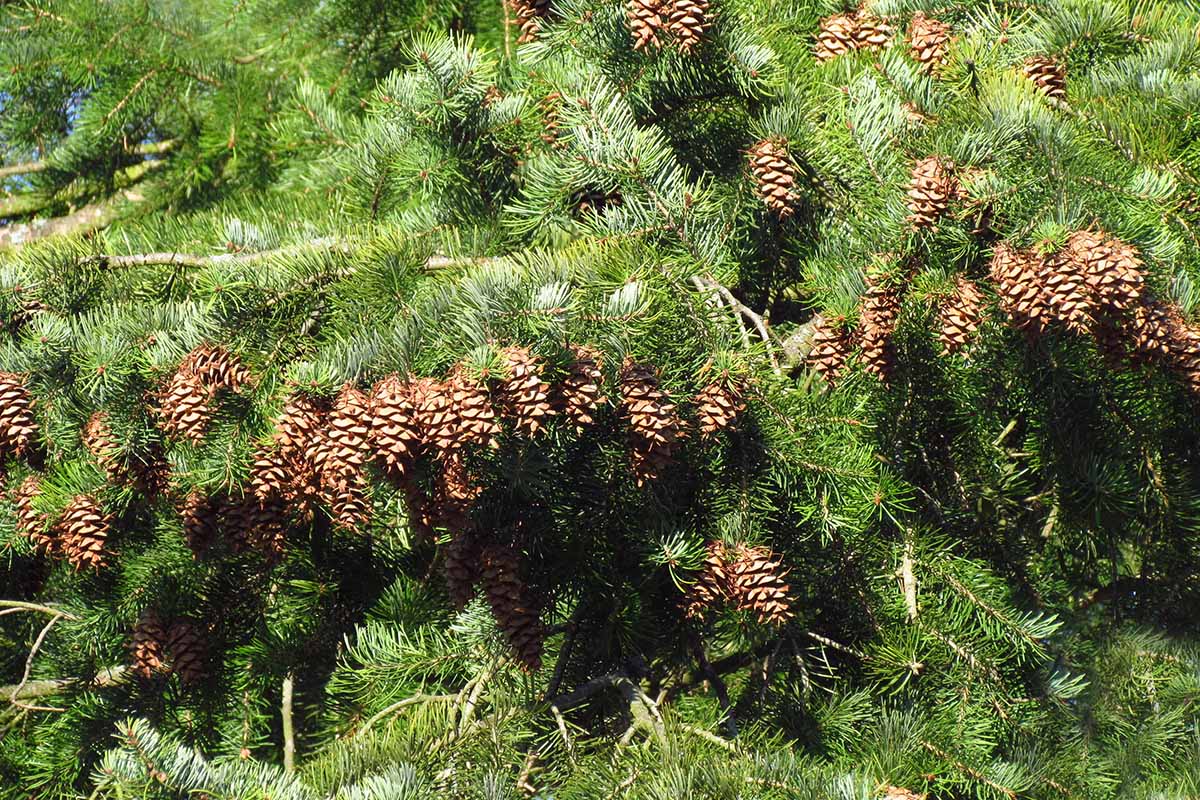
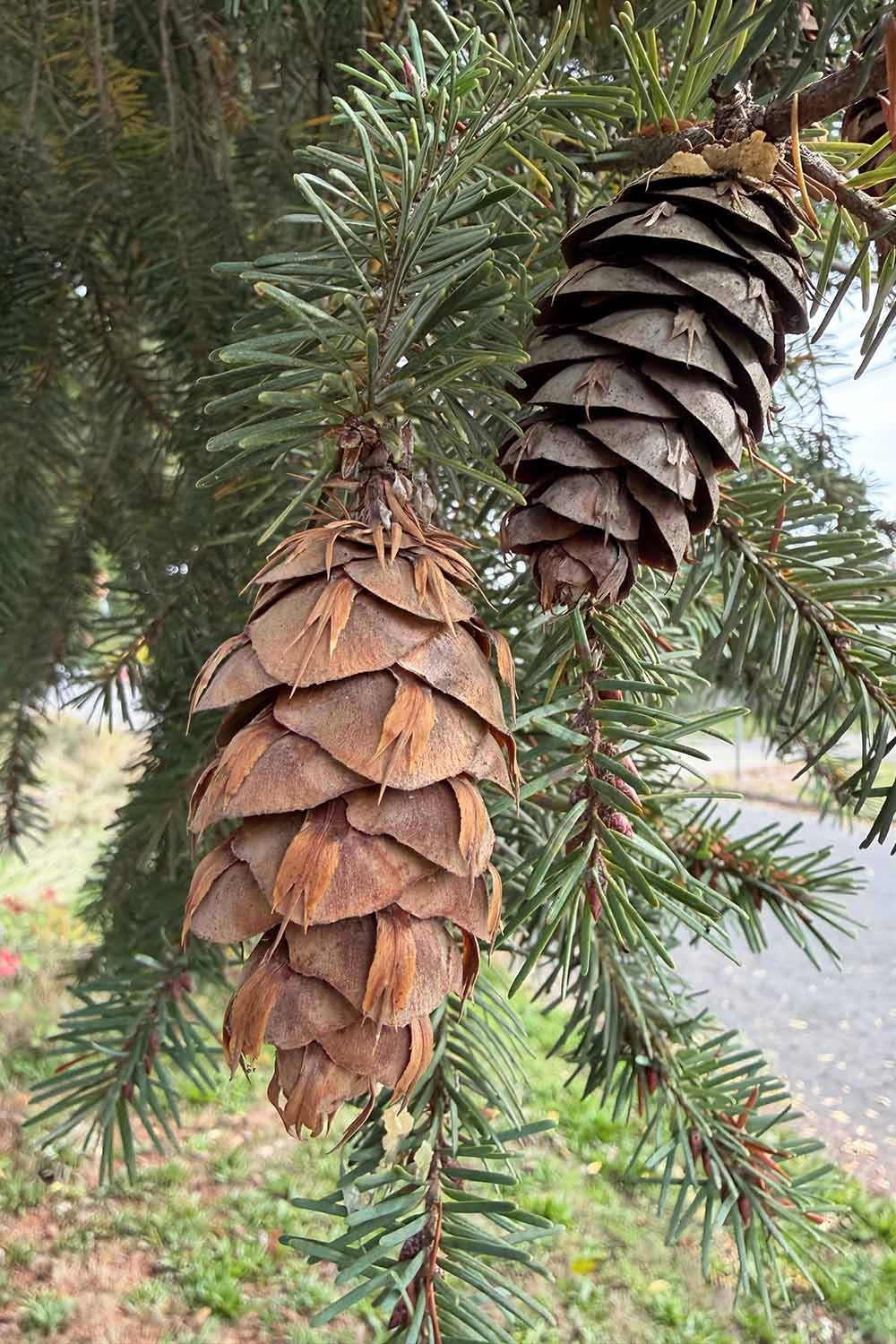
I love Douglas fir cones.
They have a classic conifer cone shape, but they’re covered in bracts that kids in the Pacific Northwest call “mouse tails” because they look like the tiny tail and two rear feet of a mouse sticking out from between the scales of the cone.
The seed cone starts developing in the spring and is bright green and soft to the touch. It slowly hardens over the season.
At the same time as the female cones develop, the tree will also produce tan pollen cones that release heaps of yellow dust.
The male cones develop at the same time and are much more numerous, but they drop off the branches after releasing their pollen in the spring.
Both male and female cones hang down from the branches rather than jutting upward as with some other conifers.
The cones tend to develop and drop in massive numbers one year and then in much smaller numbers for the next few years.
Some years, the trees might not develop any cones at all. The cone cycle is about five to seven years between heavy bearing years.
Douglas firs are found throughout western North America, from south in Mexico to its northern range in Canada, and as far east as Colorado and along the western Pacific coast.
The biggest concentrations are in the Pacific Northwest, where there is a natural variety (P. menziesii var. menziesii), and a second natural variety inhabits the Rockies (P. menziesii var. glauca).
There’s a third type called Mexican Douglas fir that inhabits southern California and Mexico.
All three varieties overlap territory with the main P. menziesii species.
They thrive down to USDA Hardiness Zone 5, but Rocky Mountain types will grow down to Zone 4.
Quick Look
Common name(s): Douglas fir, Douglas-fir, Douglas-yew, Douglas-spruce, Oregon pine, British Columbian pine, red pine, red fir
Plant type: Evergreen conifer
Hardiness (USDA Zone): 4-6
Native to: Western North America
Bloom time / season: Spring cones, leaves are evergreen
Exposure: Full sun
Soil type: Organically-rich, deep, well-draining
Soil pH: 6.0-7.0, slightly acidic to neutral
Mature size: Up to 300 feet tall (usually 80 feet in cultivation)
Best uses: Specimen tree
Taxonomy
Order: Pinales
Family: Pinaceae
Genus: Pseudotusga
Species: Menziesii
The common name and binomial of this tree are a bit misleading. Pseudotusga means false hemlock in Greek. But this isn’t a hemlock, false or otherwise.
Then there’s the common name: “Douglas fir.” Surprise! This isn’t a fir, either. So what about the “Douglas” part?
It honors David Douglas, a botanist who is credited with being the first person to introduce the tree to Europe.
He brought back seeds and the tree’s popularity spread far and wide in Britain. So it’s mostly just named for Douglas because he helped make it famous.
He’s also the one who helped figure out whether the tree was a fir, pine, hemlock, spruce, or something different entirely, which was a matter that botanists at the time were debating.
Douglas fir also goes by the names Douglas yew or spruce, Oregon pine, British Columbian pine, red pine, and red fir, but: it’s not a fir, yew, spruce, or pine.
Learn more about identifying conifers here.
Officially, the name is stylized as “Douglas-fir” with the hyphen denoting that it isn’t a true fir.
Today, Douglas fir is one of the most valuable trees for timber in the United States and abroad.
It accounts for a quarter of all lumber produced in the US. Sadly, it has been overharvested in many regions, leading to devastating changes in the local environment.
Douglas fir has also been introduced into many regions such as Europe and New Zealand, and has spread to areas where it’s unwelcome.
In fact, this species has become invasive in New Zealand and people are doing their best to eradicate it there.
How to Grow
Remember, Douglas firs are tall trees, so when you choose a site, be sure to consider shading and sightlines.
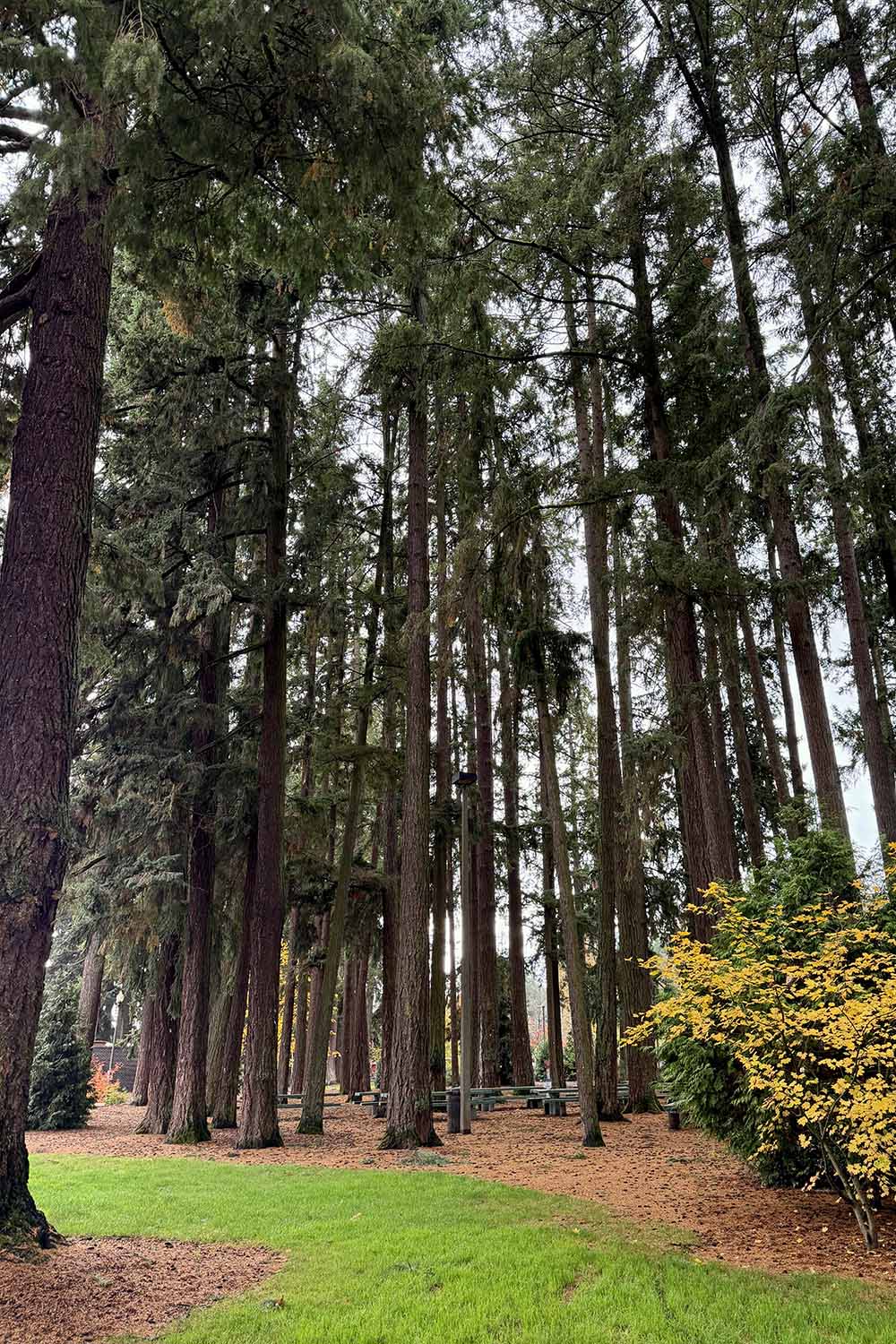
They aren’t monstrously wide, just 15 feet or so in the garden, so you don’t need to give it a ton of space.
Douglas firs rarely grow taller than about 80 feet in cultivation but you’ll need to ensure you plant far away from power lines and anything else that can be damaged by a super tall specimen.
Light
Oregon pines do best in full sun. You can plant saplings in lower light, but they will grow with bare wood until they reach the sunlight, at which point the branches and leaves will emerge.
If you don’t mind that look, then feel free to put it wherever you like. It will grow tall enough to find the light pretty much anywhere you put it.
Soil
In their natural habitat, Douglas firs often have deep, rich, volcanic, well-draining soil, and that’s what they prefer in your garden.
The soil should be slightly acidic or neutral, with a pH between 6.0 and 7.0.
If your soil isn’t absolutely perfect, don’t worry too much. But it must be well-draining. If there’s any question, plant on a slope. That way, the water will drain away.
Water
In the Pacific Northwest, Douglas firs absorb moisture not only from the groundwater, but from the fog that rolls in off the Pacific ocean.
Hikers know the soft drip-drip sound of the fog condensing and falling from the needles. It’s the classic musical accompaniment for a fall hike through the woods.
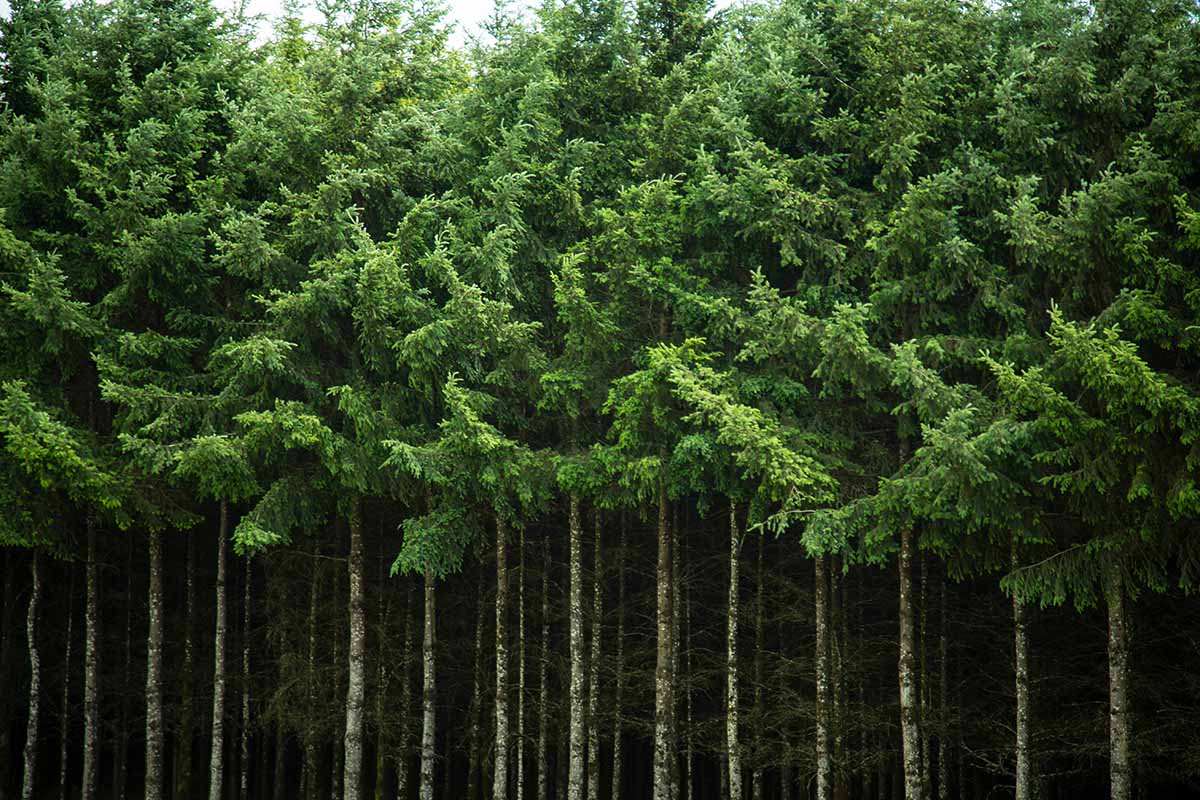
If you don’t live in an area with regular fog, you’ll want to provide ground moisture when needed. The soil should be kept regularly moist for most of the year, at least for young trees.
As the trees mature, they will find their own water sources underground or will be resilient enough to wait for rain, so you might only need to provide water for mature trees during extended droughts.
This is particularly true of the Rocky Mountain variety, which is much more adapted to drought conditions than others.
The species and Coastal type have evolved in regions that stay regularly moist except during the summer.
For the first few years, keep a close eye on the soil, especially during a long period without rain or irrigation.
If it feels dry more than a finger’s depth down, it’s time to add water. Keep this up for at least the first five to 10 years of growth.
After that, you can pretty much let the tree do its thing. I will say that in the Pacific Northwest, we’ve had a few extremely hot, dry summers.
All plants, including Douglas firs, can benefit from some irrigation during extreme heat and drought.
Fertilizer
If I told you that Douglas firs obtain nutrients in the wild from salmon, would you think I was out of my mind? It’s true!
Every year, salmon swim upstream in rivers and streams throughout the Pacific Northwest, where they are often caught by bears, coyotes, eagles, and other predators.
These predators leave the uneaten salmon bits behind, and this decays and produces a specific kind of nitrogen that the trees then absorb.
They also gain nitrogen from lettuce lichen (Lobaria oregana) which grows up the canopy of the tree.
When the lichen are knocked off by animals, wind, or snow, they fall to the ground and decompose. It’s the perfect circle of life.
In the garden, you’re going to have to do the work for Mother Nature.
You should test your soil before starting a fertilizing routine, but whether you test or not, plan to feed your tree in the spring and early fall with a nitrogen-heavy food.
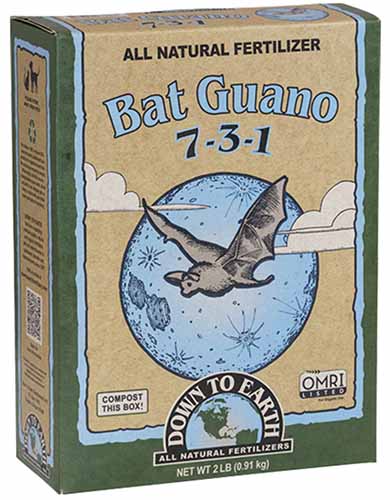
I love bat guano for feeding my evergreens. Arbico Organics carries bat guano in four ounce, two pound, and ten pound containers.
Whatever brand you choose, follow their directions or the results of your soil test on how much to apply.
Cultivars to Select
The species or one of the natural varieties are the most common in landscapes, but there are some cultivars that are becoming quite popular.
It’s hard to tell the varieties apart, but the coastal type has more yellow-green foliage, and the Rocky Mountain type has needles that are more blue-green.
Each is best kept in their region or a similar climate. So you should avoid the Pacific Coast variety if you live in a desert, for example.
Blue
You probably imagine a blue spruce when you picture a blue-toned evergreen, but think again.
‘Blue’ is a smaller version of the traditional Douglas fir, but instead of green needles, it has charming blue ones.
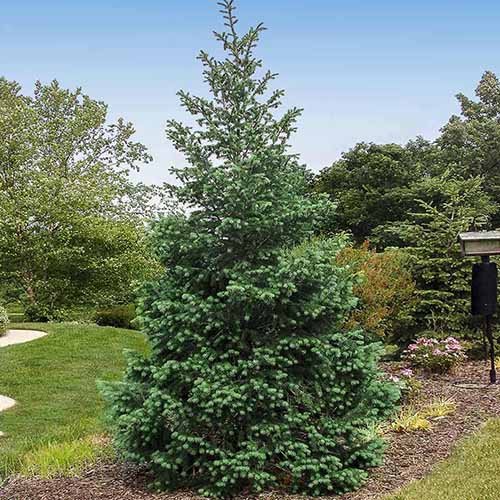
It grows about 25 feet tall and 15 feet wide.
You can find one- to two-foot tall saplings available at Fast Growing Trees.
Eddyville
Right behind Eddyville Charter School in Eddyville, Oregon, grew an unusual Douglas fir.
It had somewhat pendulous branches, setting it apart from the species. Growers quickly propagated it and it’s now a stable cultivar that you can get your hands on.
It grows to the same height and width as the species.
Graceful Grace
This beauty has a graceful weeping growth habit. Combined with a majestic 40-foot height and 20-foot width at maturity, it makes a grand statement in the garden.
Idaho Gem
If you love Douglas firs but you just can’t make room for a towering towering, bring home ‘Idaho Gem.’
This cultivar is extremely slow growing and will remain just a few feet tall and wide. It has a sweet little mounding habit and bright yellow bud tips that emerge in the late winter.
Vail
Some of the best conifer cultivars come from witches’-brooms, and ‘Vail’ is a good example. It was discovered and stabilized by conifer breeder Jerry Morris of Vail Valley in Colorado.
This cutie has an irregular, conical shape that replicates the species or can be more globose, in a much smaller package.
It grows to about five feet tall and half as wide, though it takes decades to reach its mature size. Even more charming, it has blue needles.
Maintenance
Douglas firs won’t produce cones until they are about 15 years old, but they will still be a long way off their mature size.

Along the way, you can help yours develop a pleasing shape by pruning off bent, crossing, or otherwise ugly branches.
You should always prune any branches that are dead or dying. Be sure to cut as close to the trunk or branch as you can so you don’t leave behind unsightly stumps.
Propagation
Vegetative reproduction has proven to be difficult with Douglas firs. It’s not impossible, but it’s not a good way to propagate this species. So skip the cuttings and try propagating via seed.
If you’ve never tried growing a pine family tree from seed, the process can be fun. You’ll need access to seeds, and I think it’s best to harvest your own rather than buying them.

Find a cone and gently pry it open to find the seeds. Then, you’ll sow those seeds much as you would any other kind.
We walk you through the entire process in our guide to growing pine seeds.
Transplanting
Your best bet is to grab a young Douglas fir tree at your local nursery. Put it in the ground by digging a hole about the size of the growing container or a bit wider.
Remove the plant from the container and gently loosen up the roots. Lower the plant into the hole you made and set it so it’s upright.
Backfill with soil, then add a bit of water to help things settle and add a bit more soil if needed.
Pests and Disease
There’s no plant species on earth that is totally impervious to pests and disease, but a mature Douglas fir is a pretty tough tree.

Deer don’t feed on mature trees, but they will devour seedlings and young specimens. It’s easy enough to put a fence or cage around them to ensure that you don’t lose your youngsters.
True dwarf mistletoe (Arceuthobium spp.) can develop on the branches and parasitize the tree, reducing growth and causing needle loss. Remove any mistletoe you see.
Young trees will often have resin blisters on the bark. This is nothing to worry about, it’s totally normal.
Pests
In general, if you keep Douglas fir tree healthy, you probably won’t have to deal with any insect pests.
Even if something comes along to nibble on your tree, it will be able to withstand a bit of disturbance.
If you’re growing young Douglas firs, you need to watch for strawberry root weevils (Otiorhynchus oratus).
The brownish adults lay eggs in soil and when the larvae hatch, they burrow down to feed on the roots.

To be safe, treat young plants with a product that contains Beauveria bassiana, such as BioCeres WP, which you can find at Arbico Organics.
Aphids
Woolly conifer aphids (Adelges cooleyi) go hand-in-hand with Doug-firs. They resemble fuzzy white clusters at the base of the needles.

A large population can potentially defoliate a tree, though it’s rare. In fact, these pests will almost never cause serious or long-term damage.
You can blast them off with a strong spray of water if they concern you.
Or learn other methods, including biological control and organic pesticides, in our guide to controlling woolly aphids.
Beetles
Douglas fir beetles (Dendroctonus pseudotsugae) are mainly a problem in the tree’s native range.
They tend to target trees that have been weakened by disease, other pests, or environmental conditions.
The adults are black and rust colored, while the larvae are cream.
Symptoms include frass or a sawdust-like material at the base of the tree. You might also see holes in the bark, and the needles of an infested tree will turn rust-red and start dropping.
Once the needles start dropping, it means your tree has likely been infested for over a year.
You can’t treat a tree with insecticides once it has been infested. Pythethrins can be used preventatively if you have a weakened tree and know that the beetles are active in your area.
Moths
Moths love Doug-firs almost as much as I do.
Gelechiid moths Chionodes abella and C. periculella, along with cone scale-eating tortrix moth Cydia illutana can be a problem.
The cone moth (Barbara colfaxiana) only feeds on Rocky Mountain varieties.
All of these pests are generally uncommon in home gardens and cause limited damage if they do arrive.
The Douglas fir tussock moth (Orgyia pseudotsugata) and the western spruce budworm (Choristoneura freemani), on the other hand, can be a real nightmare.
Tussock moth infestations can defoliate an entire tree in just one summer, starting at the top and working their way down.
The young larvae feed on the tender new growth at the top of the tree and move down the tree to feed on older foliage as they mature.
You might notice mottled brown moths flying around, but these usually go unnoticed as they are active at night and resemble.
If you see the larvae themselves, don’t touch them with bare skin. The fuzzy gray and rust-colored caterpillars may look cute, but those hairs can irritate your skin and cause “tussockosis.”
You can save your tree with quick action. But, if your tree is defoliated for several years in a row, it will certainly die.
Spray your tree in the spring as the larvae are emerging and new growth is developing.
You can use a product containing permethrin, or my preference, something that harnesses the power of the beneficial bacteria Bacillus thuringiensis subsp. kurstaki (Btk).
Btk will have less of an overall impact on the environment while still destroying the unwanted larvae.
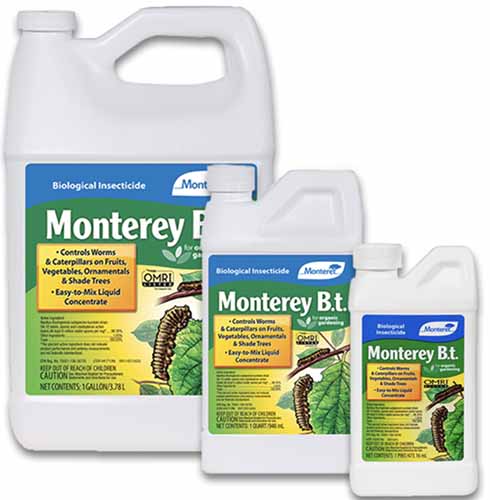
Arbico Organics carries a product called Monterey B.t. that has always worked well for me. You’ll need to cover the entire tree and repeat applications every few weeks for a month or two.
Budworms cause ragged looking, rusty-red foliage and you may see webbing on the tree. Treat an infestation as you would tussock moths.
Disease
While Douglas firs can tolerate occasionally wet soil, too much moisture can result in root rot.
Laminated root rot and armillaria or shoestring root rot spreads via water, soil, and contact.
As the fungus infiltrates the tree, it prevents water uptake. This causes stunted growth, thinning of the needles, general decline, and eventually death.
You might also see yellow mushrooms at the base of the tree or white filaments under the bark in the case of shoestring root rot.
In either case, there isn’t much you can do once the disease has taken hold. You’ll need to remove the tree and replace it with something resistant to armillaria.
Uncommonly Majestic
The Douglas fir is the state tree of Oregon and it’s such a common sight that sometimes I forget to appreciate how beautiful it actually is.

In fact, if you see a conifer on the west side of the Cascade mountains, the chances are that it’s one of these. So I tend to take them for granted when hiking around my home or even walking around my neighborhood.
But you don’t have to wander the wilds of western North America to enjoy them when you can plant one in your own space. I hope this guide made you feel empowered enough to do just that!
Are you growing Douglas firs? Let us know in the comments section below!
And if you’d like to learn about growing other types of conifers, we have you covered there as well. Check out these guides next: