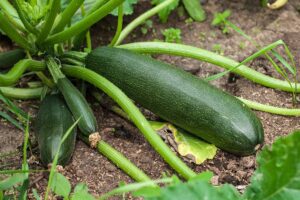
Zucchini, Cucurbita pepo, is an annual bushy or vining type of summer squash for Zones 3 to 9 that prefers full sun and organically rich, moist soil that drains well.
Depending on the variety, it takes 35 to 60 days to mature.
Bushy cultivars are determinate, growing two to three and a half feet tall and one to four feet wide.
Vining types are indeterminate, maturing to lengths of six to 10 feet with a spread of six feet.

In addition to the typically glossy dark-green vegetables, there are light green, striped green, and yellow cultivated varieties.
Our guide to growing zucchini has all you need to know to raise plants in your outdoor living space.
This article discusses seven reasons green leaves may shade yellow and what to do about it.
Here’s what we’ll cover:
7 Causes of Yellow Leaves on Zucchini
Way back when, my first zucchini plant was a bushy cultivar that grew four feet wide and took up almost my entire veggie garden, crowding the bush beans at the perimeter.

The foliage turned yellow and fuzzy as the first fruits approached the perfect harvest size.
I thought all was lost, so I picked a few delectable fruits, dug out the plant, and tossed it in the trash.
Live and learn.
Yellow leaves need not signal the end of your summer harvest. Read on for seven reasons for discolored zucchini foliage and how to address them.
1. Disease
A variety of diseases can cause zucchini leaves to yellow. Here are the most common culprits to watch for:
Cucurbit Yellow Vine Disease (CYVD)
Caused by Serratia marcescens and spread by squash bugs, this bacterial disease leads to yellowing, curling, and eventual plant collapse as the infection spreads to the stems and crown.
Control squash bugs with neem oil or diatomaceous earth, and remove infected plants promptly.
Downy Mildew
Downy mildew is caused by a water mold (oomycete) that thrives in humid conditions, producing yellow spots and a fuzzy gray coating on the undersides of leaves.
Remove affected foliage and apply an appropriate fungicide. Improve air circulation and avoid overhead watering.
Leaf Spot (Alternaria, Bacterial, Septoria)
These fungal or bacterial diseases cause spotting on leaves, typically with yellow halos.
Severe cases can lead to leaf death. Remove affected tissue and treat with a copper-based fungicide. Avoid crowding, rotate crops, and keep foliage dry to prevent spread.
Root Rot (Pythium and Phytophthora)
Root rot is caused by soilborne oomycetes that result in yellowing foliage as the roots decay underground.
Infected roots become slimy and nonfunctional. Improve drainage, avoid overwatering, and discard severely affected plants.
Zucchini Yellow Mosaic Virus (ZYMV)
Transmitted by aphids, this viral disease causes mottled yellowing, leaf distortion, and malformed fruit.
There is no cure, so remove infected plants and sanitize tools. Prevent aphid infestations with horticultural oils or insecticidal soap.
You can learn more about these and other zucchini diseases here.
2. Inadequate Sunlight
Zucchini plants need full sun, at least six hours of direct sunlight daily to support strong growth and vibrant, green foliage.

Without it, plants may grow leggy, leaves can turn pale or yellow, and flower and fruit production often suffers.
This is a common issue in gardens with north- or west-facing exposure or areas shaded by taller plants.
If sunlight is limited, consider relocating young plants to a sunnier, south- or east-facing spot.
When garden space is limited, compact zucchini varieties can be grown in containers that can be moved to catch the sun throughout the day.
3. Moisture Stress
Zucchini plants are sensitive to both over- and underwatering, and either extreme can cause yellowing leaves, typically starting with the oldest foliage near the base.

When the soil is too dry, leaves may yellow, curl, and turn brown before dropping off.
Excessively wet conditions can lead to soggy, limp yellow leaves and, eventually, root and fruit rot.
Aim to provide about an inch of water per week in the absence of rain. Ensure the soil drains well and avoid watering the foliage to reduce the risk of disease.
Remove yellowing or rotting leaves as they appear. For plants stressed by dry conditions, a deep soak may help if roots are still viable.
If overwatering is the issue and symptoms are mild, improve drainage by loosening the soil, removing mulch, and allowing the area to dry out.
In severe cases where rot has set in, it’s best to remove and discard the entire plant.
4. Nutrient Deficiency
Yellowing leaves, especially older ones at the base, can signal a nutrient imbalance – most often a nitrogen deficiency.
Zucchini is a heavy feeder that thrives in organically rich, well-draining soil. If nutrients are lacking, growth may stall, and foliage may turn yellow and drop.

A soil test is the best way to determine nutrient levels. Enrich average or poor soil with compost, aged manure, or humus as needed.
Adding horticultural sand can also improve drainage and reduce compaction, unless you have heavy clay.
Apply a balanced fertilizer, such as a product with an NPK ratio of 10-10-10, at planting time and again when flower buds appear.
You’ll find more information in our guide to fertilizing zucchini.
Keep weeds in check to minimize competition, and avoid over- or underwatering, which can interfere with nutrient uptake.
5. Pests
Insects can cause direct damage to plants and often transmit diseases that lead to yellowing foliage. Common culprits include aphids, squash bugs, and whiteflies.
Aphids
These tiny, soft-bodied pests feed on sap, causing curled, yellowing, and misshapen leaves.

They also spread zucchini yellow mosaic virus. Knock them off with a strong stream of water and treat with neem oil if needed.
Our guide to dealing with aphids has more information.
Squash Bugs
Gray to brown and about half an inch long, squash bugs suck juices from leaves, causing yellow speckling, wilting, and eventual leaf death.
They’re also vectors of cucurbit yellow vine disease (CYVD). Hand-pick, apply neem oil or diatomaceous earth, and use row covers to deter them.
Check out our guide to squash bugs to learn more.
Whiteflies
These winged pests swarm in white clouds when disturbed and suck plant sap, leaving behind sticky honeydew that attracts sooty mold.
Spray them off with water and treat foliage with neem oil. And read our guide to managing whiteflies for more control measures.
To prevent pest issues, weed regularly, avoid overwatering and overfertilizing, and clean up plant debris at the end of the season.
Interplanting with nasturtiums can also help repel sapsuckers naturally.
Read more about pests that target zucchini here.
6. Weather Extremes
Zucchini is sensitive to sudden temperature shifts, including heatwaves, cold snaps, and fluctuating conditions.
The earliest sign of stress is often yellowing and dropping of the oldest leaves.

During hot spells, water early in the day to keep plants hydrated and reduce heat stress. Reapply if wilting occurs by midday.
For unexpected cold, insulate plants with three to four inches of straw or leaf mulch and use floating row covers to trap warmth and block harsh winds. Remove coverings once conditions normalize.
To reduce weather-related stress, plant in a sheltered location out of strong prevailing winds.
You’ll find more information in our guide to zucchini frost protection.
7. Wrong Soil pH
Zucchini grows best in soil with a pH between 6.0 and 7.5 but can tolerate a range from 5.8 to 8.0.

When soil pH falls outside this window, nutrient uptake may be disrupted, leading to yellowing leaves and poor growth.
Test your soil before planting. If the pH is too high, lower it with sulfur; if it’s too low, raise it with lime.
For best results, adjust in stages – apply amendments in fall, then retest in spring and reapply if needed.
Defeating Discoloration
Yellowing leaves on zucchini plants can be alarming, but they’re often a sign of correctable issues.
From pests and disease to watering problems and nutrient deficiencies, most causes are manageable with a little attention and care.

A good crop starts with best practices.
Plant in full sun with rich, well-draining soil. Rotate crops, fertilize appropriately, and provide consistent moisture.
During temperature extremes, protect plants with mulch or row covers, and always keep an eye out for pests and disease.
With a proactive approach and the tips shared here, you’ll be well on your way to growing healthy, productive summer squash – no yellow leaves in sight.
Have you encountered zucchini leaf discoloration? Did you determine the cause? Please share your experience in the comments section below.
And for more information about growing zucchini in your garden, check out these guides next: