Beans (Phaseolus vulgaris) are a great addition to the vegetable garden.
They’re easy to grow, fix nitrogen to the soil, and depending on the variety you choose, you can enjoy them fresh in the pod, shelled, or dried for later use.
But like any crop, beans can suffer from a variety of different plant diseases. Fungal, bacterial, and viral pathogens can reduce your harvest and affect pod quality, sometimes severely.
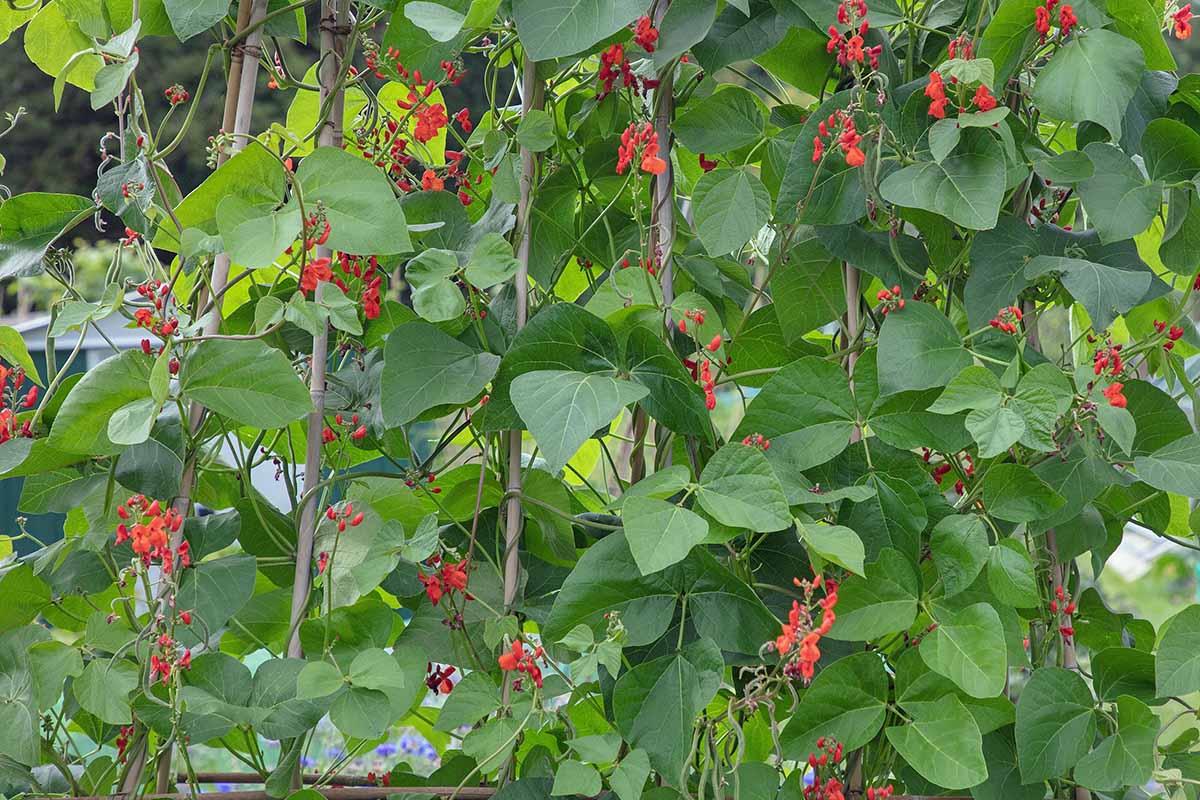
The good news is that humans have been growing beans for thousands of years, so we’ve learned a thing or two about keeping them healthy.
With the right knowledge, you can spot problems early and take action before they get out of hand.
In our guide to growing green beans, we cover how to cultivate these easy-care annuals in your vegetable garden.
This guide covers 11 common diseases you’re likely to encounter. We’ll give you a rundown of the symptoms and causes, plus provide practical strategies for treatment and prevention.
11 Common Bean Diseases
1. Alternaria Leaf Spot
Alternaria leaf spot is caused by several fungal species in the Alternaria genus, most commonly A. alternata.
The disease develops in high relative humidity and rainfall, with daytime temperatures between 60 and 75°F.
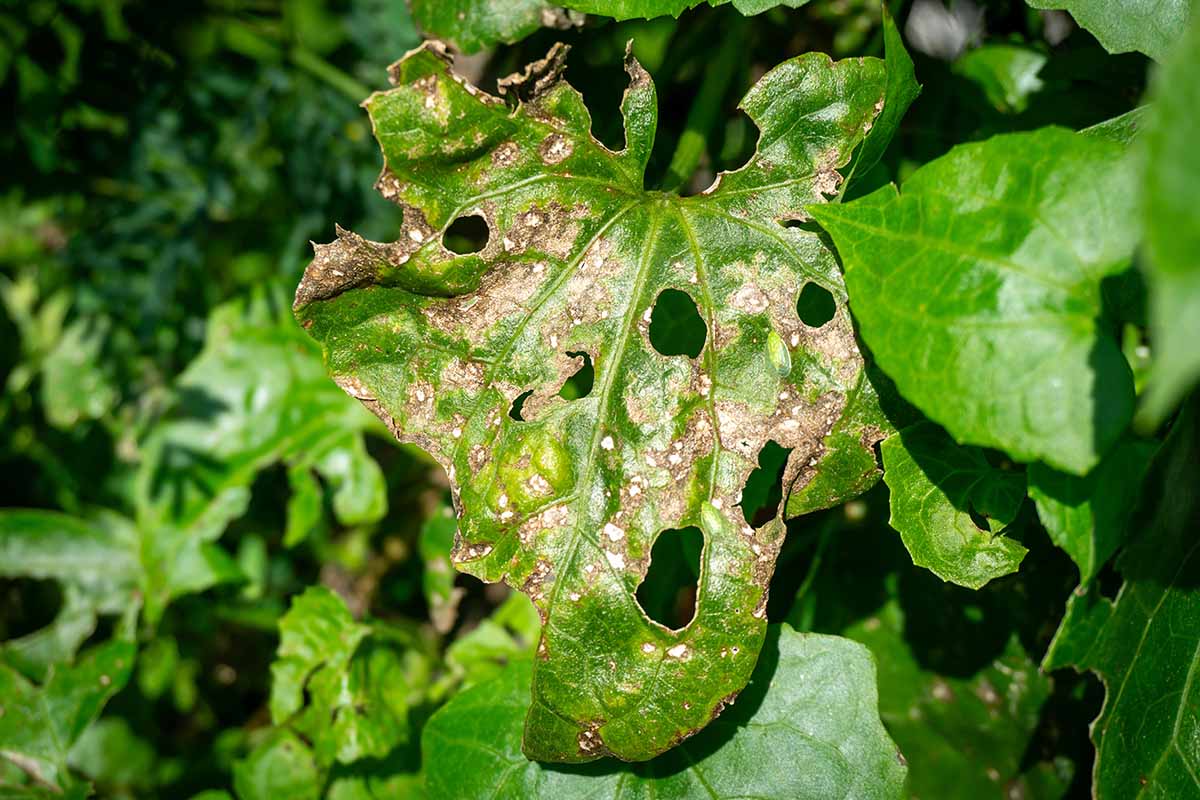
The pathogen causes small, dark brown to black, raised flecks on infected seed pods.
Symptoms on leaves start as small, water-soaked flecks that develop into circular to irregular spots with pale brown centers and reddish-brown or dark brown borders.
As the disease progresses, these lesions enlarge, may show faint concentric rings, and can merge together. Severely affected leaves may drop.
Proper spacing helps reduce humidity around beans and allows leaves to dry quickly, making conditions less favorable for the fungus.
If your crops are infected, prune off affected foliage and treat with copper or sulfur-based fungicide according to manufacturer’s instructions.
2. Anthracnose
Anthracnose is caused by Colletotrichum lindemuthianum, which survives primarily as spores in contaminated seeds and crop debris.
The spores spread via machinery, wind, and rain splash, and germinate in moisture with temperatures between 55 and 79°F.
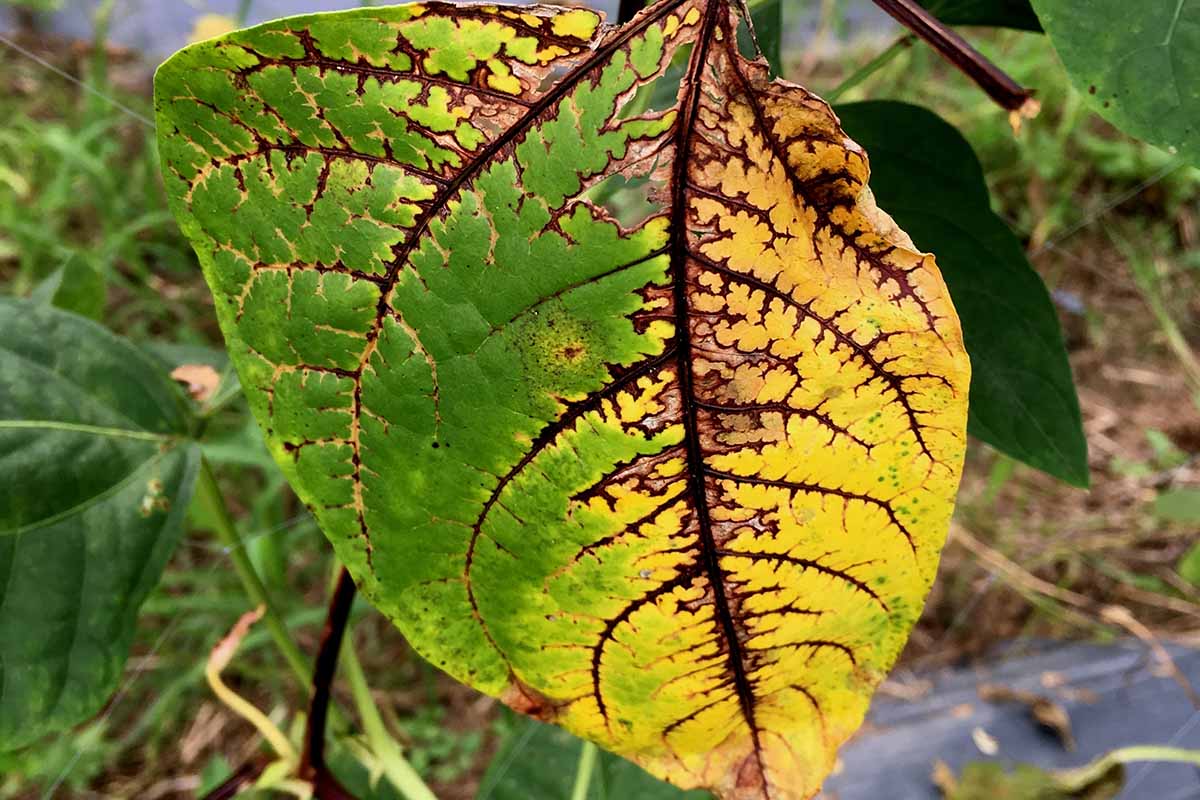
Infected bean plants exhibit sunken, dark brown to black lesions on pods, stems, leaves, and leaf petioles. In moist conditions, the lesions produce salmon-colored or pink masses of spores.
Pods may shrivel and dry up. Seedlings can be girdled at the stem and killed if lesions enlarge completely around the stem.
Infected plants should be removed and disposed of as there is no cure.
Disease-free, fungicide-treated seed and resistant cultivars like ‘Tweed Wonder,’ ‘Wellington Wonder’ and ‘Redlands Beauty’ should be used if anthracnose has been a problem in the past.
Rotating your beans with grains or corn, and promptly burying or removing crop debris all help to prevent spread.
3. Bacterial Blight
Common bacterial blight, caused by Xanthomonas campestris pv. phaseoli, survives in contaminated seed, crop debris, and soil.
The bacteria emerge in warm, humid conditions, favoring temperatures between 82 and 90°F.
Symptoms include small, water-soaked spots on leaves, typically starting on the undersides.
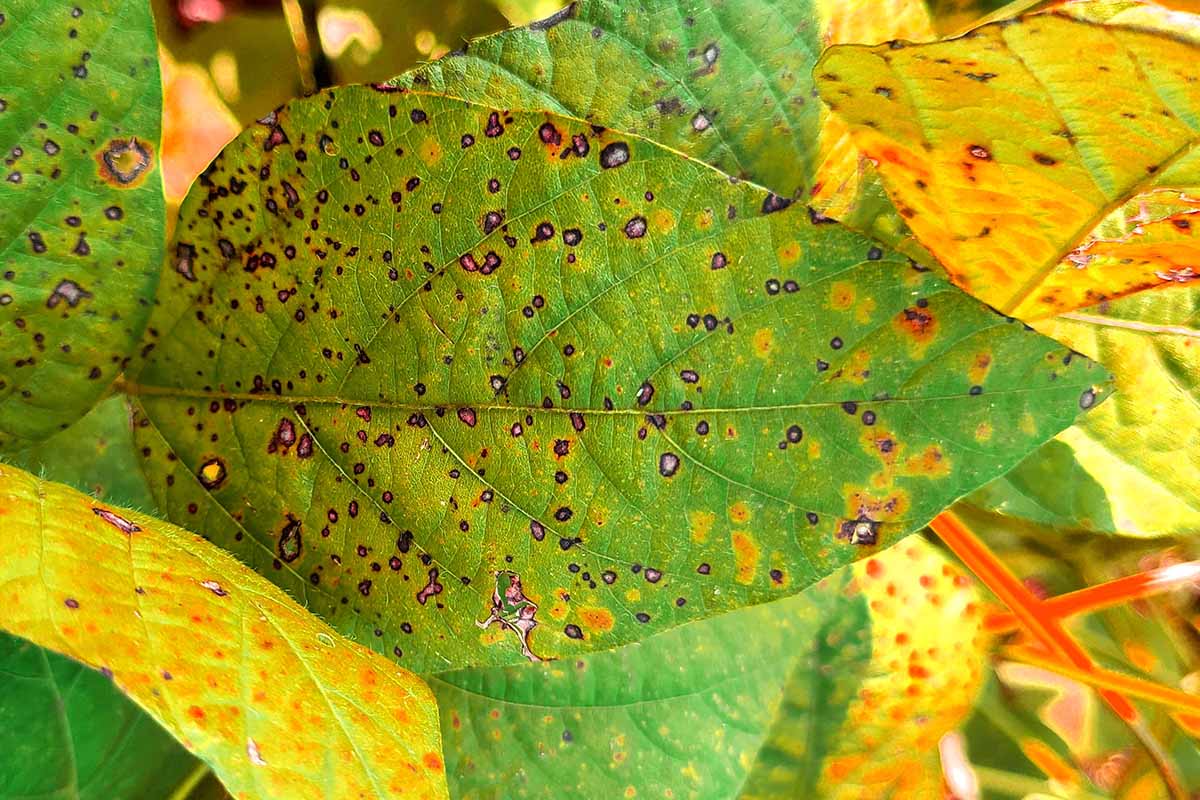
These spots enlarge, merge, turn brown and necrotic, and develop narrow yellow halos.
Leaves may die and drop prematurely. Pods develop circular, water-soaked lesions that become sunken and reddish-brown.
Utilize high-quality, pathogen-free seed and rotate your crops with non-legumes every two to three years.
Copper-based bactericides can help control disease-in-progress, while severely infected crops and crop residues should be destroyed.
4. Bacterial Brown Spot
Bacterial brown spot, caused by Pseudomonas syringae pv. syringae, thrives in warm, wet weather between 80 and 85°F.
The bacteria survive in crop residue, weeds, and contaminated seed, spreading via splashing rain and wind.

Infected beans develop small, circular brown lesions surrounded by yellow tissue. The centers often fall out, creating a shot-hole appearance.
Pods develop water-soaked spots that turn brown and sunken, sometimes causing the pod to twist or bend.
Use certified disease-free seed and rotate beans with non-legumes for two to three years. Bury crop debris after harvest and control nearby weeds.
For infected crops, you can salvage your yields by using copper-based bactericides 40 days after the plants emerge, then additional applications every seven to 10 days.
5. Bean Rust
Bean rust, caused by the fungus Uromyces appendiculatus, produces raised, reddish-brown pustules surrounded by yellow halos on leaves and pods.
The pustules contain powdery spores that give infected bean foliage a rusty appearance. Severe infections cause leaves to die and drop, significantly reducing yields.

The fungus overwinters in plant debris and spreads by wind. It thrives in moderate temperatures between 68 and 77°F with high humidity or moisture.
Rotate beans with non-leguminous crops and remove debris immediately after harvest.
Remove volunteers and avoid overhead watering that keeps leaves wet for extended periods. Grow resistant varieties when available.
For severe infections, apply fungicides before the disease spreads throughout the garden.
6. Black Root Rot
Caused by the fungus Thielaviopsis basicola (syn. Berkeleyomyces spp.), black root rot affects a wide variety of flora. The pathogen produces spores that persist in soil for several years.
Spores germinate in wet conditions at temperatures between 55 and 70°F, particularly when the soil pH is neutral to alkaline.

Roots develop elongated red lesions that turn black as spores form.
Entire roots can turn black, and infected bean plants become chlorotic, stunted, and wilted. Leaves may drop and may collapse.
Black root rot is tough to control, so prevention is much more effective than management.
Fungicides can be used at the first sign of disease, and insect vectors such as fungus gnats and shore flies should be controlled.
If any crops become diseased, they should be removed and destroyed.
7. Bean Mosaic Virus
Bean common mosaic virus (BCMV) and bean common mosaic necrosis virus (BCMNV) spread through infected seed and aphid vectors. BCMV is more common than BCMNV.

BCMV causes stunted growth, reduced yields, and distorted leaves with mosaic patterns of light green, dark green, and yellow patches.
Plants with the dominant I resistance gene are protected from BCMV but become hypersensitive to BCMNV.
When these resistant varieties encounter BCMNV, they develop small reddish-brown spots on shoots, followed by tissue death that spreads through leaves and stems, eventually killing the entire plant.
Plants without the I gene infected with BCMV simply develop standard mosaic symptoms.
Use certified, disease-free seed and grow resistant varieties. Control aphids to reduce virus spread. Remove and destroy infected plants immediately.
8. Damping Off
Caused by pathogens such as Pythium, Rhizoctonia, and Thielaviopsis, damping off is a disease that severely weakens seedlings.
They develop water-soaked lesions, rot, and collapse. The soil-borne pathogens are primarily an active threat in cool, wet weather.
Infected seedlings develop water-soaked lesions at the soil line, followed by stem rot and collapse. Entire sections of plantings can be affected.
Prevention is critical since infected seedlings cannot be saved. Sow seeds in warm soil – at the proper depth – when conditions favor rapid germination.
Remove and destroy affected seedlings immediately to prevent spread.
Learn more about damping off here.
9. Fusarium Root Rot
Fusarium root rot, caused by Fusarium solani f. sp. phaseoli, overwinters in soil and plant debris.
The fungus attacks roots and underground stems, causing long red to reddish-brown lesions that turn brown and develop longitudinal cracks as they age.
Infected roots become necrotic, and if the plant cannot produce enough new roots to compensate, aboveground growth becomes stunted and discolored with reduced yields or death.
Proper spacing, crop rotations, not overwatering or planting early in cool, wet soil all helps to prevent this disease. Drought and oversaturated soil both increase disease pressure.
Infected plants should be removed and destroyed, and crop debris should be pitched as well.
10. Halo Blight
A major P. vulgaris disease worldwide, halo blight is caused by the bacteria Pseudomonas syringae pv. Phaseolicola, which does the most damage in moderate temperatures and humid, moist conditions.
Overwintering in infected disease or crop detritus, the primary symptoms are brown, angular leaf spots that develop a ring of light green to yellow.
As the infection progresses, entire leaves can turn yellow, and pods will develop sunken, reddish-brown spots.
There is no cure, so remove and destroy affected bean plants to limit spread.
Use certified, disease-free seed and grow resistant varieties. Rotate crops, pull weeds, and remove plant debris at season’s end.
11. White Mold
Thanks to the fungus Sclerotinia sclerotum – which can persist in soils for five-plus years – white mold coats the foliage with a white, moldy mycelium, underneath is a water-soaked mass of rotted tissue.
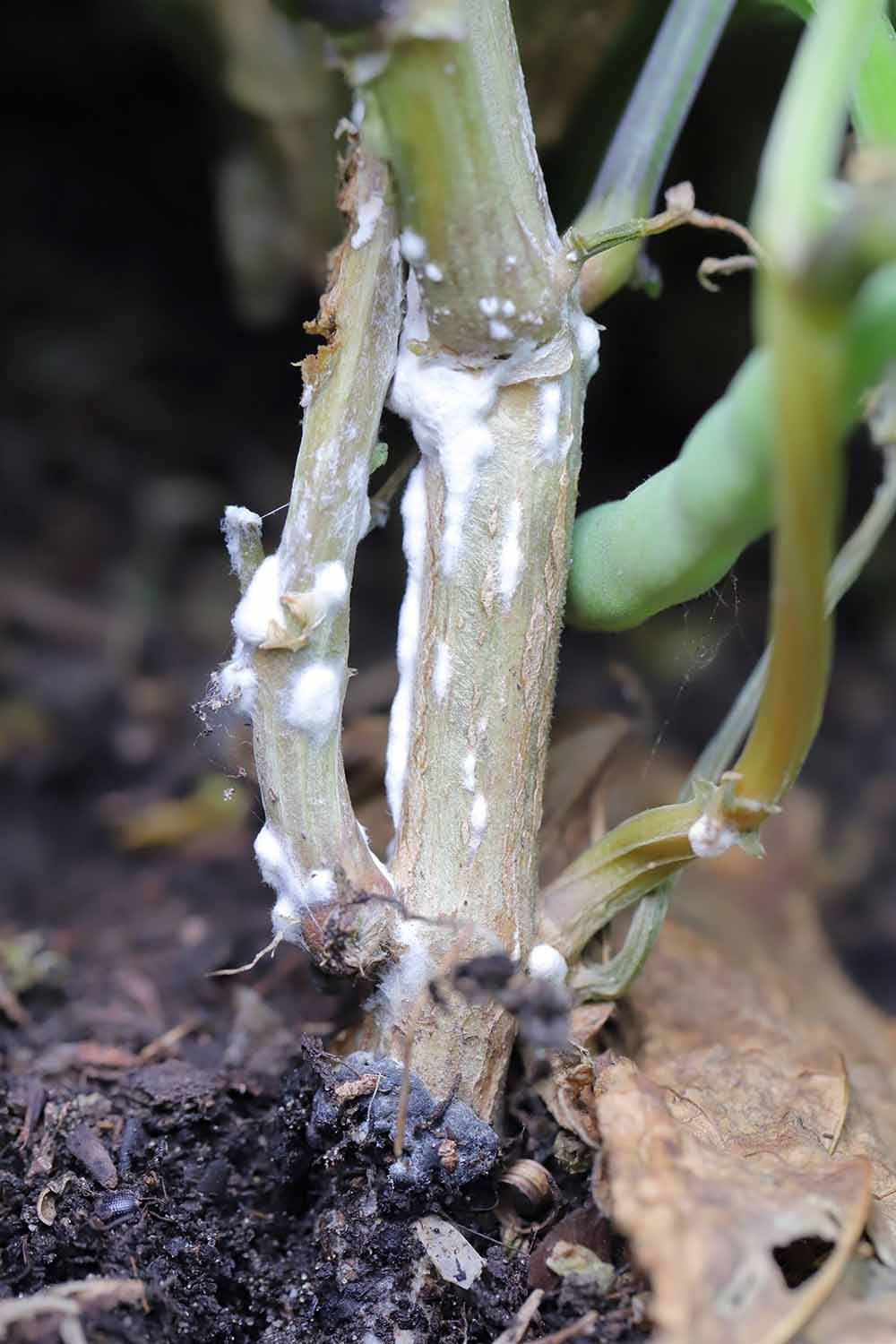
Eventually, infected shoots will wilt and die, leaving bleached-looking detritus behind.
This disease spreads via wind-blown spores in moist, moderately-warm conditions. Unfortunately, no varieties are known to be truly immune.
It can help to rotate your crops, plant in rows parallel to prevailing winds, spread the rows wide, and avoid fertilizing with excess nitrogen.
If your crops are infected, fungicide sprays can help to manage the disease, while severely infected specimens and plant debris should be removed and destroyed.
Bean Diseases Don’t Have to Win
When bean diseases show up in the garden, it can feel like all your hard work is slipping away.
But most of these problems don’t appear out of nowhere, and they rarely become devastating overnight.
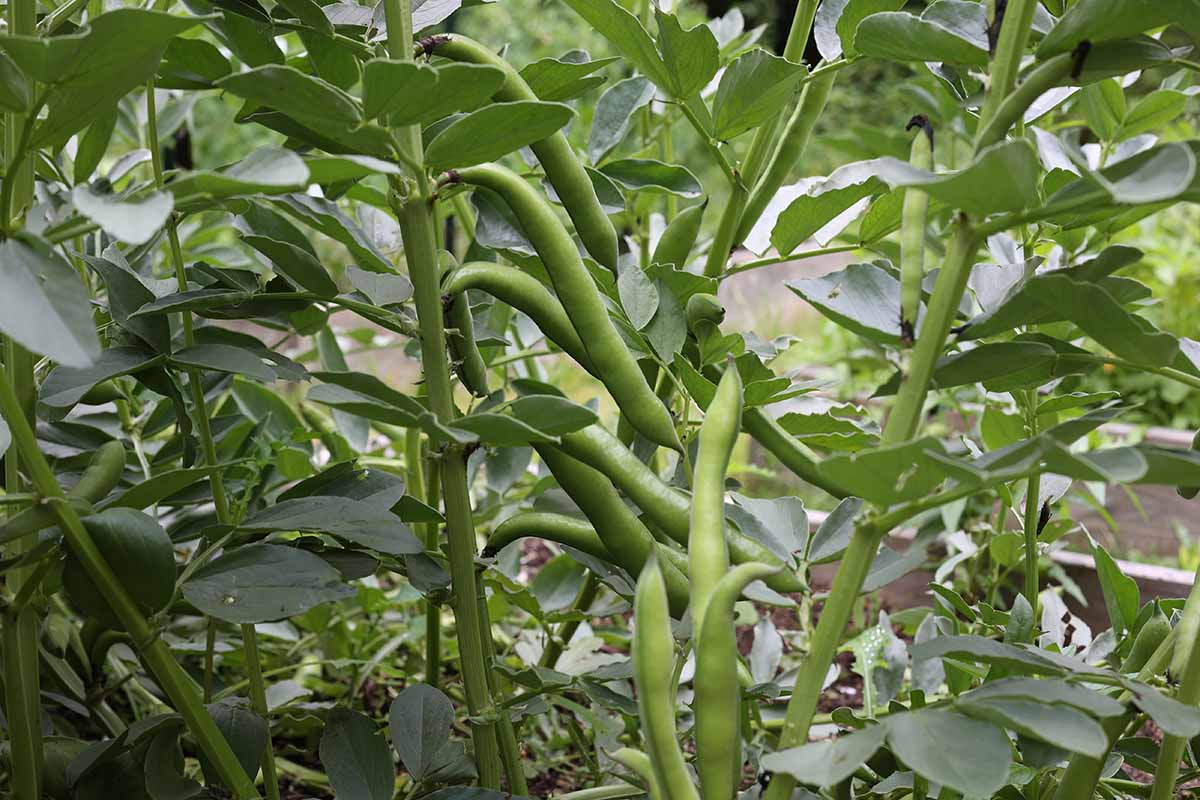
With careful spacing, crop rotation, clean seed, and a watchful eye, you can prevent many issues before they start.
And when something does sneak in, early identification gives you the best chance to limit the damage and protect your harvest.
Growing beans should be rewarding, not stressful. A little knowledge and consistent garden hygiene go a long way toward keeping your plants vigorous, productive, and ready to fill your kitchen with fresh, homegrown flavor.
Still have questions? Any disease-fighting tips that we missed? Let us know in the comments section below!
And for more information about growing beans in your vegetable garden, check out these guides next: