Begonia x hybrida ‘Gryphon’
The Gryphon begonia, Begonia x hybrida ‘Gryphon,’ aka Begonia ‘Gryphon’ or the branded Pegasus™, is not found in the wild.
It is a hybrid produced by the PanAmerican Seed company and suited to outdoor cultivation in Zones 8 to 10. It has traits of both cane and rhizomatous begonias.
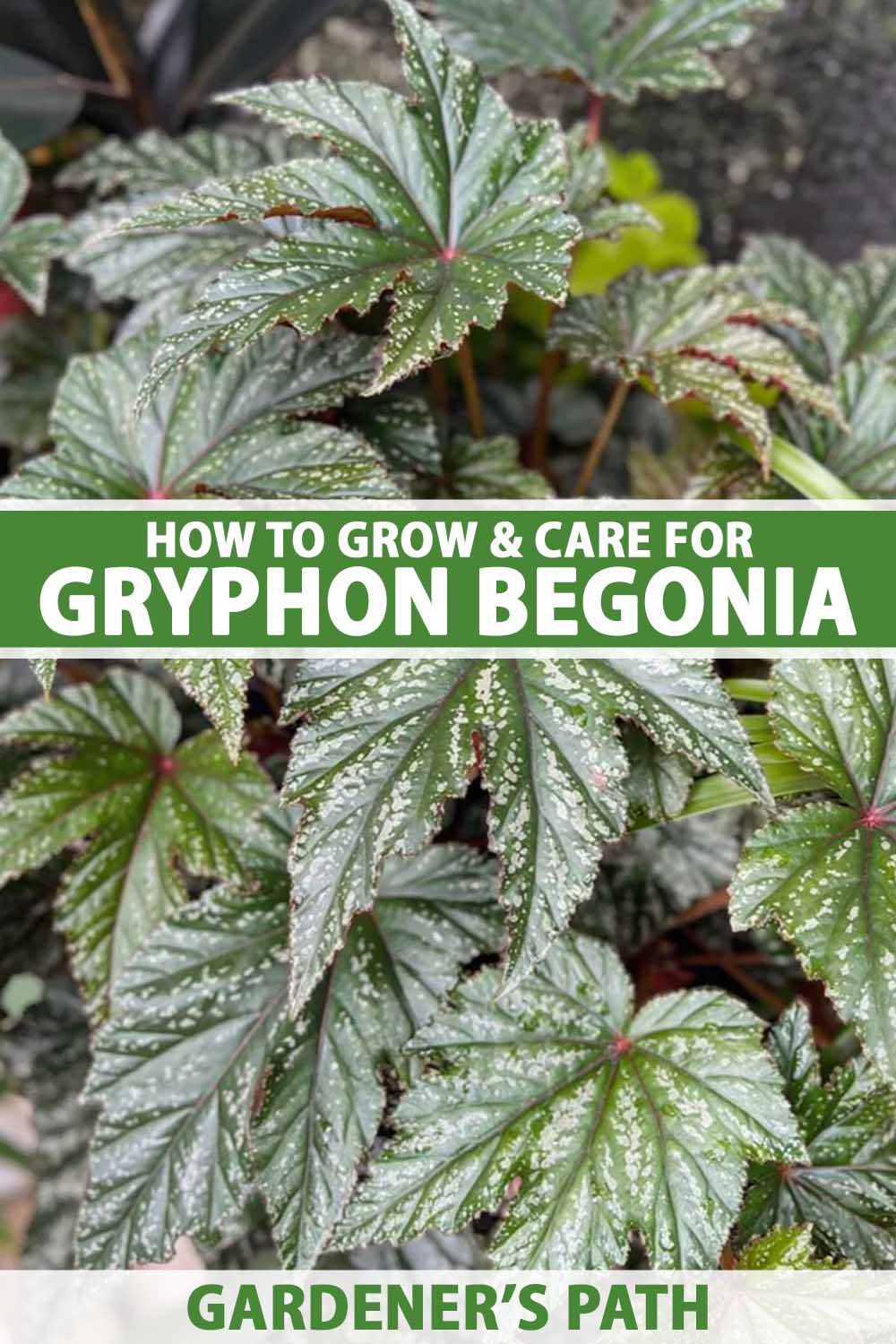
Growers prize this tropical cultivar for its showy foliage. The deeply lobed, palmate green leaves are splashed with silver and measure up to 10 inches across.
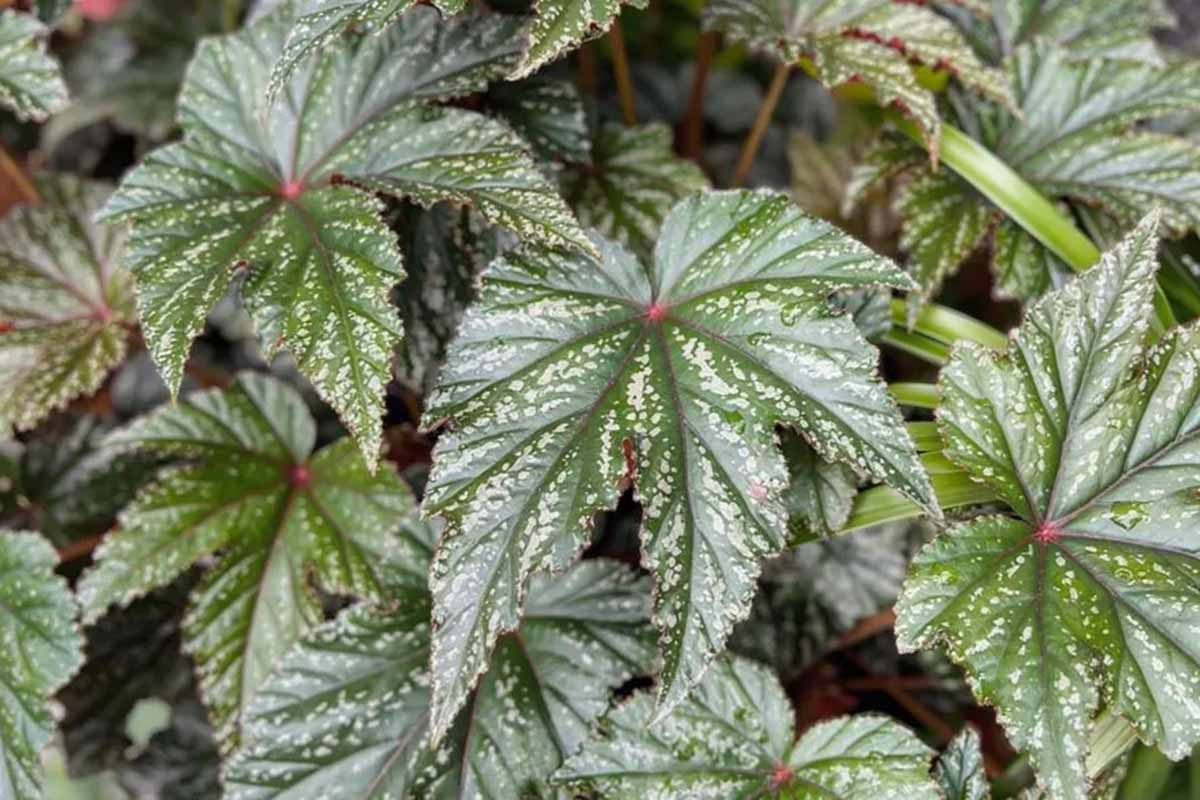
Immature foliage, stems, and the undersides of older leaves are a striking red hue.
As the stems mature, they turn brown and semi-woody. Small pink to white flowers similar to those of rex begonias may bloom, but often go unnoticed.
Read on to learn how to grow and care for the Gryphon hybrid begonia. Here’s what we’ll cover:
What You’ll Learn
Like most begonias, Gryphon prefers a partially to fully shaded location. It makes a decorative stand-alone bed or border specimen and a lively shade garden attraction.
Outside the plant’s hardiness Zones, gardeners have options.
The plants can be enjoyed as annuals that succumb to frost at season’s end, grow in containers to move indoors for the winter, or cultivate indoors year-round as houseplants.
Note that Gryphon is toxic to people and pets so keep it out of reach of curious children.
Quick Look
Common name(s): Gryphon or Pegasus begonia
Plant type: Tender perennial
Hardiness (USDA Zone): 8-10 (outdoors)
Native to: Parentage native to Brazil
Bloom time / season: Evergreen, rarely blooms
Exposure: Full to part shade
Soil type: Fertile, well-draining
Soil pH: 5.5-6.5, slightly acidic to neutral
Mature size: 12 to 18 inches tall and wide
Best uses: Annual, bed, border, container, houseplant, shade garden
Taxonomy
Order: Curcurbitales
Family: Begoniaceae
Genus: Begonia
Species: x hybrida ‘Gryphon’
Regardless of how you grow it, Gryphon needs fertile soil that drains well to keep it healthy and inhibit rotting, the nemesis of begonias.
Let’s find out what else it requires.
How to Grow
Successful cultivation depends on meeting the following cultural requirements.
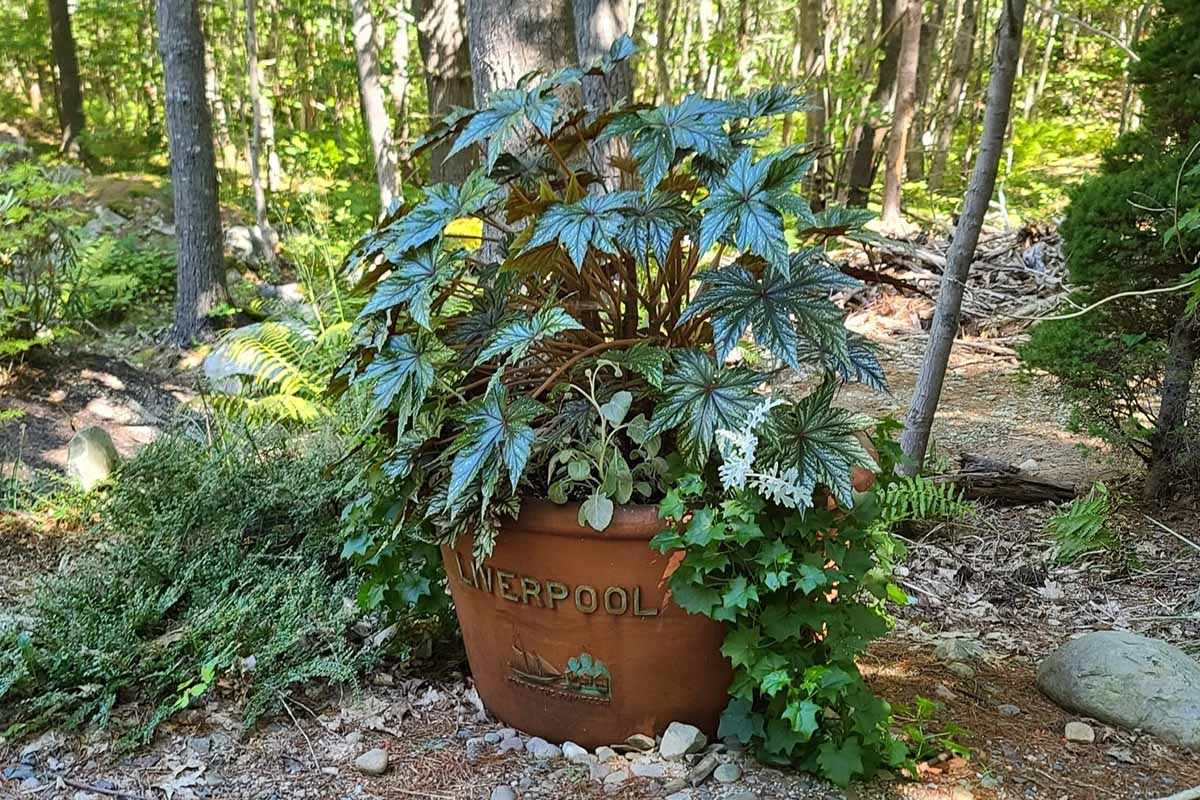
Gryphon begonia does best with daytime temperatures in the 65° to 75°F range and 62° to 67°F at night.
It prefers a moist environment with high relative humidity, generally defined as over 60 percent.
Light
Outdoors, plants grow well in partial to full shade. Indoor specimens require bright, indirect sunlight and do well in north- or west-facing windows.
Soil
Organically-rich, well-draining garden soil with a pH of 5.5 to 6.5 is ideal for cultivation.
Pots should contain a mix of organic matter, such as humus or peat, and inorganic material, such as perlite, to facilitate moisture retention as well as good drainage.
Water
Because of susceptibility to stem rot, it’s crucial to withhold water until the top inch or two of soil are dry.
This hybrid likes moisture, but cannot tolerate a soggy substrate. Use a moisture meter as your guide.
Fertilizer
Gryphon benefits from monthly fertilizer applications during the growing season. Select a well-balanced slow-release, granular product for outdoor plants, and a liquid for houseplants.
The ideal N-P-K ratio is a well-balanced 10-10-10, or similar. Because the flowers are relatively nondescript, it’s not necessary to use bloom-enhancing products.
Where to Buy
You’ll find our subject plant listed under Gryphon and Pegasus™ labels. Beware of descriptions that say it thrives in sunshine.
While morning sunlight may be well tolerated, direct afternoon exposure, especially in the warmest regions, is likely to fade and scorch the foliage.
Maintenance
Begonias with an upright growth habit benefit from occasional late spring pruning to promote a bushy appearance.
Select stems at random, no more than one-third of the total, to avoid shock. Prune just above a leaf node to jumpstart lateral branching.
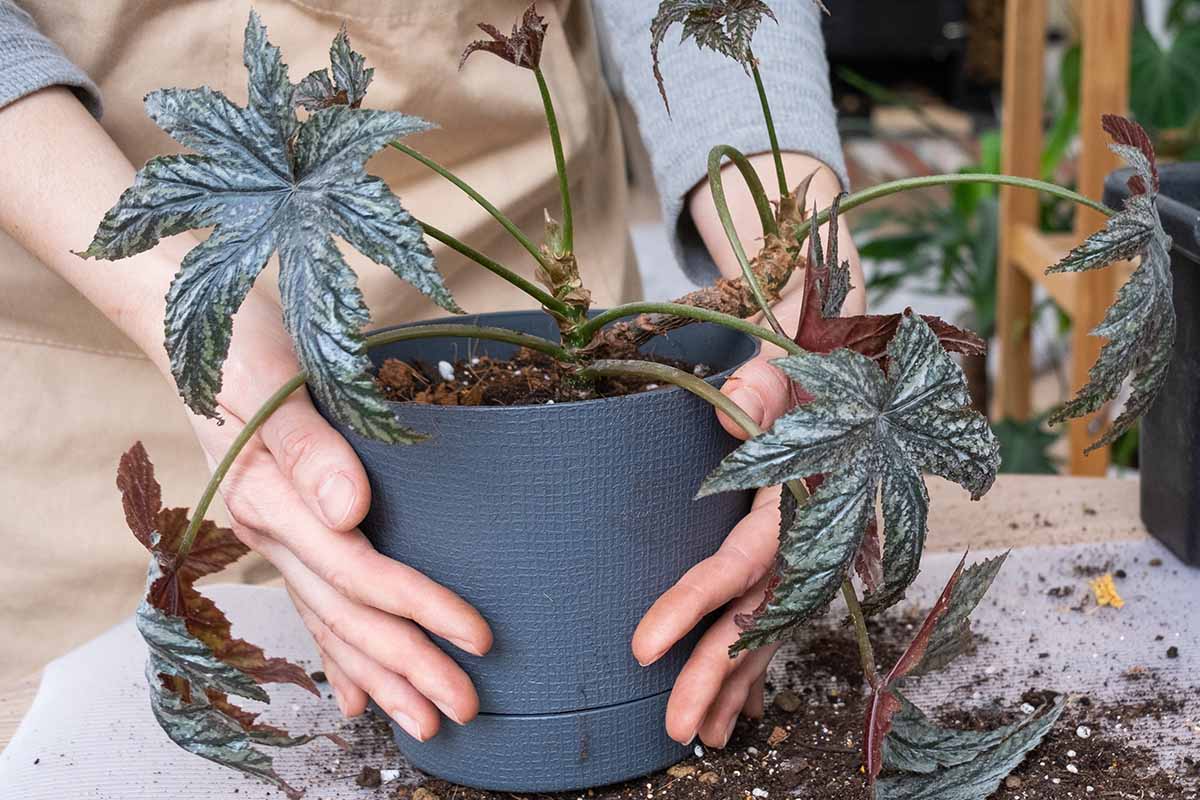
Begonias have shallow roots. When grown in containers, they prefer a snug fit.
However, when the roots protrude from the drainage holes and the soil starts drying out rapidly, it’s time to repot.
Choose a vessel approximately two inches wider and deeper than the root mass. Avoid overly deep containers to prevent slow draining and oversaturation.
Set the crown, where the roots and stems meet, at the same depth as originally, or slightly above the soil surface.
The soil should fill the pot three-quarters of the way to allow for easy watering without overflow.
Additional maintenance includes snipping off damaged or dead leaves just above their point of origin to maintain vigor and aesthetics.
And finally, container gardeners in regions that freeze should bring pots indoors late summer to fall, before the temperature drops below 62°F.
Propagation
To begin, you’ll need seeds, a cutting, or a nursery start.
Let’s discuss.
From Seed
Because Gryphon is a hybrid, you’ll need to purchase F1 or first generation seeds from a reputable seed company guaranteed to produce the hybrid traits.
If you were to have an existing plant that bloomed, the seeds you collect from it would not produce a replica of the parent plant.
Germinating the seeds is challenging, as it is necessary to control the temperature and humidity at 72° to 78°F and 100 percent, respectively.
If you purchase seeds, closely follow the package instructions for best results.
Easier ways to begin cultivation are with a cutting from an existing plant or the purchase of a nursery start.
From a Cutting
In the spring, during active growth, select a stem with several joints or leaf nodes that resemble the markings on bamboo. It should be four to six inches long.
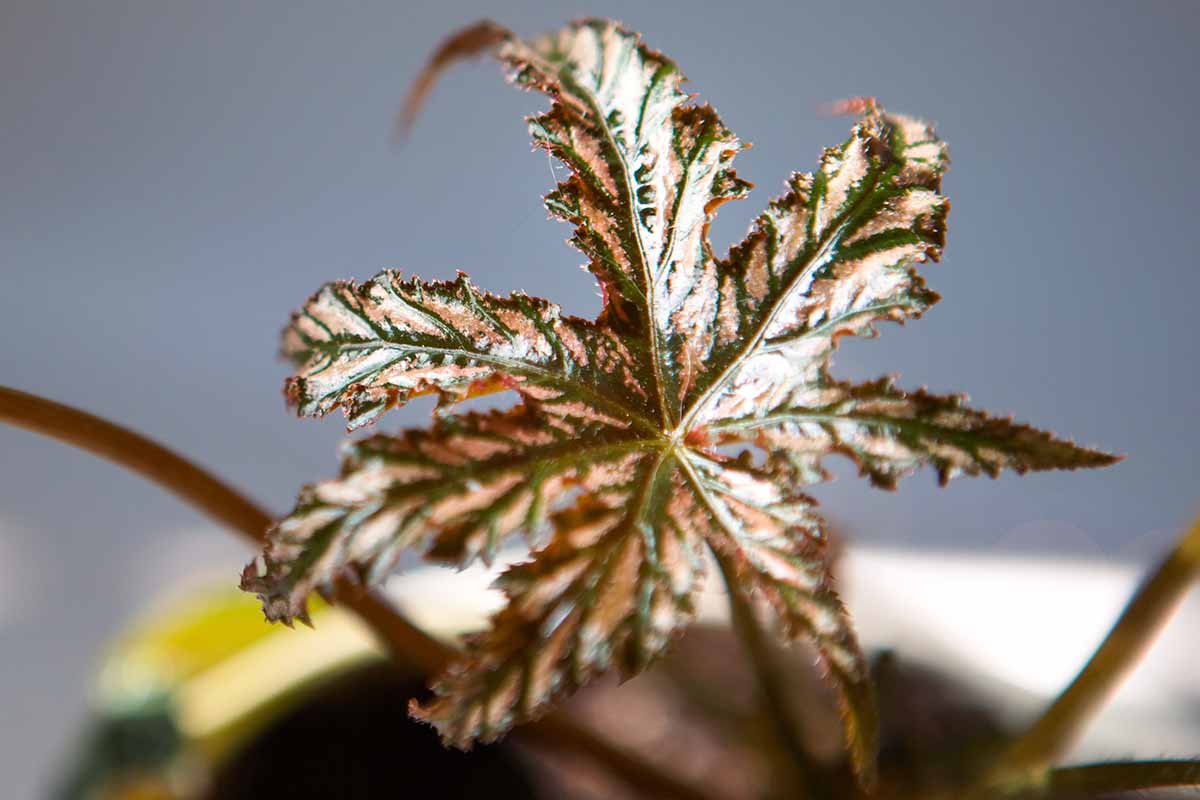
Remove the lower leaves, if there are any, so you have at least two leafless nodules and at least one leaf sprouting from the top of the stem.
Dip the cut end of the stem into rooting hormone powder.
Fill a three- to four-inch, well-draining pot three-quarters full of an airy, moisture-retentive, all-purpose potting soil, or use a homemade mixture of half peat moss and half perlite.
Use a chopstick or pencil to make a two- to three-inch hole in the center of the soil.
Bury the cut end of the stem in the hole so at least two leaf nodes are below the soil.
Tamp the soil to hold the stem firmly upright.
Water gently but thoroughly and tamp the soil again.
Place the pot in bright, indirect sunlight indoors.
Water at planting time and again when the soil is dry at a depth of one to two inches.
Transplanting
When transplanting a rooted cutting or nursery start to the garden or a permanent pot, set the crown high in the soil, covering it lightly, rather than burying it to prevent stem rot.
Ground soil should be free from debris and crumbly to a depth of six to eight inches.
The ideal potting soil is a combination of half organic and inorganic matter for an airy mix that is moisture retentive and well-draining.
Space plants 12 to 18 inches apart to promote optimal airflow and inhibit fungal growth.
Pests and Disease
When its cultural requirements are met, Gryphon is unlikely to suffer from pests and disease.
However, with moisture stress and/or overcrowding, it may fall victim to several common sapsucking pests and fungal conditions.
Spider mites spin webs on leaf undersides and leave foliage spotted and yellow.
Mealybugs, thrips, and whiteflies feed on plant juices, excreting sticky “honeydew,” a breeding ground for fungal sooty mold.
Unchecked, the foliage yellows and wilts, and overall growth is stunted.
Treatments for sapsucking pests include spraying them firmly with water and applying neem oil, a naturally derived fungicide, insecticide, and miticide.
Diseases to be aware of include Botrytis gray mold, powdery mildew, and stem rot.
Botrytis presents with brown, water-soaked lesions.
It is challenging to eradicate once underway, but by removing affected foliage and treating the remaining with a copper-based fungicide, you may be able to salvage an affected plant.
Powdery mildew appears as a whitish-gray fuzzy coating. It is easier to treat than Botrytis and requires the removal of affected leaves and treatment with neem oil.
Stem rot occurs when a fungus-like water mold called an oomycete infiltrates plant tissue, rendering it limp and sodden.
The removal of rotten portions may enable gardeners to salvage a plant. However, in oversaturated soil, the mold continues to thrive.
Avoid under- or overwatering and maintain good airflow to help prevent both pests and disease from taking hold.
A Tropical Star
Gryphon begonia adds a silver shimmer to shady landscapes, bringing dim recesses into eye-catching focus.
It also shines as a houseplant, its large, variegated foliage adding an island ambiance to indoor decor.
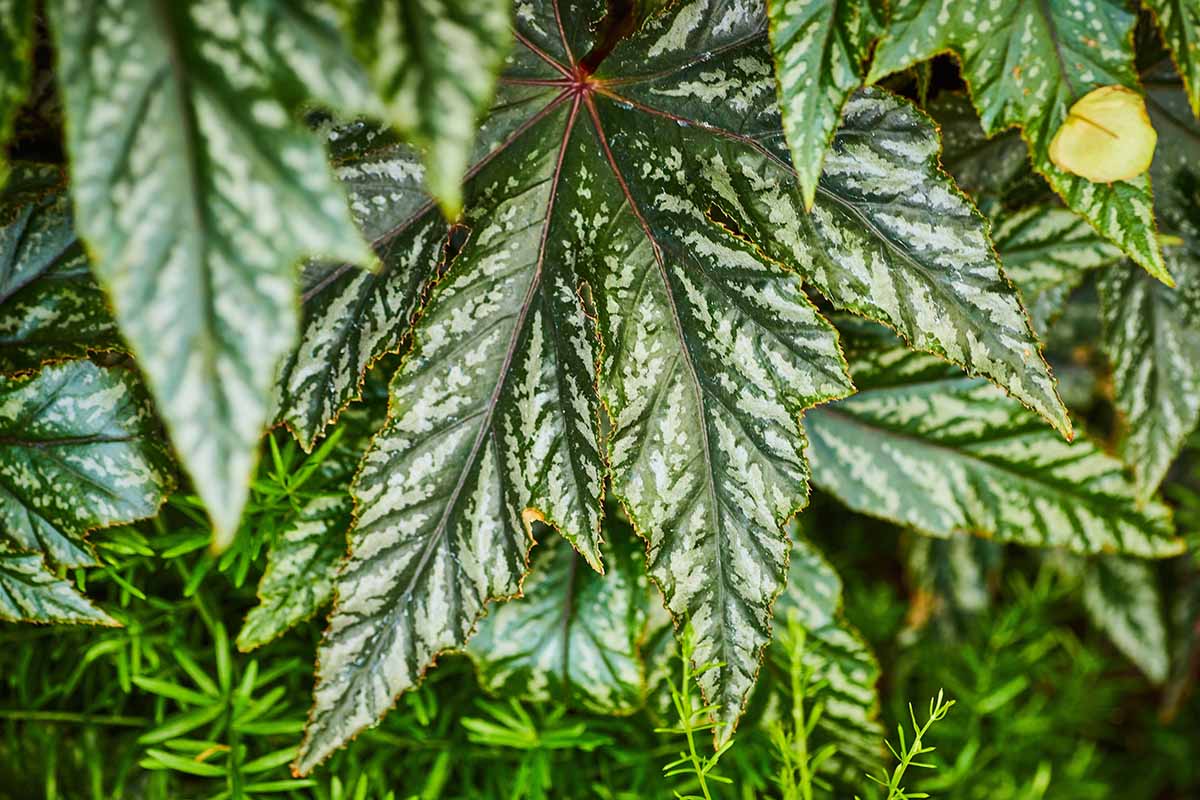
Whether in-ground or potted, growers should provide fertile, well-draining soil and wait for the top one to two inches of soil to dry before watering.
When its cultural requirements are met, hybrid Begonia ‘Gryphon’ is a tropical star.
Do you grow Gryphon begonias? Please share your tips in the comments section below.
If you found this article informative and want to learn more about begonias, we recommend the following: