
Babiana nervosa (syn. B. stricta)
Baboon flowers (Babiana nervosa) are cormous perennials native to South Africa, cultivated for their spikes of fragrant, funnel-shaped flowers that bloom in spring.
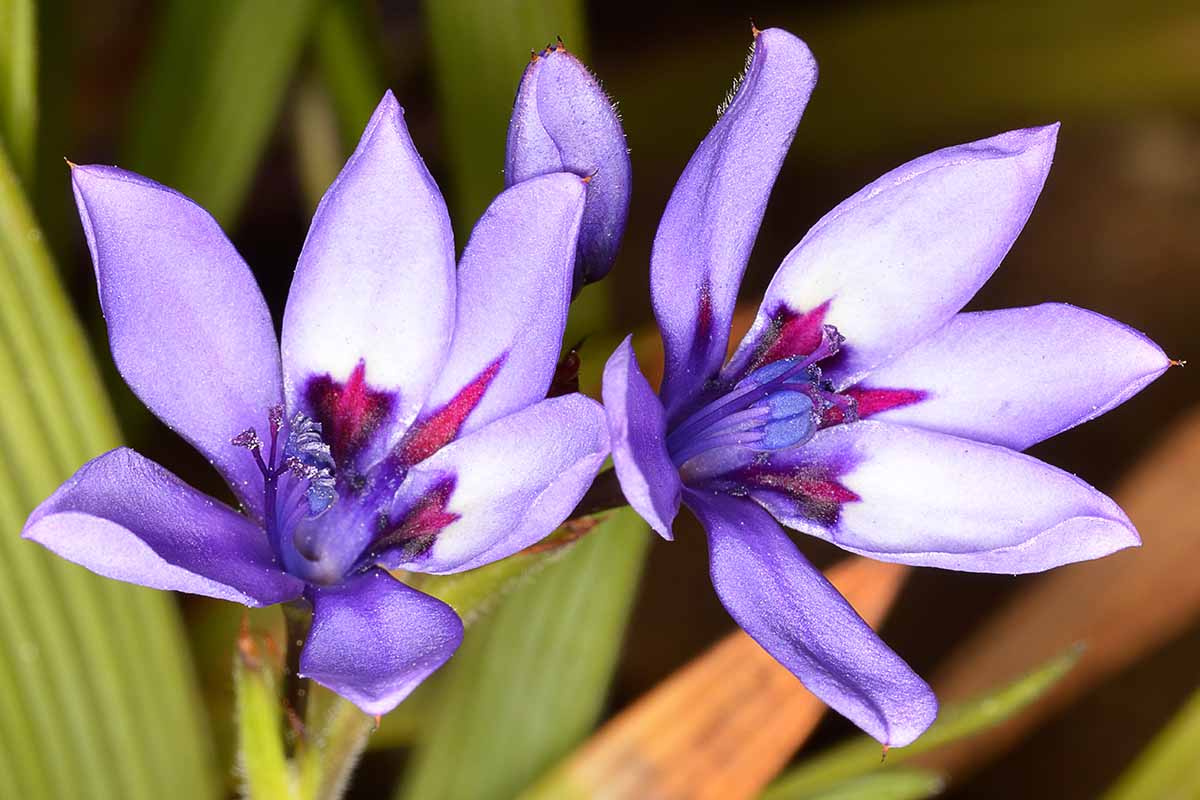
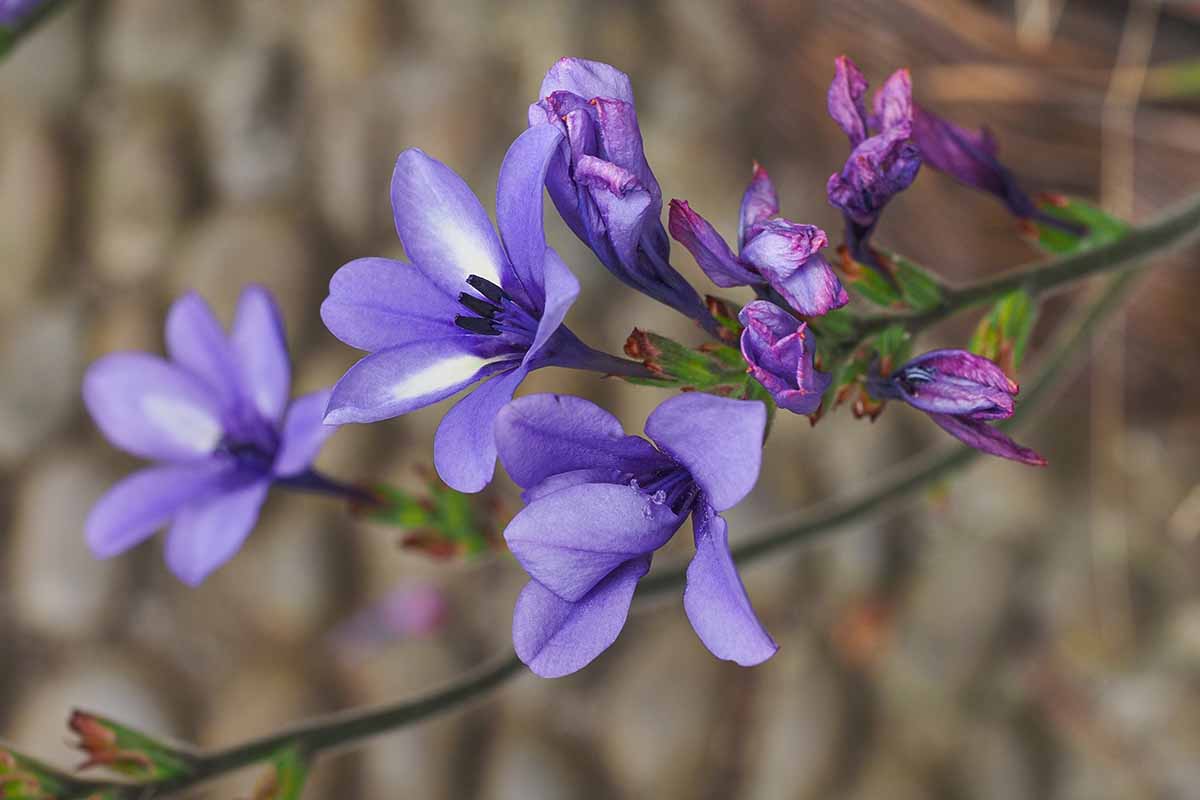
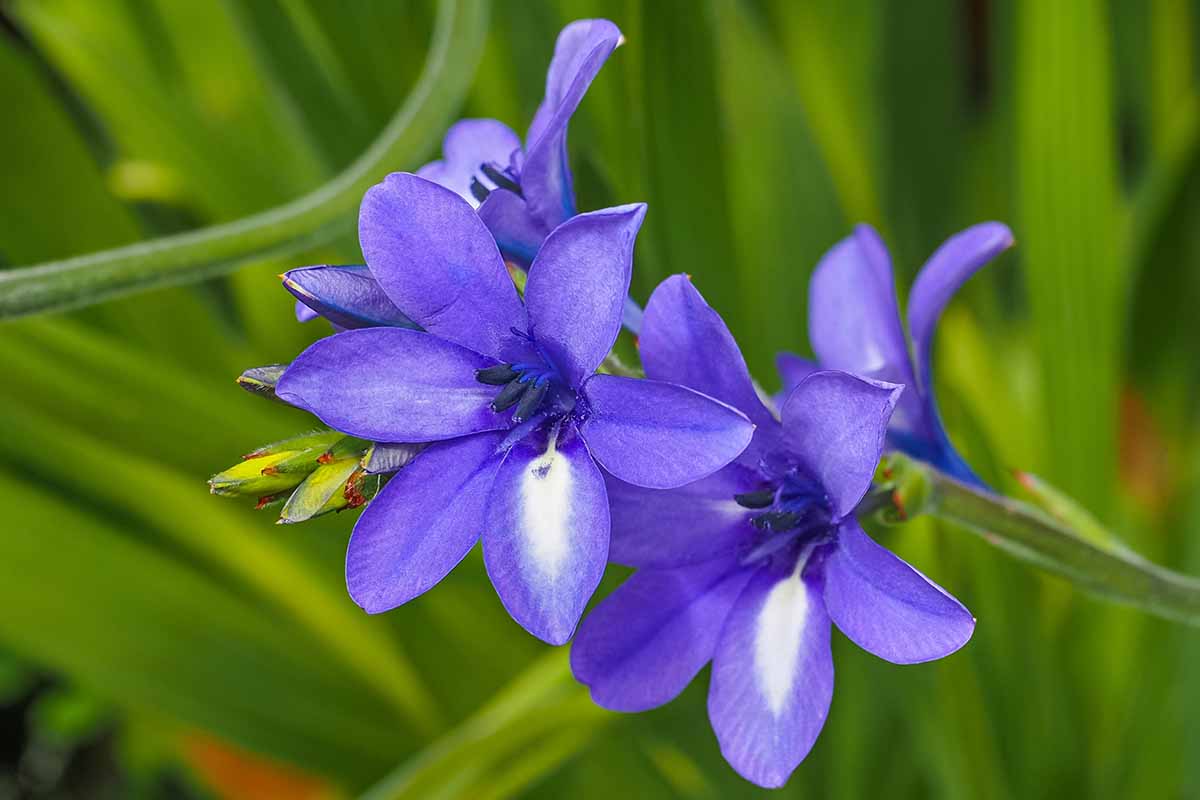
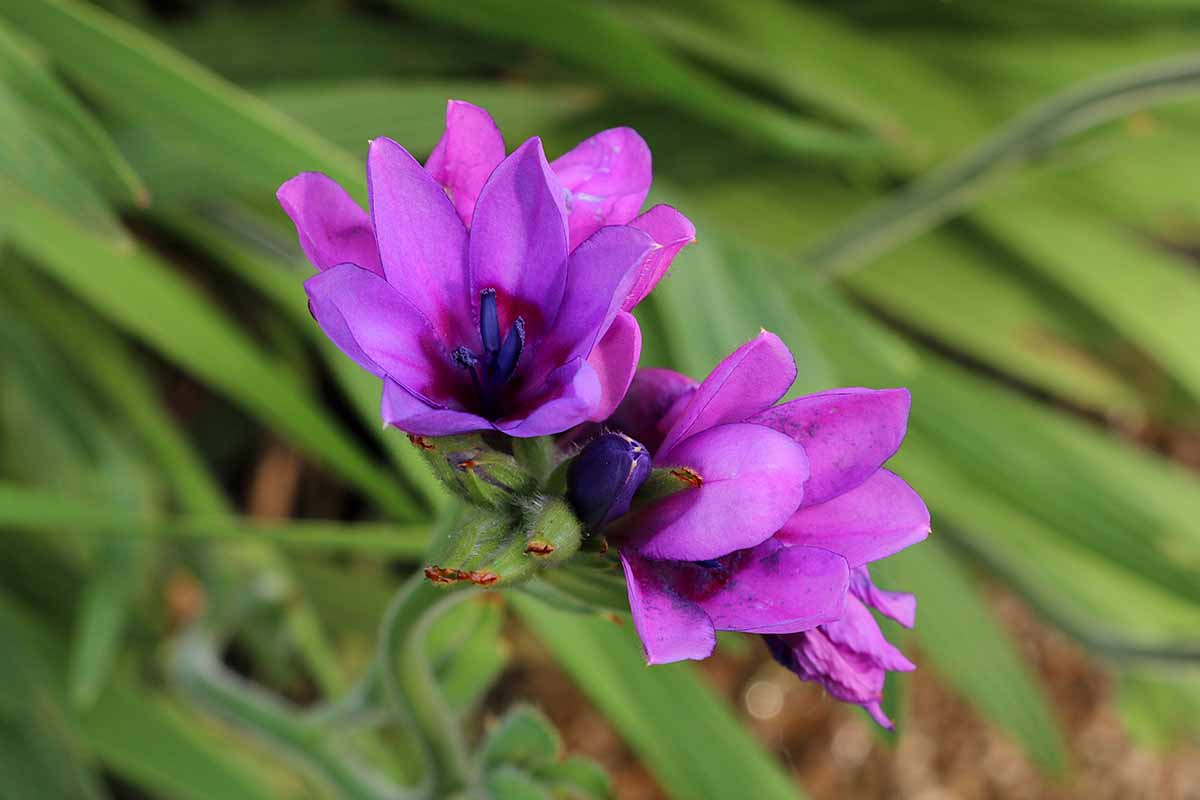
The blue, purple, or yellow flowers typically feature contrasting light or dark markings near the center with dark blue anthers.
Each flowering stem produces about six two-inch-wide flowers that have a delightful, lemon-like scent.
The upright, lance-shaped leaves are pleated, with prominent veins and they form clumps four to eight inches tall, spreading up to two feet wide.
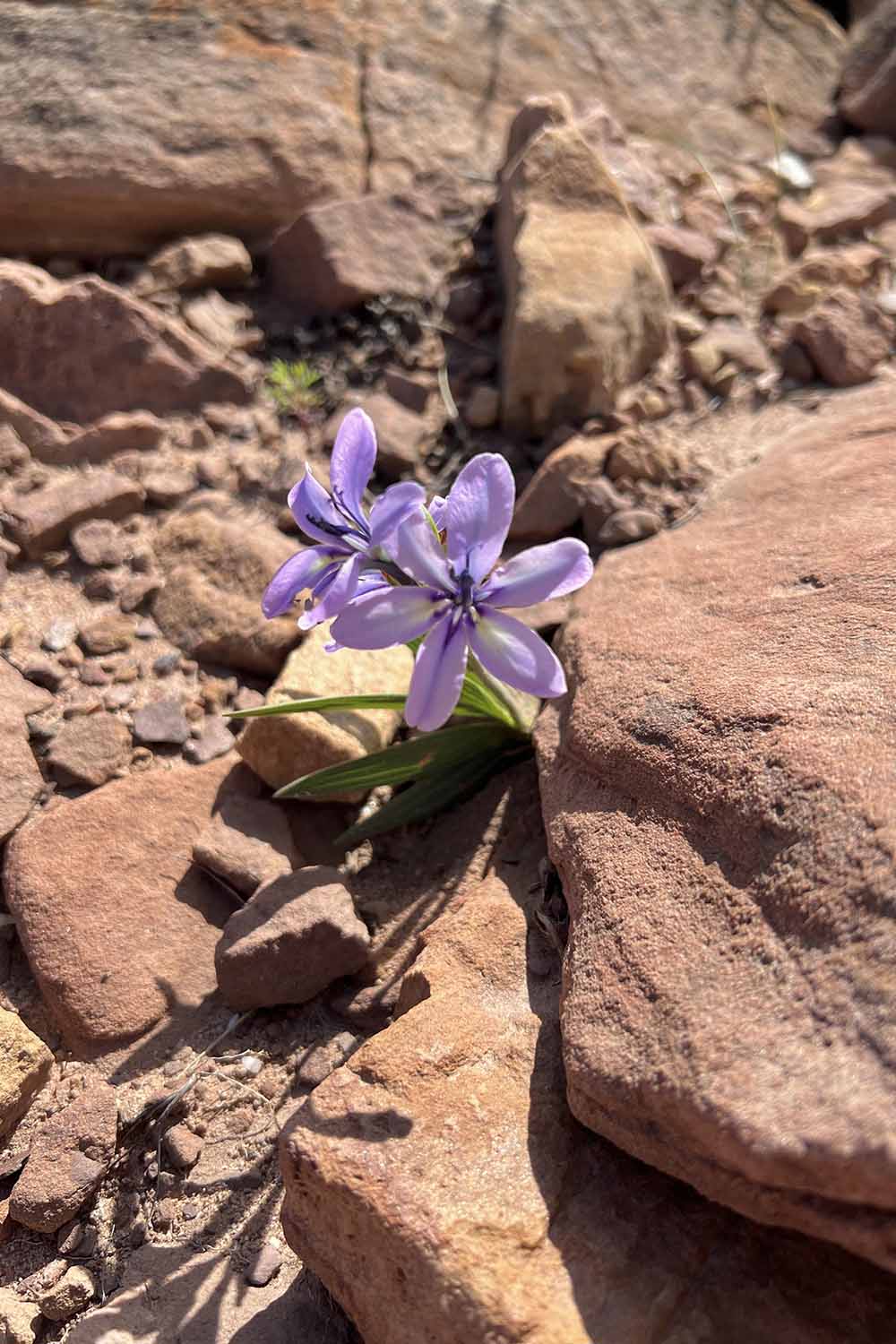
Native to the Western Cape, babiana grows through the cool, wet winter season and goes dormant during the hot, dry summer.
Hardy outdoors in USDA Hardiness Zones 9 and 10, baboon flowers also do well in containers that can be brought indoors for the growing season.
Are you ready to add baboon flowers to your landscape? Here’s what I’ll cover:
What You’ll Learn
There are about 90 species in the Babiana genus, a member of the iris family, Iridaceae.
Nearly all of them are native to southern Africa, with the greatest concentration in the Western and Northern Cape regions of South Africa.
The genus name comes from the Afrikaans word bobbejaan, meaning baboon, a reference to the baboons that dig up and eat the corms.
The Afrikaans common names, bobbejaantjie and bobbejaanuintjie are diminutives of that same word.
You’ll also see it listed as blue freesia in some nursery catalogues as the flowers resemble those of true freesias.
The plant has been classified as B. stricta for well over a century, but botanists now treat that name as a synonym of B. nervosa.
You’ll still find it labeled Babiana stricta in catalogs and at garden centers. The species epithet nervosa means “veined,” for the leaves.
Quick Look
Common name(s): Baboon flower, blue freesia, bobbejaantjie
Plant type: Cormous perennial (deciduous geophyte)
Hardiness (USDA Zone): 9-10 (outdoors)
Native to: Western Cape, South Africa
Bloom time / season: Spring
Exposure: Full sun to partial shade
Soil type: Sandy to loamy, well-draining
Soil pH: 6.0-7.0, neutral
Time to maturity: 2-3 years from seed, 1 year from corms
Mature size: 4-8 inches tall by 24 inches wide
Best uses: Containers, cottage gardens, borders, pollinator plantings, rockeries
Taxonomy
Order: Asparagales
Family: Iridaceae
Genus: Babiana
Species: Nervosa (syn. stricta)
Baboon flowers grow from small corms that are dormant through summer and resume growth in fall. Each corm produces a fan of pleated leaves held upright and one or more flower spikes.
The flowers open along the upper part of the spike, six or so to a stem. Each funnel-shaped flower has six tepals and a sweet, citrusy fragrance.
The plant’s growth cycle is adapted to a Mediterranean-type climate with moist, mild winters and bone-dry summers.
In the garden, they are well-suited to sunny rockeries, front-off-border placements, and cottage-style plantings.
The flowers attract a host of beneficial insects, making them an ideal addition to pollinator gardens.
They also thrive in containers, providing early-season color in mild climates.
How to Grow
Baboon flowers are easy to grow when provided with the right conditions.
Babiana can be grown in-ground year-round in regions where they are hardy and in containers elsewhere.
Since the active growth period is during the cool months, in Zones outside their hardiness range they can be grown in containers in a bright, frost-free spot or in a greenhouse.
Unlike many summer-flowering bulbs, these should not be lifted and stored over the winter months.
Plant the corms in fall, setting them three to four inches deep and two to four inches apart, with the pointed growing tip facing upwards.
Light
Choose a spot in full sun for the most prolific flowering. Baboon flowers tolerate part shade but perform best in full sun.
In the Northern Hemisphere, a south- or west-facing aspect provides the warmth and light these South African natives need.
Soil
Baboon flowers are not fussy about soil type, growing happily in lean soil provided it drains well. During the dormant summer months, waterlogged soil will rot the corms.
Ideally, the soil will be organically-rich, loose, and well-draining. If you’re dealing with heavy clay, grow in a raised bed or container instead.
Shoot for a pH of between 6.0 and 7.0, though you don’t need to change anything if your earth is outside that range.
In containers, use a well-draining potting mix – amend with grit if you want to improve drainage.
Water
Keep the soil evenly moist through fall, winter, and spring, while the plant is in leaf and during flowering. Add water whenever the surface of the soil begins to dry out.
After flowering, when the leaves start to turn yellow in early summer stop any supplemental watering as the corms go dormant.
Wet soil over summer dormancy will cause the corms to rot.
A layer of mulch can help retain moisture during the growing season if you live in a very dry region.
Fertilizer
Provided your soil isn’t very depleted, you can skip fertilizing baboon flowers. If you want, a side-dress of compost as the shoots start to appear is enough.
When grown in containers, from the second year onwards, provide a balanced liquid fertilizer diluted to half strength every three to four weeks during the growing season.
Stop fertilizing after the blooms have faded.
Container Growing
If you’re growing your baboon flowers in a container, choose a pot that’s at least six inches deep and make sure it has adequate drainage holes.
The material doesn’t matter, as long as there is adequate drainage.
Space your corms two to four inches apart and plant them three to four inches deep.
In regions outside of their hardiness range, move the container under cover before the first fall frost and keep it in a bright, frost-free spot and maintain even moisture.
Taper off watering after the flowers fade and the foliage starts to wane.
Where to Buy
Corms are typically sold in fall through bulb specialists, online retailers, and larger garden centers.
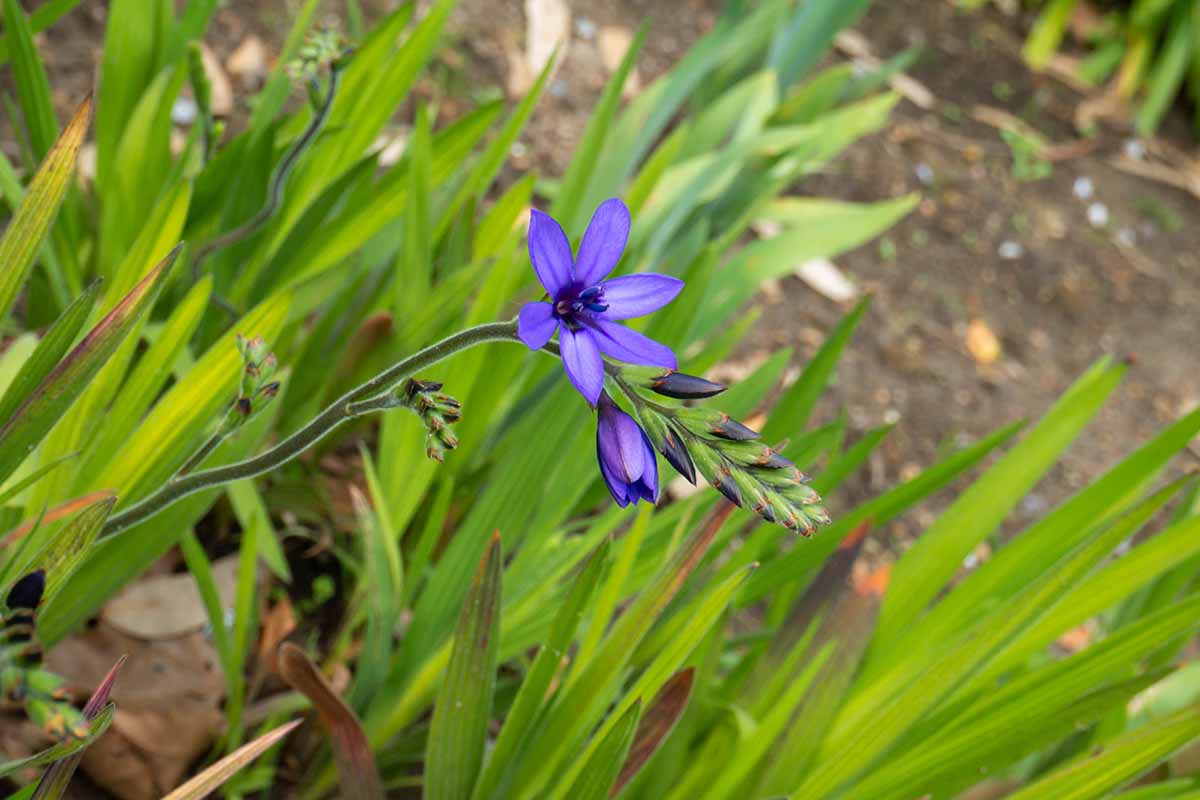
There are a couple of named cultivars worth seeking out.
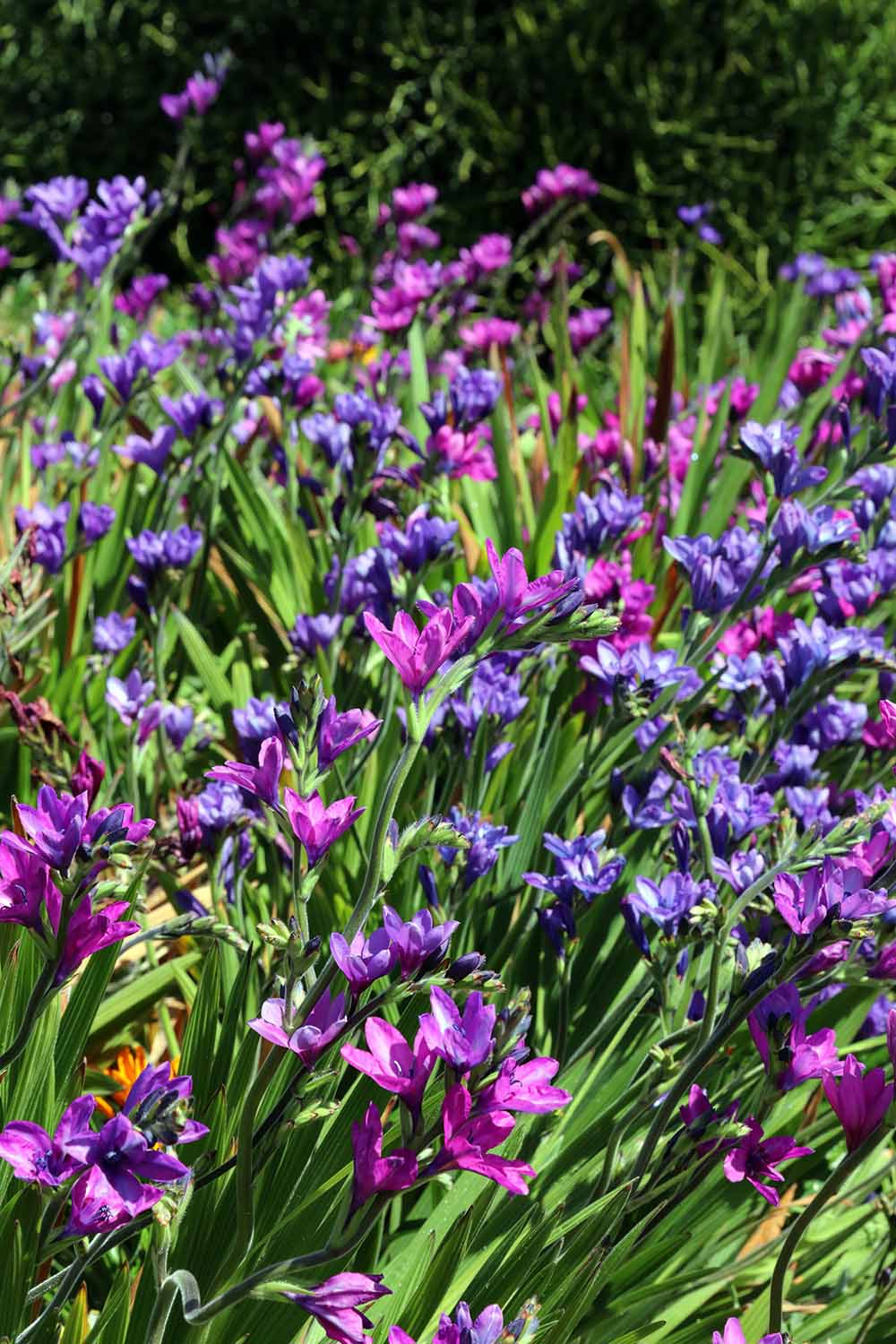
‘Purple Star’ features deep purple blooms and ‘Tubergen’s Blue’ produces lavender-colored flowers with a dark blotch in the center.
There are a number of Babiana hybrids as well, though these are usually simply listed as baboon flowers.
Mixed-color collections sold simply as baboon flower or blue freesia are also common.
Maintenance
In-ground plantings in mild climates need little attention beyond watering during the growing season in the absence of rain.
Let the foliage die back naturally after flowering rather than cutting it back – the leaves help to feed the corm for next season’s growth.
Once the leaves have withered, the dead foliage can be cut back to tidy the garden.
If you live in a region with very wet summer weather, you can lift and store the corms to prevent them from rotting in the ground. Do this after the foliage has died back and replant in early fall.
Over the course of a few growing seasons, healthy plants produce offsets which form large clumps. To prevent overcrowding, divide and replant as discussed below.
Propagation
Baboon flowers are propagated from cormlets, the small offsets that form around the base of mature corms, or from seed. Offsets are faster and will produce clones of the parent plant.
To divide, lift dormant corms after the foliage has died back and gently pull away the cormlets clustered around each one.
Store them in a dry location for the rest of the summer and replant in early fall. The largest offsets may flower their first season, smaller ones in a year or two.
To grow from seed, sow in fall in a gritty, well-draining potting mix. You can expect the seeds to germinate within about six weeks, but it’ll be two to three years before the new plants are mature enough to flower.
Pests and Disease
Unless you live in baboon territory, Babiana are not really troubled by pests, but thrips and spider mites may feed on the foliage, especially in warm, dry conditions.

A strong jet of water or application of insecticidal soap should deal with light infestations.
Corm rot and soft rot can be a problem when the soil stays wet during summer dormancy.
Southern blight, a fungal disease that rots the corm, can also be an issue during wet summer weather.
If your region experiences a lot of rain during the summer months, consider lifting the corms and storing them in a dry spot before replanting in fall.
This Baboon’s Got Blooms
The citrus-scented blooms are pretty enough for front of border placements or patio pots as well as providing forage for bees and other pollinators.
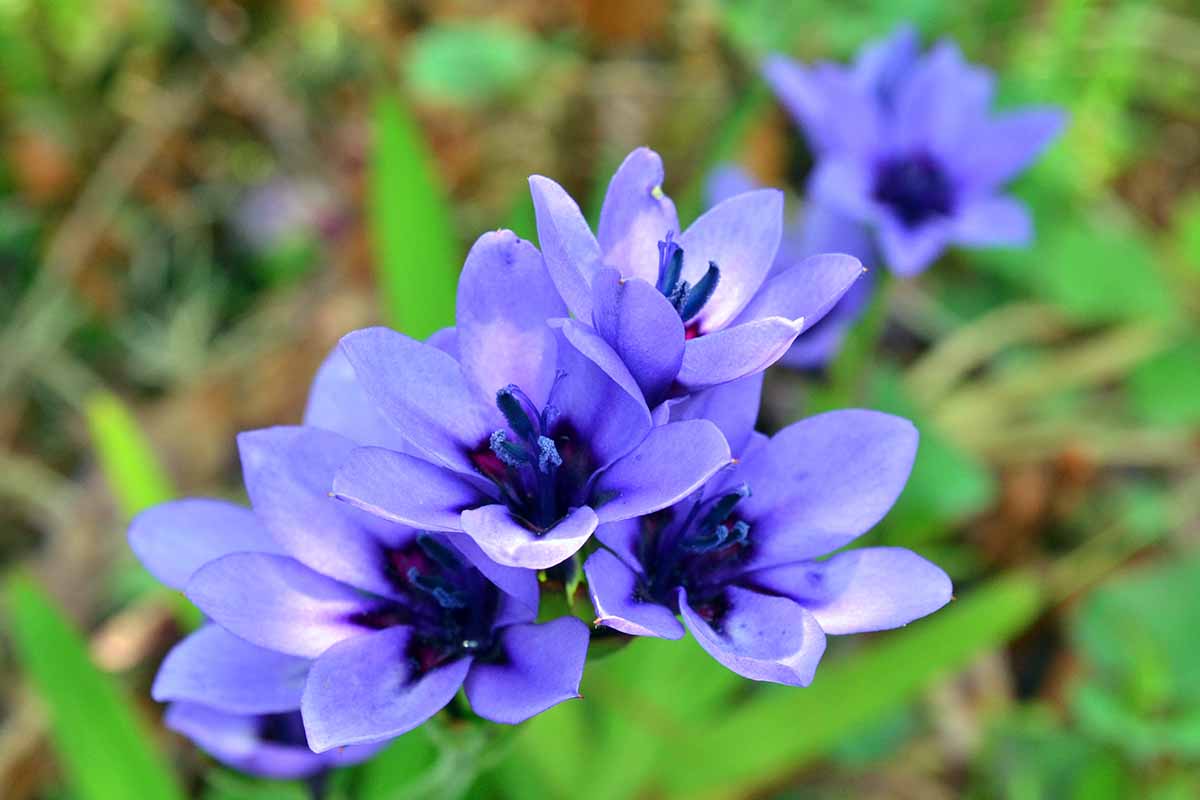
Easy-care, these South African natives provide spring color in mild climates with little fuss from the gardener. Plus, who doesn’t love a plant called “baboon flower”?
Are you growing baboon flowers in your landscape? Tell us how they’re doing and share your top tips in the comments section below.
And for more information about growing flowers in your garden, add these guides to your reading list next: