Ageratum spp.
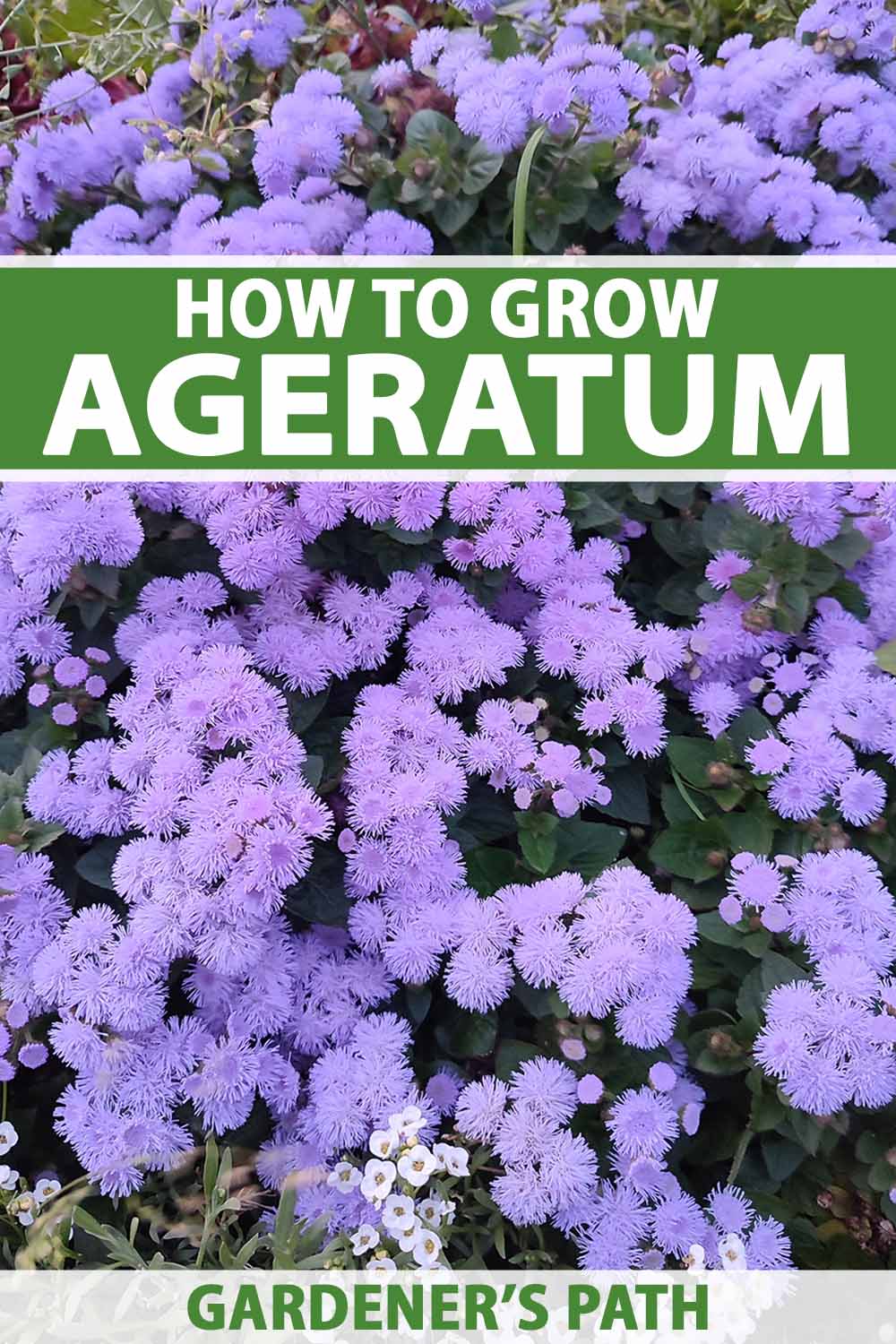
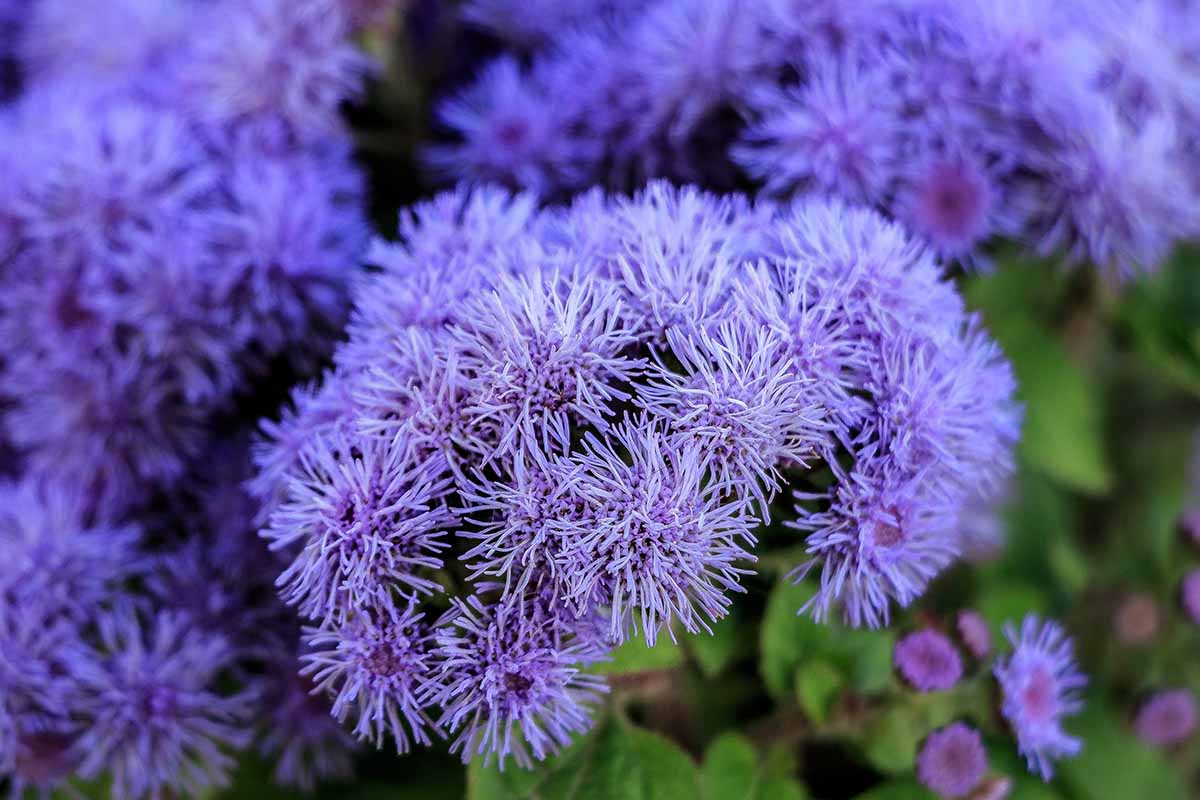
Adorned with clusters of small, fluffy pompom-like flowers, ageratum (Ageratum spp.) is a popular, easy-to-grow annual that provides beautiful blooms all summer long.
Set in mounds of lush foliage, upright stems produce multiple branches of frilly blooms in colors of blue, lavender, magenta, pink, purple, and white that make a superb addition to cutting gardens and add cheery delight to beds, borders, containers, and edging.
They also make eye-catching drifts when massed for butterfly and cottage gardens and mini varieties work in rockeries as well.
We link to vendors to help you find relevant products. If you buy from one of our links, we may earn a commission.
Also known as floss flower, ageratum has many similarities to its close cousin, the aster – but with adorable moptop blooms and a rich fragrance reminiscent of anise or mint.
The nectar-rich flowers are highly attractive to many pollinators – they have a Svengali-like pull for butterflies – but are typically left alone by herbivores such as deer and rabbits.
Plants range in size from six to 36 inches tall and give good versatility with long-lasting color, both in the garden and in floral arrangements.
Typically purchased as bedding plants in spring, ageratum is also quick and easy to start from seed.
So is your garden ready for the fluffy, fragrant fun of floss flowers? Then let’s unearth the simple steps of how to grow and care for ageratum!
Here’s a quick look at what’s ahead:
What You’ll Learn
A genus of about 50 annuals and perennials in the Asteraceae family, Ageratum is indigenous to tropical and warm temperate regions of Central America and Mexico, with a handful of species found in the southern US.
The most common garden species is Ageratum houstonianum and its cultivars.
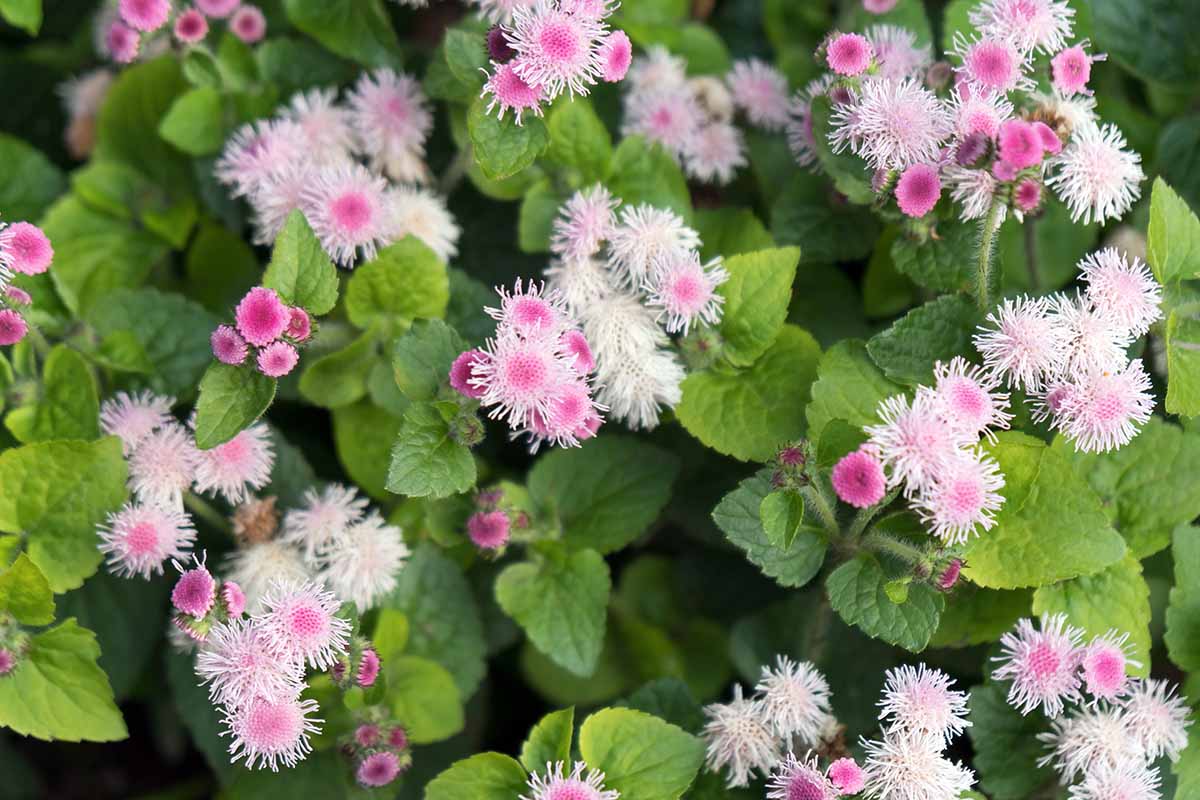
A frost-tender annual from Mexico, species flowers are typically mauve-blue but hybrids are available in a range of blue and rose tones, plus white.
The frothy flowers are made up of dense pincushions of thin, tubular florets that give an easy, shaggy look.
Quick Look
Common name(s): Ageratum, floss flowers
Plant type: Herbaceous annuals or perennials
Hardiness (USDA Zone): 10-11
Native to: Mexico
Bloom time / season: Late spring to first frost
Exposure: Full sun with afternoon shade in hot regions
Soil type: Fertile, well-draining
Soil pH: 5.5 to 7.0, slightly acidic to neutral
Time to maturity: Blooms in 55-70 days from transplants, 80-100 days from seed
Mature size: 6-36 inches tall by 6-18 inches wide
Best uses: Beds, borders, containers, drifts, cutting
Taxonomy
Order: Asterales
Family: Asteraceae
Genus: Ageratum
Species: Houstonianum
Soft, shield-shaped leaves of mid-green have a lightly crinkled texture with a sharp, mint-like fragrance – stems of foliage are often added to bouquets and cut flower arrangements on their own merit.
Along with a long flowering time of late spring to first frost, the flowers are long-lasting and hold their colors well, making them a great choice for cut arrangements.
A popular bedding plant, ageratum is one of the best cut-and-come-again flowering annuals, blooming for long periods when harvested regularly.
Forming small mounds or tussocks, plants range from six to 30 inches tall with a spread of six to 18 inches.
Shorter varieties are an ideal choice for beds, borders, edging, and in containers, plus they also make a handsome addition to rock gardens, provided you keep the soil evenly moist.
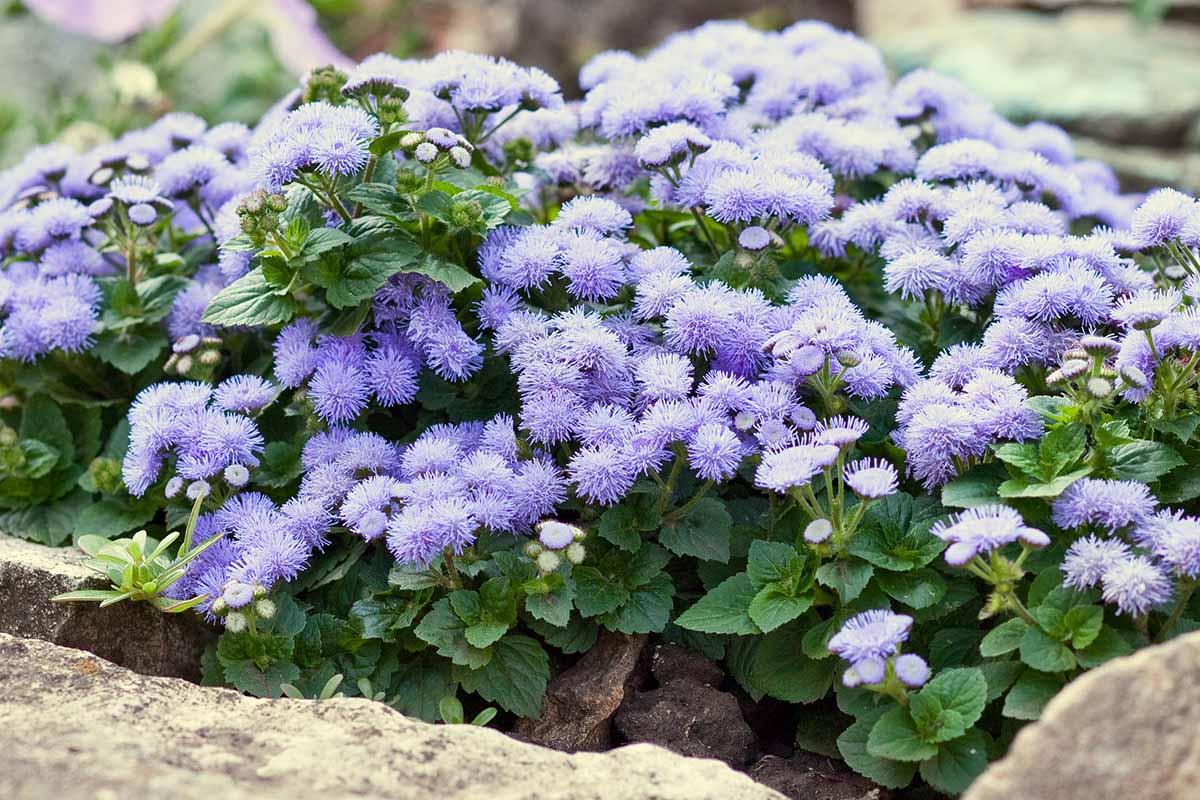
Taller varieties are suitable for the middle and rear of beds and borders and in butterfly, cottage, and cutting gardens as well.
And according to my mother, if you watch the plants carefully after a rain shower, you’ll see the wee folk – garden pixies – flying out from under the flower clusters where they sheltered to stay dry!
Typically grown as annuals, floss flowers are hardy in USDA Zones 10 and 11 where they will grow as biennials or perennials.
And it should be noted that all plant parts are toxic to humans, livestock, and pets if ingested.
How to Grow
Caring for ageratum and encouraging an abundance of flowers is simple and straightforward. Let’s look at the details.
Light
Floss flowers prefer a full sun location but tolerate some shade or dappled light, however flowering does decline in too much shade.

In areas with scorching hot sunshine, light afternoon shade helps to protect plants and prevent wilting.
Soil
Ageratum plants grow best in fertile, well-draining soil.
To prepare garden soil, loosen to a depth of eight to 12 inches.
For each plant, mix in a shovelful of organic material such as compost, leafmold, well-rotted manure, or worm castings.
If needed, mix in one shovelful of gritty materials to improve drainage, using the likes of landscape sand, pea gravel, crushed shells, or stone chips.
Before planting, stir in one tablespoon of bone meal or a balanced, slow-release fertilizer such as 4-4-4 NPK.

If you need a recommendation, I use this all natural granular fertilizer, available at Burpee.
Use a similar fertile, well-draining potting soil for containers.
Water
For the best floral display, ageratum needs regular water applications, especially in hot weather.

Provide one inch of water per week and allow the top one or two inches of soil to dry between applications.
More frequent water applications may be needed during hot spells and for container-grown ageratum plants.
To thwart fungal pests like powdery mildew, water in the morning to manage humidity and allow plants to dry before nightfall.
Avoid overhead watering as well – a drip irrigation system is ideal.
Temperature and Humidity
As warm season annuals, floss flowers are frost tender but may also sag and wilt in overly hot temperatures.
For a profusion of flowers and foliage, moderate to warm daytime temperatures of 60 to 80°F and overnight temperatures above 50°F is the sweet zone.
Excessive humidity can also be problematic and lead to fungal issues like powdery mildew and Botrytis blight.
Fertilizer
Ageratum flowers are heavy feeders, and along with a fertile planting site, regular fertilizer applications are needed for the most prolific blooms.
After planting, scratch a slow-release balanced or flower-boosting fertilizer into the soil surface of garden beds and containers, then reapply in early summer.
Or you can use a liquid or water soluble formula and apply every three weeks.

Flower boosting formulas have a higher level of phosphorus, like this 6-12-6 (NPK) product, available at Arbico Organics.
Container plants can be fed every two or three weeks but use a half-strength solution at this frequency.
Cultivars to Select
Many attractive varieties are available in the spring as bedding plants or seed at local nurseries and online.

Here’s a sampling of some popular cultivars to start with:
Blue Horizon
A tall variety with striking, silvery mauve blooms, ‘Blue Horizon’ is ideal for cutting or in beds, containers, and cottage gardens.

The productive, robust plants grow up to 32 inches tall and 18 inches wide. Cut deep for branching stems and an abundance of flowers.
Pelleted seeds in packets of 100, 500, and 1,000 can be found at True Leaf Market.
Blue Mink
Compact and charming, ‘Blue Mink’ is a vibrant miniature variety with pale mauve flowers in a dense, mounding form.

The tussocks grow 12 inches tall and wide, adding reliable, long-lasting blooms to beds, borders, containers, and rockeries.
Seeds in packets and ounces are available at Eden Brothers.
Monarch Magic
A compact variety with vigorous growth, ‘Monarch Magic’ features masses of butterfly-attracting lavender purple flowers all summer long.

Plants grow up to 12 inches tall and 16 inches wide and generate ample flowers when cut regularly.
Bedding plants in four-packs are available at Burpee.
Red Flint
Popular for their handsome magenta flowers, ‘Red Flint’ is a mid-height cultivar that’s perfect for beds, borders, cutting, and butterfly gardens.

Plants grow up to 24 inches high and spread up to 16 inches wide.
Seeds in a variety of packet sizes are available at Eden Brothers.
Maintenance
Ageratum requires little in the way of maintenance but pinching out the buds can help plants to branch and develop more flowers.

To encourage a long, staggered flowering time, in spring after buds have formed, pinch out half the buds and leave the remainder intact.
Deadheading isn’t necessary but helps to maintain a tidy appearance.
For cut flowers, harvest a little before the buds are fully open, cutting low on the stem to promote branching and more flowers.

Cut stems above a leaf node and leave at least six inches of stem to branch.
To harvest the foliage, cut stems before flower buds form.
Propagation
Floss flower seeds can be direct sown outdoors after all danger of frost has passed.

Because the seeds are very small, direct sowing can lead to somewhat spotty results – starting them early indoors gives a better germination rate.
Here’s how to start the seeds indoors:
- Six to eight weeks before your average last frost date, sow seeds into flats filled with a moistened seed-starting mix.
- Use tweezers or the tip of a moistened wooden skewer to lift and place seeds on top of the soil then barely cover them with a thin layer of soil.
- Use a gentle touch to lightly firm the seeds in place.
- Place the trays in a warm location with bright, indirect light.
- Keep the soil lightly moist until the seedlings are ready to transplant.
- Seedlings are ready for transplanting when they have three or four sets of true leaves and overnight temperatures consistently remain above 50°F.
- Harden off for a couple of weeks before planting out into a full sun location.
- Space miniature varieties six inches apart and standard plants nine-to-12 inches apart for ample air circulation.
For a steady supply of flowers, I suggest making two or three successive plantings two or three weeks apart.
Floss flowers self-seed readily so another option is to look for volunteers in spring – provided they’re species plants. Volunteer seedlings from cultivars may not grow true to the parent plant.
Once the volunteers are six inches tall with a few sets of true leaves, carefully lift and transplant where desired.
Pests and Disease
Ageratums are generally healthy, but a few common garden problems can appear – check plants regularly to nip issues in the bud!
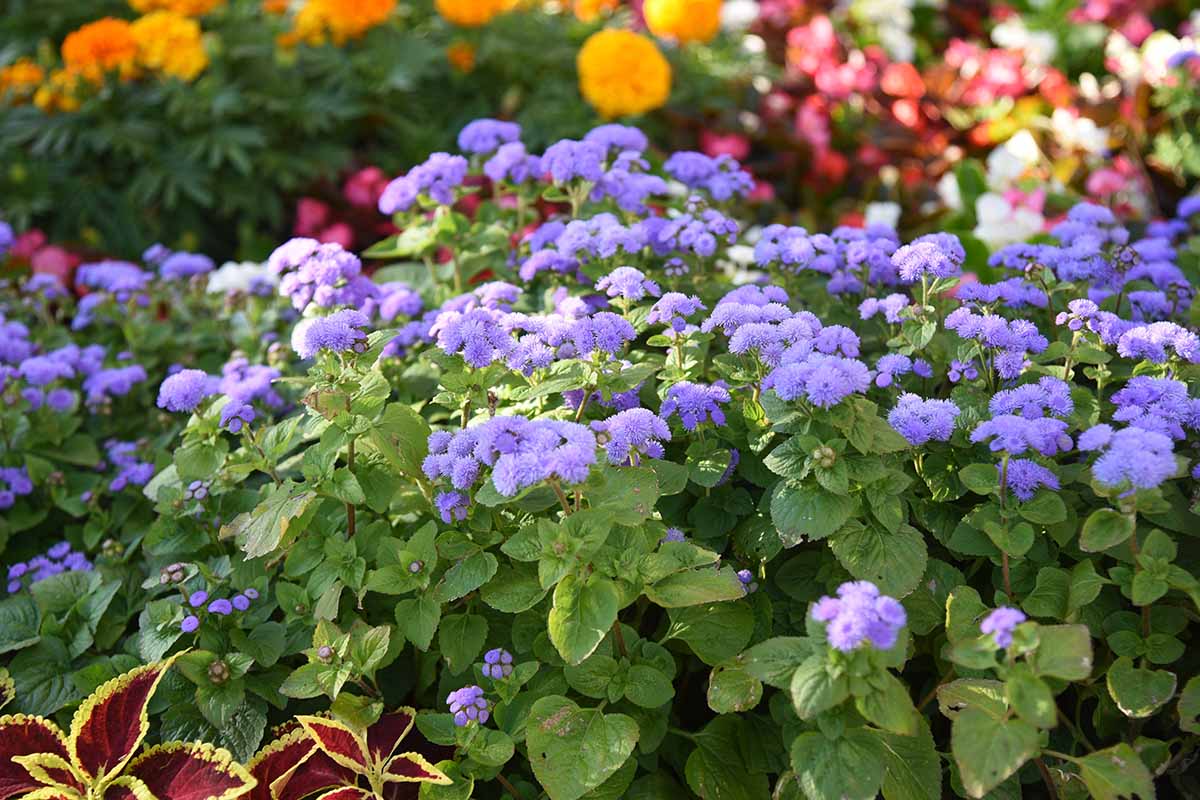
The most frequent pests are sapsuckers such as aphids, spider mites, and whiteflies.
You can control these pests with a strong stream of water from the garden hose, set loose garden predators like ladybugs, or apply a natural insecticide like neem oil.
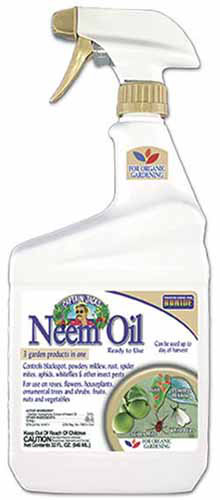
You can find Bonide neem oil available at Arbico Organics.
To prevent root rot and fungal diseases like powdery mildew, cultural management is key.
Pathogens flourish in cool temperatures, too much shade, high humidity, and poor drainage, so ensure proper spacing for adequate air circulation, avoid overhead watering, and give them well-draining soil.
Fun Flowers and Long Lasting Color
With their shaggy blooms, pretty colors, and lovely leaves, floss flowers are an easy-care choice for adding long lasting color and a touch of whimsy throughout the garden.
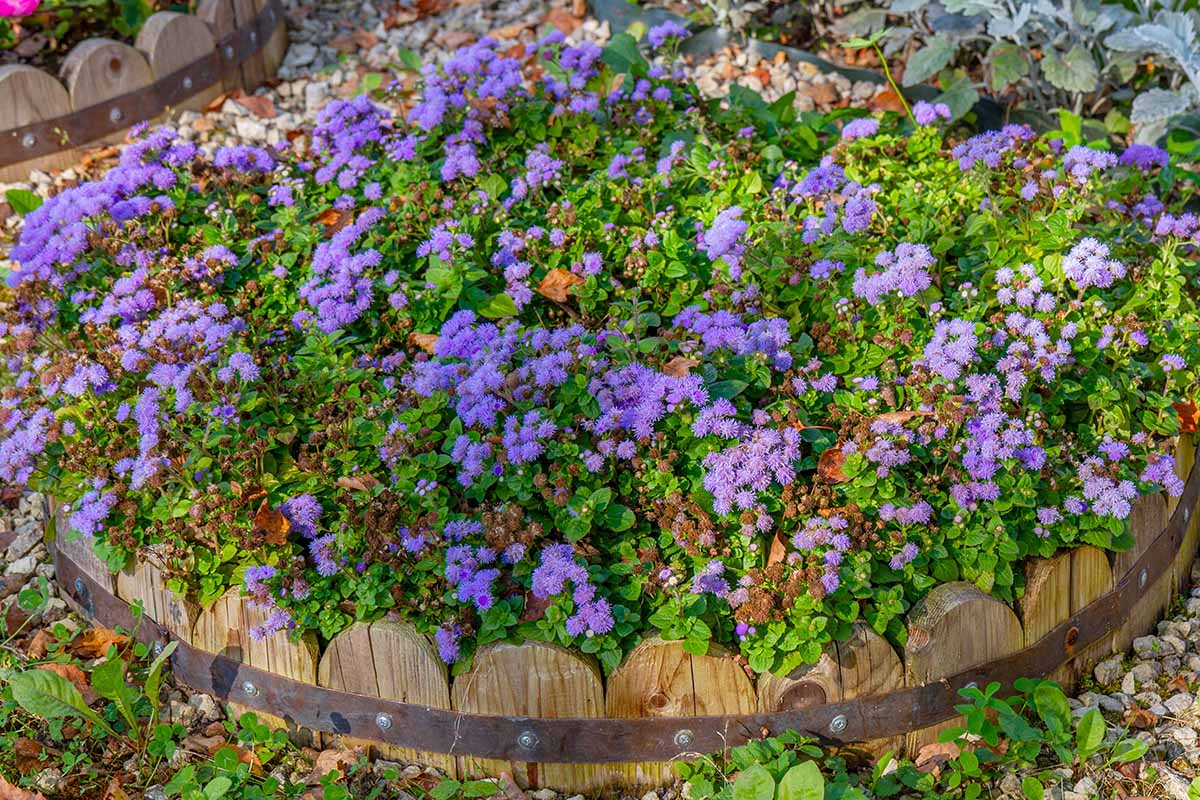
And they’re top notch as a cut flower, so be sure to plant plenty to enjoy in the garden and in vases!
Start the seeds early indoors or scatter in the garden once overnight temperatures are warm enough.
Give them plenty of sun, enough space for air movement, and fertilize regularly for a steady, reliable show of fun and colorful blooms.
What’s your favorite use for fanciful floss flowers? In the garden or floral arrangements? Let us know in the comments below – and if you spot the pixies after a summer shower!
Are you looking for more flowers for the cutting garden? Then add these guides to your reading list next: