

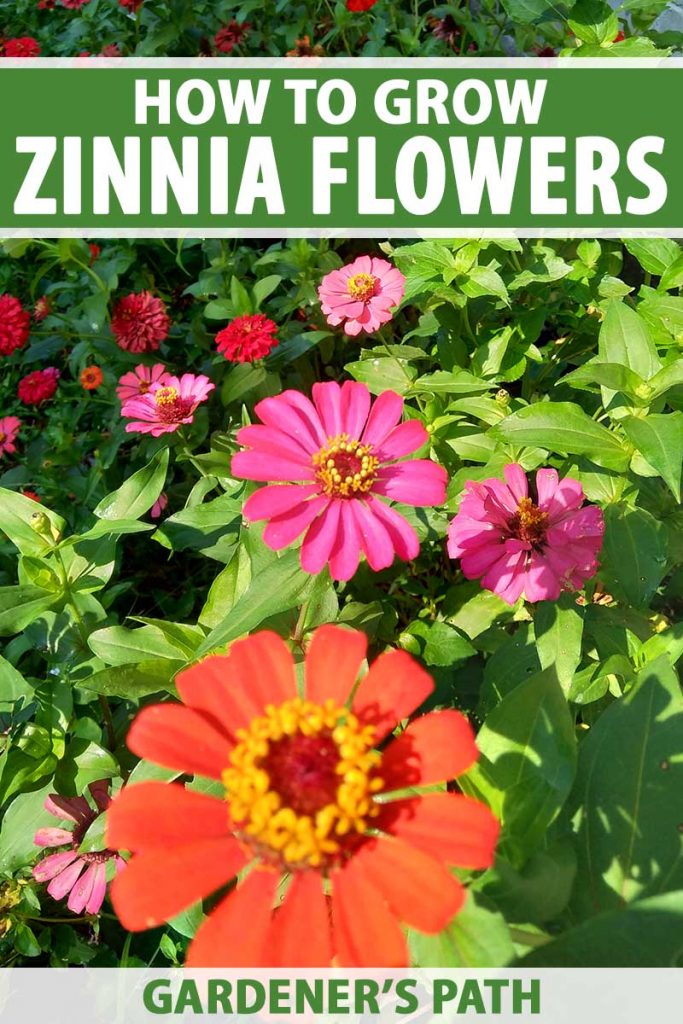
Zinnia spp.
With magnificently colorful blooms that put on a dazzling display all summer long, it is no wonder zinnias are such popular flowers.
What’s more, these show-stopping annuals are incredibly easy to grow.

We link to vendors to help you find relevant products. If you buy from one of our links, we may earn a commission.
Continue on to learn how to grow and care for zinnias, and wow all of your neighbors – with barely any effort!
What You’ll Learn
Zinnia is a genus of flowering annuals in the aster family, Asteraceae, that can be grown in USDA Hardiness Zones 3 through 10.
They feature erect stems with bright solitary flower heads that produce large impressive blooms throughout the summer, attracting hummingbirds, butterflies, and other beneficial insects.
Quick Look
Common name(s): Zinnias
Plant type: Annual flower
Hardiness (USDA Zone): 3-10
Native to: Mexico
Bloom time: Mid to late summer
Exposure: Full sun
Soil type: Any that’s well draining
Soil pH: 5.5-7.5, acidic to slightly alkaline
Time to maturity: 60-70 days
Spacing: 6-18 inches, depending on variety
Planting depth: 1/4 inch (seeds)
Height: Up to 4 feet (standard), 6-12 inches (dwarf)
Spread: 1-2 feet
Water Needs: Moderate
Taxonomy
Order: Asterales
Family: Asteraceae
Genus: Zinnia
Species: Angustifolia, elegans, haageana
Cultivars: various including crosses
While more than 20 known species exist in the wild, there are only a few species commonly available commercially, and these have been bred into hundreds of cultivars with flowers of many different forms.
Plants can range in size from six inches to four feet tall, with single, double, or semi-double petaled flowers of many different shapes and colors.
Z. elegans is the primary cultivated species. The wild plant has solitary flower heads of about two inches with black and yellow centers and purple petals.
It is native to Mexico, but its original form is no longer easy to find due to cultivars that have escaped into the wild, which have interbred and naturalized in many places around the world.

Z. angustifolia, also known as the narrow leafed zinnia, features smaller single flowers of white, yellow, and orange.

Z. haageana, sometimes referred to as Mexican zinnia, has smaller single or double petaled flowers in yellows, orange, and red.

Both of these species have been crossed with Z. elegans to produce many other varieties.
It is likely that wild species of zinnias were cultivated by the Aztecs.
These enticing flowers found their way from Mexico to Europe in the 1700s, were bred for all sorts of different traits, and eventually returned to the Americas, becoming popular in North American gardens in the early 1800s.
With hundreds of cultivars available, these spectacular flowers continue to be one of the most popular garden annuals.
Propagation
These flowers are easy to start directly from seed outdoors or can be propagated indoors to transplant out after the last frost. The roots are a bit sensitive to transplanting, so take extra care if you start seeds indoors.
From Seed
Sow seeds directly in the garden after the last frost, in a bed of well draining soil amended with compost.
Here’s how to plant them:
- Seeds should be planted 1/4 inch deep a few inches apart in rows or clumps.
- Keep moist until germination, which usually only takes about a week.
- When seedlings are about three inches tall with a few true leaves, thin to six to 18 inches apart.
Recommended spacing and mature spread varies depending on which cultivar you plant. Read the instructions on your seed packet for specific spacing requirements.
From Seedlings
Roots are sensitive and prefer not to be disturbed, so if you live somewhere with a long growing season, this annual is best started outdoors.
In areas with shorter, cooler summers, transplanting can be a useful way to extend the season. It just needs to be done with care.

It is useful to start seeds in two- to four-inch biodegradable containers like peat pots, or use seed blocks, to avoid disturbing the roots too much when transplanting them out.
That being said, I start zinnias indoors every year, often using plastic containers, and mine have always done just fine.
Start seeds about six weeks before the last frost, planting one-quarter inch deep in two- to four-inch pots filled with a well draining potting soil. Keep moist until germination occurs.
Keep an eye on the seedlings as they grow, watering when the soil appears or feels dry to the touch, and try not to let plants become rootbound.
Harden off for a week or so before planting out by moving seedlings outside for periods of increasing length each day, starting in a shady location and slowly moving to full sun.
Zinnias are frost sensitive, so it is important to wait until after the last frost to plant them out in their permanent location.
How to Grow
Zinnias are one of the easiest annuals to grow and among the most cheerful. Their vibrant blooms in every hue imaginable can liven up any flower bed or container.

Best of all, these fuss-free flowers thrive in sunny spots with minimal care, making them ideal for beginners and seasoned gardeners alike.
Light
Zinnias are full sun lovers through and through. To thrive and produce abundant blooms, they need at least six to eight hours of direct sunlight per day.
Shade will reduce blooming and encourage leggier growth.
In cooler climates, be sure to choose the sunniest spot you’ve got, while in very hot areas, a bit of dappled afternoon shade is tolerable, especially for more delicate cultivars.
Soil
Zinnias are adaptable to a variety of soil conditions, but prefer well draining soil with a pH between 5.5 and 7.5.
Heavy clay or soggy soil can spell trouble, so if drainage is an issue, amend your soil with compost or consider raised beds.
Temperature and Humidity
Zinnias prefer minimum daytime temperatures of about 60°F, with 74-84°F being ideal.
High humidity doesn’t bother them too much, but air circulation is key to preventing powdery mildew and other fungal conditions that thrive in areas with poor airflow.
Allow for between six and 18 inches between plants, depending on the variety. Check the back of the seed packet for specifics.
Surround plants with at least two inches of straw or bark mulch to help with drainage, regulate soil temperature, and reduce weeds.
Water
Young plants need plenty of water, about an inch per week until they are well established. Water deeply a few times a week in the absence of rain so the soil stays moist.
Mature zinnias are somewhat drought tolerant, and only need additional irrigation during periods of hot, dry weather.
Water in the early morning to allow foliage to fully dry in the heat of the day.

If possible, it is best to avoid overhead watering entirely, using a soaker hose instead to get water to penetrate deeper toward the roots while keeping the foliage dry. This will help reduce the risk of disease.
Fertilizer
While they don’t need a lot of feeding, you can mix a light application of a slow release, well balanced organic fertilizer into the soil prior to planting.
You may also supplement with a monthly foliar feed to encourage bigger blooms. I recommend spraying foliage with compost tea or a well balanced organic fertilizer.
You can learn more about making and using compost tea in this guide.
Avoid high nitrogen fertilizers, which will increase foliage growth at the expense of flowering.
Container Growing
Zinnias are excellent candidates for containers, especially the dwarf or compact varieties.
Choose a container with good drainage and fill it with a high-quality, water-retentive potting mix.
Water more frequently than you would for in-ground plants, as pots tend to dry out faster.
You can tuck them into mixed containers for a splash of color or dedicate an entire pot to one standout cultivar.
Learn more about about growing zinnias in containers.
Cultivars to Select
The zinnia’s huge popularity in plant breeding over the last few centuries means there are many different cultivated varieties to choose from.
With a seemingly endless list of options, I find it quite easy to get lost while browsing seed catalogs for zinnias!
Flowers can take a few basic forms including single, double, and semi-double petal arrangements.

Single flowers consist of a single row of petals with a visible center.
Doubles have multiple rows with no visible center.

Semi-doubles, my personal favorite, have multiple rows of petals with a visible center.

Let’s take a look at a few of my favorite series and cultivars!
Chippendale Daisy
This fairly compact cultivar of Z. haageana is great for low borders or edges. It grows 12 to 18 inches in height with single petaled bicolored blooms of deep burgundy with bright gold rings.
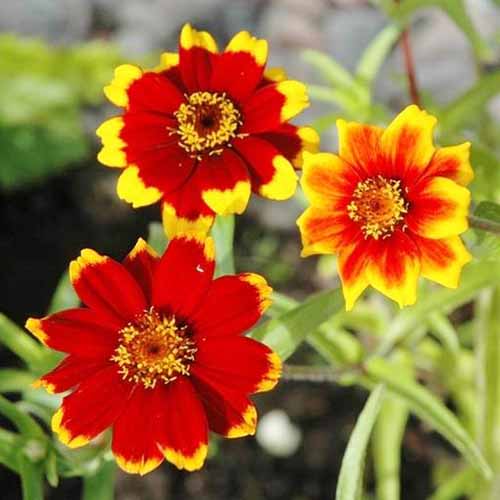
Seeds can be purchased from Eden Brothers in a variety of package sizes.
Crystal
An All-America Selections bedding plant winner in 1997 noted for being “highly tolerant of powdery mildew” and having an “excellent length of blooming season,” cultivars of Z. angustifolia from the Crystal™ series feature small, single-petaled daisy-like flowers that bloom all through the summer.
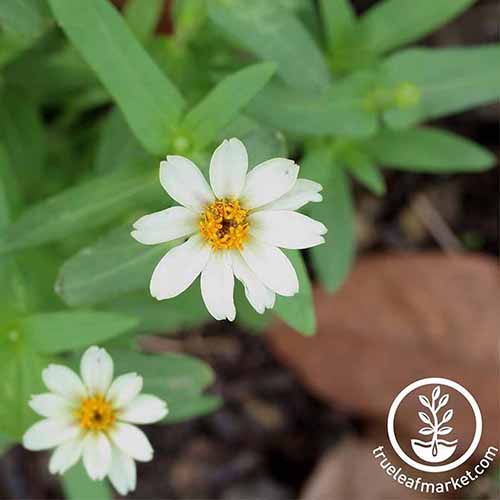
The compact size of these eight- to ten-inch dwarfs makes them ideal for container growing either indoors or out.
You can find packs of 500 seeds available from True Leaf Market in white, orange, or yellow.
Dahlia Flowered Mix
This is an heirloom cultivar of Z. elegans developed in 1919. Long 40-inch stems are topped with stunning double flowers that are four to five inches in diameter.
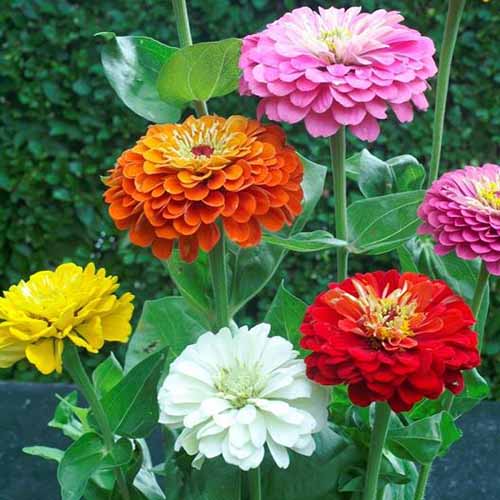
The ‘Dahlia Flowered’ mix provides a stunning blend of pinks, yellows, and oranges. These bright and vivid blooms look beautiful in mass plantings, borders, and mixed garden beds.
Seed packets of various sizes are available for purchase from Eden Brothers.
Dwarf Pepito Mix
If you are looking for something colorful to grow in containers, along borders, or in other small spaces, this semi-double dwarf variety of Z. elegans is a great choice.
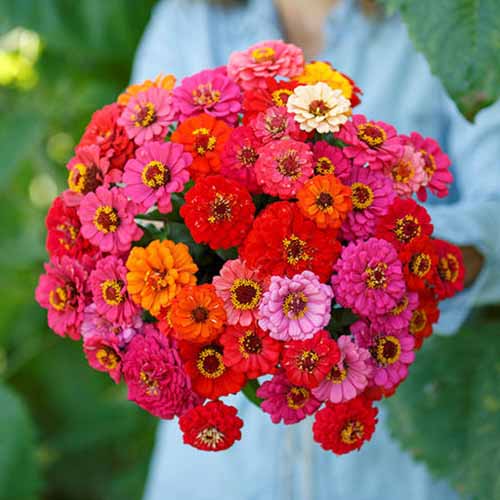
It matures to a conveniently manageable size, growing up to 10 inches tall, and produces a mix of pink, purple, red, yellow, and orange flowers with crimson centers.
Dwarf ‘Pepito’ Mix seeds can be purchased from Eden Brothers.
Pop Art Golden and Red
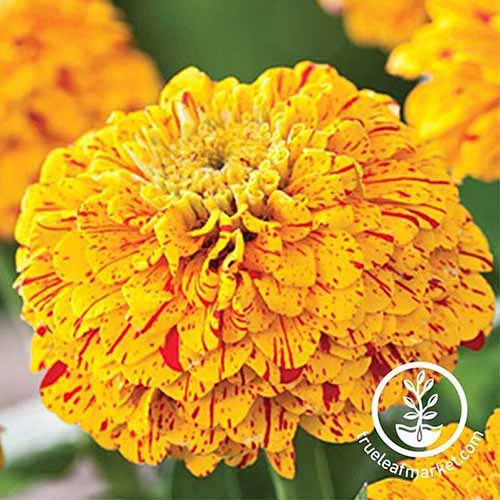
This unique bicolor cultivar of Z. elegans is a new variety, granted Approved Novelty status by Fleuroselect for its large double-petaled golden flowers with red flecks, reminiscent of the comic-style work of Roy Lichtenstein and other pop artists.
It grows 24 to 32 inches tall and spreads about a foot across. White and red or orange and red varieties of ‘Pop Art’ are also available.
This variety is sensitive to cold, only able to withstand low temperatures down to around 60°F.
Packs of 500 seeds can be purchased from True Leaf Market.
Want More Options?
Be sure to take a look at our supplemental guide: “15 of the Best Zinnia Varieties to Grow in the Garden.”
Maintenance
With proper care, zinnias can continue blooming for months! Deadheading spent blooms regularly will encourage new ones to form.
When they are young, you can choose to pinch the growing tips to encourage side branching, resulting in shorter, bushier plants with more flowers.
Keep in mind that this could delay flowering, especially in areas with short, cool summers.
These frost sensitive annuals will die after the first hard frost. If you want to save seeds for the following season, allow the last few flowers to mature fully, then collect and store the seeds in a brown paper bag.
You can learn more about how to collect flower seeds in our guide.
Pests and Disease
While these flowers are easy to grow, issues with pests and disease do crop up from time to time.
Just be sure to provide proper growing conditions and keep an occasional eye on your plants, and you shouldn’t have too much to worry about.
Here are a few issues to keep an eye out for:
Pests
- Aphids
Aphid are one of the most common zinnia pests. These tiny sap-sucking insects cluster on stems and undersides of leaves, causing yellowing and distorted growth. They also excrete honeydew, which can lead to black sooty mold.
Control: Knock them off with a blast of water or treat with insecticidal soap. - Spider Mites
These pests thrive in hot, dry conditions and can cause fine webbing and speckled, stippled leaves. Leaves may become bronze and drop off.
Control: Increase humidity around the plants and use insecticidal soap or neem oil if infestations become severe. - Japanese Beetles
Japanese beetles chew through foliage and flower petals, often leaving behind skeletonized leaves.
Control: Hand-pick them in the early morning and drop them into soapy water. Neem oil may also help reduce damage when applied consistently.
Disease
- Powdery Mildew
This is a frequent issue in late summer, especially in crowded or poorly ventilated beds. It appears as white, powdery spots on leaves and stems.
Control: Improve airflow by spacing plants properly, water at the base, and remove infected foliage promptly. Fungicides can help if applied early. - Alternaria Leaf Spot
Alternaria leaf spot appears as brown or purplish circular spots with concentric rings. This fungal disease thrives in warm, wet conditions.
Control: Avoid overhead watering and rotate plantings annually. Remove and discard infected leaves. - Botrytis Blight
Botrytis blight may develop in humid or rainy conditions, causing gray mold on buds, flowers, and leaves.
Control: Promptly remove and destroy affected plant material and consider applying a fungicide in persistent cases.
Best Uses
Zinnias are perfect for anywhere in the garden that you want to draw attention to their eye-catching blooms. And their long flowering season means you will be dazzled with a show of vibrant colors all through the summer.

They are wonderful additions to mixed planting flower beds and look beautiful when planted en masse.
The more compact varieties make great border or container plants.
Humans are not the only fans of these eye-catching flowers. Pollinators love the large, bright blossoms. Grow zinnias to attract beneficial insects, butterflies, and hummingbirds!

They also make lovely cut or dried flowers. They can last for weeks in a bouquet, adding dazzling color to any space.
To use for flower arrangements, cut the stems at an angle just above a bud node in the morning when flowers are opening. Strip off the leaves and set in a vase of warm water.
You can easily dry the flowers by hanging them upside down in a bouquet in a well-ventilated area out of direct sunlight.
Grow a Rainbow
With magnificently colorful blossoms in almost every color of the rainbow, these impressive flowers are truly a must-grow annual.

Plant some zinnias this season, grab a lounge chair, and watch the hummingbirds and butterflies flock to them!
What do you love most about growing zinnias? Share your stories and pictures in the comments section below!
For more beautiful annual flowers to grow in your garden this year, check out these guides next:




Why do my zinnias have more leaves than flowers?
Sun exposure and/or fertilizer could be the culprits here. Zinnias love lots of sun, and applications of nitrogen-heavy fertilizer can cause plants to put more energy into foliage production than reproductive bud and flower growth.
can THESE FLOWERS be grown in shelf boxes?
Yes they can! We have a guide to growing zinnias in containers that can help you out.