Rosemary (Salvia rosmarinus) is one of those magical plants that no garden should be without.
Sweetly aromatic with a piquant flavor, the piney, needle-like leaves are popular for use in beverages and as fresh or dried herbs in the kitchen.
The essential oils are also widely used in aromatherapy and homeopathic applications for their many powerful properties.
The plants are highly ornamental and their easy-care nature makes a welcome, evergreen addition to many garden settings from ground covers to stylized topiary to fragrant hedges.

We link to vendors to help you find relevant products. If you buy from one of our links, we may earn a commission.
Drought and salt tolerant, these delicate-looking but tough plants shine in xeriscapes or poor soils and make excellent slope stabilizers.
Easily cultivated, they’re ideal for containers, garden beds, herb knots, or kitchen potagers and in a variety of themed settings such as city, coastal, cottage, Mediterranean, and rock gardens.
Heavily adorned with clouds of blooms in spring and early summer, after a brief rest, a lighter show of flowers returns in midsummer and continues through fall and winter where climates are mild.
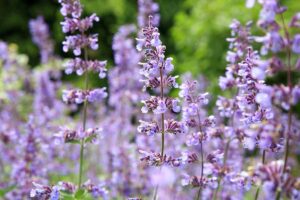
The pretty, tubular flowers of blue, rosy mauve, or white are also edible and draw in masses of bees, butterflies, and other pollinators with their rich sources of nectar and pollen.
So if your garden is ready for an aromatic, low-maintenance, and highly useful perennial herb, let’s check out some different types to find ones that work best for you.
Here are my favorite rosemary selections:
Best Rosemary Varieties
A long-lived woody herb, there are two basic types of rosemary, those that grow upright and those with prostrate or ground-hugging growth.
But even the upright varieties aren’t shy about sending branches down to the ground looking for places to root.

S. rosemarinus prefers lean, poor soil, with a gritty or sandy texture in a full sun location and they must have fast, sharp drainage. Soggy or wet soil typically results in lackluster growth or problems like root rot.
All varieties have good drought tolerance once established and make a superb choice for water-wise locations. They also tolerate salt, making rosemary a smart choice for seaside gardens.
For the most vibrant growth plus intense aroma and flavor, avoid overfertilizing and overwatering.
Rosemary also responds well to pruning. Prune to prevent leggy growth and keep plants dense and lush, and cut back by one-third every three to five years.
You can find more information about cultivation in our guide to growing rosemary.

Native to the Mediterranean and parts of Eurasia, traditional varieties are typically hardy only in USDA Zones 8 to 11, but more recent hybrids feature improved cold hardiness making them suitable for cultivation down to Zone 6.
In colder climates, grow rosemary in containers and move into a freeze-free site for winter.
Let’s take a look at 13 of the best varieties to grow at home:
1. Arp
A cold-hardy variety, ‘Arp’ features upright, open growth with attractive spikes of narrow, gray-green leaves and clusters of scented, bright blue flowers in mid spring to early summer.

This cultivar grows three to four feet tall and wide and make a good choice for beds, low barriers, informal hedges, and in coastal, cottage, courtyard, and rock gardens.
Hardy in Zones 7 to 10.
Plants in four-inch pots are available at Burpee.
2. Baby PJ
A compact, miniature variety, ‘Baby PJ’ is adorable with tidy stems, small forest green needles, and clouds of pale blue flowers in late spring.

Growing only six inches tall with a 12-inch spread, it’s a charming choice for borders, containers, edging, kitchen potagers, and rockeries. Hardy in Zones 7 to 10.
Plants in two-and-a-half-inch pots are available at Walmart.
3. Barbecue
A selection prized for its delectable flavor and fragrance, plus masses of aromatic, light blue flowers from early summer through fall, ‘Barbecue’ also features strong, straight stems that are ideal for use as barbecue skewers!

Fast growing and upright with a height of five to six feet and spread of two to four feet, ‘Barbecue’ makes a perfect evergreen hedge or privacy screen. Hardy in Zones 8 to 10.
Plants in four-inch pots are available at Burpee.
4. Benenden Blue
Beautiful as a kitchen herb or garden ornamental, ‘Benenden Blue’ features delicate foliage on long stems and an abundance of deep blue flowers in spring, with lighter flowering throughout the year.

With a height and width of two-to-three feet, this drought-tolerant, bushy shrub is a natural for low barriers, herb knots, cottage and courtyard gardens, or for erosion control on banks and slopes. Hardy in Zones 8 to 10.
5. Blue Boy
Prized for its compact, mounding shape and long flowering time, ‘Blue Boy’ is a handsome miniature cultivar that’s popular for borders, containers, edging, and potagers.

The small needles and bright blue flowers are sweetly aromatic and plants are highly floriferous in spring.
‘Blue Boy’ grows one to two feet tall with a two to three feet spread and is hardy in Zones 8 to 11.
6. Blue Spires
Upright and densely branched, ‘Blue Spires’ has fragrant gray-green foliage and masses of clear blue flowers throughout spring with a lighter sprinkling of blooms year round.
Distinctly aromatic, plants grow four to five feet tall with a spread of two to three feet. The foliage is very popular as a kitchen herb.

Easy to prune, ‘Blue Spires’ makes an attractive evergreen hedge, screen, or topiary specimen. This cultivar is suitable for cultivation in Zones 6 to 10.
Starter-sized container plants are available via Walmart.
7. Chef’s Choice
A compact variety, Chef’s Choice® aka ‘Roman Beauty’ sports beautiful green and silver foliage with vibrant blue flowers in spring.
It has a high oil content with rich flavor that’s prized in the kitchen.

The densely mounding plants grow one to two feet tall with a one-foot spread and are ideal for borders, containers, edging, potagers, and rock gardens. Hardy in Zones 7 to 10.
Plants in #1 containers are available from Nature Hills Nursery.
8. Golden Rain
For something a little different, ‘Golden Rain’ has bright yellow foliage in the cool seasons of early spring and late fall, which turns a deep, dark green as temperatures warm up.
Flowering profusely in spring, this mid-sized cultivar grows three feet tall and wide and makes a pretty addition to beds, containers, and city, cottage, or rock gardens. Hardy in Zones 8 to 10.
9. Gorizia
A beautiful cultivar with upright growth and dark greenish-gray needles that are broad and plump – typically twice the size of other cultivars.
The foliage features a sweet piney aroma with a hint of ginger to the flavor.

The light blue flowers are abundant from late spring through summer on plants that grow three to five feet tall and wide.
An attractive choice for herb, coastal, and courtyard gardens or as an informal hedge, plus the brawny stems make good grilling skewers. Hardy in Zones 8 to 10.
10. Huntington Carpet
A fast growing prostrate variety with thick, dense foliage, ‘Huntington Carpet’ features pale blue flowers in spring and summer with bright green foliage that’s ideal as an aromatic spreading ground cover.

Plants grow up to two feet tall and spread as much as eight feet, making this cultivar a top choice as a spiller in planters or tumbling over retaining walls, and as attractive erosion control on banks and slopes. Hardy in Zones 8 to 10.
11. Madeline Hill
A compact variety with upright growth, ‘Madeline Hill’ aka ‘Hill Hardy’ blooms from early spring into summer with clusters of soft blue flowers on spires of deep green needles.

Growing three to four feet tall and two to three feet wide, this tidy plant is well-suited for mixed beds, low hedges, herb knots, planters, and rock gardens.
‘Madeline Hill’ is hardy in Zones 6 to 11.
Herbs in one-gallon containers are available at My Perfect Plants.
12. Prostratus
A low-growing, creeping variety, ‘Prostratus’ has strongly scented dark green needles with clusters of clear blue flowers in spring and summer.

Plants grow one to three feet tall and spread up to three feet making this cultivar a useful choice as a ground cover or slope stabilizer, or for cascading over retaining walls and from planters.
Hardy in Zones 8 to 11.
Plants in four-inch pots are available at Burpee.
13. Tuscan Blue
Flavorful and aromatic, ‘Tuscan Blue’ is densely branched, with sturdy arching stems of olive-gray needles that are covered in clouds of bright blue flowers in spring, with a lighter bloom through summer, fall, and winter.

The strong, upright growth makes ‘Tuscan Blue’ a classic for hedges, herb knots, and topiary, with plants growing five to six feet tall and spreading two to four feet. Hardy in Zones 8 to 10.
Plants in #1 and #5 containers are available at Nature Hills Nursery.
Wonderfully Versatile
When deciding what type of rosemary is best for your garden, keep in mind the size, growth habits, and cold hardiness of each cultivar.

The miniature types are compact and tidy, an ideal choice for borders, containers, edging, and rockeries.
Standard sized plants are impressive options for hedges, specimens, and topiary, and the prostrate varieties make superb ground covers or slope stabilizers.
Whatever rosemary variety you choose, you’ll love their showy, low-maintenance, and magical nature!
Are you growing rosemary? What type do you have in your garden? Let us know in the comments section below!
And for more information about cultivating rosemary, have a look at these guides next: