
Clematis spp.
Most gardeners are familiar with the large-flowered hybrid clematis varieties that bloom spectacularly before dying back in fall.
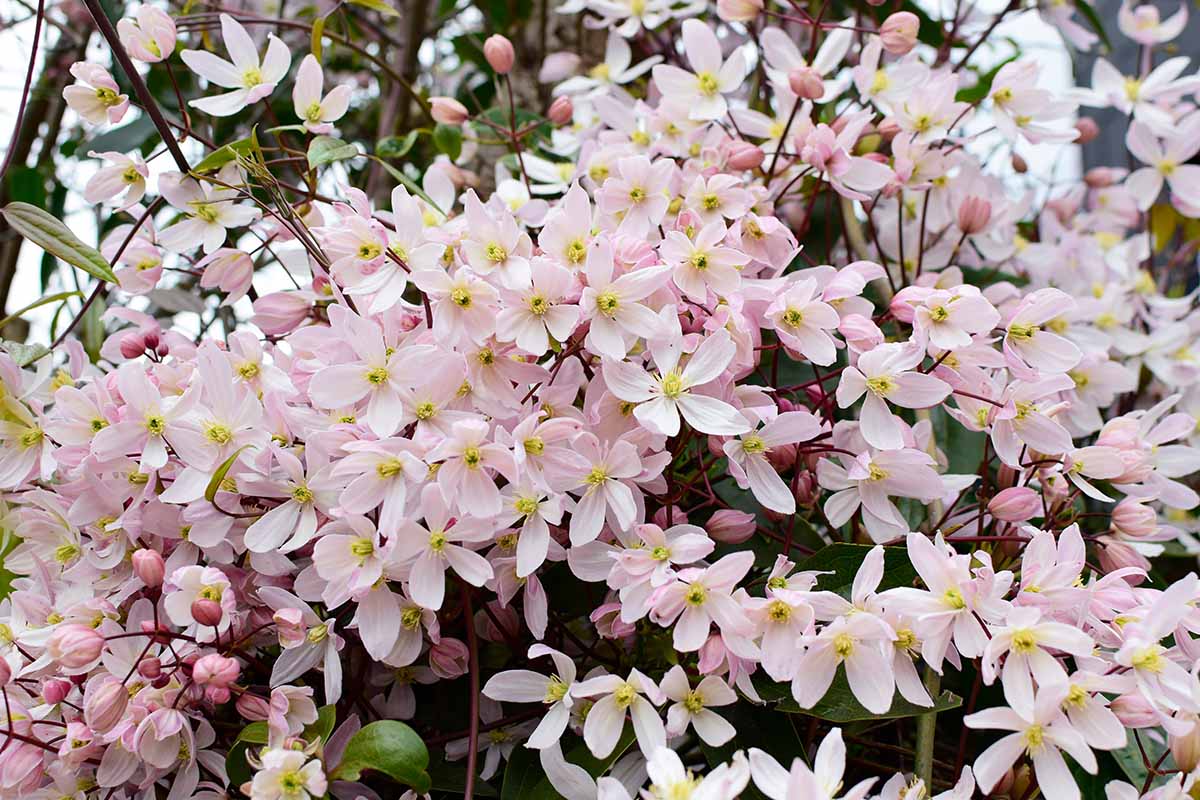
Evergreen clematis species offer year-round foliage and an abundance of smaller, less showy flowers that often bloom for longer than their deciduous cousins.
We link to vendors to help you find relevant products. If you buy from one of our links, we may earn a commission.
These evergreen vines maintain their attractive foliage through winter and produce clusters of flowers in spring, summer, or fall depending on the species.
They require the same basic care as deciduous clematis.
As someone who doesn’t enjoy the winter months, I am a huge fan of plants that add structure and visual interest during the darkest days of the year.
Beautiful, non-invasive flowering vines? That’s evergreen clematis!
This guide discusses how evergreen varieties differ from deciduous types, the species and cultivars commonly available, and how to grow and maintain them successfully in the home garden.
Here’s what I’ll cover:
What You’ll Learn
Before diving into the specifics, let’s clarify what “evergreen clematis” means.
These are species that retain their foliage year-round rather than dropping their leaves and going fully dormant in fall.
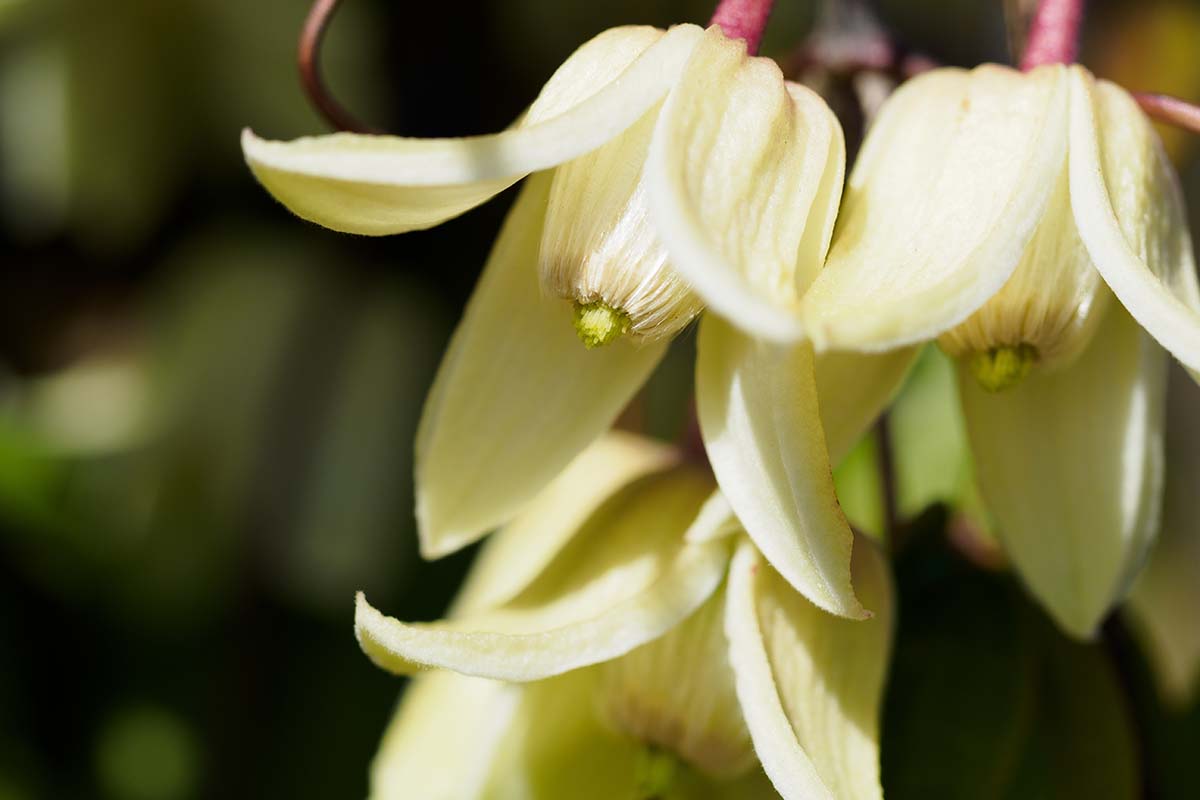
They can be found both natively and in cultivation in temperate regions across the globe.
There are two main species that you will find available in stores, though there are additional evergreens that aren’t widely cultivated.
Quick Look
Common name(s): Evergreen, Armand, winter, winter-flowering clematis, early virgin’s bower
Plant type: Evergreen woody perennial vine
Hardiness (USDA Zone): 7-9 (depends on species and cultivar)
Native to: Europe, Asia, New Zealand
Bloom time / season: Late fall, winter, early spring
Exposure: Full sun to partial shade
Soil type: Loose, fertile, well-draining
Soil pH: 6.0-7.0, slightly acidic to neutral
Mature size: 9-30 feet long, depending on species
Best uses: Trellises, arbors, pergolas, fences, walls
Taxonomy
Order: Ranunculales
Family: Ranunculaceae
Genus: Clematis
Species: Armandii, cirrhosa, forsteri, marmoraria, paniculata
The two primary evergreen species are Clematis cirrhosa and C. armandii. Both of these are referred to by the common name “evergreen clematis.”
Neither species produces the huge, super-vibrant flowers that can appear in some of the impressive hybrids.
Both have small, single flowers in white, cream, or pale yellow hues. Some have flecks of violet or are entirely violet. They can be anywhere from mildly to intensely fragrant.
C. cirrhosa is commonly called early virgin’s bower or winter-flowering clematis, and it blooms starting in early winter, usually mid-January in most regions.
The white, cream, purple, or multi-hued flowers give way to silky white seedheads. When mature, it can reach up to 20 feet long and four feet wide.
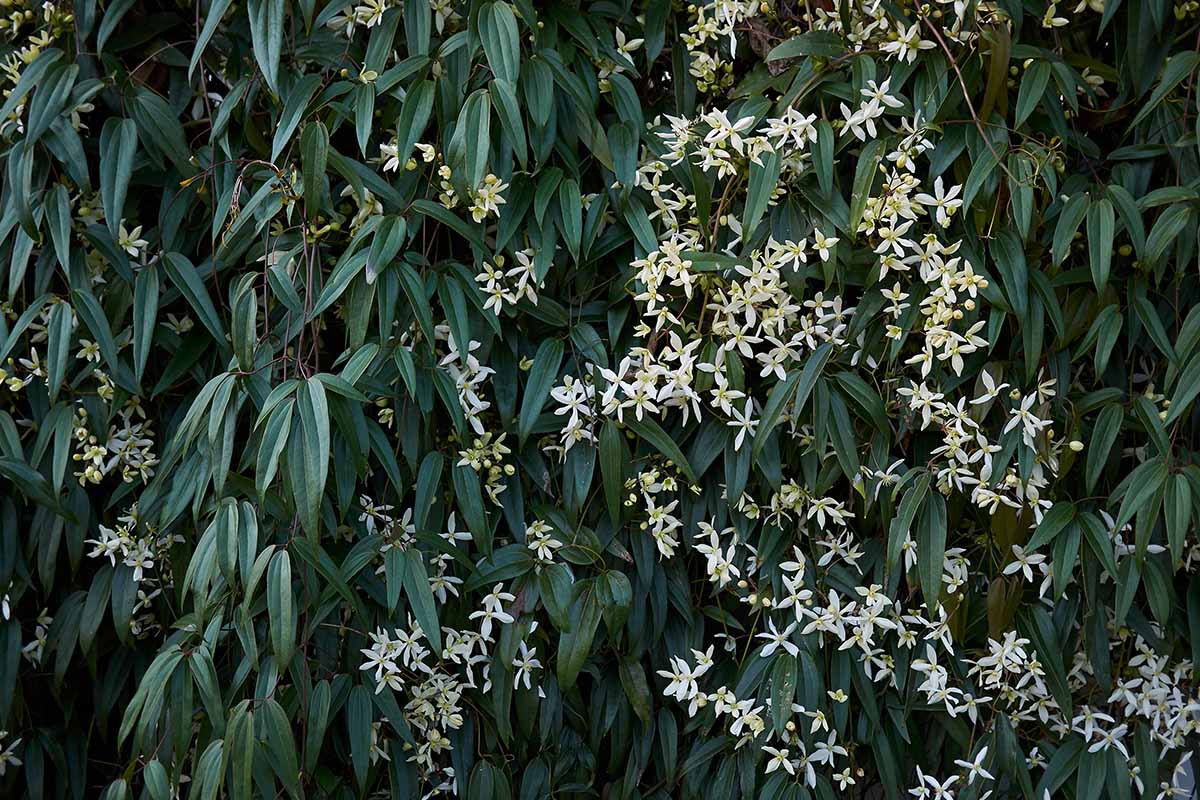
C. armandii goes by the name Armand clematis. It’s a bit larger at 30 feet long and half as wide.
The star-shaped flowers are generally cream and white and have a rich, prominent almond scent.
Several additional evergreen or semi-evergreen species are grown less frequently.
Puawhananga (C. paniculata) hails from New Zealand and has starbursts of medium-sized, one-inch white flowers, each with seven petals. It produces silky white seedheads in the fall on semi-evergreen branches.
New Zealand dwarf clematis (C. marmoraria) also grows indigenously in New Zealand, and has slightly smaller but similarly shaped flowers to C. paniculata.
Another New Zealand native, Forster’s clematis (C. forsteri) has beautiful glossy leaves with toothed margins. The spring flowers are cream or creamy yellow and about an inch across.
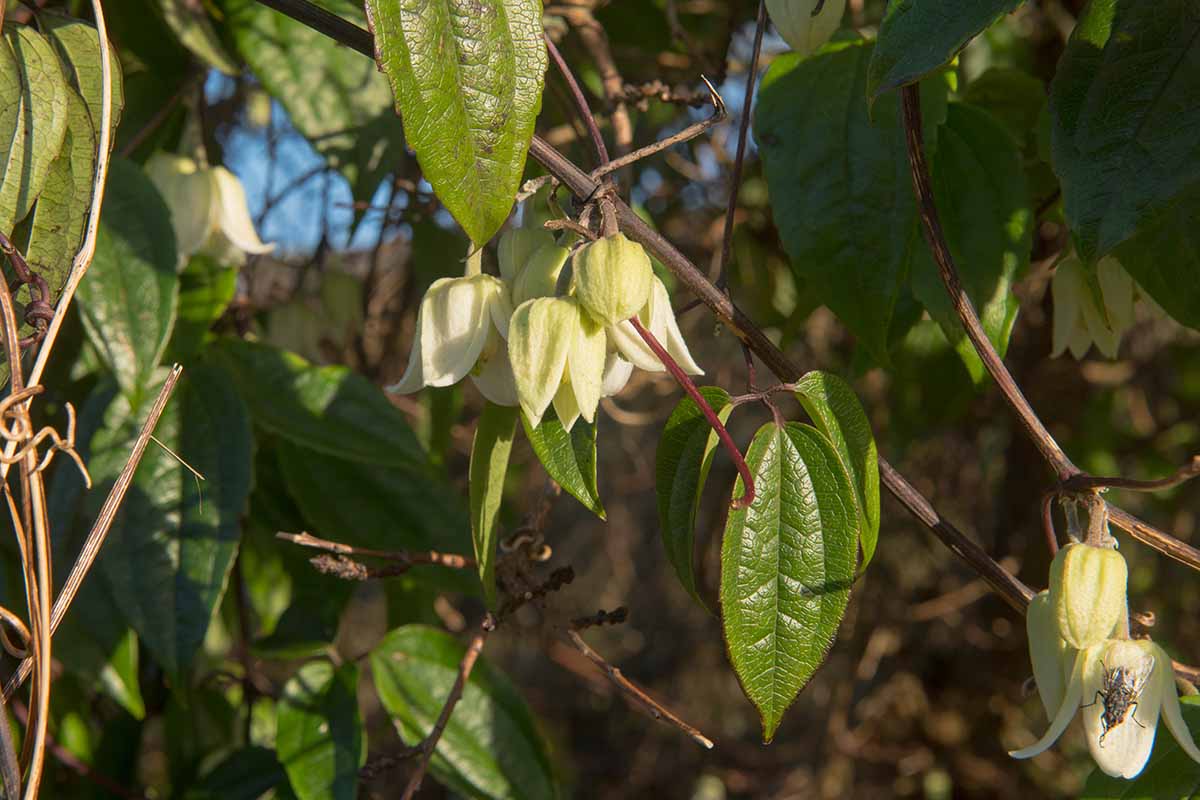
C. urophylla has adorable bell-shaped flowers with thick, curved petals.
Hybrids of these species are typically evergreen, as well.
Most of those on the market are hardy in USDA Hardiness Zones 7 to 9, though there are exceptions.
Most of the cultivation has been focused on the deciduous species rather than the evergreens, and those are the ones you tend to see in nurseries and garden centers.
Interest in evergreen varities continues to grow, and new cultivars are becoming more widely available.
How to Grow
Clematis are climbing vines, which makes them ideal for vertical spaces where you want height or length.
Fences, trellises, pergolas, and archways are all natural fits, and they can also be trained to cascade down walls or slopes.
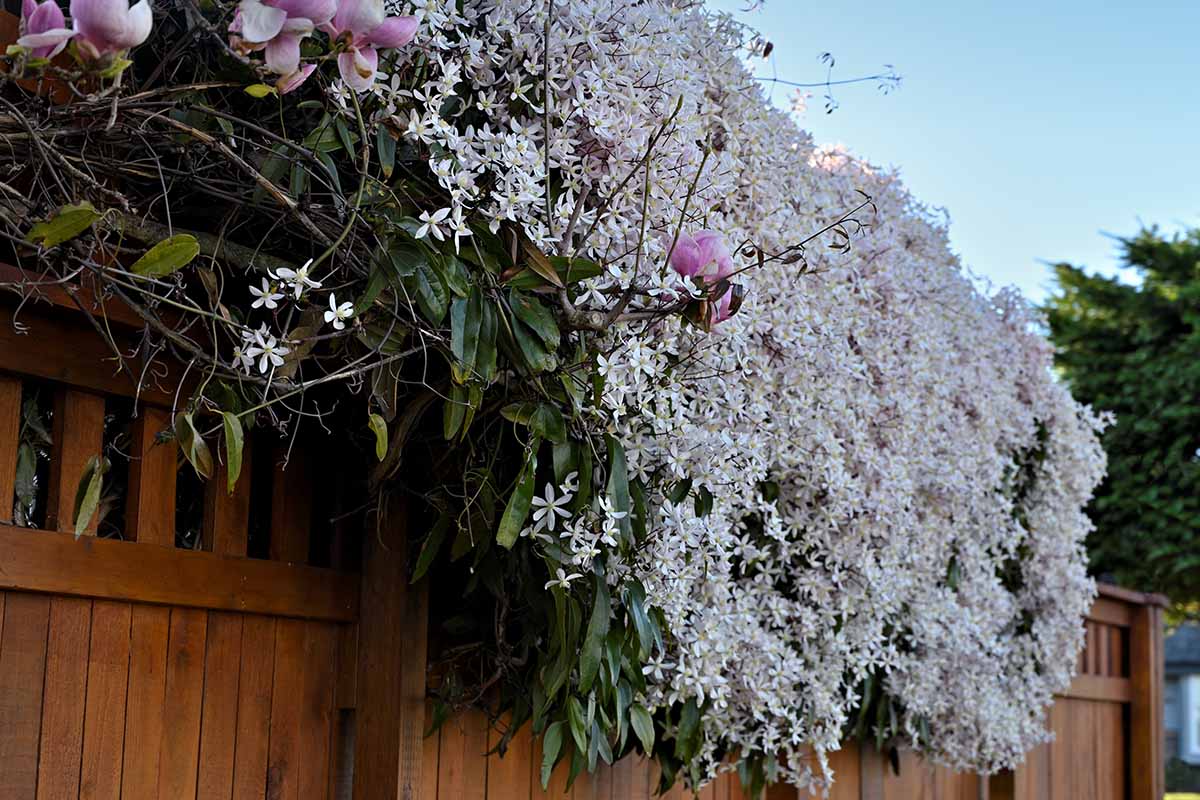
You can let the vines sprawl along the ground and find their own support, but doing so increases the risk of fungal disease.
As with other types of clematis, the vines are happiest when the foliage is in full sun and the roots are kept nice and cool.
Many gardeners cover the roots with rocks to help cool them, though I find this does the opposite when the rocks heat up in the sun.
Either use a few thick rocks that won’t heat all the way through or plant something shallow-rooted like strawberries at the base of the vine instead.
You can also heap light-colored mulch, such as straw, around the base. Avoid black or dark mulches as they heat up in the sun.
Of course, you’ll need to provide a structure for the vines to climb.
Clematis climb by wrapping their leaf petioles around narrow supports rather than using tendrils or suckers to attach themselves.
This means they need something slender enough to grasp, such as wire, thin lattice, or narrow slats.
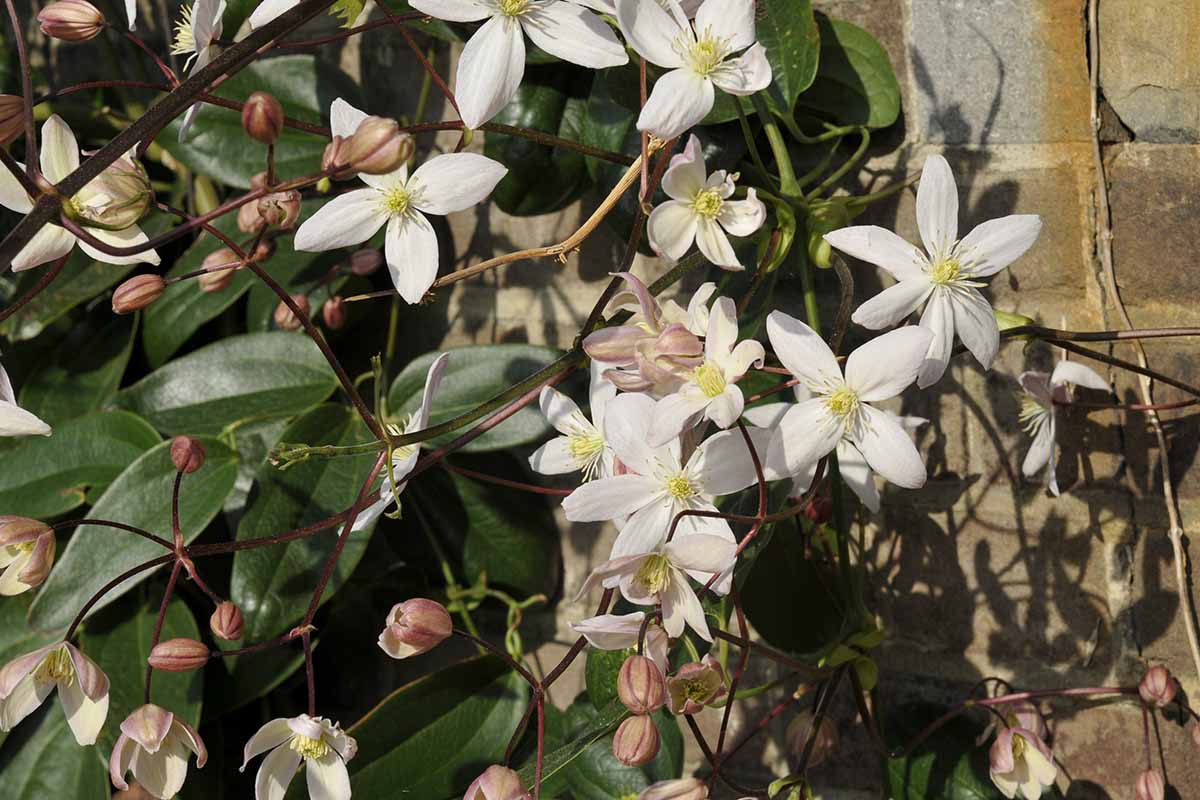
Young plants may need to be gently tied in place until they begin climbing on their own.
Once it becomes established, you’re going to be trying to control it rather than help it.
If you’ve grown clematis before, then you already know that these plants require consistent moisture.
Keep the roots evenly moist but not soggy and wet. The top inch or so of soil can dry out between watering, but not more.
Evergreen clematis prefer loose, fertile, well-draining soil rich in organic matter.
Heavy clay should be amended generously with compost to improve drainage and root penetration, and very sandy soil benefits from added organic matter to help retain moisture.
Poor drainage is one of the fastest ways to invite root rot and decline.
The soil should be slightly acidic to neutral, with a pH of 6.0 to 7.0.
Cultivars to Select
As mentioned, there are a few evergreen clematis cultivars available and new ones emerging all the time. Here are just a few excellent options:
Avalanche
‘Avalanche’ is a beautiful hybrid cross between C. paniculata and C. marmoraria. It produces large panicles of snow-white blossoms with yellow stamens.

The vines climb to about nine feet long and are covered in deep green, leathery leaves that remain attractive even when the flowers have faded.
In early spring, when the plant is in bloom, it’s so floriferous that you might not even notice the leaves.
‘Avalanche’ was bred in 1998 by Robin White, who owns Blackthorn Nursery outside of London, England. You’ll sometimes see it sold as C. x cartmanii ‘Blaaval.’
This vine is suitable for cultivation in Zones 7 to 9.
Freckles
Most evergreen clematis have solid-colored flowers, most frequently with a white hue. ‘Freckles’ is a C. cirrhosa cultivar with distinctly patterned blooms.

The petals are white on the exterior, but inside are reddish-purple spots and streaks.
The blossoms open in late winter and after they fade in early spring, they leave behind large, fluffy seedheads. Grow this beauty in Zones 7 to 9.
Snowdrift
C. armandii ‘Snowdrift’ features leathery, dark green leaves highlighted with masses of pure white flowers with a heady almond scent.

Hardy in Zones 7 to 9, ‘Snowdrift’ is drought-tolerant and resistant to rabbits and snails, blooming in late winter to early spring.
You can find ‘Snowdrift’ plants available at Fast Growing Trees.
Maintenance
Evergreen clematis generally fall into pruning Group 1, which means they flower on old wood and require minimal pruning to maintain their shape.

Right after the blooms and seed heads fade, you can prune the plant to encourage bushy, vigorous growth and remove dead, diseased, or weak stems.
Any branches that are yellowing, dropping leaves, or otherwise unhealthy should be pruned back to a healthy junction.
Learn more about pruning clematis here.
Propagation
Don’t bother trying to grow evergreen clematis from seed. It takes a long time, is unreliable, and won’t always produce a plant that is true to the parent.
You can propagate via layering or by taking cuttings.
From Layering
Layering is one of the easiest and most reliable ways to propagate clematis.
Select a flexible stem growing close to the ground and remove the leaves along a six-inch section near the middle or toward the tip of the vine.

Clematis develops roots between the leaf nodes, so this is the part that must be buried under the soil.
Use a clean knife or razor and make a shallow two-inch slice on the underside of the vine. You only want to score the surface, not deep into the vine.
Position the scored section against the soil and secure it in place with a rock, landscape pin, or bent wire.
You can lightly bury the stem or simply hold it firmly against the ground. Alternatively, anchor the section into a six-inch pot filled with potting soil, which makes transplanting easier later.
After a month, gently dig around the base and look for roots. If you see some developing, cut the vine away from the parent plant.
Dig around the rooted area to remove a good chunk of dirt with the roots so that no roots are exposed. Take this section or the potted plant and transplant as needed.
From Cuttings
Cuttings should be taken in the early spring and can come from new, softwood growth or older hardwood growth. The latter takes longer to root but tends to be more successful.
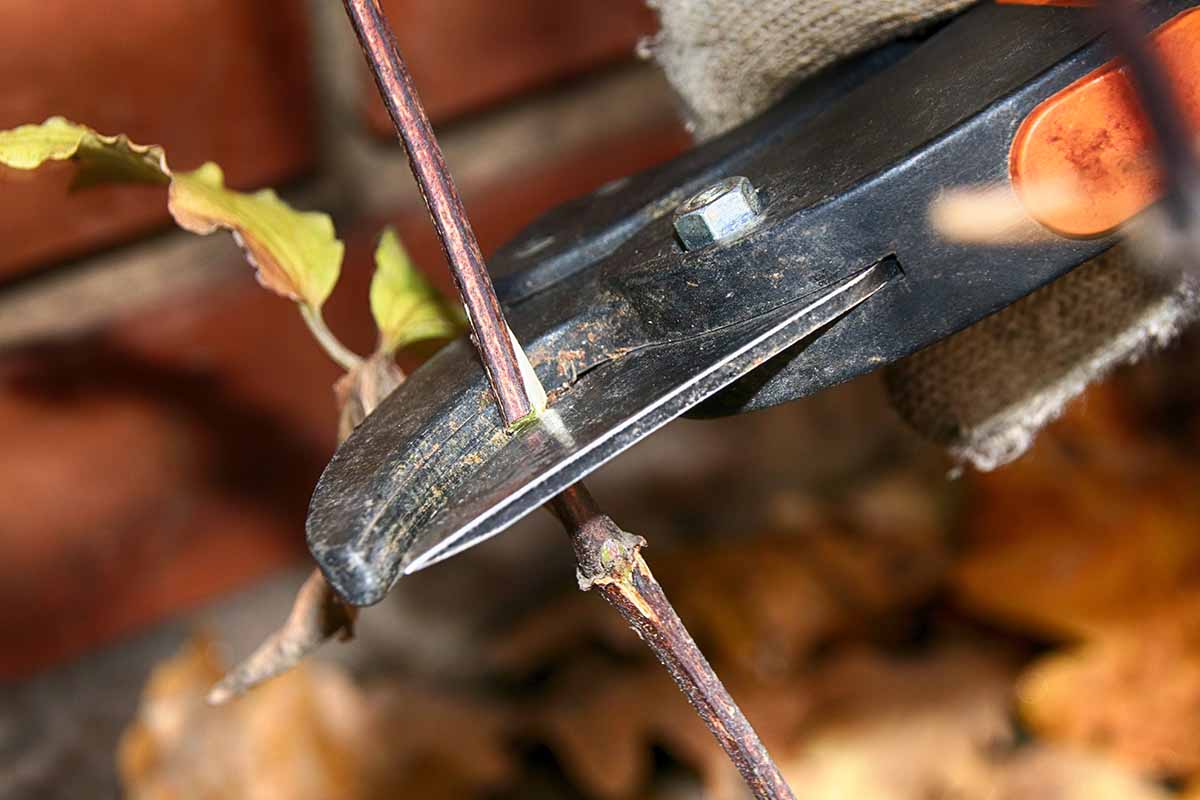
Using a clean, sharp pair of pruners, take a six- to eight-inch cutting from a healthy vine.
Hardwood cuttings should be roughly the diameter of a pencil but softwood cuttings can be any width.
Make the bottom cut at a 45-degree angle, just below a leaf node.
Fill a four-inch container with soilless potting medium, like Tank’s Pro-Lite Seedling & Potting Mix, which contains compost, coco coir, and perlite for water retention and good drainage.
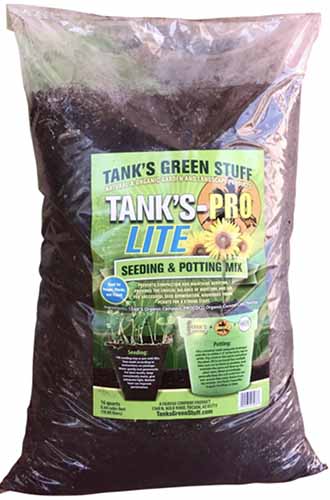
Tank’s Pro-Lite Seedling & Potting Mix
You can pick up a 16-quart bag at Arbico Organics.
Poke a hole in the middle of the medium and gently insert the cutting a few inches deep. Firm the soil up around it and water so the soil feels like a well-wrung-out sponge.
Cover the container with a clear plastic bag or cloche to maintain humidity and place it in bright, indirect light. Keep the medium consistently moist, but not wet.
After about a month, check for root development by gently lifting the cutting from below. Avoid pulling on the stem, as newly formed roots are extremely fragile.
If roots are developing, you can remove the cover and gradually start acclimating the new plant to outdoor conditions over the course of about a week before transplanting.
Transplanting
To transplant, start by preparing the planting site. Dig a hole that is at least twice as wide and the same depth as the growing container.
Mix well-rotted compost into the removed soil to improve structure and drainage.
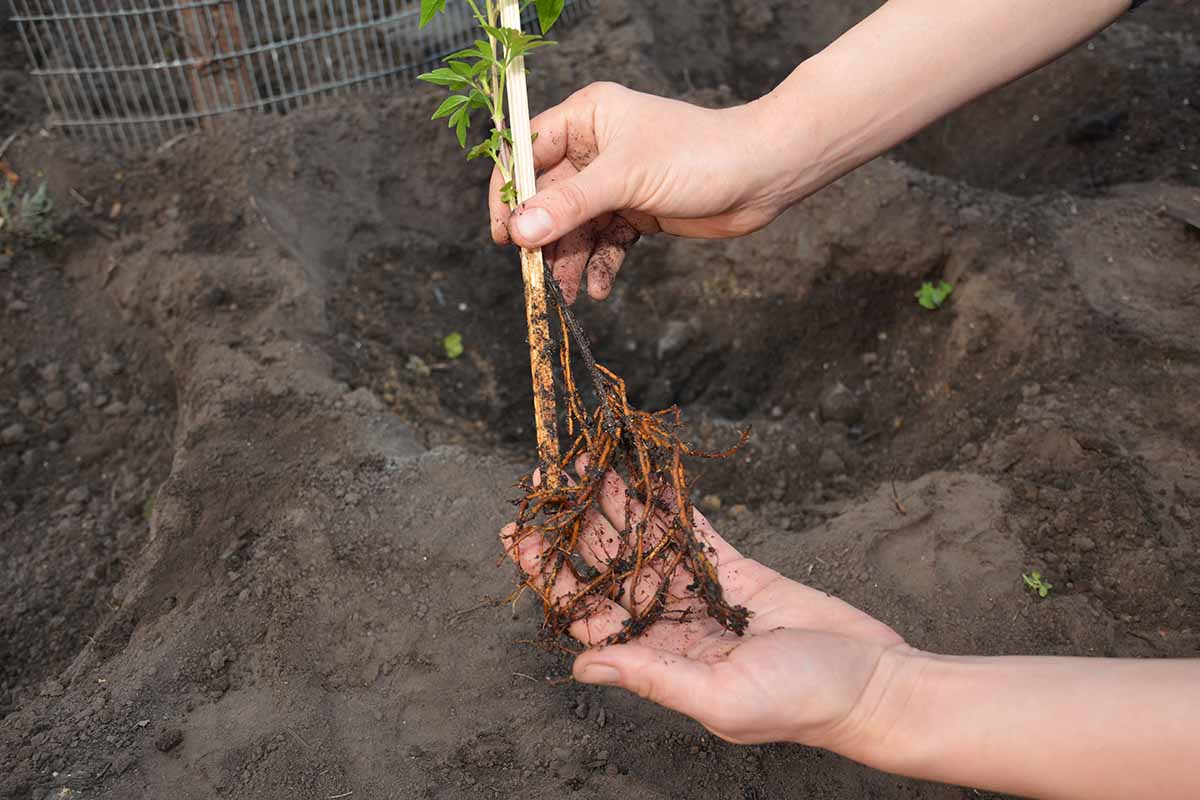
Gently remove the plant from its container and loosen up the roots.
Place the plant in the hole and backfill with the amended soil, firming it up around the roots. Water well and add more soil if it settles.
Each plant should be about six feet from other plants, though you can put it about six inches away from a wall or support structure.
Learn more about how to transplant clematis here.
Pests and Disease
Evergreen clematis don’t suffer from any unique pest or disease issues compared to deciduous types, though they tend to be tougher and experience fewer problems overall.
Slugs and snails are the most common pests that do damage to these vines. I use good old-fashioned, non-toxic snail bait but any proven slug-control method will work.
I don’t find that options like copper or eggshells do any good. In fact, eggshells have been repeatedly proven not to work and might even attract snails.
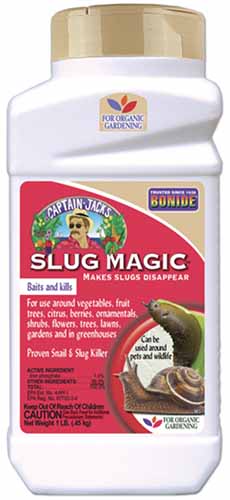
Bonide Captain Jack’s Slug Magic
Bonide Captain Jack’s Slug Magic is a killer (pun intended) option. You can pick it up at Arbico Organics.
These species are largely resistant to powdery mildew.
In the rare event that you notice white, powdery spots forming on the leaves, refer to our powdery mildew guide to learn more.
Plant Evergreen Clematis for Everlasting Enjoyment
I stopped growing English ivy (Hedera helix) years ago because it was such a menace, but its removal left a noticeable gap in my garden.
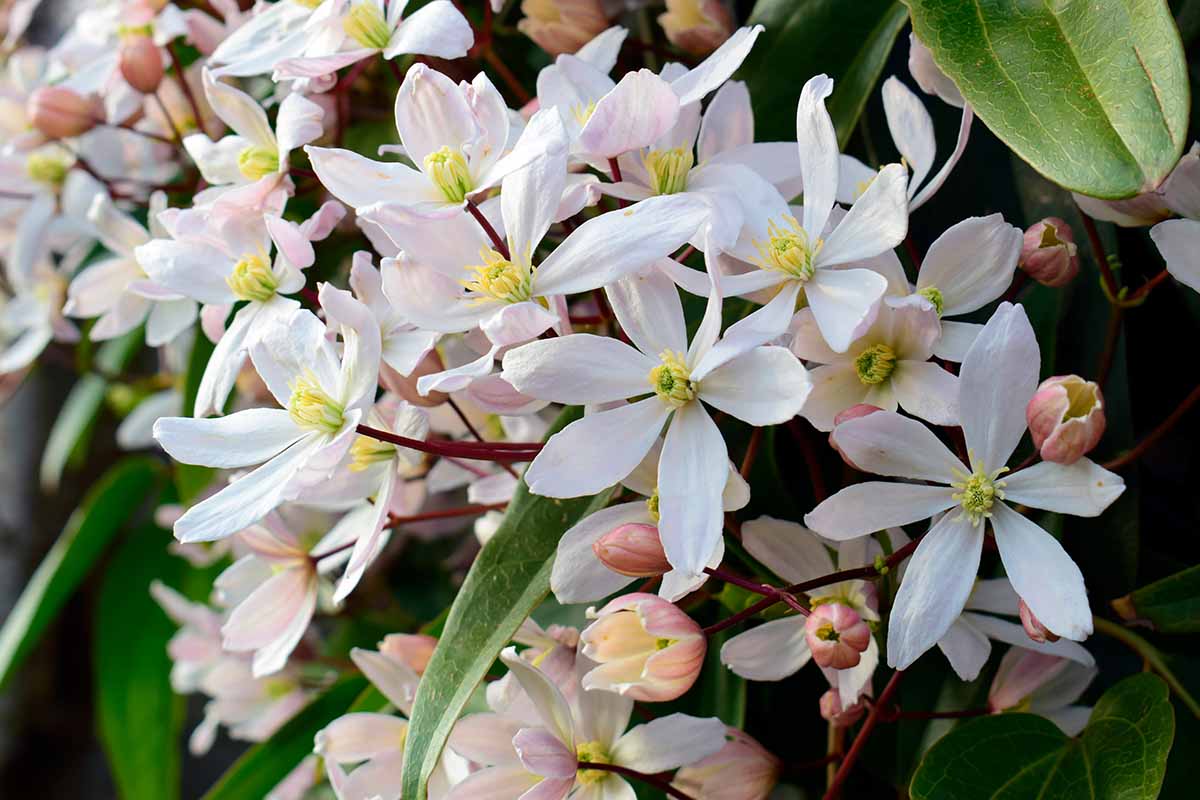
Evergreen clematis has filled that space beautifully, offering year-round foliage, attractive flowers, and well-behaved growth.
Are you growing evergreen clematis? How do you use it in the landscape? Let us know in the comments section below!
And for more information about growing clematis in your garden, you might enjoy reading these guides next: