Capsicum annuum New Mexico Group
If you’ve ever visited New Mexico in late summer, you’ve probably experienced the unmistakable aroma of roasted Hatch peppers.
These smoky, earthy chiles are a staple in Southwestern cuisine and growing your own allows you to enjoy their rich flavor right from the garden.

We link to vendors to help you find relevant products. If you buy from one of our links, we may earn a commission.
Whether you prefer mild or spicy chiles, Hatch varieties offer something for everyone.
In this guide, we’ll walk you through everything you need to know to cultivate these flavorful peppers successfully at home.
Here’s what I’ll cover:
What You’ll Learn
Hatch peppers are a type of Capsicum annuum primarily grown in the Hatch Valley of New Mexico, where the region’s unique climate — with hot days, cool nights, and nutrient-rich soil — contributes to their distinct flavor.
They are part of the New Mexico cultivar group – a broad category of hot peppers rather than a specific cultivar – that also includes Anaheim.

Appreciated for their smoky, earthy taste, and varying heat levels, the pods can range from mild to extra hot.
Hot pepper purists will tell you that the name “Hatch” is a simply marketing term reserved for those New Mexico types grown in that specific region.
So unless you are gardening in the Hatch valley, the pods harvested from your garden won’t technically be “Hatch peppers” at all! But you can still enjoy the taste, whatever they are called!
Quick Look
Common name(s): Hatch peppers, New Mexico cultivar group
Plant type: Short-lived perennial vegetable
Hardiness (USDA Zone): 9-11 (perennial)
Native to: South America
Bloom time / season: Summer
Exposure: Full sun
Soil type: Organically-rich loam, well-draining
Soil pH: 6.0-7.0, slightly acidic to neutral
Time to maturity: 75-90 days
Spacing: 18-24 inches
Planting depth: 1/4 inch (seeds), same depth as original container (transplants)
Mature size: 18-24 inches wide x 24-36 inches high
Water Needs: Moderate
Taxonomy
Order: Solanales
Family: Solanaceae
Genus: Capsicum
Species: Annuum
Cultivars: New Mexico group
Depending on the cultivar, they can measure anywhere from 1,000 to around 8,000 Scoville Heat Units (SHU).
So these are hotter than the average poblano pepper but a lot less spicy than a habanero!
The plants typically grow two to three feet tall with a bushy habit, producing elongated pods that range from five to twelve inches long.
They typically take 75 to 90 days from transplant to harvest.
The fruits are commonly harvested green for a mild flavor but they can also be left to ripen to red for a richer, sweeter taste with enhanced heat.

Known for their versatility, Hatch peppers are ideal for roasting, grilling, stuffing, or blending into flavorful sauces and salsas.
These adaptable plants thrive in full sun, well-draining soil, and warm conditions. They can be grown as short-lived perennials in Zones 9 to 11, and as annuals elsewhere.
How to Sow
Hatch peppers can be grown from seed or transplants. Starting from seed allows you to explore a wider variety of cultivars, while purchasing transplants is a faster option.
From Seed
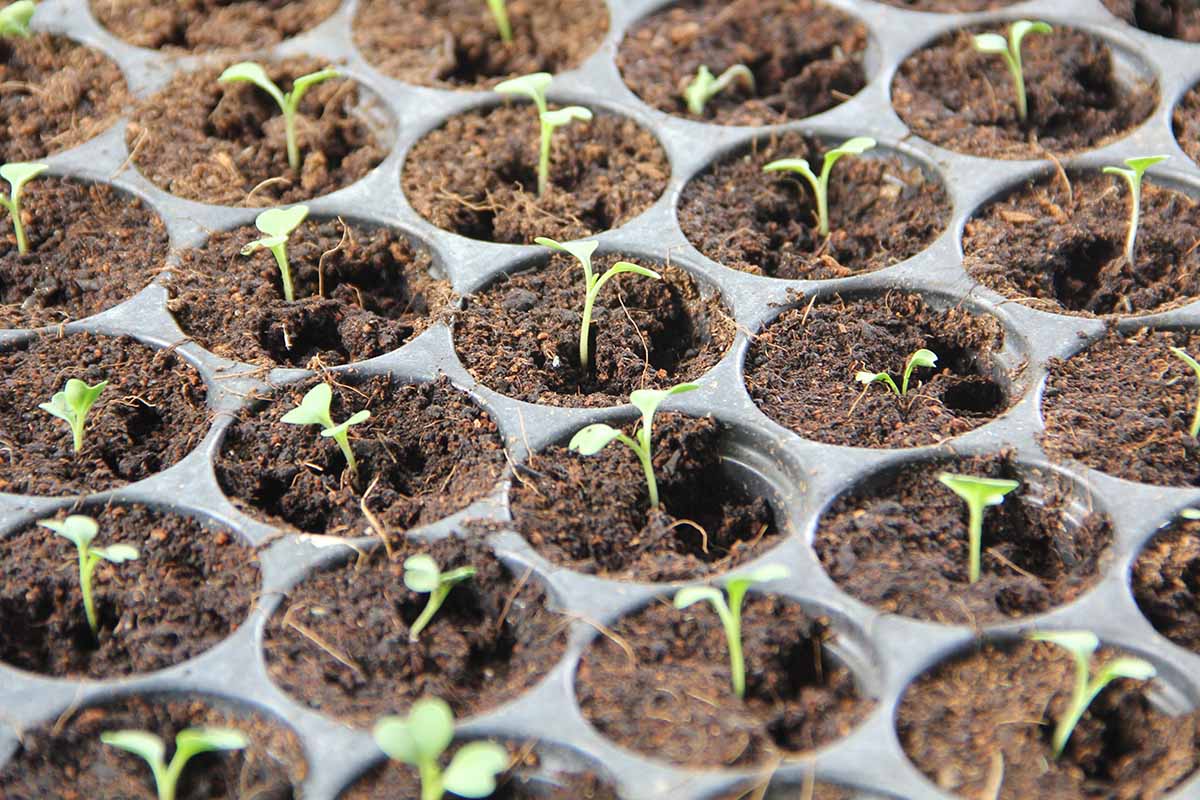
You’ll need to start seeds indoors eight to 10 weeks before the last frost date in your area.
Here’s how:
- Fill trays or individual containers with a seed-starting mix that is both moisture-retentive and well-draining.
- Sow seeds a quarter of an inch deep and moisten the soil.
- Use a heat mat to maintain a soil temperature of between 70 and 75°F.
- Keep the soil moist but not waterlogged and expect germination to take two to three weeks.
- After germination, make sure to provide bright, indirect light, either from a sunny window or by using grow lights.
When your seedlings are about six inches tall, outdoor temperatures are consistently above 55°F, and all risk of frost has passed, you can harden them off before transplanting.
Hardening off involves placing the plants outdoors for a few hours each day, gradually increasing their exposure over the course of a week.
Transplanting
After you have hardened off your seedlings, it’s time to transplant.
Loosen the soil and mix in plenty of well-rotted compost. You can add some grit for drainage if necessary. Like all hot peppers, Hatch types require loose, rich soil.
Dig holes about the same size as the containers the plants are currently growing in. Gently remove the seedling from its pot, set it in the hole, backfill with soil and water in well.
Space your plants 18 to 24 inches apart in rows set two to three feet apart.
How to Grow
These tropical plants enjoy heat, sun, and plenty of nutrients – a bit like me, I guess!

Our guide to growing hot peppers provides an overview of how to cultivate all types of Capsicum.
Let’s take a look at the cultural requirements of Hatch peppers for a successful harvest:
Light
Grow your plants in a full sun location – that means at least eight hours a day of sunlight.
In the absence of sufficient light, plants may become leggy and produce fewer flowers and fruits than they would if they were in full sun.
When you’re choosing the right spot, make sure to take into account any deciduous trees in the area that may leaf out, casting shade on your plants.
Temperature
In addition to light, warm temperatures are crucial. Hatch peppers thrive in daytime temperatures between 75 and 85°F and nighttime temperatures above 55°F.

If temperatures dip below this range, plants may become stunted or drop their blossoms.
For gardeners in cooler climates, consider using row covers, cloches, or black plastic mulch to trap warmth and protect your plants from temperature fluctuations.
In extremely hot regions where temperatures consistently exceed 95°F, providing some afternoon shade can help prevent the plants becoming stressed by excessive heat.
Soil
Hatch peppers prefer well-draining, nutrient-rich soil with a pH between 6.0 and 7.0.
Amending the planting area with compost or aged manure before transplanting can help to improve soil fertility and structure.
If your soil is heavy or clay-based, incorporate some sand, perlite, or other gritty material to help improve drainage.
Raised beds are an excellent option to ensure proper soil conditions in areas with poor drainage.
Testing your soil before planting will help you identify any nutrient deficiencies and you can amend accordingly with the appropriate products.
Water
Like all hot peppers, these ones need consistent moisture, particularly during flowering and fruit development.
Aim to keep the soil evenly moist but not waterlogged. Allow the top inch of soil to dry out slightly between waterings.
Deep watering once or twice a week is ideal, as it encourages the roots to grow deeper and improves the plant’s drought tolerance.
Water at the base of the plant rather than overhead to reduce moisture on the foliage which can lead to fungal diseases.
When fruits have started to form, allowing the soil to dry out slightly between waterings can intensify the flavor and heat – you can let it go to one and a half or two inches.
But don’t overdo it, as plants that are severely stressed will have reduced yields.
Fertilizing
Hatch peppers are heavy feeders and regular fertilization will help to produce strong, healthy plants and abundant fruit.
Unless your soil is very depleted, a balanced fertilizer with equal parts nitrogen, phosphorus, and potassium (NPK) can be applied every three to four weeks before fruit set.
Wait until the plants are about a foot tall before fertilizing.
I like to use Down to Earth’s Vegetable Garden fertilizer. It has an NPK ratio of 4-4-4 and is made from natural ingredients.

Down to Earth Vegetable Garden
You can find this product available at Arbico Organics.
Organic options such as compost tea, fish emulsion, or top dressing with compost can provide slow-release nutrients throughout the growing season.
Mulching and Staking
As they grow larger, the plants may need staking to support heavy fruit loads. I just use tomato cages or a couple of bamboo stakes to ensure they stay upright.
Applying a layer of mulch around the base of the plants helps retain moisture, suppress weeds, and regulate soil temperature.
Container Growing
Hatch chiles will thrive in containers, making them a great option for gardeners with limited space.
Choose a pot that’s at least 12 inches deep and wide, with drainage holes at the bottom.
I work up to this size gradually by moving my plants from their nursery containers into eight-inch pots and when they outgrow those, I put them into 12-inch pots.
Use a well-draining potting mix enriched with compost for best results. I like FoxFarm’s Ocean Forest potting mix.
FoxFarm Ocean Forest Potting Mix
You can find it available via Amazon in 12-quart bags.
Note that container-grown plants tend to dry out faster than those in the ground, so monitor soil moisture closely and water more frequently as needed. A moisture meter can help with this.
If you choose to grow your crop in containers, you can also try to overwinter your Hatch peppers for an earlier harvest next year.
Cultivars to Select
While “Hatch” refers to a group of chiles rather than a single variety, and as mentioned they are all New Mexico types – several cultivars stand out for their unique heat levels and flavor profiles.

Essentially many cultivars with NuMex in their names can be referred to as Hatch peppers, as these are the ones developed by New Mexico State University, starting in the late 1800s.
Whether you’re looking for mild pods for stuffing or fiery chiles to add intense heat to sauces, these cultivars offer options for every taste.
Lumbre
If you prefer a spicy Hatch pepper, ‘Lumbre’ is a top choice.
With a Scoville rating reaching as high as 10,000 SHU, this cultivar packs significant heat while still maintaining a rich, smoky flavor.
The pods are medium-sized and ripen from green to bright red when fully mature.
‘Lumbre’ pods are perfect for adding heat to salsas, sauces, and marinades.
They also shine when roasted, offering a smoky intensity that complements grilled meats and vegetables.
Their distinctive flavor makes them ideal for blending into hot pepper jellies or spicy relishes.
NuMex Big Jim
‘NuMex Big Jim’ is one of the most popular and widely recognized New Mexico cultivars.
Known for its large, meaty pods that can grow 10 to 12 inches long, this variety is prized for its mild heat and robust flavor. The fruits ripen from green to red.
It’s about 2,500 to 3,000 on the Scoville scale, so it’s a bit less spicy than a jalapeño.

This cultivar is particularly popular for roasting as it has thick walls and a generous size. After roasting, the skin peels away easily, leaving behind smoky, tender flesh.
You can find packets of ‘NewMex Big Jim’ seeds available at Eden Brothers.
NuMex Sandia
‘NuMex Sandia’ is a medium-heat variety that typically registers between 5,000 and 7,000 Scoville Heat Units (SHU).
The long, slender pods mature from green to deep red, developing a rich, smoky flavor with a noticeable kick.

This cultivar is a favorite for making dried red chile powders and crushed pepper flakes. Its robust flavor enhances stews, enchiladas, and grilled meats.
You can find ‘Numex Sandia’ seeds available at True Leaf Market in a variety of packet sizes.
NuMex Joe E. Parker
‘NuMex Joe E. Parker’ is a versatile cultivar with mild to medium heat, typically measuring up to 3,000 SHU.
The large, thick-walled pods make it an excellent choice for roasting, stuffing, or adding to grilled dishes.
The flavor is well-balanced, offering a touch of warmth with a subtle sweetness.

‘NuMex Joe E. Parker’ pods are often dried and ground into powder.
You can find ‘NuMex Joe E. Parker’ seeds available at True Leaf Market.
Managing Pests and Disease
There are a plethora of insect pests that will happily make a meal of your plants, and they certainly aren’t immune to some pretty gnarly diseases either.
Providing your plants with appropriate hydration, maintaining adequate airflow between specimens, and situating them in sufficient sunlight goes a long way to promoting good health.
Stressed plants are much more likely to succumb to diseases and be adversely affected by pests.
Pests
In addition to the three main culprits described below, cutworms, flea beetles, and thrips may target your Hatch peppers.
Keeping the garden clean, rotating crops, maintaining proper watering habits, and encouraging beneficial insects are effective strategies for pest and disease control.
Our guide to pepper pests has full information.
Aphids
Aphids are one of the most common pests that attack all types of peppers.
These tiny, soft-bodied insects feed on the sap of the leaves and stems of many different crops, causing curling, yellowing, and stunted growth.
These annoying pests also excrete a sticky substance known as honeydew, which can encourage the growth of sooty mold, a fungal infection that coats the foliage with black mold.
To manage an infestation, rinse plants with a strong stream of water and if that doesn’t work, apply insecticidal soap.
Our guide to aphids has more information.
Pepper Weevils
Pepper weevils can be pretty destructive, boring their way into fruit pods and causing them to drop prematurely.
The larvae tunnel inside the fruits, rendering them inedible. Removing affected fruits promptly and using row covers can help protect your crop.
Spider Mites
Spider mites often appear in dry conditions and cause the foliage to develop a speckled, stippled appearance.
You’re unlikely to see these tiny pests, so look for fine webbing, particularly on the undersides of the leaves.
You can treat an infestation with neem oil or insecticidal soap.
Learn more about spider mites here.
Disease
Hatch peppers are susceptible to several fungal and bacterial diseases, particularly in warm, humid conditions or if plants are stressed by lack of – or too much – moisture.
Bacterial Spot
Bacterial spot (caused by Xanthomonas spp.) causes dark, water-soaked lesions to form on leaves and fruits. Infected foliage may turn yellow and drop prematurely.
To reduce the risk of this pathogen taking hold, avoid overhead watering and ensure plants have adequate airflow. Copper-based fungicides can help manage the disease if caught early.
If the disease progresses, there is no cure, so pull the plants and dispose of them in the trash – and then avoid growing any nightshades in that area for five years.
Blossom-End Rot
Blossom-end rot is a common physiological disorder that causes the ends of the fruits to turn yellow and eventually rot.
It’s caused by calcium deficiency but doesn’t necessarily indicate that you need to add more calcium to the soil.
The problem is not that there isn’t enough calcium available to the plant but that the nutrient isn’t being transported through the plant tissues effectively.
This is usually as a result of excess nitrogen causing extremely fast growth or inconsistent watering.
Maintain appropriate moisture levels and avoid overfertilization.
Powdery Mildew
Powdery mildew is a very common fungal disease caused by a variety of different pathogens.
It appears as white, powdery patches on the leaves and generally appears in dry, warm conditions with poor air circulation.
Pruning plants to improve airflow and applying fungicides can help control its spread.
Learn more about how to manage powdery mildew naturally here.
Harvesting
Hatch peppers are ready to harvest when they reach their mature size and color.
Check your seed packet for the expected number of days to maturity for the cultivar you are growing.

For a milder flavor, pick them while they are still green. If you prefer a richer, more intense taste, allow the peppers to ripen fully to red.
To harvest, use scissors or pruners to cut the fruits from the plant, leaving a small portion of the stem attached to the fruit. Regular harvesting encourages continued fruit production.
After harvest, put them in the crisper drawer of your refrigerator and they should last for a week or so.
Preserving
If you’re not going to use your harvest right away, freezing or drying them will keep you in Hatch peppers until next season.

I freeze all my chiles whole just as they are – put them in a zip-top bag and in the freezer they go. I do recommend you label them with the date and the type.
If you prefer, you can roast them first and remove the skins ahead of freezing, but I find that to be too much like hard work.
Drying is another excellent option – simply string the pods on a thread and hang them in a warm, dry area. You can also put them in a dehydrator or in the oven on the lowest setting.
Cooking Ideas
The smoky, earthy flavor of Hatch peppers makes them a versatile ingredient in the kitchen.

Try them roasted in salsa for a bold, spicy dip or stuff them with cheese and meat for classic Hatch chile rellenos.
Make hot sauce, spice up your stews, or make a classic beef chili. The possibilities are endless.
Love hot pepper jelly? Check out this recipe on our sister site, Foodal.
Hatch a Plan for Your Peppers
So while you can’t actually claim to be growing Hatch peppers – unless you’re in the right region of course – you can absolutely enjoy the flavor of these versatile chiles.
Whether you prefer them as mild as possible or like a bit of a kick, Hatch cultivars are a worthy addition to any pepperhead’s vegetable garden.
Are you ready to spice up your garden with Hatch peppers? Let us know in the comments section below and feel free to share your favorite recipes!
And for more information about growing hot peppers in your garden, check out these guides next: