Euphorbia caput-medusae
Medusa’s head, Euphorbia caput-medusae, is a member of the Euphorbiaceae or spurge family.
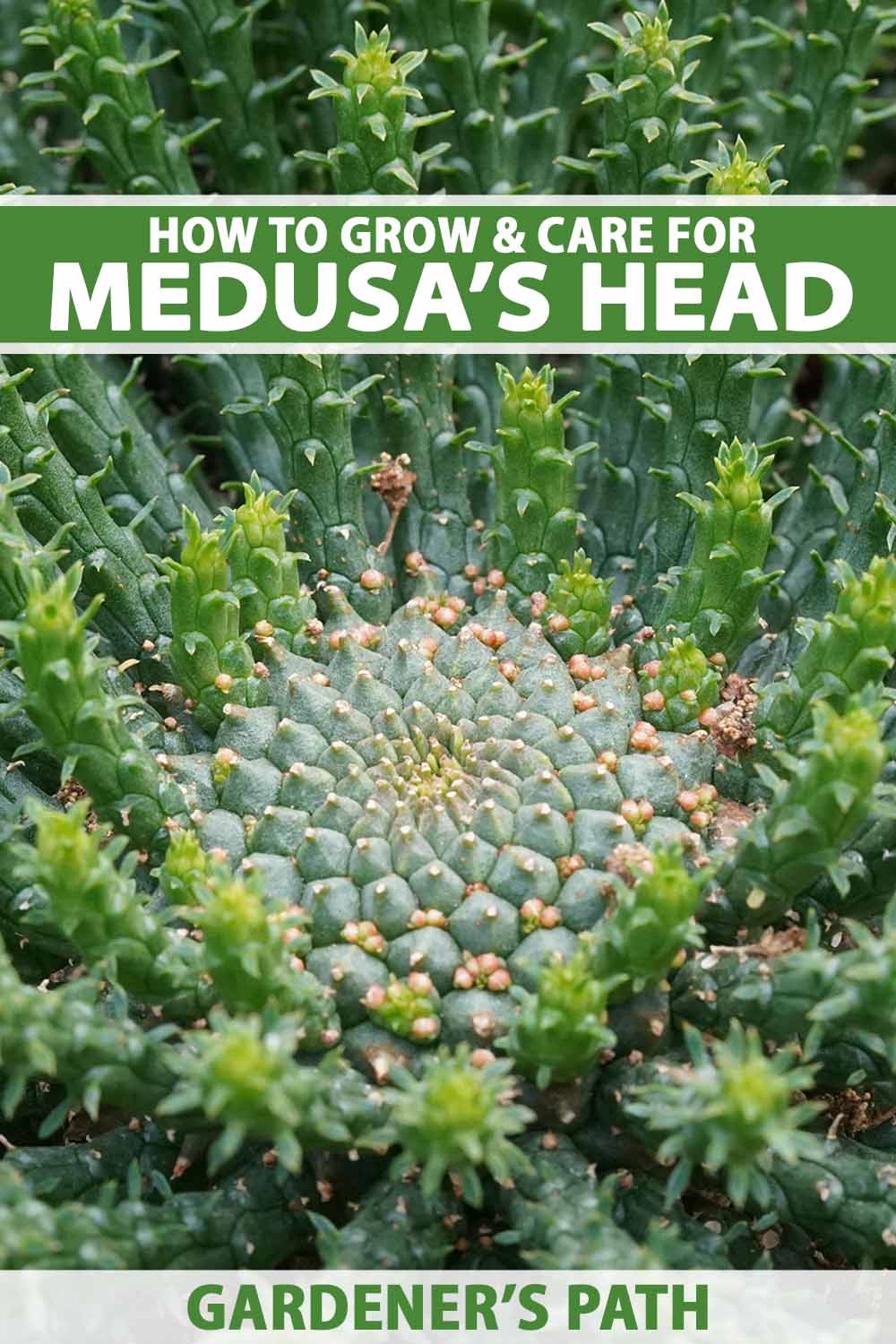
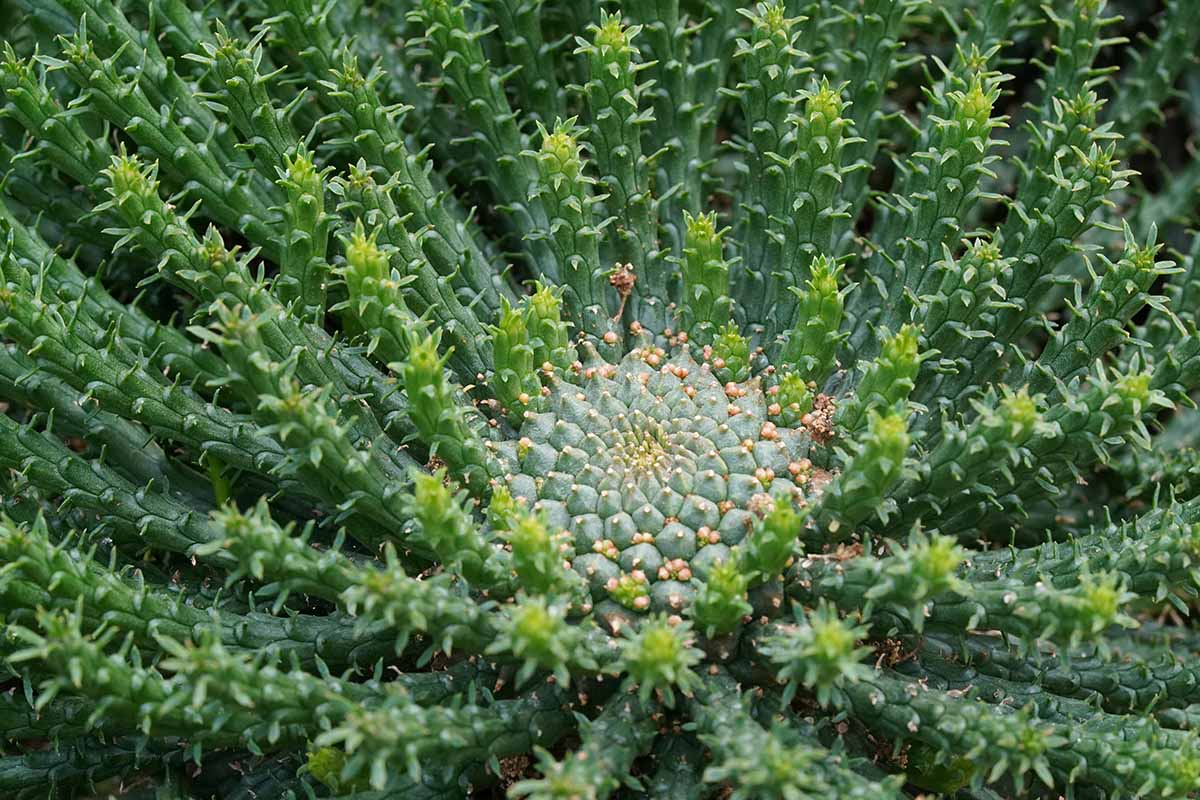
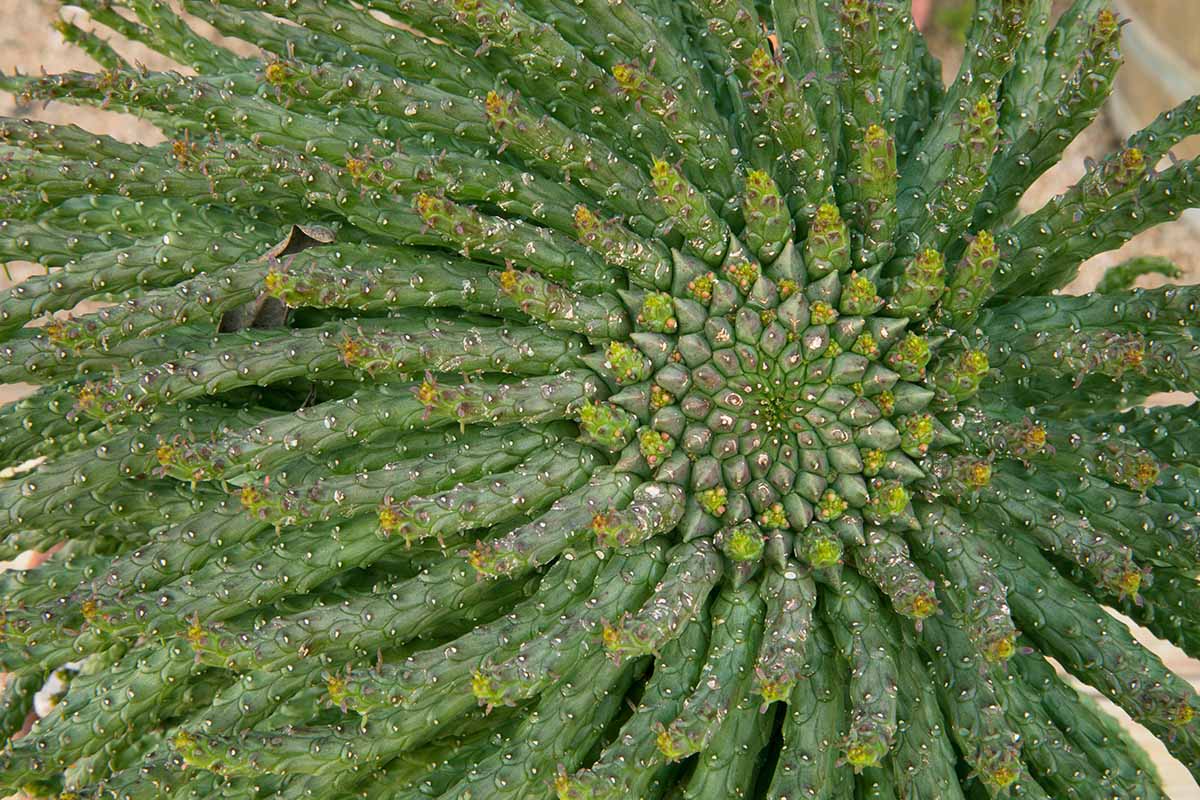
It’s a shrub-like succulent perennial with a medusoid growth habit characterized by a thick caudex, or central root, with radiating stems, like the head of the monstrous, mythical Medusa.
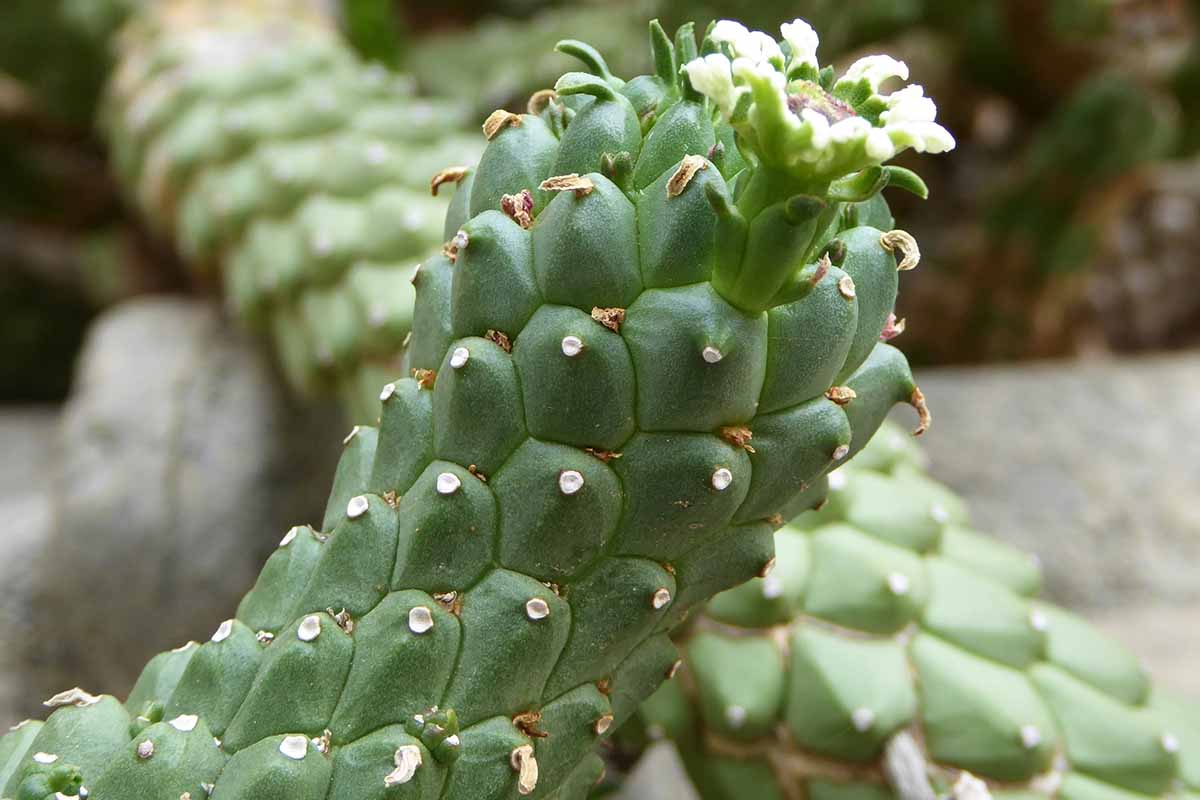
The stems turn upward at first and then cascade downward like a tangle of snake-like hair. They are unique for having rows of tubercles, or bumps resembling snake scales.
We link to vendors to help you find relevant products. If you buy from one of our links, we may earn a commission.
As a plant ages, the oldest stems and caudex shade brown and become woody, or cork-like.
Mature specimens grow to a height of four to eight inches with a spread of 24 to 36 inches.
Under ideal conditions, they produce cyathia, greenish-yellow flower clusters surrounded by white or green petal-like bracts at the stem tips from spring to summer.
Our guide to growing euphorbia gives an overview of this varied genus that includes annuals, perennials, succulents, trees, and vines.
This article focuses on growing and caring for E. caput-medusae. Here’s what we’ll cover:
What You’ll Learn
Medusa’s head, E. caput-medusae, is a desert species in the Euphorbia genus suited to USDA Hardiness Zones 9 to 12 and houseplant cultivation.
It is native to the South African Cape Provinces and Namibia, and is considered to be the authentic Medusa’s head, because it was the first of its type to be named by renowned botanist Carl Linnaeus in 1753.
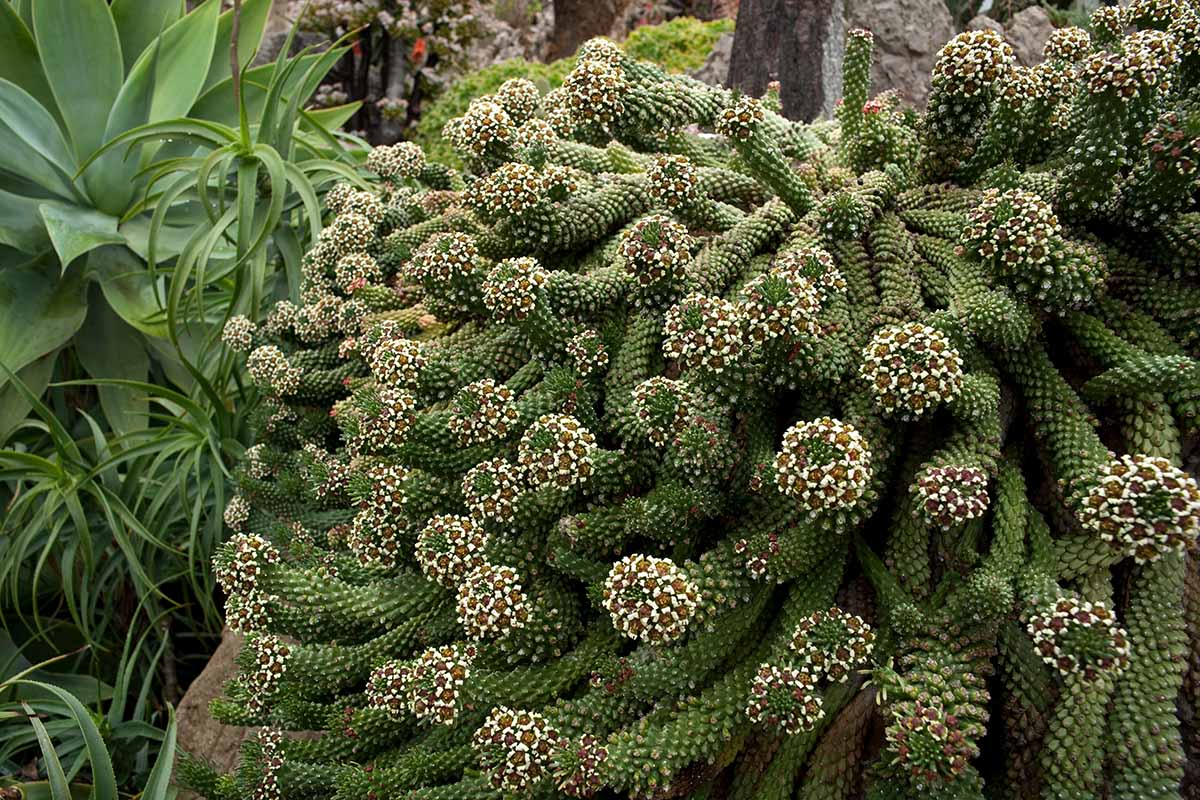
Other Euphorbia “copycats” bear the same common name, including: E. esculenta, E. flanaganii, E. horwoodii, E. huttoniae, and E. inermis.
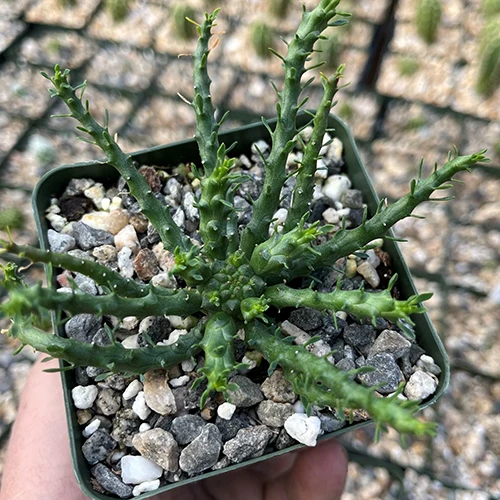
Of these, you may find E. flanaganii, with its thinner stems, smaller caudex, smaller stature, and yellow bracts, available for the home garden.
Some folks call medusoid species jellyfish heads or African snakes.
Quick Look
Common name(s): African snakes, jellyfish head, Medusa or Medusa’s head
Plant type: Succulent subshrub
Hardiness (USDA Zone): 9-12 (outdoors)
Native to: Cape Province, South African, and Namibia
Bloom time / season: Spring to summer
Exposure: Full sun, partial shade
Soil type: Lean, sandy, well-draining
Soil pH: Lean, sandy, well-draining, slightly acidic to slightly alkaline
Time to maturity: 3-5 years
Mature size: 4-8 inches tall by 12-36 inches wide
Best uses: Container, houseplant, rockery, xeriscape
Taxonomy
Order: Malpighiales
Family: Euphorbiaceae
Genus: Euphorbia
Species: Caput-medusae
In addition to cultivation as an in-ground specimen in water-wise rock gardens and xeriscapes, mature specimens show well cascading from hanging indoor or outdoor planters that display the snake-like “hair” to best advantage.
Note that all parts of the plant are toxic and care should be taken when working with this species.
How to Grow
Euphorbias are armed for survival with a toxic milky sap to ward off feeding herbivores and heal any wounds they may inflict. Be sure to wear gloves to avoid skin irritation.
Let’s consider the cultural requirements of Medusa’s head.
Climate
Accustomed to dry conditions in its native habitat, this species thrives in sandy soils along windy shorelines where rainfall is minimal and ocean fog provides the life-giving moisture it stores in the caudex and stems.
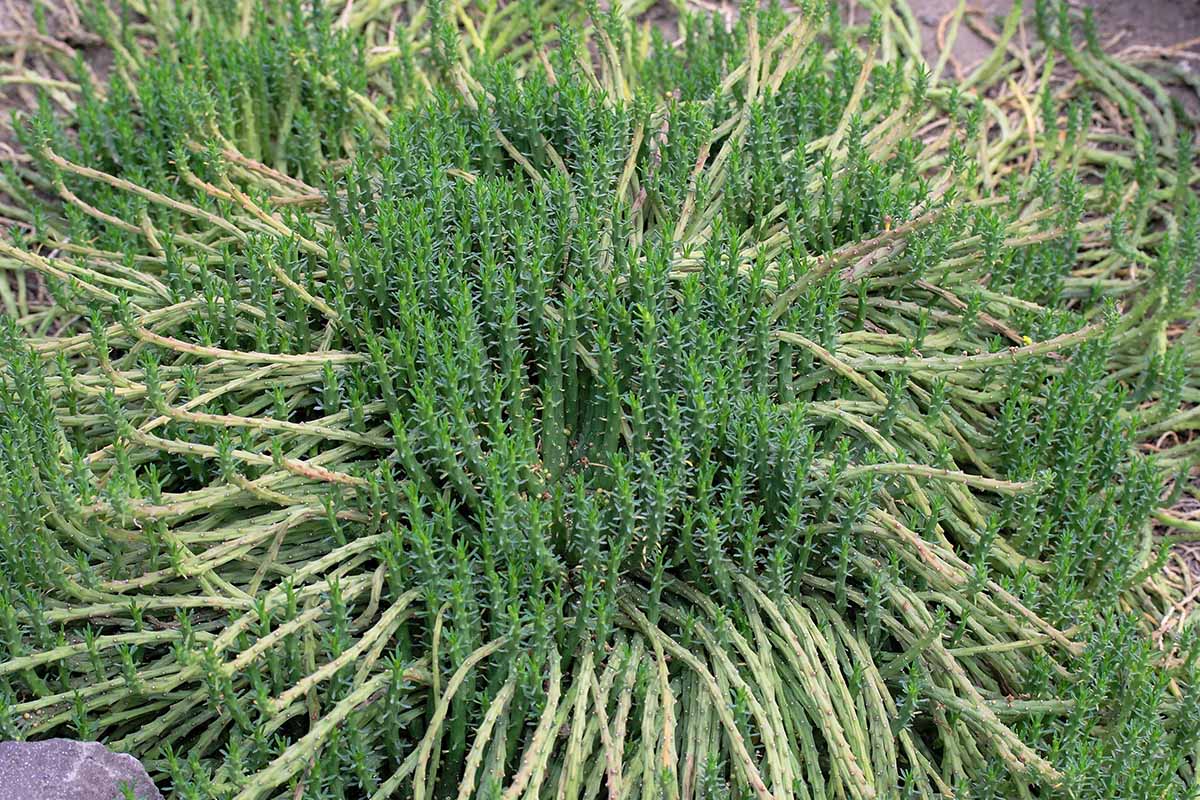
The ideal temperature range for home gardeners is 50 to 75°F with low humidity.
Container gardeners in Zones 8 and below should bring plants indoors when nighttime temperatures are predicted to dip to 50°F.
Light
In the wild, Medusa’s head plants grow in direct sunlight or the dappled exposure afforded by other native coastal shrubbery.
Home gardeners should situate the plant where they will receive at least six hours of full sun daily.
Those in the warmest regions may choose locations with morning sun and afternoon shade to prevent sun scorch on the hottest summer days.
Soil
The soil along rocky outcrops and sandy coasts is gritty, lean, and fast-draining.
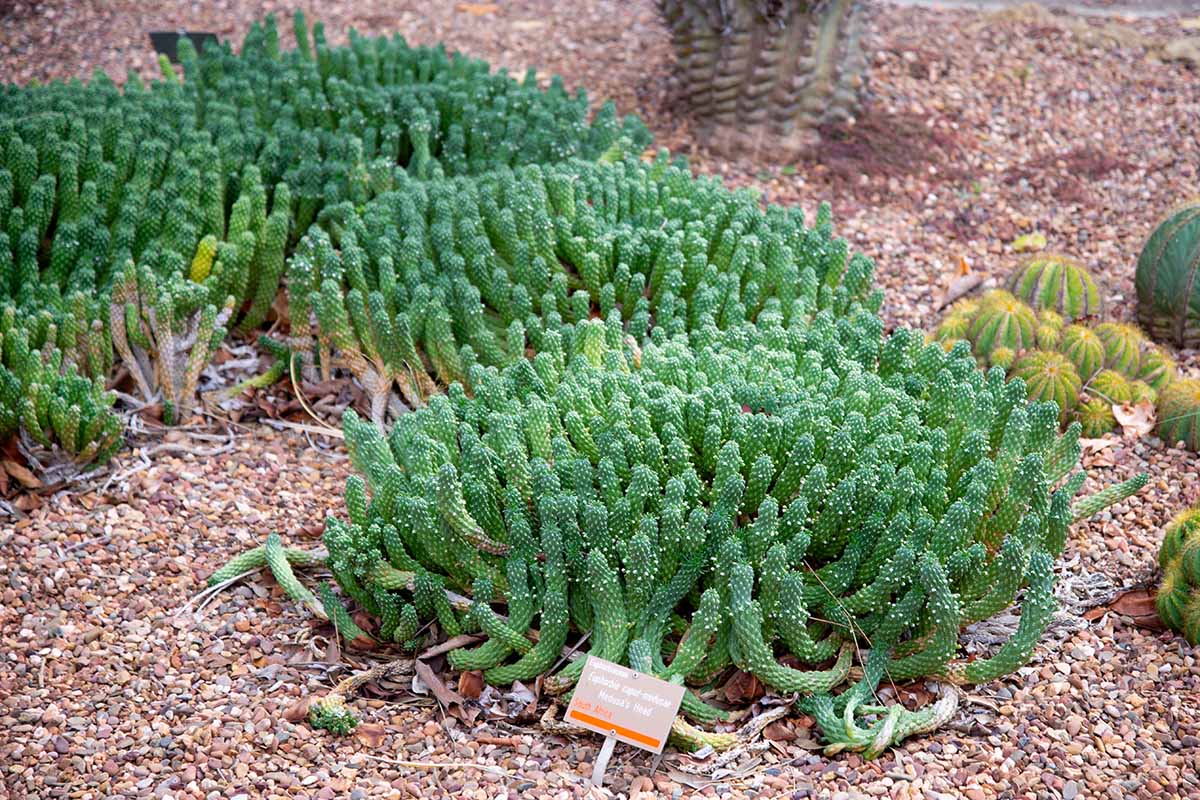
Growers should replicate this environment with lean, sandy, well-draining soil and a pH of 5.0 to 8.0.
Container gardeners should prioritize optimal drainage by using three parts potting soil, three parts coarse sand, and two parts perlite, as described in our guide to making succulent potting soil.
Water
Water needs are minimal. If it hasn’t rained for two weeks, and the soil is completely dry to a depth of four inches, soak it deeply. Use a moisture meter as a guide.
For potted specimens, wait for the potting soil to dry completely before watering.
Moisture needs are greatest during spring and summer active growth periods.
Fertilizer
Euphorbia is accustomed to lean soil and is a light feeder. If you choose to fertilize, use a balanced product with an NPK ratio of 5-5-5 or similar.
Dilute it to half- or a quarter-strength and apply it monthly through the spring and summer months.
Where to Buy
E. caput-medusae is available from specialty cactus and succulent nurseries.
When you receive your plant, check to see if the soil is moist. If it is, don’t water until it completely dries out. If it is completely dry, soak it immediately.
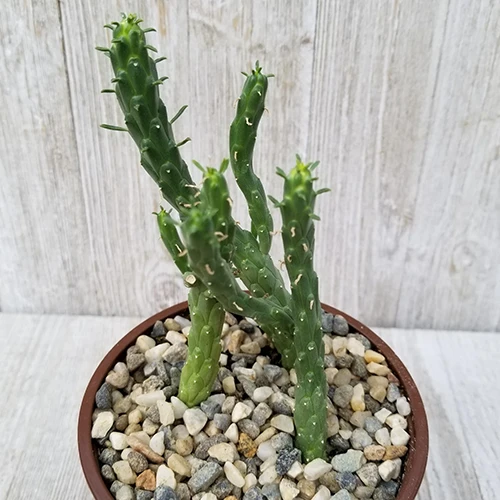
Place the pot near a south-facing window for bright, indirect sunlight the first week to recover from travel shock. Then move it onto the windowsill for direct sunlight thereafter.
Medusa’s head is available from Planet Desert in four-inch pots.
E. flanaganii is also easy to find.
As discussed, E. flanaganii differs from E. caput-medusae in several ways.
The caudex is smaller in diameter, the stems are narrower, the flower bracts are yellow instead of whitish-green, and the dimensions are eight inches tall but only 16 inches wide.
Cultural requirements are the same.
E. flanaganii is available from Planet Desert in a variety of pot sizes.
Maintenance
There are only a few maintenance chores to attend to. Remember to wear gloves to protect your hands from the toxic sap.
Remove damaged or diseased stems with clean pruners. After use, wash the sap off the blades and wipe with 70 percent isopropyl rubbing alcohol, rinse, and dry them.
Repot as needed. Fill containers three-quarters full of soil and maintain an inch of space around the root mass for a snug fit.
Set the caudex at an appropriate height so that the lowest leaves are above the soil surface.
Propagation
To begin, you’ll need to acquire seeds or nursery stock.
Let’s discuss.
From Seed
Post-bloom, tiny seedpods form. When they are dry, they split open and send even tinier seeds flying in all directions.
To collect the seeds, you need to judge how dry the pod is and capture the seeds before the pods split.
Starting from seeds is challenging because they are hard to collect, not readily available for purchase, and are typically only viable for less than a year.
If you are able to get seeds, sow them immediately.
Fill a well-draining seed starter tray three-quarters full of cactus and succulent potting mix.
Lightly mist the soil with water to dampen it.
Scatter the seeds on the surface of the soil.
Cover the tray with clear plastic wrap and place it in bright, indirect sunlight. No watering is required as you have created a self-watering greenhouse.
Place it on a heat mat or in a warm room to maintain an even 75°F temperature.
Once the seeds sprout, remove the plastic. Mist the soil regularly to keep it evenly moist. Take care to avoid oversaturation.
When the seedlings look like miniature versions of the parent plant, they are ready for transplant.
Transplanting
To transplant seedlings or nursery stock, you’ll need to replicate the original depth in the new container or garden to avoid transplant shock.
Prepare garden soil to a depth of six to 12 inches by loosening and turning it until it is crumbly and free of debris. Make a hole as deep as the pot or seed starter cell, and twice as wide.
Or, fill well-draining containers three-quarters full of cactus and succulent potting medium. The proper fit provides an inch of space below and around the root mass.
Unpot and remove most, but not all of the original soil.
Set plants at their original depth, with the caudex above the soil, so the lowest leaves do not touch the soil surface. Space them 24 to 36 inches apart to avoid overcrowding.
Wait a week before watering.
A Word on Stem Cuttings and Offsets
It’s easy to propagate many euphorbias from stem cuttings.
However, a stem cutting from E. caput-medusae does not produce a caudex, but rather a random mass of snake-like stems without a defined center.
On the other hand, the yellow-flowered E. flanaganii, produces plantlets at the tips of the stems.
They look like mini-Medusa’s heads, have a central caudex and radiating stems, and readily detach for propagation.
Here’s how:
- If you have a stem with an offset, cut the stem off about two inches below the offset to detach it.
- Lay it on a paper towel away from direct sunlight to form a callus over the “wound.”
- Fill a well-draining four-inch diameter pot three-quarters full of cactus and succulent potting mix.
- When the cut stem end has formed a hard callus, dip it into rooting hormone powder.
- Make a one-inch deep hole in the center of the soil.
- Push the dipped stem into the hole.
- Tamp and backfill to bury the stem an inch deep and hold the plantlet upright an inch above the soil surface.
Wait a week to water. Allow the pot to dry completely before rewetting the soil.
Pests and Disease
While they are not prone to pests or pathogens, euphorbia in less than ideal conditions may succumb to both.
Sapsucking aphids and mealybugs proliferate in the spring, feeding on tender new growth.
Use a firm spray of the hose or faucet to dislodge the pests and treat the foliage with organic neem oil.
Spider mites prefer moisture-stressed plants in hot, dry environments, making them especially likely to infest houseplants. Treat them with neem oil, as well.
Act promptly to address infestations as pests can spread diseases through a landscape or houseplant collection.
In addition, overcrowded plants in a high-humidity environment may suffer from powdery mildew, a condition characterized by a whitish dust-like coating on the foliage.
Interestingly, the leaves do not have to be wet for this fungal condition to proliferate. Avoid overcrowding, and apply neem oil out of direct sunlight to prevent leaf scorch.
Not Another Face in the Crowd
Sun-loving Medusa’s head is sure to capture attention in Zone 9 to 12 gardens or as a potted specimen. Water-wise and easy-care, it’s perfect for expansive xeriscapes or hanging planters.
Do you already feature a range of succulents and cacti in your living space?
At up to eight inches tall and 36 inches wide, Medusa’s head is sure to make a bold statement among its companions.
Are you growing Medusa’s head? Please share your tips in the comments section below.
If you found this article informative and want to learn more about growing euphorbia in your landscape, we recommend the following: