

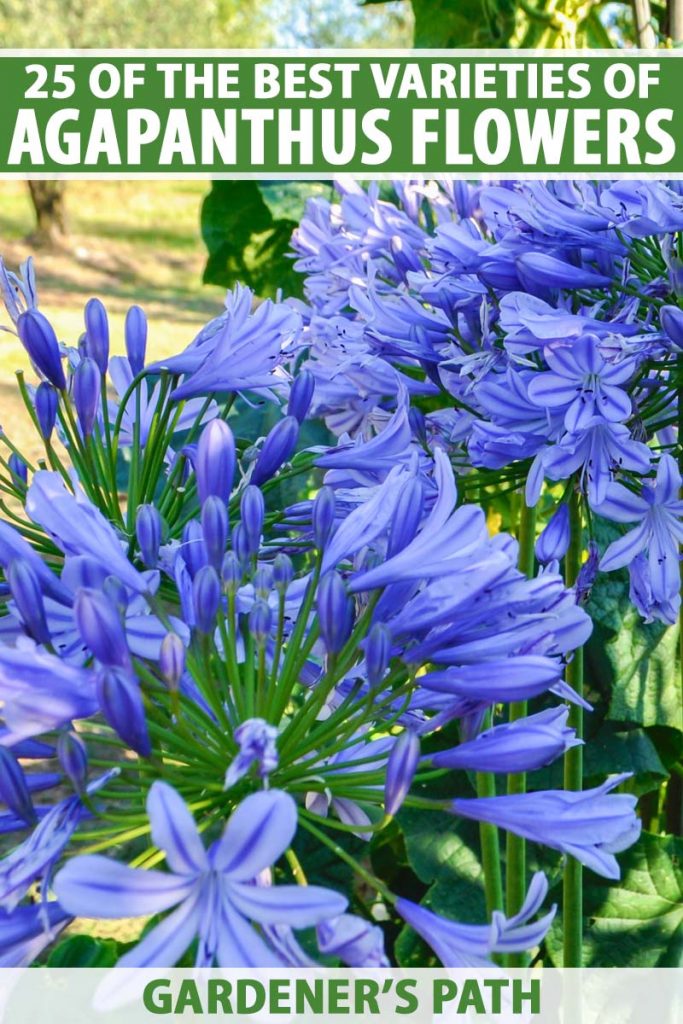

Agapanthus, aka lily of the Nile, provides a glorious display of color in borders and beds.
The blooms grow off a central stalk that ends in an umbel containing about 20 to 30 tube-shaped flowers. The umbel is between four and eight inches wide, depending on the cultivar.
Agapanthus is the lone genus in the subfamily Agapanthoideae, part of the Amaryllidaceae family, but it makes up for this loneliness with its bounty of beautiful species and cultivars.

We link to vendors to help you find relevant products. If you buy from one of our links, we may earn a commission.
Hailing from southern Africa, the four main species in the genus are A. africanus, which has long, curved leaves, A. praecox and A. orientalis, the most commonly grown species, and last but not least, A. inapertus with its deep-blue, pendulous flowers that remain almost completely closed.
They can be deciduous, evergreen, or semi-evergreen. Deciduous types drop their foliage in the winter months and are typically hardier than evergreen varieties.
Semi-evergreen types are evergreen in warm zones and deciduous in cooler areas.
Evergreen types thrive in Zones 8 to 11, while deciduous cultivars are typically hardy down to Zone 6.
To get to know the lily of the Nile more intimately, check out our guide to growing agapanthus, where you’ll learn how to cultivate and care for these stunning plants in your garden.
In this article, you’ll meet the firework-display array of different agapanthus varieties and choose the best ones for your beds and borders.
29 Favorite Agapanthus Cultivars
Without further ado, here are my 29 favorite agapanthus varieties:
1. Albus
For a show of snow-white blooms from mid- to late summer, try growing a group of A. africanus ‘Albus’ in your beds and borders.

The individual flowers are shaped like trumpets and adorn two- to three-feet-tall stems. This cultivar spreads three to four feet.
Plant a whole border of ‘Albus’ along a walkway for a dazzling contrast to a red, blue, or green house.
During the winter and spring, you’ll enjoy the low clumps of strap-shaped leaves characteristic of the evergreen ‘Albus.’
2. Angela
Do you dream of delicate, light purple blooms with an attractive, drooping habit? Then ‘Angela’ is perfect for you.

‘Angela’ may look delicate, but she grows up to four feet tall at her zenith, spreads about two feet, and blooms in midsummer.
Evergreen and hardy in Zones 8 to 11, ‘Angela’ looks especially beautiful when grown alongside bright pink coneflower.
3. Back in Black
‘Back in Black’ makes a bold statement with deep burgundy flower buds that open to rich, dark violet blooms in midsummer.
Rising on tall stems above a base of glossy green foliage and dark stems, the effect is dramatic and modern, perfect for gardeners who love a touch of the unexpected.
Reaching about two to three feet high and wide, it stands out in monochrome plantings or paired with silvery grasses and pale blooms for high contrast.

In a mixed border or as a container centerpiece, it offers a moody elegance that draws the eye and anchors the surrounding color palette.
You can find ‘Back in Black’ available at Nature Hills Nursery.
4. Barley Blue
A. praecox ‘Barley Blue’ offers a soft, romantic display with its rounded clusters of lavender-blue flowers that appear in early to midsummer.
The blooms rise above a neat mound of green, strap-like foliage, creating a gentle contrast that works beautifully in both traditional and contemporary designs.
Reaching about two feet tall and wide, it’s an ideal choice for lining a sunny path, framing an entryway, or adding a cool splash of color among warm-toned perennials.

Its airy umbels catch the light and sway in the breeze, bringing a graceful movement to the garden at the height of the season.
Find ‘Barley Blue’ plants in one-gallon containers available from Fast Growing Trees.
5. Black Pantha
For tight, glossy-black buds that open into dark purple flowers, try the extraordinary ‘Black Pantha’ (A. praecox var. orientalis) in your flowerbed.
An evergreen variety with gray-green foliage, ‘Black Pantha’ grows on flower stalks from one to three feet tall and spreads two to three feet.

Best of all, the plant blooms throughout the spring and summer and cut flowers last up to two weeks in a vase!
You can find plants available at Burpee.
6. Blue Heaven
For a cultivar that’ll remind you of blue skies even during the grayest days, try planting ‘Blue Heaven.’
With heavenly, baby-blue blooms on three-feet-tall stalks and a spread of three feet, ‘Blue Heaven’ provides a pop of color in a flower bed or a vase. Or both.

Hardy in Zones 7 to 11, ‘Blue Heaven’ blooms in midsummer and then re-blooms in the fall for another round of pleasing periwinkle.
You can find bare root plants available at Burpee.
7. Blue Yonder
Do you dream of a far-flung field bursting with violet wildflowers? The type of scene you’re lucky to catch in the springtime, or that maybe you’ve only seen in a painting or a book?

Then let me introduce you to ‘Blue Yonder,’ the lily of the Nile that’ll fill your eyes with all the purple-blue beauty you ever wished for.
Evergreen in Zones 8 and above and deciduous in Zones 6 and 7, ‘Blue Yonder’ and its two- to three-feet-tall green stalks and clumps of strap-shaped leaves that spread up to two feet would look absolutely amazing against a yellow or taupe colored house.
8. Brilliant Blue
Are you looking for a vibrant spray of color that’s reminiscent of the ocean right before a storm?
Look no further than ‘Brilliant Blue,’ a deciduous variety that grows to about two feet in height, spreads one to two feet, and is hardy to Zone 6.

With deep-blue flowers that each have a stripe running through the middle of the petals, ‘Brilliant Blue’ offers your garden a pop of color and texture.
The flower stalks are shorter than a typical agapanthus, and the strap-shaped foliage gives the plant a compact appearance.
This cultivar is ideal for container gardening or planting among other showstoppers in a front-of-the-house flowerbed.
9. Duivenbrugge White
‘Duivenbrugge White’ is an elegant variety that produces large, rounded clusters of pure white, trumpet-shaped blooms in mid to late summer.
The flowers are held aloft on sturdy green stems above a base of arching, strap-like foliage, giving the plant a refined yet showy presence.
Growing about two to three feet tall with a similar spread, it brings a bright, fresh accent to mixed borders or formal garden designs.

Whether massed for a crisp, monochromatic display or paired with deep blues and purples for contrast, it lends a timeless charm to the summer garden.
You can find plants available from Nature Hills Nursery.
10. Ever Amethyst
Perfect for lovers of colorful jewelry and all things beautiful, ‘Ever Amethyst,’ part of the Ever® series from De Wet Enviroscaping in South Africa, shines in a hue of purple that matches its namesake stone.
This reblooming agapanthus will bloom all summer long so it’s ideal for those who love a continuous supply of cut flowers.
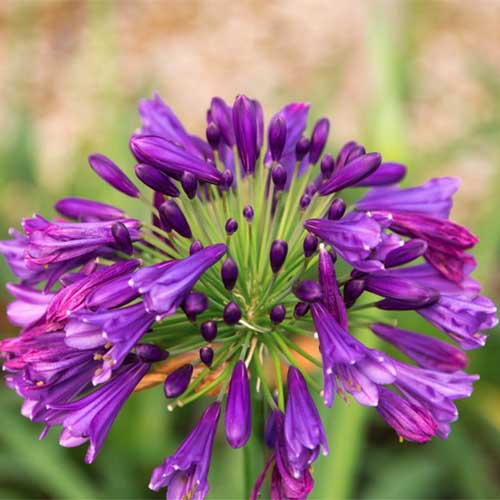
‘Ever Amethyst’ is semi-evergreen, grows up to three feet tall, and spreads up to two feet. This cultivar is also pest and disease resistant.
It’s hardy in Zones 8 to11, and you can find two-and-a-half-quart containers from the Southern Living Plant Collection via the Home Depot.
11. Ever Sapphire
Like ‘Ever Amethyst,’ ‘Ever Sapphire’ gleams in jeweled tones, but this time in bright blue instead of violet.
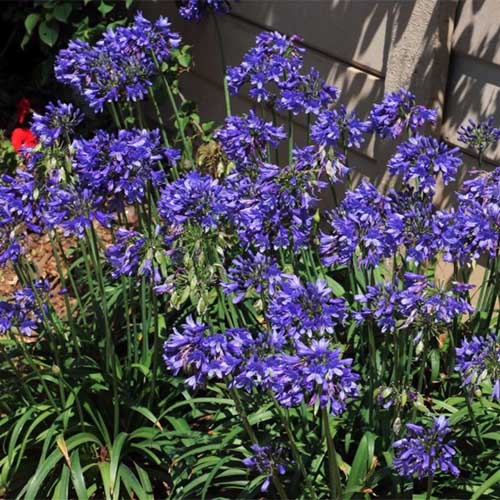
This evergreen cultivar reaches one to two feet in height and spread. ‘Ever Sapphire’ is sure to please the eye as it blooms prolifically from springtime well into the summer months.
‘Ever Sapphire’ is hardy in Zones 8 to 11 and you can find two-quart containers from the Southern Living Plant Collection, available via Home Depot.
12. Ever Twilight
This white-flowered, purple-throated variety looks a lot like ‘Queen Mum,’ described below, but with more of a violet hue.
Plus, it’s a semi-dwarf cultivar that reaches just one to two feet tall and wide, and is hardy in Zones 8 to 11.
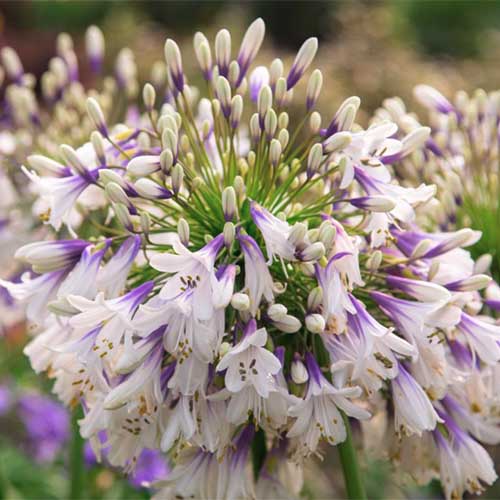
Evergreen ‘Ever Twilight’ reminds me of long, endless summer nights in Alaska.
To add a bit of this twilight magic to your garden, you can find ‘Ever Twilight’ in two-and-a-half-quart containers from the Southern Living Plant Collection via the Home Depot.
13. Ever White
For a snow-white cultivar whose individual flowers truly resemble lilies, try ‘Ever White,’ a semi-dwarf cultivar that grows just one to two feet tall and wide.
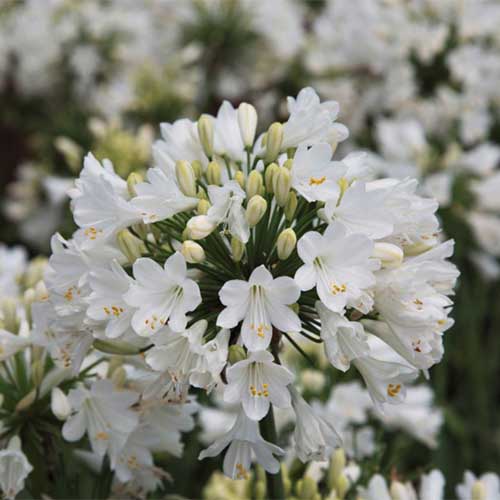
Like other cultivars in the Ever® series, semi-evergreen ‘Ever White’ blooms from springtime and well into the summer and is hardy in Zones 8 to 11.
You can find two-and-a-half-quart pots from the Southern Living Plant Collection, available via the Home Depot.
14. Galaxy Blue
It shimmers in radiant periwinkle with a delicate stripe running through each petal.
It towers to over three feet tall and spreads more than two feet wide. It’s deciduous ‘Galaxy Blue,’ a cultivar to delight your senses with its clusters of flowers.

This one’s hardy to Zone 6 – which is good news for gardeners in slightly cooler areas who dream of growing agapanthus – and once it starts to bloom in summer, it continues to rebloom all season.
You can find gallon containers or bare root plants available at Burpee.
15. Galaxy White
‘Galaxy White’ is a striking cultivar that produces generous clusters of crisp, pure white flowers held aloft on sturdy stems.
Blooming in midsummer, it creates a luminous focal point that seems to glow in both daylight and moonlight.
Plants reach about three feet tall in bloom with a similar spread, forming tidy clumps of strap-like green foliage.

It’s a natural fit for brightening the middle or back of a mixed border, where its pale blooms contrast beautifully with darker-leaved perennials, or along a garden path where you can enjoy its showy umbels up close.
You can find ‘Galaxy White’ bare roots available at Burpee.
16. Golden Drop
No, it isn’t the flower color that’s golden in the case of ‘Golden Drop,’ it’s the foliage.
Unlike most other agapanthus varieties, the leaves of this cultivar are green in the middle with gold-tinged edges, which provides interest and texture to the garden.
Since ‘Golden Drop’ is evergreen, you’ll enjoy its unique foliage all year long in Zones 7 to 11.
Contrast these leaves with the soft-blue flowers and you’ve got a plant that’s reminiscent of a sweet summer day spent on the beach.
‘Golden Drop’ has a compact growth habit and reaches up to just 16 to 18 inches in height and spread, so it’s perfect for containers, window boxes, and small patio gardens.
17. Graskop
Also called the grassland agapanthus, deciduous ‘Graskop’ (A. inapertus var. pendulus) grows up to three feet tall and wide and sports light green, grass-like leaves and deep purple, pendulous flowers.

‘Graskop’ thrives in Zones 8 to 11, but you can grow it in Zones 6 and 7 if you’re prepared to bring it indoors during the winter months.
This summer-blooming variety is named for Graskop, the town in the beautiful province of Mpumalanga, South Africa.
So, be warned: planting ‘Graskop’ may just give you wanderlust!
18. Indigo Frost
Indigo Frost™ stands out with its striking bicolor blooms, each trumpet-shaped flower displaying deep violet-blue throats that fade to crisp white edges.
Appearing in mid- to late summer, the rounded umbels rise on tall stems above clumps of glossy green, strap-like foliage.
Typically reaching two to three feet tall with a similar spread, this variety makes a dramatic focal point in borders or containers.

Its cool, two-toned palette pairs beautifully with silver-leaved plants or massed white flowers, creating a refreshing, eye-catching display during the warmest months.
Head to Nature Hills Nursery to pick up Indigo Frost™ plants.
19. Johanna
‘Johanna’ features large, rounded clusters of rich violet-blue flowers that open in mid to late summer, held above a tidy mound of arching, strap-like green foliage.
Reaching about two to three feet tall and wide, it delivers a bold splash of saturated color that draws the eye from across the garden.
This variety makes an excellent choice for creating rhythm in a border when repeated in groups, or for adding a jewel-toned accent alongside softer pastels.

Its vibrant blooms also bring a touch of drama to patio containers, where they can be admired up close.
Find ‘Johanna’ plants available from Nature Hills Nursery.
20. Loch Hope
Do you wish you could visit the glistening lakes of Scotland right now? Then let ‘Loch Hope’ satisfy your cravings until you actually can travel to the Highlands.

Its bright blue flowers feature delicate purple stripes that look extra dreamy when planted alongside orange crocosmia or bird of paradise.
‘Loch Hope’ won the Award of Garden Merit from the Royal Horticultural Society in 1993.
This deciduous cultivar is hardy to Zone 6 and grows up to four feet tall with a spread of two feet. It flowers from mid- to late summer.
21. Margaret
Do you dream of baby blue petals against a yellow house? I sometimes do. For us dreamers, ‘Margaret’ offers large, powder-blue blooms atop two- to three-feet-tall stems.

A semi-evergreen cultivar with glossy green leaves, she’s hardy to Zone 7 with adequate winter protection. ‘Margaret’ blooms from mid- to late summer and plants spread two to three feet.
22. Midnight Dream
One of my favorite things to do is step out onto my back porch and gaze at the midnight sky, when I’m up that late.
If you love to stargaze too, try planting ‘Midnight Dream.’ This agapanthus blooms in an even, velvety-purple color that reminds me of a soft nighttime sky. The droopy flowers are reminiscent of a wild bluebell.
Blooming in midsummer this plant grows up to three feet tall and one and a half feet wide. It loses its deciduous, strap-shaped green leaves in Zones 6 to 7 but might keep them in warmer areas.
23. Neverland
Do you dream of staying young forever? Then let ‘Neverland,’ a dwarf cultivar full of youth and vigor, allow you to pretend.

With sky-blue flowers that rise a foot above yellowish-green, strap-shaped foliage that spreads up to a foot wide, ‘Neverland’ adds a low, textured border to your flowerbed.
Evergreen ‘Neverland’ thrives in Zones 8 to 11.
24. Northern Star
My area of Alaska is too cold for agapanthus, but if I could grow them in my garden, I’d plant ‘Northern Star.’
This breathtaking cultivar boasts small, star-shaped flowers in the most gorgeous shade of azure.
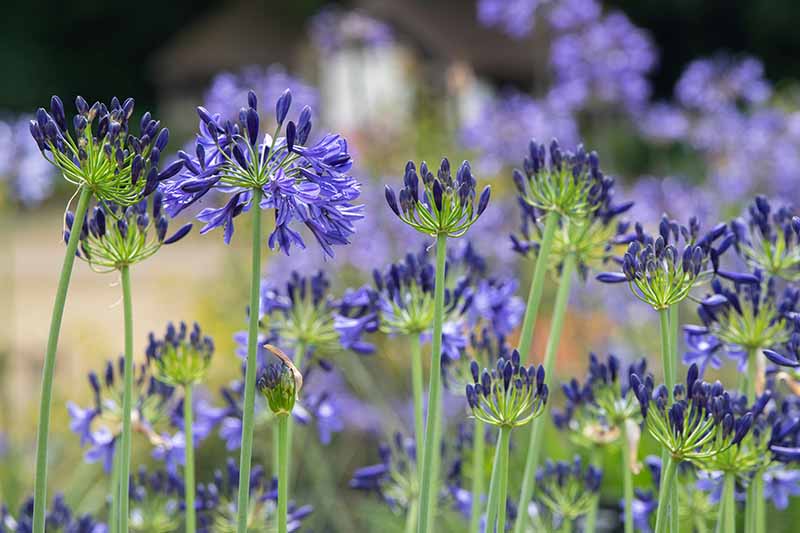
Blooming from mid- to late summer, ‘Northern Star’ looks radiant when planted next to helenium or bee balm.
The stiff, pointed leaves are deciduous. ‘Northern Star’ is hardy to Zone 6 and grows up to three feet tall and two feet wide
25. Queen Mum
So you want to give your garden a bit of royal flair, do you? Then try planting ‘Queen Mum,’ an elegant cultivar that grows two feet tall and wide and features creamy-white blossoms with purple throats.
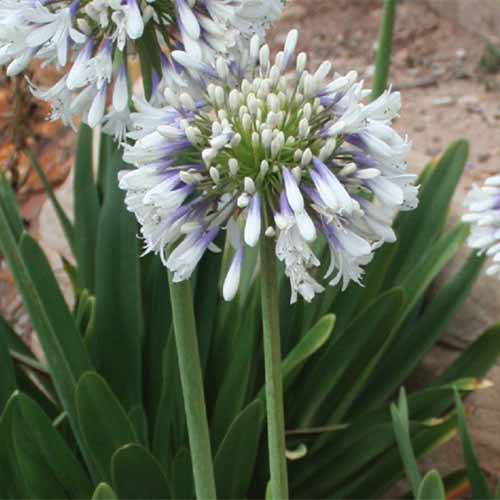
Semi-evergreen ‘Queen Mum’ has stout, grasslike leaves that add to her sense of composure. She’s ideal for those in balmy locales as she’s hardy only to Zone 8.
Find two-and-a-half-quart containers from the Southern Living Plant Collection at the Home Depot.
26. Silver Baby
If you are looking for a dwarf variety, try ‘Silver Baby,’ which lends your flower beds a moonlight shimmer of delicate, blue-tinged white flowers in spring and early summer.

‘Silver Baby’ grows just one foot tall and wide and is hardy to Zone 6, although being semi-evergreen, it’ll lose its upright, grass-green leaves. In Zones 8 to 11, it’s evergreen.
27. Summer Skies
‘Summer Skies’ features striped flowers that will remind you of a summer sky just before sunset: such a milky-soft blue color that you wish you could just wrap yourself up in it and take a nap.

Hardy to Zone 6, ‘Summer Skies’ blooms from midsummer through early fall and is semi-evergreen, dropping its leaves in colder regions and remaining evergreen in warmer locales. It grows up to three feet tall and two feet wide
The blue-black buds are upright but droop more and more the closer they get to blooming.
28. Tornado
With deep purple flowers that fade to pale white in the throat, A. praecox ‘Tornado’ is reminiscent of purple-blue Oklahoma skies before a storm but without all the accompanying danger.

It grows up to three feet tall and two feet wide and blooms from midsummer to early fall. ‘Tornado’ looks fantastic on its own or when paired with a white variety like ‘Albus.’
The strap-shaped leaves are semi-evergreen, dying back in winter in Zones 6 and 7 but remaining evergreen in Zones 8 to 11.
29. Twister
For a white-petaled agapanthus with a purple flair, consider planting ‘Twister’ in your garden.
This flashy cultivar makes a striking statement against a blue or dark gray home, thanks to its flowers which are purple at the base and bloom from mid- to late summer.

This is another cultivar that loses its glossy leaves in colder zones and may keep them all winter in warmer areas.
It thrives in Zones 7 to 11 and grows up to a whopping four feet tall with a spread of up to three feet.
Dreamy Dollops of Color
No matter which variety (or varieties) you choose, you’re sure to fall in love with your lush bed of agapanthus.

If you hang around your flower bed long enough you might just spot hummingbirds, bees, and butterflies. They love a sweet lily of the Nile, so get your camera ready and wait for the perfect snap.
What’s your favorite variety of agapanthus? Leave your questions, stories, and tips in the comments section below. And feel free to share a picture!
And for more information about growing flowers in your garden, check out these guides next:

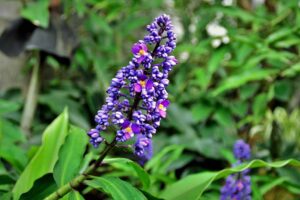
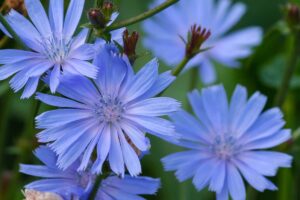
photo of #20 is a bed of tritelia (aka brodiaea) not agapanthus. Otherwise good.
Hi Ernie, thank you for your message – you’re right, that’s not an agapanthus. It’s been replaced with the correct image. Thank you for catching the error!