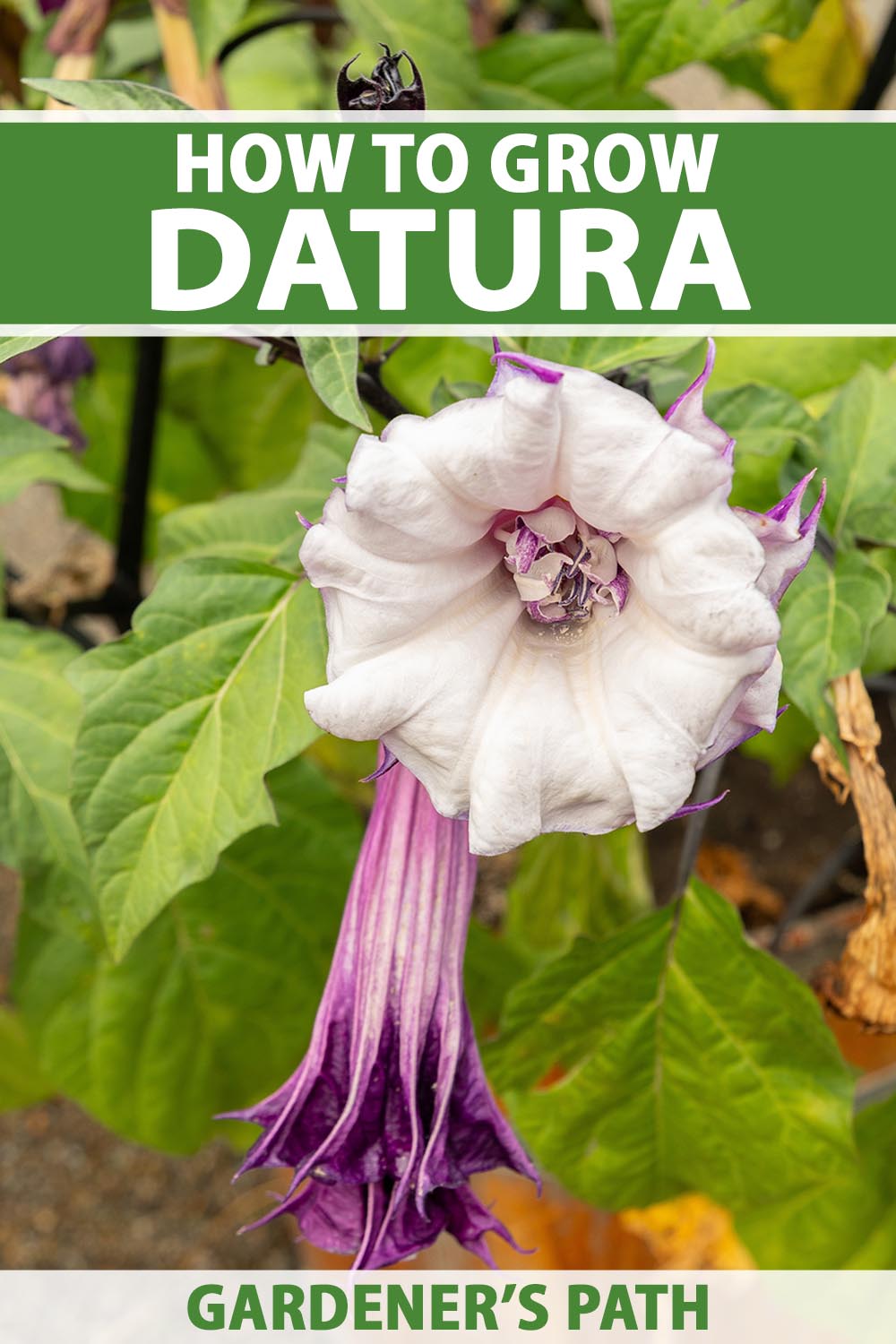
Datura spp.
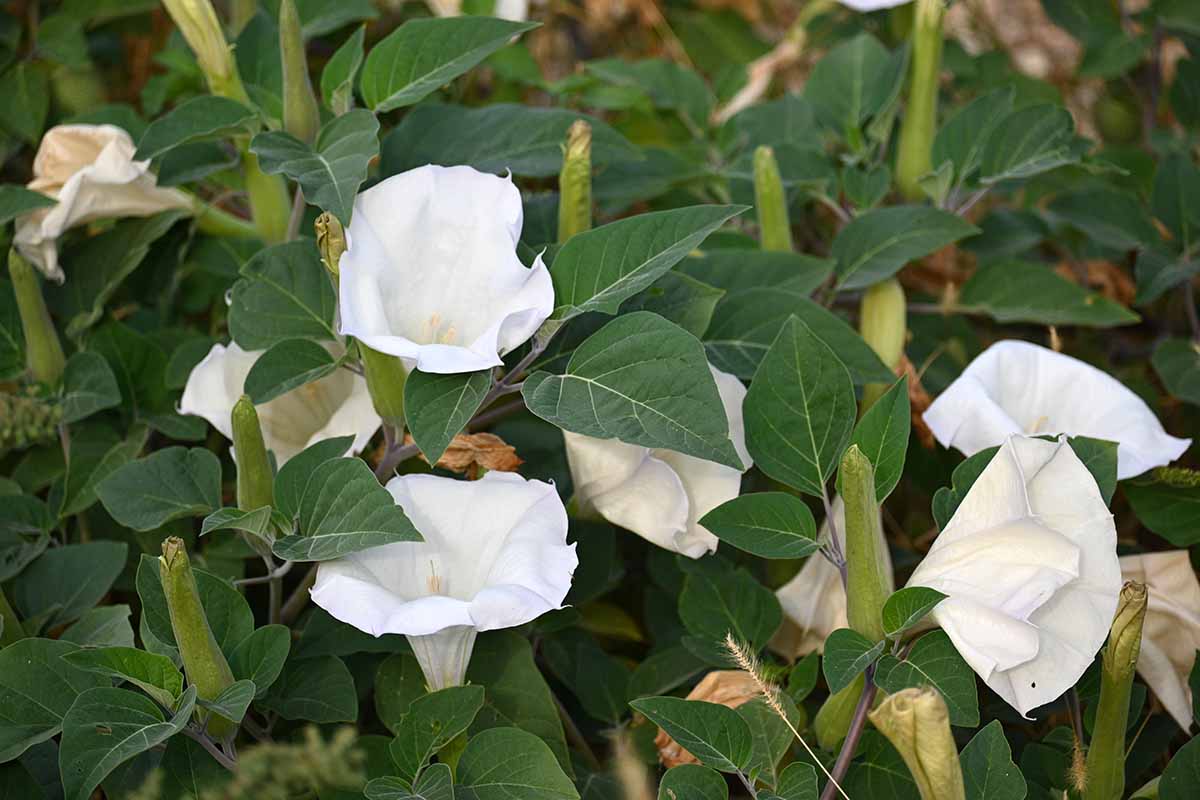
Boldly dramatic, datura (Datura spp.) species are grown as handsome ornamentals, with erect trumpet-shaped flowers and a sweet, heady fragrance that’s most notable at night.
Commonly known as angel’s trumpet, thornapples, or jimsonweed, plants are fast-growing and lush.
The large, shield-shaped foliage is adorned with cigar-like, furled buds that stay closed in the heat of the day.
Opening at dusk, the blooms broadcast a rich honeysuckle-like perfume that lures in vespertine pollinators like moths.
We link to vendors to help you find relevant products. If you buy from one of our links, we may earn a commission.
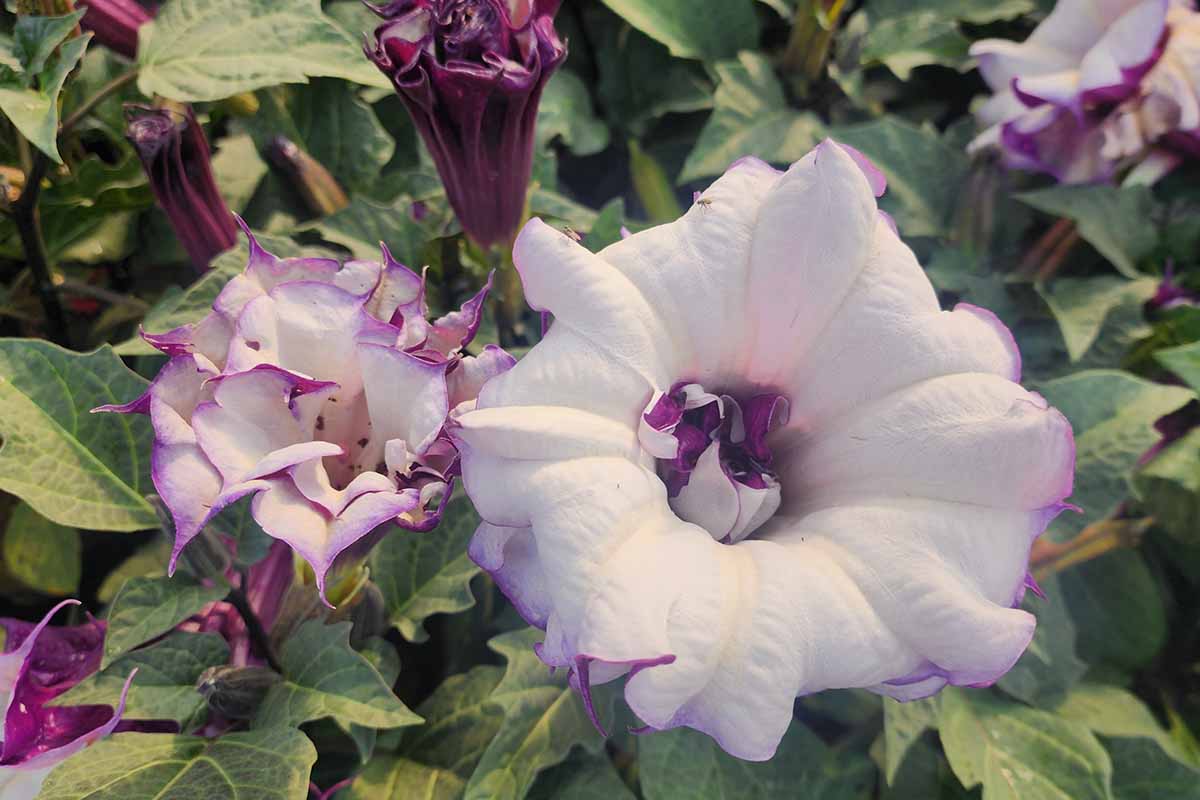
The regal flowers in burgundy, cream, or yellow remain open until late morning then decline.
Although individual blooms are short-lived, the plants give a long-lasting, vigorous floral display from summer until frost.
A beautiful plant that’s well-suited as a specimen or background player for annual or mixed beds, planters, and moon gardens, angel’s trumpet also has a darker side.
Highly toxic and psychoactive, it’s a member of the infamous “witches’ weeds” group of poisonous plants – with henbane, deadly nightshade, and mandrake – and has also earned the ominous monikers of devil’s trumpet, devil’s weed, and mad apples!
You’ll want to keep jimsonweed away from kids, pets, and livestock.
But if you have a suitable location that’s looking for a dash of daring beauty, then let’s dig into the easy steps of datura care and cultivation.
Here’s what’s coming up:
What You’ll Learn
A member of the nightshade family, Solanaceae, datura is an herbaceous, short-lived perennial often treated as a half-hardy annual.
The Datura genus is small, with up to 12 named species – but the numbers vary depending on the source and the genus has a confusing taxonomy with some species of disputed origin.
However, the species and hybrids most available for garden growth are Datura inoxia which is native to Central America, Mexico, and the southwestern USA, plus D. metel from southeast Asia.
Quick Look
Common name(s): Angel’s trumpet, devil’s trumpet, devil’s weed, jimsonweed, mad apples, moonflower, thornapple
Plant type: Herbaceous flowering perennial
Hardiness (USDA Zone): 9-10
Native to: Central America, Mexico, the southwest USA, and Asia
Bloom time / season: Summer to frost
Exposure: Full sun
Soil type: Loamy to sandy soil of average fertility, well-draining
Soil pH: 6.0-7.0, neutral
Time to maturity: 6 months from seed
Mature size: 4 to 6 feet tall and wide
Best uses: Specimen, back of beds, large planters, moon gardens
Taxonomy
Order: Solanales
Family: Solanaceae
Genus: Datura
Species: Inoxia, metel, stramonium
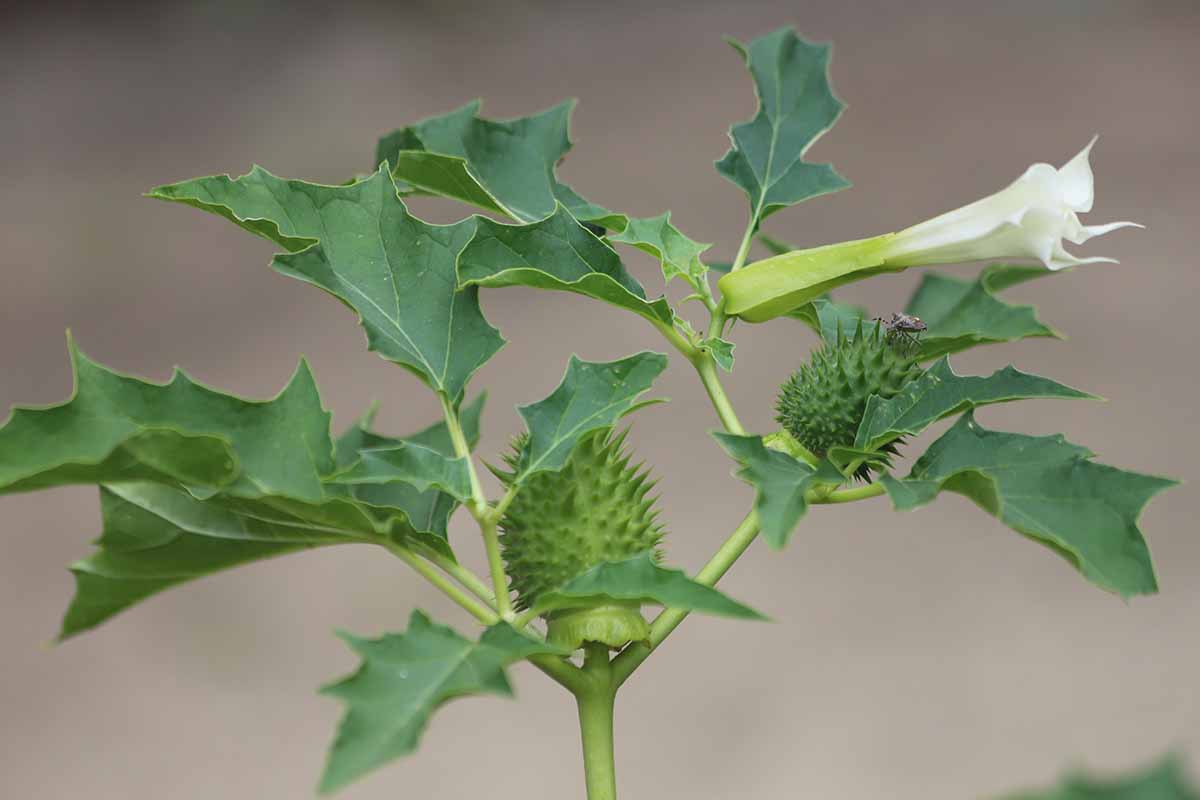
The foliage is gray green to dark green, and the large leaves are shield-shaped or poinsettia-like, giving a full, lush shape with an upright or mounding habit.
Plants grow rapidly in warm temperatures, reaching a full size of up to six feet tall and wide by midsummer.
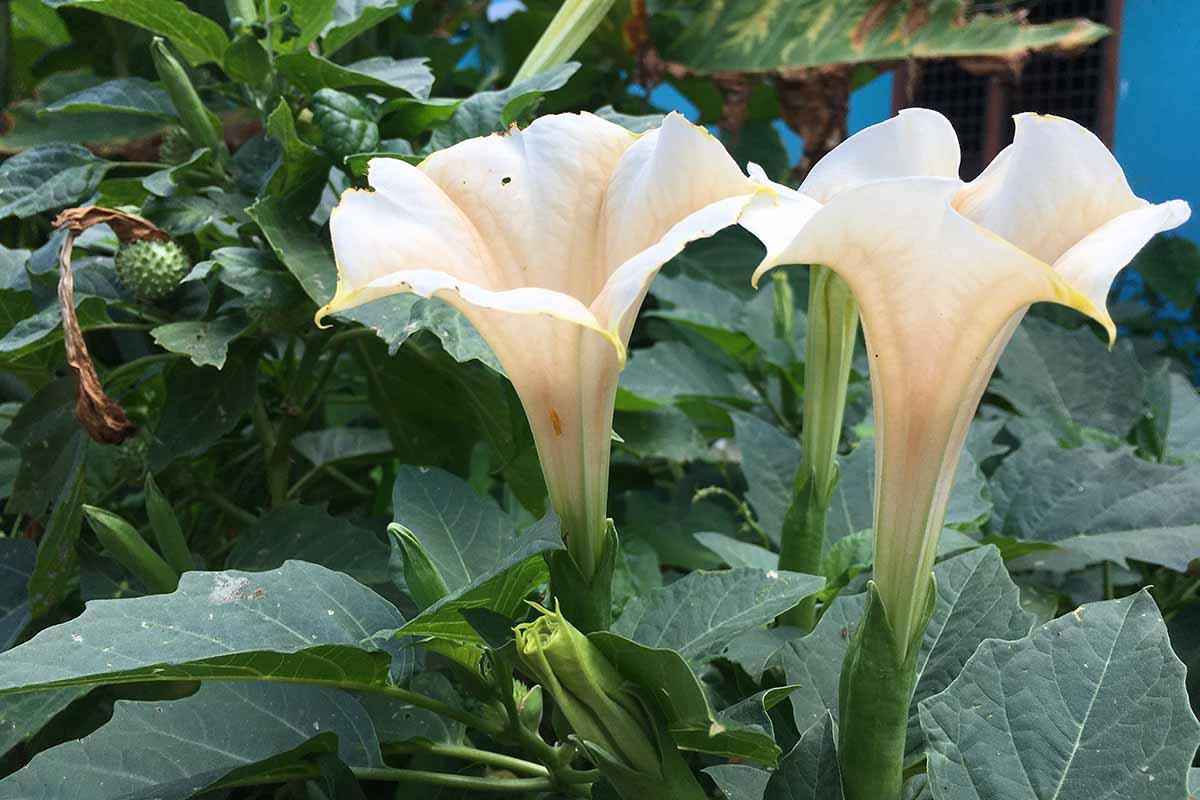
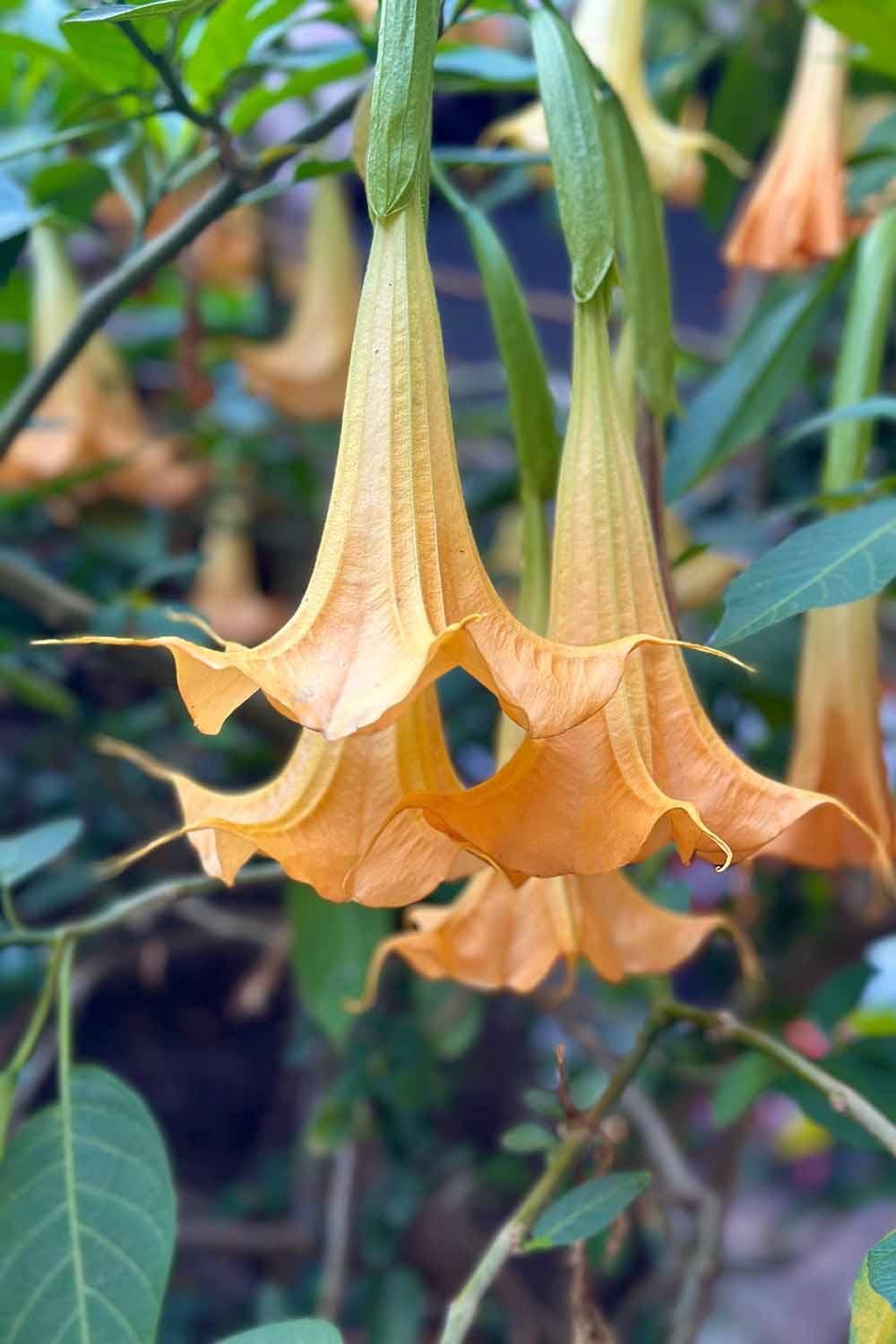
Flowering from early summer until frost, datura are closely related to Brugmansia, but with the buds and flowers held in an erect position while brugmansia flowers are pendulous and droop downwards.
The large petals are fused into funnel-shaped flowers with up to 10 lobes, and like many night-blooming plants, are pollinated by moths, but also visited by bees and other flying insects while they remain open.
Flower colors include burgundy, cream, pink, rosy purple, white, and yellow.
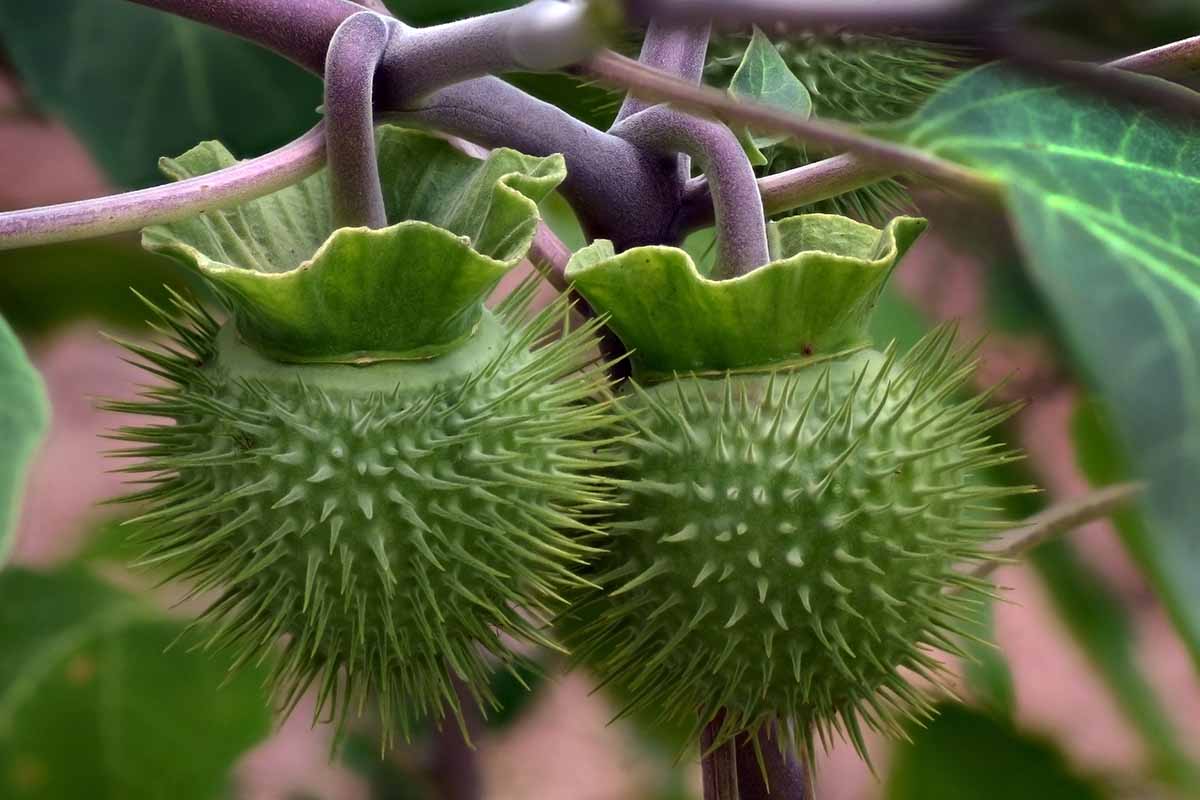
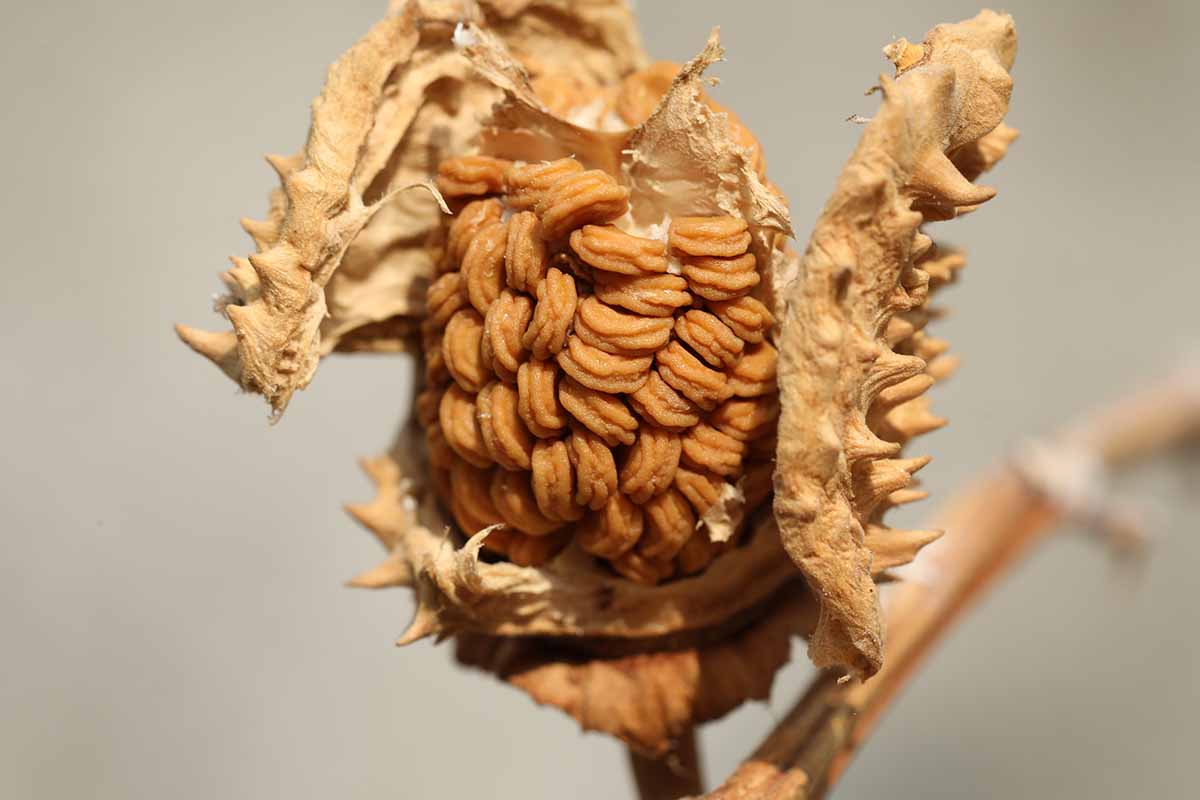
After flowering, spiny fruit capsules form and split open when ripe – historically the seeds have been used by many cultures in traditional medicines and rituals but are highly toxic when ingested.
Garden varieties are frost-tender and hardy in Zones 9 to 10.
Jimsonweed self-seeds vigorously and invasively and the cultivation of D. stramonium is banned in some municipalities and states.
Toxicity
All parts of datura are extremely poisonous to people, pets, and livestock – children and small animals are the highest risk.
How to Grow
Datura grows quickly once the weather warms up and plants need ample room to accommodate their growth – choose locations with their full size in mind.
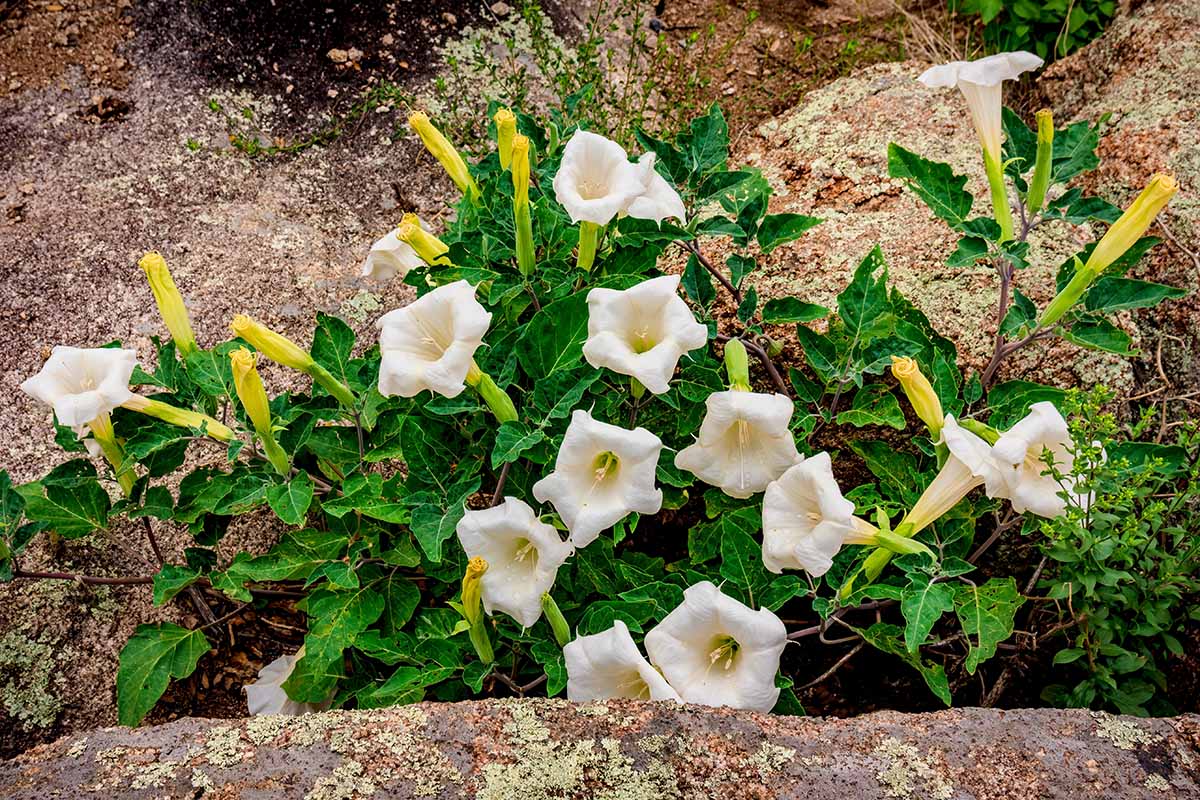
If you plan to grow angel’s trumpet in containers or planters, use large vessels with a heavy base to anchor the plant’s large size.
Light
Give plants a full sun location for vigorous growth with a steady supply of flowers.
They will grow in partial shade, but growth tends to become leggy with fewer flowers.
Soil
Tolerant of sandy soils, jimsonweed does best in fertile growing mediums enriched with organic matter such as compost, leafmold, well-rotted manure, and worm castings.
They also need well-draining soil and won’t thrive in soggy conditions.
If needed, improve the drainage by mixing in a couple of shovelfuls of grit to increase soil sharpness.
Materials such as crushed shells, landscape sand, pea gravel, or stone chips are helpful for improving water flow.
Water
Although plants are drought tolerant once established, they produce the best bud set and lush, vibrant growth when given lightly moist conditions.
Provide one inch of water per week when the top inch of soil is dry to the touch.
Increase to two or three inches per week for mature plants or if they tend to droop between water applications.
Temperature
Tolerant of light humidity, angel’s trumpets prefer arid conditions with warm to hot temperatures.
Avoid planting in areas with high humidity which can cause fungal issues such as powdery mildew.
Plants are frost tender and will survive the winter only in Zones 9 and above.
Fertilizer
Garden cultivars are heavy feeders and benefit from regular applications of fertilizer.
Scratch in a balanced formula of slow release pellets such as 5-5-5 (NPK) in spring.

I like to use natural or organic products like Enhanced All-Purpose Plant Food, available at Burpee.
Once flowering starts, it’s a good idea to switch to a flower-boosting formula with a higher ratio of potassium, such as 4-6-2 NPK.

Down to Earth All-Purpose Fertilizer
DTE All-Purpose Fertilizer is a good choice for promoting blooms. You can find it at Arbico Organics.
If you prefer a liquid feed, use one with similar NPK ratios and apply every three or four weeks for the duration of the growing season.
Species and Cultivars
Datura can be a little hard to source, but seeds are often available at native flower and specialty shops, and larger garden centers may carry plants.
Here’s a look at a few popular varieties.
Ballerina
D. metel ‘Ballerina’ is a compact cultivar that grows only three feet tall and wide.
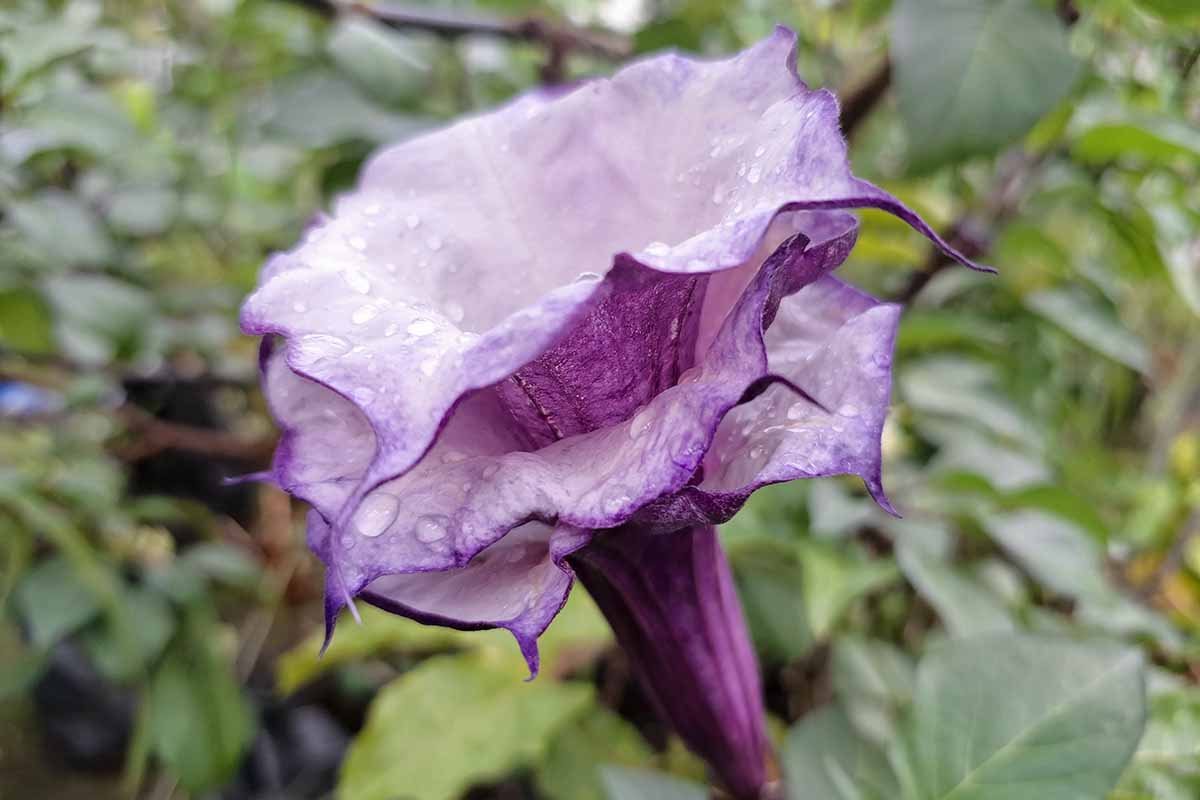
It produces wide, ruffled double flowers in berry purple with a delightful, tutu-like profile.
Golden Queen
‘Golden Queen’ is a hybrid with single banana yellow buds that soften to a cream and lemon swirl as the flowers open.
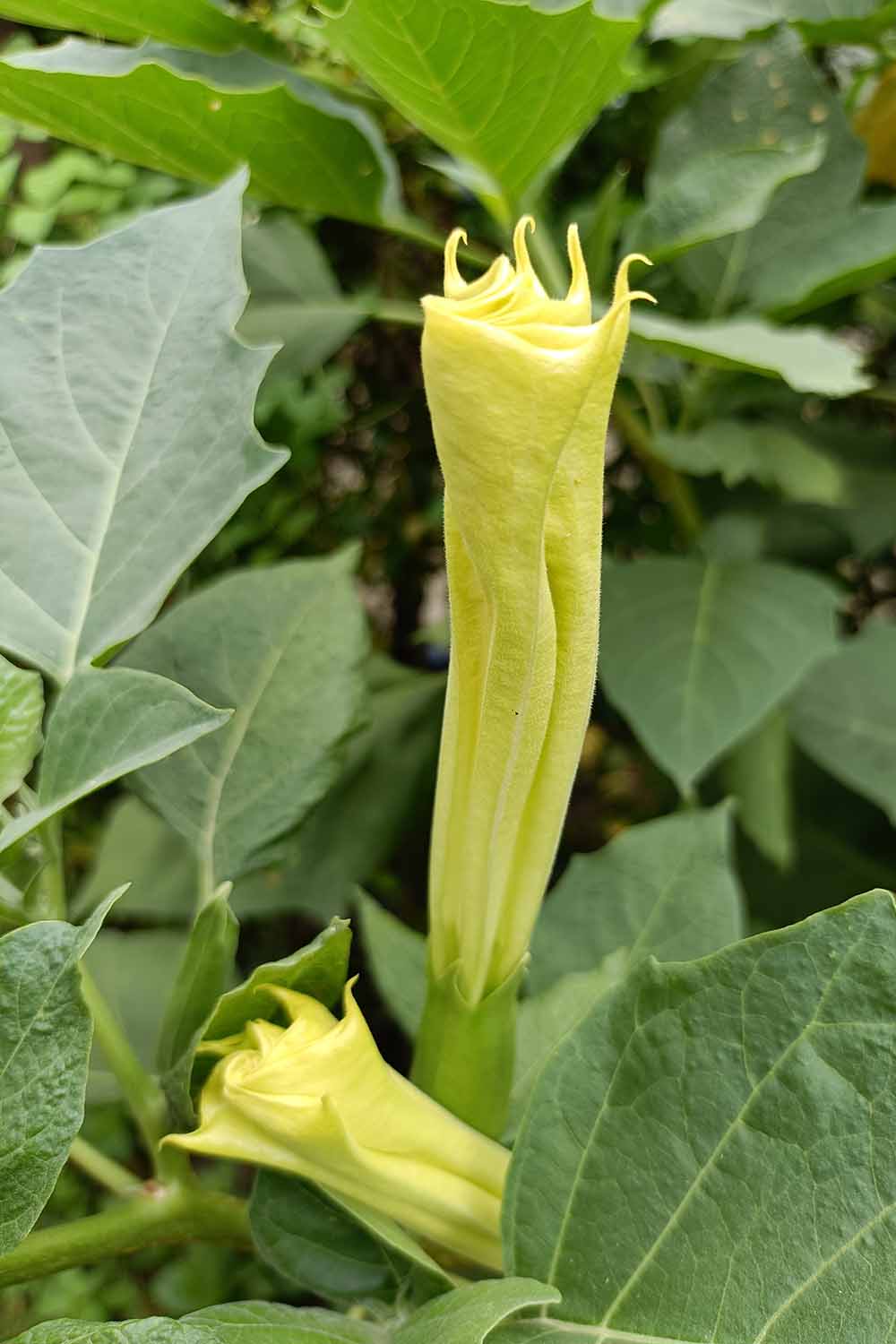
It grows three to four feet tall and wide.
Missouri Marble
D. inoxia ‘Missouri Marble’ features handsome, grey-green leaves and bold white flowers with burgundy blotching.
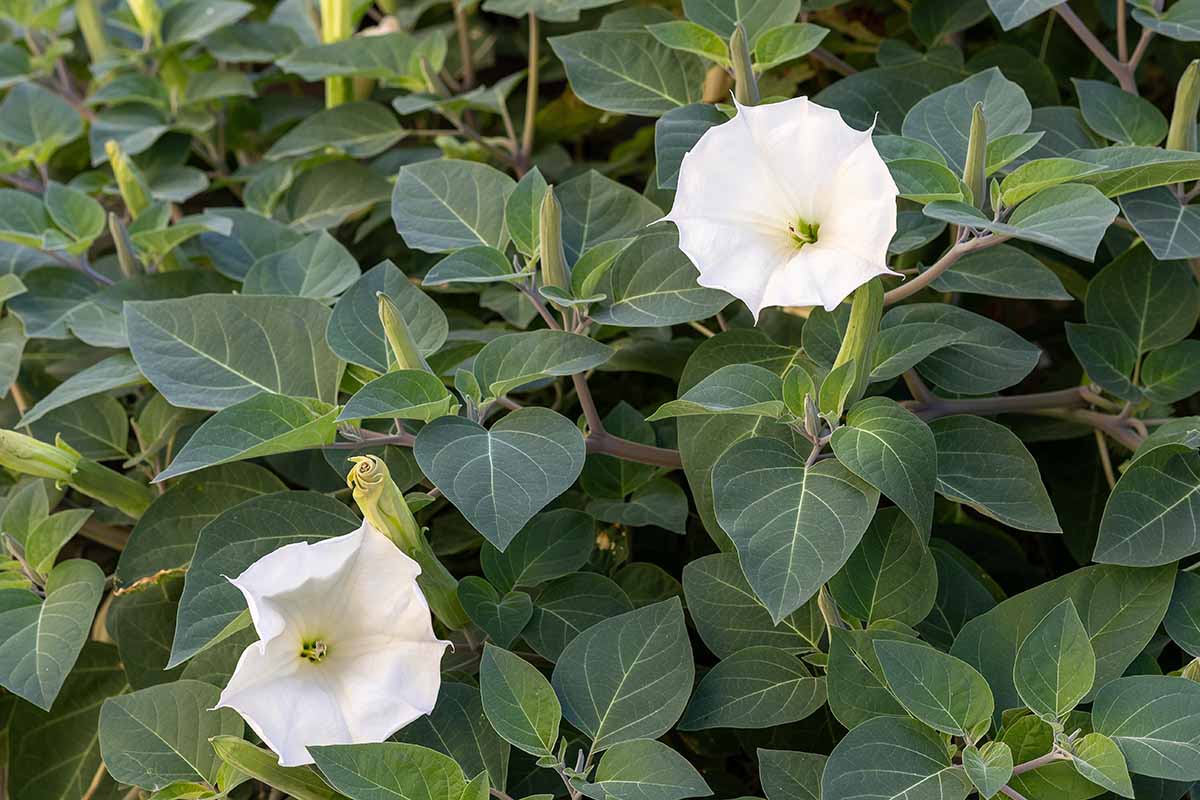
This one tops out at two to three feet tall with a similar spread.
Maintenance
To curb self-seeding, deadhead the spikey seed capsules before they ripen and disperse.
In mild climates, plants can be left outdoors for winter but may lose their leaves. Once warm spring temperatures return, so does the foliage.
In areas outside of their hardiness range, angel’s trumpet can be overwintered by potting up and moving them into a cool, frost-free area.
Water sparingly over winter, cut back to soil level in spring, and place in a warm, sunny window to promote new growth before moving outdoors.
Propagation
Sowing seeds is the easiest and most reliable method of propagation.
Here’s how to do it:
- In late winter or six to eight weeks before the last frost date, soak seeds overnight in tepid water to encourage sprouting, then sow indoors in trays of moist starter soil.
- Place trays in a brightly lit location out of direct sunlight.
- Keep the soil lightly moist and use a heat mat to warm the soil for the best germination, 70 to 80°F is the ideal soil temperature.
- Once plants have two true sets of leaves, thin to six inches apart.
- After all danger of frost has passed, harden off for four to six weeks before planting out.
Seeds can also be direct sown outdoors when soil temperatures have warmed to 70°F.
Pests and Disease
Gray mold is the most common disease problem to affect datura and appears on flowers, leaves, and stems.
Thin plants as needed to ensure good air circulation and avoid overhead watering to prevent the spread.
Common pests include sapsuckers such as aphids, spider mites, and whiteflies.
Use a strong stream of water from a garden hose to displace sapsuckers or apply a natural pesticide for persistent infestations.
Neem oil is effective as a spray for controlling bothersome pests.
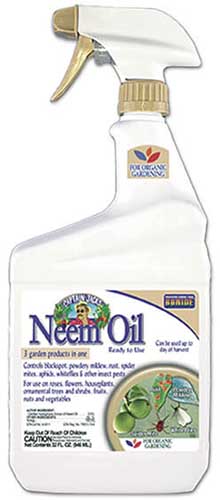
You can find Bonide neem oil as ready-to-use or concentrate available at Arbico Organics.
Night Scented Flowers
Easy to cultivate, Datura species are noted for their long flowering season with large, perfumed flowers that open at dusk.
Just give them full sun, adequate water, and feed regularly to enjoy fast growing, lush plants with a steady bud set and sweetly scented night air.
A treat in beds, planters, and in moon gardens, you’ll want to locate them close to patios, pathways, and windows – anywhere you can catch the intoxicating fragrance!
But do remember that angel’s trumpet is also called devil’s trumpet, with all parts highly toxic to people, pets, and livestock so use discretion when planting.
Are you growing datura? Let us know in the comments section below!
And for more ideas about growing flowers in your landscape, be sure to add these guides to your reading list next: