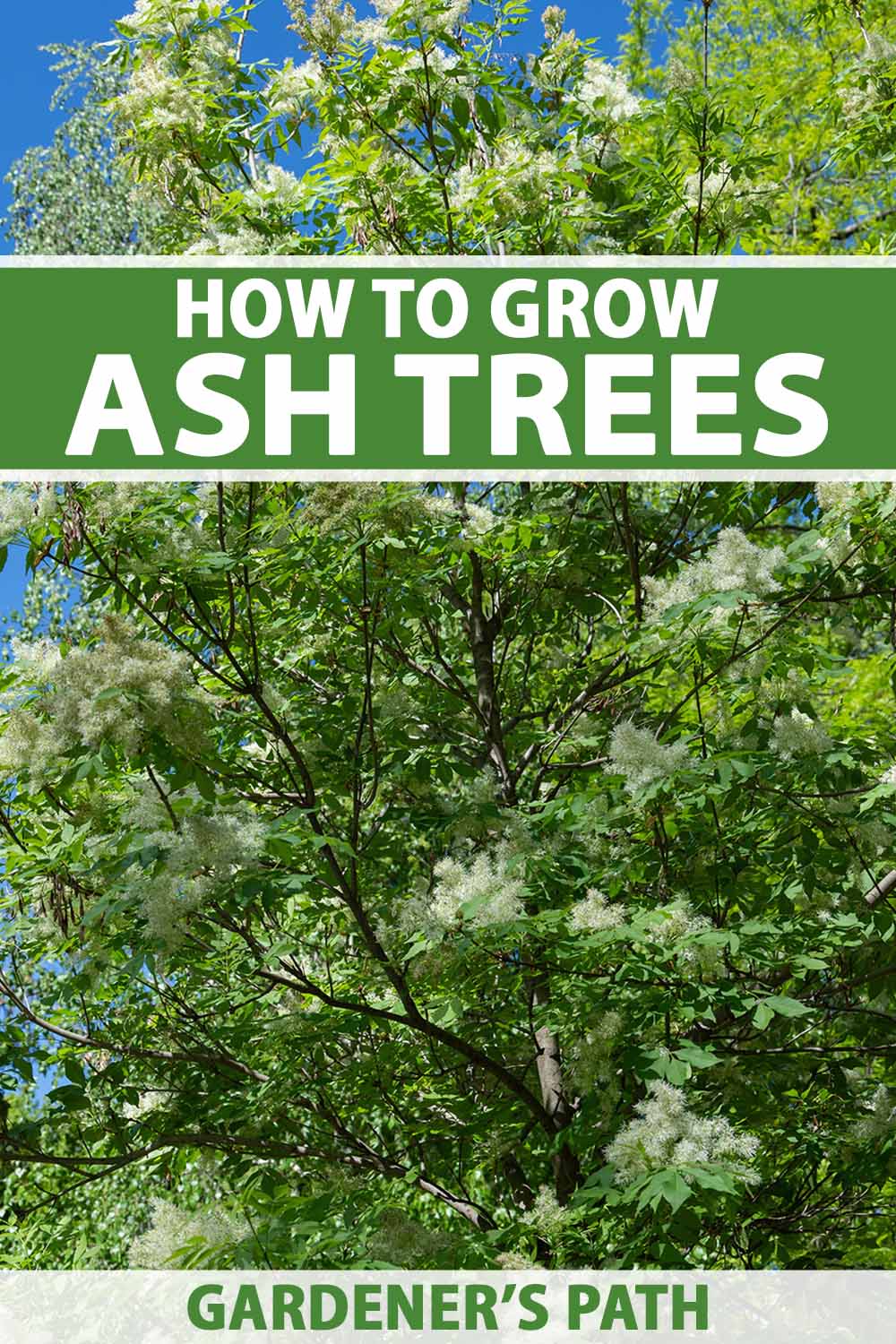
Fraxinus spp.
Ash trees are everywhere, filling our forests and making our cities greener with their feathery leaves and towering presence.
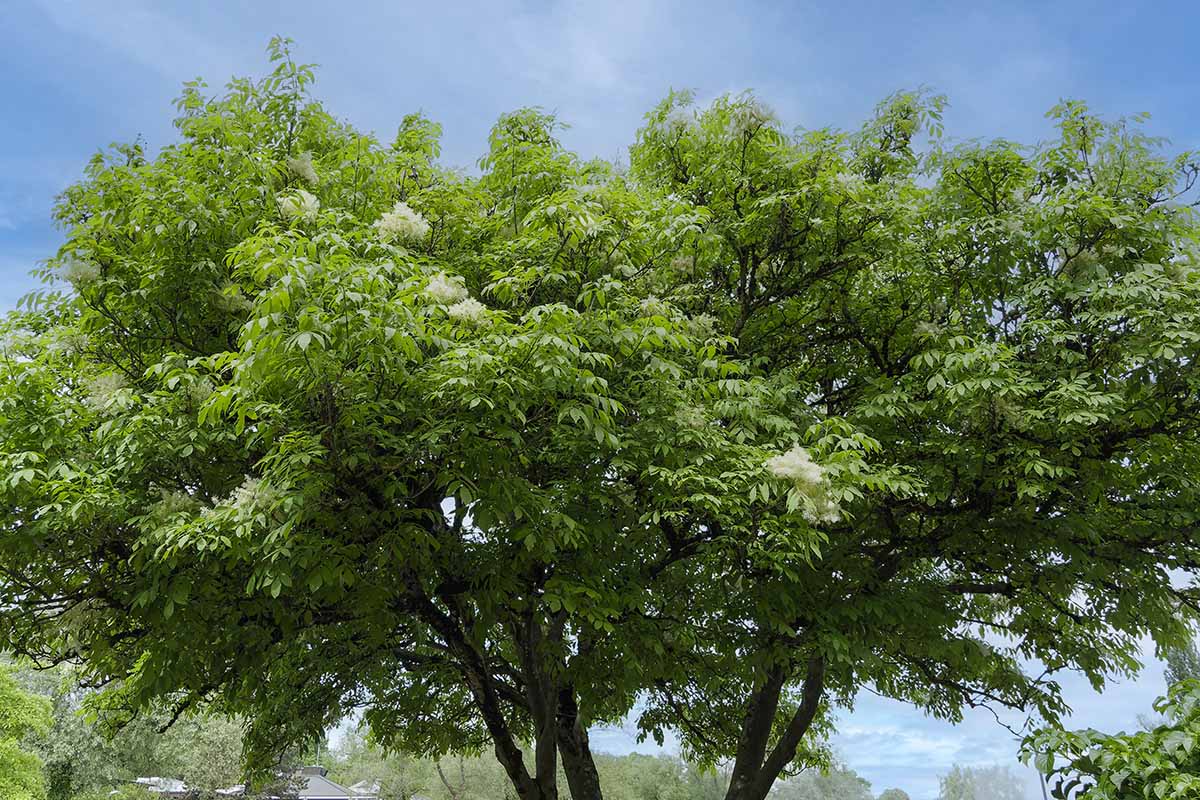
Thanks to their easygoing nature, pleasing shape, and availability of male cultivars that don’t make a mess, these trees have become extremely popular in urban and suburban spaces.
Depending on the species, you can find types that grow 100 feet tall or those that stay under 15 feet tall.
Some have multi-branched trunks and others grow straight and true.
We link to vendors to help you find relevant products. If you buy from one of our links, we may earn a commission.
Many grow in full sun but there are those that thrive in shadier conditions, too. Some have stunning fall foliage, thick, diamond-shaped bark, or leaves in a whorled growth pattern.
Depending on where you live, they can be easy to grow and a joy to have around.
But there’s a pest out there that is decimating American ash species across North America.
Anyone who is considering growing ash trees in North America needs to heavily weigh the potential problems and should choose their species carefully.
Don’t worry, we are going to go into lots more detail on that, plus all this:
What You’ll Learn
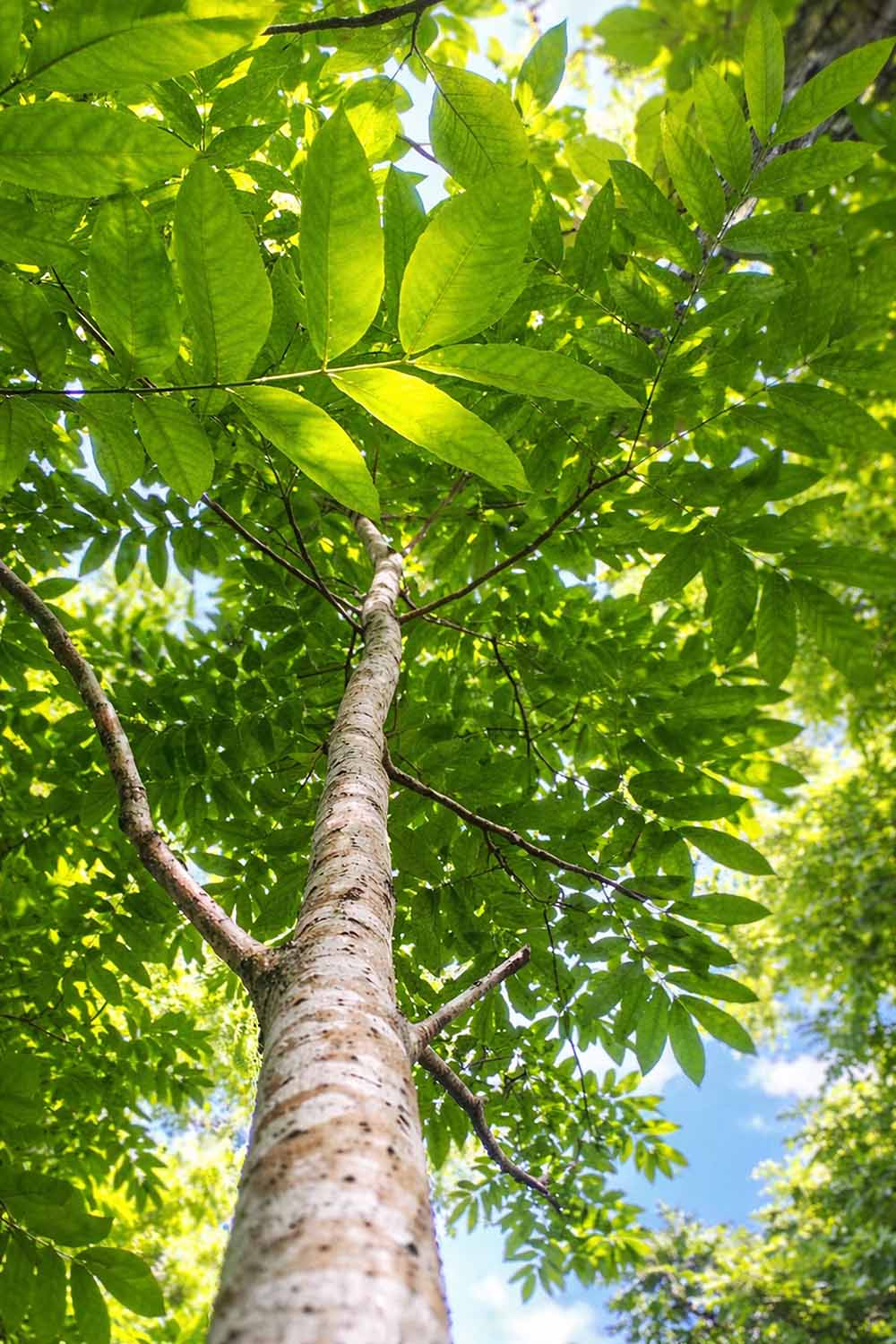
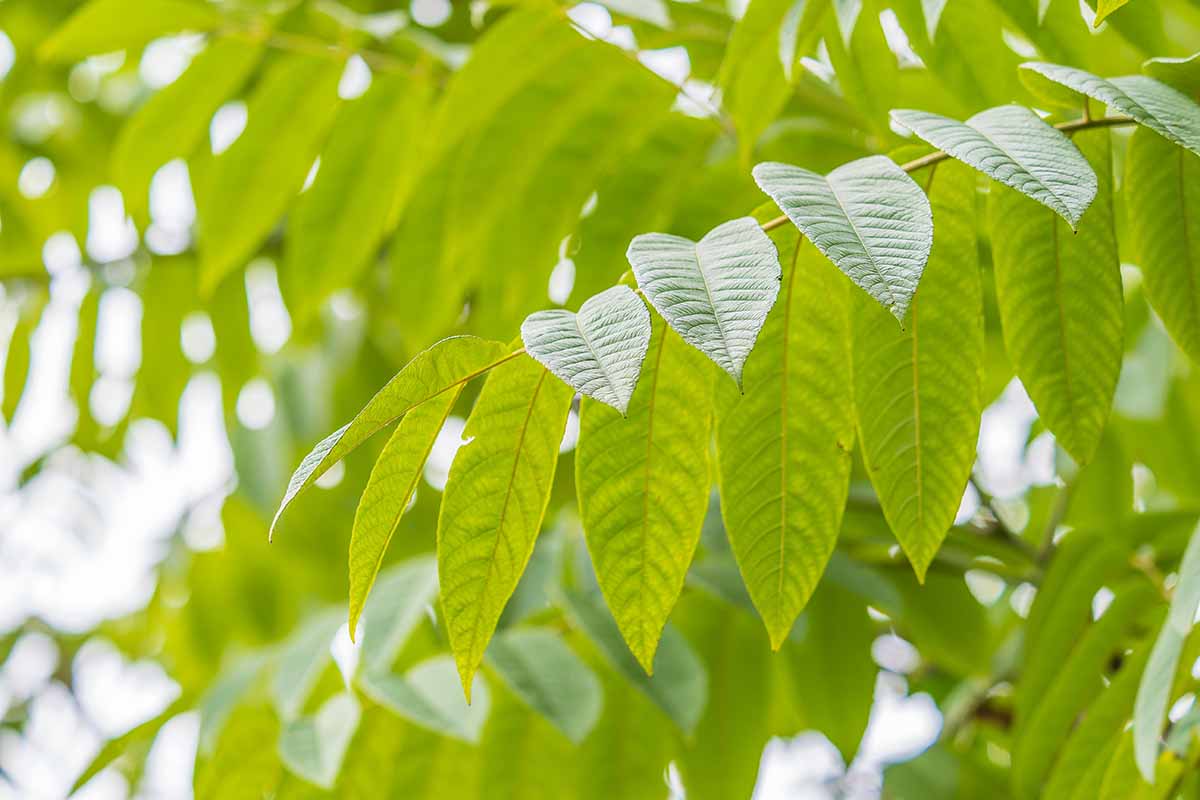
Ash trees are easy to identify. Multiple small leaves known as leaflets grow opposite one another along a single stalk.
This creates the larger leaf and is known as a pinnately compound opposite leaf.
The seeds grow in clusters in single-winged samaras. Only the female trees produce seeds, so if you don’t want to deal with the mess from the samaras, look for a male specimen.
There are few very other species out there with samaras and pinnately compound leaves, so if you spot these characteristics, you can be pretty sure you’re looking at an ash.
There are just a few ashes that don’t have leaves in this formation, but they’re rare.
Fraxinus species grow in the Northern Hemisphere throughout North America, Europe, and Asia.
Most are deciduous and drop their leaves in the winter, but a few that grow in warmer regions are semi-evergreen.
The Fraxinus genus is subdivided into six sections: Dipetalae, Fraxinus, Melioides, Ornus, Pauciflorae, and Sciadanthus.
Depending on the species, they can grow down to USDA Hardiness Zones 3.
Quick Look
Common name(s): Ash
Plant type: Deciduous or semi-evergreen tree or shrub
Hardiness (USDA Zone): 3-11
Native to: Northern Hemisphere
Bloom time / season: Spring flowers
Exposure: Full sun to part shade, depending on species
Soil type: Fertile, well-draining
Soil pH: 5.5-7.5, slightly acidic to neutral
Time to maturity: 20 years
Mature size: Up to 70 feet tall and 35 feet wide
Best uses: Specimen, shade
Taxonomy
Order: Lamiales
Family: Oleaceae
Genus: Fraxinus
Species: Americana, latifolia, mandschurica, nigra, ornus, pennsylvanica, quadrangulata
Ash trees are closely related to lilacs and olives.
The wood is both elastic and super strong, so it can be used for all kinds of things. Think hockey sticks, hammer handles, electric guitars, furniture, oars, flooring, baseball bats, and more.
Ashes are also incredibly important in Norse and British folklore. The World Tree Yggdrasil in Viking folklore was an ash, and the genus was associated with health, healing, and life.
How to Grow
Because there are so many species with various needs, the particulars of how to care for your ash is going to vary based on which one you are growing.
There are at least 65 species, and while most prefer a temperate climate and moderate moisture, this can vary a bit.
I’m going to discuss the needs of the most commonly-grown species.
Light
Depending on the species, most do best in full sun but there are exceptions.
Green ashes (F. pennsylvanica), for example, will thrive in any sun exposure. Of course, they’ll be leggier and smaller in shade, but they’ll grow.
Some species, like flowering ash (F. ornus) must have full sun to produce its beautiful blossoms.
In general, assume your plant wants full or partial sun, but research the species you want to grow before settling on a spot.
Soil
For the majority of the species, the soil needs to be well draining and fertile.
Some species grow near waterways but the roots generally won’t be consistently wet.
There are a few exceptions, like the Oregon ash (F. latifolia), which grows in areas where the roots will be covered in water during the dormant winter months.
But even these will thrive in well-draining soil, so if you aren’t sure what your ash needs, assume it’s well-draining soil.
Soil acidity, again, depends on the species. All will grow well in neutral soil, but some, like black ash, will tolerate acidic to alkaline soil. When in doubt, aim for a pH of between 5.5 to 7.5.
Water
Most ash trees prefer lightly moist but not waterlogged soil. The soil shouldn’t be allowed to dry out entirely for too long.
Young specimens will require extra water to help them establish their root system, but mature ones will usually send roots far down into the soil to find their own water sources.
Some species can tolerate more moisture, like the Oregon ash (F. latifolia), which can grow in wet soils during the winter months. In the summer, however, this species can tolerate drought.
Blue ash (F. quadrangulata) can also tolerate periodic drought.
Fertilizer
Fertilizing your fabulous Fraxinus takes some balance. Both overfeeding and underfeeding can lead to stress and future problems.
You really should test your soil before applying any fertilizer.
Once a year, send in a soil sample to a local soil testing service and note that you are looking for information on feeding ash trees.
The results will tell you what nutrients are abundant in your soil and what it’s deficient in.
If you need recommendations for finding a testing service, reach out to your local University extension office.
They’ll give you the best options for getting reliably accurate soil tests tailored for your area.
Follow the guidance from your soil test when you apply fertilizer.
Species and Cultivars
Before you pick a species and start planting, be aware that if you live in a region where the emerald ash borer (EAB) is a problem (more on this below), you might not want to plant an ash at all.
Some municipalities and states are requesting that gardeners do not plant new ash trees because the chances that they will just end up as a host to the pest and help it spread is extremely high.
If you really want to be able to grow ash, pick one that isn’t susceptible to EAB.
Note that mountain ashes (Sorbus ameriana and S. aucuparia) are not true ash trees.
They are usually a bit smaller than Fraxinus species and they produce red berries that birds love.
If you want an option that looks similar to ash but won’t succumb to EAB, these are good choices.
If you live in an area that isn’t troubled by EAB or you want to give it a go, here are some excellent options:
American
The American or white ash (F. americana) is highly susceptible to EAB, but if you’re lucky enough to live somewhere where borers aren’t a problem, it’s a gorgeous species.
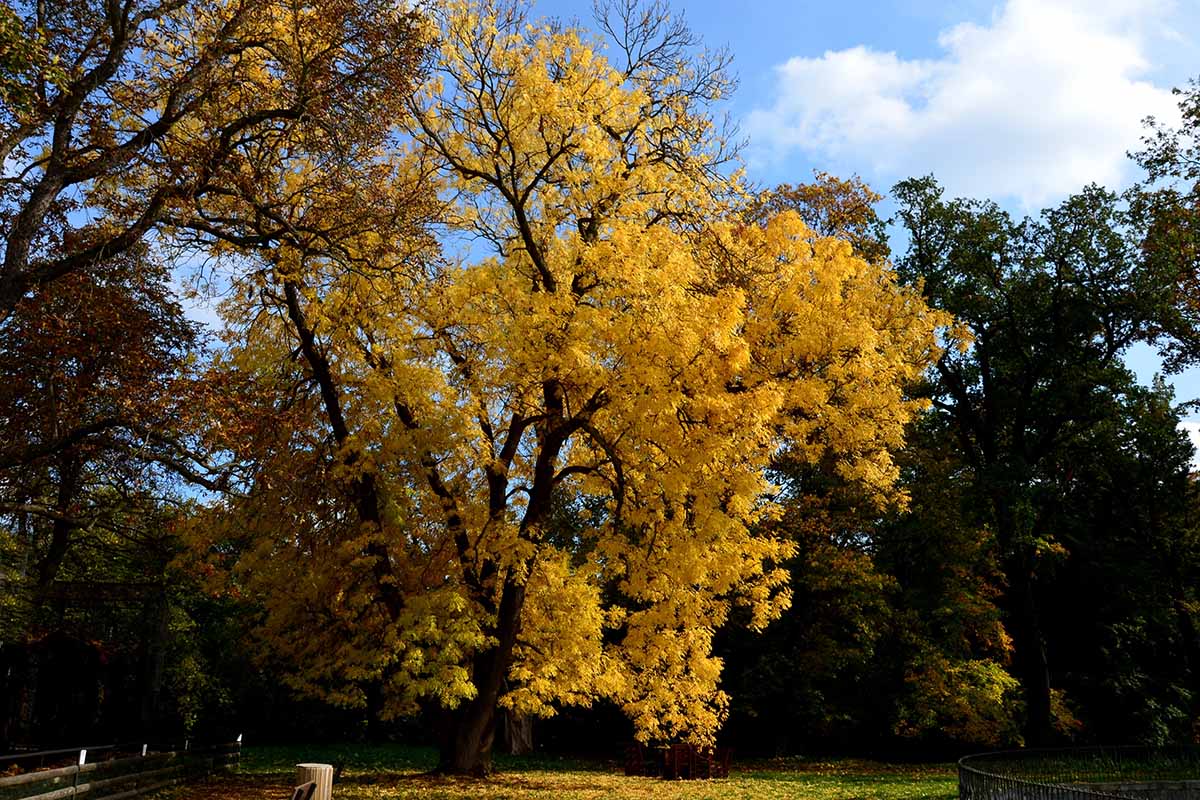
It grows to about 90 feet tall in the right conditions, but typically stays smaller in home gardens.
This species has even been known to grow up to 120 feet tall, making it the largest of the Fraxinus genus in North America.
It’s so popular that many beautiful cultivars have been produced by breeders.
For example, ‘Autumn Blaze’ has vibrant purple fall foliage and ‘Jeffnor’ is much stronger than the species so it’s less likely to be invaded by EAB.
Black
Before we talk about black ashes (F. nigra), it’s important to note that they are highly susceptible to EAB so not a good option for those in infested areas.
Black ash grows indigenously throughout the cool regions of eastern North America. The trees reach about 65 feet tall with a rounded shape.
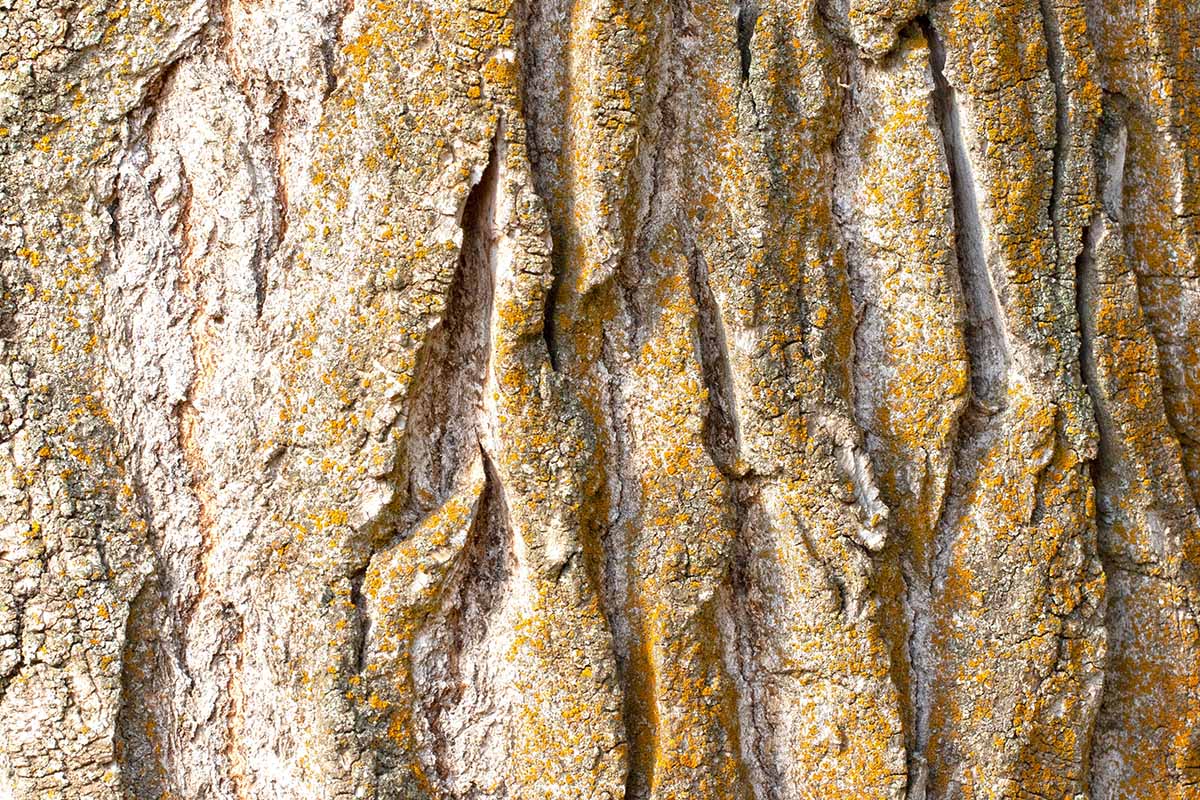
The bark is particularly attractive. It’s thick and corky with lots of fissures.
Green
While green ashes (F. pennsylvanica) are highly susceptible to EAB, if you don’t live in an area where the pest is a concern, they make a gorgeous addition to the garden.
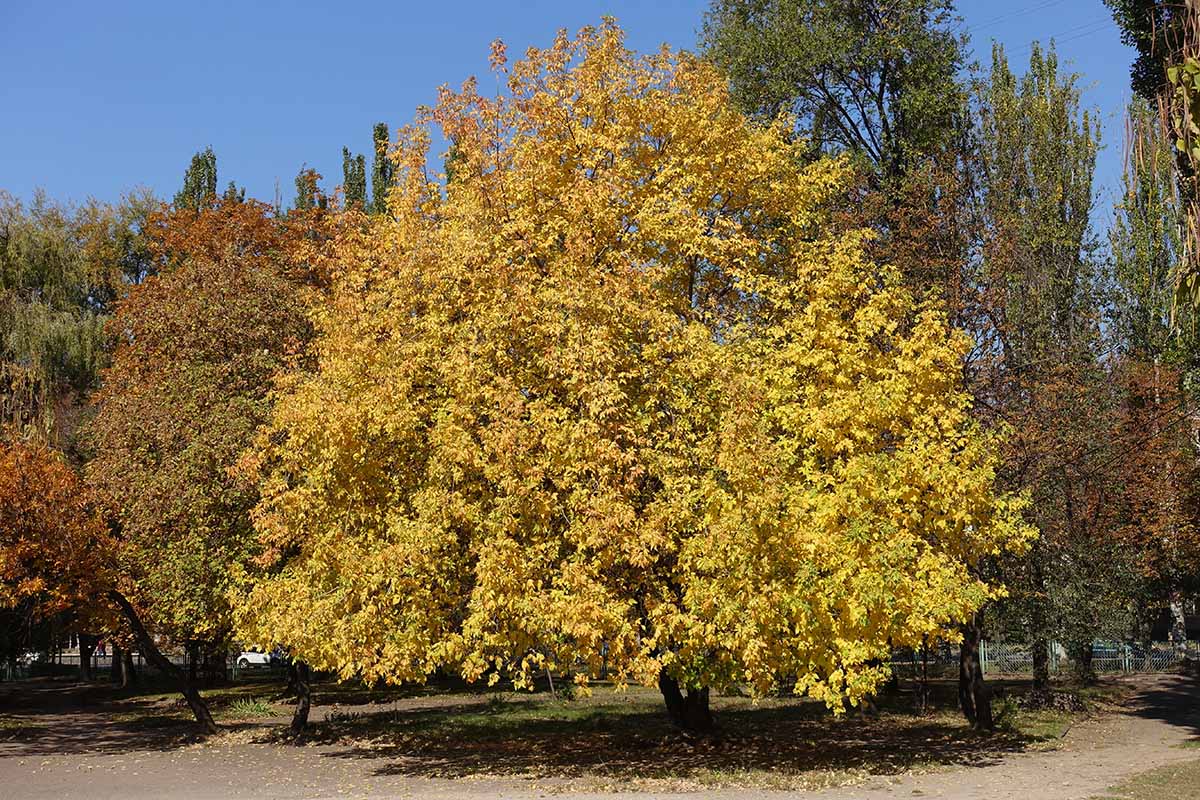
This species can grow to a towering 70 feet tall and half as wide in Zones 4 to 9. Found throughout eastern North America, it’s adaptable to a range of growing conditions.
There are many cultivars available. Urbanite® has a pyramidal shape with compact foliage that turns bronze in the fall.
It can reach up to 50 feet tall and 40 feet wide and has exceptionally thick bark.
‘Marshall’ has an oval shape and grows to 50 feet tall and about 40 feet wide.
Since all cultivars are male, you won’t have to worry about messy seeds. In the fall, the foliage changes to a brilliant yellow.
‘Patmore’ is another male cultivar, so it produces no seeds.
Similar to ‘Marshall,’ it has a pyramidal to round shape, but ‘Patmore’ grows just a bit taller and wider, with slightly darker leaves that turn a similar yellow in the fall.
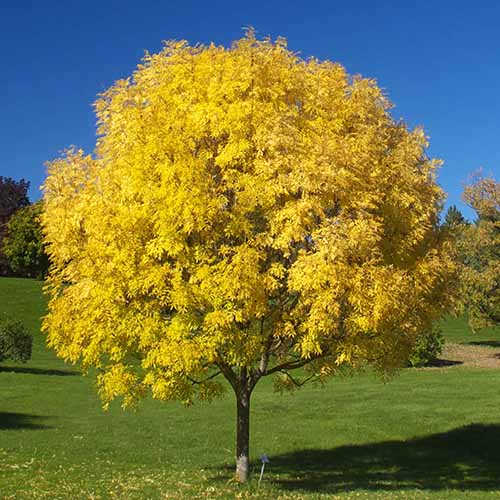
It was grown from a sport of a tree discovered on a street in Vegreville, Alberta, Canada.
You can find ‘Patmore’ available at Fast Growing Trees.
Manchurian
Manchurian (F. mandschurica) has a low susceptibility to EAB, so it’s becoming an increasingly popular ornamental option in North America.
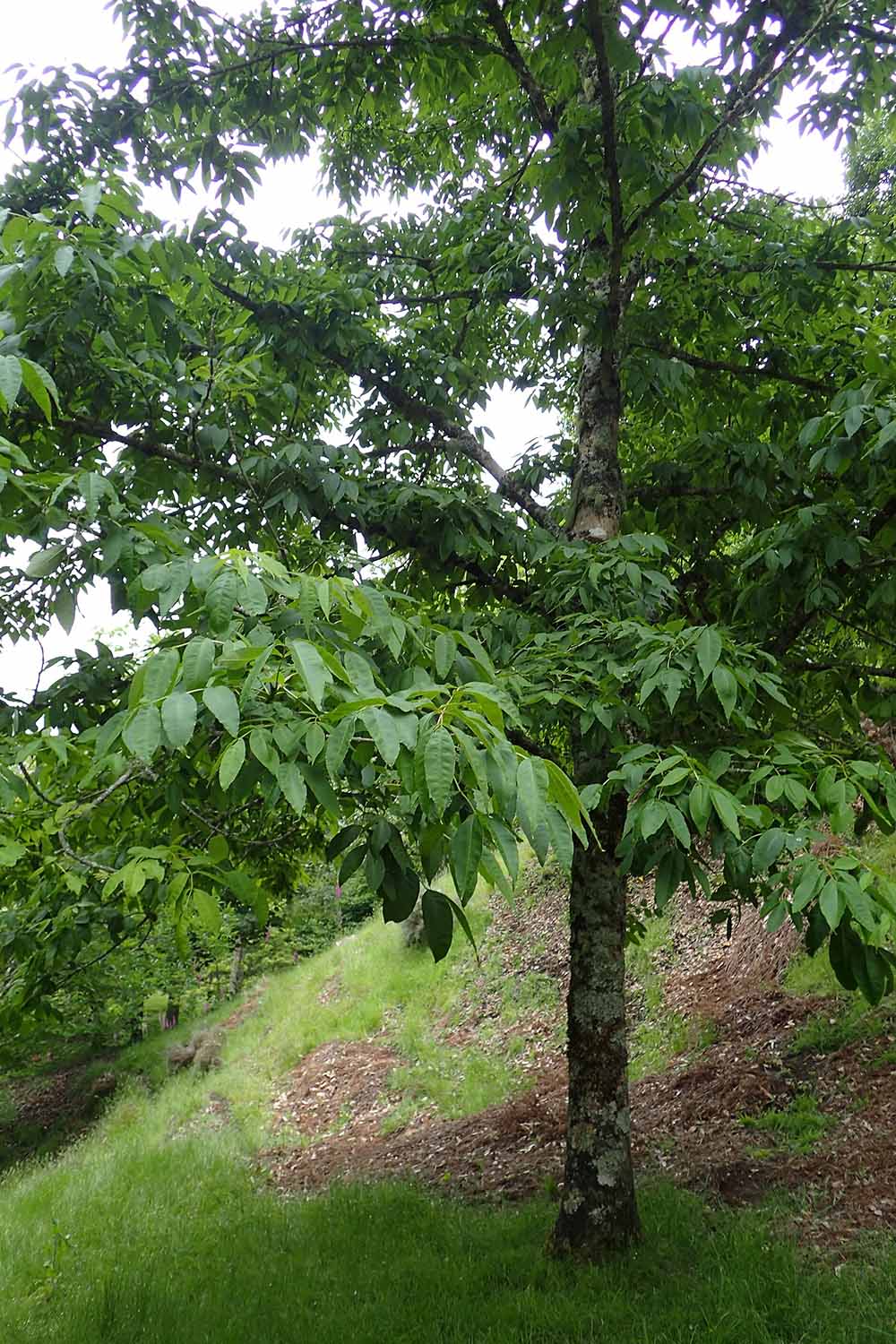
Originally from eastern Asia, it has smooth bark and grows up to 50 feet tall with a lovely rounded shape.
The fall foliage is particularly noteworthy, turning a bright yellow hue. It does best in cooler regions and won’t do well in hot, humid conditions.
Manna or Flowering
Manna (F. ornus) stands apart from other species because it has large, white, fragrant flowers that look like little clouds hovering around the tree.
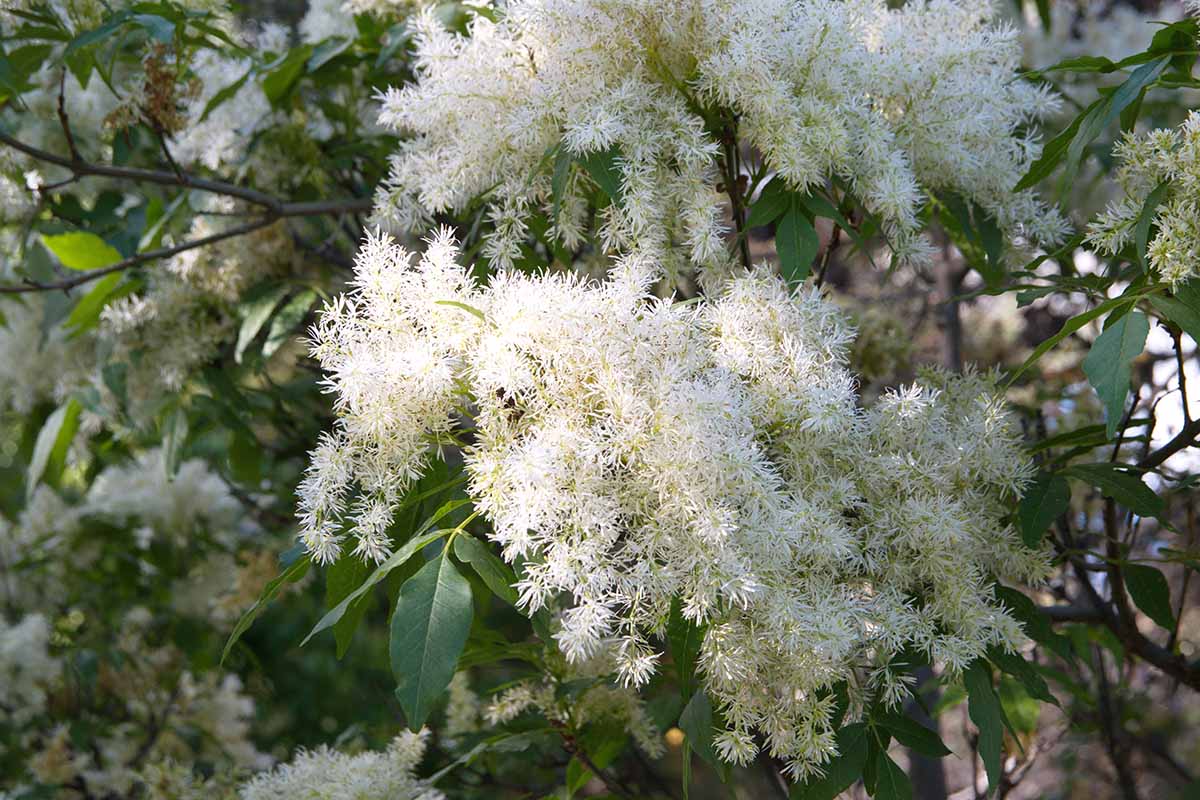
With the flowers follow oversized clusters of seeds, so don’t plant this one near a patio.
This species has low susceptibility to EAB and grows to about 50 feet tall with a nice, rounded habit.
Maintenance
Try to avoid pruning your tree, as this leaves it open to invasion by pests or pathogens. That said, if there is a broken, dead, or diseased branch, it should definitely be removed.
When you cut off branches, cut close to the trunk or main branch and avoid leaving a stump behind.
Cut at a slight angle so the bottom of the cut aligns with the branch collar, which is a lump at the base of the branch. The top of the cut should be flush with the trunk or main branch.
Propagation
It’s possible to grow ash trees from cuttings, but this method is extremely difficult and unreliable, and not really worth the time and effort.
They are easy to grow from seed, but the easiest way to get started is to transplant a sapling from the nursery.
From Seed
Seeds from some ash species need a period of cold, known as stratification, and others don’t.
Take a clue from the environment that the species grows in naturally.
If the tree is native to a region with long, cold winters, stratify the seeds by placing them in moist sand in the refrigerator for three months.
Otherwise, soak the seeds in warm water for 24 hours before planting.
Sow a few seeds in a container filled with potting medium. The pot should ideally be one or two gallons in size. We sow multiple seeds in a pot because some won’t germinate.
Place the pot outdoors in full sun. You might want to place mesh or chicken wire over the pot to protect the seeds from marauding birds or squirrels.
Keep the soil moist at all times.
It can take the seeds up to 18 months to germinate. If you don’t see anything growing within two years, it’s likely that the seeds aren’t viable.
After germination, remove smaller seedlings so that there is just one per pot.
When the seedling reaches about six inches tall, transplant it into the ground.
Transplanting
Nursery saplings and seedlings can go into the ground in spring or fall.
Dig a hole the size of the growing container, or just a bit wider than the pot, but the same depth.
Remove the plant from its container and gently tease out the roots so they’ll grow away from the trunk rather than in a circle.
Place the tree in the ground at the same height as it was in the containers. Fill in around it with the soil you removed.
Water well and add more soil if needed to level the ground.
Keep young specimens consistently moist.
Pests and Disease
Let’s start with the good news. Ash trees are of little interest to deer and rabbits.
You might want to protect young specimens that are under a few feet tall because deer will take a bite out of just about anything small to test it. But as the trees age, deer will ignore them.
Now let’s move on to the very bad news.
Pests
Depending on where you live, pests can be a minor inconvenience or they can be so devastating that you won’t even want to try growing Fraxinus species.
Aphids, especially ash leaf curl aphid (Prociphilus or Meliarhizophagus fraxinifolii), and scale insects will feed on the leaves and young shoots and may expose the tree to pathogens.
Leaf miners and fall webworms will also visit but rarely cause severe harm. The same can’t be said of the first pest we’ll discuss.
Emerald Ash Borer
Any conversation about ash trees won’t be complete without talking about the emerald ash borer (Agrilus planipennis), often abbreviated as EAB.
Originally from northeast Asia, it has spread to Europe and North America.
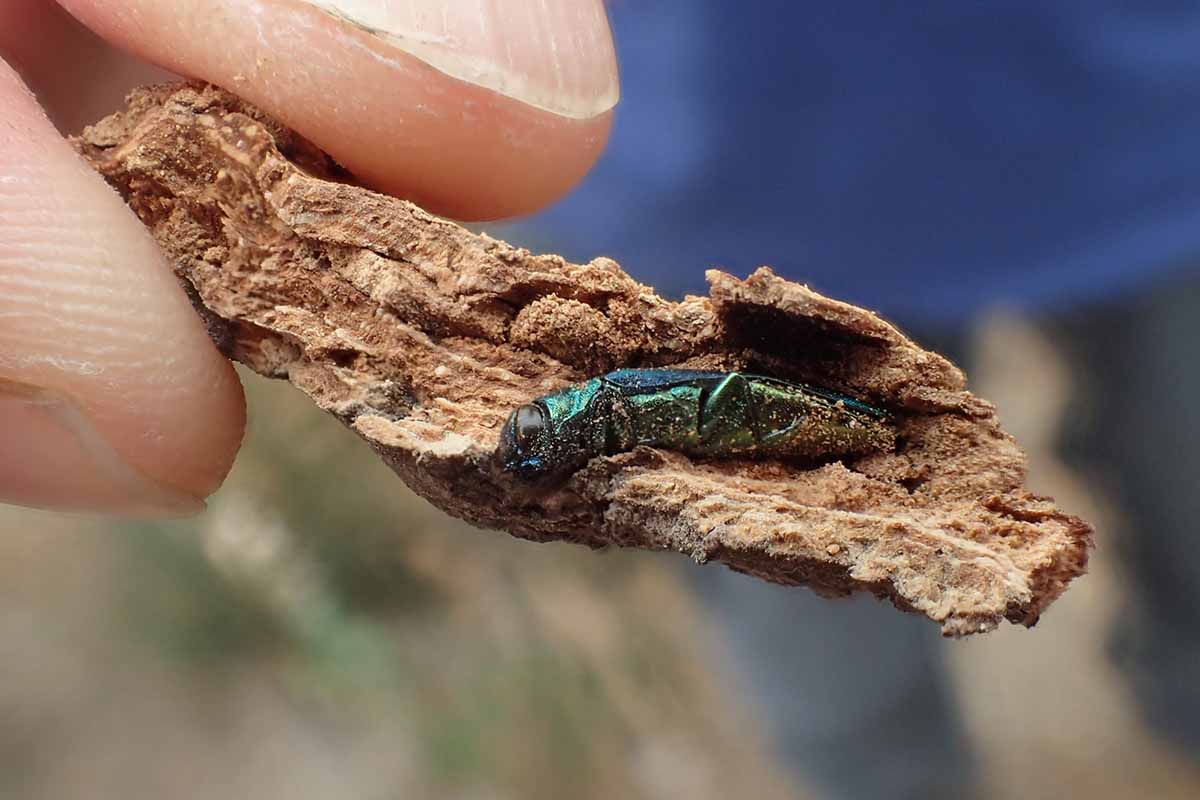
The adults have copper-red or copper-purple abdomens and metallic green-blue wings.
They’re quite beautiful. But these half-inch-long, jewel-like insects have an utterly devastating impact outside of their native range.
They arrived in North America in 2002 and have slowly spread around the continent.
Discovered in Oregon in 2022 in my neighborhood, I remember how shattered gardeners and environmentalists were.
The pest has already killed tens of millions of trees in North America and experts predict that the pest will eventually kill all native ash trees on the continent.
In some areas, like Utah, ash trees can make up a third of the urban canopy.
Just imagine how drastically this pest will alter the existing environment.
Since it arrived in 2002, F. americana, F. nigra, F. pennsylvanica, F. profunda, and F. quadrangulata have all been listed as endangered and nearly extinct.
When the pest is present, ashes will have smaller, paler leaves and dead branches starting in the top of the canopy.
If you peel away the bark, you’ll see lots of maze-like tunnels. An infestation can kill a specimen in just a few years.
When the pest arrived in my neck of the woods a few years ago, researchers started tracking the situation closely with the full expectation that we will lose every single native ash tree in the state.
The pest also seems to attack closely related species like olives.
It will truly change the landscape of the Pacific Northwest – and everywhere else it infests – unless we can find a control method quickly.
Right now, we are releasing parasitic wasps to help reduce EAB populations.
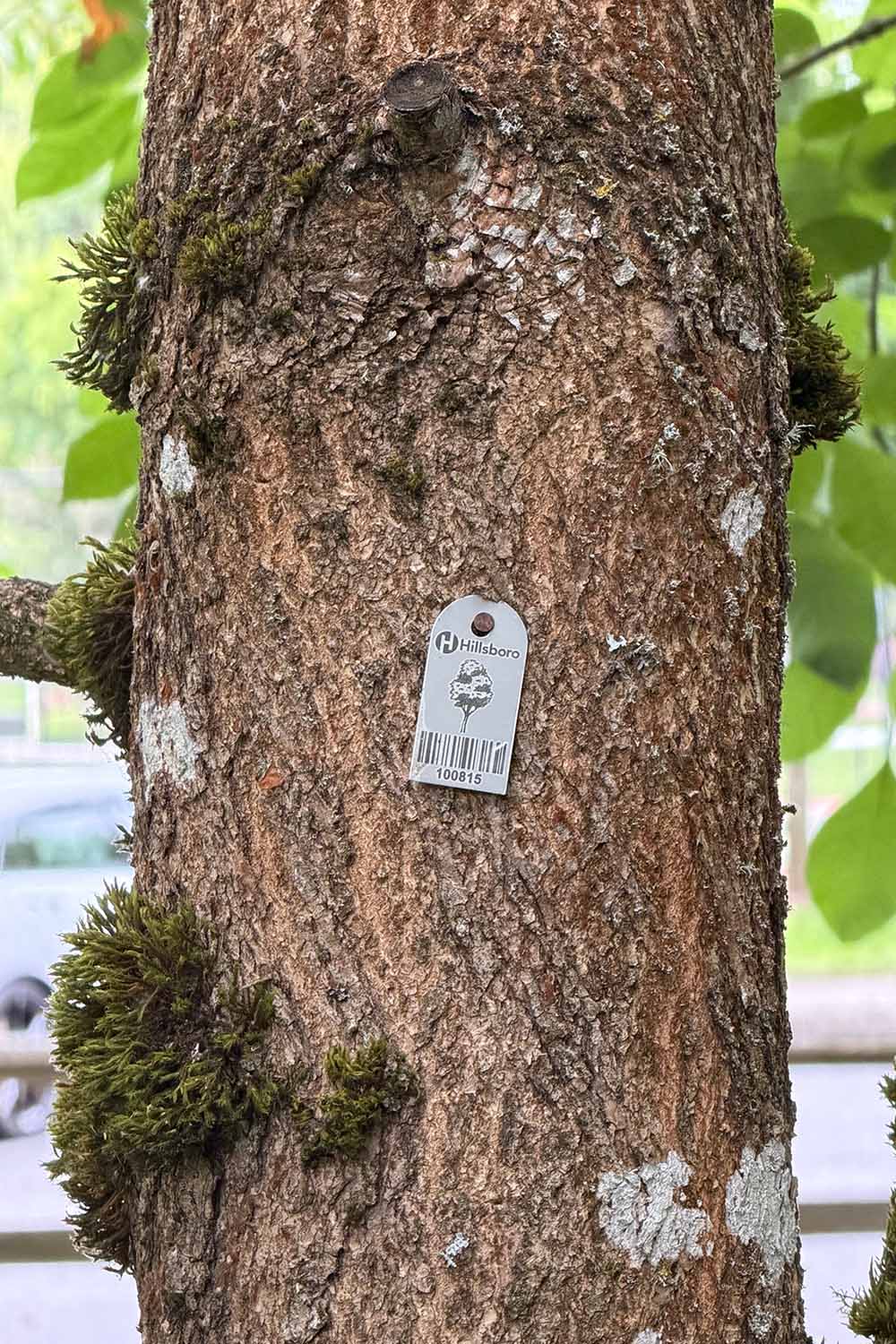
Most areas where the pest is present are actively tagging and tracking ash trees to monitor infestations, so if you see tags, that explains why.
Speaking of control, we do have options for specimens in the home landscape. Trees in the forest are very difficult to treat.
The adult feeds on the leaves, and that’s not really the problem. It’s the inch-long larvae, which burrow into the wood, that cause the real issue.
Treatment involves spraying with an insecticide and you’ll have to do it repeatedly and consistently for years.
When you stop spraying, be ready to start again because the pests will likely return.
Some areas are recommending that you simply remove any ash trees and replace them with a different species.
Spray first thing in the spring to kill the adults using a product that contains imidacloprid or dinotefuran.
Fertilome is a common option, and is available in various sizes depending on how many trees and how often you need to spray. Find yours at Amazon.
Safari is another good option. It contains dinotefuran and is a real powerhouse when it comes to pests. It’s also available at Amazon.
Both of these chemicals are heavy-duty and have the potential to do more harm than good, so follow the instructions carefully.
If you live in an area where EAB is not established, do not move firewood from one area to another.
That means if you go camping, buy your firewood where you intend to camp. If you buy wood for your winter heating needs, buy it locally. This pest has spread to many areas in firewood.
There are several resistant species that grow well in the home garden, including flowering (F. ornus) and Manchurian (F. manschurica).
Lilac Borer
Compared to the EAB, lilac borers are not such a big deal.
Podosesia syringae looks a lot like a wasp and is pretty much harmless to trees, but once again it’s the larvae that cause the problems.
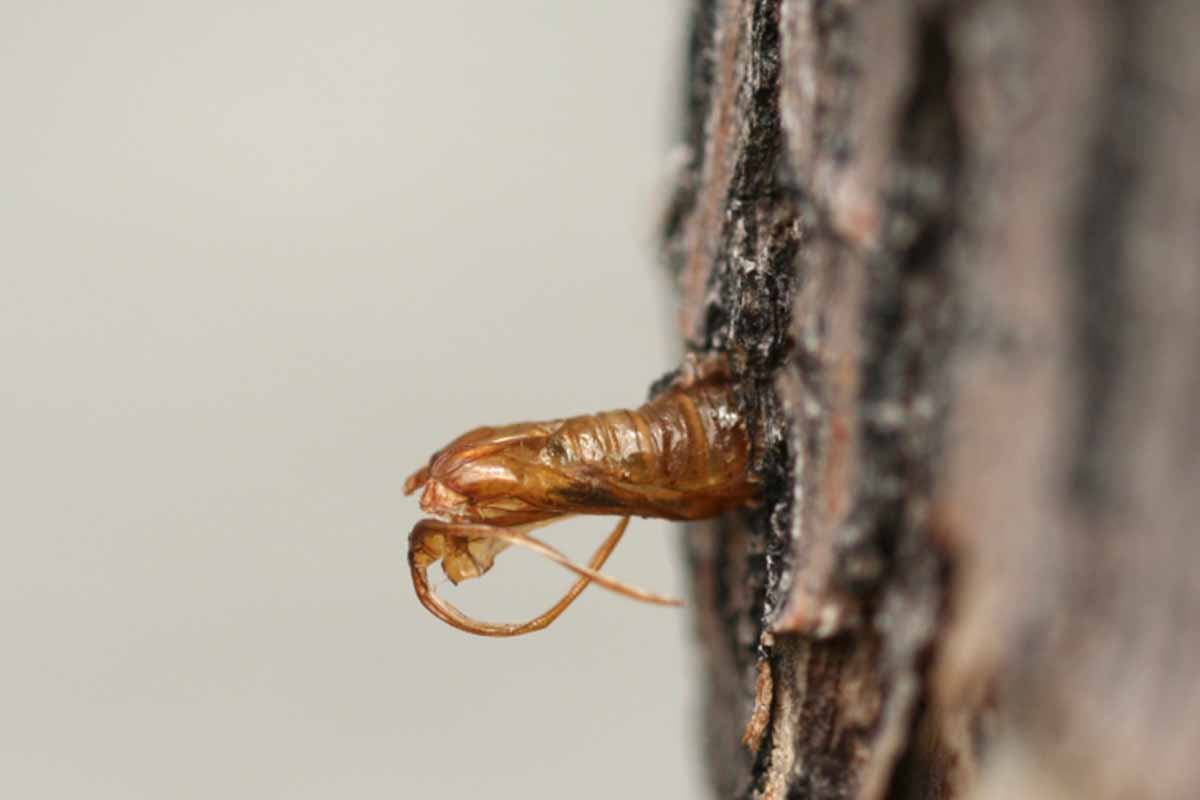
The inch-long, cream larvae chew through the sapwood leaving tunnels that reduce water and nutrient movement through the tree.
While they can damage the tree or even kill one with enough time, they are much less common and aggressive as EAB.
Most trees in North America have some resistance to this pest, and they only attack specimens that are already stressed.
You have to watch out for the adults or hang traps to monitor when they’re present. Then you can start spraying with pyrethrins.
Once the larvae are burrowing into the tree, sprays are ineffective.
Disease
It always helps to give your tree a good once-over every few months to try and get ahead of any issues that might pop up.
Young and stressed specimens might be infected with powdery mildew, but it typically doesn’t do much harm.
Anthracnose
Anthracnose is a fungal disease caused most notably by the pathogen Plagiostoma fraxini.
The spores are dormant in the winter and during spring rains they spread and infect susceptible trees.
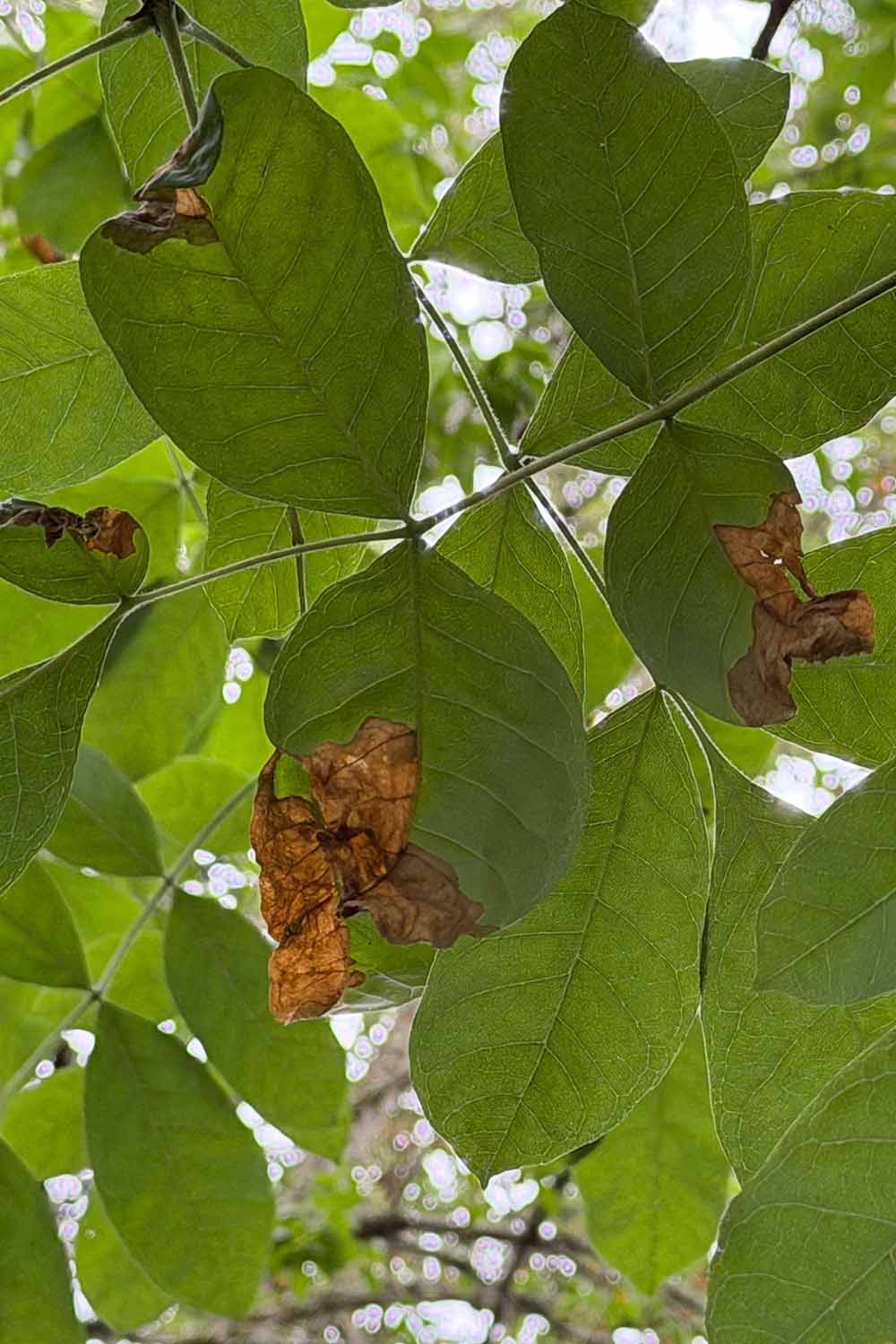
An infection first shows up as water-soaked spots in the leaves. These turn brown or tan and may remain as small spots or spread and coalesce.
When an infection spreads into the stems, it can cause sunken areas that girdle the wood.
As the situation progresses, the twigs may die at the tips, and leaves will turn brown and fall from the tree.
It’s usually the lower branches that are most impacted. Once the spring rains stop, the disease typically stops spreading.
To control it, the first step is to remove areas where the pathogens can overwinter.
That means cleaning up all the fallen leaves and removing any heavily infested branches in the fall. You can also spray with a product containing mancozeb in the fall.
Ash Yellows
Ash yellows occurs everywhere in eastern North America and parts of South America, and it is bad news.
At first, you probably won’t even realize that anything is wrong. Your tree will grow a bit more slowly than normal.
As the disease progresses, the leaves might be a little lighter and smaller than is typical.
Then you’ll see some witches’-brooms starting to pop up here and there. Not long after, branches start dying until the entire crown is just a skeleton.
The culprit? A phytoplasma known as Candidatus Phytoplasma fraxini, which travels by hitching a ride on insects, usually leafhoppers.
If you suspect your ash is infected, get it tested. The symptoms can look like stress, so it’s important to confirm your diagnosis. An arborist or your local extension office can guide you.
If ash yellows is confirmed, you’ll need to remove the tree. There’s no cure and it will only act as a host to spread the disease to other specimens.
Rust
Ash rust is caused by a fungus (Puccinia sparganioides) and results in yellow spots on the tops of leaves and rusty orange pustules on the undersides.
The disease can then progress to misshapen or falling leaves, cankers, and brown lesions in the wood.
The disease starts spreading in the spring with the increase in moisture. Typically, it looks ugly, but it won’t kill a tree.
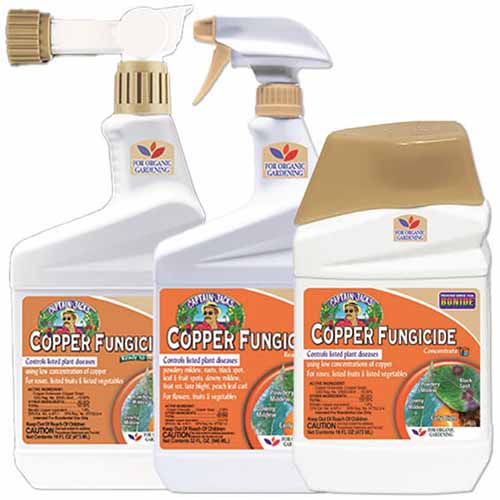
If you want to spray, do so in the spring with a copper fungicide like Bonide’s liquid copper, available at Arbico Organics.
Ash Trees are Amazing
It breaks my heart a little when I walk around the forests near my house and know that almost all of the ashes I and the birds are enjoying will be gone in not too many years, unless scientists pull a miracle.
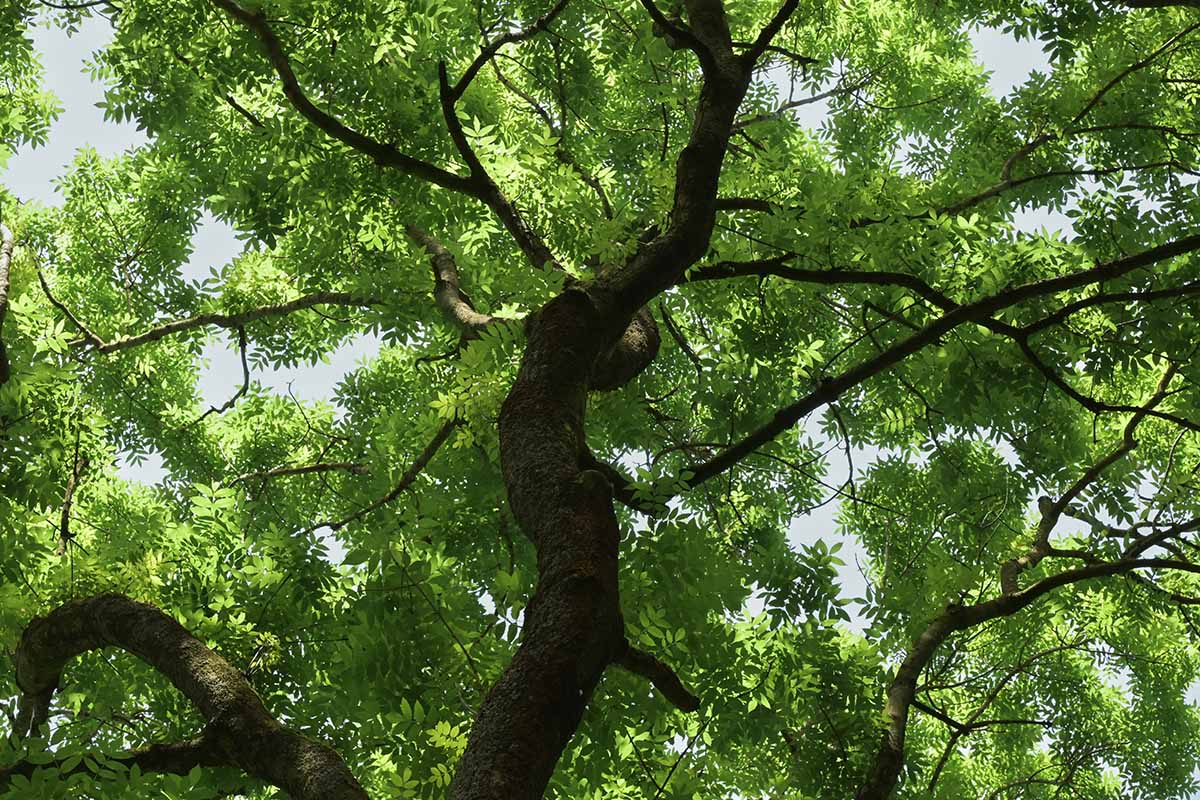
But that doesn’t mean we have to live without them.
With careful selection and appropriate attention, we can keep them alive, even in places where EAB has taken hold.
Are you growing ash trees? Let us know in the comments section below!
And to learn more about growing landscape trees, add these guides to your reading list next: