Senna didymobotrya syn. Cassia didymobotrya
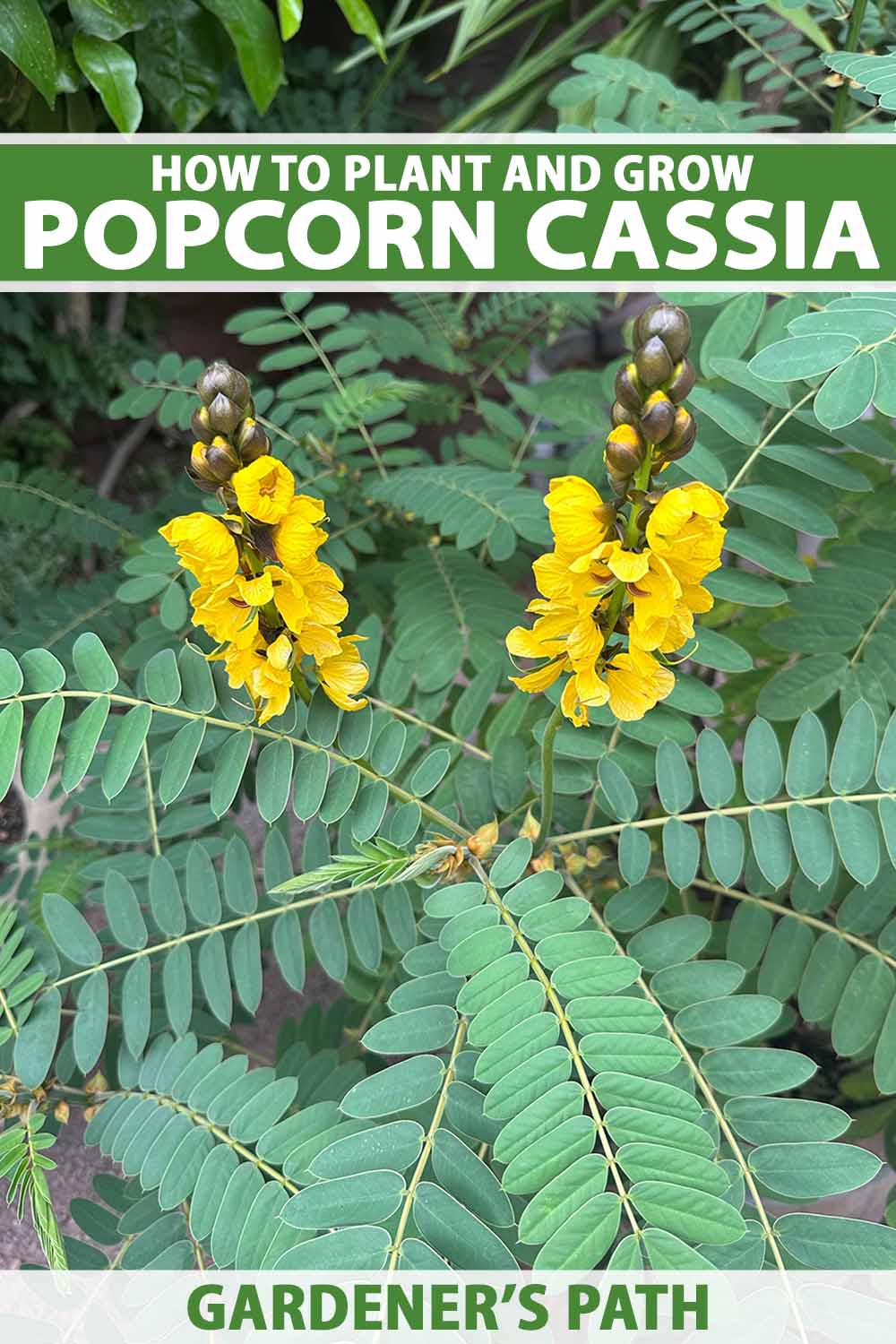
Popcorn cassia, Senna didymobotrya, formerly Cassia didymobotrya, is a tropical shrub or small tree native to Africa.
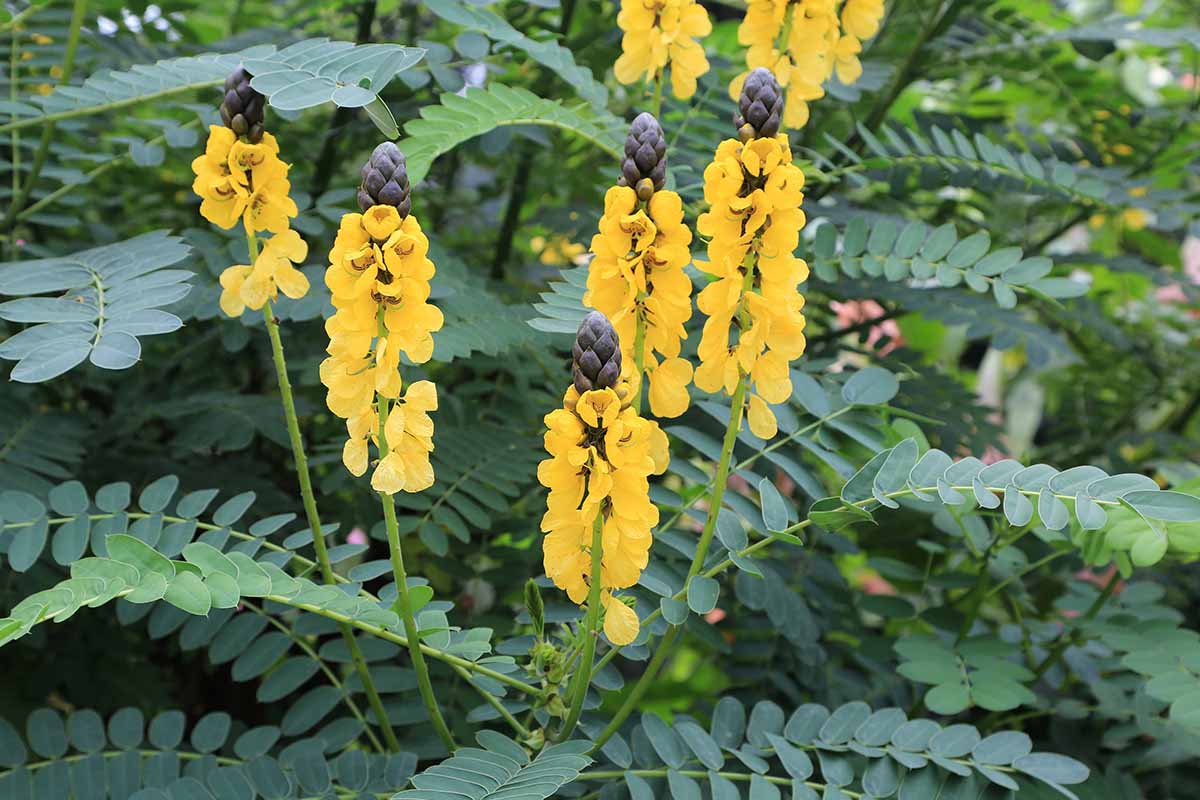
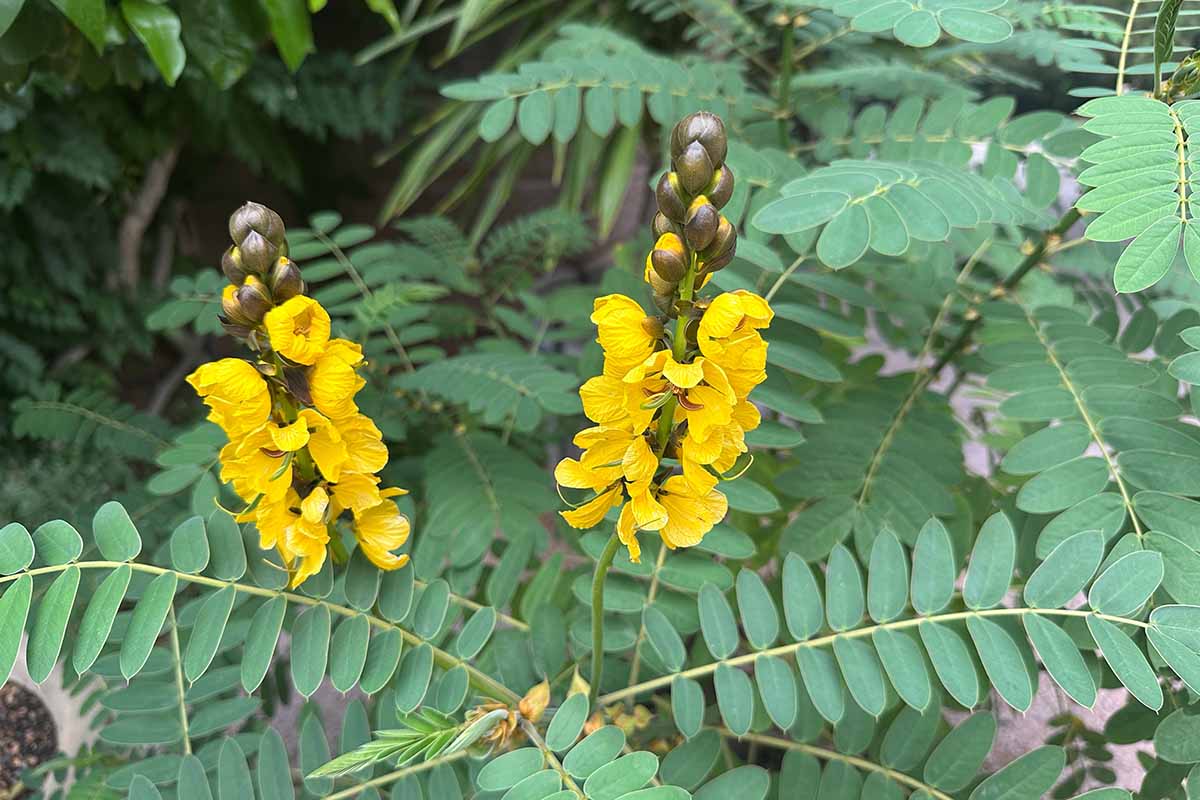
It features foot-long, upright racemes, or flower stalks, with dark brown buds that burst into rounded yellow blossoms from the bottom up, an effect described as candle-like.
We link to vendors to help you find relevant products. If you buy from one of our links, we may earn a commission.
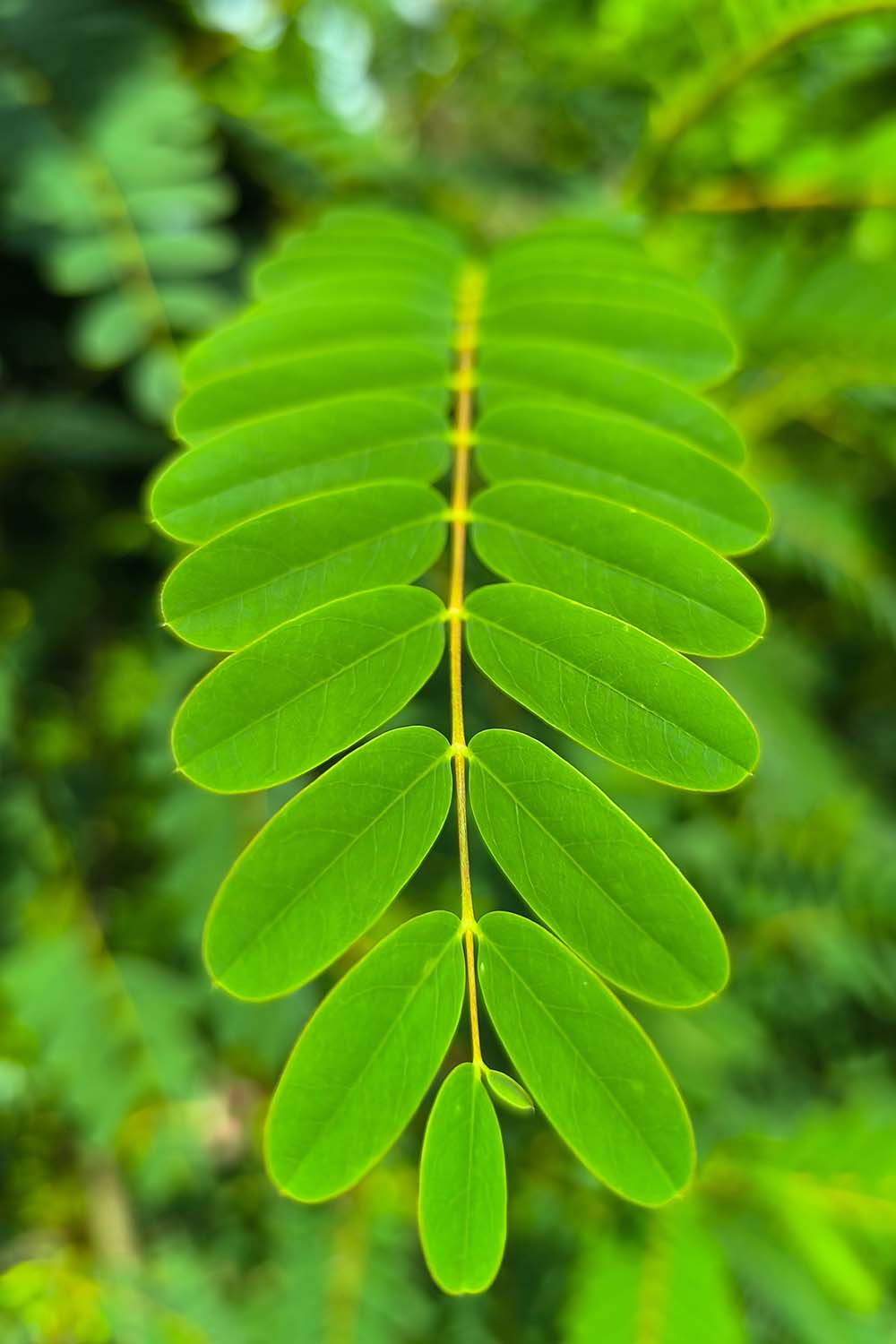
The leathery green elliptical leaves are paired and arranged like a spiral of feathers.
When crushed or rubbed, the foliage emits a fragrance many find to be nutty, like peanut butter or buttered popcorn.
However, because growing environments and human noses vary, others say it smells more like a damp dog.
If we’ve piqued your curiosity, read on to learn how to grow and care for fast-growing popcorn cassia as a perennial in Zones 9 to 11 or an annual in regions that freeze.
What You’ll Learn
In its native habitat, S. didymobotyra may grow as tall as 10 to 25 feet.
Aggressive naturalizing via seed dispersal has caused it to become invasive in some parts of South Africa.
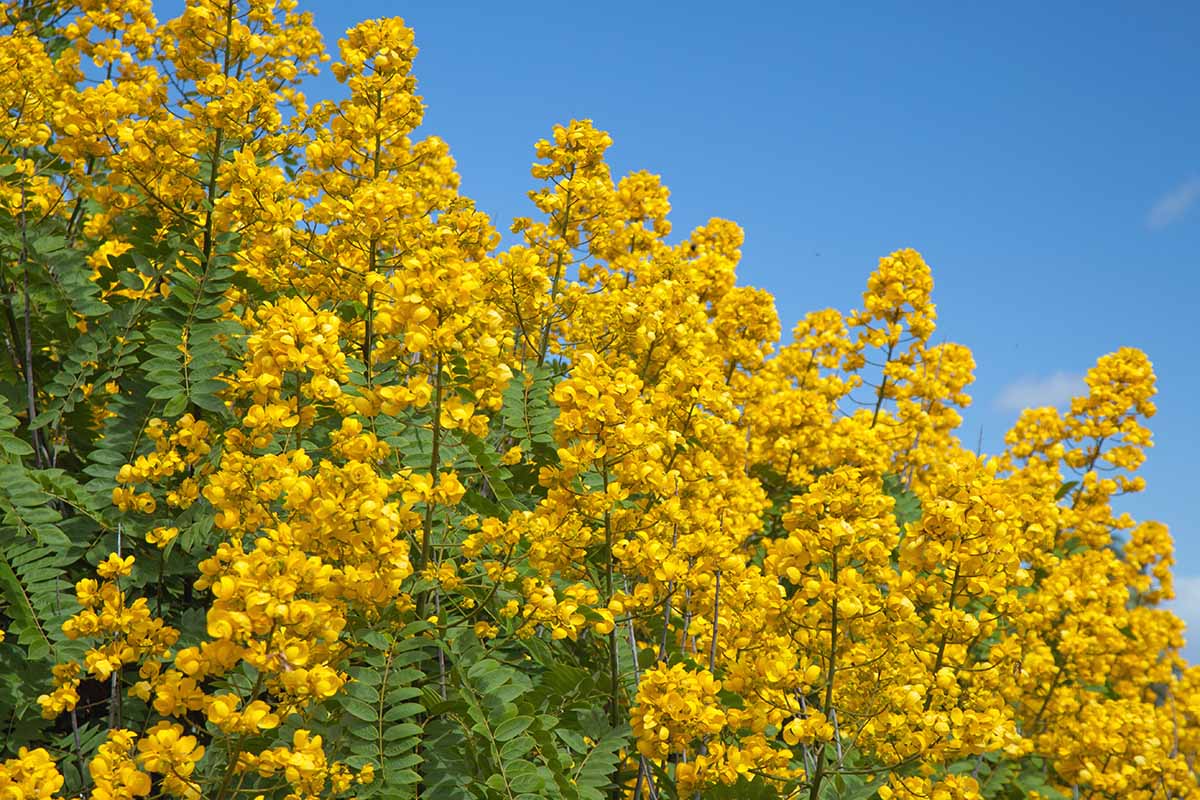
In cultivation, it generally averages six to 10 feet tall as a perennial and two to three feet as an annual.
Gardeners can curb unwanted sprawl by deadheading spent flowers to prevent seed set or removing seed pods before they turn brown.
Quick Look
Common name(s): African senna, candelabra tree, peanut butter cassia, popcorn cassia
Plant type: Semi-deciduous shrub or small tree
Hardiness (USDA Zone): 9-11
Native to: Central and Eastern Africa
Bloom time / season: Perennials late summer through fall, but flower as early as spring in the warmest Zones; annuals bloom from late summer to hard frost
Exposure: Full sun
Soil type: Fertile, moist, well-draining
Soil pH: 6.5-7.5, neutral
Mature size: 6-10 feet tall and wide (annuals 2-3 feet tall and wide)
Best uses: Bed, border, container, cover crop, pollinator garden, specimen, vertical interest
Taxonomy
Order: Fabales
Family: Fabaceae
Genus: Senna
Species: Didymobotrya
Also known as African senna, candelabra tree and peanut butter or popcorn cassia, this plant makes an exceptional anchor at the back of garden beds.
It also adds height to borders when in bloom from spring to fall, with the most prolific display during the warmest months.
Container cultivation makes it possible for gardeners in Zones that freeze. You can overwinter plants indoors in bright, indirect sunlight, to be returned outdoors after the last spring frost date.
S. didymobotrya is an eye-catching addition to mixed groupings, where its height and spiked form add vertical interest.
It is also noteworthy for being a host plant for the cloudless sulphur butterfly, Phoebis sennae, a pollinator valued for its contributions to garden biodiversity.
In addition to adding value to the landscape as an ornamental specimen, popcorn cassia makes an excellent cover crop.
As a member of the Fabaceae or legume family, it fixes essential nitrogen into the soil when the crop is turned over to decompose as green manure.
You can read more about cover cropping here.
Toxicity
Popcorn cassia shares its purgative chemistry with medicinal senna, S. alexandrina, the species used in over-the-counter laxatives, but it is not a safe substitute.
In spite of it being used in some traditional medicines, this species is toxic and ingesting any part of the plant can cause violent vomiting and diarrhea.
Now, let’s get growing!
How to Grow
Suitable home gardening environments for popcorn cassia have a climate similar to the tropical savannas of central and eastern Africa, where there is ample rainfall, high humidity, and average temperatures in the 77 to 86°F range.
Light
A full sun placement, or six hours of direct sunlight per day, is essential for the production of lush foliage and robust flowers.
Soil
The ideal soil is organically rich, consistently moist, and exceptionally well-draining. The pH should be in the 6.5 to 7.5 range.
For container gardening, select a fertile, moisture-retentive, well-draining general purpose potting soil.
Water
Popcorn cassia has high moisture needs.
Check plants weekly, more often during a dry spell, and water annuals and first year perennials deeply when the top one to two inches of soil are dry.
S. didymobotrya has a long tap root, enabling it to reach deep into the soil for water. Once established, supplemental moisture needs are reduced, unless there is a drought.
You may find it necessary to water container plants daily during peak summer heat, as potting soil dries quicker than ground soil.
In the absence of rain, continue to water annuals until late summer, and perennials until late fall to maintain root strength.
Fertilizer
Popcorn cassia is a heavy feeder and needs a lot of nutrition to produce lush foliage and vibrant flowers.
As such, it requires not only organically rich soil, but supplemental fertilizer. Choose a product with a balanced N-P-K ratio, such as 10-10-10.
Avoid products that are high in nitrogen (N), as they generally produce an excess of leaves at the expense of blossoms.
Fertilize in early spring when new growth appears and monthly thereafter.
Discontinue feeding both annuals and perennials in late summer to prevent new growth from developing late in the season.
Where to Buy
Straight species S. didymobotrya seeds and starter plants are readily available.
There are no cultivated varieties available, but the large Senna genus contains approximately 50 species suited to home landscape cultivation.
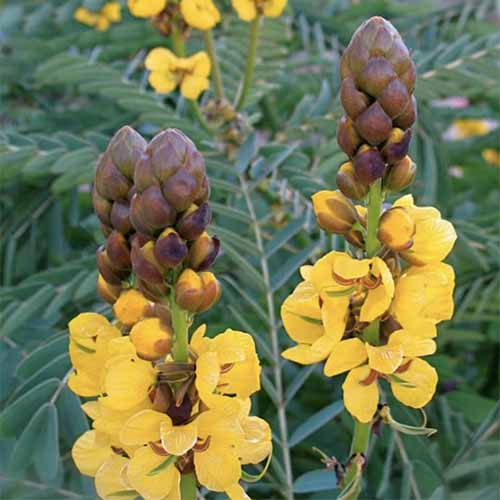
Popcorn cassia nursery starts are available from Walmart in four-inch pots. Upon receipt, water well and prepare to plant the following day.
Maintenance
Snip off spent flower heads just above the first leaf pair to prolong the bloom cycle, a process called deadheading.
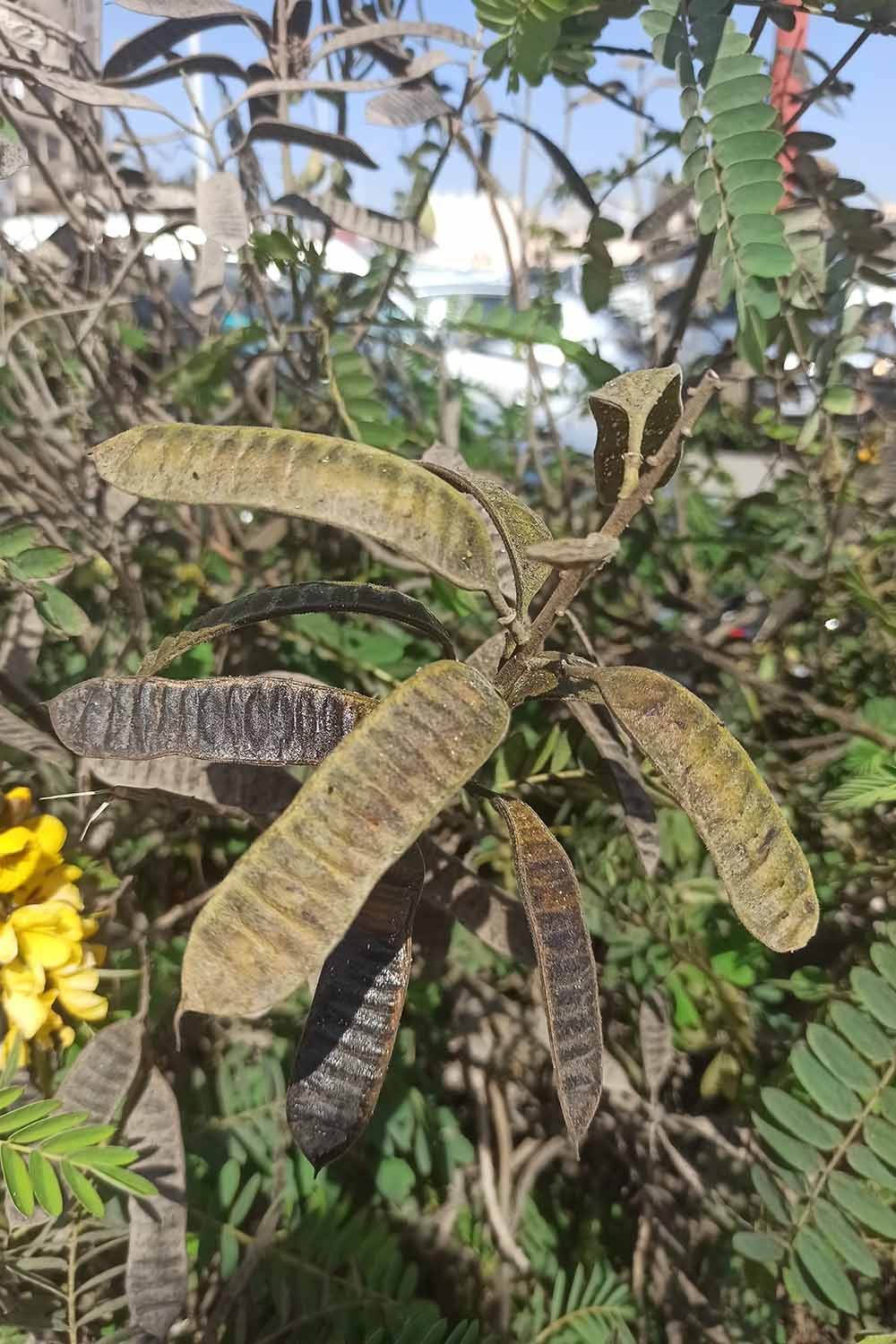
If you don’t deadhead and seed pods form, cut the clusters off at the base to prevent unwanted self-sowing.
Prune to remove damaged or dead foliage to maintain overall health and aesthetics. Make cuts just above a leaf pair to jumpstart regrowth.
Remove annual plants and discard them after the first hard frost to prevent withered foliage and roots from harboring pests and pathogens over the winter months.
Move potted specimens indoors before the nighttime temperature dips below 40°F.
Set the popcorn cassia in a spot with bright, indirect sunlight and water when the top one to two inches of soil are dry.
Alternatively, store pots in a dark, dry location at approximately 40°F to induce dormancy.
Use a moisture meter to determine when the soil is almost but not completely dry before watering, approximately every six to eight weeks.
The leaves will drop, but the roots will remain alive.
After the last average frost date in the spring, when the nighttime temperature is above 40°F, place pots near a window with bright, indirect sunlight to reacclimate them to sunshine and start the growth cycle.
Water when the top one to two inches of soil are dry. Move them outdoors when new growth appears.
Hard prune perennials as needed in late winter or early spring.
The tools required are a pair of sanitised shears and a pruning saw. Cut at the base of each unwanted stem, close to the main branch, to avoid leaving unsightly blunt, dead stumps.
Hard pruning serves various purposes, including:
- Removing secondary branches that cross and rub main stems, causing damage and unwanted density.
- Creating and maintaining a tree-like display with bare “legs” and a laterally branching canopy.
- Reducing the density of multi-stemmed shrubs to allow sunlight to penetrate and air to circulate.
With proper maintenance, popcorn cassia rewards gardeners with healthy plants that are an asset to the home landscape.
If you are gardening in containers, you will need to repot as the plant grows.
Ideally, the container should be approximately four inches wider and deeper than the root mass to allow for growth and avoid oversaturation.
Ultimately, a 24-inch diameter pot with a depth of approximately 20 inches should adequately accommodate the foliage and taproot of a two- to three-foot-tall plant.
Propagation
To start a new plant, you’ll need seed, a stem cutting, an air-layered stem cutting, or a nursery start.
Seed propagation is the longest route to flowering and is best suited to perennial cultivation. A nursery start is the fastest and best way to grow an annual.
Let’s discuss.
From Seed
Purchase seeds or harvest them from an existing plant when the long green pods turn brown and rattle.
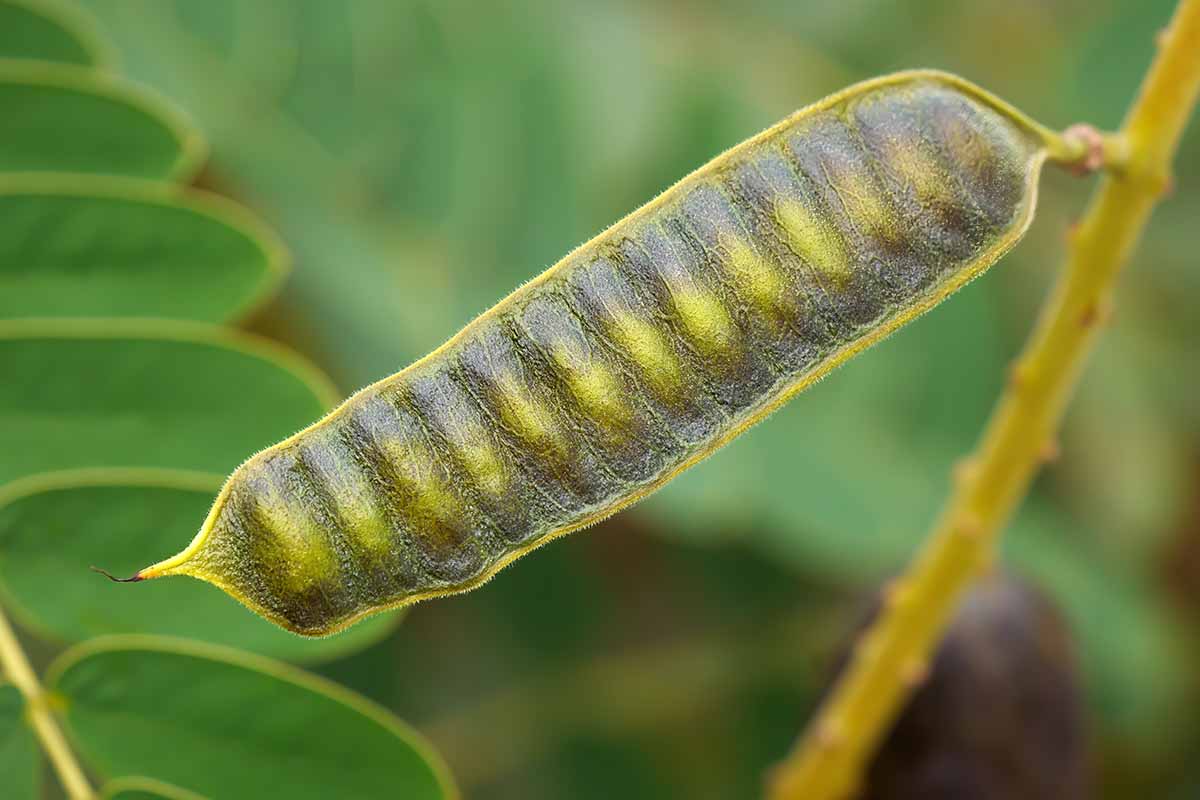
Open the pods or a seed packet and place the seeds in a bowl.
Pour boiling water over them until they are submerged.
Leave the seeds in the bowl for 24 hours. This process is called “scarification” and causes the seeds to swell and open, as if they had experienced a rainy season during dormancy.
Fill a well-draining seed starter tray three-quarters full of potting soil.
Sow the seeds from a quarter to a third of an inch deep and about two inches apart.
Moisten the soil. Cover the tray with clear plastic wrap to create a self-watering greenhouse.
Place the tray in bright, indirect sunlight where the temperature is 64 to 71°F.
Remove the plastic when the seeds sprout. Maintain even moisture without oversaturation.
When the seedlings are a few inches tall and have at least two sets of true leaves, they are ready to transplant.
From Stem Cuttings
In late spring or early summer, select a young green stem that is not flowering. Note that unlike annuals, perennials also have woody brown stems.
Use clean shears to take a cutting four to six inches from the tip.
Snip off the leaves on the bottom third of the stem.
Fill a well-draining four-inch pot three-quarters full of potting medium.
Dip the stem into rooting hormone powder.
Use a chopstick or pencil to make a two inch hole in the center.
Insert the cutting into the hole. Bury at least two leaf nodes to jumpstart root growth.
Tamp the soil to hold it firmly in place. Water well.
Place the cutting in bright, indirect sunlight, where the temperature is 64 to 71°F.
Keep the soil evenly moist, but not soggy.
When you see new growth, you’ll know that the cutting has taken and it can be transplanted outdoors.
Air Layering
Air layering is a propagation method that uses a stem, but instead of being cut, it remains attached to the plant during the rooting process.
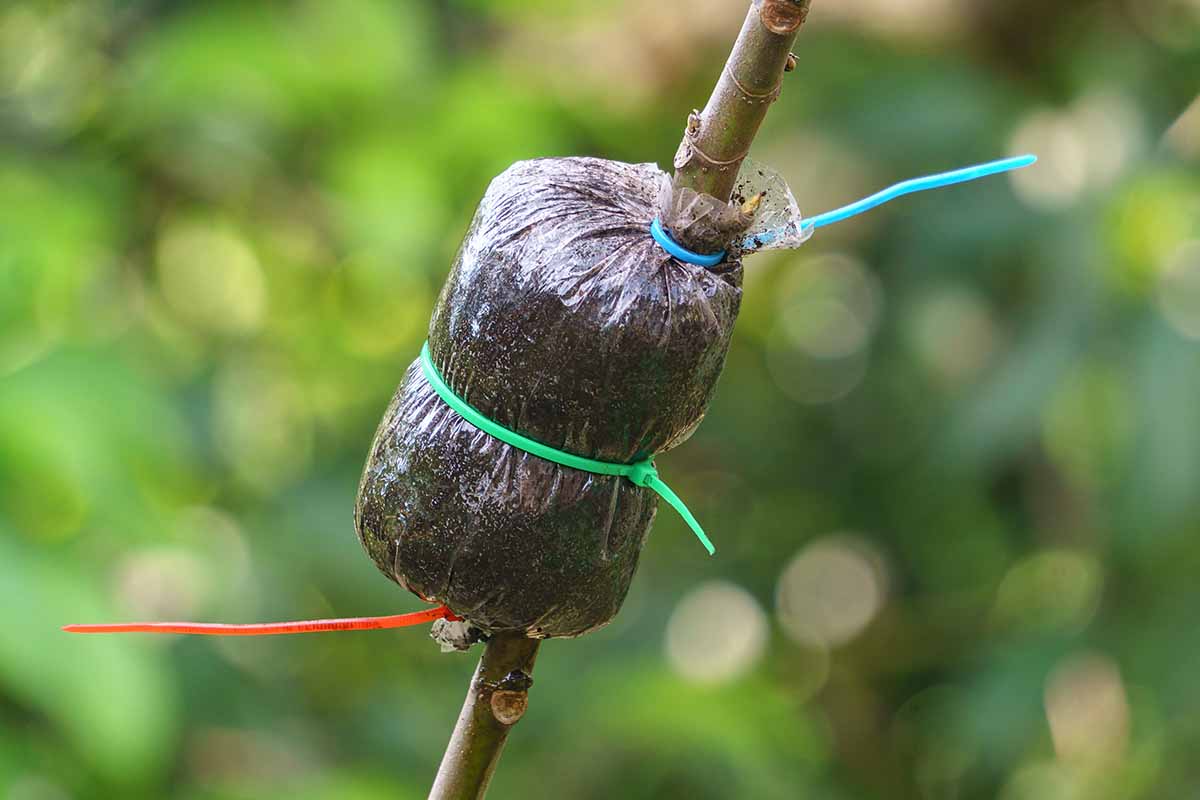
To air layer popcorn cassia, select a non-flowering green stem about the thickness of a pencil, approximately quarter of an inch wide.
Use clean shears to snip off the leaves from a one-inch section about 10 to 12 inches from the tip.
“Girdle” the section by making a shallow cut into the epidermis, or outer layer, circling around the stem.
Make a second girdle about an inch down from the first, cutting shallowly all the way around.
Make a shallow vertical cut between the two circular girdles, to enable you to peel and remove the leafless epidermis between the girdles.
Thoroughly moisten a handful of sphagnum peat moss.
Place the peat moss over the girdled stem section to cover it all the way around.
Wrap clear plastic over the peat moss.
Secure the plastic at each end and across the middle with twist or zip ties.
Wrap a second layer of opaque material over the clear plastic to make a dark environment suitable for root growth.
Aluminum foil works well, deflecting sunlight and keeping the developing roots cool.
Open the aluminum foil every couple of weeks to check the peat moss for moisture.
If it is dry, open the twist tie at one end of the plastic wrap and mist with water to thoroughly moisten it. Then, tie the plastic shut and return the foil to its place.
After approximately two months, you will see roots in the peat moss. When they are about four inches long, carefully remove the wrappings.
Cut the stem an inch below the root mass to remove the rooted stem portion from the main branch. Keep the 10 to 12 inches of tip growth at the other end.
Unwrap the rooted stem, carefully retaining the peat moss around the roots and transplant into the garden.
Transplanting
In the spring, prepare potted seedlings, stem cuttings, and nursery starts by watering them the day before transplant. Note their depth in the original container so you can replicate it in-ground.
Work the soil as deep and twice as wide as the container, until it is crumbly and debris-free.
Unpot and set the contents at the original depth, with the crown at or slightly above ground level, to allow for aeration and excess moisture evaporation.
Backfill to hold the stem(s) firmly in place and water in well.
Water again when the top one to two inches of soil are dry.
Space plants at least two feet apart to allow for mature dimensions.
Pests and Disease
While not prone to infestation or infection by pathogens, S. didymobotrya may suffer from infestations of aphids, mealybugs, spider mites, or whiteflies under less than optimal conditions.
These sapsucking pests damage plant tissue with their voracious feeding.
Caught early, a firm spray of water from the hose and an application of neem oil are usually all that is needed to suppress them.
The most likely disease you’ll face is root rot, brought on by oversaturated soil.
Prevention is straightforward: make sure pots and garden beds drain freely, choose a site in full sun, water in the morning so the soil isn’t sitting damp overnight, and skip watering altogether when the top inch or two of soil is still moist.
Once rot sets in, the damaged roots won’t recover, though you may be able to salvage healthy portions of the plant.
Add Some Pop
With rich, well-draining soil, full sun, and consistent moisture, you can enjoy popcorn cassia as a perennial in Zones 9 to 11 and as an annual or indoor/outdoor potted specimen in regions that freeze.
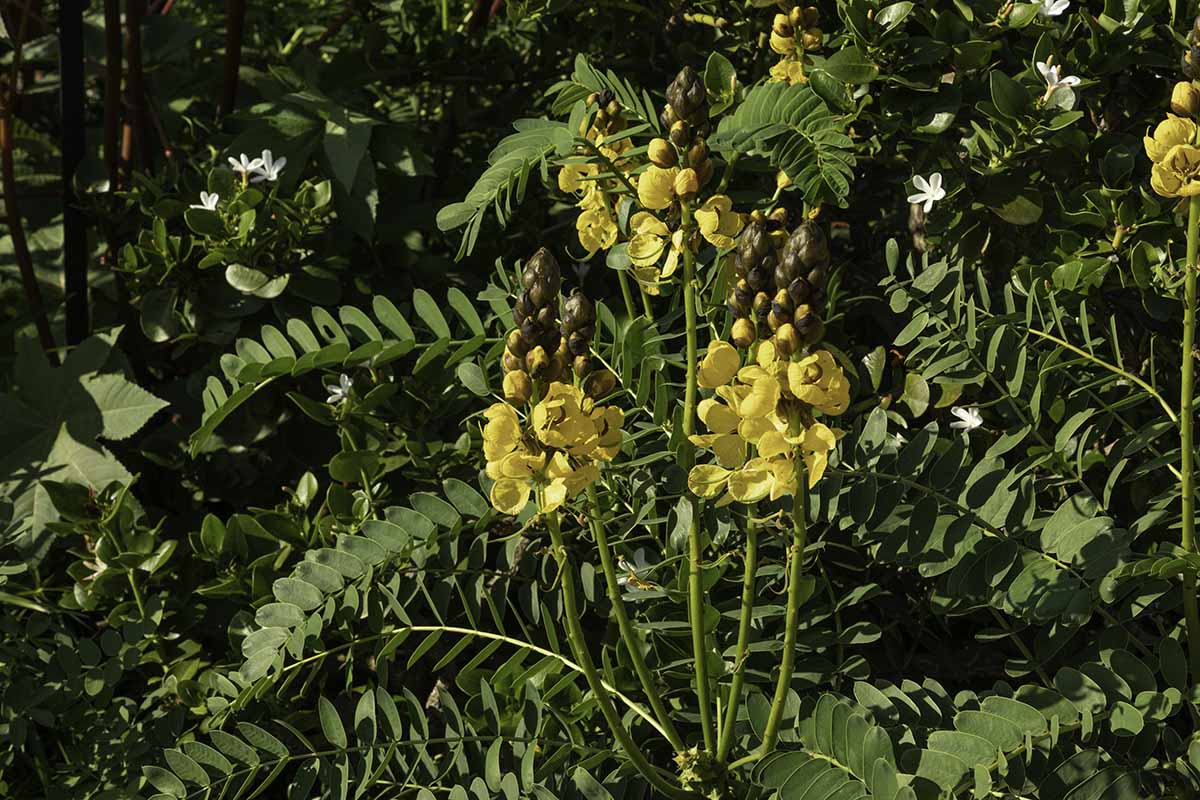
Are you eager to infuse your summer to fall outdoor living space with color, height, and texture?
Look no further. Bright yellow blossoms, foot-tall stems, and lush, feathery foliage are sure to make your landscape pop when the sun is high in the hazy sky.
Do you grow popcorn cassia? Please share your tips in the comments section below.
If you found this article informative and want to learn more about tropical perennials, we recommend the following: