
Cosmos atrosanguineus
Ornamental chocolate cosmos, Cosmos atrosanguineus, once believed to have vanished from the wilds of Mexico, is alive and well and available to the home gardener.
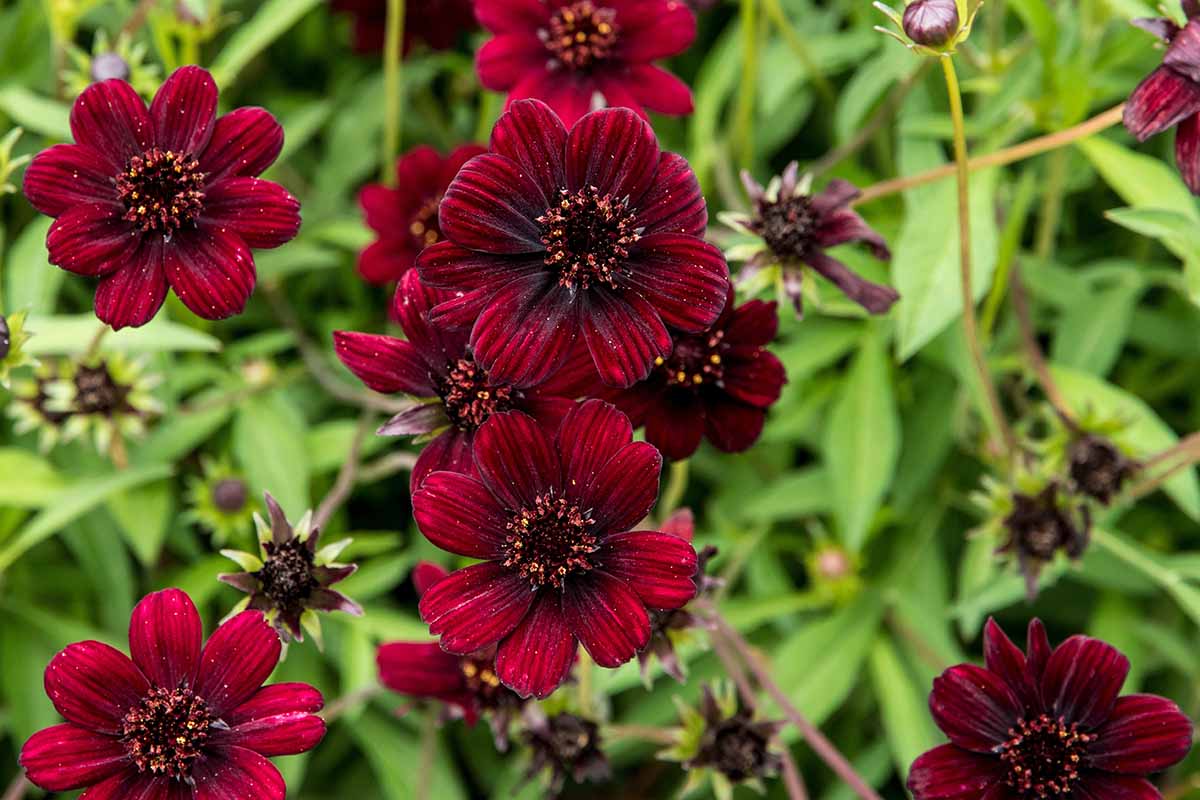
This unusual species unfurls its deeply hued burgundy-brown petals in mid- to late summer, infusing the late day sunshine with a delightful chocolatey aroma.
The outer petals, or rays, and the tiny florets in the center disk contain vanillin, the organic compound responsible for the signature scent.
We link to vendors to help you find relevant products. If you buy from one of our links, we may earn a commission.
In spite of the delightful scent, unlike some edible flowers, chocolate cosmos are toxic and should not be consumed.
Our guide to growing cosmos focuses on the cultivation of seed-grown annuals.
This article zeroes in on C. atrosanguineus, a tuberous tender perennial species with unique characteristics and cultural requirements.
Here’s what we’ll cover:
What You’ll Learn
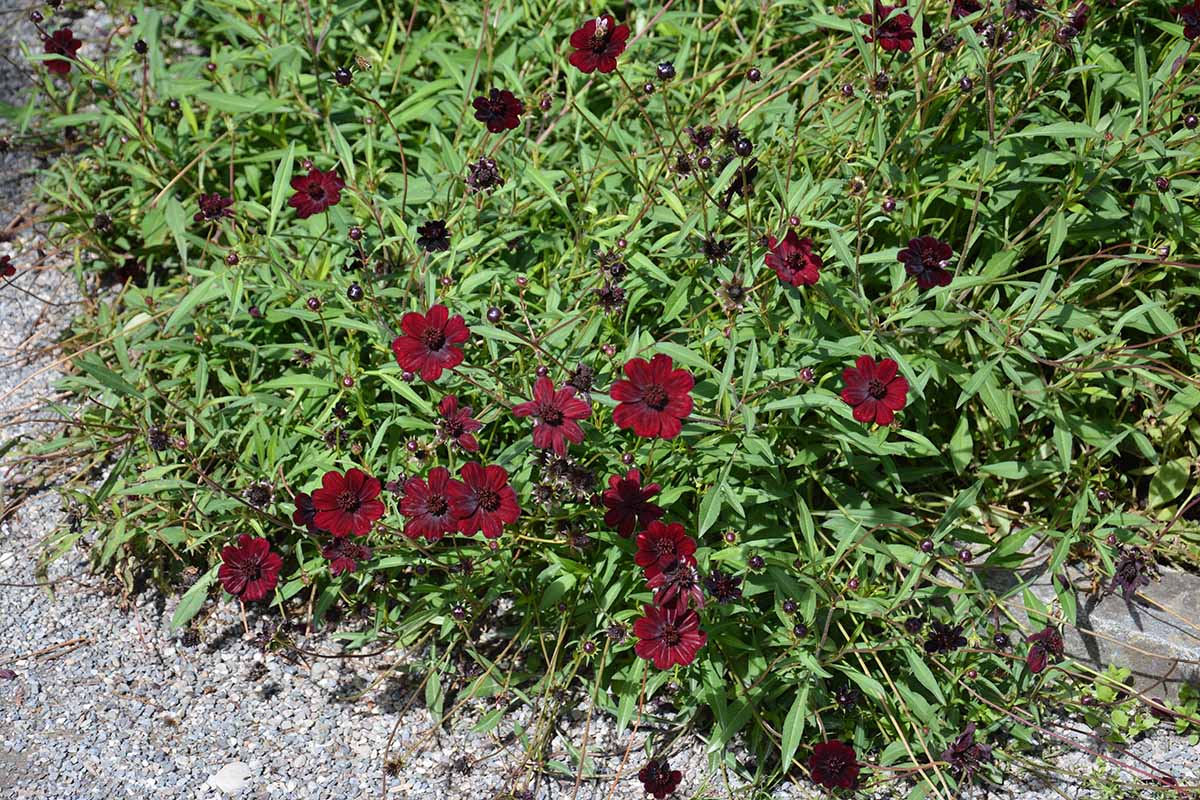
Chocolate cosmos plants tend to be shorter than annual species, topping out at 24 to 36 inches tall and 24 inches wide.
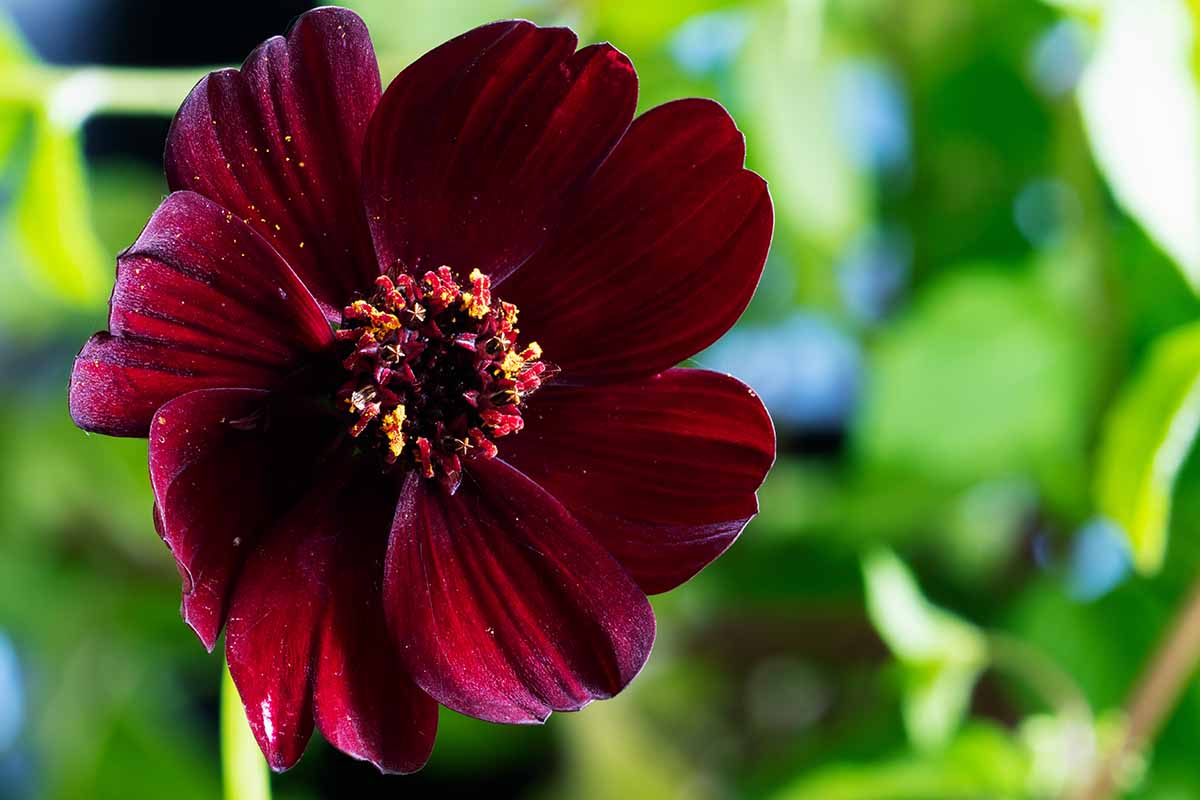
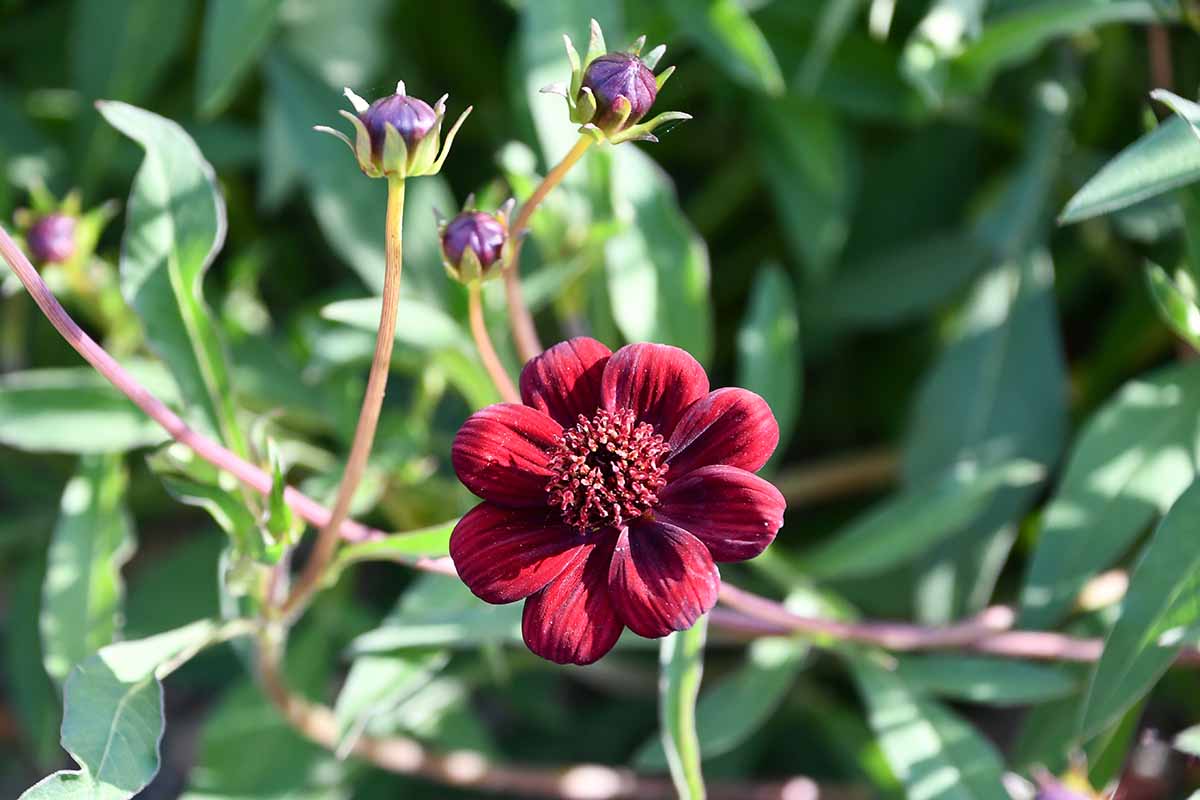
They also lack the lacy foliage of the common pastel blossoms. Instead, they have more substantial elliptical leaves arranged in pairs on opposite sides of the robust, wiry stems.
Quick Look
Common name(s): Black or chocolate cosmos, chocolate plant
Plant type: Tender flowering perennial
Hardiness (USDA Zone): 9-11 (perennial)
Native to: Mexico
Bloom time / season: Midsummer to fall
Exposure: Full sun
Soil type: Loose, not overly fertile, well-draining
Soil pH: 6.0-8.0, slightly acidic to alkaline
Time to maturity: 90 to 110 days from seed
Mature size: 24 to 36 inches tall, 24 inches wide
Best uses: Beds, borders, containers, cottage gardens, cutting gardens
Taxonomy
Order: Asterales
Family: Asteraceae
Genus: Cosmos
Species: Arosanguineus
In Zones 9 to 11, plants are perennial, returning each year in frost-free zones. Successful cultivation is possible in Zones 7 and 8, where mulching can provide winter protection.
Otherwise, they can be grown as annuals and the tubers lifted and stored over winter for replanting in spring.
There are numerous ways to appreciate chocolate cosmos in the landscape.
Their deeply saturated hues contrast exceptionally well with pastel pinks and yellows in mixed beds.
Planting in patio pots and sidewalk borders infuse these growing areas with the alluring scent.
Chocolate cosmos also makes an outstanding addition to cottage and cutting gardens where the flowers can be mass-planted and the sturdy stems cut and used in vase arrangements.
Read on to learn how to care for these versatile tubers in your region.
How to Grow
Successful cultivation begins with an understanding of cultural requirements, the conditions that support a species in its native habitat, and how to replicate them in the home landscape.
C. atrosanguineus is native to the forested mountain regions of Mexico, including Hidalgo and Guanajuato.
Summer temperatures may exceed 90°F and there is ample humidity and rainfall. Winters are cold and dry, dipping into the 40°s, with occasional high elevation frost.
As mentioned, gardeners in Zones 9 to 11 can keep the tubers in-ground year-round, those in Zones 7 to 8 can experiment with mulch for frost protection, and those in Zones 2 to 6 can grow annuals with the option of storing the tubers for the winter.
Light
Accustomed to the sunny clearings of oak and pine forests, chocolate cosmos requires a full-sun placement for at least six hours of exposure daily.
Soil
Average, well-draining soil with a pH of 6.0 to 8.0 is ideal. Cosmos are light feeders and do not require fertile earth to thrive.
Water
During the propagation phase, keep the soil evenly moist but not soggy.
Once in the garden or a permanent pot, if it doesn’t rain, water deeply when the top one to two inches of soil dry out.
Maintain this care for the first growing season. Discontinue watering when the flowers finish blooming.
Perennial C. atrosanguineus is drought-tolerant once established and requires watering only during prolonged dry spells.
Fertilizer
As light feeders, cosmos do not require fertilizer.
If you choose to feed them, select a slow-release granular product with a low nitrogen content to avoid promoting an overproduction of leaves and few blossoms.
In early spring, apply it very lightly around but not touching the emerging foliage.
You can read more about fertilizing cosmos here.
Support
Cosmos have an upright growth habit, but the wiry stems may require support.
It’s tempting to mass plant closely so they can be self-staking, but overcrowding can lead to damp conditions and fungal infection.
Instead, consider staking trellis string netting horizontally over your plants to support them. As they grow, you won’t even notice it.
Heavy-duty netting such as this product from Vivosun measures five feet by 30 feet and has six- by six-inch mesh squares, appropriate for cutting garden flowers like cosmos.
Vivosun Trellis Netting is available from Vivosun via Amazon.
Cultivars to Select
When shopping, you are likely to find both species plants and cultivated varieties. There may be options for nursery starts, seeds from fertile cultivars, and tubers.
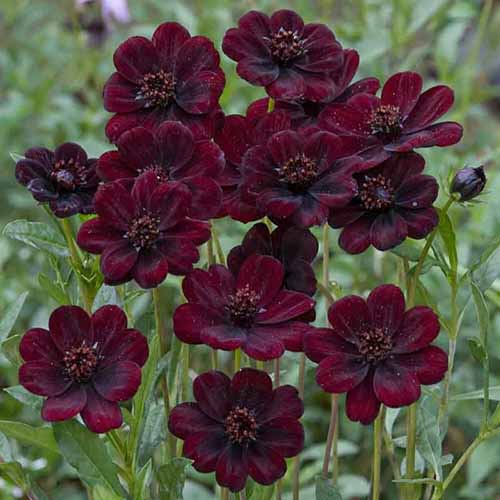
Chocolate cosmos tubers are available from Eden Brothers.
Black Magic
‘Black Magic’ is a cultivated variety developed by renowned plant breeder Dr. Keith Hammetten of New Zealand.
It enhances natural characteristics with a deeper burgundy-black petal color and more uniformly upright stems.
Topping out at approximately two feet, this option is compact and well-suited to garden placements.
In addition, unlike the native species, this cultivar is fertile and produces a small quantity of viable seeds.
Choco Moca
‘Choca Moca’ is a compact cultivar with mature dimensions of 10 to 12 inches tall and wide and the rich maroon shading of the wild species.
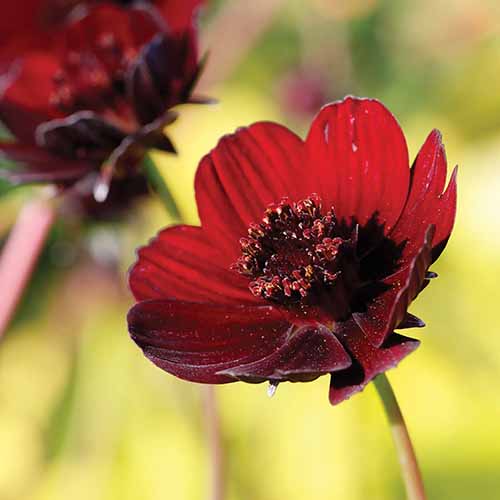
It’s well-suited to containers and small-space gardens.
‘Choca Moca’ plants are available from Burpee.
Additional cultivars, including ‘Cherry Chocolate’ and ‘Pinot Noir’ may be available.
Notably, these are protected by Plant Breeder’s Rights (PBR) and strict regulations prohibit their unauthorised propagation and sale.
Maintenance
Once the plants reach 10 to 12 inches tall and have multiple leaves, use your fingers or clean pruners to pinch back three to four inches of the growing tip of each stem.
This will promote lateral branching and abundant blooms.
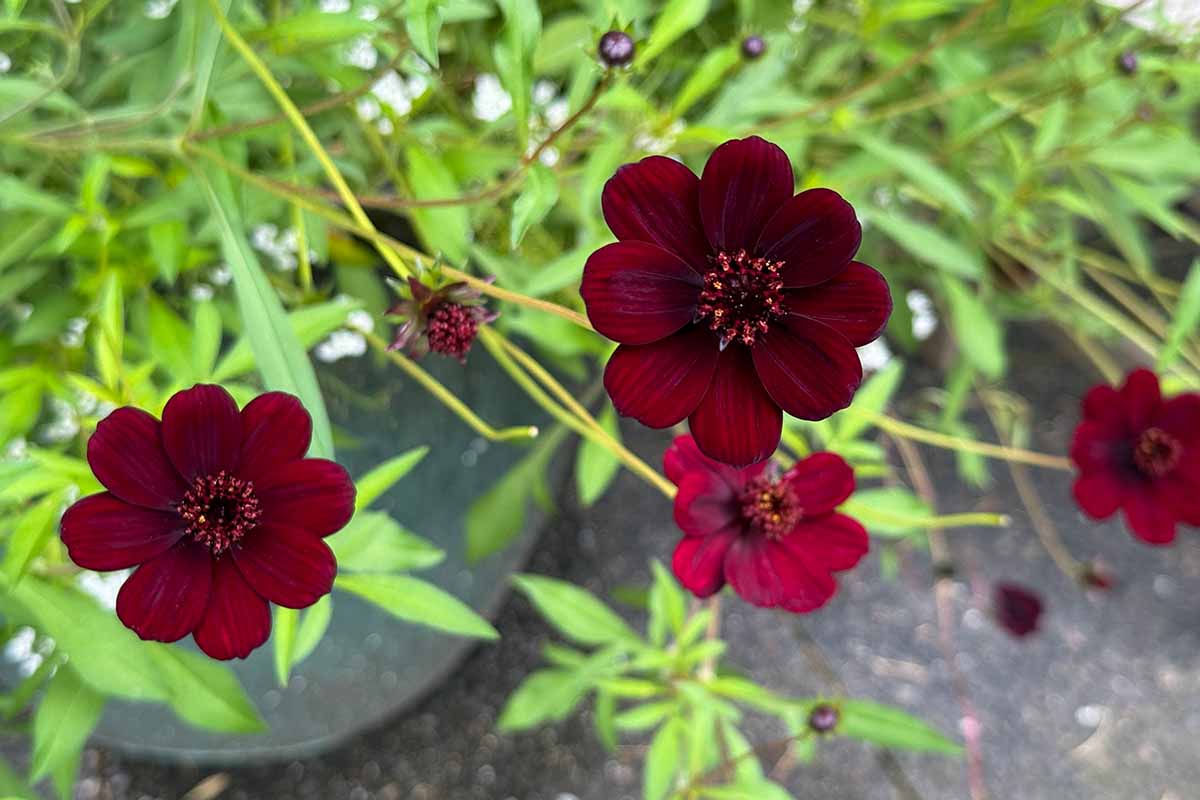
Deadhead spent flower stems before the petal color completely fades to restore vigor and promote more blooming.
Cut the stems just above a growing point, either a bud, flower, or leaf pair. Remove diseased or pest-damaged foliage as needed.
Discontinue supplemental watering once all flowers have finished blooming. Allow the foliage to wither naturally and then cut it down to a height of two inches in early fall.
If you are gardening in Zones 2 to 6, you can lift the tubers in fall before the ground freezes and store them for the winter.
In Zones 7 to 8, a three- to four-inch application of loose, organic mulch over the planting area may insulate the tubers well enough to get them through the winter in-ground.
However, a wet winter with multiple freezing and thawing cycles can cause them to heave from the soil and succumb to the cold, or rot altogether.
To lift and store cosmos tubers:
- After cutting down the foliage, use a long-handled shovel to carefully dig a circle around a clump of foliage about 12 inches away from the stems.
- Push the blade fully into the ground at a 45–degree angle, applying downward pressure to begin lifting the earth as you go.
- When you’ve made a complete circle, lift out the entire clump.
- Brush the soil off the tubers and set them in a cool, dry place out of direct sunlight to allow moisture to evaporate.
- Inspect them for signs of rot and discard any that are blemished, malodorous, or soft.
- After a few days, when you are sure they are dry, store the tubers in ventilated crates in a shed or garage that is dark, dry, rodent-free, and ideally, around 45°F.
For container-grown plants, cut the foliage down to a height of three to four inches at season’s end and store the entire pot in a similar location. There’s no need to water.
When the danger of frost passes in the spring, put the pot back outside and start watering when the first green shoots appear.
Finally, when cosmos are overcrowded, it’s easy to divide them in early spring. Dig up clumps as described above, tease the tubers apart, and replant them as desired.
You can read more about dividing perennials here.
Propagation
Chocolate cosmos have traditionally been propagated by tuber division because plants were scarce and seeds were mostly infertile.
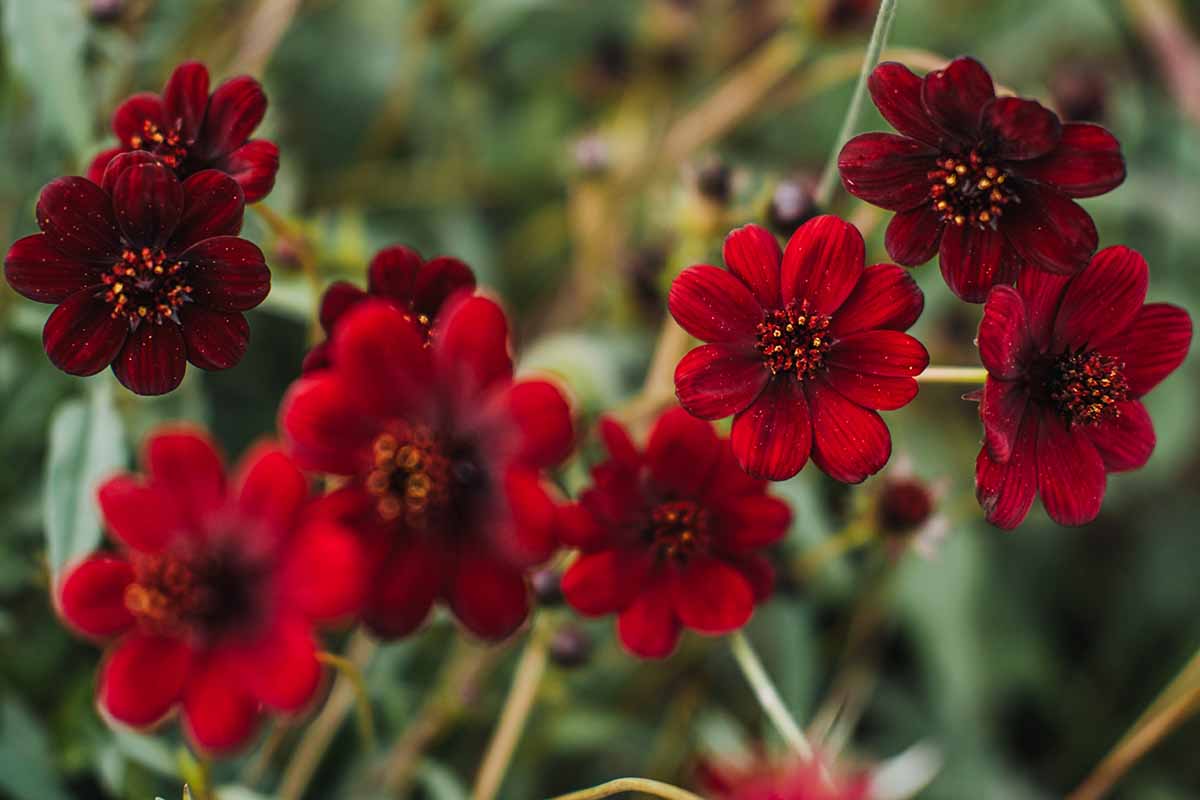
Today’s fertile cultivated varieties produce some viable seeds.
Additional propagation methods include starting from tubers, either purchased or divided, basal stem cuttings, and nursery starts. Let’s explore each.
From Tubers
In early spring, purchase individual tubers or dig and divide a clump as discussed above. Once the clump is unearthed, gently tease the roots apart.
To be viable, each tuber must have “eyes,” the bumps from which growth sprouts, or shoots.
To plant, prepare the soil by working it until it is loose and crumbly to a depth of four to six inches.
Set each tuber horizontally at a depth of two inches with at least one eye facing upward.
Leave 12 to 24 inches between them to accommodate mature dimensions.
Cover each lightly with soil. Water in well and again when the top one to two inches of soil are dry.
If you are container gardening, allow one standard 12- to 14-inch diameter pot per tuber.
From Basal Stem Cuttings
In the spring, select sturdy, non-flowering shoots at least four inches tall. Each should have two or more leaf nodes.
Use clean shears to snip the desired number of stems off at the base.
Pinch off the bottom leaves so you have two to three inches of bare stem.
Dip the cut end into rooting hormone powder.
Fill a four-inch pot three-quarters full of loose, well-draining potting soil.
Use a chopstick or pencil to make a two- to three-inch hole in the center of the soil.
Insert the shoot and bury at least two leaf nodes where the roots will emerge.
Tamp the soil to hold the shoot in place and water in well.
Water when the top inch of soil is dry. When you see evidence of new foliage, the plant has rooted successfully.
Transplanting
If you’ve started your chocolate cosmos from seed, wait until seedlings have at least two sets of true leaves before transplanting them to a larger container or the garden.
Transplant basal stem cuttings when they have a set of new leaves.
You can plant nursery starts upon receipt.
Prepare the garden soil twice as wide and as deep as the current container. Work it until it is crumbly and debris-free.
Set the contents of the pot into the soil at the original depth, so the crown, where the stem(s) and rootstock meet, is at or slightly above the soil surface.
Tamp the soil firmly.
Water now and again when the top one to two inches of soil are dry.
During the first season, you will need to monitor soil moisture and supplement the rainfall as needed. Consider using a moisture meter to guide you.
Pests and Disease
Chocolate cosmos is not prone to insect infestation or pathogens. However, under less than ideal conditions, plants can fall victim to various pests and fungal diseases.
Pests
In the spring, when the weather is cool and the new shoots are tender, you may find aphids stacked one upon the other and sticky “honeydew” trails.
Our guide to aphids has more information.
By late spring, leaf hoppers may cause yellow stippling on the leaves, while four-lined bugs darken the foliage with circular patches that turn crispy and become holes.
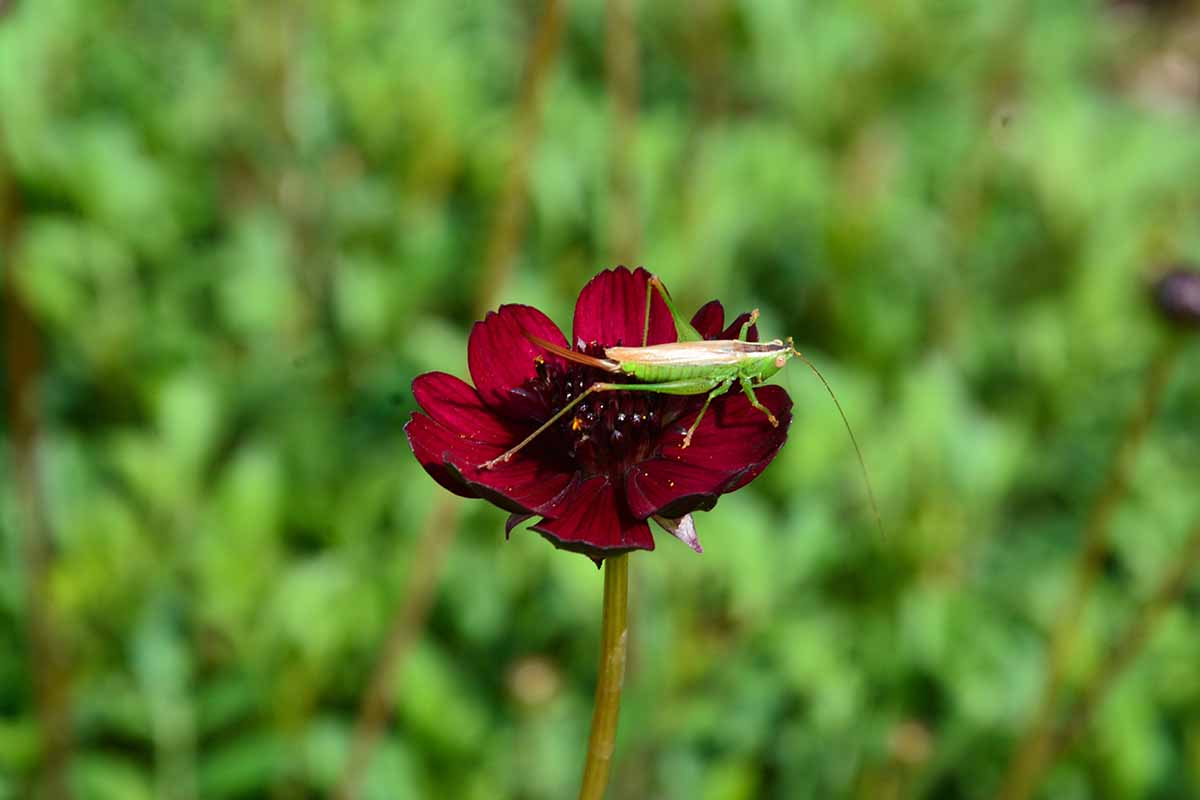
This is also the time for grasshoppers that may chew irregular holes in the foliage or consume it entirely.
By summer, Japanese beetles sometimes turn leaves into veiny skeletons. Whitish webbing and yellowish dots reveal spider mites, and silvery trails mean thrips are hard at work.
For most of the above, keeping garden areas weeded, installing floating row covers over emergent foliage, handpicking pests, spraying with the hose, and applying organic neem oil are all that’s needed.
You can also remove any especially unsightly foliage if desired.
Four-lined bugs are somewhat resistant to treatment.
Pyrethrins may prove effective in severe cases, but note that unlike other pests that produce multiple generations per season, four-lined bugs have one before dying off.
Disease
Many pests can vector diseases. Aster yellows is a bacterial condition caused by infected aster leaf hoppers.
Symptoms are yellowing and “witches’-broom” growth anomalies. Avoidance measures include treating leaf hopper infestations promptly.
You can read more about aster yellows here.
Bacterial Wilt is another incurable condition vectored by various beetles that feed on cucumbers and melons in addition to chocolate cosmos.
It causes plant stems to suddenly turn mushy and collapse.
Botrytis blight, or gray mold, is a fungal disease that favors wet, overcrowded conditions.
It begins as a fuzzy brownish coating on the leaves and may progress to rotting if unchecked. Treatment includes the removal of affected plant portions and the application of a copper-based fungicide.
Powdery mildew is another fungal condition that proliferates in overcrowded conditions, but it prefers high humidity rather than water.
Symptoms include a whitish, fuzzy leaf coating. Neem oil is an effective treatment.
Learn more about powdery mildew here.
Finally, the tubers can be prone to rotting in oversaturated conditions. Avoid disappointment by ensuring that your soil drains well.
And lift and store tubers in regions with especially wet and/or freezing winters.
Memorable Visual Appeal
The deep burgundy tones and plush texture of chocolate cosmos lend an air of elegance to mixed floral groupings.

They seem to brighten lighter, more playful hues, while creating an alluring depth and formality among them.
Whether you grow them as perennials or annuals, you’ll find chocolate cosmos add visual appeal to the mid- to late-summer landscape and evoke cravings for hot cocoa and falling snow.
Do you grow chocolate cosmos? Please share your tips in the comments section below.
And for more information about growing cosmos in your landscape, check out these guides next: