Echium wildpretii
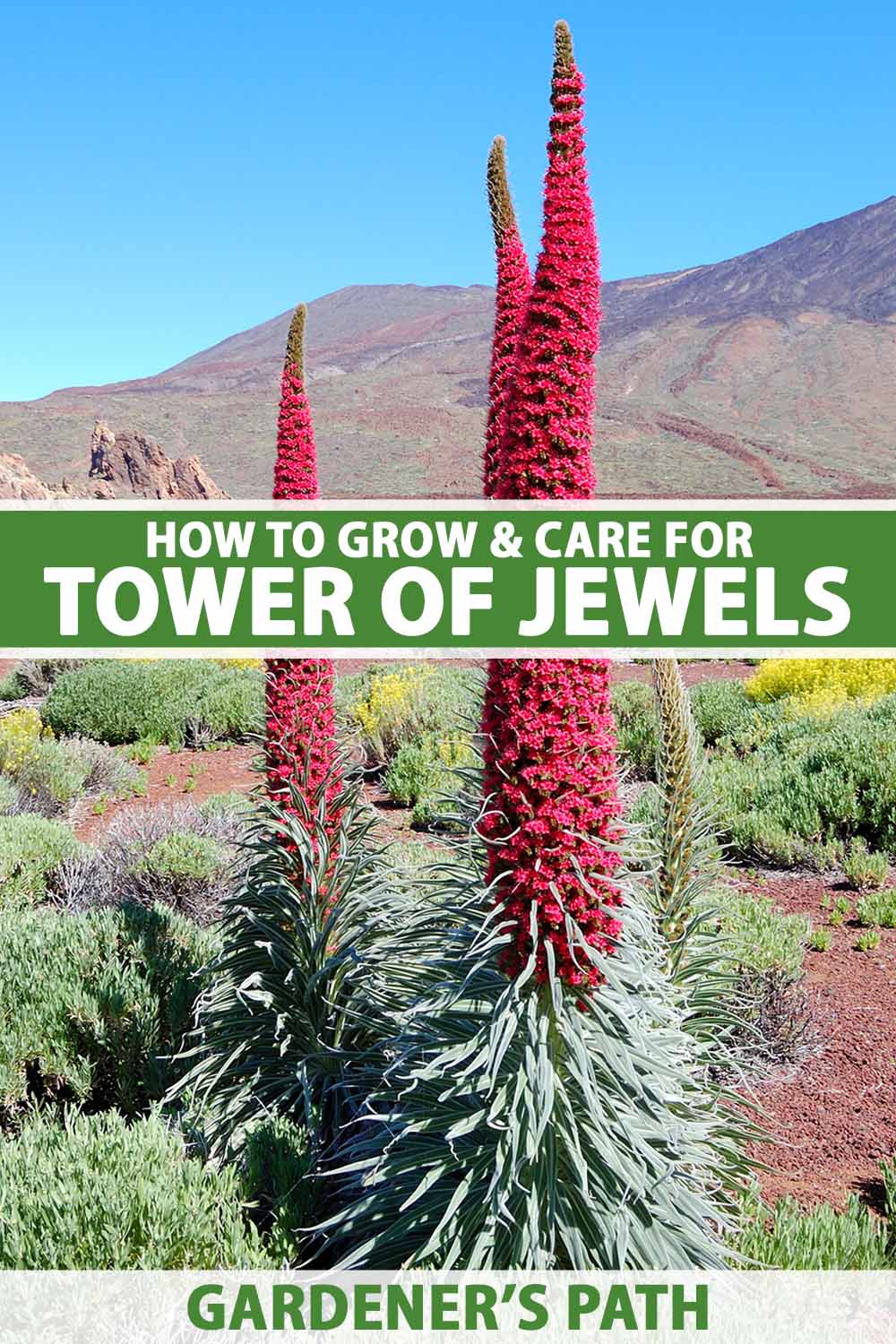
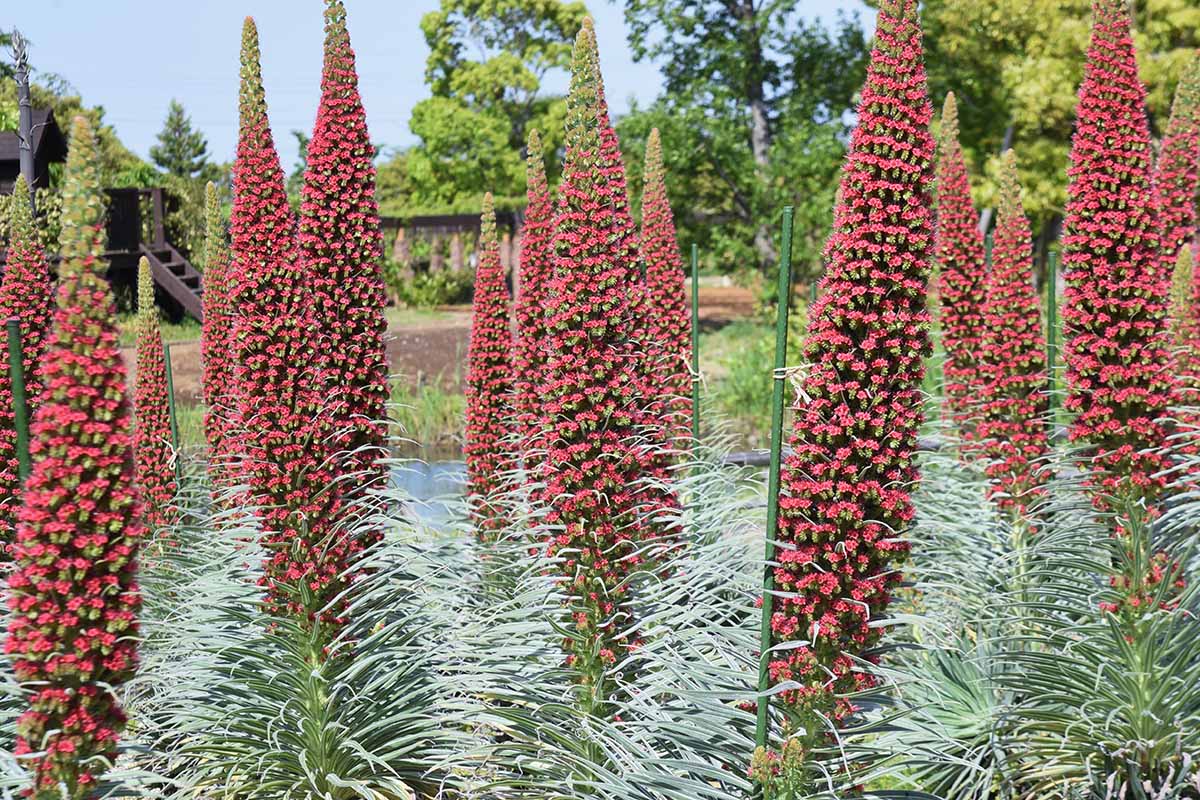
Tower of jewels, Echium wildpretii subsp. wildpretii, aka E. wildpretii, is a flowering biennial native to the arid, sub-Alpine Tenerife region of the Canary Islands.
It is suited to cultivation in USDA hardiness Zones 9 to 11.
My first encounter with this floral spectacle was at its Longwood Gardens debut in 1991.
Visitors were delighted by what appeared to be cones of richly toned salmon-pink flowers in grass skirts frolicking in the conservatory.
We link to vendors to help you find relevant products. If you buy from one of our links, we may earn a commission.
Unlike many plants which are “trained” for botanical exhibit, tower of jewels turned out to be an unadulterated wonder.
This member of the borage family of plants has the rough, hairy, spine-like foliage typical of “bugloss” species.
Growers should wear thick gloves when handling plants to avoid puncture wounds.
In the wild, tower of jewels grows up to 10 feet tall and two to three feet wide. When grown in cultivation, it typically stays about five to eight feet tall, with a similar spread.
Read on to learn how to grow and care for this stunning Canary Island biennial in your outdoor living space.
Here’s what we’ll cover:
What You’ll Learn
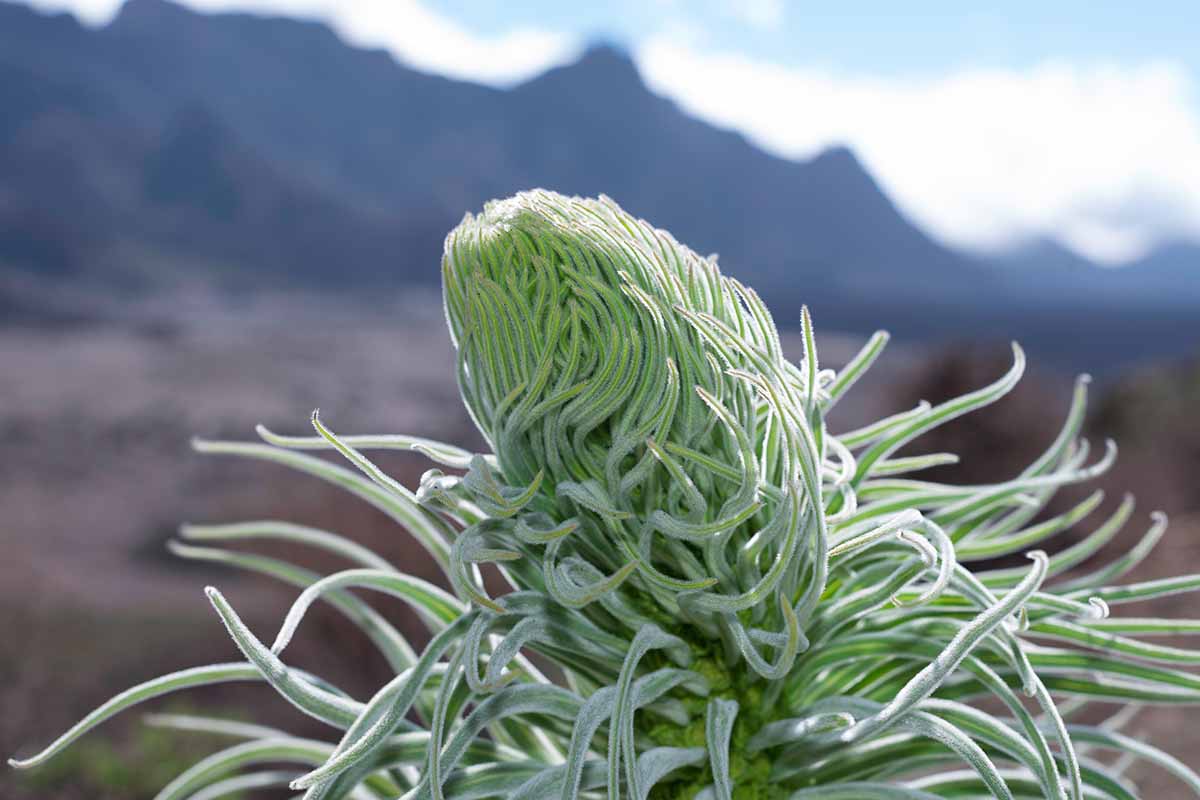
In the first year, the plant forms a rosette of slender, silvery leaves. And in the second, a “tajiniste,” or needle-like spike emerges.
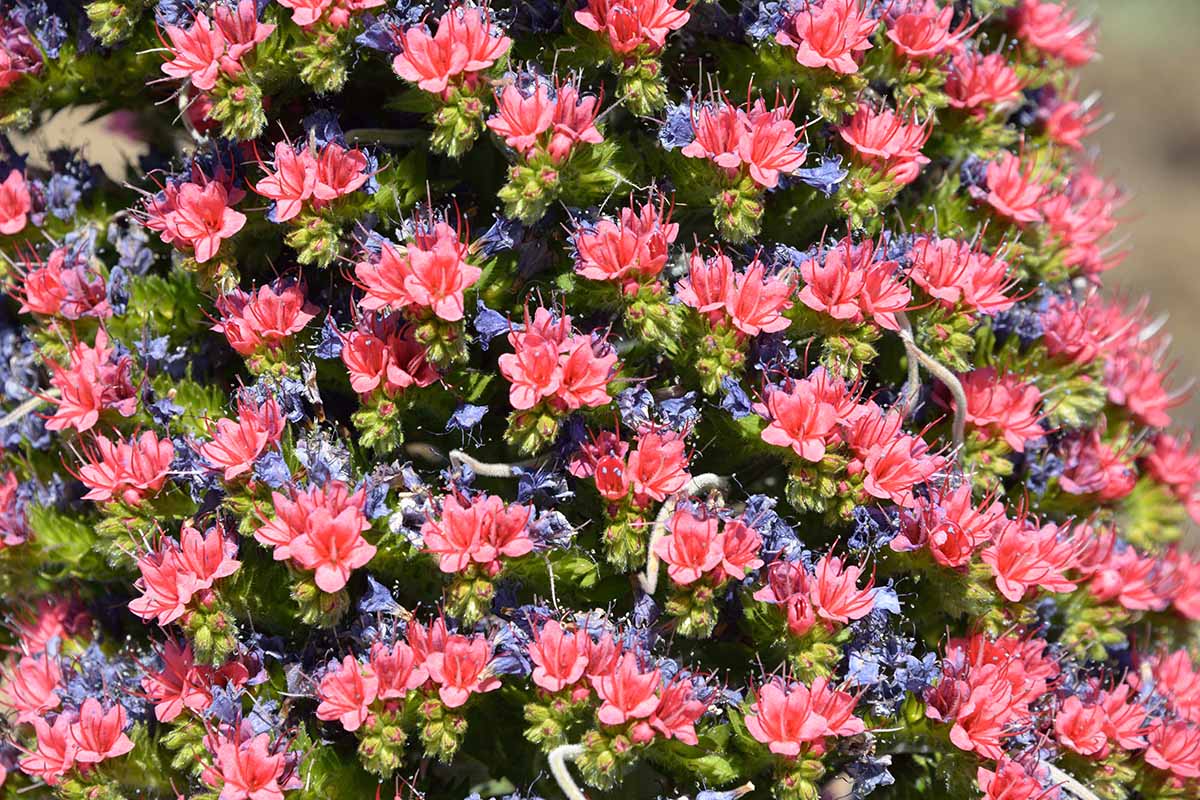
The flowers bloom in a spiral around the conical spike.
Each has prominent anthers covered in blue pollen.
As the petals fade, they also turn blue, adding visual depth and complementing the fresh red blossoms.
In addition to E. wildpretii, there are other large Echium species also referred to as tower of jewels, including:
- E. wildpretii subsp. trichosiphon is endemic to the neighboring island of La Palma. It has pink flowers and the same dimensions as the primary species.
- E. pininana is also native to La Palma, has blue to violet flowers, but also produces shades of pink and white. Heights in the wild are 15 to 18 feet.
- E. simplex, the Pride of Tenerife, aka white tower of jewels, is a rare native of the Tenerife region measuring three to nine feet tall.
- And finally, E. virescens has pastel blue, lavender, or pink flowers and a height of approximately six feet.
Other common names for these plants include hummingbird, Mount Teide, red, Tenerife, and wildpret bugloss as well as red tajinaste.
Quick Look
Common name(s): Hummingbird plant, Mount Teide bugloss, red bugloss, red tajinaste, Tenerife bugloss, tower of jewels, Wildpret bugloss
Plant type: Herbaceous biennial
Hardiness (USDA Zone): 9-11
Native to: Tenerife, Canary Islands, Spain
Bloom time / season: Late spring to early summer
Exposure: Full sun
Soil type: Dry, lean, rocky, well-draining
Soil pH: 5.8-8.2, slightly acidic to slightly alkaline
Time to maturity: 2 years in-ground, 3 years in a container
Mature size: 5-8 feet tall by 2-3 feet wide
Best uses: Coastal garden, large container, rockery, specimen, xeriscape
Taxonomy
Order: Boraginales
Family: Boraginaceae
Genus: Echium
Species: Wildpretii
Because it is tolerant of salt, drying winds, and lean soil, tower of jewels is an excellent choice for coastal placements.
It is also a candidate for growing in a large container, provided the pot is snug-fitting – two inches wider and deeper than the root mass – and kept sheltered from strong wind.
Additional options for showy displays include scattering seeds through large-scale rock gardens, and creating focal points in desert-style xeriscapes, where unique, water-wise specimens are highly prized.
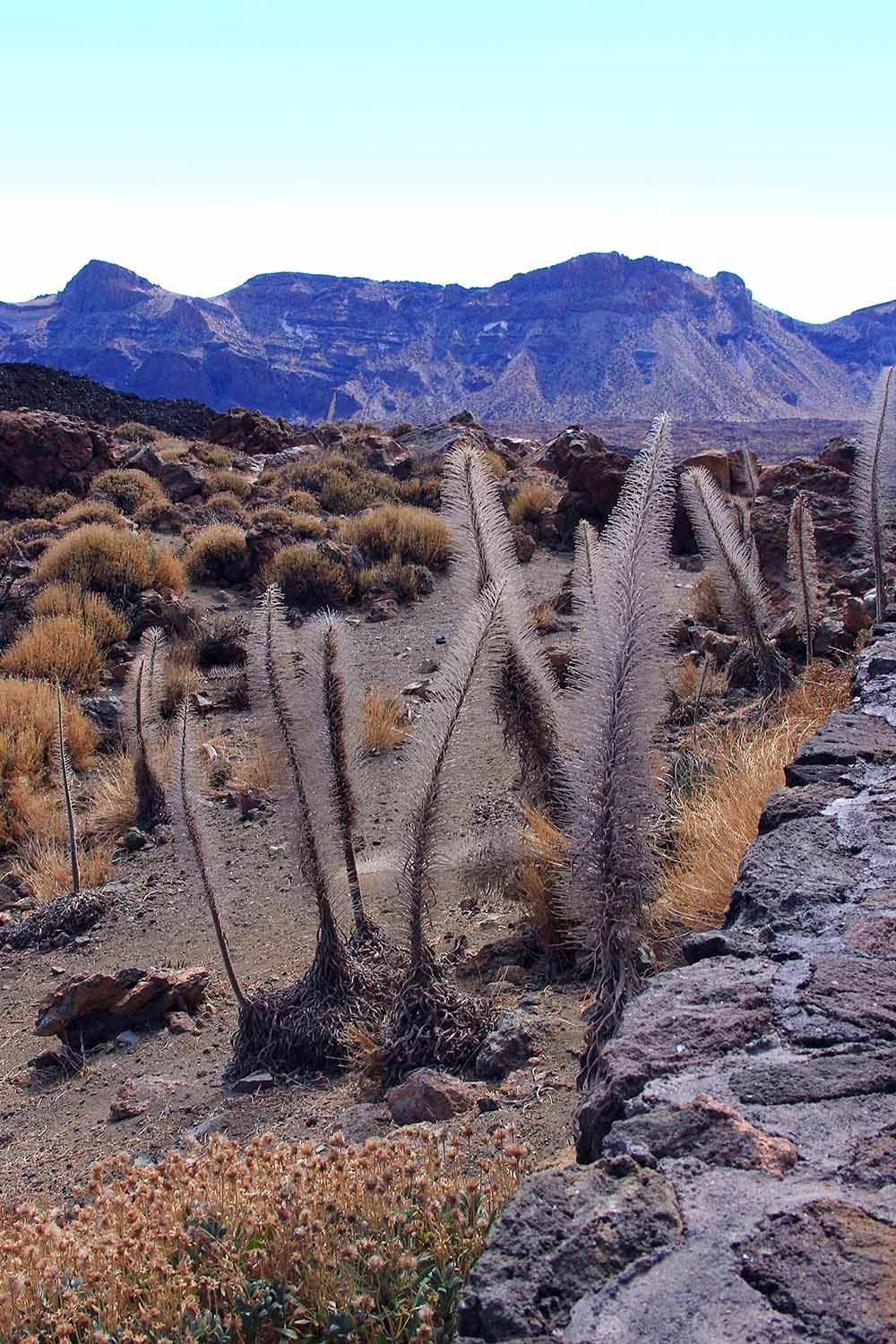
Post-bloom, after the seeds disperse, the eerily beautiful feathery skeletons that remain add intrigue to the late-season landscape.
Please note that all parts of this ornamental species are toxic and should not be consumed.
How to Grow
In the Canary Islands, tower of jewels grows on the high-altitude slopes and foothills of Mt. Teide, an active volcano that hasn’t erupted for nearly 120 years.
Rainfall is scant, about 14 inches a year, and temperatures are spring-like, ranging from 60 to 80°F.
Plants tolerate light frost and brief cold snaps with temperatures as low as 25°F. The humidity is moderate but gusty winds dry the air, creating an arid, desert-like environment.
Zone 9 to 11 gardeners in temperate regions with minimal rainfall can expect the best results.
Light
As in the wild, a minimum of six hours of bright, direct sunlight is required. Shady locations are not suitable for this species.
Soil
The native soil is composed of volcanic matter and is airy, loose, and well-draining with a pH of 5.8 to 8.2.
In home settings, plants thrive in average to rocky, sandy, and even chalky soil, provided it drains well.
Water
During the first year, from spring through winter, check weekly for moisture and water deeply around the rosette when the soil is dry at a depth of three to four inches.
Use a moisture meter as a guide.
When the stalk rises and flowers bloom in the second year, withhold water unless there is a prolonged drought.
Fertilizer
Tower of jewels grows in loose, nutritionally average to poor, fast-draining soil. Fertilizer is not required and may prove detrimental if applied, causing rapid, weak growth.
Where to Buy
As a professional gardener in Tenerife, Swiss botanist Hermann Wildpret was well acquainted with tower of jewels in the late 1800s.
He sent seeds to Kew Gardens, the vast repository of British Empire flora, and gateway to commercial production and home cultivation.
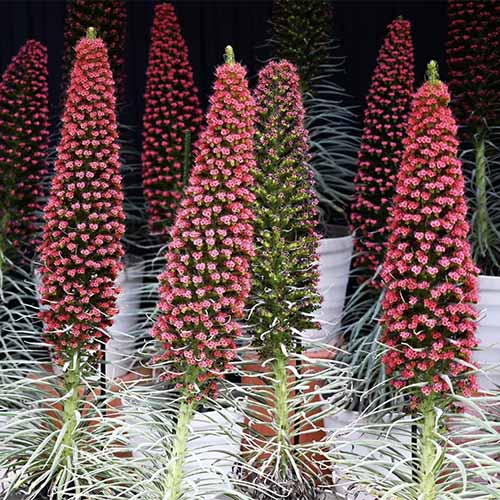
Tower of Jewels, aka Red Bugloss
Today, many specialty nurseries carry tower of jewels. The name varies, as with this package of 25 red bugloss seeds available from Seedville USA via Walmart.
If you have your heart set on deep pink to red E. wildpretii, confirm the species name and color prior to purchase, or you may find you have one of the other types mentioned.
Maintenance
Weed the garden as needed to prevent competition for water.
In the second year, the rosette elongates, rising upwards into a cone shape. If it is particularly windy, you may find it starts to lean.
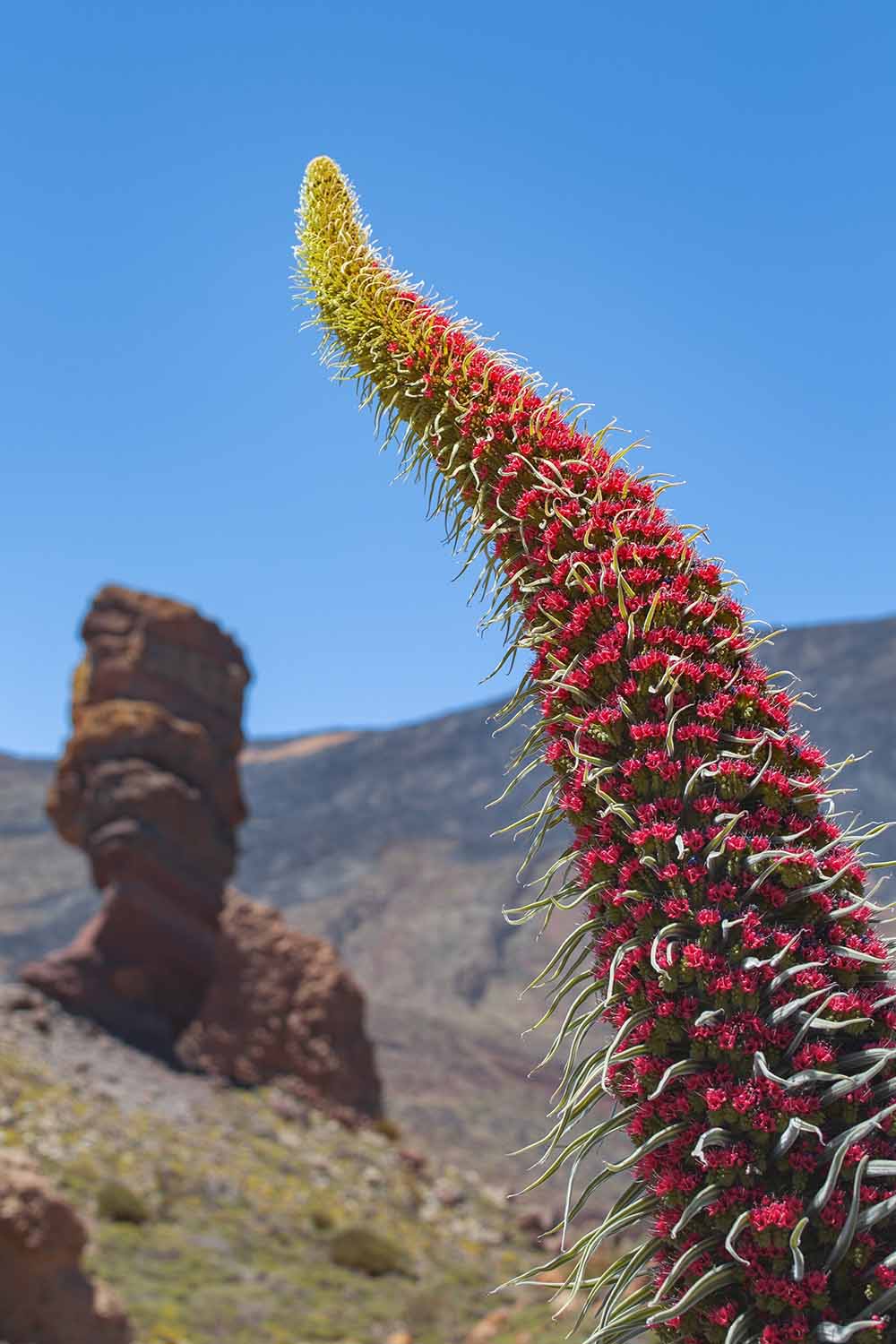
If it remains in a slanted position, the tip will curve as it tries to regain an upright position.
In especially windy areas, consider staking preemptively to prevent leaning and maintain a visually pleasing vertical cone. A simple stake and twine arrangement is suitable.
Post-season, when the flowers have faded, the seeds have dispersed, and the decorative skeletons have withered, wear gloves and dig up the entire plant.
Dispose of it carefully to avoid contact with the spines.
Pull and discard unwanted seedlings in the spring, retaining those you wish to cultivate. If you must relocate them, take care not to damage the tap root.
To maintain a continuous presence in the landscape as it goes through its two-year cycle, allow some of the self-sown seeds to grow to maturity, or plant fresh nursery stock every spring.
Those growing in containers will repot as needed to maintain two inches of space between the pot and the root mass. Avoid overly large pots to prevent oversaturation.
Propagation
To grow your own plants, you’ll need seeds or a nursery start. Let’s discuss.
From Seed
The time to harvest seeds from an existing plant is at the end of summer.
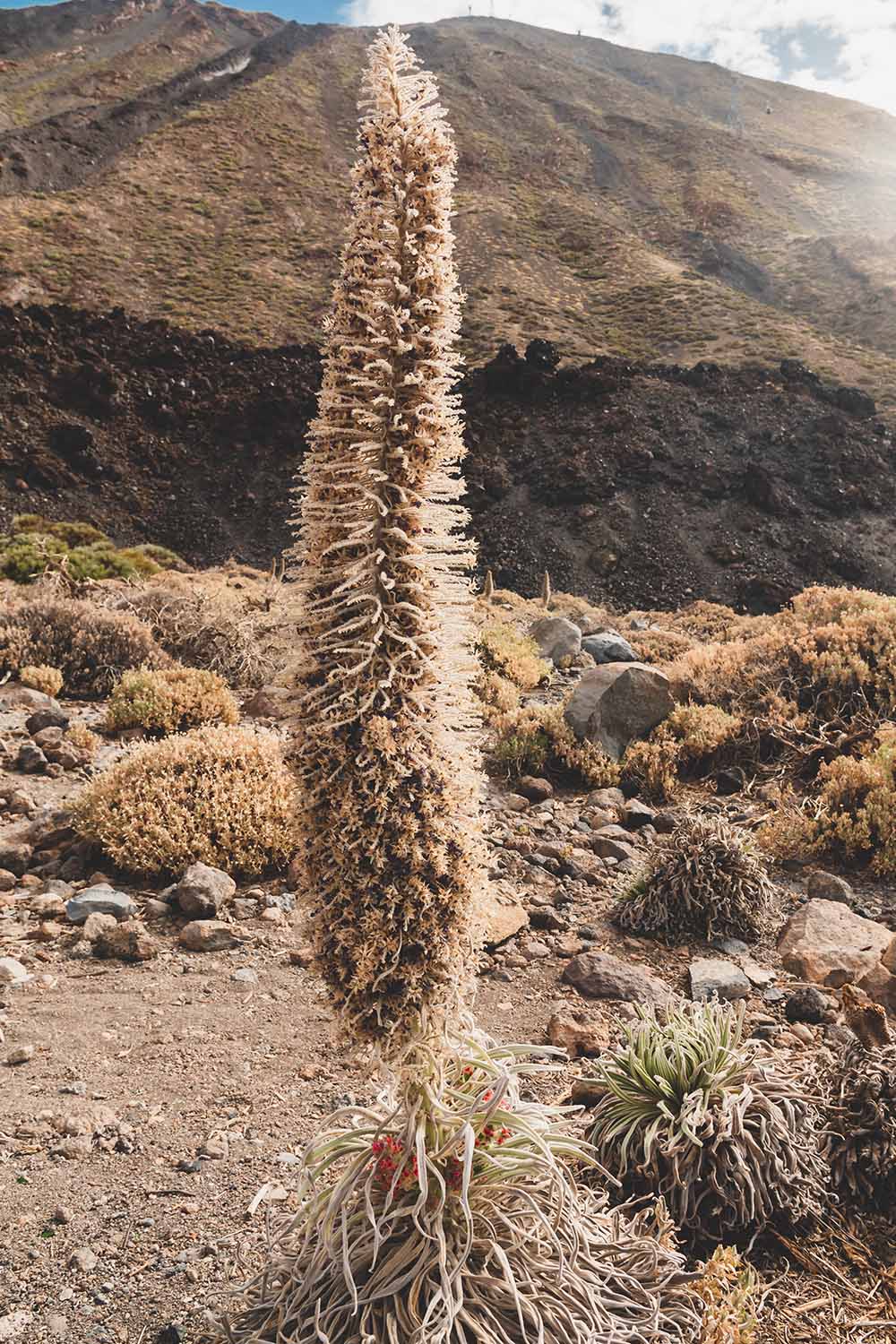
Pollinated flowers fade to brown and remain in place. At the base of each is a four part “nutlet” or seed pod. Each section is an individual seed.
When they are dark brown to black, they are ripe and ready to plant.
Blossoms that go unpollinated simply fall off without forming pods.
Alternatively, you can purchase seeds.
Because viability wanes with time, it’s best to sow the seeds immediately. Gardeners in regions that freeze can start seeds indoors.
Here’s how:
- Select a light, airy potting mix that is not overly fertile and drains exceptionally well for your substrate.
- After filling your seed tray or pots to a depth of three-quarters, use a spray bottle of water to thoroughly moisten the soil.
- Place one seed every two inches. Press it lightly to hold it in place, but do not cover with soil. Germination requires light.
- Place the tray in bright indirect sunlight.
- Maintain even moisture by spraying before the medium dries out, but avoid oversaturating the soil.
When the seedlings have two sets of true leaves, they are ready for transplant to individual pots. Choose containers about two inches wider and deeper than the root mass.
Gardeners in areas that don’t freeze can sow seeds outdoors immediately after harvest or purchase in late summer.
Surface sow them on garden soil that has been worked to a depth of six inches until it is crumbly and free of debris. Water as above and keep the garden free of weeds.
Transplanting
When transplanting a seedling or nursery start, note the original depth in the potting mix and replicate it in the ground or a permanent pot.
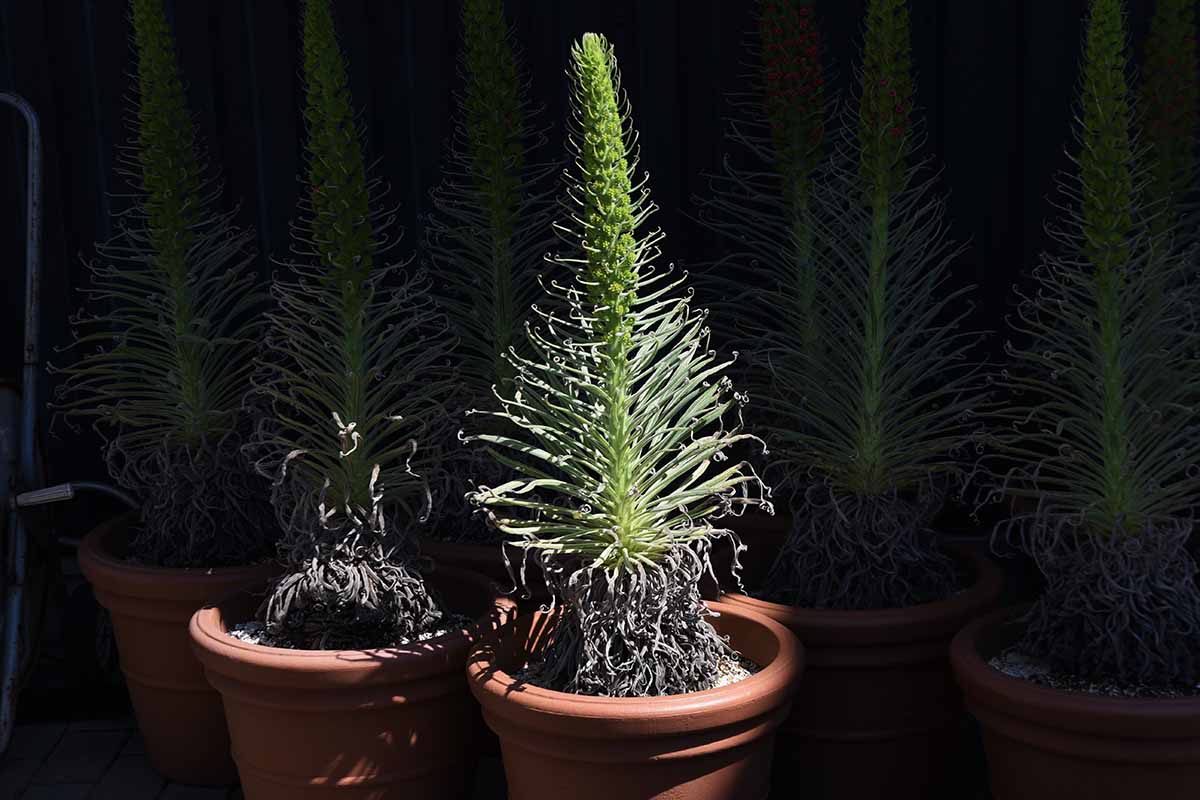
Water the day before.
Choose a full sun location that is sheltered from battering winds to avoid having to install stakes.
Prepare ground soil to a depth equal to that of the original container’s and twice as wide. Work the earth until it is crumbly.
Place the contents of the container into the soil at the original depth, with the crown – where the stem and roots meet – at or slightly above ground level.
Tamp the soil to hold the stem firmly upright. Water gently but thoroughly.
Maintain consistent moisture the first year by watering when the top three to four inches of soil are dry. Avoid oversaturation.
Space multiple specimens two to three feet apart for optimal airflow.
Container gardeners should fill a pot one-third full of potting medium. The dimensions should be about two inches wider and deeper than the root mass.
Center the contents of the original vessel over the potting medium at the original depth, with the crown at or just above the surface.
Backfill and tamp to hold the plant securely.
Water slowly and deeply.
Maintain moisture as above, watering when the top three to four inches of potting mix are dry. Pots dry quicker than ground soil, so check them often.
Repot as needed to maintain about two inches of growing room all around. Per the pros at Longwood Gardens, a seven-gallon pot generally accommodates a mature specimen.
Note that potted plants may not achieve maximum heights and may take three years to bloom.
Pests and Disease
While it is not prone to infestation or infection, tower of jewels may succumb to both under adverse conditions.
Overly saturated ground may invite hungry snails and slugs, night feeders that chew holes in foliage. A wet environment may also lead to irreversible root rot.
Both are easily avoided by watering only when the soil is dry to a depth of three or four inches during the first year, and only in prolonged dry spells in year two.
Gardeners in a greenhouse setting may battle spider mites or whiteflies, sapsucking pests that feed on plant juices, disfiguring foliage and stunting growth in severe cases.
A firm spray with the hose nozzle and an application of neem oil are generally effective treatments.
Witness the Wonder
If you are in Zones 9 to 11 and can meet the cultural requirements of tower of jewels, you can enjoy its bold presence in the home landscape.
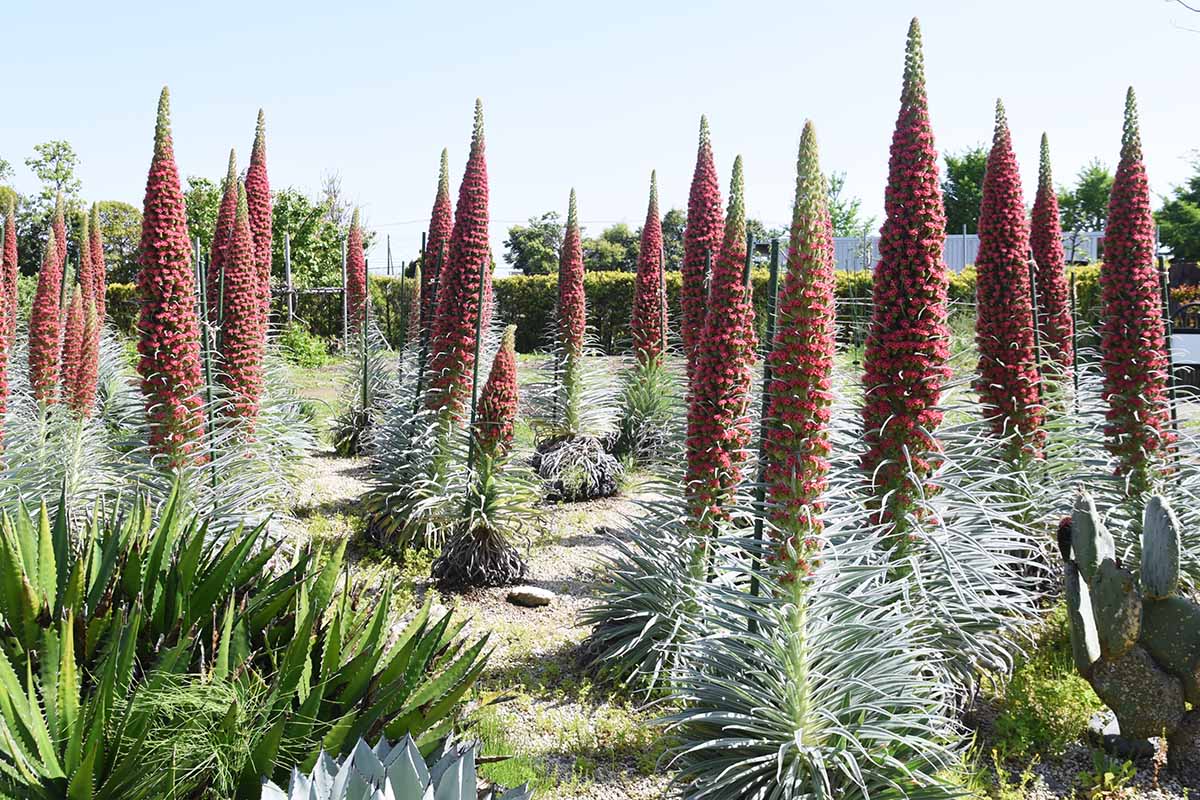
From the silvery rosette to the soaring floral cone, and finally, the feathery shadow of the majesty that was, you’ll find tower of jewels a wonder to behold.
Are you growing tower of jewels or are you planning to? Where will you showcase this botanical giant? Please tell us in the comments section below.
If you found this article informative and want to learn more about growing flowers, we recommend the following: