Dischidia nummularia
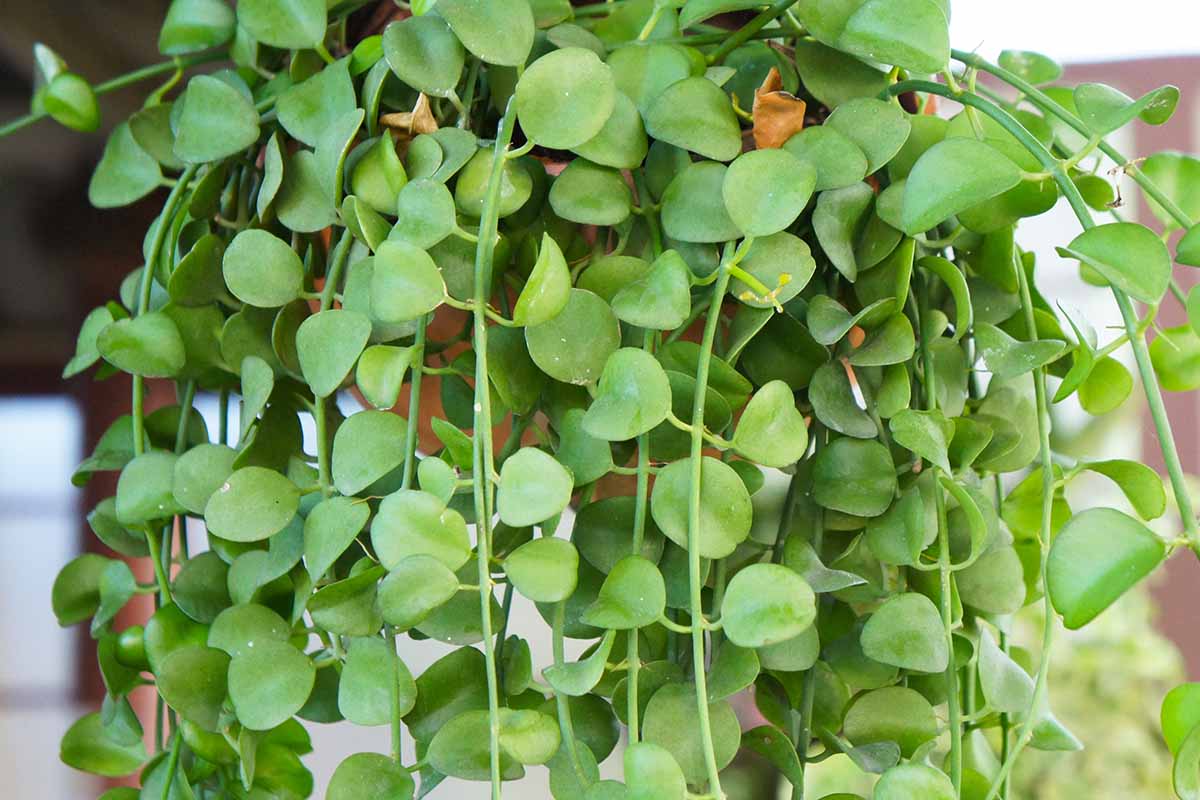
String of nickels aka button orchid, Dischidia nummularia, is a tender perennial vine with decorative pairs of coin-shaped leaves.
This ornamental foliage plant has mature dimensions of two to three feet long and 10 to 12 inches high, ideal for cascading over the side of pots.
In ideal growing conditions it may produce tiny white flowers in spring.
We link to vendors to help you find relevant products. If you buy from one of our links, we may earn a commission.
Gardeners in Zones 10 to 11 can grow these plants outdoors in hanging containers.
Those in other regions can enjoy low-maintenance houseplants. This article focuses on how to grow and care for string of nickels indoors.
Here’s what we’ll cover:
What You’ll Learn
D. nummularia is noteworthy for being an epiphyte, living in the dappled sunlight of rainforests, relying on rocks and trees for support, rather than having roots anchored in soil.
The trailing stems have aerial roots that anchor them to bark and permit climbing. They may also cascade from branches to which they cling.
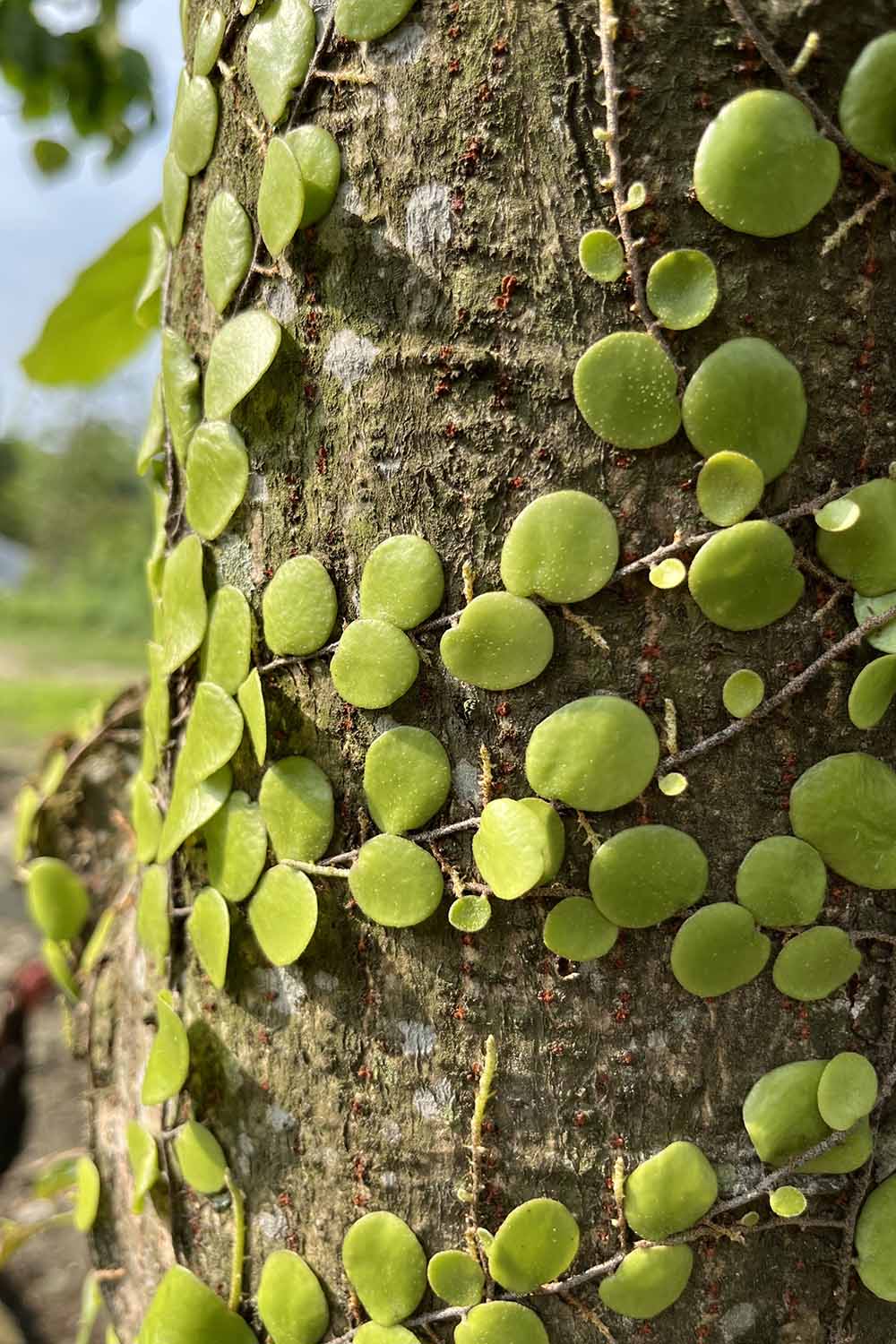
Sometimes string of nickels is referred to as a semi-succulent as its fleshy, coin-shaped leaves store water, much like those of desert succulent species.
In their natural habitat and in the garden, some species in the Dischidia genus have a symbiotic relationship with ants.
The insects shelter in pouch-like hollows in the foliage and supply nourishment via their excrement.
String of nickels does not attracts ants in this manner as the foliage lacks the modified leaves.
Quick Look
Common name(s): String of nickels, button orchid
Plant type: Tender perennial semi-succulent climbing vine
Hardiness (USDA Zone): 10-121 (outdoors)
Native to: Australia, South and Southeast Asia
Bloom time / season: Spring
Exposure: Indirect, filtered sunlight
Soil type: Sandy loam, orchid potting mix, well-draining
Soil pH: 5.7-6.5, slightly acidic to neutral
Time to maturity: 2-5 years
Mature size: 2 to 3 feet long by 10 to 12 inches high
Best uses: Containers, hanging baskets, houseplant
Taxonomy
Order: Gentianales
Family: Apocynaceae
Genus: Dischidia
Species: Nummularia
There is one cultivated variety of our subject species, D. nummularia cv. variegata. It has the same rounded green leaves, but cream striations add visual appeal.
In addition, there are species that share the same cultural requirements. D. nummularia ovata, aka watermelon dischidia, has elliptical green leaves striped with white.
D. oiantha sports elliptical green leaves with white margins.
This species is a member of the Apocynaceae or dogbane family and is native to Australia, South and Southeast Asia.
Its toxicity levels are lower than those of the milkweeds to which it is related, but ingestion of the foliage can cause digestive upsets and contact with the sap is irritating to the skin.
So it’s best to keep this tropical species away from children and pets.
How to Grow
You’ll find string of nickels to be slow-growing and undemanding once it’s potted up and set in a suitable location.
From starter pot to mature dimensions can take from two to five years.
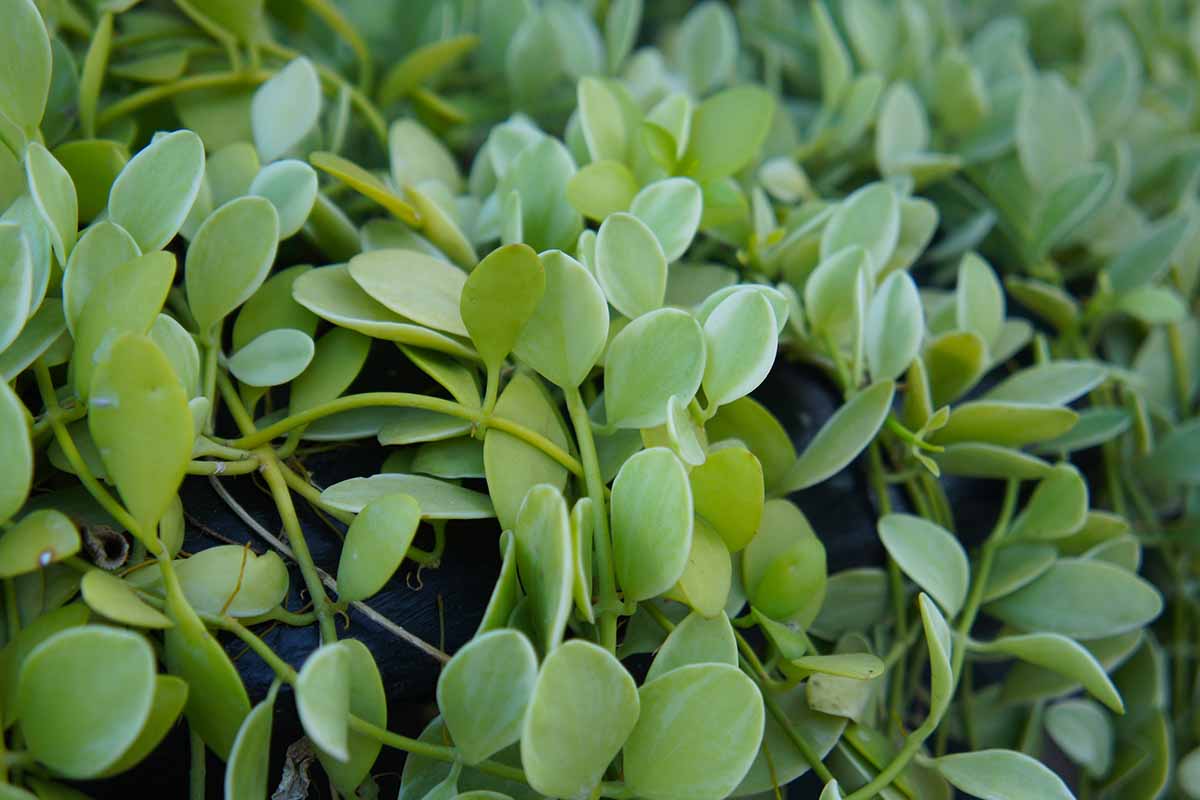
Key aspects of care include mimicking native conditions and choosing an appropriate substrate. Let’s consider the cultural requirements.
Climate
In its native habitat, string of nickels lives in tropical rainforests with high heat and humidity.
It’s essential to replicate humidity levels of 60 to 80 percent and temperatures between 65 and 85°F.
Placing pots on a bed of moist pebbles in a single layer in a shallow tray is an easy way to increase the ambient moisture.
Light
String of nickels thrives in the dappled sunlight beneath tall rainforest trees. Provide bright, indirect sunlight indoors.
This is best achieved by setting the pot near an east-facing window.
Soil
As an epiphyte, D. nummularia doesn’t require conventional soil.
Instead, the substrate should be slightly acidic and resemble the bark that wild plants often cling to for support, taking nourishment from the nutrient-rich debris in its crevices.
Orchid potting mix is ideal, having a pH in the range of 5.7 to 6.5, a loose, airy consistency, and moisture-retentive perlite.
This product is formulated with forest moss, perlite, pine bark, and pumice and is suitable for potting various epiphytes, including Dischidia species.
Orchid potting mix is available from Duspro via Amazon.
It is crucial to keep the growing media fresh, repotting every two to three years.
When it breaks down, the soil compacts, depriving the roots of essential oxygen, leading to stunted growth, root rot, and plant death.
Water
Because string of nickels is accustomed to wet and dry weather cycles, growers can let well-draining vessels dry almost completely before watering.
When watering, pour slowly. The substrate is sharply draining, and much of the water will run straight through the first time.
Water a second time to ensure the potting medium is thoroughly soaked.
Watering needs are greatest in the spring and summer, when plants are actively growing and require more moisture. During the fall and winter, the container will dry out very slowly.
Fertilizer
Each time you water during the spring and summer, use a balanced liquid plant food diluted to a quarter strength.
A 10-10-10 N-P-K ratio is suitable. Reduce feeding to every other watering in the fall and discontinue feeding altogether during the winter when growth slows down.
Learn more about fertilizing houseplants here.
Where to Buy
You’ll find string of nickels plants available from specialty nurseries or those that carry a good selection of succulents and vining plants.
A specimen in a two-inch growers pot is available from The Plant Farm Store via Amazon.
Maintenance
Slow-growing string of nickels is an easy-care houseplant with few maintenance requirements. It prefers a snug-fitting pot with a diameter about an inch wider than the plant’s width.

Every two to three years, in the spring, change the substrate, regardless of whether you need to increase the container size or not.
Substrates break down over time, compacting and retaining water, which deprives the roots of oxygen as mentioned above.
Additional care includes removing damaged or dead stems to restore vigor and visual appeal.
Cut the affected stems just below a leaf, rather than mid-stem, for rapid and attractive regrowth.
Propagation
Because the tiny seeds are not dependable growers, the best ways to start a new plant are by taking a stem cutting from an existing one or buying a nursery start. Let’s discuss.
From Stem Cuttings
Take stem cuttings in the spring. Wear protective gloves to avoid contact with the irritating sap.
Sanitize your garden scissors with a 10 percent bleach solution (one part bleach to nine parts water) and rinse them well.

Select a healthy stem with plump leaves and visible aerial roots protruding near the leaf pairs.
Cut a three- to four-inch length of stem with at least two leaf pairs.
Place a small clump of sphagnum moss on a saucer and lightly moisten.
Snip off the lower pair of leaves, closest to the cut end of the stem.
Dip the cut end of the stem end into rooting hormone powder.
Gently insert the powdered stem end into the moss to anchor it, burying the nodes where the leaves were cut. These natural growing points will produce roots.
Place the saucer in bright, indirect sunlight.
Create a self-watering humidity dome by inflating a quart or sandwich-sized plastic bag over the saucer and tucking it loosely underneath.
Do not make it airtight, as excess moisture may develop and cause the cutting to rot.
New roots should be established in about two months.
Once it has established roots, remove the cutting from the moss and transplant it to a two-inch pot filled three-quarters full of orchid potting medium.
Use a chopstick or pencil to tease the moss away from the roots.
Make a hole in the center of the orchid potting mix wide and deep enough to accommodate the tender roots.
Place the cutting into the center of the mix and backfill to hold it firmly in place.
Water until it runs from the drainage holes. Water a second time to ensure thorough saturation.
Place the pot in bright, indirect sunlight.
Transplanting
To transplant a nursery start to a decorative pot:
- Choose a container that is an inch wider than the one the plant is currently growing in.
- Fill it about halfway with orchid potting mix.
- Set the plant at the same depth as it was in the original container.
- Backfill the last quarter of the way, to be three-quarters full, and tamp to secure it in place.
- Water well and water a second time to prevent dry pockets.
Place the pot near an east-facing window.
Pests and Disease
When the indoor growing environment is excessively wet or dry, plants become vulnerable to pests and diseases.
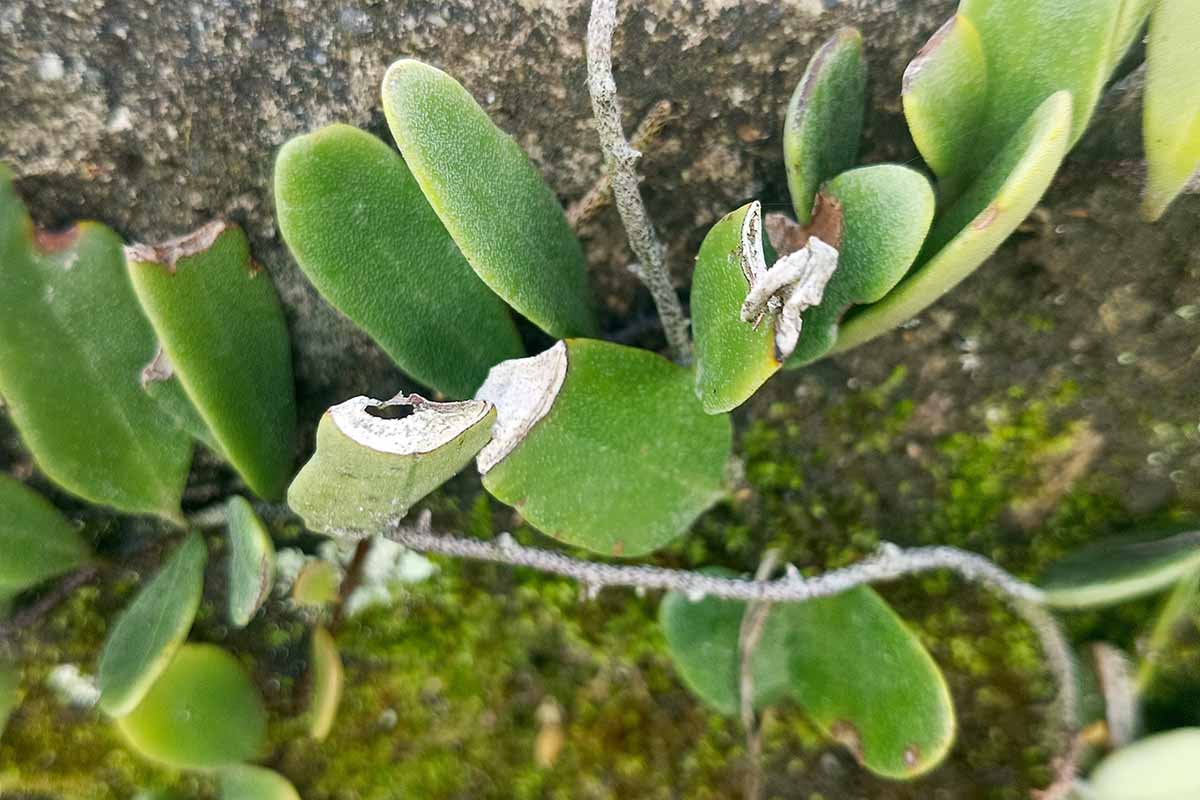
Let’s consider some you may encounter.
Pests
Fungus gnats breed in overly saturated potting media and environments with poor air circulation.
Their root-feeding larvae grow in the soil, emerging as winged adults that hover near the foliage.
Avoid overwatering as this encourages infestation. In the event of an infestation, repot in fresh orchid medium and dispose of the old in the trash.
Hang yellow sticky traps to catch any remaining adults.
Mealybugs favor similar conditions. These white, cotton-like sapsuckers feed on plant juices, destroying foliage and leaving sticky honeydew that can attract sooty mold.
Water appropriately, rinse the pests away, and treat with neem oil. Repot in fresh medium if the infestation is severe.
Spider mites are leaf-feeding sapsuckers that prefer dry conditions and underwatered foliage. Rinse the leaves, treat with neem oil, and repot if necessary.
Read more about common houseplant pests here.
Disease
Diseases include gray mold, leaf spot, powdery mildew, and root rot.
These fungal and bacterial conditions are likely to occur in overly wet conditions, causing leaves and/or roots to turn dark and mushy.
Gray mold, leaf spot, and powdery mildew may all respond to treatment with neem oil. However, root rot is irreversible, although healthy root portions may be salvageable.
Learn more about root rot here.
A Decorative Tropical Epiphyte
The trailing stems and coin-shaped leaves of string of nickels are a striking addition to household decor when displayed in a hanging planter.
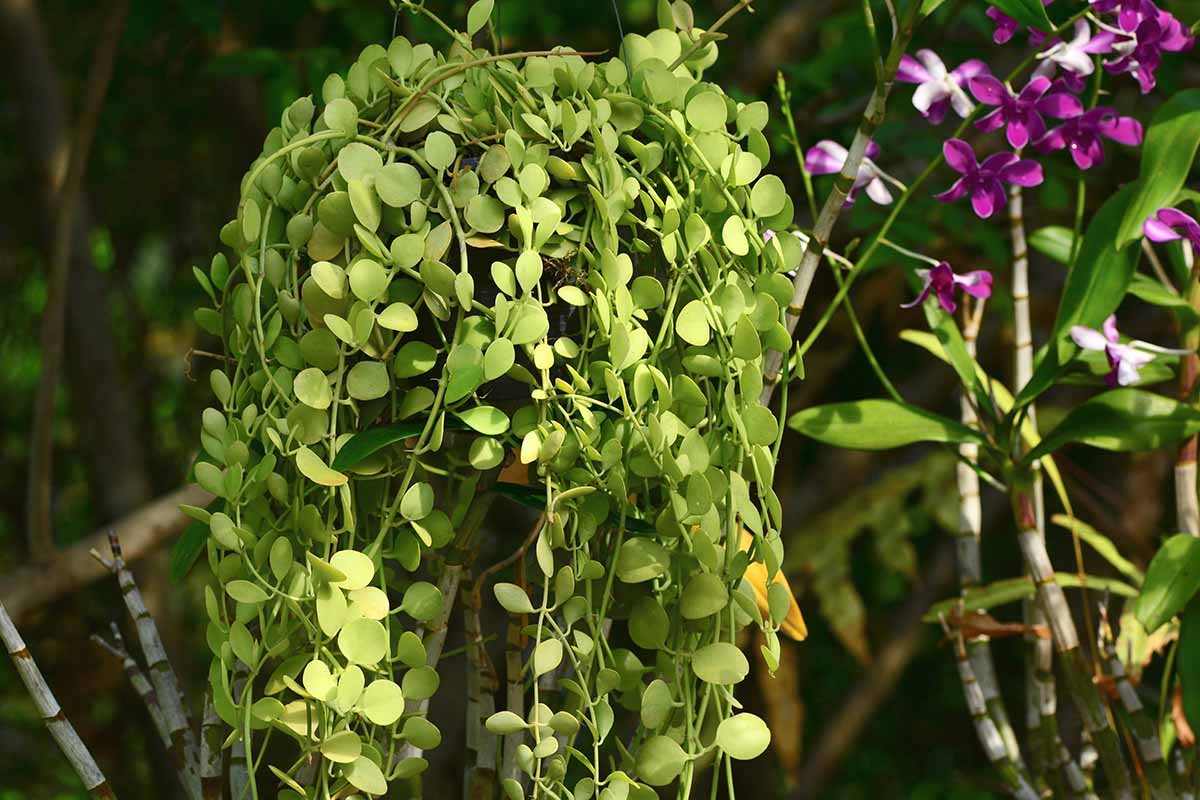
You’ll find D. nummularia an easy-care species that thrives in bright, indirect sunlight with deep soakings just before the pot completely dries out.
A little fertilizer with each watering during the growing season, along with refreshing the potting medium and repotting periodically helps support optimal health.
Is it time to add this decorative tropical epiphyte to your houseplant collection? Do you grow string of nickels? Please share your tips in the comments section below.
And for more information about growing houseplants, add these guides to your reading list next: